AH Important Terms
 Studied by 0 people
 Call Kai
 Learn
Learn Practice Test
 Spaced Repetition
 Match
Match Flashcards
 Knowt Play
1/59

There's no tags or description
Looks like no tags are added yet.
Name | Mastery | Learn | Test | Matching | Spaced | Call with Kai |
|---|
No analytics yet
Send a link to your students to track their progress
60 Terms
Contrapposto
A sculptural pose in which a human figure rests the weight on one leg the other is bent a the knee
Lost wax
Method for casting bronze using a wax model (which melts and is "lost" during the process.
Antiquity
The ancient past. The period before the middle ages. Before Constantine
Renaissance
Takes place generally between the 14th and 17th century. Known as a fervent period of European cultural, artistic, political, and economic "rebirth" following the middle ages. Starts around 1420
Pilaster Shaft
Vertical supports used in architecture. Has the appearance of a column that is on the wall. Unlike a column its does not go all the way around. You could walk a circle around it, like a real column because it is fused onto the wall.
Capitals (Tuscan, Ionic, Corinthian)
The capitals were more like their own city states, in the form of a republic
Architrave
A main beam resting across the tops of columns, specifically lower third entablature
Pediment
A triangular gable, reminiscent of ancient Greek or roman architecture. Renaissance artists grew a general distain for the triangular pediment and thought the rounded arch or dome to be much more elegant.
Gothic
An older architectural style that grew out of fashion during the renaissance.
Key features:
Pointed arches (instead of rounded arches)
Ribbed vaults (instead of domes)
International Gothic
A period of gothic art from the late 14th and early 15th century.
Chiaroscuro
Use of light and shadow in an art piece to give the illusion of a 3D form.
Siena
Rivals with the city of Florence
Would compete through works of art and architecture. Palazzo Pubblico (Siena vs Palazzo Vecchio, Florence; Siena Cathedral vs Florence Cathedral
Florence
Rivals with the city of Siena
Creating the Florence Cathedral because of its rivalry to Siena (domed by Brunelleschi)
Altarpiece
Triptych
Part of the altar piece
It is a work of art (usually a panel painting) that is divided into three sections and can be folded shut if needed.
Predella
Part of the Altar
Is the lowest part of the altarpiece, sometimes forming a platform or step.
Often the image is of a smaller part of the story tangentially related to the larger main scene above it.
Fresco
Method of painting on freshly applied plaster.
Painters must work fast because it drys within a day
Ideal for murals because it durable and matte
Intonaco
The final smooth coat of plaster that is applied onto a fresco and is painted on while still wet.
Artists only apply as much intonaco as they think they can finish within a day (before it dries)
Arricio
The second rough coat of plaster in a fresco where the underdrawing is applied.
Sinopia
A reddish brown pigment, often used in the rough initial layer of plaster for the underdrawings of a fresco
Giornate
Each finished section of fresco making up the whole work
Giornate means "a days work"
The amount of Giornate can be tracked to figure out approximately how many days it took for the artist to finish the piece, as each section needed to be done within a day.
Secco
Fresco secco ("dry fresco" or ""false" fresco)
Dry finished plaster plaster walls are soaked with limewater and painted while wet. The colors do not penetrate into the plaster but form a surface film, like any other paint.
Not as durable
Buon (true) fresco
The most durable technique for painting frescoes
Seen as the best and superior way for artists to paint fresco
The process:
3 successive coats of prepared plaster
The first two rough coats are applied and allowed to dry, and underpainting is drawn
The final smooth coat (intonaco) of plaster is then troweled onto as much of the wall as can be painted in one session.
Each "section" are called giornate, "a day's work."
Line Snapping
How renaissance fresco artist drew straight lines on the wall.
They did this by immersing string in chalk dust, stretching it taught against the wall or surface, then snapping the line so that the string will leave behind a straight line.
Egg tempera
Main method of painting before oil paint became popular
Unable to blend wet into wet.
Achieved the illusion of blending by using very tiny brushstrokes
Use by mixing pigments with egg yolk
Gilding
Applying a very thin sheet of gold to a surface with an adhesive
Stamping
A method of gilding
Underdrawing
He drawing before the final layer of plaster of a fresco. Meant to be the "blueprint" for the finished piece.
Linear one-point perspective
A mathematical system of creating an illusion of depth on a flat surface. All parallel lines converge on a single vanishing point on the horizon line
Three components:
Orthogonal (parallel lines)
Horizon line
Vanishing point
Purgatory
Sacraments
Eucharist/Mass/Communion
Transubstantiation/Real Presence
That the wine and bread broken and blessed at mass is literally turned into the body and blood of christ through a miracle.
Preparatory drawing
The initial sketches or studies artists create before producing a final artwork
Study/Sketch/Cartoon
Pouncing
Also known as Spolvero. Is an art technique used for transferring an image from one surface to another using a fine powder called pounce. Similar to tracing and is useful for creating copies of a sketch outline to product finished works.
Dissection
Atmospheric perspective
How artists display how the properties of the atmosphere alter the appearance of distant object. Closely related to sfumato. Ex. How mountains get lighter the further along the horizon they are.
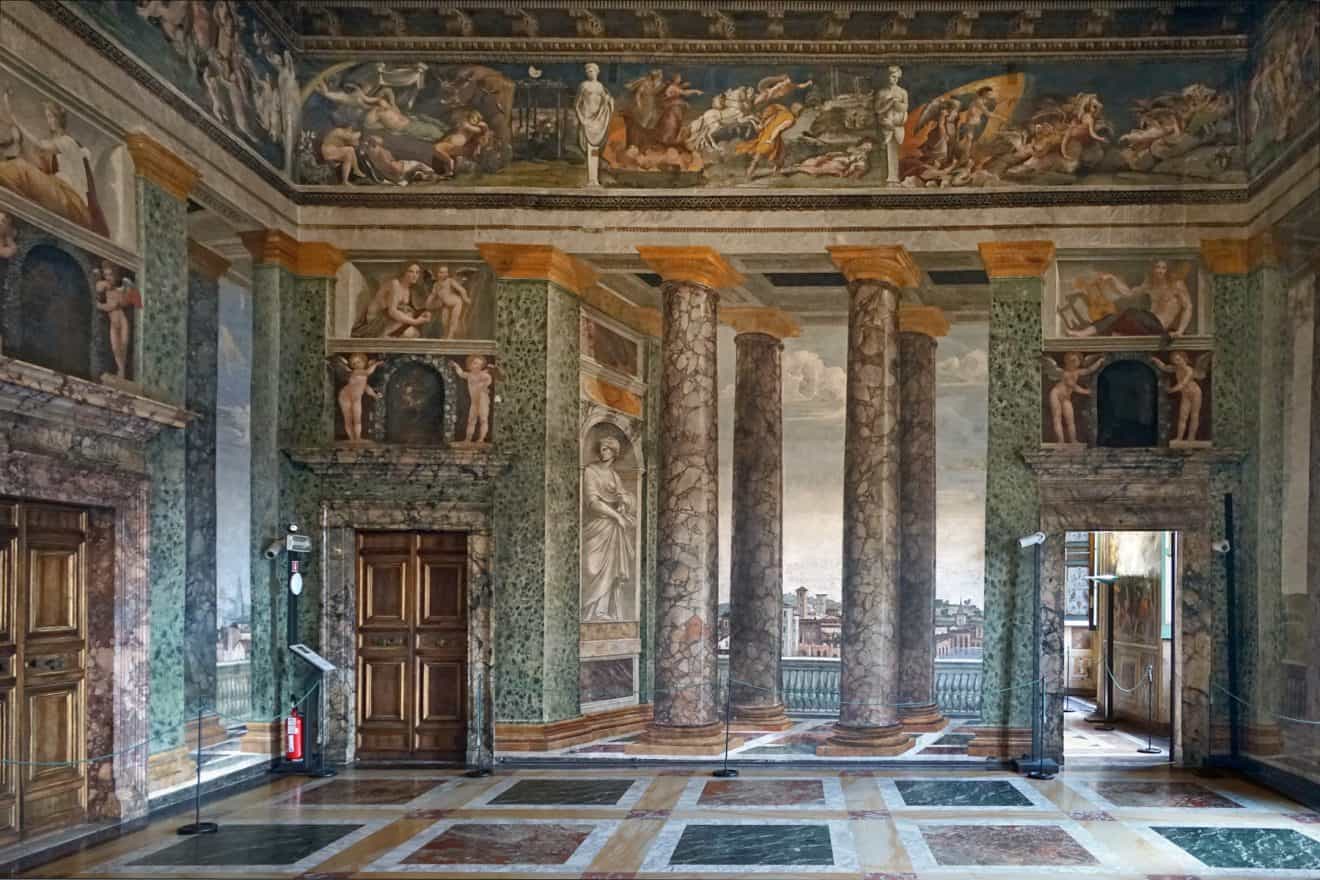
Fictive architecture
Architectual designs that do not exist in reality. Give an illusion of 3D space
Ex. A fresco of columns or rounded arches on a flat wall that give the illusion that they are actually part of the physical structure.
Refectory
A long elongated table usually seen in last supper paintings.
Festaiuolo/chloric figure
A figure in a painting looking directly at the viewer. Meant to add interest, dynamism and engage the viewer.
Sacra conversazione
Genre of religious painting, Depicting the Virgin and Child amidst a group of saints. The saints are in a relatively informal grouping compared to the rigid hierarchical compositions of earlier periods.
Donor figures/ Votive figures
A portrait in a larger painting or other medium showing the person who commissioned and paid for the image, or a member of his, or (much more rarely) her family.
An example of:
Self-commemoration
Paying off Purgatory
"New Rome"
The name given to the new imperium capital by Roman Emperor Constantine. This was not actually in Rome but in the city of Byzantium.
Trompe l'oeil
The highly realistic optical illusion of three-dimensional space and objects on a two dimensional space. (like the painted ceiling "skylight" in Mantegna's camera picta.)
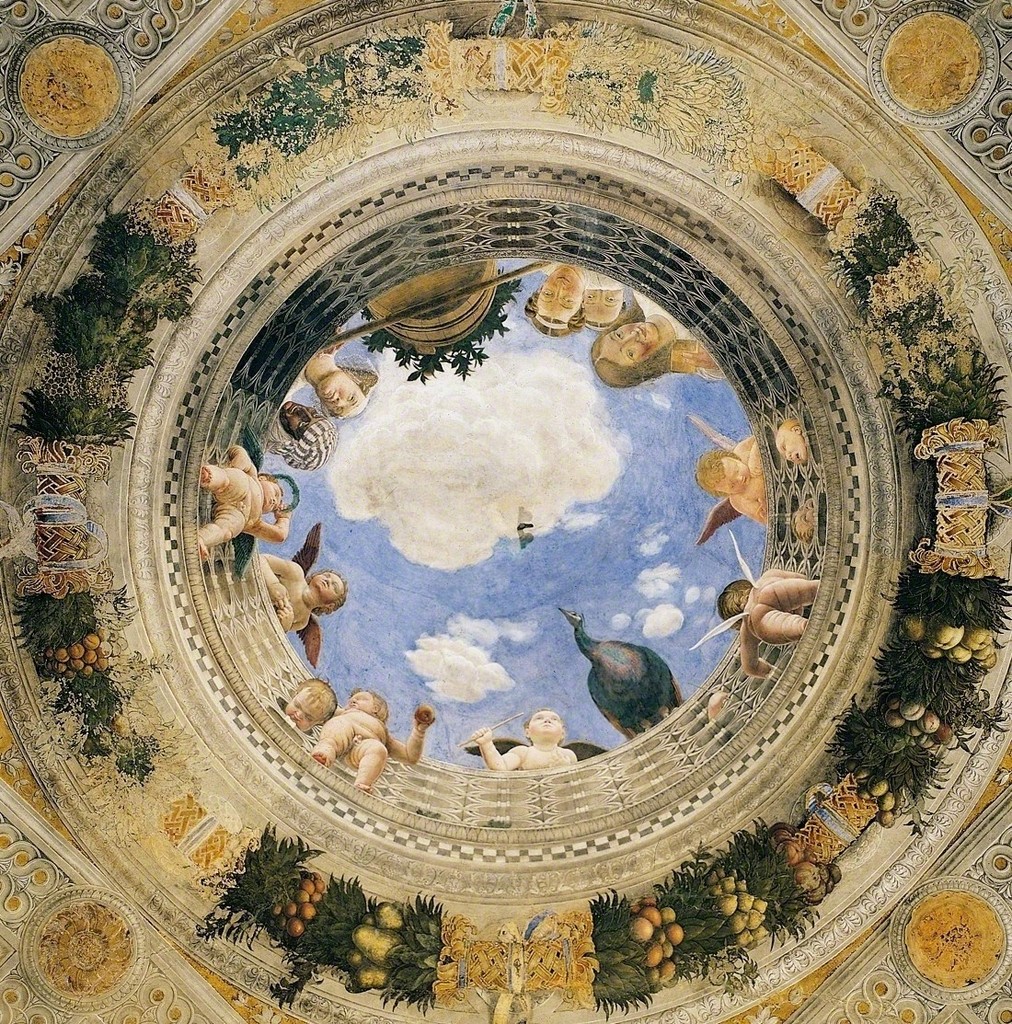
Putti
Chubby sometimes winged, and often naked childlike figures used as motifs in Renaissance Art.
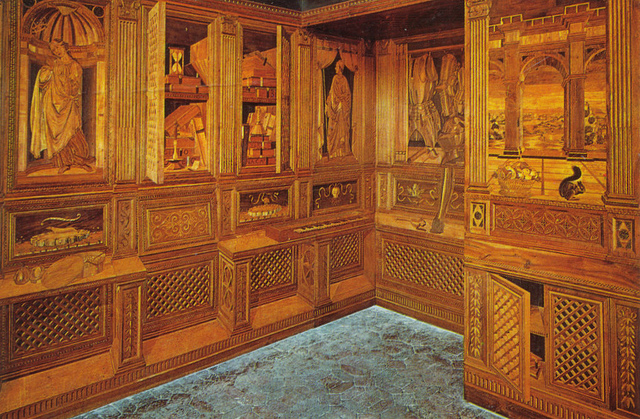
Intarsia
Using inlaid wood to create the illusion of depth.
Foreshortening
Compressing long objection to appear shorter, given and illusion of depth. Seen in Mantegna's "Dead Christ"
Pieta
“The Virgin of Pity" A theme in christian art that depicts the Virgin Mary supporting the body of the dead Christ.
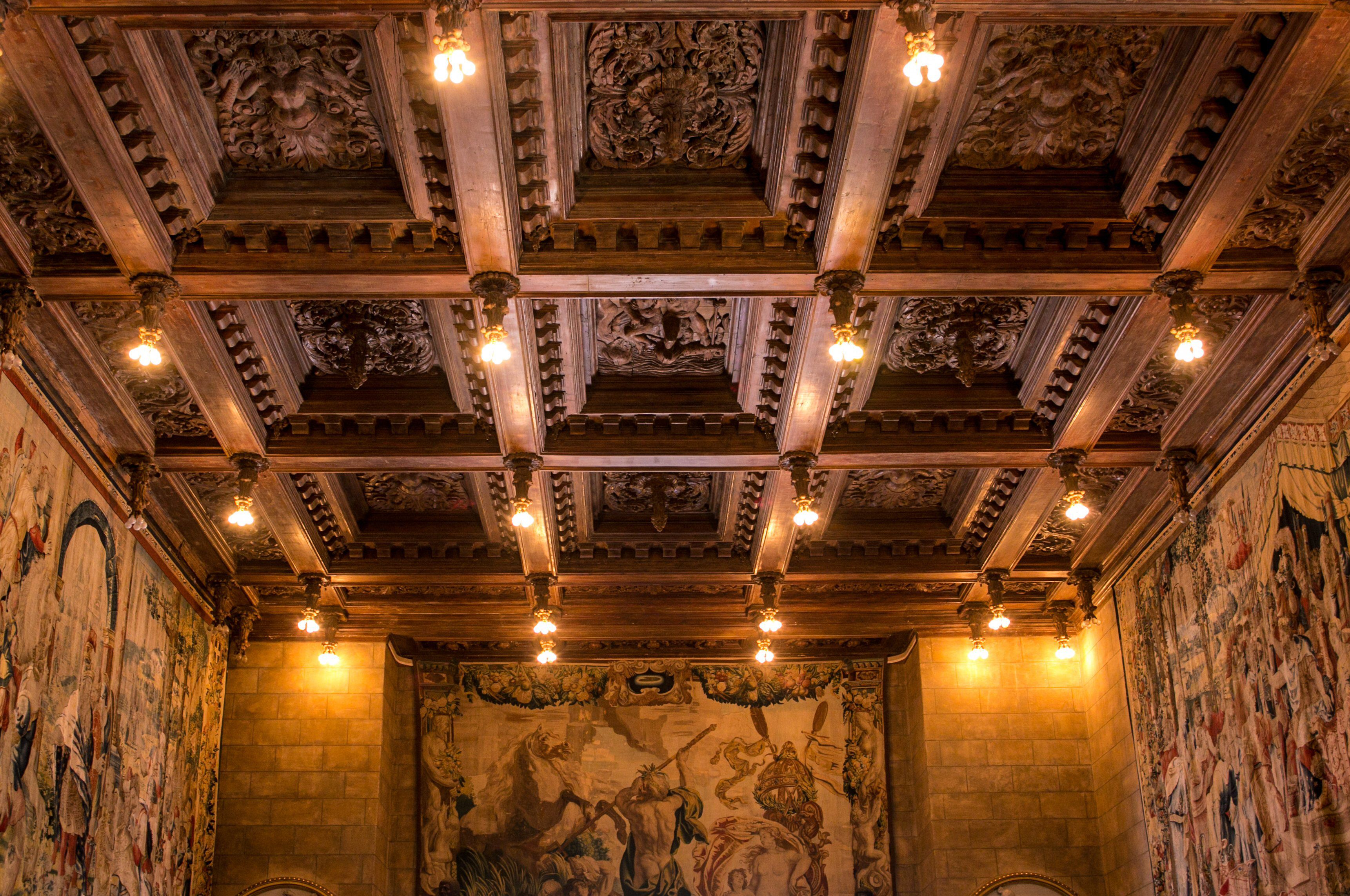
Coffering
A coffered ceiling is a pattern of sunken panel in a cieling.
Example of Ornate
Barrel vault
An Architectual element formed by an extrusion of a single curve along a given distance, Essentially it is a series of arched placed one after another.
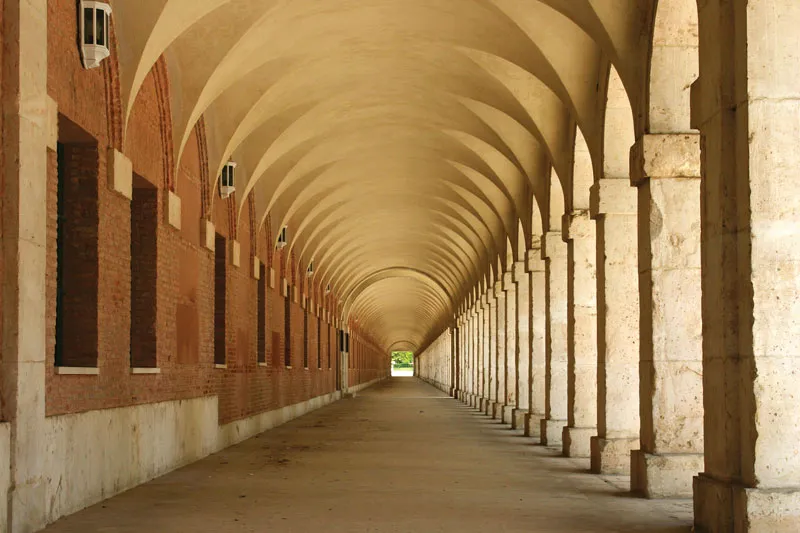
Triumphs
Were monument structures such as triumph arches, and were erected to honor important figures or significant events.
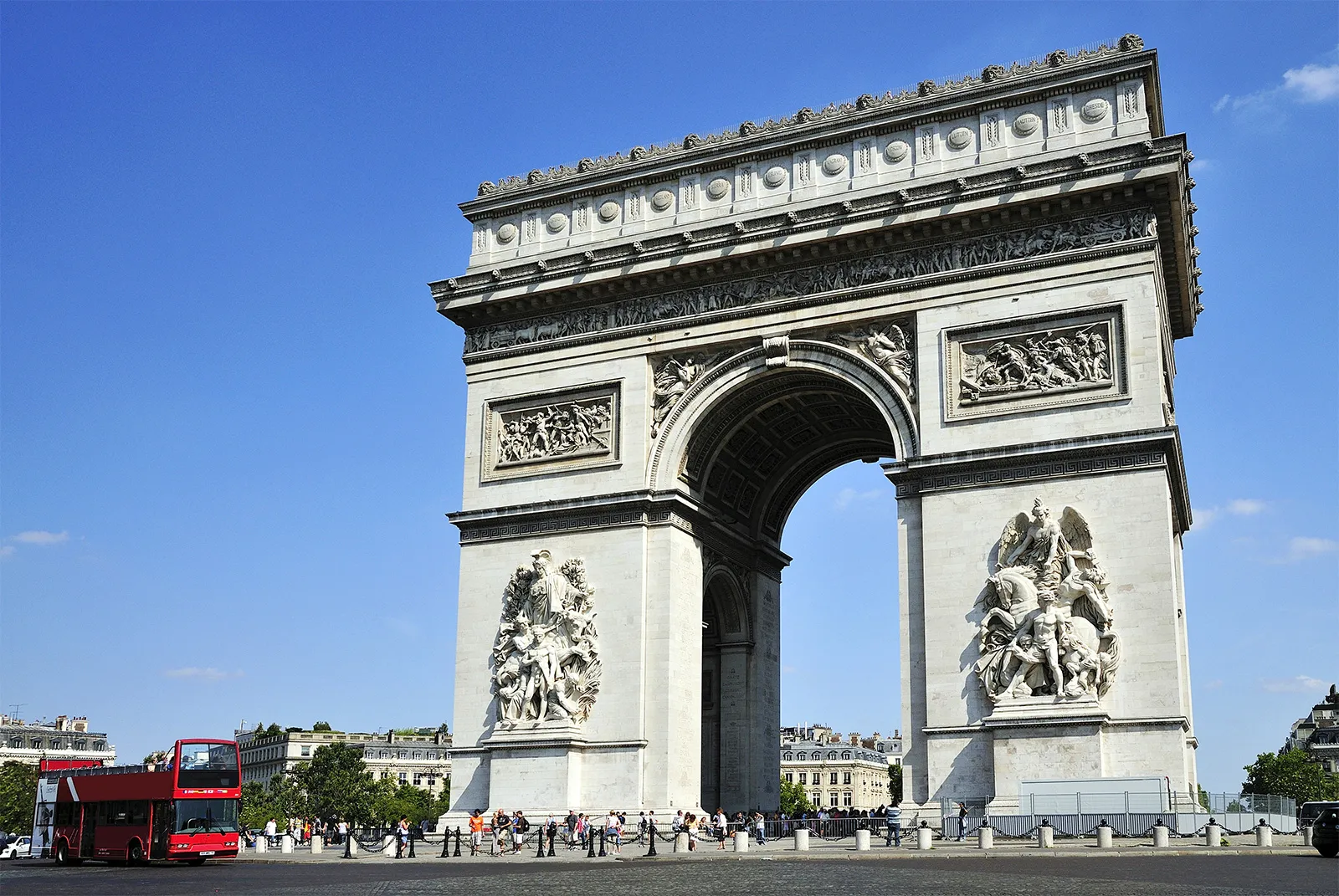
Quadratic capitals
Also known as roman square capitals are an ancient roman form of writing. They were used as inscriptions on public monuments.
Vitruvian Man
Leonardo's depiction of the "Perfect Man." Meant to show renaissance notions of the geometry of "perfect" idealized human proportions that those artists sought after.
Chasing
The final stage of polishing and sanding bronze artwork
Sfumato
The technique of allowing tones and colors to shade gradually into one another, softening outline and producing hazy forms. Ex. Mountains fading back into the horizon.
Enclosed garden/hortus conclusus
The renaissance motif of an enclosed garden symbolizing Mary's virginity. The full symbolism being that despite being enclosed, the garden thrives inside, just like how despite Mary's virginity remaining intact she was able to conceive a child.
Loggia
a roofed open gallery/corridor especially at an upper story at an upper story overlooking an open court.
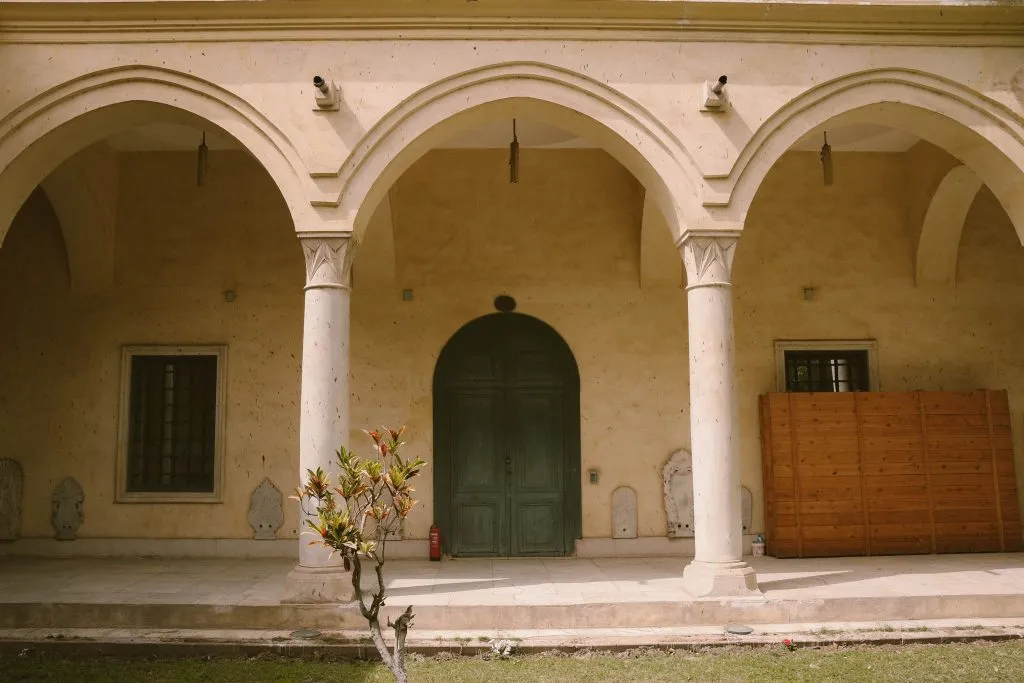
Usury
The illegal action or practice of lending money at unreasonably high rates of interest. Considered a big sin in the renaissance era that motivated many donors to fund religious works to “pay off“ their sin and get time off of purgatory.
Intercession
The act of praying on behalf of others or asking a saint in heaven to pray on behalf of oneself or for others.
 Note
Note  Flashcards (52)