BIO test 2 homework flashcards
 Call Kai
 Learn
Learn Practice Test
 Spaced Repetition
 Match
Match Flashcards
 Knowt Play
1/103

There's no tags or description
Looks like no tags are added yet.
Name | Mastery | Learn | Test | Matching | Spaced | Call with Kai |
|---|
No analytics yet
Send a link to your students to track their progress
104 Terms
In a bacterium that possesses antibiotic resistance and the potential to persist through very adverse conditions, such as freezing, drying, or high temperatures, DNA should be located within, or be part of, which structures?
plasmids and endospore
Which group of primates does the following list of traits best describe?
Wide nostrils which are circular and spaced apart.
Small to medium sized
Long tails which are sometimes prehensile.
No buttock pads.
No cheek pouches.
New World Monkeys
Every single creature whose embryo contains a notochord, a nerve cord, and gill slits belongs to a category called:
chordates
One model organism featured in this reading is called a skate. Which description best fits this creature?
close cousin to the shark
Animals with bilateral symmetry tend to have a posterior "tail end" and an anterior "head" end with a mouth, a high concentration of sensory organs, and a neural processing center. The evolutionary trend toward having a head is called
cephalization
Which of the following is a difference between fungi and animals?
Only fungi have external digestion.
Lactase persistent human populations are likely to have raised cattle for thousands of years.
True
Mad cow disease (BSE) is not transmitted by a virus. Its protein-based infectious particles are called
Prions
How do members of the bony fish clade regulate buoyancy?
with an air-filled swim bladder
“The first experimental embryologists interested in limbs … needed an organism in which the limbs were accessible … the embryo had to be relatively large … grow in a protected place, in a container that sheltered it from jostling … the embryos [also had to be abundant and available year-round.” Which model organism was best suited to experiments involving developmental control regions like ZPA?
chicken (egg)
Within nonvascular plants, the prominent generation is the _______; in vascular plants, it is the _______.
gametophyte; sporophyte
Teeth are NOT the evolutionary precursors to which later body parts?
tongue
Which characteristic is common to all the modern representatives of all major reptilian lineages (turtles, lepidosaurs, crocodilians, and birds)?
presence of a notochord in development
Which pathogen is not a bacterial infection?
HIV
Hox genes are associated with body segmentation, and segmentation is important in animal evolution because it
has allowed organisms to alter their body forms in complex ways.
For which of the following can we compare genome sequences (select all that apply).
Modern humans
Denisovans
Neandertals
Which combination does NOT describe a real animal?
diploblastic coelomate
DNA evidence supports the hypothesis that the first organisms on earth were more closely related to bacteria than to archaea.
True
The height of a liverwort, hornwort, or moss is restricted to a few inches tall (or less) because
they have no vessels (i.e., vascular tissue).
Neil Shubin and his colleague went ‘shopping’ in China for a very special salamander fossil with what feature?
intact eyeball
Match the traits with the group that it most specifically describes.
Old World Monkeys
Generally large without prehensile tails, prominent buttocks pads
Match the traits with the group that it most specifically describes.
Primates
binocular vision and grasping fingers and toes
Match the traits with the group that it most specifically describes.
New World Monkeys
Small to medium size, some with prehensile tails, lack pads on buttocks
Match the traits with the group that it most specifically describes.
Prosimians
Lemurs, Tarsiers, primarily nocturnal
Christmas trees may come in many shapes and sizes, but traditionally they tend to be
gymnosperms
According to the endosymbiotic theory of the origin of eukaryotic cells, how did mitochondria originate?
from engulfed, originally free-living prokaryotes
Cyanobacteria are
photoautotrophs.
A stromatolite is best described as a
fossilized microbial mat
When modern humans arrived in Europe at least 40,000 years ago, they found this region already occupied by people called:
Homo neanderthalensis
The Cambrian explosion and the rise of mammals both refer to
adaptive radiation events
Influenza (the flu) is a collection of different viruses. Which of these organisms are influenza viruses NOT known to infect?
fish
a multicellular mat of bacteria qualifies as a multicellular ‘body’
False
Many plants have co-evolved with mycorrhizal partner fungi, but only this clade has flowers with diverse shapes resulting from co-evolution with animal pollinators.
angiosperms
On a global scale, most adult humans are lactose intolerant.
True
Placozoans, ctenophores, and cnidarians are all considered _______, since they have inner and outer embryonic cell layers.
diploblastic
Match each animal to the most appropriate adaptation.
a radula for scraping food, a true coelom, and a spiral shell
gastropod mollusks
Match each animal to the most appropriate adaptation.
nematocysts for predation (and defense)
jellies, anemonies, and corals
Match each animal to the most appropriate adaptation.
tentacles, a beak, a true coelom, and excellent eyesight
cephalopod mollusks
Match each animal to the most appropriate adaptation.
two water siphons, a true coelom, and a two part shell with a hinge
bivalve mollusks
Match each animal to the most appropriate adaptation.
choanocytes for moving water with food particles
sponges
Which is the most accurate description of phage therapy?
the use of "live" viruses as antibiotics to kill bacteria
In a modern mammal, the bones of the ear are firmly anchored in the jaw.
False
Ecological roles of fungi include
mutualistic associations with other organisms (especially plants)
plant pathogens and/or parasites
animal pathogens and/or parasites
decomposers
all of these
Which is the most accurate description of using vaccines to preventatively treat viral infections?
Vaccines stimulate the immune system to create antibodies that can destroy viruses.
Which is the most historically accurate description of mammalian evolution?
The absence of large and diverse dinosaurs after the Cretaceous extinction set the stage for an adaptive radiation of mammals, which now occupy many niches previously occupied by dinosaurs.
Which characteristic is NOT unique to mammals?
complete separation of oxygenated and deoxygenated blood
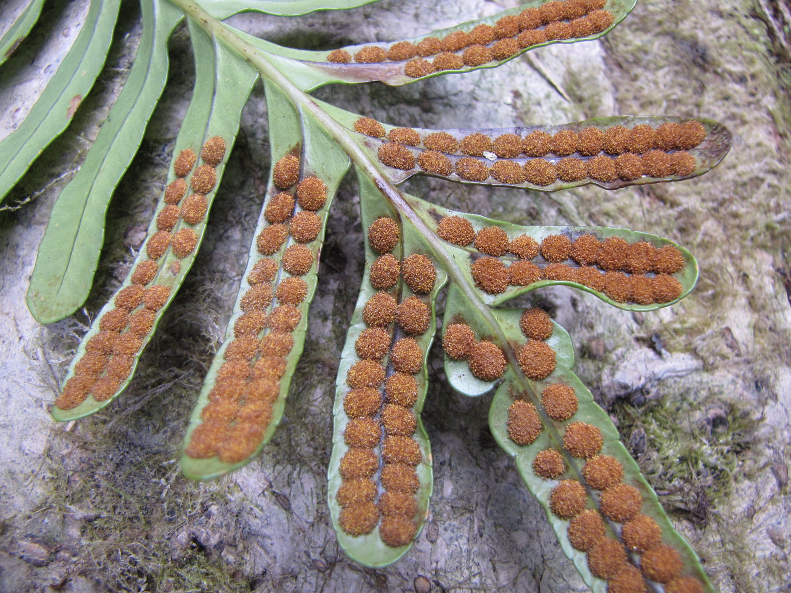
On the underside of the leaf on a fern, you would find _____ containing _____.
sori / spores
The genome sequence of "Denny" showed that she was a first generation "hybrid" between which of the following?
Neandertal and Denisovan
Which of the following is found in all major groups of vertebrates?
a skull
The overall shape of an animal can be described by its
body plan.
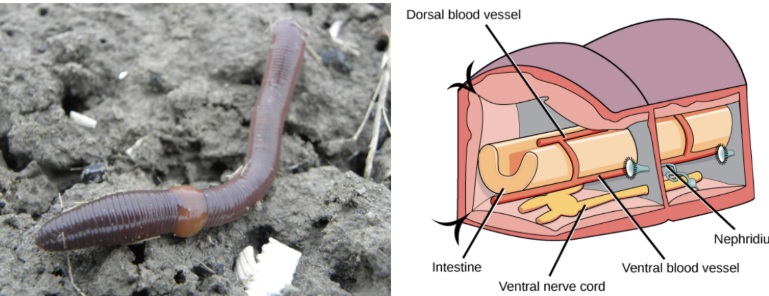
(OpenStax Biology 2e Figure 28.29 & 29.30)
The earthworm is a segmented worm with a closed circulatory system, and its closest cousins are leeches and marine polychaete worms. These animals have
a true body cavity formed within the mesoderm germ layer.
Many multicellular fungi form super-organisms through _____ followed by _____.
plasmogamy / karyogamy
Which scenario is NOT supported by scientific evidence?
direct descent of modern humans from Homo florensiensis
Viruses are not always considered to be life forms because they
are not organized in cells, but need to use a host organism cell to survive and reproduce.
Without fungi, human civilization would not have
all of these
A basal animal called a sponge qualifies as a multicellular ‘body.’
true
On which continent would you have seen the very earliest members of Homo sapiens?
Africa
A geologic layer of rare iridium and the presence of an impact crater correspond with
the asteroid that caused the K-Pg (K-T or end-Cretaceous) extinction event
Eukaryotic organisms that are single celled and are often distantly related are best described collectively and informally as.....
protists
A constricting ring formed by Arthrobotrys traps a nematode. Fungal hyphae invade and digest the nematode. This is an example of a _______ interaction.
predatory
Dinoflagellates are common endosymbionts of
corals
_____ is a process in which certain organelles are the descendants of prokaryotes that were engulfed, but not digested, by ancient eukaryotic cells.
Endosymbiosis
Certain populations of Homo sapiens evolved lighter skin (less melanin)
to avoid Vitamin D deficiency by increasing exposure to UV radiation
Animals with radial symmetry evolved before there were animals with three germ layers.
True
Which disease is NOT caused by a prokaryotic organism
COVID-19
Which of the following best describes how humans compare to other mammals with respect to smell?
Humans have a similar number of ‘smell’ genes as most mammals, but many of them are not functional.
In what part of a human embryo would you find embryonic gill arches
at what will later become the neck & jaw
The algal partner in a lichen symbioses is responsible primarily for
carbohydrate production
What is the primary ecological role of prokaryotes?
breaking down organic matter
What characterizes the tetrapod clade?
lives on land, has four limbs
A section of Chapter 11 in Your Inner Fish is called "Why History Makes us Sick." For example, humans are susceptible to hernias because
male mammal testes have ended up in a vulnerable position where the sperm are not overheated.
What is true of the fossil record of mammalian origins?
It includes transitional forms with progressively specialized teeth.
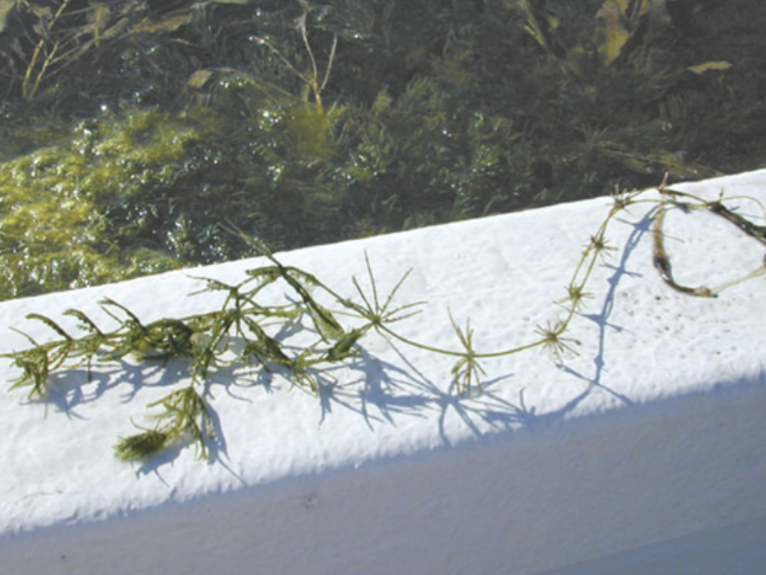
This stonewort (OpenStax Biology 2e Figure 25.8) may be similar to the common ancestor of land plants. It is considered a green plant, but NOT a land plant. It is a member of the _____ clade.
charophyte
Powerful exoenzymes and maximum surface area provided by abundant long, thin, underground hyphae are excellent adaptations for
absorptive heterotrophy
[This animal] has _____ symmetry and _____ embryonic germ layers and _____ body cavity.
A segmented worm (annelid)
bilateral / three / a true (coelom)
[This animal] has _____ symmetry and _____ embryonic germ layers and _____ body cavity.
A flatworm (platyhelminth)
bilateral / three / no
[This animal] has _____ symmetry and _____ embryonic germ layers and _____ body cavity.
A sponge
no / zero / no
[This animal] has _____ symmetry and _____ embryonic germ layers and _____ body cavity.
A roundworm (nematode)
bilateral / three / a false (pseudocoelom)
[This animal] has _____ symmetry and _____ embryonic germ layers and _____ body cavity.
A cnidarian
radial / two / no
Algae are monophyletic.
False
The earliest known mineralized (bony) structures in vertebrates are associated with
feeding
Humans belong to which subgroup of mammals?
eutherians
Which type of host cell is targeted by a phage virus?
bacteria
Diatoms are considered zooplankton.
False
Which characteristics are (both) unique to animals?
muscle tissue and a nervous system
Trilobites (OpenStax Biology 2e Figure 27.17) were abundant and diverse, with a mineralized exoskeleton. They are reliable index fossils

from the Cambrian explosion (~541 mya) until the Great Dying, 252 million years ago.


Colonial eukaryotes called choanoflagellates resemble the collar cells in sea sponges. Choanoflagellates and sponges are both
opisthokonts
Most viruses that infect people evolved from viruses that infect other animal species.
true
Which statement is true, and helps to explain why amphibians are especially vulnerable to environmental change?
They require moist environments for gas exchange and reproduction.
Biologists have used molecular evidence to trace all viruses to a single common ancestor.
False


(OpenStax Biology 2e Figure 28.4 and see also Figure 27.7)
Porifera (sponges) are considered the simplest animals because they have no _____, but ctenophores (comb jellies) are also considered basal because like the sponges, they have no _____.
true tissues from embryonic germ layers / Hox genes
Neil Shubin and his colleague went ‘shopping’ in China for a very special salamander fossil with what feature?
intact eyeball

I lived more than three million years ago in Africa. I walked fully upright and my footprints a quite similar to those of modern humans. My brain case is about 450 cc, similar to a modern chimpanzee. My most famous fossil specimen is nicknamed "Lucy.”
Australopithecus afarensis
A sporophyte is
the multicellular diploid life stage of a plant.
Viruses are not always considered to be life forms because they
are not organized in cells, but need to use a host organism cell to survive and reproduce.
The largest mass extinction (referred to as the "Great Dying" in the Eons short film, "A Brief History of Geologic Time") corresponds with which event in this illustration (OpenStax Biology 2e Figure 27.17)?

end-Permian extinction

(OpenStax Biology 2e Figure 28.36)
Trilobites were highly segmented animals, with mineralized exoskeletons and jointed appendages. They belong to the phylum
Arthropoda
Rocks older than 600 million years old are generally devoid of fossilized animals or plants.
True
Every dinosaur species (alive at that time) went extinct as a result of the Cretaceous mass extinction event.
False
In a reptile, the bones of the ear are firmly anchored in the jaw.
true

