Honors Algebra 1 Review - 9th Grade Math Placement Test
 Studied by 0 people
 Call with Kai
 Learn
Learn Practice Test
 Spaced Repetition
 Match
Match Flashcards
 Knowt Play
1/112

There's no tags or description
Looks like no tags are added yet.
Name | Mastery | Learn | Test | Matching | Spaced | Call with Kai |
|---|
No analytics yet
Send a link to your students to track their progress
113 Terms
9
Find the value of c that makes x²+6x+c a perfect square trinomial
4
Find the value of c that makes x²+4x+c a perfect square trinomial
49
Find the value of c that makes x²-14x+c a perfect square trinomial
1
Find the value of c that makes x²-2x+c a perfect square trinomial
81
Find the value of c that makes x²-18x+c a perfect square trinomial
100
Find the value of c that makes x²+20x+c a perfect square trinomial
6.25
Find the value of c that makes x²+5x+c a perfect square trinomial
1225
Find the value of c that makes x²-70x+c a perfect square trinomial
30.25
Find the value of c that makes x²-11x+c a perfect square trinomial
20.25
Find the value of c that makes x²+9x+c a perfect square trinomial
{2, -6}
Solve by completing the square. Round to the nearest tenth if necessary: x²+4x-12=0
{3, 5}
Solve by completing the square. Round to the nearest tenth if necessary: x²-8x+15
{-7, 1}
Solve by completing the square. Round to the nearest tenth if necessary: x²+6x=7
{-3, 5}
Solve by completing the square. Round to the nearest tenth if necessary: x²-2x=15
{2. 12}
Solve by completing the square. Round to the nearest tenth if necessary: x²-14x+30=6
{-11, -1}
Solve by completing the square. Round to the nearest tenth if necessary: x²+12x+21=10
{0.3, 3.7}
Solve by completing the square. Round to the nearest tenth if necessary: x²-4x+1=0
{0.8, 5.2}
Solve by completing the square. Round to the nearest tenth if necessary: x²-6x+4=0
{1.6, 6.4}
Solve by completing the square. Round to the nearest tenth if necessary: x²-8x+10=0
{-1.4, 3.4}
Solve by completing the square. Round to the nearest tenth if necessary: x²-2x=5
{-9.9, -0.1}
Solve by completing the square. Round to the nearest tenth if necessary: 2x²+20x=-2
f(x) = |x|
What is the function of this graph?
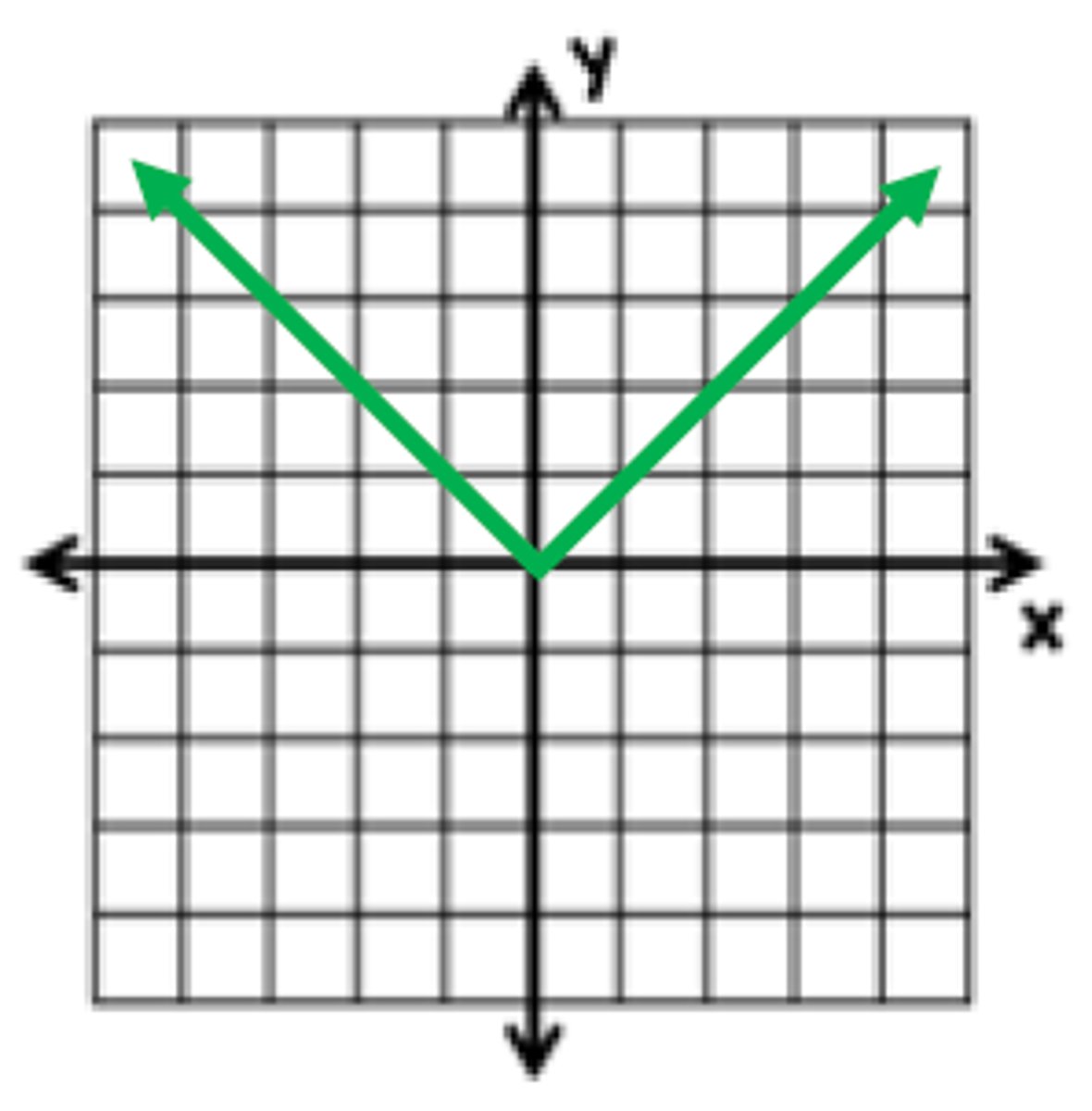
f(x) = |x| + 2
What is the function of this graph?
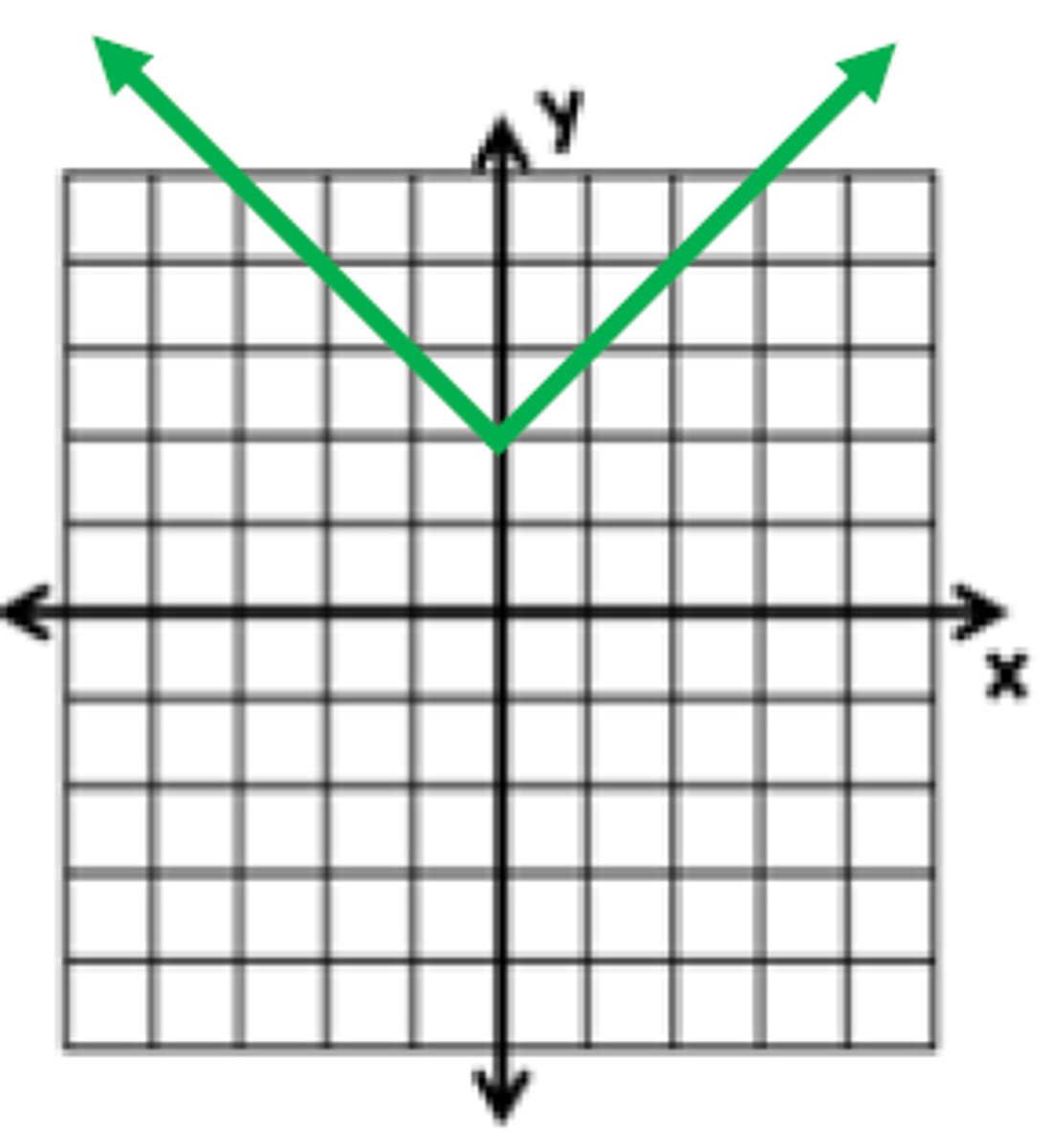
f(x) = 2|x|
What is the function of this graph?
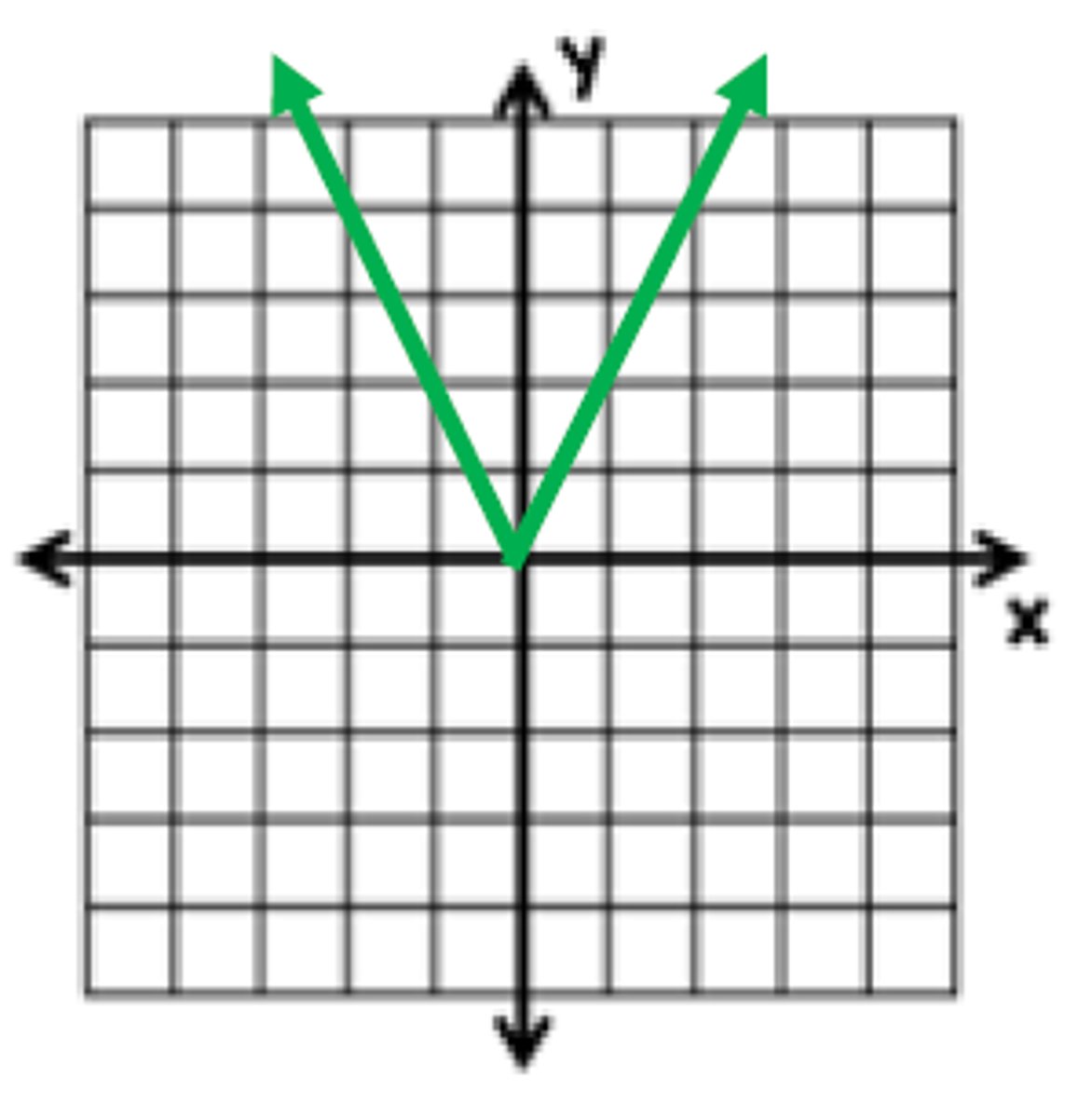
f(x) = |x| - 2
What is the function of this graph?
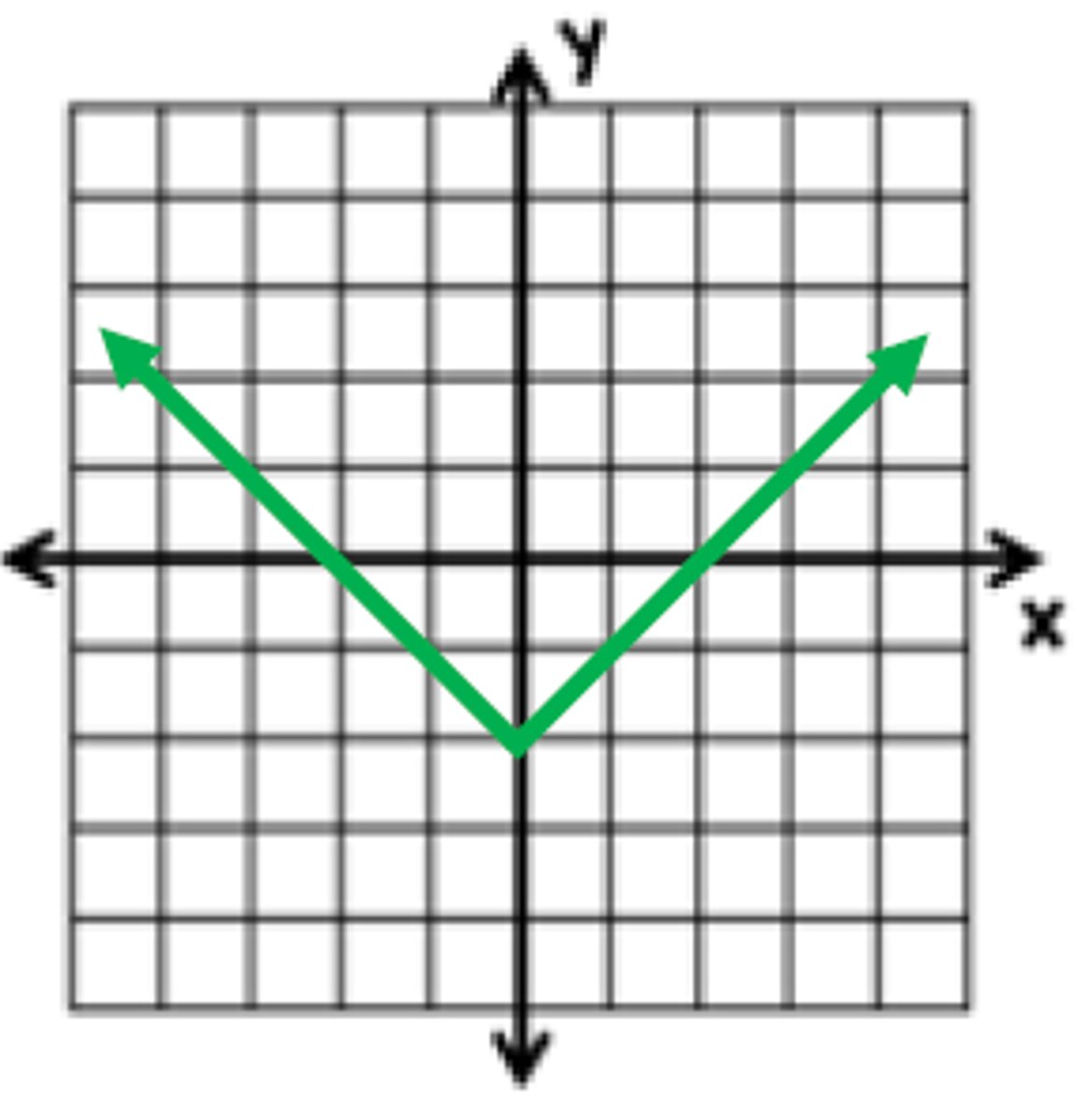
f(x) = |x - 2| + 1
What is the function of this graph?
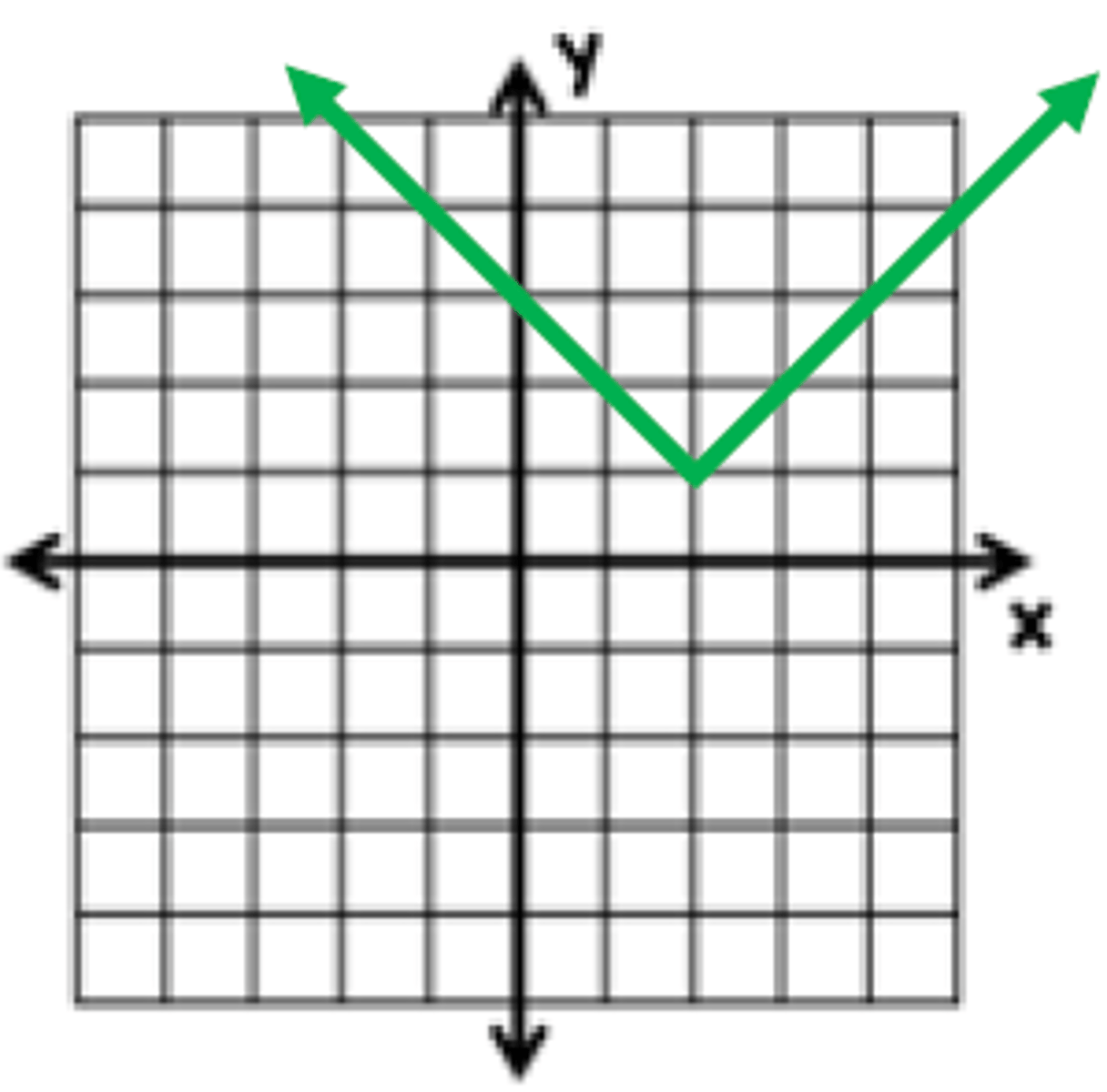
f(x) = |x - 3| - 1
What is the function of this graph?
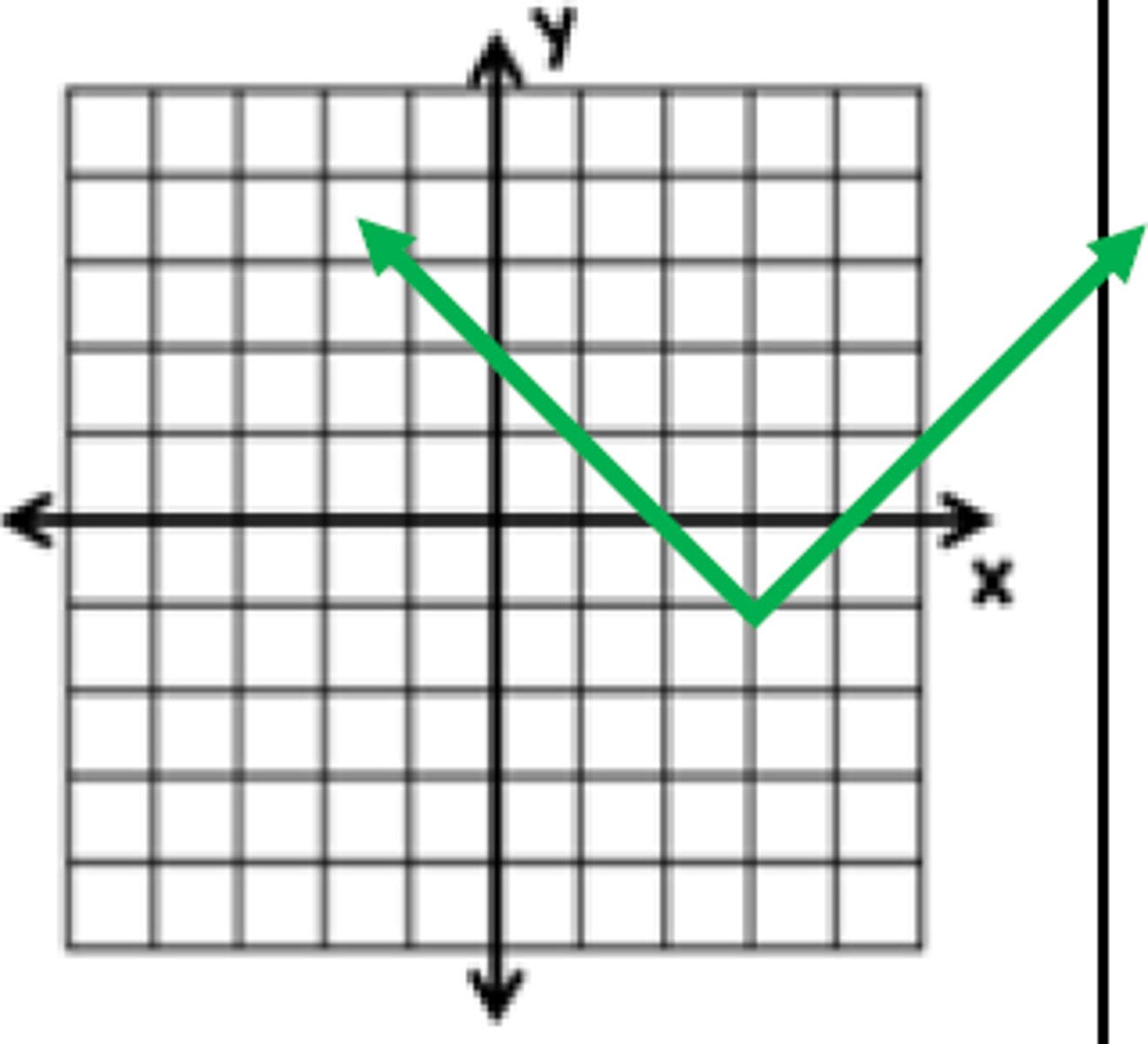
(0, 0)
What is the vertex of: f(x) = |x|
(0, -4)
What is the vertex of: f(x) = |x| - 4
(4, 0)
What is the vertex of: f(x) = |x - 4|
(2, 0)
What is the vertex of: f(x) = |x - 2|
(0, -2)
What is the vertex of: f(x) = |x| - 2
(4, 5)
What is the vertex of: f(x) = |x - 4| + 5
(5, 4)
What is the vertex of: f(x) = |x - 5| + 4
(-4, 5)
What is the vertex of: f(x) = |x + 4| + 5
(4, -5)
What is the vertex of: f(x) = |x - 4| - 5
(5, -4)
What is the vertex of: f(x) = |x - 5| - 4
narrow graph
Does f(x) = 2|x| have a narrow or wide graph?
wide graph
Does f(x) = 0.5|x| have a narrow or wide graph?
narrow graph
Does f(x) = 3|x| have a narrow or wide graph?
wide graph
Does f(x) = 0.25|x| have a narrow or wide graph?
Axis of Symmetry
The line that splits a quadratic equation at the point of symmetry is called
a
In the expression ax² + bx + c, which value determines how the parabola opens?
Vertex
What is the point at which the parabola begins to change direction?
Minimum
If a quadratic equation opens upward, is the vertex a maximum or minimum?
x
Is the axis of symmetry the x value of the vertex or the y value of the vertex
1
How many roots / solutions does a quadratic equation have if the vertex is on the x-axis?
0 or No real solution
How many roots / solutions does a quadratic equation that opens up with a vertex of (2, 4) have?
2
How many roots / solutions does a quadratic equation that opens down with a vertex of (2, 4) have?
Create an x / y table.
When graphing a quadratic equation, what is the step that follows finding the vertex?
x = 2
What is the axis of symmetry for the quadratic equation x² - 4x + 6 = 0?
(2, 2)
What is the vertex for the quadratic equation x² - 4x + 6 = 0?
Minimum
Is the vertex for the quadratic equation x² - 4x + 6 = 0 a max or a min?
x = 0
What is the axis of symmetry for the quadratic equation y = x² + 2?
(0, 2)
What is the vertex for the quadratic equation y = x² + 2?
Down
Will the graph for the quadratic equation f(x) = -2x² + 8x - 3 open up or down?
x = -2
What is the axis of symmetry in the graph shown?
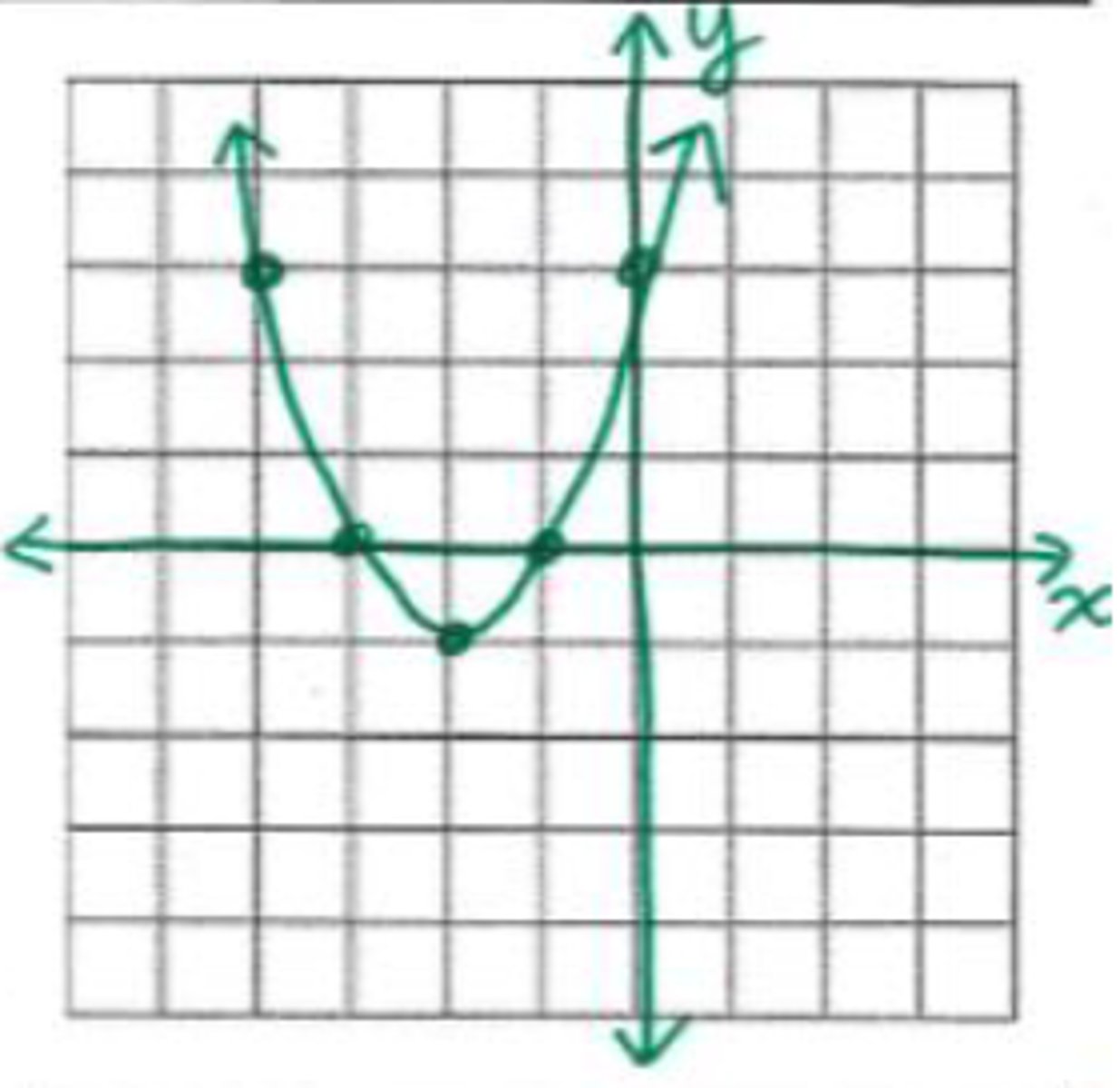
(-2, -1)
What is the vertex in the graph shown?
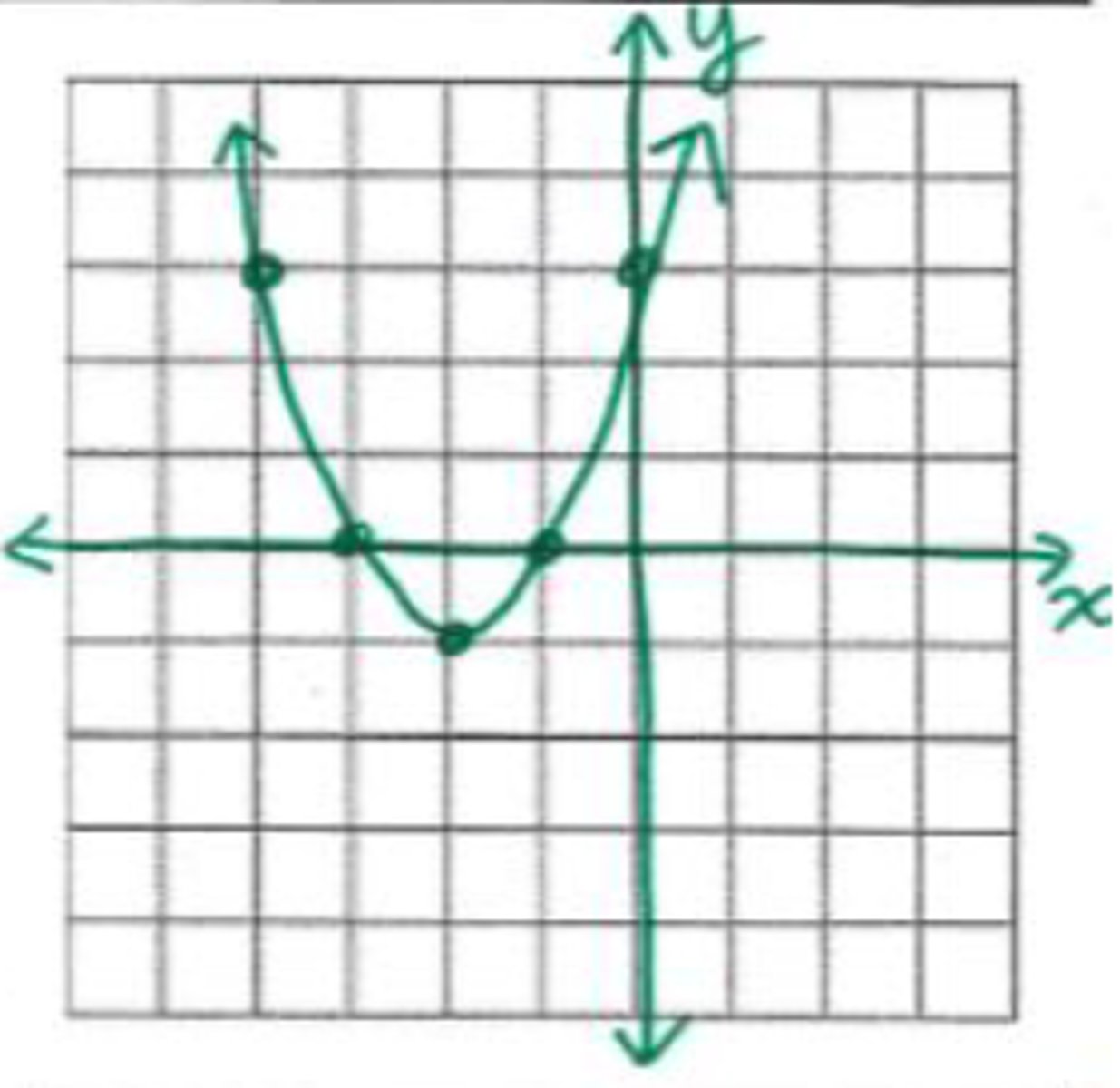
domain: all reals; range: y ≥ -1
What is the domain and range in the graph shown?
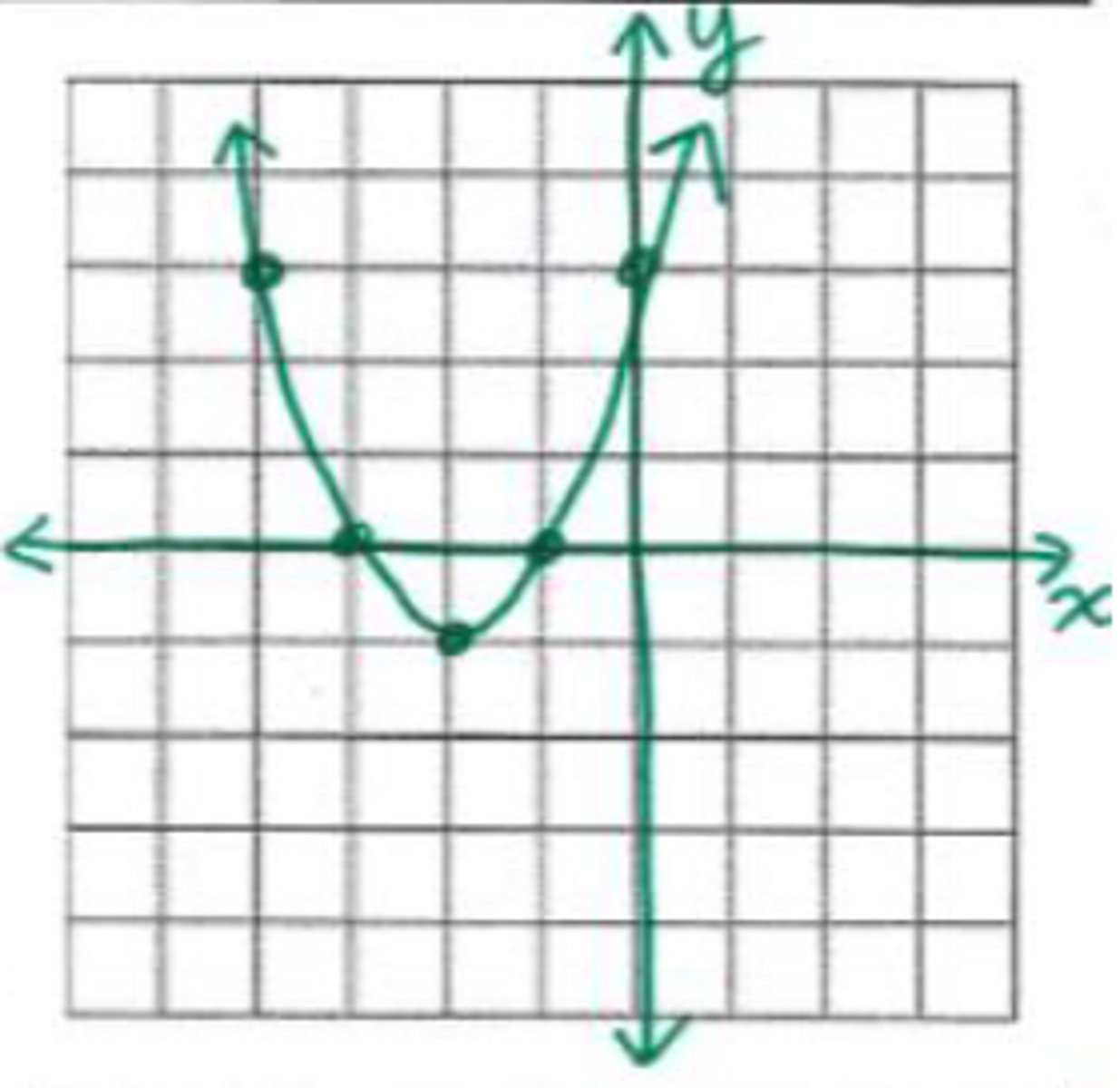
x = {-3, -1}
What are the roots of the graph shown?
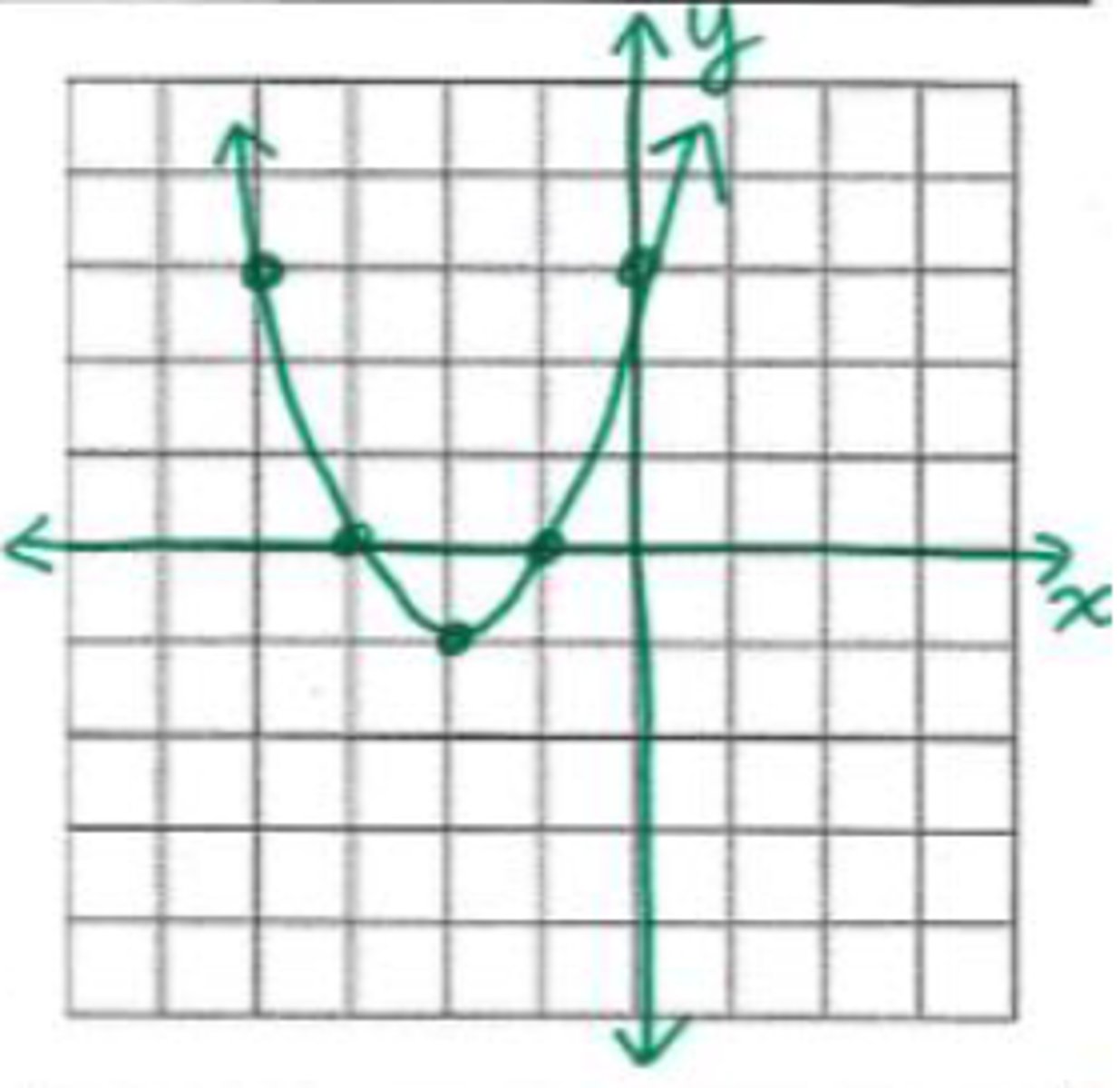
x = 0
What is the axis of symmetry in the graph shown?
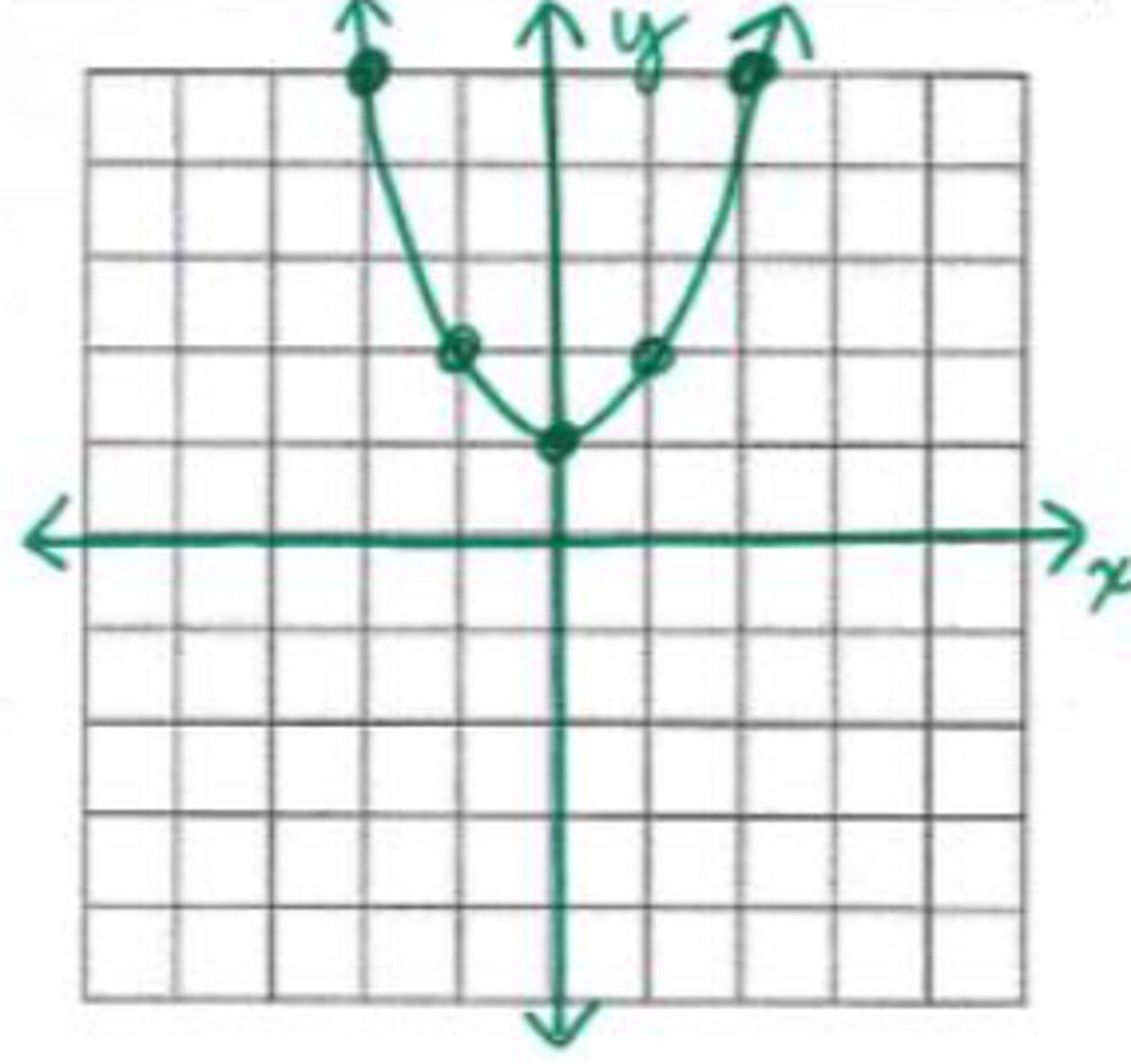
(0, 1)
What is the vertex in the graph shown?
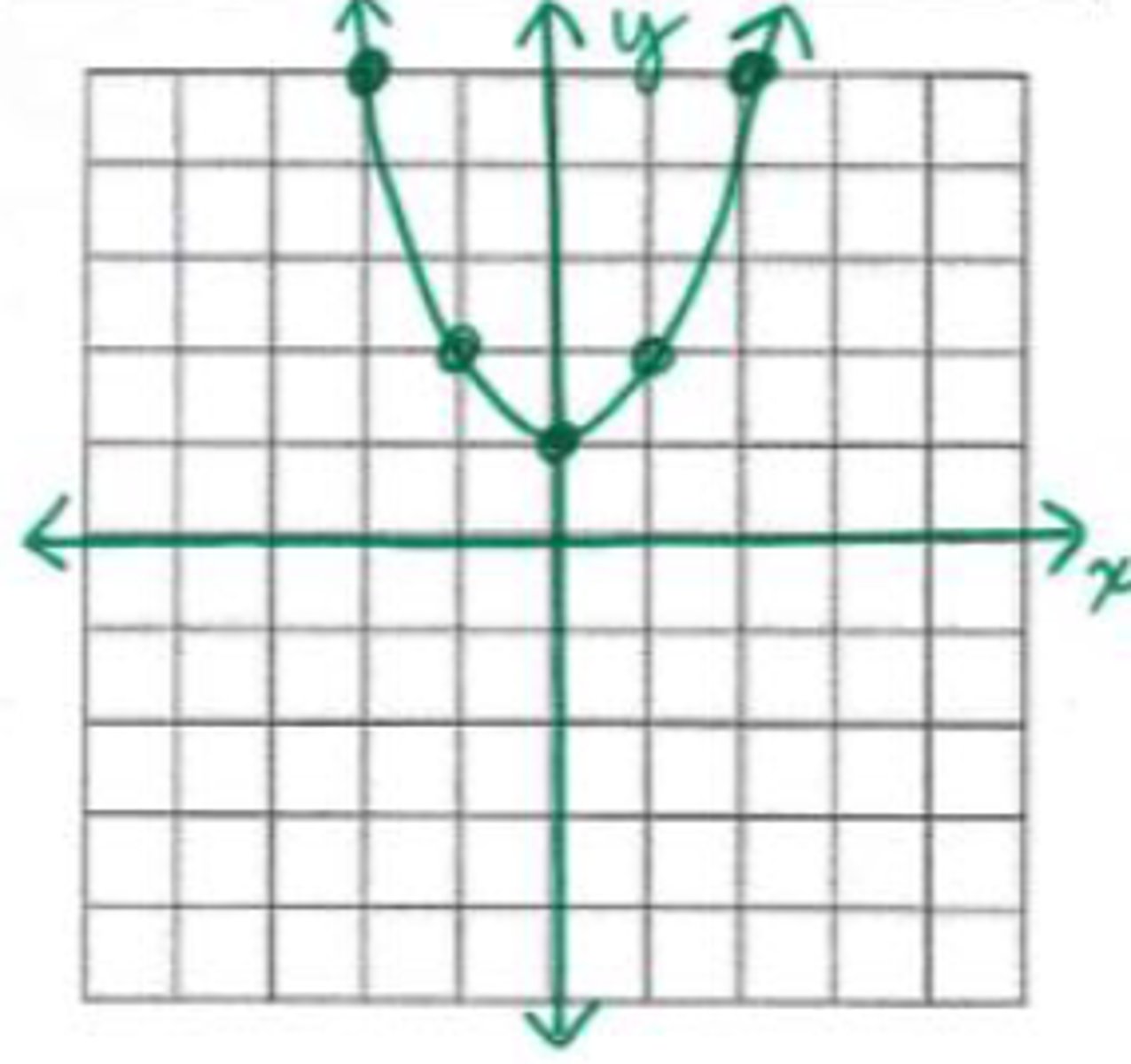
domain: all reals; range: y ≥ 1
What is the domain and range in the graph shown?
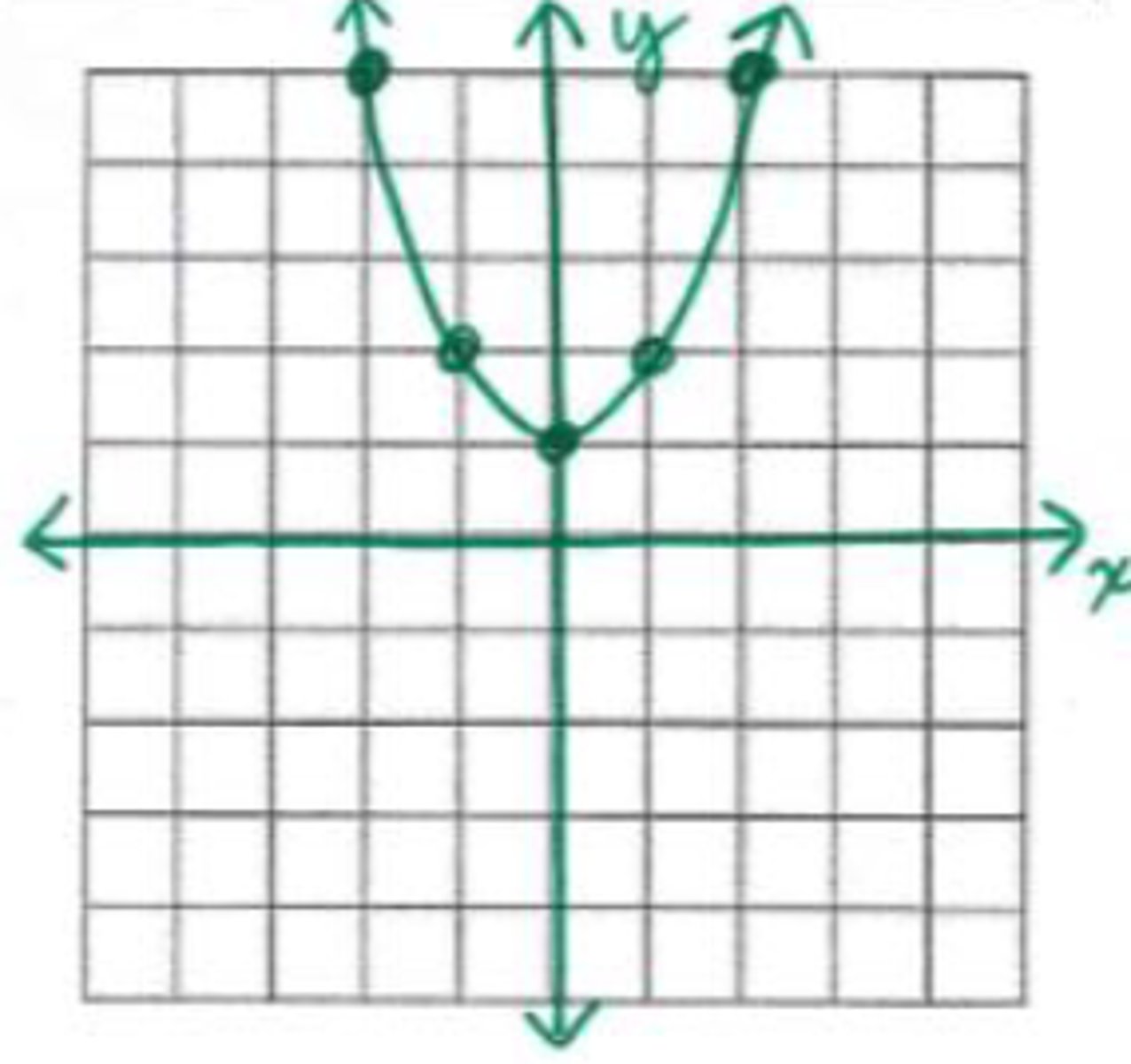
x = {∅} no roots
What are the roots of the graph shown?
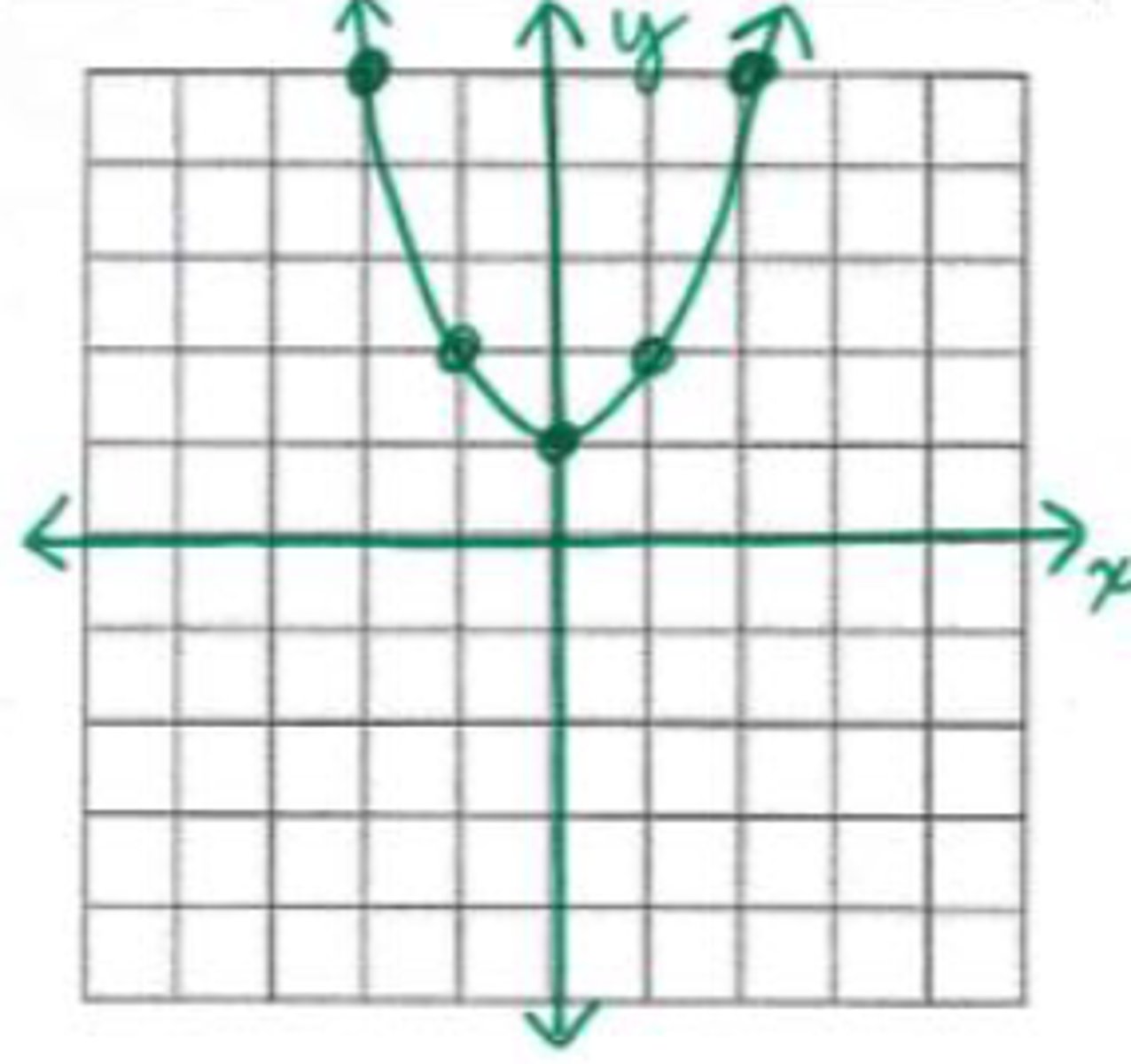
x = -1
What is the axis of symmetry in the graph shown?
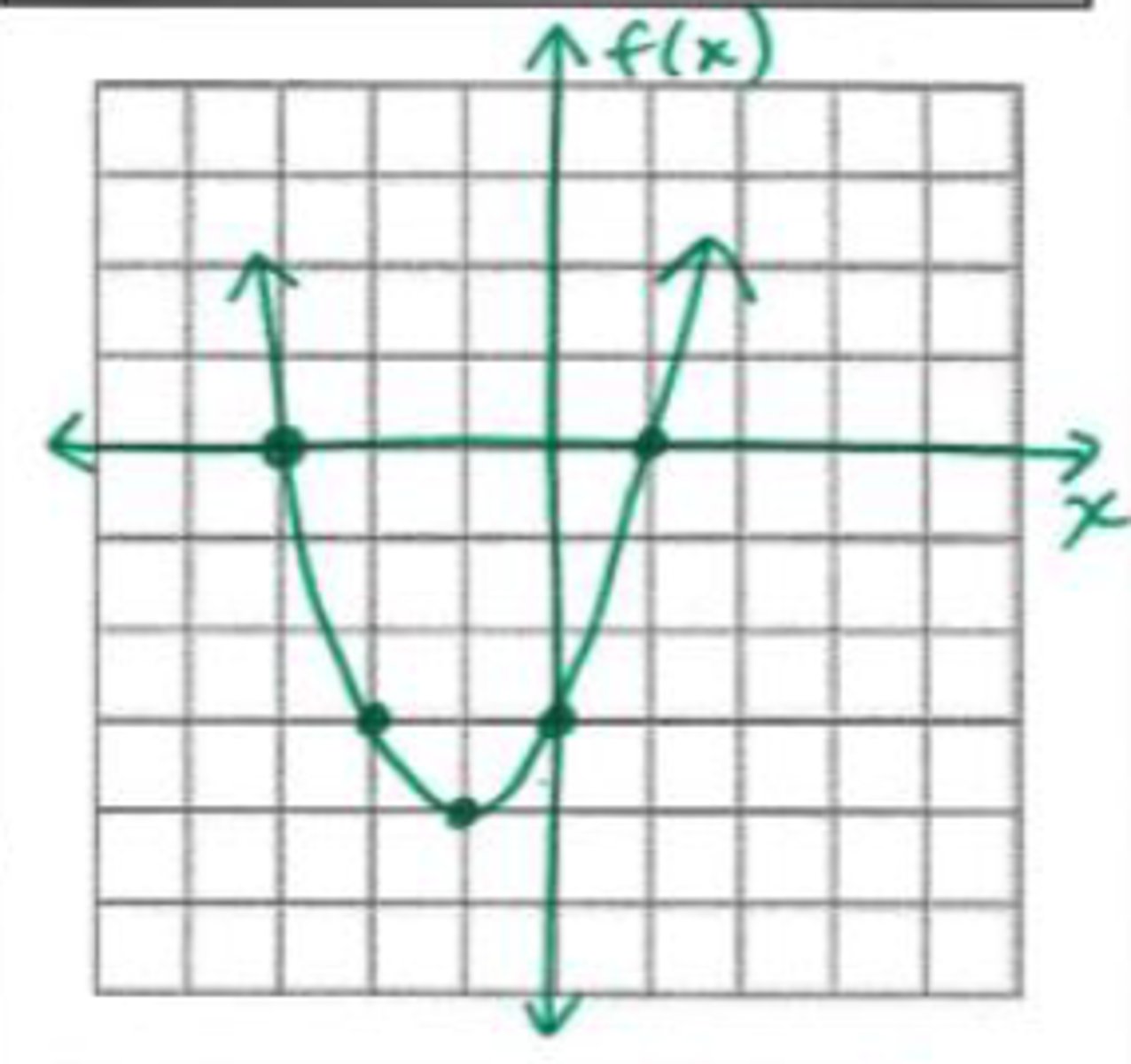
(-1, -4)
What is the vertex in the graph shown?
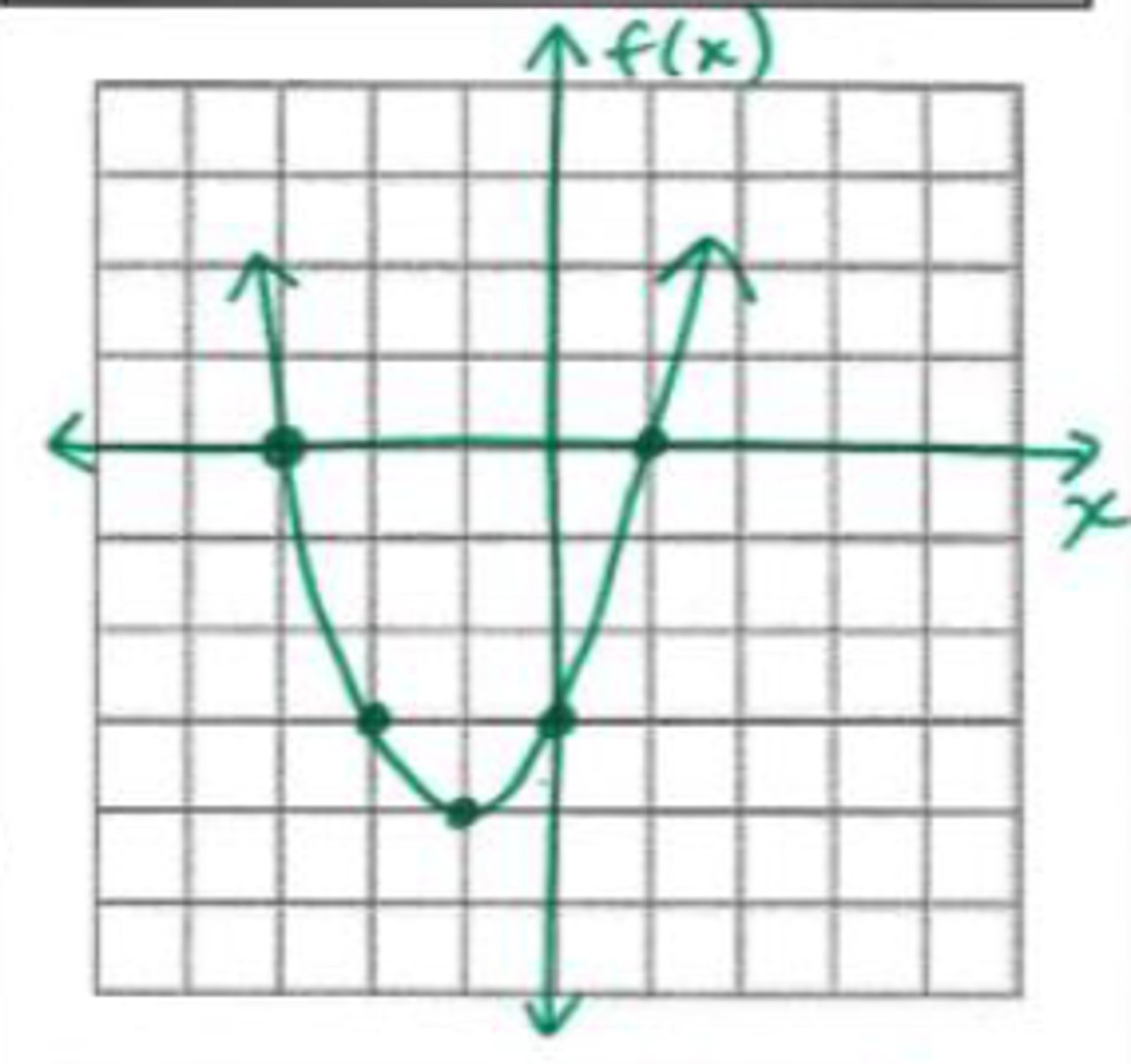
domain: all reals; range: y ≥ -4
What is the domain and range in the graph shown?
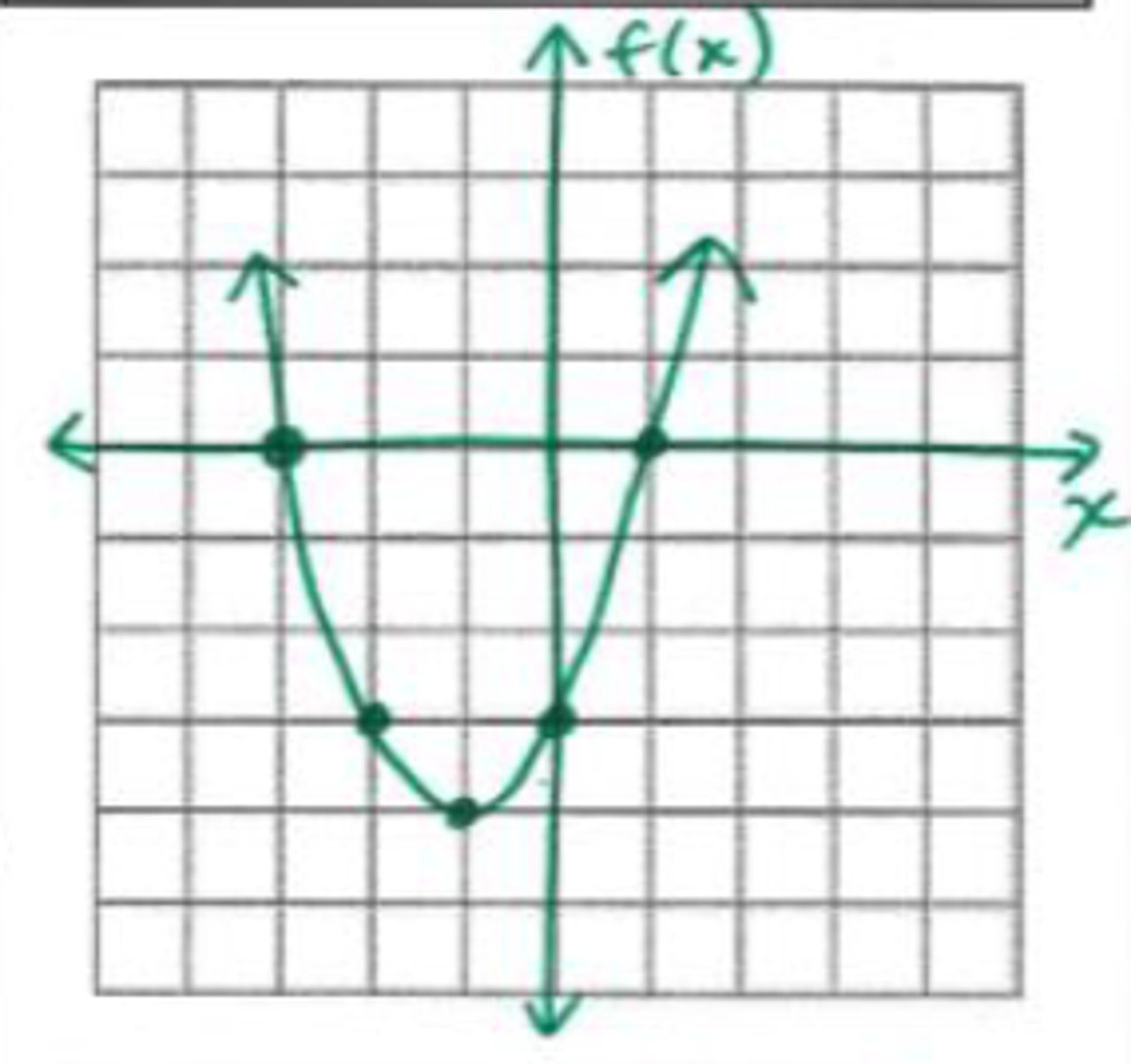
x = {-3, 1}
What are the roots of the graph shown?
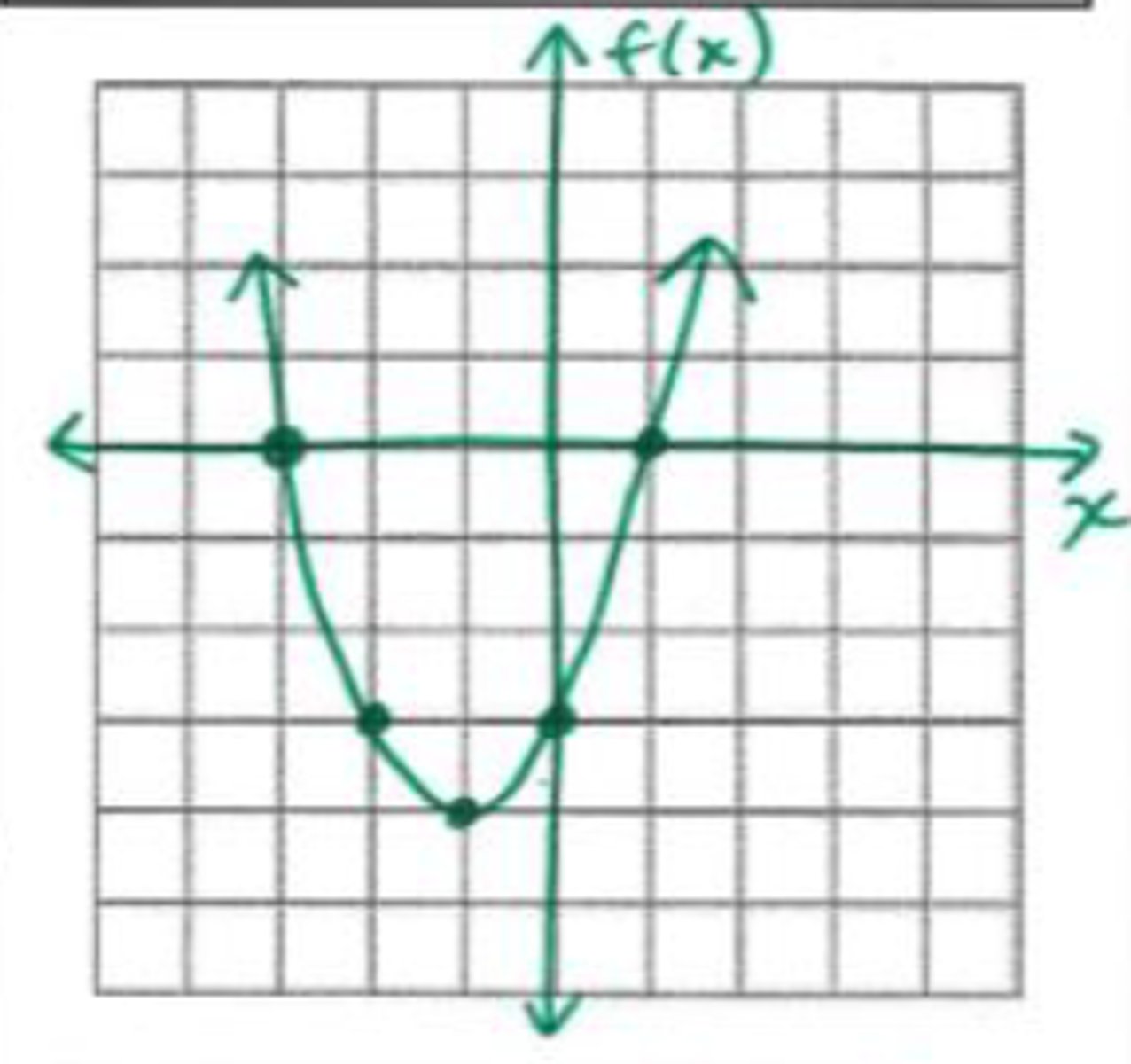
x = 0
What is the axis of symmetry in the graph shown?
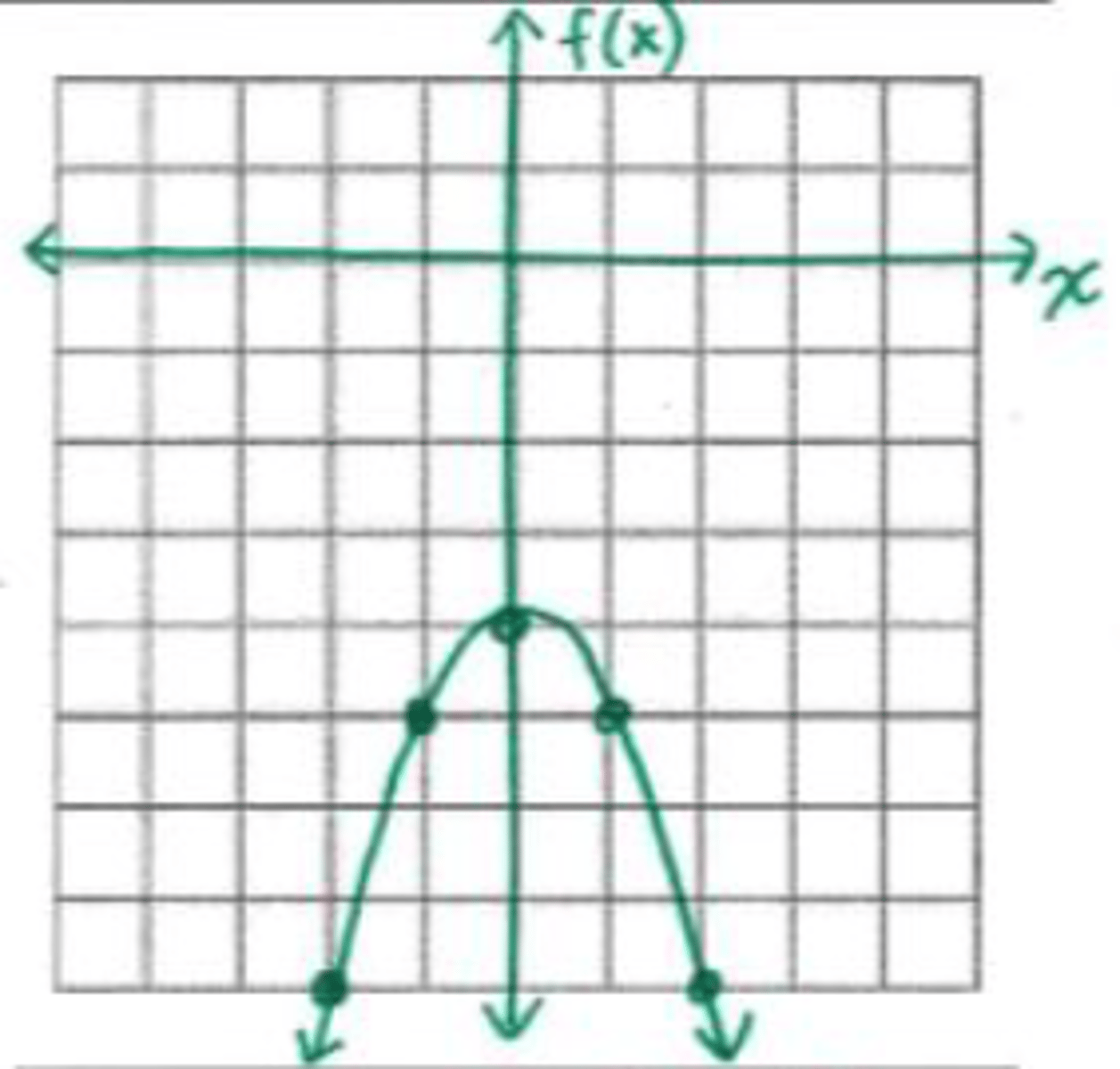
(0, -4)
What is the vertex in the graph shown?
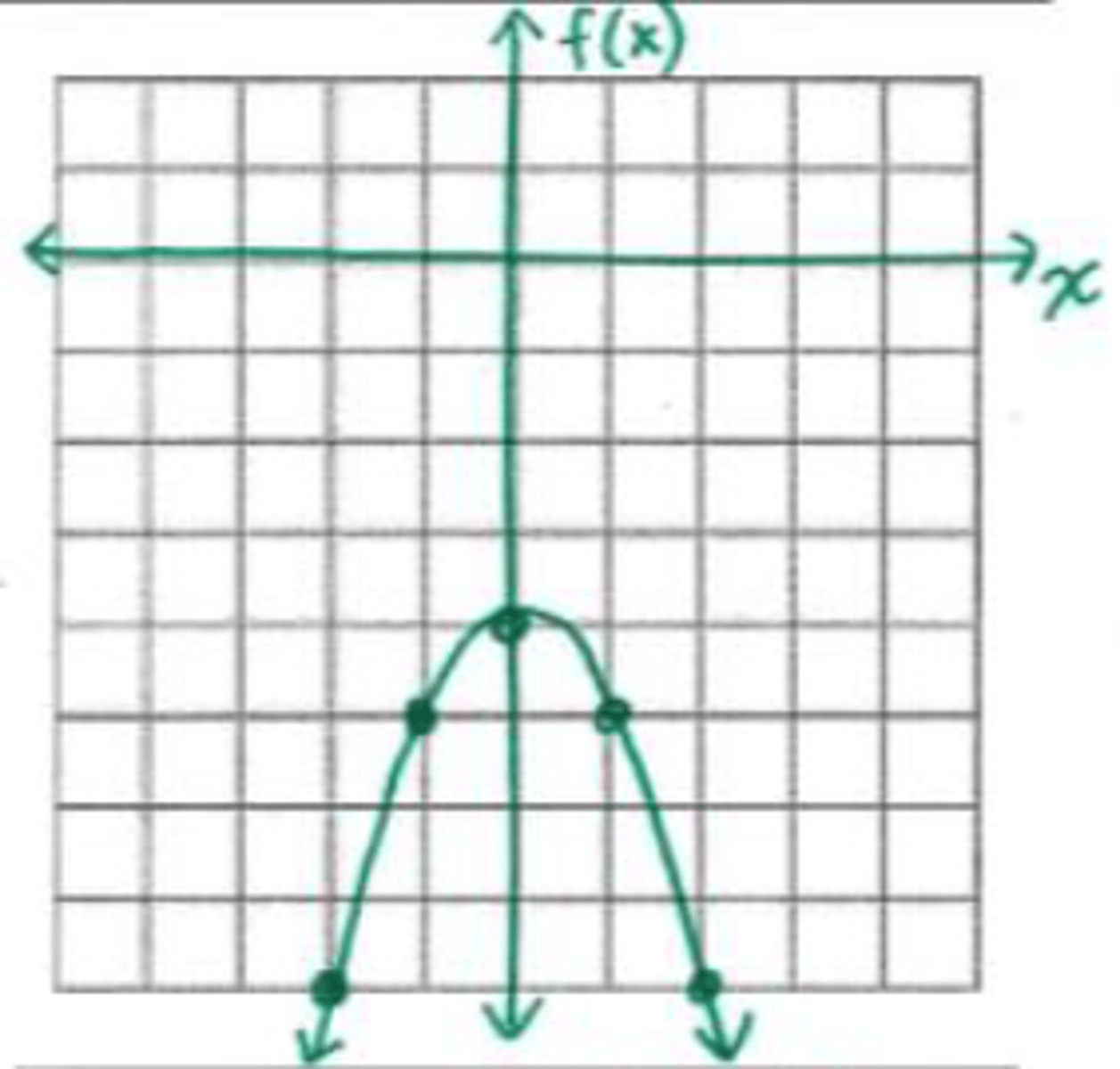
domain: all reals; range: y ≤ -4
What is the domain and range in the graph shown?
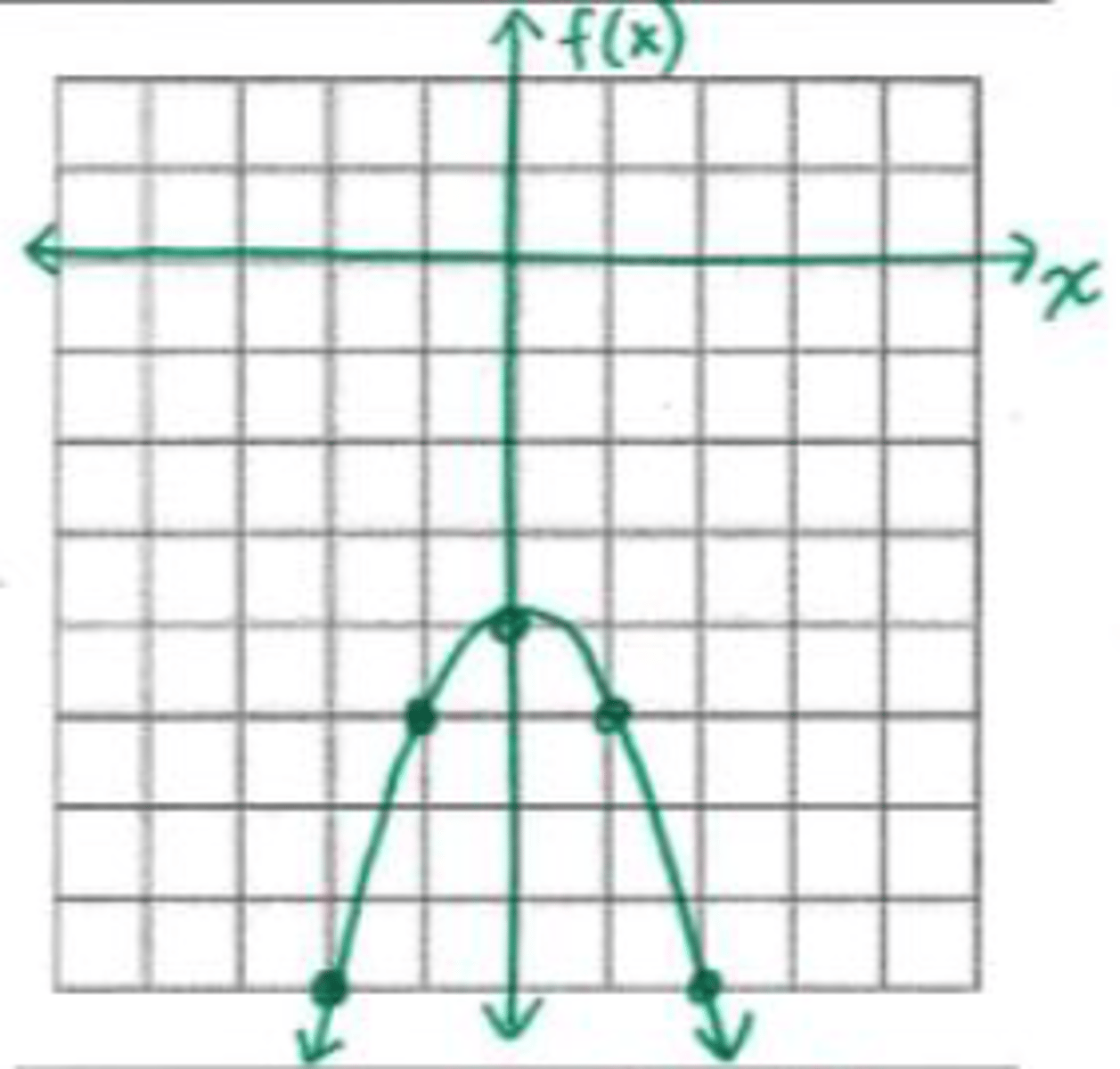
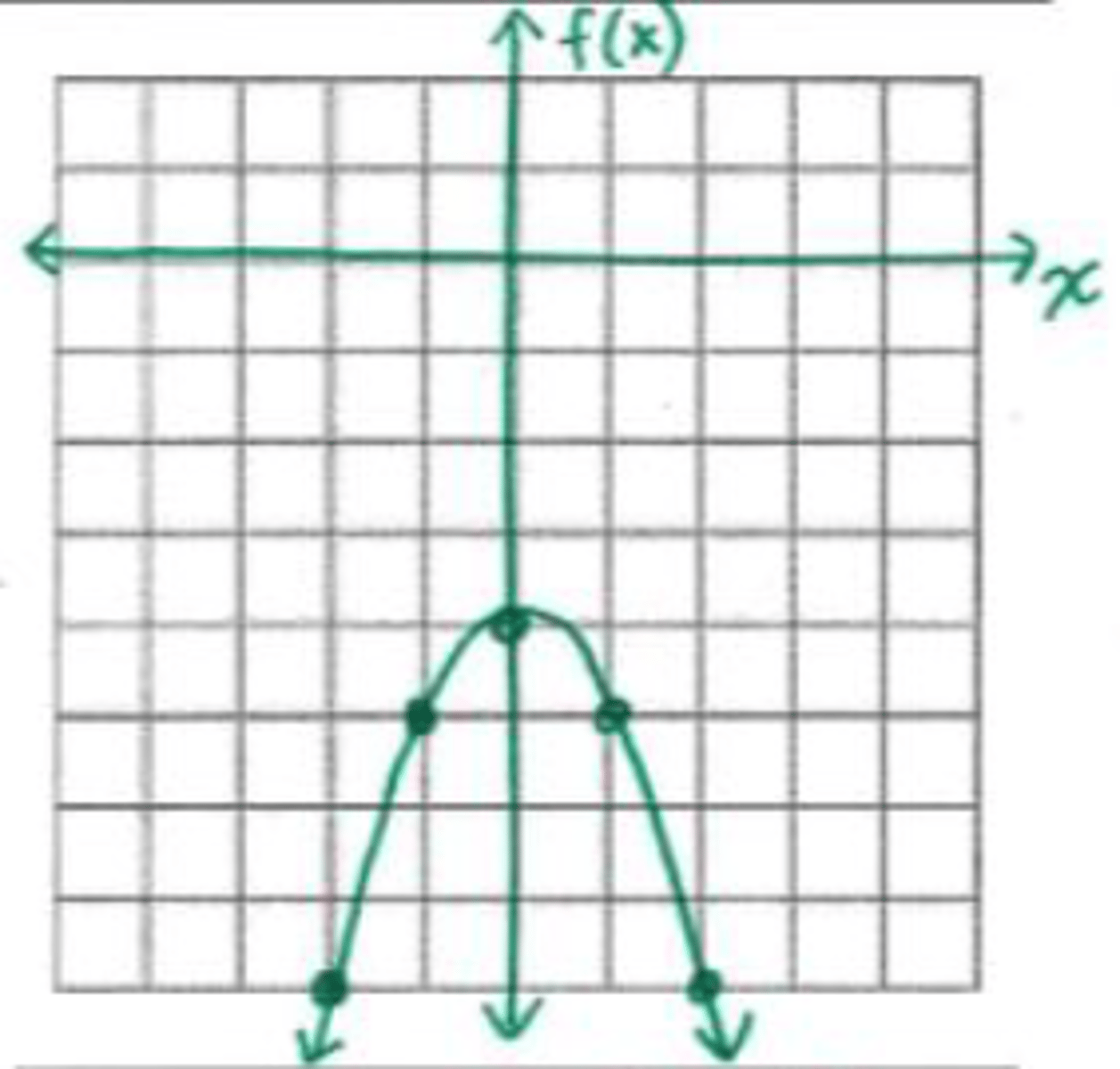
x = {∅}
What are the roots of the graph shown?
Translation of f(x)= x² up 2 units
Describe how the graph of g(x)=x²+2 is related to the graph f(x)=x²
Translation of f(x)=x² to the right one unit
Describe how the graph of g(x)=(x-1)² is related to the graph f(x)=x²
Translation of f(x)=x² down 8 units
Describe how the graph of g(x)=x²-8 is related to the graph f(x)=x²
Stretch of f(x) = x² narrower than the graph of f(x)=x²
Describe how the graph of g(x)=7x² is related to the graph f(x)=x²
Compression of f(x)=x² wider than the graph of f(x)=x²
Describe how the graph of g(x)=1/5 x² is related to the graph f(x)=x²
Stretch of f(x)=x² narrower than the graph of f(x)=x² reflected over the x-axis.
Describe how the graph of g(x)=-6x² is related to the graph f(x)=x²
Reflection of f(x)=x² over the x-axis translated up 3 units
Describe how the graph of g(x)=-x²+3 is related to the graph f(x)=x²
Compression of f(x)=x² wider than the graph of f(x)=x² reflected over the x-axis translated up 5 units.
Describe how the graph of g(x)=-½x² + 5 is related to the graph f(x)=x²
Stretch of f(x)=x² narrower than the graph of f(x)=x² translated to the right 1 unit
Describe how the graph of g(x)=4(x-1)² is related to the graph f(x)=x²
Translation of f(x)=x² to the left 10 units
Describe how the graph of g(x)=(x + 10)² is related to the graph f(x)= x²
Translation of f(x)=x² down 2/5 units
Describe how the graph of g(x) = x² - 2/5 is related to the graph f(x)=x²
Reflection of f(x)=x² across the x-axis translated up 9 units
Describe how the graph of g(x)= -x² + 9 is related to the graph f(x)=x²
Stretch of f(x) = x² narrower than the graph of f(x) translated up 2 units.
Describe how the graph of g(x)= 2x² + 2 is related to the graph f(x)=x²
Compression of f(x)=x² wider than the graph of f(x)=x², reflected over the x-axis, translated down ½ unit.
Describe how the graph of g(x)= -¾x² - ½ is related to the graph f(x)=x²
Stretch of f(x)=x² narrower than the graph of f(x)=x², reflected over the x-axis translated to the left 4 units.
Describe how the graph of g(x)=-3(x + 4)² is related to the graph f(x)=x²
{-7, 7}
Solve by using the Quadratic Formula. Round to the nearest tenth if necessary: x² - 49=0
{-4, 5}
Solve by using the Quadratic Formula. Round to the nearest tenth if necessary: x² - x - 20=0
{-4, 9}
Solve by using the Quadratic Formula. Round to the nearest tenth if necessary: x² - 5x - 36=0
{-6, -5}
Solve by using the Quadratic Formula. Round to the nearest tenth if necessary: x²+11x+30=0
{0.5, 6.5}
Solve by using the Quadratic Formula. Round to the nearest tenth if necessary: x²-7x=-3
{-3.7, -0.3}
Solve by using the Quadratic Formula. Round to the nearest tenth if necessary: x²+4x=-1
no real solutions
Solve by using the Quadratic Formula. Round to the nearest tenth if necessary: x²-9x+22=0
{-5.4, -0.6}
Solve by using the Quadratic Formula. Round to the nearest tenth if necessary: x²+6x+3=0
{-3½, 1}
Solve by using the Quadratic Formula. Round to the nearest tenth if necessary 2x²+5x-7=0
{½, 1}
Solve by using the Quadratic Formula. Round to the nearest tenth if necessary: 2x²-3x=-1
∅
Solve by using the Quadratic Formula. Round to the nearest tenth if necessary: 2x²+5x+4=0
{-4½, 1}
Solve by using the Quadratic Formula. Round to the nearest tenth if necessary: 2x²+7x=9
{-1.4, 0.7}
Solve by using the Quadratic Formula. Round to the nearest tenth if necessary: 3x²+2x-3=0
 Note
Note  Flashcards (56)