EKG interpretation and nursing actions
 Call Kai
 Learn
Learn Practice Test
 Spaced Repetition
 Match
Match Flashcards
 Knowt Play
1/37

There's no tags or description
Looks like no tags are added yet.
Name | Mastery | Learn | Test | Matching | Spaced | Call with Kai |
|---|
No analytics yet
Send a link to your students to track their progress
38 Terms
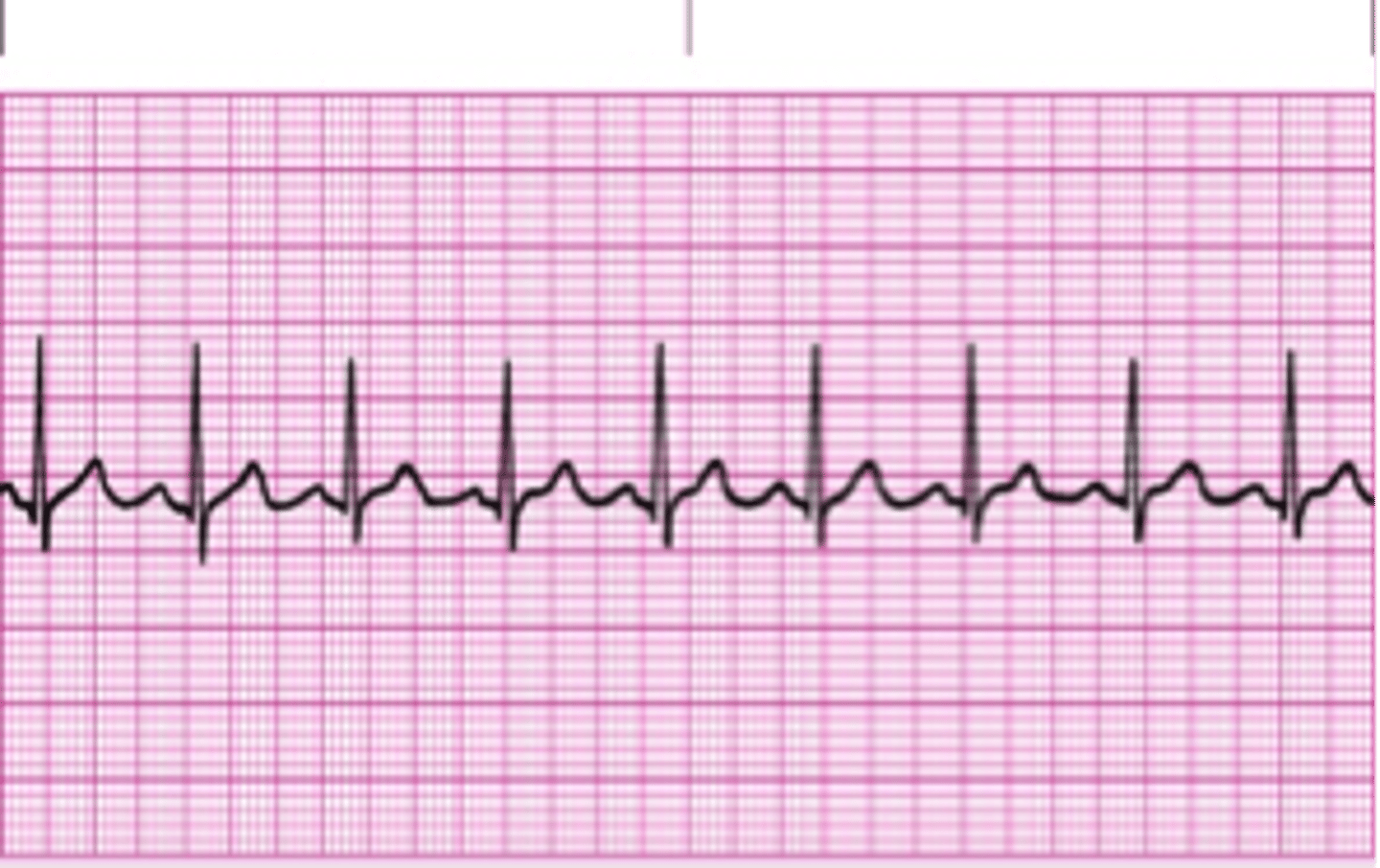
normal sinus
This is a ___________________________Rhythm
HR:60-100 normal
QRS complex 0.04-.12
PR interval 0.12-0.2
QT interval 0.40-0.44
ekg paper
1 small box
0.04
ekg paper
five small blocks equal
0.2
ekg paper
five large boxes equal
1 second
6 seconds
ekg paper
30 large boxes
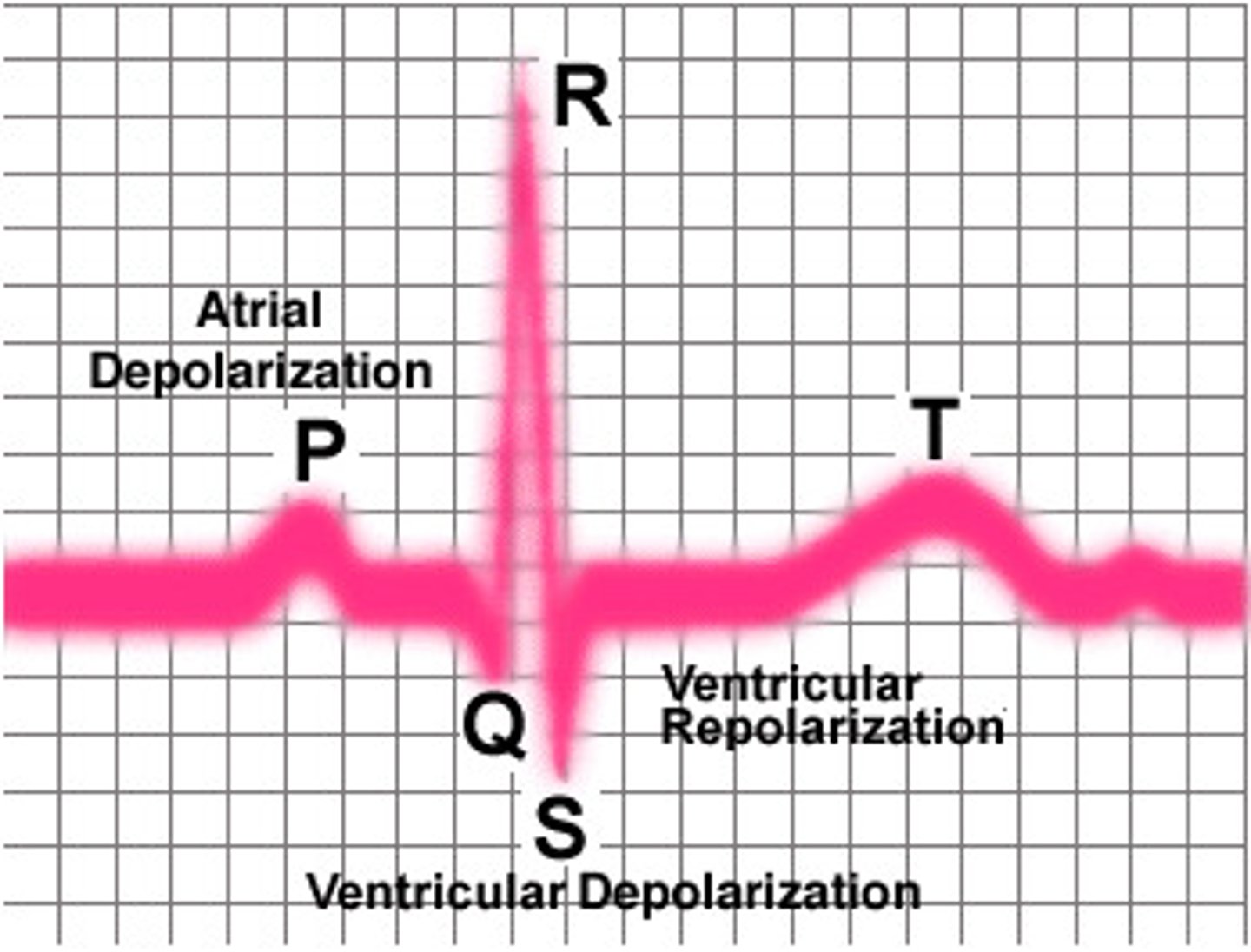
P wave is the starting pulse from the ___node? located in the R atrium.
SA
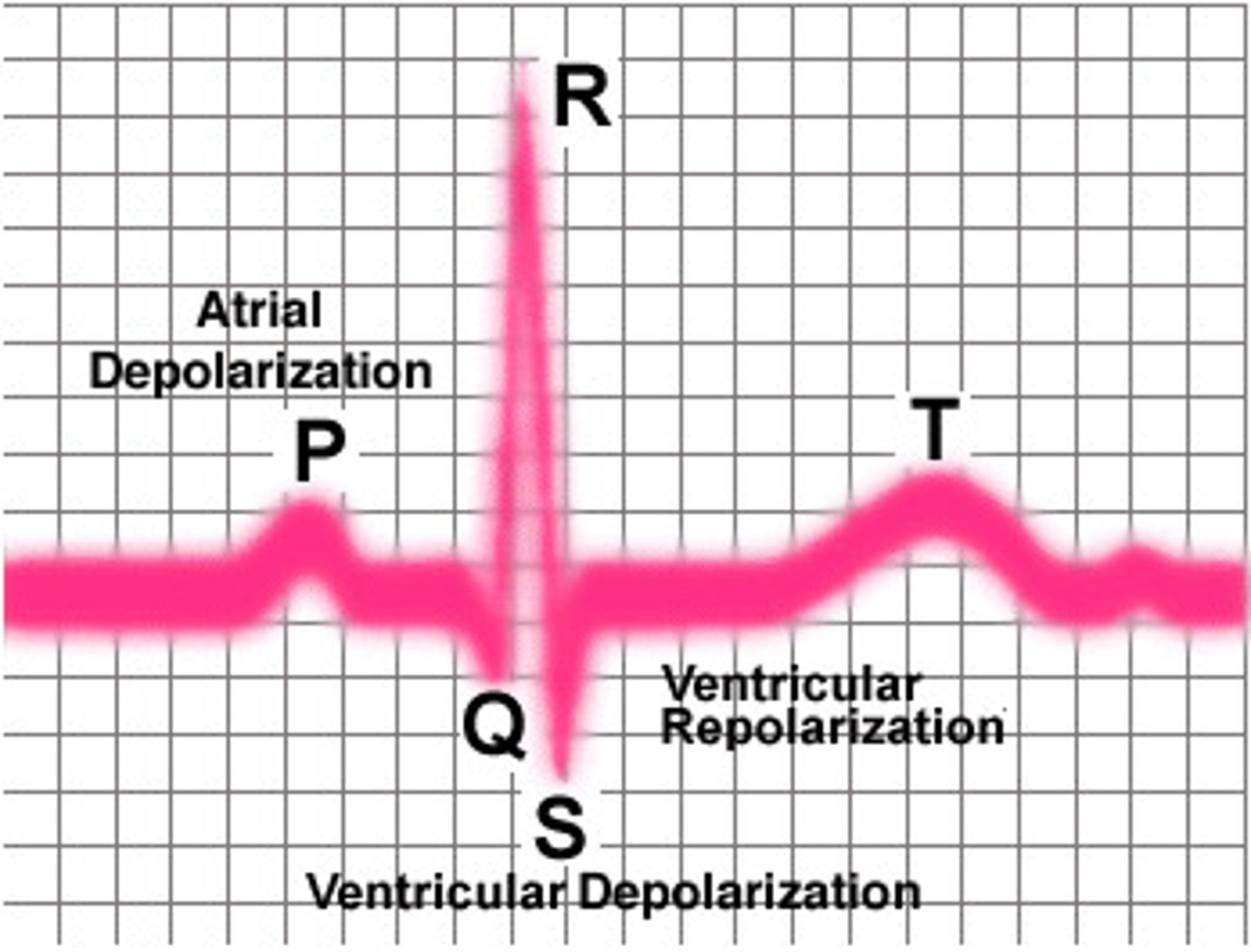
when the ventricals contract
QRS complex
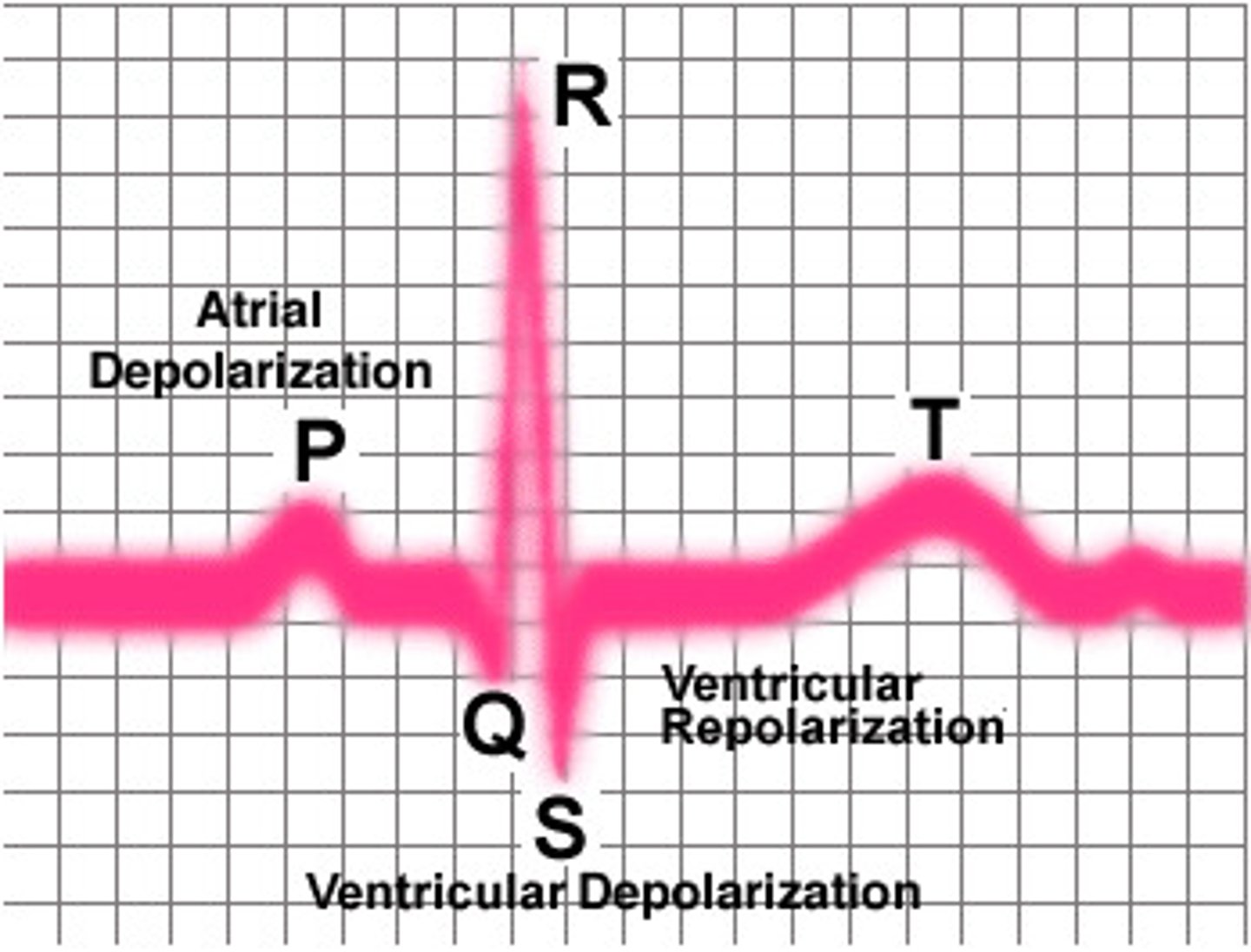
What is happening during the T wave
The heart is resetting
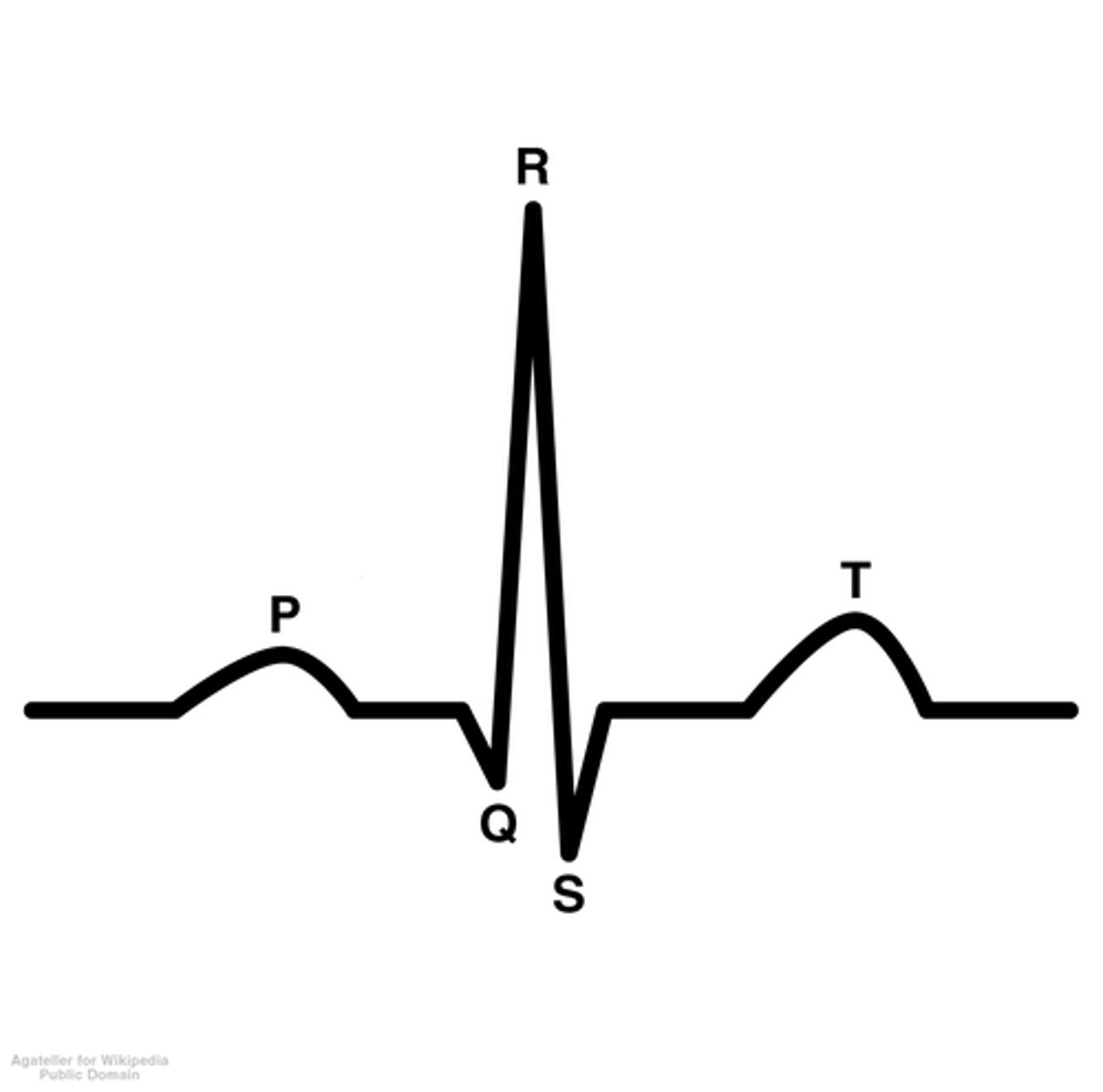
represents atrial depolarization (contraction) usually followed by the QRS
p wave
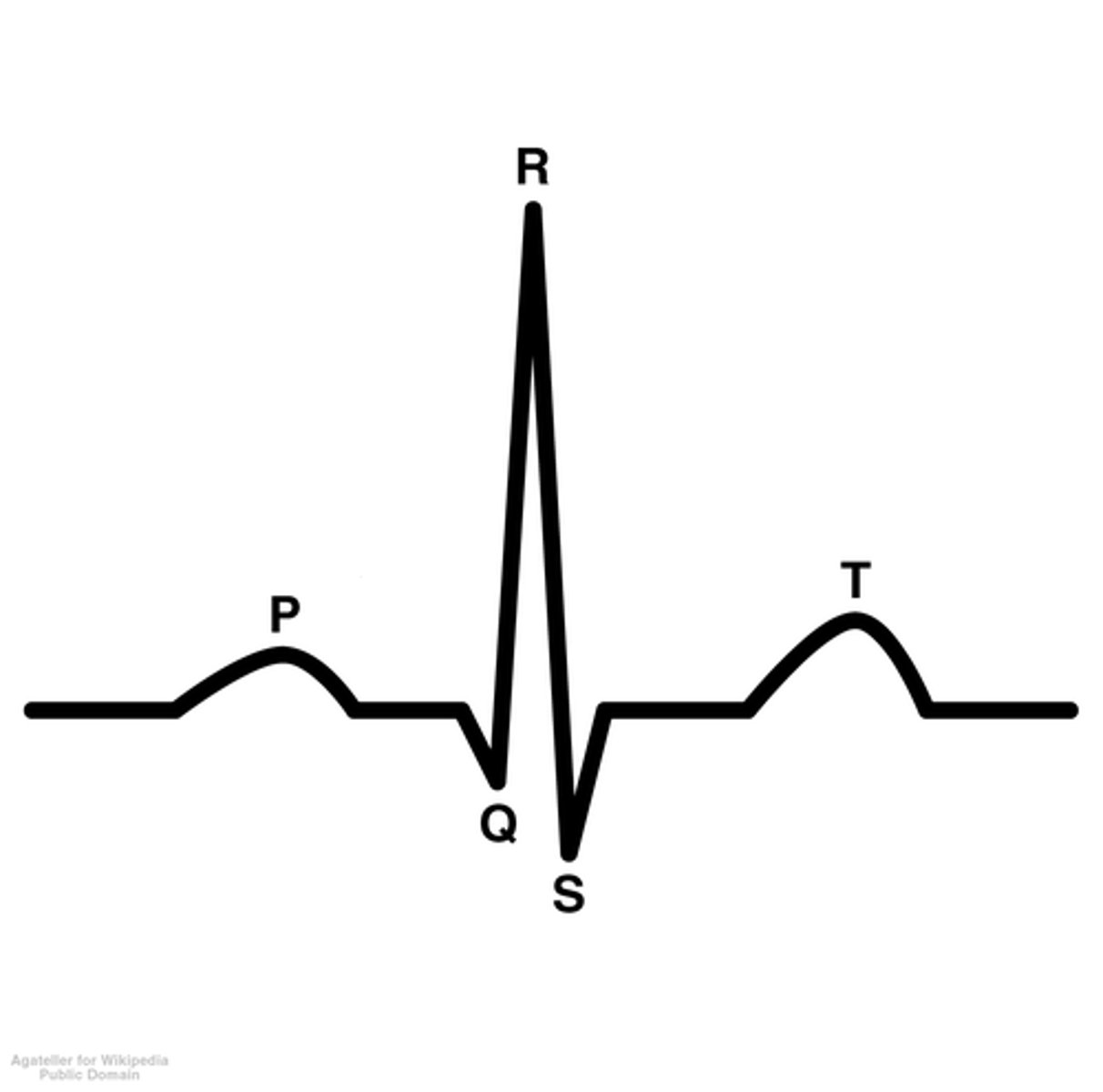
normal length of p wave?
0.11
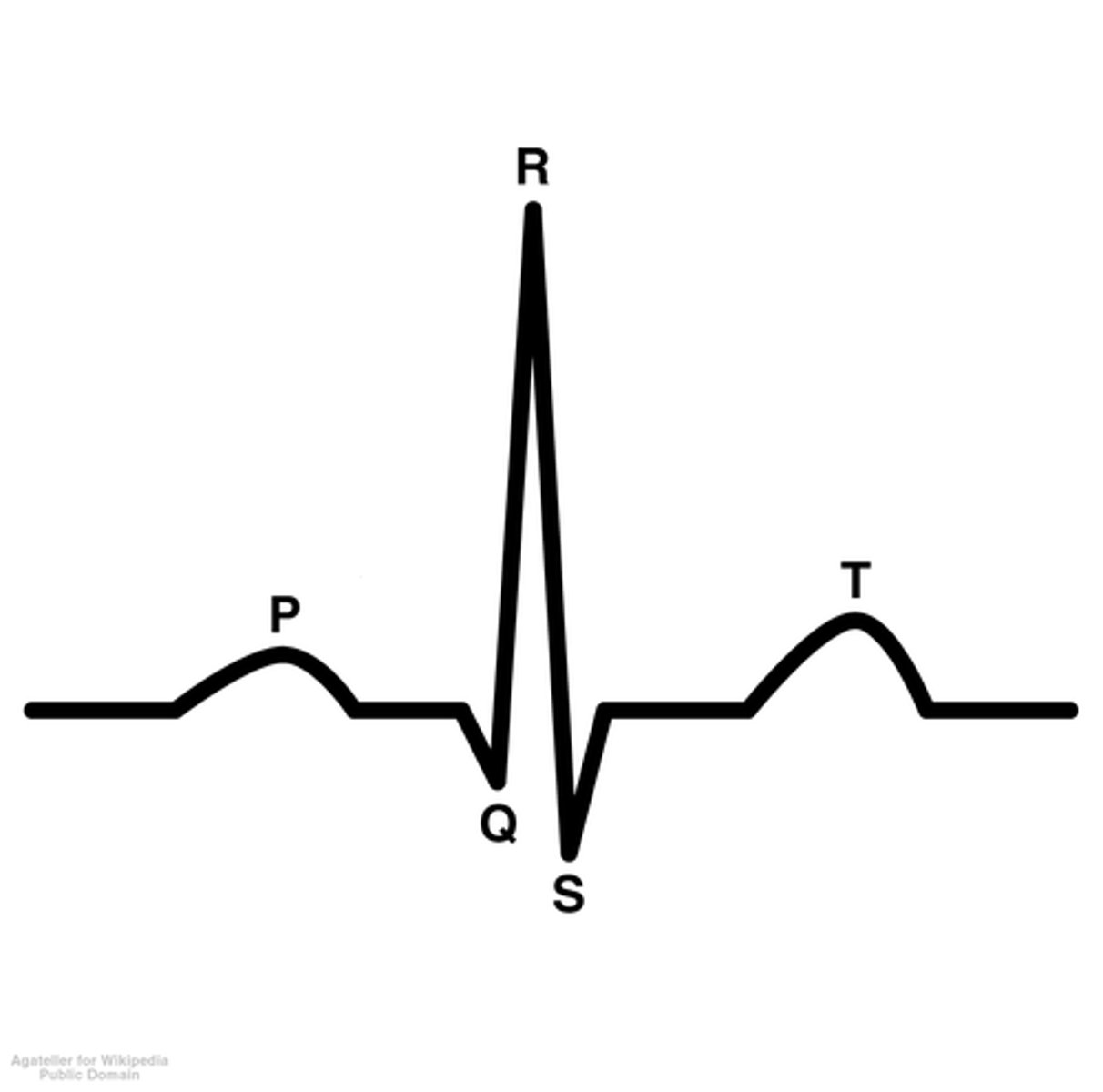
Part of the rhythm representing ventricle depolarization (contraction)
QRS complex
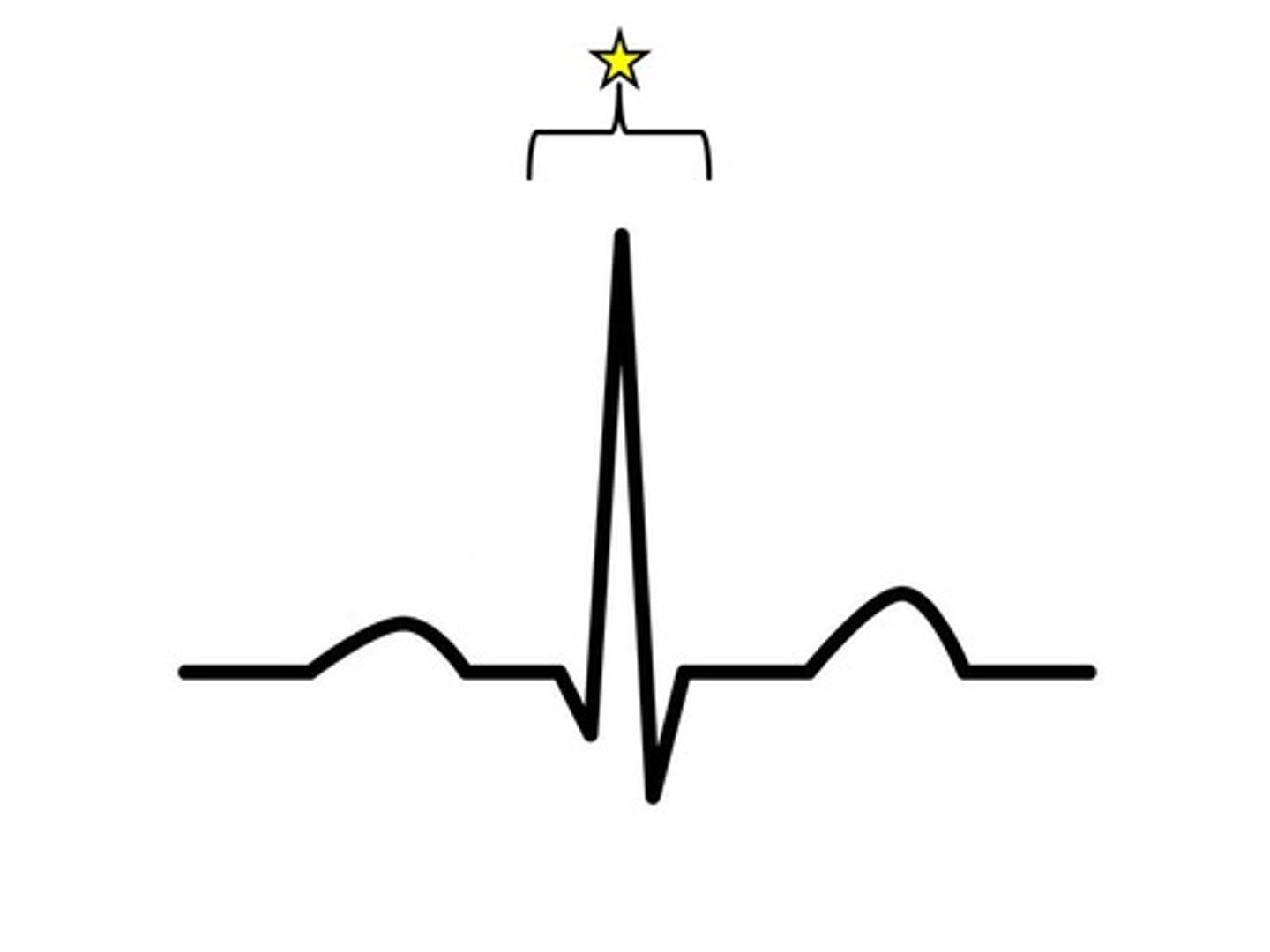
Normal length of QRS complex?
0.04-0.12
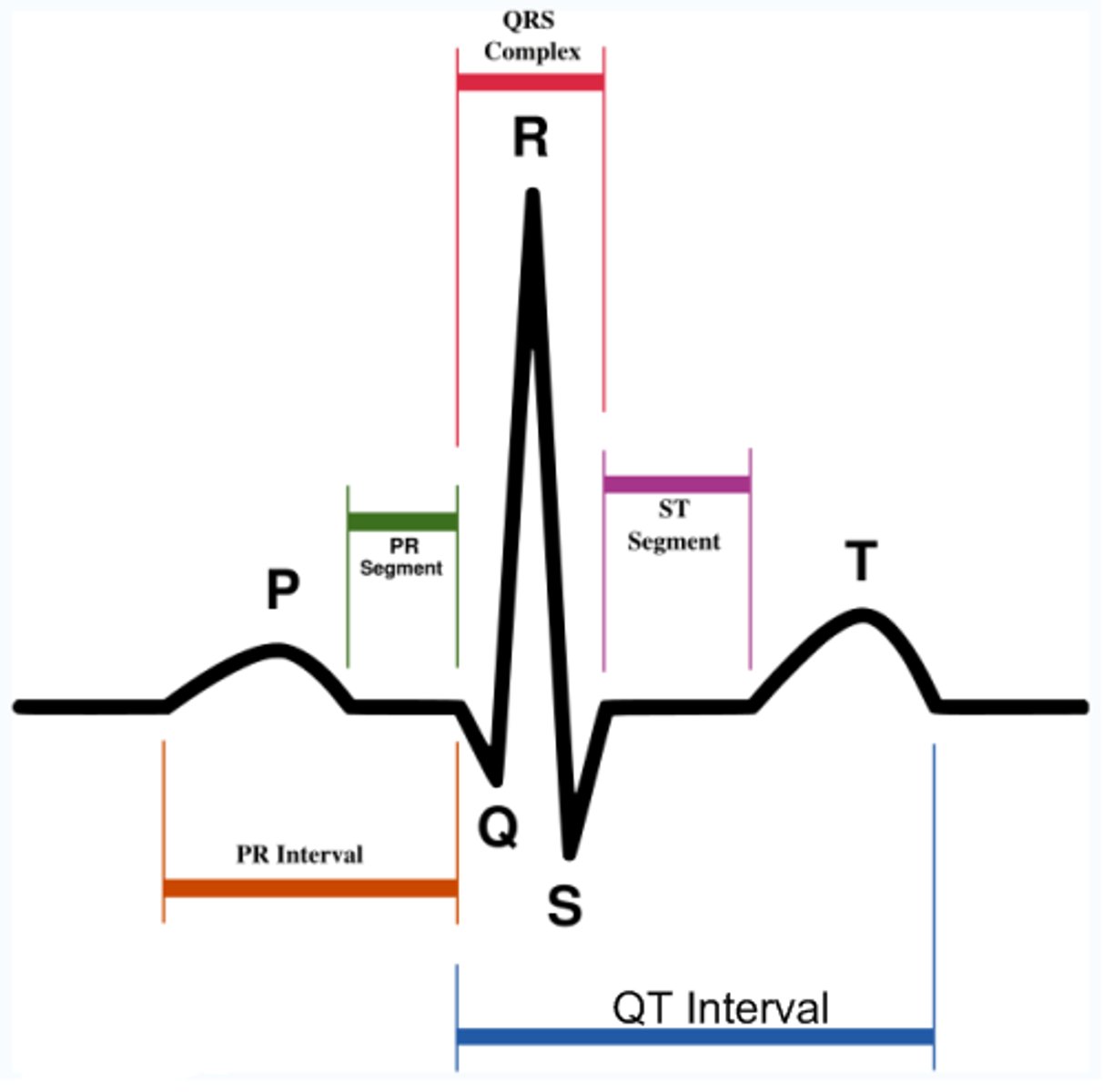
________interval is the time the impulse takes to move through the atria and the AV node.
It begins at the P wave to the next deflection on the baseline (beginning of QRS)
PR
What is the normal length of the pr interval?
0.12 - 0.2 seconds
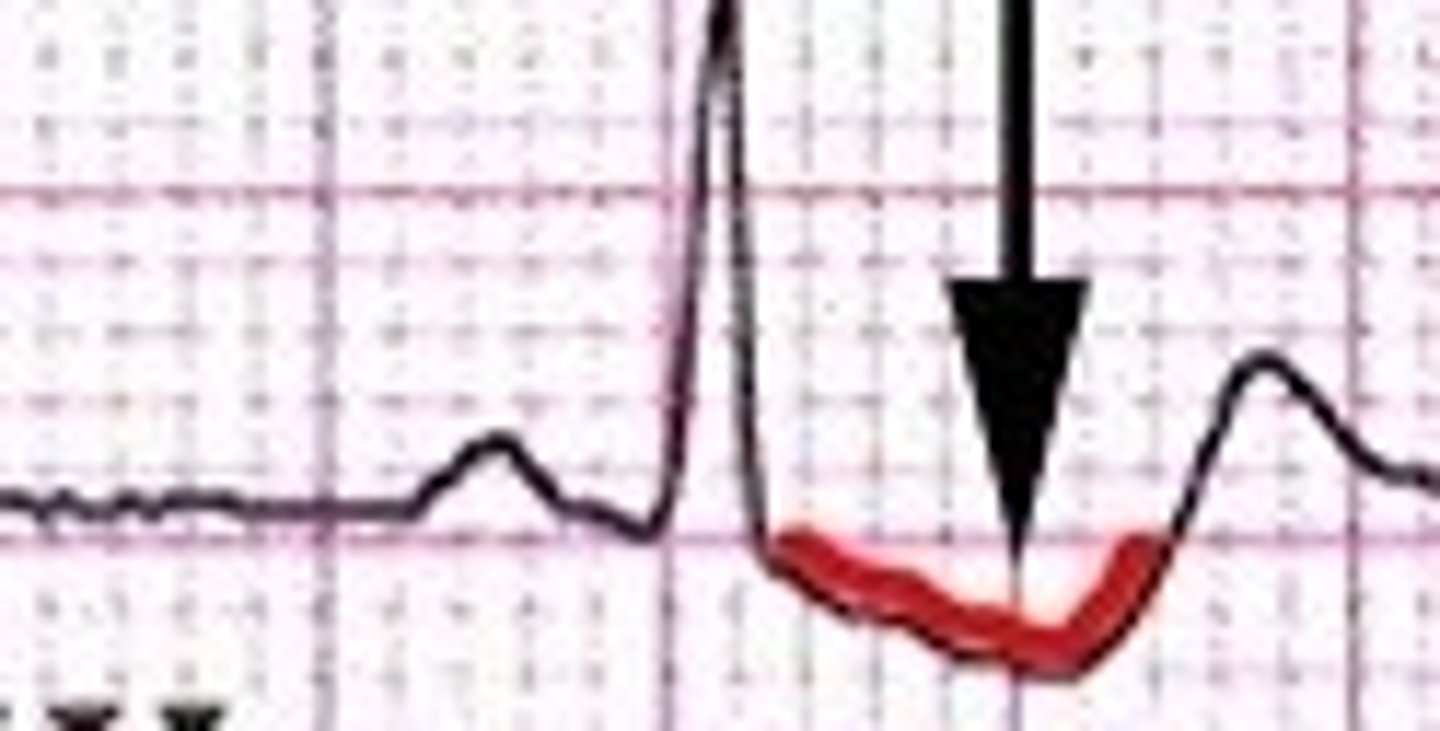
__________segment is the early repolarization of the ventricles. An elevation or depression indicates an abnormality.
lower than baseline = ischemia or injury to the heart muscle.
higher than baseline = infarct or death of the cardiac muscle and is considered worse
ST
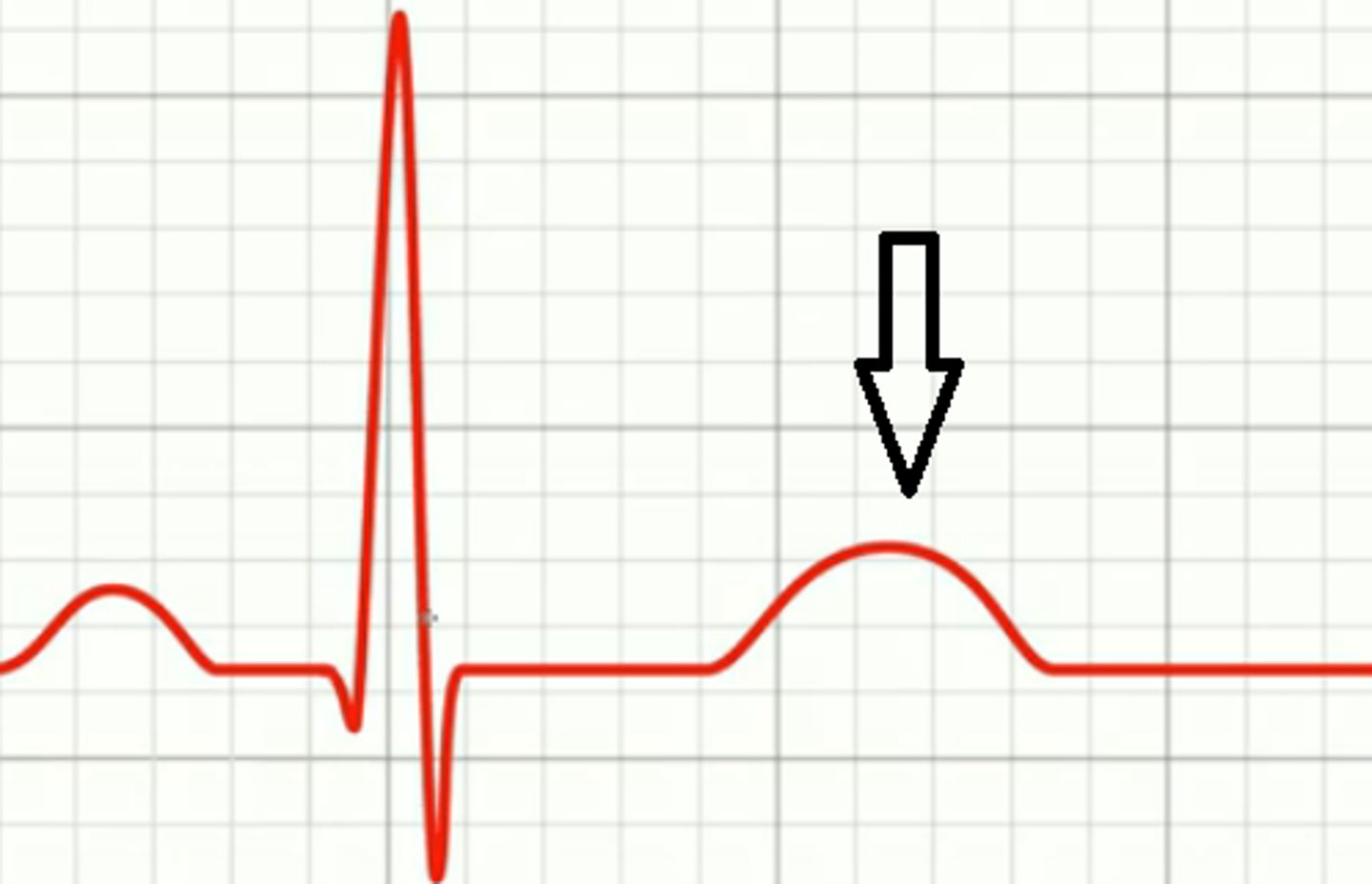
t wave is
the repolarization of the ventricles (reset) it is concurrent with the end of ventricular systole.
may become peaked in hyperkalemia
length is non specific
QT interval
represents total ventricular activity from ventricular depolarization to repolarization.
measured from the start of the qrs complex to the end of the t wave.
length 0.4-0.44 seconds
should be less than half of the RR interval
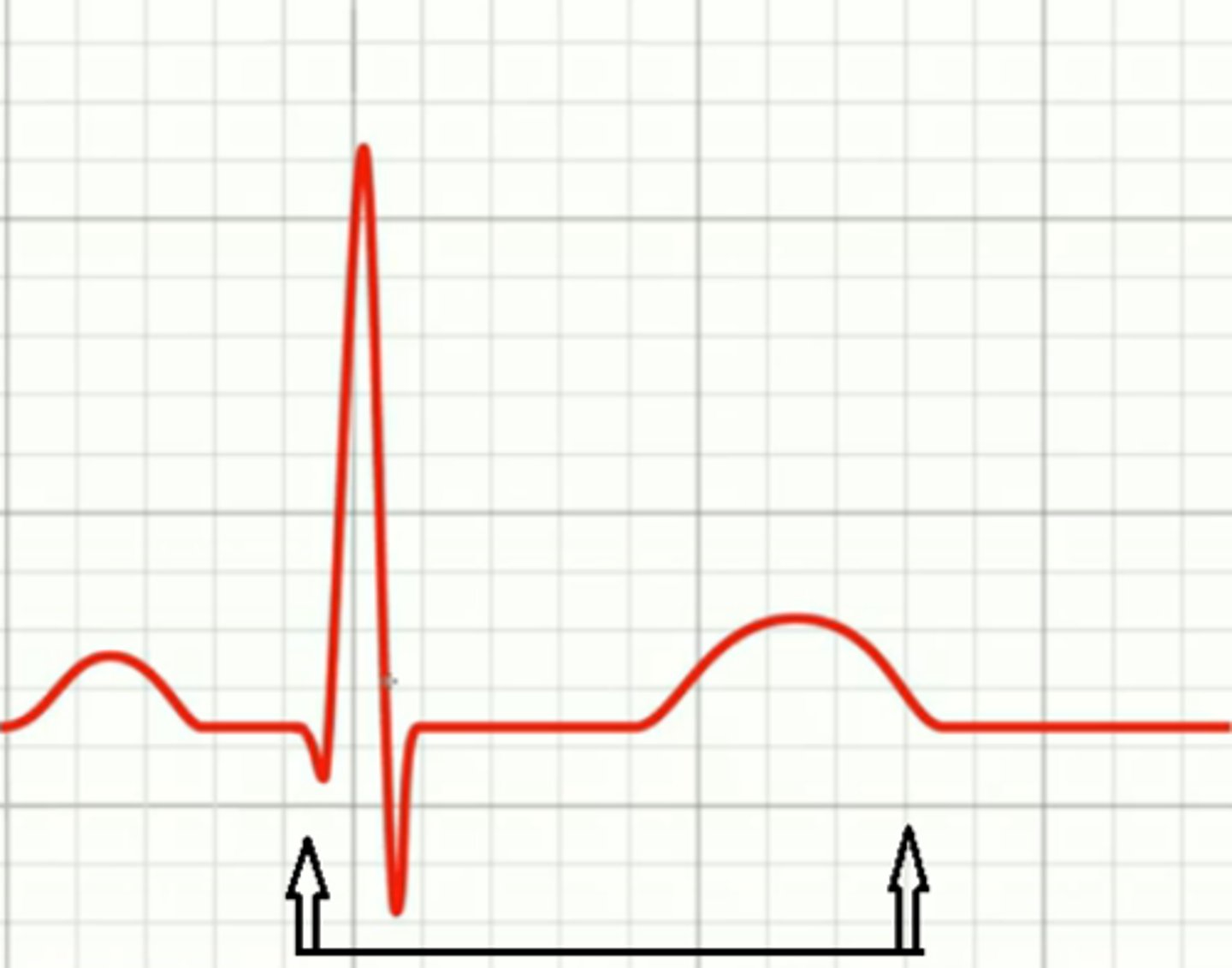
0.4-0.44
normal length of qt interval?
u
___wave is seldom seen.
it represents the repolarization of the Purjinkie fibers
indicates hypokalemia
it is part of ventricular repolarization
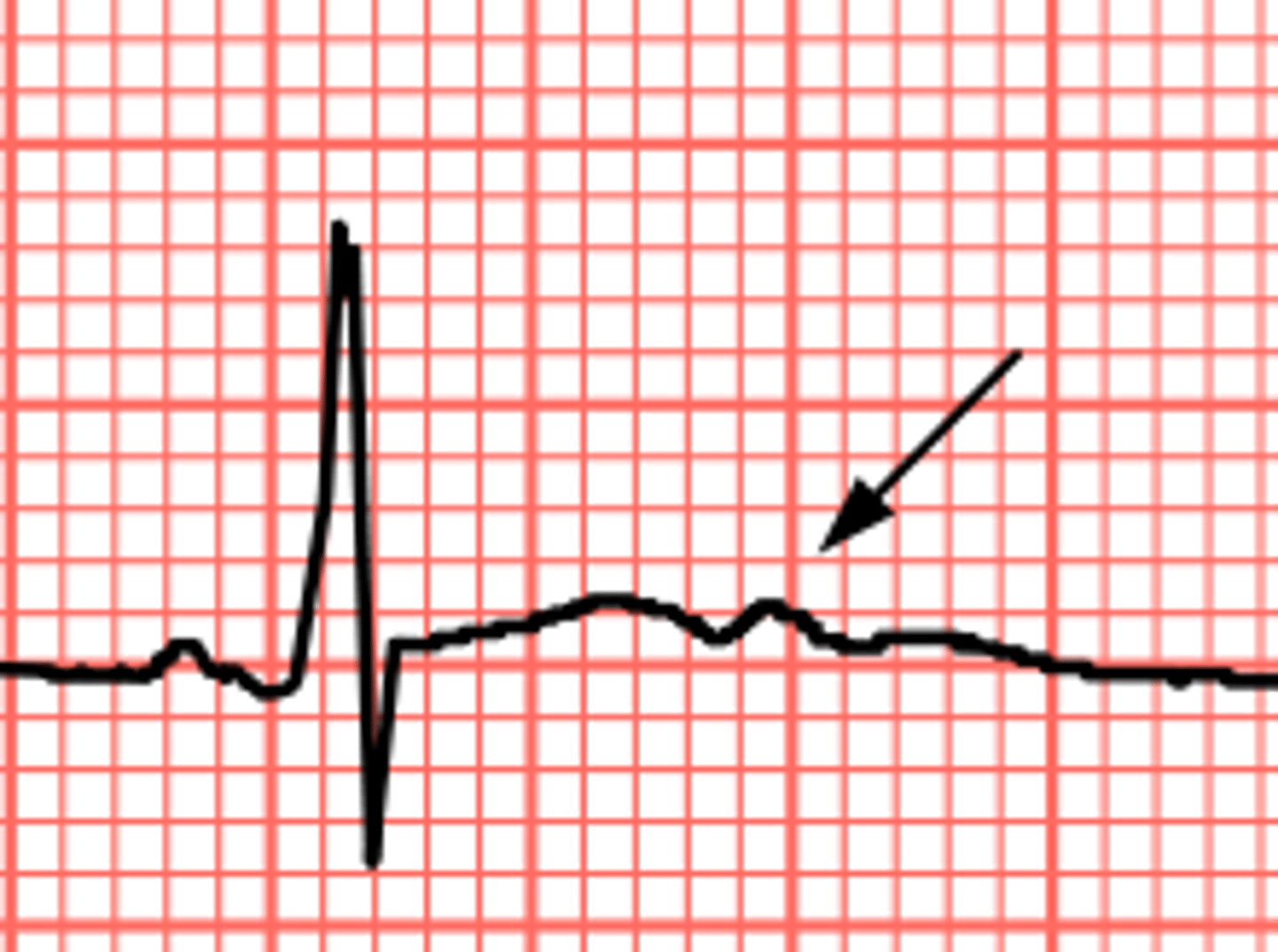
sinus bradycardia
what rhythm is this?
Rate is less than 60
rhythm is regular
P wave is present
QRS is 0.04-0.12-normal
PR is 0.12-0.2 normal
causes: meds-BETA BLOCKERS, digoxin, narcotics, athletes.
S/S: dizzy, tired, syncope, orthostatic hypotension
TX: take time to change positions, drink caffiene, pace maker, increase fluids, decrease/DC meds
for a SYMPTOMATIC patient: give atropine
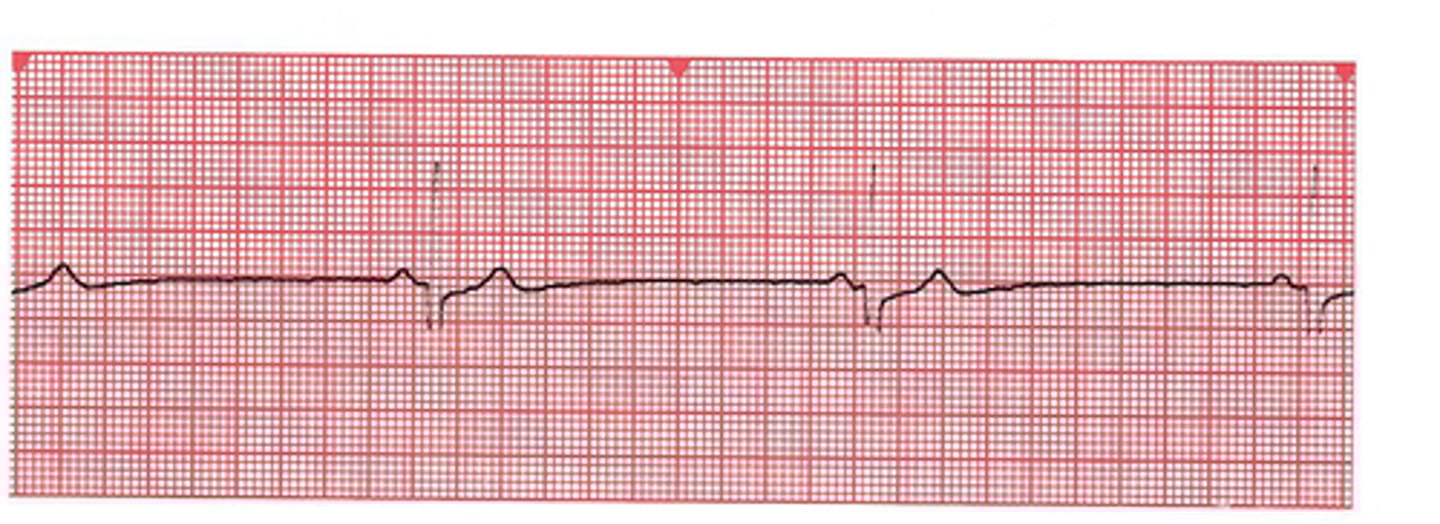
sinus tachycardia
what rhythm is this?
rate is above 100bpm
P waves present
PR is 0.12-0.2 normal
QRS is 0.04-0.12-normal
causes: anxiety, stress, shock, infections, steroids, epinephrine, pain, fever, caffeine, too much lasix.
TX: no caffeine, control anxiety, treat cause of fever. Medication: beta blockers.
adenosene is a short term fix.
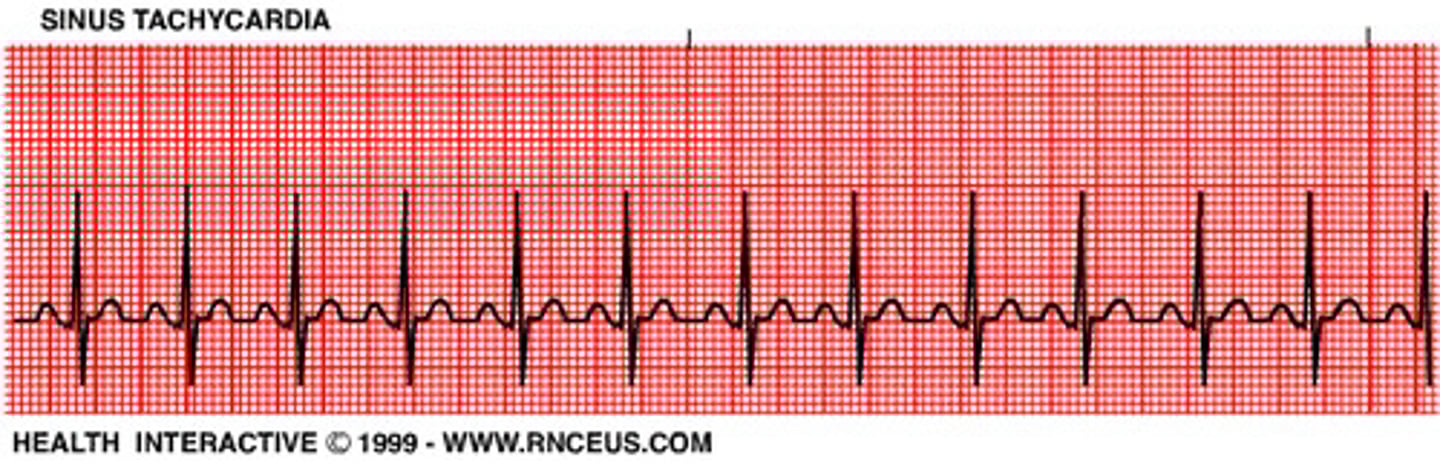
atrial flutter
what rhythm is this?
known as the saw tooth strip
Atrial rate is increased - can be regular or irregular
P waves: fluttering, have more than one (they are all the same)
PR is variable, can be WNL 0.12-0.2 normal
QRS: 0.04-0.12-normal
QT: 0.4-0.44 seconds normal
TX: calcium channel blockers, diltelizem, cardioversion

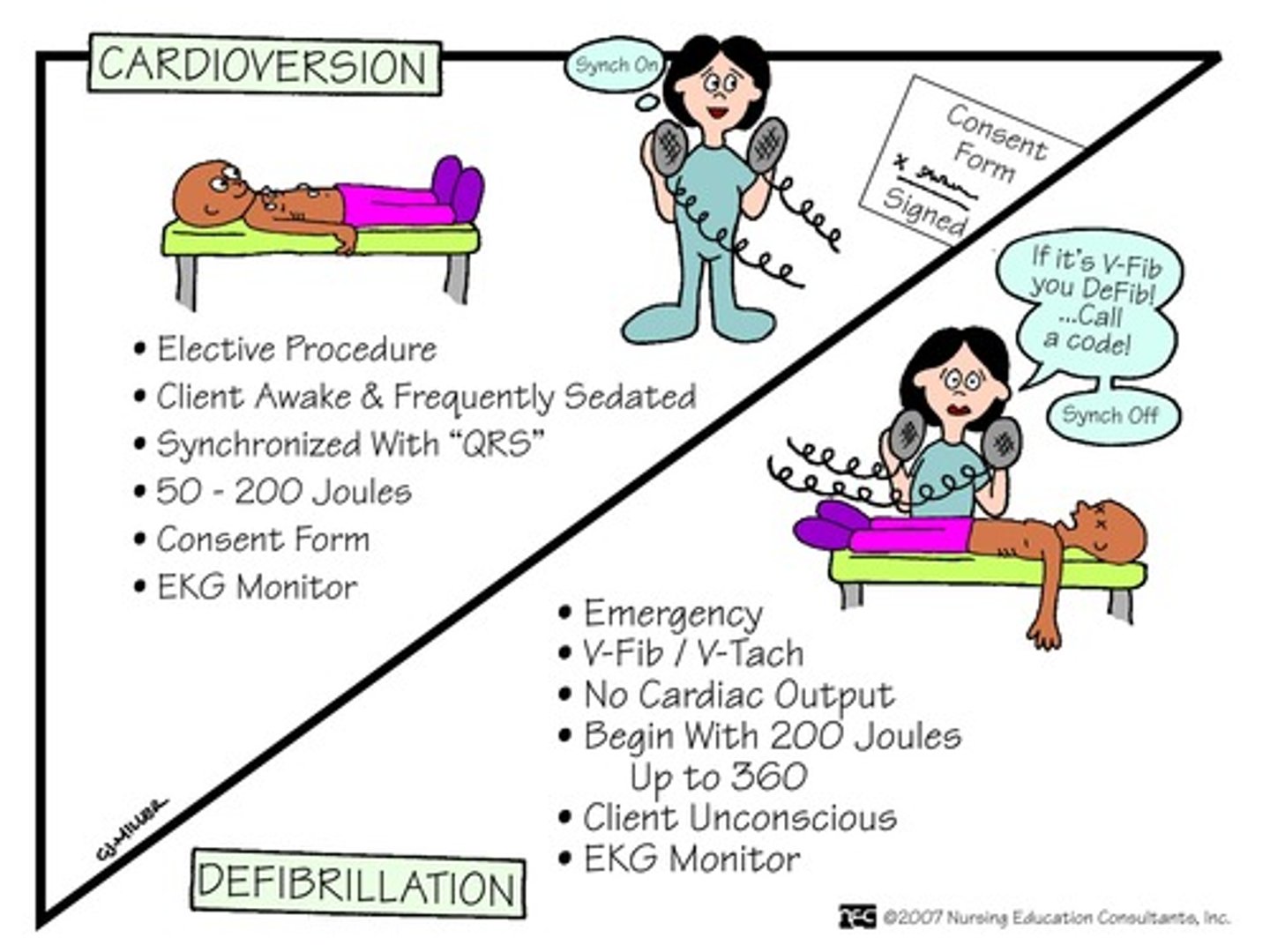
cardioversion
_____________________ is a controlled shock. Done when the patient is awake and has vital signs. You shock them the ventricles squeeze
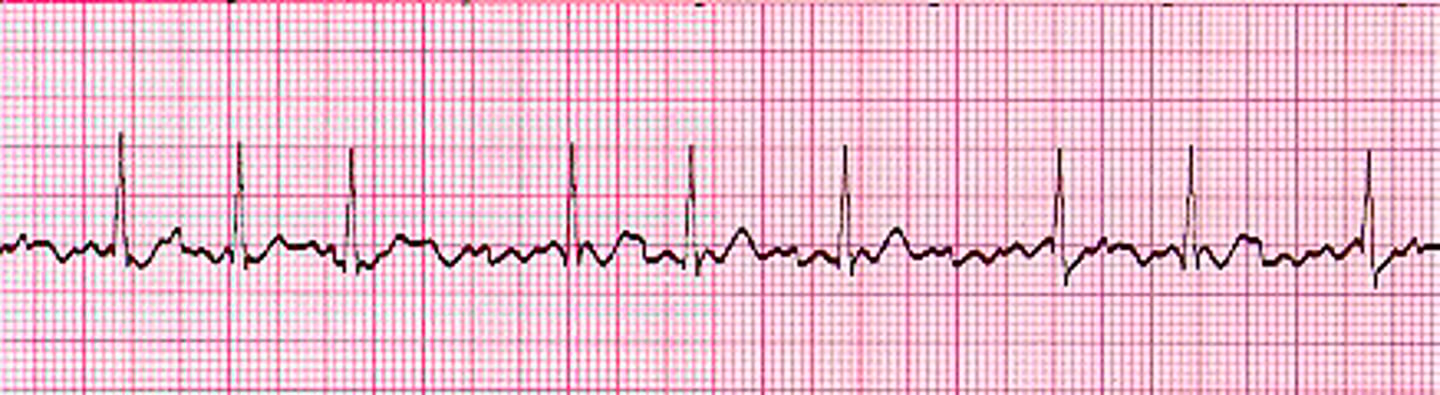
atrial fibrillation
what rhythm is this?
rate: can vary widely
Rhythm: irregular
P waves are abnomral/not present
PR:0.12-0.2 normal
QT:0.4-0.44 seconds normal
QRS:0.04-0.12-normal
causes: MI, CHF, CAD, alcoholism, hyperthyroidism, hereditary, caffeine
TX: digoxin, amiodirone, cardizem, cardioversion
can cause blood clots at this disorder causes the atria to quiver and hold blood in, place client on anticoagulant therapy
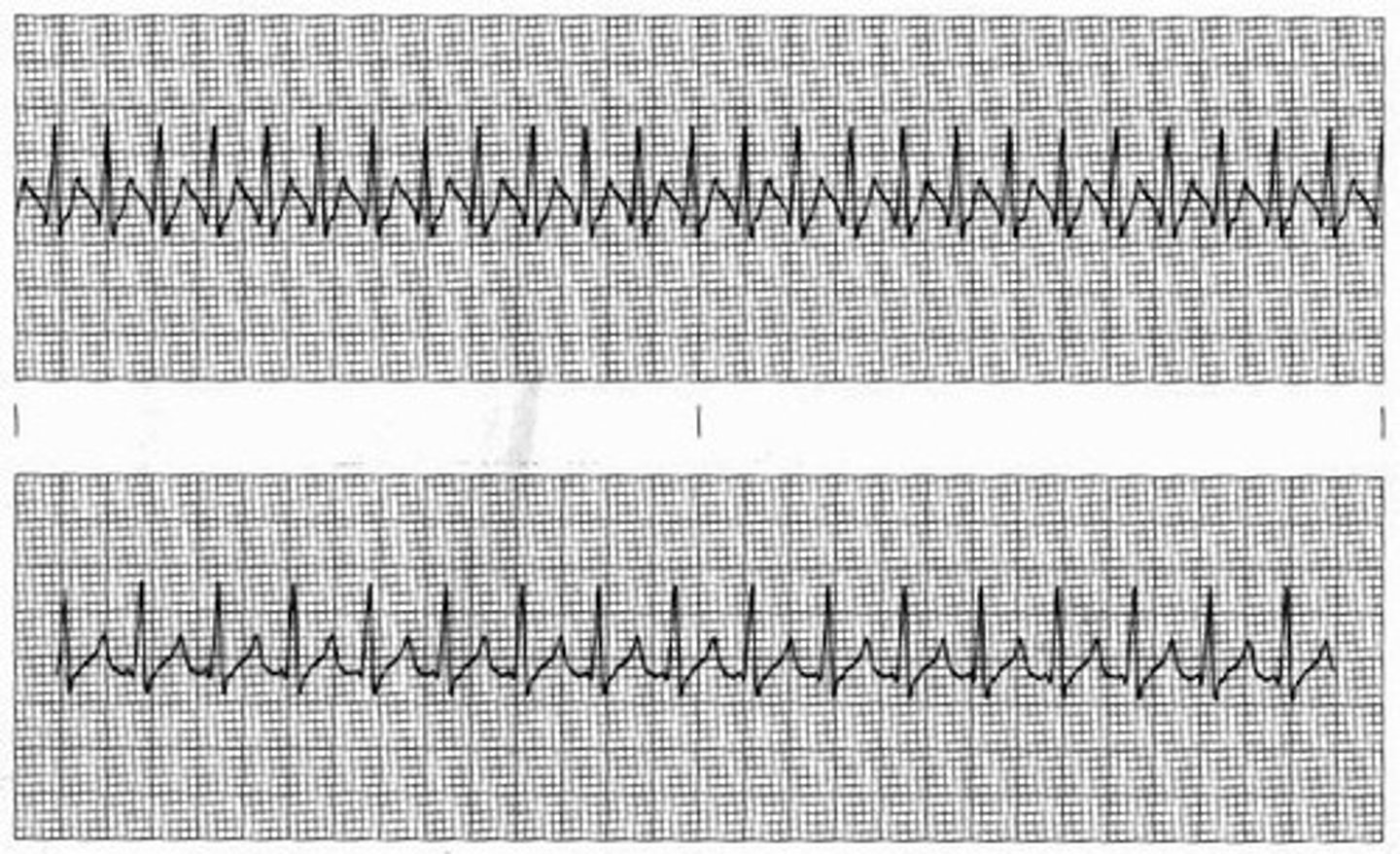
supraventricular tachycardia
what rhythm is this?
rate 150-250 plus
rhythm: regular
P waves: can have, however can be unable to determine
PR: unable to measure
QRS: 0.04-0.12-normal
causes: caffiene, stress, anxiety, tobacco. Cardiac output is decreased
TX: bear down to slow heart rate (vasal vagal Maneuver)
meds: adenosene to slow down and use as a diagnostic
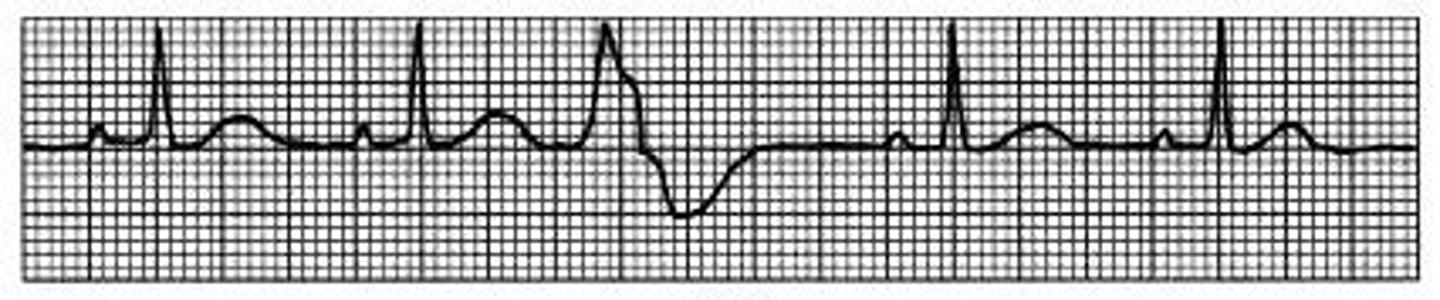
pvc
what rhythm is this?
indicates that the ventricles are irritated and decide to contract on their own -just one or a couple is usually not a concern
rate: variable
P waves: none
PR is wide
causes: caffeine, energy drinks, MI, Hypokalemia, hypoxia
tx: fix underlying cause-remove caffiene, energy drinks, 02 etc.
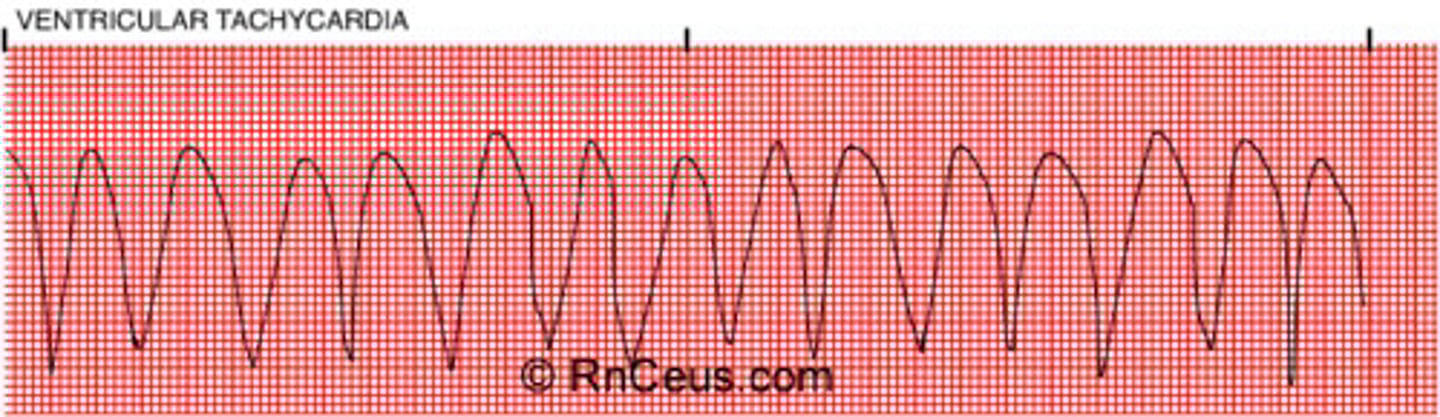
ventricular tachycardia
what rhythm is this?
this is a lethal/dying rhythm
rate 100-250
rhythm regular
p waves absent
PR absent
QRS is large, bizarre
patient could be awake, or have no pulse. if you see this, you need to check patient first to see if true.
causes: MI, CHF, cardiomyopathy, dysrythmias,
TX: cardioversion when the patient has a pulse
CPR and shock with no pulse.
can get defibrilator and use antiarrhymics
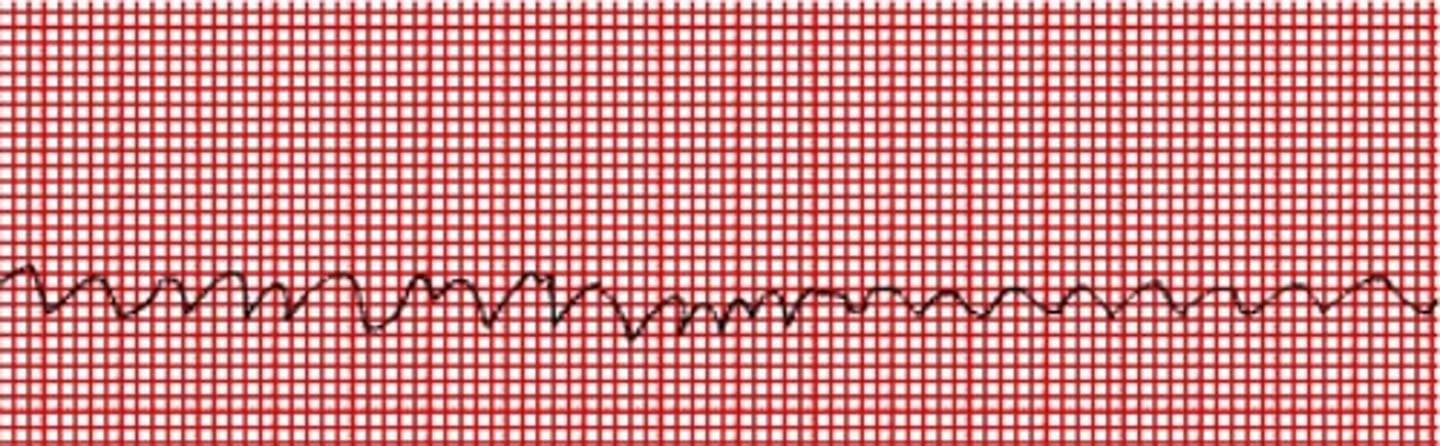
ventricular fibrillation
what rhythm is this?
no pulse -lethal
rhythm is chaos
P waves absent
PR absent
QRS absent
QT absent
cause: MI, Heart procedures
TX: CPR, SHOCK
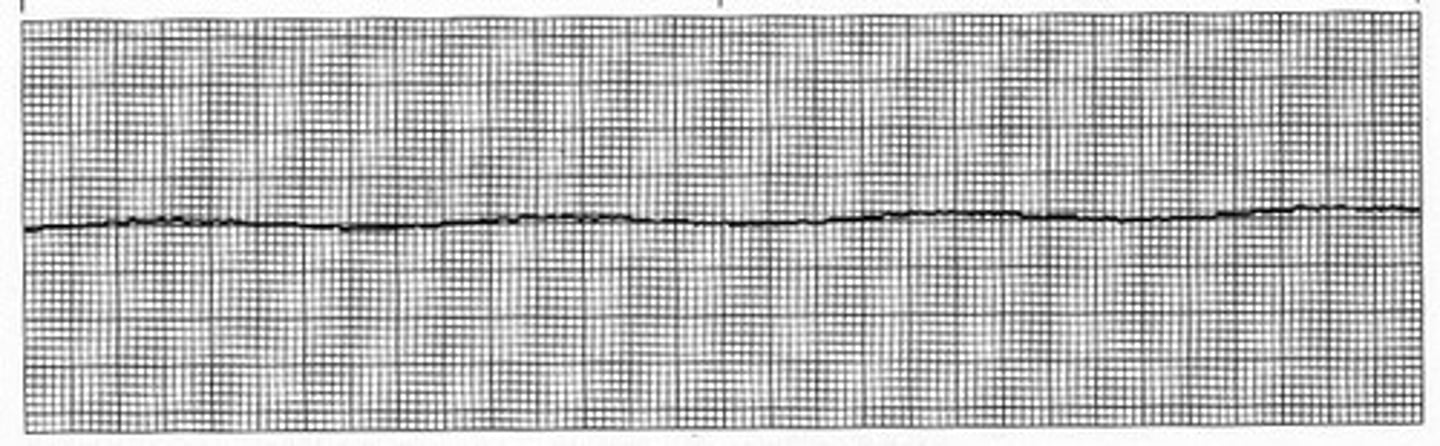
asystole
what rhythm is this?
no electrical activity at all in the heart.
cannot shock as their is no electrical activity in the heart to "reset"
TX: epinephrine, CPR
4-8
how many liters is a normal cardiac output?
HR * SV
heart rate times stroke volume
this measures the amount of blood ejected in one minute from the heart
how to measure to determine cardiac output
decreased cardiac output
How will a decreased heart rate effect cardiac output?
right
right or left sided heart failure signs?
palpable/auscultated dysrythmia
weight gain
distended neck veins
enlarged liver
ankle edema
left
right or left sided heart failure signs?
SOB
palpitations/tachycardia
cough with frothy pink sputum
fatigue/weakness
weight gain, fluid retention
syncope
lung crackles decreased base lung sounds
atropine
medication that Temporarily increases heart rate
epinephrine
this medication is the initial medication of choice during CPR when an IV line has been established and the patient has been intubated. it increases the heart rate
adenosine
medication that slows conduction through the AV node.
defibrillation
defined as the delivery of an electrical shock to the heart so that it completely depolarizes cardiac cells in an effort to terminate ventricular fibrillation.
used in V-fib/V-tach with no pulse.
The patient will be unresponsive, breathless, and pulseless. The nurse should call for help on finding an unresponsive patient. The individual should be defibrillated as soon as the machine arrives at the patient's bedside. Cardiopulmonary resuscitation should be initiated before the defibrillator arrives

