Lecture 01: Intro to Cell Biology
 Studied by 0 people
 Call Kai
 Learn
Learn Practice Test
 Spaced Repetition
 Match
Match Flashcards
 Knowt Play
1/63

There's no tags or description
Looks like no tags are added yet.
Name | Mastery | Learn | Test | Matching | Spaced |
|---|
No study sessions yet.
64 Terms
What is Cell Biology?
All living organisms are composed of cells
Cells are the fundamental unit of life.
“The key to every biological problem must finally be sought in the cell; for every living organism is, or at some time has been, a cell” – E.B. Wilson
What is Brownian motion?
random movement of particles caused by their constant collisions with surrounding molecules.
In cells, it drives diffusion, influences the rate of biological reactions, and contributes to the movement of molecules within the cell.
Cells can harness Brownian motion to help generate directed movement, such as during cell migration.
Robert Hooke (1665)
Examined cork under microscope - made up of “cells”
Anton van Leeuwenhoek (1674)
Examined pond water under microscope -“animalcules” (Microscopic organisms)
Matthias Schleiden (1838), Theodor Schwann (1839) & Rudolf Virchow (1855) proposed the
Cell Theory
Cell Theory
All organisms are composed of one or more cells.
The cell is the structural unit of life.
Cells can arise only by division from a preexisting cell (Not spontaneous like previously thought)
Cell biology is the study of cells at microscopic and molecular levels.
Properties of cells
Organelle structure
Interactions between cells
Cell movement
Movements of macromolecules between organelles
Specialized cells (skin cells not the same as neurons, but specified for each function)
Basic cell/molecular biology can pave the way for important medical advances
Universal Features of Cells
Cells store information in double stranded DNA.
Cells can replicate their DNA
Cells can transcribe portions of their DNA into RNA, Cells can translate RNA into proteins, Each protein is encoded by a specific gene.
Cells can make more of themselves (multiple terms: replicate, divide, multiply)
Cells can acquire and use energy (e.g. metabolic reactions)
Cells can use proteins as catalysts
All cells have a plasma membrane
Made of phospholipids
Cells have constant movement
DNA and RNA is made of
Nucleotides
Amino acids make up
proteins
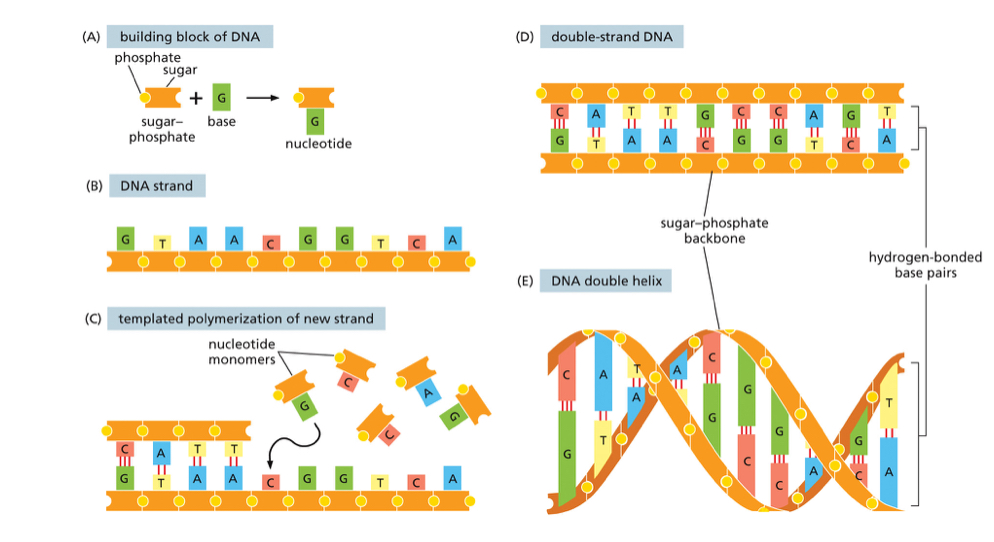
Cells store information in double stranded DNA.
Nucleotides come together to give use a single nucleotide strand
But DNA needs 2 strands, so template used to make a new DNA strand
A base pair with T, and C base pair with G
Sequence of nucleotides determines at what time and how much is gene going to be expressed
Is RNA double or single stranded
Single
Nucleotide made of
Sugar (deoxyribose), phosphate and nitrogenous base
4 nucleotides for DNA
A, G, T, C
In RNA there is U instead of T
Differences in DNA and RNA
the sugar in their backbone (deoxyribose in DNA vs. ribose in RNA)
the bases they contain (thymine in DNA, uracil in RNA),
their structure (double-helix vs. single-strand)
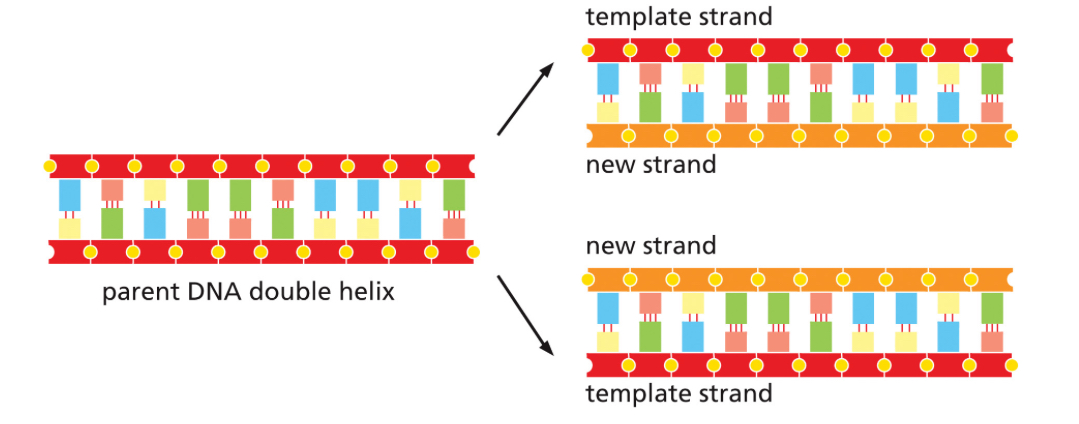
Cells can replicate their DNA
Cells can replicate their DNA.
During replication, the parental double helix separates into two single strands. Each strand serves as a template for building a new complementary strand.
This ensures that when a cell divides, each daughter cell receives a complete copy of the DNA.
Cells transcribe DNA to RNA, Translate RNA to protein, protein encoded to specific gene
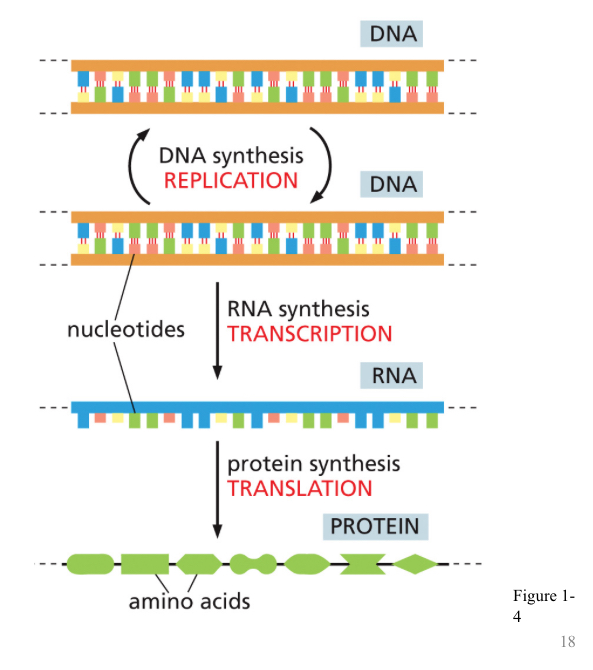
DNA → RNA called
Transcription
RNA → proteins called
Translation
Sequence of amino acids in protein is determined by
RNA. That sequence is determined by the DNA.
Cells can acquire and use energy and catalysts
Without energy cell can’t accomplish much
Energy powers entire multicellular organism
Cells take food in → use energy to make building blocks → use energy for work → waste is discarded out of cell
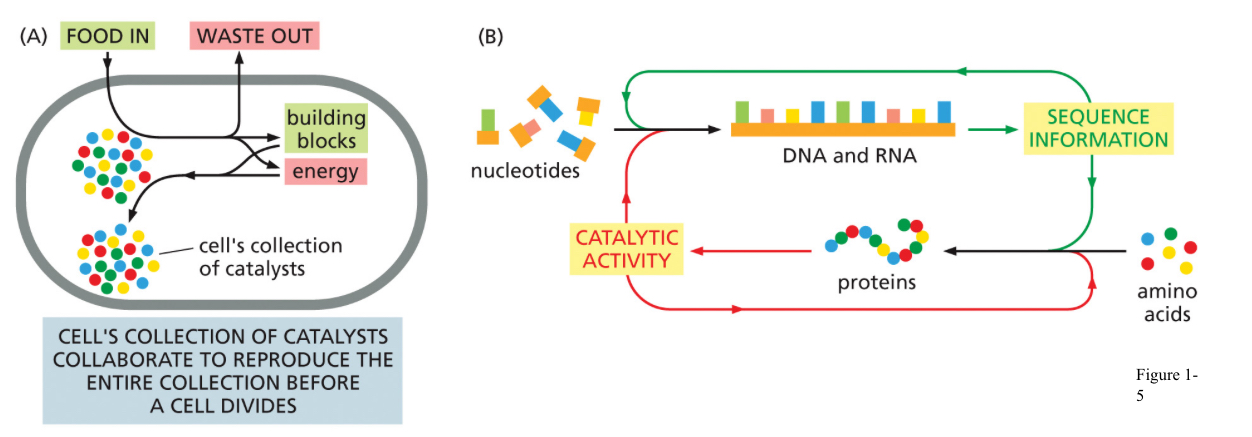
Not all proteins have catalytic activity.
Some serve structural, transport, or regulatory functions.
Example: Chaperones help other proteins fold correctly, rather than catalyzing reactions.
All cells have a plasma membrane
Catalyst
molecules that speed up a chemical reaction without changing
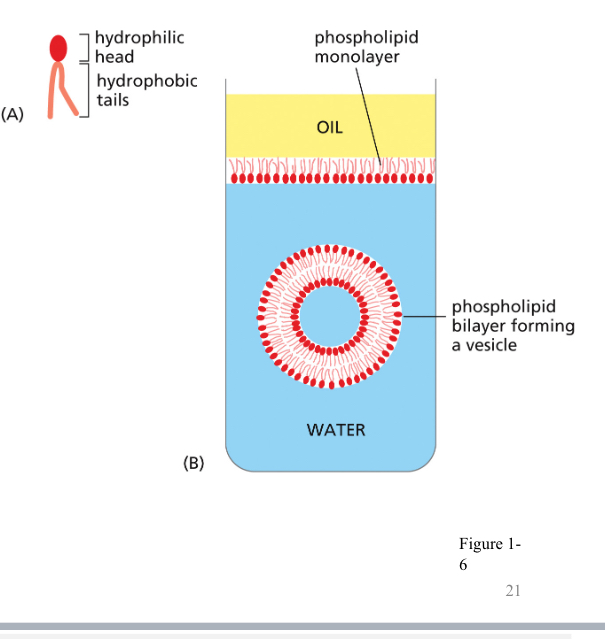
Plasma membrane
selective barrier – allows the cell to concentrate nutrients from the environment, synthesize new products and excrete waste products.
Fluid model not rigid structure
Membranes made of
Phospholipids
Phospholipids
hydrophilic head, hydrophobic tails
Molecule itself is amphiphilic (attracted to both hydrophobic and hydrophilic molecules)
Phospholipids in water form
bilayers that form closed vesicles
Phospholipids are amphiphilic (hydrophilic head + hydrophobic tails).
In water, they spontaneously congregate so that the hydrophobic tails avoid water and the hydrophilic heads face it.
Cells have constant movement
Individual components can self-assemble and become highly organized
Constant movement of material within the cell → Brownian motion, energy (ATP) driven movements etc.
Can whole cells move
Yes
Brownian motion:
Random movement of particles →derives diffusion → can determine rate of biological reactions because reactions are based on concentrations (concentrates can vary in different areas of cell, stopping or starting certain reactions)
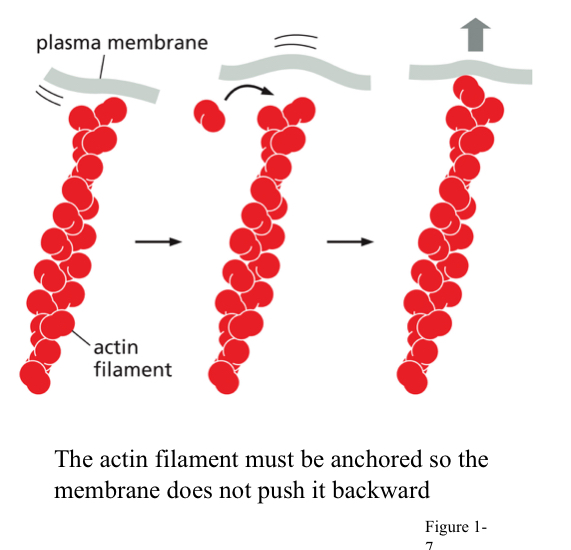
Cells can harness Brownian motion for movement
E.g. Actin filaments (cytoskeleton of cell) can act as ratchets to prevent membrane from moving back to its original position.
In a migrating cell, this drives protrusion of the membrane → contributes to forward movement of cells
Cells Obtain free energy in different ways:
Phototrophic
Lithographic
Organotrophic
Some cells specialize in fixing nitrogen and carbon dioxide (CO2)
other cells and organisms rely on these important processes
Plants fix CO2
Nitrogen-fixing bacteria help plants fix N2
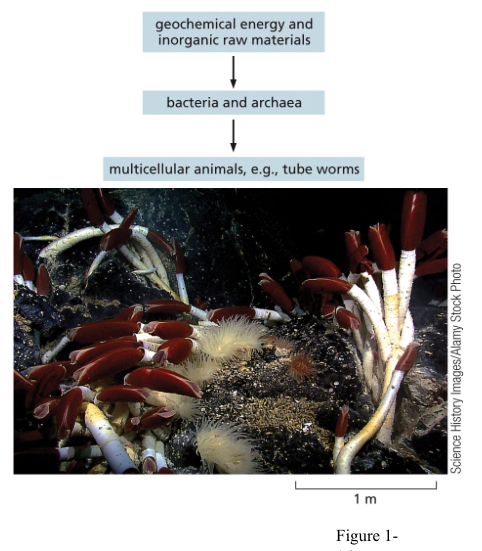
Phototrophic
Rely on sunlight
Lithotrophic
inorganic chemicals in environment
Organotrophic
other living things and the organic chemicals they produce
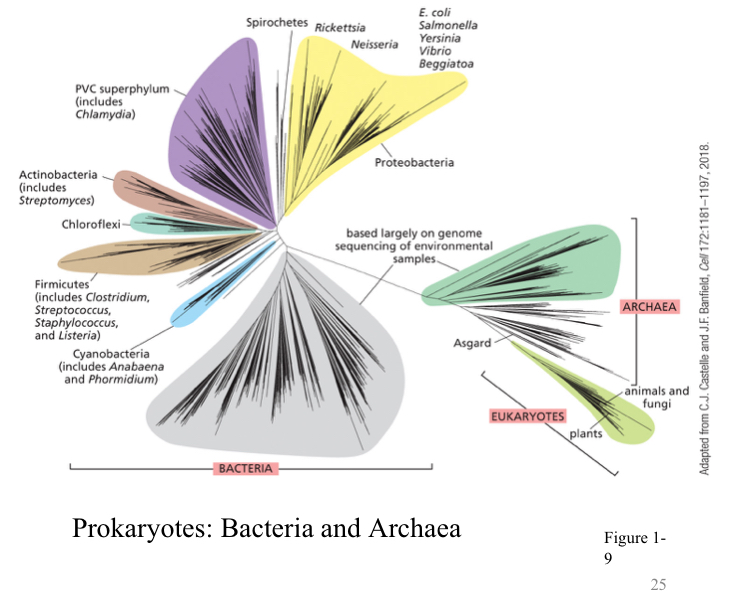
Three major domains
Eukaryotes, Bacteria, and Archaea
Organisms or bacteria found How deep in the Earth
10-11km
Is stuff alive in the atmosphere
Yes, for example Breathing bacteria, hair
60-70 km in the air
Eukaryotes
make up the domain of life that is most familiar to us.
Bacteria
are the most diverse group of organisms on the planet.
Archaea
considered the most mysterious domain of life because they live in extreme environments and sometimes we don’t know what to look for (look like bacteria and eukaryotic genome)
How do we tell the difference in different bacteria’s or single celled species we can’t see
We start looking at their DNA and protein sequences
Types of cells
Prokaryotes
Eukaryotes
Prokaryotes:
Single-celled microorganisms that lack a membrane-enclosed nucleus (or other membrane bound organelles).
Pro = before
Karyon = nucleus
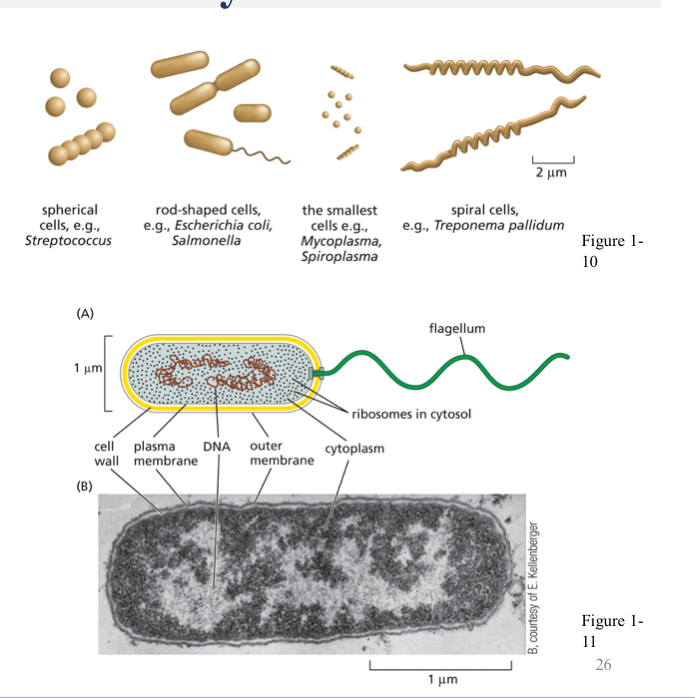
Types of prokaryotes:
Bacteria (eubacteria) → true bacteria
Archea (archaebacteria)
Archea (archaebacteria)
structurally similar to bacteria, but genome is closer to eukaryotes
Eukaryotes:
Organisms made up of one or more cells that have a distinct membrane bound nucleus
Eu = True
Karyon = nucleus
Contain organelles →discreet membrane bound sub-compartments (e.g. mitochondria, endoplasmic reticulum (ER), Golgi apparatus and other membrane bound vesicles and organelles.
Much larger and more complex than prokaryotes (1000-10000X larger in volume)
Fungi, protists, plants, animals etc.
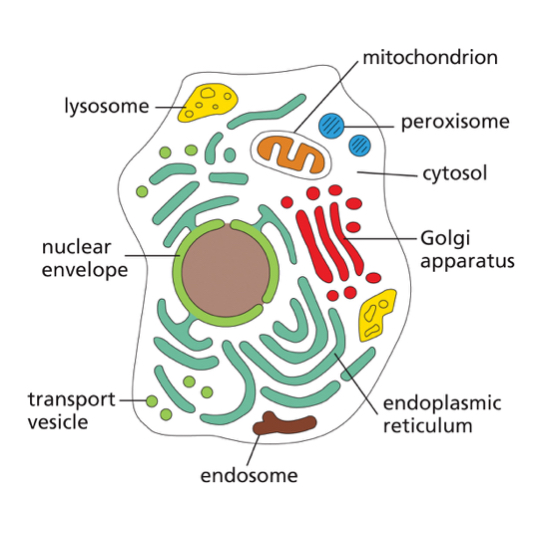
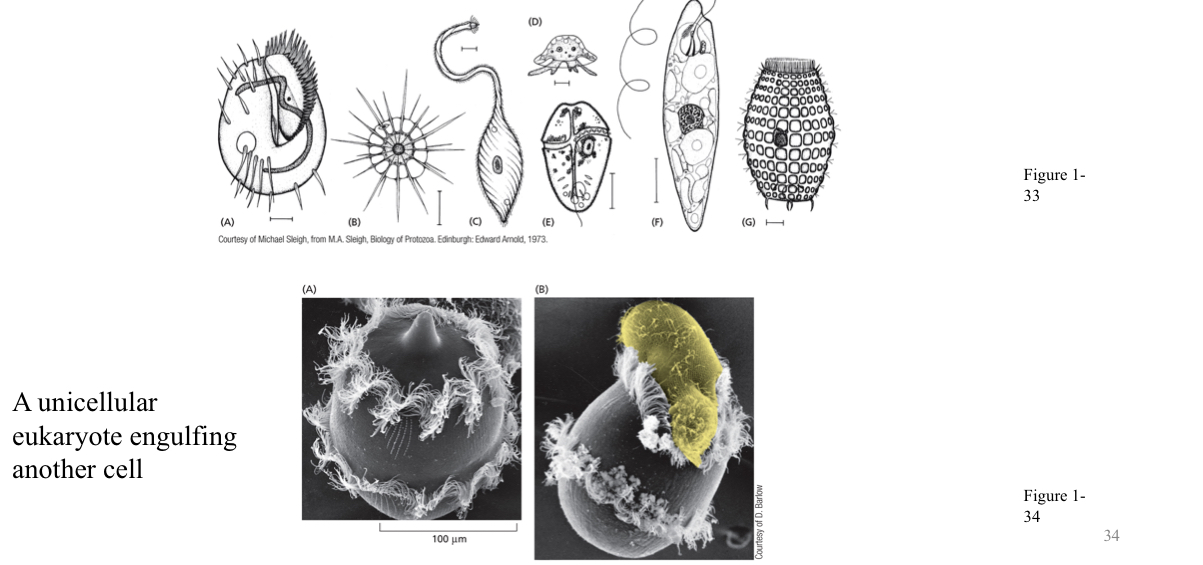
T or F, Eukaryotes can be unicellular or multicellular and may have organelles with no membranes!
True for example Centrosomes are not membrane bound
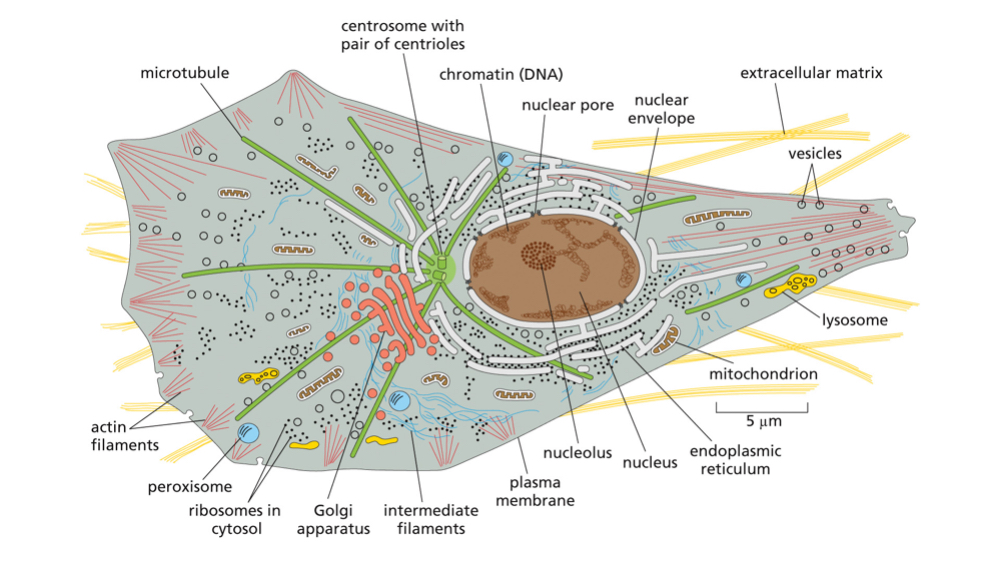
Ex of eukaryotes
Plant vs animal cell
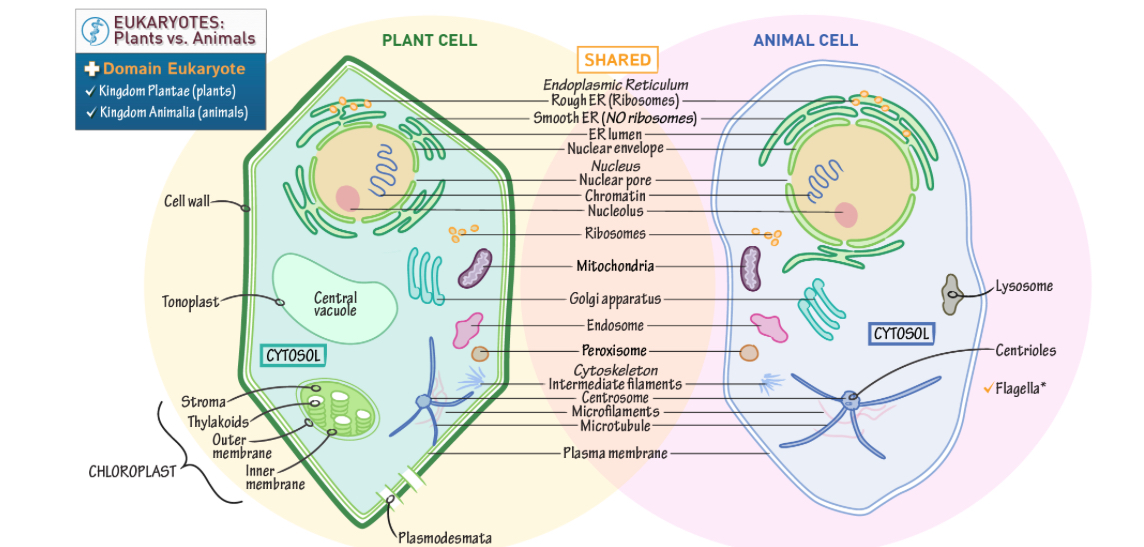
What do plants have that animal cells don’t
Chloroplasts (stroma, thylakoids, outer and inner membrane) → photosynthetic reactions happen
Cell wall
Large central vacuoles
Plasmadesmata
What do animals have that plant cells don’t
Lysosomes
Centrioles
Flagella
Did Eukaryotes Arise from Prokaryotes?
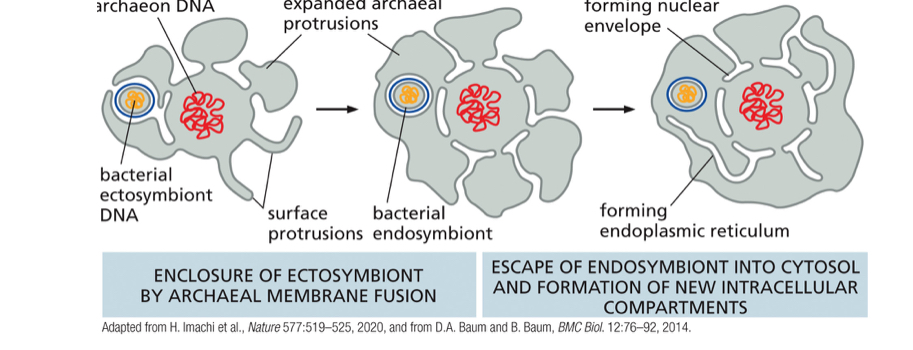
Eukaryotes may have arisen by a merger of two cells → Endosymbiont Theory
Endosymbiont Theory
explains that key eukaryotic organelles, like mitochondria and chloroplasts, originated from free-living prokaryotic cells that were engulfed and established a symbiotic relationship within a host cell
Combination of two cells living in a symbiotic relationship where one cell lives inside the other
Mitochondria may have evolved from a
symbiotic aerobic bacterium captured by an ancient archaeon
Size of mitochondria is similiar to size of bacteria
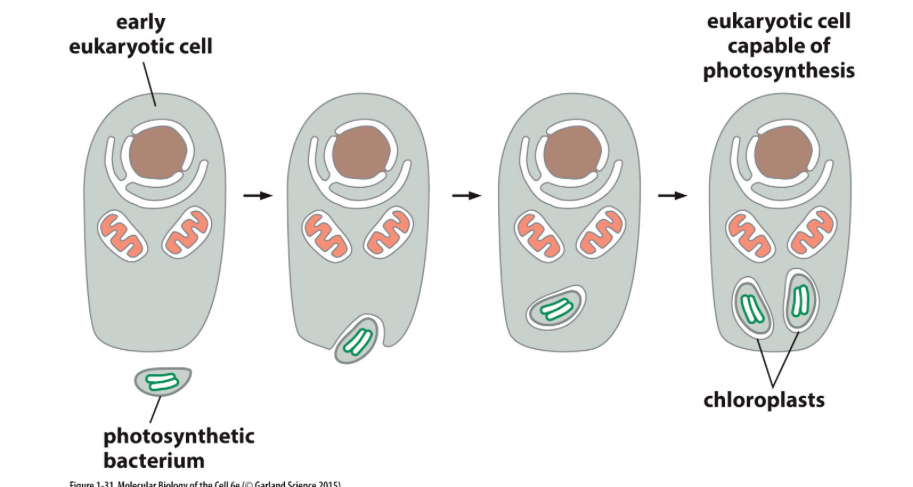
Chloroplasts may have evolved from
a symbiotic photosynthetic bacterium engulfed by an ancient eukaryotic cell
Early evidence we have is of bacteria, so we think they cam first
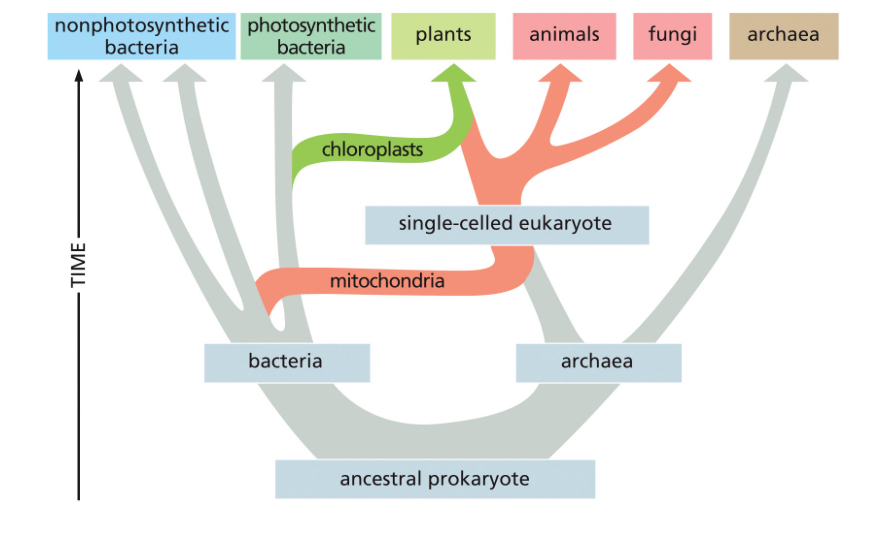
T or F Eukaryotes don’t have hybrid genomes
F, Eukaryotes have Hybrid Genomes
Hybrid genomes
genetic information originated from an ancestral archaeon and endosymbiotic bacteria
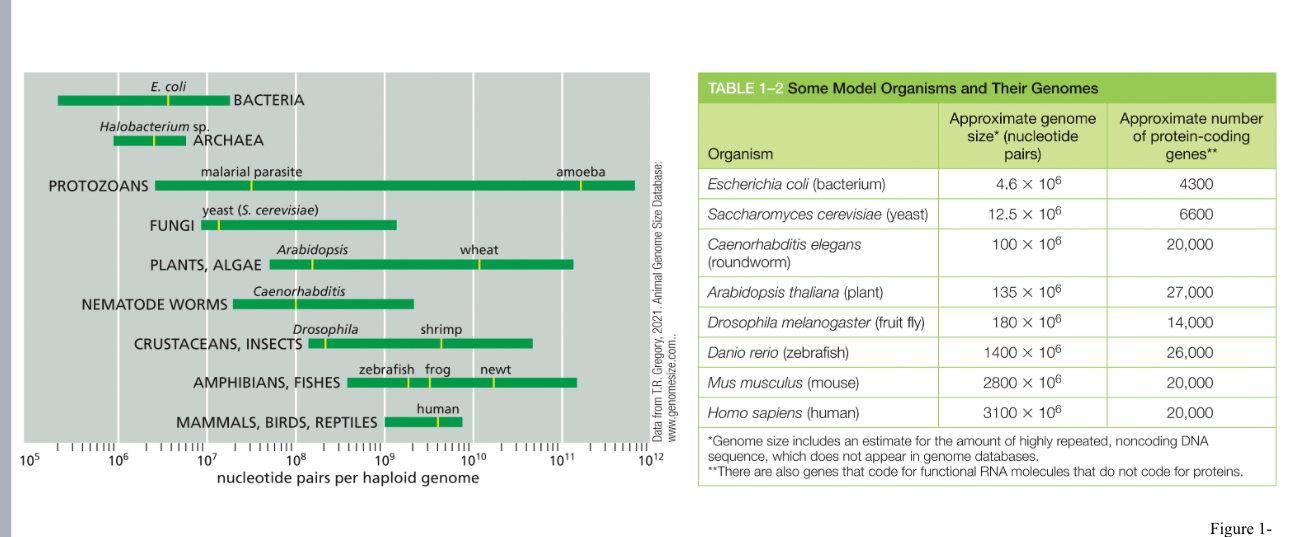
Eukaryotic genomes are big
rich in regulatory DNA
Eukaryotes can form Multicellular Organisms
Most eukaryotes are unicellular organisms →even at this level, they can be fairly complex and, in some cases, behave like multicellular organisms.
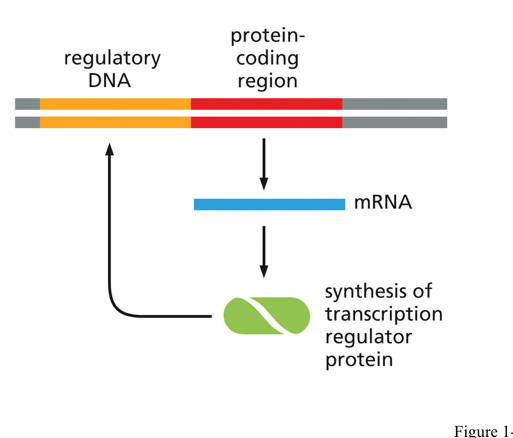
Differentiated cells express cell-specific genes → gives rise to cell specific proteins → determine the cell function→ multicellular organism.
Transcription regulators will only be around genes they need. In muscle cell, gene 1 is silenced. In skin cell gene 3 is silenced
Multicellular organisms are made up of a
group of cells that perform specialized functions
linked through complex cell-to-cell communication
different groups of cells make up the organism.
But…they all arise from a single cell!
Differentiation:
The process by which an unspecialized cell becomes specialized
highly complex and regulated process where the genome / genes define the program of multicellular development
Stem cell gets differentiated more and more as it divides
Differentiation occurs mostly through signals received from the cellular environment:
Changes in cell morphology (appearance)
“Housekeeping” genes (e.g. cell metabolism) will be the same as others
Organelles stay the same, but their number and location may differ
Multicellular Organisms Start
as Single Cells
Ex development of a frog
 Note
Note  Flashcards (43)