🤒 Sickness + Productivity
 Call Kai
 Learn
Learn Practice Test
 Spaced Repetition
 Match
Match Flashcards
 Knowt Play
1/12

There's no tags or description
Looks like no tags are added yet.
Name | Mastery | Learn | Test | Matching | Spaced | Call with Kai |
|---|
No analytics yet
Send a link to your students to track their progress
13 Terms
Physical Health – Animal Welfare Assessment
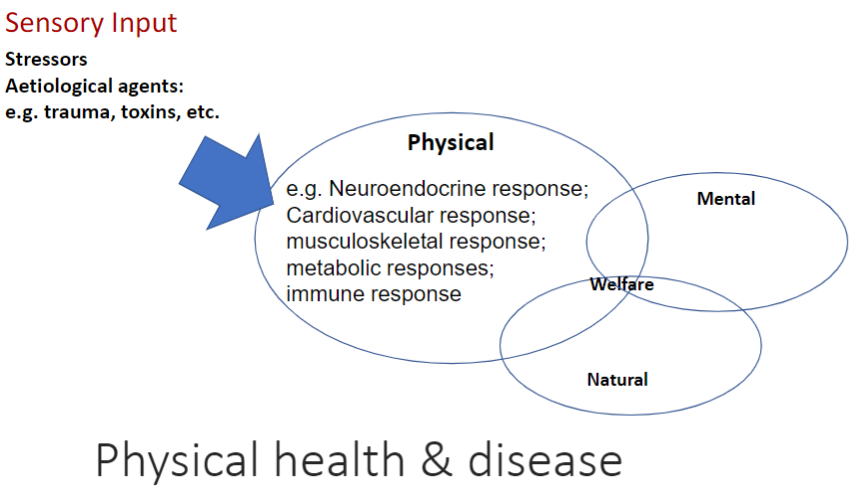
Physical Health & Disease
Includes neuroendocrine, cardiovascular, musculoskeletal, metabolic, and immune responses
Stressors
Caused by aetiological (etiology) agents such as trauma, toxins, etc.
Sensory Input
Contributes to detection and response to environmental and internal stressors
Physical Health & Disease – Key Points
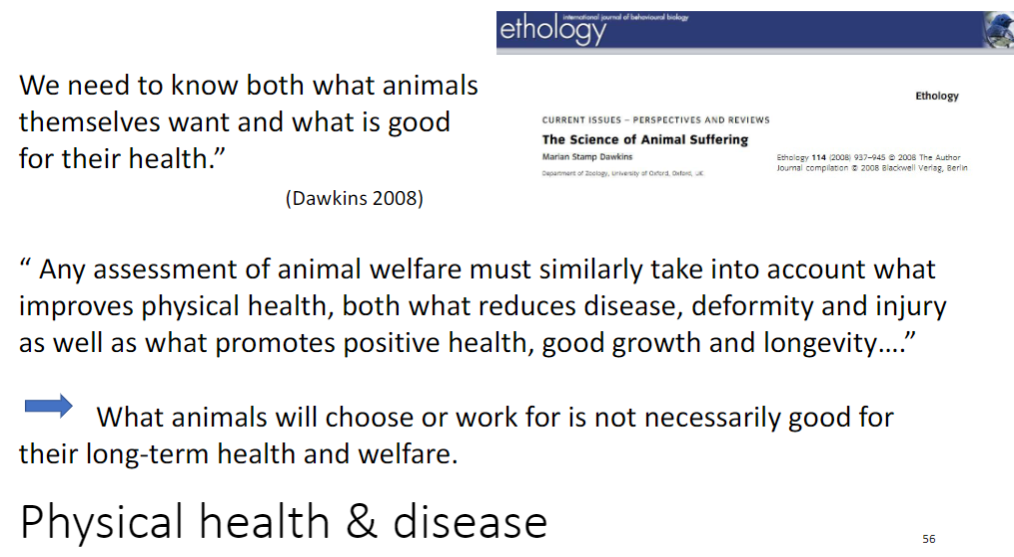
Animal Preferences vs. Health
We need to consider both what animals want and what is good for their health
Welfare Assessment
Must account for factors that reduce disease, deformity, and injury
Also considers what promotes positive health, good growth, and longevity
Consideration
What animals choose or work for is not always beneficial for their long-term health and welfare
Disease – Definition
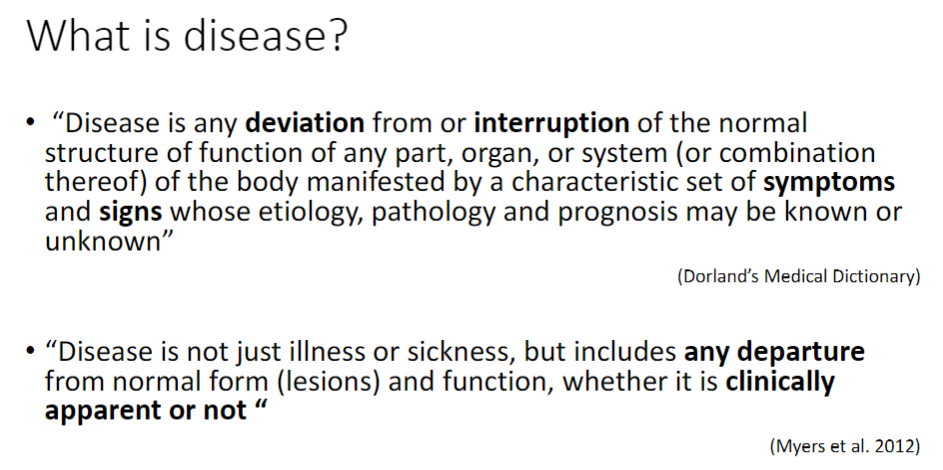
General Definition
Any deviation from or interruption of the normal structure or function of a part, organ, or system of the body
Manifests as a characteristic set of symptoms and signs
Etiology, pathology, and prognosis may be known or unknown
Expanded View
Disease is not just illness or sickness
Includes any departure from normal form (lesions) and function, whether clinically apparent or not
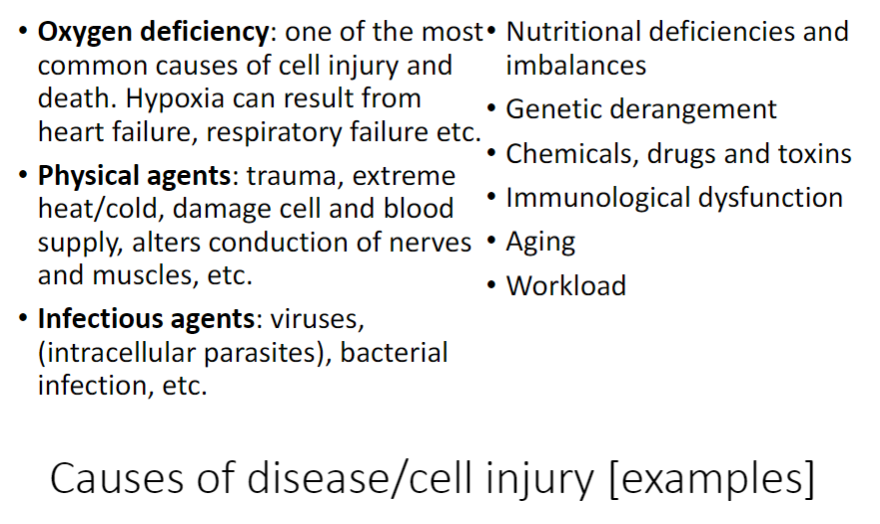
Causes of Disease / Cell Injury – Examples
Oxygen Deficiency
One of the most common causes of cell injury and death
Can result from heart failure, respiratory failure, etc.
Physical Agents
Trauma, extreme heat or cold
Damage cells and blood supply, alter nerve and muscle conduction
Infectious Agents
Viruses (including intracellular parasites), bacterial infections, etc.
Nutritional Deficiencies and Imbalances
Lack of essential nutrients or improper dietary balance
Genetic Derangement
Inherited or spontaneous genetic abnormalities
Chemicals, Drugs, and Toxins
Exposure to harmful substances
Immunological Dysfunction
Immune system malfunction causing disease
Aging
Natural degenerative processes over time
Workload
Excessive physical or metabolic demand contributing to injury
Physical Health & Disease – Behavioural Adaptations
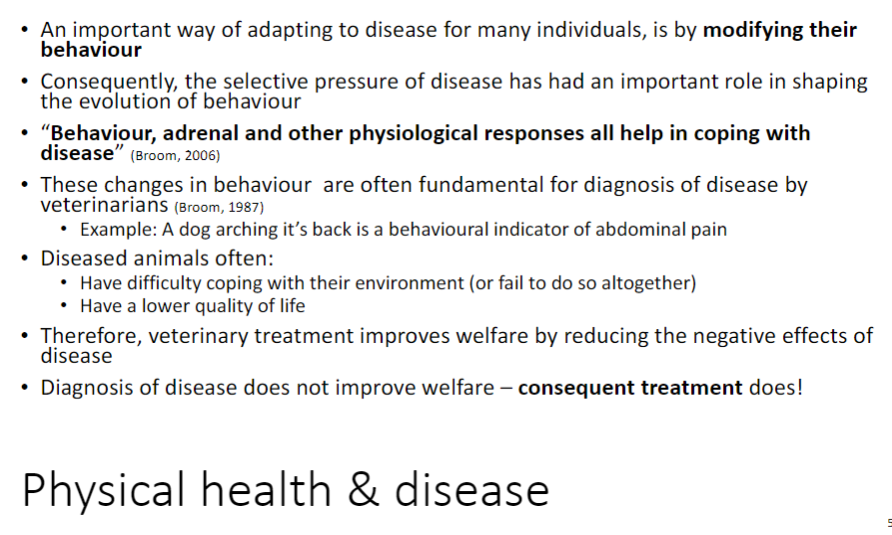
Behavioural Adaptation to Disease
Animals often modify their behaviour to cope with disease
Selective pressure from disease has shaped the evolution of behaviour
Physiological and Behavioural Responses
Behaviour, adrenal, and other physiological responses help animals cope with disease (Broom, 2006)
Behavioural changes are often key indicators for veterinary diagnosis (Broom, 1987)
Example
A dog arching its back indicates abdominal pain
Effects of Disease
Diseased animals may struggle to cope with their environment
Often experience lower quality of life
Improving Welfare
Veterinary treatment improves welfare by reducing negative effects of disease
Diagnosis alone does not improve welfare—treatment is essential
Cytokines, Sickness Behaviour, and Depression – Overview
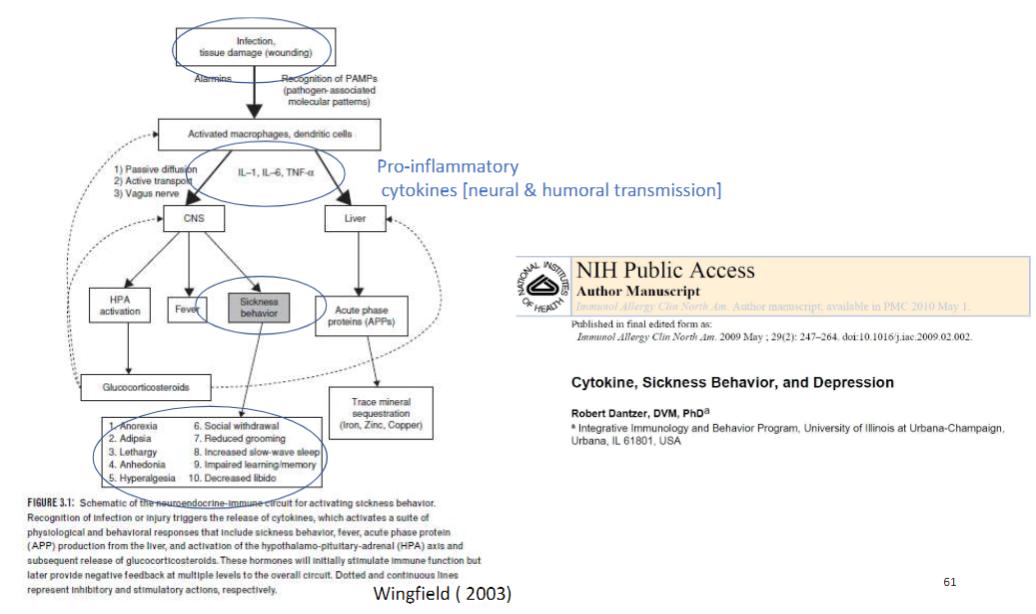
Triggering Events
Infection or tissue damage (wounding) activates the immune system
Pro-inflammatory Cytokines
Transmitted via neural and humoral pathways
Signal to the brain to initiate sickness behaviour
Sickness Behaviour – Key Features
1. Anorexia – reduced food intake
2. Adipsia – reduced water intake
3. Lethargy – low energy, inactivity
4. Anhedonia – reduced pleasure or interest
5. Hyperalgesia – increased sensitivity to pain
6. Social withdrawal – reduced interaction with conspecifics
7. Reduced grooming – neglect of self-maintenance
8. Increased slow-wave sleep – more restorative sleep
9. Impaired learning and memory – cognitive deficits
10. Decreased libido – reduced reproductive drive
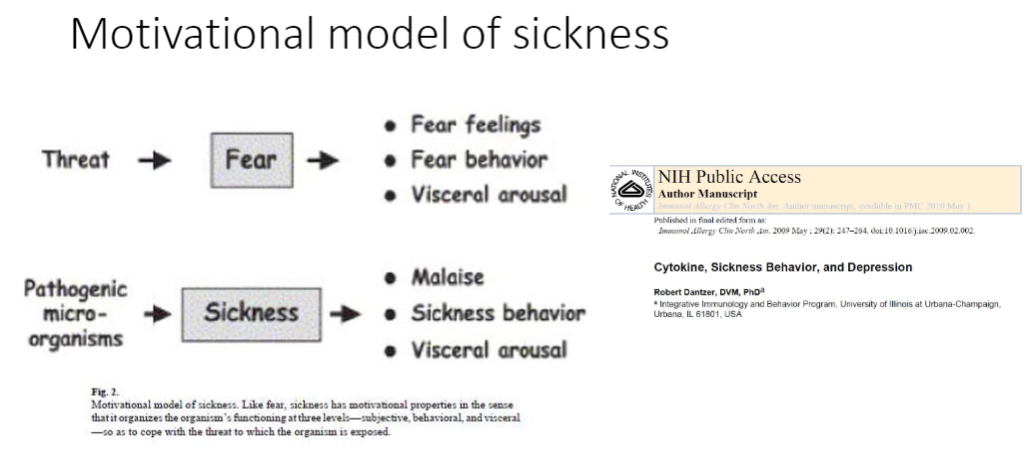
Motivational Model of Sickness
Threat
Exposure to stressors
Fear Response
Fear feelings – subjective emotional response
Fear behavior – observable actions (e.g., withdrawal, avoidance)
Visceral arousal – physiological changes preparing the body for threat (e.g., heart rate, respiration, hormone release)
Pathogenic Micro-organisms
Exposure to pathogenic micro-organisms
Sickness Response
Malaise – general feeling of unwellness
Sickness behaviour – coordinated set of behaviours triggered by illness (e.g., lethargy, reduced appetite, social withdrawal)
Visceral arousal – physiological changes accompanying sickness (e.g., inflammation, immune activation, altered metabolism)
Key Concept
Sickness behaviour is part of a motivational system (goal-directed behavior), directing animals to conserve energy and cope with disease or infection
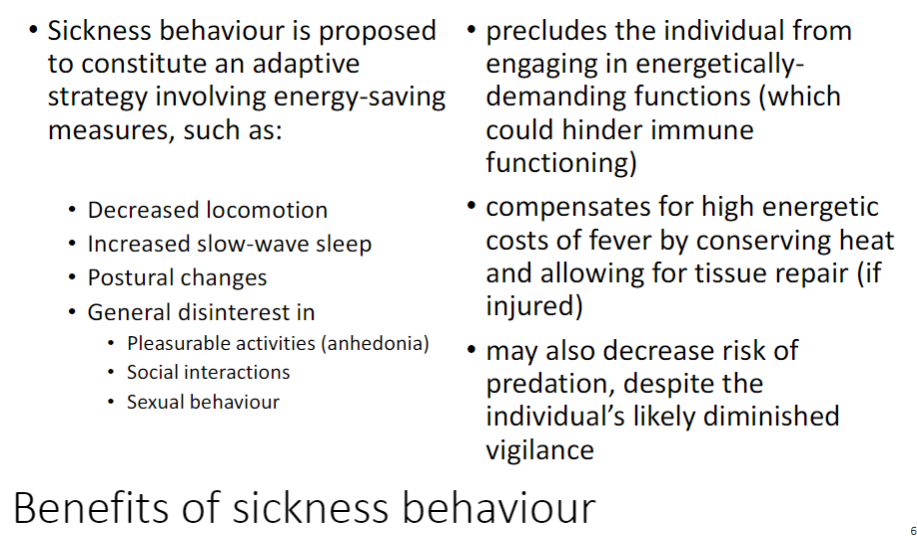
Benefits of Sickness Behaviour
Adaptive Strategy
Sickness behaviour is an energy-saving response that helps the animal cope with illness or injury
Energy Conservation
Decreased locomotion – less movement conserves energy
Increased slow-wave sleep – promotes recovery and immune function
Postural changes – positions that minimize energy use
Reduced engagement in pleasurable activities (anhedonia) – avoids unnecessary energy expenditure
Decreased social interactions and sexual behaviour – conserves energy and reduces risks
Physiological Compensation
Helps offset high energetic costs of fever
Conserves heat and allows tissue repair if injured
Ecological Benefit
May reduce risk of predation even though vigilance is lowered
Key Concept
Sickness behaviour coordinates physiological and behavioural responses to optimize survival and recovery
Sickness-Associated Anorexia
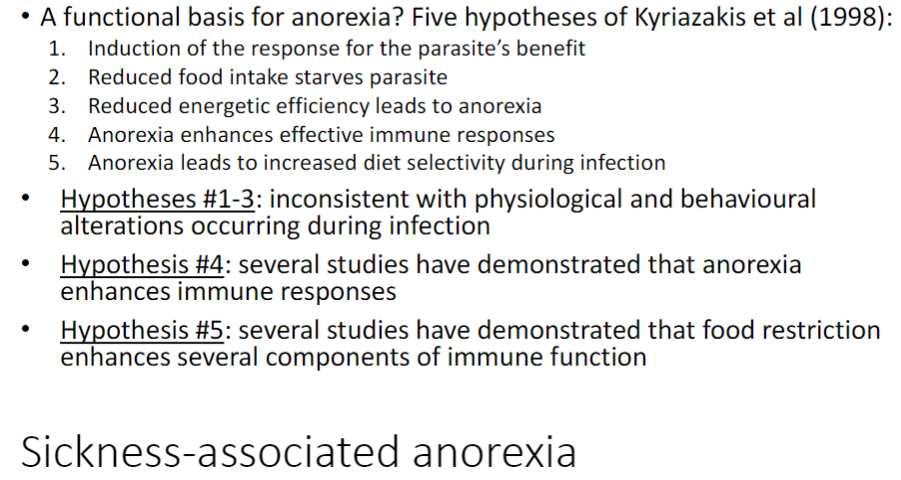
Functional Basis
Anorexia during sickness may serve adaptive purposes related to infection and immune function
Five Hypotheses (Kyriazakis et al., 1998)
1. Induction of the response for the parasite’s benefit
- Parasite causes anorexia to help itself
2. Reduced food intake starves parasite
- Host eats less → parasite gets less nutrition
3. Reduced energetic efficiency leads to anorexia
- Infection reduces energy efficiency → host naturally eats less
4. Anorexia enhances effective immune responses
- Eating less helps immune system fight infection
5. Anorexia leads to increased diet selectivity during infection
- Host chooses more beneficial nutrients when intake is reduced
Issues / Evidence
Hypotheses #1–3: inconsistent with observed physiological and behavioural changes during infection
Hypotheses #4–5: supported by studies → anorexia likely adaptive
Key Concept
Hypotheses #4 and #5 highlight that anorexia during sickness can improve immune effectiveness
Relationship Between Animal Welfare and Productivity 1
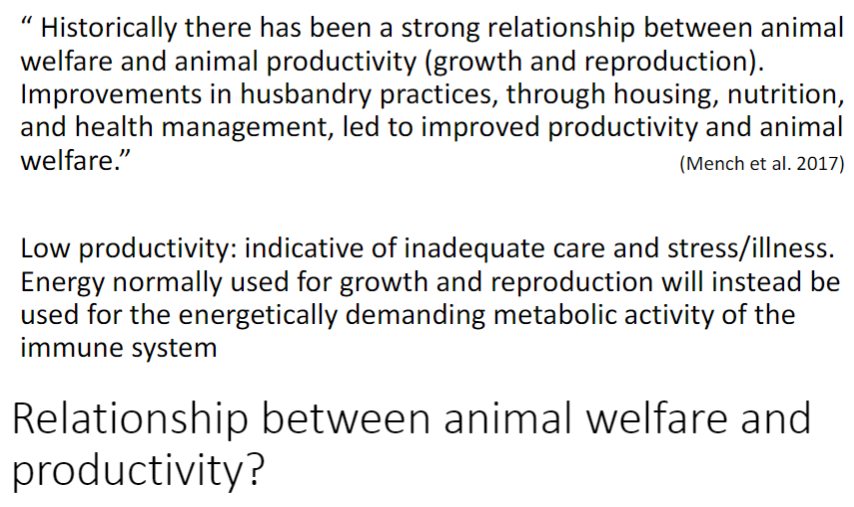
Historical Link
Historically, there has been a strong connection between animal welfare and productivity (growth and reproduction)
Improvements in housing, nutrition, and health management improved both welfare and productivity
Low Productivity as a Welfare Indicator
Low productivity can indicate inadequate care, stress, or illness
Energy that would normally support growth and reproduction is redirected to support the energetically costly immune response
Key Concept
Optimizing welfare not only benefits the animal’s quality of life but also enhances productivity through better health and reduced stress
Relationship Between Animal Welfare and Productivity 2
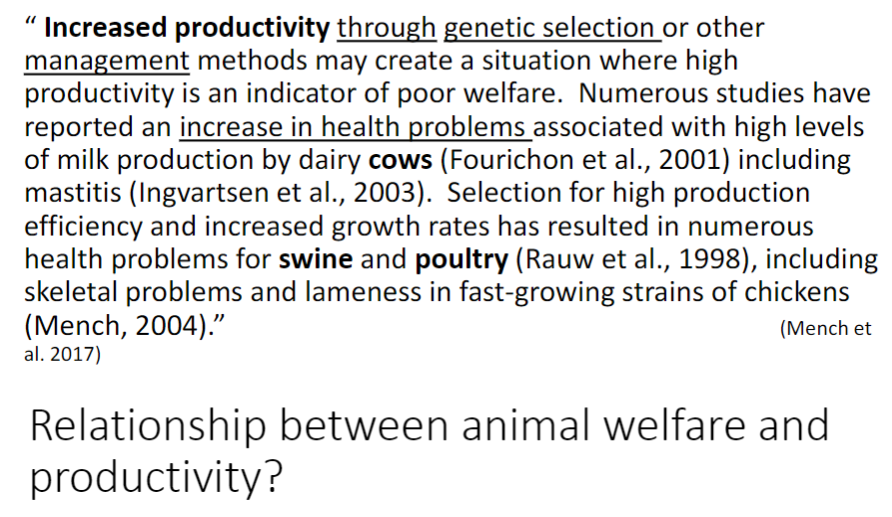
High Productivity ≠ Good Welfare
Increased productivity through genetic selection or intensive management can sometimes indicate poor welfare
Examples in Dairy Cows
High milk production is associated with increased health problems, such as mastitis
Examples in Swine and Poultry
Selection for high growth rates and production efficiency has led to health issues
Skeletal problems and lameness are common in fast-growing chicken strains
Key Concept
High productivity does not always reflect good welfare; intensive production can compromise animal health and quality of life
Relationship Between Animal Welfare and Productivity 3
Historical Link
Historically, improvements in husbandry practices—such as housing, nutrition, and health management—led to both higher productivity and better animal welfare
Low Productivity
May indicate inadequate care, stress, or illness
Energy normally used for growth and reproduction is redirected to immune system activity
Key Concept
While high productivity can reflect good management, it is not a guaranteed indicator of good welfare; context and underlying health effects must be considered
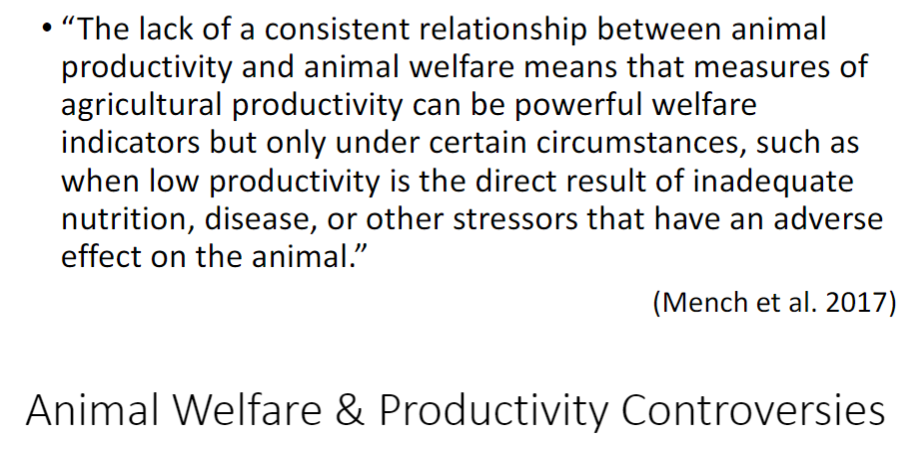
Animal Welfare & Productivity – Controversies
Inconsistent Relationship
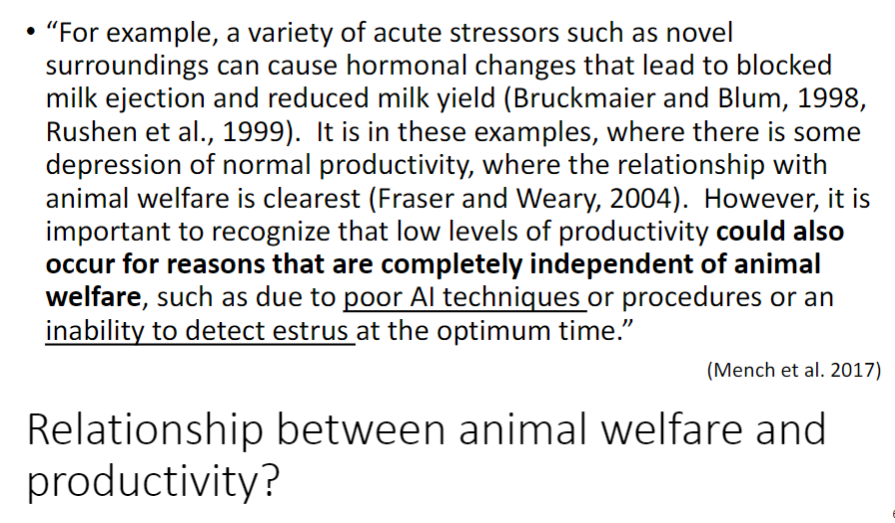
There is no consistent link between productivity and animal welfare
Conditional Indicator
Measures of agricultural productivity can indicate welfare problems
Only when low productivity is directly caused by inadequate nutrition, disease, or other stressors adversely affecting the animal
Key Point
High or normal productivity does not automatically imply good welfare; careful interpretation is required