Chapter 3: Eukaryal Microorganisms
 Call Kai
 Learn
Learn Practice Test
 Spaced Repetition
 Match
Match Flashcards
 Knowt Play
1/40

There's no tags or description
Looks like no tags are added yet.
Name | Mastery | Learn | Test | Matching | Spaced | Call with Kai |
|---|
No analytics yet
Send a link to your students to track their progress
41 Terms
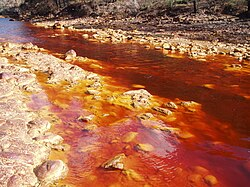
What is special about the red tinto (red river)?
Red in colour due to mining activity and basin rich in minerals (gold, copper, iron)
Mine drainage may have intensified the colour by adding heavy metals and increasing its acidity
Acidity makes it extremely difficult for developed life forms to appear
Microorganisms suited for harsh acidic conditions play a major role in the creation of this landscape
Some organisms transform sulphur and iron into sulfuric acid and iron oxide → causes coloration and acidification
What do eukaryal cells look like?
Defined by prescence of a membrane-bound nucleus
Usually larger than bacterial/archael cells
Usually contain intracellular compartments (organelles)
May possess a cell wall structure
Complex internal cytoskeleton in place
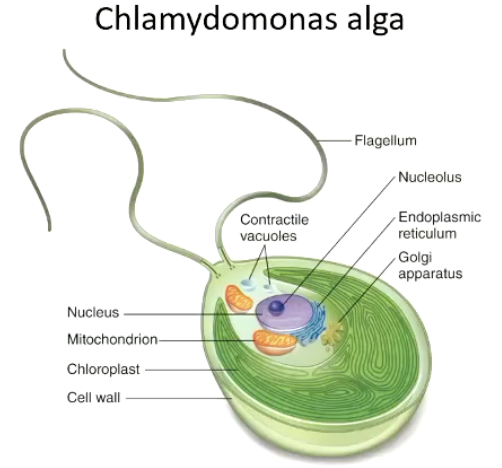
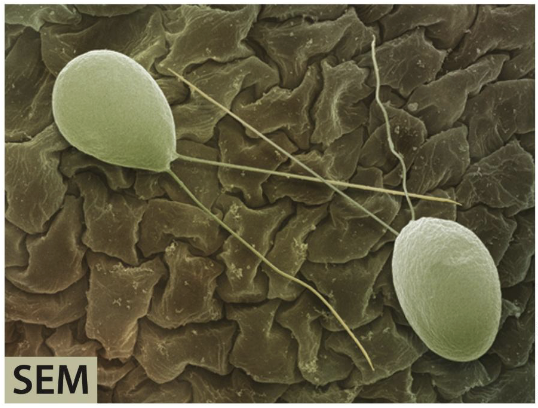
Image: The alga Chlamydomonas displays general eukaryal cell structures, including a nucleus, the Golgi apparatus, and mitochondria. You might conclude that Chlamydomonas is a photosynthetic cell because it has a chloroplast and that it is motile because it has two flagella.
What are some internal organelles of Eukarya?
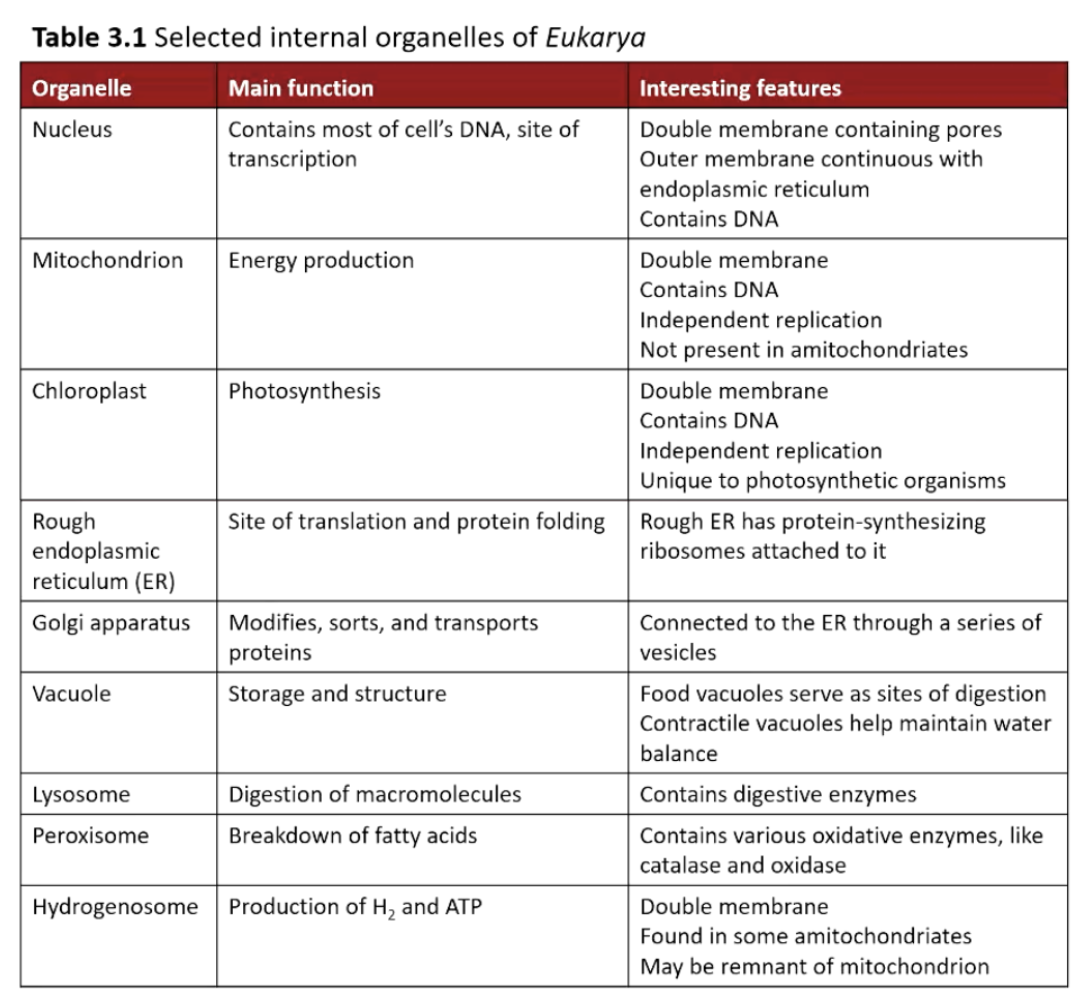
Nucleus - Contains most of the cell’s DNA, site of transcription
Mitochondrion - Energy production
Chloroplast - Photosynthesis
Rough endoplasmic reticulum (ER) - Site of translation and protein folding
Golgi apparatus - Modifies, sorts, and transports proteins
Vacuole - Storage and structure
Lysosome - Digestion of macromolecules
Peroxisome - Breakdown of fatty acids
Hydrogenosome - Production of H2 and ATP
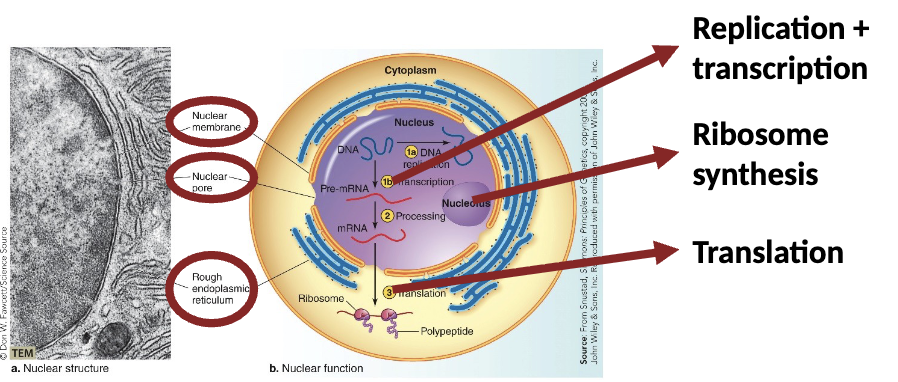
What is the role of the nucleus?
In the storage and expression of information
Double membrane structure contains linear chromsomes of cell (DNA)
Nucleolus (non-membrane bound) exists within nucleus (ribosome synthesis)
Spatial separation means transcription occurs in nucleus; translation occurs in cytoplasm.
What is the role of the mitochondria and chloroplasts?
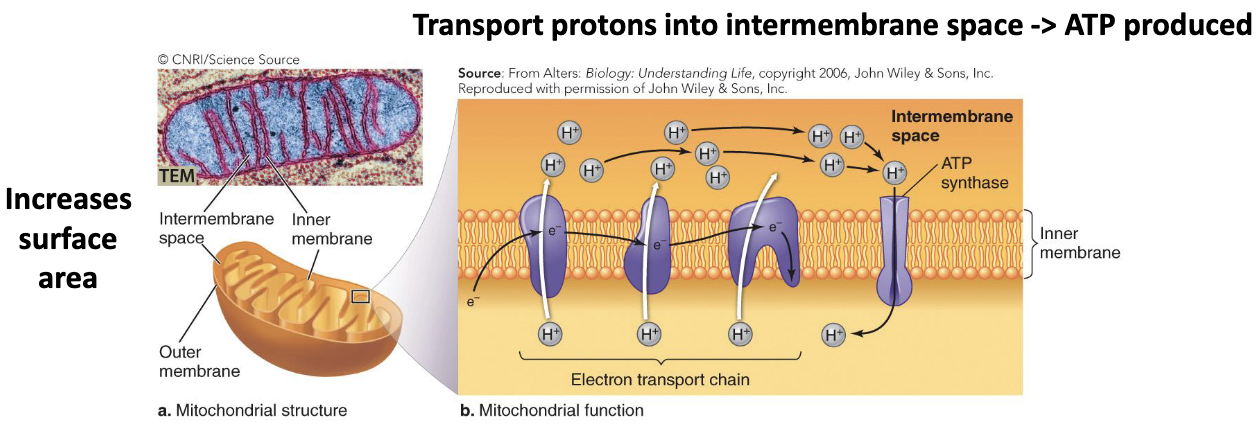
Cell metabolism
These organelles use electron transport chains to produce ATP (chemiosmosis).
Mitochondria participate in later stages of cellular respiration.
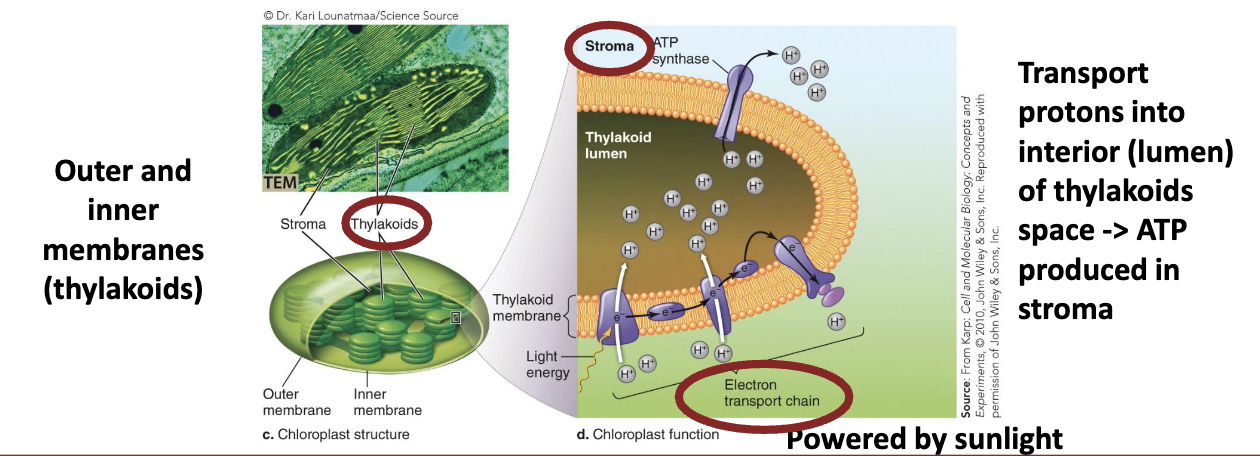
What is the role of chloroplasts?
Use the ATP they produce to fix carbon into organic compounds (often glucose).
Powered by sunlight, transport protons into interior (lumen) of thylakoids space → ATP produced in stroma.
What is a similarity between the mitochondria and chloroplasts?
Both organelles are semiautonomous.
Each has their own DNA, ribosomes, and transcription machinery and can replicate independently of the rest of the cell.
However, most of their proteins originate from the DNA in the nucleus of the cell.
What is the role of the plasma membrane?
A role in homeostasis.
Homeostasis: Ability to maintain an internal environment vs. changes outside
Phospholipid bilayer with embedded proteins that allow molecule transport
Facilitated diffusion (no energy required from cell)
Active transport (cell expends energy)
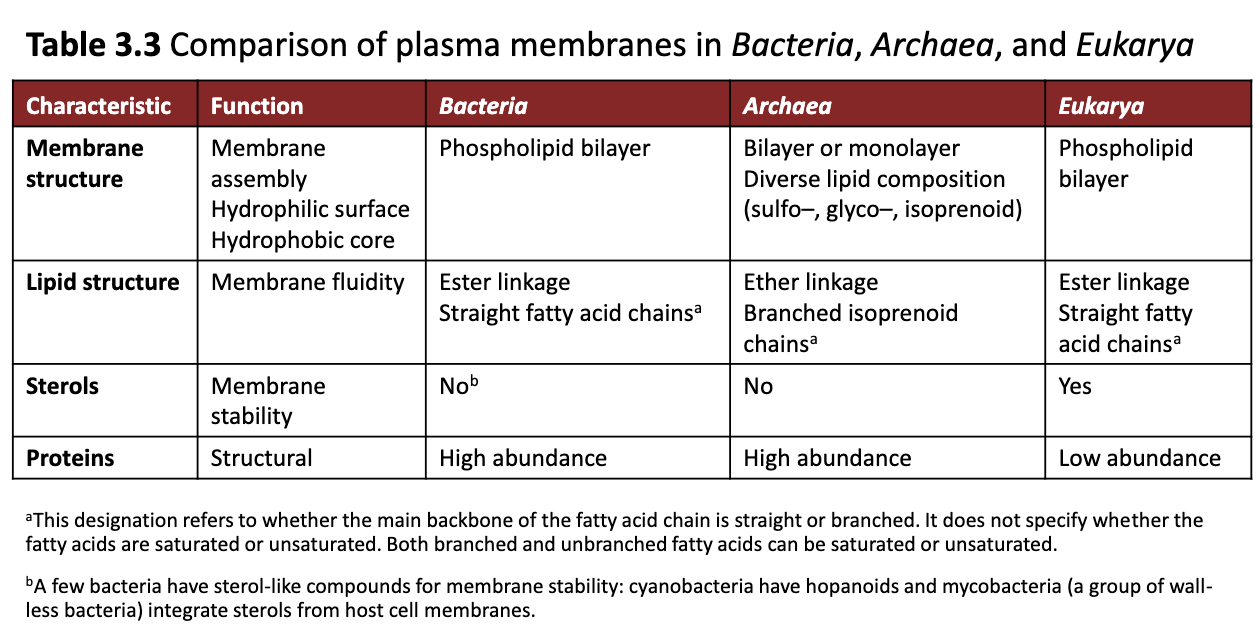
What is the difference in the plasma membrane in Bacteria, Archaea, and Eukarya?
Membrane structure is similar for all (hydrophilic surface, hydrophobic core)
Difference: Phospholipid bilayer is similar for both Bacteria and Eukarya, compared to Archaea
Don’t focus too much on lipid structure and sterols
What is the role of the cell wall?
Cell support
Eukaryal cells can be broadly separated into those with and those without cell walls.
Cell walls can vary widely between the domains.
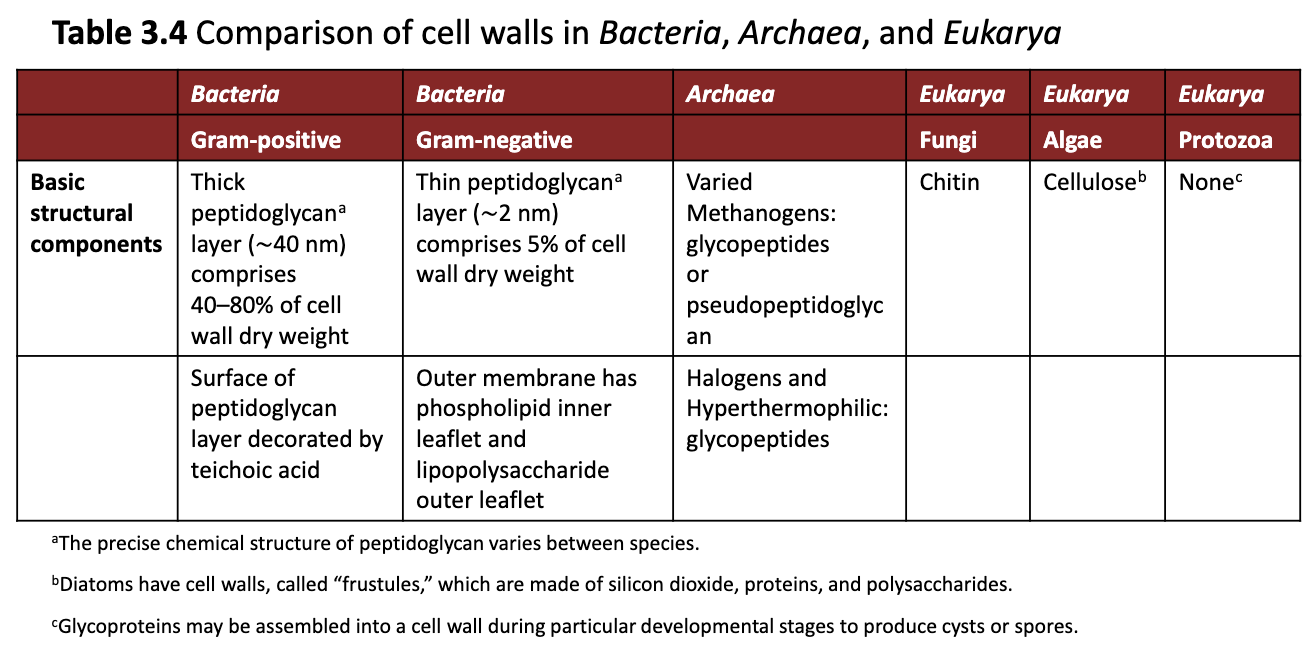
What is the difference between the cell walls in Bacteria, Archaea, and Eukarya?
Gram-positive (thick peptidoglycan)
Gram-negative (thin peptidoglycan)
Fungi - Chitin
Algae - Cellulose
Protozoa - None
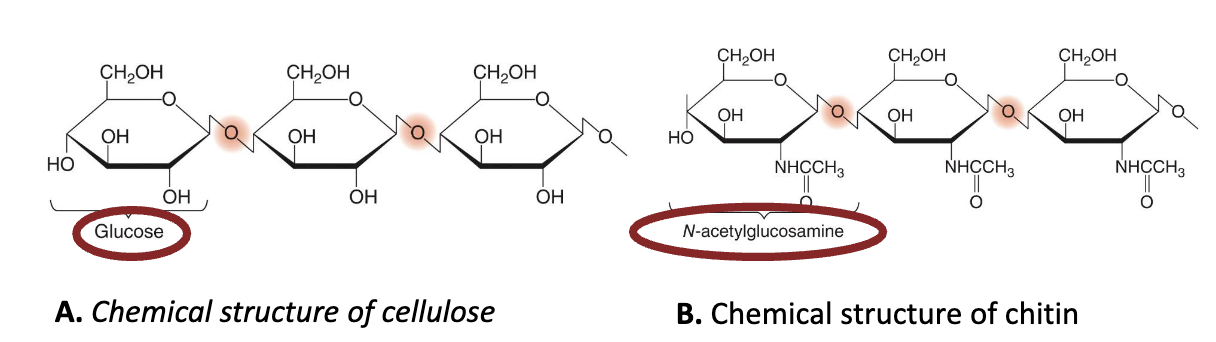
What is the role of cellulose and chitin in the cell wall?
Cellulose and chitin in eukaryal cells use specific β-1,4- glycosidic bonds between sugars for strength and rigidity.
Some eukaryal cells only create cell walls at specific points in their life cycles (Giardia, Entamoeba).
Cellulose = glucose
Chitin = NAG (N-acetylglucosamine)
What is the role of the cytoskeleton?
Cell structure
Three major structures comprise the eukaryal cytoskeleton:
Microtubules
Microfilaments
Intermediate filaments
Each differs in structure/function; all contribute to cell shape.
The cytoskeleton can’t provide the same protection as a cell wall, however.
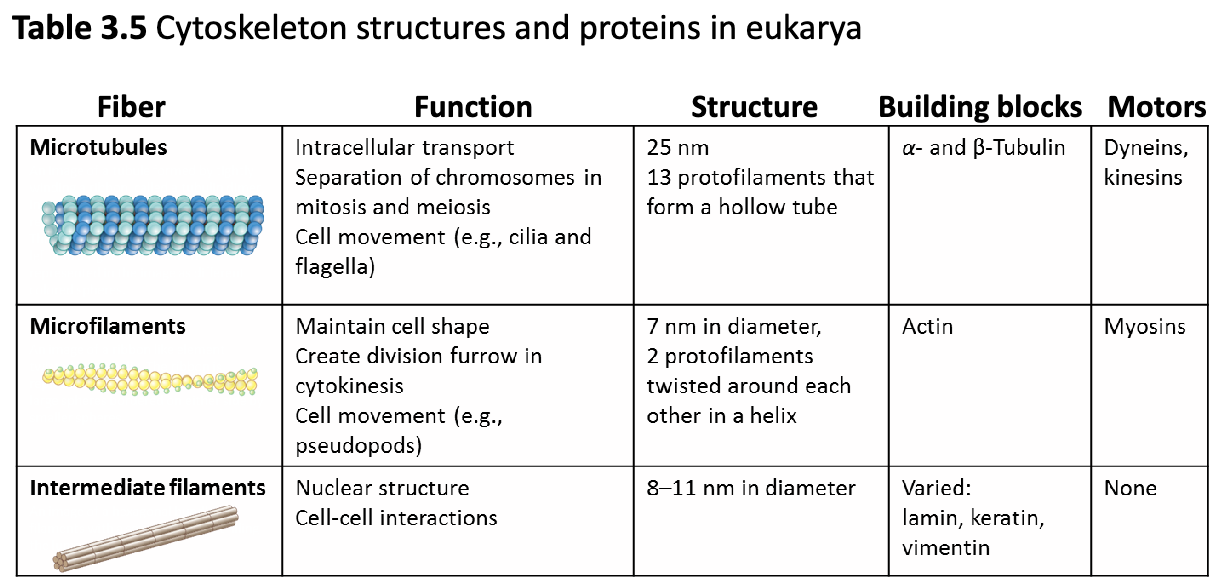
Explain the different functions of cytoskeleton structures and proteins in eukarya.
Microtubules
Intracellular transport
Separation of chromosomes in mitosis and meiosis
Cell movement (cilia and flagella)
Microfilaments
Maintain cell shape
Create division furrow in cytokinesis
Cell movement (pseudopods)
Intermediate filaments
Nuclear structure
Cell-cell interactions
**Don’t worry about structures
What are the different types of eukaryal microorganisms?
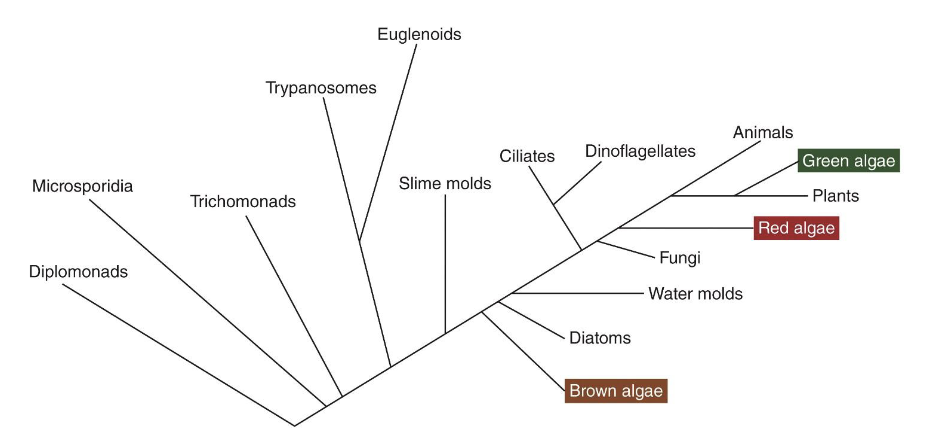
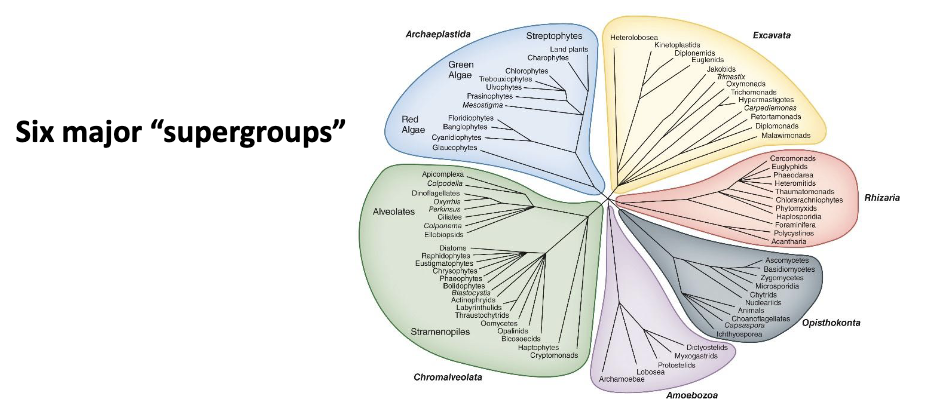
The phylogeny of eukaryal microorganisms.
Creating phylogenetic trees from small subunit (SSU) rRNA gene sequences is possible (see Chapters 1 and 2).
What is the phylogeny of eukaryal microorganisms?
Other highly conserved genes can be used to enhance our understanding of eukaryal phylogeny (tubulins, heat-shock proteins).
Uncertainty still exists—phylogeny is still in flux.
Six major “supergroups”
What are model organisms?
Eukaryal microorganisms: Model organisms
Four extensively studied eukaryal microorganisms:
Fungus (Saccharomyces cervisiae)
Protozoan (Giardia lamblia)
Slime mold (Dictostelium discoideum)
Alga (Chlamydomonas)
These are model organisms because they have been thoroughly studied and their traits define much of our scientific understanding of eukaryal cells.
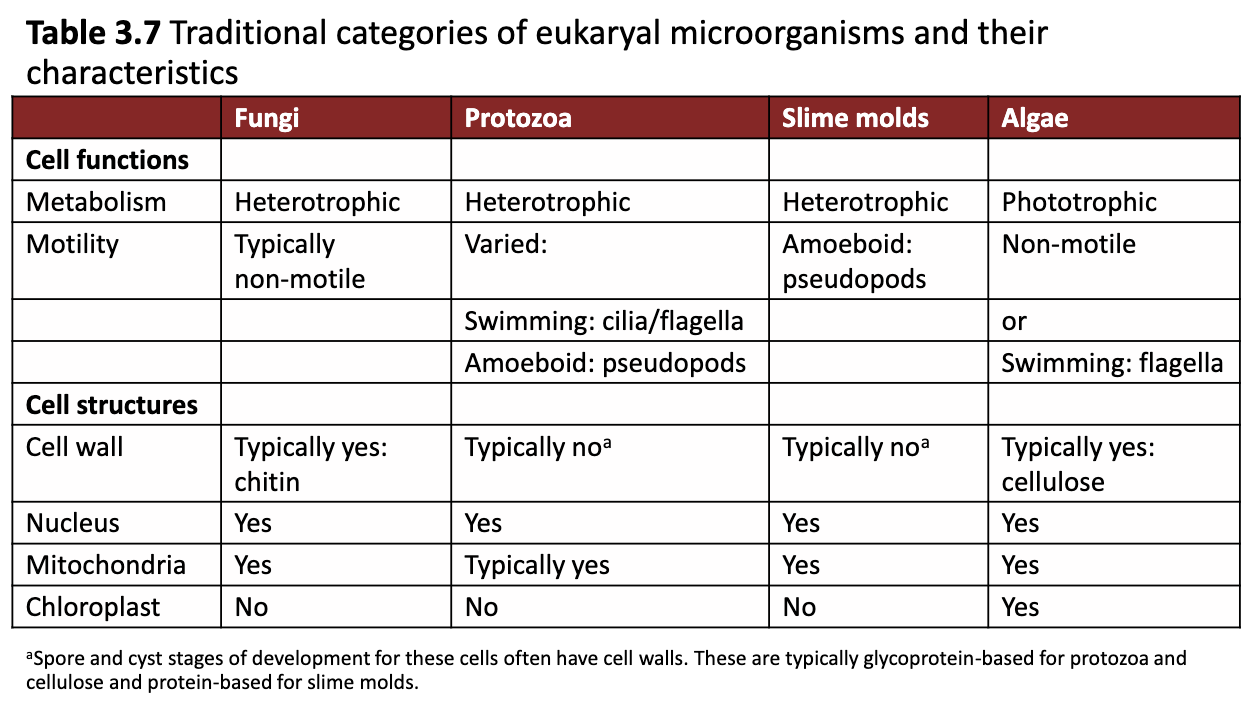
What are the traditional categories of eukaryal microorganisms and their characteristics?
Fungi (typically non-motile)
Protozoa
Slime molds
Algae (only group that is phototrophic)
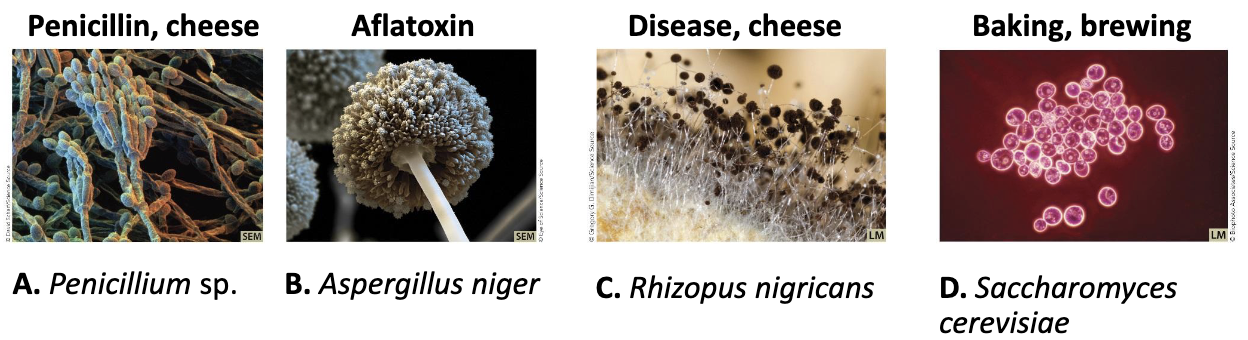
Why are Fungi (Saccharomyces cerevisiae) model organisms?
Eukaryal microorganisms: Model organisms
Heterotrophic; cell walls of chitin; used to make bread, beer, wine
Easy, cheap tool to study eukaryotic structures/gene expression
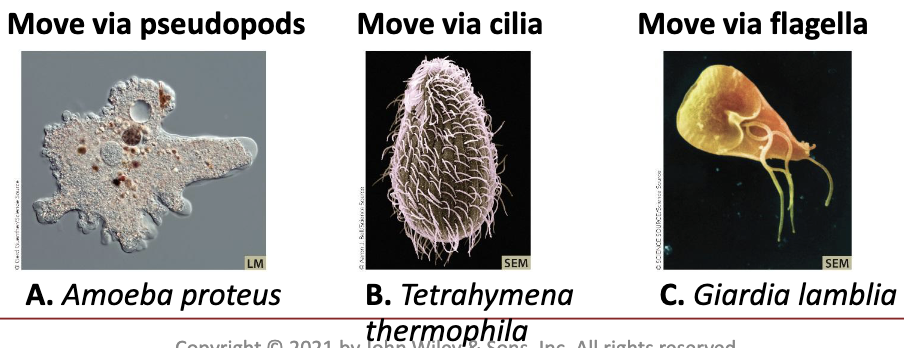
Why are Protozoa (Giardia lamblia) model organisms?
Eukaryal microorganisms: Model organisms
As a whole, a broad category—some heterotrophic, some photosynthetic; variable cell walls; different motility strategies; different reproduction strategies.
Move via pseudopods, cilia and flagella
Giardia is interesting because it is genetically “old,” it lacks mitochondria, and it causes human disease.
Why are Slime Molds (Dictyostelium discoideum) model organisms?
Eukaryal microorganisms: Model organisms
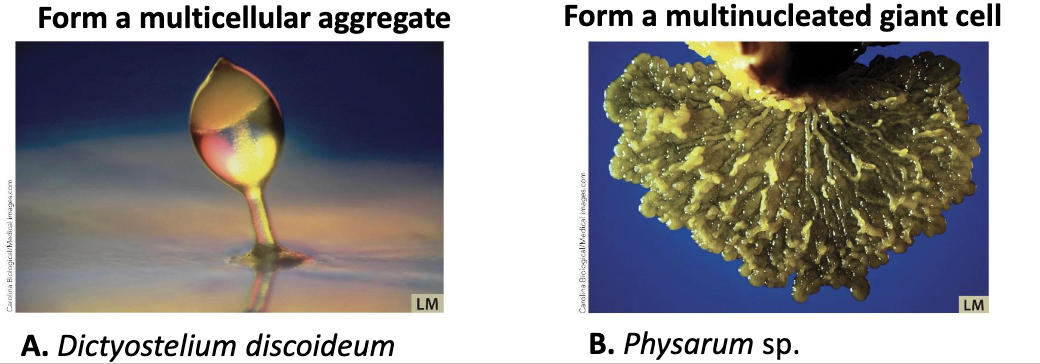
Slime molds: Dictyostelium discoideum
Still protozoan! Model for studying ecology, cell motility, cell–cell communication, and coevolution.
Second slime mold type (Physarum) fuses many cells into a continuous, multinucleate giant cell.
Why are Algae (Chlamydomonas) model organisms?
Eukaryal microorganisms: Model organisms
Some algae are single-celled, but many are multicellular.
All are photosynthetic with cellulose cell walls.
Chlamydomonas has a two-flagella form good for studying eukaryal flagella biogenesis/function.
Chlamydomonas is also studied because of its ease of growth and durability.
How do eukaryal microorganisms replicate?
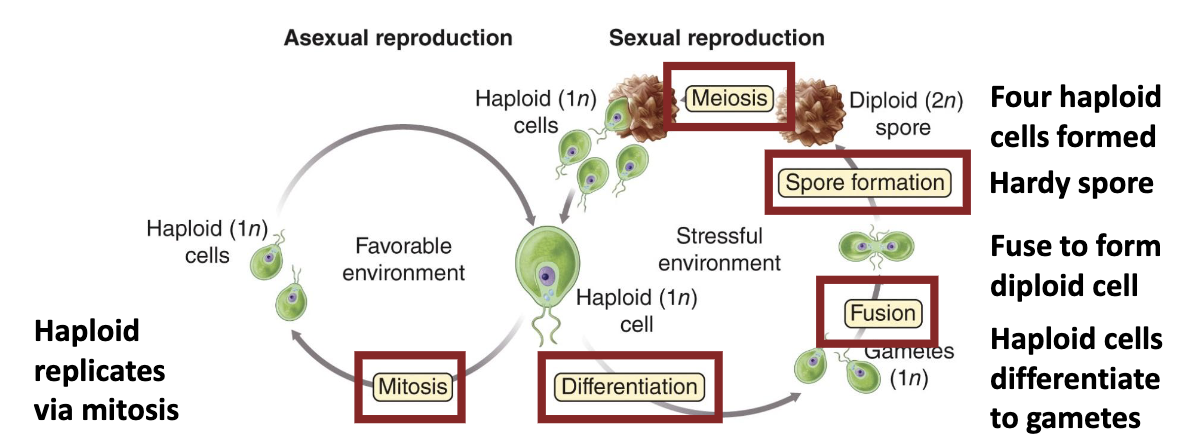
Eukaryal life cycles are complicated due to haploid/diploid states and the possibilities for sexual reproduction (involving meiosis) or asexual reproduction (involving mitosis).
What is the life cycle of model organisms?
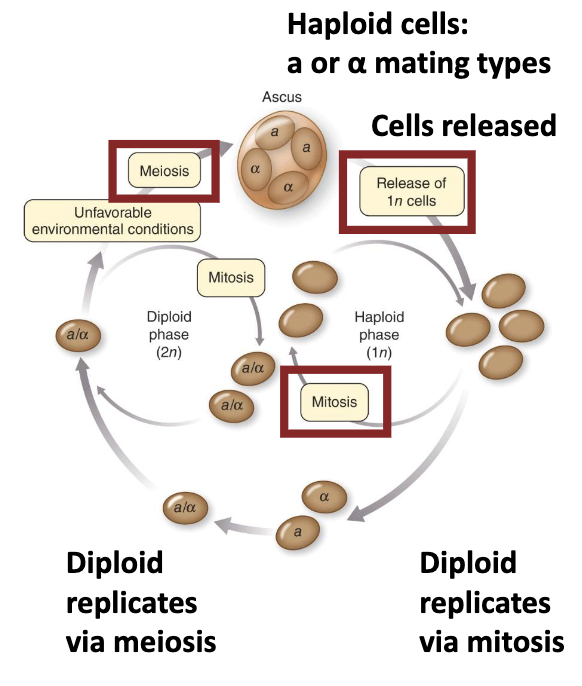
Yeast and Chlamydomonas may alternate haploid/diploid stages.
Allows for better survival and genetic variation
Saccharomyces can undergo meiosis to form an ascus.
Haploid mating types can fuse to reproduce sexually or be maintained by asexual mitosis.
What is the life cycle of Saccharomyces?
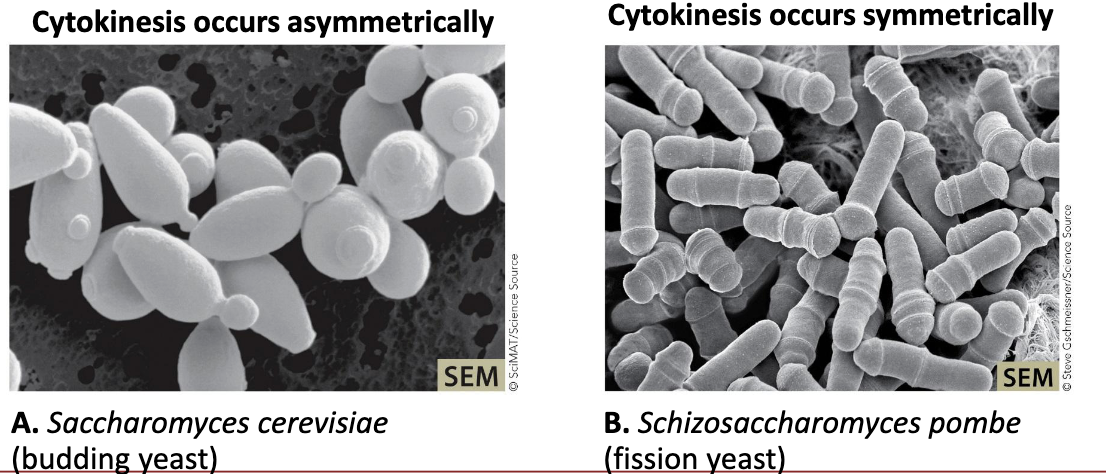
Saccharomyces not limited to ascus formation.
Budding off of smaller cells can occur, or fission of identically sized cells.
What is the life cycle of Chlamydomonas?
Chlamydomonas maintains a motile haploid state.
When conditions become bad, haploid cells differentiate and fuse into a diploid form, generating a hardier spore form.
What is the life cycle of Dictyostelium?
Dictyostelium is even more complex.
It exists in a haploid unicellular form until conditions worsen.
Then a multicellular “slug” is formed with a stalk and a fruiting body.
Spores form in the fruiting body, restarting the life cycle as haploid cells.
These haploid cells can fuse into a diploid macrocyst form.
The macrocyst form undergoes meiosis to generate more haploid cells.
How did eukaryal microorganisms originate?
It is generally thought that life started 4.5 to 4 bya, but eukaryotes appeared around 2.1 to 1.6 bya.
How did organelles develop?
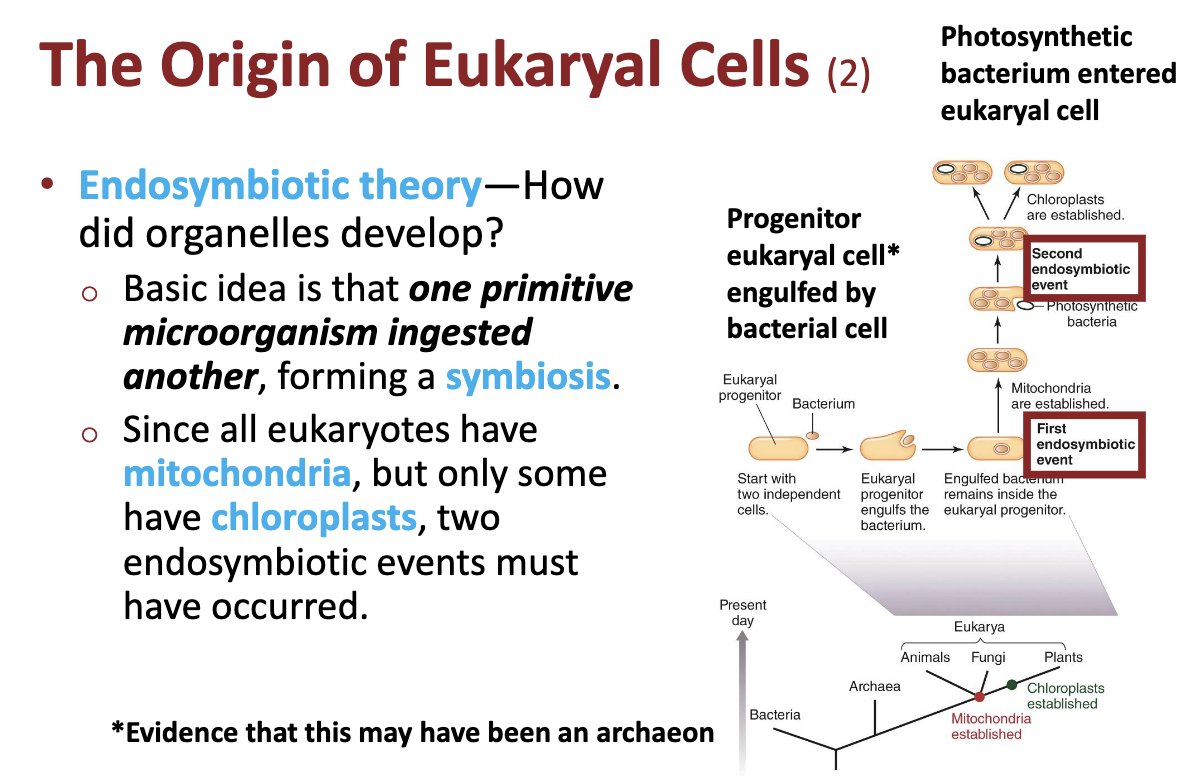
Endosymbiotic theory
Basic idea is that one primitive microorganism ingested another, forming a symbiosis.
Since all eukaryotes have mitochondria, but only some have chloroplasts, two endosymbiotic events must have occurred.
What evidence supports the endosymbiotic theory?
Three main lines of evidence:
Mitochondria/chloroplasts resemble bacteria in both size and shape.
Arrangement of double membranes around these structures is consistent with ingestion idea.
Each has its own DNA, and that DNA sequence is much more like bacteria than eukaryotic DNA.
Exception: Amitochondriates lack mitochondria. The idea is that these cells evolved out of using them to obtain energy, and instead obtain their energy in other ways (Giardia is an example of these).
What is endosymbiosis in modern cells?
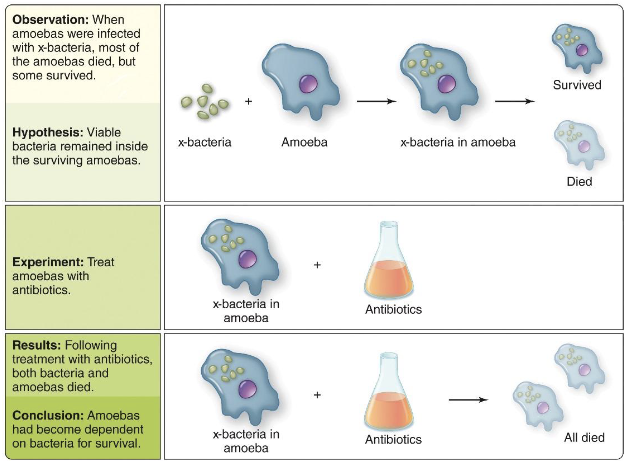
Two cells together are better than one alone—amoebas and x-bacteria.
Why would both bacteria and amoeba die when antibiotics targeting the bacteria were administered?
What is the relationship between Paramecium and algae?
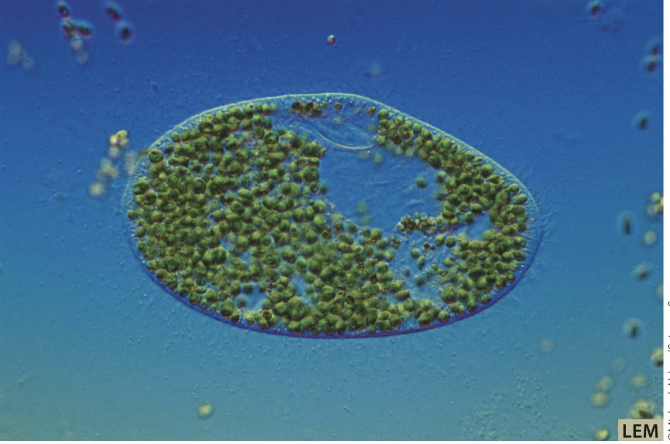
Endosymbiosis in modern cells
Paramecium ingesting algae and using them for photosynthesis
Paramecium benefit from algae, but do algae benefit from Paramecium?
What are some lingering questions about endosymbiotic theory?
If we can show it occurs in experiments, why has it only been stable twice in history?
What was the thing that was first engulfed, exactly?
How did the initial “engulfing” deal with a cell wall structure, if there was one?
Are other organelles the result of endosymbiosis? The nucleus has a double membrane, as well.
What harmful and beneficial roles do eukaryal microorganisms play?
Diseases caused by eukaryal microorganisms:
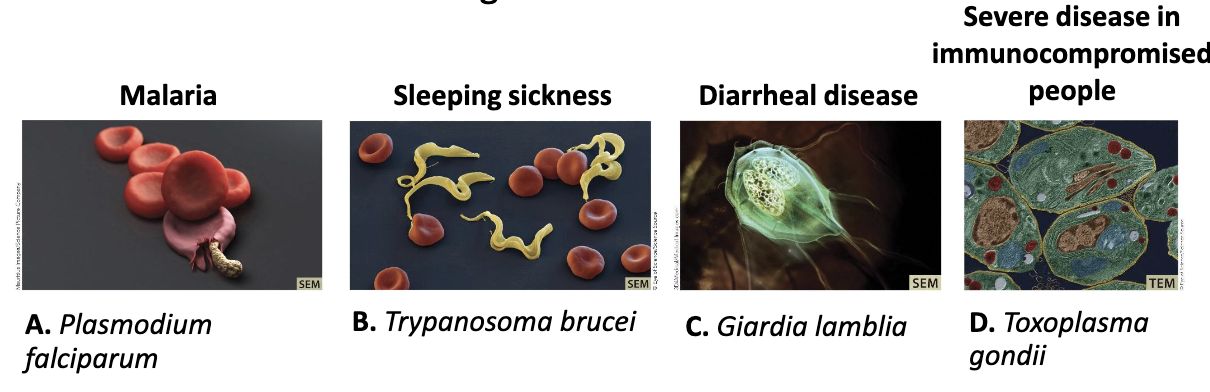
Protozoa can cause significant human diseases.
Ex: Malaria, Sleeping sickness, Diarrheal disease, Severe disease in immunocompromised people
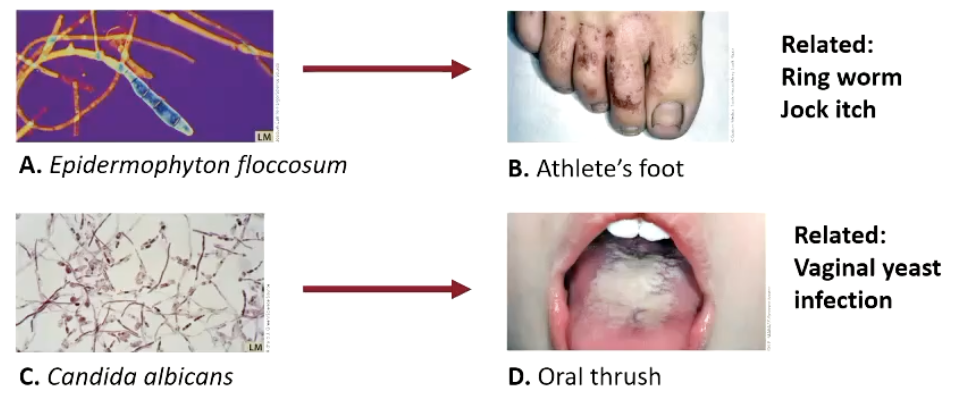
What are diseases caused by eukaryal microorganisms (fungi)?
Fungi are less likely to cause disease in humans but can do so in immunocompromised individuals.
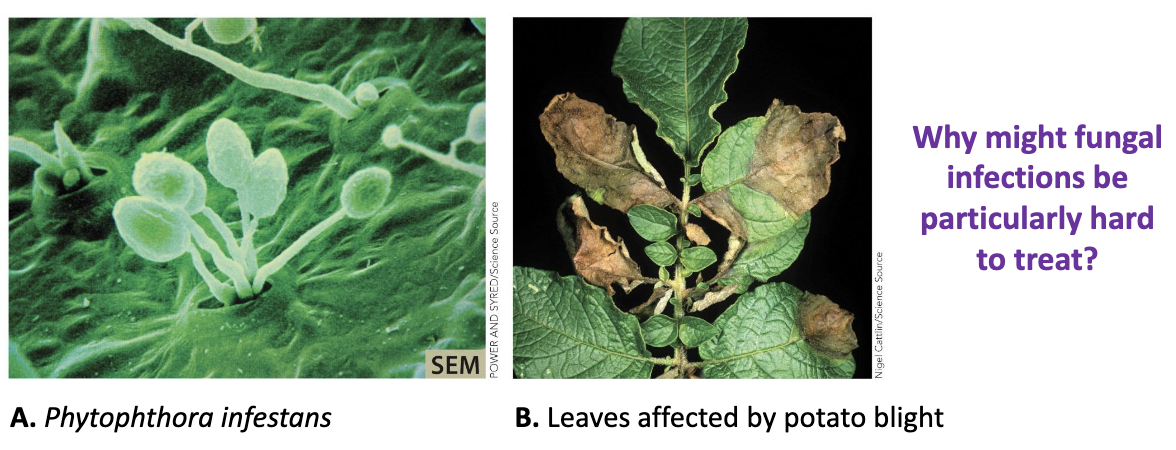
What are diseases caused by eukaryal microorganisms (protozoa and fungi) in plants?
Protozoa and fungi can cause significant disease in plants (potato blight and the great Irish famine, mid- 1800s).
Why might fungal infections be particularly hard to treat?
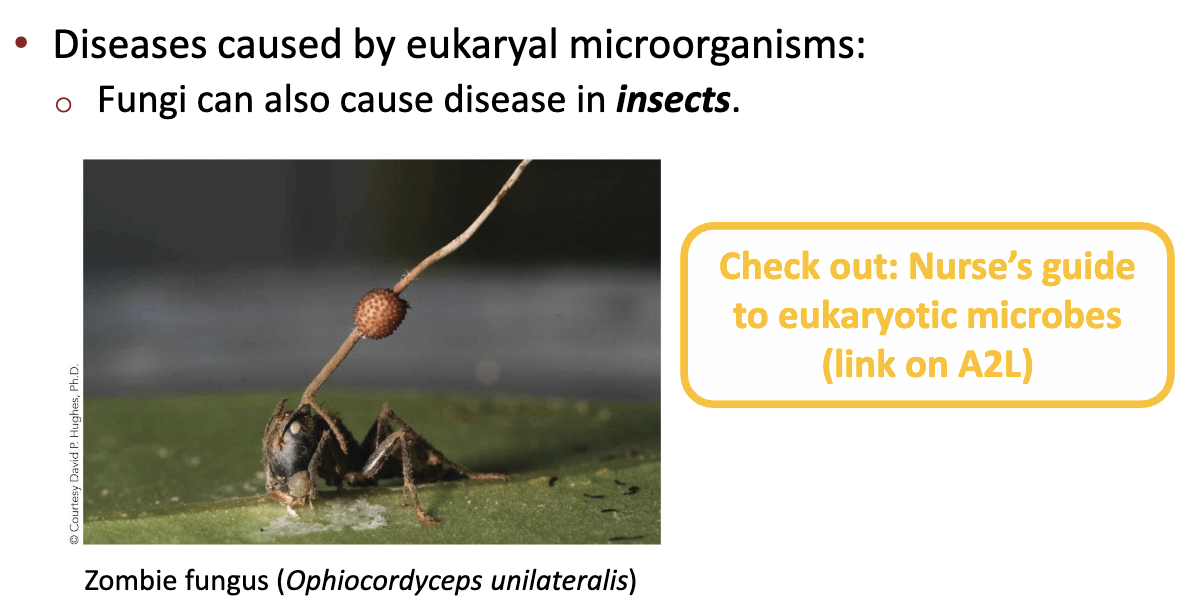
Other than humans, what else can fungi cause disease in?
Insects
What are beneficial roles of eukaryal microorganisms?
Many eukaryal microorganisms are primary producers (providing energy) or biodegraders (recycling nutrients).
Some algae produce great amounts of oxygen through photosynthesis in the oceans.
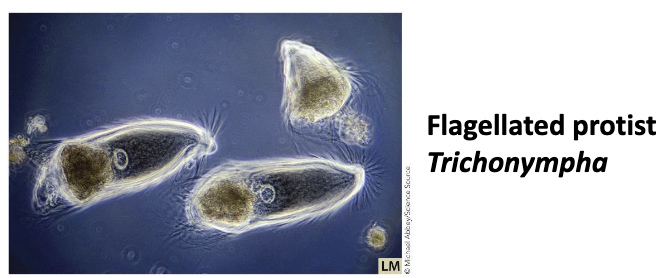
Some eukaryal microorganisms can degrade cellulose, recycling plant matter better than animals can (termite gut protozoa).
Conclusion
Eukaryal microorganisms also exhibit great diversity and are key to energy production and nutrient recycling on this planet.
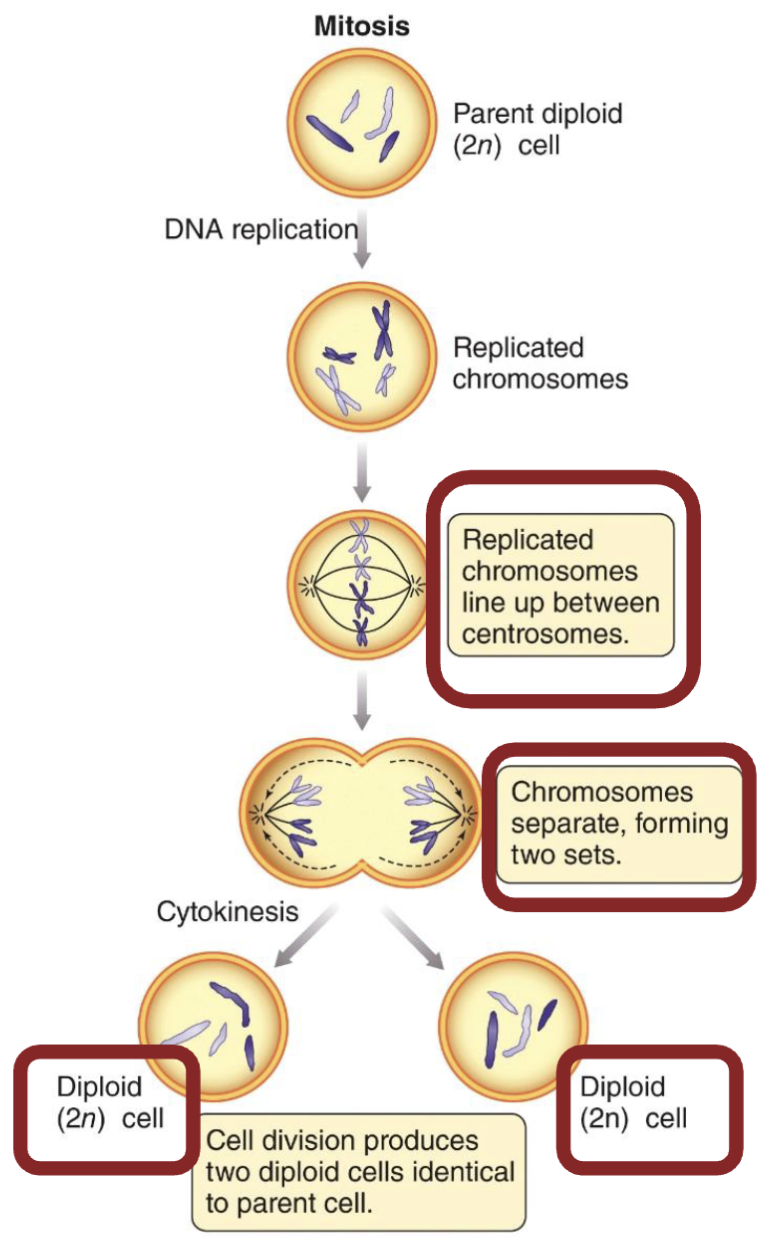
What is mitosis?
Basic cell division: copying of one nucleus into two nuclei
Followed by cytokinesis to produce two identical cells from one original cell
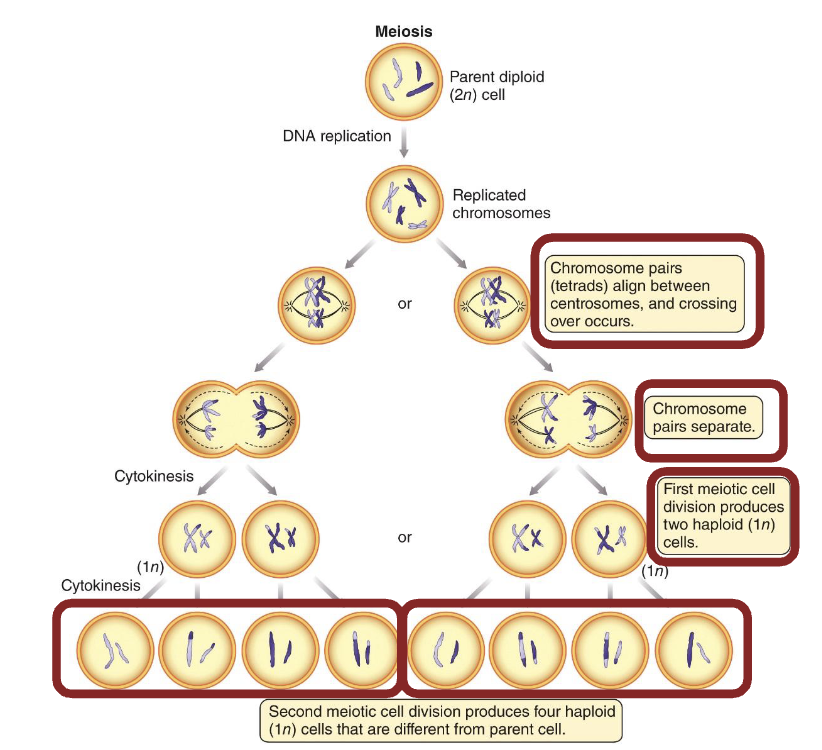
What is meiosis?
Different from mitosis (four cells from one original cell, but each has half the original cell’s quantity of DNA).
Achieved by one round of DNA replication followed by two rounds of cell division.
Chances for genetic recombination:
Segregation of maternal/paternal chromosomes
“Crossing over” between chromosomes prior to segregation
Events ensure each haploid cell is genetically distinct, increasing chances for genetic variation in sexual reproduction.