S-D Curve & properties of excitable tissue
 Call Kai
 Learn
Learn Practice Test
 Spaced Repetition
 Match
Match Flashcards
 Knowt Play
1/14

There's no tags or description
Looks like no tags are added yet.
Name | Mastery | Learn | Test | Matching | Spaced | Call with Kai |
|---|
No analytics yet
Send a link to your students to track their progress
15 Terms
Nerve Physiology
resting membrane potential
the neuronal membrane creates & maintains concentration gradient of certain ions
charge on inside is negative, outside is positive
produces electrical potential
Na+ / K+ ATPase pump moves 2 K+ ions into cell, pumps 3 Na+ ions out
results in cell polarization
Resting membrane potential
-70mV in nerves
-90mV in skeletal muscle
-85mV in cardiac myocytes
resting membrane potential
potential of a cell while at rest
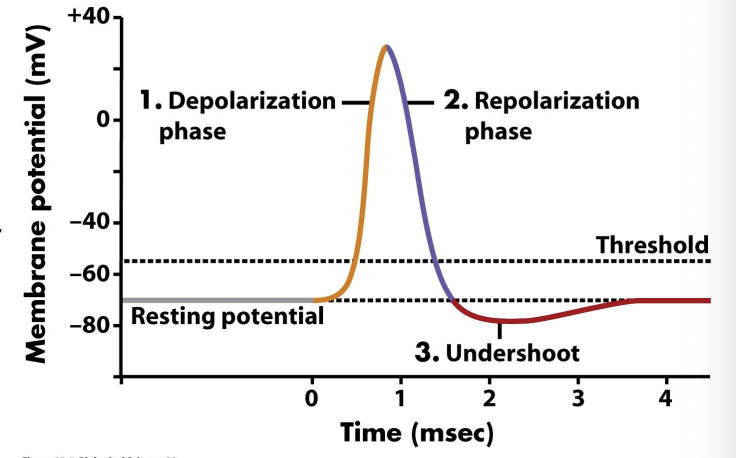
Action potential
stimulus is applied to a neuron
Na+ channels open, allowing influx and rapid+ change in membrane potential = depolarization
if depolarization > action potential threshold (-55 mV) produces full action potential spike (all or none)
K+ ions flow out of cell to cause repolarization
undershoot /hyperpolarization — K+ channels close
Summation
Summation
subsequent action potentials needed
The Role of Myelin
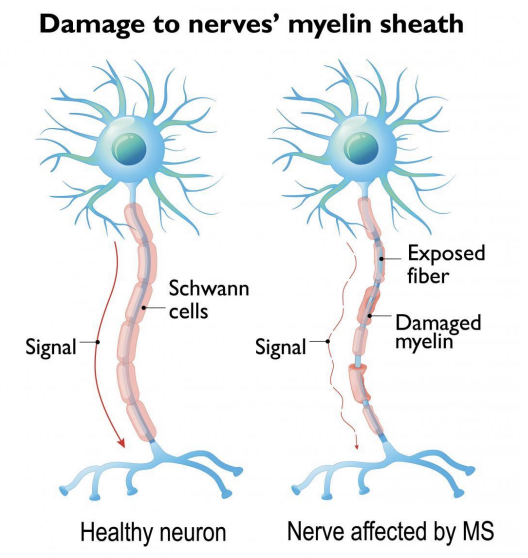
allows rapid transmission of electrical signals along the nerve
what happens if myelin is damaged?
myelin
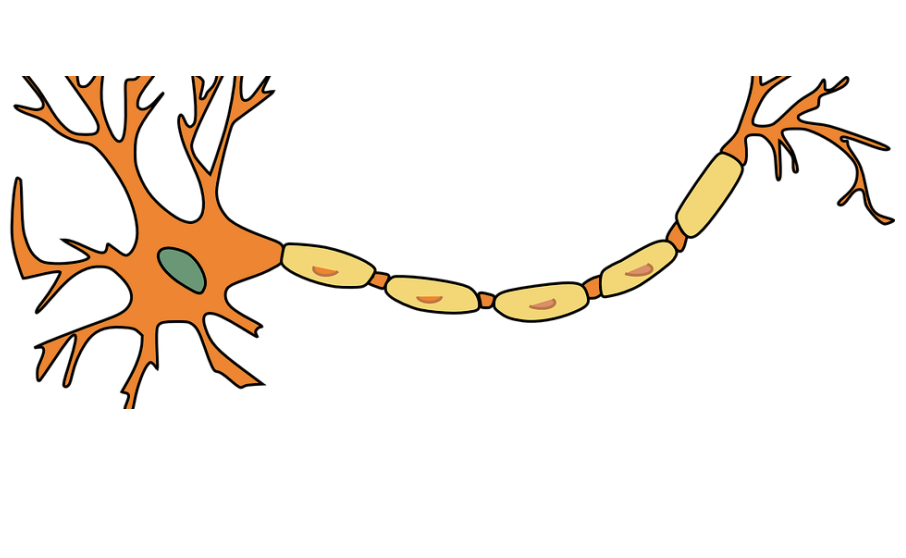
lipid rich insulator that surrounds nerve cell axons
Physiological response to electrical current
chemical, thermal, or physical
Electrochemical Effects
heat is a product of energy exchange
the amount of heat produced in biological tissues depend on:
amount of current flowing
resistance to the current
duration the current flows
accumulation of heat at the skin
redness should resolve within hours
based on the stimulation, or depolarization of cells
as current flows from the electrodes, the concentration of electrons at the cathode induces depolarization of the cell membrane
this depolarizes the cell if the critical threshold is reached
application of ES depolarizes the nerve first (not muscle fibers)
then propagates the stimulus along the motor axon, across the neuromuscular junction, and across the sarcolemma
Anodes
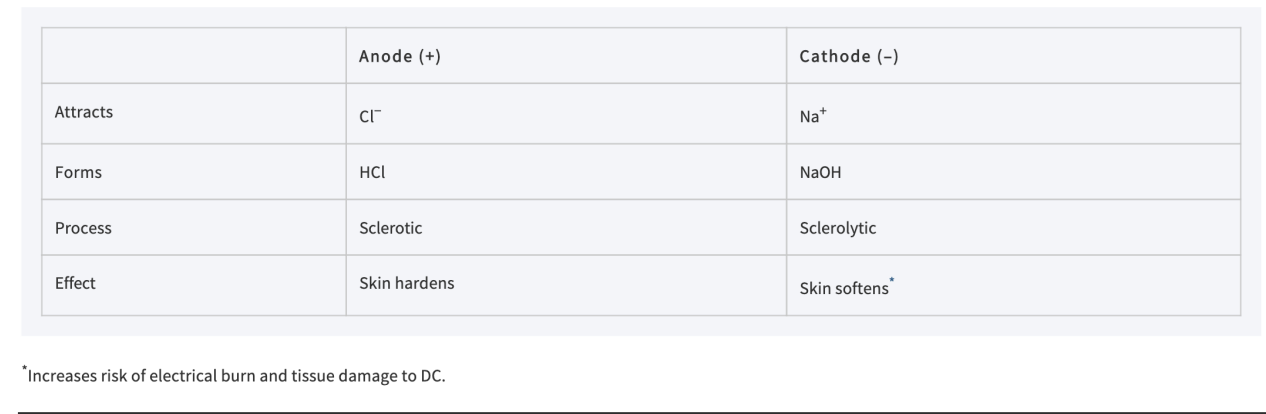
attracts ACID
Cathode
attracts BASE
Clinical Application
the effectiveness of a current to target specific tissue is dependent on 3 factors:
adequate intensity to reach threshold (i.e. amplitude)
current onset fast enough to reduce accommodation (i.e. rise time)
Duration long enough to exceed capacitance of the tissue (i.e. phase duration)
Response of excitable tissue to stimulation
for a stimulus to depolarize the cell and elicit an action potential, it must be of sufficient strength and duration
there is a range of stimulus combinations that will work to depolarize the cell
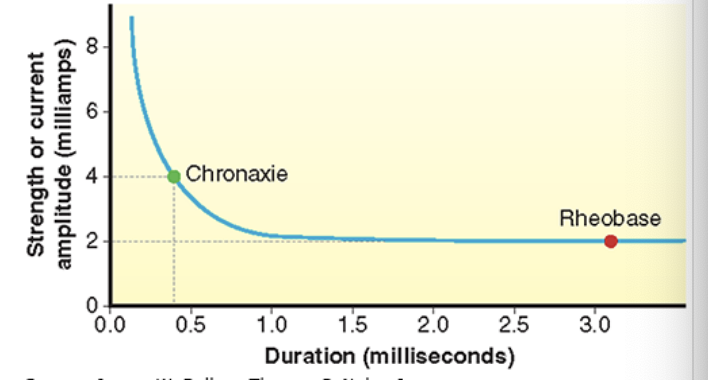
*plot these combinations as a strength-duration curve (S-D curve)
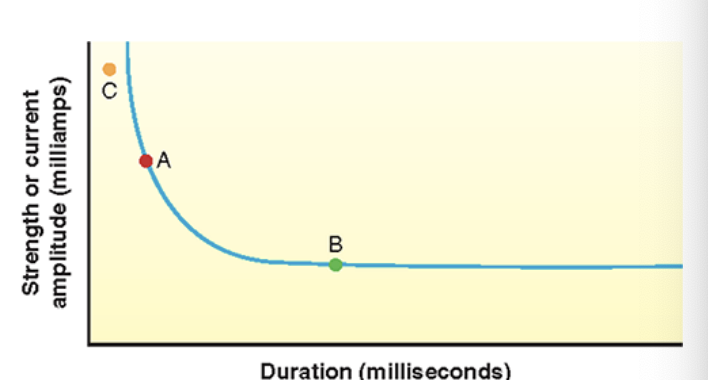
Strength Duration Curve
Rheobase:
minimum strength (mA) that is capable of eliciting a minimally detectable motor response
Chronaxie:
the duration (microseconds or msec) of stimulus 2x the rheobase strength capable of eliciting a minimally detectable motor response
*It is ALL or NOTHING*
Levels of Response
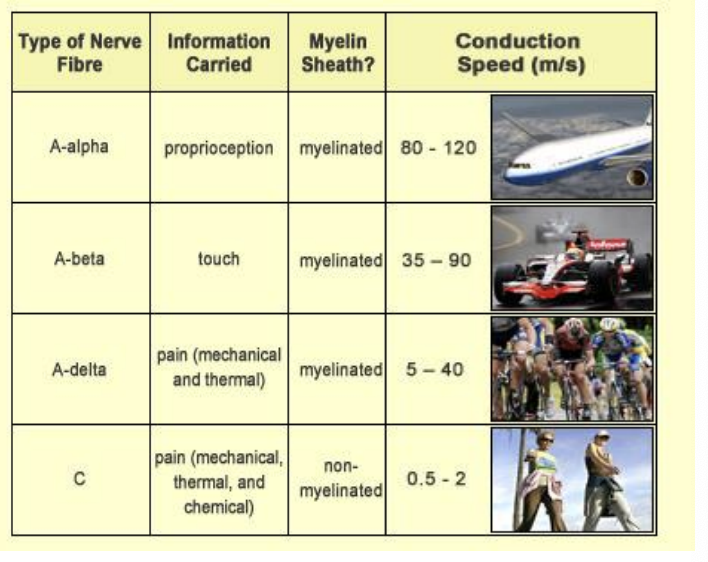
sensory: excitation of A-beta fibers in the superficial dermis
pins and needles feeling
Motor: excitation A-alpha fibers
magnitude of response proportional to the intensity of the stimulus
varies from small twitches to full contraction
Noxious: excitation of the A-delta and C fibers
elicits the perception of pain
Henneman Size Principal
describes progressive recruitment of alpha motor neuron cell bodies
slow, small motor units to fast, large motor units
some theories suggest electrical stimulation may recruit motor units in the opposite order of what is expected (debated)
estim recruits muscle fibers in a nonselective, spatially fixed, and temporally synchronous pattern

