Ch 33 the animal body: basic form and function
 Call Kai
 Learn
Learn Practice Test
 Spaced Repetition
 Match
Match Flashcards
 Knowt Play
1/40

There's no tags or description
Looks like no tags are added yet.
Name | Mastery | Learn | Test | Matching | Spaced | Call with Kai |
|---|
No analytics yet
Send a link to your students to track their progress
41 Terms
homeostasis
internal balance/ “steady state” that organisms maintain to regulate their internal environment despite external changes.
homeostatic processes involve
behavior, physiology, physical adaptations
the overall flow and transformation of energy in an animal
-determines how much food an animal needs and it relates it to an animal’s size, activity, and environment
bioenergetics
average amount of energy used by an organism in a non-active state
basal metabolic rate
a physiological state in which activity is low and metabolism decreases
enables animals to save energy while avoiding difficult and dangerous conditions
torpor
a long-term torpor that is an adaptation to winter cold and food scarcity
hibernation
enables animals to survive long periods of high temperatures and scarce water
estivation/summer torpor
exhibited by many small mammals and birds during part of the day that is coldest
daily torpor
A biological mechanism that counteracts changes in body conditions by triggering responses that restore balance
negative feedback loop
A biological mechanism that amplifies changes in body conditions by triggering responses that enhance the initial stimulus.
positive feedback look
blood sugar leveling: NFL
food is consumed and digested, causing blood glucose levels to rise → in response to higher glucose levels, the pancreas secretes insulin into the blood → in response to higher insulin levels, glucose is transported into cells and liver cells store glucose as glycogen. As a result, glucose levels drop → in response to the lower concentration of glucose, the pancreas stops secreting insulin → repeat
child birth: PFL
baby pushes against the cervix → stretching of the cervix causes nerve impulses to be sent to the brain → the brain stimulates the pituitary to release oxytocin → oxytocin causes the uterus to contract → repeat, contract increase in frequency and intensity
acclimatization
the process by which an organism adjusts to changes in its environment, enabling it to maintain performance across a range of conditions.
examples: Everest BC, Olympic athletes
thermoregulation is controlled by the
hypothalamus
4 ways heat is exchanged
conduction, convection, radiation, evaporation
5 adaptations that help animals thermoregulate
insulation, behavioral, circulatory adaptations, cooling by evaporative heat loss, adjusting metabolic heat production
animals that generate heat by metabolism (birds/mammals)
can maintain a stable body temperature despite fluctuations in external temperature
more energetically expensive
endothermic animals
animals that gain heat from external sources (most invertebrates, fishes, amphibians)
rely on their environment for body temperature
ectothermic animals
epithelial tissues
A type of tissue that covers surfaces, lines cavities, and forms glands in the body
connective tissues
connect tissues together and provide support
muscle tissues
A type of tissue responsible for movement in the body, consisting of cells that can contract and relax.
nervous tissues
A type of tissue that transmits electrical signals between different parts of the body, facilitating communication and coordination.
classified by number of layers and shape of the cell
single or multiple layers
cell shapes: squamous, cuboidal, columnar, transitional
arrangement can be simple (single cell layer), stratified (multiple tiers of cell), or pseudostratified (a single layer of cells of varying length)
epithelial cells (cont’d)
fibroblasts
are a type of cell found in connective tissue that produce collagen and other fibers, playing a crucial role in wound healing and tissue repair.
cells embedded in a non-cellular matrix
consist of fibroblasts
ground substance usually contains some combination of collagen, elastic, or reticular fibers
used to connect different tissues or give the body structure
types: loose/areolar, dense/fibrous, cartilage, bone, adipose, blood
connective tissues
3 types of muscle tissue
skeletal (voluntary. striated), smooth (involuntary, no striations), cardiac (involuntary, striated, intercalated discs)
functions in the receipt, processing, and transmission of information
contains: neurons, glial cells
nervous system
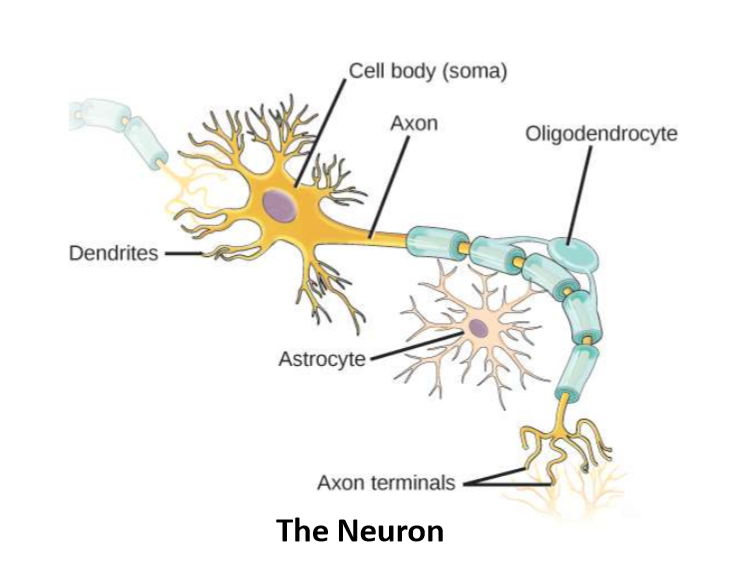
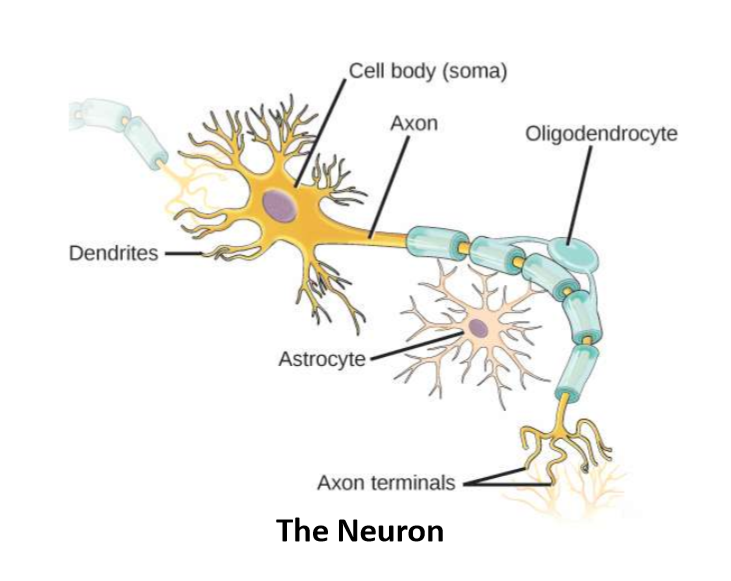
the neuron
main cell in the NS
specialized to receive and transmit electrical impulses
consists of: cell body, dendrites, axon, astrocyte, oligodendrocyte, axon terminals, myelin sheath
4 main types according to number and placement of axons and dendrites (unipolar, bipolar, multipolar, pseudounipolar)
Cell body (neuron anatomy)
large structure with central nucleus
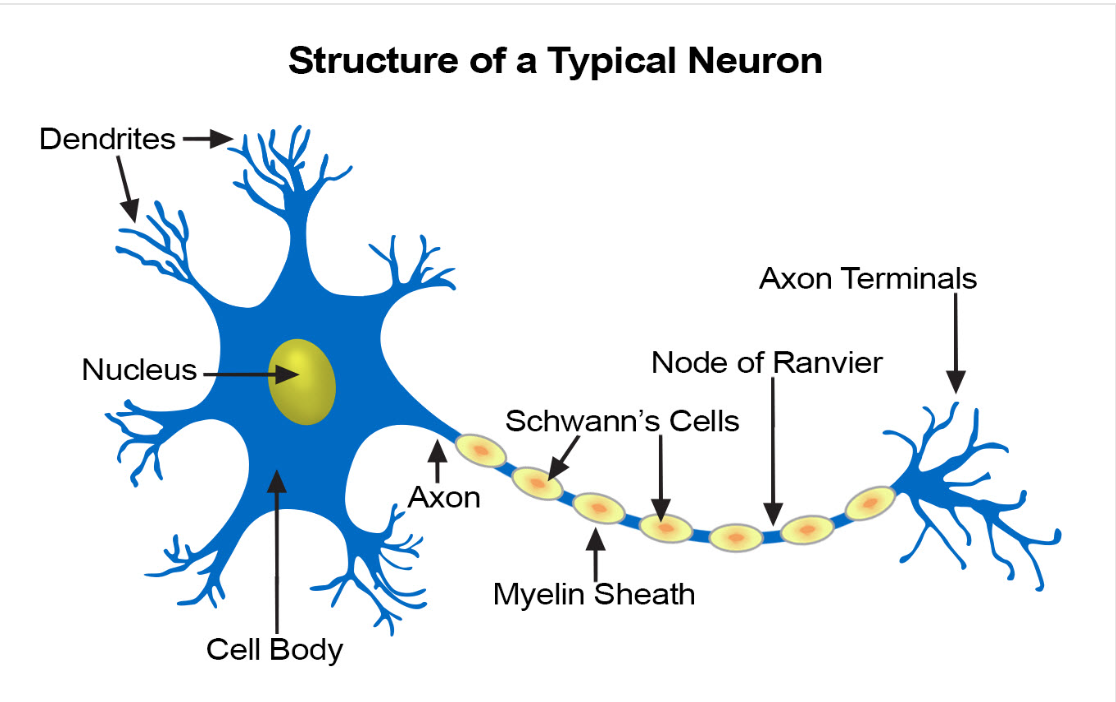
dendrites
Short, branched extensions of a neuron that receive signals from other neurons.
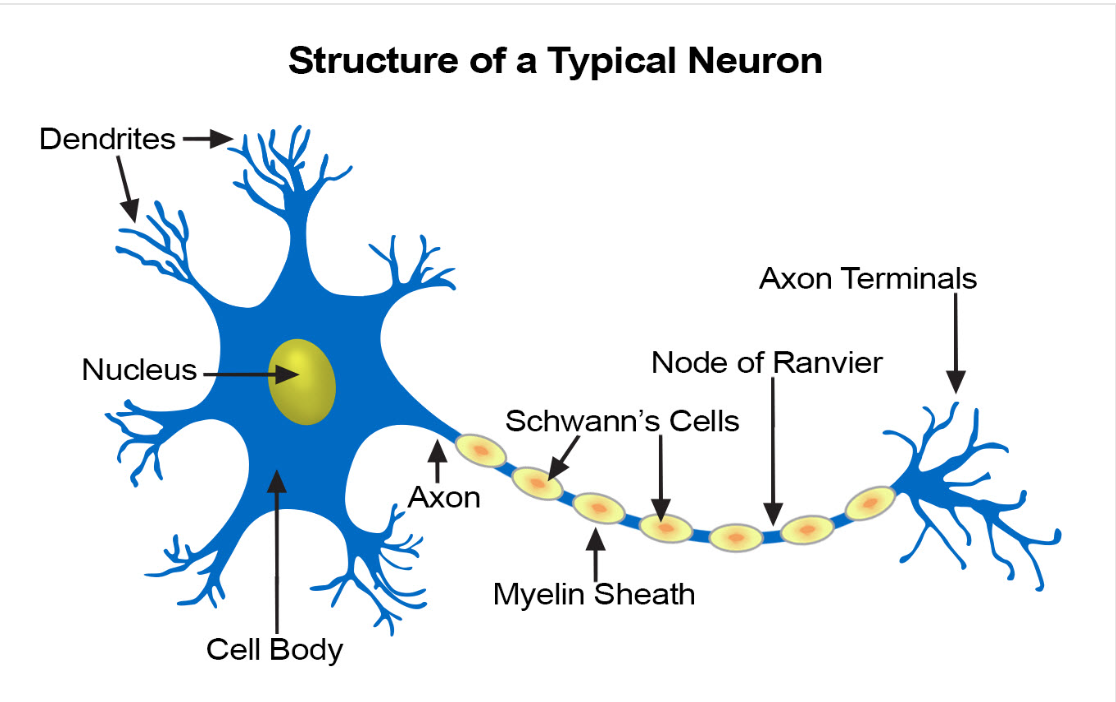
axon
long projection from the cell body; specialized in transmitting impulses
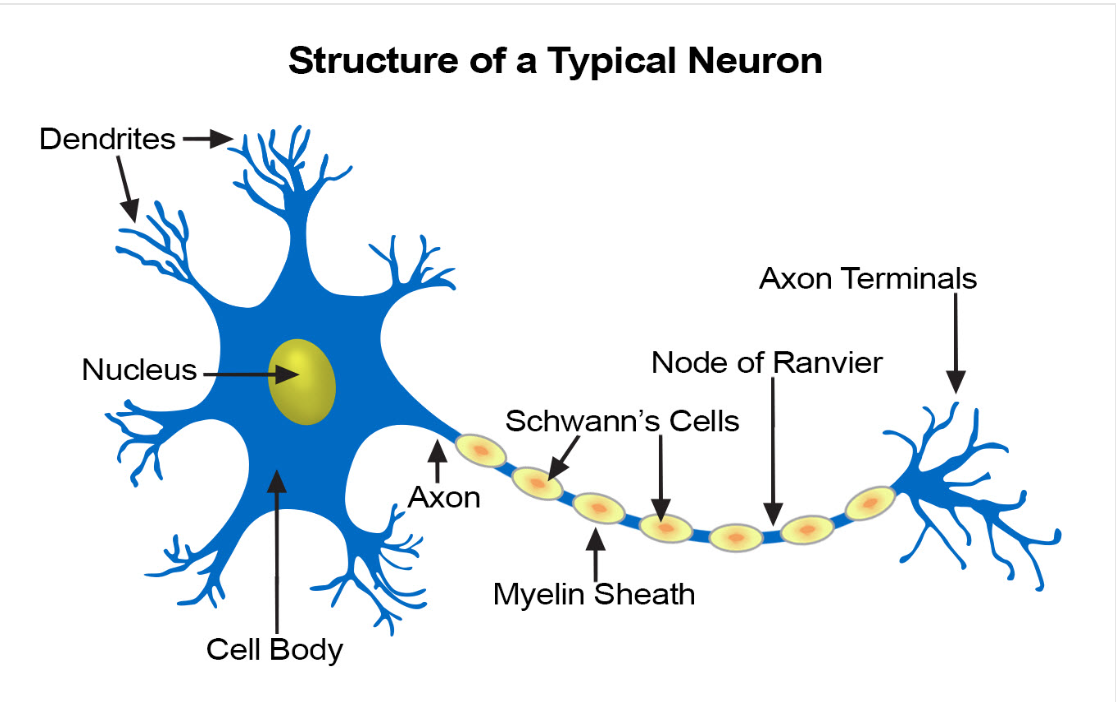
astrocyte
type of glial cell that regulates the chemical environment of the nerve cell
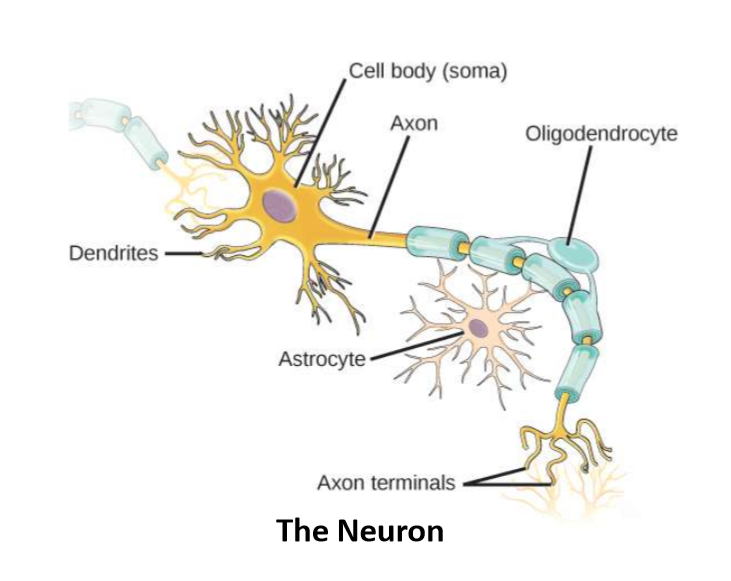
oligodendrocyte
type of glial cell that insulates the axon so the electrical nerve impulse is transferred more efficiently (cells that make up the myelin)
myelin sheath
fatty covering that insulates the axon and makes neuronal signaling more efficient (Single segment of the multicellular membrane structure)
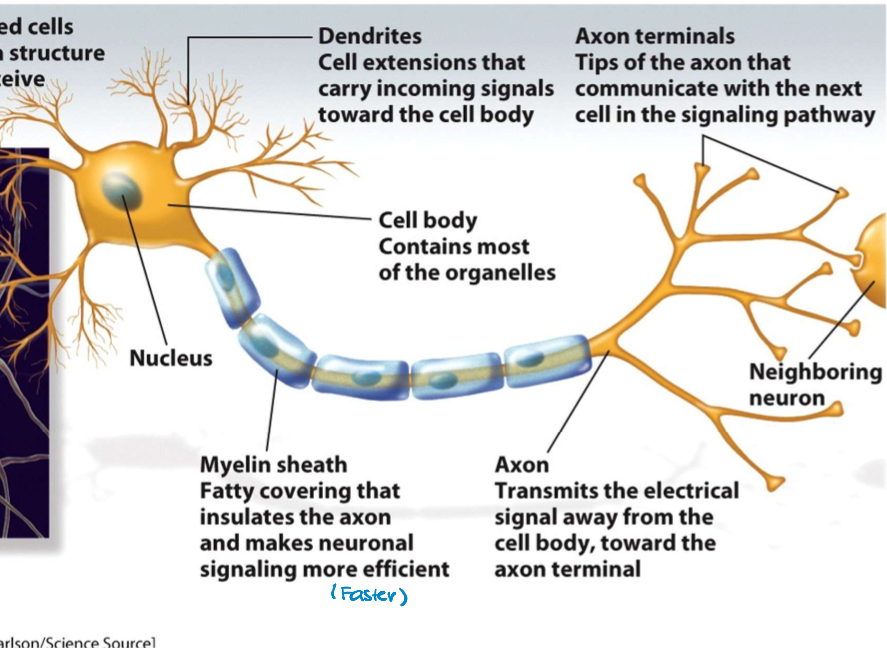
axon terminals
endings of axons through which axons make synaptic contacts with other neurons
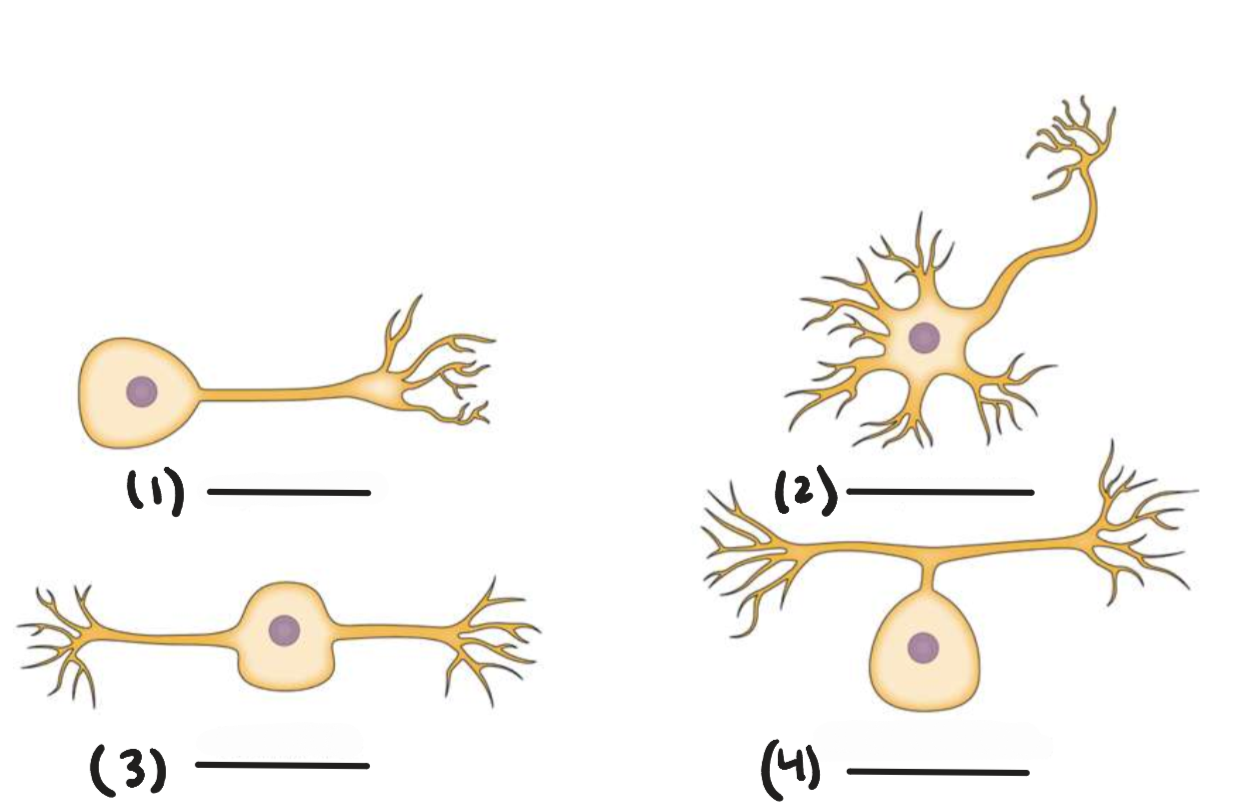
(1) unipolar
(2) multipolar
(3) bipolar
(4) pseudounipolar
provide essential structural support, nutrition, insulation, and immune defense (don’t perform neural activity)
outnumber neurons (10:1)
mutations in these cells are the top cause for brain tumors
examples: microglial cell, astrocyte, oligodendrocyte, ependymal cell
glial cells
the charge of this membrane can change in response to neurotransmitter molecules released from other neurons and environmental stimuli
charged cellular membrane of neuron
321 NOKIA
3 Na+ out
2 K in
1 ATP
Resting state
inside of neuron = negative
outside of neuron = positive
Depolarization
stimulus triggers opening of Na+ channels
Na+ flows into the cell
inside becomes positive
Repolarization
influx of positive Na+ ions triggers K pumps to open
Na+ channels close, K + channels open
K+ leaves the cell
inside becomes negative again
Signal moves forward
positive charge spreads to the next section
that triggers Na+ channels ahead to open
action potential continues to travel down the axon
domino effect
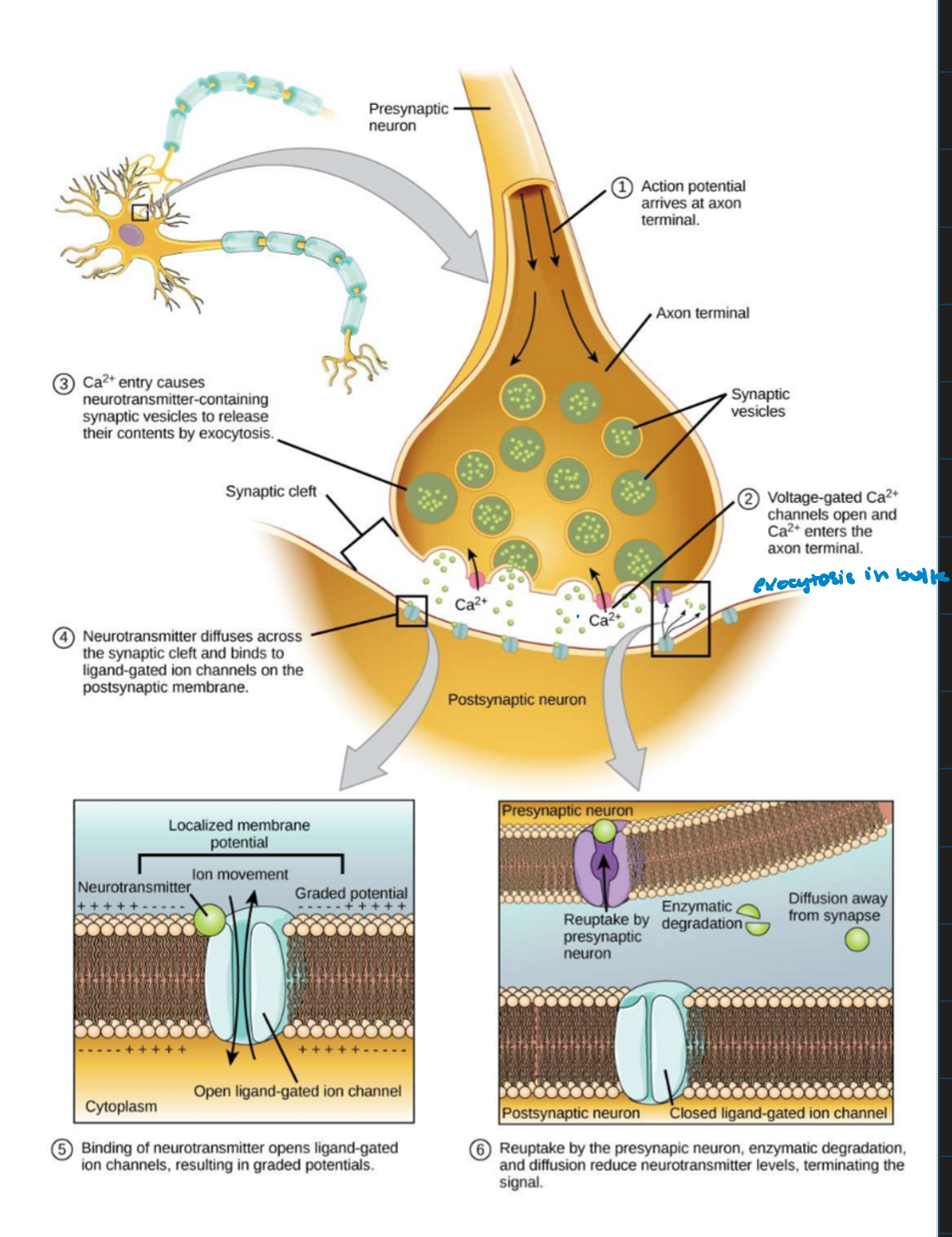
chemical synapse
depolarization causes voltage-gates Ca2+ channels to open
calcium ions initiate a signaling cascade that causes synaptic vesicles, containing neurotransmitter molecules, to fuse with the presynaptic membrane
fusion of vesicle with presynaptic membrane causes neurotransmitter to be released into the synaptic cleft
once neurotransmission has occurred, the neurotransmitter must be removed from the synaptic cleft so the postsynaptic membrane can “reset” and be ready to receive another signal