Lecture 4 - Equine Dermatology
 Studied by 0 people
 Call Kai
 Learn
Learn Practice Test
 Spaced Repetition
 Match
Match Flashcards
 Knowt Play
1/22

There's no tags or description
Looks like no tags are added yet.
Name | Mastery | Learn | Test | Matching | Spaced |
|---|
No study sessions yet.
23 Terms
Sensitive
One important characteristic to remember about equine skin is that it is very what?
Dermatitis, SCC
Horses with white skin are prone to what two conditions?
Melanoma
Horses with grey coats are prone to what condition? They are most common in horses over 10 years old, are seen in the perianal, parotid, eye, and male genital regions and will be more malignant in non-grey horses.
Punch
What type of biopsy technique is usually done after giving a local nerve block, and is usually not sutured afterward? Tweezers are not used for this.
Chorioptes equi
What mite is known as the mange mite in horses, feeds on the skin debris, is commonly found in the distal limbs, and causes scaling and papules? It is most common in horses with feathered hair at the feet, and appears as pruritus, stamping/rubbing, is found in carrier horses and is spread by direct and/or indirect transmission.
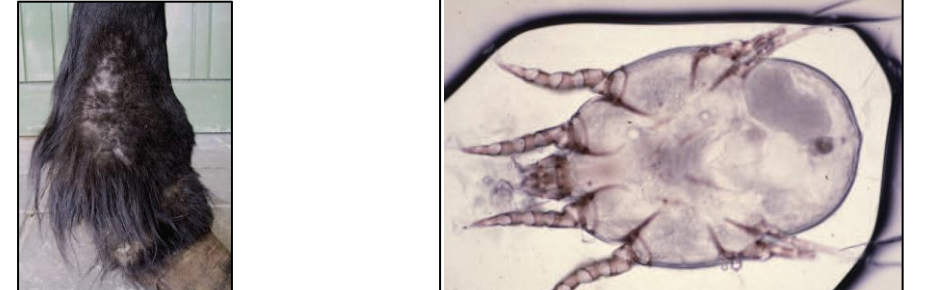
Pediculosis
Infection with lice is known as what? It is usually seasonal in the winter and autumn, is most common in cases of poor condition and management, and includes multiple species.
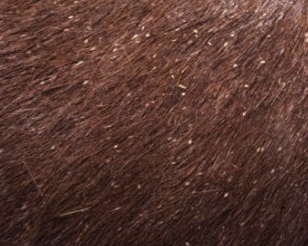
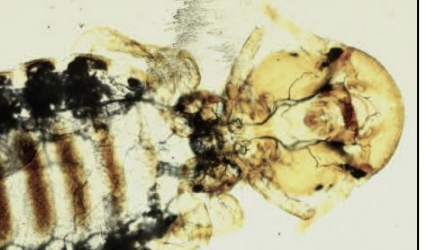
Werneckia equi
Which louse is the biting louse of horses?
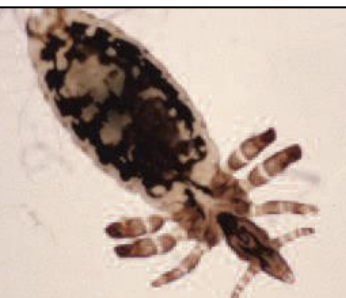
Haematopinus asini
Which louse is the sucking louse of horses?
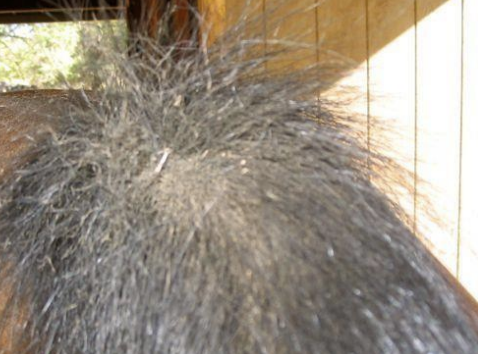
Oxyuris equi
Which organism is known as the pinworm of horses, is a nematode, is found in the small colon and rectum and protrudes to lay eggs, causing intense pruritus? It is seen with tail rubbing and is diagnosed by tape tests and treated with deworming.
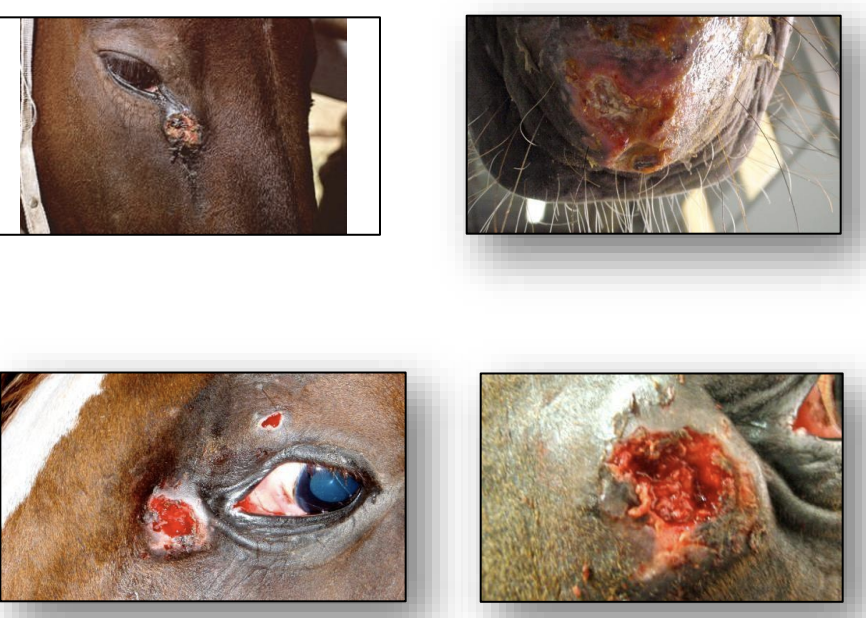
Habronemiasis
What is the term for infection with H. musca, H. microstomus, or D. megastoma in horses? It is also known as summer sores, is found around the eyes and mouth, and is treated with avermectins.
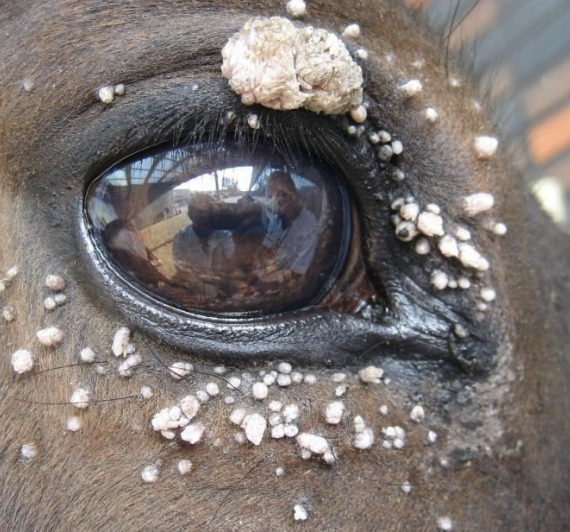
Papilloma
What condition is also known as a wart and is most common in young horses? It can be congenital or due to a virus and usually goes away on its own. It is usually seen on the head.
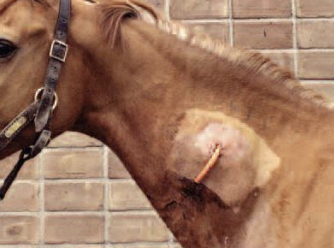
Abscess
What condition is indicated by pain, heat, swelling, and inflammation, and can be caused by S. equi, C. pseudotuberculosis (pigeon fever), and Clostridia usually due to IM injections? It should be opened and allowed to drain.
Dermatophilosis
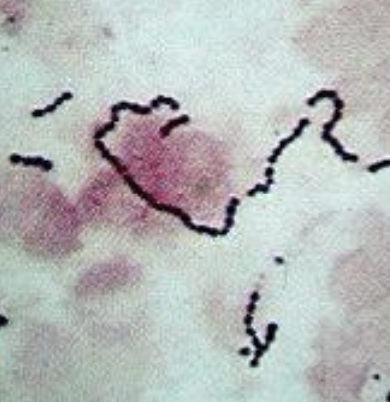
What condition is also known as rain rot or rain scald, and is caused by Dermatophilus congolensis? It is a gram + bacteria that is branching, and is a type of actinomyces.
Bacterial
What type of dermatitis is usually seen on the pastern, is due to photosensitization, is often in feathered horses, and can lead to cellulitis or lymphangitis? Staphylococcus or D. congolensis can cause it.
Dermatophytosis
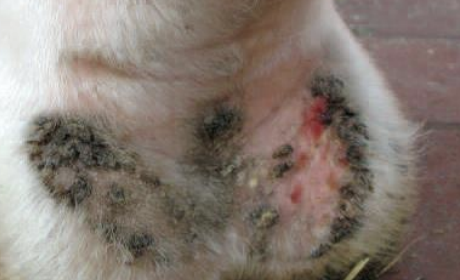
What is the term for the condition also known as ringworm which is zoonotic, invades the hair shaft, is caused by Trichophyton or Microsporum fungi, is often in the tack area, does not cause pruritus, is diagnosed through microscope and culture, is treated with eniconazole, can be self-limiting, and can also be vaccinated against?
Sarcoid
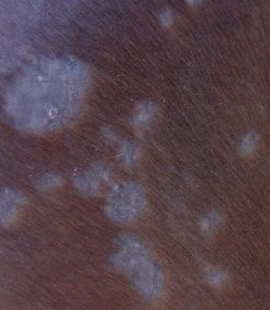
What growths/conditions occurs only in horses and can appear in six different types?
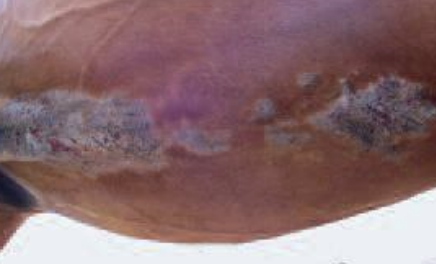
Occult
Which type of sarcoid is shown?
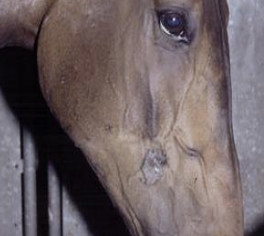
Verrucose
Which type of sarcoid is shown?
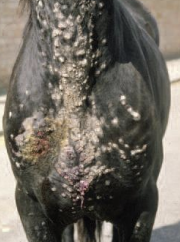
Fibroblastic
Which type of sarcoid is shown?
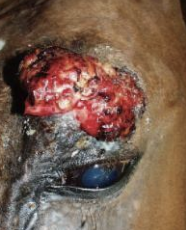
Nodular
What type of sarcoid is shown?
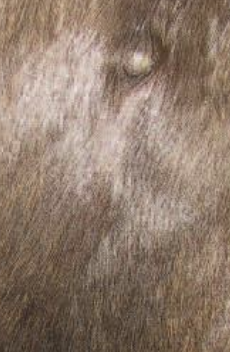
Mixed
What type of sarcoid is shown?
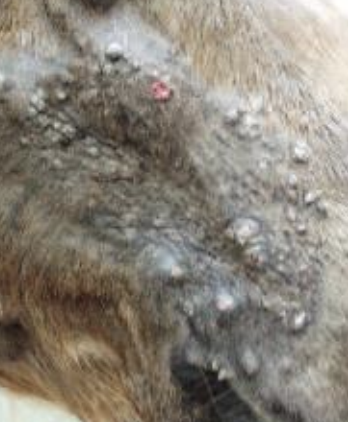
Malignant
What type of sarcoid is shown?
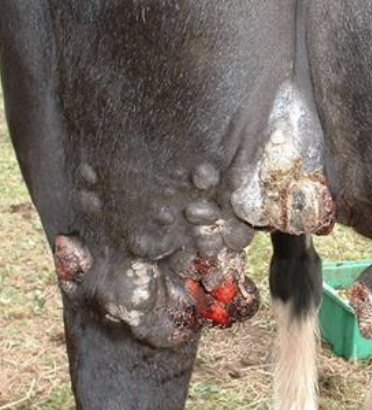
Hypersensitivity
What type of reaction is seen due to insect bites, and is also known as sweet, summer, or Queensland itch? It is the commonest cause of pruritus and is often in ponies, shire, and Friesian horses. Culicoides midges cause it and it is seasonal.
 Note
Note  Flashcards (29)