Chapter 10-surgical instrumentation
 Call Kai
 Learn
Learn Practice Test
 Spaced Repetition
 Match
Match Flashcards
 Knowt Play
1/43

Earn XP
Description and Tags
Surgical Instrumentation
Name | Mastery | Learn | Test | Matching | Spaced | Call with Kai |
|---|
No analytics yet
Send a link to your students to track their progress
44 Terms
Stainless Steel
An alloy of steel with chromium and sometimes another element,
such as nickel or molybdenum,
highly resistant to rusting and ordinary corrosion.
Scissors
Surgical instruments used to
cut
incise
dissect tissue
Osteotomes
Chisel-like instruments used to
cut or shave bones
Chisel
Wedge-shaped instruments
used to cut or shave bone
Ronguers
Surgical instruments used to
cut or bite away at bone and tissues
Forceps
Instruments used for
-grasping,
-holding firmly
-exerting traction upon objects
Hemostatic Forceps
Surgical instruments used to
-control the flow of blood
Needle holders
Surgical instruments designed to drive suture needles to close or rejoin a wound or surgical site.
Also known as needle drivers.
Mart-en-sit-ic Stainless Steel
This metal is also known as 400 series stainless steel.
magnetic and may be heat-hardened.
Retractors
Surgical instruments primarily used to
move tissues and organs
keep the surgical site exposed throughout surgery
Cannulas
Surgical instruments with a hollow barrel (or lumen) through their center.
-inserted for drainage
Rib Spreaders
A retractor used to expose the chest
Suction Devices
Surgical instruments used to
extract blood and other fluids from a surgical site.
Aus-ten-tit-ic stainless steel
Also known as 300 series stainless steel.
non-magnetic,
cannot be heat-hardened
more corrosion-resistant than martensitic stainless steel.
Serrations
Parallel grooves in the jaws of surgical instruments.
Rachets
The part of a surgical instrument that locks the handles in place.
Passivation
A chemical process applied during instrument manufacturing that provides a corrosion resistant finish by forming a thin, transparent oxide film.
box lock
Point where the two jaws or blades of an instrument connect and pivot
Jaws
-Two or more opposable parts that open and close;
-used for holding or crushing something between them.
Dissection
The process of cutting apart or separating tissues
[workbook] Microgrind and supercut scissors are usually identified for:
Black rings
[workbook] This type of needle holder insert is harder and last longer
Tungsten carbide
[workbook] The process used to give instruments a mirror finish is called:
Polishing
[workbook] Tissue forceps have:
teeth
[workbook] Acceptable methods for instrument identification:
Powder Coating
Identification tape
Laser etching
[workbook] Which solution can damage surgical instrumentation
Betadine
[workbook] The purpose of a suction stylet is to:
Unclog the suction during surgery
[workbook] Kerrison and laminectomy ronguers should be tested using:
An index card
[workbook] Scissors with tungsten carbide cutting edges are usually identified by
Gold handles
[workbook] The best way to clean a suction lumen is:
using a proper sized brush
[workbook] The properly test the sharpness of scissors measuring 4.5” and shorter, use:
Yellow test material
Name two finishes
Mirror finish
Satin finish
List the materials surgical instruments can be made of
Stainless steel
Titanium
Copper
Silver
How do you test a bone curette
Plastic dowel rod
[workbook] An instrument with a shiny surface is said to have a
Mirror finish
[workbook] (blank) is a process that uses polymer resin combined with other additives to form a powder that is then sprayed onto an instrument
Powder coating
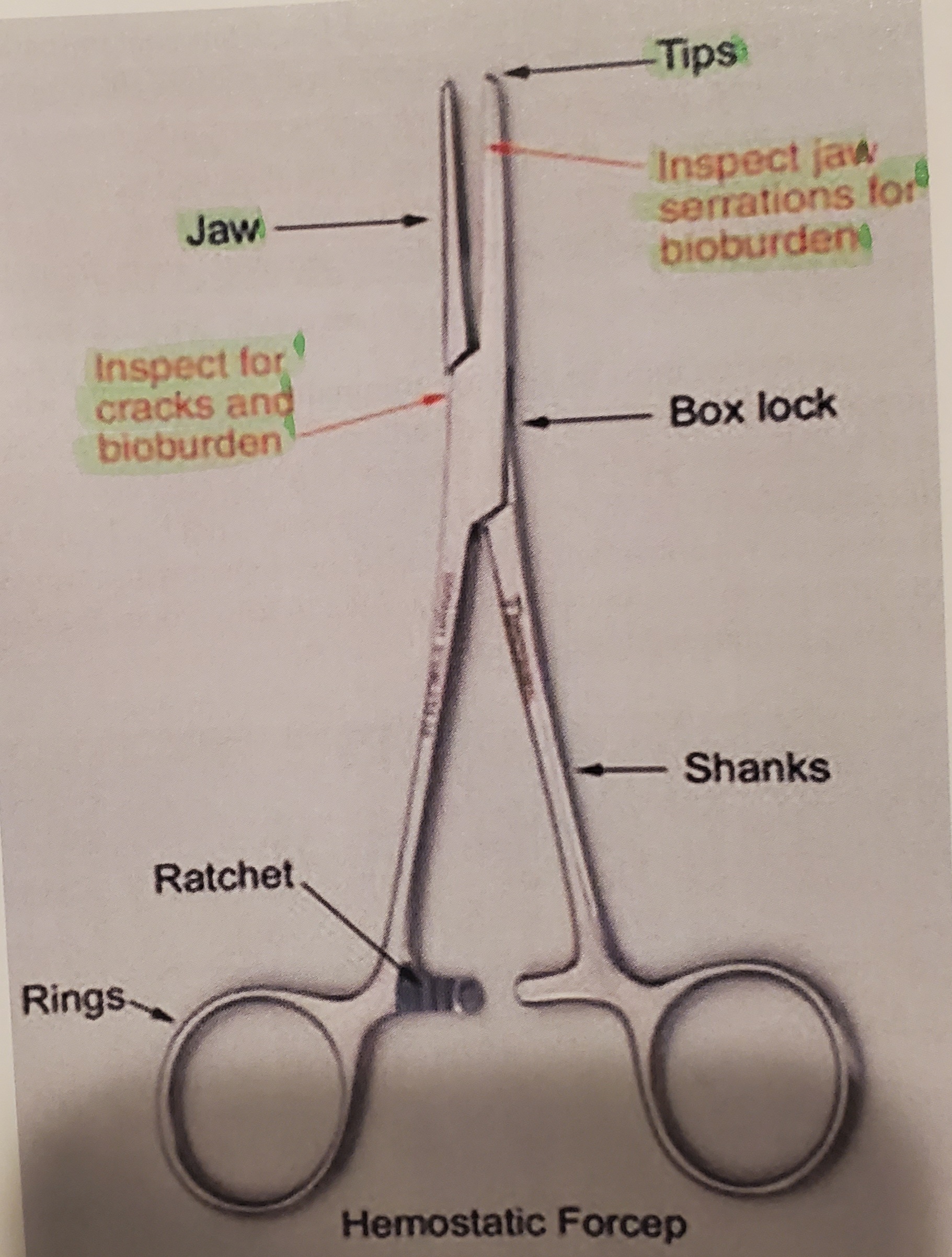
Hemostatic forcep
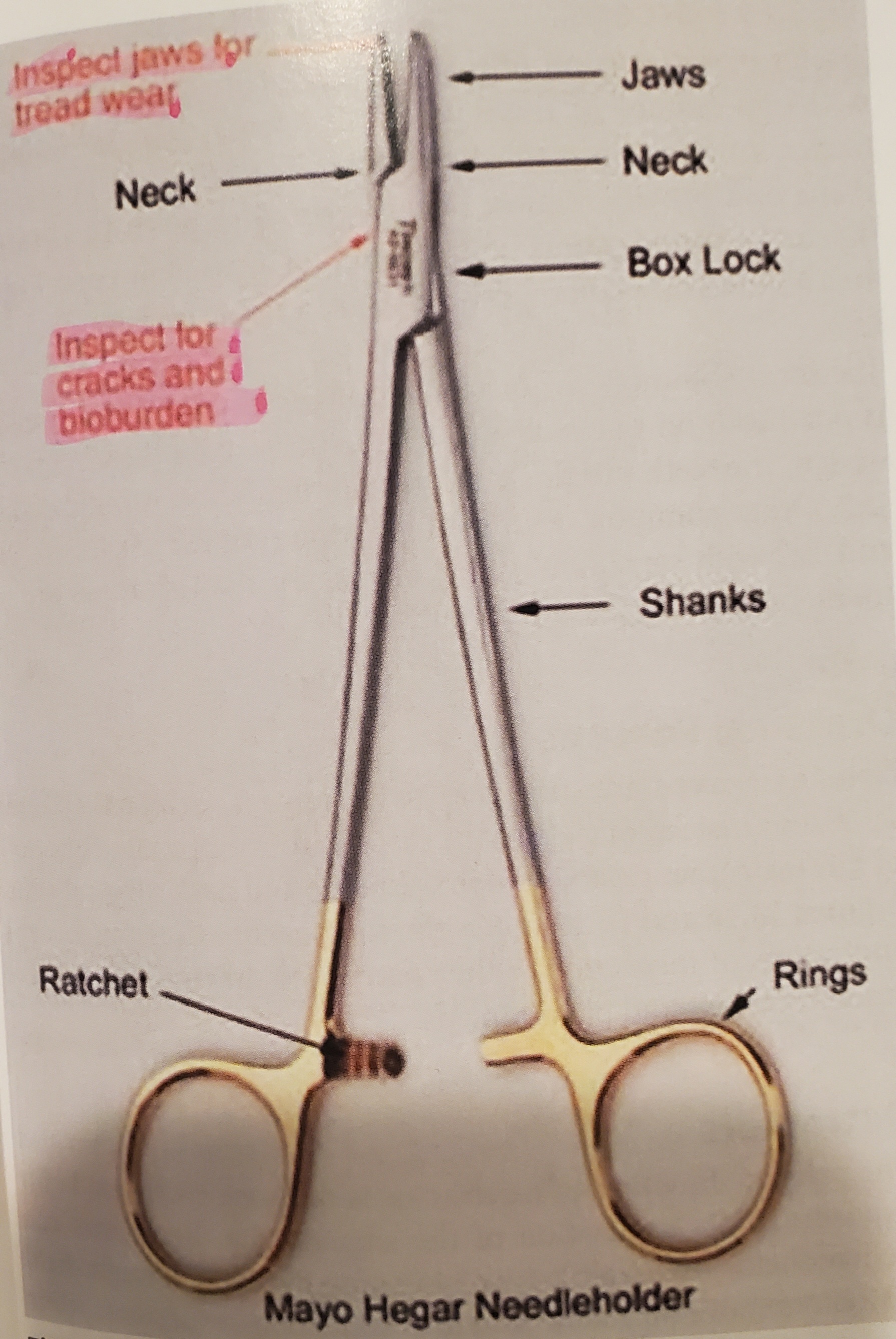
Mayo hegar needleholder
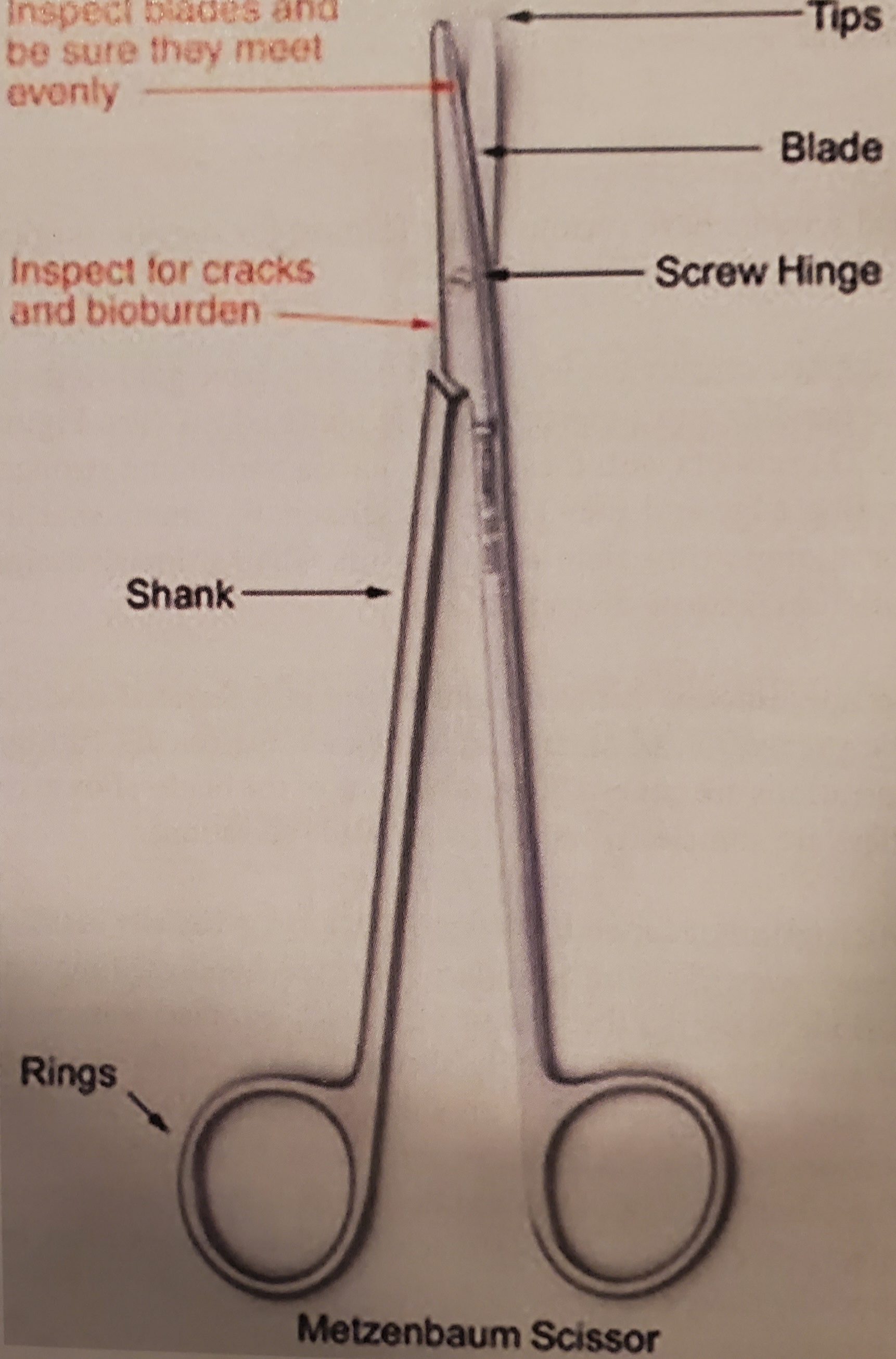
Metzenbaum Scissors
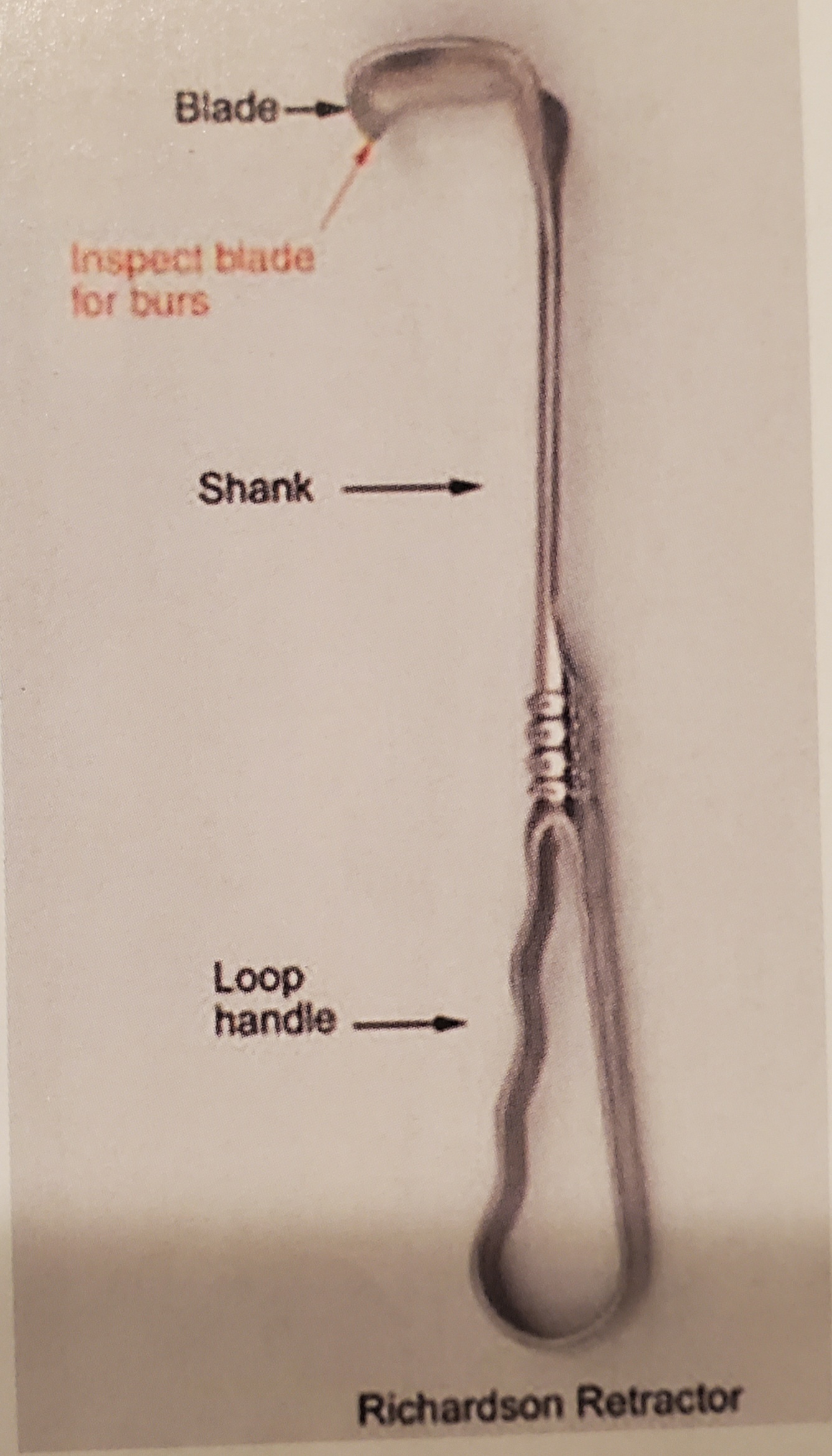
Richardson retractor
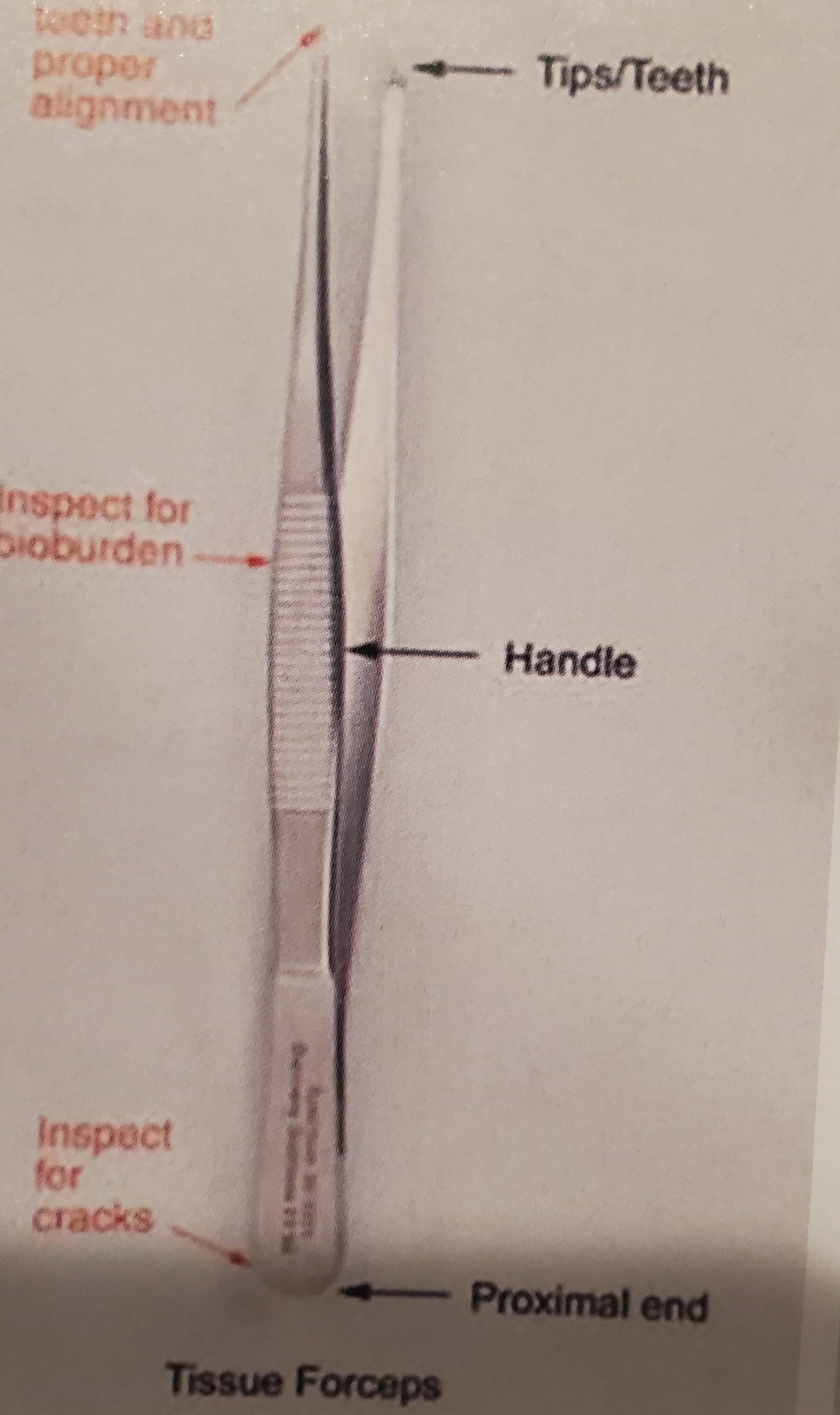
Tissue forceps
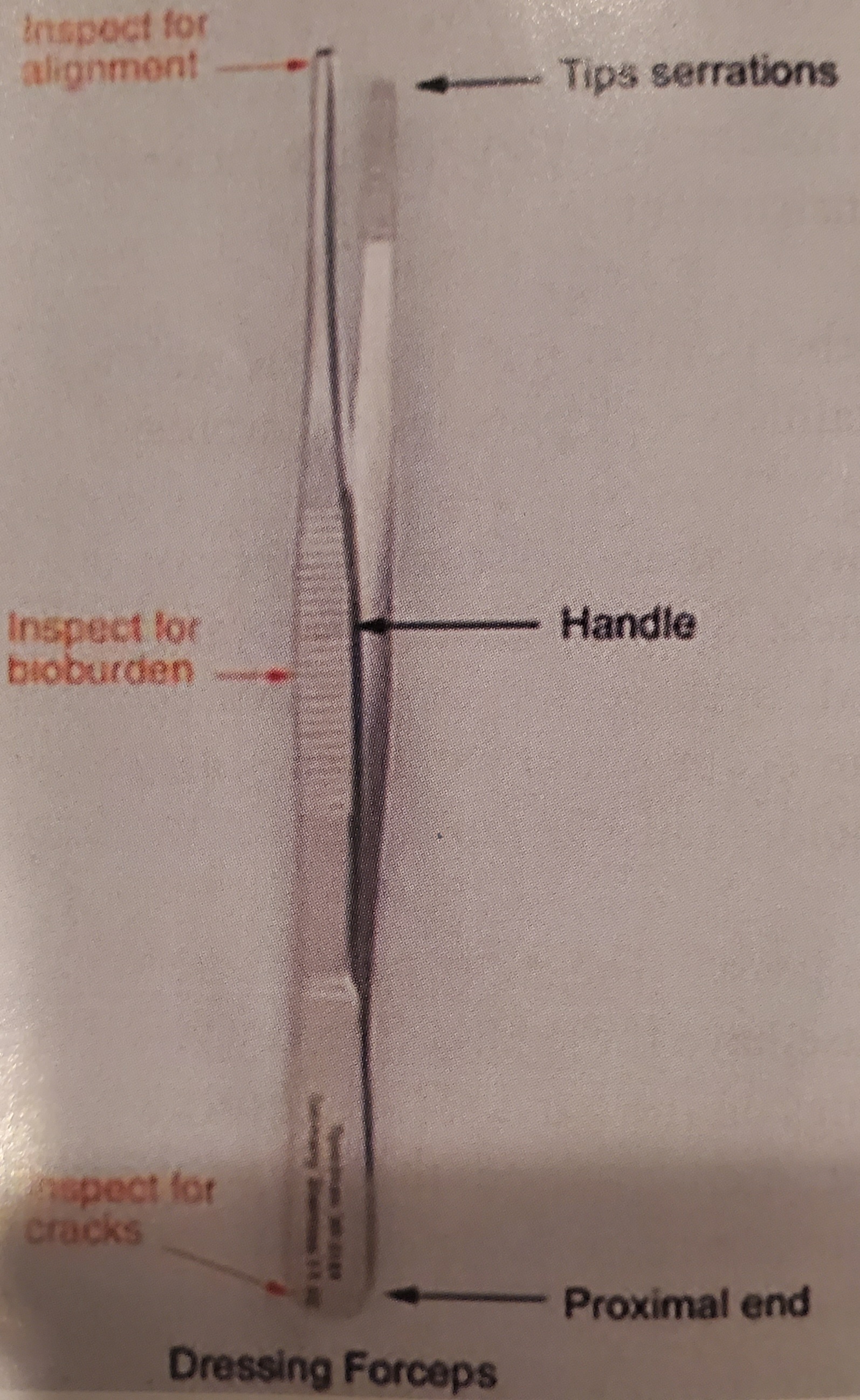
Dressing forceps
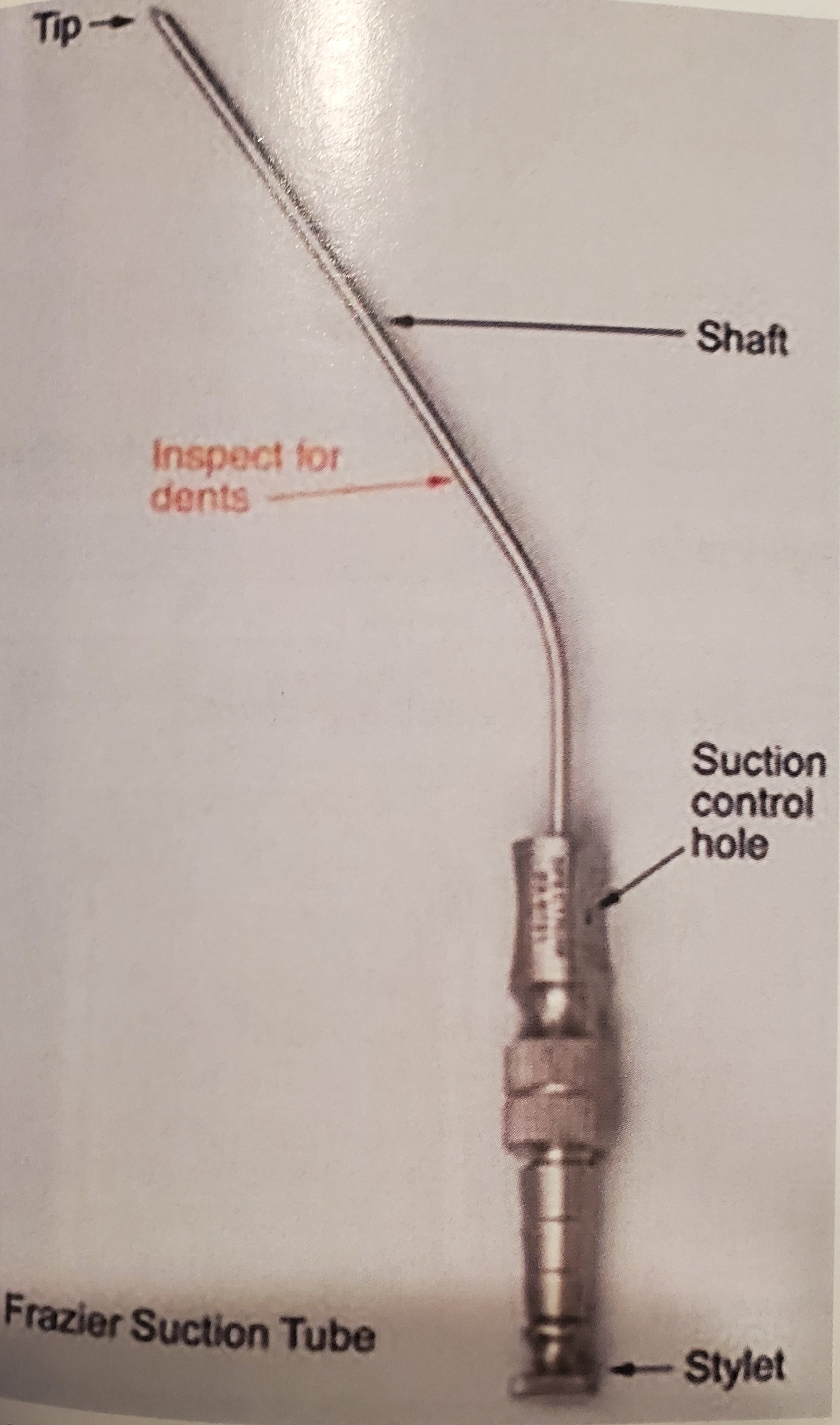
Frazier Suction Tube
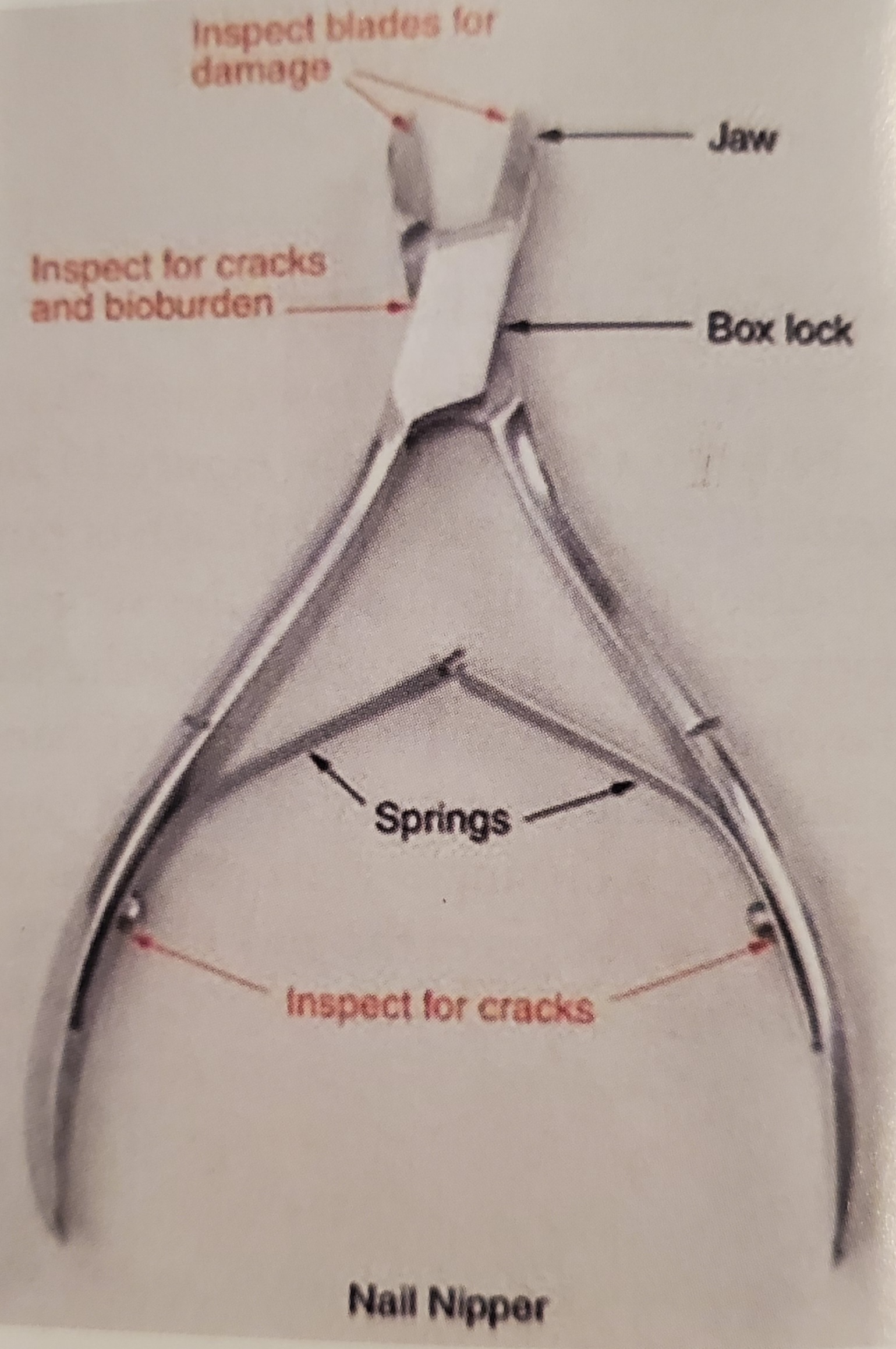
Nail Nipper