Physic's Unit 1 (lessons 1-6) test review
 Call Kai
 Learn
Learn Practice Test
 Spaced Repetition
 Match
Match Flashcards
 Knowt Play
1/70

Earn XP
Name | Mastery | Learn | Test | Matching | Spaced | Call with Kai |
|---|
No analytics yet
Send a link to your students to track their progress
71 Terms
What is physics?
The branch of science concerned with
the study of properties and interactions of
space, time, matter and energy that
can be quantified through measurement
Parallax is…
random error
electrostatics
the area of physics that deals with objects that have an unbalanced electric charge
Static is…
the build up of electric charge on an insulating substance
Current is…
Flow
the movement of electric charge through a conductive substance
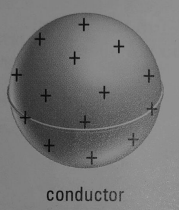
conducting spheres…
charge spreads out evenly.
insulating objects…
charge remains stationary
pointed objects…
charge concentrates in an area
who discovered the electron?
J.J Thomson
how did J.J Thomson discover the electron?
using a cathode ray
Who discovered the magnitude of change on an electron and proton?
Robert Millikan
How did Robert Millikan discover the charge of electrons
His oil drop experiment
The elementary charge is…
the smallest possible charge
How many coulombs are on an elementary charge
1.602 × 10⁻¹⁹
in solids, objects are charged through…
the movement or transfer of electrons between objects
an atom with an excess “-” charge is called a(n)…
anion (electrons > protons)
an atom with a deficit “-” charge is called a(n)…
cation (electrons < protons)
what is the # of charges equation (N)
N = Q / e
(Note: Q represents the total charge and e is the elementary charge)
what are the laws of electric charges?
Opposite charges attract each other
like charges repel each other.
A charged object and a neutral object will attract each other opposite
what causes any object to move?
push and pull forces
electric force is…
the force created by charged objects that pushes or pulls objects together
who discovered the relationship between force, charge and the distance between charged objects (Coloumb’s Law)
Charles Coulomb
what is the equation for electric force, Fe (units: Newton, N)
k*q1*q2 / r2
(Note:
k = coulombs constant = 9.00 × 10⁹ N*m2/C2
q1, q2 = total charge on the object = (coulomb, C)
r (or d) = distance between the objects’ centres (meters, m)
the relationship between electric force (Fe) and charge (q1, q2) is …
what relationship is Direct
the relationship between electric force and distance is…
inverse square
what uses DC?
Batteries and all electronic devices use DC
in DC electrons only move in…
one direction
in DC, the amount of current
always constant
In DC, will electrons travel the entire pathway?
yes
what uses AC?
the wall socket
in AC the electrons move in…
both directions
In AC, the amount of current…
always varies
In AC, will electrons travel the entire pathway?
no
Note: electrons do not travel the entire pathway in AC
power is…
rate of work
resistance is…
impeding force
impedes the force of electrons travelling in a circuit
electric potential is…
force/pressure
conventional current (electric current) is the…
POSITIVE FLOW of charges
electron flow is the…
NEGATIVE FLOW of charge
what is the current (I) equation?
= ΔQ / ΔT
Note: Electric current (I) , change in charge (ΔQ), change in time (ΔT)
electric potential is the…
the force/pressure that pushes the electrons around the circuit
greater voltage =…
Greater force = brightertransferring lights
forces while pushing and pulling are…
transferring energy
how come birds can sit on a wire
because there is no difference in electric potential in their 2 feet
light bulbs are called…
loads
batteries are called…
cells
electrons will only flow if there is a change in electric potential called…
potential difference
change in energy (ΔE) equation is…
ΔE = Q * ΔV
Note: energy in Joules (ΔE) , Charge in coulombs (Q), potential difference in volts (ΔVcoulombs)
amount of energy equation is …
E = V * I* ΔT
ways to reduce the resistance in a wire include…
decrease tom vibrations → usually by decreasing temperature
the type of materials
a larger diameter of wire
a shorter length wire
what causes resistance?
gretaer attarction = greater resistance
more frictrion = resistance
why are incandescent light bulbs filled with argon gas and not “normal” air?
normal air has oxygen, which can lead to fires
what is the power (P) equation?
ΔE / Δt
V * I
I2 * R
V2 / R
change in energy (ΔE)
change in time (Δt)
electric power in watts (P)
resistance in ohms (R)
the potential difference in voltage (ΔV)
1 watt is…
1 joule / second
cost of electricity equation is,,,
P * Δt
total cost equation is…
C * P * ΔT
note : C = cost of electricity
Giga (G)
10^9
Mega (M)
10^6
Kilo (k)
10³
Hecto (h)
10²
Deka (da)
10^1
Deci (d)
10^-1
Centi (c)
10^-2
Milli (m)
10^-3
Micro (µ)
10^-6
Nano (n)
10^-9
Current is measured in…
Amps (A)
the relation between current and time for DC is…
a horizontal line
the relation between current and time for AC is…
a sine graph
a group…
represent a different value for the independent variable. In this case, it represents a different string length.
trial…
represents how many times you repeat\attempt the experimental group.
variables
Any thing or factor that can change in an experiment

