practical lab 2: kingdom plantae
 Studied by 0 people
 Call Kai
 Learn
Learn Practice Test
 Spaced Repetition
 Match
Match Flashcards
 Knowt Play
1/82

There's no tags or description
Looks like no tags are added yet.
Name | Mastery | Learn | Test | Matching | Spaced | Call with Kai |
|---|
No analytics yet
Send a link to your students to track their progress
83 Terms
what group of organisms did terrestial plants descend from?
Green algae called the Charophytes
what do aquatic green algae and land plants must do in order to survive and reproduce?
they must be able to absorb light for photosynthesis
They will need to absorb water from their surroundings and make sure it is available to all the cells of the organism
they will need a supply of carbon dioxide and nitrogen compounds that are needed to build the cell's organic molecules
reproduction in algae compared to terrestial
Terrestial reproduction cycles have more things to consider than those in water
such as the protection of the delicare gamete forming structures, problems of gamete transfer, and survival of delicare young during reproduction
Algae in wet, stable aquatic environments don't need to keep these into consideration such as protectin their reproductive structures
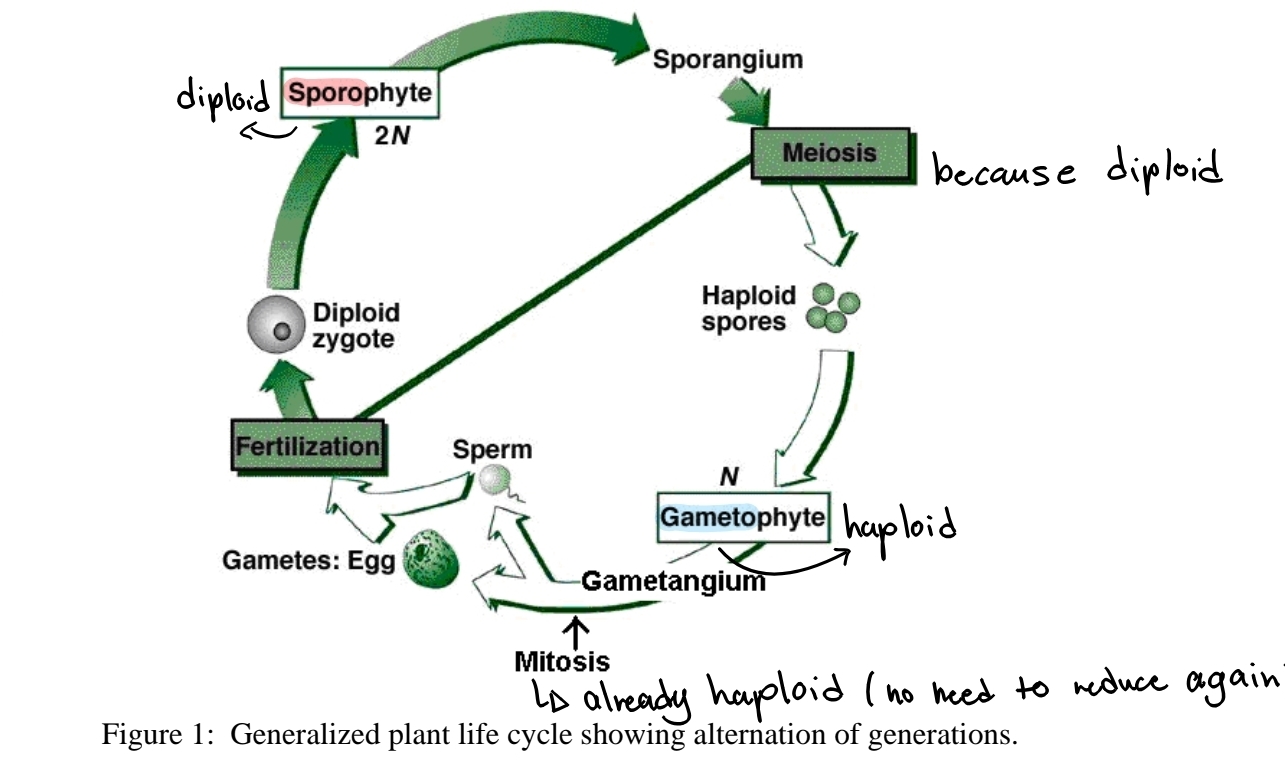
alternation of generations
where plants spend a part of their life cycle as multicellular haploid gametophytes and part of their life vycle as multicellular diploid sporophytes
they alternate!
5 features common in every plant life cycle (1-3)
Sexual reproducrion always includes the proccesses of meiosis and fertilization
Asexual reproduction never includes either
sexual reproduction always has a portion of the cycle in which all cells of the organism are haploid (gametophyte generation), alternating with a portion of the cycle in which all cells of the organism are diploid (sporophyte generation). This is the concept of alternation of generations
5 features common in every plant life cycle #4 - sporangia + spores
Sporophyte portion always ends with the production of spors by meiosis (meiospores)
They are produced in a struture called sporangium (sporangia)
5 features common in every plant life cycle #4 - gametes + gametangia
Gametophyte portion of the cycle begins with the production of gametes by mitosis
They are produced in a structure called gametangium (gametangia)
5 features common in every plant life cycle #4 - two types of gametangia
Egg producing gametangia - archegonia (archegonium)
sperm producing gametangia - antheridia (antheridium)
5 features common in every plant life cycle (5)
Asexual reproduction always results in the formation of new individuals which are genetically identical to the parent organisms.
advantages and disadvantages to asexual reproduction
Only advantageous if the organism is well suited to it's environment and if that environment is stable.
a big disadvantage is that most environments are less stable, meaning that little genetic variation from asexual reproduction can be detrimental
one problem or change can cause a whole mass of plants to die if they are genetically identical
advantages of sexual reproduction
Sexual reproduction can allow for some plants to withstand less stable environments
the genetic variability makes certain plants more fit in certain environments
how has natural selection occur in plants?
Natural selection not only worked on the morphological characterics but also the structures and strategies involved in sexual reproduction.
Fitness definition
refers to the ability to produce the greatest number of offspring that live to reproduce themselves
the more “fit” a species is, the more successful they will be in the environment
Survival of the gamete forming organs
When exposed to the dry air, the gametangia on the gametophyte need an outer layer of protective cells to prevent them from drying out
Getting the gametes together
Transfer of the male gametes from the antheridium where they are made, to the eggs inside the archegonia
this is harder to do on land than it was in the water
Getting the gametes together - mosses and ferns
the sperm in both of these are flagellated, and require free water for the sperm to swim through.
the availability of water (rain) can severly limit the transfer of gametes and ultimately the success of reproduction
Getting the gametes together - flowering plants
In flowering plants, natural selection has favoured the loss of motility of the sperm and a reduction in the size of the gametophytes.
This means water is no longer needed in gamete transfer.
which allowed for them to successfully reproduce in much dryer habitats.
Protection of the delicate embryo
Making sure the the dividing zygot does not dry out
this is done by having the embryo develop inside the female archegonia
the wall of the archegonia even grows along with the embryo making sure it stays covered until it is well developed to protect itself from the dry air
to be diploid or not to be? - mosses
The dominant generation in this life cycle is the haploid gametophyte
meaning the most obvious, longest lived, easiest to find generation.
to be diploid or not to be? - ferns
the dominant generation becomes the diploid sporophyte
the gametophyte is very small, delicate, and lives only long enough to produce gametes and get the diploid embryo started
to be diploid or not to be? - flowering plants
the male and female gametophytes have been reduced
in the female gametophyte it is a 7 celled-8 nucleate female gametophyte
in the male it is 2 nuclei in the male gametophyte
Phylum Bryophyta - mosses
These generally occupy habitats which are damp and shaded
The habitats are considered to be transitional areas between the aquatic and terrestial environments
-only a few that exist in dry ares require readily available water for reproduction
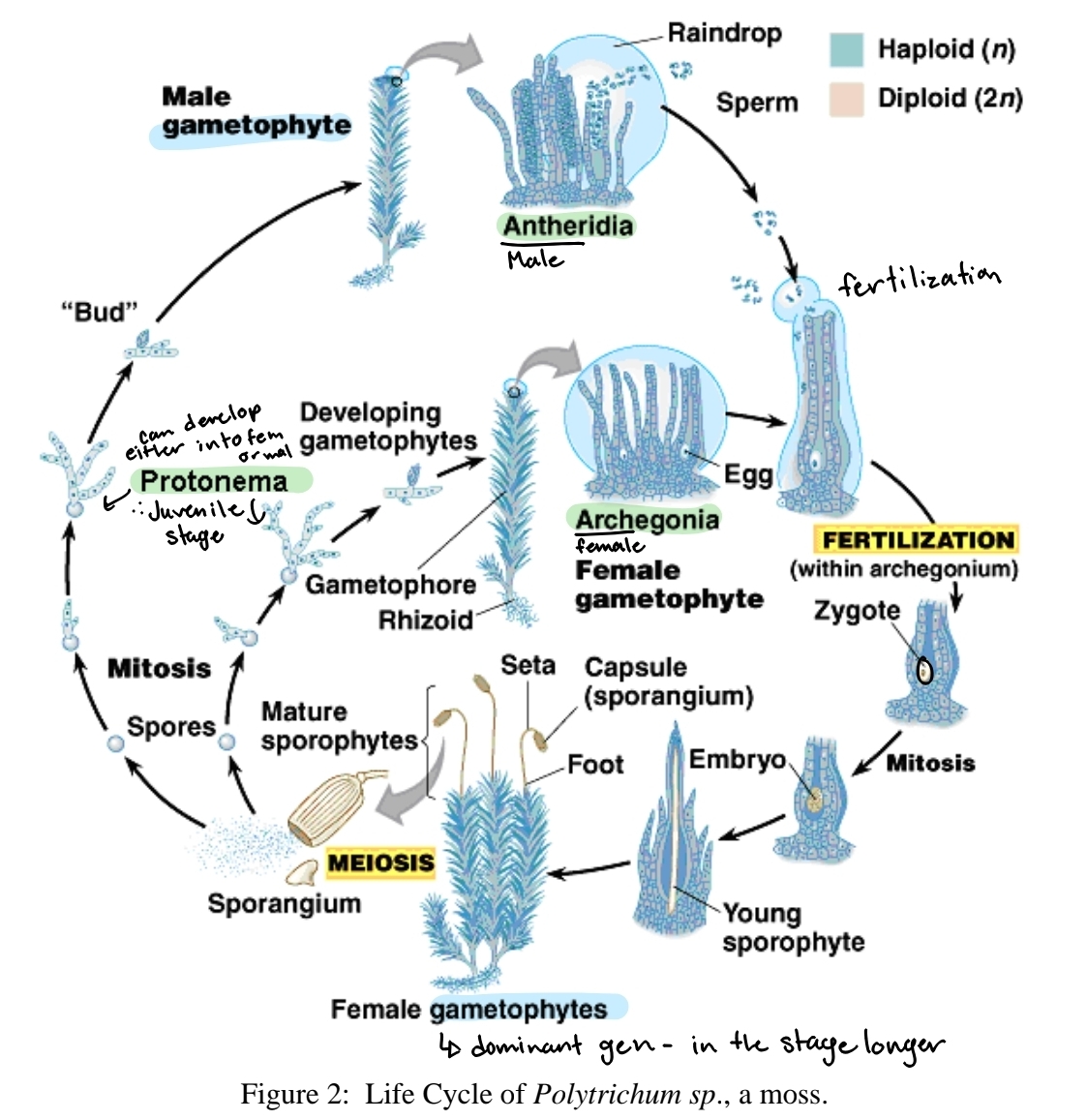
Reproduction in phylum bryophyta, mosses
Gametophyte generation is dominant
There are two phases in the generation
first to develop is an algal-like filamentous phase is termed protonema. This can grow into either an antheridia or archegonia
second phase is the mature gametophyte, which is green and leafy
there is also an embryo in the sporophyte phase, which is an undifferentiated mass of cells, nourished and protected within the archegonia by the gametophyte
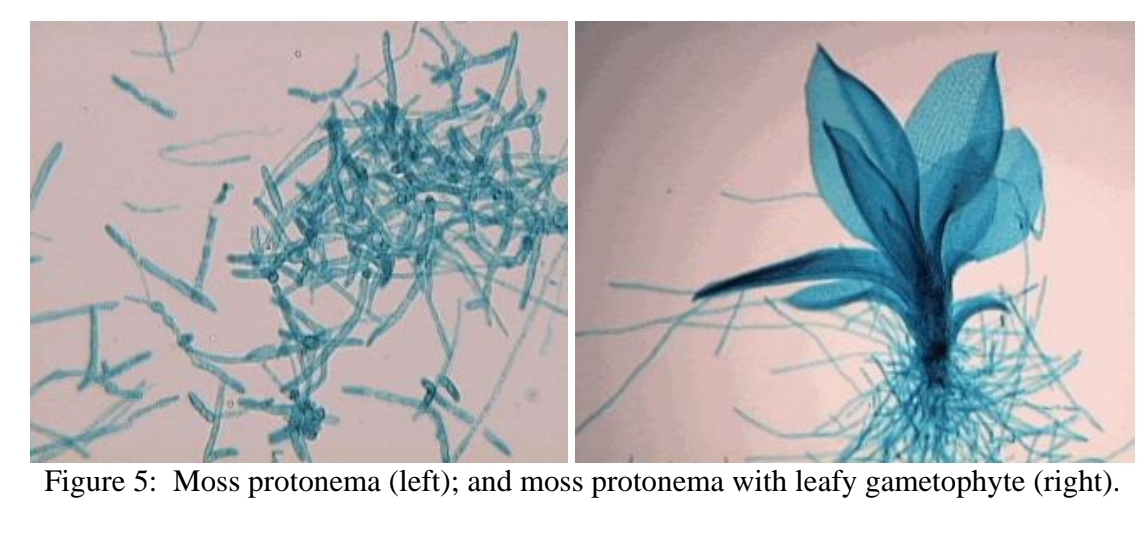
Reproduction in Phylum Bryophyta - Protonema
spores released from the capsule on mature sporophytes grow into protonema
the protonema doesn't do anything but grow
can grow into either male gametophyte with antheridia or female gametophyte with archegonia
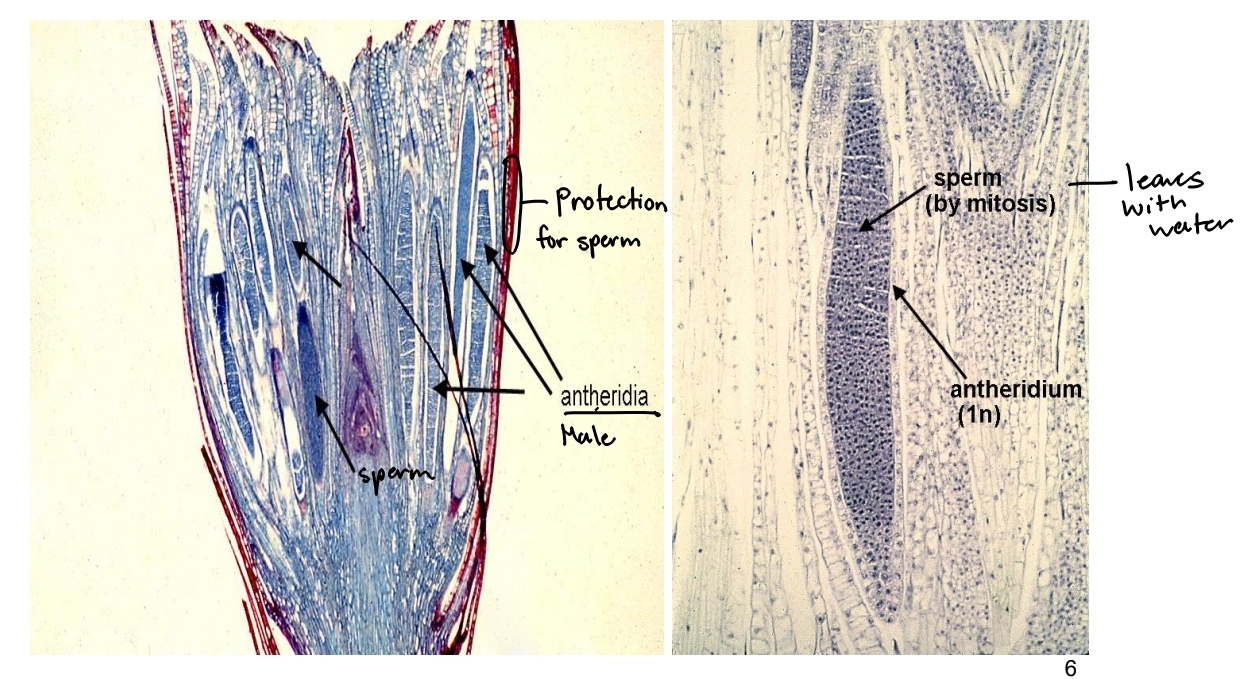
Reproduction in Phylum Bryophyta - Male gametophyte
Male gametophytes have cups that are called the antheridia
the antheridia creates sperm that will be carried by water to the female gametophyte
these are haploid
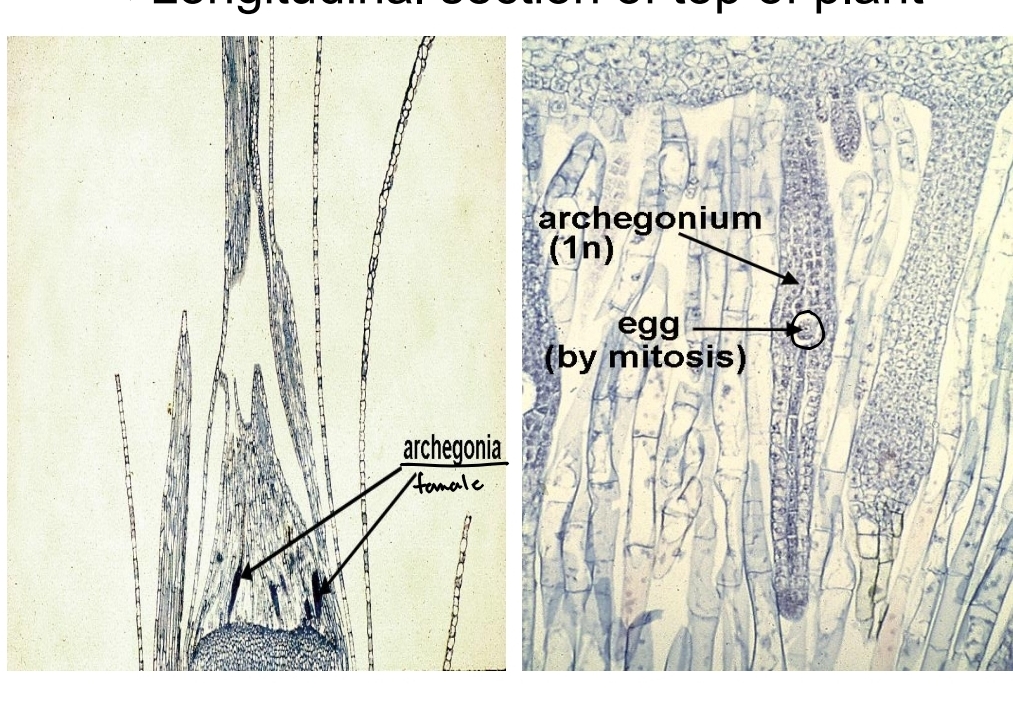
Reproduction in Phylum Bryophyta - Female gametophyte
Female gametophytes have no cup but contain the archegonia
the archegonia contains an egg that is inside the archegonia walls
from the naked eye what sets apart female and male gametophytes?
males have yellow cups on the tips of the plant while females do not
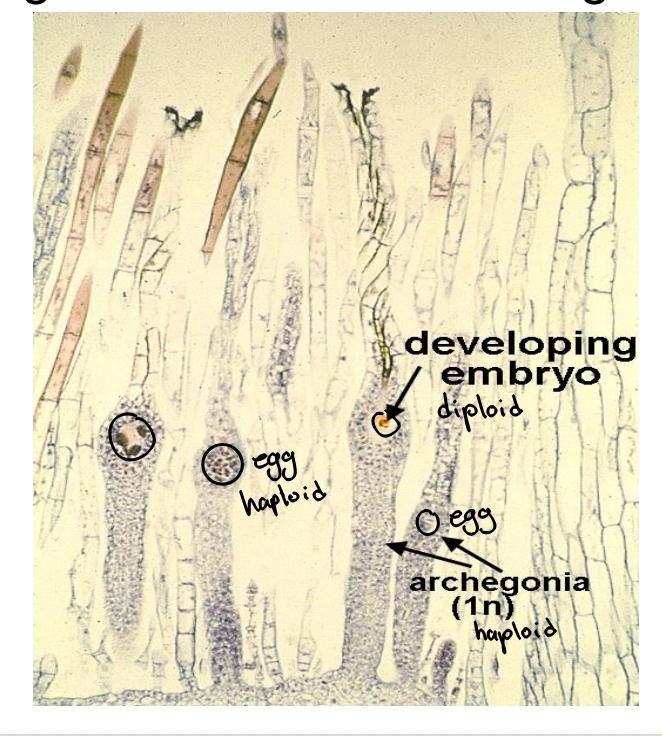
Reproduction in Phylum Bryophyta - Fertilization + zygote
Sperm from the antheridia travel by water (rain drop) and into a tube in the archegonia to reach the egg to fertilize it
this will create a zygote which will grow via mitosis into an embryo
which will grow into a sporophyte
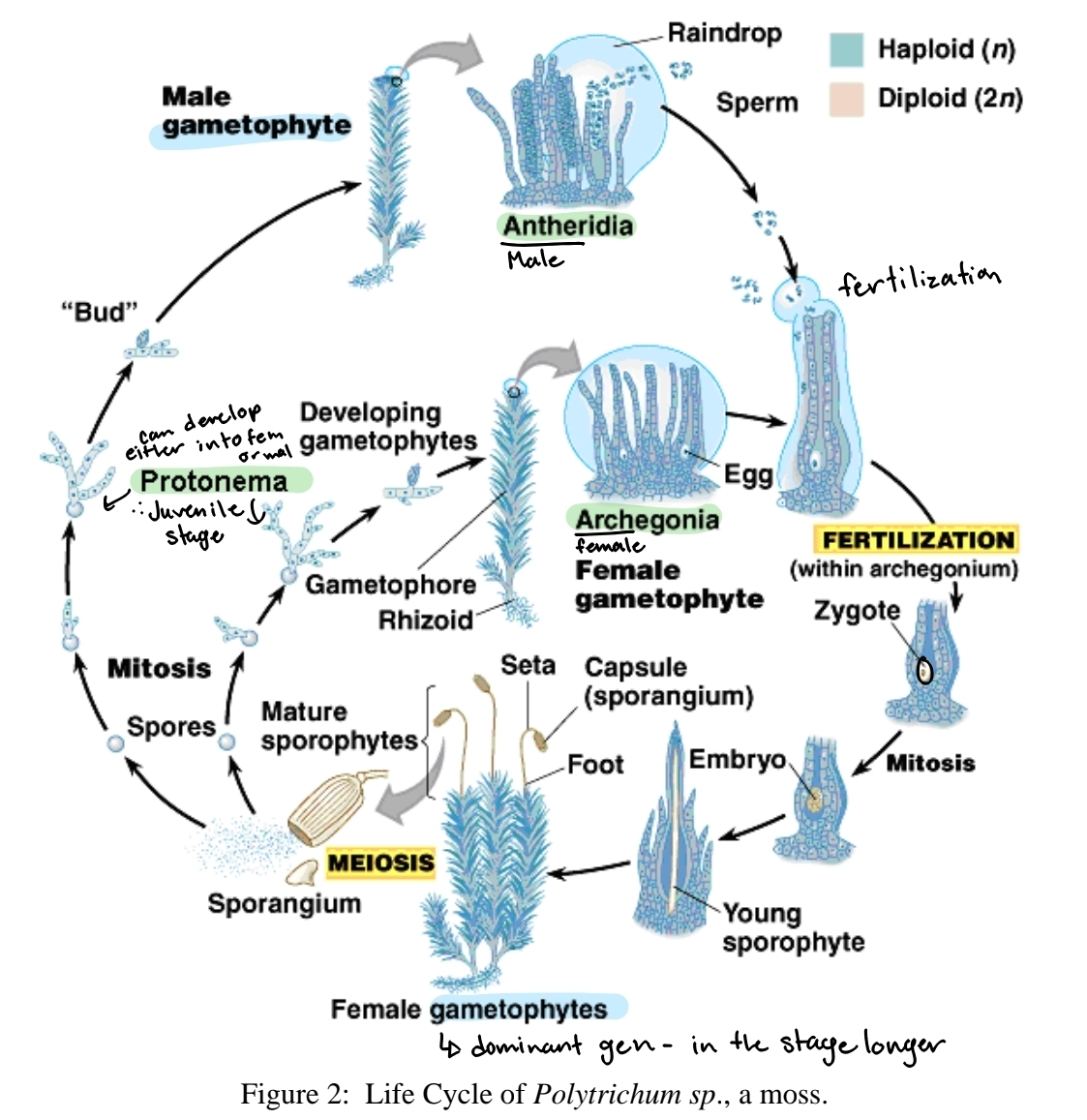
Reproduction in Phylum Bryophyta - sporophyte
The sporophyte will grow out of the female gametophyte (archegonia) and will develop a foot, seta, and a capsule
the capsule is where spores are produced via meiosis
the capsule will then release the spores which will grow into protonema
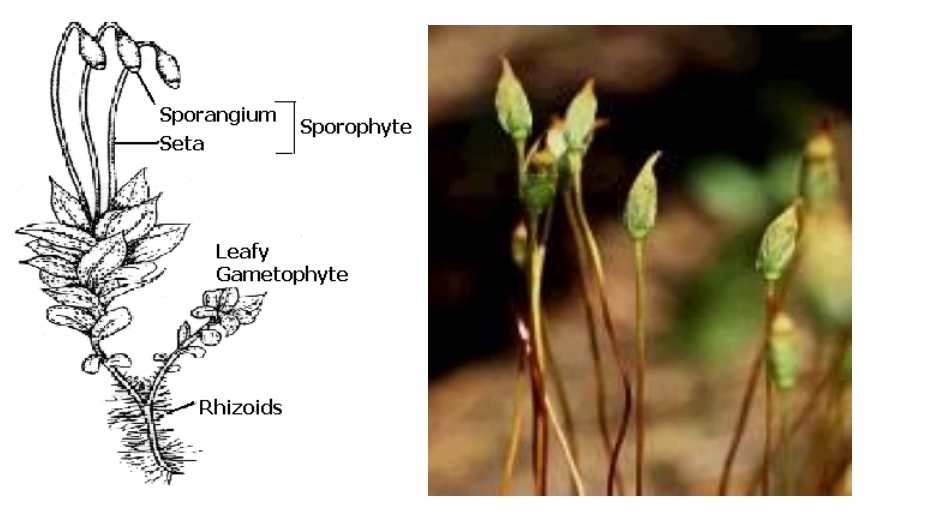
Sporophyte anatomy
Foot - the point where the sporophyte is attached to the archegonium/female gametophyte
Seta - the long stalk of the sporophyte
Capsule - contains spores
has an operculum
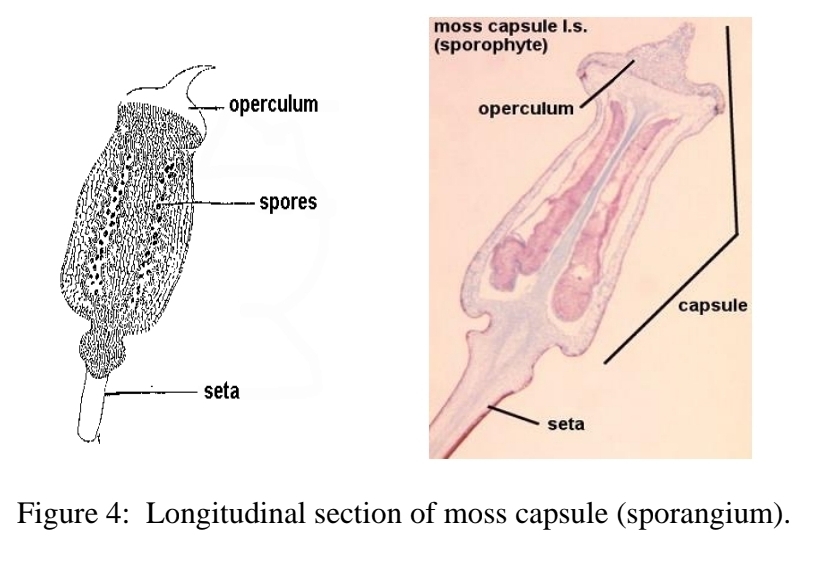
Sporophyte anatomy - capsule
The capsule creates the spores that will be distributed to grow into protonema
the capsule has a protective covering to keep the spores in until they are mature, is called the operculum
this will fall off after the spores are mature and allow them to leave the capsule carried off by the wind
Asexual reproduction in moss
This is done through the process of fragmentation
where any part of the gametophyte plant is capable of regenerating the protonemal phase which will grow into a mature gamtophyte
the leaves, stems, and rhizoids will all produce new protonemata if the environment is favourable
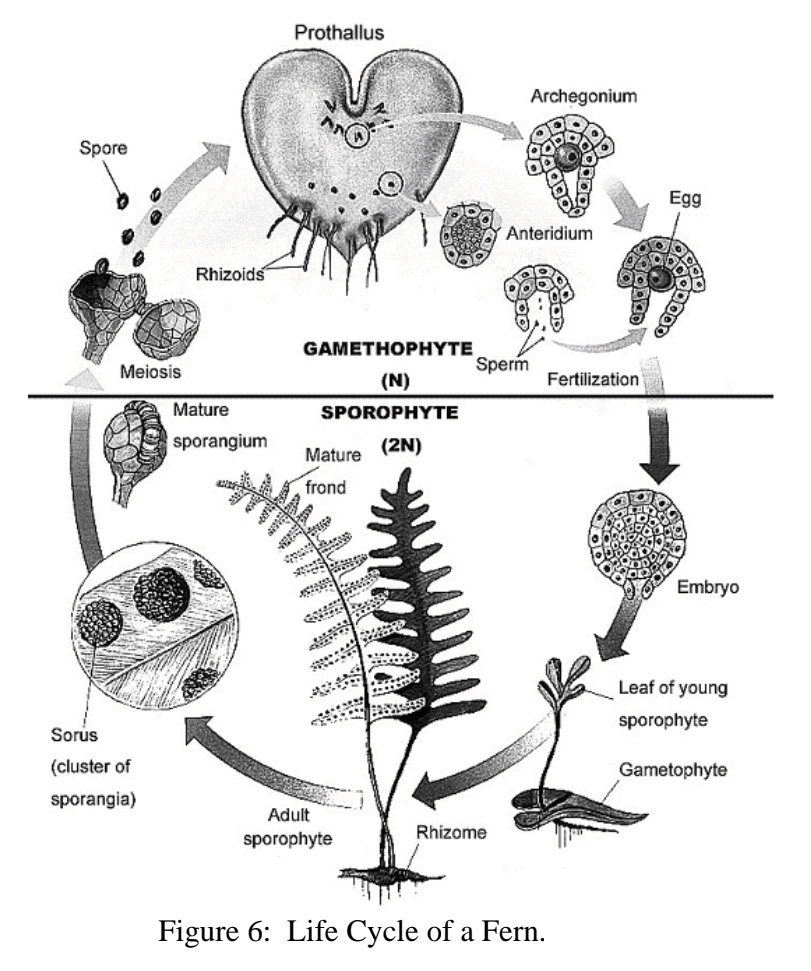
Phylum Monilophyta - Ferns
Mostly found in areas of damp soil, high humiditym and low life
The sporophyte generation is dominant while the gametophyte generation is small vulnerable transitory phase
they also contain the adaptation of true vascular tissue
Differences in sexual reproduction of ferns from mosses
Increase in number of meiospores
the independence of the mature stages of both generations
the dominance of the sporophyte generation
Similartities of sexual reproduction between ferns and mosses
Presence of flagellated sperm cells
the dependence on free water for fertilization
the formation of an embryo which is protected and nourished by the gametophyte plant
they need to establish the gametophyte generation from a single unprotected spore
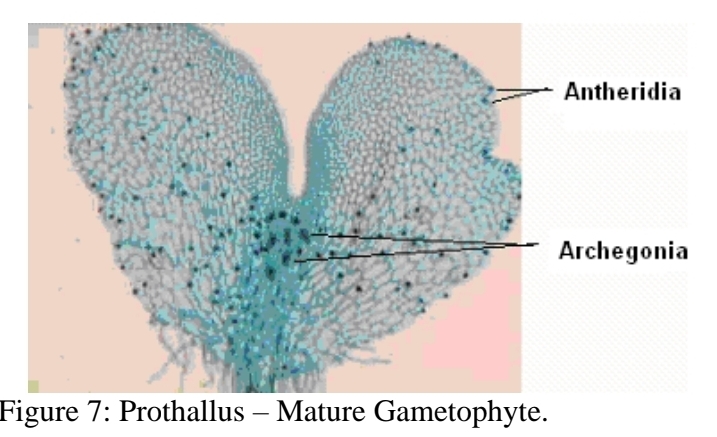
Fern development - Prothallus
It has a heart shape to the structure
contains male and female gametangia
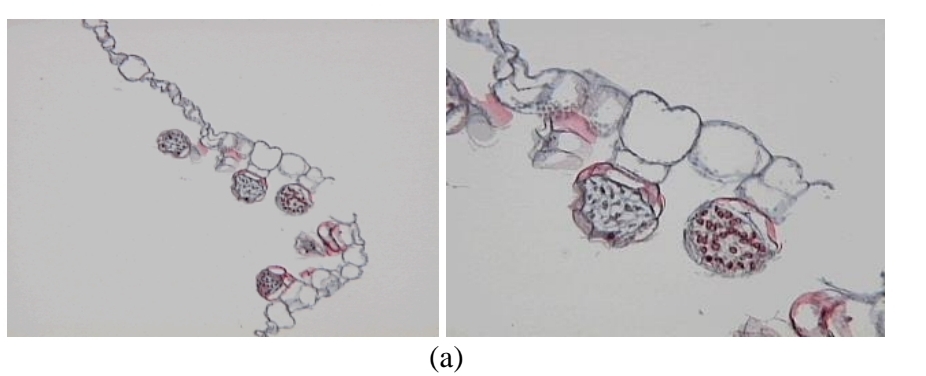
Fern development - Male gametangia
Antheridia - located on the outer edge of the heart, these produces sperm
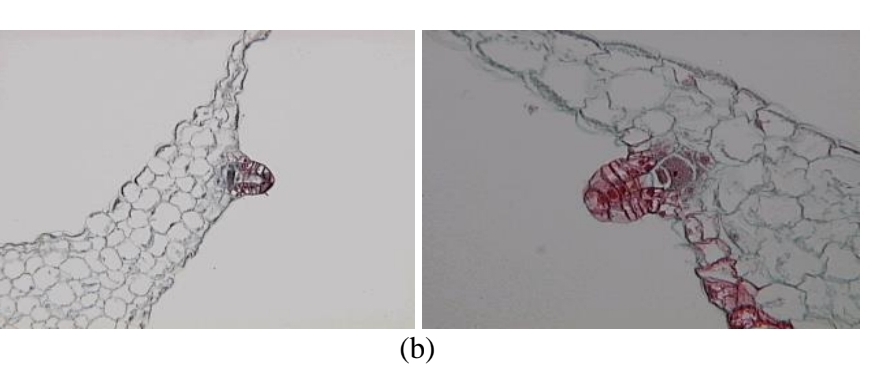
Fern Development - Female gametangia + fertilization
Archegonia - located near the notch of the heart, contains the egg
The sperm from the antheridia will travel into the archegonia through a gap where it will meet with the egg and fertilization
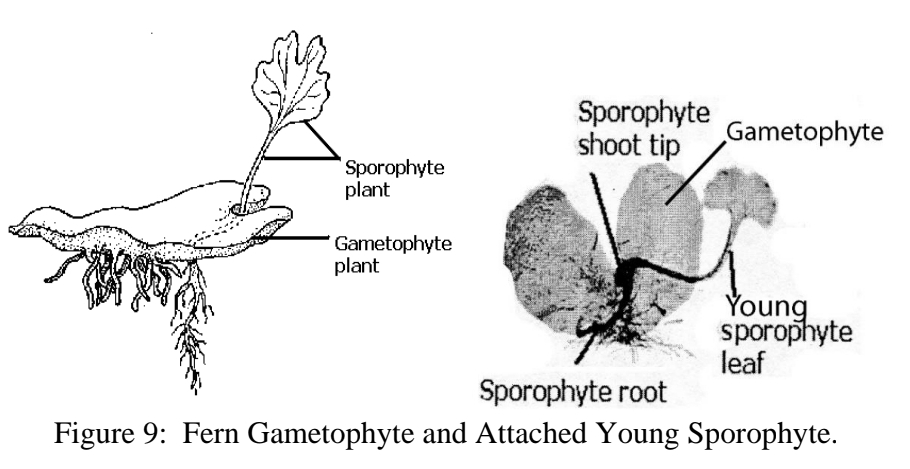
Fern development - Young Sporophyte
After fertilization the embryo is located in the region of the rhizome. The young sporophyte will grow of the of the notch of the gametophyte.
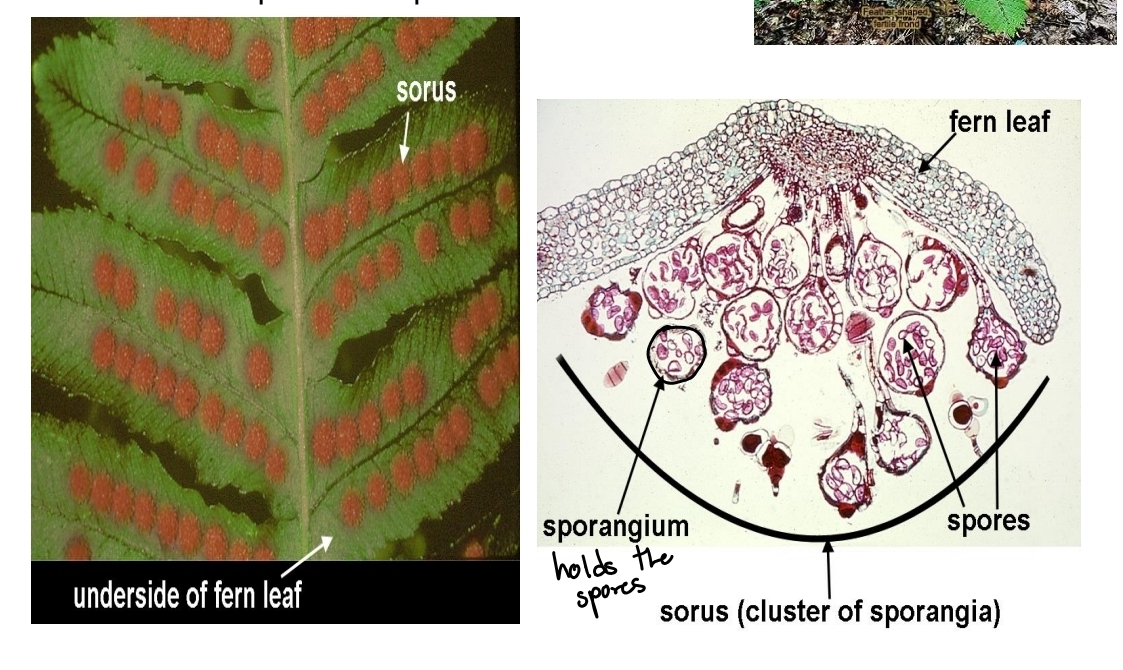
Fern development - Mature sporophyte
This structure is large and long with leaves
has sporangium called sori (sorus) which are brown and contain spores
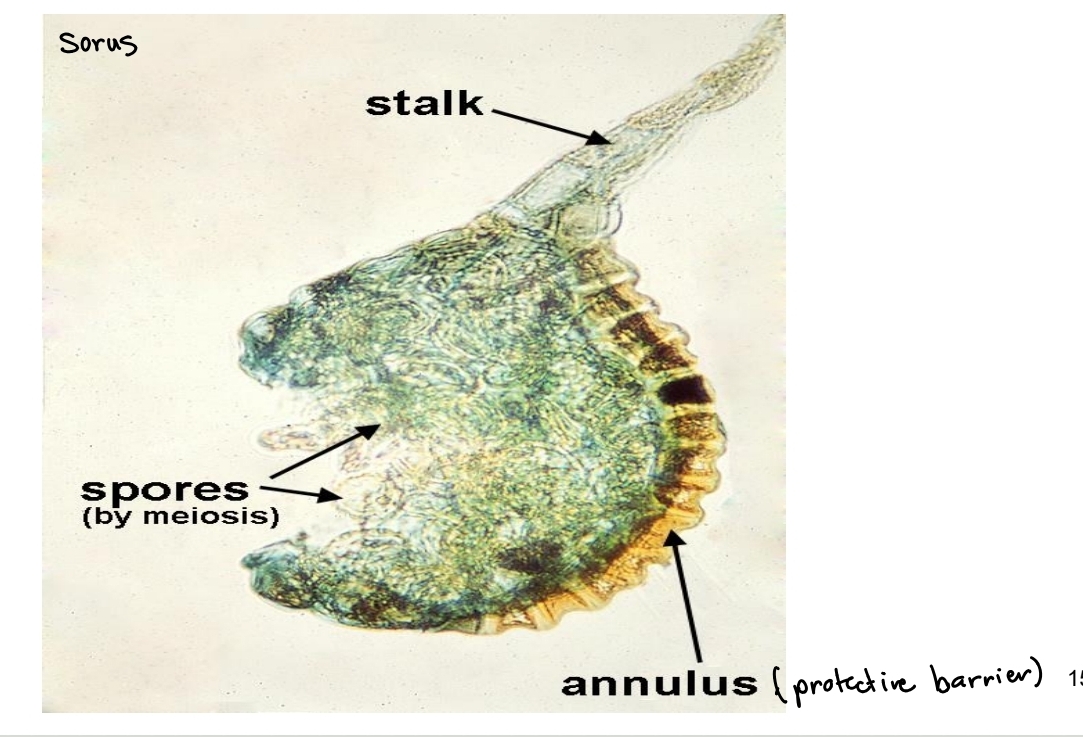
Fern development - Sori
Sporangia that are brown capsules which contain meiospores.
They also have stalk (which is the stem of the sporangia)
and an annulus which serves as a protective barrier
Flowering plants
These are the most successful plants
they can be found in almost every terrestial habitat
Reproductive adaptation in flowering plants - #1
Sporophytes are still dominant in flowering plants
while the gametophytes of flowering plants are even more reduced
Reproductive adaptation in flowering plants - gametophyte
the female gametophyte and young embryos are protected from many environmental stresses
this is because they are retained within the moist sporangia of the parental sporophyte
Reproductive adaptation in flowering plants - #2
The seed is the resistant life cycle (comparable to spores)
It differs from spores because it is multicellular and contains a sporophyte embryo packaged with a food supply within a protective coat
Reproductive adaptation in flowering plants - #3
how male gametes disperse themselves in harsh terrestial environment
this is done by the pollen grain, which are really tough structures that can be dispersed by the wind or animals.
this solves the problem of needing water to disperse the sperm like in ferns or mosses
Asexual reproduction in flowering plants
A lot of seed plants use this form of reproduction
They only use this form if the environment is stable for many generations
variability may not be as essential to the survival of the species
if the environment is harsh, and the delicate organs/stages of sexual reproduction may not be able to survive
This is especially helpful when in new environments finding a mate for sexual reproduction may be difficult or impossible
Asexual reproduction is not as complex and requires less energy
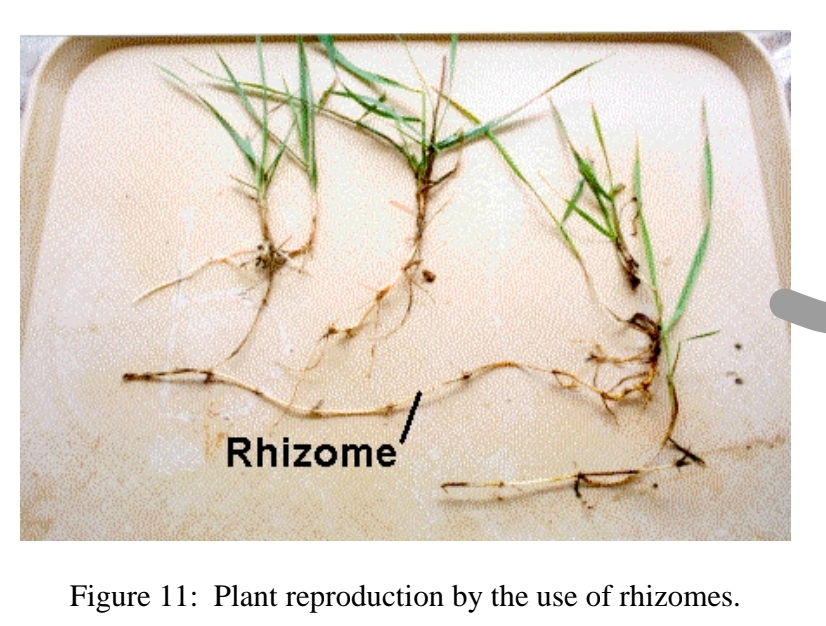
types of asexual reproduction - Rhizomes
occurs in grasses, cattails, sedges
They will produce underground stems or rhizomes
these will grow through the soil and produce adventitious roots and a new above ground shoot
if it dies a new plant will have been formed already
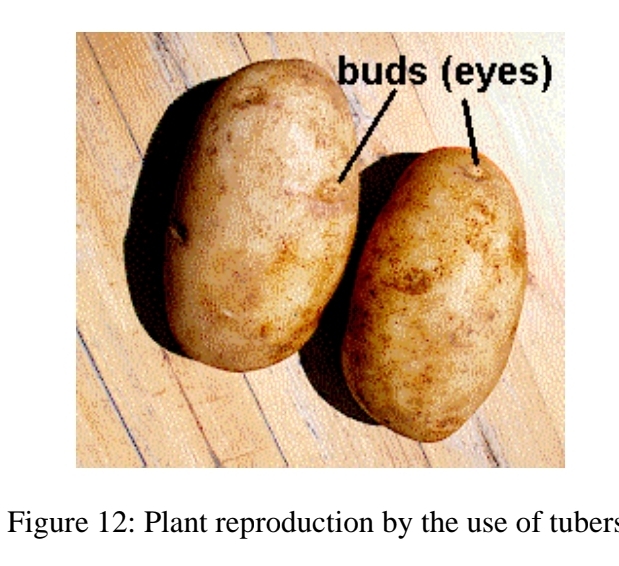
types of asexual reproduction - Tubers
These are modified rhizomes in plants like potatoes
They develop when specialized stem branches grown down into the grown and swell up with starch containing cells
Buds on the tubers will grow into new plants
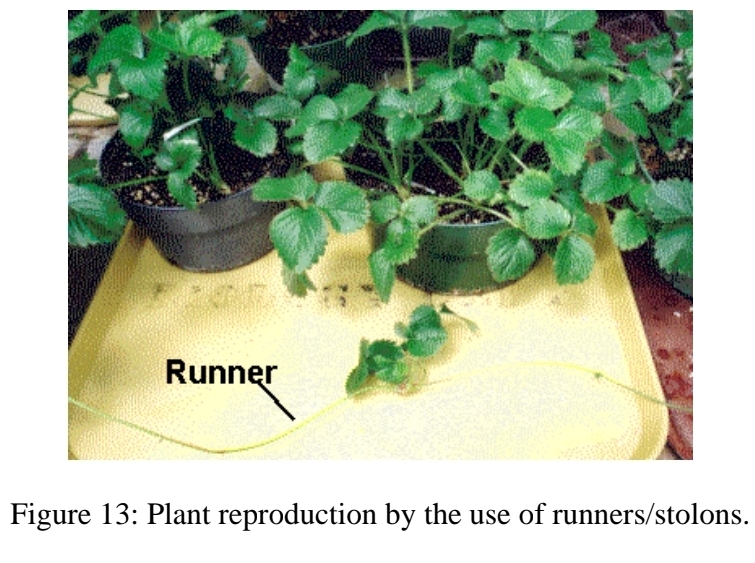
types of asexual reproduction - Runners (stolons)
These are horizontally growing stems that produce few or many leaves
At a place where a leaf would normally develop, a node, it will produce adventitious roots down into the soil and new above ground shoots instead
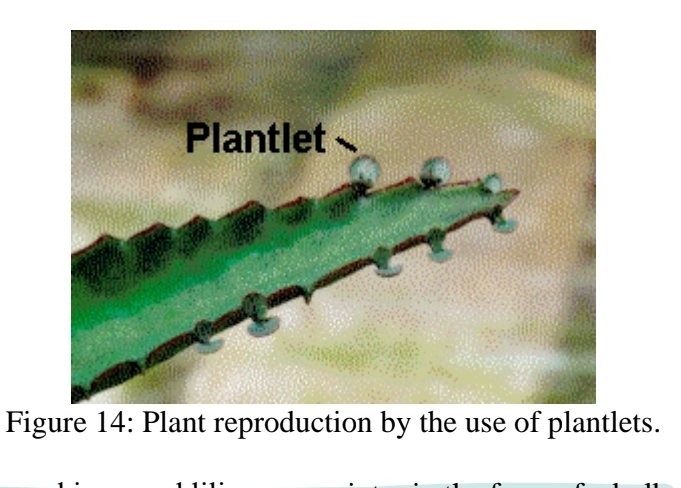
types of asexual reproduction - Plantlets
occurs in duckweed (aquatic) and Kalanchoe sp.
they will produce miniture plants on the margin of their leaves
these will fall off and evelop into mater plants
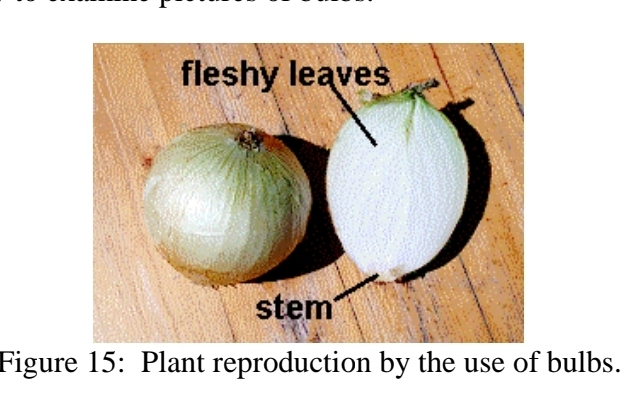
types of asexual reproduction - Bulbs
occurs in onions chives and lilies
Over-winter in the form of a bulb
each bulb has a very short stem which is surrounded by fleshy leaves
in the spring, the shoot apex begins to grow using the nutrients stored in the leaves
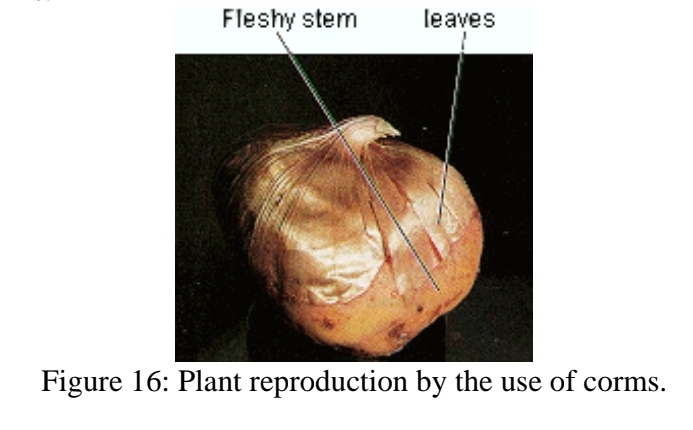
types of asexual reproduction - Corms
These are similar to bulbs except that there are no storage leaves
The nutrients are, instead, stored in the swollen stem
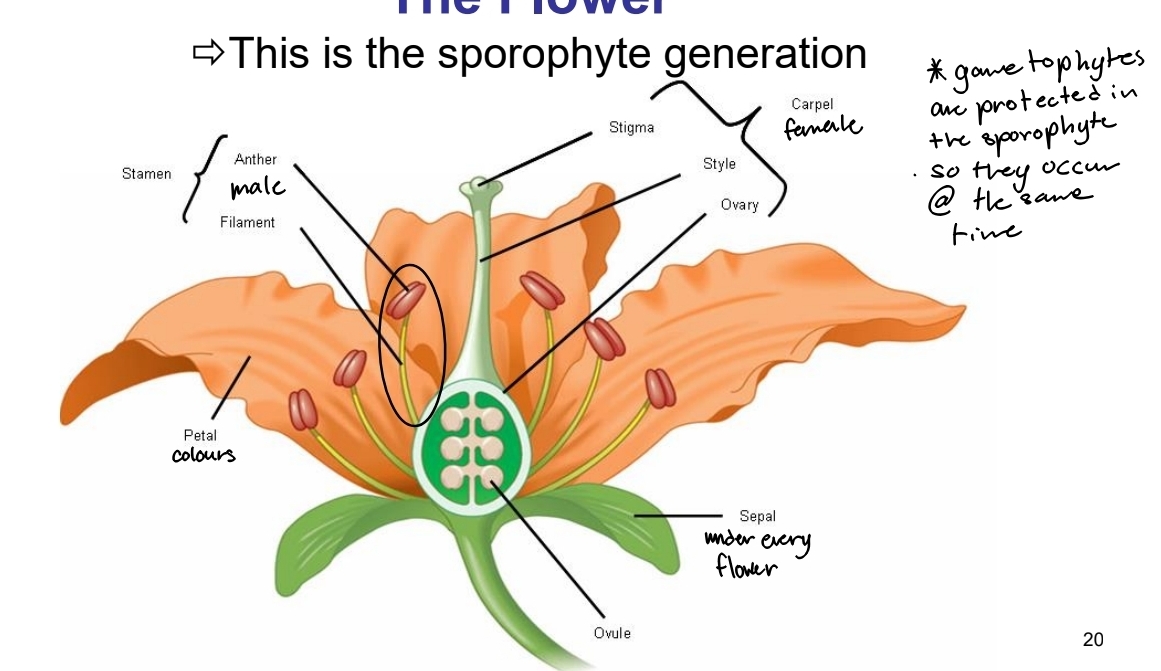
Sexual reproduction in Flowering plants - the reproductive organ
Known as the flower
This is part of the sporophyte generation which functions to protect the developing gametes and to ensure pollination and fertilization
They are generally composed of the male and female reproductive structures
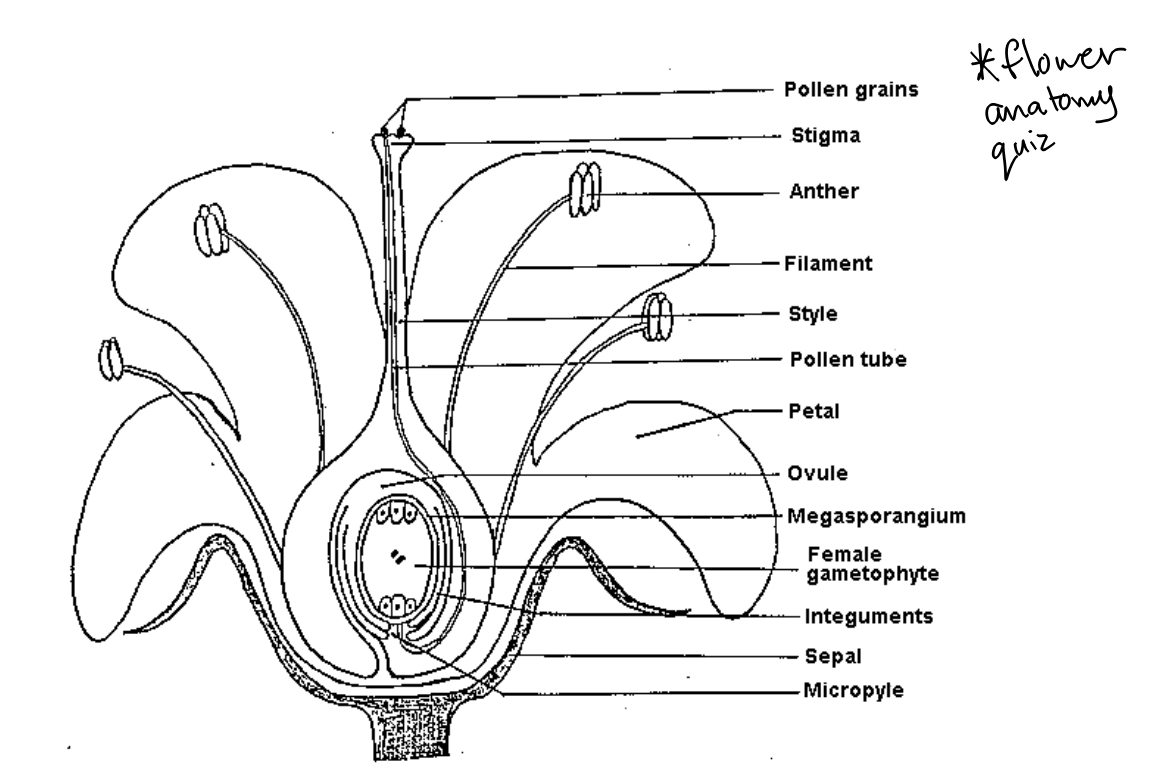
Sexual reproduction in Flowering plants - The perianth
These are attractive or protective leaf like structures that surround the male and female reproductive structures
Sexual reproduction in Flowering plants - Fertilization/pollination
Since they are rooted structures they have to use other transfer agents to complete fertilization
This includes, wind, water, and biological agents
such as, insects, birds, and mammal transfer the pollen (male gametes) from plant to plant
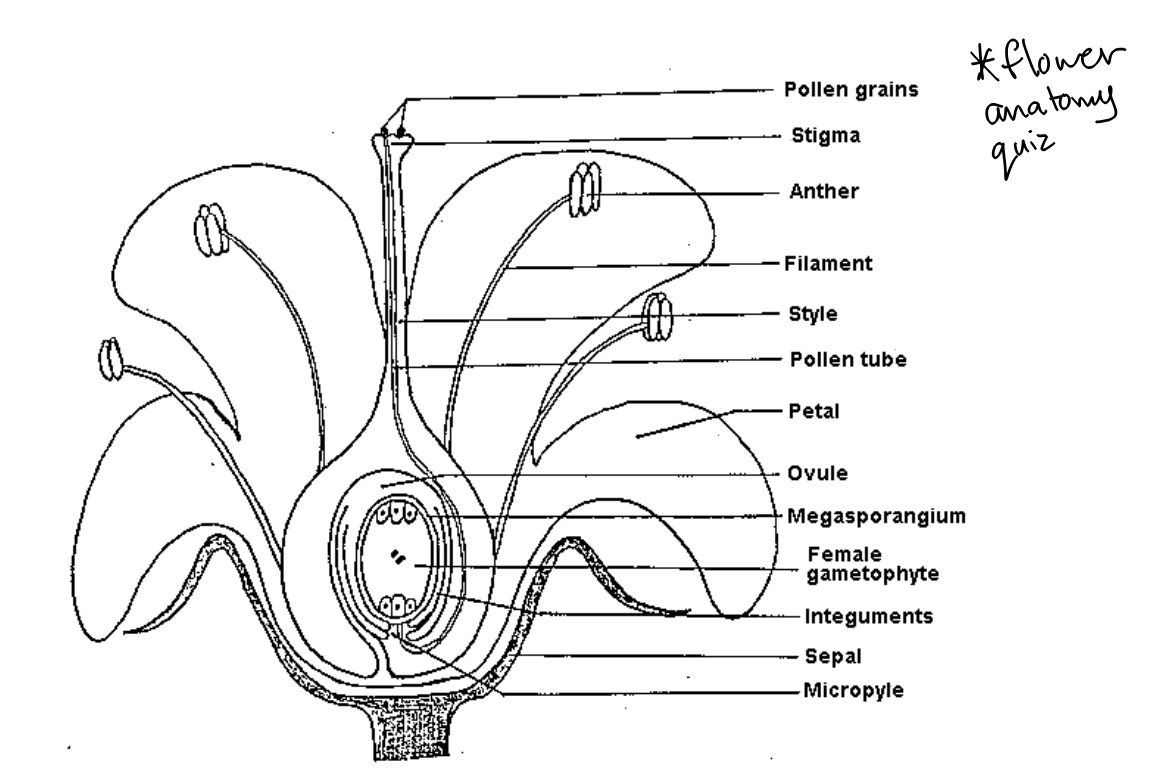
Sexual reproduction in Flowering plants - sepals
these develop first and are usually green in colour
found on the underside of petals
they provide protection for the delicate internal structurees and a small amount of food through photosynthesis
Sexual reproduction in Flowering plants - petals
these are te brightly coloured leaf-like structures
they also provide protection and their arrangement is an attractant to the various animals such as insects who are necessary for transfer of gametes
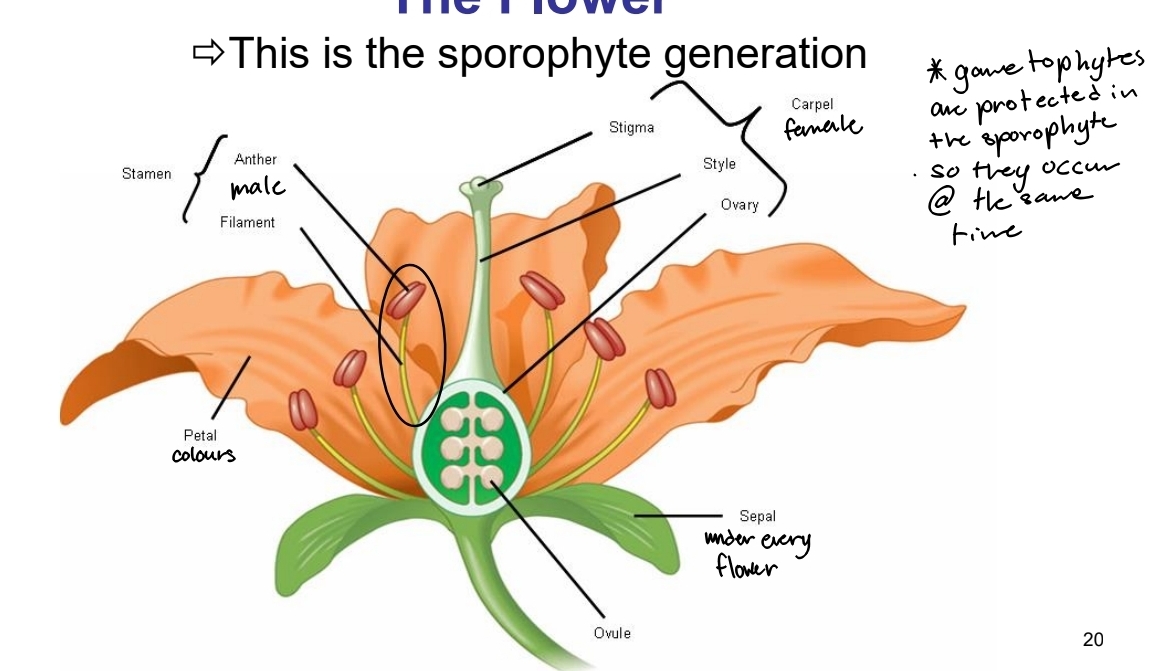
Sexual reproduction in Flowering plants - Male reproductive structure (sporangia)
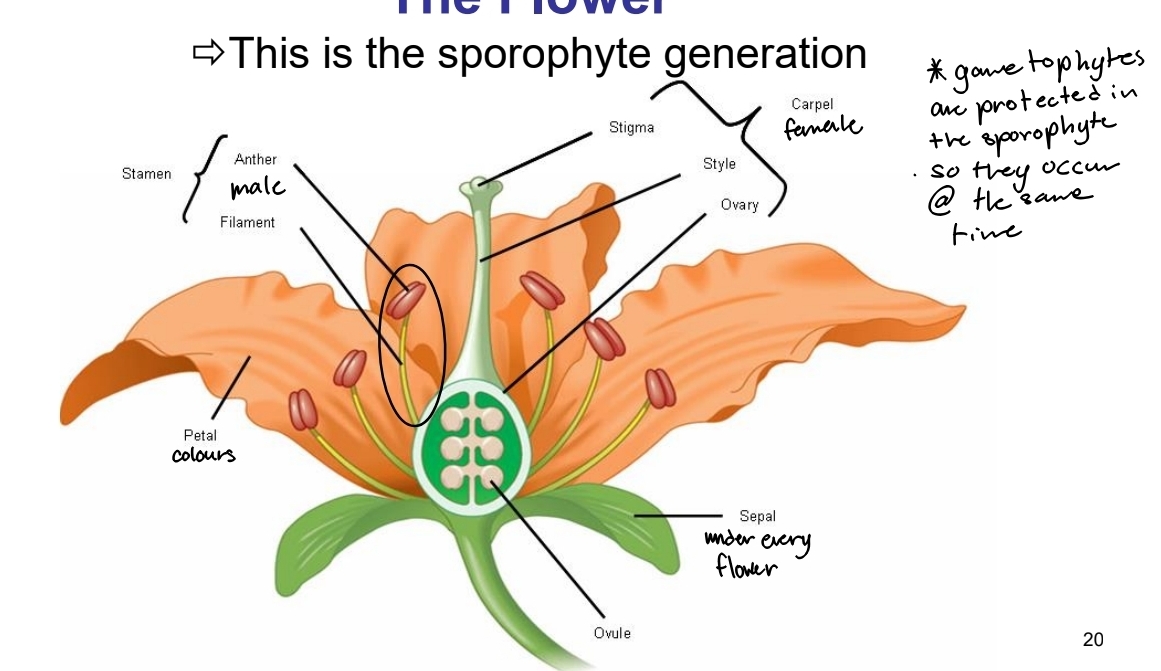
Called the stamen
consists of the anther and filament
where the production of pollen grains occur
forms male gametes via mitosis
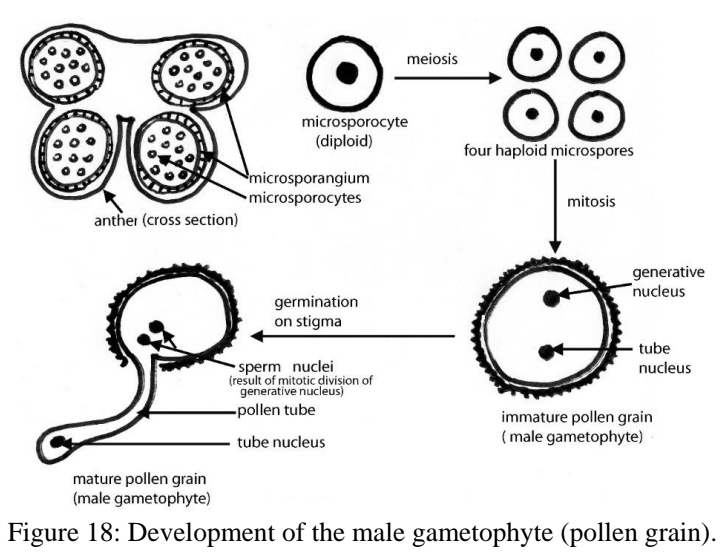
Sexual reproduction in Flowering plants - Development of the male gametophyte - Microsporangium
inside of the anther, the microsporangium has cells called microsporocytes.
these undergo meiosis to produce microspores
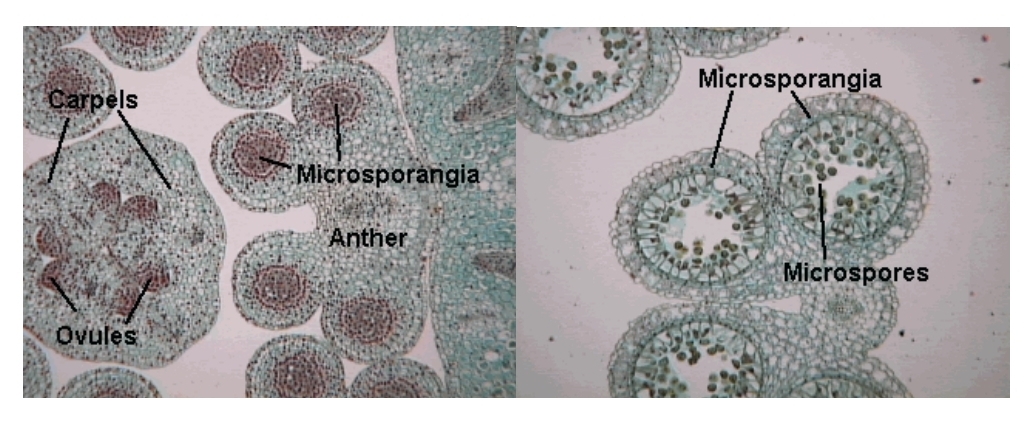
Sexual reproduction in Flowering plants - Development of the male gametophyte - Microspores
each microspore will divide mitotically once to produce two nuclei that will be encased in a thick wall, this forms the pollen grain
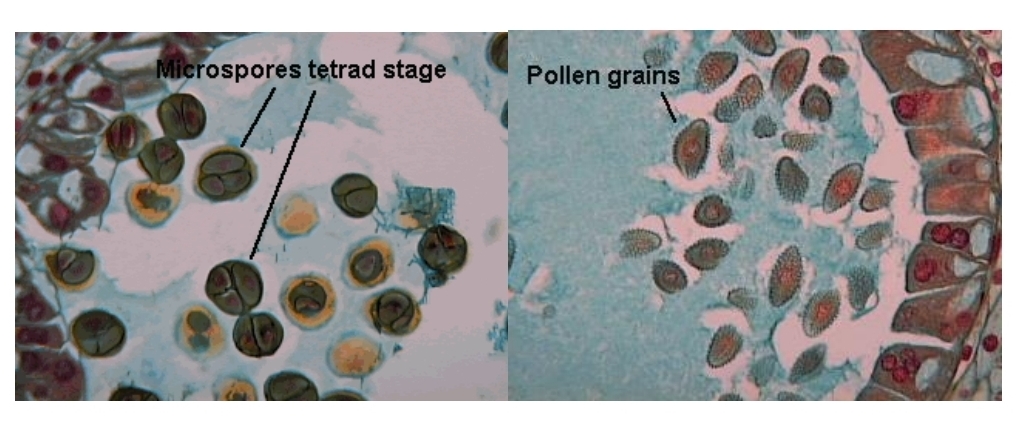
Sexual reproduction in Flowering plants - Development of the male gametophyte - Pollen grains + pollination
the pollen grains will be released and transferred to the stigma of the flower (pollination)
the tube nucleus produces the pollen tube, which penetrates the stigma and grows through the style until it reaches the ovary
by this time, the nucleus has divided once to produce two sperm nuclei
this creates a 3-nucleated structure, aka the mature male gametophyte
Sexual reproduction in Flowering plants - carpel
the most central structure within the flower
a leaf that is modified to produce ovules
consists of the:
stigma, the sticky surface designed to receive pollen grains
a style, the slender stalk where the pollen tube grows
an ovary, which contains the ovules
Sexual reproduction in Flowering plants - Development of the Female gametophyte - the ovule and megasporangium
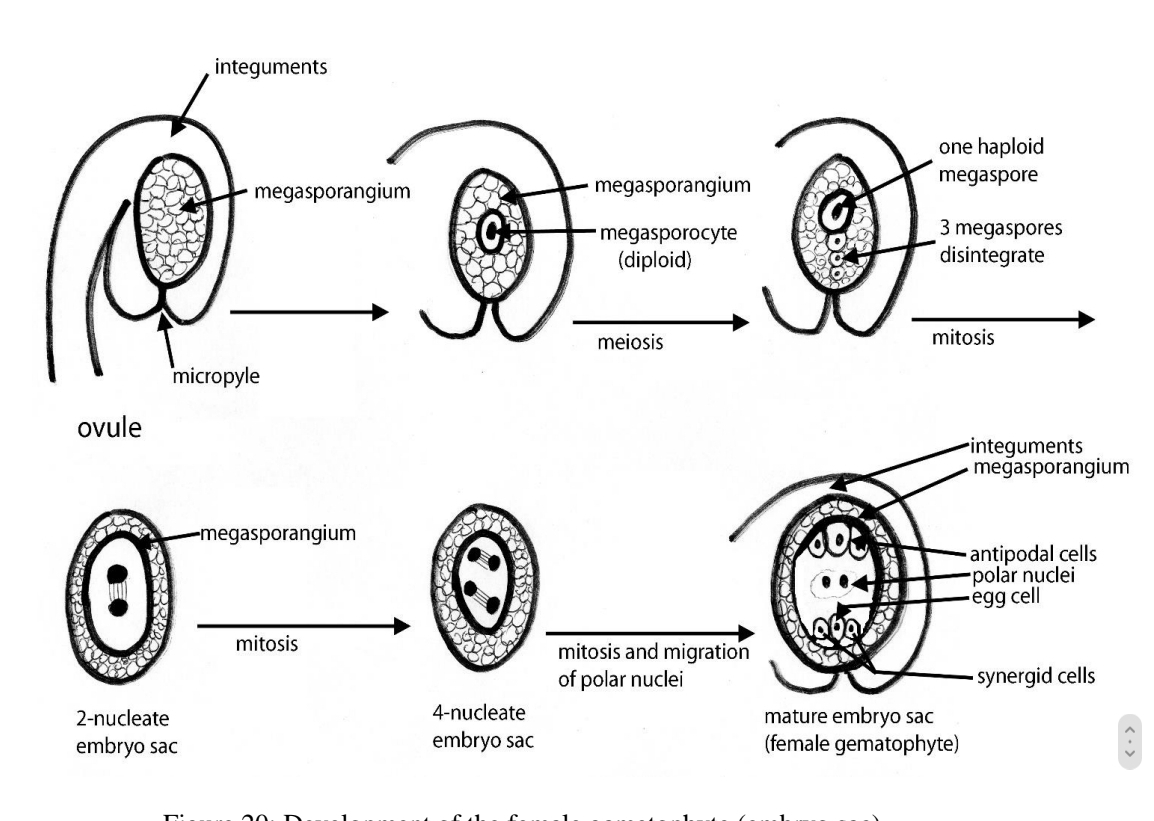
contains the megasporangium
the megasporangium produces one megasporocyte
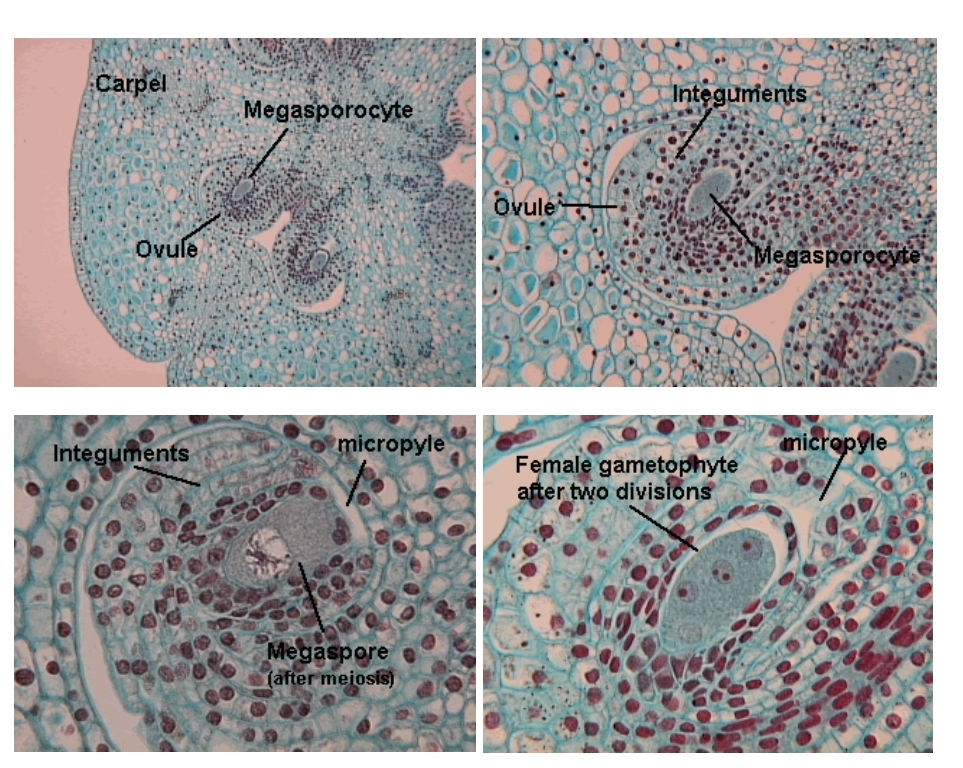
Sexual reproduction in Flowering plants - Development of the Female gametophyte - the megasporocyte
this will undergo meiosis which will produce four haploid cells or megaspores
Sexual reproduction in Flowering plants - Development of the Female gametophyte - megaspores
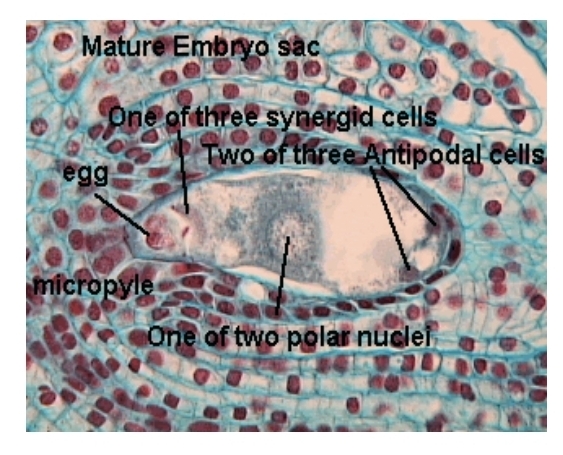
three of the megaspores will disintergrate and the remaining one will divide mitotically three times
this produces an 8-nucleate, 7-celled structure
this is the mature female gametophyte
there are synergid cells by the micropyle (an opening) (3 cells with 1 nuclei each)
one polar nuclei in the center (1 cell with 2 nuclei)
and antipodal cells by the top (3 cells with 1 nuclei each)
important aspects of gametophyte development in seed plants
no release of spores from the sporophyte
smalle size of gametophyte; pollen grains = small = easier to trasnfer; embryo sac = small = better protected
neither antehridia nor archegonia are produced
sperm nuclei, rather than sperm cells which eliminate the dependence on water
Pollination
occurs when pollen is trasnported to the surface of the flower's stigma
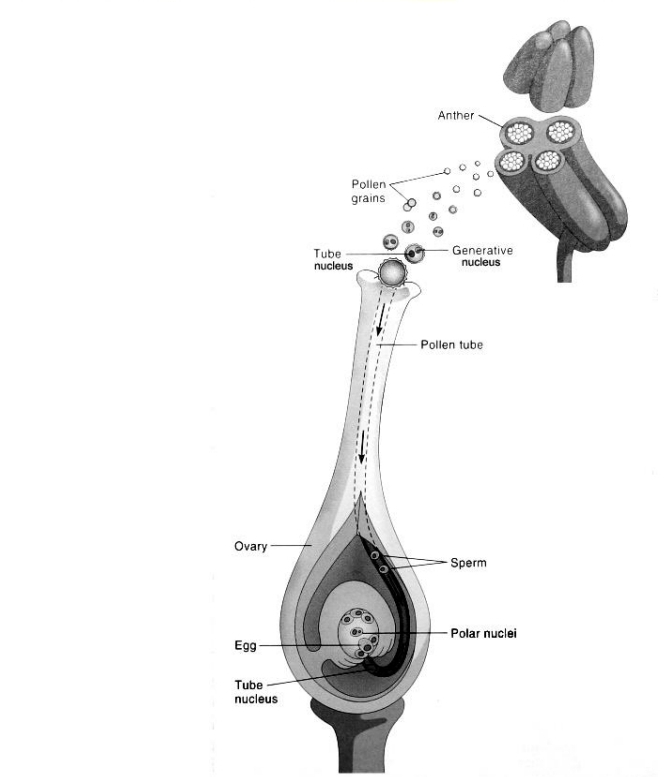
Pollination process - pollen and pollen tube
the pollen is transported to the surface of the flower's stigma
then produces a tube that will grow down the style and into the ovary of the ovule
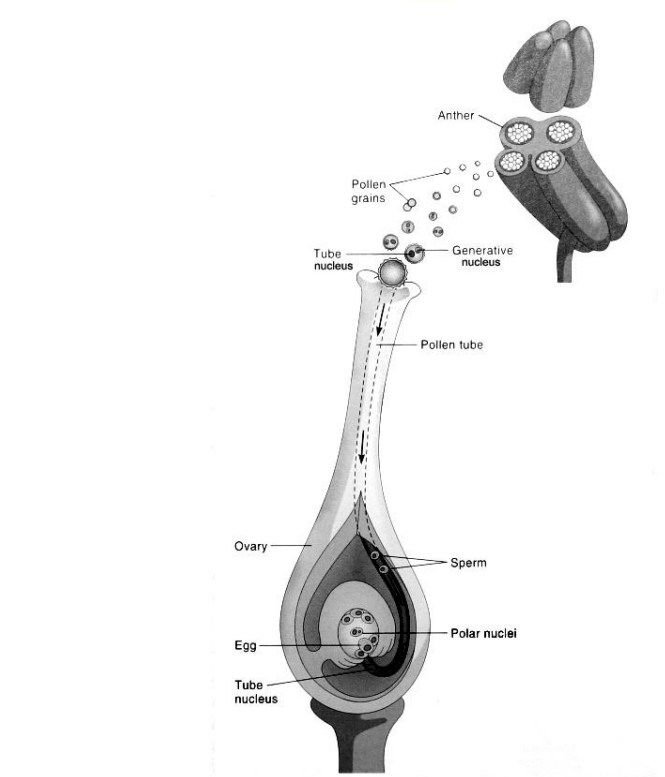
Pollination process - ovule + embryo sac
to reach the ovule, it is only capable of growing through the opening in the integument of the ovule to the embryo sac
the pollen tube will fuse with the embryo sac membrane and release two sperm nuclei into the sac
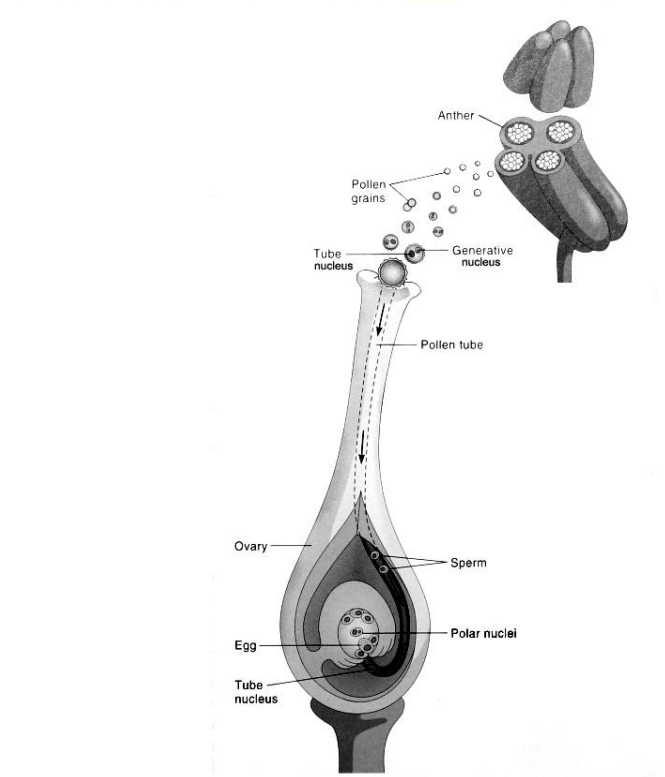
Pollination process - double fertilization
One sperm nucleus will fuse with the egg nucleus to form the zygote
while the other sperm nucleus fuses with the two polar nuclei to form a triploid endosperm nucleus
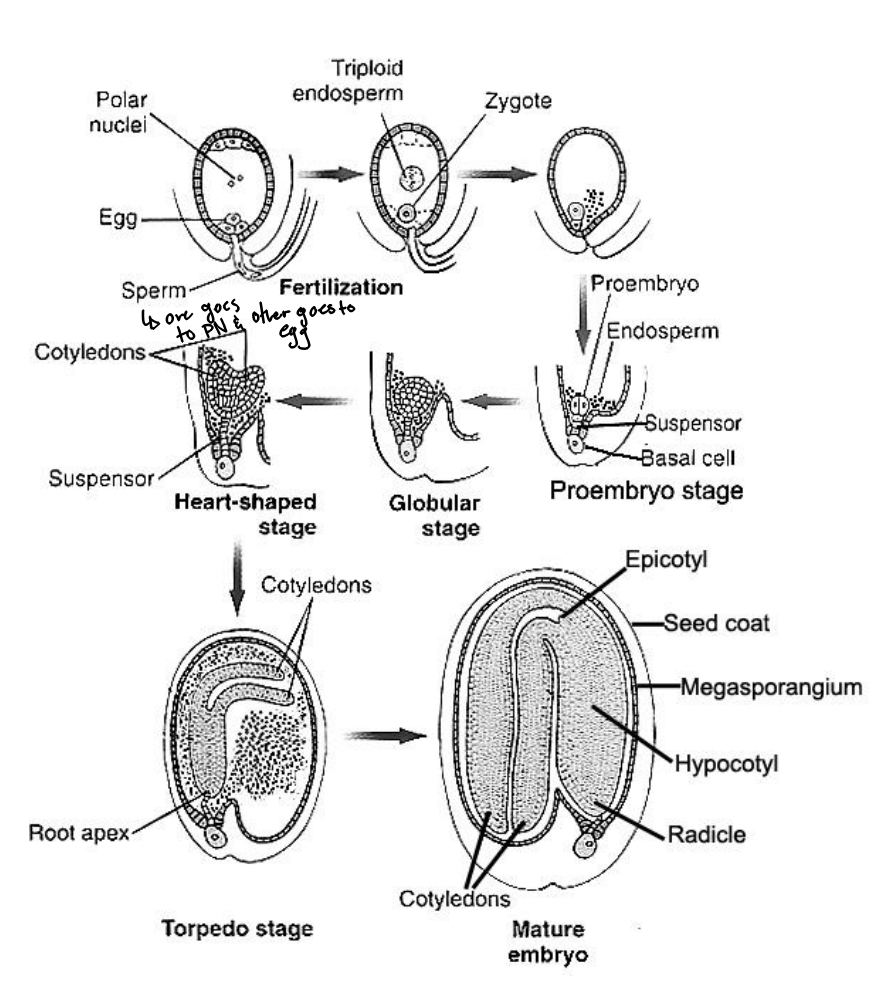
Pollination process - triploid endosperm nucleus
This is capable of dividing quickly and governing the formation of food material to nourish the developing zygote
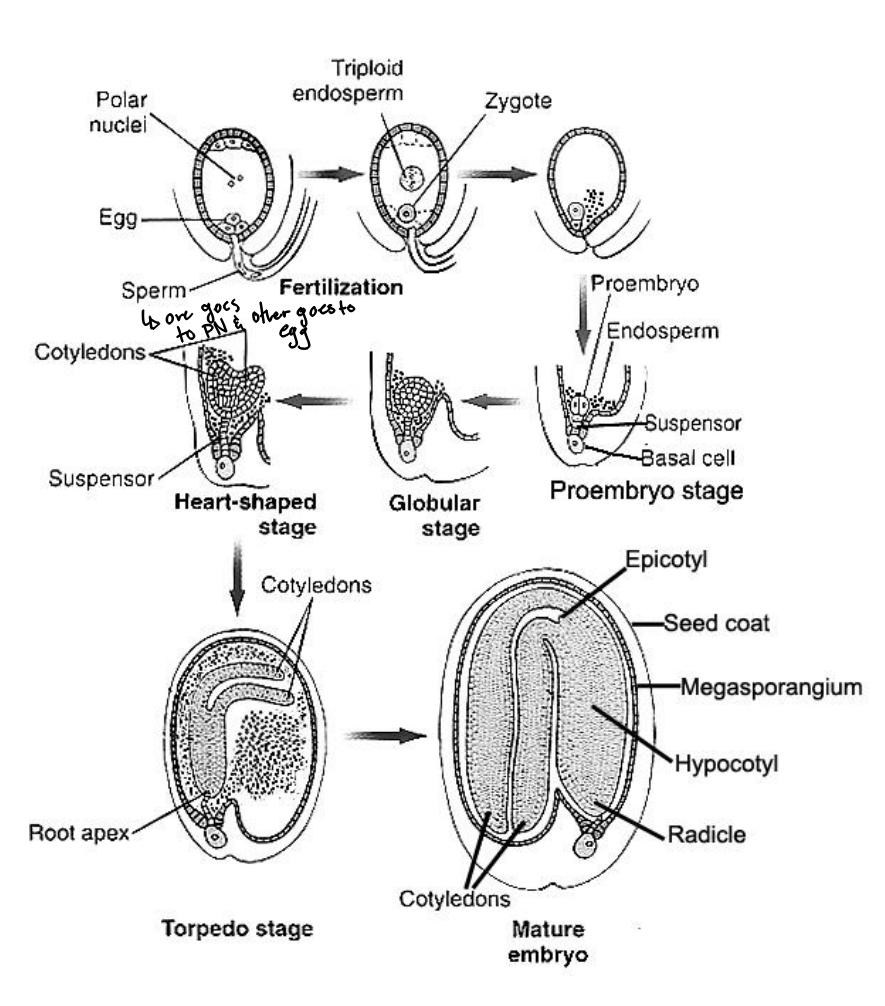
Pollination process - seed
where the ovule and the zygote are now termed seed after the triploid nucleus has divided
Seed development - seed
a mature ovule
includes a seed coat, a food supply, and an embryo
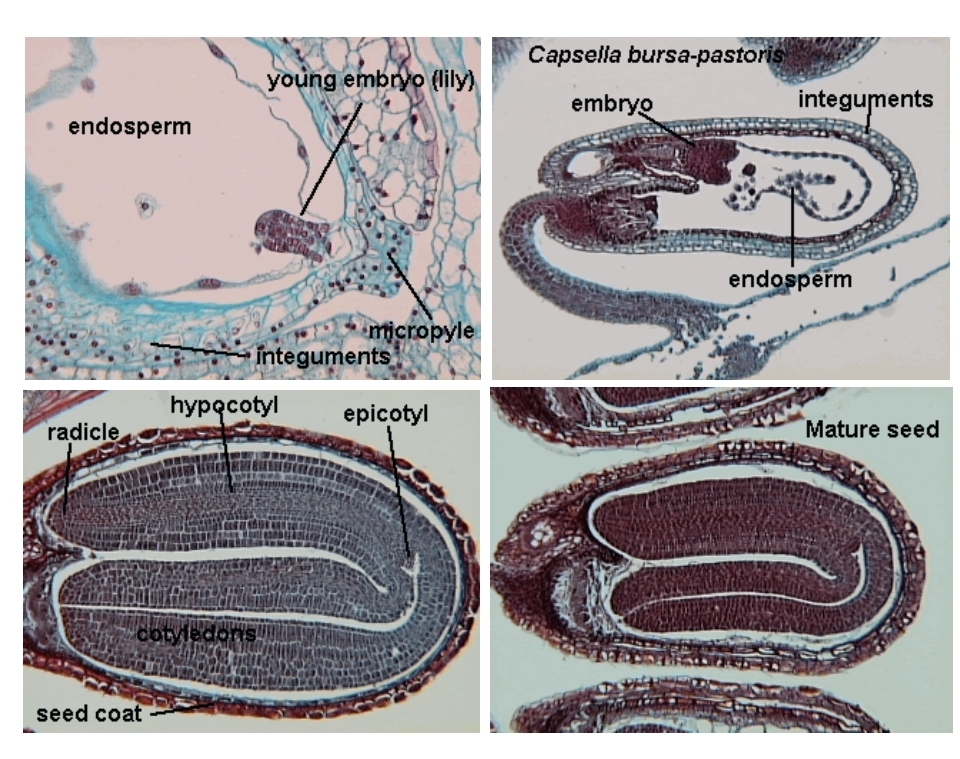
Seed development - Integument
the integument will be converted into a resistant seed coat
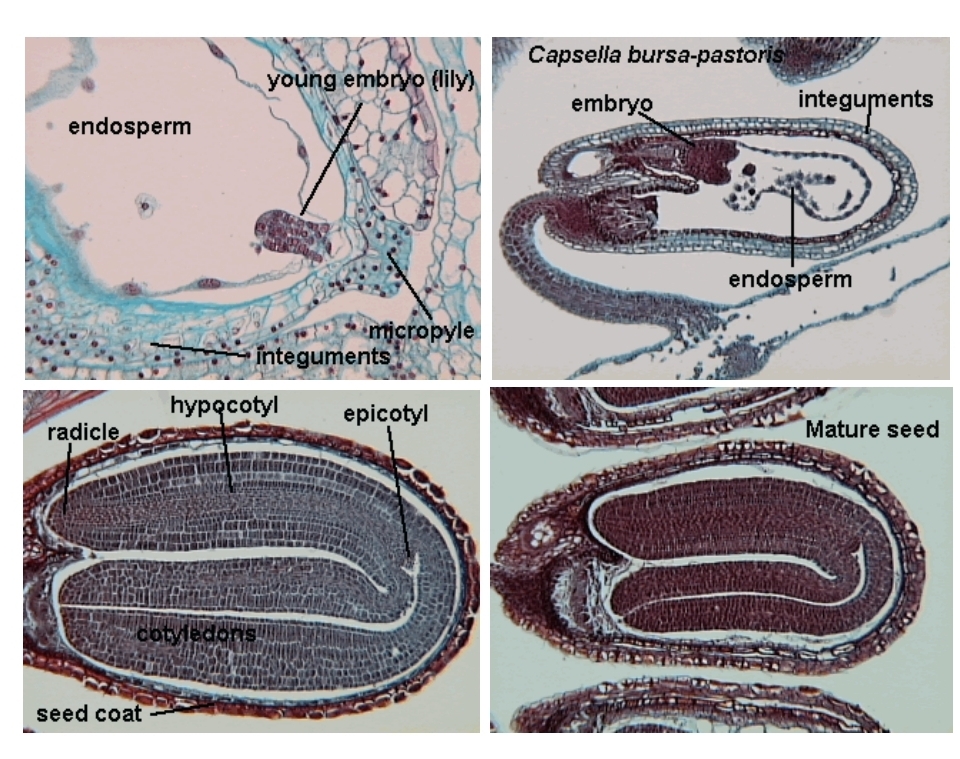
Seed development - embryo + endosperm
the embryo grows and absorbs the endosperm
it will store those nutrients in two “seed leaves" called cotyledons
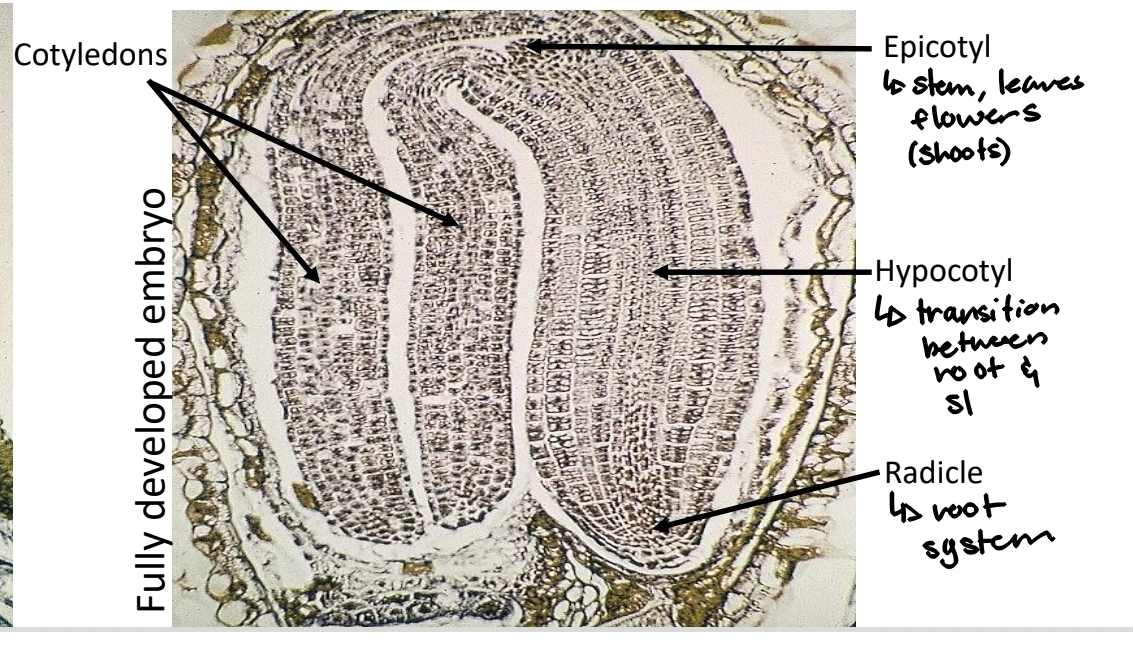
Seed development - radicle
the basal portion of the embryo
this turns into the root system
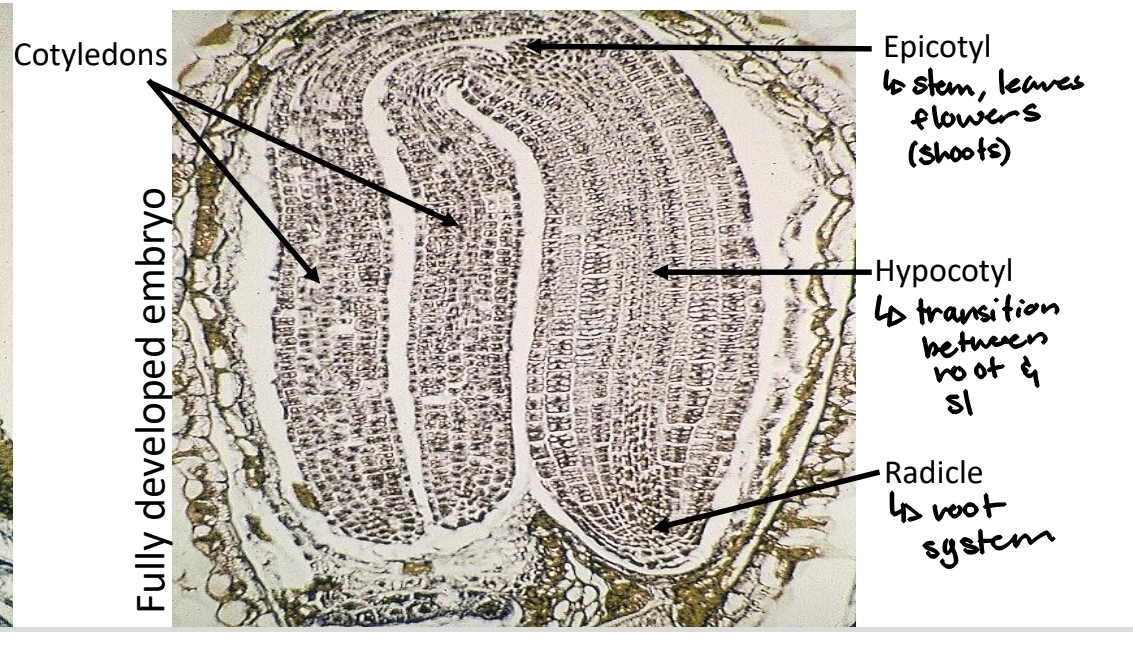
Seed development - hypocotyl
the middle portion of the embryo
this turns into the connection between the roots and the stem
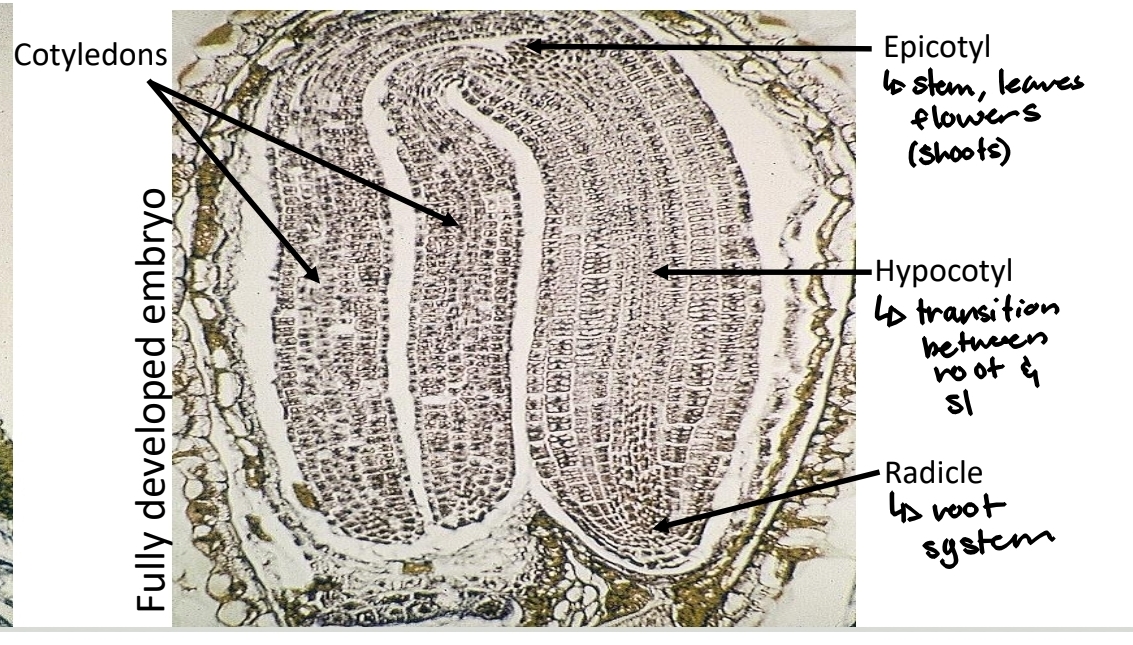
Seed development - epicotyl
the part attached to the cotyledons
this creates the stem, flowers, and the leaves
Fruit Development
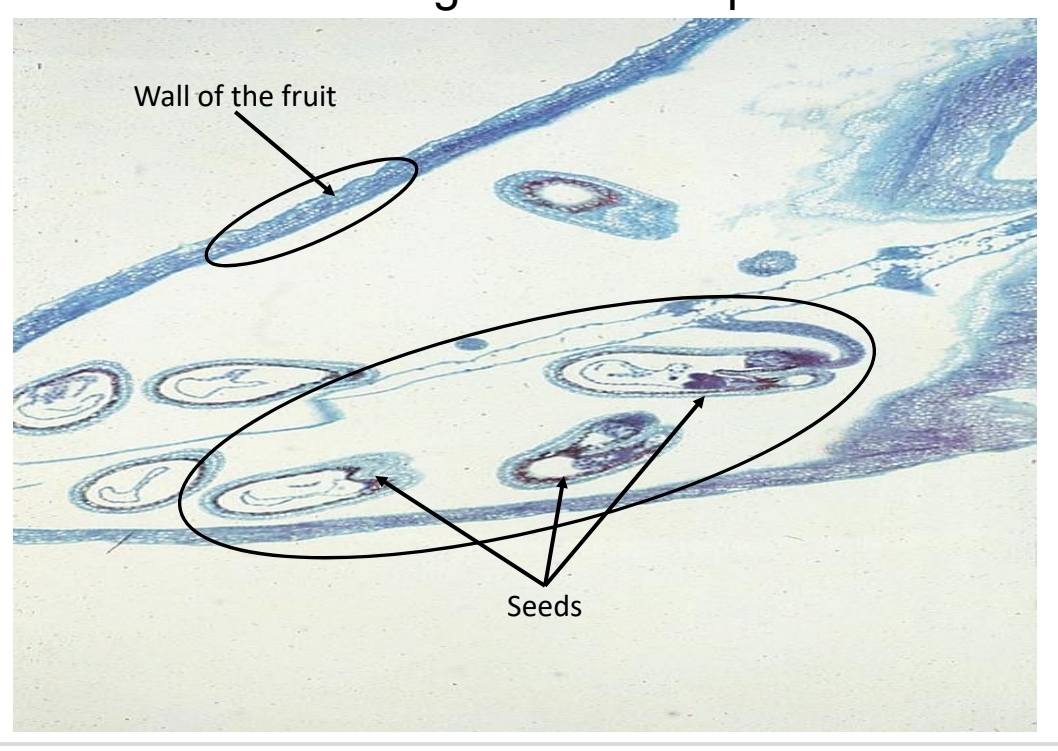
Fruits will begin to develop after pollination and usually develop from the ovary
but occasionally other parts of the flower are involved
Fruit Development - ovary
the cells of the ovary wall expand and the whole ovary enlarged to make room for the developing seeds
the size and differentiation of the cells depend of the type of fruit
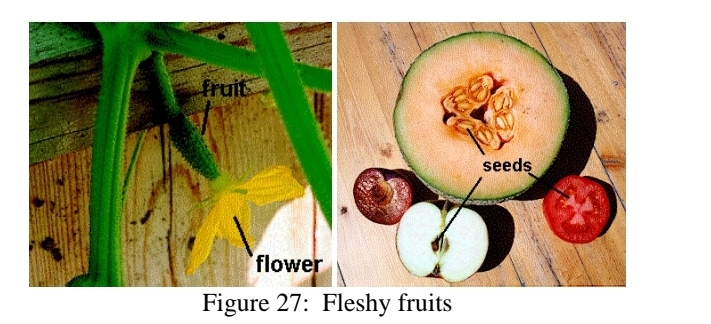
Fruit Development - large fleshy fruits
these develop water-resistant outer layer and secual inner layers of large water storage cells
these fruits’ seed dispersal are by the means of animals
aka by eating, and pooping it out (seeds are not digested)
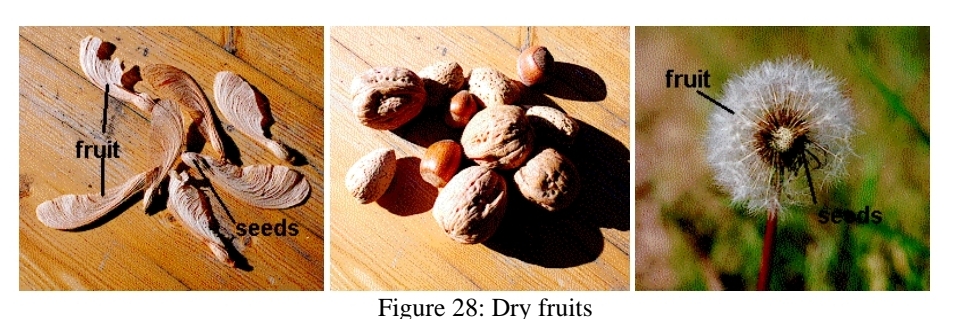
Fruit Development - dry fruits
these provide a covering that adhears tightly to the seed coat and will prevent drying out
there are different kinds of dispersal for dry fruits
e.g. dandelions’ fruit act like a kite or balloon that enhance wind dispersal
other plants use animals to carry seeds by having the fruits to have burrs that will cling to animal fur or human clothing
while some are designed to open violently to disperse their seeds
 Note
Note  Flashcards (125)