Information-Processing Theory
 Studied by 0 people
 Call Kai
 Learn
Learn Practice Test
 Spaced Repetition
 Match
Match Flashcards
 Knowt Play
1/12

There's no tags or description
Looks like no tags are added yet.
Name | Mastery | Learn | Test | Matching | Spaced | Call with Kai |
|---|
No analytics yet
Send a link to your students to track their progress
13 Terms
information-processing theory
a perspective that compares human thinking processes to computer analysis of data
- theory applied to cognitive development
--> hardware (of the mind): sensory store, short term store, long term store
--> software: used to move and manipulate information
what does the information-processing theory take for its metaphor of the mind?
1950's and 60's saw human thinking in terms of a computer metaphor
- computer revolution was in full swing - borrows heavily from computer architecture
- humans and computers are viewed as information-processing systems and input-output systems (mind body system processes external stimuli)
how does thinking (or information processing) take place according to the information processing theory?
thinking is information processing
- information is processed as it moves through the system
structure of the information-processing theory
diagram:
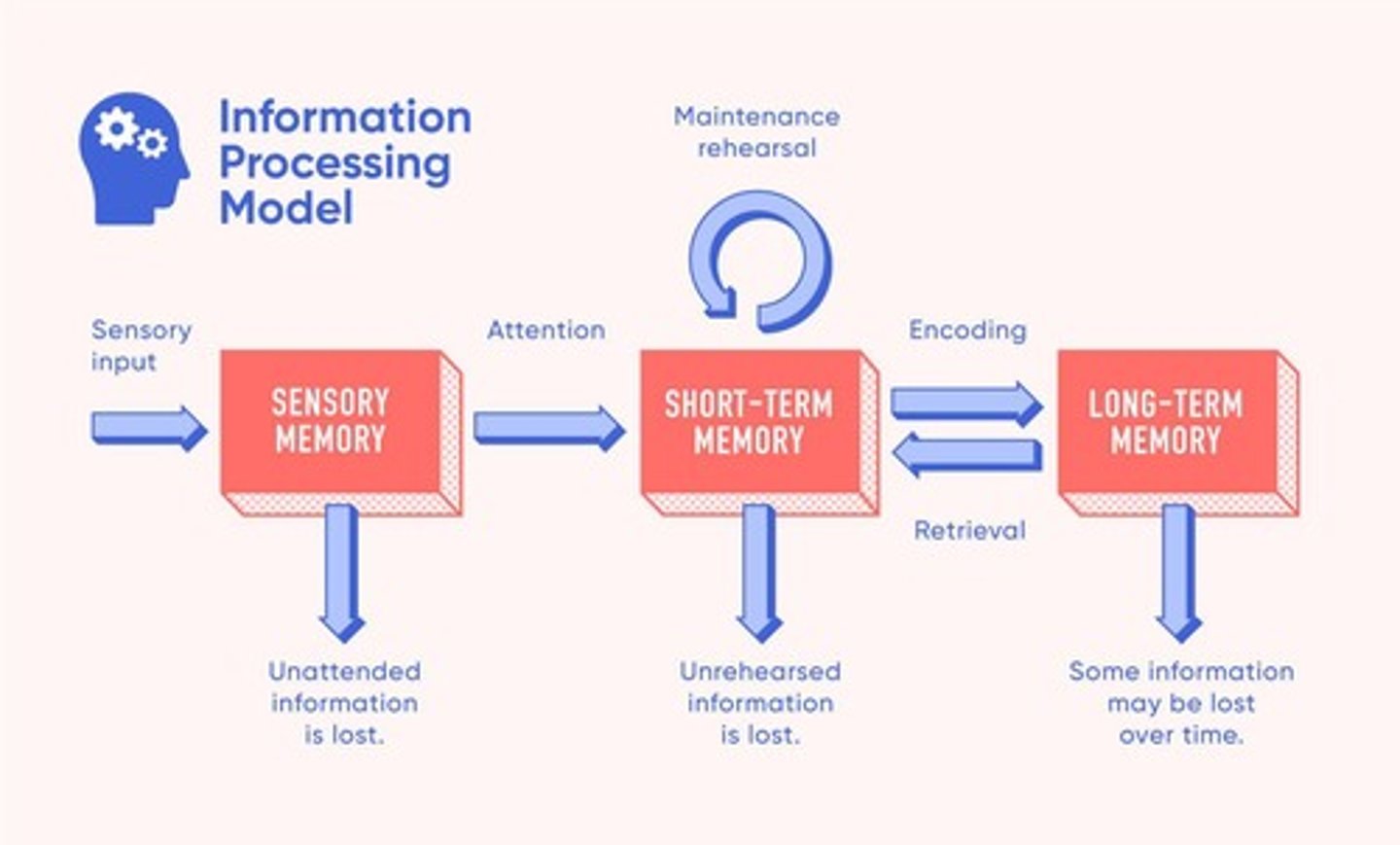
sensory store
the initial, momentary registration/storage of information, lasting only an instant
- briefly retains relatively large amounts of information for milliseconds
what mental process moves information from the sensory store to the short-term store?
attention
- filters incoming sensory information
- selects what you focus on
- allows selected information to enter short-term memory
- unattended information in the sensory store fades almost immediately
* sensory store → attention → short-term store
short-term store
where active thinking (processing of information) occurs
- combining information coming into the sensory memory with information stored in long term memory and transforming that information into new forms
- capacity: limit on the number of "chunks" it can operate at one time 5-9, 7+ or -2
- duration: 15-30 seconds; however, rehearsal can maintain the information for a longer time
--> hold information just long enough to work with it ("working memory")
what mental process moves information from the short-term store to the long-term store?
rehearsal
long-term store
if we apply some cognitive operation to the information in short-term store, the information is transferred to long-term store
- capacity: seeming limitless- presumably can retain vast amount of information
- duration: limitless- presumably retained indefinitely
what does software of the mind refer to?
used to actively manipulate information in sensory, working and long-term memory
- examples: attention, rehearsal, encoding, elaborating, think, retrieval
automatic processes
requires little to no mental resources
effortful processes
require the use of mental resources
how does the information processing theory explain cognitive development?
qualitative changes in either the system's:
- hardware (structure- capacity of memory systems)
- software processes (ability to use processes or strategies) - more processes become automatic with age/experience
- or in both
 Note
Note  Flashcards (56)