Arthropods
 Studied by 0 people
 Call with Kai
 Learn
Learn Practice Test
 Spaced Repetition
 Match
Match Flashcards
 Knowt Play
1/34

There's no tags or description
Looks like no tags are added yet.
Name | Mastery | Learn | Test | Matching | Spaced | Call with Kai |
|---|
No study sessions yet.
35 Terms
Ametabolous development
all life cycle stages look the same except size
Hematbolous development
life cycle stages look different
holometabolous development
the stages are like actually different like butterflies (most insects ~90%)
P. humanus humanus (sucking Lice)
body louse
P. humanus capitis
head house (sucking lice)
1. 3 nymph stages
2. cements nits (eggs) to fibers
3. <10 adults/host
4. common in crowded areas and institutionalized
P. humanus humanus life cycle
1. nits cemented to hairs
2. common in back of neck, behind ears
NOT eyebrows or eyelashes
P. humanus capitis life cycle
Left: head
Right: body
Identify
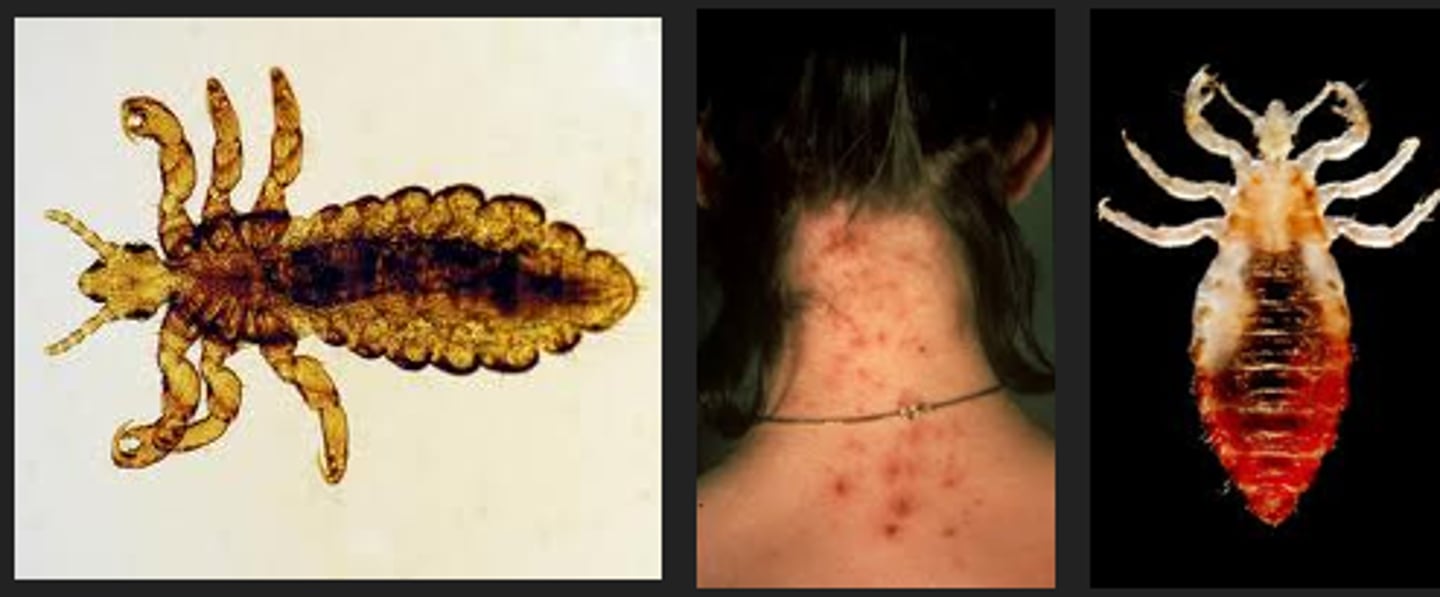
non-serious
no disease transmission
itching and scratching > red papules
VAGABONDS disease = skin thickening form years of lice infection
Louse pathology
Phthirus pubis
crab louse
1. Lice Typhus DEADLY = Rickettsia prowazeki
2. Trench Fever = Bartonella quintana
3. Relapsing Fever = Borrelia recurrentis
Name 3 diseases transmitted by louse vectors
Cimex lectularius
Bed bugs (of temperate regions)
1. bite sores
2. iron/hgb deficiency
3. hard to get rid of
Cimex lectularius pathology
Tunga penetrans - requires surgical removal and can contain wolbachia
chiggers
bubonic plaggue
what disease are fleas known to vector
Dermacentor andersoni
Rocky mountain wood tick
Dermacentor variabilis
American dog tick
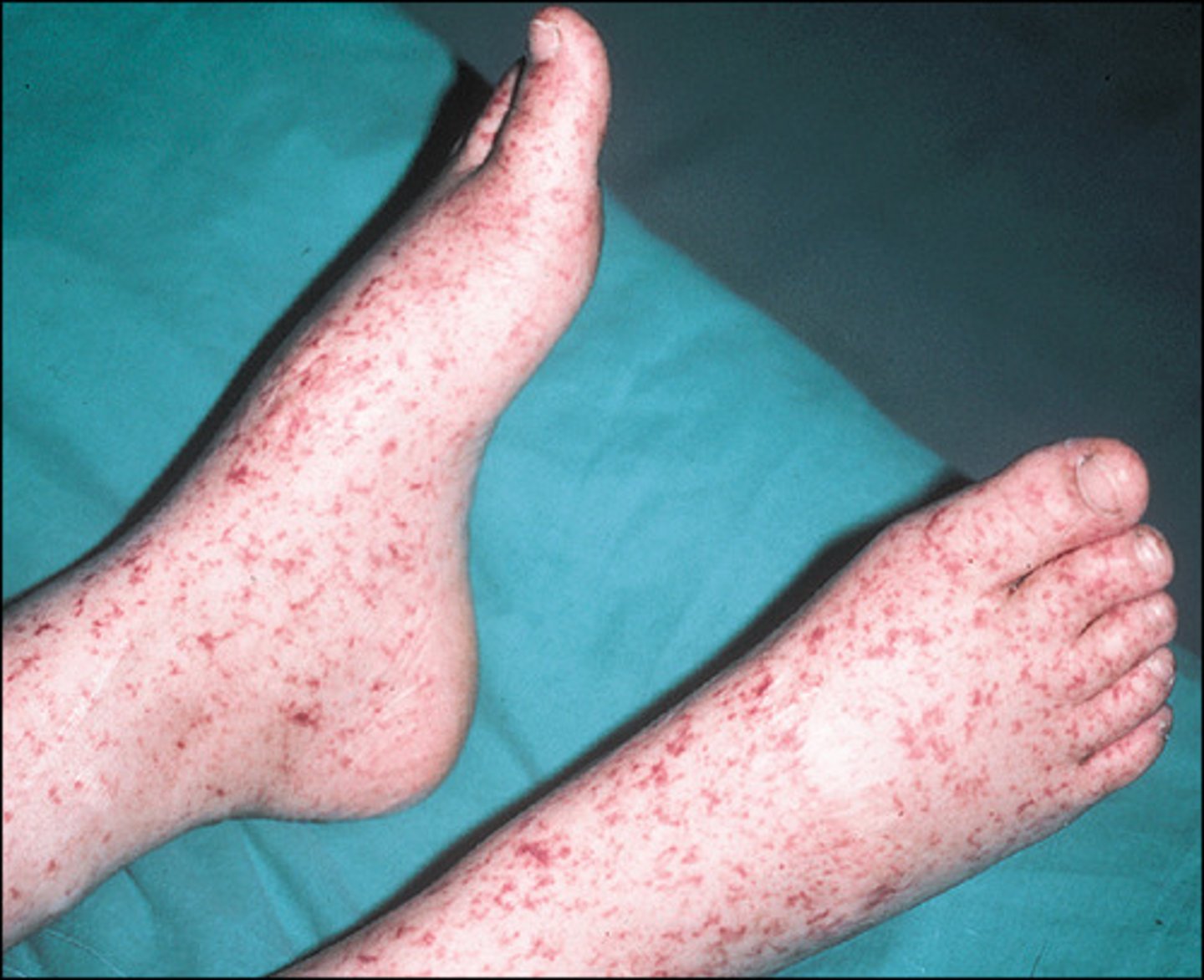
Rocky mountain spotted fever
what disease is caused by Dermacantor andersoni. Is very seriois requiring hospitaliziation. Most common along northeasr coast
Dermacentor albipictus
Winter tick - feeds only in winter; moose tick with 20,000ticks/host
Amblyomma americanum; US and mexico (tropical) - can cause red meat allergy
Lone star tick; name epidemiology
Rhipicephalus sanguineus
brown dog tick
Rhipicephalus appendiculatus
Vector for East Coast Fever
Babesia bigemina
Texas cattle fever
Sarcoptes scabiei
sarcoptic mange
1. egg
2. larva (6 legs)
3. nymph (8 legs)
4. adult
life cycle stages of tick
lxodes scapularis
primary vector for Lyme disease
deer tick, can be fatal
vectors human granulocytic erlichiosis HGE
Borrelia burgdorferi
Lyme disease
Otobius megnini
spinose ear tick - the disgusting orange one that infects cattle
Argas persicus
fowl tick (birds and bats); can kill birds; painful and toxic human bite
Demodex follicularum; Demodex brevis
mites hair folicles; sebaceous glands
Demodex canis
dog follicle mite with red mange; can be fatal ; hard to control or cure
Orienta tsutsugamushi
vector for scrub typhus
Orienta tsutsugamushi pathology
Otodectes cyanotis
ear mites of dogs, cats, ferrets, rabbits
Dermatophagoides
dust mites
 Note
Note  Flashcards (92)