Precision Exam - Graphic Arts 🖌️🎨
 Call Kai
 Learn
Learn Practice Test
 Spaced Repetition
 Match
Match Flashcards
 Knowt Play
1/53

Earn XP
Description and Tags
Includes typography, color theory, and printing/digital colors. (NO Measurement Practice w/ Rulers)
Name | Mastery | Learn | Test | Matching | Spaced | Call with Kai |
|---|
No analytics yet
Send a link to your students to track their progress
54 Terms
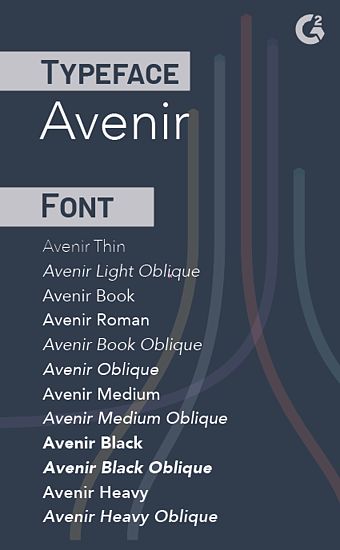
Typeface
A family of characters (letters, numbers, symbols) that share a consistent design style.
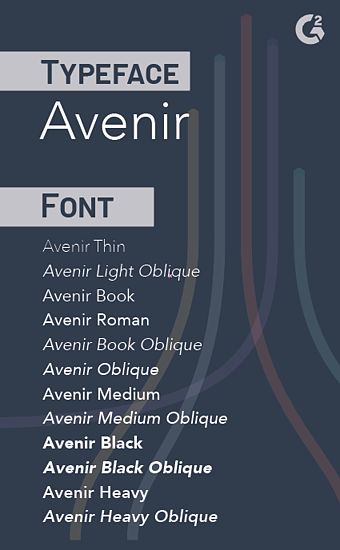
Font
A specific style, weight, and size of a typeface. Fonts are variations within a typeface family.
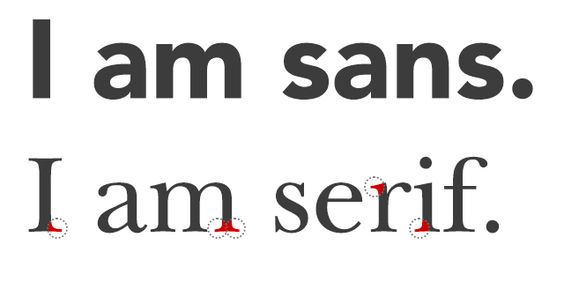
Serif
The small decorative strokes or lines at the ends of characters in a typeface.
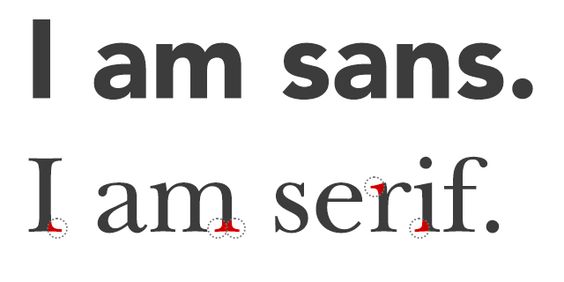
Sans-Serif
A typeface without serifs, known for its clean and modern appearance.
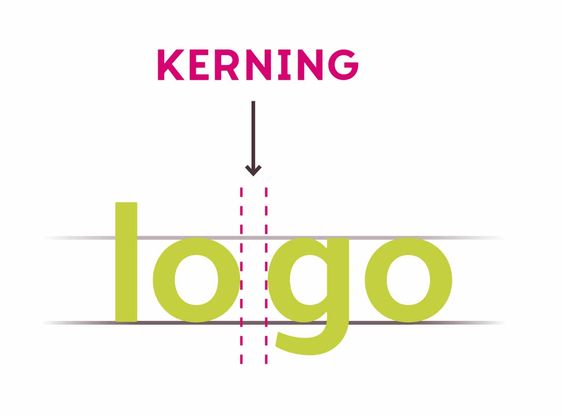
Kerning
Adjusting the space between individual characters to improve visual harmony.
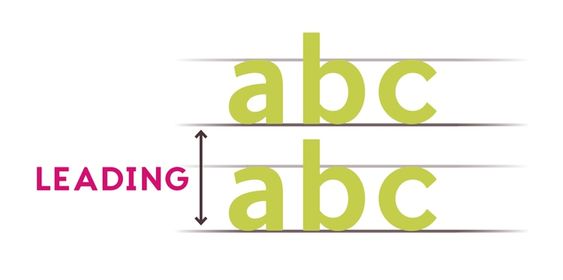
Leading
The vertical space between lines of text, measured from baseline to baseline. Also known as line spacing.
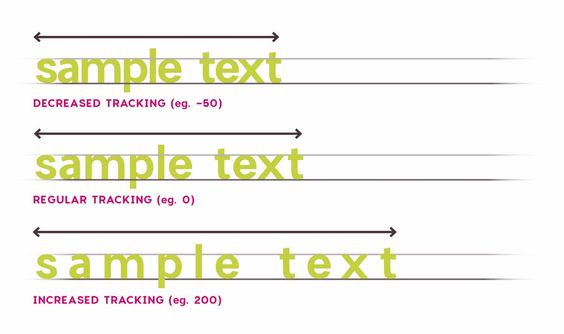
Tracking
Adjusting the overall (equal) spacing between characters in a block of text.
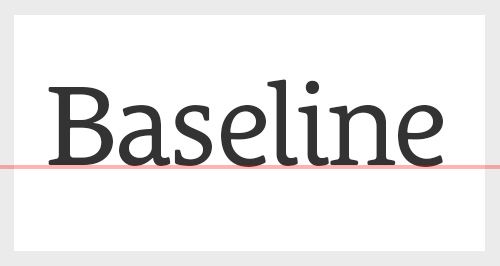
Baseline
An invisible line on which characters appear to rest.
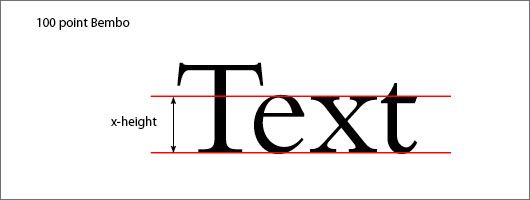
X-Height
The height of lowercase letters, typically measured from the baseline to the top of lowercase x.
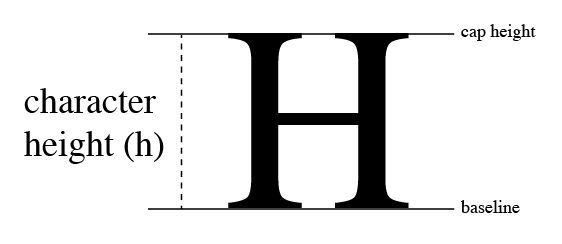
Cap Height
The height of uppercase letters, typically measured from the baseline to the top of uppercase letters like H or T.
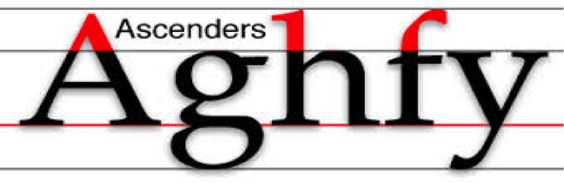
Ascender
The part of a lowercase letter that extends above the x-height, like the top of a lowercase d or h.
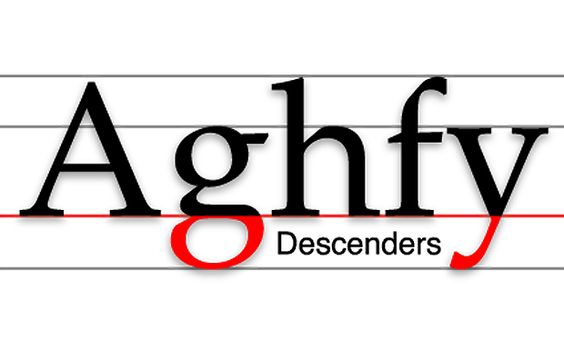
Descender
The part of a lowercase letter that extends below the baseline, like the tail of a lowercase p or q.
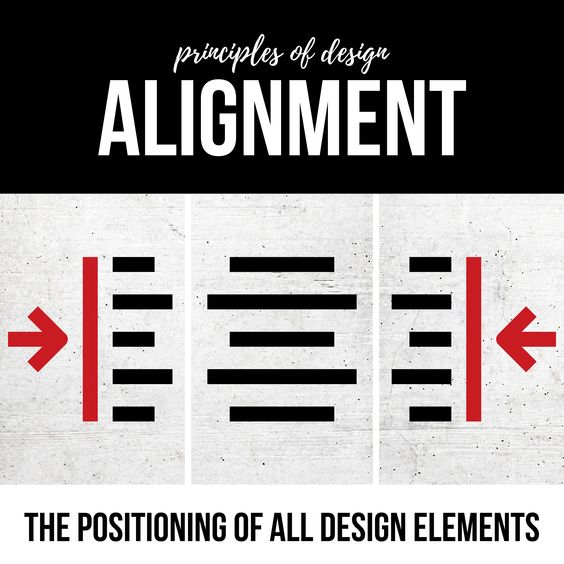
Alignment
The horizontal positioning of text, such as left-aligned, centered, right-aligned, or justified.
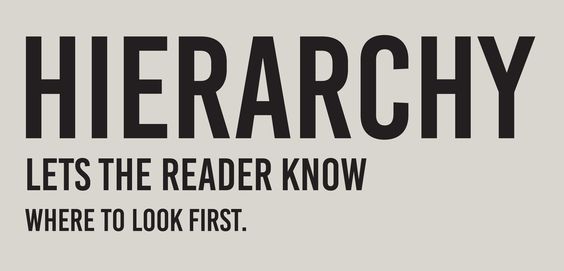
Hierarchy
The arrangement of text based on importance, often achieved by varying font, size, weight, and style.
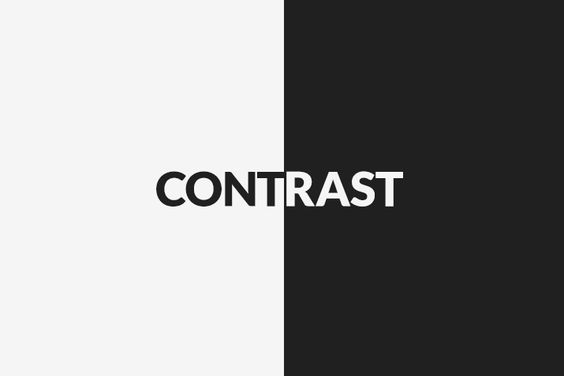
Contrast
The variation in attributes like size, weight, and style to create visual interest and emphasis.
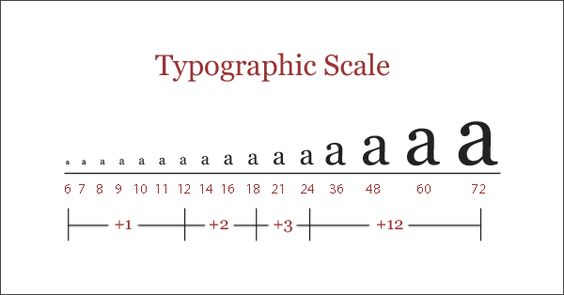
Type Scale
A system of choosing font sizes that create harmonious proportions among various elements.
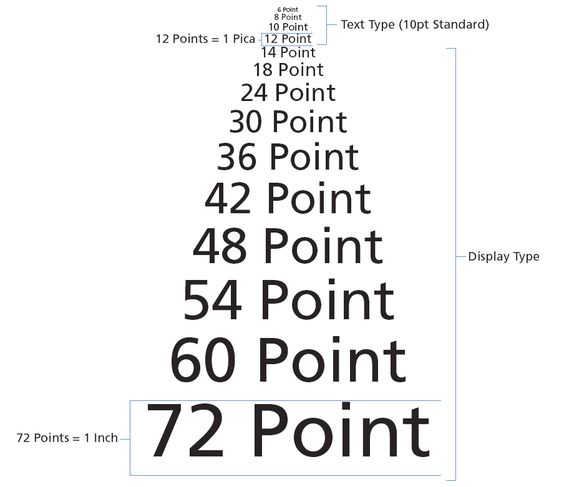
Point (pt)
A unit of measurement commonly used for font size. 1 point is equal to 1/72 of an inch.
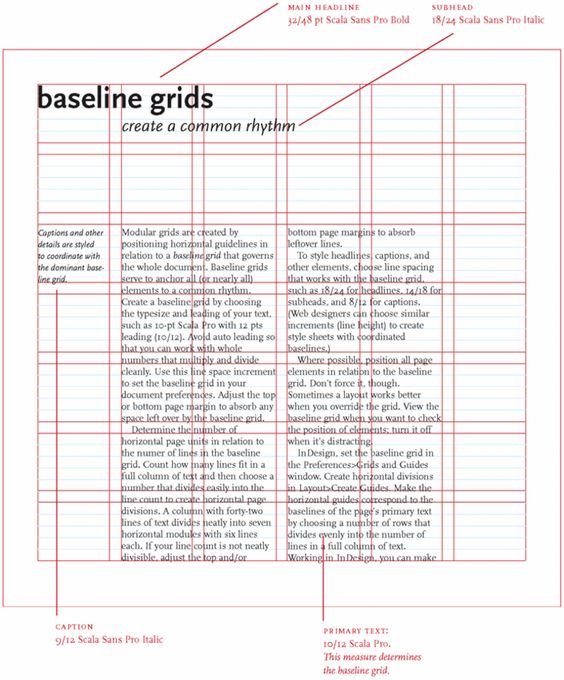
Baseline Grid
A series of horizontal lines that guide the placement of type and other elements in a design.
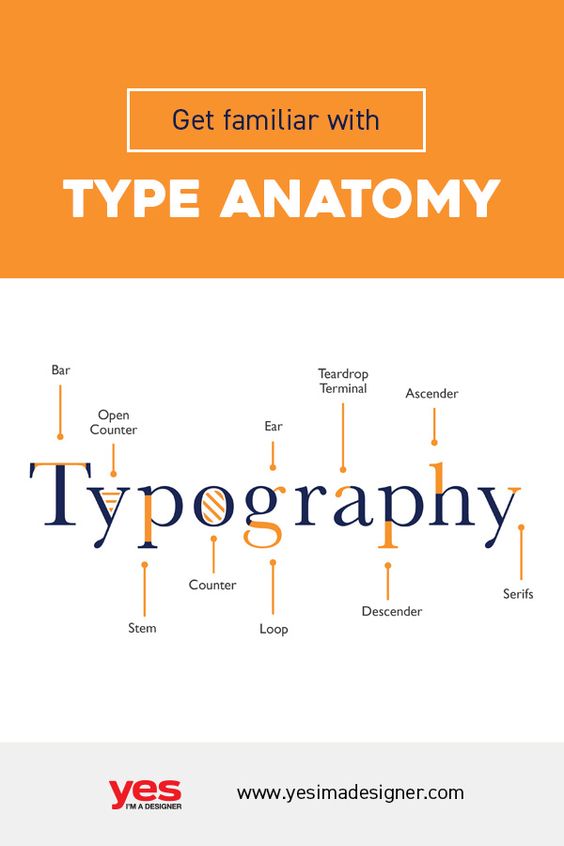
Typography
The art and technique of arranging type to make written language readable and visually appealing.
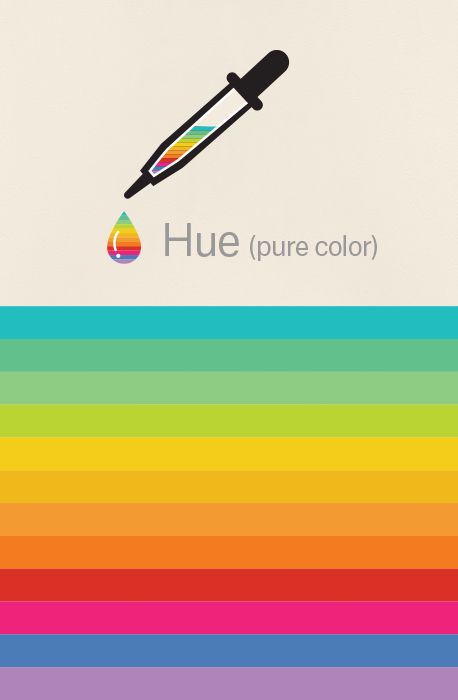
Hue
The pure, distinct color of an object, often referred to by its name (e.g., red, blue, green).
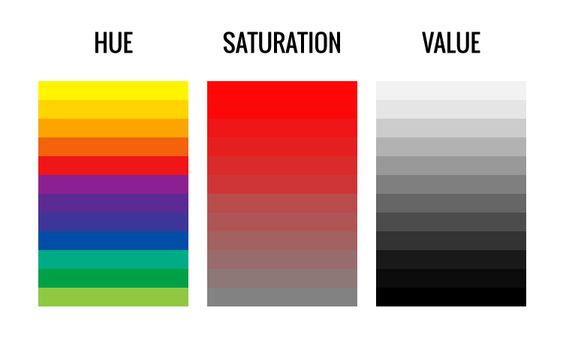
Saturation
Also known as intensity or chroma, it refers to the purity of vividness of a color. High ________ colors appear vibrant, while de_______ colors are muted.
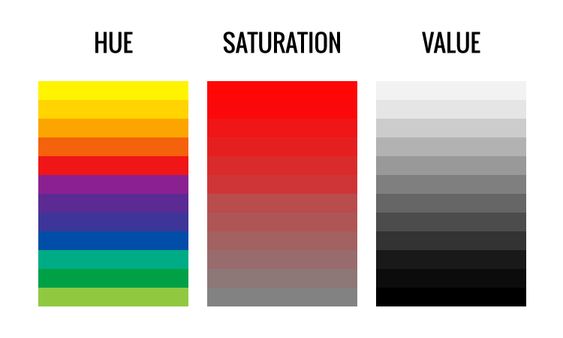
Value
The lightness or darkness of a color. Colors can range from light (high value) to dark (low value).
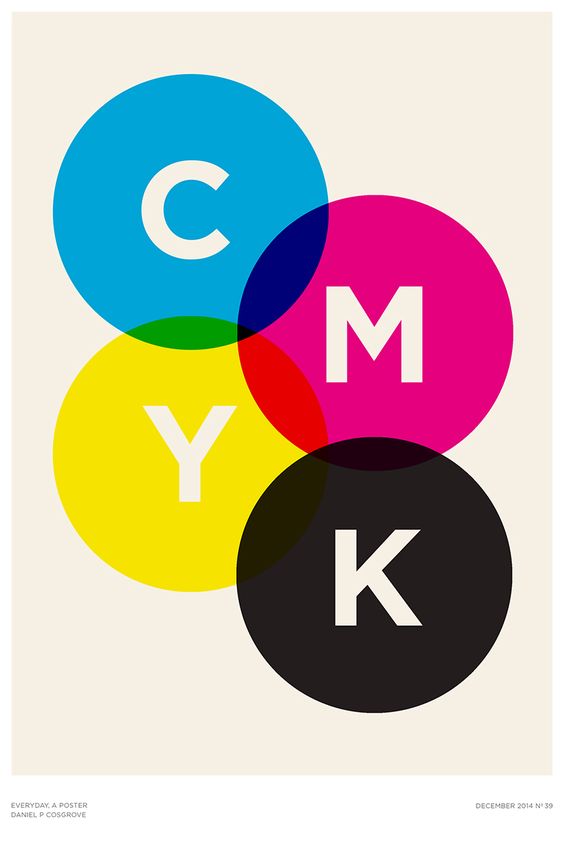
CMYK
Stands for cyan, magenta, yellow, and black (key). Used for printing purposes.
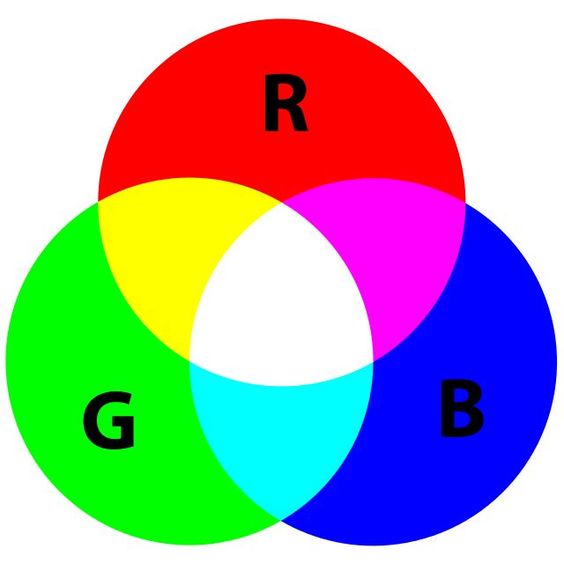
RGB
Stands for red, green, blue. Used for digital purposes.
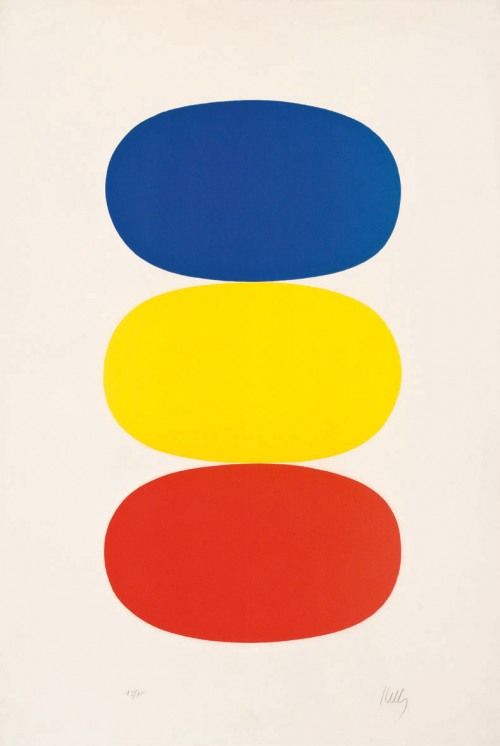
Primary Colors
Red, yellow, blue.
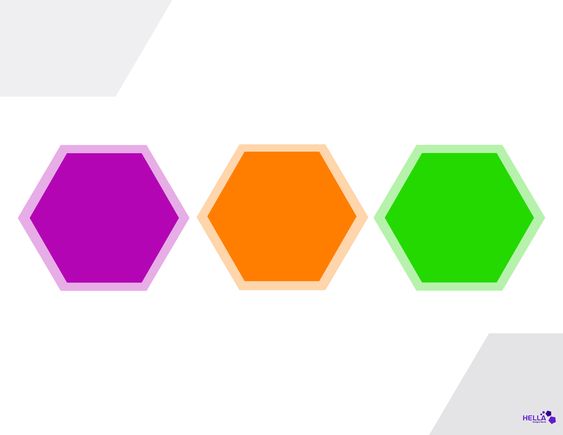
Secondary Colors
Created by mixing two primary colors: green (blue + yellow), orange (red + yellow), and purple (blue + red).
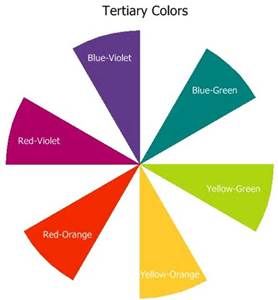
Tertiary Colors
Created by mixing a primary color with a neighboring secondary color: red-orange, blue-green, and red-purple.
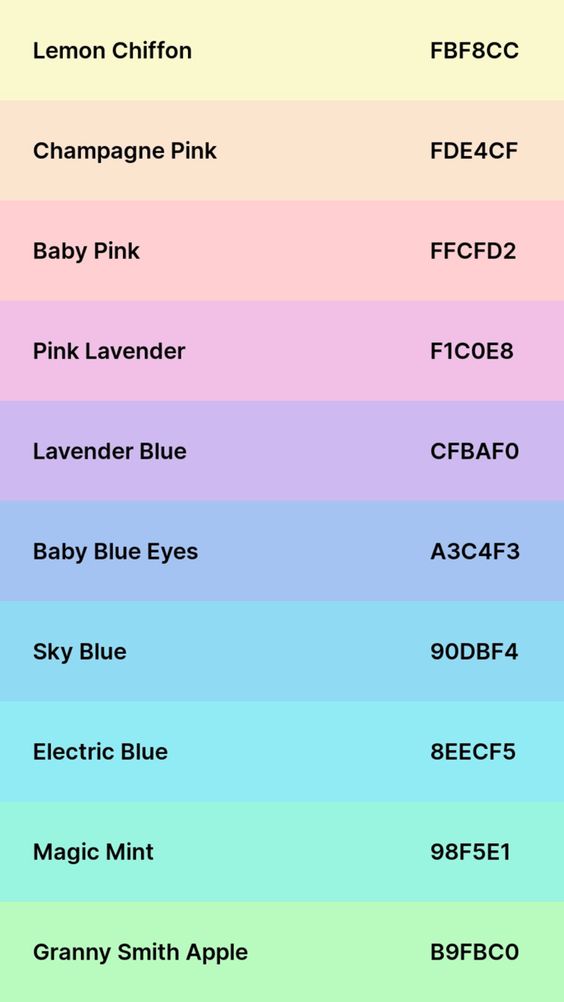
Hexadecimal (Hex) Colors
Colors are often represented using hexadecimal codes, which are a combination of six numbers and/or letters: #B93016, #FF0000, etc.
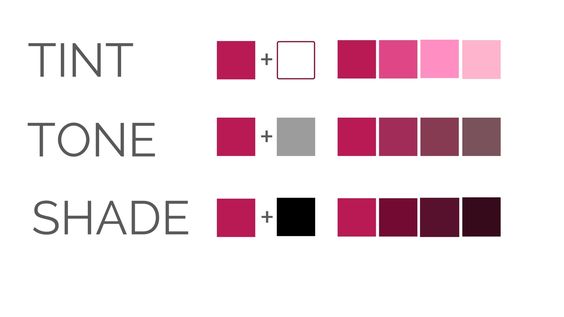
Tint
High value: hue + white.
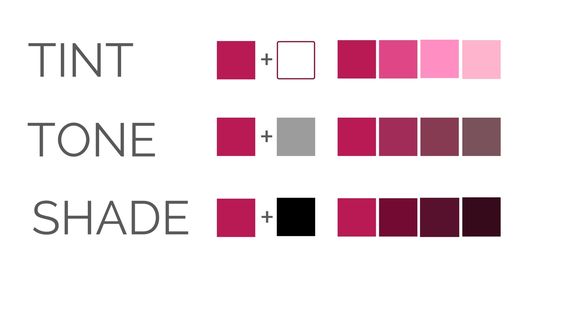
Tone
Middle value: hue + gray.
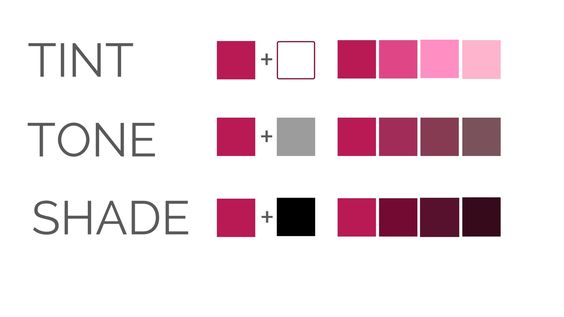
Shade
Low value: hue + black.
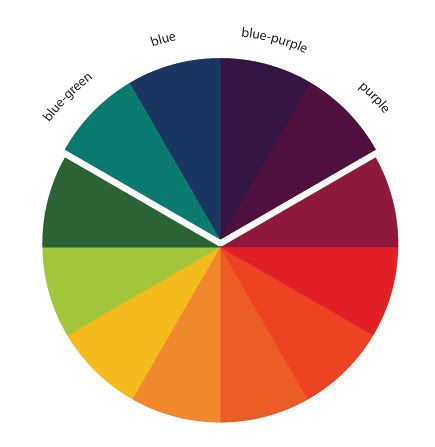
Analogous Colors
Colors that are adjacent (or next to) each other on the color wheel.
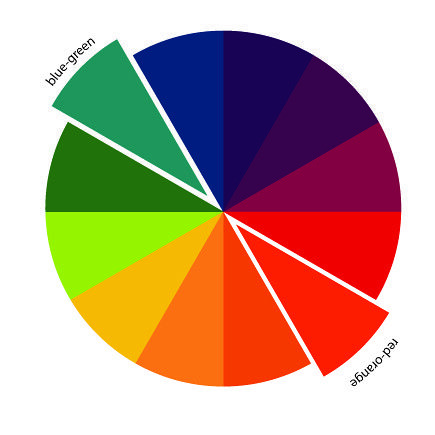
Complementary Colors
Select colors that are opposite of each other on the color wheel.
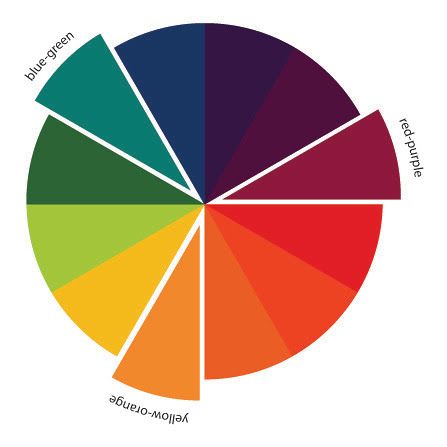
Triadic Colors
Colors that are evenly spaced around the color wheel, visually creates a triangle on the color wheel.
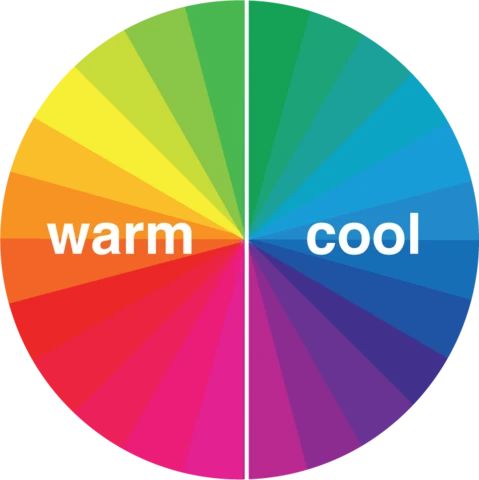
Warm Colors
Reds, oranges, and yellows.
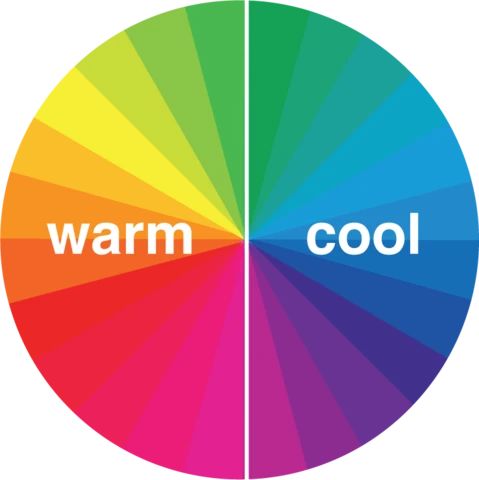
Cool Colors
Greens, blues, and purples.
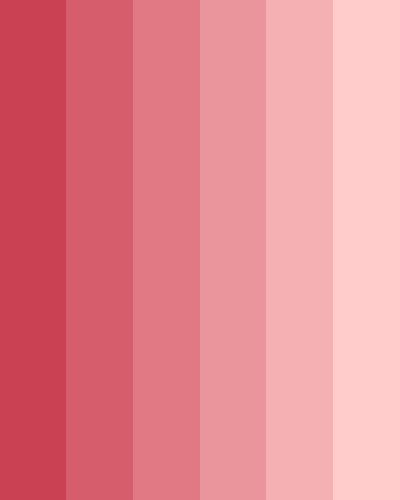
Monochromatic Colors
Color scheme that uses variations of a single hue, including tints, shades, and tones.
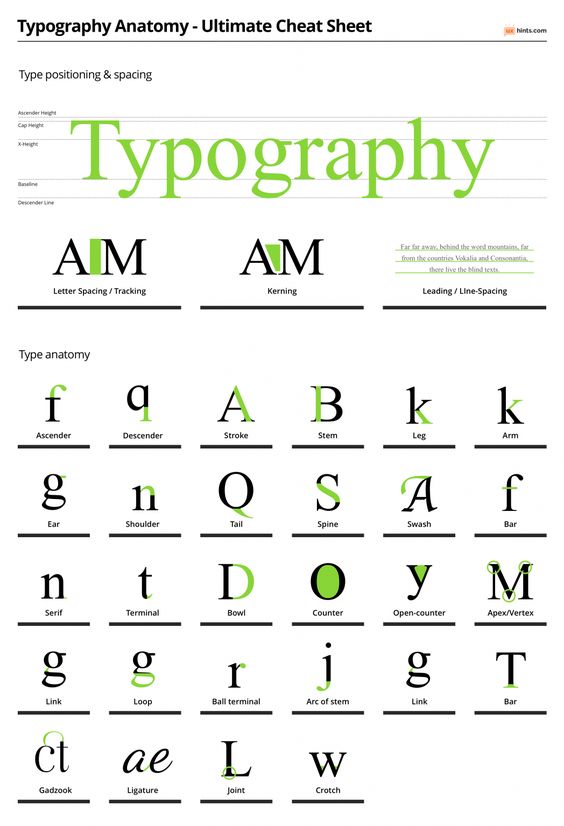
Arm/Leg
An upper or lowercase stroke that is attached on one end and free on the other.
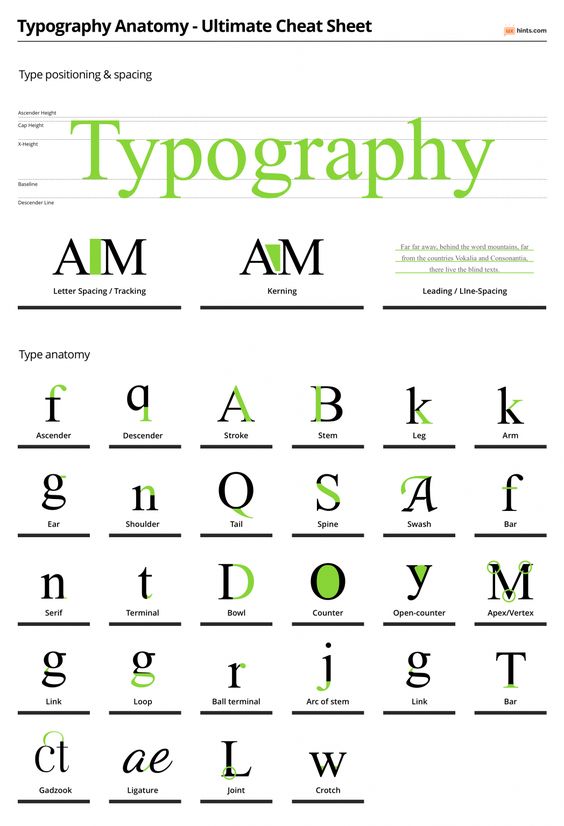
Bar
Horizontal stroke in characters such as A, H, R, e, and f.
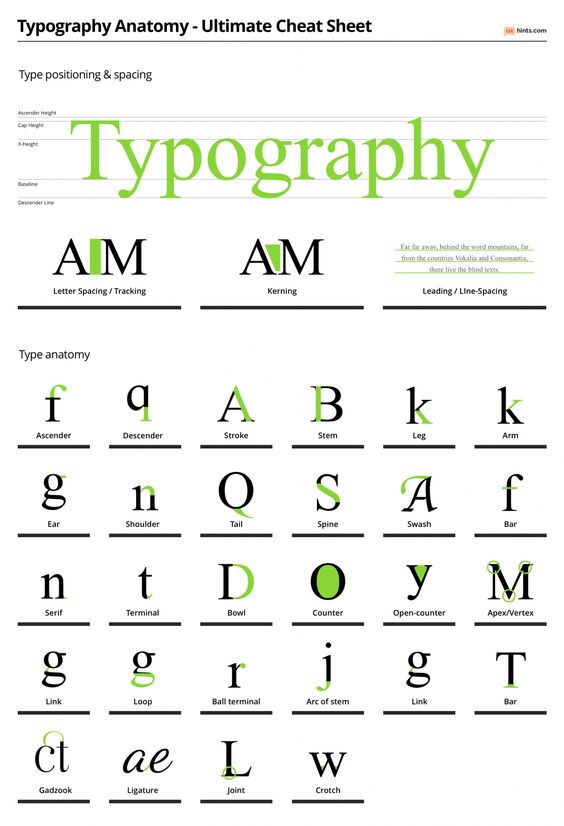
Bowl
A curved stroke which creates an enclosed space within a character (the space is then called a counter).
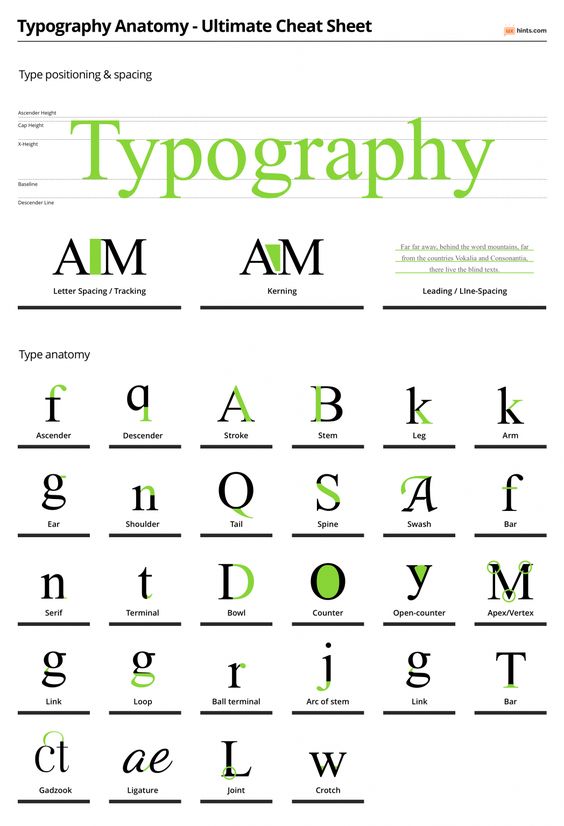
Counter
The partially or fully enclosed space within a character.
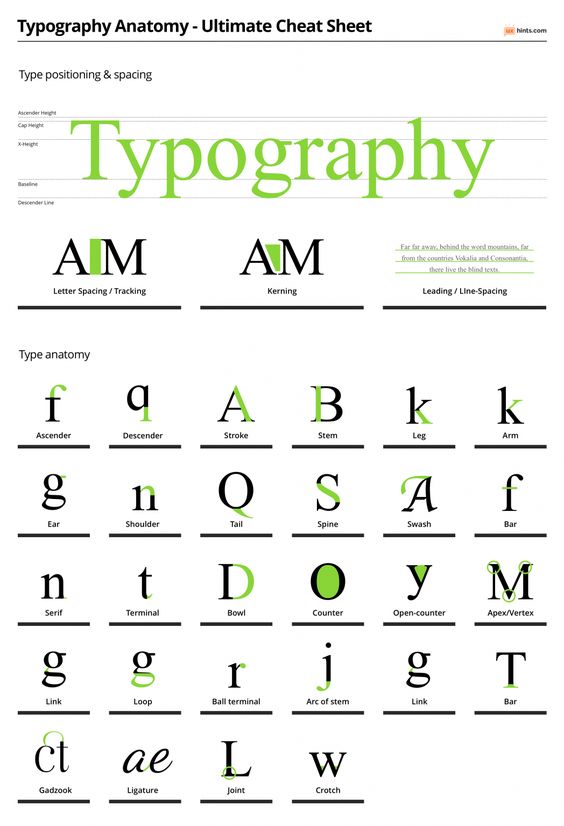
Ear
The small stroke that projects from the top of a lowercase g.
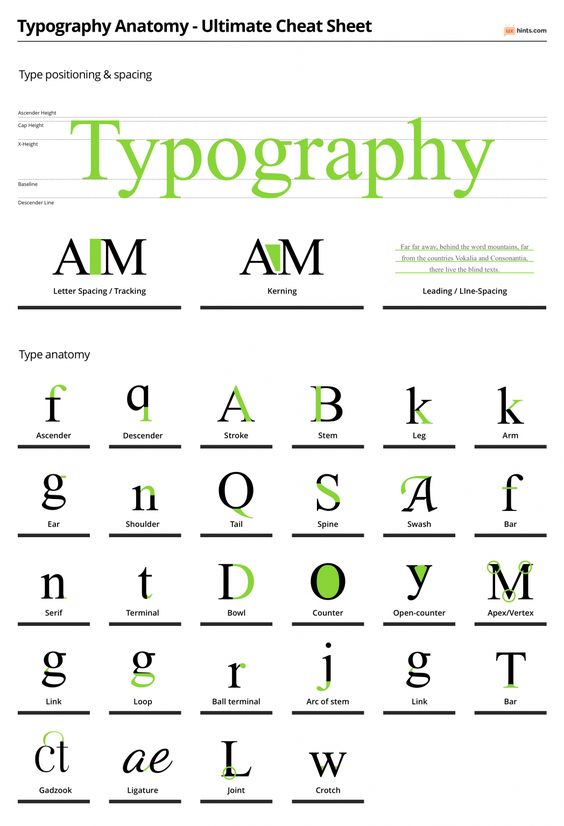
Link
The stroke that connects the top and bottom part (bowl and loop) of a two-story lowercase g.
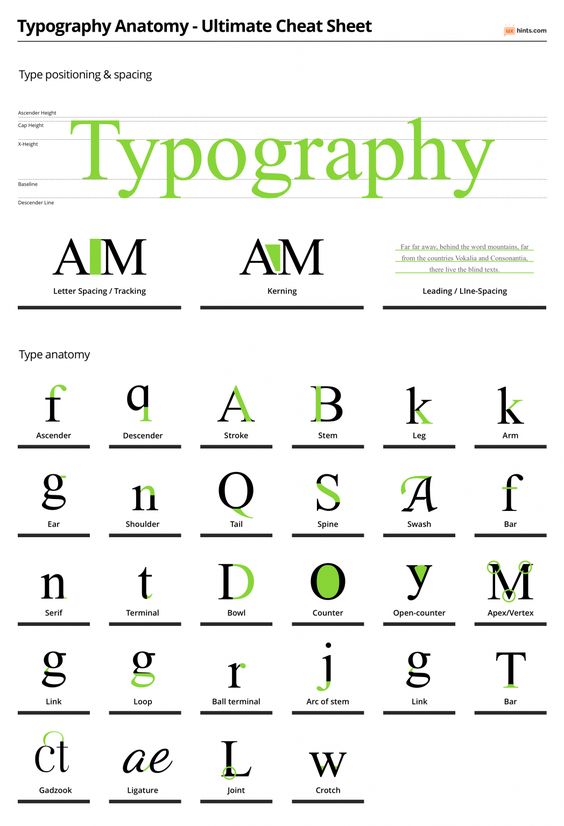
Loop
The lower portion of the lowercase g.
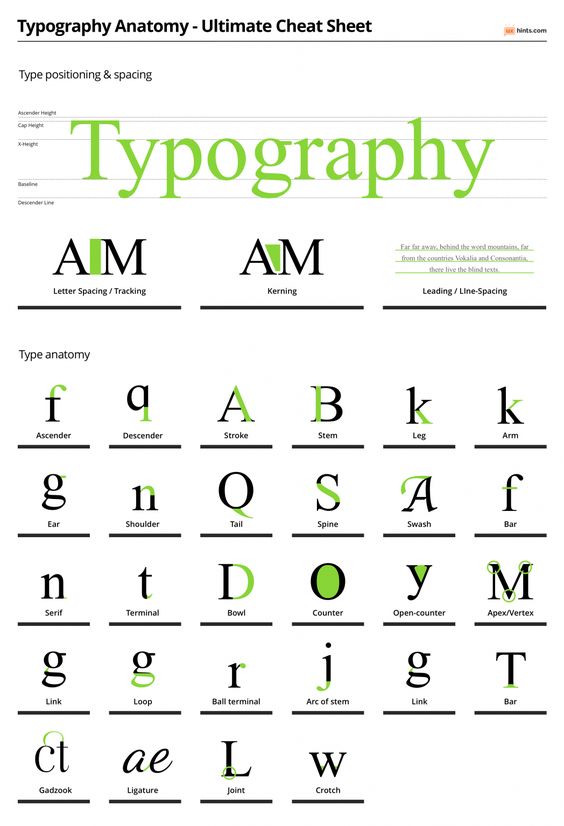
Shoulder
The curved stroke of the h, m, and n.
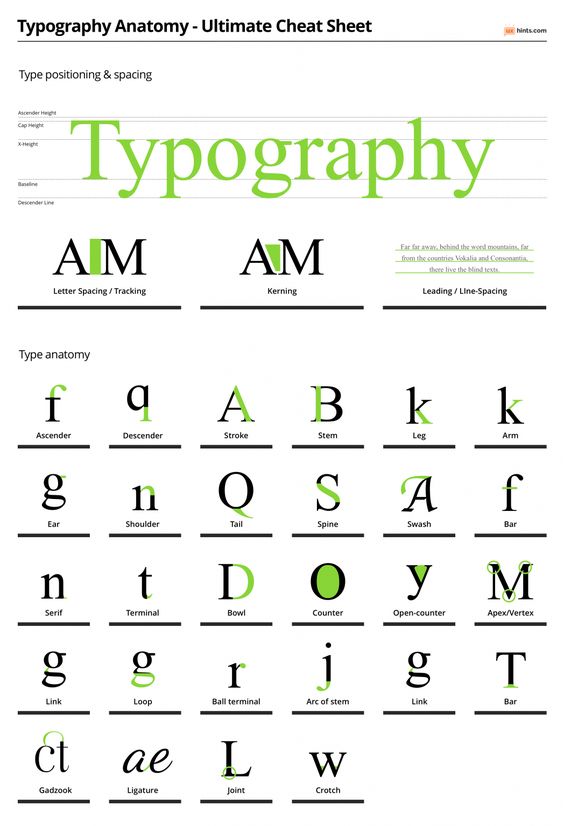
Spine
The main curved stroke of the S.
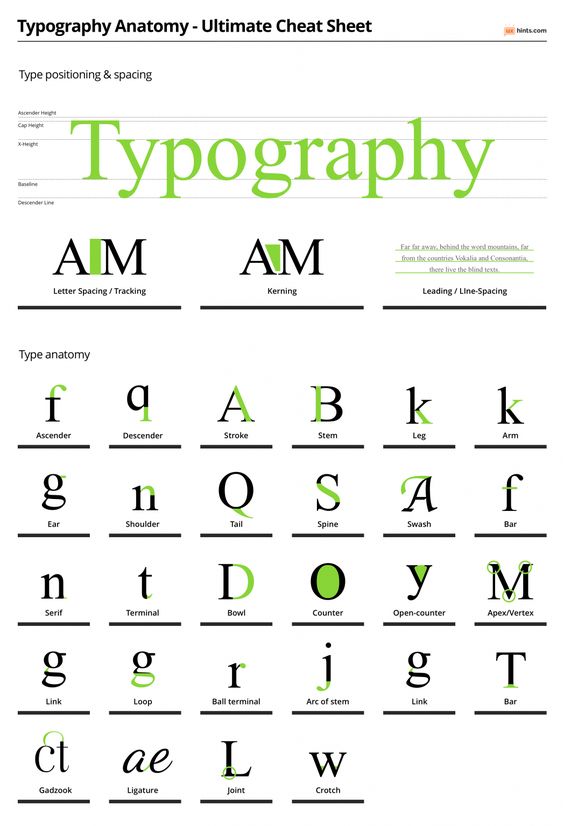
Stem
A straight vertical stroke.
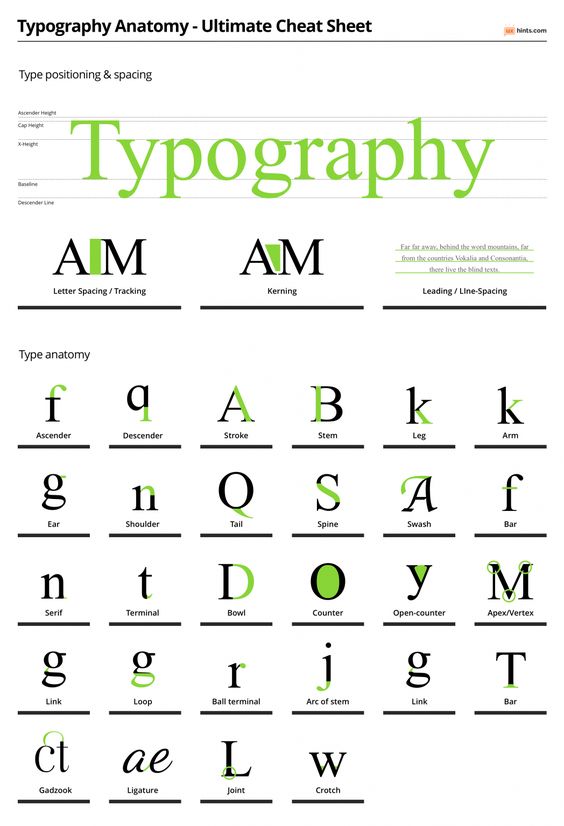
Stroke
A straight or curved line.
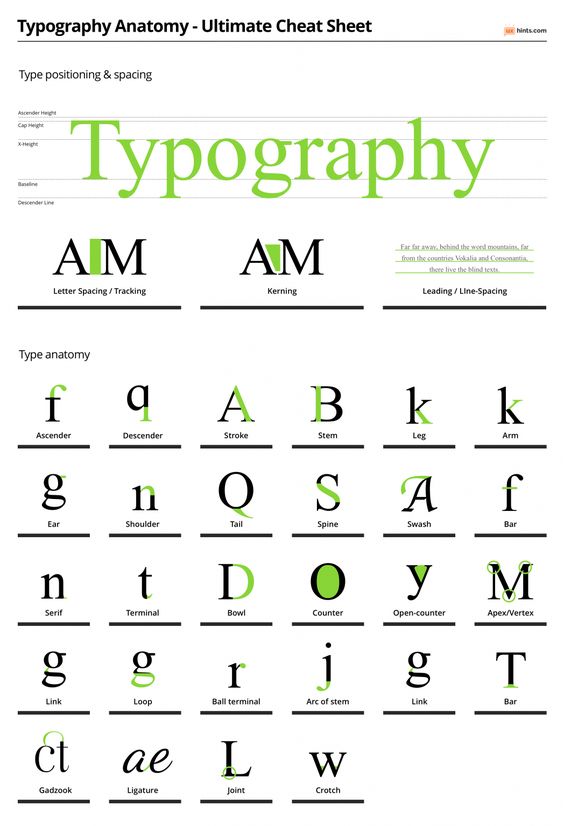
Swash
A fancy flourish replacing a terminal or serif.
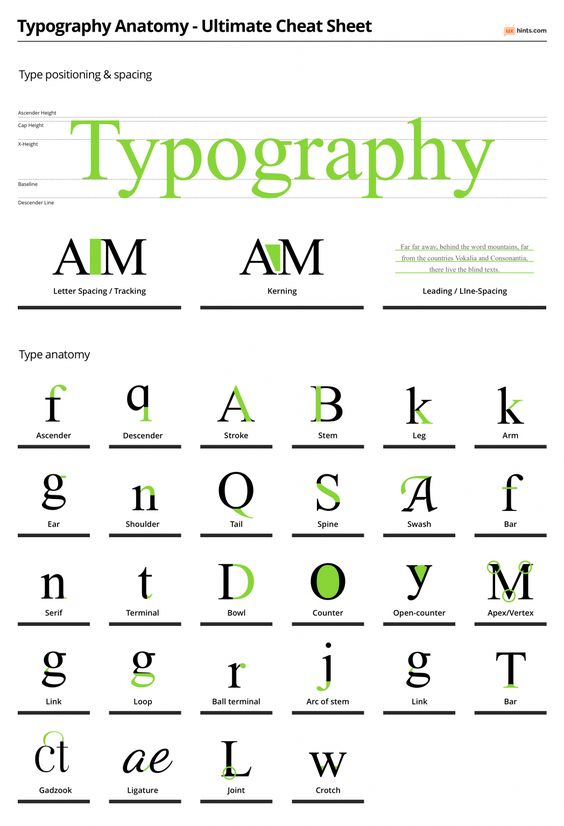
Tail
The descender of a Q or short diagonal stroke of an R.
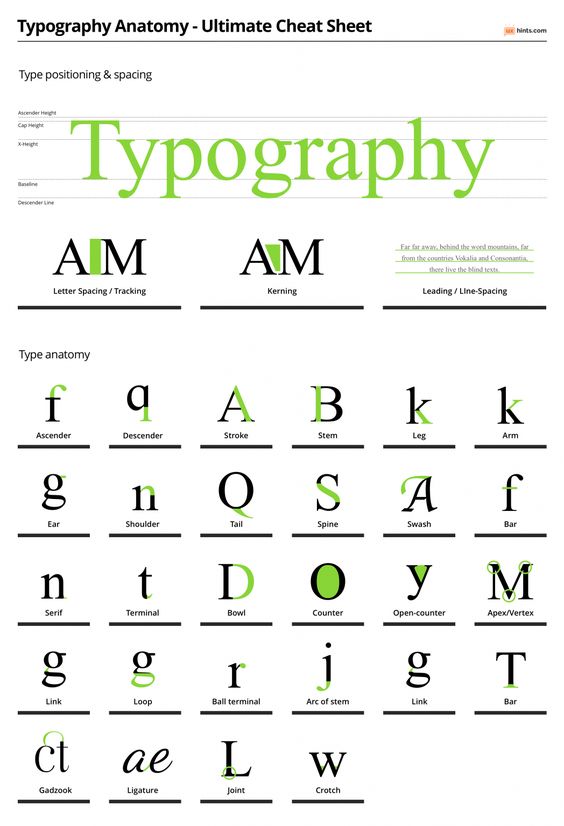
Terminal
The end of a stroke not terminated with a serif.
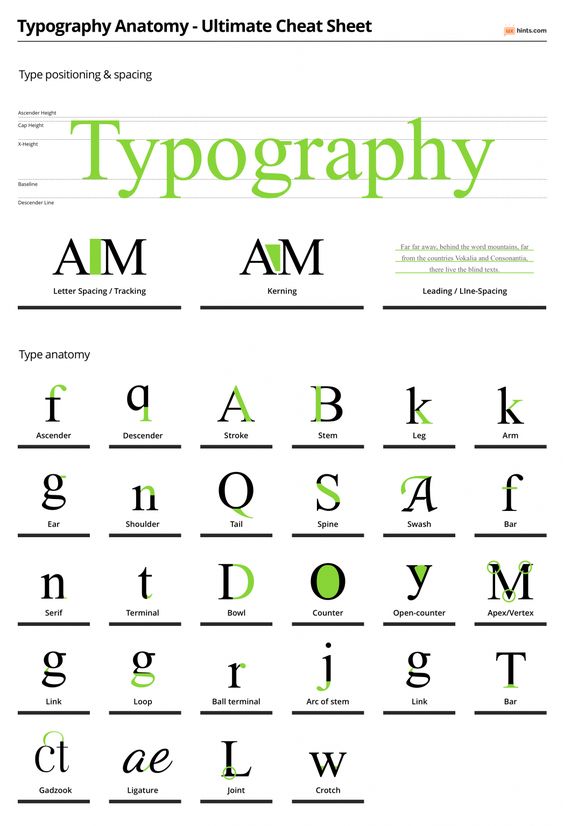
Spur
A small projection that veers of f the main stroke on many capital G’s.
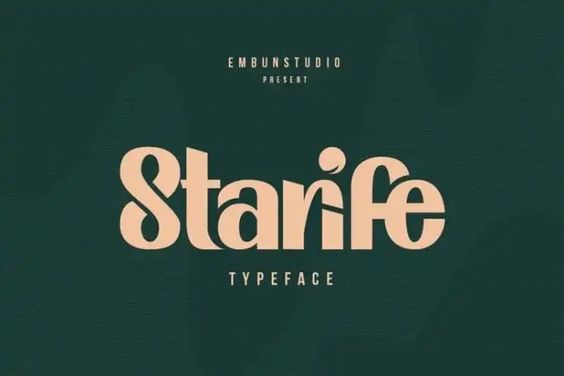
Display
Large sizes for titles, headings, pull quotes, and other eye-catching elements, rather than for extended passages of body text.
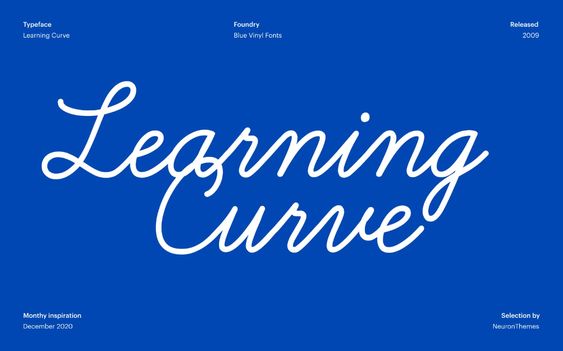
Script
Based on the varied and often fluid stroke created by handwriting.

