Our universe - science final
 Studied by 0 people
 Call with Kai
 Learn
Learn Practice Test
 Spaced Repetition
 Match
Match Flashcards
 Knowt Play
1/42

There's no tags or description
Looks like no tags are added yet.
Name | Mastery | Learn | Test | Matching | Spaced | Call with Kai |
|---|
No study sessions yet.
43 Terms
Celestial bodies
Natural objects found in space (stars, planets, moons, galaxies)
Stars
Huge balls of hot gas emitting their own light and energy through nuclear fusion
Planets
Objects that orbit a star
Moons
Natural satellites that orbit planets
Asteroids
Rocky objects found in the asteroid belt between mars and Jupiter
Comets
Objects made of rock, dust, and ice that develop a glowing tail when near the sun
Where do comets originate from?
In the outer solar system, they’re thrown inwards by gravitational disturbances
Coma
The tail of the comet made up of dust and gas
Meteor
A space rock that burns up in earths atmosphere
Meteorite
A space rock that reaches earths surface
Astronomy
The study of objects and phenomena in space
Astronomer
A scientist who studies space
Cosmology
The study of the origin, structure, and changes in the universe
Constellation
A group of stars that form a pattern in the sky
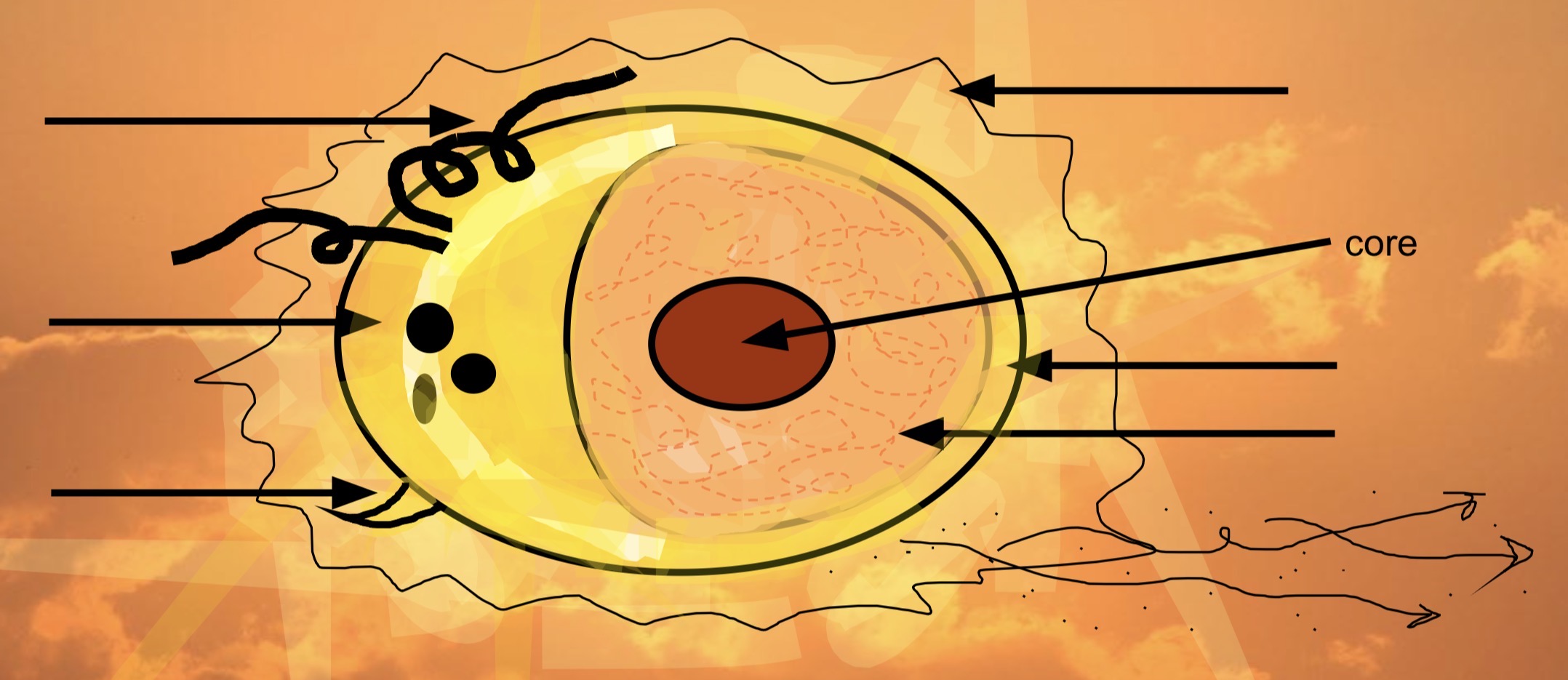
Solar prominence
Large spirals extended outwards into the corona
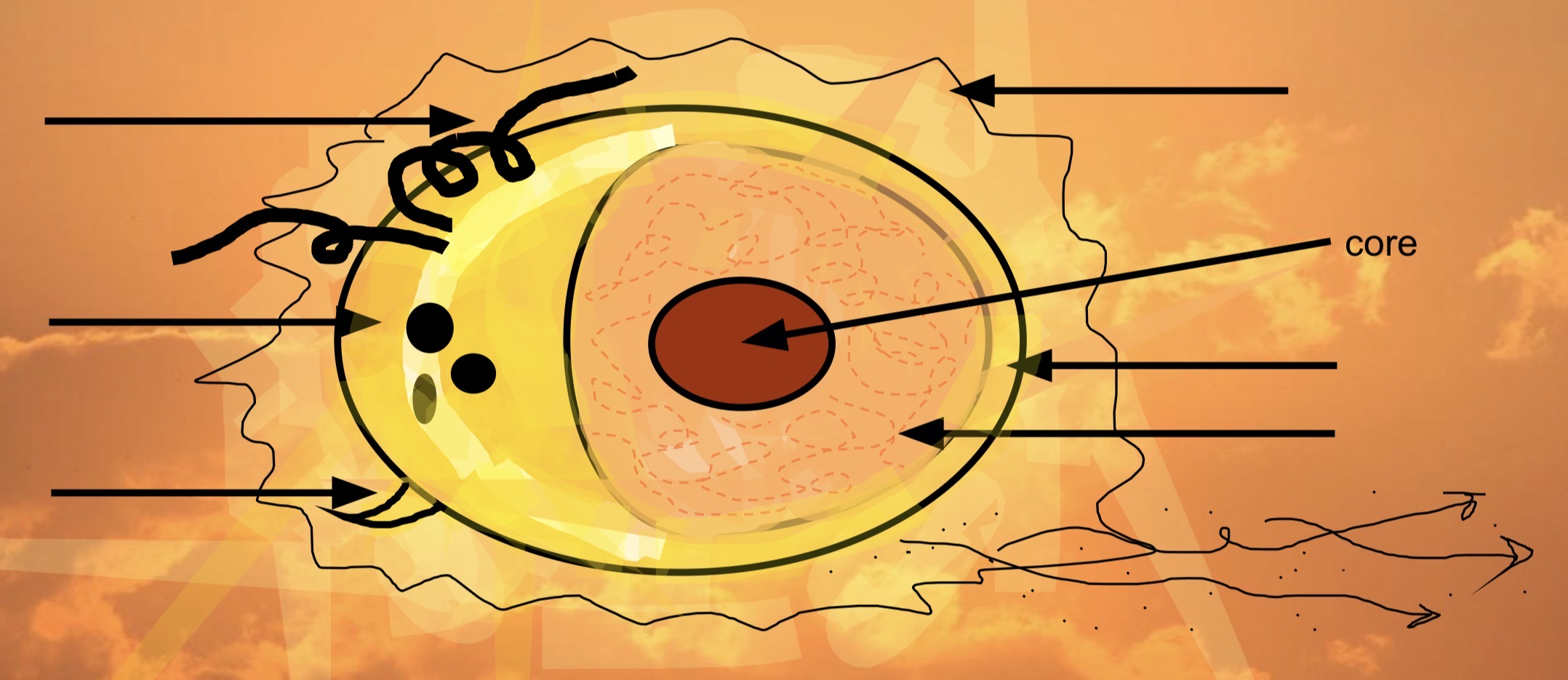
Sun spot
Where magnetic activity takes place
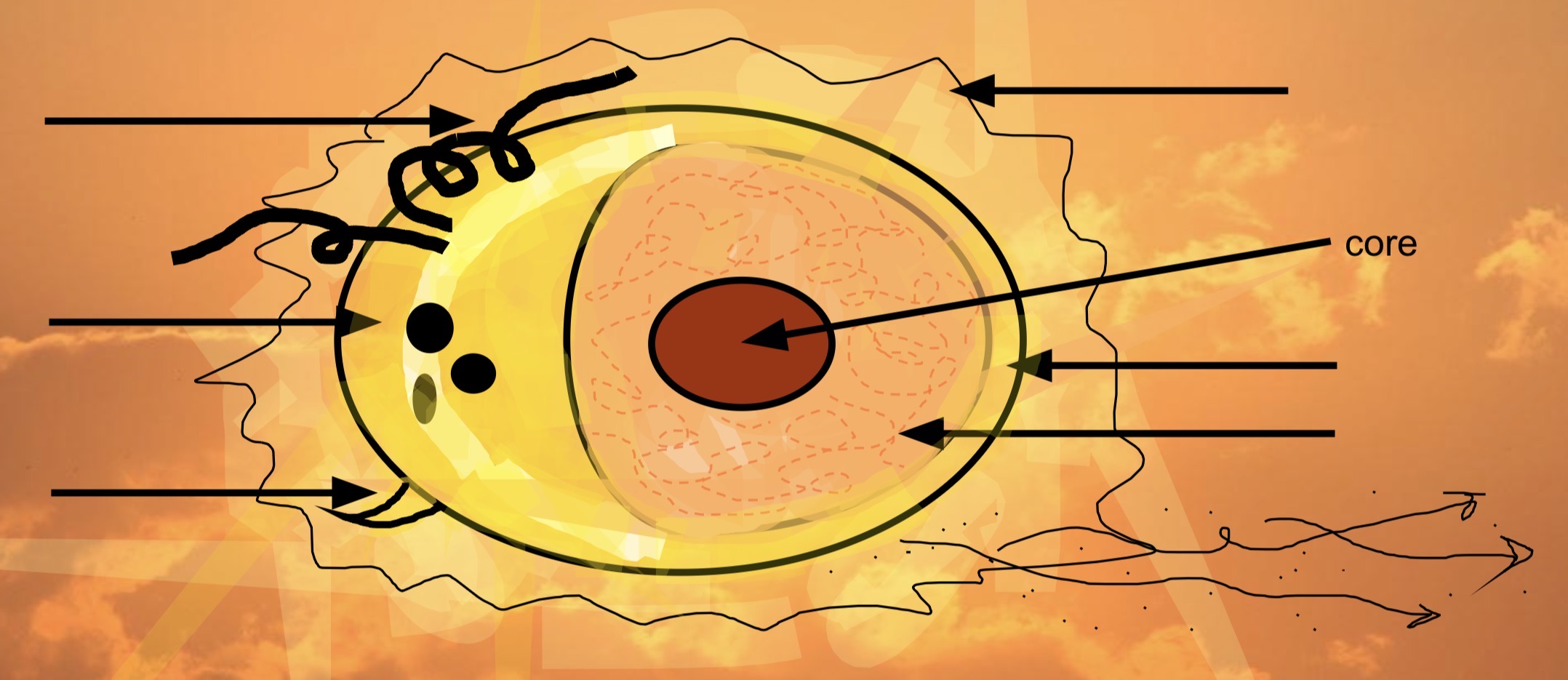
Solar flare
A huge variation of brightness on the sun’s surface
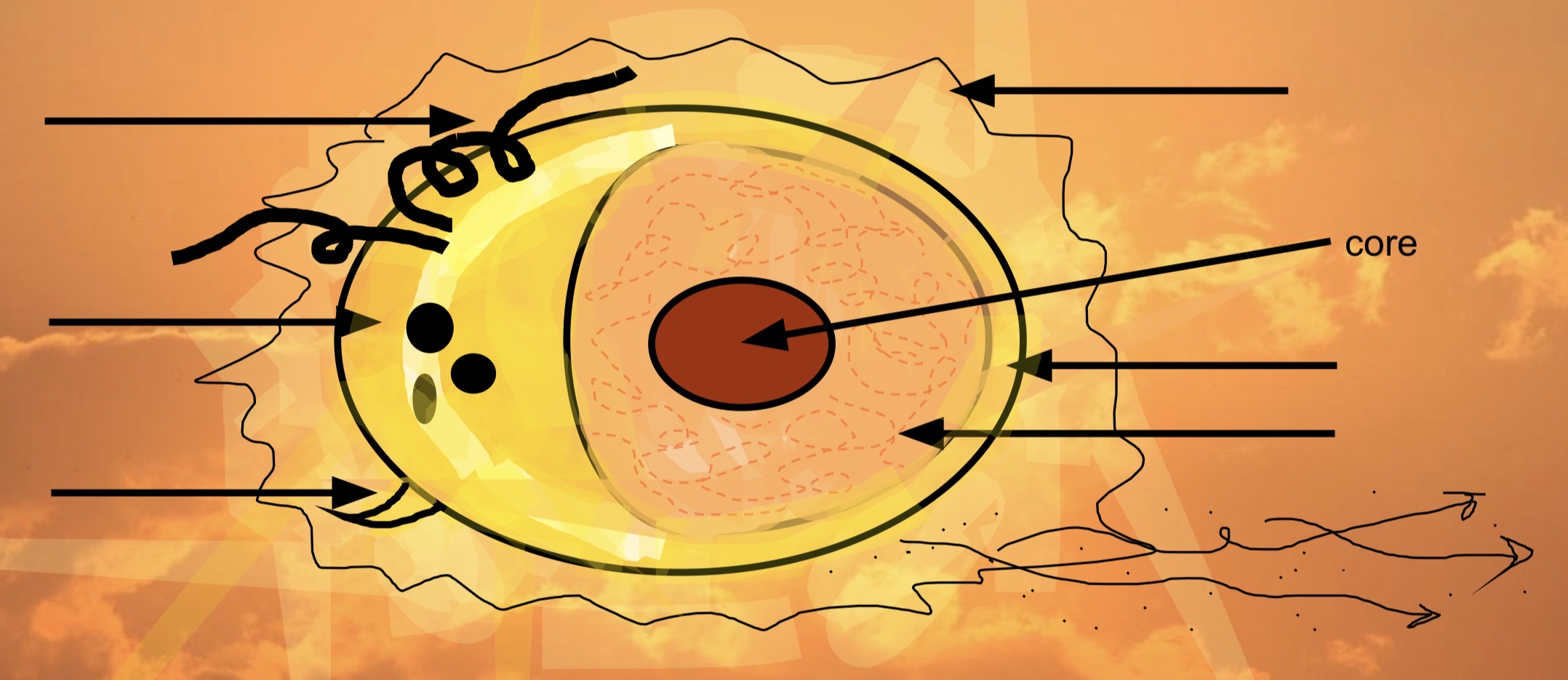
Corona
A low density cloud made up of plasma
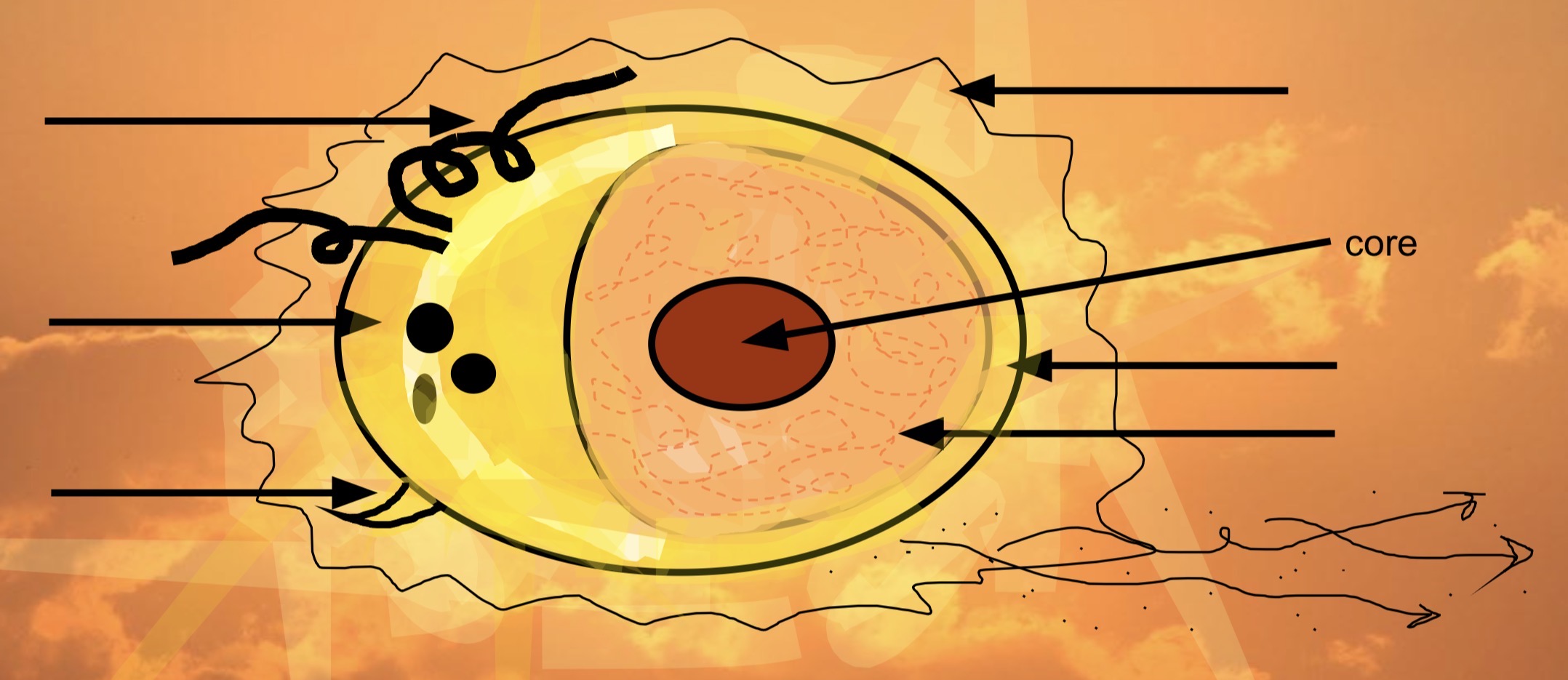
Photosphere
A thin outer layer of gas surrounding the envelop
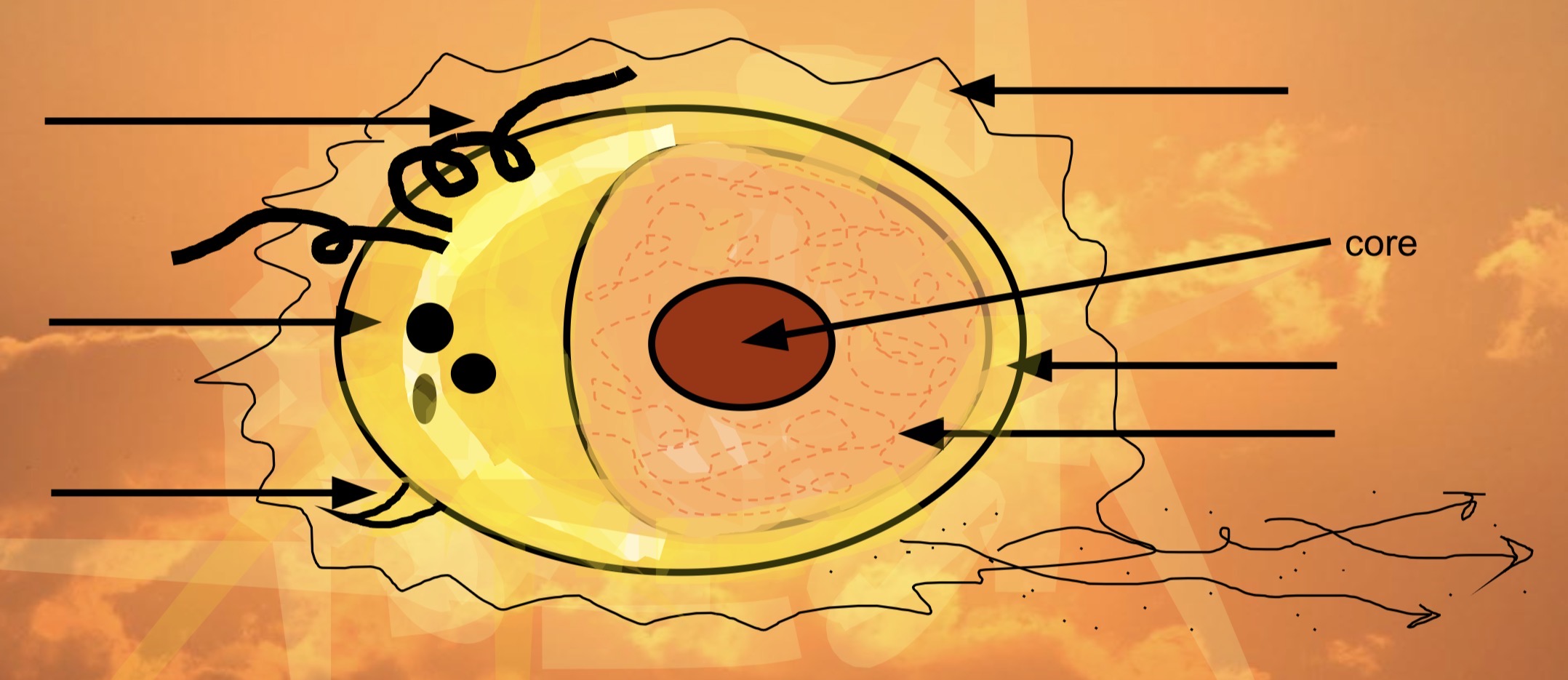
Solar envelop
Huge mass of circulating gas
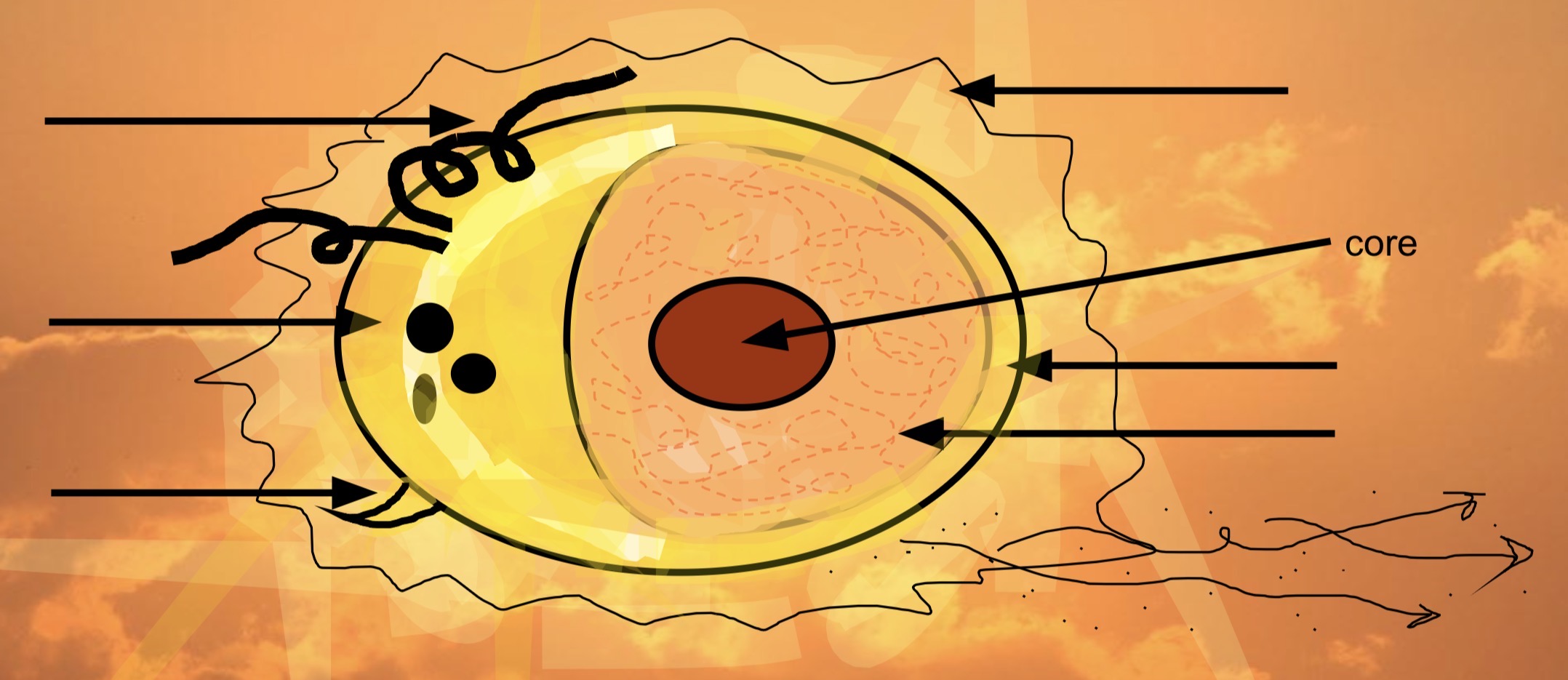
Core
The inner most area of the sun (14 million degrees Celsius)
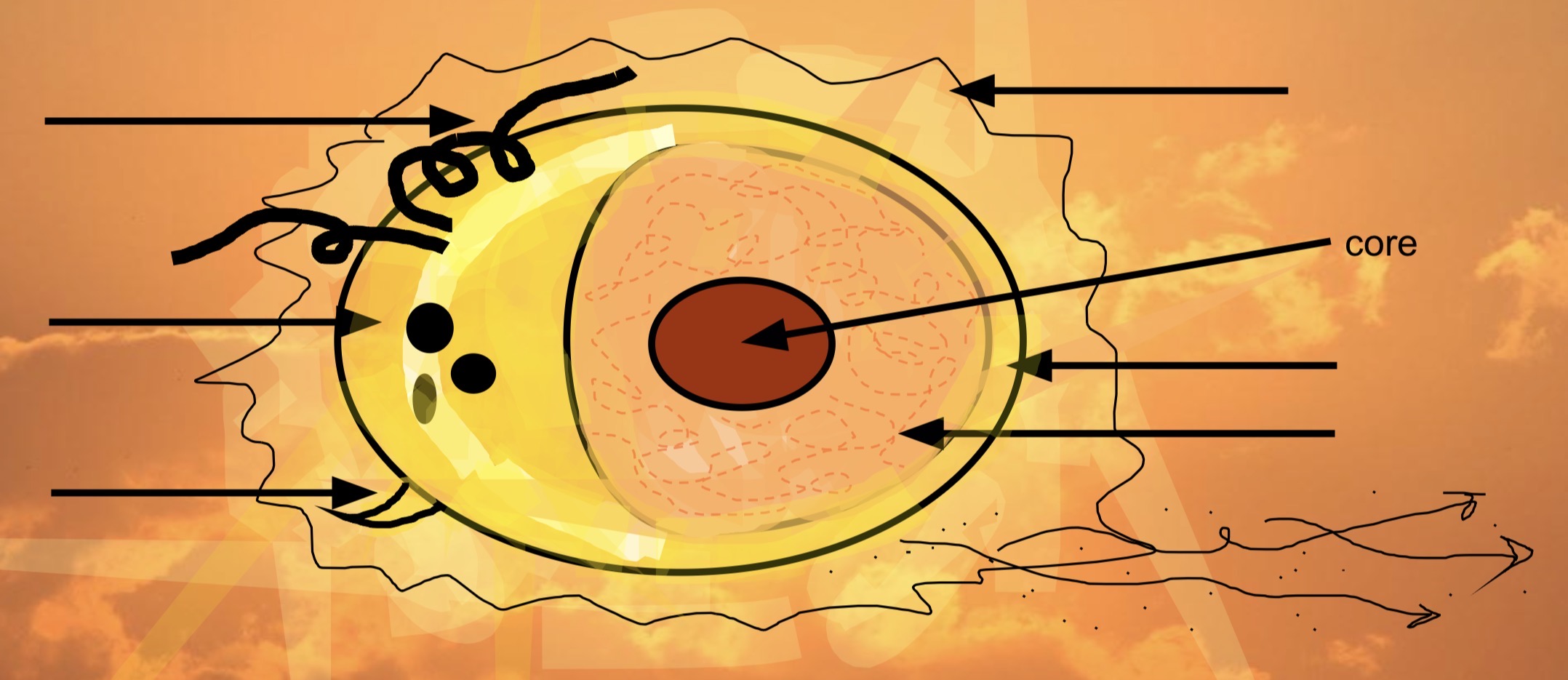
Solar winds
A stream of charged particles separating
Average star
Our sun is a medium sized star
Auroras
Light displays caused by solar wind interactions (northern/Southern lights)
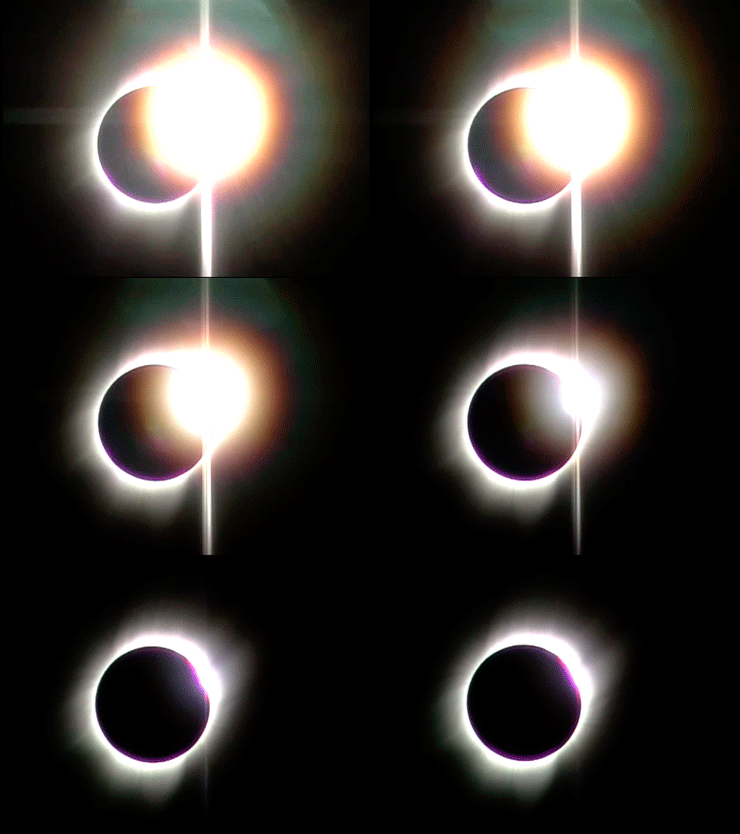
Solar eclipse
When the moon moves between the earth and the sun blocking sunlight
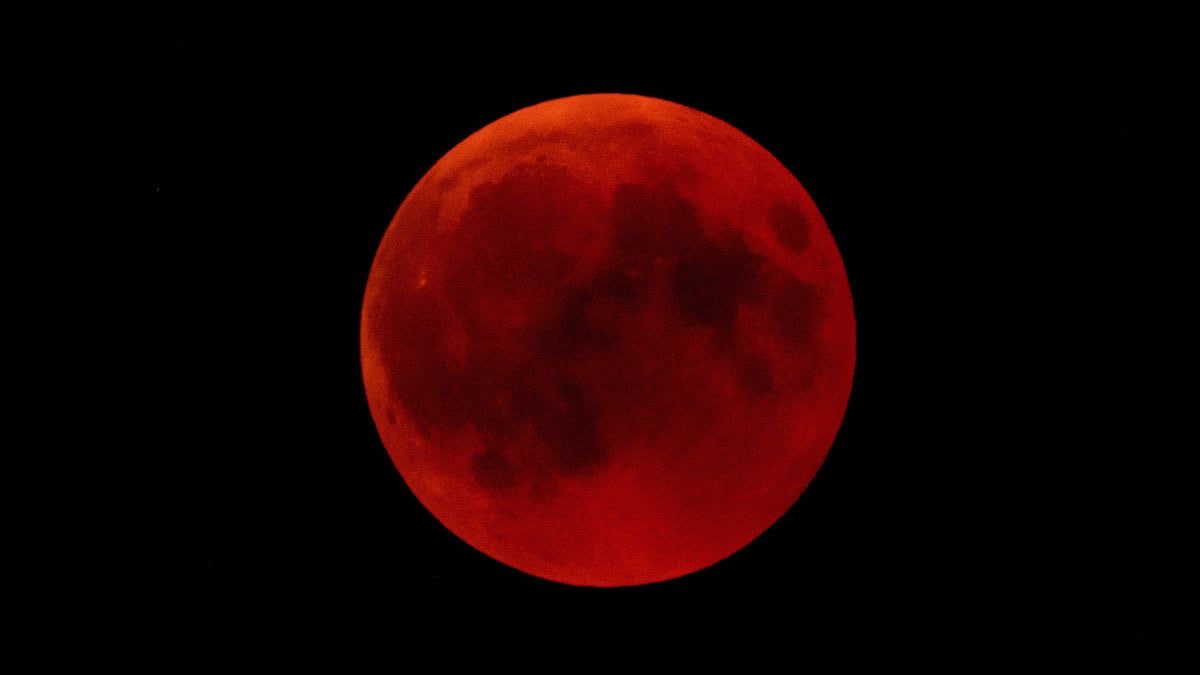
Lunar eclipse
The earth moves between the moon and the sun causing a shadow of the moon
Facts about the moon
Order of the planets
Mercury, Venus, Earth, Mars, Jupiter, Saturn, Uranus, Neptune
What are the rocky (terrestrial) planets?
Mercury, Venus, earth, mars
What are the gas giants?
Jupiter and Saturn
What are the ice giants?
Uranus and Neptune
What is the hottest planet?
Venus
What is the largest planet?
Jupiter
What is the planet with the most rings?
Saturn
What is the stormiest planet?
Jupiter
What is the coldest planet?
Neptune
Big bang theory
The theory that the universe originated in a huge explosion that released all matter and energy
Life cycle of a star
All stars begin in a stellar nebula (cloud of gas and dust)
What is the process of an average star?
Stellar nebula-average star-red giant-planetary nebula-white dwarf
What is the process of a massive star?
Stellar nebula-massive star-red supergiant-supernova-neutron star/black hole
What is the main purpose of a telescope?
To gather light and form an image
How does the Hubble space telescope work?
It uses visible and some infrared light
Facts about the James Webb space telescope
 Note
Note  Flashcards (187)