Chapter 4: Supply and Demand in Labor Market
 Studied by 0 people
 Call Kai
 Learn
Learn Practice Test
 Spaced Repetition
 Match
Match Flashcards
 Knowt Play
1/22

Earn XP
Description and Tags
The Market System as an Efficient Mechanism for Information
Name | Mastery | Learn | Test | Matching | Spaced | Call with Kai |
|---|
No analytics yet
Send a link to your students to track their progress
23 Terms
Households and businesses:
Households are demand suppliers; labor prices and wages, businesses are producers
Financial market and interest rates
borrowing money are demands; suppliers are banks to lend out, assume interest rates

Who are the demanders and suppliers in labor markets?
Job seekers = suppliers of labor
Firms and other employers = demanders for labor
Who are the demanders and suppliers in financial markets?
Savers (individual or firm) = suppliers of money
Borrowers (person, firm, government) = demanders of money
Demand at Labor Markets
A higher salary or wage (higher price in the labor market) leads to a decrease in the quantity of labor demanded by employers
A lower salary or wage (lower price) leads to an increase in the quantity of labor demanded
Supply at Work in Labor Markets
A higher price for labor leads to a higher quantity of labor supplied
A lower price for labor leads to a lower quantity supplied
Equilibrium at Work in Labor Markets
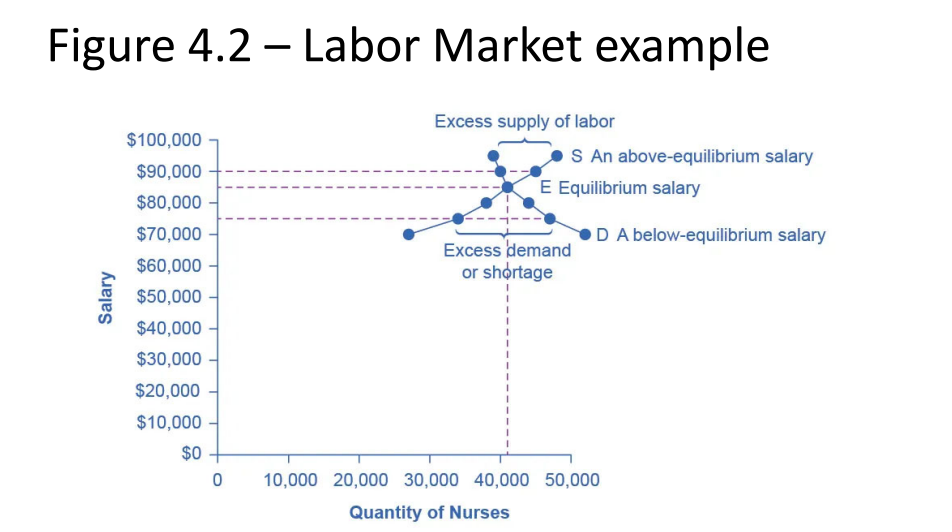
Equilibrium - where the quantity supplied and the quantity demanded are equal
Excess (many applicants for each job opening) -> incentive for employers to offer lower wages
supply
_______ (more openings than applicants) -> higher pay to attract applicants
Shortage
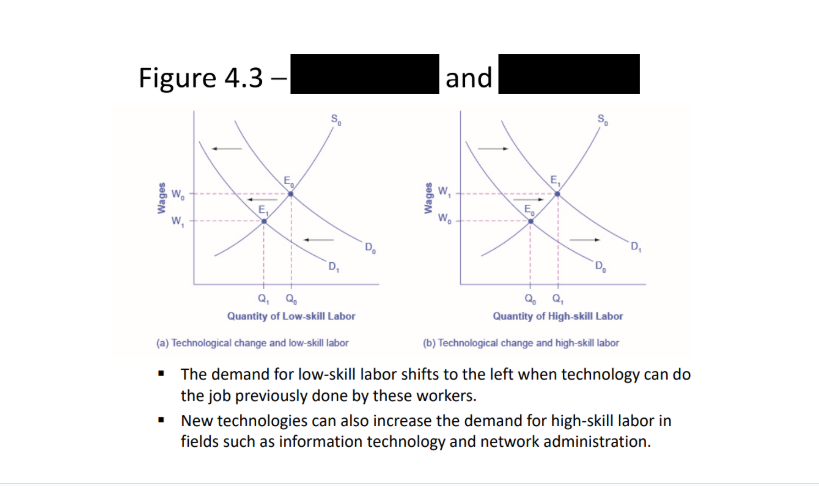
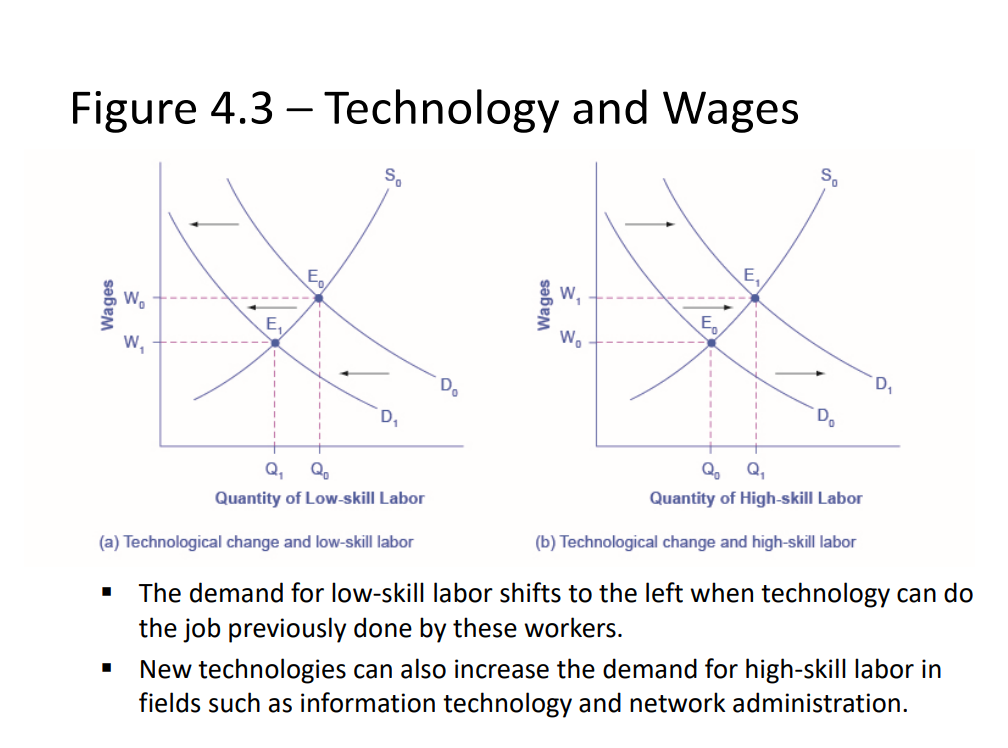
__________ for labor is based on the demand for the good or service that is being produced. Example: the more automobiles consumers demand, the greater the number of workers automakers will need to hire
Derived demand
As demand for the goods and services increases, the demand for labor will increase -> shift to the ____
right
As demand for the goods and services decreases, the demand for labor will decrease -> shift to the ___
left
______ a price floor that makes it illegal for an employer to pay employees less than a certain hourly rate
Minimum wage
_________ higher minimum wage to ensure a reasonable standard of living
Living wage
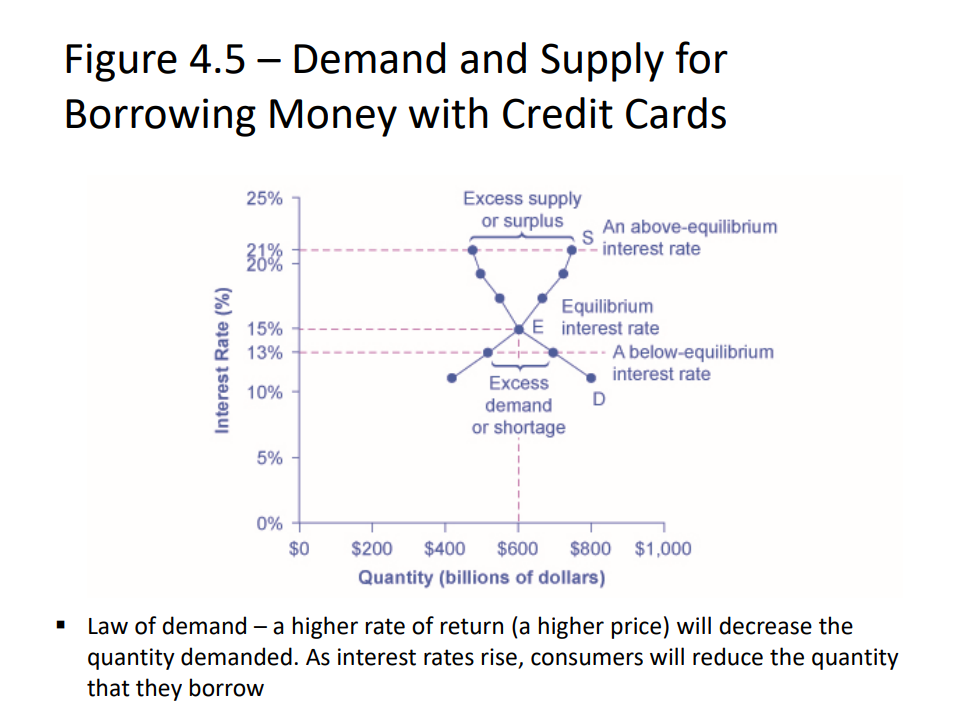
Those who supply financial capital through saving expect to receive a rate of return
Those who demand financial capital by receiving funds expect to pay a rate of return
Interest rate = example of a rate of return
Shifts Supply in Financial Markets
How much to save
How to divide up their savings among different forms of financial investments
Intertemporal _____________ involves decisions across time (i.e. when to consume goods – now or in the future?) Factors to consider: rate of return versus risk
decision making
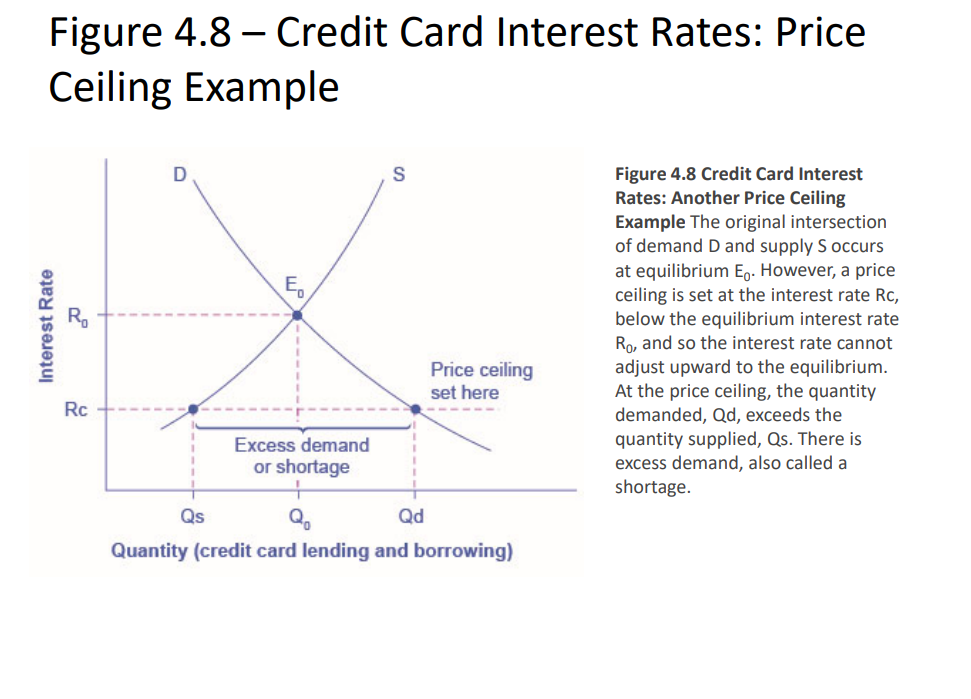
_______ laws laws that impose an upper limit on the interest rate that lenders can charge
Usury laws
____ million Americans own credit cards; their interest payments and fees total tens of billions of dollars each year
200
________ pressure to set limits on the interest rates or fees that credit
Political
In many cases, these upper limit are ____the market interest rate - > nonbinding and non-issue unless equilibrium price increases enough to exceed the price ceiling
ABOVE

