Microbiology Exam 2 review
 Call Kai
 Learn
Learn Practice Test
 Spaced Repetition
 Match
Match Flashcards
 Knowt Play
1/193

There's no tags or description
Looks like no tags are added yet.
Name | Mastery | Learn | Test | Matching | Spaced | Call with Kai |
|---|
No analytics yet
Send a link to your students to track their progress
194 Terms
Immune system
protects the human host
Immunity
ability to fight off pathogens and prevent disease
Host resistance
host having immunity
Host susceptibility
host lacking immunity
Host defenses
ability of host to remove pathogen to prevent disease
Innate immunity
immunity to any pathogen present at birth, non specific, no immunological memory, rapid immune response
What line of defense is Innate immunity composed of?
1st and 2nd lines of defense
Adaptive immunity
Immunity or resistance to specific pathogens develops later, is specific, and has immunological memory, slow response
What line of defense is Adaptive immunity composed of?
3rd line of host defense
What is the 1st line of composed of?
physical barriers (5), chemical barriers (4), and biological barriers (1)
what is the 3rd line of defense composed of?
humoral immunity and cell mediated immunity
1st line of defence physical barriers
Intact skin, mucous membranes, ciliary escalator, lacrimal apparatus, saliva, urine, and vaginal secretion
Intact skin features
packed epithelial cells, multiple layers, keratin protein, dryness, shedding
Mucous membranes
epithelia layer that lines gastrointestinal, respiratory and genitourinary tracts and secrete mucus
Ciliary Escalator
epithelia cells of lower respiratory tract have cilia, cilia sweep the mucus out of the body
Lacrimal apparatus
protects eyes, flushes tears
Saliva, urine and vaginal secretion
flushing mechanism, washes away pathogens
1st line of defense Chemical Barriers
Chemical factors of skin, lysozymes, gastric juices, blood transferrins
chemical factors
slightly acidic skin and salinity
What type of environment does the salinity of the skin create for invading pathogens?
Hypertonic environment
Lysozymes
enzymes found in body secretion (sweat, tears, and saliva), breaks chemical bonds in peptidoglycan and destroys bacterial cell wall
Gastric juices
produced by stomach contians enzymes and acid
Blood transferrins
proteins that bind to iron, iron is necessary for bacterial growth
1st line of defense Biological Barriers
Normal microbiota
two types of Normal Microbiota
Commensal microbes and beneficial microbes
Opportunist microbes
Not apart of normal microbiota, microbes that act as pathogens under certain circumstances
Commensal microbes with example
microbe benefit not host, ex bacteria on skin
beneficial microbes with example
both microbe and host benefit ex vitamin K producing bacteria e. coli in gastrointestinal tract
Normal microbiota
microbial competition, competes with pathogens leading to decreased populations of pathogenic bacteria
How does normal microbiota defeat the invading pathogenic bacteria?
take up all the nutrients and space, produce substances harmful to invading pathogens
What is the 2nd line of defense composed of?
formed elements, phagocytosis, inflammation, fever, antimicrobial substances (2)
formed elements in blood
cell and cell fragments in plasma, erythrocytes, leukocytes, thrombocytes
How are cells and cell fragments made
created in red bone marrow stem cells via hematopoiesis
What are leukocytes
white blood cells that include a variety different cells
Granulocytes
leukocytes with granules in their cytoplasm that are visible with a light microscope includes BEN
Basophiles
release histamine granules involved in allergic responses
Eosinophils
toxic against parasites and worms
Neutrophils
first responder phagocytic work in early stages of infection
Agranulocytes
leukocytes with granules in their cytoplasm that are not visible with a light microscope includes ML
Monocytes
travels in blood and will mature into macrophages in tissues where they become phagocytic cells
Lymphocytes
T cells, B cells, and NK cells
T cells and B cells are apart of what line of defense?
adaptive immunity 3rd line of defense
Differential white blood cell count
abundance of each type of white blood cell in a sample of 100 white blood cells NLMEB
Phagocytosis of solids
non specific host cell capable of phagocytosis ex. neutrophils, macrophages, and dendritic cells
Mechanisms of phagocytosis
chemotaxis, adherence, ingestion, digestion
chemotaxis
release of chemical signals (cytokines) by pathogen that attract phagocytes
adherence
attachment of phagocyte to surface of the pathogen
ingestion
endocytosis of pathogen to from a phagosome merges with lysosome which forms a phagolysosome inside phagocyte
digestion
pathogen is digested inside a phagolysosome
How do pathogens evade phagocytosis?
capsules, leucocidins, mycolic acid
capsules
pathogen too big to be engulfed
leukocidins
a pore forming toxin capable of killing phagocyte and hide from immune system
myolic acid
a waxy lipid material that inhibits lysosome enzymes, bacteria will multiply and high inside phagocyte
Inflammation
due to infection
signs and symptoms of inflammation
pain due to release of cytokines that damage nerve endings, redness (erythema), immobility, swelling (edema), heat
Process of inflammation
tissue gets damages releasing cytokines that promote chemotaxis of phagocytes, phagocytes squeeze through blood vessels and move to site of injured tissue, phagocytosis of invading pathogens begins, tissue gets repaired
Consequences of fever
Increases metabolic rate, enhances immune response, induces antimicrobial substances
antimicrobial substances
complement system and interferons
complement system
proteins found in blood that enhances the immune system in destroying pathogens
complement activation
complement proteins act in a cascade manner
outcomes of complete activation
opsonization, inflammation, cytolysis
opsonization
antibodies coat surface of pathogen, promotes attraction of phagocyte to pathogen (happens in 2nd line of defense and 3rd line of defense)
inflammation
complement proteins bind mast cell, mast cell releases histamine that increases permeability, phagocyte arrives to site of injury
cytolysis
complement proteins create a membrane attack complex that creates a hole in pathogen cell wall, fluid enters the pathogen and pathogen bursts
Microbial evasion of the complement system
capsule production complement proteins cannot bind easily, inhibition of mac formation enzymes from bacteria prevent MAC assembly, inactivation of complement proteins bacteria produce protease
interferons
small proteins produces by some animal host cells upon animal viral infection
Antiviral action
part of IFNs cause uninfected neighboring animal cells to heighten their anti viral defenses
Mechanisms of action of interferons
animal virus enters host cell and multiplies, animal host cell produces INFs, INFs binds to cell membrane of unaffected neighboring animal cell and makes anti viral proteins (AVPs), newly released viruses that infect neighboring animal cell has AVPs waiting to destroy virus
immunology
study of host defense against foreign substances
Antigen (Ag)
substance that stimulates a certain immune response in the form of antibody production
Examples of Antigens
pathogens, foreign substances, vaccines
Antibody (Ab)
Protective proteins made by the host response to certain antigens
Examples of Antibodies
Immunoglobulins (Ig)
What type of cells does adaptive immunity involve?
Certain lymphocytes like B cells and T cells
Types of adaptive immunity
Humoral Immunity and cell mediates immunity
Humoral immunity
fights invader and threats extracellularly like extracellular Ag’s
Example of Humoral immunity
extracellular pathogens and toxins
Cell mediated immunity
Attacks antigens that have entered the cell like intracellular Ag’s
Example of cell mediated immunity
animal virus present inside the host cell
what type of cells does humoral response involve?
B cells which indirectly make antibodies that help destroy foreign molecules known as antigens
what type of cells does cell mediated immune response produce?
produce T cells that recognize parts of antigens that get processed by phagocytoses and will destroy the antigen
What is the parent cell of B and T cells?
Stem cells
Where do B cells mature?
in bone marrow
Where do T cells mature?
in thymus
How do Antigens (Ag’s) interact with Antibodies (Ab’s)
Antigens have external components called antigenic determinants that Antibodies will bind to
Humoral immunity
immunoglobulins which equal Ab’s recognize and interact with antigenic determinants forming a Ag-Ab complex (immune complex), Ab will not destroy antigen but mark it to be destroyed
Clonal selection
process of B cell activation, surface Ig on B cell recognized specific Ag B cell is not selected
Clonal expansion
selected B cell proliferation into clone of activated B cells that will differentiate into plasma cells that produce antibodies
Antibodies structure
four protein chains form a Y shape, 2 identical light chains and two identical heavy chains joined together
Antibody regions
Variable regions which are at the end of the arms that bind to the antigenic determinants and constant region that is the stem includes 5 classes
5 classes of Antibodies
IgG, IgM, IgA, IgD, IgE

IgG
Monomer, most abundant in blood serum, long lived long term protection, in blood, lymph and intestine, crosses placenta (transplacental passage), enhanced phagocytosis by coating surface if antigen (opsonization), and neutralizes toxins and viruses
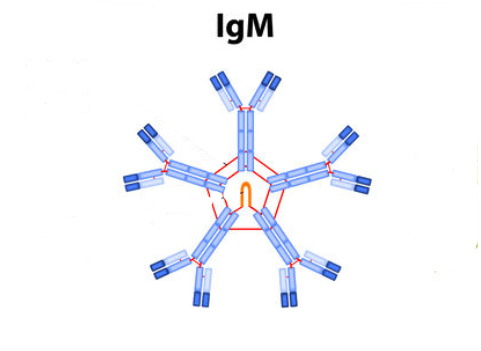
IgM
Pentamer, Largest Ab, 6% of serum antibodies, remain in blood vessels, cause agglutination (clumping) of pathogens, primary response to injection, short lived
Agglutination
Ab clumps several Ags in one place to attract phagocyte
neutralization
on mucosal membrane blocks attachment of toxins and viruses to mucosa
What would elevated IgM and lov IgG suggest?
recent/new infection
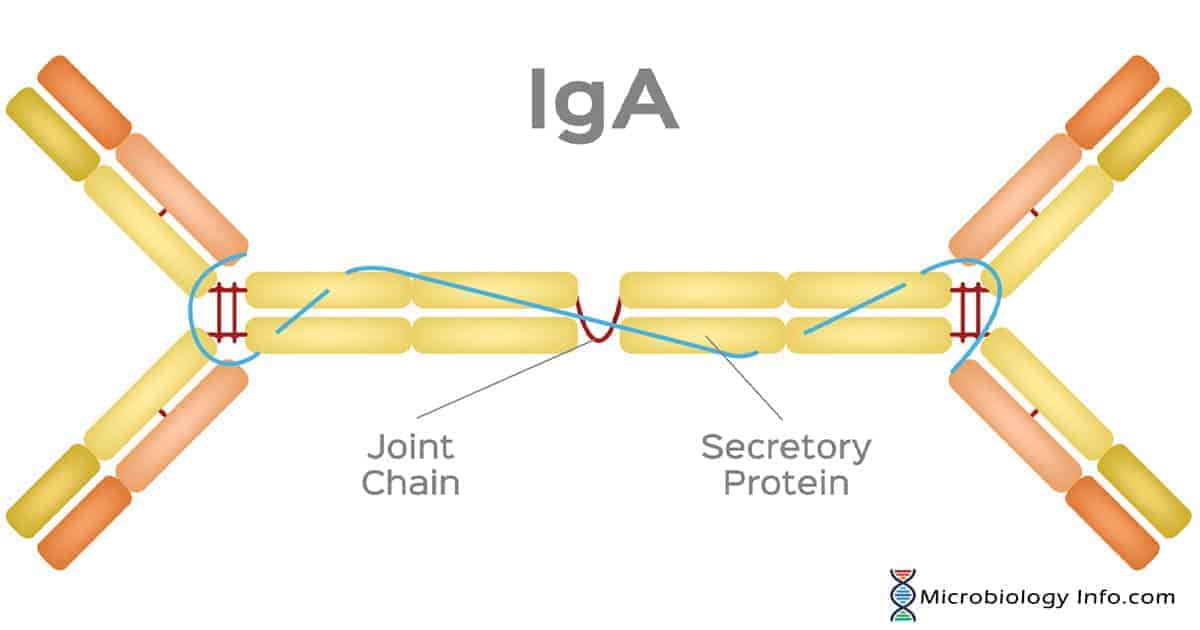
IgA
mostly a dimer but can be a monomer when present in mucosal lining, 13% of serum antibodies , most abundant Ig in the BODY,common on mucous membrane surface and secretion, prevents attachment of pathogens to mucous membranes

