bsci 337 exam 2
 Call Kai
 Learn
Learn Practice Test
 Spaced Repetition
 Match
Match Flashcards
 Knowt Play
1/88

There's no tags or description
Looks like no tags are added yet.
Name | Mastery | Learn | Test | Matching | Spaced | Call with Kai |
|---|
No analytics yet
Send a link to your students to track their progress
89 Terms
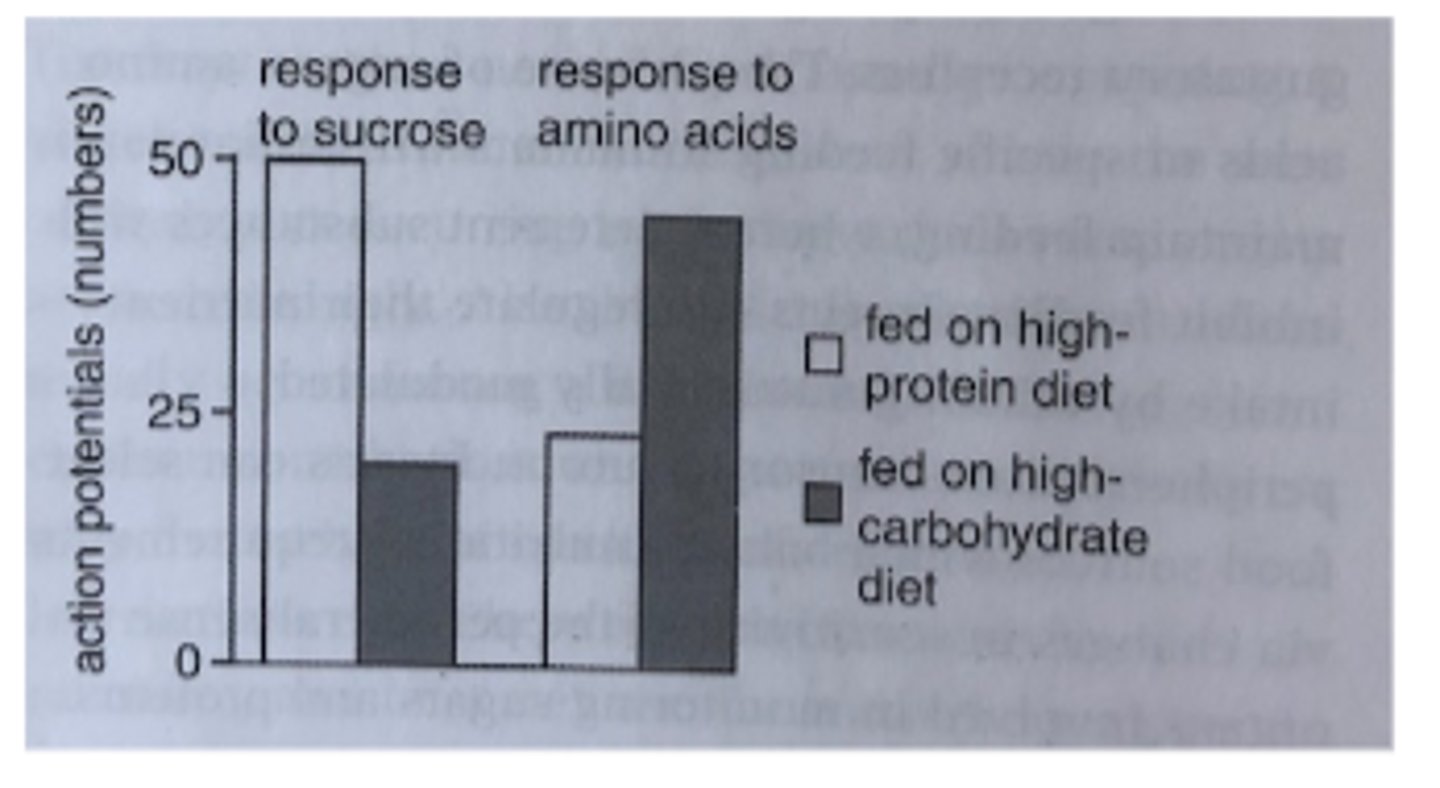
generalist food preferences can change to maintain a balanced diet
response of chemoreceptors in grasshopper maxillary palp sensilla after access to a particular diet (high protein or high carbohydrate) for four hours
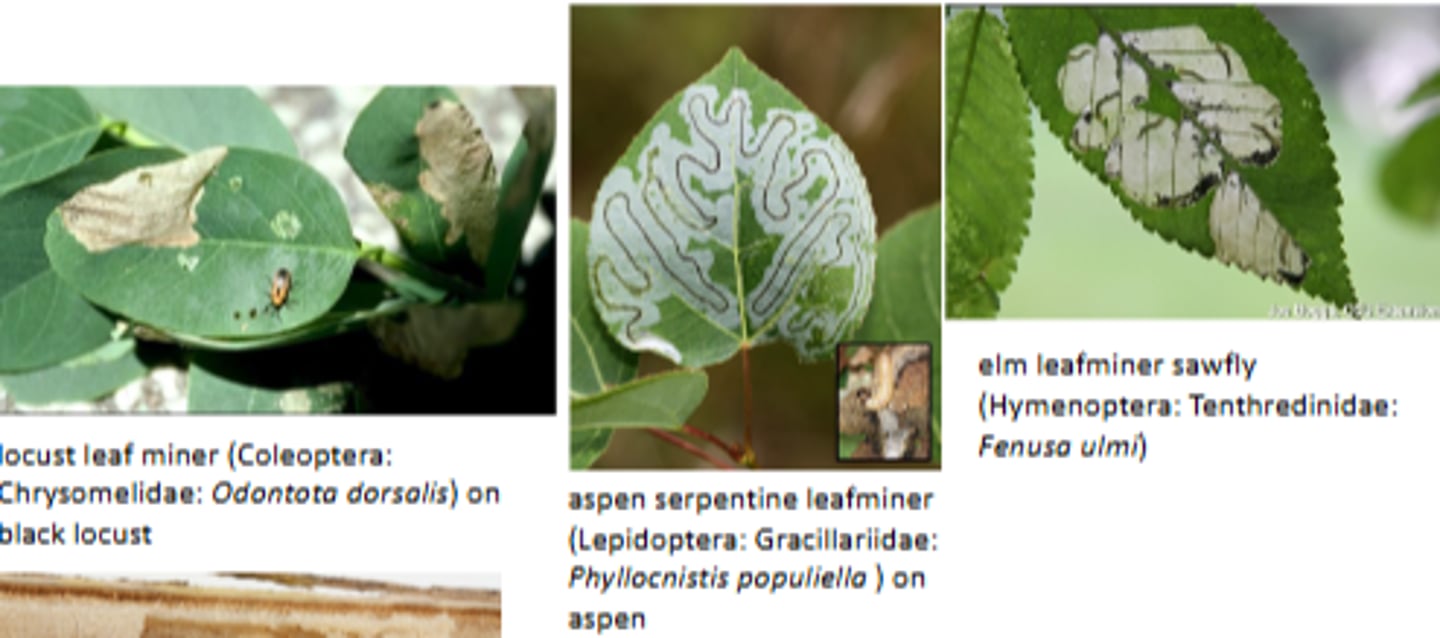
miners: morphology matches feeding
phloem and xylem feeding: morphology matches feeding
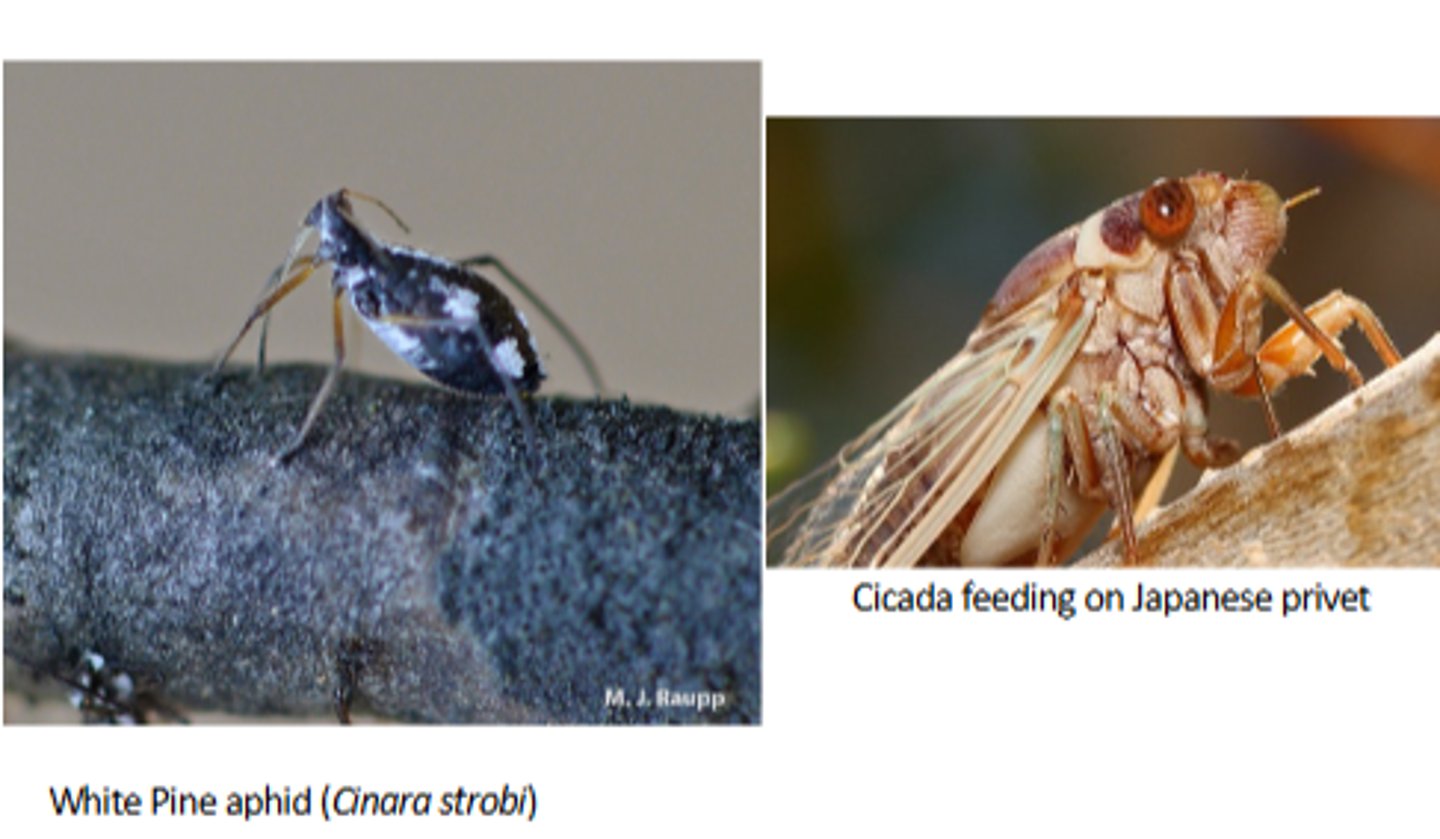
what are the facts of gut symbionts
-phloem and (especially) poor xylem fluid nutrient
--bacterial symbionts synthesis amino acids needed by their host
-diverse insect groups have both obligate and facultative bacterial in gut
-wood eaters: termites and wood roaches, microorganisms in hindgut fermentation chamber help break down cellulose
ant shepherds
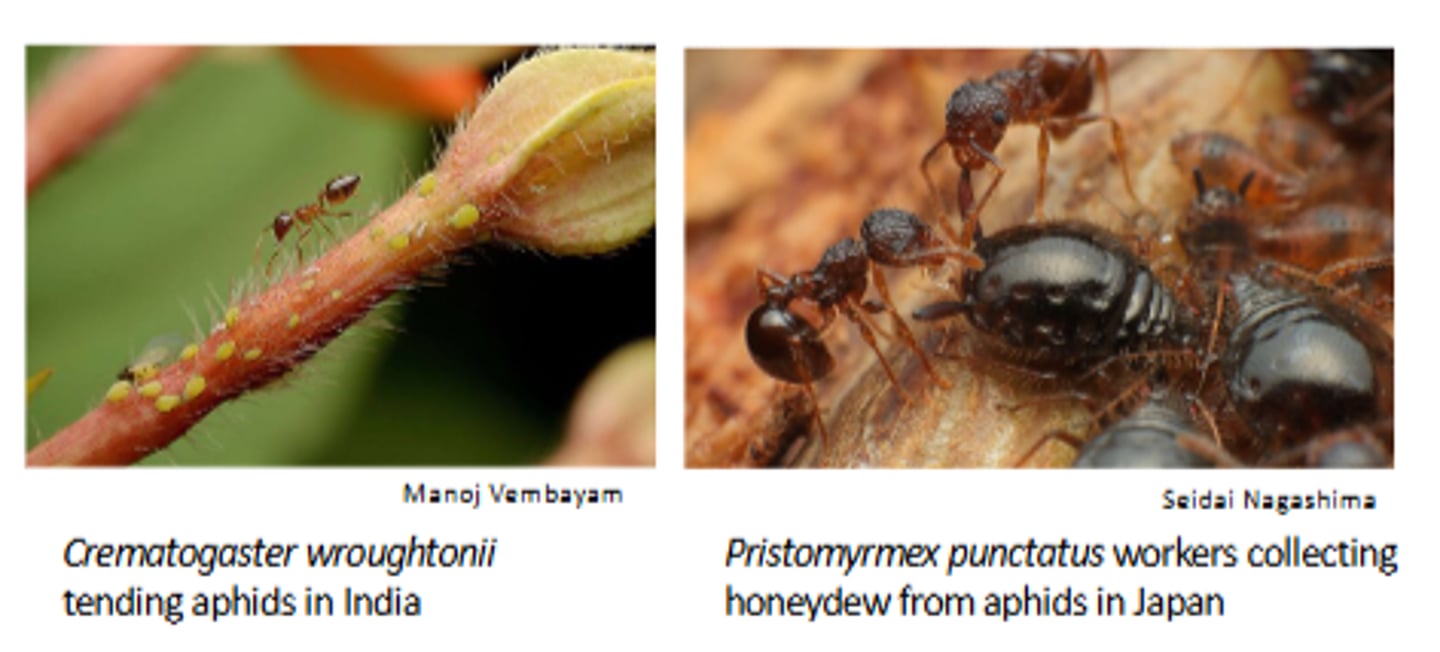
ants storing food
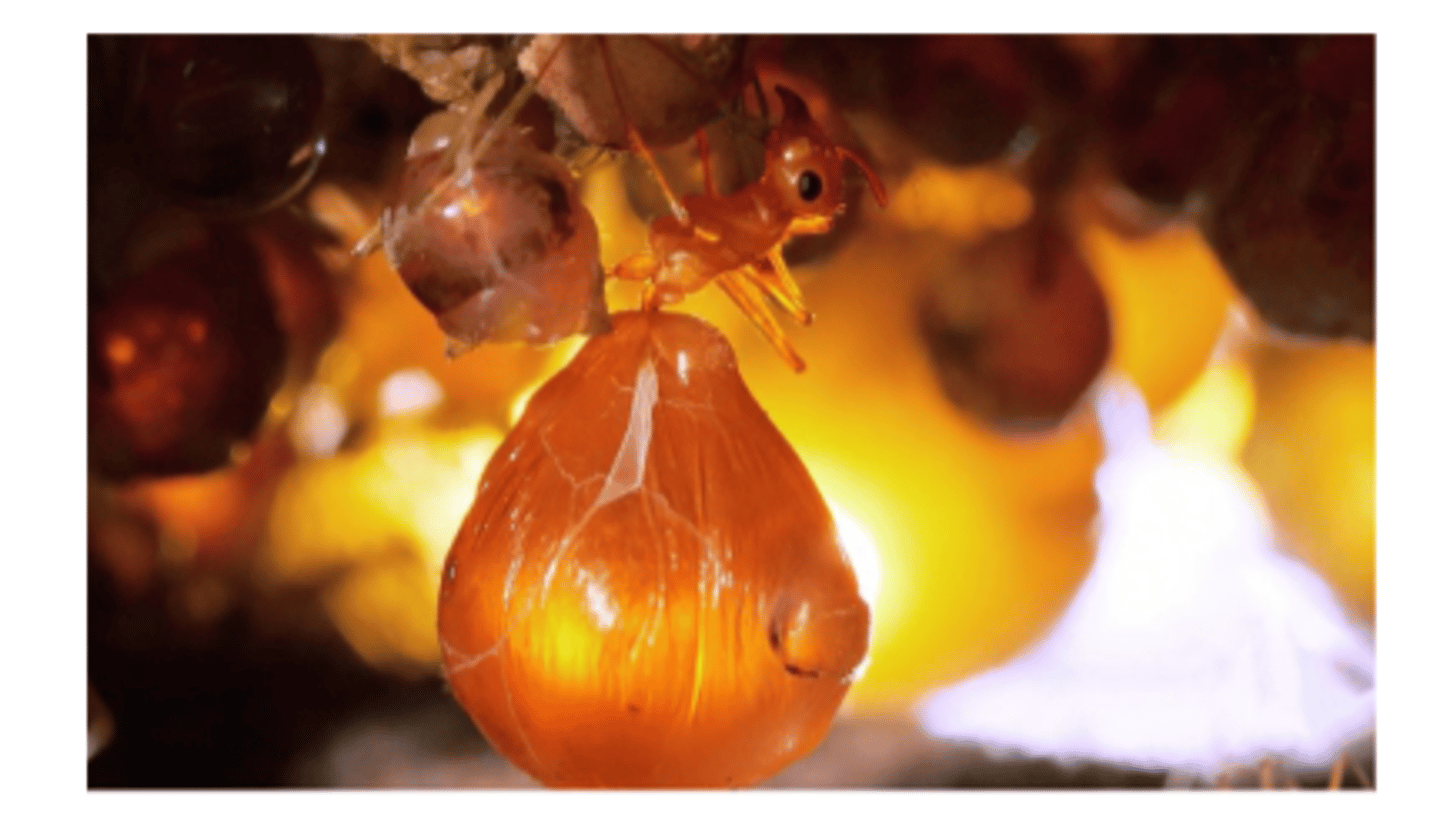
insect agriculture
some ants farm fungi as food
some termites farm fungi as food to break down lignin and cellulose in wood to form can digest
ambush predators examples
diptera:vermileonidae
neuroptera: myrmeleontidae
mantodea (mantids)
phymatidae (ambush bugs)
what is aggressive mimicry
deceiving w false signal to exploit recipient
aggressive mimicry examples
- firefly femmes fatales
-australian katydid (tettigoniidae) imitating clicking response of female cicadas to male cicada calls
mass attack examples
army ants: swarm raiding
driver ants
most dangerous animal in world
mosquitos (blood feeding evolved independently numerous times within diptera)
What order has blood feeders?
Diptera
Definition and example of primary defense
Def: Prevent detection or attack BEFORE the predator initiates
- hiding
- crypsis
- avoid being targets
- mimicry
- aposematism
goal of primary defense
avoid detection
secondary defense definition and examples
definiton: increases survival after a predator has approached
- startling
-resisting/fighting
- fake death (thanatosis)
- spines, sting, toxin, physical/chemical deterrents
- associate with the protector
- escape
goal of secondary defense
increase chance of survival
hiding examples
bagworm case - lepidoptera:psychidae
cases - trichoptera
camouflage & crypsis/masquerade (visual, chemical)
leaf insect: phasmids
Exerma beetle: coleoptera
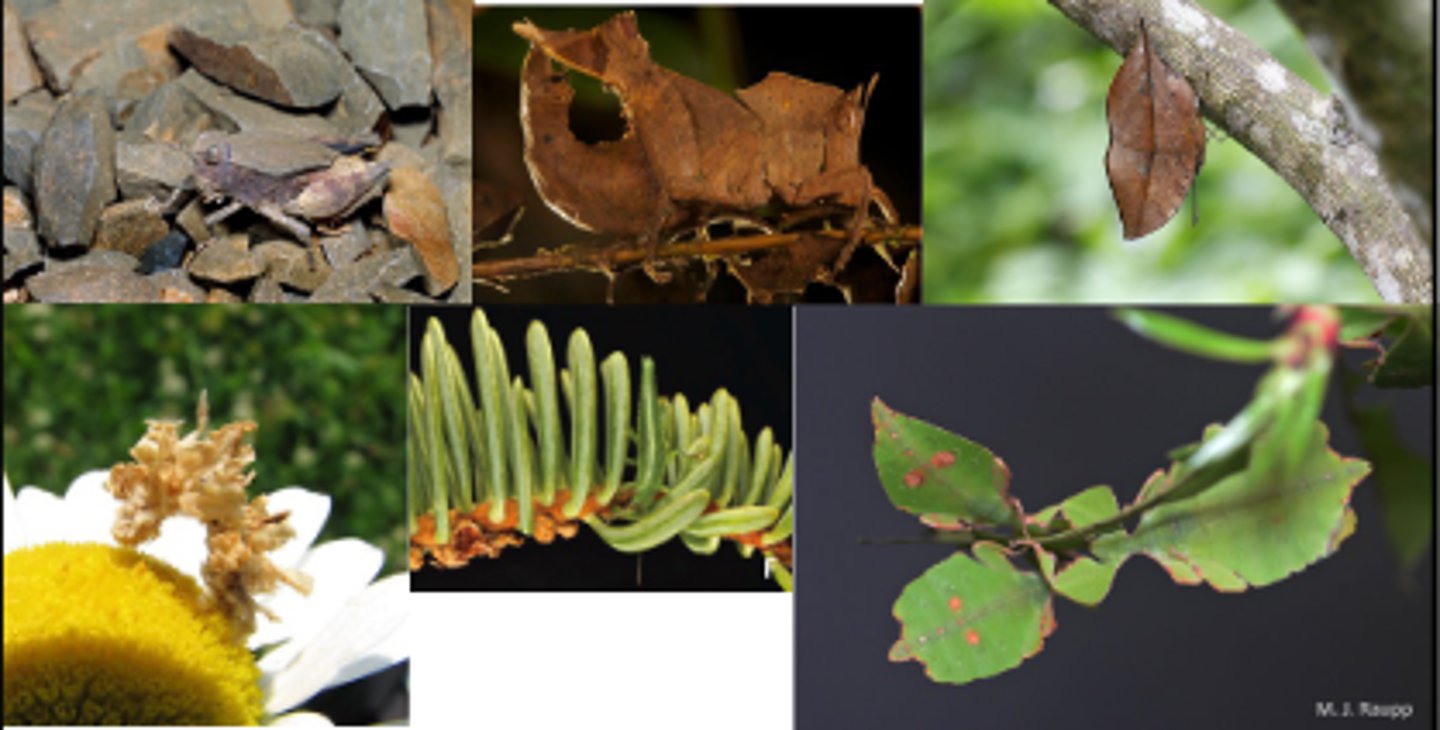
crypsis vs masquerade
crypsis: blending with background
masquerade: resembling an object
what is crypsis?
making yourself blend in with background
what orders utilize crypsis?
-phasmida
-orthoptera
What is masquerade?
resembling as something of disinterest
mimicry
wasp & bee mimics examples
lepidoptera (clearwing moths)
diptera (hoverflies)
neuroptera
orthoptera: katydids
mantodea
mimicry
ant mimics examples
salticidae
tettigoniidae
miridae
jumping spiders
mimicry
mimics of distasteful models
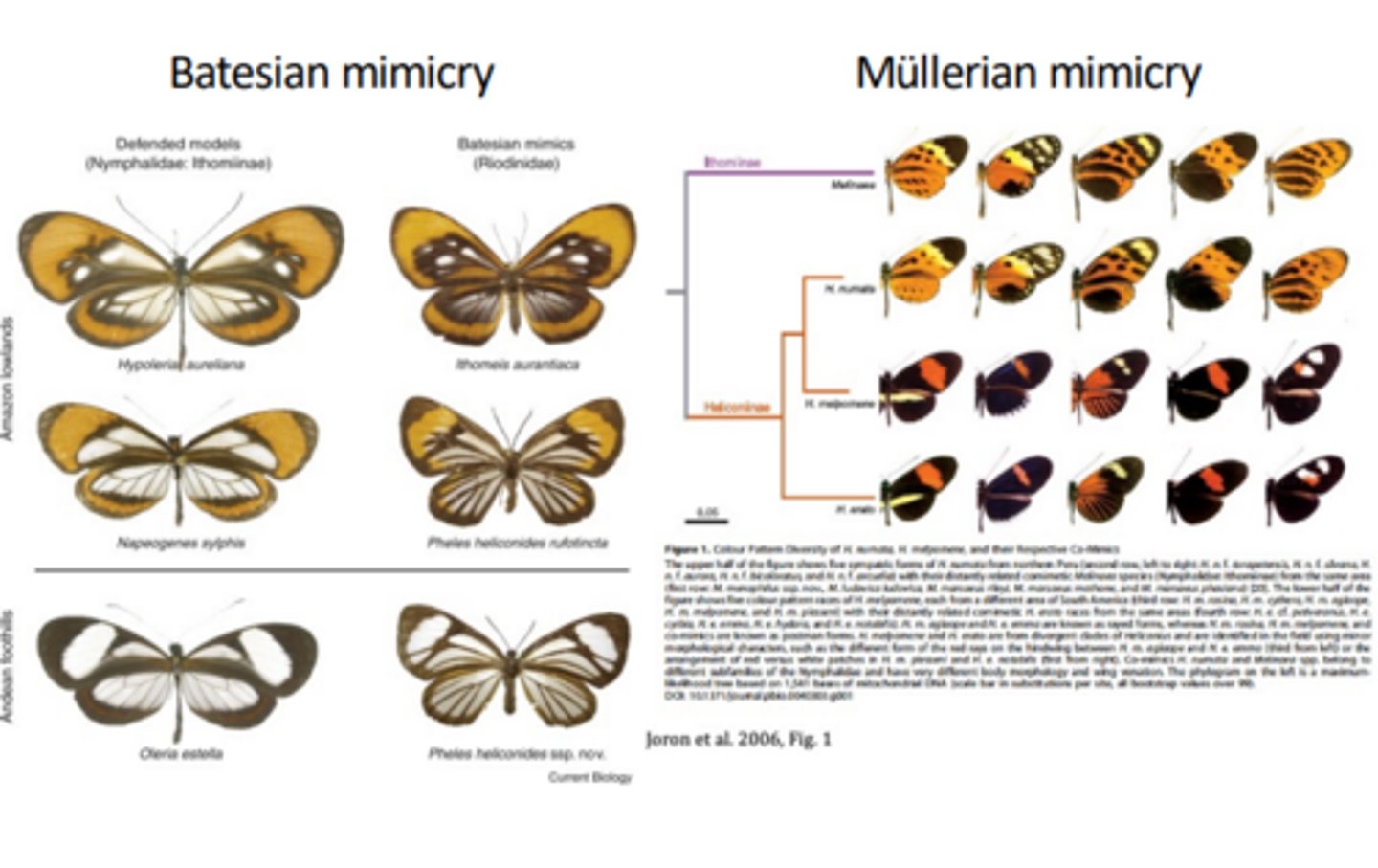
what is aposematism?
warning signal
types of aposematism
primary or secondary
visual, chemical or acoustic
aposematic firefly flashing
-sexual signal, also deter predators and attract others
-hypothesis: lampyrid flashing effective aposematic signal using spider predators, palatable crickets, fireflies of unpalatable non luminescent species
does sudden flashing itself deter jumping spiders?
- (palatable) cricket next to LED turned off vs suddenly flashing were attacked qually: no startle behavior
does flashing light (vs no or steady light) attract or deter spiders attacking palatable prey?
- spiders more likely attack cricket next flashing LED vs LED turned off or steadily glowing
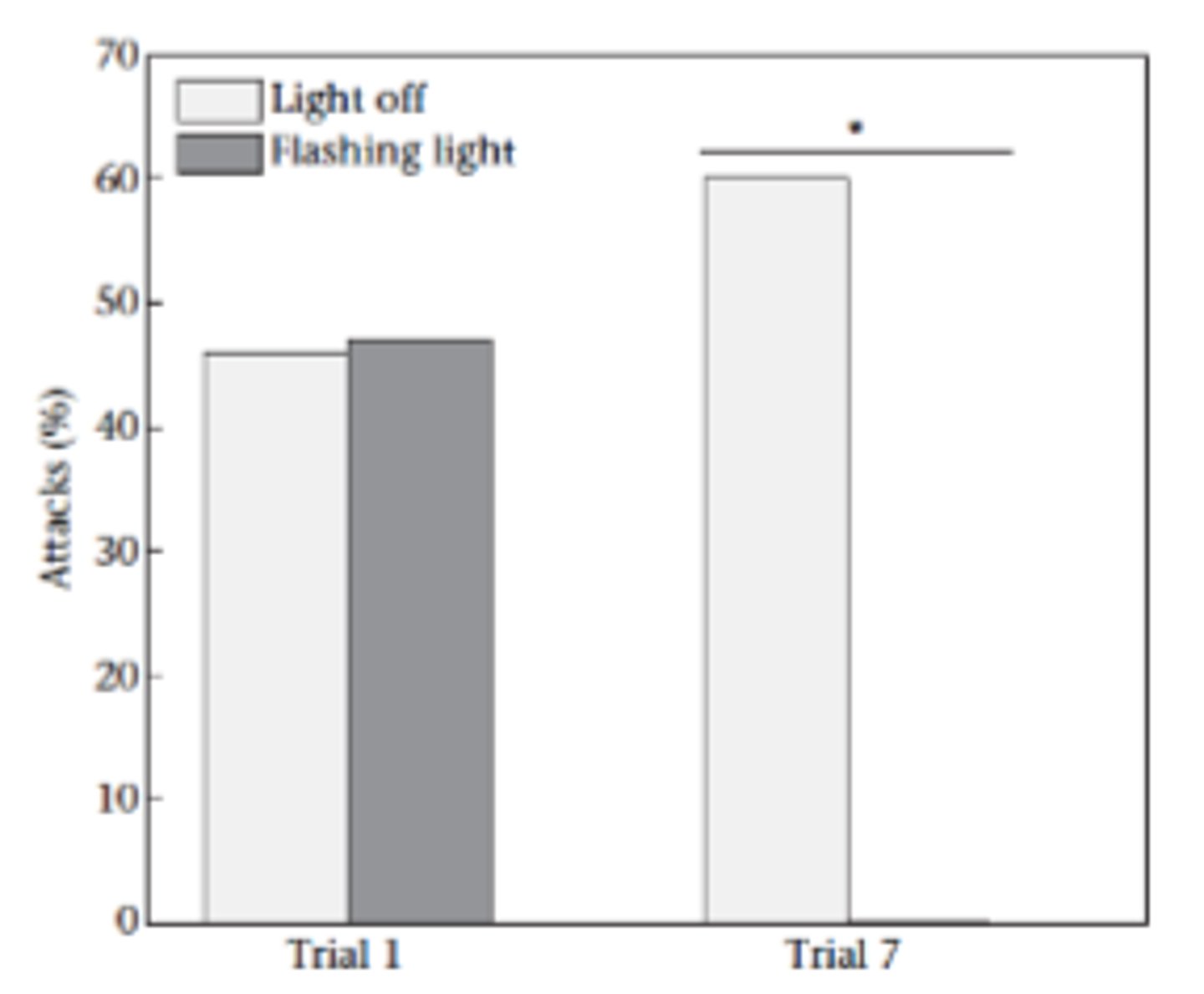
does flashing light facilitate avoidance of unpalatable prey w experience?
- yes (see graph)
startling examples
hemiptera: fulgoridae: spotted lantern fly
lepidoptera
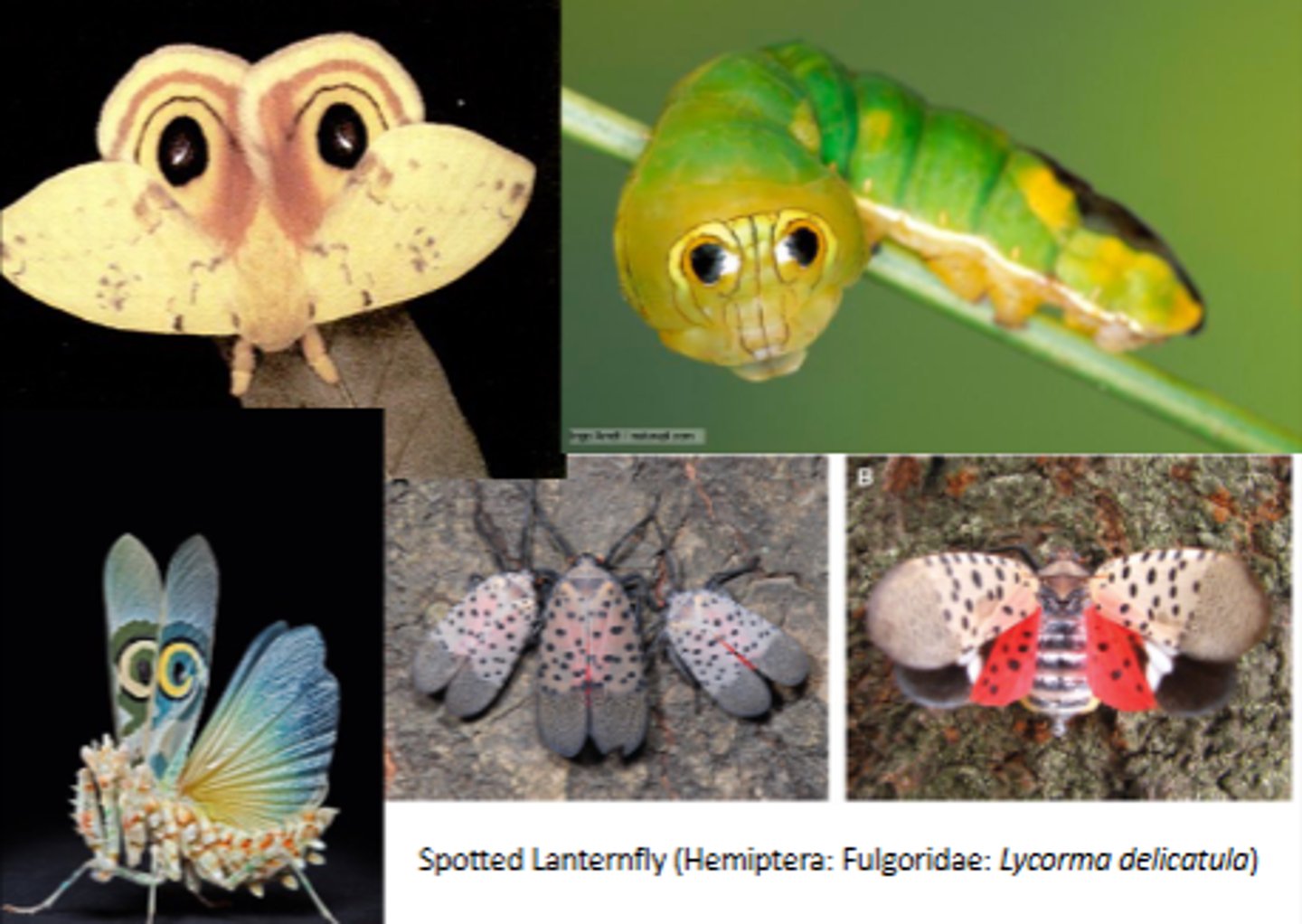
feigning death (thanatosis) examples
coleoptera: blue death feigning beetle
hemiptera: pentatomidae: stink bug
armor, weapons, bites, and pinches examples
rough & tumble
Zopheridae: Ironclad beetle
nolidae: uraba lugens
- stacked head capsules from multiple molts
hornworm: hissing, trashing, green goo
chemical (synthesized, sequestered), stings examples
sequestered defensive chemicals: insects on milkweed
lygaeidae
nymphalidae
chrysomelidae > batesian mimic (harmless species evolves resemble dangerous or unpalatable species, tricking predators)
synthesized defensive chemicals
coleoptera: carabidae: bombardier beetle
sting pain index
collective defense of social insect colony
blattodea: "exploding" termites
-defend against ant invaders
hymenoptera
-ants protect aphids against lacewing larvae and wasps
escape examples
hymenoptera
- trapjaw ants mandibles
- ant knows slope and will roll away
what is chemoreception?
detection of chemicals in both:
- gaseous state (olfaction)
--olfactory receptor numerous microscopic pores permit entry of chemicals
-on surfaces or in solution (contact chemoreception)
-- contact chemoreceptor just single pore at tip
chemoreceptors location
olfactory sensilla mainly on antennae and maxillary & labial pala
- other body parts > genitalia
contact over whole body, especially on mouthparts (labrum, maxillae, labium)
- often on legs and antennae
- ovipositors some female insects
-none on mandibles
what are semiochemicals?
chemicals produce by individuals affect behavior of other individuals (of same or different species)
_________ influence behavior conspecifics
pheromones influence behavior conspecifics (member of the same species)
___ influence behavior of heterospecifics
allomones, kairomones, and synomones influence behavior of heterospecifics
allomones are what?
benefit signaler
kairomones are what type of receiver?
benefit receiver but not signaler
synomones relation with signaler and receiver?
benefit both signaler and receiver
Can the same chemical signal fall into more than one category?
- same signal could fall into more then one category depending on recipient and context
- example: moth sends out chemical (pheromones) for mate, predators recognizes chemical & attacks (kairomones)
What does pattern perception for vision require?
optics & basic neurophysiological but also cognitive processing
What is a compound eye composed of (units)?
composed of multiple similar units > ommatidia
- each has optical light gathering portion & sensory portion transforms light into electrical energy
well compound eyes = _____ field of view
wide field of view
Do flying and jumping insects generally have good distance perception?
Yes, excellent
What color receptors do pterygote insect eyes have ancestrally?
ultraviolet, blue, and green receptors
-different set combine w different types ommatidia > heterogeneously across eye
What orders have more than three color receptor ranges?
Lepidoptera, Odonata and possibly some Hymenoptera and Coleoptera
Knockout of bab gene results in ___
UV Iridescence
vision
oceeli
adult insects (especially flying), immatures of many hemimetabolous possess set up to 3 dorsal ocelli
consist closely packed cluster photoreceptor cells w single lens
direct light
in some, important in visual detection of motion
vision
stemmata
larvae holometabolous lack compound & ocelli
most bear single-lens eye on sides of head (stemmata)
- one to tens of thous.
-most common, 6 stemmata on each side head (larval lep.)
mechanoreception
basis of both touch and hearing
- sensing vibrations carried by air,water and solid substrates
- many are proprioreceptors > monitoring position of body parts
- most large hairs on body
-mant contact chemoreceptors have this function
chordotonal organs definition and examples of locations?
subcuticular mechanoreceptors often function as joint propriorecptors or hearing organs
johnston's organ found in antennae of all adult entognath
- chordotonal organ in antennal pedicel has distal insertion between pedicel & flagellum
- help insect sense air or water flow orientation relative to gravity, even near-field sounds
tympanal organs subcuticular receptors specialized for sound reception have evolved multiple times & known from 7 orders
origin of hearing in insects?
to facilitate the detection and avoidance of predators
other use of hearing in insects?
can also be used for prey detection (mainly attack males)
- Some blood-sucking frog-biting midges that hone in on the calls of frogs
- Parasitoid flies that track singing Orthoptera or cicadas
substrate-bourne vibrations
widespread among insects
can be on soil or any solid material
Cataglyphis Desert Ants rely heavily on _______ to find their way back to their nest?
path integration
supplemented by visual cues
Path integration
calculating the current location relative to home (and hence the direct homeward trajectory) by integrating distance and directional information acquired during the outbound trip
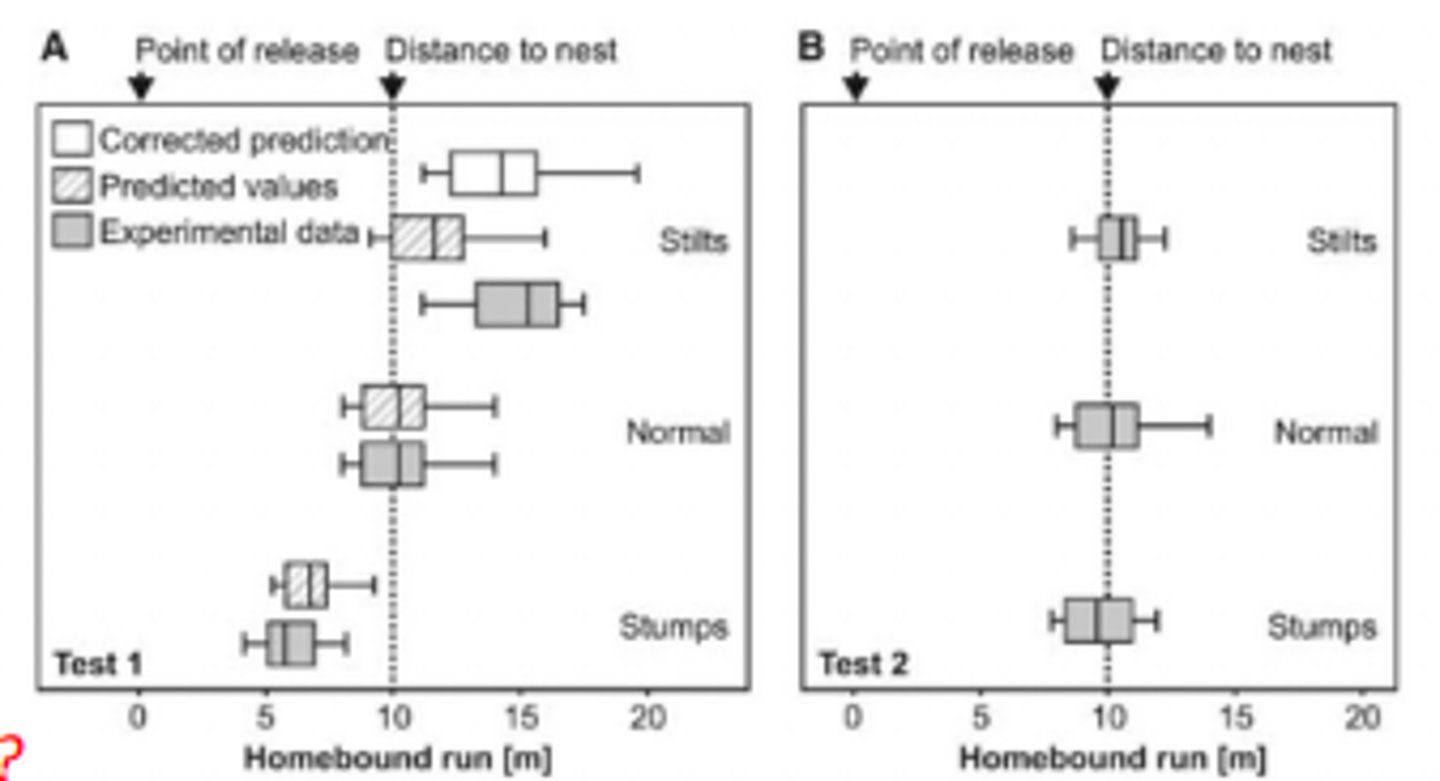
Cataglyphis desert ants Experiment
leg lengths normal during outbound journey but manipulated during homebound journey:
- stilted ants counted correct number steps but traveled to far
- stubbed ants ended up at shorter distance
ants tested after reemerging from nest after previous manipulation, manipulated legs during outbound and inbound:
- stilited and studded ants traveled correct distance
tympanal organ are what?
area of thin cuticle, typically has air ac behind it, allowing membrane vibrate freely
sound waves provide info. about intensity and frequency of acoustic signal
tympanal organ location
forelegs of crickets and katydids
thorax of some true bugs and flies
abdomen of cicadas, grasshoppers, and some moths and beetles
path integration in dung beetles
most remain at pile, burying themselves within or beneath
others form ball and roll it away
-Scarabaeous lamarki maintain straight path away > compass on sun position and wind direction
- others use celestial cues > position of sun and moon, patterns of light across sky, light polarization
small number leave to dig burrow, make multiple trips back to pile transfer dung to burrow
Scarabaeus galenus (Dung Beetle) experiment
beetles master route over multiple foraging trips, then displaced before returning to burrow
displace beetles before returning to borrow as if not displaced ignored landmarks, replying on path integration
- ignore visual cues
honey bee navigation
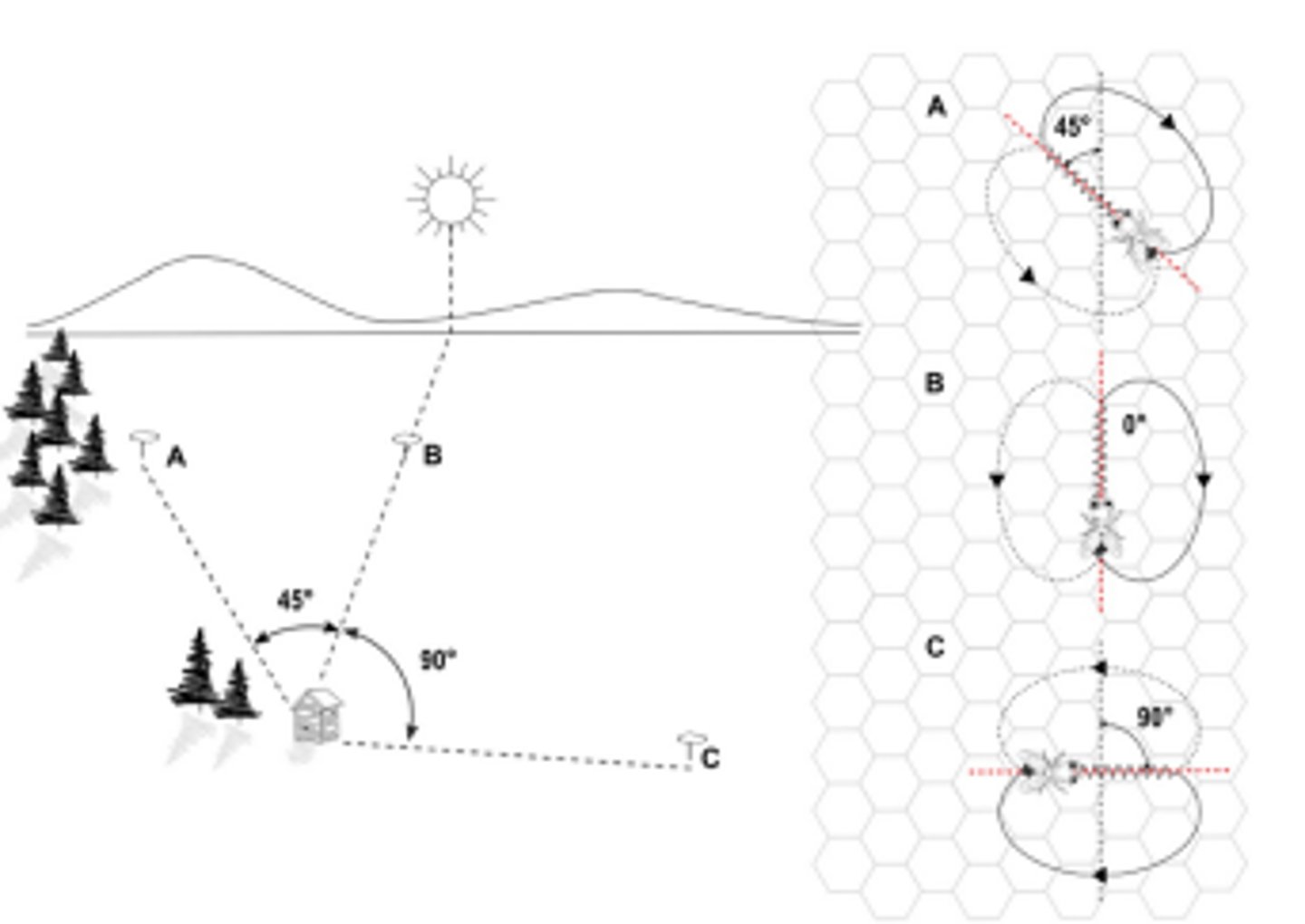
waggle dance > how honey bees share foraging information with colony
figure 8
upward vertical run > directly toward sun
angular deviation to left or right of vertical > bearing left or right of sun horizontal position in sky
1 sec. increase = 1.00 km
adjusted as sun moves
bee didn't see waggle dance in early foraging > less sufficient w dance
honey bee judging distance
flew at great height between tall buildings, underestimated distance traveled
- less optic flow
-images of ground move more slowly across retina
test of optic flow hypothesis
flew route w portion through narrow experimental tunnel w complex visual texture at close distance
- overestimated distance traveled
pattern in tunnel consisted of stripes parallel to flight, optic flow was reduced
-underestimated distance traveled
other honey bee cues
forage
-olfactory cues and past experience
navigation fine tuned by visual land markers
communication
narrow sense: "true communication"
-signal sender and recipient benefit
broader sense
- signal benefit to sender only or recipient only
signal: evolution > transmit specific message from emitter to intended receiver
cue: info, to receiver but not shaped by natural selection for purpose
-may be exploited by receiver to detriment of emitter
finding mate
sexual signals shaped by natural selection for connecting w mate
- chemical
-acoustic signals
-visual
-tactile
example of sexual signals
synchronous fireflies
cricket singing
cicada calling
jerusalem cricket drumming
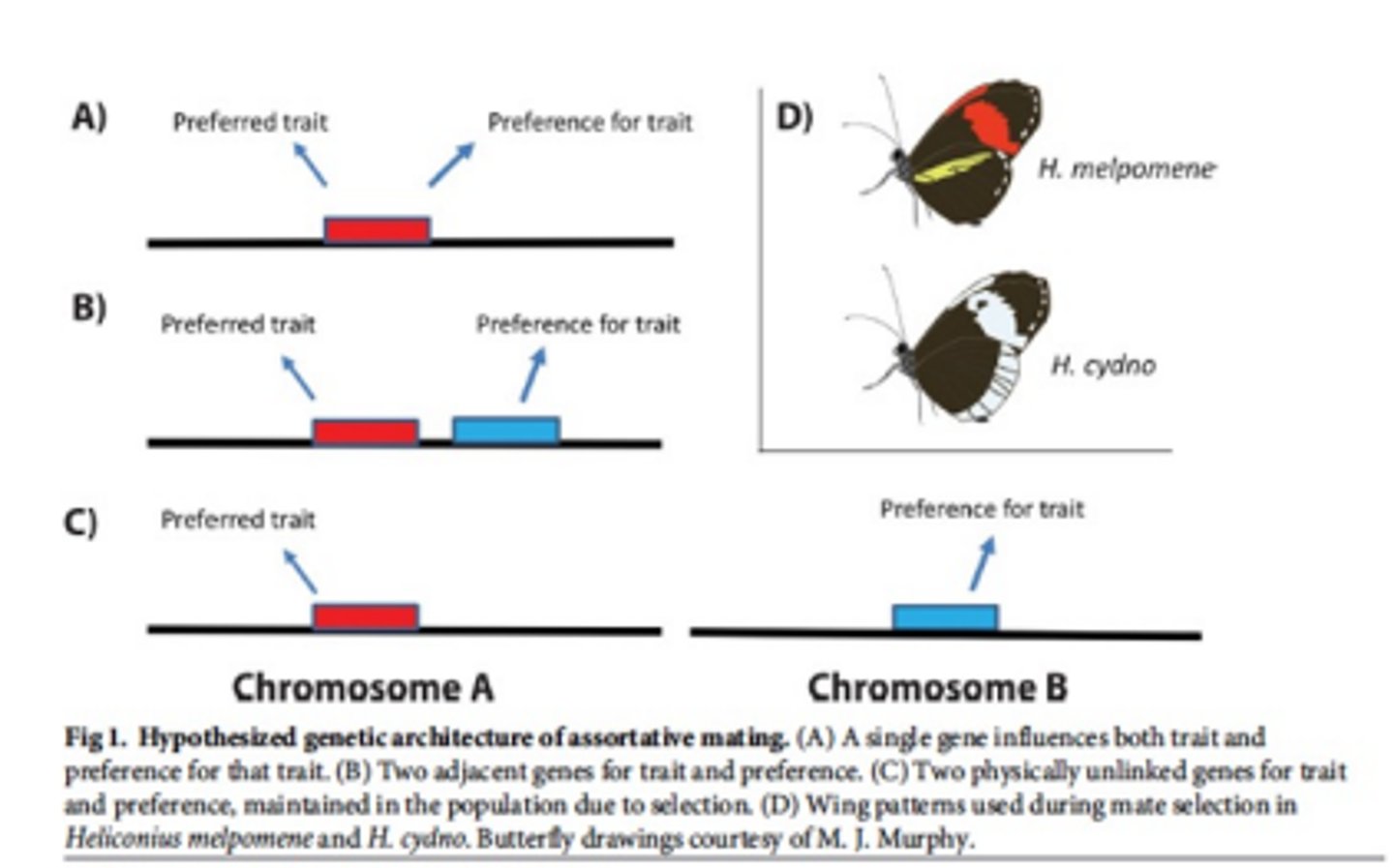
link between signal and preference
Heliconius cydno & H. melpomene
close physical linkage between at least some loci determining mate choice-associated traits and preferences
- wing pattern important in mate choice
- 3 genetic loci identified > difference in wing pattern preference btwn males of two spp.
-- one loci close major wing patterning gene > optix
link between signal and preference
Drosophila melanogaster
gene identified that pleiotropically involved with both synthesis and discrimination of cuticular sex pheromone
acoustic signals & preferences
Hawaiian Laupala crickets
- hybrids through interspecific crosses allowed quantitative genetic analysis of genetic arch. underlying variation > both male song and female preference
-ex. : co-localized song & preference quan. trait
-others, strong genetic covariance but no evidence strong physical linkage btwn song and pref. loci
phenotypic plasticity in signaling
Gryllus rubens
-seasonal difference in fall and spring song pulse rate
-- result of difference ambient temp. during juv. and adult development
- fall females preferred song w fall-like parameters
-spring females preferred songs w spring-like parameters
signals: queen bee
queen signals (mostly chemical)
-suppress worker reproduction
signals: trail pheromones
trail pheromones in ants and termites (chemical)
-reinforced recruited foragers returning to nest w food, dissipates as fewer returning w food
- trails pheromone partly learned than innate
signals: alarm pheromones
in social insects > aphids
- on species & context, may trigger dispersal or aggression
4 Types of Mimicry and Aposematism
batesian (harmless to minic dangerous model so mimic only benefits)
mullerian (2+ species share warning pattern so less predation from same predators)
aposematism (warning signal for defense)
wasp/bee mimics (seem harmless but predators know to avoid)
Types of chemical defenses
sequestered chemicals: insects on milkweed to get toxins
syntheiszed chemi: bombardier beetles that have hydroquinones and H202 in reaction chambers for a hot spray
stings: hymenoptera with the pain indext
What are semiochemicals
chemicals produced by individuals that affect other’s behavior
4 types of chemoreception
pheromones: affect conspecifics (same species) eg sex, train, alarm phermones
allomones: benefit signaler, not reciever (kairomone via defense secretions exploited by predator)
kairmones: benefit receiver, not signaler (predator detects prey trail)
synomones: benefit receiver and signaler (pollinators to flowers)
2 types of insect receptors for chemorecpetion
olifactor senses: multiple pores on antennae and palps
contact chemoreceptors: single pore on mouth, leg, ovipostioor with NO recpetors on manidbles
the 3 types of eyes
compound eyes: ommatidia with optical portion for wide field of view with excellent distnace perception
ocelli: 3 dorsal ocelli inflying insets and hemimetabolous immatures; single len over cluster of photoreceptors; detect light and motion
stemmata: HOLOMETABOLOUS LARVAE only

