Chapter 8: Rotational Motion Physics
 Call Kai
 Learn
Learn Practice Test
 Spaced Repetition
 Match
Match Flashcards
 Knowt Play
1/105

There's no tags or description
Looks like no tags are added yet.
Name | Mastery | Learn | Test | Matching | Spaced | Call with Kai |
|---|
No analytics yet
Send a link to your students to track their progress
106 Terms
Rotational Motion simple words
something spins around itself
Rotational Motion Definition
the motion of an object that turns about an internal axis
Circular Motion simple words
something moves in a circle path
Circular Motion definition
the motion of an object that moves in a circular path.
TWO types of speed
-Tangential
-Rotational
Tangential Speed symbol
(v)
Rotational Speed symbol
(ω)
Tangential speed=
linear speed
Rotational speed=
angular speed
Tangential speed unit
unit: m/s
Rotational speed unit
unit: rad/s
Tangential Speed simple words
How fast something moves along the circle path “REGULAR SPEED”
Tangential Speed definition
distance traveled per unit of time
Rotational Speed simple words
How fast something spins
Rotational Speed definition
angular displacement per unit of time
Tangential speed formula
ν = ωr
ν = ωr means…
Rotational speed x Radial distance
All points on a rotating object have the same ________
rotational speed
Points closer to the circumference have a higher ________ than points closer to the center
tangential speed
Everyone on a spinning merry-go-round spins at the same rotational speed
BUT
The person sitting farther from the center moves faster in a straight line!
The person sitting farther from the center moves faster in a straight line! WHY?
Because they travel a bigger circle
So the farther you are from the center →
the faster your tangential speed
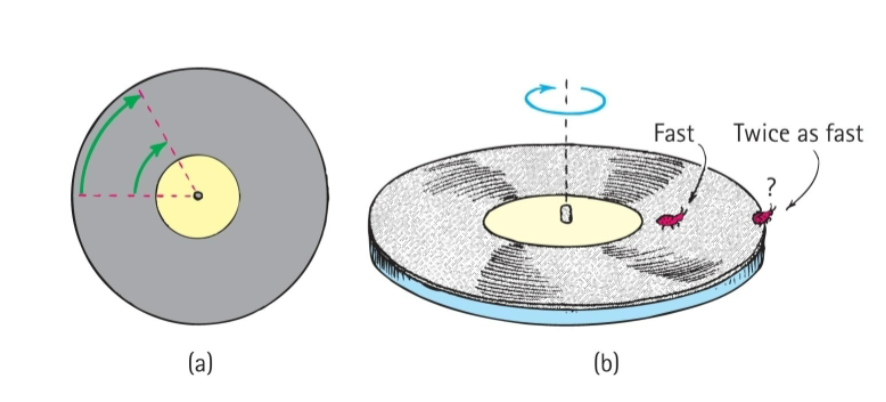
A ladybug sits halfway between the rotational axis and the
outer edge of the turntable. When the turntable is rotating
and the bug has a tangential speed of 2 cm/s, what will be
the tangential speed of her friend who sits at the outer
edge?
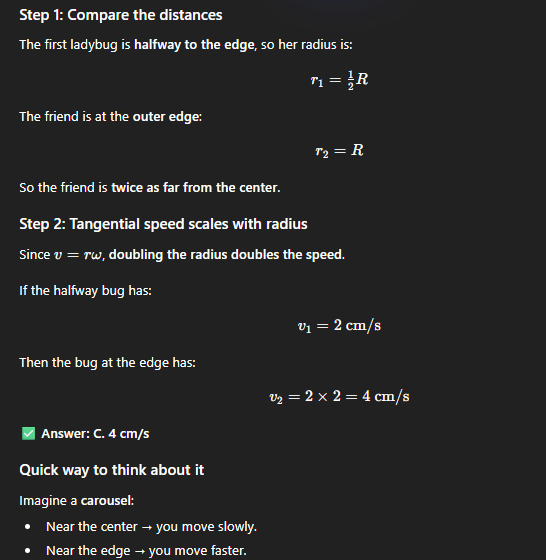
A. 1 cm/s
B. 2 cm/s
C. 4 cm/s
D. 8 cm/s
4 cm/s
Rotational Inertia simple words
how hard it is to start or stop spinning something
Rotational Inertia definition
the property of an object to resist change in its rotational state of motion.
The greater the rotational inertia of an object
the
harder it is to change its rotational state.
Rotational Inertia symbol
symbol I
What affects rotational inertia?
Mass (how heavy it is)
WHERE the mass is
More mass →
harder to spin
Example:
Spin a:
pencil
baseball bat
Which one is harder to spin?
The bat is harder to spin because it has more mass
Mass far from the axis makes rotational inertia ______.
much bigger
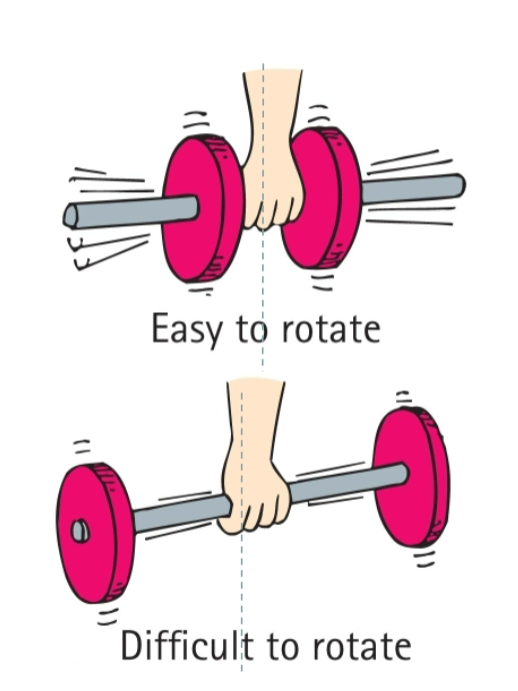
Example:
Spin a dumbbell.
Case 1
Weights close to center.
Easy to spin
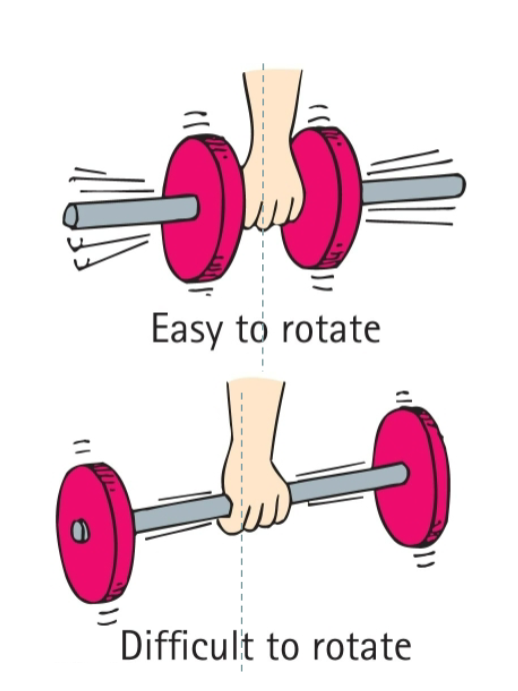
Example:
Spin a dumbbell
Case 2
Weights far from center
Harder to spin

this is the»»
axis of rotation

The farther the mass is from the center →
the HARDER it is to spin
Axis of rotation matters
The same object can have different rotational inertia depending on the axis.
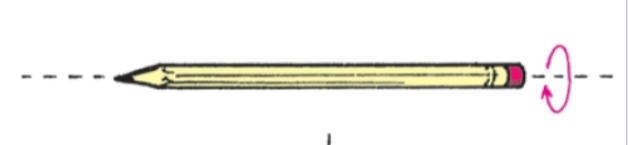
where is the axis?
through the center along the pencil's length.
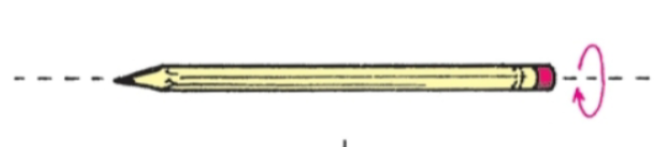
Where the mass is?
Almost all the pencil’s mass is very close to that axis.
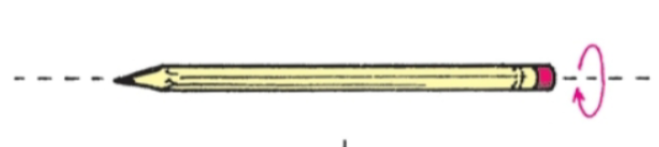
how is spining?
spins like a drill or screwdriver, rotating along its length.
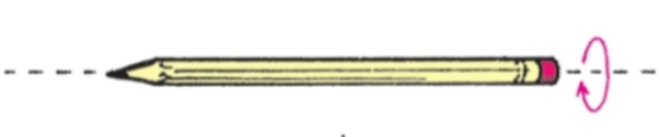
So the mass doesn’t have to move very far when it spins →
easy to rotate.
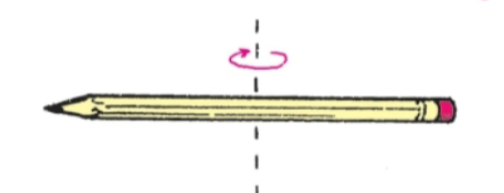
where is the axis?
goes through the middle of the pencil vertically
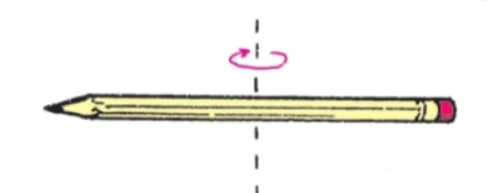
where is the mass?
endS of the pencil are far from the axis
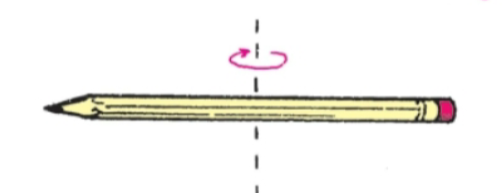
how is spining?
Like spinning a baton.
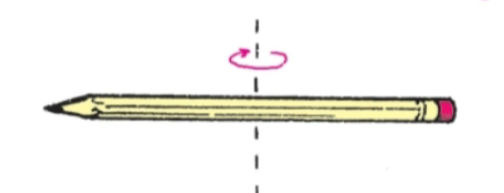
Now the mass has to move in big circles when it spins →
harder to rotate
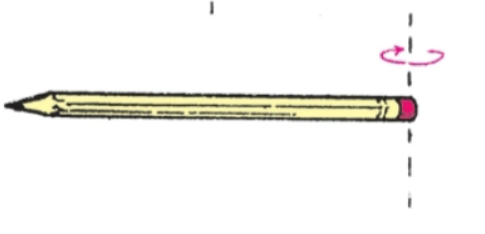
where is the axis?
goes through one end of the pencil
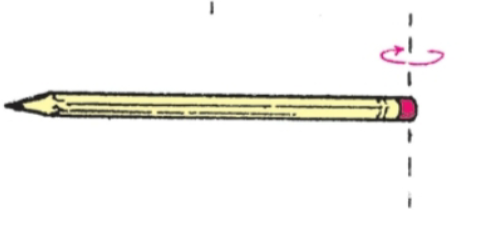
where is the mass?
Almost the entire pencil is far from the axis
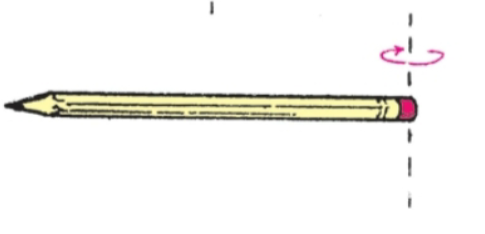
how is spining?
Like holding a hammer at the handle and swinging it
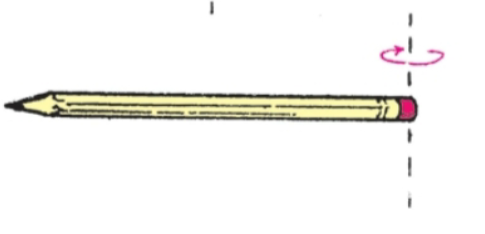
Now the mass travels the largest circles when rotating →
hardest to spin
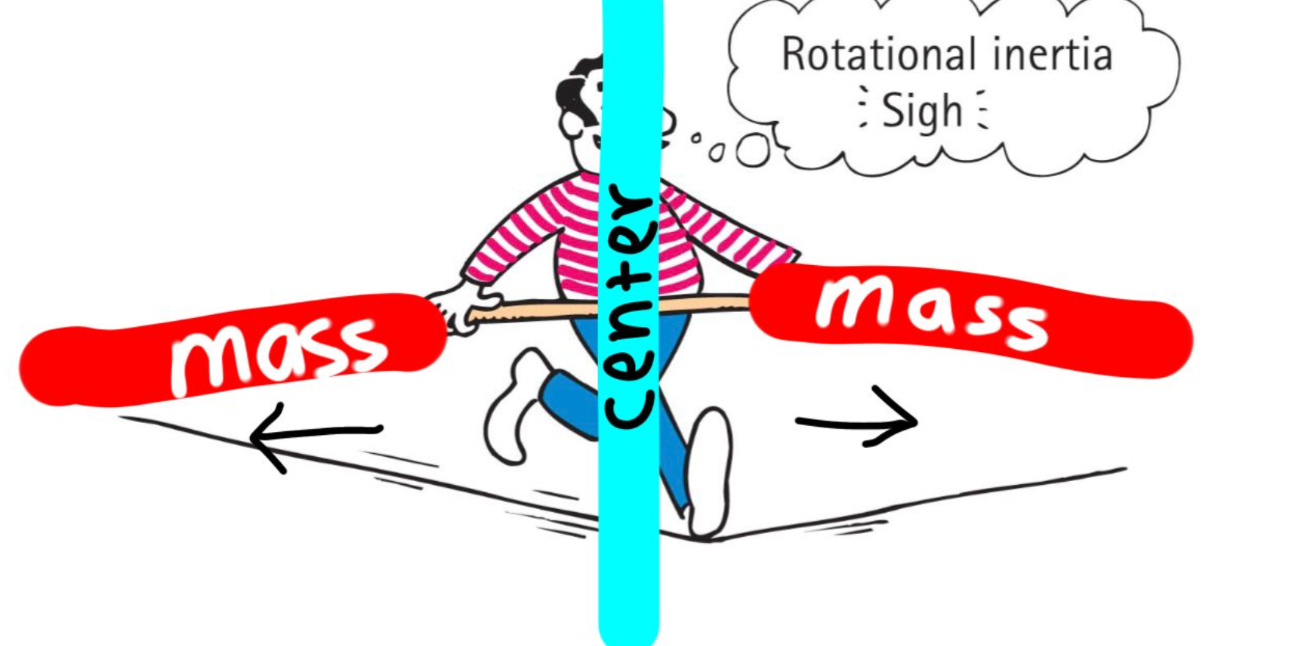
A tightrope walker carries a long pole.
Why?
The pole spreads the mass far from the center
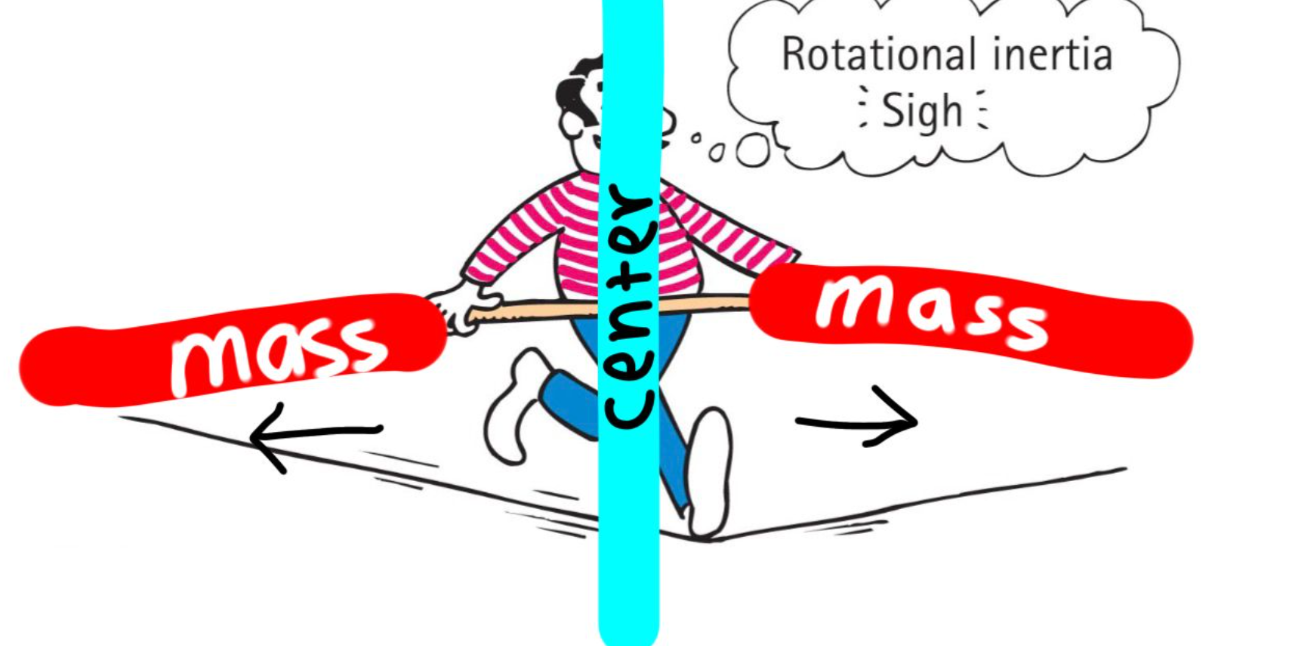
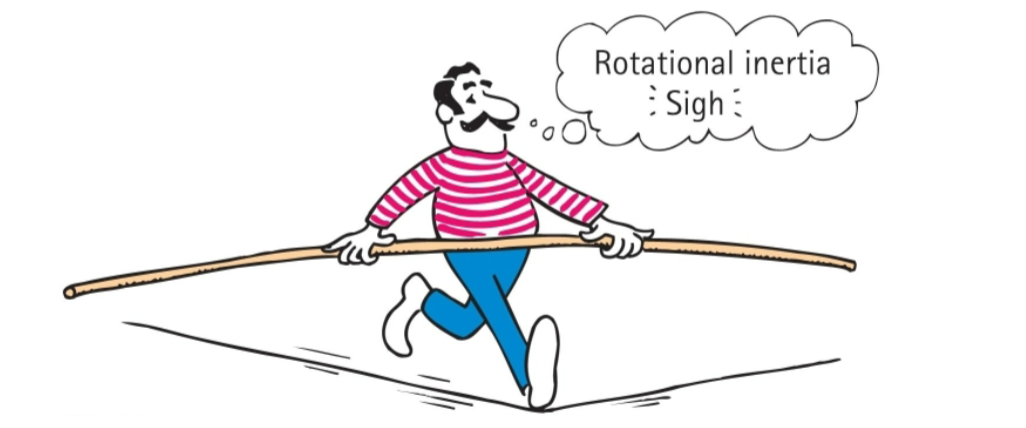
The pole spreads the mass far from the center… THIS MEANS
That increases rotational inertia.
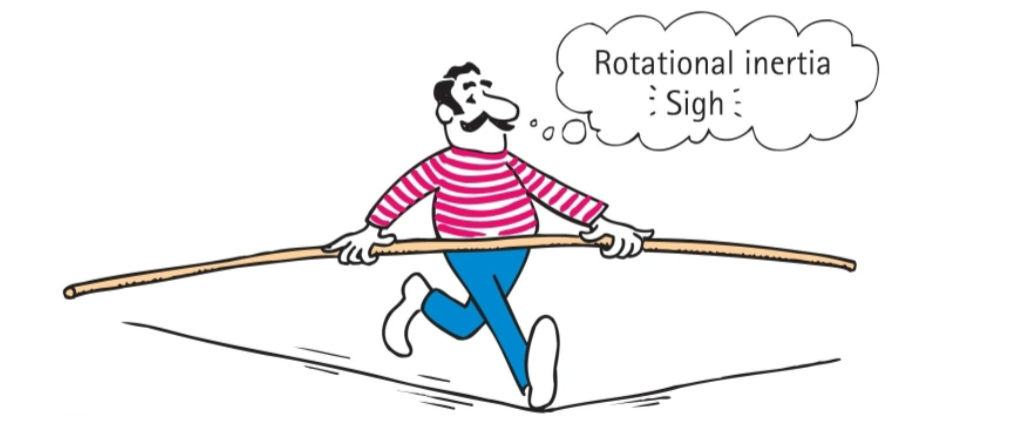
So if they start tipping….
they rotate slower, giving them time to recover balance
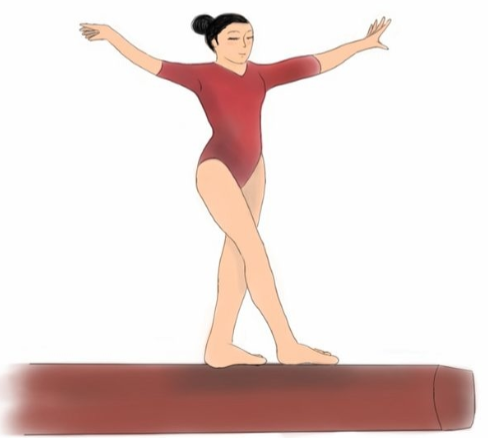
When walking on a balance beam, people extend their arms.
Why?
Arms out → mass farther from center
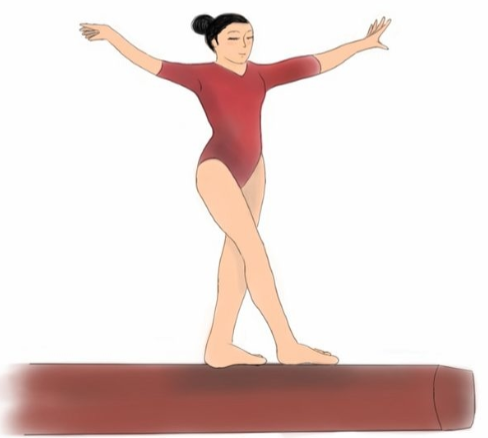
mass farther from center →
bigger rotational inertia.
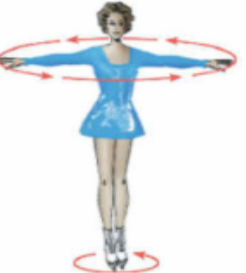
Imagine a figure skater spinning.
Arms OUT
Mass is far from center
→ rotational inertia large
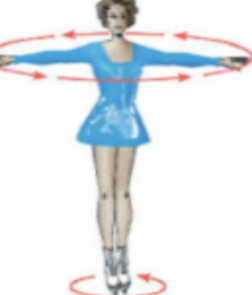
rotational inertia large
Result:
Spin slow
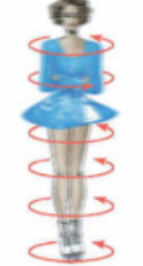
Arms IN
Mass closer to center
→ rotational inertia small
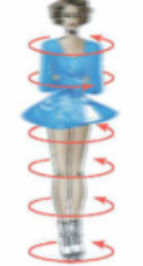
rotational inertia small
Result:
Spin faster
Which has greater rotational inertia?
A. Two masses close to the center
B. Two masses far from the center
B
Because mass is farther from the axis.
What is Torque? simple words
the ability of a force to make something rotate
What is Torque? definition
tend to change the rotational motion of objects
reminder: rotational motion= how fast something spin
Regular force →
makes things move straight
Torque →
makes things spin
A force will cause more or less rotation depending on three things
1) Magnitude of the force (how strong the push is)
A bigger push = more rotation
A smaller push = less rotation
A force will cause more or less rotation depending on three things
Where the force is applied (distance from the axis/pivot)
Farther from the pivot = easier to rotate
Closer to the pivot = harder to rotate
A force will cause more or less rotation depending on three things
Direction of the force
The force must push in a direction that causes rotation
Example:
Push the door sideways → it opens
Push straight into the hinge → it barely rotates
What is a pivot?
the point things rotate around
pivot example
A seesaw
A door hinge
A wrench turning a bolt
The FARTHER from the pivot you push →
the MORE torque
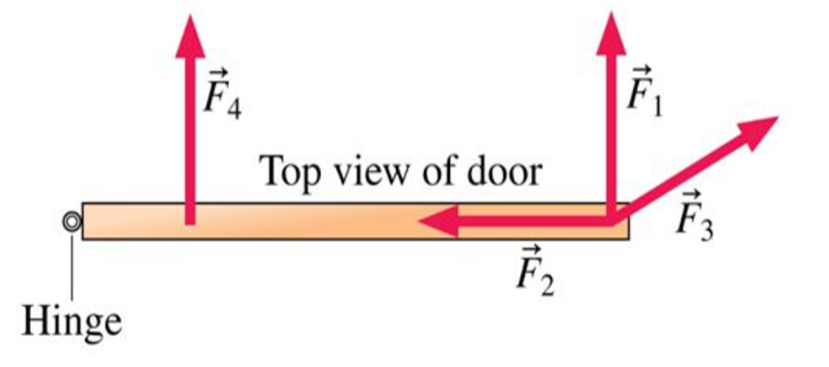
Everyday Example: Opening a Door
A door rotates around the ____.
hinge
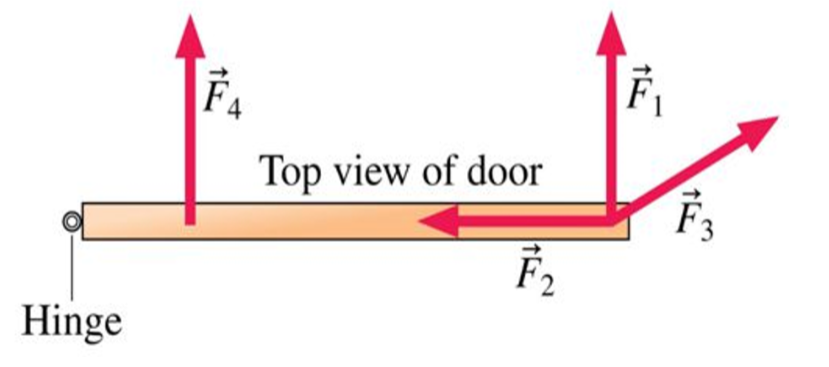
Push near the hinge (F4)
Hard to open
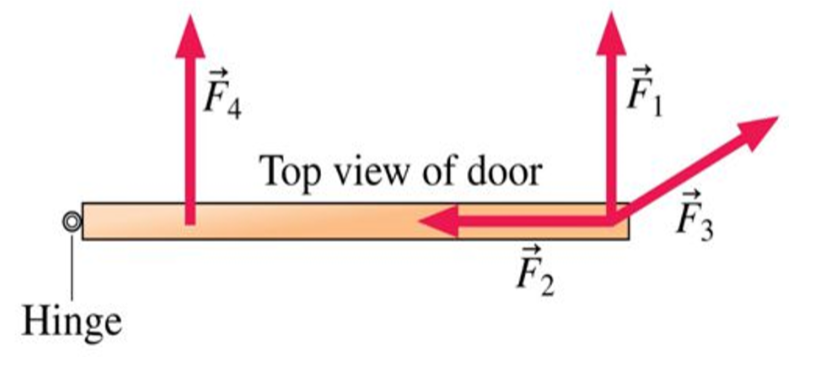
Push at the handle (F1)
Easy to open.
why?
Because the handle is farther from the pivot
More distance →
more torque
The Torque Formula
lever arm x force
Torque Formula in equation
τ=rF
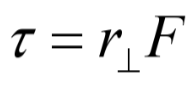
τ (tau) =
torque
r =
distance from pivot (lever arm)
F =
force
Based only on the formula Torque depends on
1⃣ How hard you push
2⃣ How far from the pivot you push
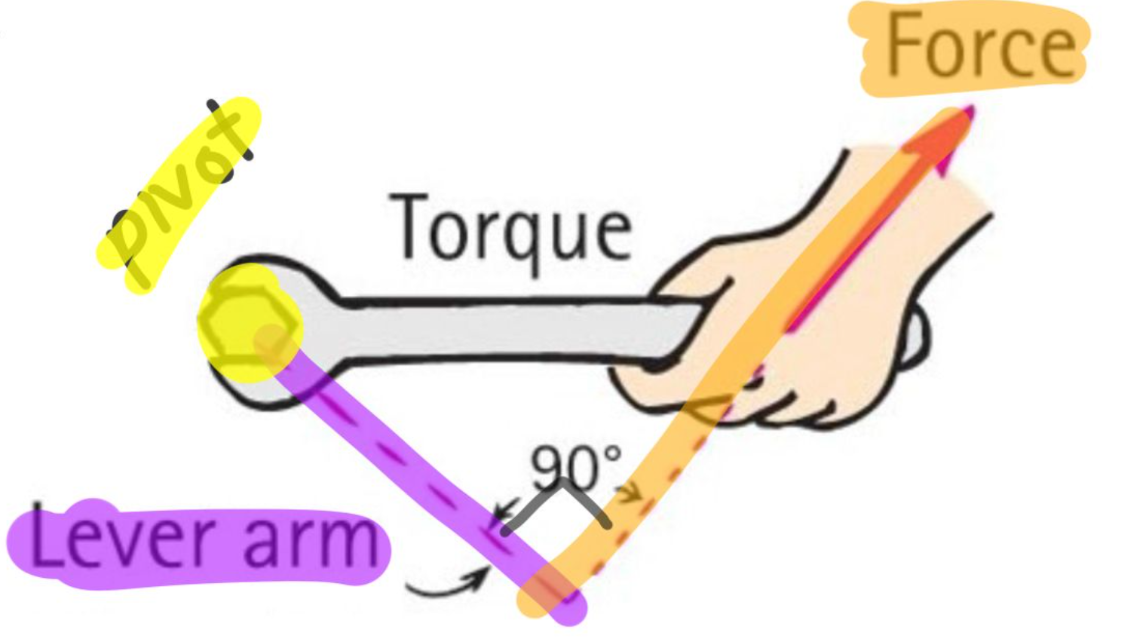
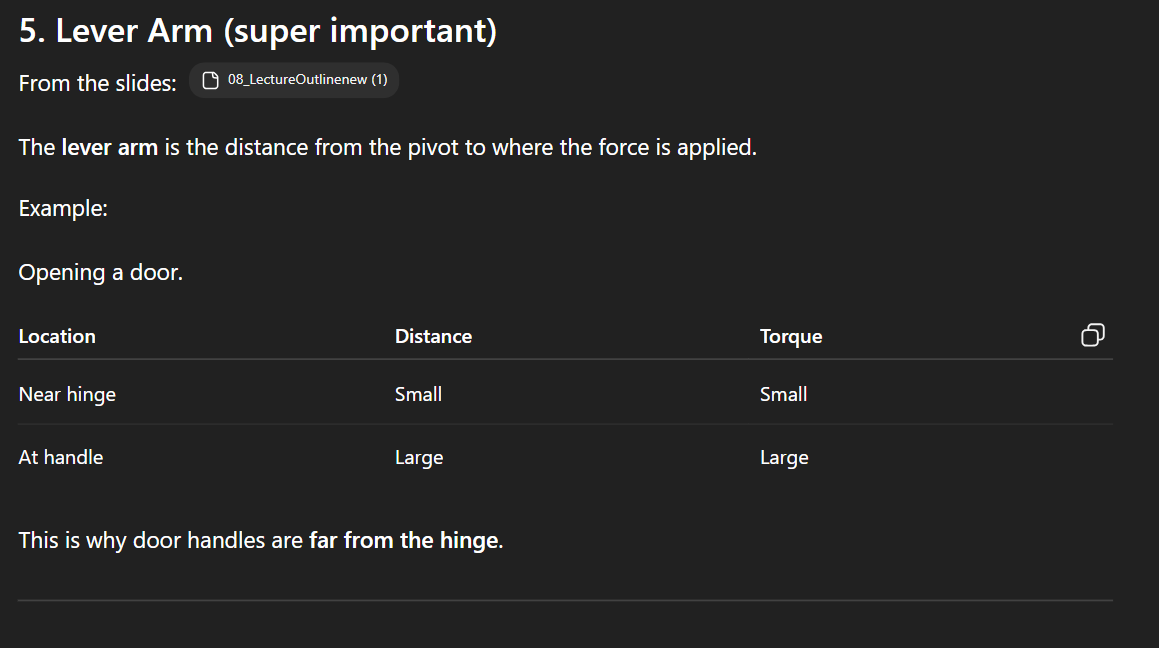
lever arm
the PERPENDICULAR distance from the pivot to where the force is applied.
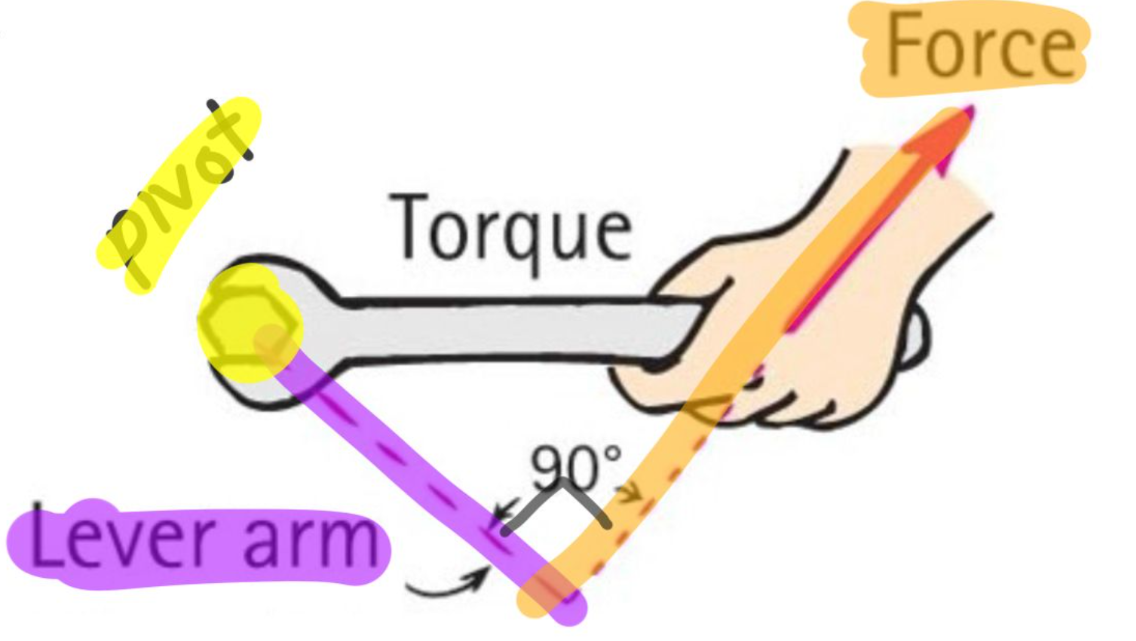
check example
example
The larger the lever arm»»»
the more torque (if force doesnt change)
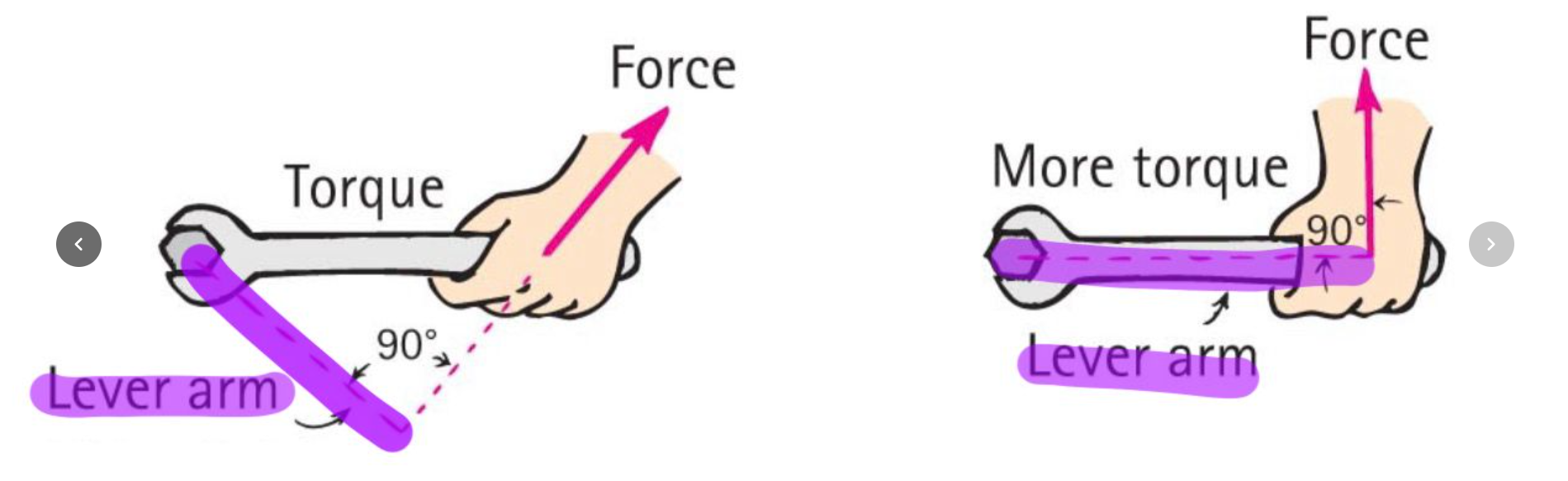
Torque is strongest when the force is ______ to the object.
perpendicular (90°)
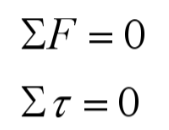
rotational equilibrium
Left torque = Right torque
Left torque = Right torque
Balance/Equilibrium
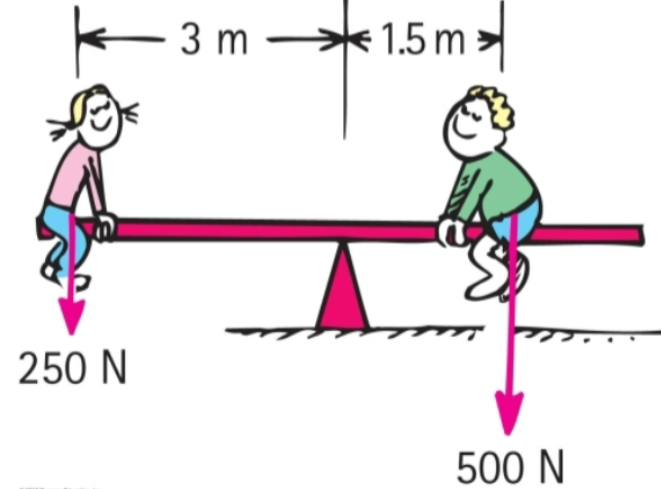
Even if the kids have different weights, the seesaw can balance.
How?
Torque must be equal on both sides
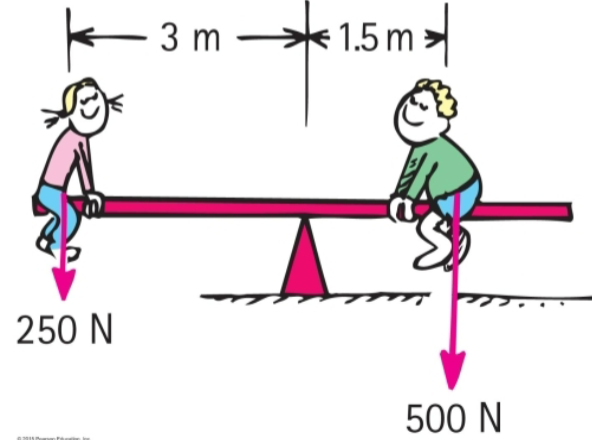
Seesaw Example
Left kid has»»
Force = 250 N
Distance = 3 m
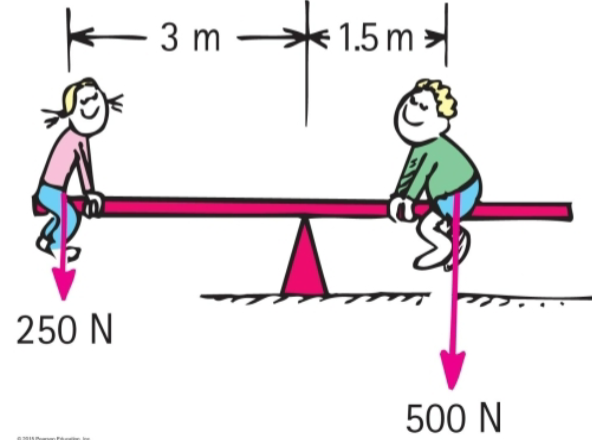
Seesaw Example
Right kid has»»
Force = 500 N
Distance = 1.5 m
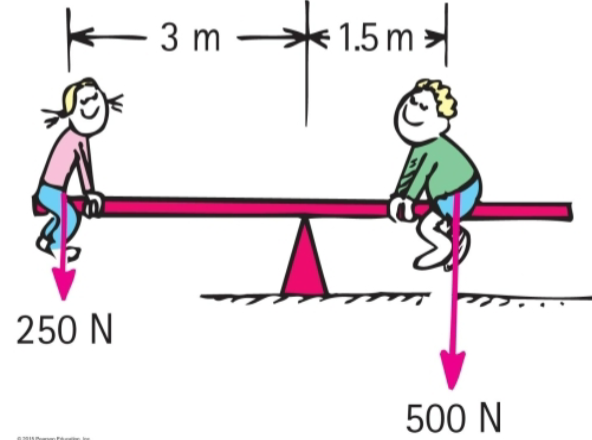
Seesaw Example
Left side torque
τ=3×250=750
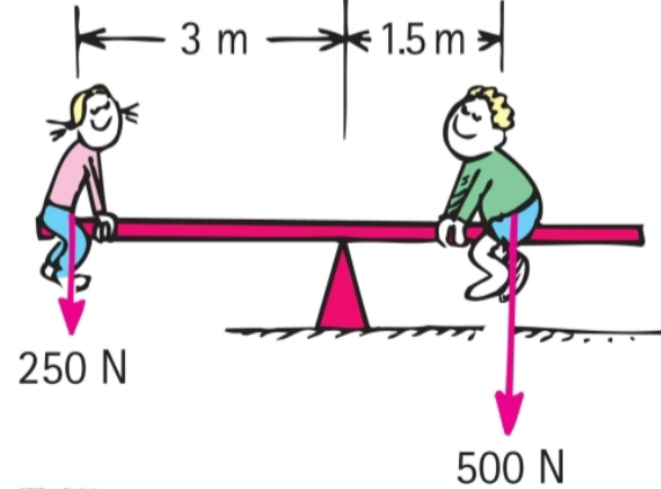
Seesaw Example
Right side torque
τ=1.5×500=750
Seesaw Example
that means Both sides produce 750 N·m of torque SO»»»
750 = 750 → torques balance
Στ=0
The seesaw does not rotate, so it stays level
Seesaw Example
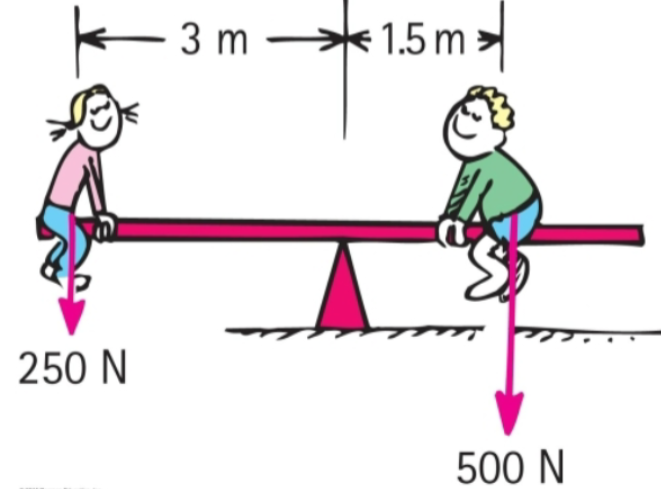
A lighter person can balance a heavier person if
they sit farther from the pivot
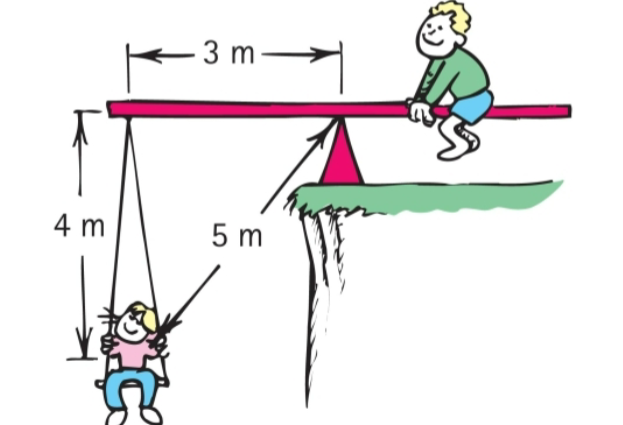
The same girl is suspended from a 4-m rope hanging from her end of the seesaw. Is the seesaw still balanced?
Step 1: Look at the pivot
The pivot is the triangle in the middle (where the seesaw balances).
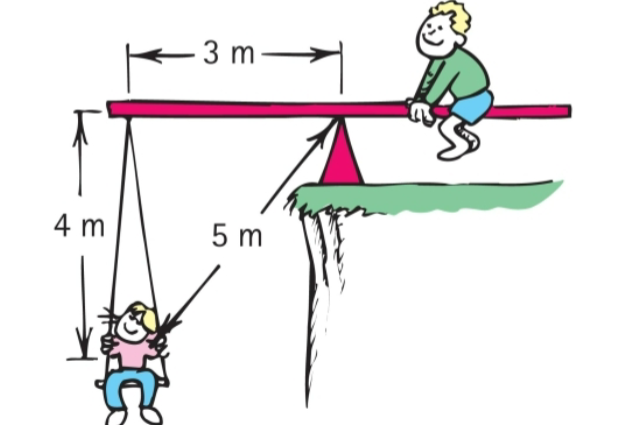
Step 2: Distance from pivot
Both kids are still 3 m from the pivot along the seesaw.
Even though the girl is hanging 4 m below, the horizontal distance from the pivot is still the same.
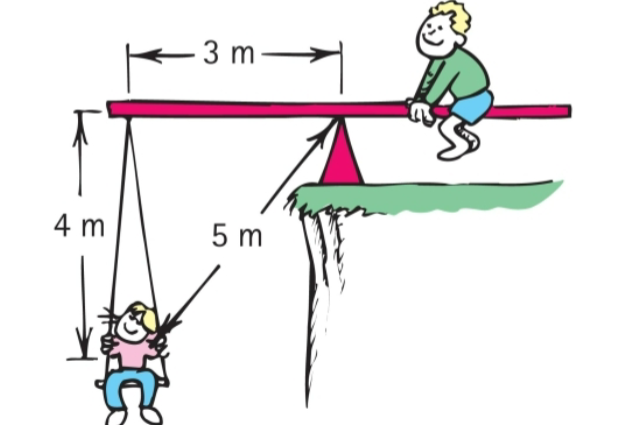
Step 3: Torque depends on τ=rF
meaning»»
r = horizontal distance from pivot
F = weight
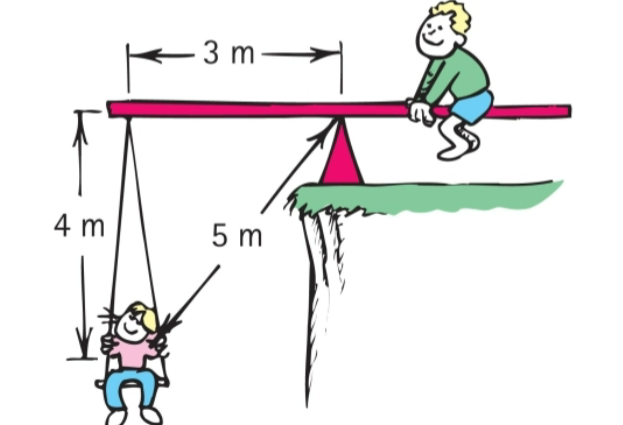
Step 4: Compare the torques
Girl:
Force = 250 N
Distance = 3 m
τ=3×250=750
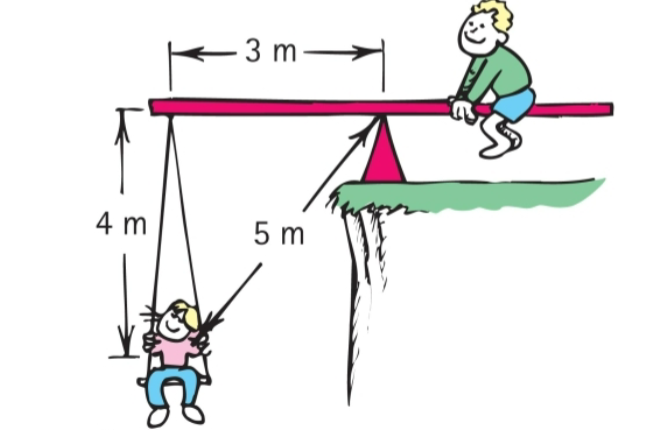
Step 4: Compare the torques
Boy:
Force = 500 N
Distance = 1.5 m
τ=1.5×500=750
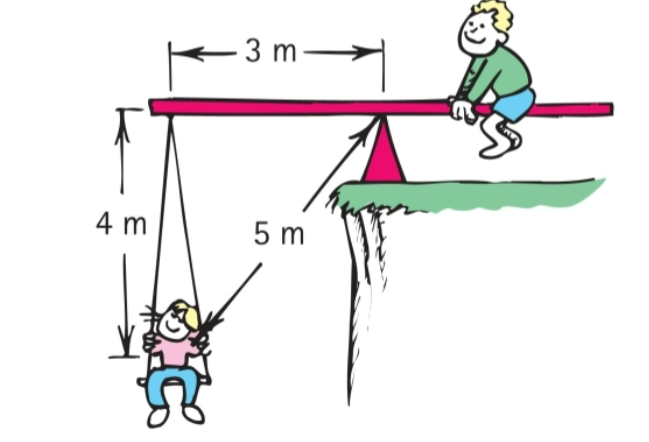
Step 5: Compare
Both torques are 750 N·m, so they still balance
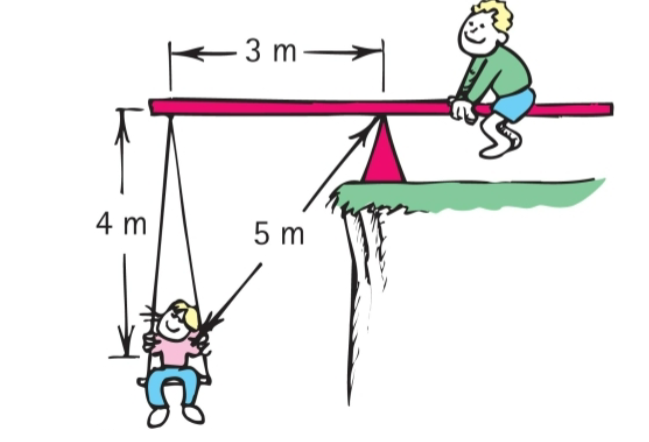
Why the 4 m rope doesn’t matter?
The rope just moves the girl downward, but not farther sideways from the pivot. Torque only cares about sideways (perpendicular) distance, not vertical distance.
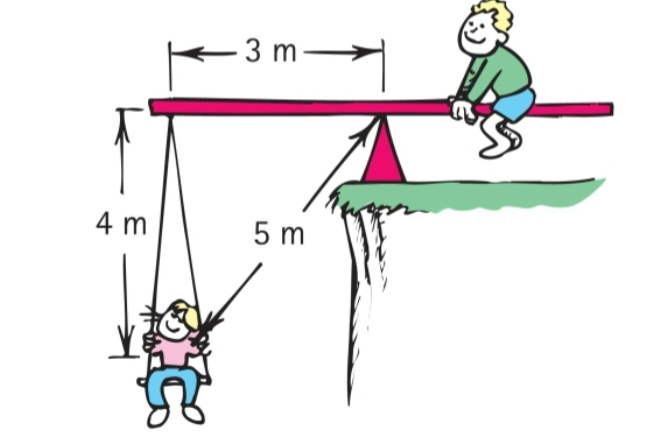
In this example torque only depends on the ______distance from the pivot, not how far down the rope goes.
horizontal

