Art History Chapter 3 Egypt
0.0(0)
Studied by 7 people Call Kai
 Learn
Learn Practice Test
 Spaced Repetition
 Match
Match Flashcards
 Knowt Play
Card Sorting
1/25

Earn XP
Description and Tags
Last updated 10:18 PM on 10/13/22
Name | Mastery | Learn | Test | Matching | Spaced | Call with Kai |
|---|
No analytics yet
Send a link to your students to track their progress
26 Terms
1
New cards
Palette Of King Narmer
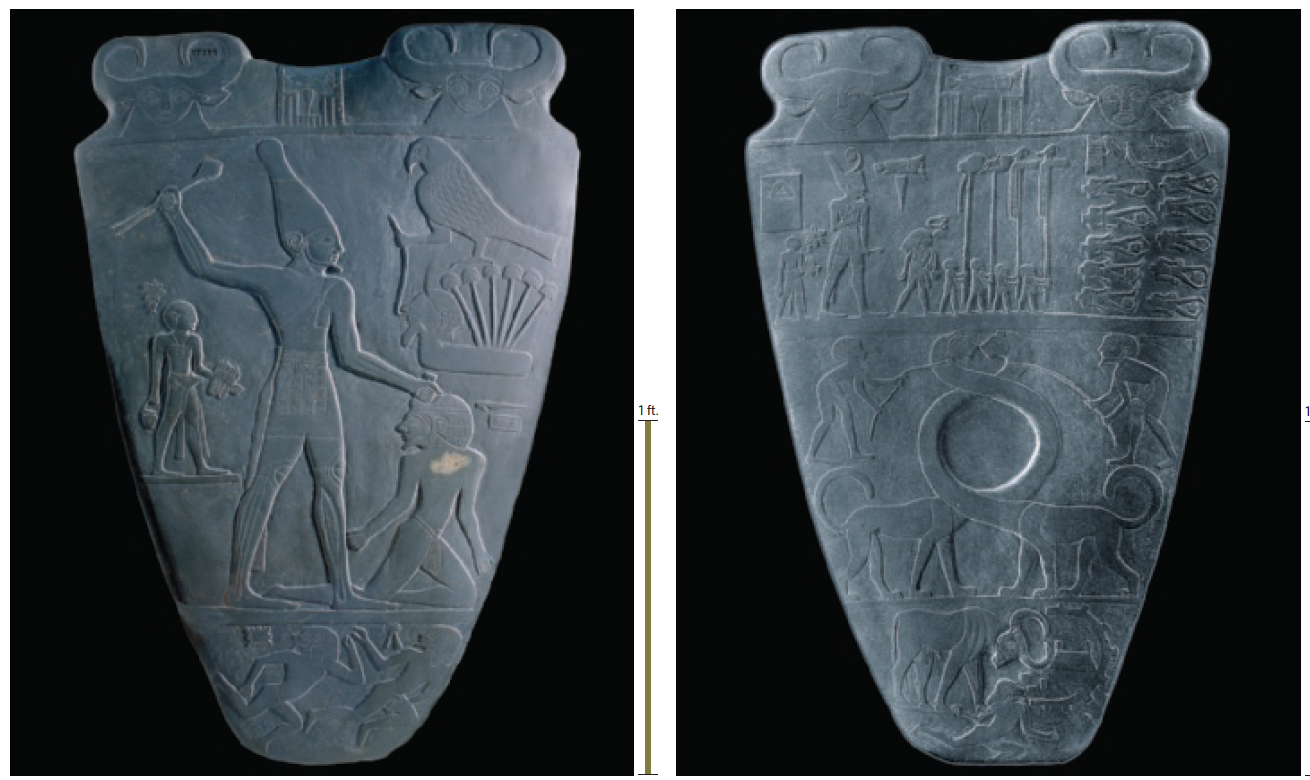
Predynastic/ Old Kingdom 3,000 BCE 2' Tall, palette to hold eyeliner. (coal and oil) Found in the temple of horus. Two felines show the idea of a unified egypt. Two crown types, one side represents lower egypt and the other represents upper egypt. Upper Egypt is south, this is because it is upriver on the nile.
Predynastic/ Old Kingdom 3,000 BCE 2' Tall, palette to hold eyeliner. (coal and oil) Found in the temple of horus. Two felines show the idea of a unified egypt. Two crown types, one side represents lower egypt and the other represents upper egypt. Upper Egypt is south, this is because it is upriver on the nile.
2
New cards
Imhotep, Old Kingdom
Creator of the step pyramid, famous architect of the time.
3
New cards
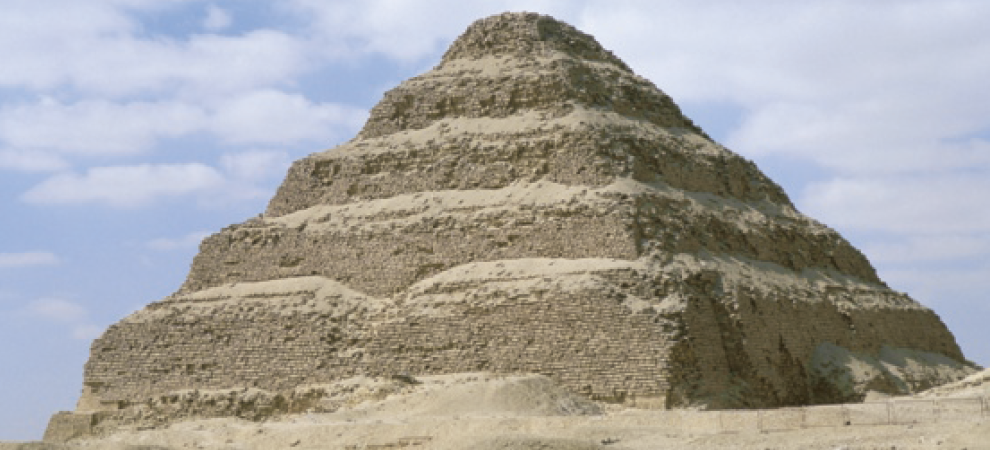
Stepped Pyramid, Old Kingdom, 2600 BCE. Created by the great architect imhotep. Where people were buried
4
New cards
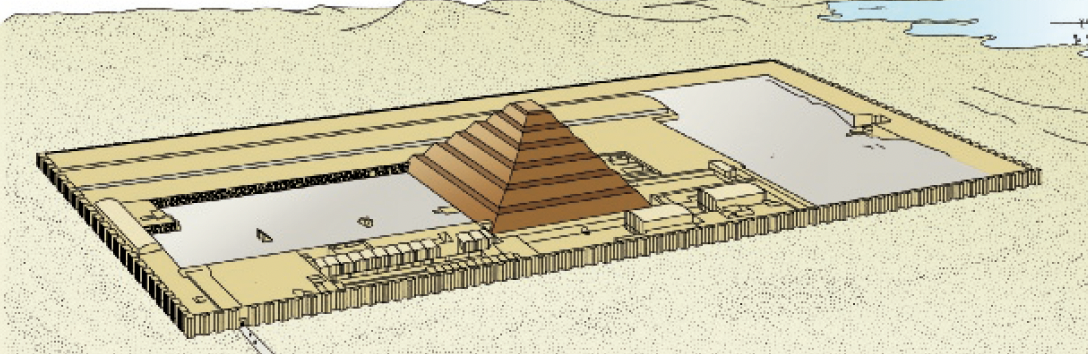
Mortuary Precinct of Djoser, Old Kingdom. 2600 BCE Made of rock and baked bricks. white limestone, less floods at this time so this could be used.
5
New cards
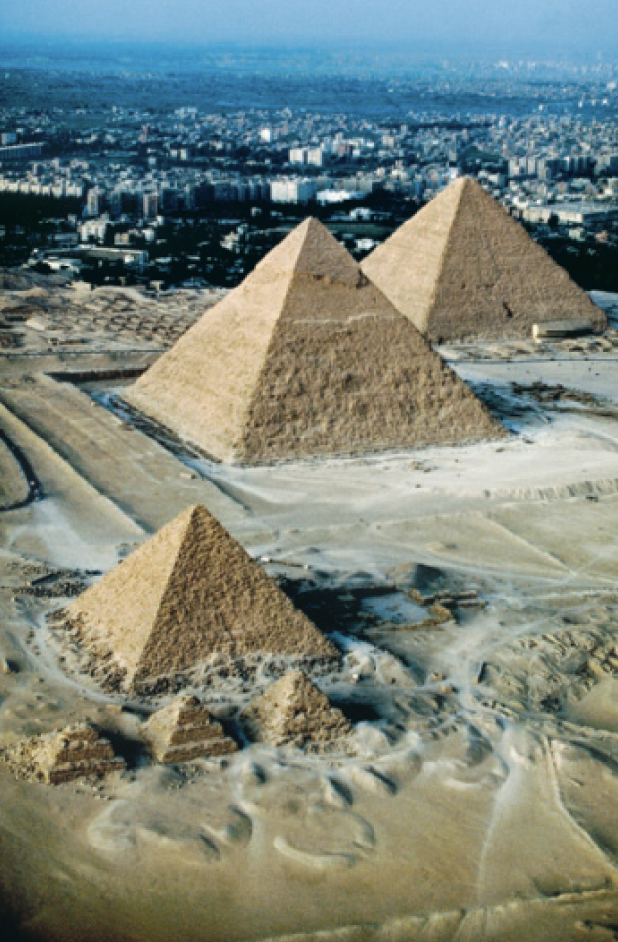
Great Pyramids, Gizeh, Dynasty 4, Old Kingdom. All pyramids are on west side of city, where the sun sets. In a necopolis (nec-death cropolis-city). made for.a grandfather, father, and son. Originally layered in limestone but that was taken and now the sandstone is left behind. Mimic orions belt, the air shafts go up towards the belt and the faces are pointing NESW
6
New cards
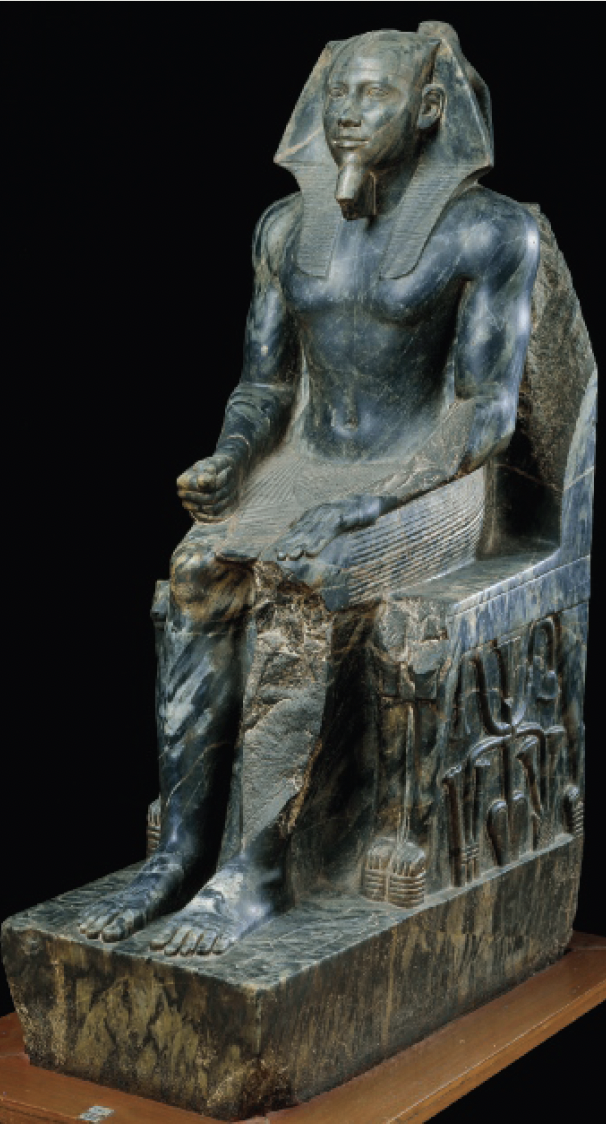
Khafre, from large pyramid at Gizeh Egypt, Dynasty IV 2490-2472BCE, Old Kingdom, Made of diorite, a Ka statue= this was in case the soul wanted to come back to earth. 4 people sculpted this at a time to make it go faster. Idealized- this man is shown young and fit. We know he's a king because: Nemes (linen headress) false bear, hours (bird of prey) sitting atop stylized lotus & papyrus (unified egypt).
7
New cards
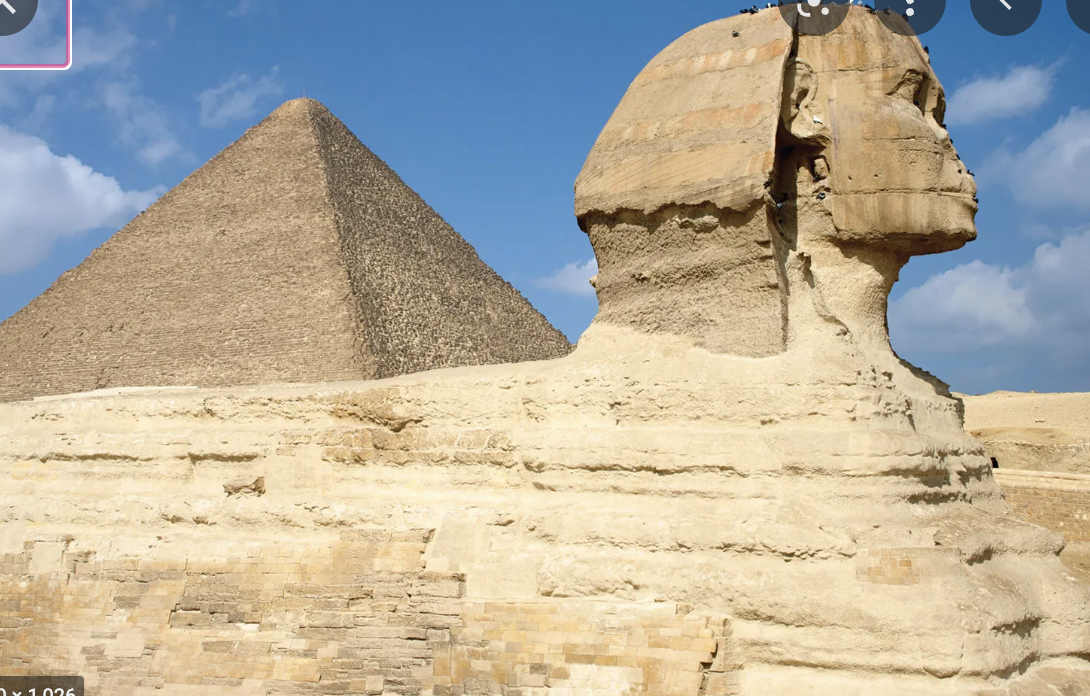
Great Sphinx Sandstone, Old Kingdom, this is a portrait of khafre. 65' tall 240' long. Napolean may have come and knocked his beard off. Composite beast. Khafre because of the names and false beard.
8
New cards
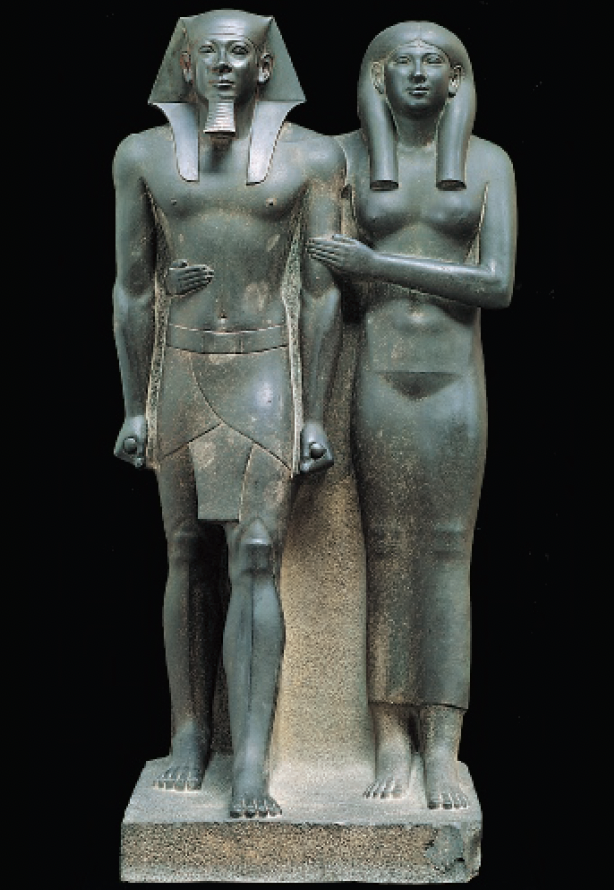
Menkaure and queen from Gizeh, Old Kingdom, Graywacke 2500 BCE. He dies at 42 years old Ka statue, formal stance. This stance was called the egyptian Kanon. Made of graywacke, a type of sandstone. Sculpture was once painted.
9
New cards
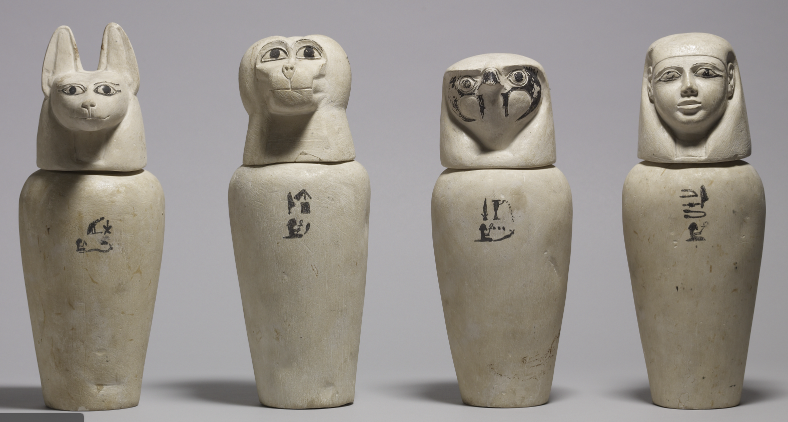
Canopic Jars, Old Kingdom
Usually held the heart and vital organs, stored in a briny substance so that it would not rot and so the body would not rot.
Usually held the heart and vital organs, stored in a briny substance so that it would not rot and so the body would not rot.
10
New cards
Mummification, Old Kingdom
process of removing liquids from body as well as essential organs and storing them away, done so that body would last for a long time and the Ka could ascend into the next life and come back to visit if wanted.
11
New cards
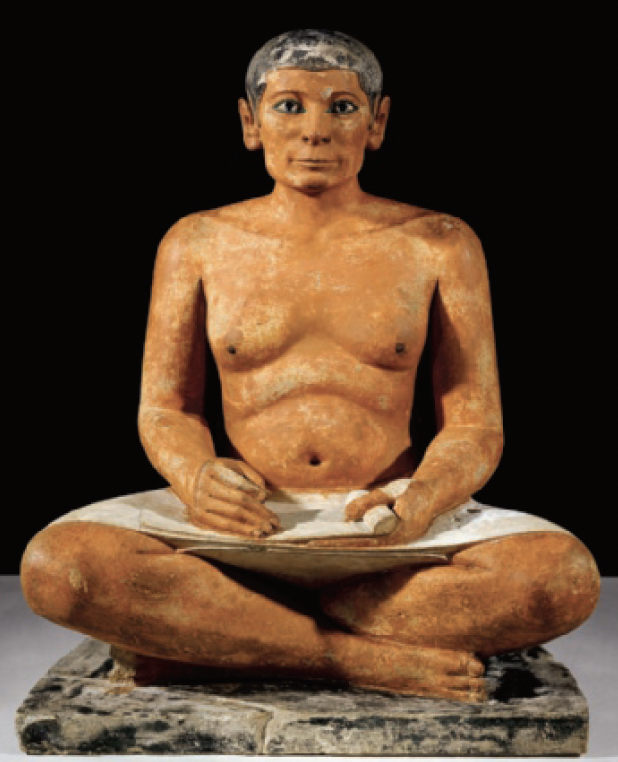
Seated Scribe, Old Kingdom, 2450 BCE. MOre of an ordinary person with enough money to commission this. made of limestone, probably used obsidian to carve this. men are painted red, women are painted white. being chubby was luxurious, and represented a large amount of food and less activity. A scribe was a desk job and it was luxurious to have one. Scribing is usually a family business.
12
New cards
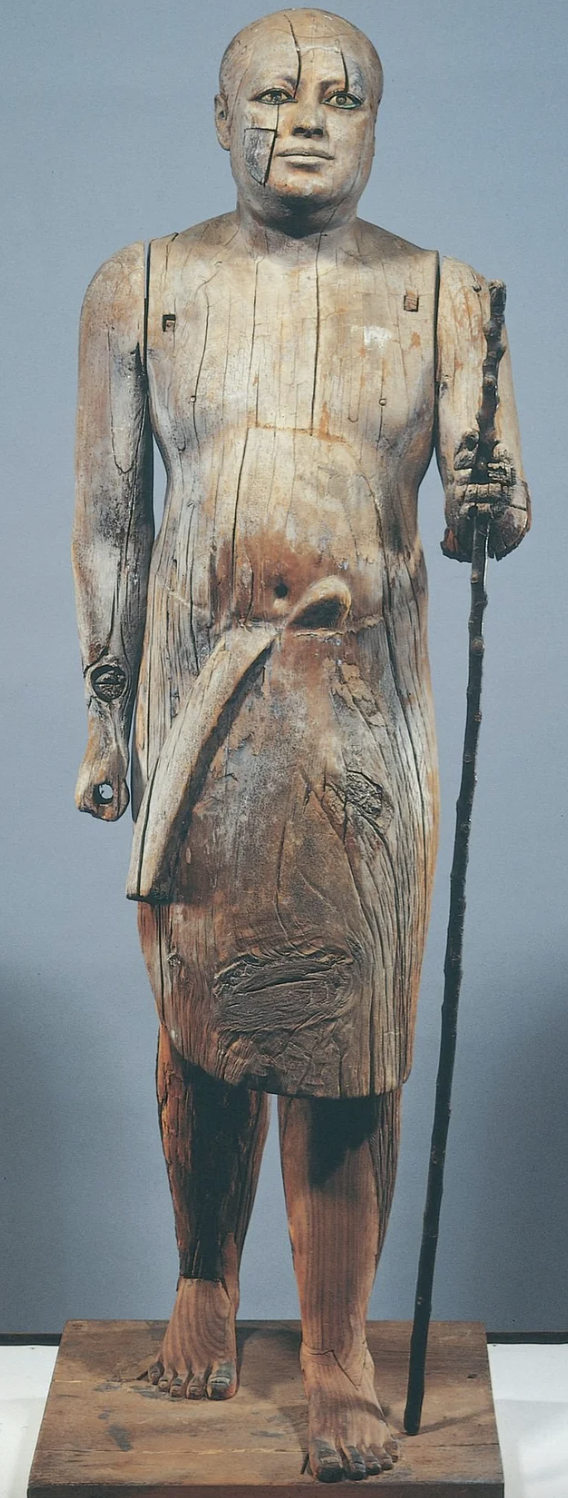
Ka-Aper, Old Kingdom 2450 BCE, Made of wood
13
New cards
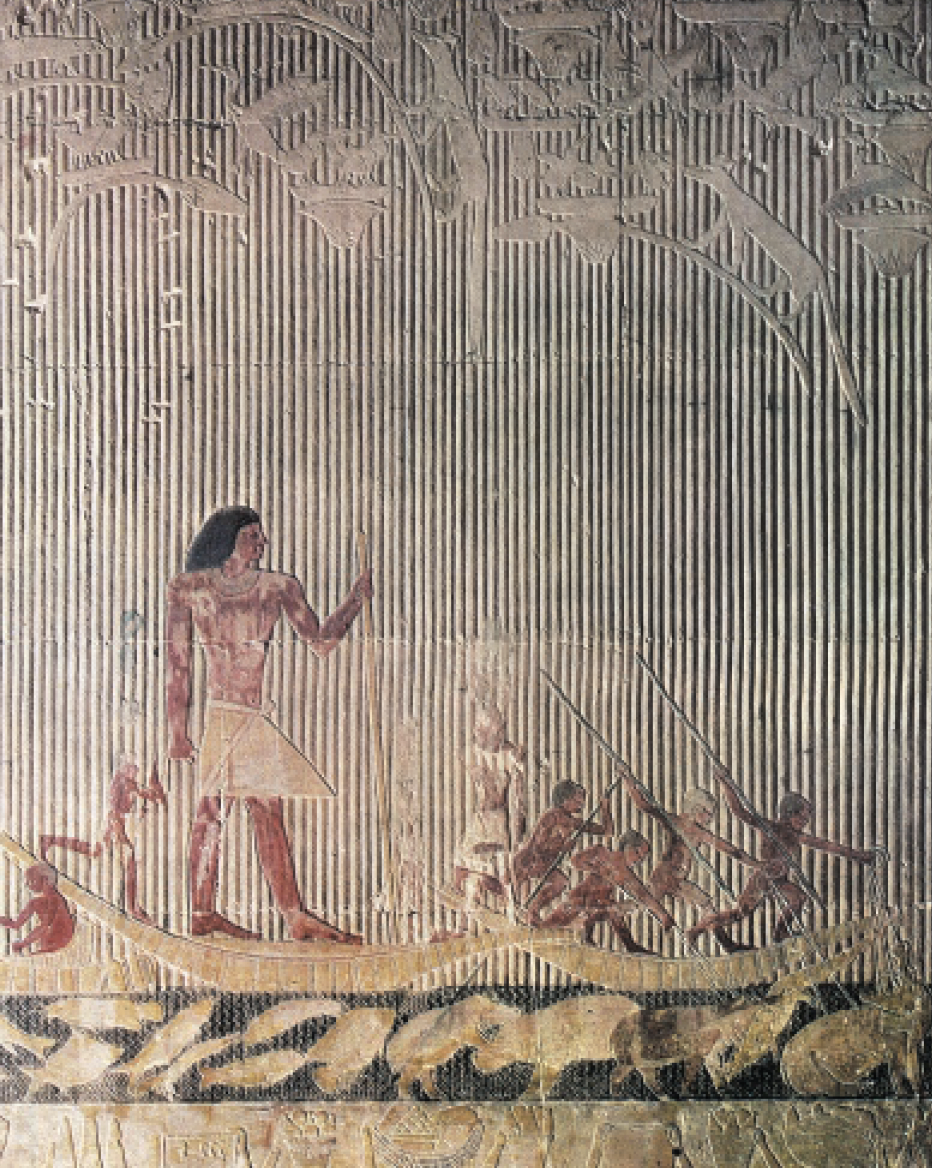
Ti Hunting Hippos, Old Kingdom. ?
14
New cards
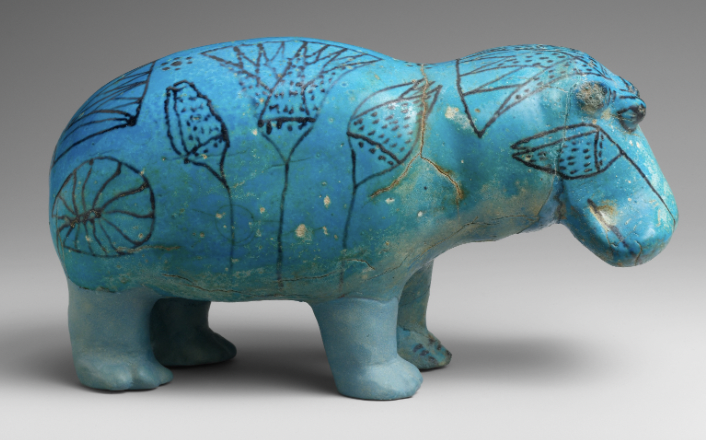
William the Faience Hippo, Middle Kingdom. Represented SETH, the evil god. They tipped over boats and ate people a lot. These were found in tombs, representing beating death and passing onto eternal life-- why the hippo's legs were broken off. He was blue to represent the water of the nile.
15
New cards
Valley of the Kings tombs (why they moved to this site), Middle Kingdom?
Grave robbers? More concealed?
16
New cards
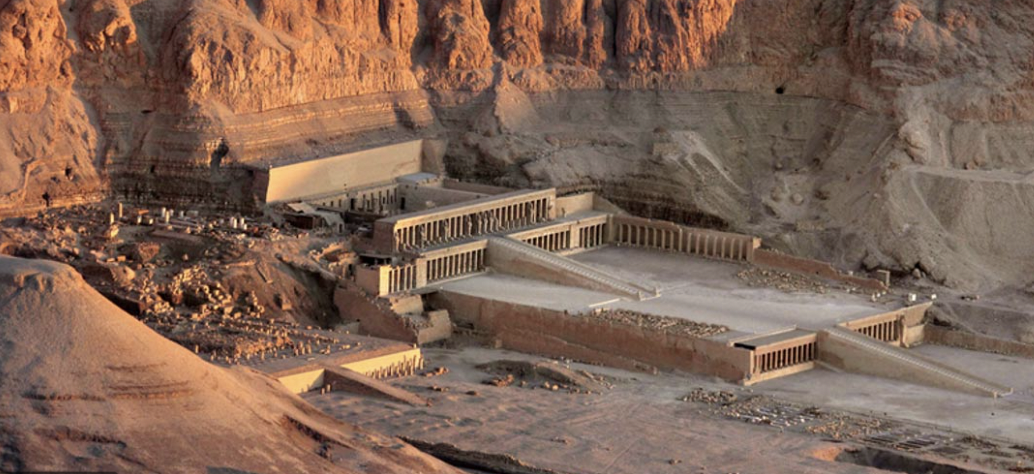
Mortuary Temple of Hatshepsut from Deir el-Bahri, Egypt, New Kingdom. 1460 BCE. Served two purposes, when she was alive a place she would come to pray to the gods, after she dies it is a place to come to honor her. Post and lintel construction. Used to have trees and artificial lakes, but inside there were paintings and sculptures of what she did during her rule. Her stepson destroyed her artifacts.
17
New cards
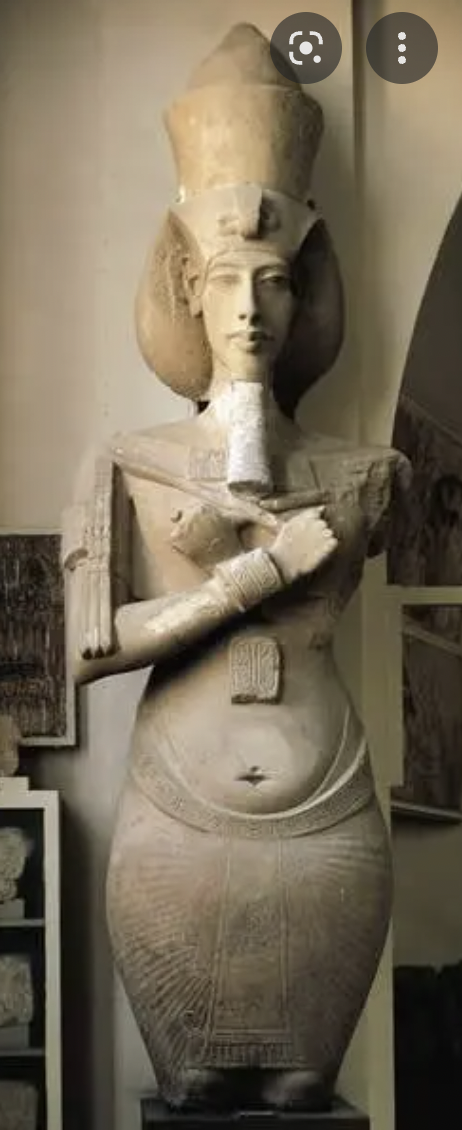
Akhenaton, from the temple of Aton, New Kingdom 1350 BCE. A "blip in history" where the body structure in art changed. This is king tuts dad. 3 theories why,: 1. he changes the religious system to monotheistic, there is only one god the sexless sun god, and he wants to look androgenous like him. 2. marfans disease, which could make you look like this (not likely) 3. wanted to change the art style and be radical/cool. He changes it to a monotheistic system so that preists cannot make their own armys and battle him. This stylistic period is called the AMARNA period, where 1553-1535 he has a rounded womanly shape, spindly arms and legs and an elongated face.
18
New cards
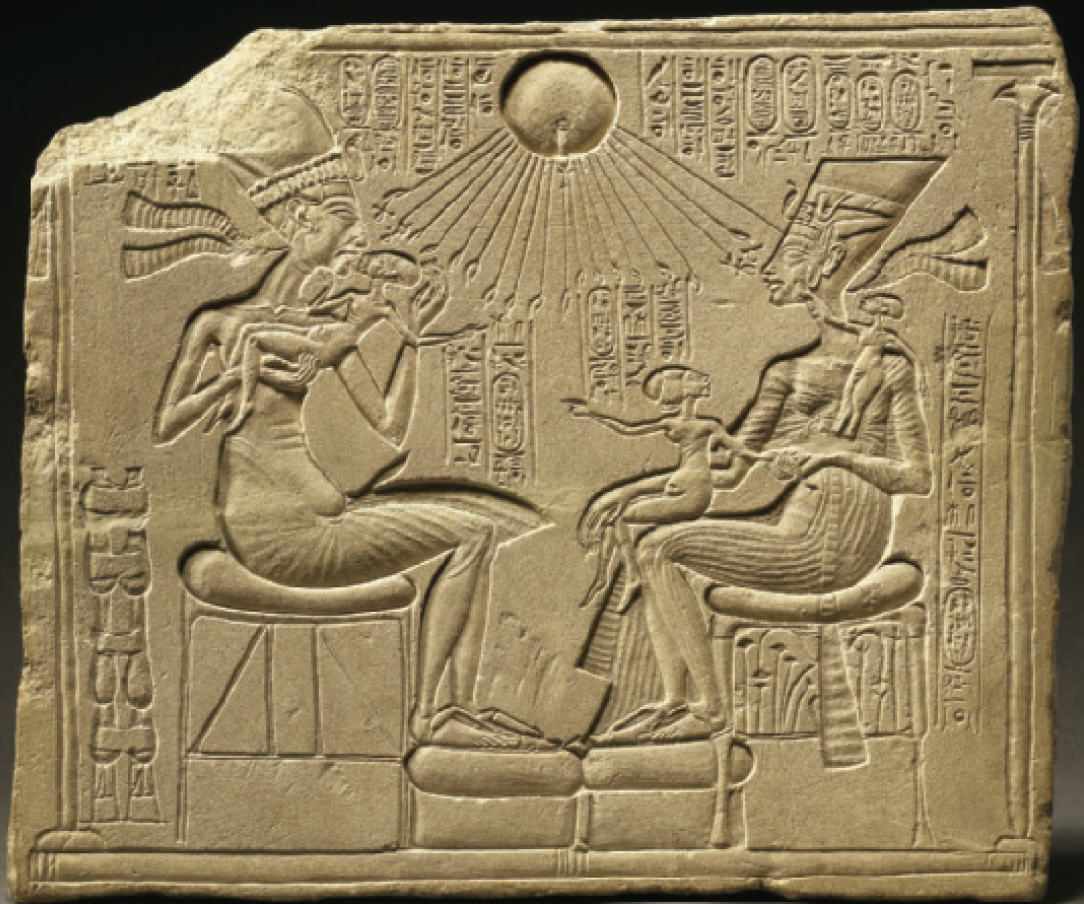
Thutmose, Nefertiti, Akhenaton, Nefertiti, and three daughters, New Kingdom. 1350 BCE Sunken releif, at one time was painted. This was hung in a house on an alter like a picture of the pope. Nefertiti is shown on papyrus indicating a unified Egypt. The cobra is found in the sun. This is done in AMARNA style.
19
New cards
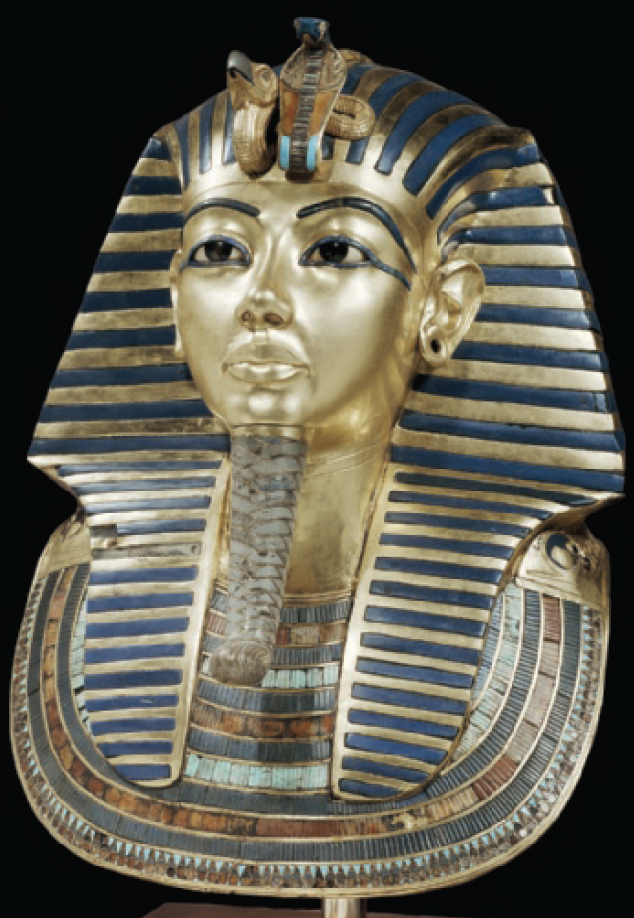
Death mask of Tut, from innermost Coffin, New Kingdom, gold and lapis lazuli. Death masks were used o cover the face of a body. It helped the soul recognize where to come back.
20
New cards
King Tuts nesting coffins
general info I mentioned in my lecture about him--materials used too gold and lapis lazli, made like the nesting dolls that fit one in another. Because
21
New cards
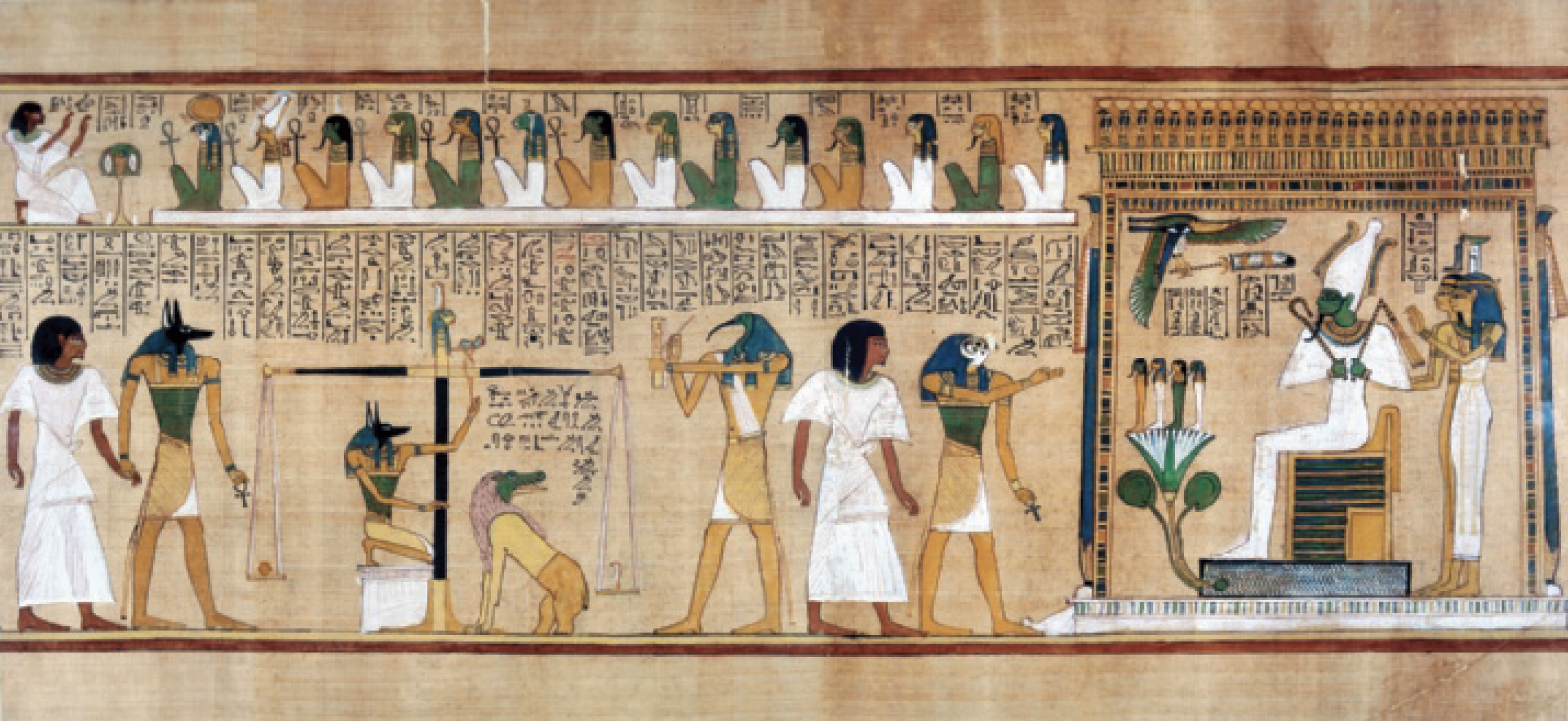
Judgment of Hunefer, from tomb of Hunefer (watercolor on Papyrus), New Kingdom.
22
New cards
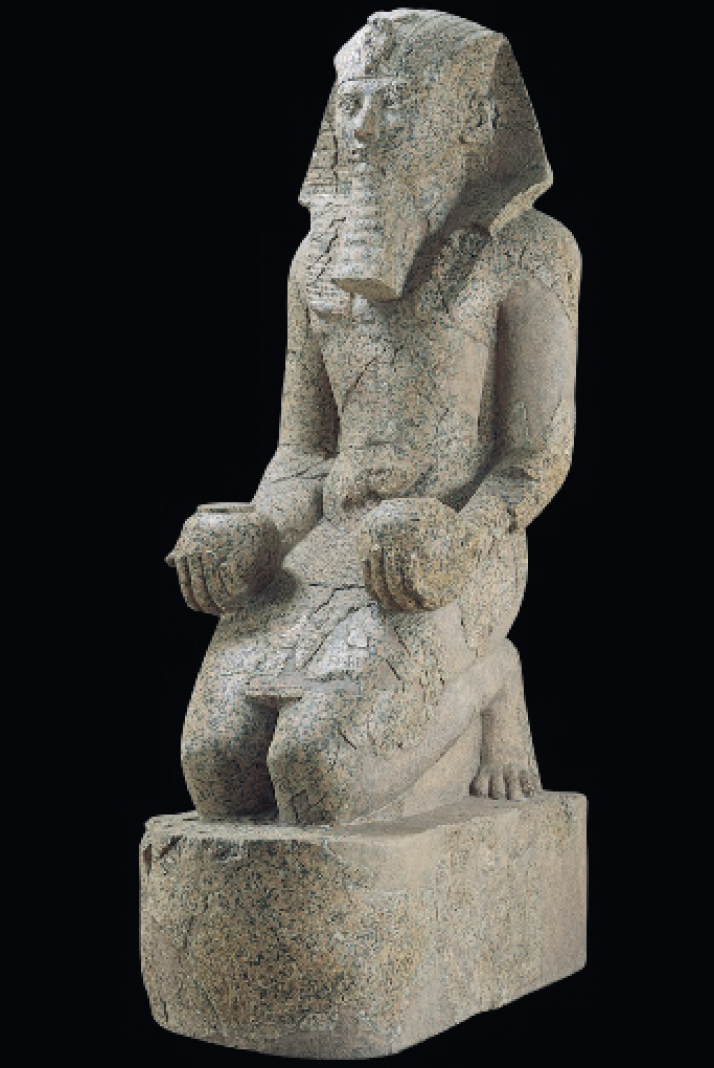
Hatshepsut With Offering Jars, New Kingdom, 1470 BC. She has a uraus (cobra on head), a fake beard, is wearing a kilt men would, no breasts. is in a very uncomfortable posture making an offering to the gods. She is glued together because her stepson tried to destroy all of her artifacts and erase her.
23
New cards
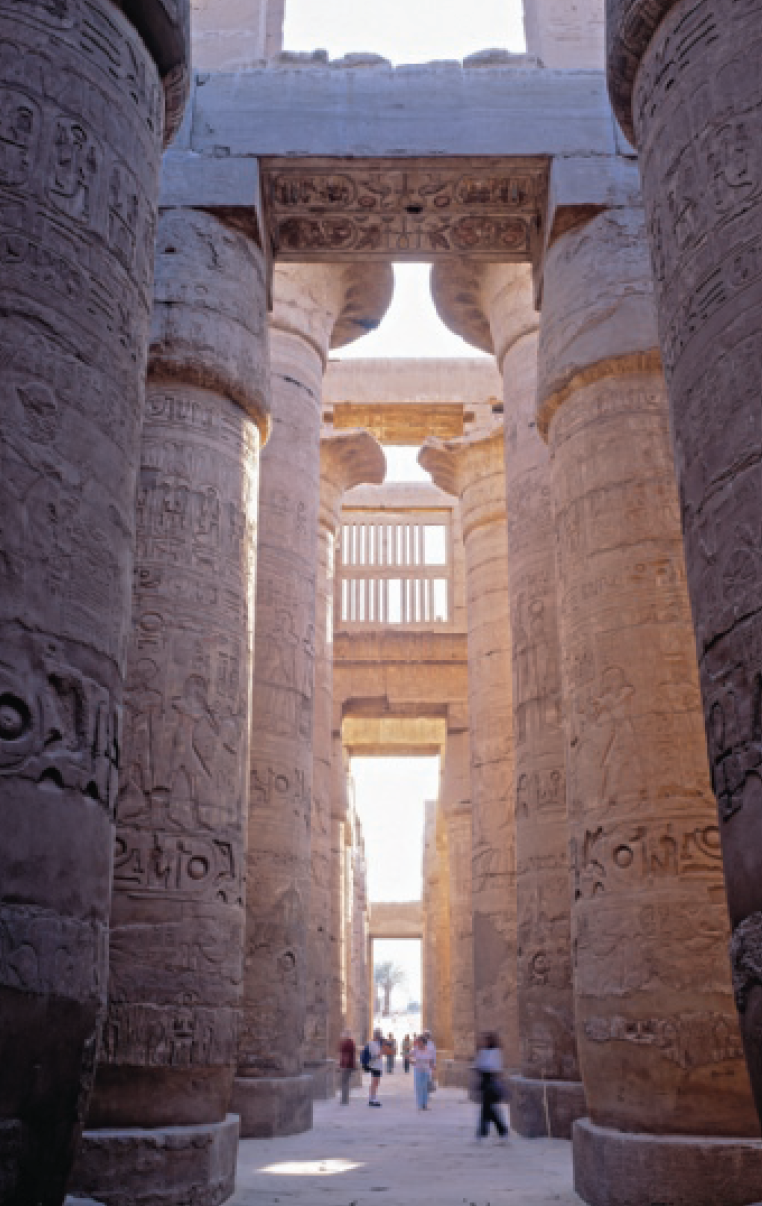
Karnak (hypostyle halls), Sandstone, 13' High, New Kingdom, 1290 BCE, sunken relief only seen in Africa showing stories of gods. Could fit 22 people on top of one post. This was used to honor Amen- Re.
24
New cards
BenBen
Rays of sunshine in ancient egypt, why pyramids are shaped the way they are
25
New cards
Mestaba- the first tombs, a bench-like structure to keep flooding out of them.
26
New cards
Egyptian Kanon
Left foot forward, knees locked, shoulders back, two arms down making fists on either side.

