Control and Environment - MGMT100 - UC
 Call Kai
 Learn
Learn Practice Test
 Spaced Repetition
 Match
Match Flashcards
 Knowt Play
1/44

There's no tags or description
Looks like no tags are added yet.
Name | Mastery | Learn | Test | Matching | Spaced | Call with Kai |
|---|
No analytics yet
Send a link to your students to track their progress
45 Terms
What is Control in Management?
the process where managers make sure that actual performance conforms to expected organisational plans, standards and goals.
What does Control Require?
information on standards and actual performance.
What does Control do?
- regulates the quality of product.
- encourages wanted behaviours and discourages unwanted behaviours of individuals.
Is Control on of the 4 Management Functions?
yes, it is the 3rd most important.
1 multiple choice option
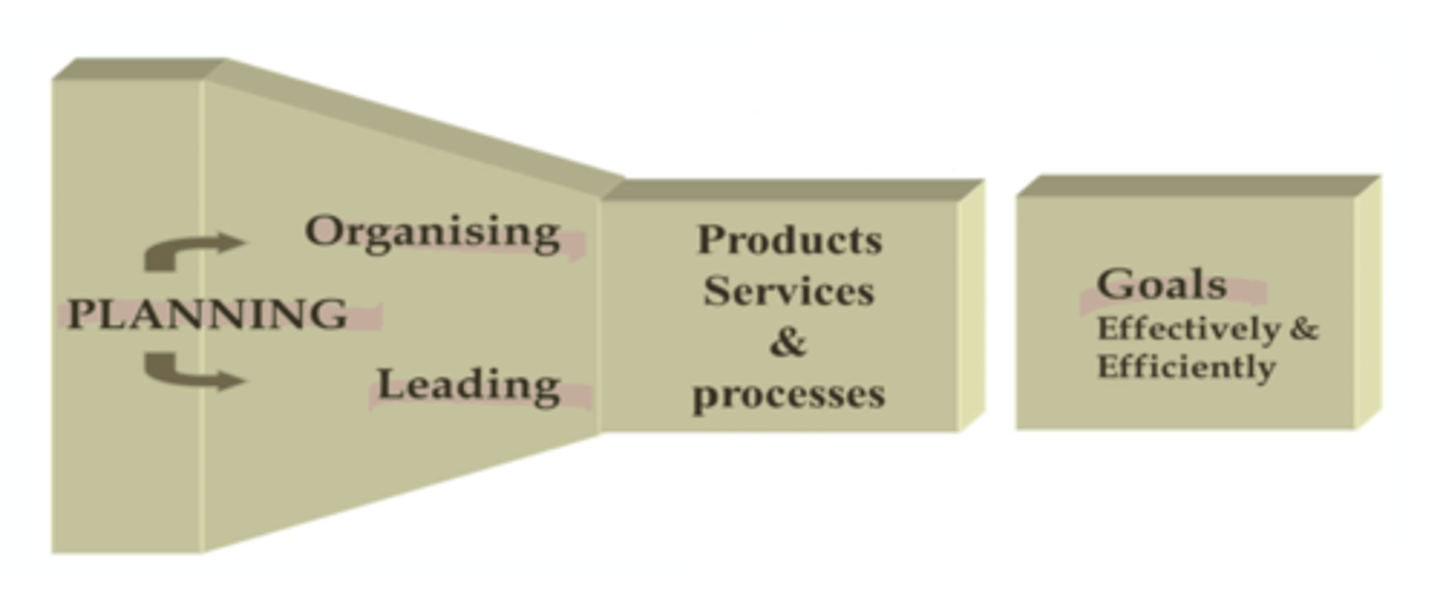
What are the Top Management Levels of Planning and Control?
strategic planning and control (organisational wide - perspective, long time frame).
What are the Middle Management Levels of Planning and Control?
departmental planning and control (department perspective, medium time frame).
What are the Lower Management Levels of Planning and Control?
operational planning and control (unit/individual perspective, short time frame).
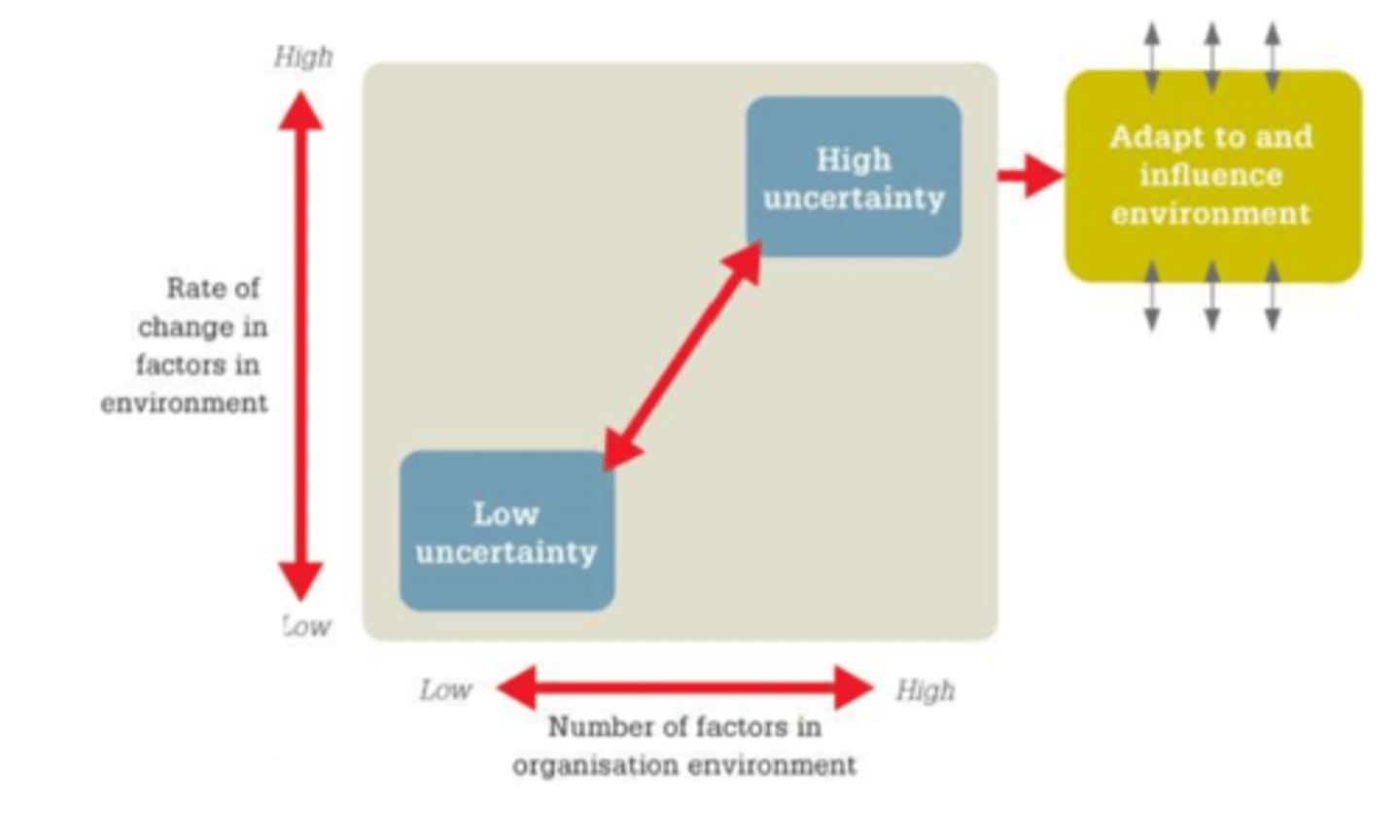
When does Uncertainty Occur?
when managers have insufficient information about environment factors to be able to predict organisational needs and changes.
What are the Main 2 Causes of High Uncertainty?
1. rapid change in external factors.
2. high number of external factors.
What are the 2 Environments within the External Environment?
1. task environment.
2. general environment.
What is the Task Environment?
everything that has a direct effect on the organisation.
What is the General Environment?
everything that affects the organisation indirectly.
What has Direct Effects on Organisations?
- customers
- competitors
- suppliers
- labour market.
What has Indirect Affects on Organisations?
- technology
- nature
- socio-cultural
- economic
- legal/political
- international.
How does Technology Indirectly affect Organisations?
- technological advances affect specific industries, as well as society.
- these advances can transform businesses and industries.
- but can also render some goods/services obsolete.
How does Nature Indirectly affect Organisations?
- the earth's natural resources are very valuable and scarce, the environmental impact of their products, process and practices needs to be considered.
- the environment has no voice, so influence comes from consumer concerns, government regulations etc.
How does Socio-cultural Indirectly affect Organisations?
- the geographical distribution of population density, age, education level, ethnicity.
- customs, values, skills, who, where, how, consumers needs should all be considered.
How does Economic Indirectly affect Organisations?
the economic conditions of where the organisation operates.
How does Legal/Political Indirectly affect Organisations?
- national and local government regulations, political activities, which control organisational behaviour.
- pressure groups within legal-political environment try to influence organisational behaviour.
How does International Indirectly affect Organisations?
- events that originated in foreign countries.
- the same business can experience different results in different countries and global regions.
How do Customers Directly affect Organisations?
- customers determine the originations success (build products and services around customer needs).
- use of the internet makes customers powerful.
How do Competitors Directly affect Organisations?
- they are in the same industry or with the same type of business, providing goods/services to the same set of customers.
- different industries have different competitive issues.
- sometimes competitors cooperate to achieve common goals.
How do Suppliers Directly affect Organisations?
- suppliers provide the materials that is used to produce output.
- supply chain partners can influence whether an organisation prospers or flounders.
What is a Supply Chain?
a network of multiple business and individuals connected through flow of products/services.
How does the Labour Market Directly affect Organisations?
- people in the environment who can be hired to work for the organisation.
- skill shortage, unions, employee associations, increased global labour supply all can influence the labour market.
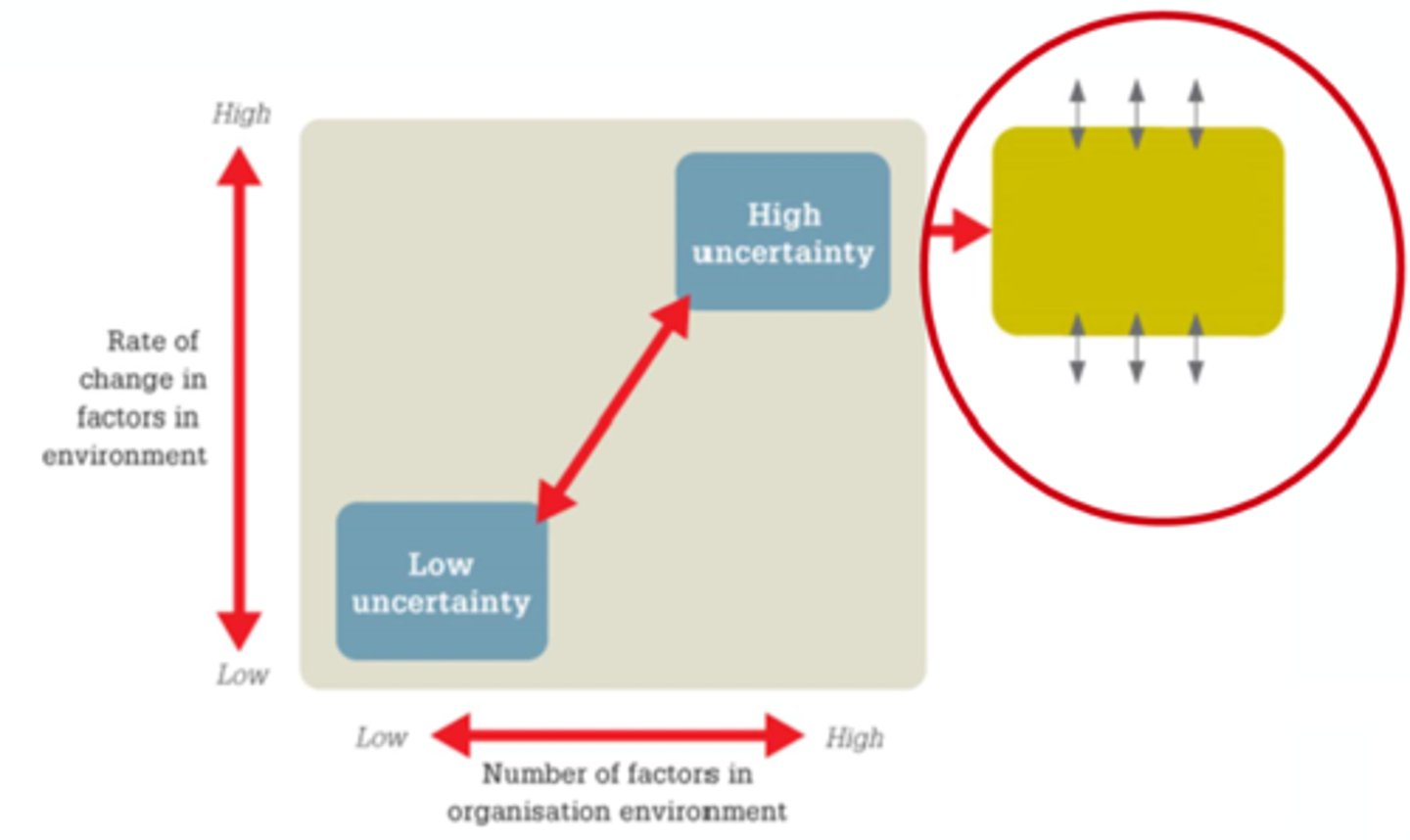
What do you do when High Uncertainty is Occuring?
adapt to and influence environment.
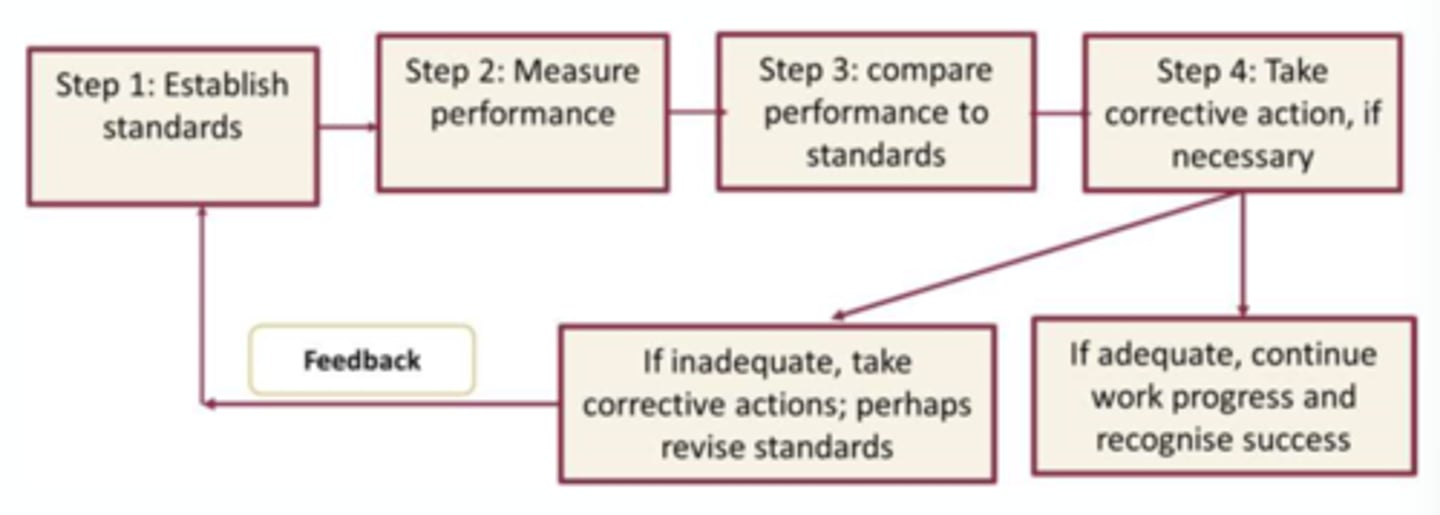
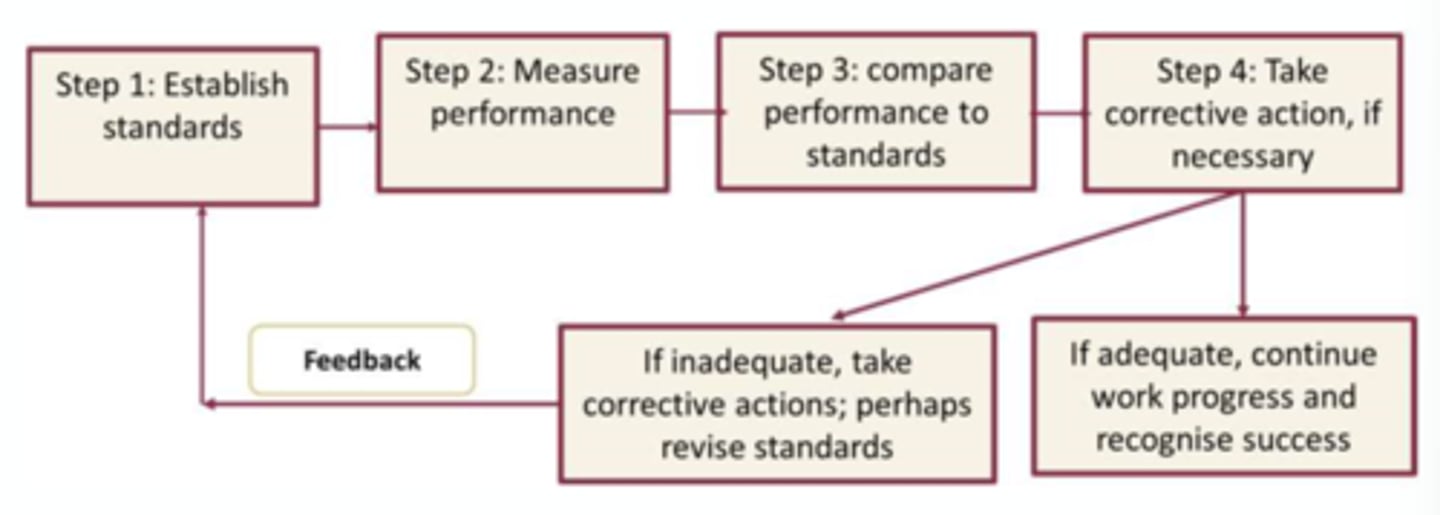
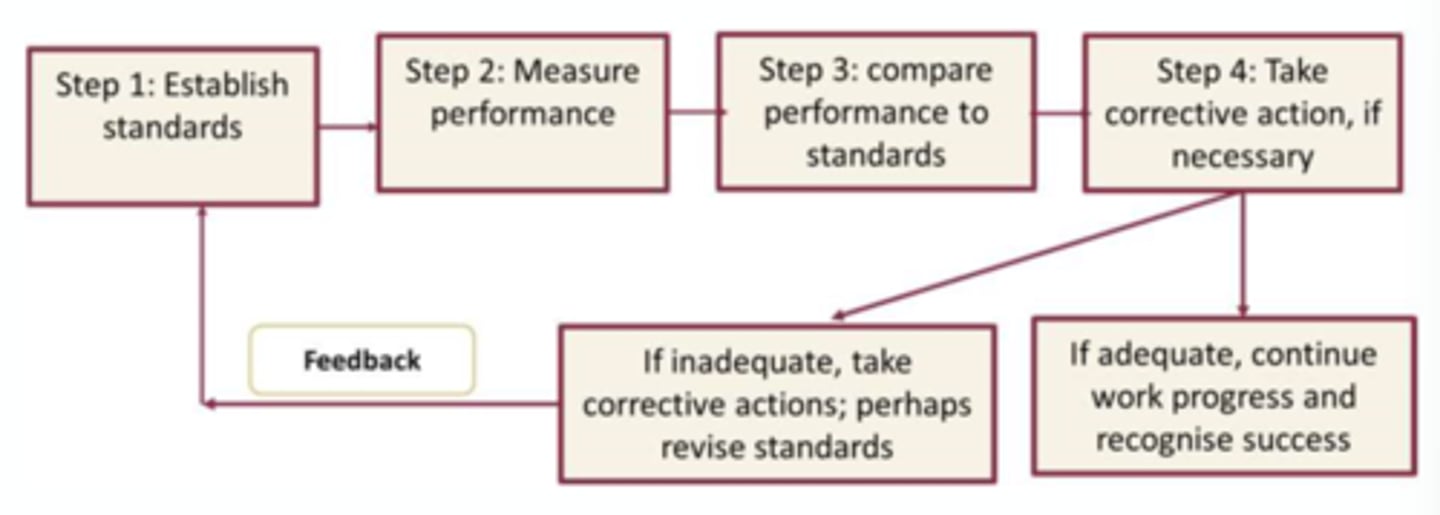
What is the 4 Step Model?
a model to help managers meet strategic goals by monitoring and regulating an organisation's activities and using feedback to determine whether performance meets established standards.
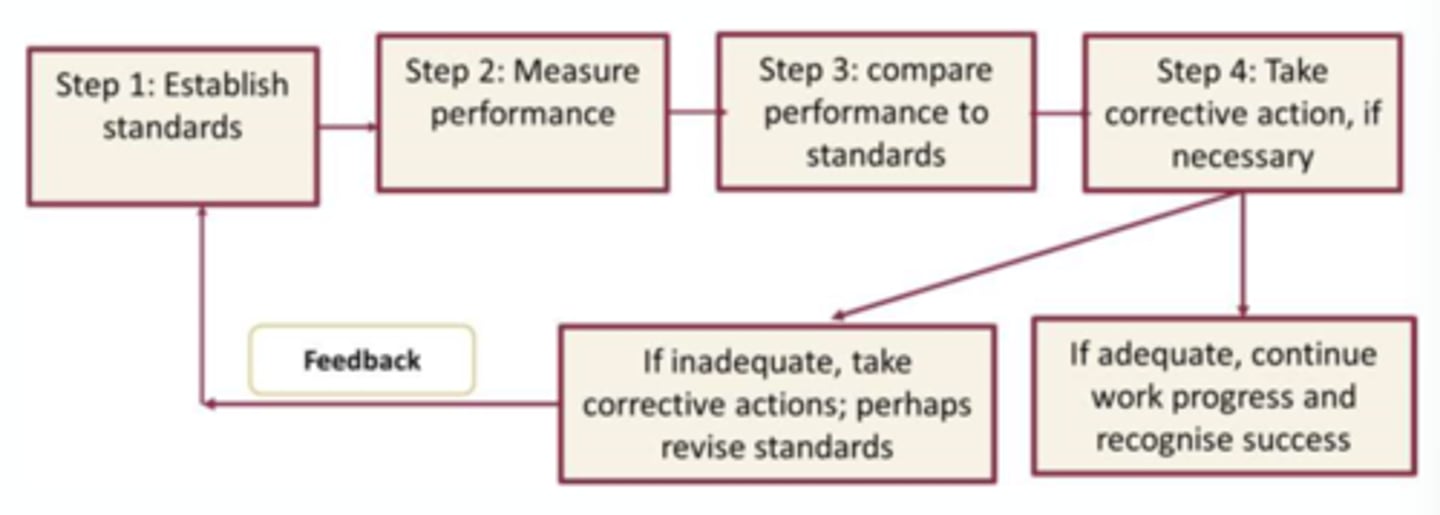
What are the 4 Steps of the 4 Step Model?
1. establish performance standards.
2. measure actual performance,
3. compare performance to standards.
4. take corrective action, if necessary.
What is 1. Establish Performance Standards in the 4 Step Model?
- it is impractical and impossible to control every aspect of an organisation's activities.
- managers must make choices usually based on organisational goals and objectives developed during the planning process.
- both output (quality, quantity, time) and input (staff, input material quality) standards must be looked at.
What is 2. Measure Performance in the 4 Step Model?
- looking at how to and how often.
- measuring depends on set performance objectives and standards as well as measurement mode (quantitative (number) or qualitative).
What is 3. Compare Performance to Standards in the 4 Step Model?
- compare planned vs actual results.
- managers may compare through personal observation or summarised reports (management by exception).
What is Management by Exception?
it is a control principle that suggests managers should be informed of a situation only if control data shows a significant deviation from standard.
What is 4. Take Corrective Action in the 4 Step Model?
it is decided if performance standards are met and/or exceeded OR if performance standards are not met.
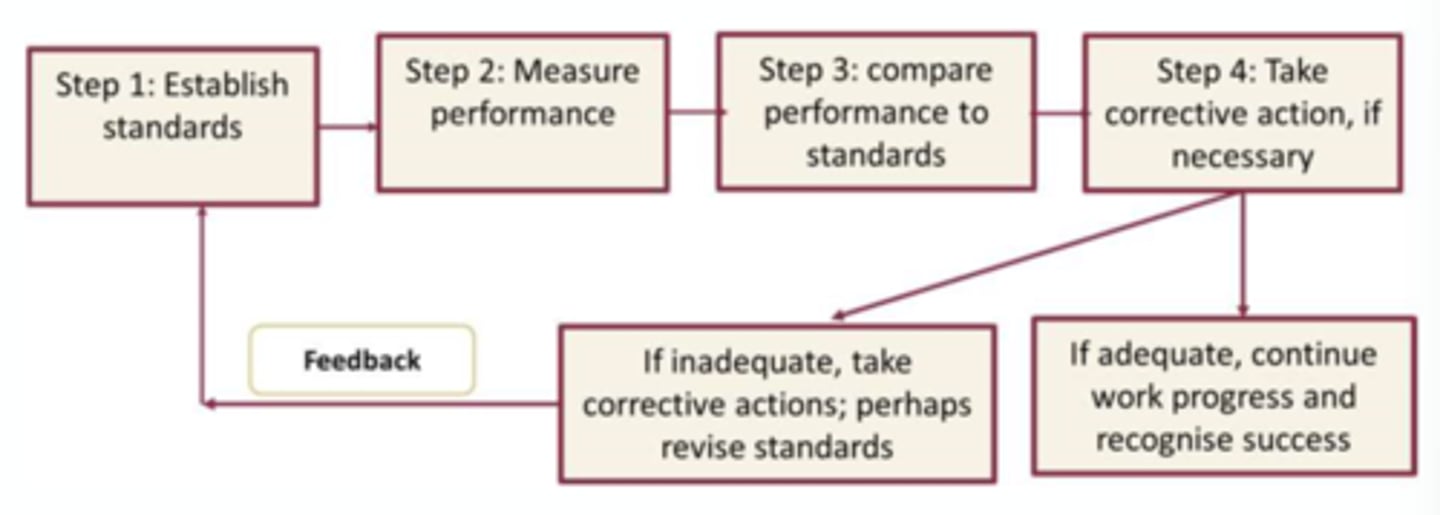
What Actions are Taken if Performance Standards are Met or Exceeded?
- no corrective action is necessary.
- give some recognition to employees exhibiting above standard performance.
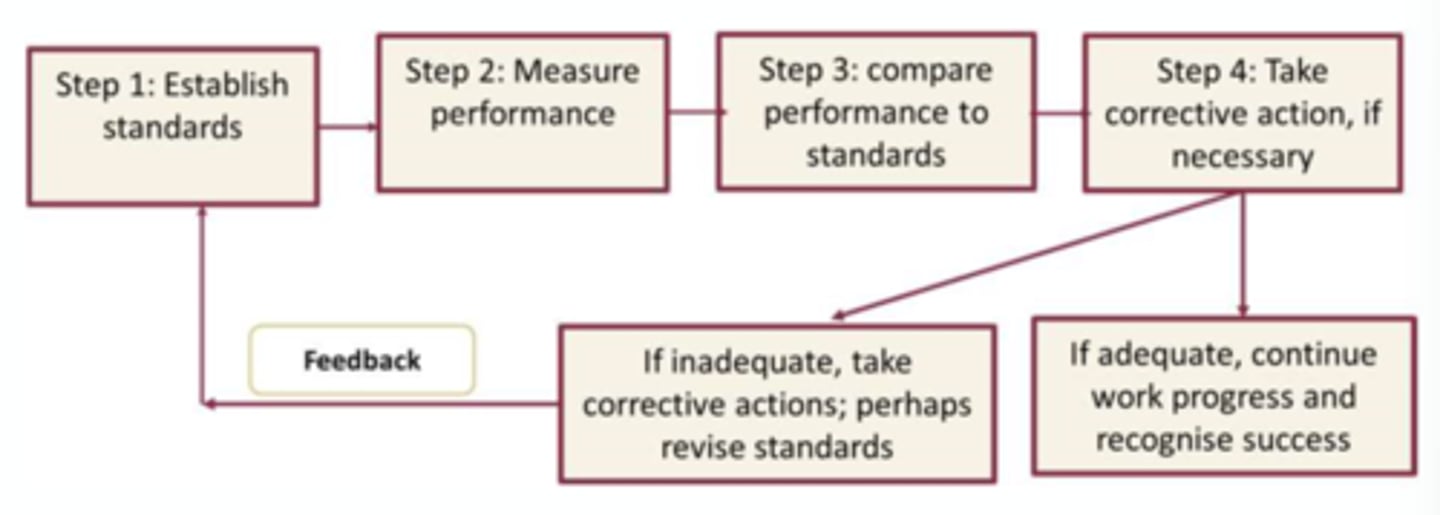
What Actions are Taken if Performance Standards are Not Met?
- assess the reason why and take corrective action.
- check standards and related performance measures to ensure they are still realistic.
What are the 6 Roles of Control that Help Managers Avoid Problems?
1. coping with uncertainty.
2. detecting undesirable irregularities.
3. to reduce costs, increase productivity or add value.
4. alerting managers to possible opportunities.
5. handling complex situations.
6. decentralising authority.
How does Control help Coping with Uncertainty?
monitoring specific activities and reacting quickly to significant changes.
What are Possible Detected Undesirable Irregularities?
product defects, cost overruns, rising staff turnover.
How does Control Help to Reduce Costs, Increase Productivity or Add Value?
by eliminating waste and increasing outputs.
How does Control Help to Alert Managers to Possible Opportunities.
as performance is constantly compared to standards better than expected situations are highlighted.
How does Control help Managers Handle Complex Situations?
by enhancing coordination within large originations.
How does Control help Decentralising Authority?
by encouraging controlled lower level decision making.
What are the 5 Barriers to the Success of Control Systems?
1. too much control (bureaucratic organisations).
2. too little employee participation (involving employees in control process helps legitimise it).
3. overemphasis on means instead of ends (can lead to 'game playing' or 'beating the system').
4. overemphasis on paperwork (too much focus on quantification).
5. overemphasis on one instead of multiple approaches (one indicator may not be enough).
What is the External Environment?
everything outside the organisation that have the potential to affect the organisation.
Still learning (35)
You've begun learning these terms. Keep up the good work!

