Ran-dependent Nuclear Transport
 Call Kai
 Learn
Learn Practice Test
 Spaced Repetition
 Match
Match Flashcards
 Knowt Play
1/16

There's no tags or description
Looks like no tags are added yet.
Name | Mastery | Learn | Test | Matching | Spaced | Call with Kai |
|---|
No analytics yet
Send a link to your students to track their progress
17 Terms
Ran-dependent Nuclear Transport (Definition), what is it, components
Ran-dependent nuclear transport is the most common and well-understood type of nuclear transport.
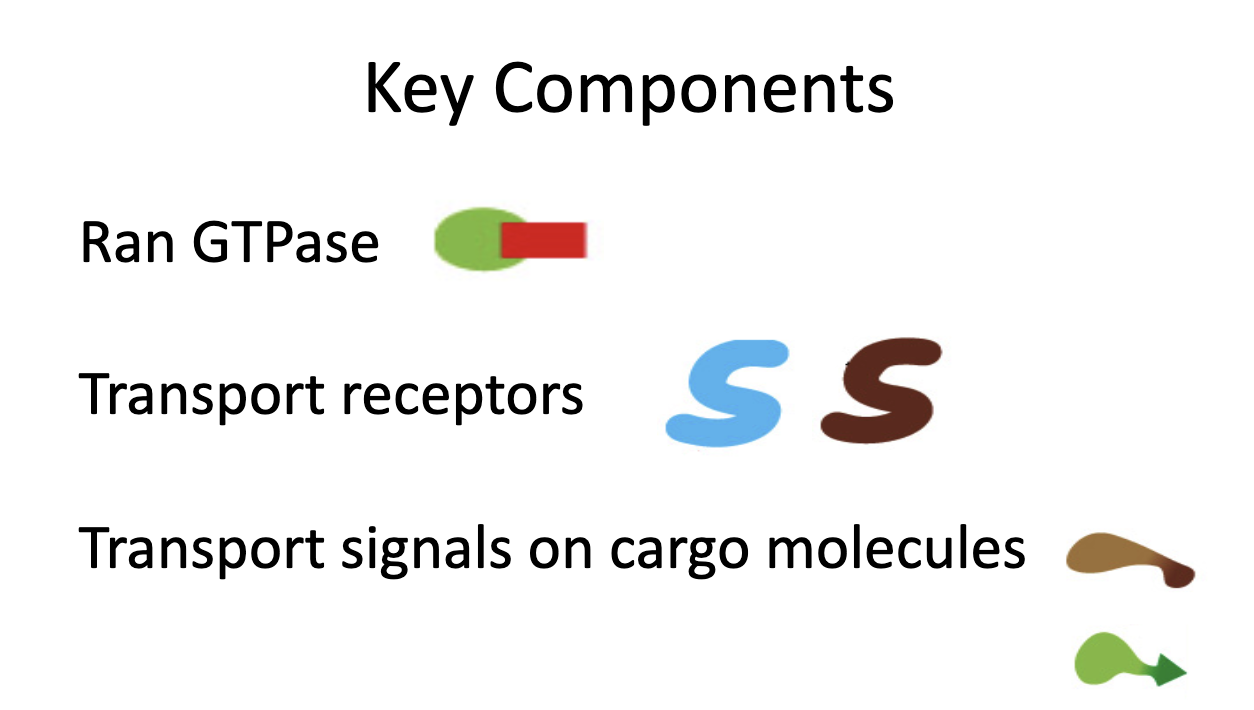
key components of Ran-dependent nuclear transport are
GTPase Ran
transport receptors
transport signals present on cargo molecules.
nuclear transport receptors, what are they, what do they bind to
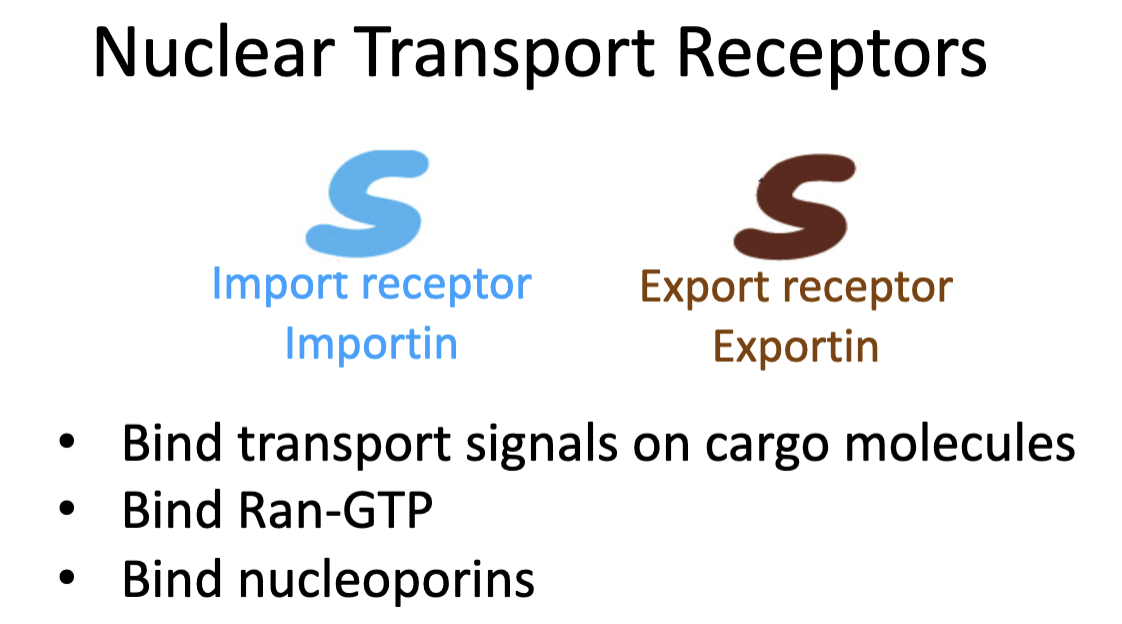
Nuclear transport receptors typically can be characterized as either import receptors called importins, or export receptors called exportins.
Transport receptors bind to
transport signals on cargo molecules
Ran-GTP
nucleoporins
Nuclear Transport Signals (NLS and NES)
Nuclear transport signals are part of cargo proteins that bind to transport receptors.
cargo protein with a nuclear localization signal, or NLS, which binds to importins.
cargo protein with a nuclear export signal, or NES, which binds to exportins.
Nuclear transport signals are not removed during, transport process, can be used multiple times from multiple rounds of transport.
Nuclear transport signals in cargo proteins
are parts of amino acid sequence and are encoded by the gene.
amino acids that make up the nuclear transport signals are accessible on the surface of the folded protein.
Nuclear Import Process
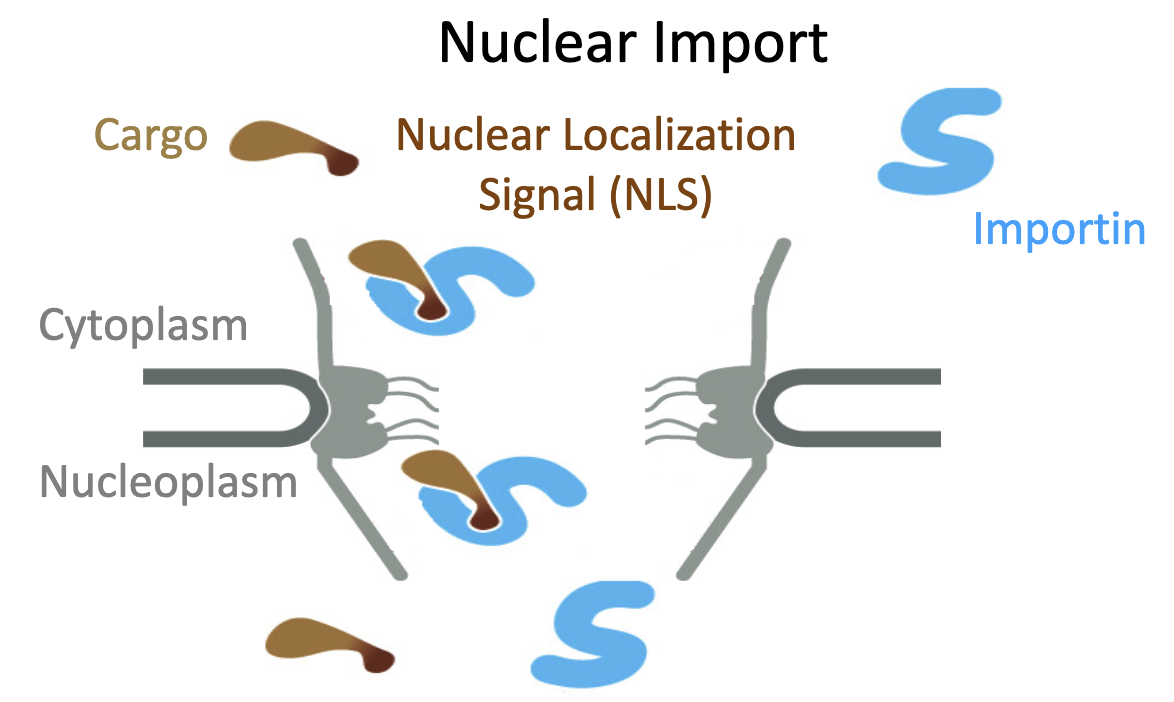
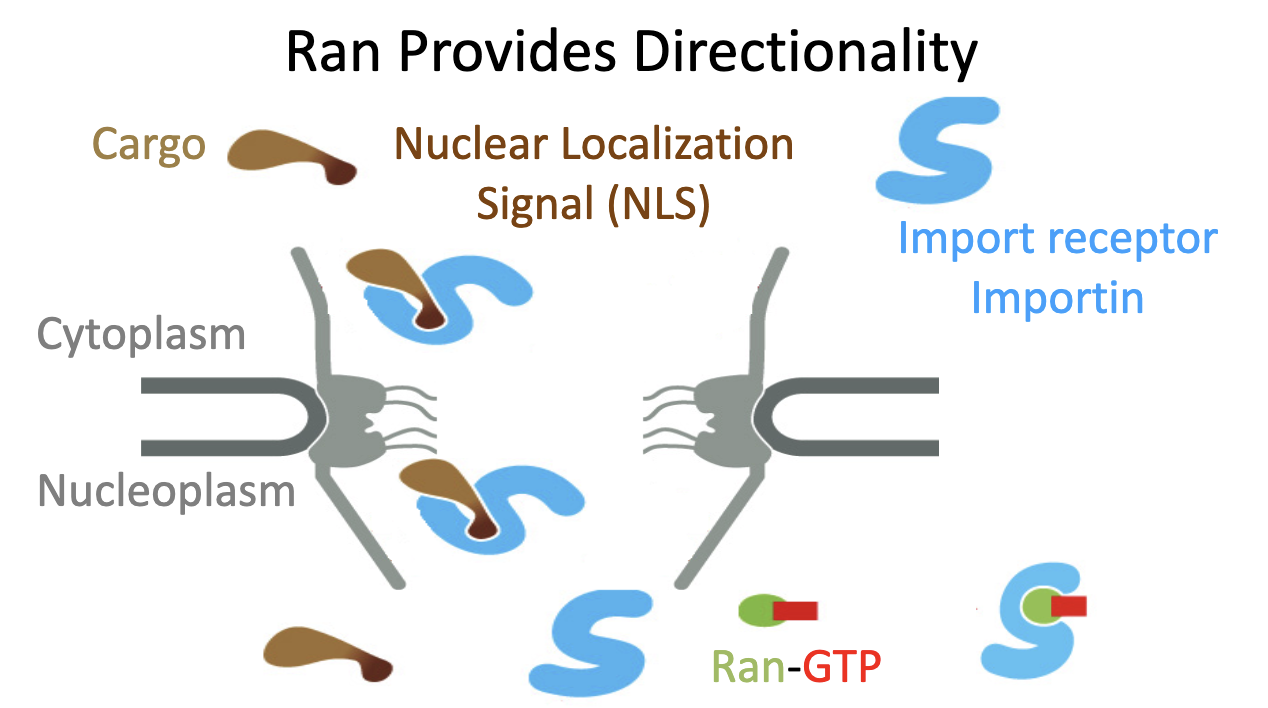
Nuclear import starts with a cargo protein with a nuclear localization signal (NLS).
The nuclear localization signal on the cargo protein binds to an importin.
The cargo importin complex then moves through the nucleopore complex due to the affinity of the importin for nucleoporins.
Once the cargo importin complex reaches the nucleoplasm, the cargo dissociates from the import receptor.
One important question that arises from this simplified model is why does the importin bind to the nuclear localization signal of the cargo protein in the cytoplasm, but in the nucleoplasm, the importin and the cargo protein dissociate from each other?
Cytoplasm (Binding): Because Ran-GDP is present. This allows importin to maintain a high affinity for its NLS cargo.
Nucleoplasm (Dissociation): Because Ran-GTP is present. Ran-GTP binds to importin with even higher affinity than the cargo, causing a conformational change that releases the cargo.
This elegant system, powered by the RanGTP/RanGDP gradient, ensures that transport is unidirectional and efficient. It's a perfect example of how cells use simple spatial concentration differences to create complex, directional biological processes.
Ran Provides
Directionality for Import
Directionality of transport is achieved by the activity of the GTPase Ran.
Ran binding
Ran can be bound to either GTP or GDP.
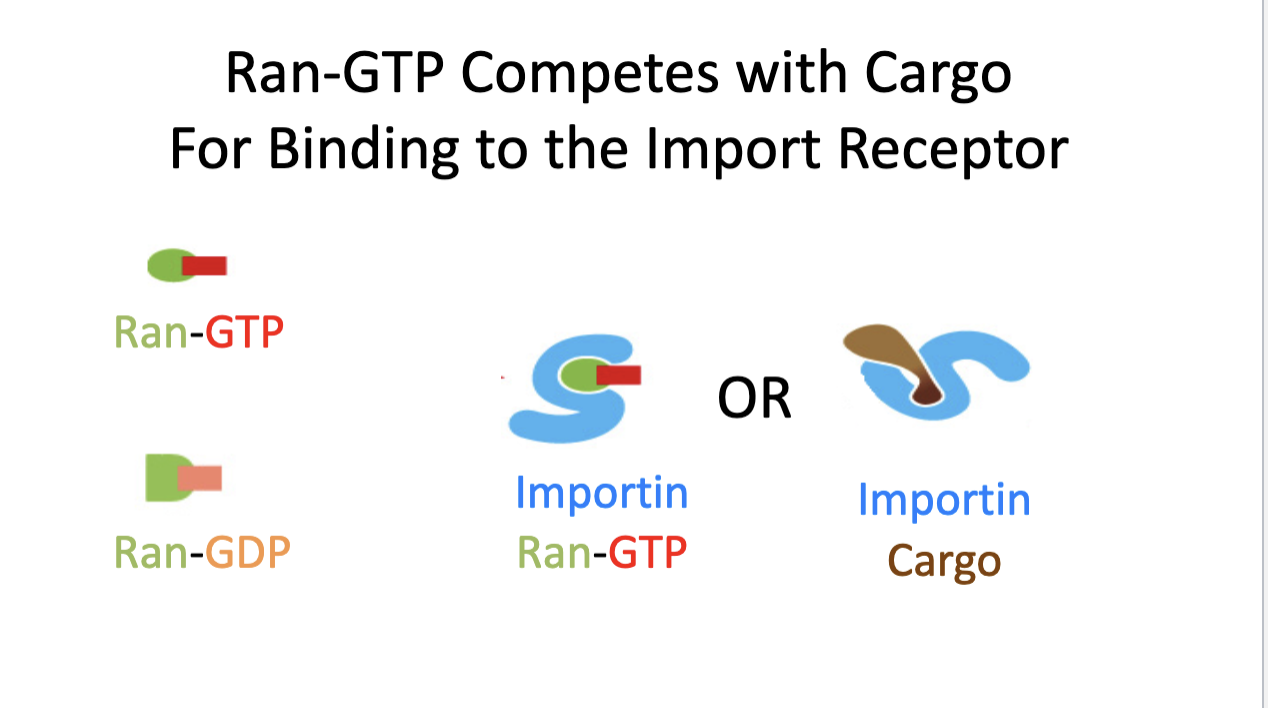
Ran-GTP can bind to importin, but Ran-GTP and the cargo cannot bind to importin simultaneously. (either importin+Ran-GTP or importin+cargo)
either have importin Ran-GTP complex or an importin cargo complex, but not both.
Ran-GTP is present at high levels in the nucleoplasm.
When the importin cargo complex enters the nucleus, Ran-GTP competes for binding to the importin with cargo.
Ran-GTP binding to importin leads to the dissociation of cargo from the importin complex in the nucleoplasm.
Nuclear Export Process
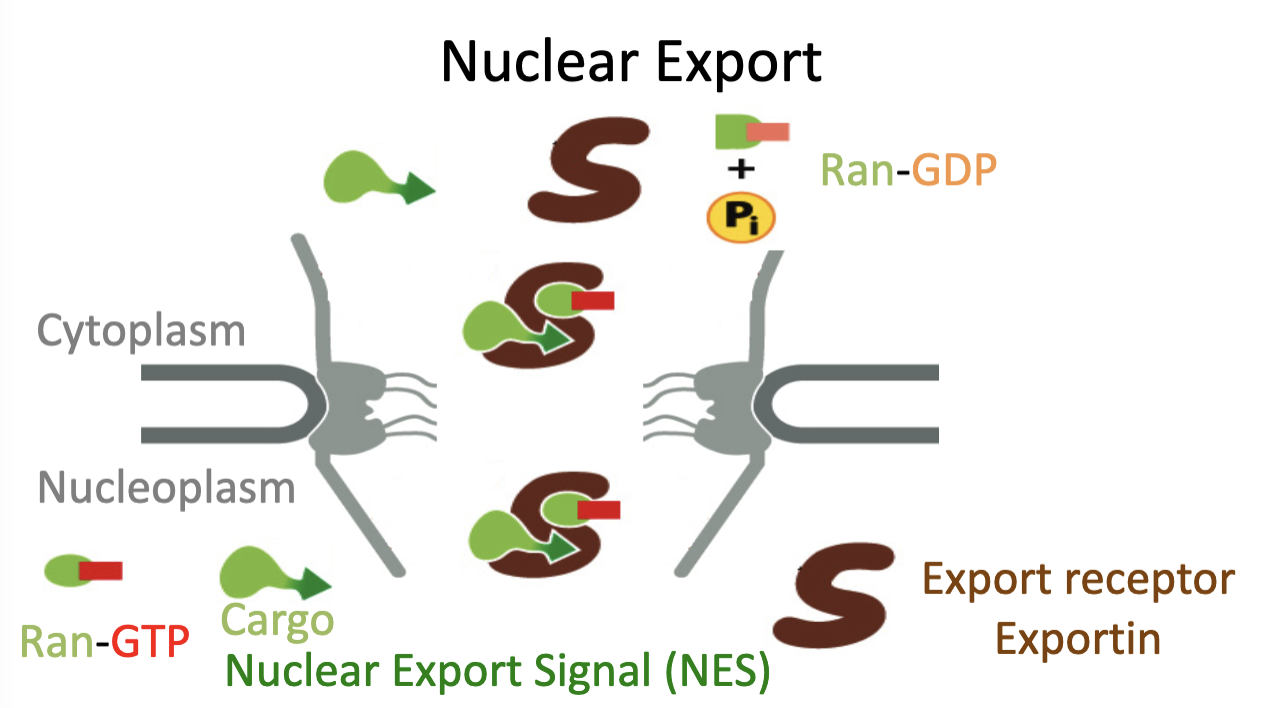
Nuclear export starts with a cargo protein that's in the nucleus and contains a nuclear export signal, or NES.
The nuclear export signal can bind to an export receptor aka exportin.
Binding of the cargo and exportin requires the presence of Ran-GTP.
The complex of cargo, exportin, and Ran-GTP can move through the nucleopore complex due to a high affinity of the exportin for nucleoporins.
Once the complex reaches the cytoplasm, Ran hydrolyzes GTP to GDP forming Ran-GDP.
The complex containing Ran-GDP, the exportin, and the cargo protein dissociates.
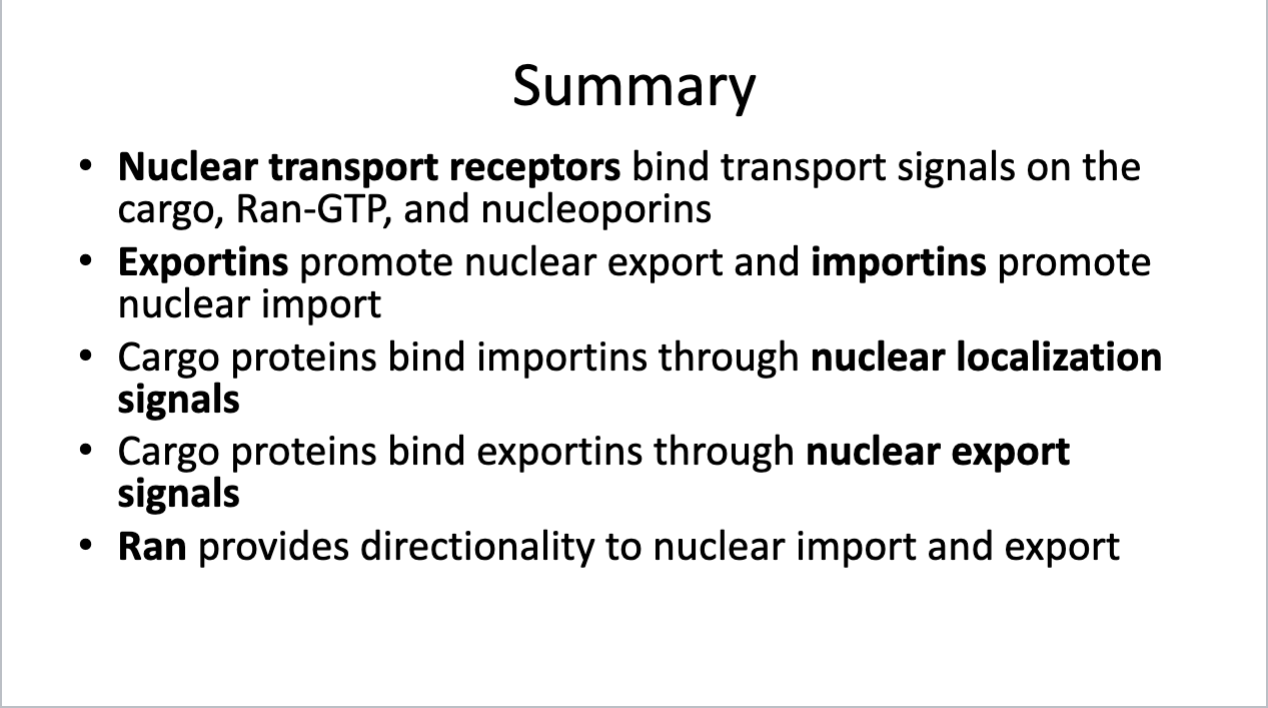
Summary of Ran-dependent Transport
nuclear transport receptors bind transport signals on the cargo, Ran-GTP, and nucleoporins.
Exportins promote nuclear export and importins promote nuclear import.
Cargo proteins bind importins through nuclear localization signals and cargo proteins bind exportins through nuclear export signals.
Ran provides directionality to nuclear import and expor
Key Components
Nuclear Transport Receptors
Nuclear Import
Ran-GTP Competes
Ran Provides
Nuclear Export
Summary