Renal Function and Failures
 Call Kai
 Learn
Learn Practice Test
 Spaced Repetition
 Match
Match Flashcards
 Knowt Play
1/46

There's no tags or description
Looks like no tags are added yet.
Name | Mastery | Learn | Test | Matching | Spaced | Call with Kai |
|---|
No analytics yet
Send a link to your students to track their progress
47 Terms
What is the daily blood filtration capacity of the kidneys?
The kidneys filter about 120 to 150 quarts of blood daily.
What is the primary function of the kidneys?
To maintain stable blood composition and excrete waste products.
What are the filtering units of the kidneys called?
Nephrons.
What are the main functions of the kidneys?
Waste excretion, fluid balance, electrolyte stability, and blood pressure regulation.
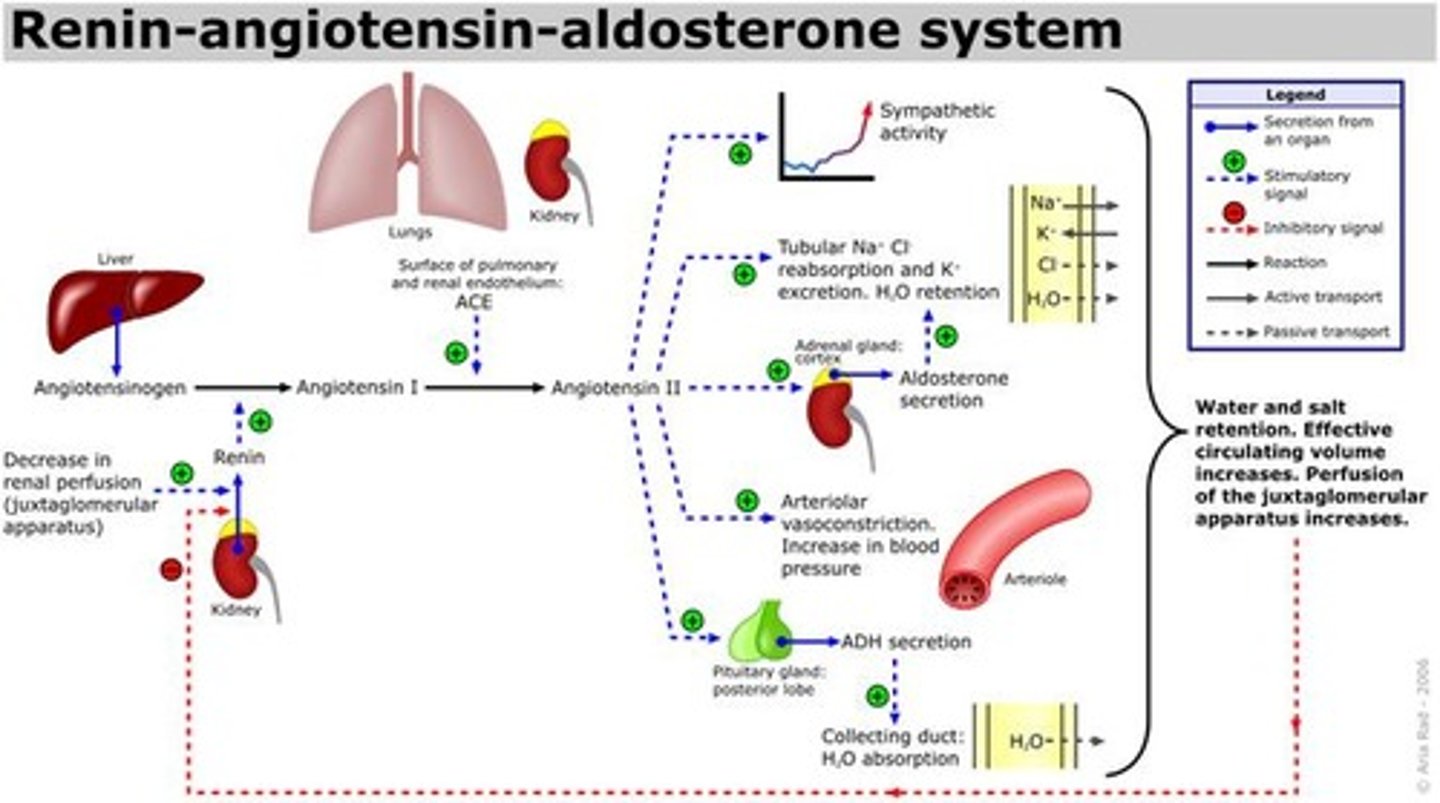
What system regulates blood pressure in the kidneys?
The renin-angiotensin-aldosterone system (RAAS).
What are some congenital kidney conditions?
Unilateral agenesis, agenesis, hypoplasia, horseshoe kidney, and urethra/ureter obstruction.
What are the three main processes of urine formation?
Filtration, reabsorption, and tubular secretion.
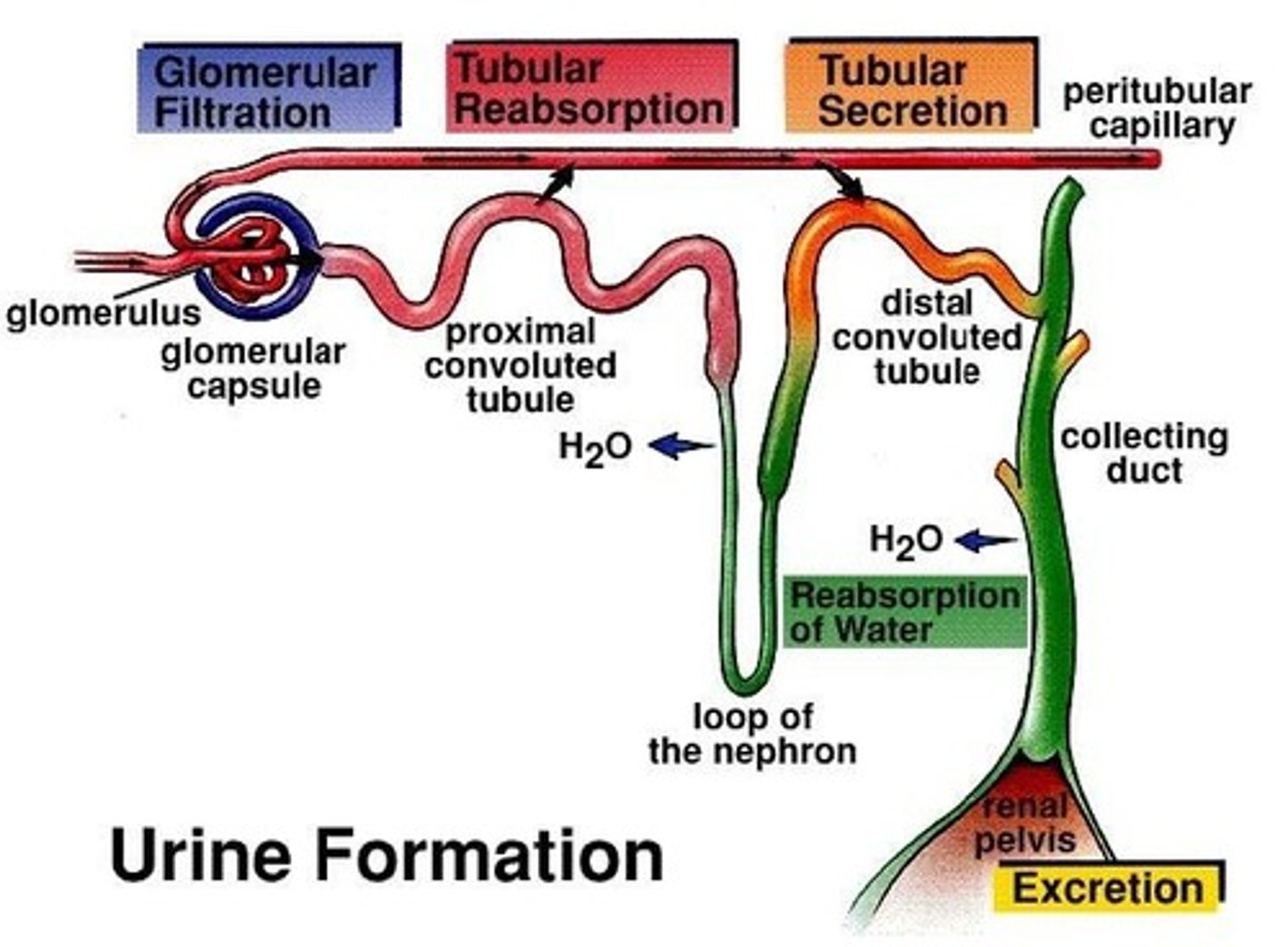
What hormone increases water reabsorption in the kidneys?
Antidiuretic hormone (ADH) or vasopressin.
What is the normal composition of urine?
Transparent pale yellow fluid containing water, mineral salts, urea, uric acid, creatinine, and excess hormones.
What is glycosuria?
The presence of sugar in urine.
What is the normal range for blood urea nitrogen (BUN)?
10-20 mg/dl.
What is the significance of creatinine levels in blood tests?
Creatinine is a waste product of muscle metabolism, with normal levels ranging from 0.5 to 1.5 mg/dl.
What is acute renal failure (ARF)?
A sudden interruption of kidney function resulting in toxin retention and fluid overload.
What are common risk factors for acute renal failure?
Hypertension, major surgery, trauma, hospitalization, nephrotoxic medications, and diabetes.
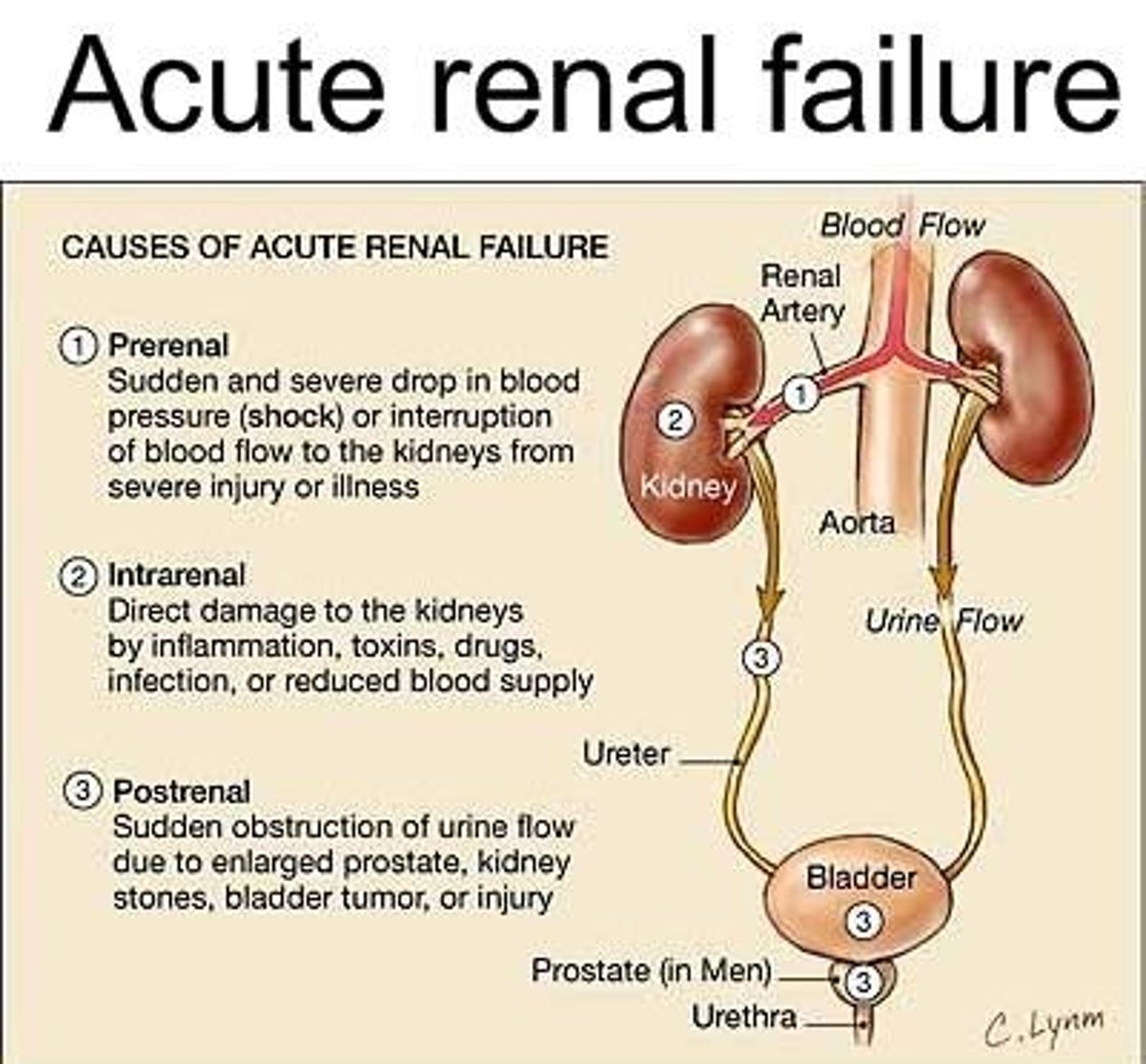
What are the three types of acute renal failure?
Intrinsic, prerenal, and postrenal.
What is acute tubular necrosis (ATN)?
A common cause of kidney failure due to lack of oxygen to kidney tissues.
What are the stages of acute renal failure?
Onset, oliguric, diuretic, and recovery.
What are some subjective symptoms of acute renal failure?
Nausea, loss of appetite, headache, lethargy, and tingling in extremities.
What are some objective symptoms during the oliguric phase of acute renal failure?
CHF, pulmonary edema, hypertension, sudden drop in urine output, and changes in bowel habits.
What complications can arise from acute renal failure?
Fluid overload, acidosis, anemia, electrolyte imbalances, and muscle weakness.
What is the primary treatment for Acute Renal Failure (ARF)?
Manage any reversible illnesses that caused ARF and prevent complications.
What are some nursing interventions for Acute Renal Failure?
Monitor intake/output, lab results, watch for hyperkalemia, maintain nutrition, ensure safety, provide mouth care, monitor daily weights, and assess for signs of heart failure.
What is Chronic Renal Failure (CRF)?
A gradual, progressive loss of renal function that may lead to End Stage Renal Disease.
What percentage of renal function loss indicates the onset of symptoms in Chronic Renal Failure?
Symptoms occur when 75% of function is lost, but it is considered chronic if 90-95% loss occurs.
What are common causes of Chronic Renal Failure?
Diabetes, hypertension, glomerulonephritis, cystic disorders, neoplasms, obstructive disorders, autoimmune diseases, and drug toxicity.
What are some objective symptoms of Chronic Renal Failure?
Hyponatremia, dry mouth, poor skin turgor, confusion, fluid overload, metabolic acidosis, proteinuria, and urine containing RBCs, WBCs, and casts.
What neurological symptoms are associated with Chronic Renal Failure?
Muscle cramping, shortened memory span, apathy, drowsiness, confusion, seizures, and coma.
What cardiovascular symptoms can occur in Chronic Renal Failure?
Hypertension, arrhythmias, pericardial effusion, congestive heart failure (CHF), and peripheral edema.
What gastrointestinal symptoms are common in Chronic Renal Failure?
Stomatitis, ulcers, pancreatitis, uremic fetor, vomiting, and constipation.
What are the lab findings indicative of Chronic Renal Failure?
Elevated BUN, serum creatinine, and abnormal creatinine clearance.
What is the normal range for serum potassium (K+) levels?
3.5-5.0 mEq/L.
What are the treatments for hyperkalemia in Chronic Renal Failure?
Calcium gluconate, insulin with glucose, sodium bicarbonate, Kayexalate, and dialysis.
What dietary restrictions are recommended for patients on hemodialysis?
Fluid, phosphorous, potassium, sodium restrictions, and a controlled protein intake.
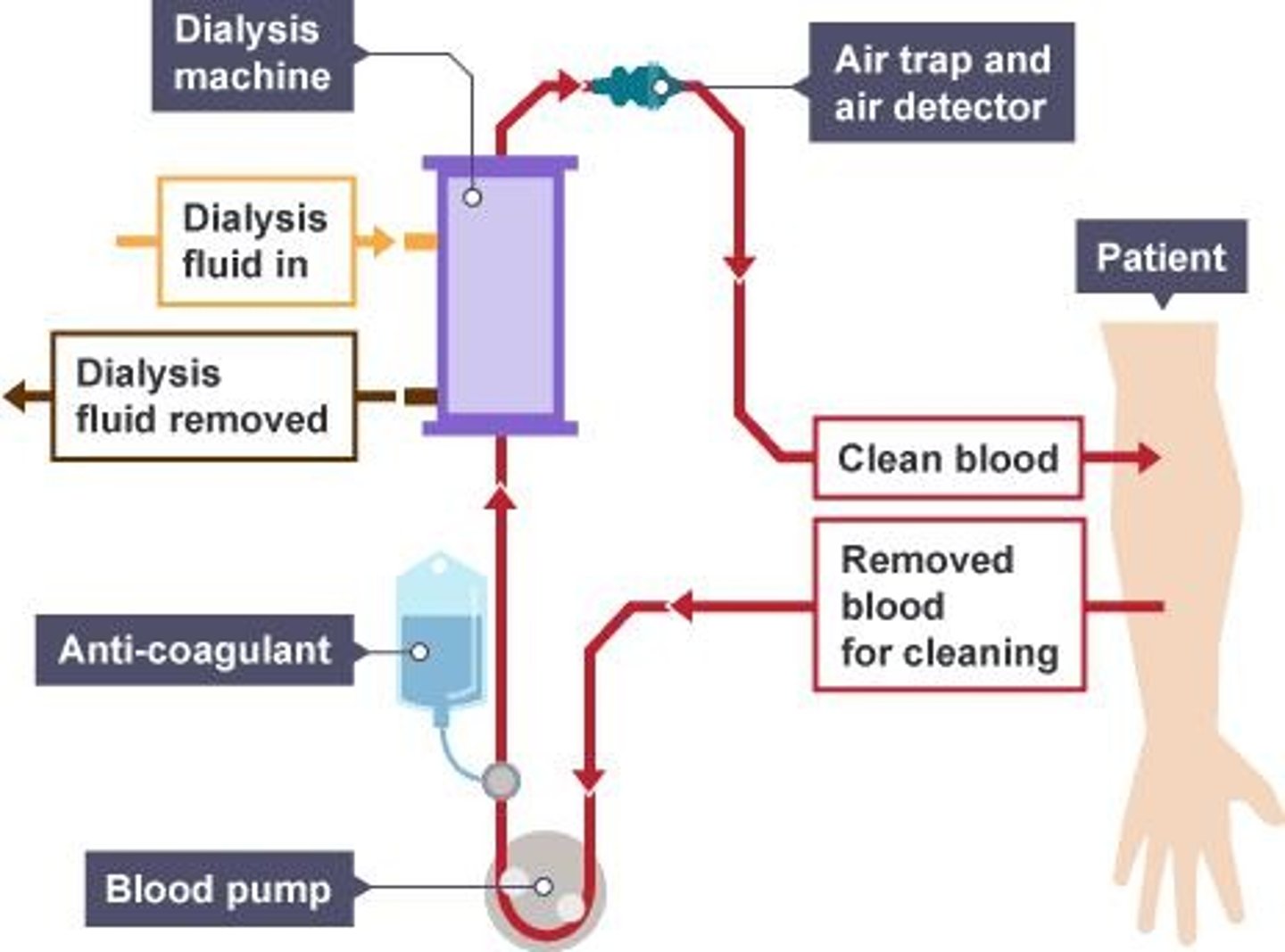
What is hemodialysis?
A treatment that removes soluble substances and water from the blood by diffusion through a semi-permeable membrane.
What are the types of vascular access for hemodialysis?
Arterio-venous shunt, AV fistula, AV graft, temporary catheters, and permanent catheters.
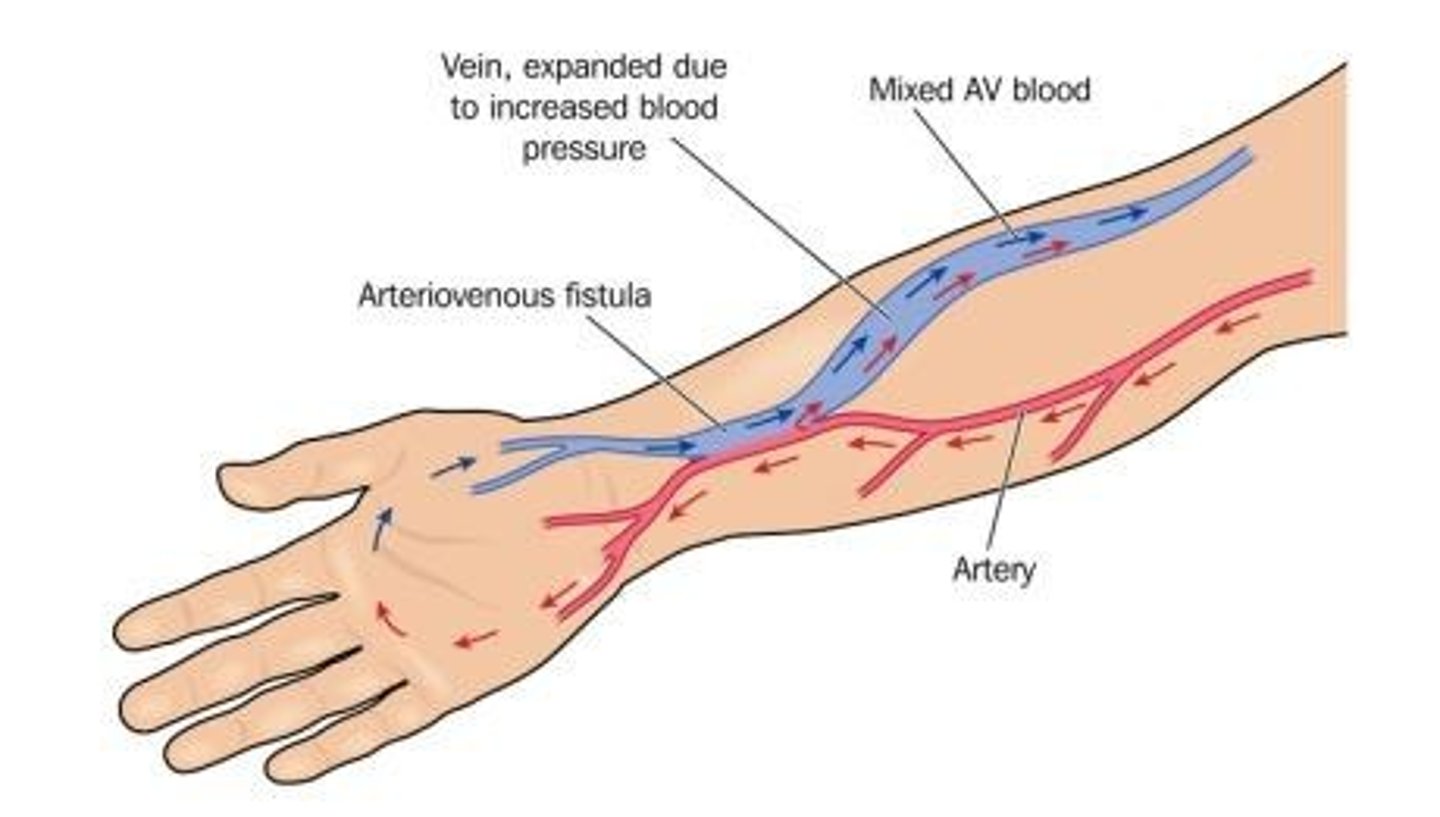
What are the advantages of an AV fistula?
Longevity, low infection rates, and use of the patient's own vein.
What are potential complications during dialysis?
Hypotension, arrhythmias, exsanguination, disequilibrium syndrome, seizures, and cramping.
What is peritoneal dialysis?
A treatment that uses the peritoneum as a membrane to remove waste products and excess fluid.
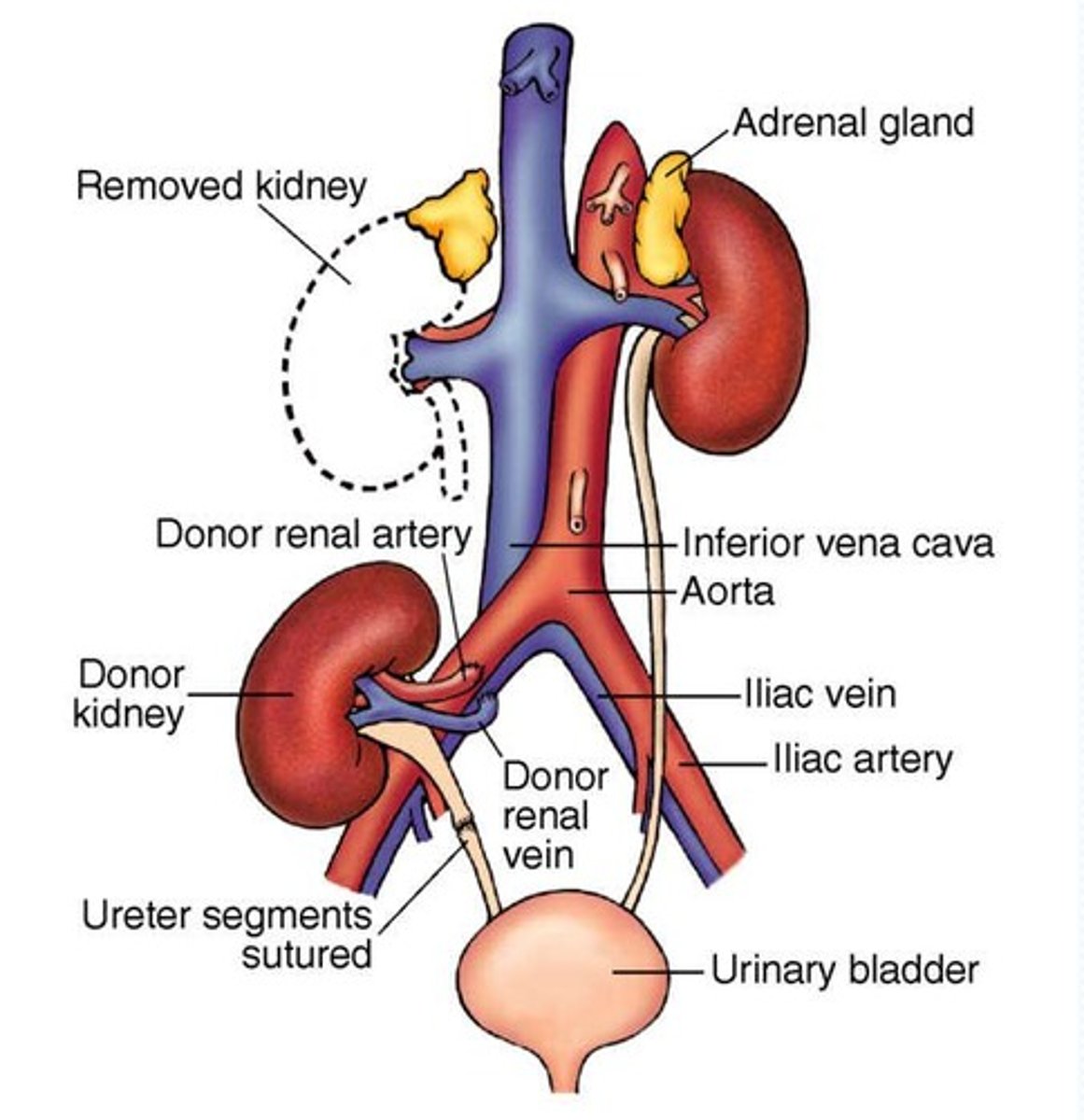
What are the advantages of Continuous Ambulatory Peritoneal Dialysis (CAPD)?
Independence for the patient, no needle sticks, and fewer dietary restrictions.
What are common complications of peritoneal dialysis?
Peritonitis, hypervolemia, obesity, hypokalemia, and hernia.
What is the role of erythropoietin in dialysis patients?
It helps to manage anemia by stimulating red blood cell production.
What is a major disadvantage of kidney transplantation?
The need for lifelong immunosuppressant medications.
What are some patient education points for those undergoing dialysis?
Understanding the dialysis process, fistula/catheter care, dietary and fluid restrictions, and medication management.
What are the subjective symptoms of Chronic Renal Failure?
Symptoms are similar to those in Acute Renal Failure, including malaise and anorexia.
What is the normal range for BUN levels?
10-20 mg/dL; dialysis is indicated when it reaches 70 mg/dL.
What is the normal range for serum creatinine levels?
0.5-1.5 mg/dL; dialysis is indicated when it reaches 10 times normal.
What is the best determinant of kidney function?
Creatinine clearance, which requires a 12-24 hour urine collection.

