Meiosis
 Call Kai
 Learn
Learn Practice Test
 Spaced Repetition
 Match
Match Flashcards
 Knowt Play
1/19

There's no tags or description
Looks like no tags are added yet.
Name | Mastery | Learn | Test | Matching | Spaced | Call with Kai |
|---|
No analytics yet
Send a link to your students to track their progress
20 Terms
Prophase I
Crossing over: homologous pairs of chromosomes exchange genetic material
Metaphase I
Chromosomes align along the metaphase plate. Kinetochore microtubules attach to homologous chromosomes
Anaphase I
Kinetochore microtubules divide homologous between the poles of the cell
Telophase and cytokinesis I
Same as telophase in mitosis
Prophase II
Chromosomes recondense. Centrosomes replicate and two new meiotic spindles form.
Metaphase II
This time kinetochore microtubules from each pole attach to a chromosome. Sister chromatids will be separated.
Anaphase I
Sister chromatids are segregated to the poles of the dividing cell.
Telophase and cytokinesis II
Four new nuclear envelopes form and the cells divide
Where does crossing over occur?
Occurs during prophase I
What happens in crossing over?
Crossing over occurs between the same arm of homologous chromosomes
Independent assortment
Results from kinetochore microtubule binding in metaphase 1
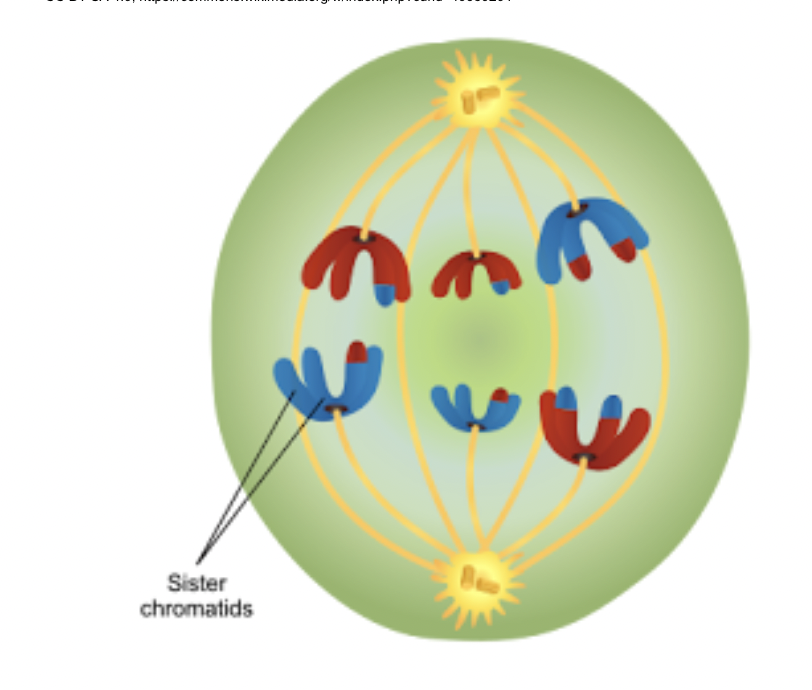
What phase is this?
Anaphase I
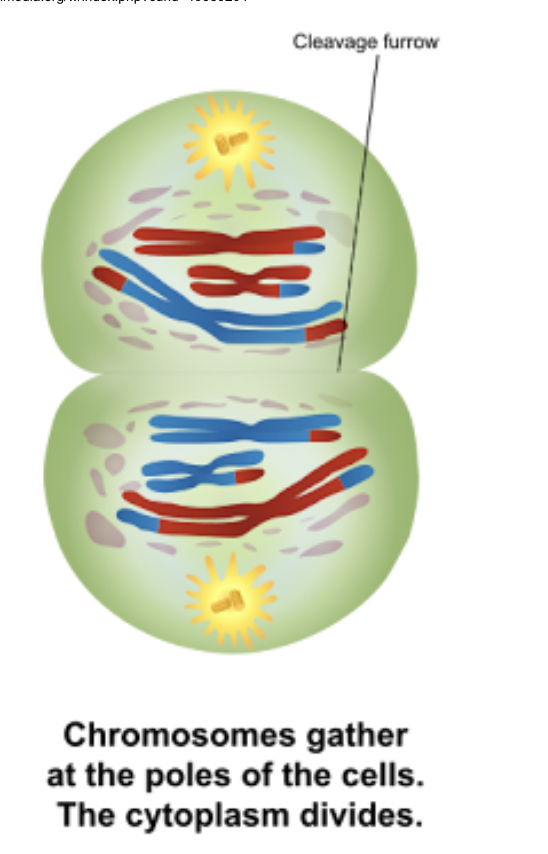
What phase is this?
Telophase and cytokinesis I
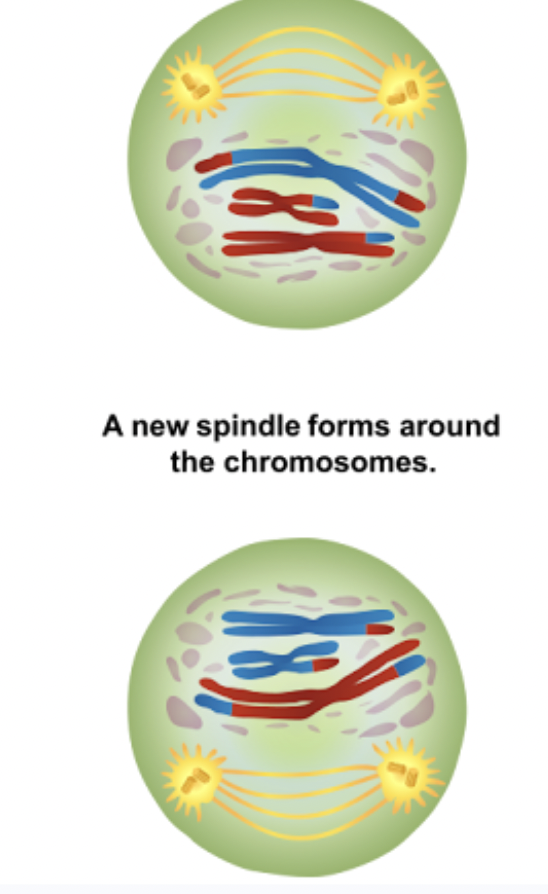
What phase is this?
Prophase II
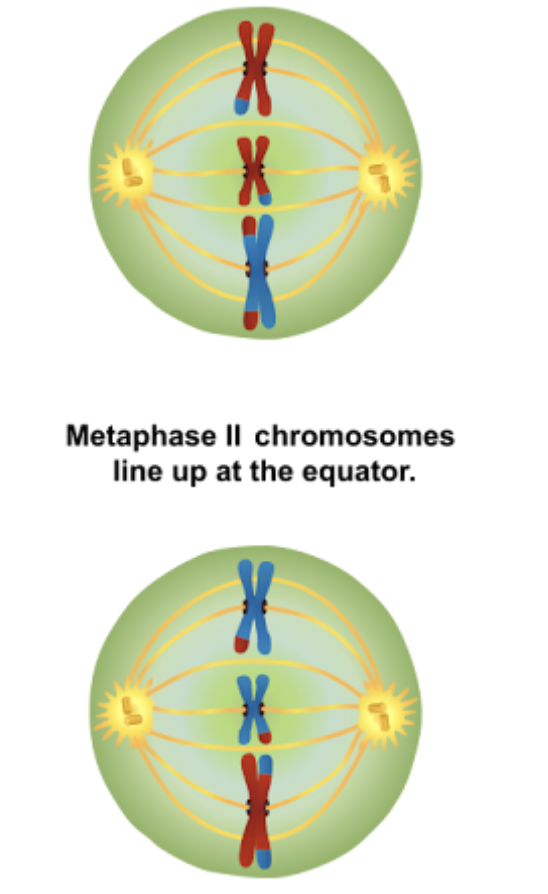
What phase is this?
Metaphase II
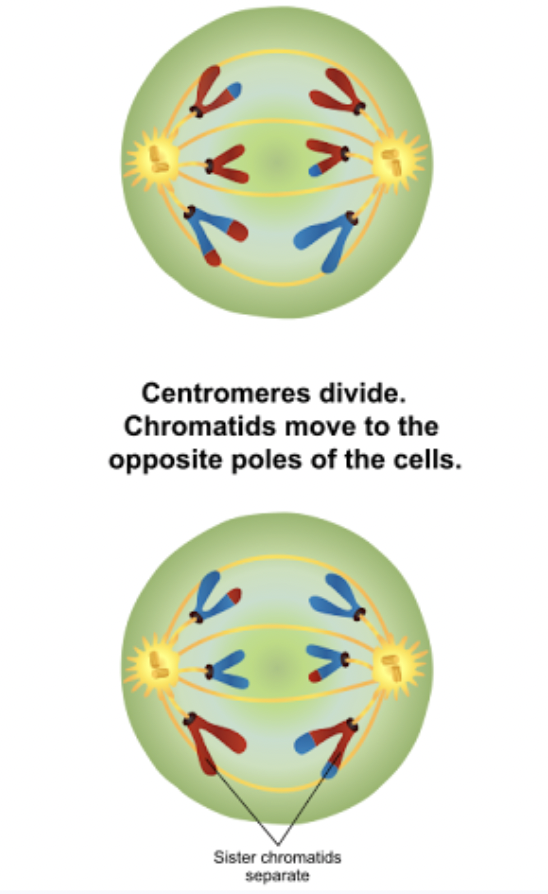
What phase is this?
Anaphase I
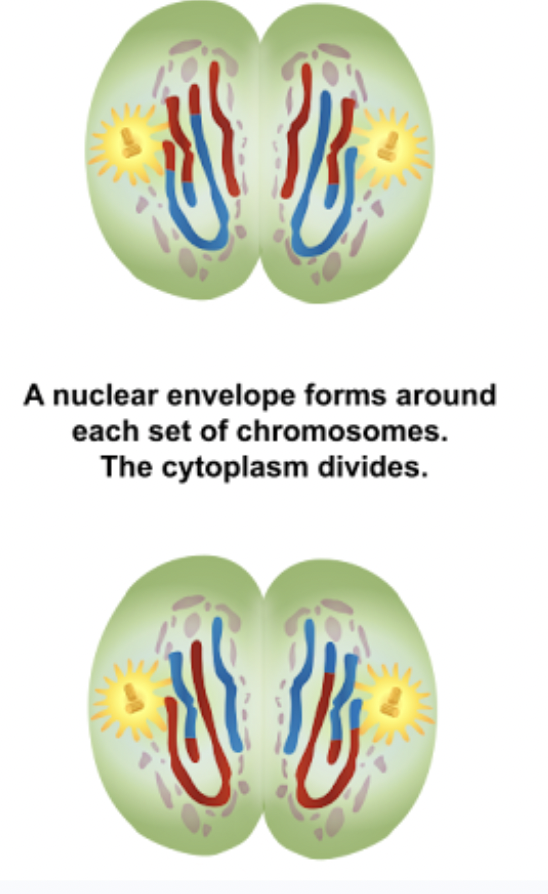
What phase is this?
Telophase and cytokinesis II
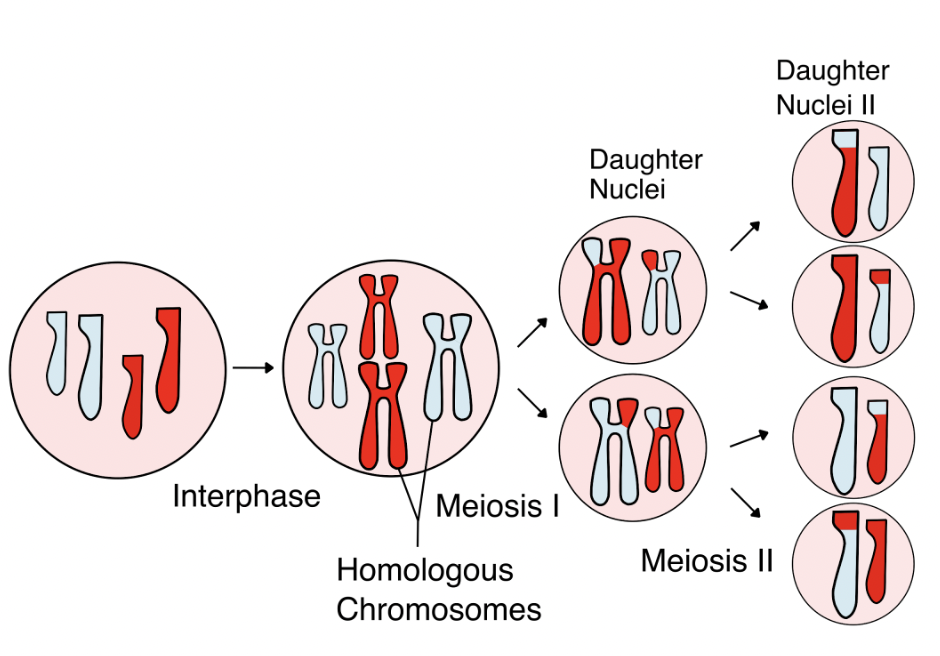
Increasing genetic diversity in meiosis (PART 1)
Mitosis: daughter cells are genetically identical
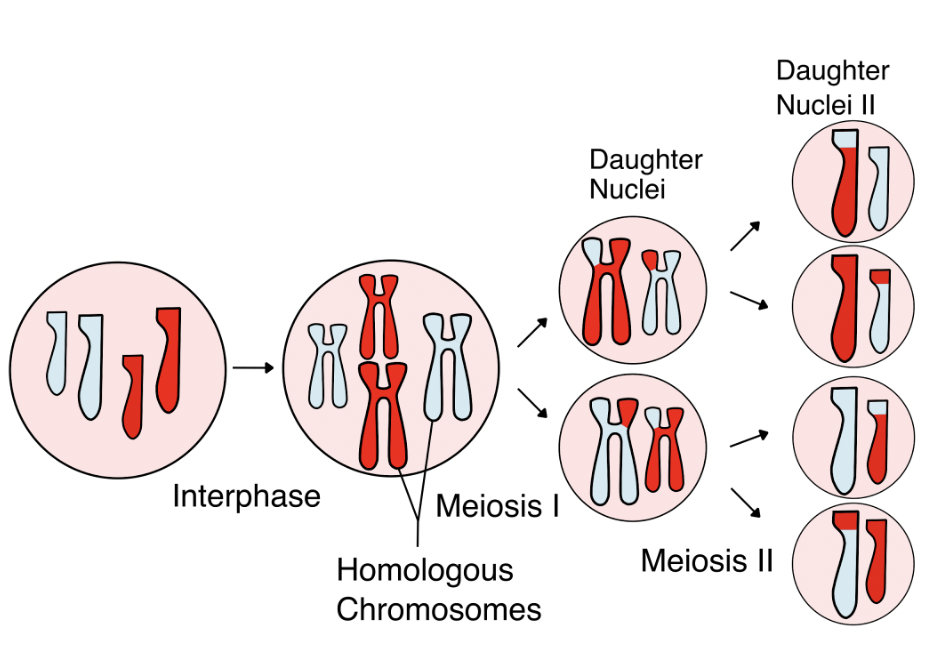
Increasing genetic diversity in meiosis (PART 2)
Meiosis: daughter cells are genetically unique
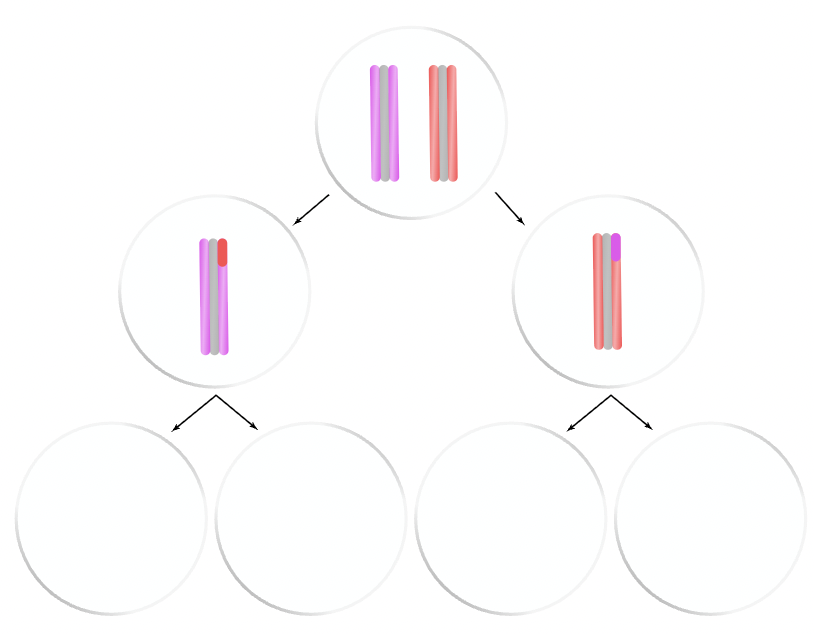
Why is the separation of chromosomes in meiosis I considered a reduction in ploidy for the daughter cells?
Because there is only one chromosome of each type

