Lecture 3: Pelvic Viscera, Nerves, and Arteries
 Studied by 0 people
 Call Kai
 Learn
Learn Practice Test
 Spaced Repetition
 Match
Match Flashcards
 Knowt Play
1/65

There's no tags or description
Looks like no tags are added yet.
Name | Mastery | Learn | Test | Matching | Spaced | Call with Kai |
|---|
No analytics yet
Send a link to your students to track their progress
66 Terms
What are the pelvic viscera?
rectum
urinary organs
reproductive system
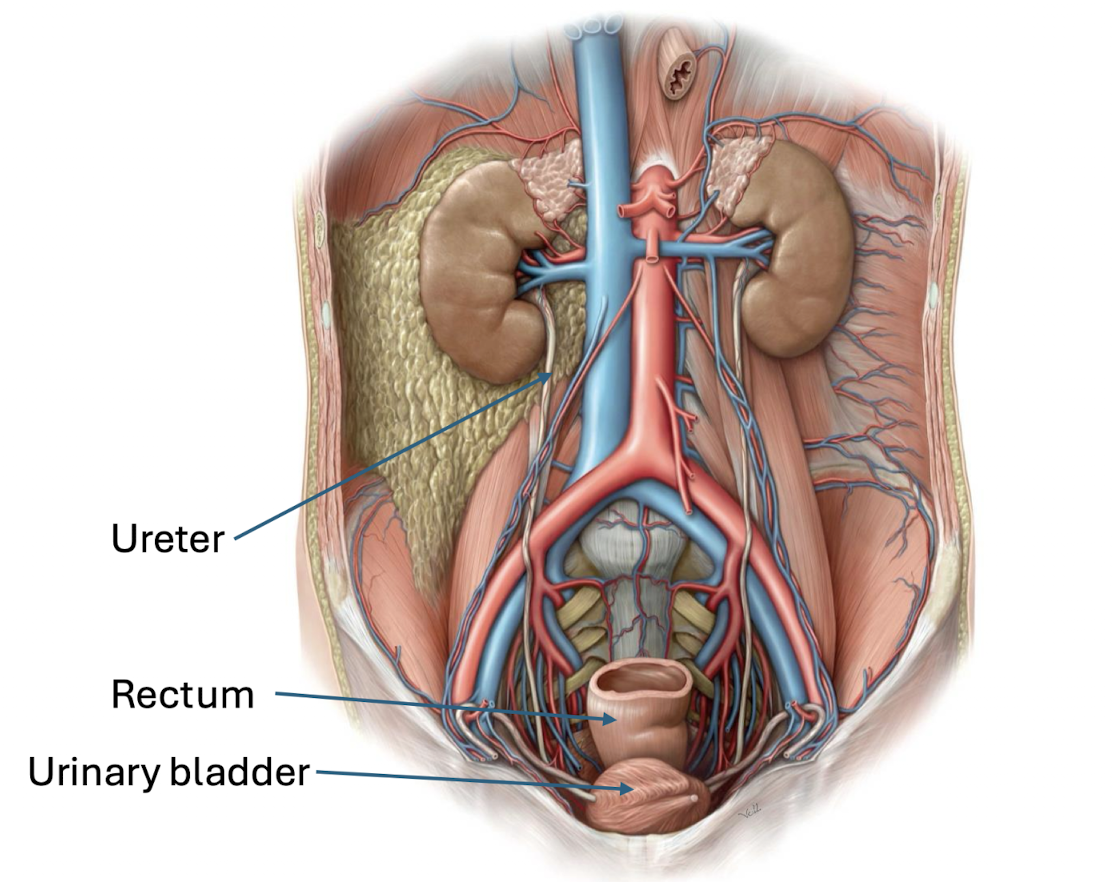
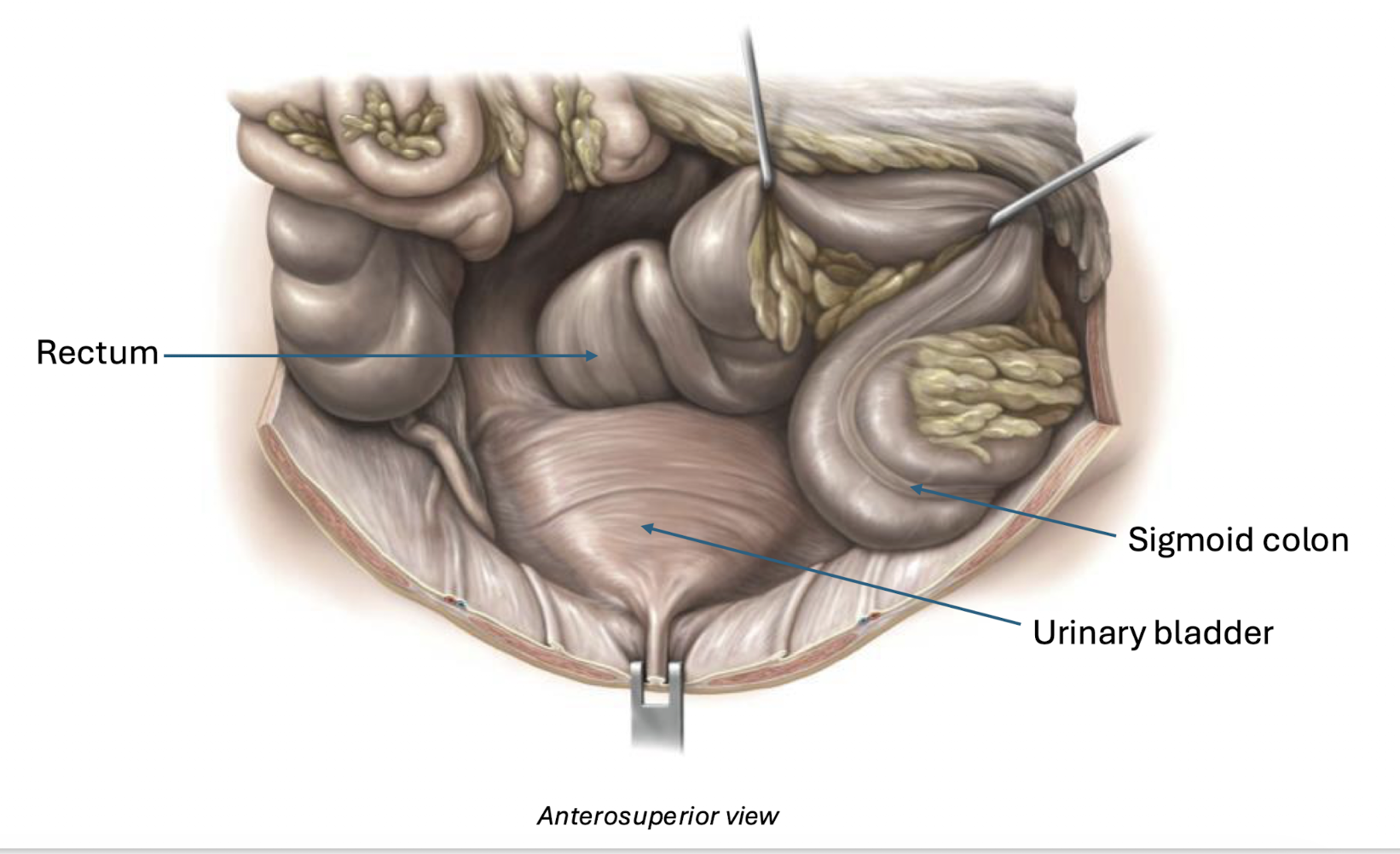
Where is the urinary bladder in relation to the rectum?
the urinary bladder is anterior to the rectum
Ureter
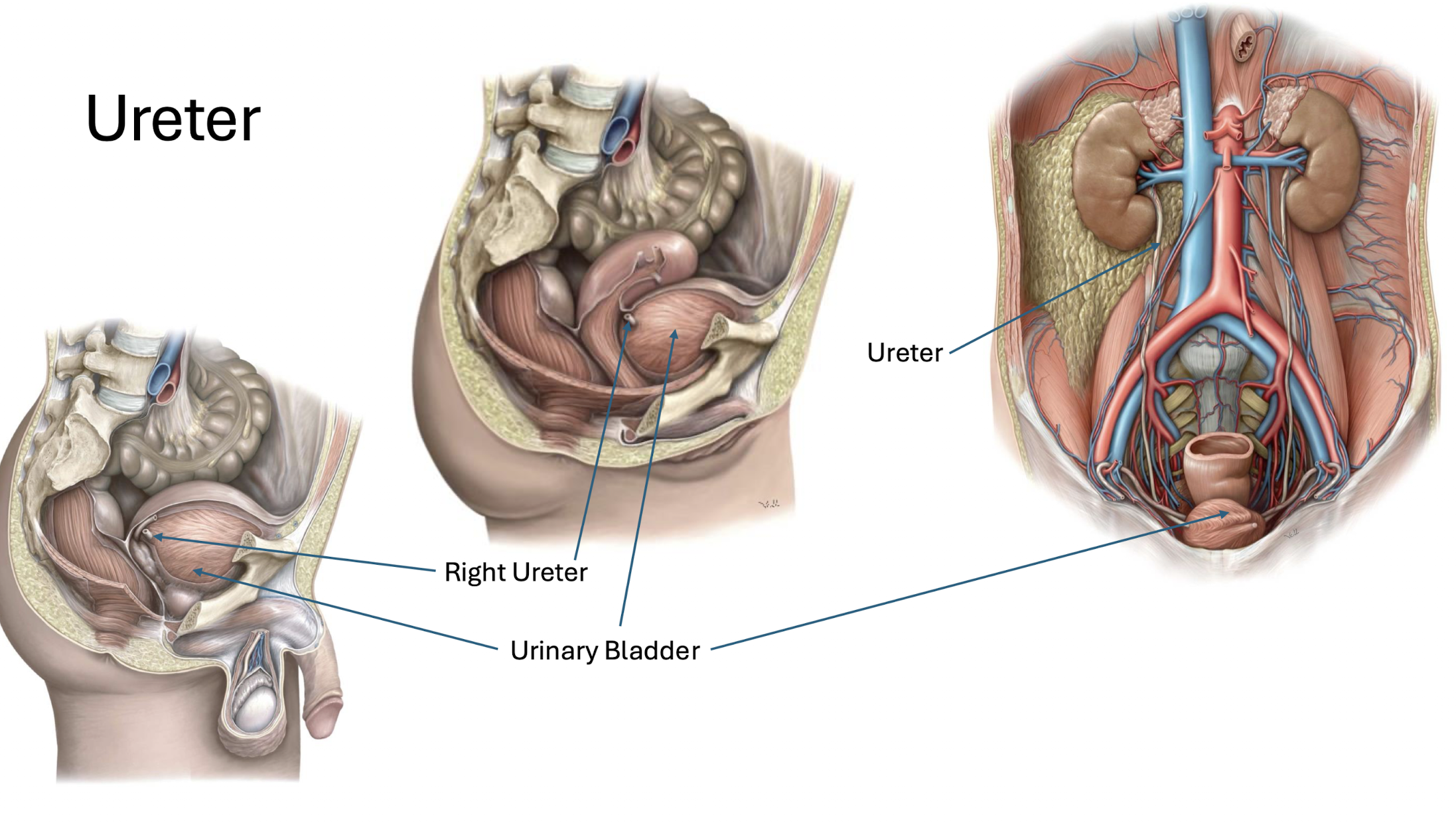
brings urine from the kidney and down to the posterior surface of the bladder for storage.
Male vs female bladder
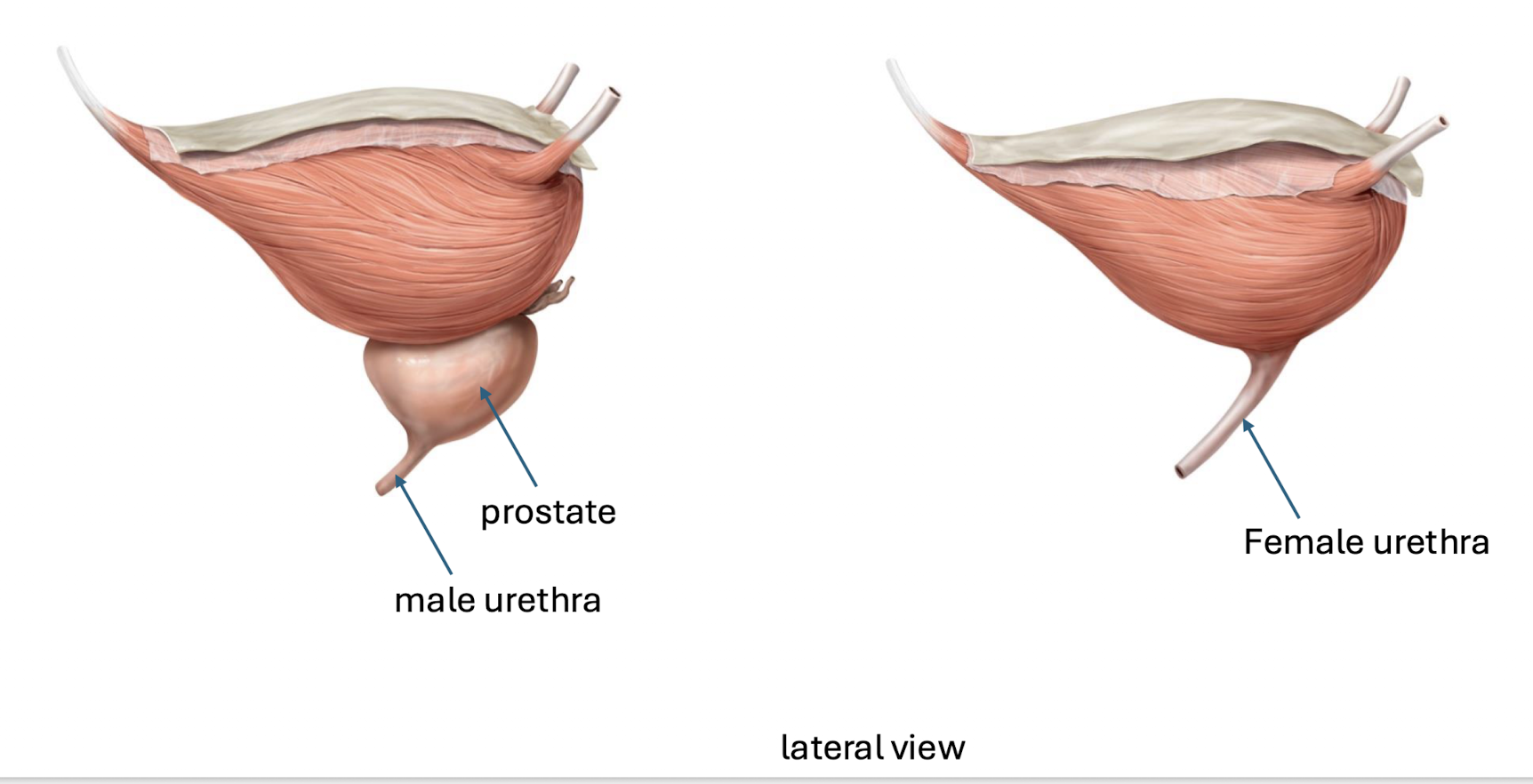
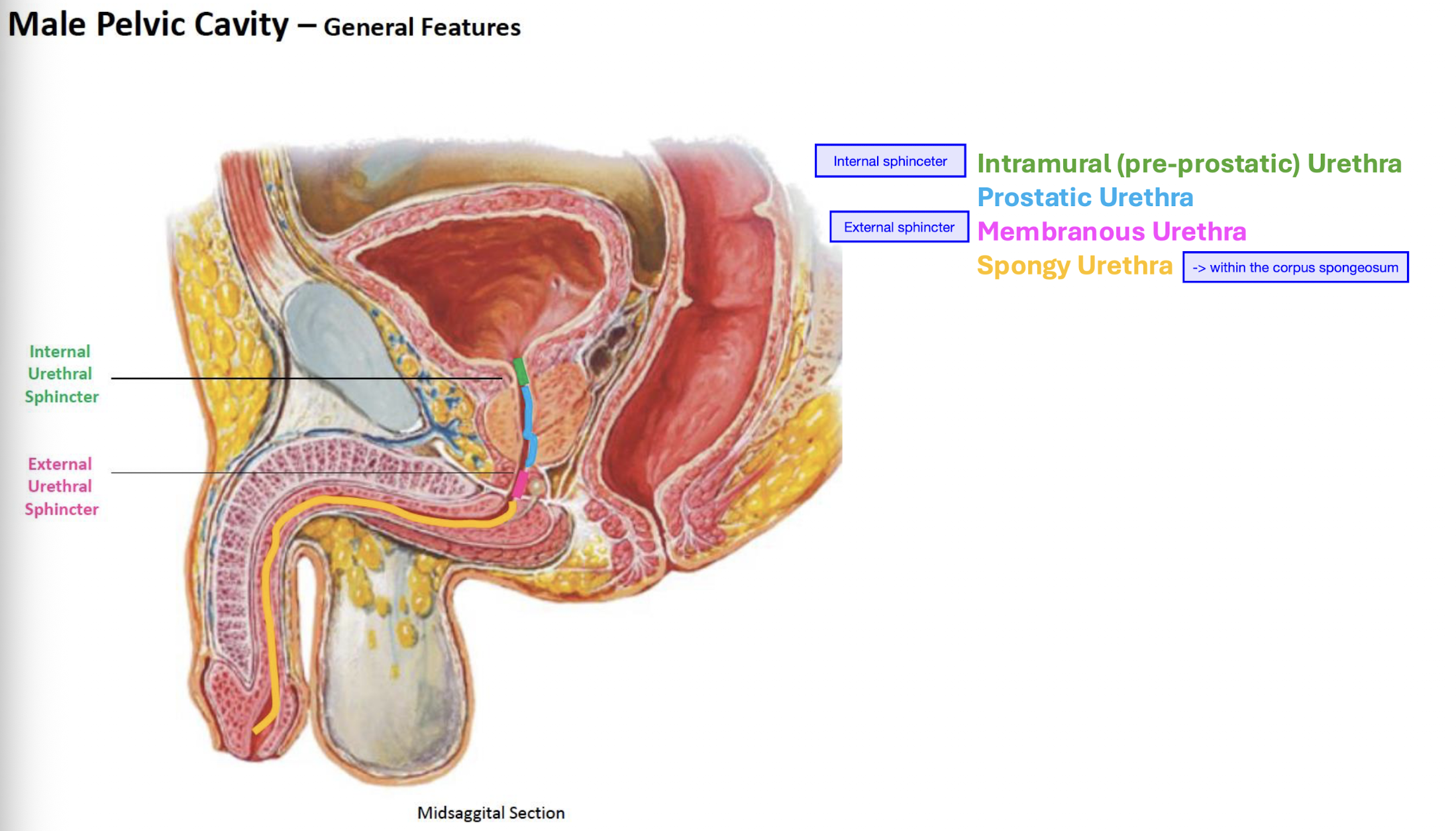
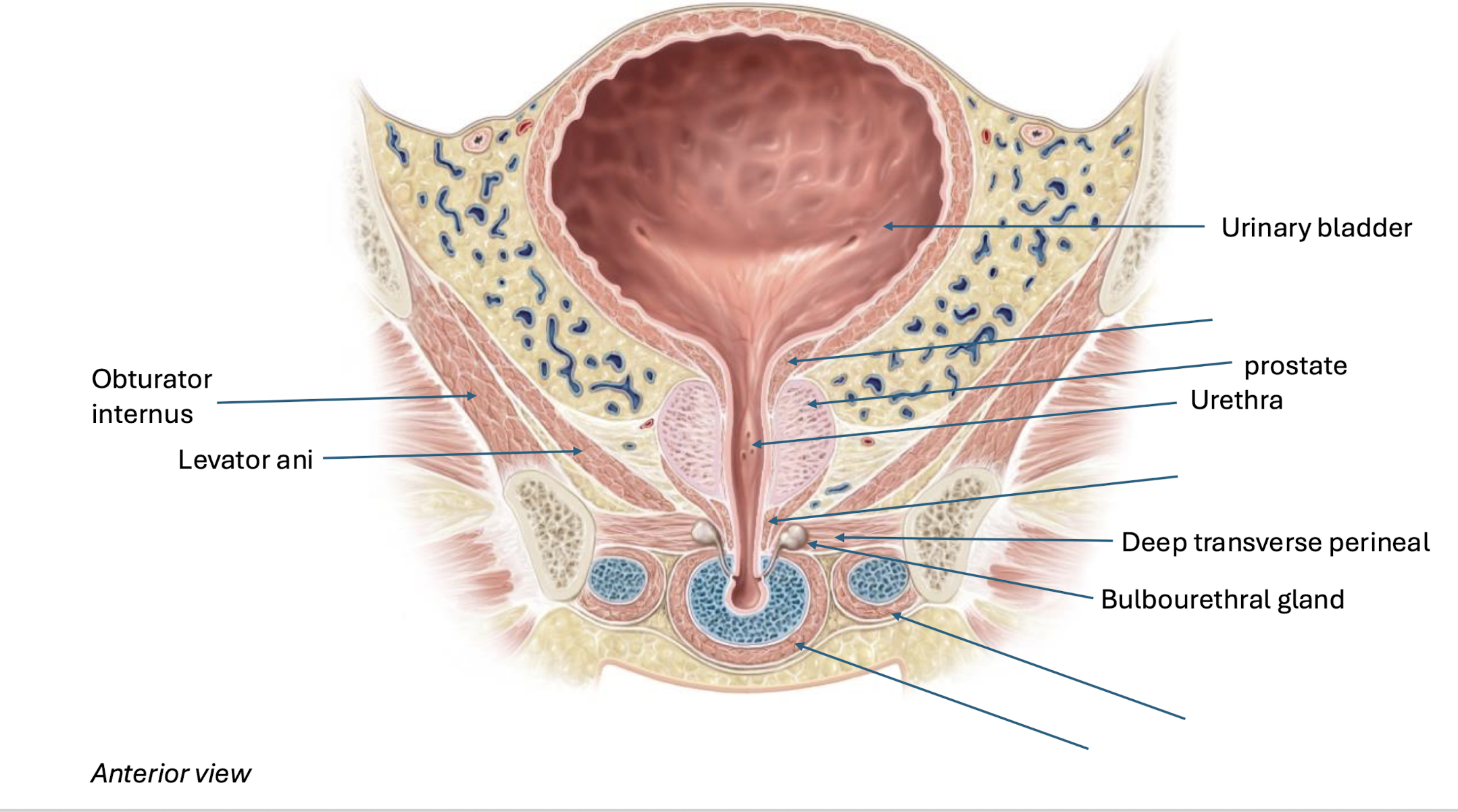
the male urethra runs through the prostate
Male internal genitalia
testis
epididymis
ductus deferens
seminal gland
ejaculatory ducts
prostate gland
bulbourethral gland
What creates sperm?
Testis + epididymis
What makes semen?
mixture of secretions produced by testes, seminal glands, prostate gland, bulbourethral gland
vehicle for sperm transport
role in activating sperm
Ductus deferens
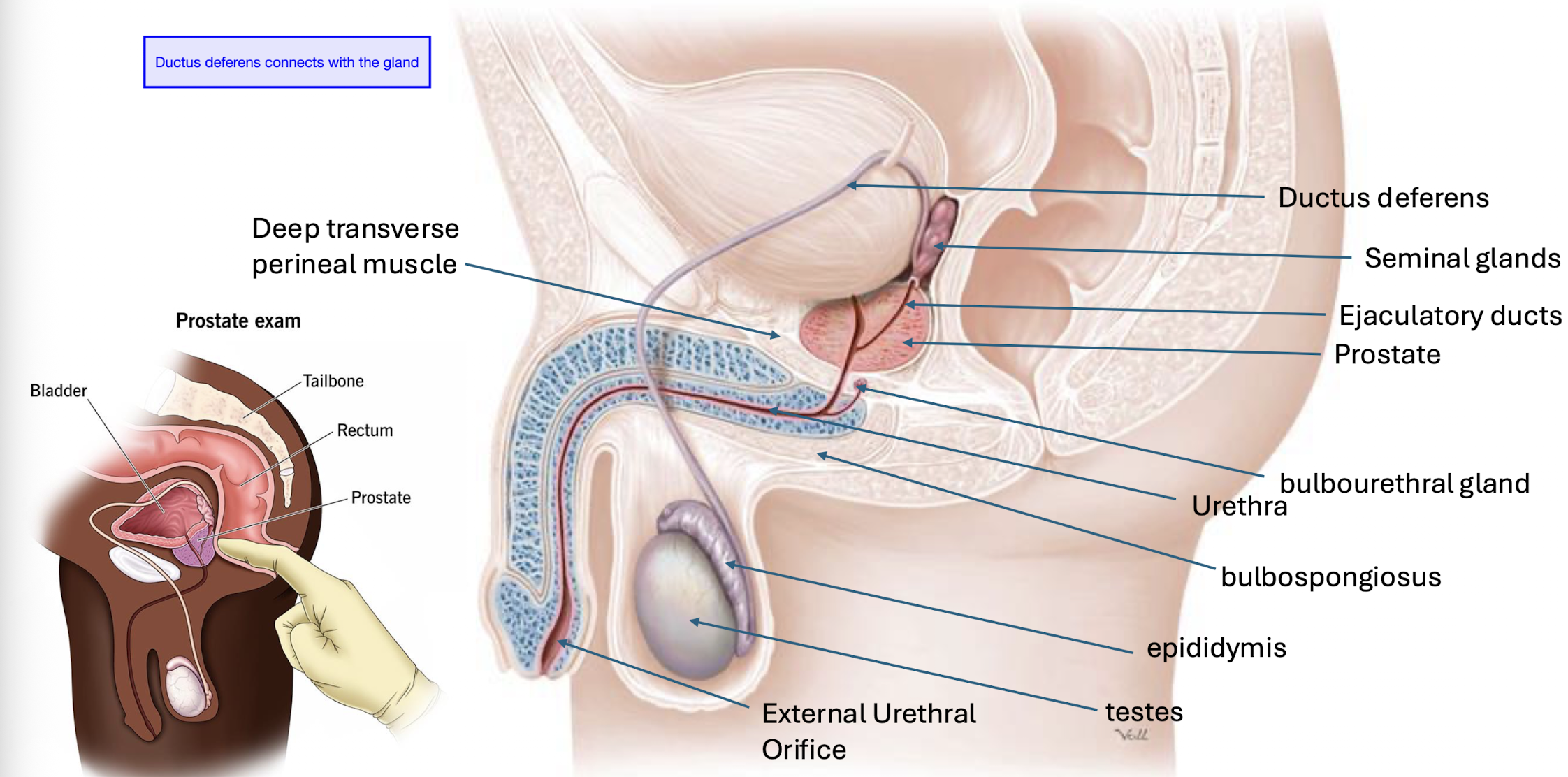
seminal gland
ejaculatory duct
prosstate
bulbourethral gland
bulbospongiosus
epididymis
external urethral orifice
Structure of the male urethra?
anterior view of male bladder
What is the seminal gland?
thick alkaline fluid with fructose (energy) for sperms and coagulating agents
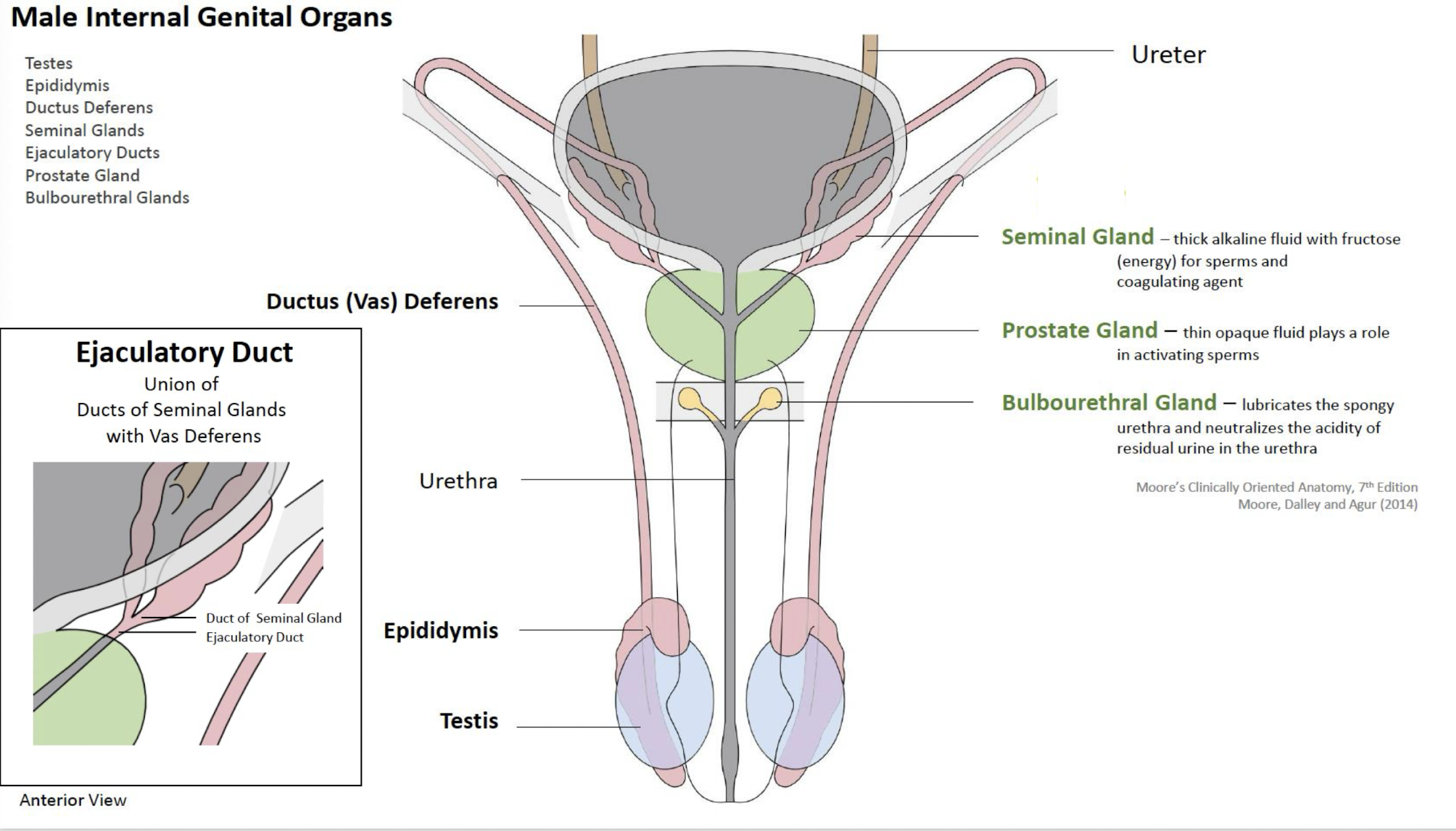
What is the prostate gland?
think opaque fluid plays a role in activating sperms
What is the bulbourethrl gland?
lubrivates the spongy urethra and neutralized the acidity of residual urine in the urethra
What is the ejaculatory duct?
union of ducts of seminal glands and vas deferens
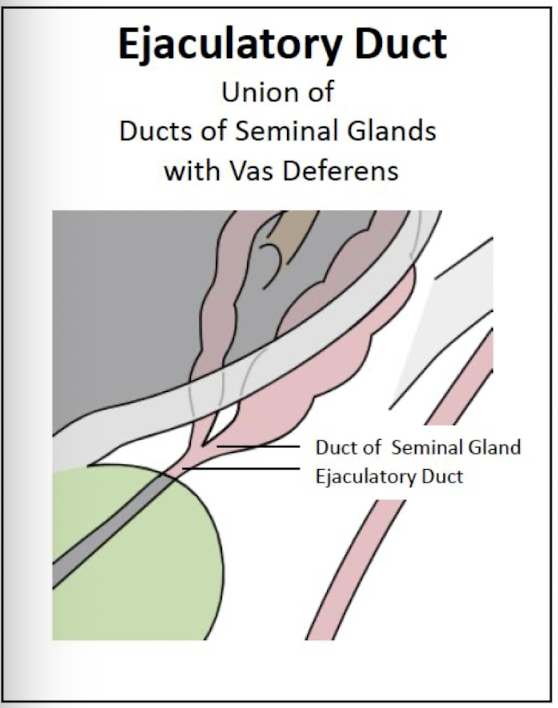
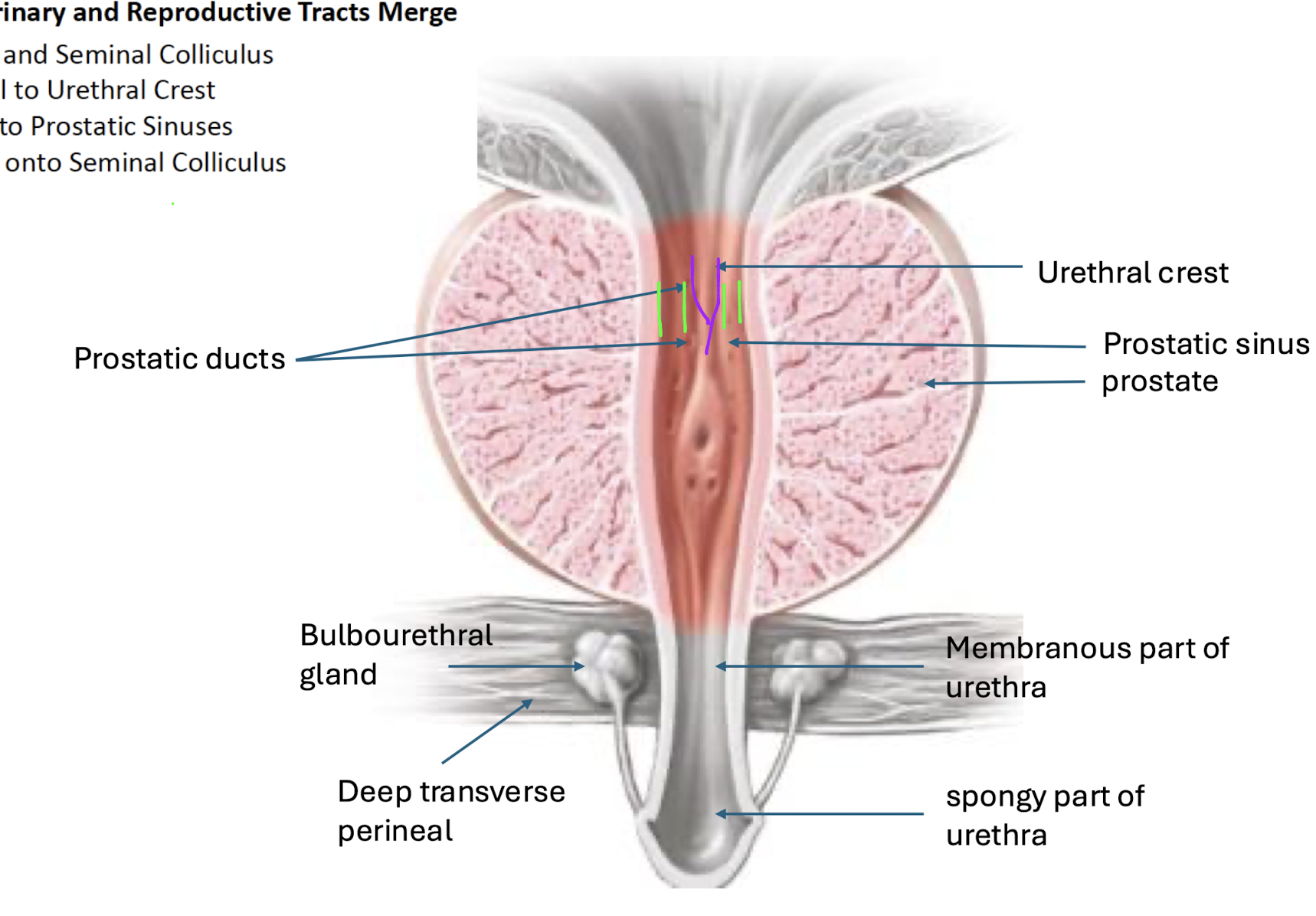
What is the prostatic urethra?
urinary and reproductive tracts merge
feature the urethral crest and seminal colliculus
prostatic sinuses lateral to urethra crest
prostatic ducts open into prostatic sinuses
ejaculatory ducts open onto seminal colliculus
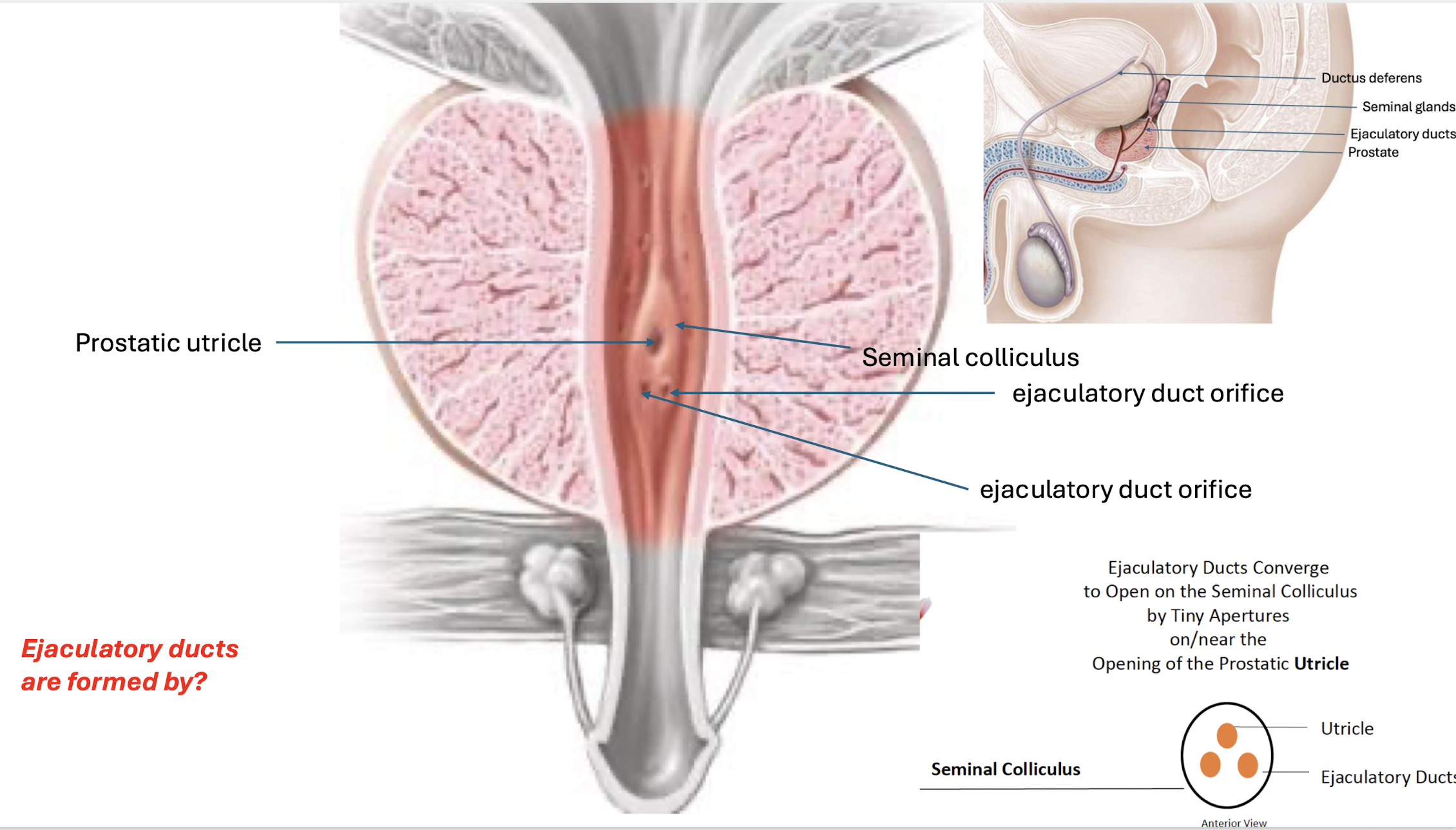
What is the seminal colliculus?
prostatic utricle → no function just from embryological development
ejaculatory ducts orifice
Posterior view of male bladder
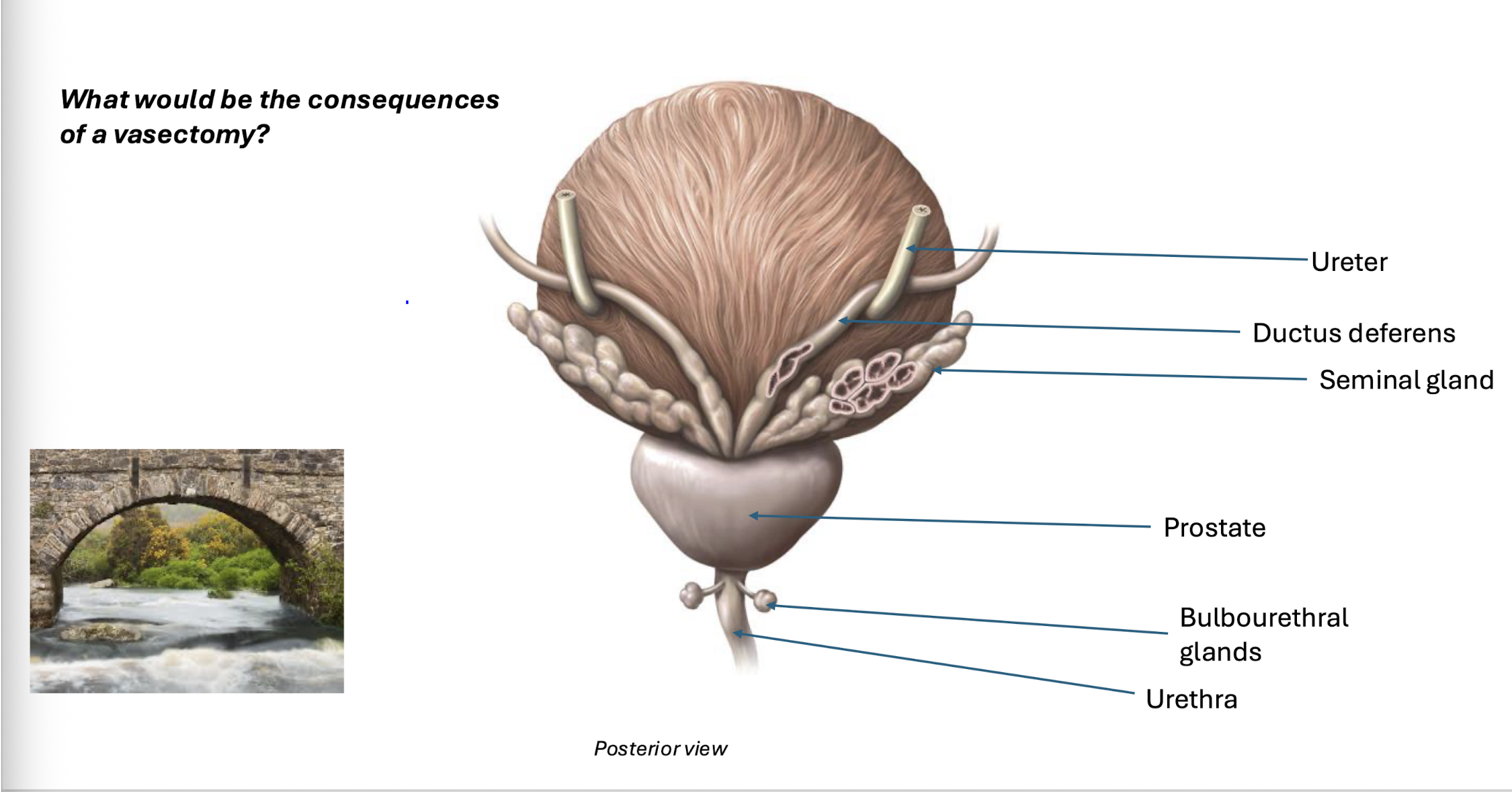
ureter goes under the ductus deferens
What would be the consequences of a vasectomy?
you would still have semen but you would not have sperm because you still have all of the glands just no sperm going to the urethra
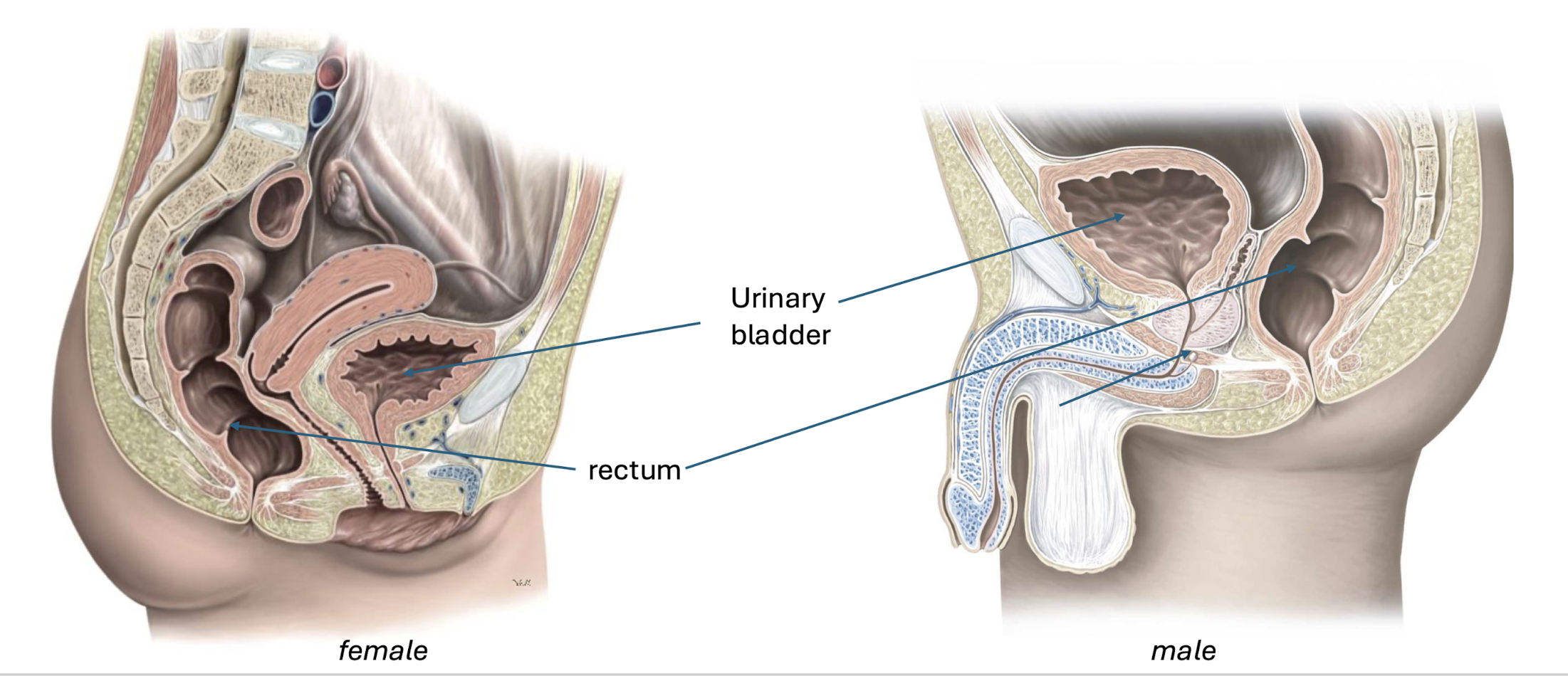
Where is the rectum in relation to the bladder?
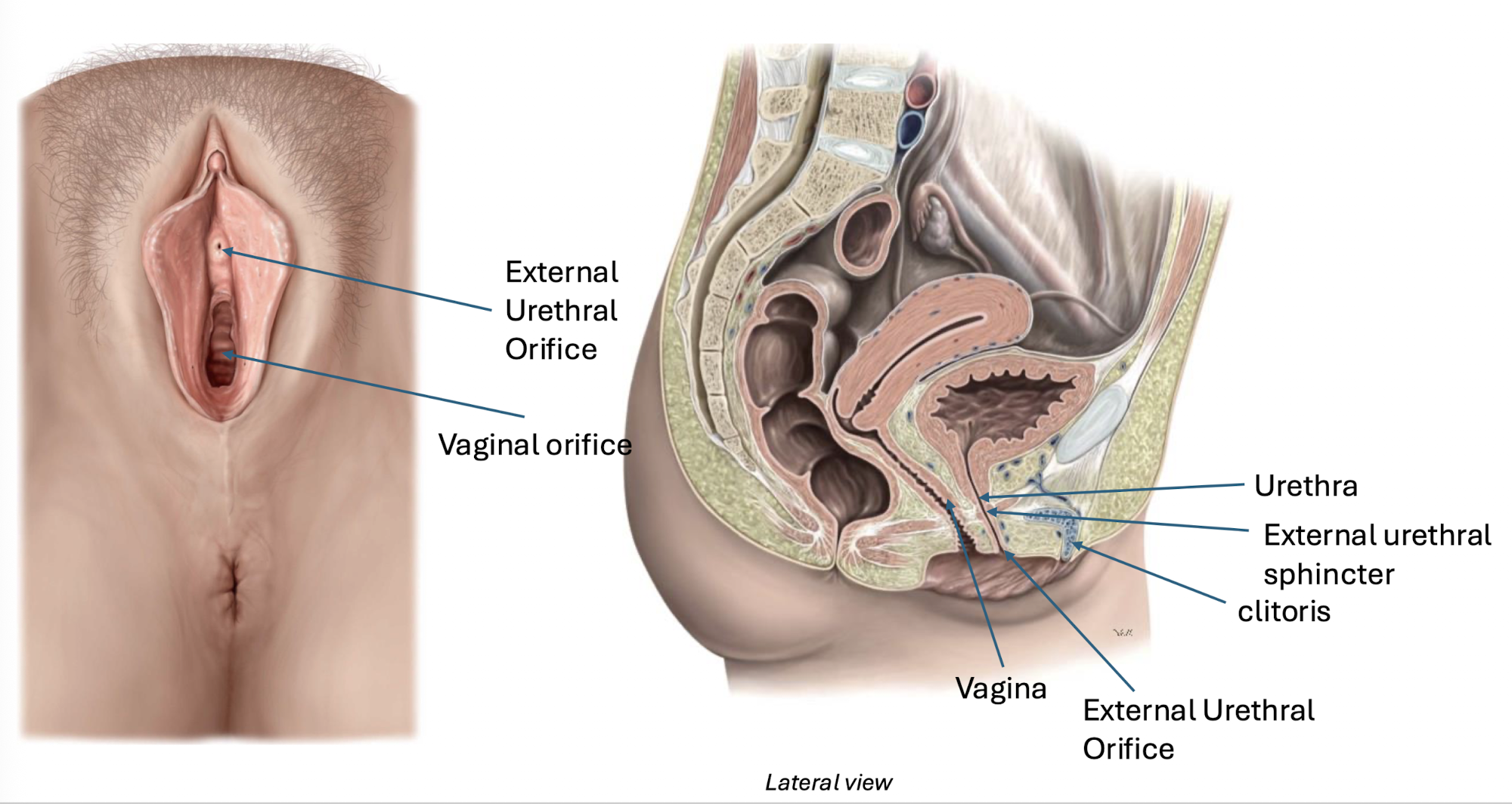
External urethral orifice
anterior to the vaginal opening
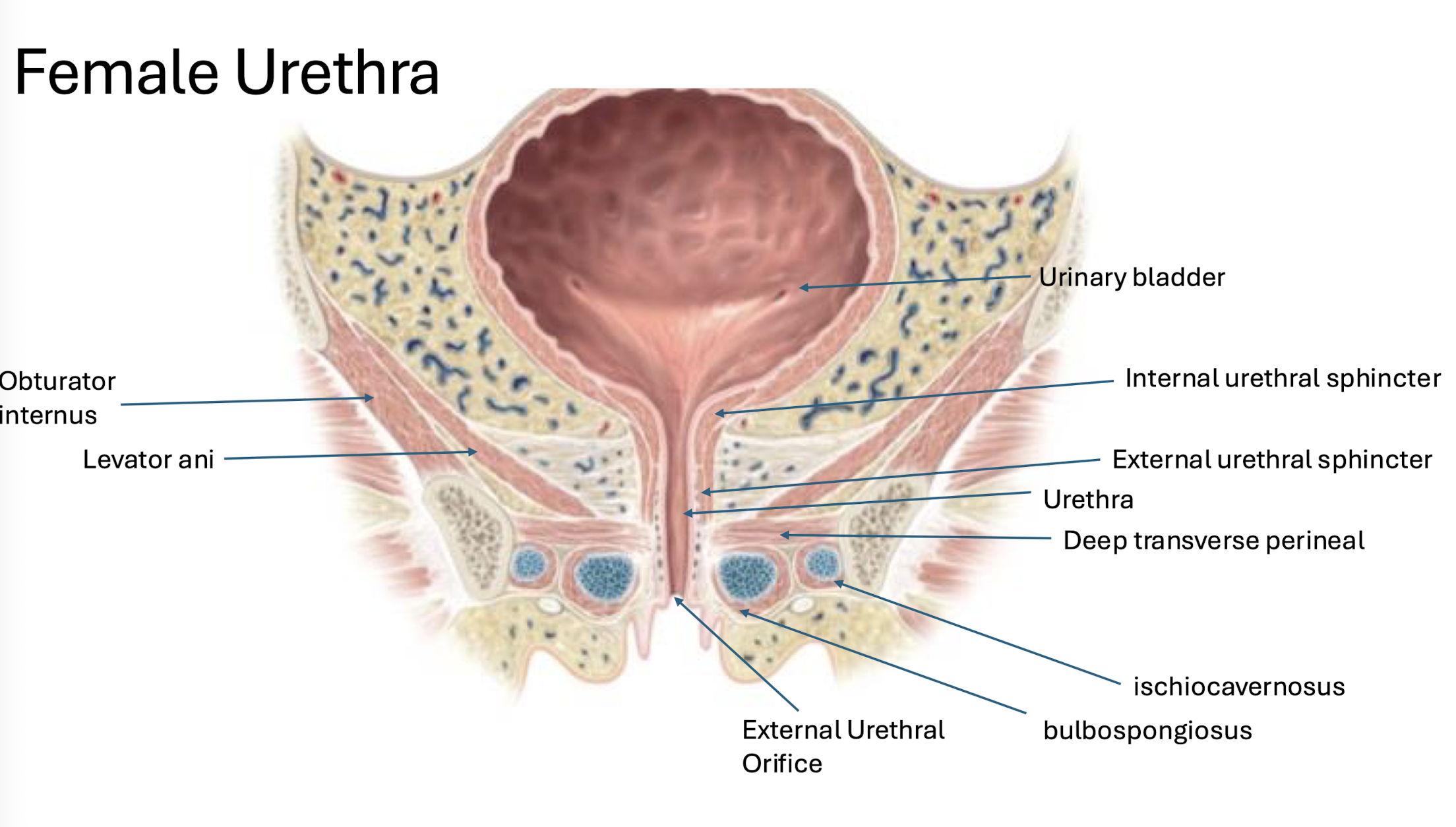
Female urethra structure
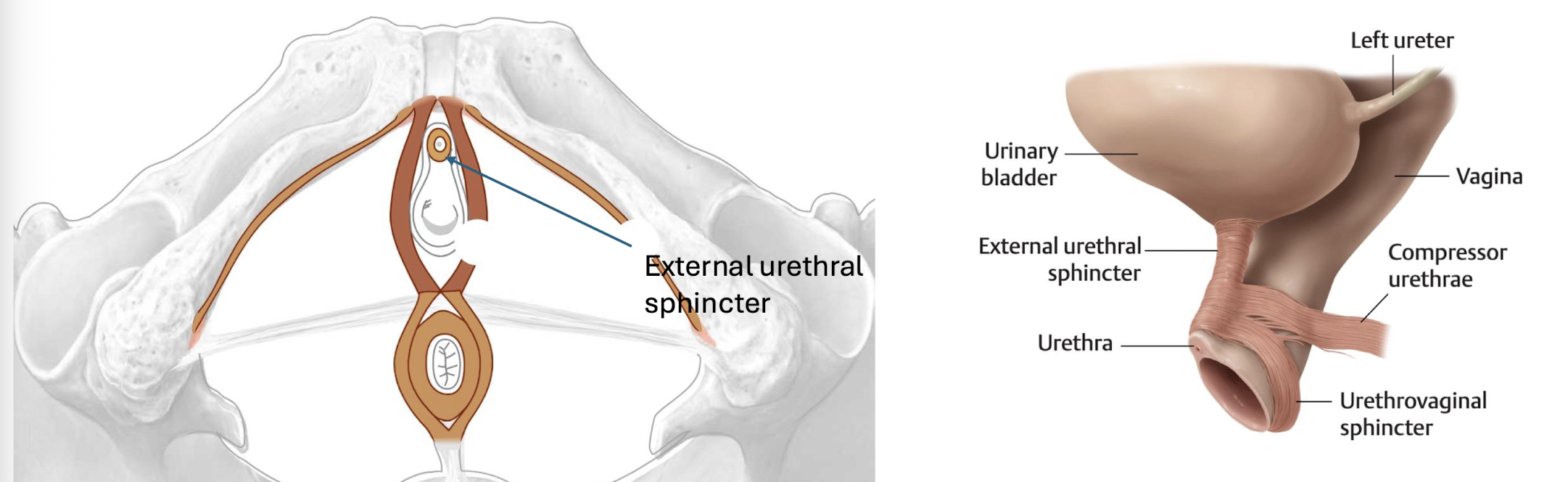
External urethral sphincter
uternus location
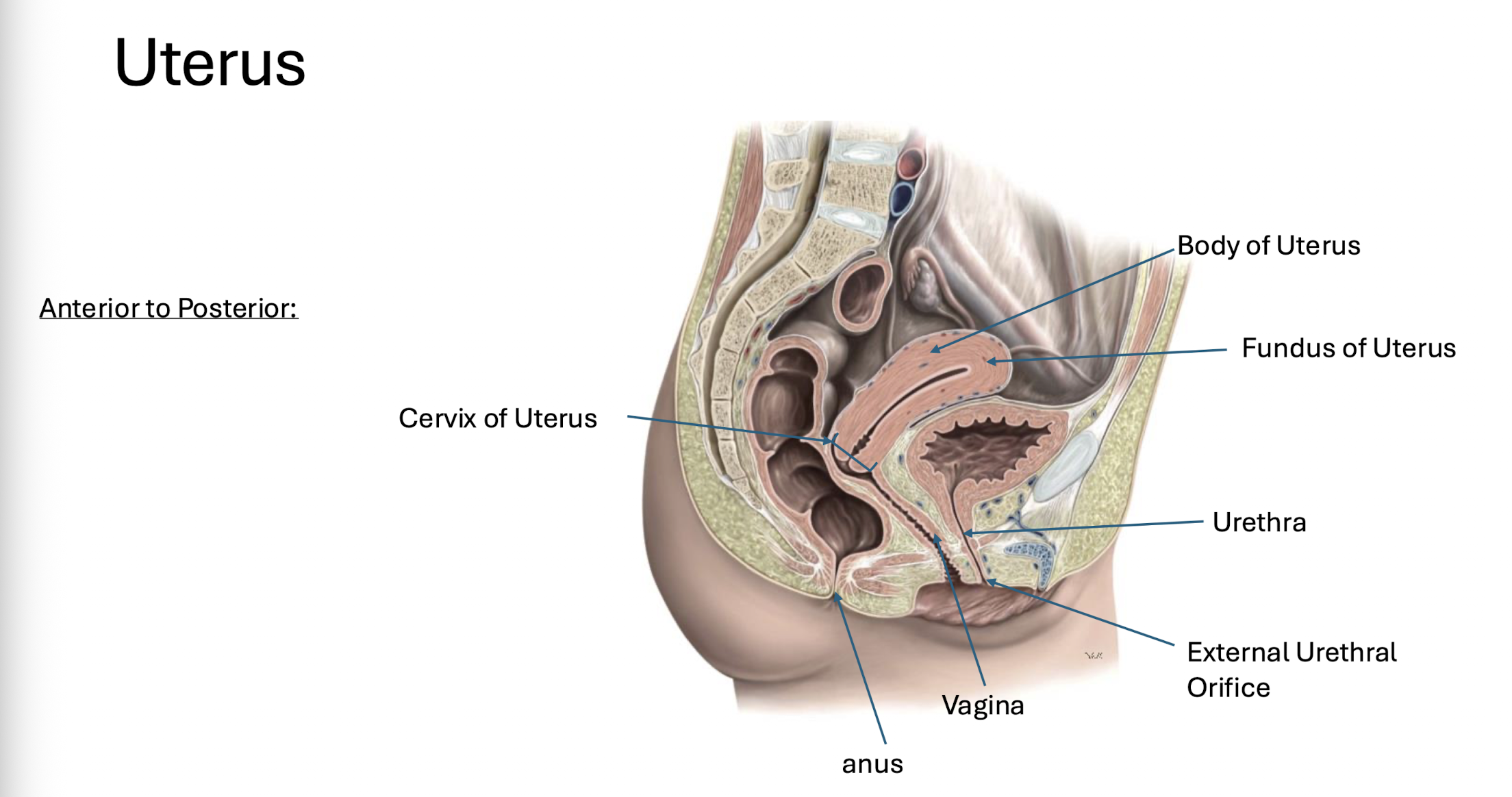
Urinary bladder
Urterus
rectum
Fundus of uterus
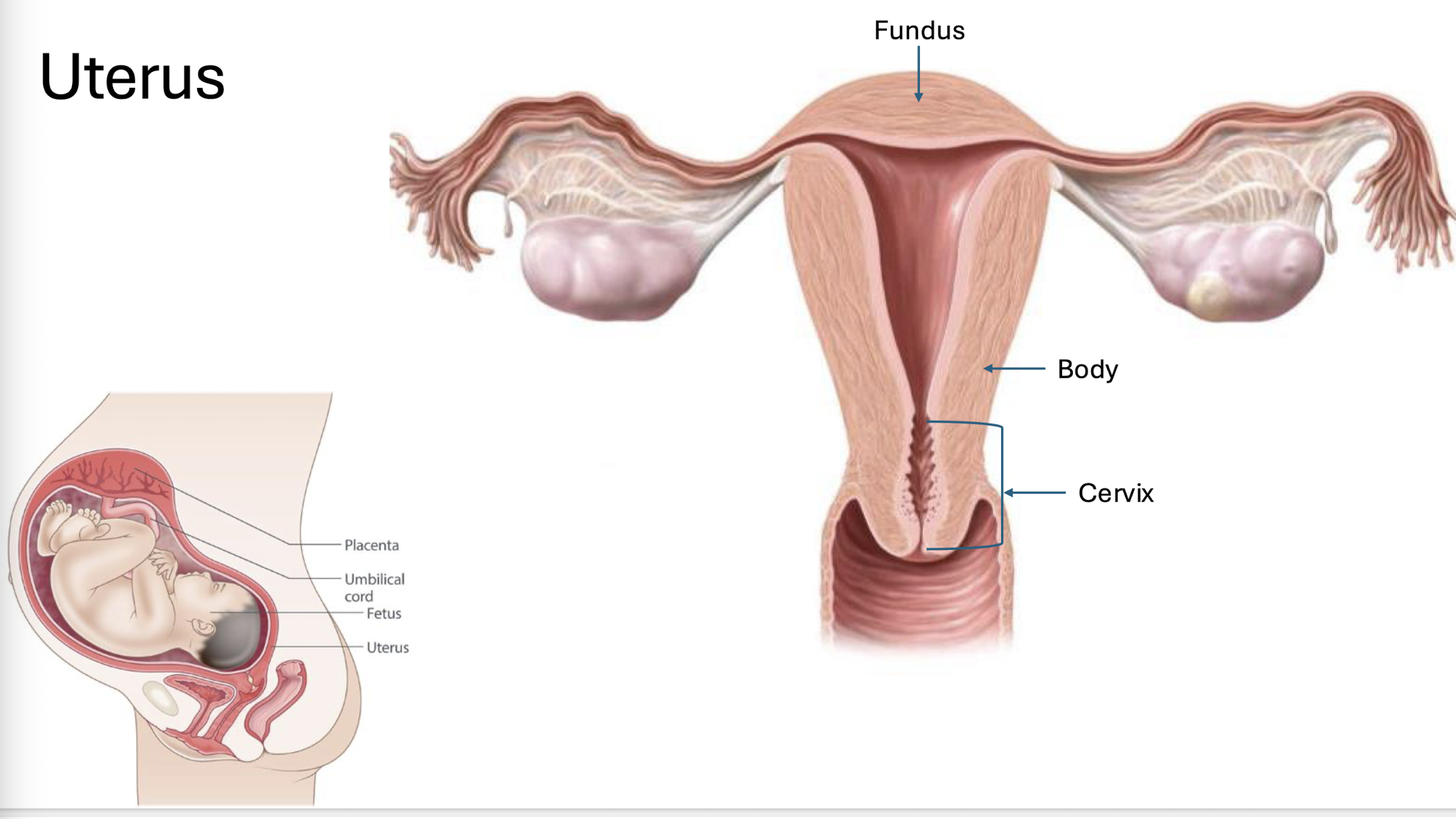
Body of uterus
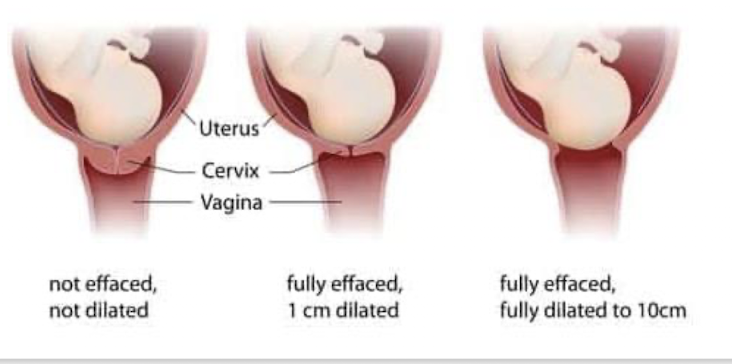
Cervix
What are the openings of the cervix?
internal Os
External Os
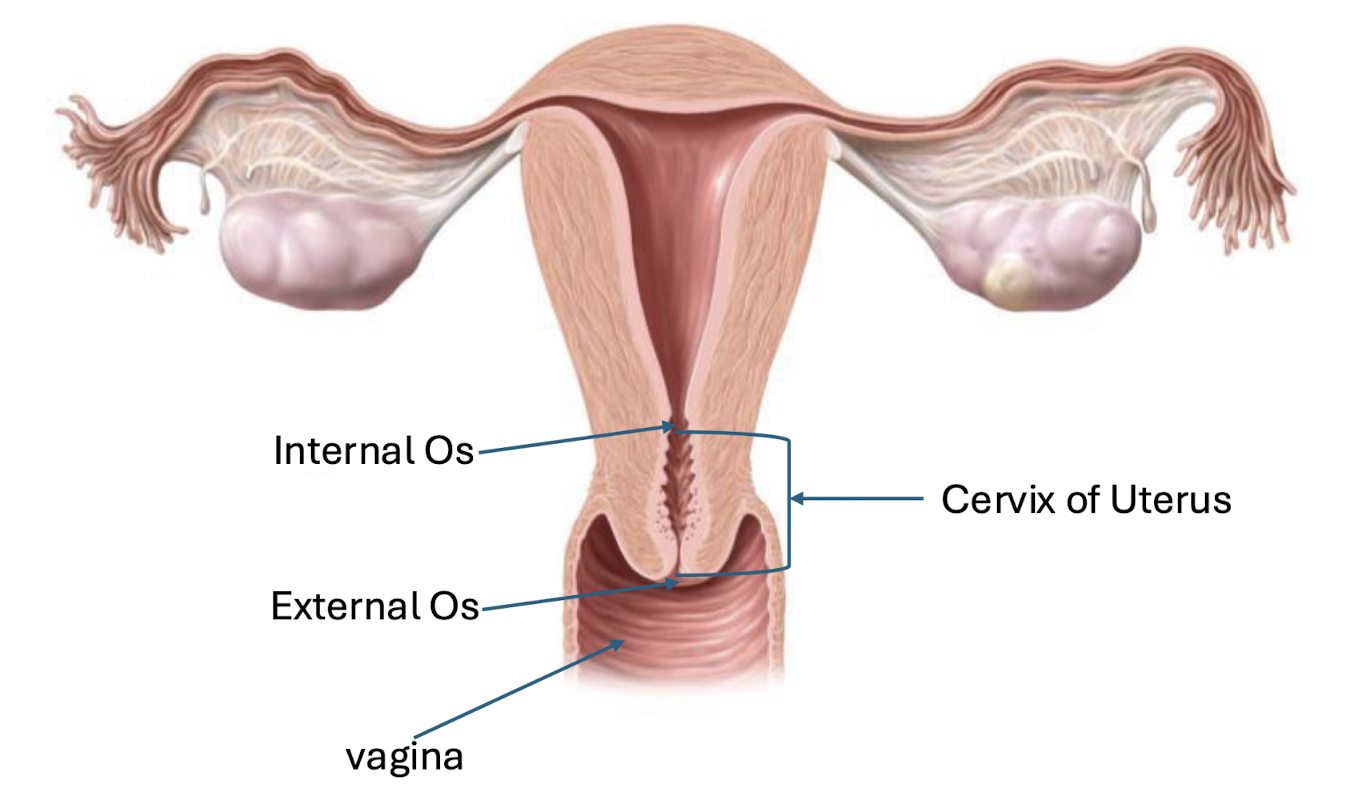
vagina
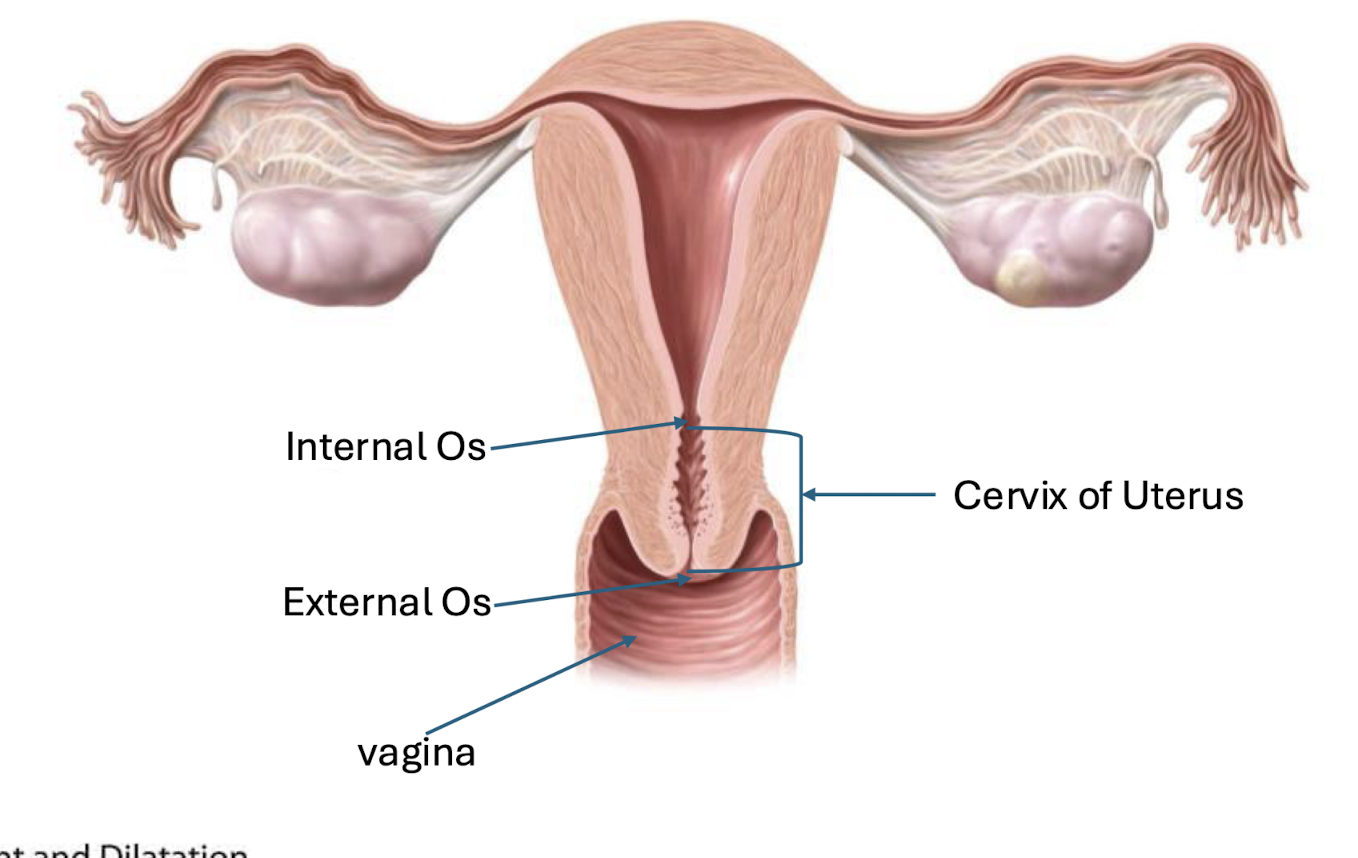
Cervial effacement and dilatation
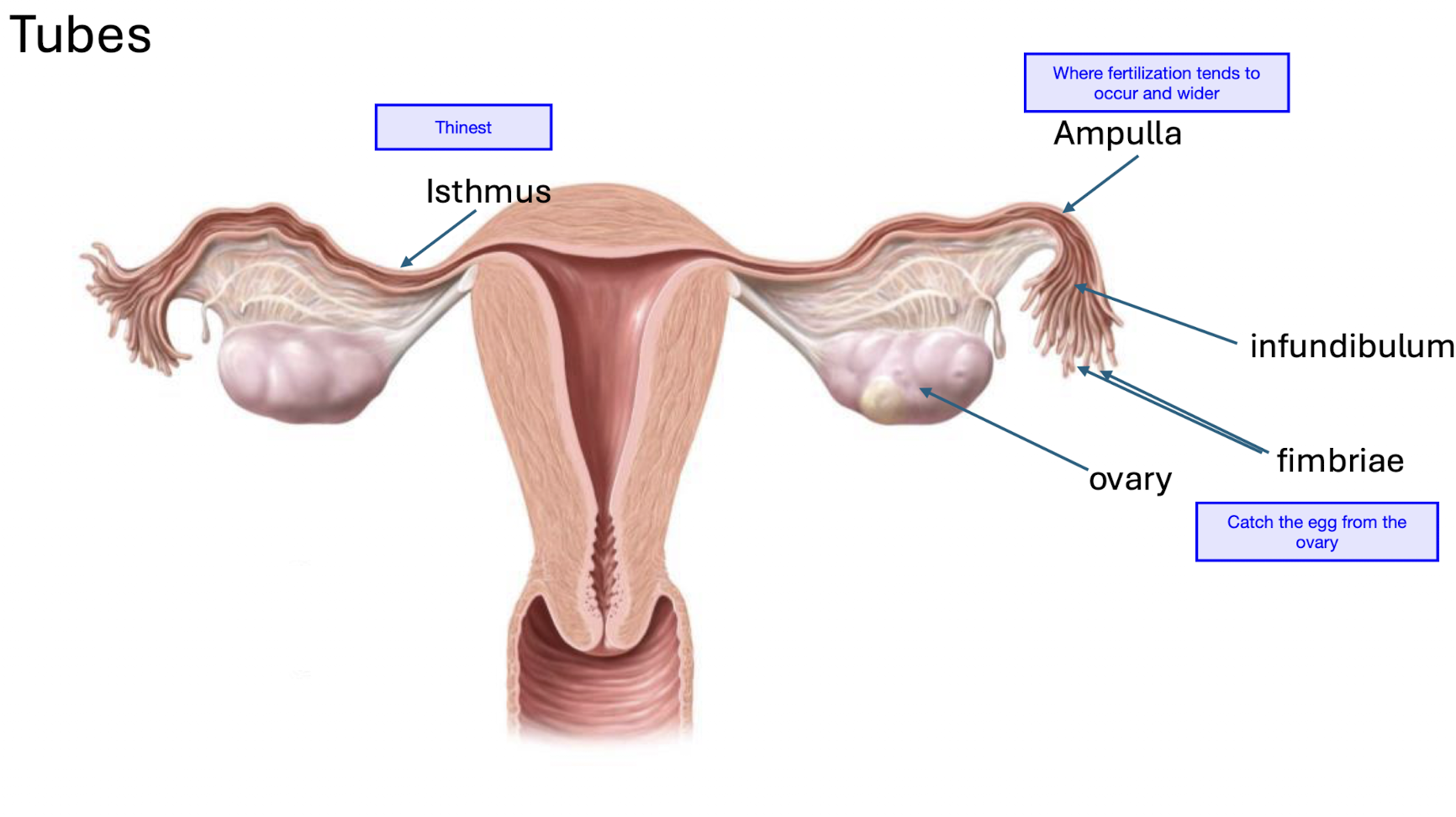
Parts of the uterine (fallopian) tubes
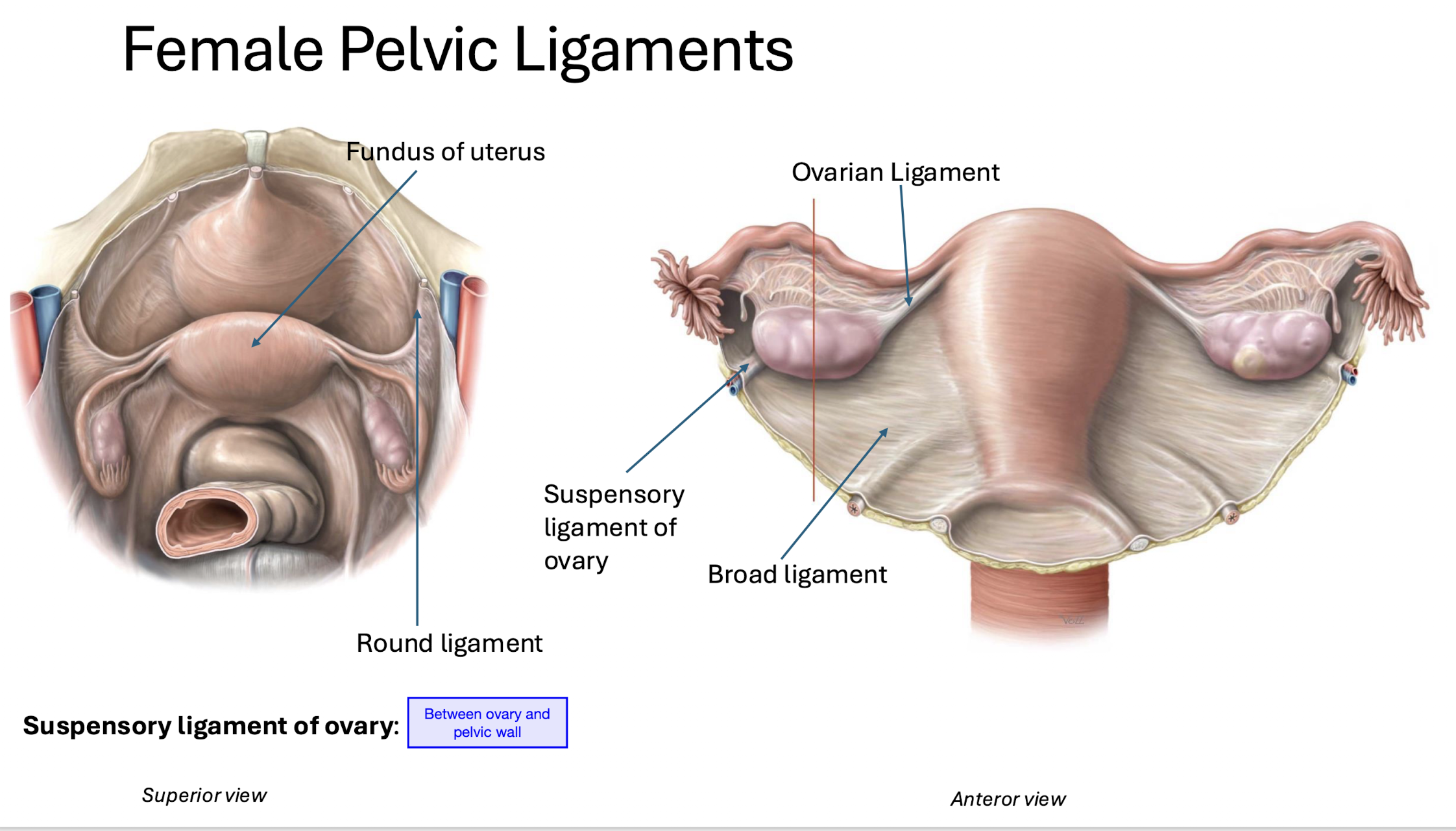
What is the broad ligament?
connects uterus to pelvic wall
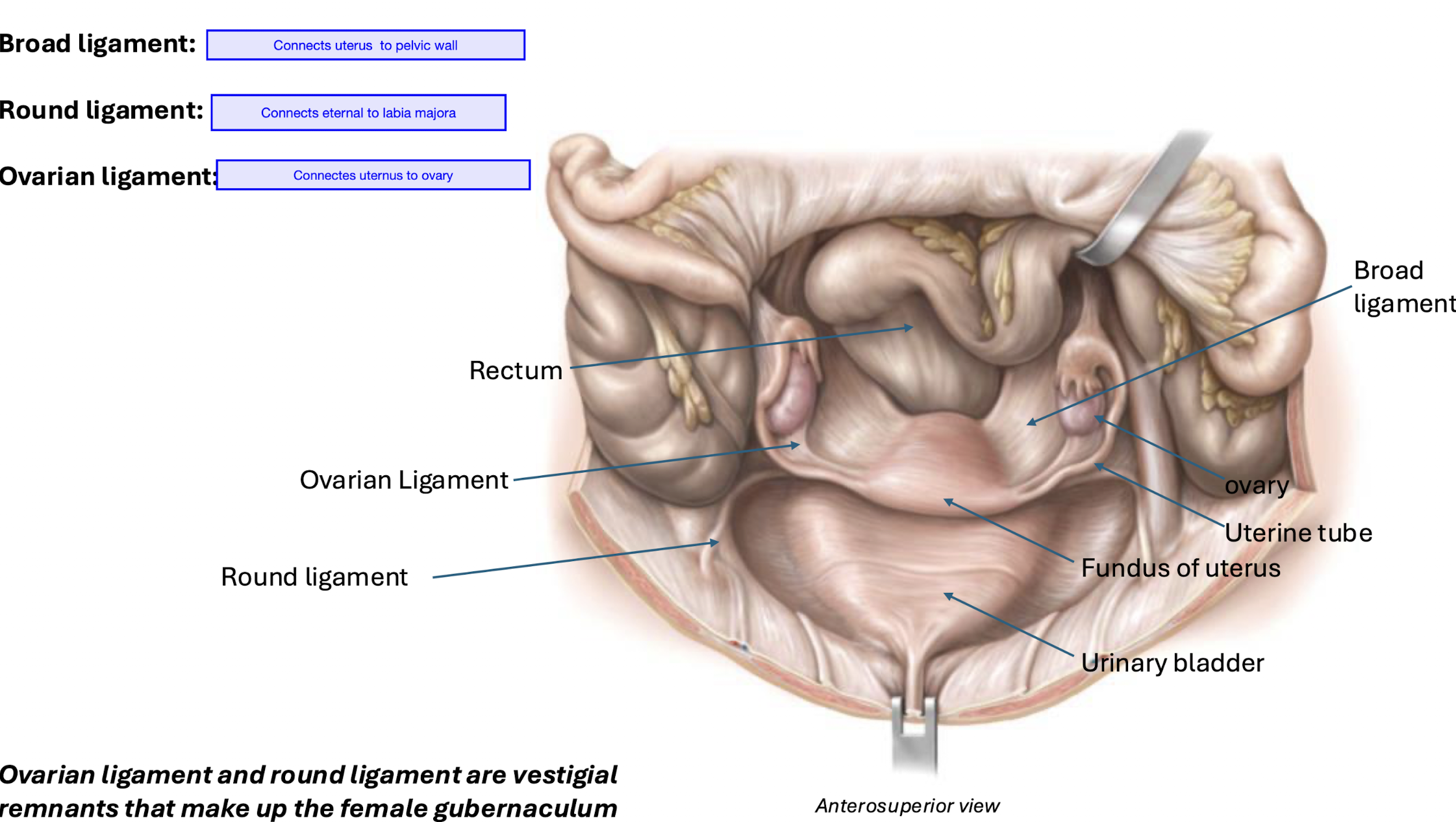
What is the round ligament
connects uterus to the labia majora
Ovarian ligament and round ligament are vestigial
remnants that make up the female gubernaculum
What is the ovarian liagement?
connects uterus to ovary
Ovarian ligament and round ligament are vestigial
remnants that make up the female gubernaculum
Suspensory ligaments of ovary
connects ovary to pelvic wall
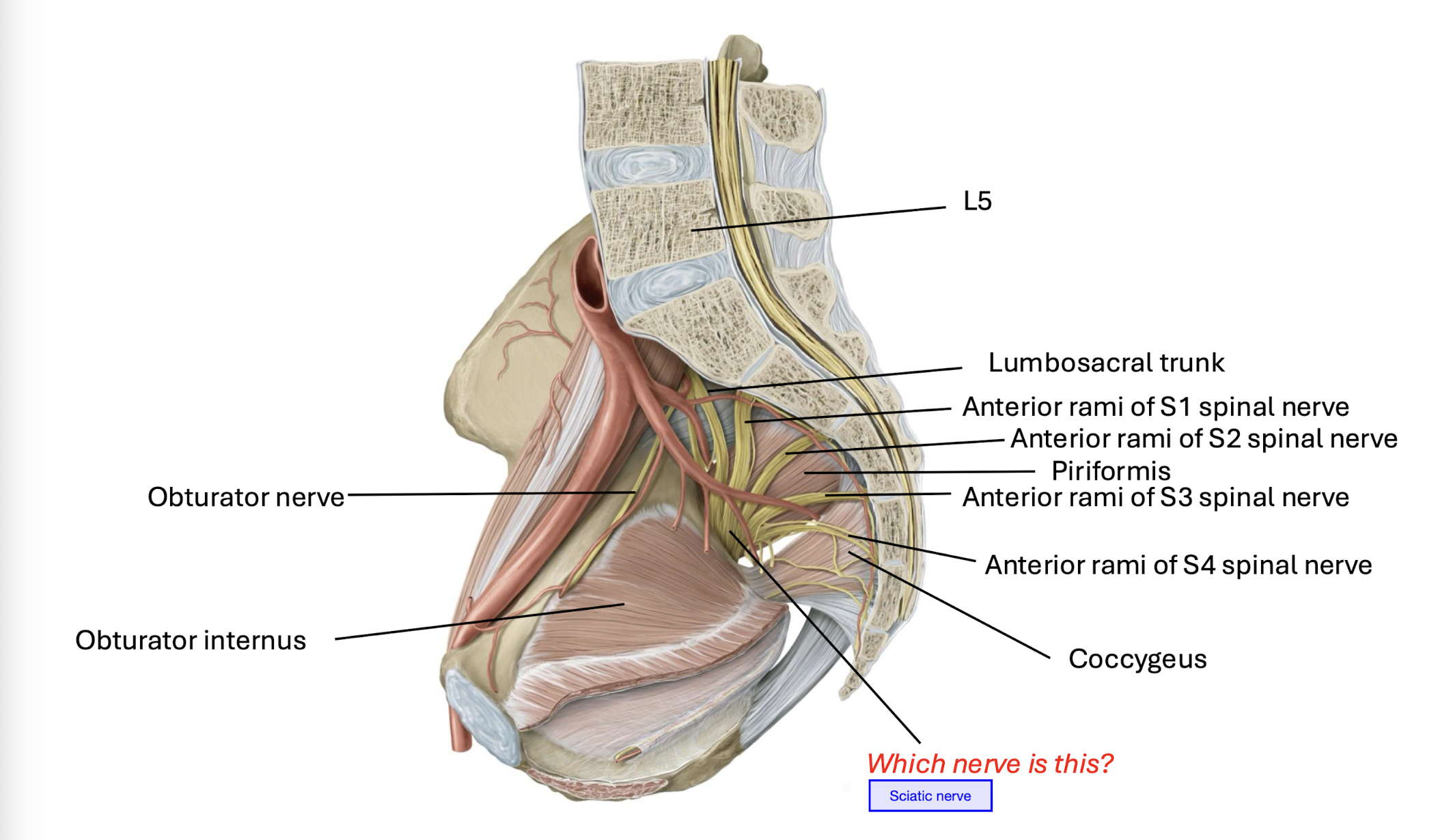
What is the lumbosacral trunk?
L4-L5
descending into pelvis
helps form the sacral plexus with anterior rami of S1-S4 spinal nerves
What nerves make up the sacral plexus?
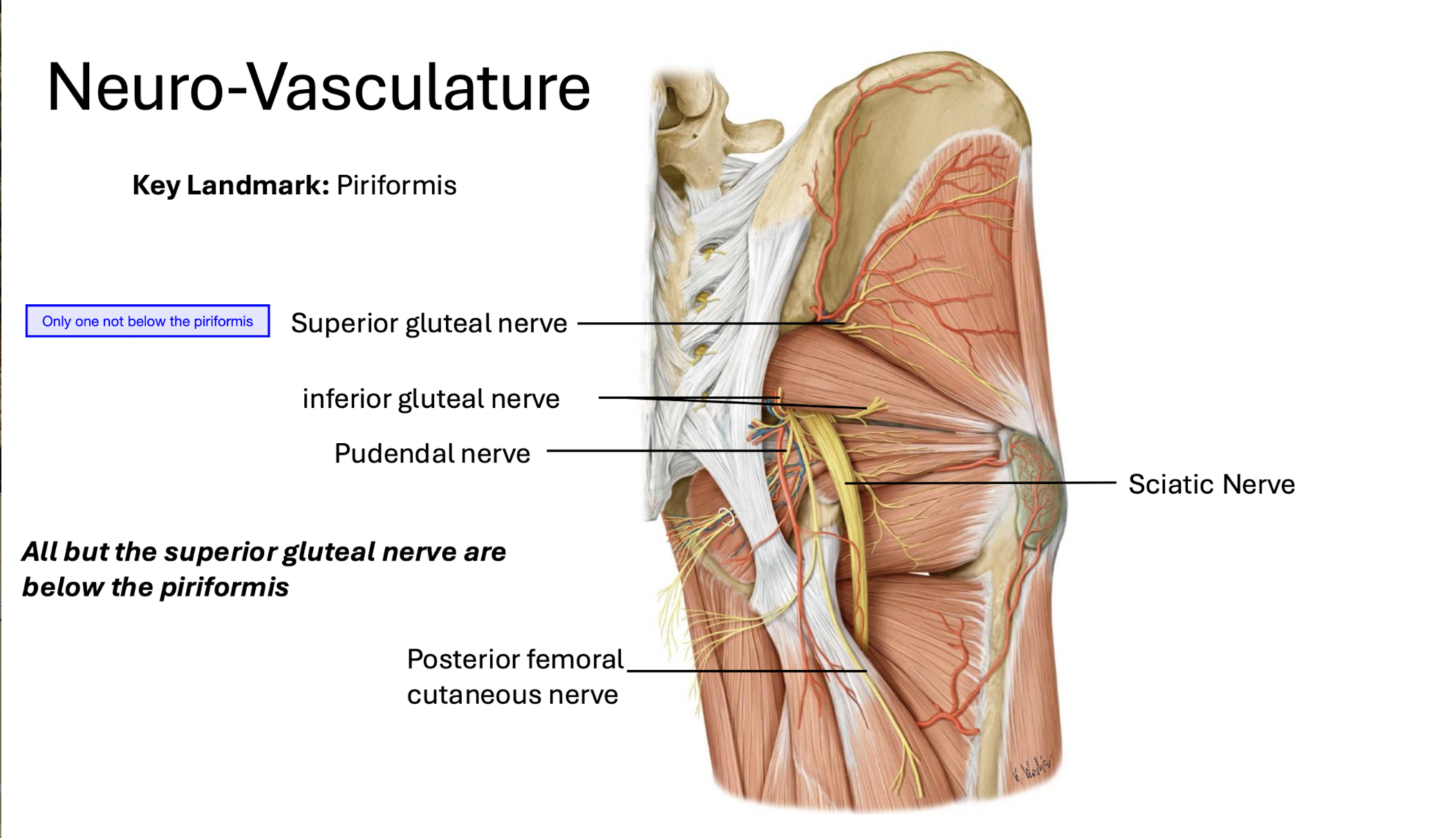
Superior gluteal nerve (L4-S1)
Inferior gluteal nerve (L5-S2)
Posterior femoral cutaneous nerve (S1-S3)
Pudendal nerve (S2-S4)
Sciatic Nerve (L4-S3)
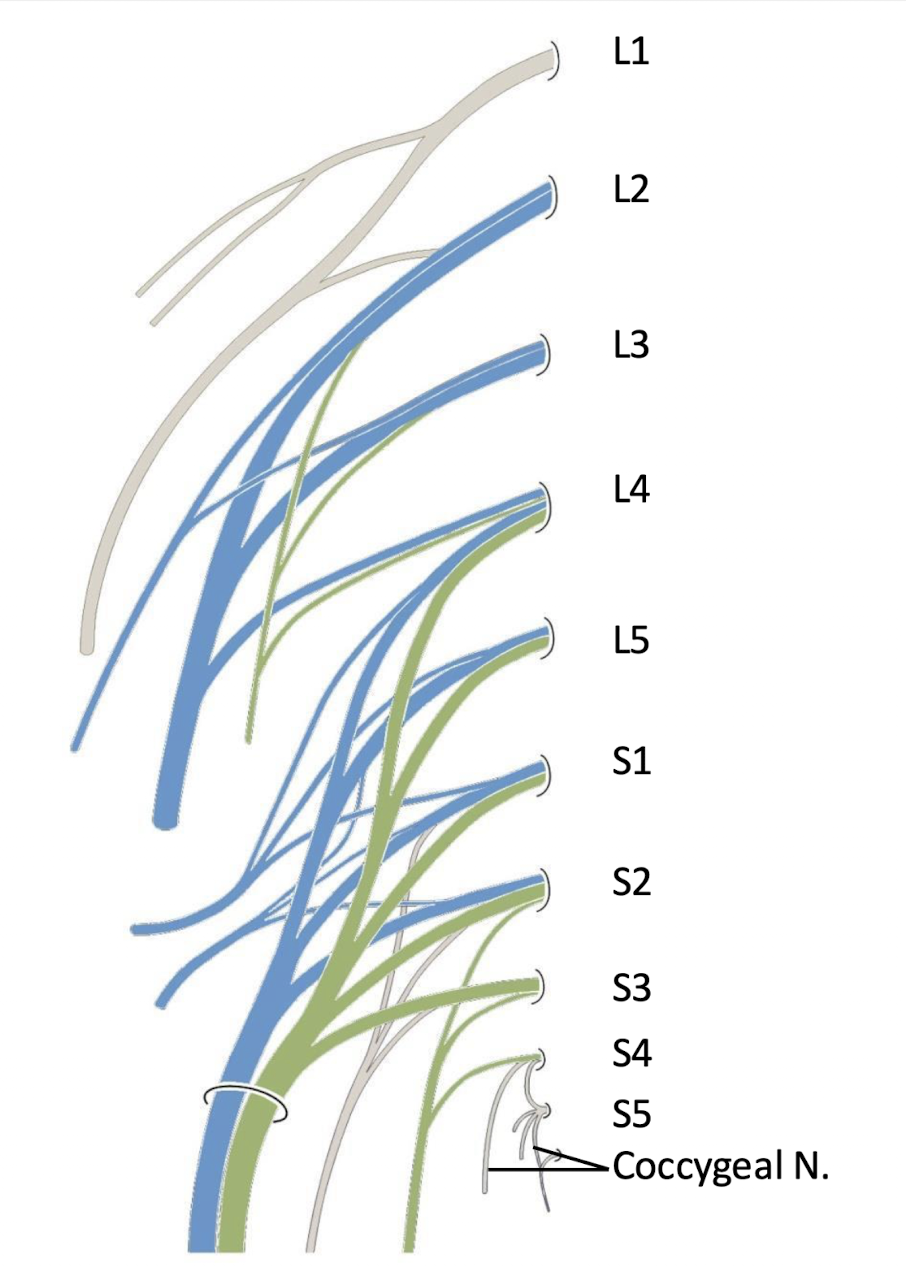
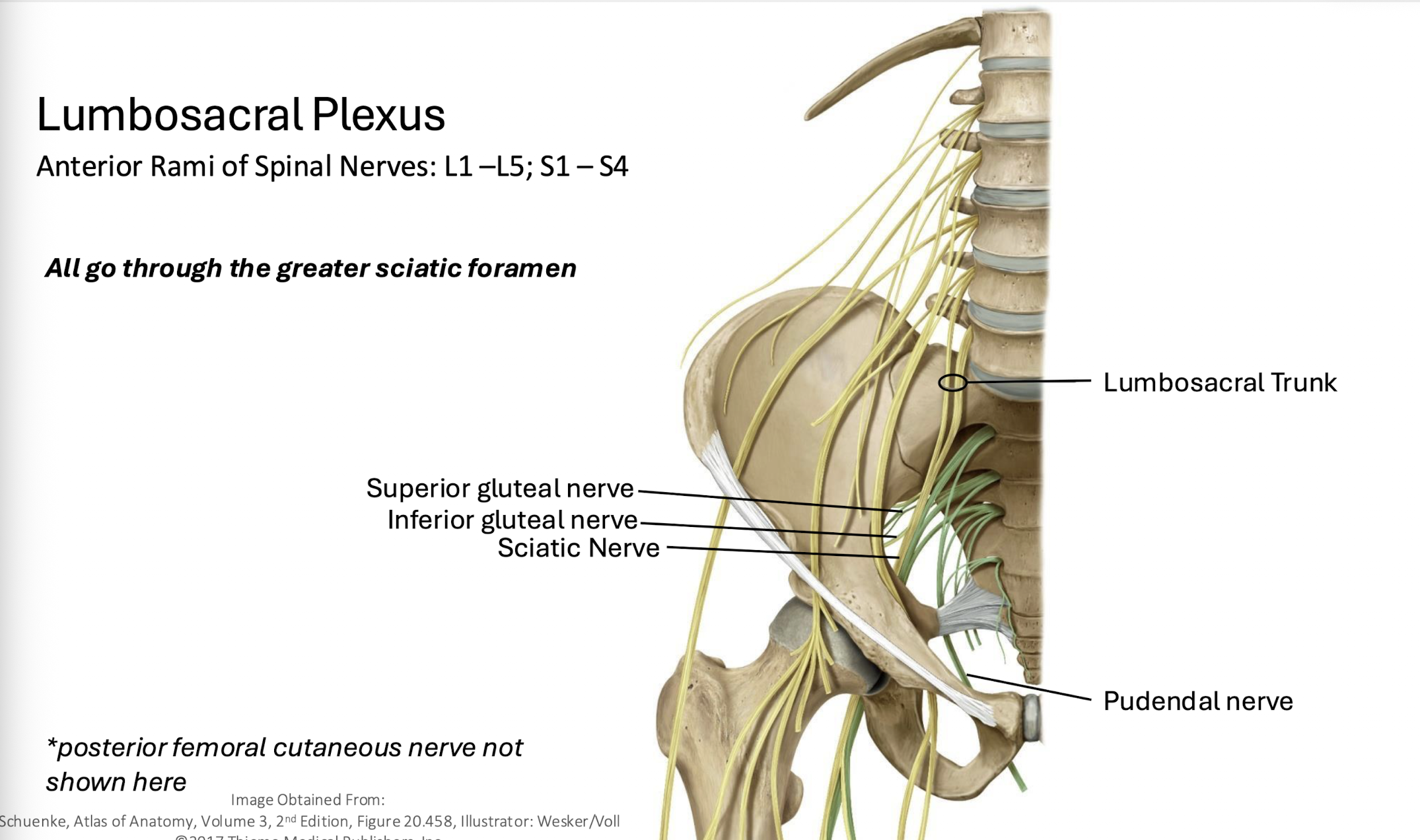
What foramen does the lumbosaccral plexus go through?
all go through the greater sciatic foramen
What is a landmark for the nerves
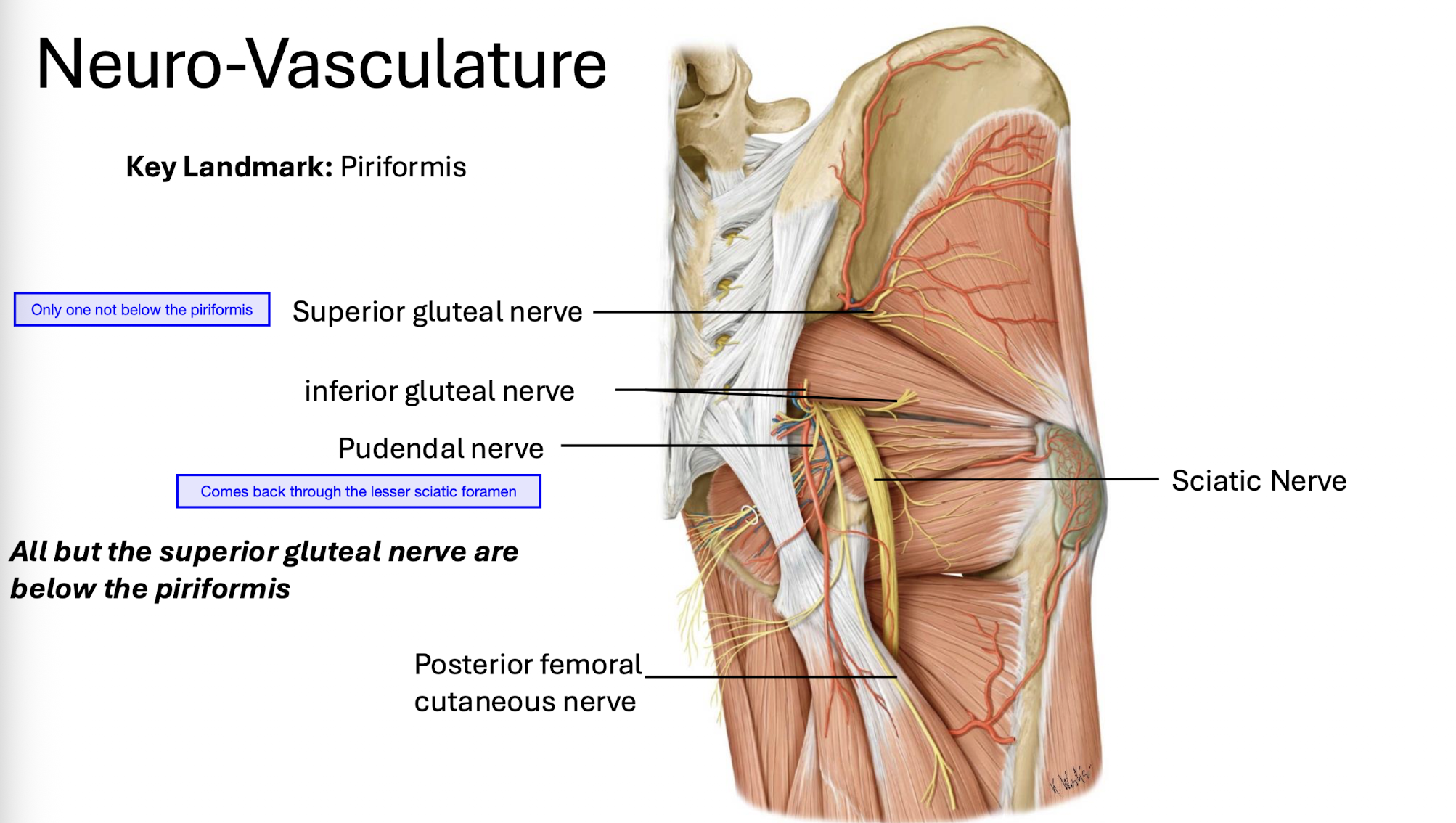
What nerve goes back through the lesser sciatic foramen?
pundendal nerve → Comes back through the lesser sciatic foramen. And innervates the perineum.
Side view of sacral plexus?
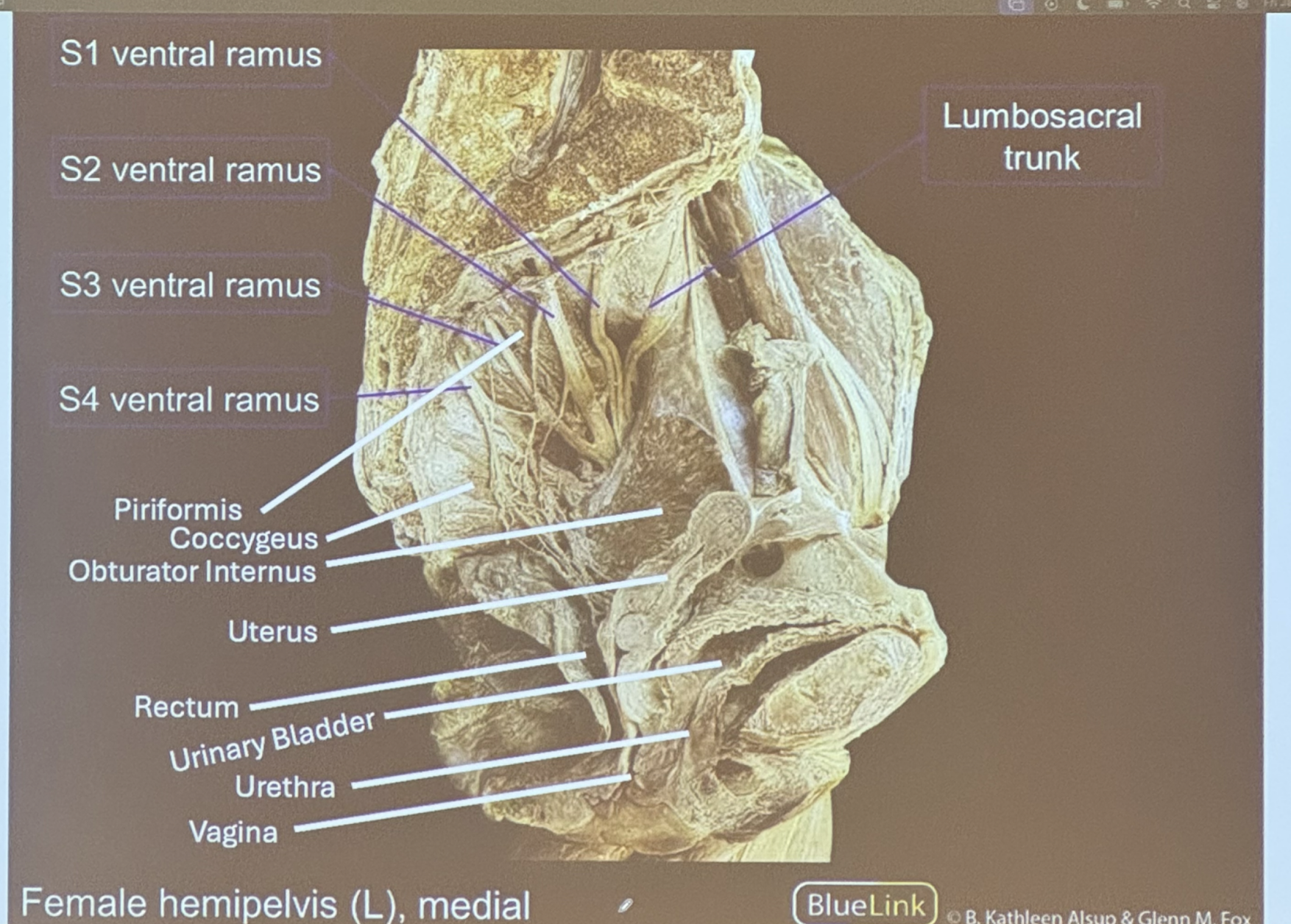
What does ventral ramus mean?
refers to. the anterior rami of that spinal nerve
Where does the ureter cross over?
at the point where the common iliac artery bifurcates
Where does the abdominal aorta bifurcate?
L4 → into the right and left common iliac artery
Where does the common iliac artery bifurcate
L5-S1 → into right and left internal and external iliac artery
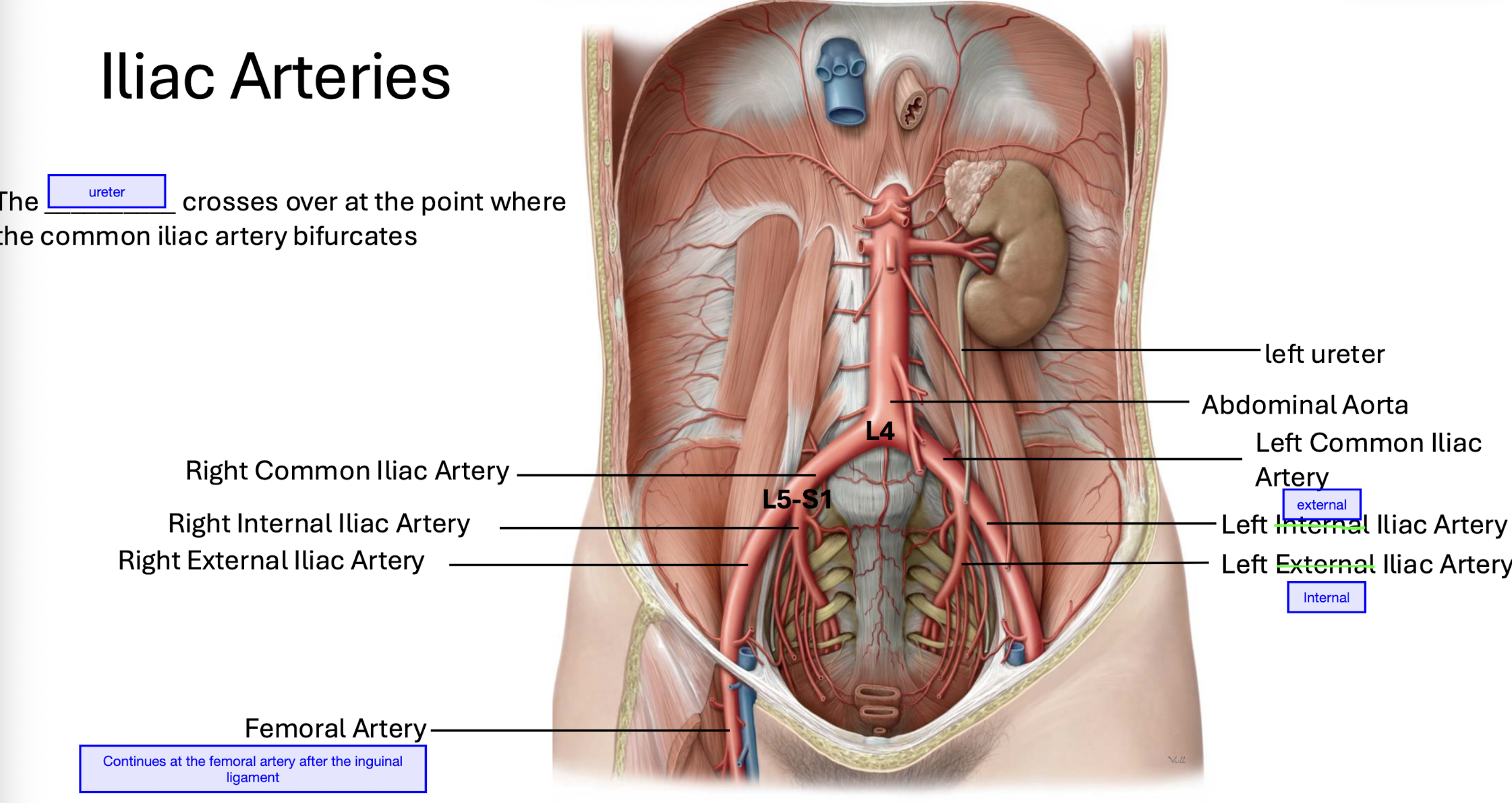
Where does the femoral artery start?
after the inguinal ligament
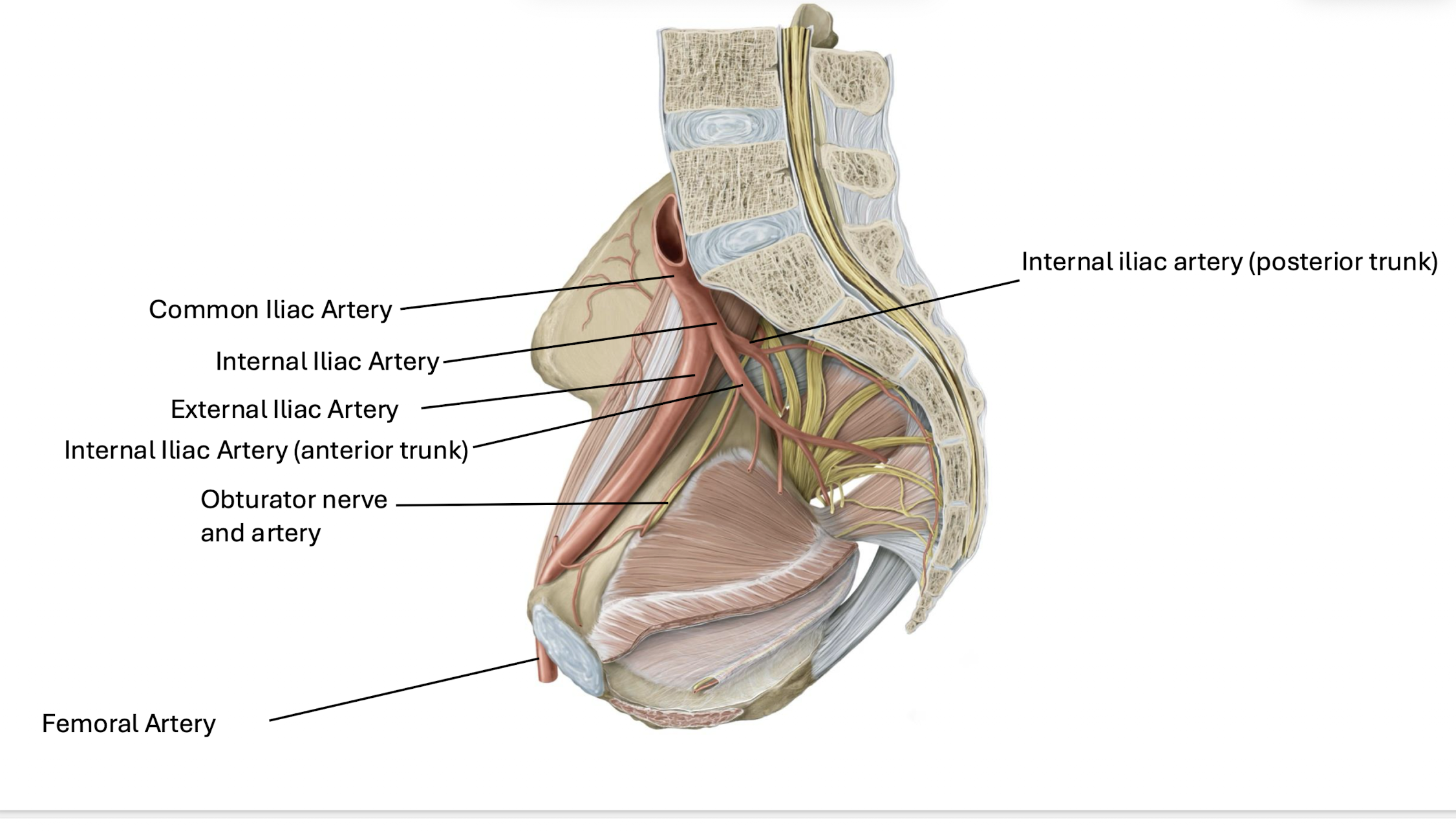
Where is the lumboscrmal trunk compared to the internal iliac artery?
Lumbosacral trunk (L4-L5) is deep to internal iliac artery
Use Lumbosacral trunk (L4-L5) as a landmark to find S1-S3 spinal nerves
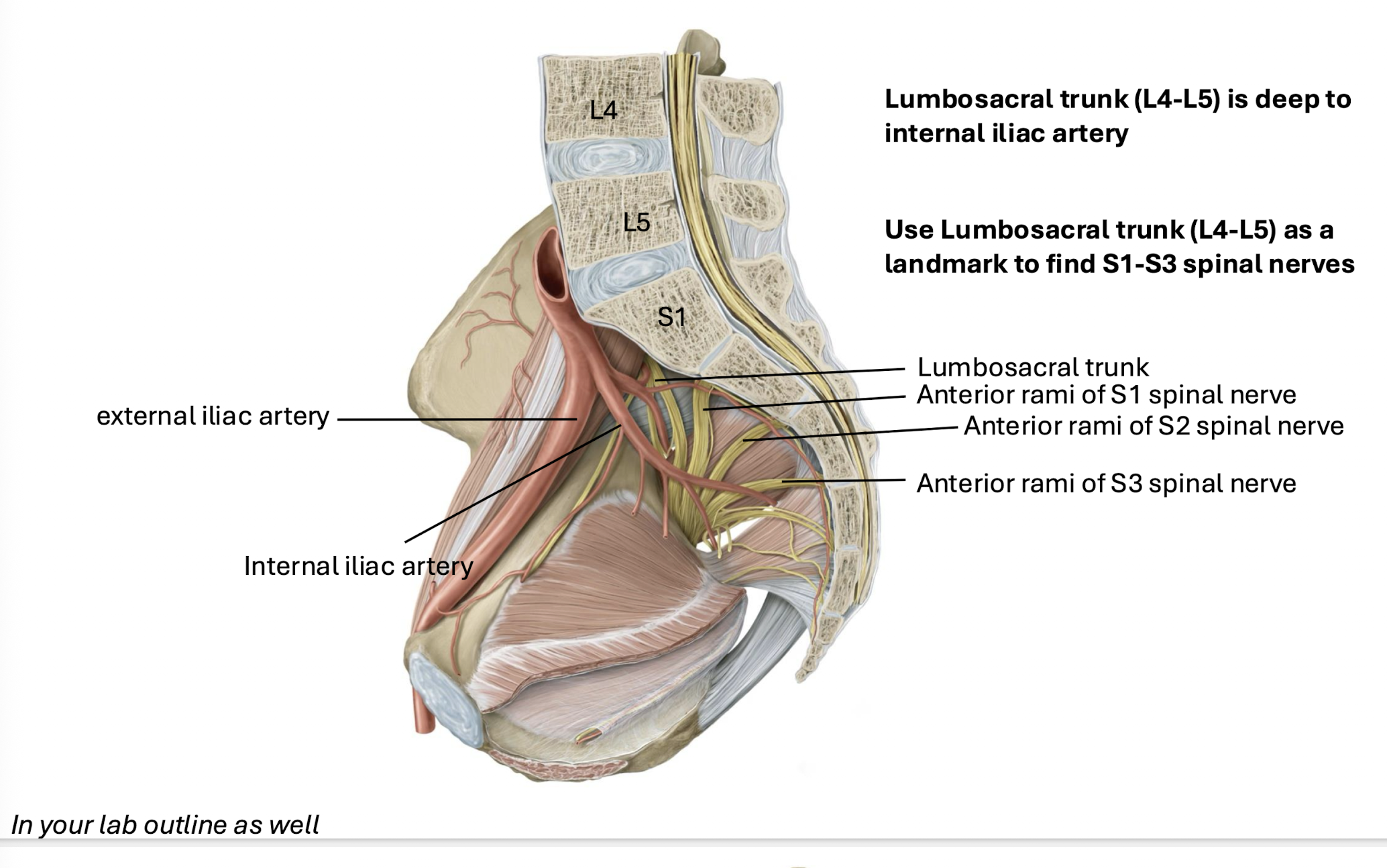
What does the internal iliac artery split into?
anterior and posterior trunk
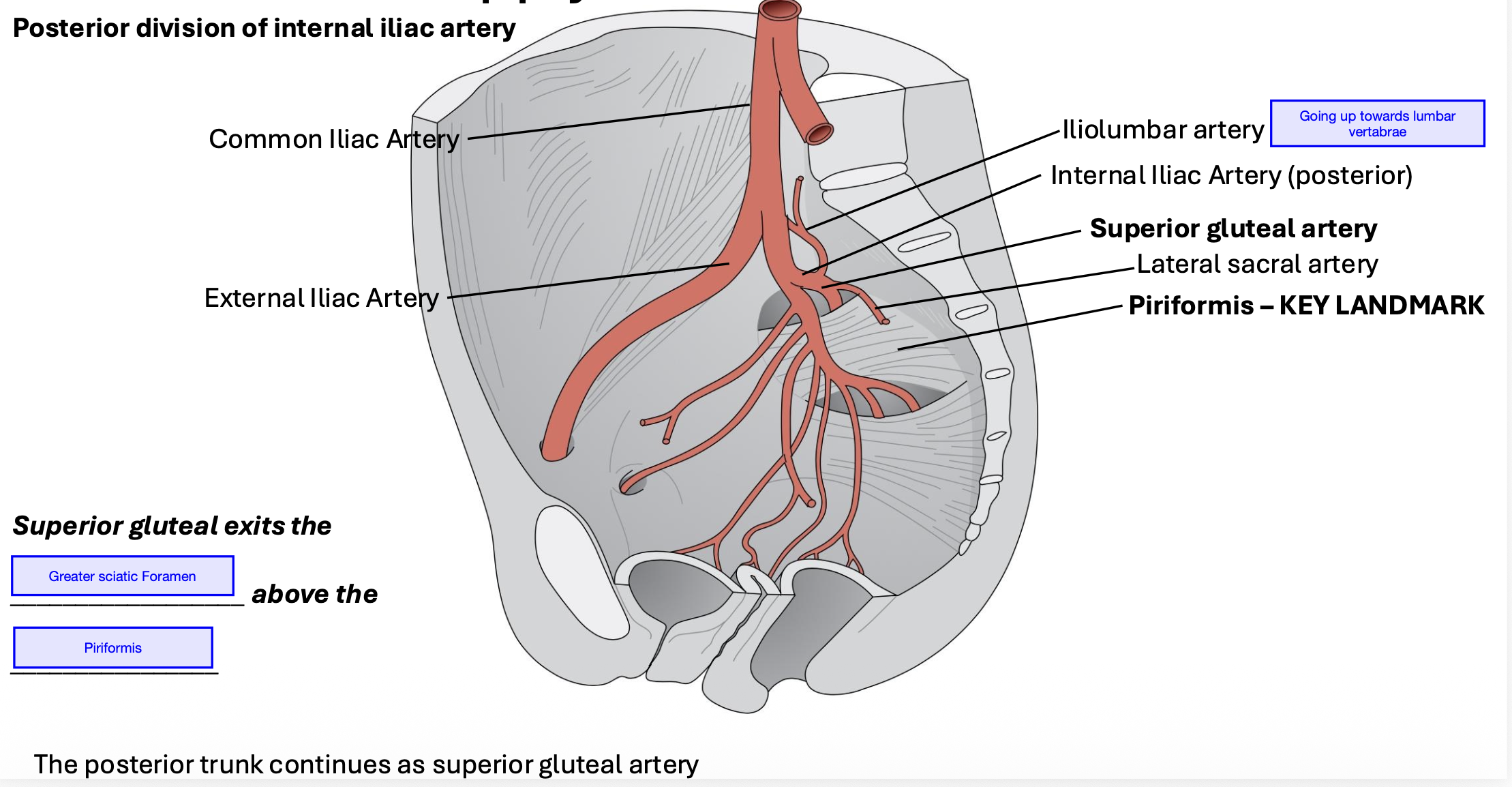
Posterior division of internal iliac artery
Iliolumbar artery → goes up the lumbar vertebrae
Superior gluteal artery → exits the greater sciatic foramen above the piriformis, continuation of the posterior trunk
Lateral sacral artery
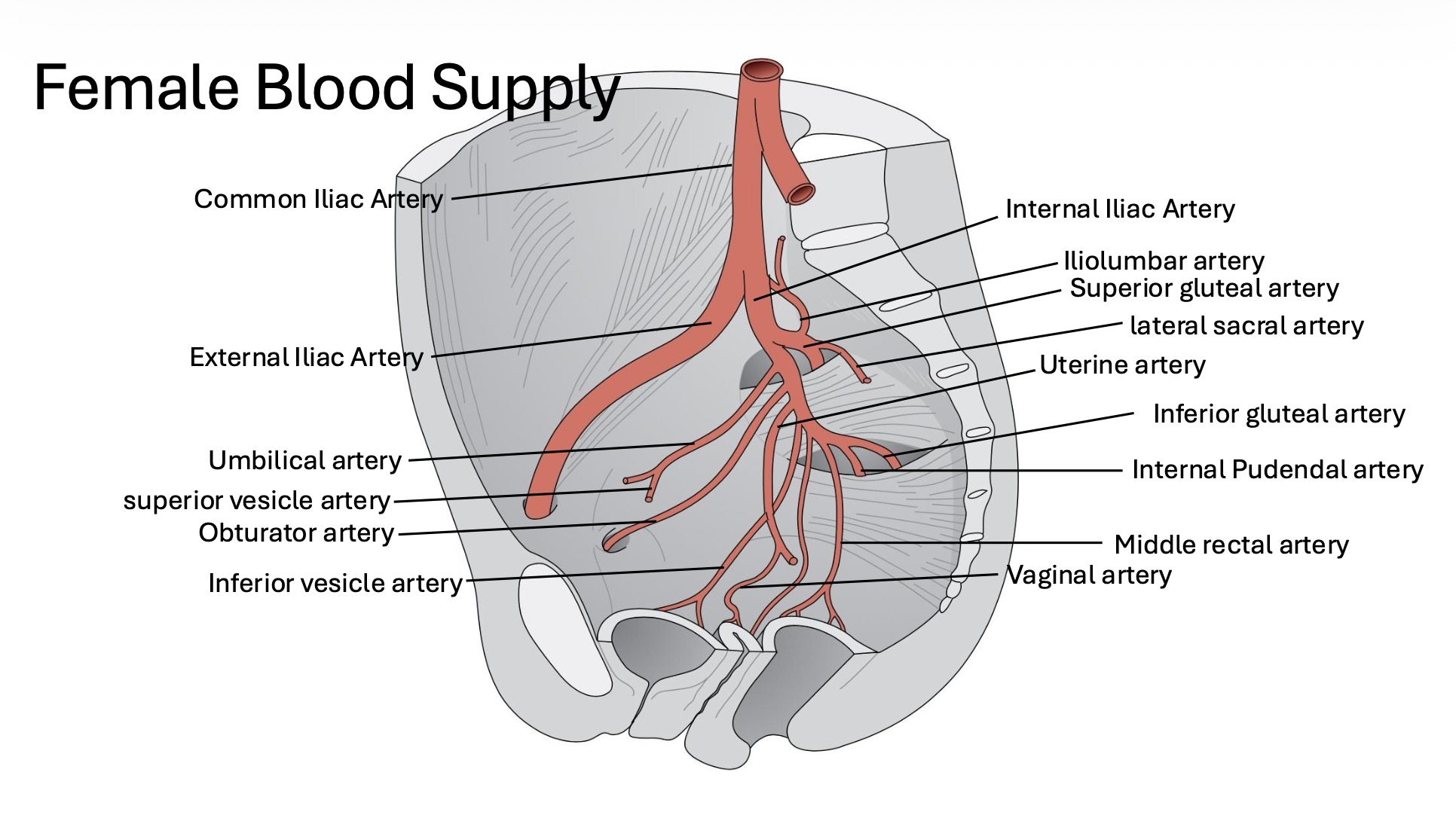
Anterior division of internal iliac artery
Umbilical artery → embryonic remnant that then continues as a ligament
superior vesicle artery → goes to bladder
Obturator artery → travels with the obturator nerve to the obturator internus muscle
Uterine artery
Vaginal artery
Inferior vesicle artery
Middle rectal artery → Could also come off the internal pudendal as well. In this image it is common off the internal iliac
Internal Pudendal artery
Inferior gluteal artery → continuation of the anterior trunk
What does the inferior gluteal artery and internal pudendal artery exit?
greater sciatic foramen below the piriformis
What does the obturator artery go through?
obturator canal
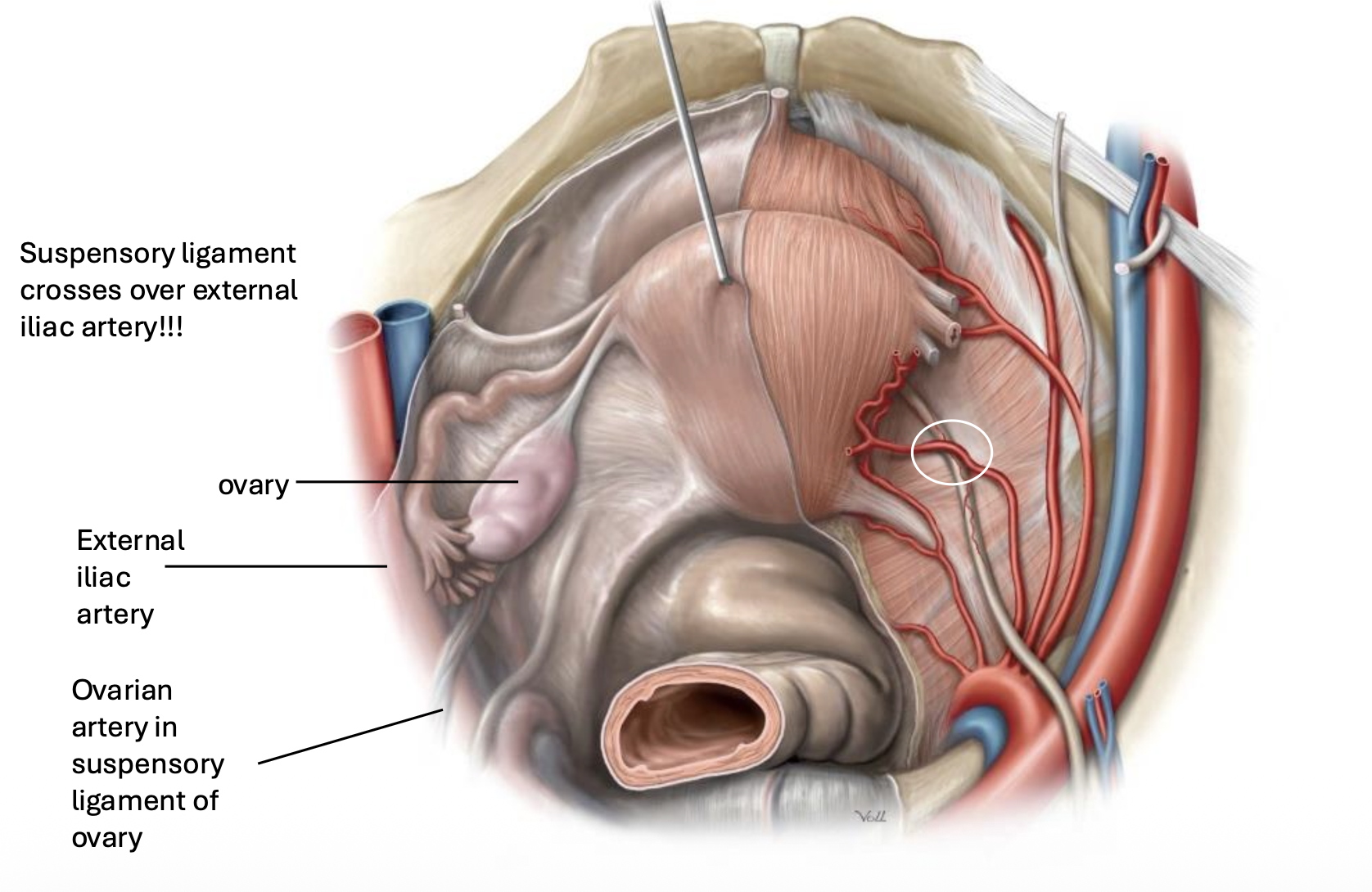
What is the suspensory ligament?
Male Blood supply: Posterior division of internal iliac artery
superior gluteal artery → The posterior trunk continues as superior gluteal artery
iliolumbar artery
Lateral sacral artery
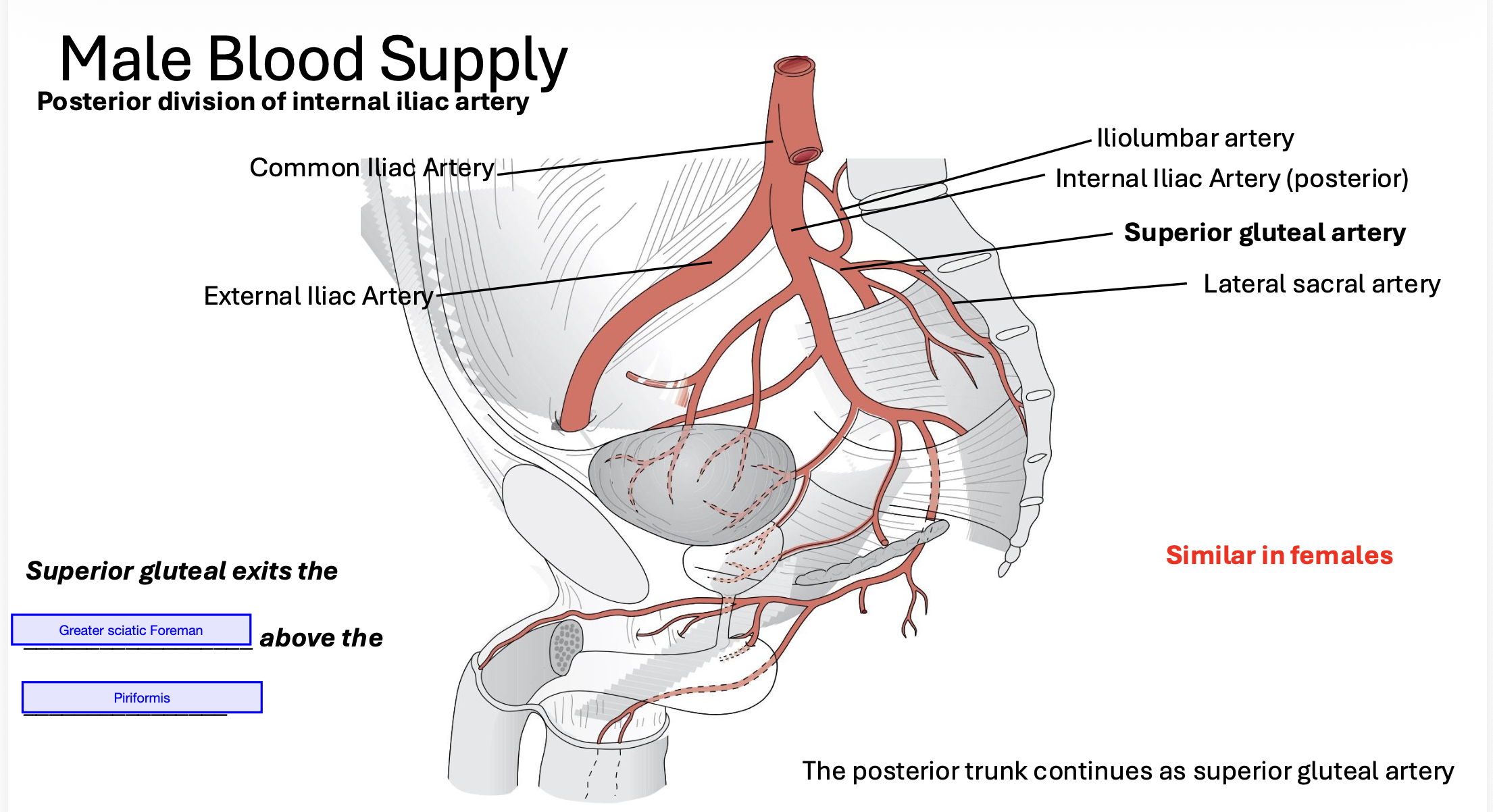
Where does the superior gluteal artery exit?
exits the greater sciatic foreman above the piriformis
Male Blood supply: anterior division of internal iliac artery
internal iliac artery anterior dividsion
Umbilical artery
superior vesicle artery
Obturator artery → through the obturator canal
inferior vesicle artery → bladder
Prostatic artery
Medial rectal artery
Internal Pudendal artery
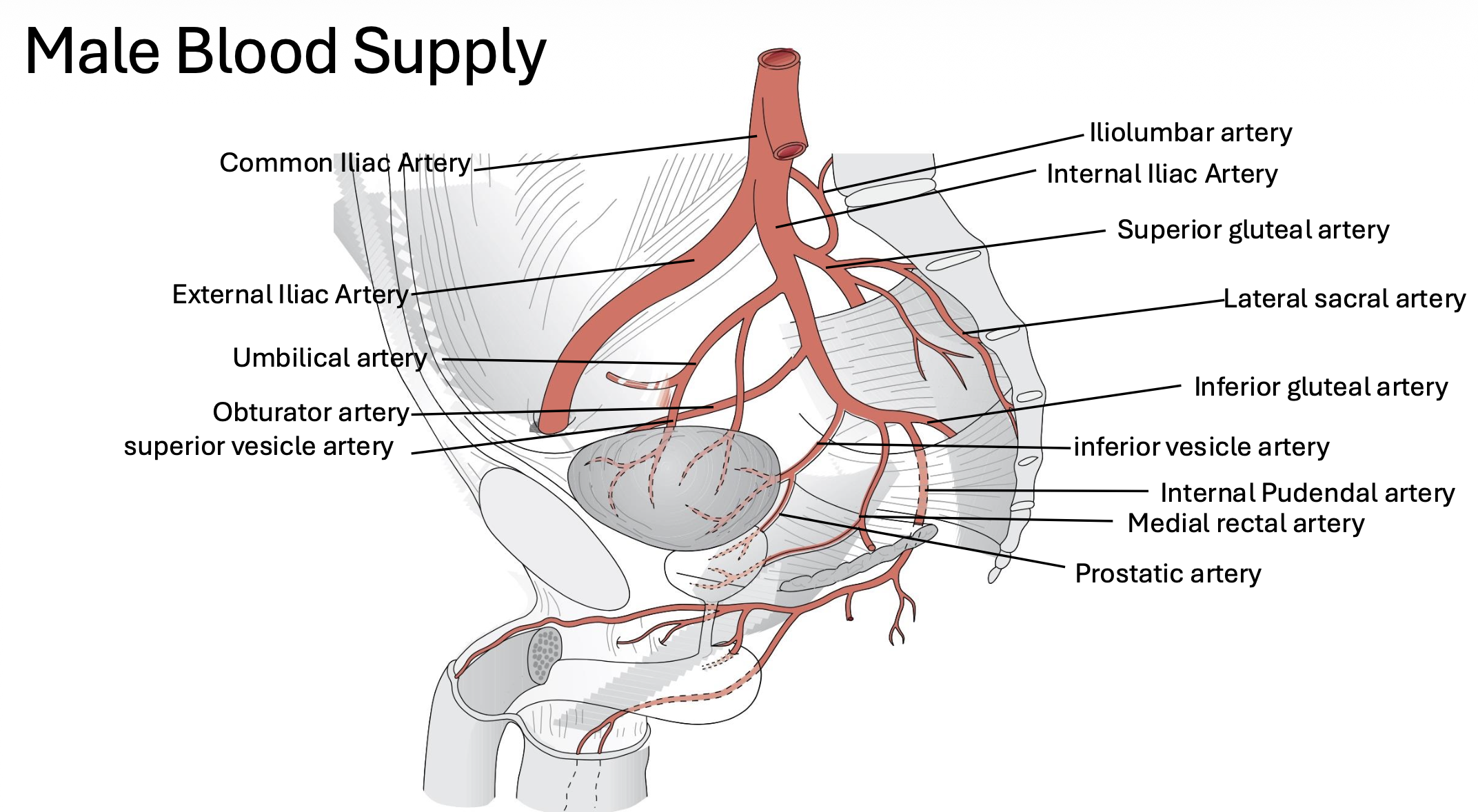
What does the anterior trunk continue as?
The anterior trunk continues as internal
pudendal and inferior gluteal a.
Where do the inferior gluteal artery and internal pudendal artery exit?
exits the greater sciatic formamen below the piriformis
Artery of ductus deferens
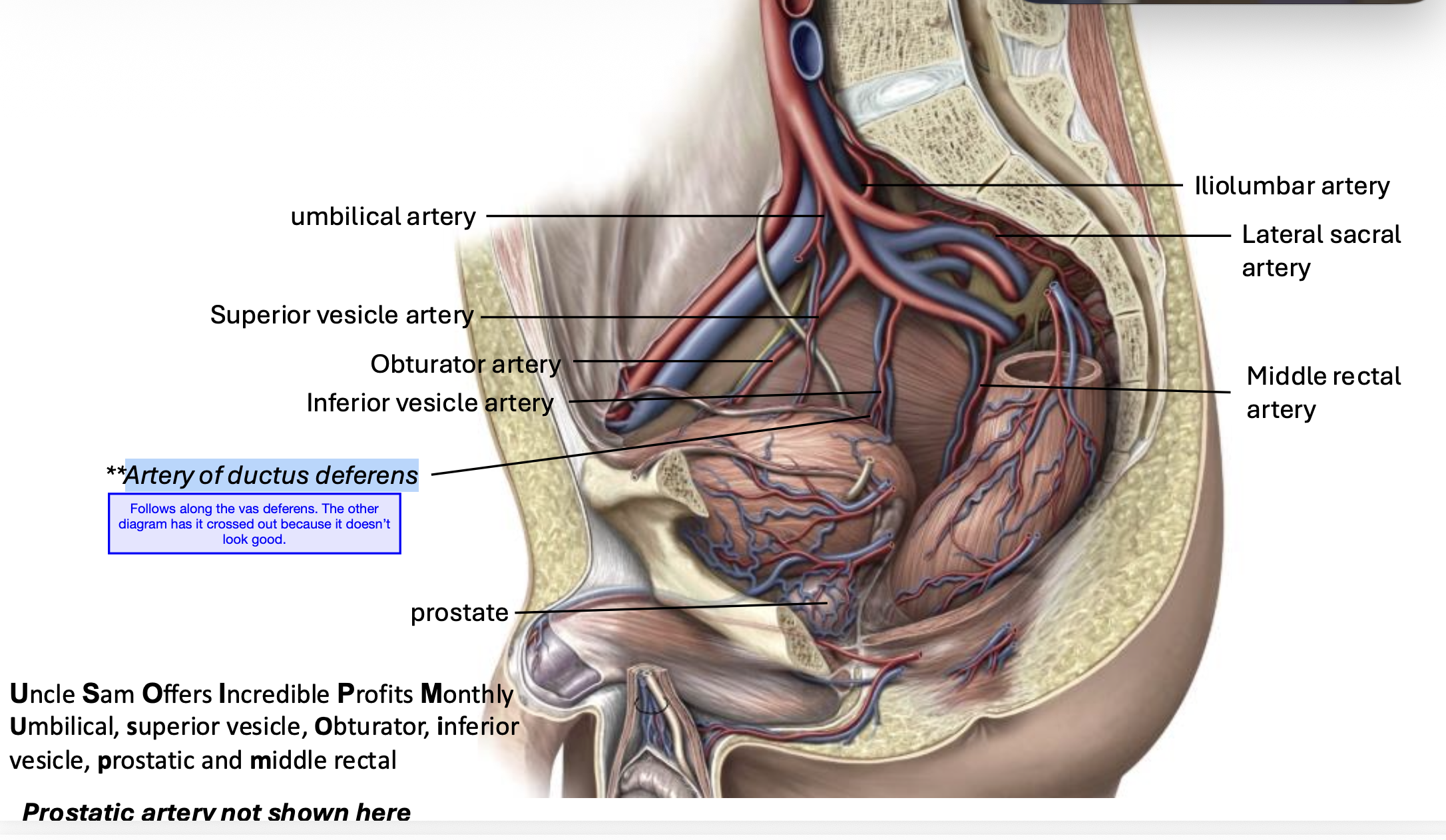
Where does the internal pundendal go?
exits the greater sciatic foramen over the ischial spine posteriorly then through the lesser sciatic foramen anteriorly to the perineum
 Note
Note  Flashcards (40)