APBI 419 - Module 2
 Call Kai
 Learn
Learn Practice Test
 Spaced Repetition
 Match
Match Flashcards
 Knowt Play
1/87

There's no tags or description
Looks like no tags are added yet.
Name | Mastery | Learn | Test | Matching | Spaced | Call with Kai |
|---|
No analytics yet
Send a link to your students to track their progress
88 Terms
Vibrio anguillarum
Vibriosis
also Vibrio ordalii
Vibrio samonicida
Cold Water Vibriosis or Hitra Disease
Aeromonas salmonicida
var. salmonicida
Furunculosis
Atypical furunculosis
A. salmonicida var. achromogenes/nova
Flexibacter spp.
Bacterial Gill Disease complex and fin-rot
Yersinia ruckeri
Enteric redmouth disease
Aeromonas hydrophila
Pseudomonas spp.
Opportune septicaemia
Piscirickettsia spp.
Rickettsial septicaemia (intracellular bacteria)
Renibacterium salmoninarum
Bacterial Kidney Disease
BKD
caused by small Gram-positive diplobacillus called Renibacterium salmoniarum)
is restricted to salmonids (Pacific + Atlantic species, trout, charrs)
widely distributed in almost all countries where salmon are present except Australia and New Zealand
diagnosed in feral salmon in fresh + salt water
mortality rates:
vary seasonally, spring and fall usually
but they occur all year
transmitted vertically @ spawning and horizontally within net pens / hatchery troughs
generally chronic
hard to culture them so use IFAT
white swellings on spleen, liver, heart, kidney, peritoneal surfaces
also maybe exophthalmus
Tuberculosis
Fish T.B caused by orgs from genus Mycobacterium -- disease often called mycobacteriosis
actual bugs involved: Mycobacterium marinum + Mycobacterium fortuitum
= different species from relatives that cause TB in humans and other terrestrial vertebrates
Fish mycobacteria can cause localized infections in human skin cuts --> leads to condition called aquarist's finger
if not treated can become serious health concern
Mycobacteriosis
most significant bacterial infection of ornamental warm water aquarium fish
present @ low level of infection in many tanks
significant problem in west coast hatcher-reared salmonids that were fed diet of ground scrap fish
problem fixed when diet switched to pasteurized or processed food
not readily treated and the usual cause is overcrowding and poor water quality
has been cultured in swimming pools, beaches, natural streams, estuaries, tropical fish tanks, city tap water
can infect humans
Externally:
exophthalmia
enlarged abdomen (dropsy)
protruding scales (edema)
Internally:
large numbers of small gray / white nodules in liver, kidney, heart, spleen
maybe skeletal deformities
lethargy
anorexia
fin + scale loss
emaciation
skin inflammation + ulceration
peritonitis
nodules in muscles that can deform fish
gram-positive
rods varying in size that're nonmotile
acid-fast
on solid media: solid cream-coloured to yellow colonies
Furunculosis
comes from red, raised areas appearing on skin in some infected fihs; look like hair follicle abscesses of mammals called furuncles
One of first bacterial diseases of fish identified when described 19th century Europe brown trout
can happen in salmonids and non-salmonids but brook trout particularly susceptible
Externally: signs typical are seen in all Gram-negative septicemia's
may darken and stop feeding
may haemorrhage at base of find + have swollen and haemorhagic anus
haemorrhage around mouth and raised red patches / ulceration on skin
Internally:
spleen often large, soft + bloody
kidney swollen, soft, and haemorrhagic
muscle necrosis common
cross section of muscle cut beneath red skin patches reveals large red, liquid zone of dead muscle tissue
Diagnose by gram staining smear of kidney and culturing on TSA
Piscirickettsia
Aka salmonid reckettsial septicemia (SRS), coho salmon septicemia, Huito disease
fastidious so doesn't grown on known artificial media, must be grown in tissue culture
primarily reported in farmed marine fish and observed in salmonids from freshwater facilities
transmission mechanisms not understood fully
small white lesions or shallow haemorrhagic ulcers on skin
Dark
Lethargic
Will collect along sides of netpen
Major gross pathological changes:
gill pallor (pale gills)
peritonitis (inflammation of the peritoneum)
ascites (abdominal fluid accumulation)
enlarged spleen
swollen grey kidney
liver w/ large pale necrotic lesions
Sensitive to antibiotics so shouldn’t be used in media during tissue collection for culturing
Doesn’t grow on artificial bacteriological media
Diagjose with cell culture and Giemsa stained tissue impressions
Motile Aeromonas Septicaemia (MAS)
Aeromonas hydrophila = motile, non-pigmented cousin to A.salmonicida
Internal + external signs typical of other Gram-negative septicemias
Can be confused with Pseudomonas fluorescens ; it produces almost identical disease
best distinguished by culturing bacterium from spleen and kidney of diseased fish
Diagnosticians look for other primary invaders and inciting stressors when disease is diagnosed because not typically the primary pathogen
considered more of an opportunistic environmental pathogen
There's a epidemic of wild and farmed fish in SE Asia called Epizootic Ulcerative Syndrome that's associated w/ several A. hydrophila subtypes and other infectious agents
can cause issues in humans
cuts and scrapes can allow entry point; preference for high temps means it can lead to infection
Enteric Redmouth (ERM)
reddening of head and mouth in young salmonids in fresh water
problem for rainbow trout growers in some regions
Diagnosis can't be confirmed by head and mouth reddening alone; that can also be seen in other Gram-negative septicemias and might not appear in ERM disease
Clinical external + internal signs + transmission similar to those described for furunculosis
Organisms can be isolated from environment and from carrier fish
Immersion vaccines looking effective
Vibriosis
Vibrio spp.
Important disease of farmed marine salmonids in BC
might be caused by more than 1 species of bacteria
first seen in eels
usually (but not exclusively) restricted to fish in salt water
outbreaks usually in summer; particularly smolts in their first summer in seawater
occasional mortalities year round
Large haemorrhages in liver
Peritoneal petechia - red or purple spots of haemorrhage on lining of abdominal cavity
Soft bloody spleen
Diagnosis:
by Gram stain
culture of kidney and spleen smears
on stained smears: slightly curved appearance but that's not enough to confirm diagnosis
motile org, grows well on standard bacteriological media @ room temp if supplemented w/ salt @ about 1%
Cultures can be presumptively classified as V. anguillarum / V. ordalii using specific immunological slide agglutination tests
Smoothing stress predisposes fish to develop this
Dip vaccines effective
Flavobacteria
Reclassified several times
aka Chondrococcus, Cytophaga, Myxobacteria
All Gram-negative, rod shaped bacteria w/ unusual gliding motion on solid surfaces
Associated w/ mucous surfaces; often referred to as Myxobacteria
1. Flavobacterium branchiophilum - Bacterial gill disease
Flavobacterium columnare - Columnaris disease
Flavobacterium psychrophilum - Coldwater (peduncle) disease
Bacterial gill disease
Flavobacterium branchiophilum
Disease of significant worldwide economic importance in salmonid hatcheries
Can occur across wide range of temps but tends to affect mainly young fish, so often observed during cooler spring temps
Affected fish visibly distressed
flared opercula
rapid opercular movements
Inspecting externally, gill filaments pale and clubbed (stuck tgt)
Rapid diagnostic technique: examination of gill wet mount under microscope
will show increased mucous
hyperplasia (increased cell numbers) of lamellar epithelium
fusion of adjacent lamellae
clumps of filamentous bacteria adhered to surface of gills
seen on Gram stained smear of gill tissue
Most seen in spring
Bacteria attaches to gill tissue → form clumps → reproduce forming surface mat → gill lamellar tip fusion occurs → hyperplasia of epithelial cells
fungi can become secondary invaders on damaged gills of fish that survive initial disease
Columnaris disease
Flavobacterium columnare
Long, slender, flexible, filamentous, Gram-negative bacterial rods
members of group (includes pathogenic bacteria) can be isolated from mucous on normal fish skin
diseases tend to affect body mucous surfaces; gills + skin !
can occur in wide variety of fresh water and aquarium fish
appears as saddle-shaped white region around dorsal fin
shade comes from death and shedding of epidermal cells in area → exposes pale, fibrous compact dermis
Gills + mouth can also be affected
death of tissues around mouth (necrotic stomatitis)
Usually seen in warmer water + when there's increased organic matter in water following overfeeding
Tentative diagnosis made by observing large numbers of filamentous bacteria on wet moutns or Gram stains of skin smears → then confirmed by culture
culture requires special low nutrient medium
Cold water peduncle disease
Flavobacterium psychrophilum
Condition usually seen at lower water temps (less than 8)
Predisposed by high stocking densities and increased org matter in water
mostly restricted to salmonids in N hemisphere
Externally:
erosion of fins and tail
sometimes total
covered by cottony growth of fungus
Can lead to high mortalities
Diagnosis: same as with columnaris
culture might be more successful if plates incubated at cooler temps
Affected fish might recover → develop chronic infection
Can transmit both horizontally and vertically
Pharmacology
study of drugs and chemicals on living systems
basis of treatments
Therapeutic treatments
those that’re applied after a problem has occurred; reactive treatments
Chemicals applied in preventive manner
usually directed against bacterial and/or parasitic diseases brought about by stress
main application = form of application (metabolic products of microorganisms) designed to inhibit or kill competing bacteria
some broad spectrum and active against many bacteria others not so much and only inhibit few species
Drugs don’t often eliminate infectious organism
Keep applying antibiotics even if fish look better
Antibiotics
substances that kill or inhibit bacterial growth
may be natural products of microorganisms (bacterial, fungi), semi-modifications, or fully synthetic compounds
competitive factors
don’t kill viruses
Resistance development in face of selection pressures
bacterial capacity to adapt to external changes using these mechanisms
developing resistance lets resistant orgs to proliferate in prevailing conditions
Inherent/intrinsic resistance
species not normally susceptible to particular drug
could be due to inability of antibacterial agent to enter bacterial and reach target site
or lack of affinity between antibacterial and its target (site of action)
or absence of target in the cell
Acquired resistance
when bacterial species normally susceptible to particular drug but certain strains express drug resistance
after resistance develops, antibiotic not able to cure or treat disease caused by infective agent
low level resistance might be detected by slight increase in minimal inhibitory concentration (MIC) for antibiotic from usual value (not necessary of clinical significance)
higher degree of resistance characterized by MIC that exceeds concentrations of drug safely attainable in patients tissues
Plasmid acquisition
2 basic mechanisms for development of antibiotic resistance in microbes
accounts for enzymes that inactivate the antibiotic, or titration, by over-production of target enzyme
resistance genes carried on R plasmids
plasmids replicate independently of bacteria's genomic DNA; circular
inheritance of resistance from plasmid = exogenous inheritance since resistance genes on R plasmids have diff base comp from corresponding genes in host
Chromosomal mutant
2 basic mechanisms for development of antibiotic resistance in microbes
resistance acquired by mutation results in altering of target site most of time
changing protein's structure by chromosomal mutation → changes conformation of target site → antibiotic doesn't bind
might also result in decreased permeability to antibiotic
mutations allow resistance to one antibiotic / closely related antibiotics cuz structure of specific protein = altered
Conjugation
how plasmids are transmitted between bacteria
one way transfer of genetic info
not species-specific
many diff species of bacteria share similar resistance methods
Transposons
discrete genetic units that translocate from one bacterial genome to another
incapable of autonomous replication; unlike plasmids
have special sequences @ terminals → can integrate into other strands of DNA (transposition)
Plasmids can obtain new resistance genes by this
Gene cassettes
plasmids can also acquire resistance genes from these
they encode specific resistance gene
integrons have to provide receptor site for them + enzyme that catalyzes mobility of gene
Prophylactic treatments
designed to prevent disease outbreaks through vaccination, biosecurity, and management practices
use is usually discouraged due to resistance concerns
prop vaccination + improved husbandry = essential prevention tactics
Multivalent vaccines
one vaccine can provide protection against number of diff pathogens
many contain compounds called adjuvants or immunomodulators
compounds supposed to start body's production of protective molecs and might help fish defend fish itself against other pathogens that vaccine not specifically designed to combat
Killed vaccines
vaccines where chemicals, or heat, used to kill but not destroy pathogen; commonly called bacterins
most on market today = bacterins made from cultures of disease agents grown under specific conditions then killed
leaves external structure intact so that they stimulate immune system to produce protective antibodies and maintain memory of agent
doesn't cause disease and can't replicate
Attenuated vaccines
v effective; pathogen alive and viable, weakened, can't cause disease
it will infect fish and reproduce sufficiently enough to stimulate immune system
concern: it could revert to virulent state so pause on development for fish cultures
Sub-unit and DNA vaccines
expose fish to parts of the pathogen that incite immune response
made by growing infectious organism → ID-ing external surface responsible for stimulating protective immune response → using genetic engineering to produce another org that has same external structure on its surface
that engineered org can be used to make a bacterin
can apply the DNA that codes for the imp antigens
Immersion treatments
strong concentration of chemotherapeutant used for short period of time
fish suspended in aerated container of solution
exposure varies with treatment but don't generally last more than few minutes
duration short, but make sure container with therapeutics is aerated
they need more oxygen when stressed; and container is probably at lower conc than enclosure they just came out of
make sure water is same temp
water for anaesthetic and treatment baths should come from same enclosure as fish you're treating
Spraying
exposed skin, mucus, potentially gills sprayed w/ vaccine
somewhat stressful for fish
Rapid flush
strong conc of chemical flushed through treatment system
treatment duration = length of time it takes to completely replace water in trough, tank, incubator
entire chemical added at once; moves through unit as water is exchanged
Bath method
is longer than dip or rapid flush
required amount of chemical added and remains for prescribed length of time
ensure chemical is adequately mixed in treatment unit
prolonged + indefinite variety
should be observed continuously during treatment
if distress seen, untreated water should be added quickly and chemical flushed out
use aerators in tanks during treatment to maintain adequate oxygen supply
Prolonged variety
type of bath method; where chemical is rapidly flushed from system after specific timeframe
Indefinite variety
type of bath method; chemical allowed to dissipate or disintegrate naturally
Chloramine-T
useful surface anti-parasitic and antibacterial treatment usually as bath treatment @ 10-20 mg/L between 1 hr - 3 days
dose depends on use, pH and water hardness
shouldn't be used as high dose dip treatment
chemical action will cause serious damage to fish
may also be dangerous to person
wear mask and goggles when handling to prevent injury to skin or eyes
Injections
Not really viable unless small numbers of valuable fish or broodstock
Fish have to be anaesthetized fully minimize handling stress + ease of injection
fish weighed and vol of required drug then calculated and injected either intramuscular or intra-peritoneal (into body cavity)
dorsal sinus injection was also a common method in the past; needle isn't inserted long enough for treatment to permeate, so most follows needle out of fish
Intraperitoneal Injection (IP)
used in fish particularly farmed salmonids
Peritoneal cavity = easy access to deposit medications and vaccines
this way rapid uptake of compounds into systemic circulation of fish
Oil added to IP-injected vaccines to delay antigen release
safe and fast process
Dorsal sinus injections (DS)
drugs placed connective tissue lined sinus between back muscles of fish
Technique og developed to deliver erythromycin to broodstock cuz antibiotic caused muscle necrosis and absorbed too rapidly is intramuscularly injected
hit exact midline and proper depth; if needle not left in for short period following injection, much of injected compound often follows needle as drawn out
Intramuscular injections (IM)
Not commonly used method of injection
Several sites that can be injected:
midway between dorsal fin and lateral line (midline dorsal site)
musculature of peduncle or flank (towards tail)
pectoral fin muscles
Not practical w/ small fish; lacks muscle
Cell degeneration
due to cell membrane injury by bacterial action → fluid can't kept out → swelling
if damage bad → rupture → die aka necrosis
How cells can adapt to injury
atrophy: shrinking
hypertrophy: growing
hyperplasia: multiplying
neoplasia: uncontrolled multiplication
metaplasia: changing form
Mutualistic
host and microbe benefit
ex. skin + intestinal tract have populations of bugs
Infectious relationship
when bug can colonize and reproduce on/in host
elicits host response
ex. normal flora can become pathogenic; normally non-pathogenic bugs can become so in an immunocompromised host
Opportunistic pathogen
might require host tissues during its life cycle; not generally associated w/ disease unless in unusual location or host
Obligate pathogen
must have host to survive and depends on host for survival
when in host, pathogens generally elicit disease response
Facultative pathogen
can survive outside a host and infect them
Carriers
w/ both asymptomatic + sub-clinical infections, proportion of pop can carry
danger = not showing signs of disease but can be exposing and infecting others w/ dangerous pathogens
Pathology
scientific study of nature of disease and its causes, processes, development, and consequences
clinical pathology = study of samples taken usually from living animals
you examine the samples w/ respect to their cellular constituents or chemical constituents
can provide you w/ info in assessing health status of fish
helps in detecting + predicting problems that haven't shown characteristic disease signs
Hypoxia
loss of ability to carry on sufficient aerobic oxidative respiration
most common cause of cell injury and death
cause: ischemia
local causes:
blockage of arteries that bring in fresh blood
any blockage of veins that let blood leave; fresh blood can't flow in
shunting of arterial blood other places
systemic: failure of heart to pump enough blood
Ischemia
loss of arterial blood flow
Hypoxaemia
when blood is too low in oxygen
ex:
heart can't pump enough blood through gills
reduced O2-carrying capacity of blood (anaemic hypoxia)
haemoglobin problems
Acute inflammation
response to recent or ongoing injury
features:
dilatation
leaking of vessels
involvement of neutrophils - circulating immune cells
Chronic inflammation
late-phase inflammation + response to prolonged problems
features:
infiltration of more cells
presence of fibrin
Inflammation
Common response to most infections
noxious, non-infectious things can also produce this
Signs:
swelling
redness
fluids in tissues or cavities
fibrin coatings
granulomas
pus
Granulomas
swollen, irregular/bumpy, white-yellow nodules
Fibrin
insoluble protein essential to clotting of blood, derived from fibrinogen; released from damaged vessels
activated by clotting cascades when blood meets tissue fluids
forms meshwork that controls bleeding, walls off stuff, then becomes framework that'll form scar
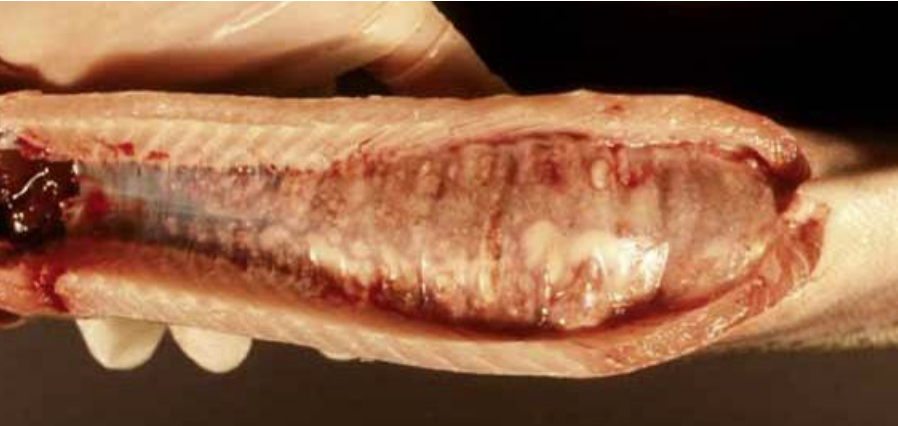
appearance: white, lacy material (ex. BKD)
BKD causes ___ deposits; it will appear as white lacy enveloping organs
can be reabsorbed, or form adhesions (after vaccinations)
Pus
fluid product of inflammation that has liquid containing leucocytes and debris of dead cells and tissue elements liquefied by proteolytic enzymes
Ascites
fluid in abdominal cavity
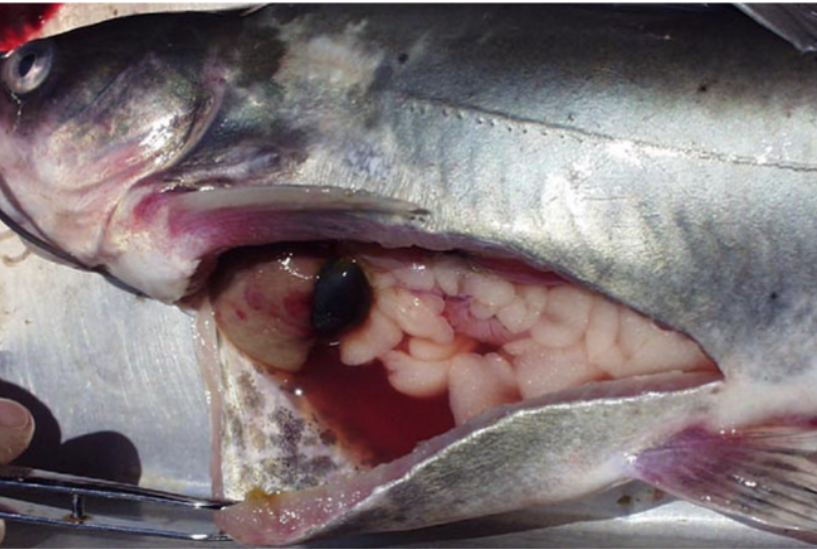
Edema
excess fluid between cells
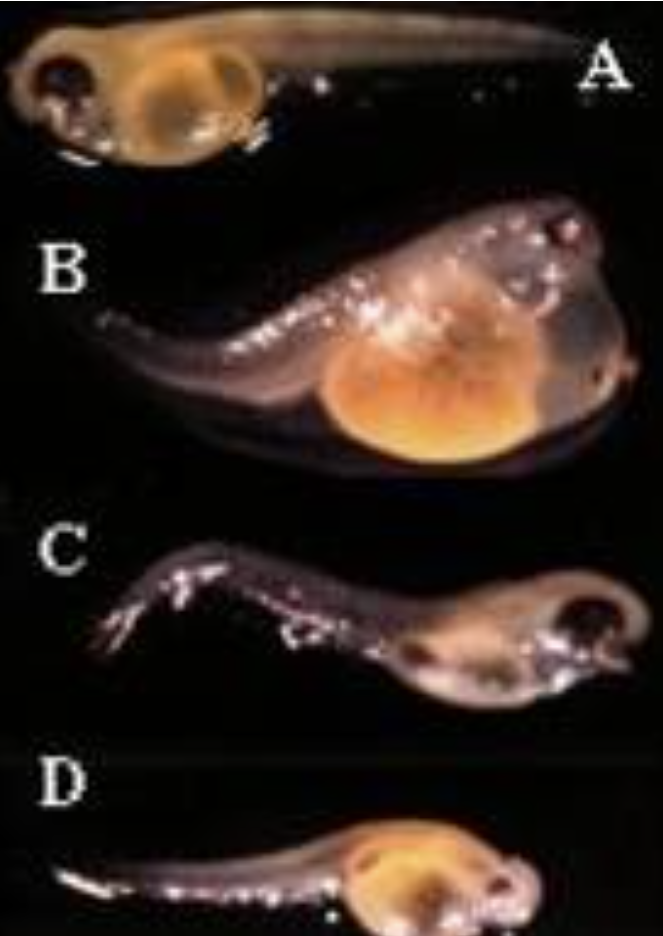
Leaky vessels
problem w/ fluids and blood movement
caused by microbes or toxins
blood leaking from vessels
signs of vessel damage in certain infections + some nutritional problems
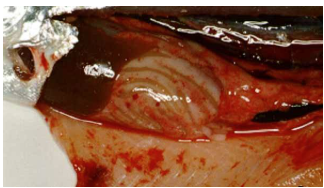
Necrosis
cells swell and break open, release content, and can damage neighbouring cells → provoke inflammation
Pressure problems
problem w/ fluids and blood movement
if can't get rid of excess fluid → excretion problems (gills, kidneys)
osmotic stress
pump and vessel problems
Autolysis
dead cell being self-digested by lysosomal enzymes
is temperature dependent and varies with cause
if seeing all kinds of dead tissue → likely this
gills = good indicator
Malformation
when smth wrong before birth
deformities depend on when animal is affected in development
range from embryonic death - subtle, internal anatomic differences
in fish: skeletal and heart anomalies; linked to nutrition, incubation temp, toxins, and some infections
genetic, environmental, infections causes
Aplasia
complete failure of organ to form
Hyperplasia
increase in # of cells in a tissue or organ
organ increases in size by increasing number of cells
skin + gills might thicken due to inflammation
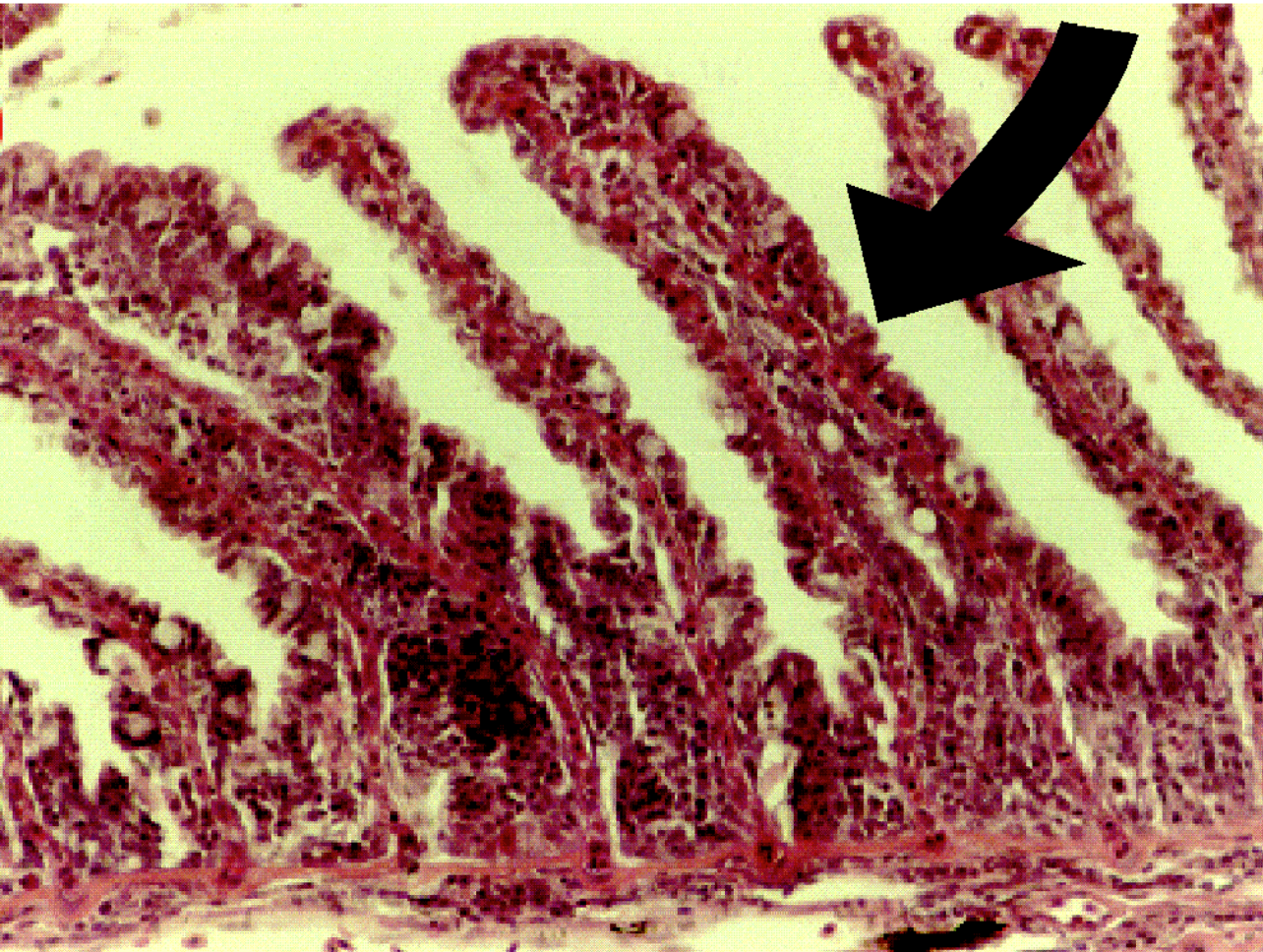
Atrophy
shrinkage in size of cell; loss of cell substance without cell actually dying
many cells shrinking so organ does too
causes: starvation, low / cut off blood supply, nerve damage, pressure
Hypertrophy
increase in size of cells and thus organ
can be adaptive
muscles increase w/ exercise, cardiac hypertrophy due to valve failure
can be hormonal response (Gonads) or pathological change (coronary arteriosclerosis in salmon - thickened vessels)
Neoplasia
new growth; Cancer
can be benign
local lesions (not spreading)
malignant: growing by invasion and spreading to other areas / tissues
Fatty change
accumulation of excess fat within non-fat cells
tends to happen in liver
body can't deal with normal amount of fat and also when too much fat
liver = normal place to store fat → becomes overwhelmed → fats deposited in other locations
Pigments
melanin can show pathological changes
it's normally dark and present in immune cells in fish
changes can be response to nerve impulses (colour change, injury)
Calcium
hard, white, crunchy
might increase in response to cancers, metabolic problems, dietary issues if bad + chronic injuries
Mucus
substance that can make things translucent/cloudy
irritants affecting orgs like skin or gills can cause major changes in quantity and quality of mucus
Latent
hidden (infections)
Chronic
long term, low level (infections)

