Marine Ecology
 Call Kai
 Learn
Learn Practice Test
 Spaced Repetition
 Match
Match Flashcards
 Knowt Play
1/50

There's no tags or description
Looks like no tags are added yet.
Name | Mastery | Learn | Test | Matching | Spaced | Call with Kai |
|---|
No analytics yet
Send a link to your students to track their progress
51 Terms
Abiotic
nonliving factors (currents/temp/salinity/pH)
Biotic
living factors (animal interactions)
Fundamental Niche
theoretical range of environmental conditions under which a species can survive, grow, and reproduce (absent of competition or predetation)
Realized niche
the actual, restricted set of environmental conditions and resources a species requires to occupy an environment
Spacial/habitat niche
physical space occupied by the organism in an environment
Trophic niche
Organisms functional role, diet, and position within a food web
Multidimensional niche
range of environmental conditions and resources in which a species can survive and reproduce
Population
group of one species in given area
community
multiple populations of different species
exponential growth
continuous population growth with out ecological limits
Carrying capacity (k)
the number of individuals a habitat can support with available resources
High nutrient low chlorophyll zone
Nutrients, but not lots of primary production due to lack of iron
Iron
micronutrient required for photosynthesis and metabolism
Logistic growth (s-curve)
realistic growth of an organism including lag phase, exponential phase, stationary phase, and decline phase
Lag phase
before organism can take off and reproduce
Intraspecific
within species: urchins competing for space
interspecific
between species (competitive exclusion/resource partitioning)
competitive exclusion
one species outcompetes another one and pushes species to have specific traits for specific environments
Resource partitioning
specialization/sharing of resources so each species focuses on its own resource source
Symbiosis
relationship between species
Facultative symbiosis
can have a relationship but not essential to either organism
Obligate symbiosis
neither organism can live on their own, they need eachother
Mutualism
both species benefit (ex: clown fish and anemone)
Commensalism
one species benefits and the other has no effect (ex: barnacles on whales)
Parasitism
one species benefits, the other is harmed (ex: pee-crab feeding on oysters)
Keystone predator
effect on the communities are proportionally much greater that their abundance
Ecological succession
regular replacement of species by another in a given area in different stages of growth
Climax community
final stage of succession, final organisms present for best result
Plankton
cannot move against the currents
Nekton
can move against the currents
Benthos
associating/living/attached to the bottom
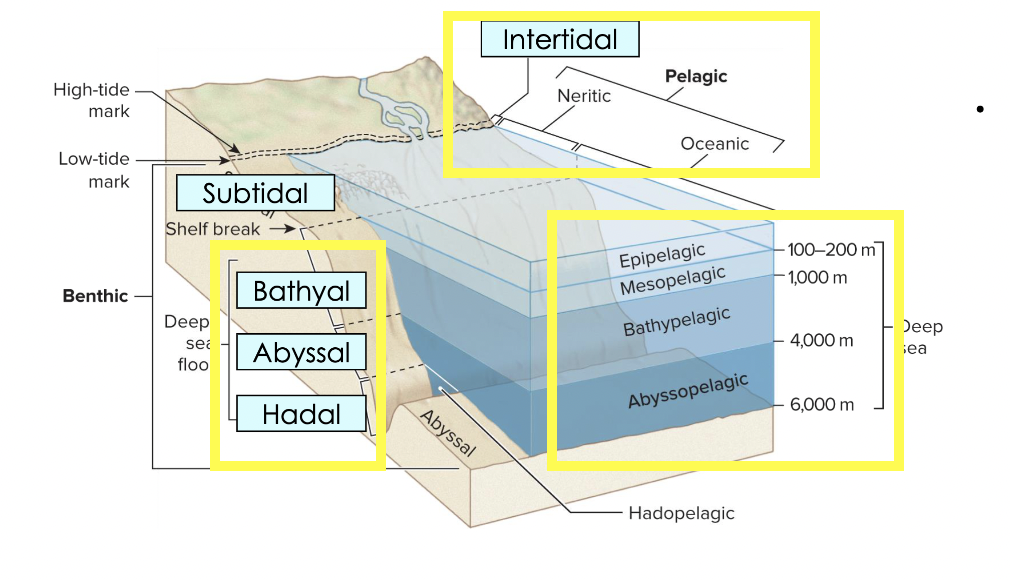
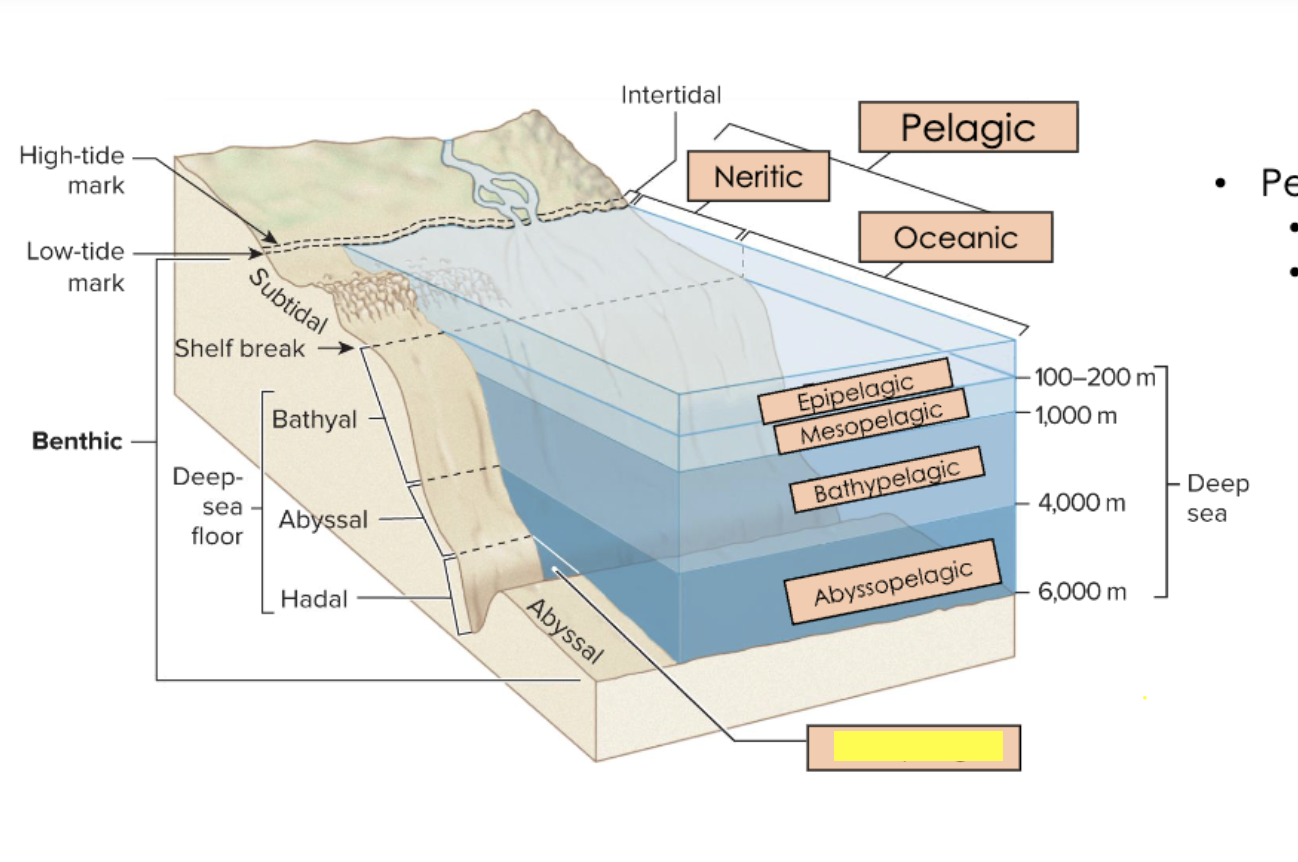
Bathyal, abyssal, hadal
order of deep sea floor
Continental shelf
intertidal/subtidal zones
Intertidal
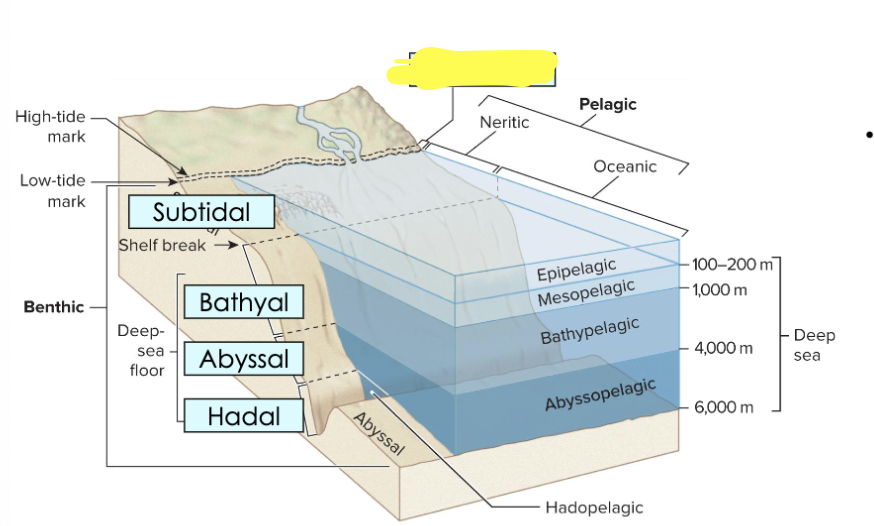
Subtidal
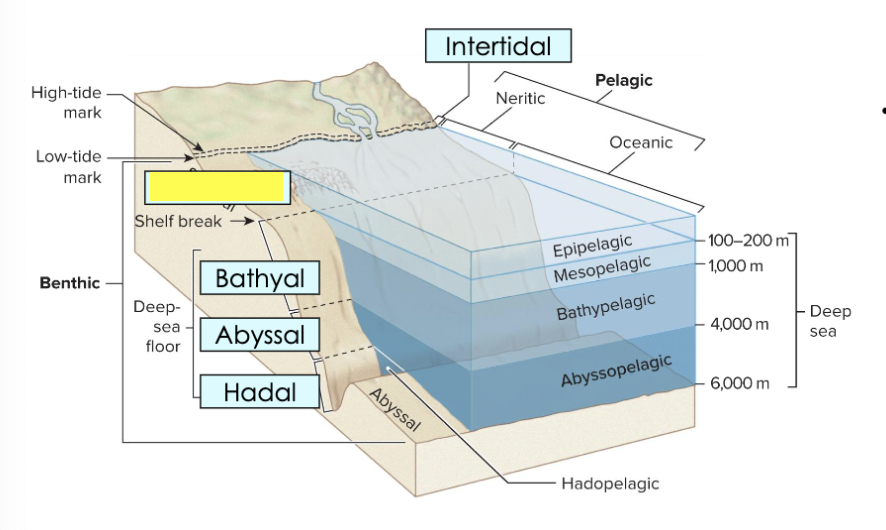
Bathyal
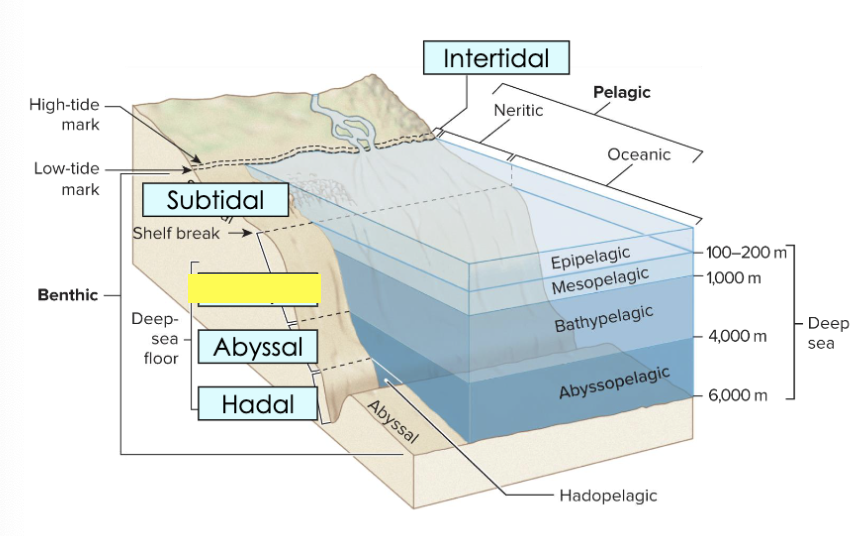
Abyssal
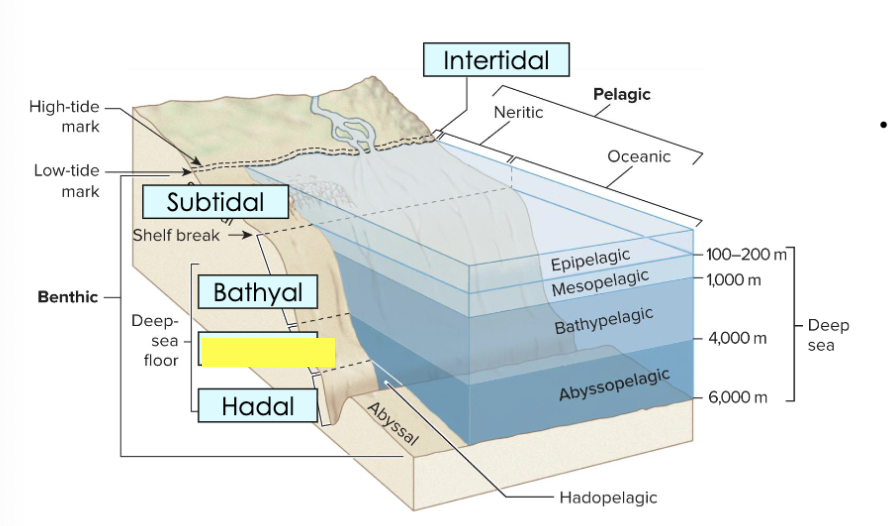
Hadal
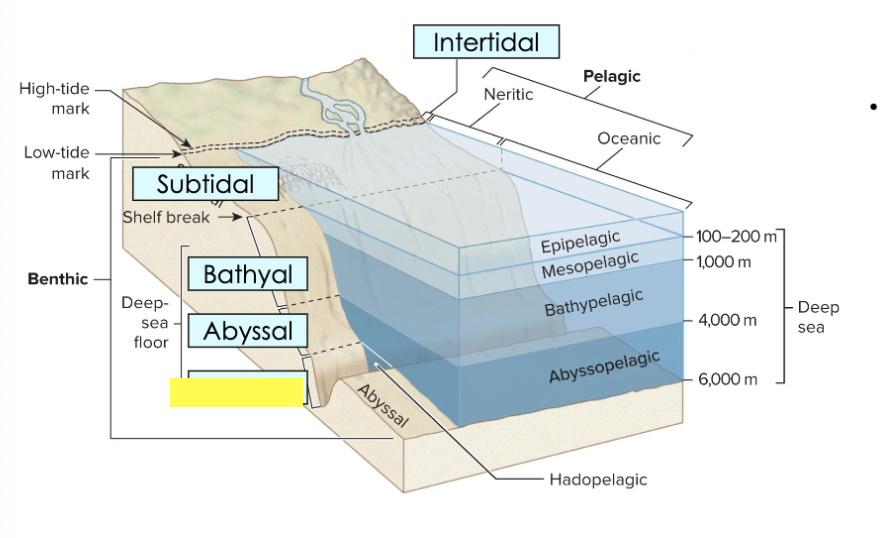
Neritic
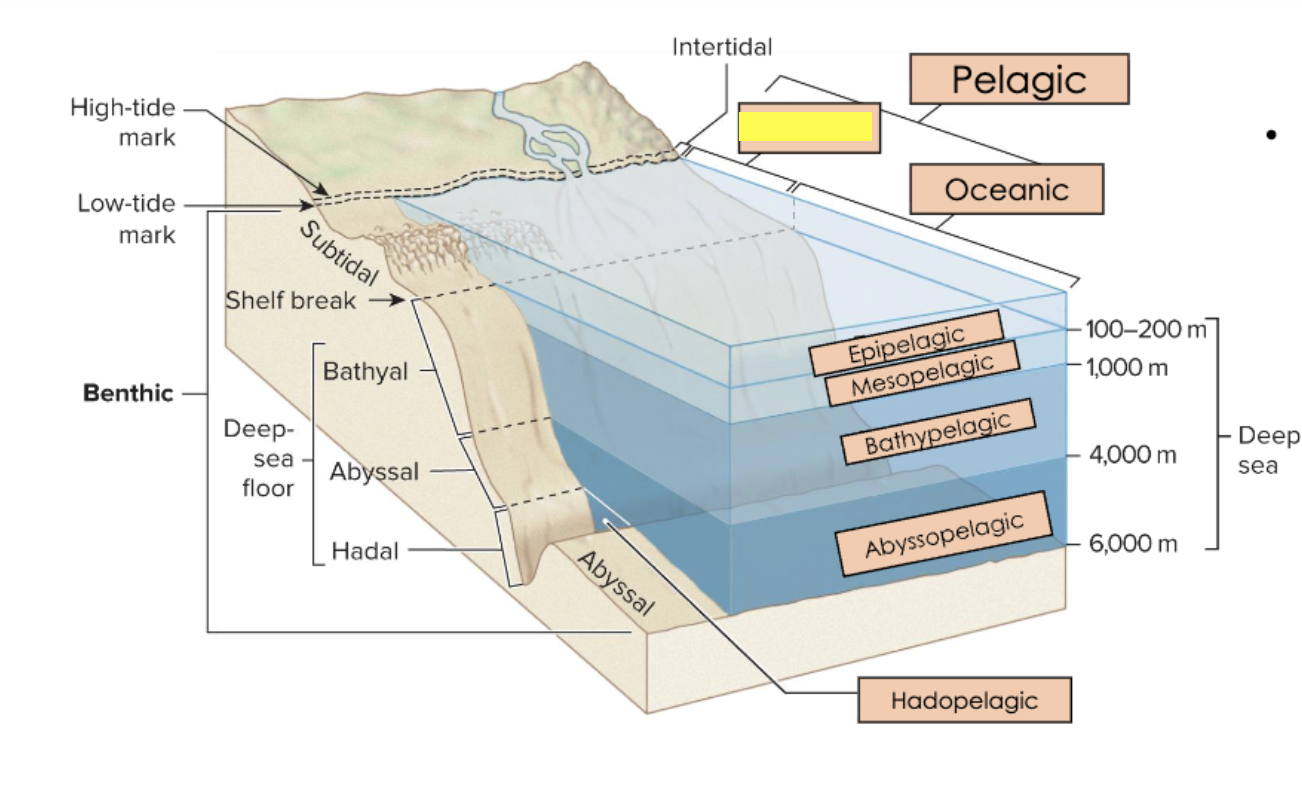
Pelagic
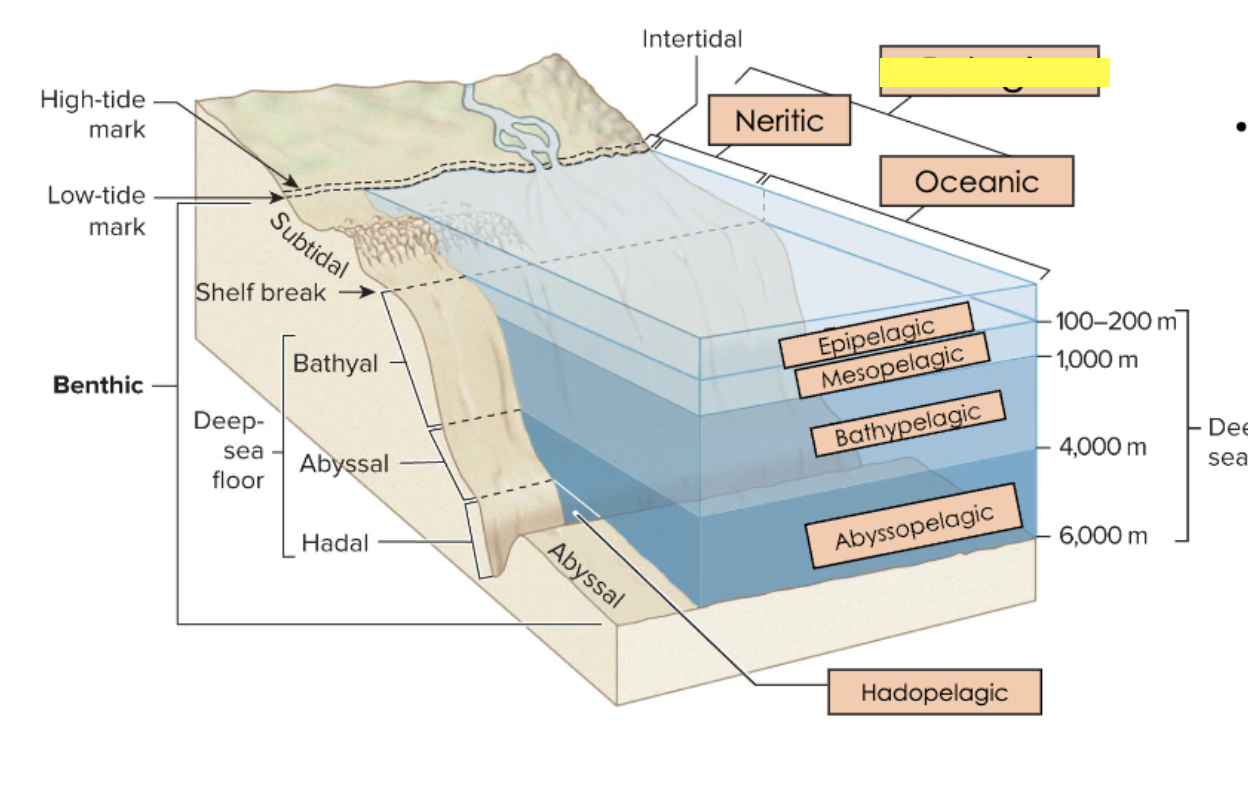
Oceanic
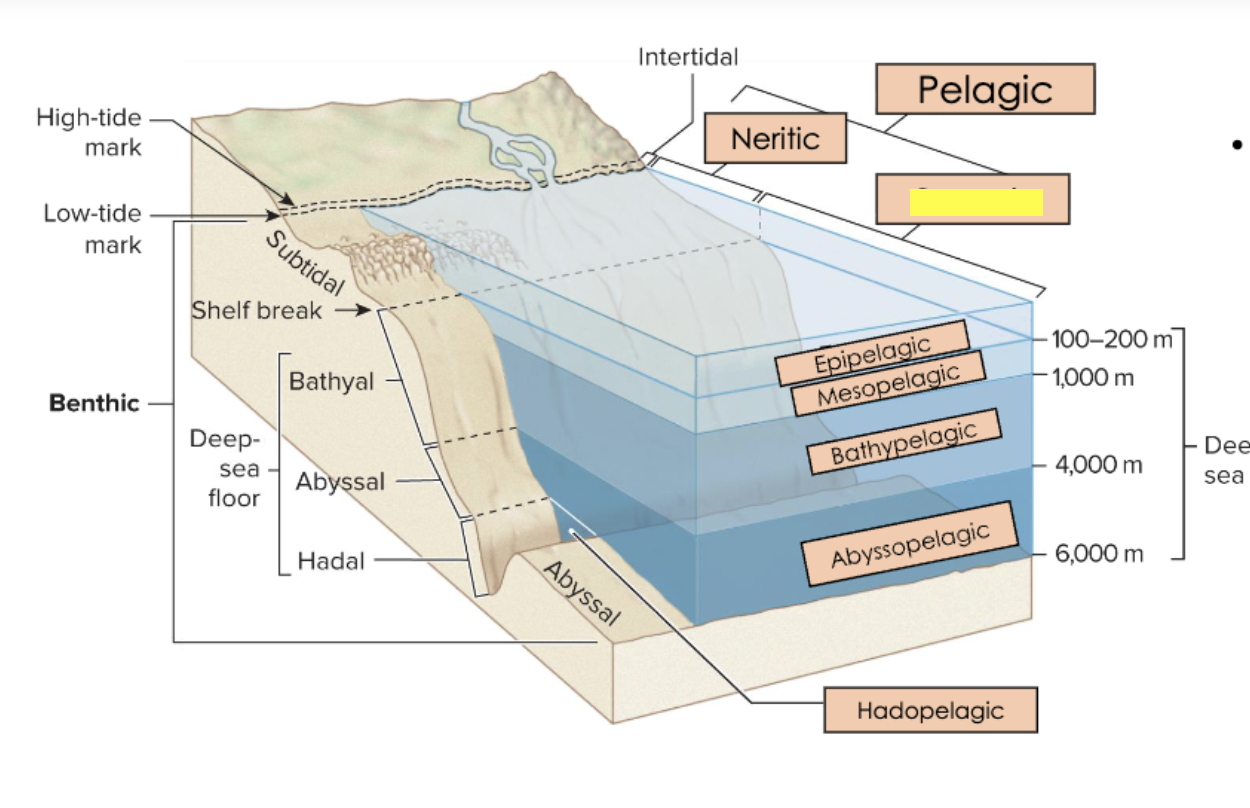
Epipelagic
0-100/200m
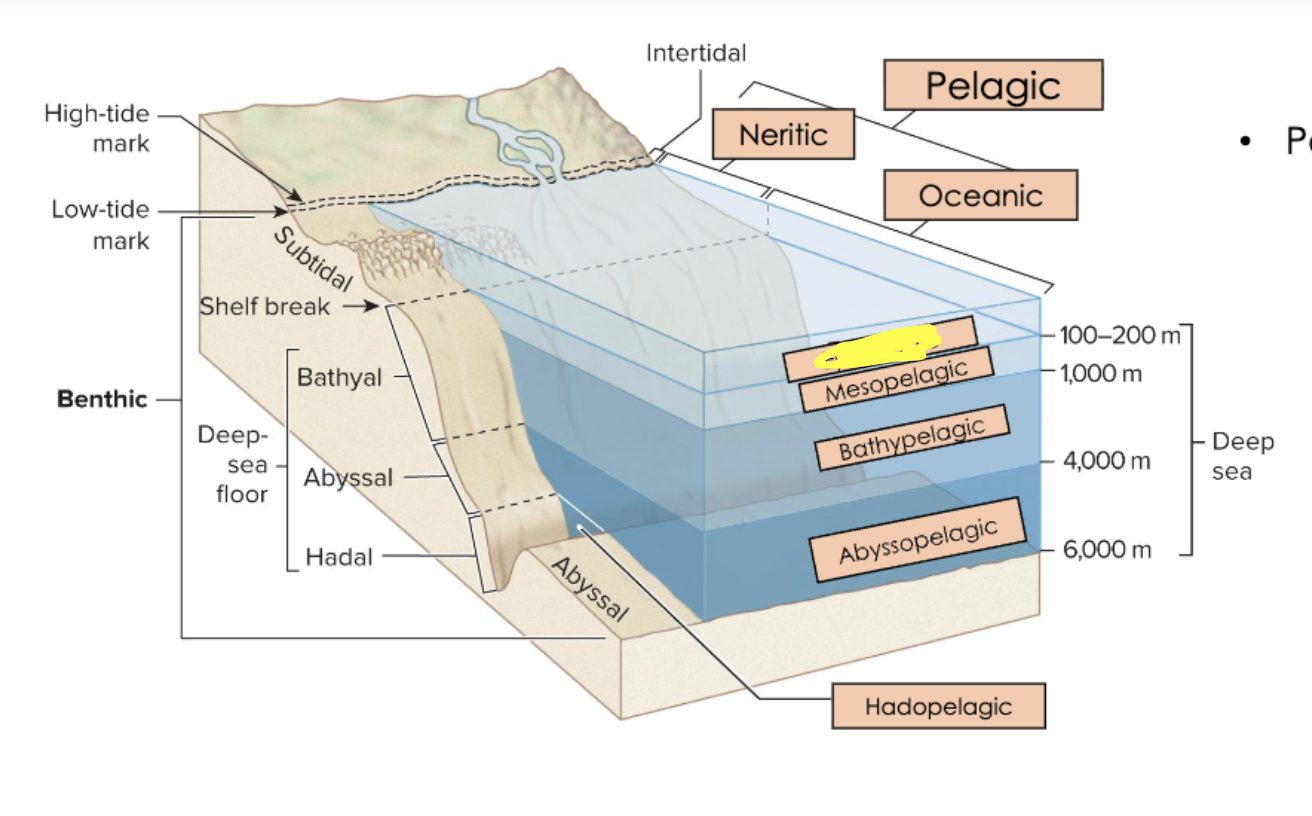
Mesopelagic
200-1,00m
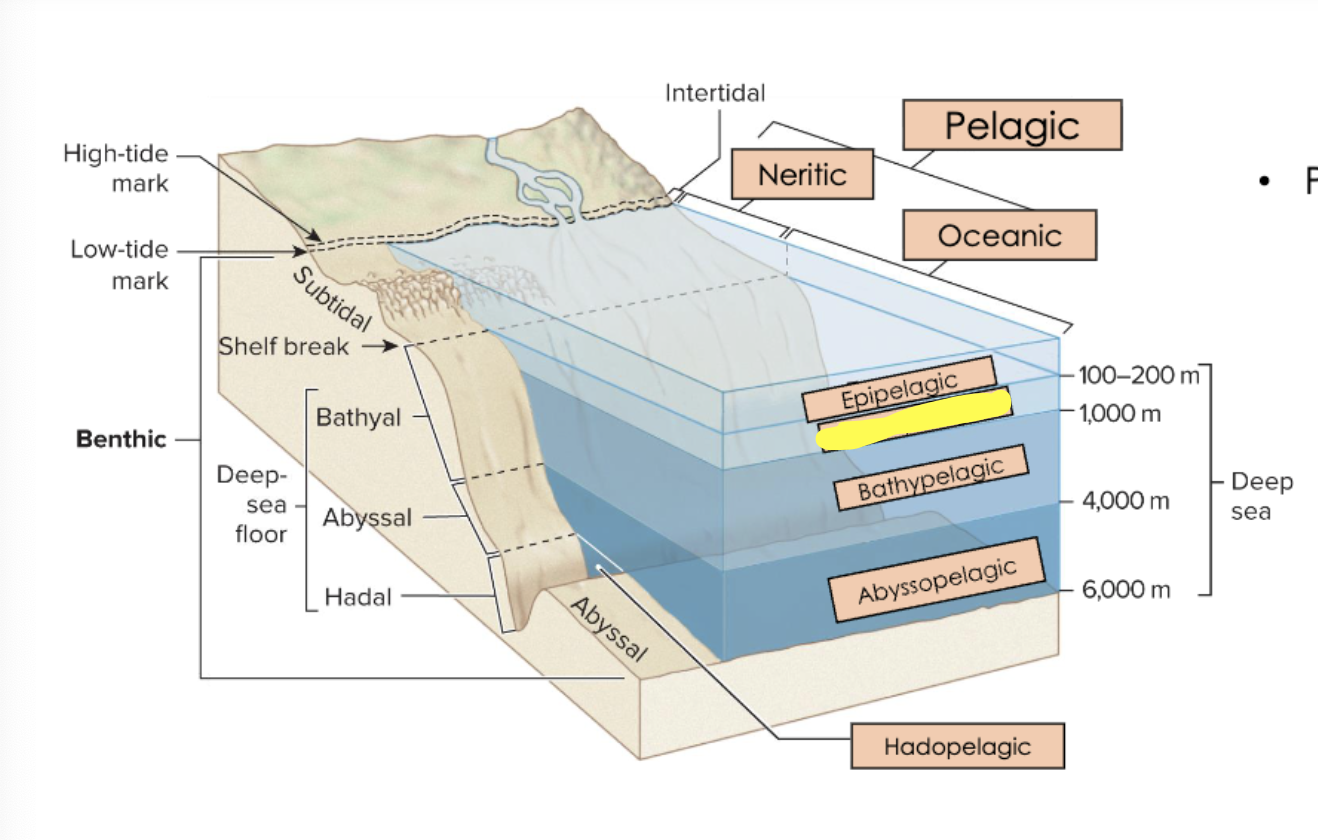
Bathypelagic
1,000-4,000m
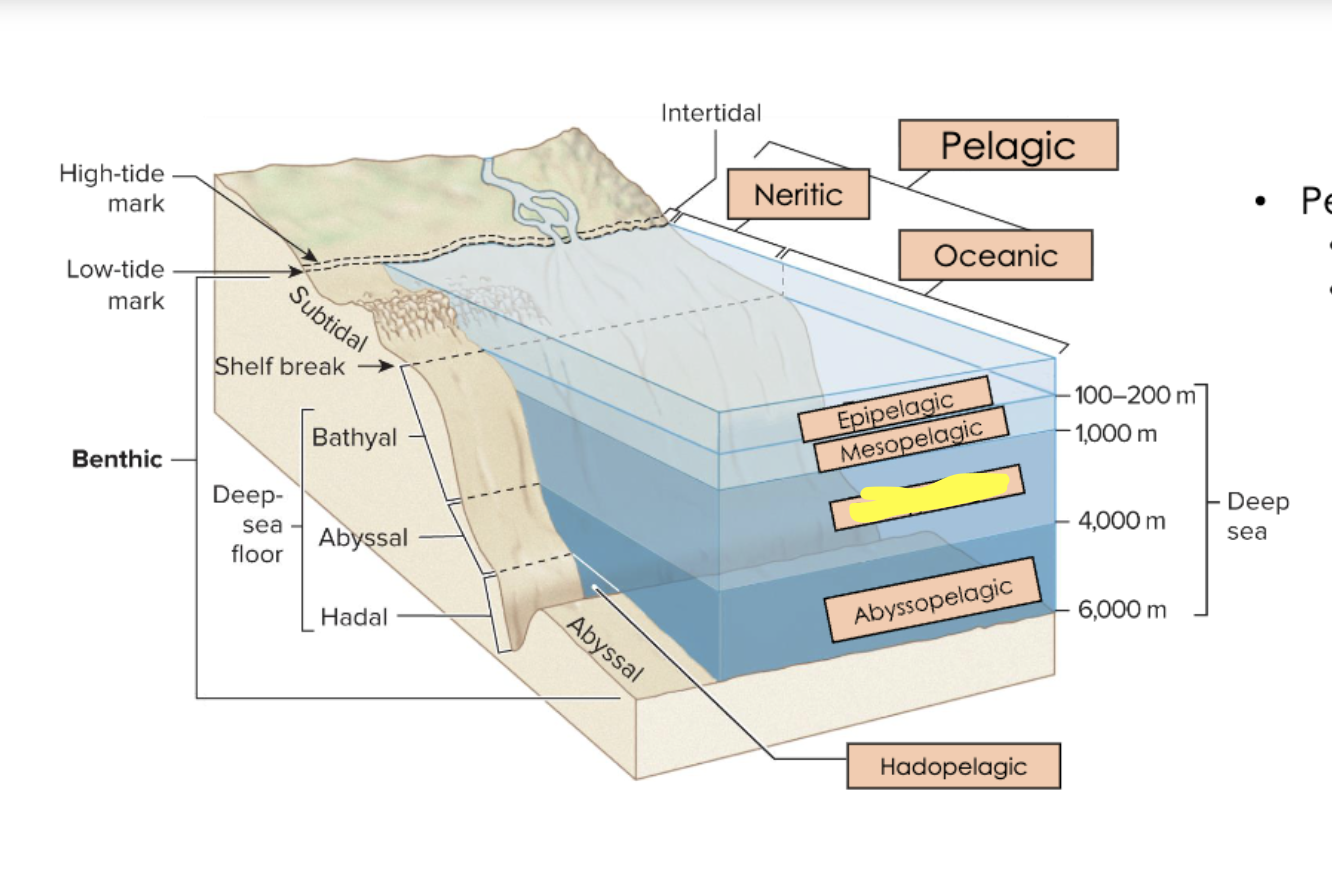
Abyssopelagic
4,000-6,000m
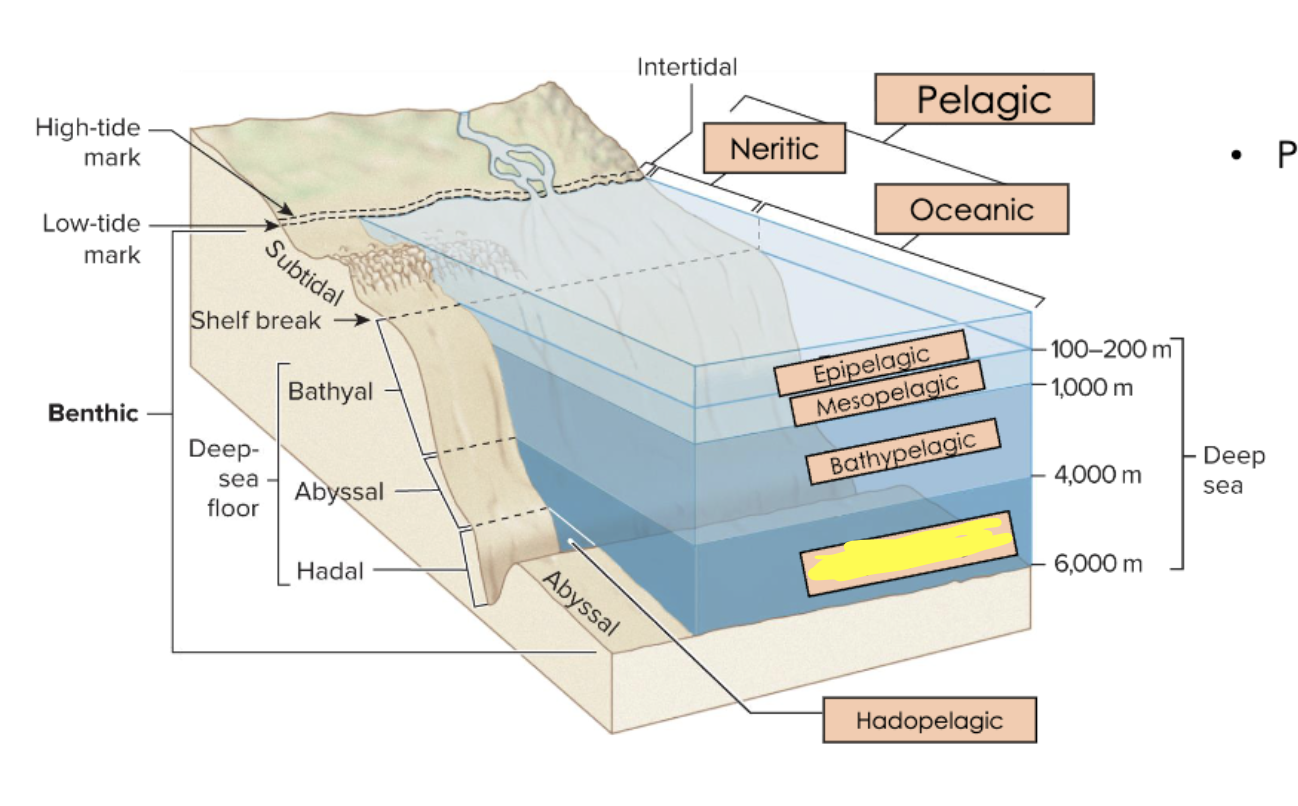
Hadopleagic
6,000m +
Autotrophs
producers
Heterotrophs
consumers
trophic level
position organisms is in within food web
trophic cascade
effect of one species may flow through an ecosystem
10%
standard amount of energy transferred from one organism to another

