Midterm PSYCLPS
 Call Kai
 Learn
Learn Practice Test
 Spaced Repetition
 Match
Match Flashcards
 Knowt Play
1/93

There's no tags or description
Looks like no tags are added yet.
Name | Mastery | Learn | Test | Matching | Spaced | Call with Kai | Chat |
|---|
No analytics yet
Send a link to your students to track their progress
94 Terms
Clinical Psychology
integrates science, theory, and practice to understand, predict, and alleviate maladjustment. disability, and discomfort as well as to promote human adaptation, adjustment, and personal development.
intellectual, emotional. biological, psychological, social, and behavioral aspects of human functioning across the life span, in varying cultures, and at all socioeconomic levels.
Clinical Psychology focuses on the
Phrenology
is the study of character traits and mental faculties based on the size and shape of the skull.
The brain
is divided into regions, each associated with different traits or abilities (e.g., intellect, personality, emotions).
palpate the skull to "feel"
Phrenologists would ___ bumps and depressions, linking them to mental attributes.
Franz Joseph Gall
Who is associated with Phrenology
Skull measurements
were taken to "diagnose" intellectual abilities, moral tendencies and emotional states.
Mesmerism
also known as animal magnetism was a theory and therapeutic practice developed by Franz Anton Mesmer in the late 18th century.
Franz Anton Mesmer
Who is associated with Mesmerism
hypnosis and psychodynamic therару.
Mesmerism is considered a precursor to _____
Lightner Witmer
Father of Clinical Psychology
psychological clinic
In 1896, Witmer opened the first _______ at the University of Pennsylvania.
Focused on helping children with learning disabilities.
clinical psychology
defining it as "the study of individuals, by observation or experimentation, with the intention of promoting change.”
Army Alpha and Army Beta
psychological assessment
___________ tests were developed to assess the intelligence of military recruits.
These tests marked the beginning of ________ as a key role for clinical psychologists.
psychological trauma
Psychologists were called upon to address _________ among veterans (originally called shell shock, now known as PTSD).
Science-Practitioner Model | Boulder Model (1949)
Developed at the Boulder Conference (Colorado, USA), emphasizing the scientist-practitioner approach.
Practitioner-Scholar Model | Vail Model (1973)
Emerged at the Vail Conference (Colorado, USA), focusing more on clinical practice than research.
Introduced the PsyD degree (Doctor of Psychology), emphasizing hands-on clinical training.
Clinical Science Model
Training focused on research and evidence-based treatments.
Prepares students for academic careers.
Best available research evidence
Clinical expertise
Patient characteristics, culture, and preferences
Evidence-Based Practice (EBP) is an approach to clinical decision-making that integrates three essential components
Best Available Research Evidence
This includes findings from well-designed studies that demonstrate the effectiveness of treatments.
Clinical Expertise
The practitioner's skills and experience are used to interpret the research and apply it effectively.
Patient Characteristics, Culture, and Preferences
EBP respects the unique needs, cultural background, and choices of the patient, ensuring personalized care.
Recognizing Diversity
Greater understanding of gender, culture, ethnicity, race, sexual orientation, ability, religion, and socioeconomic status.
Building a Multicultural Framework
Resources designed to sensitively assist diverse groups. Increased representation in training and leadership positions.
Cultural Competence in Practice
Incorporates diversity in assessment and treatment. Ensures equitable access to medical and mental health care.
Intervention / Psychological Treatments
Diagnosis / Assessment
Research
Teaching
Clinical Supervision
Consultation
Administration
Activities of Clinical Psychologists
One-on-one therapy
Couples or family therapy
Parent training
Group therapy (e.g., alcohol use groups)
Types of Treatment:
Guide treatment planning
Monitor treatment progress
Diagnose specific mental health conditions (e.g., learning disabilities, depression).
Purpose of Assessment
Investigating causes of mental disorders.
Studying treatment effectiveness.
Conducting large-scale studies or smaller, practice-based research.
Research Activities
Undergraduate Teaching
Conducting courses in general psychology or specialized areas.
Graduate-Level Training
Teaching graduate students psychological assessment and treatment methods.
Clinical Supervision
Help trainees develop clinical skills in assessment and therapy.
Review live or recorded therapy sessions and provide feedback.
Specialized Consulting
Experts in specific areas (e.g., addiction) provide guidance to colleagues or organizations.
Corporate Consultation
Helping companies develop employee wellness programs.
Primary Care Consultation
Offering mental health expertise to medical professionals in clinics or hospitals.
Common Administrative Roles
Director of a clinic or department.
Chair of a university psychology department.
Crisis center director or vice president of a consulting firm.
Empathy
Active Listening
Strong Communication Skills
Ethical and Professional Integrity
Cultural Competence
Critical Thinking & Problem-Solving:
Self-awareness
Flexibility and Adaptability
Commitment to Continuing Education
Qualities of a Good Clinical Psychologist
Self-care
is a vital practice for psychologists to maintain theirwell-being and effectiveness.
Mental health
is defined as a state of well-being in which every individual realizes his or her own potential, can cope with the normal stresses of life, can work productively and fruitfully, and is able to make a contribution to her or his community.
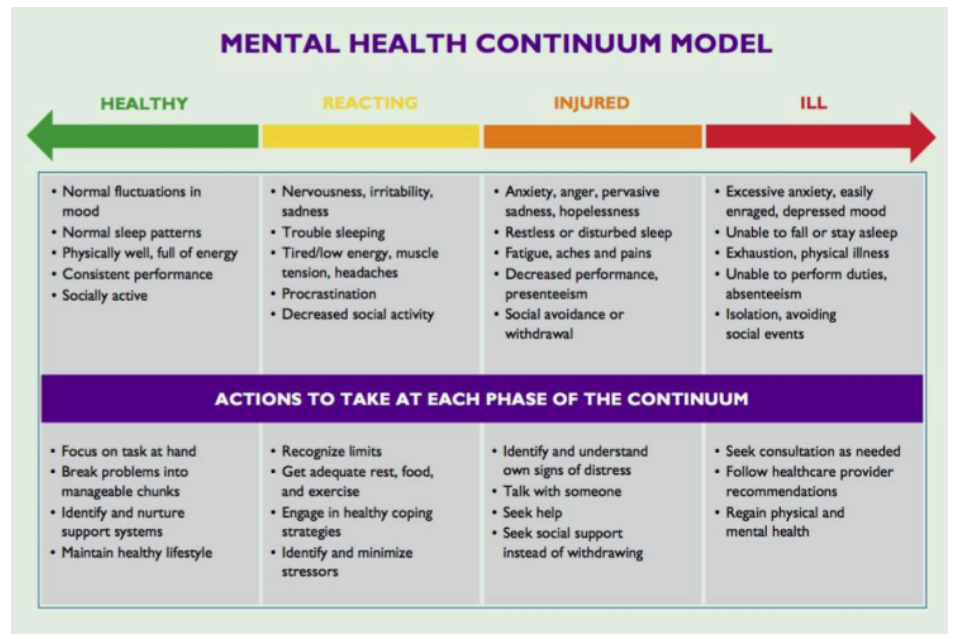
Stress
The harmful (physical and emotional) response when work demands and pressures goes beyond our abilities to cope
Individual factors
Organizational factors
Individual differences
Environmental factors
Sources of stress:
Anxiety
Intense feelings of being afraid, nervous, tense, or worries that are too strong for the situation, go on too long and get in the way of normal life.
Depression
condition that presents itself with depressed mood, loss of interest or pleasure, feelings of guilt or low self-worth, disturbed sleep or appetite, low energy, and poor concentration
Changes in eating habits
Weight loss/gain - Insomnia
Can’t get out of bed
Exhibits hopelessness
Lack of interest in activities
Appearing cheerful
Signs of depression
Mental health
Absence of ill health + Presence of positive feelings and functioning
Eating healthy foods
Drinking water
Engaging in physical exercise
How to prioritize physical health
Prayer and meditation
Breathing exercises
Yoga
Practice acceptance (of what cannot be changed or controlled)
How to pay attention to your thoughts
Pessimism
Unrealistic expectations
All-or-nothing attitude
Need to always be perfect
Letting go of toxic mindsets
Increase your source of social support
Avoid social comparisons
Nurture significant relationships
Pay attention to people
Talk to someone
Consult a professional
Seeking help
Ethical codes
are guidelines for what therapists can and cannot do that have been developed by each therapeutic discipline's organizational body
Principle ethics
Virtue ethics
two dimensions to ethical decision
Principle ethics
Overt ethical obligations that must be addressed
Virtue ethics
Above and beyond the obligatory ethics and are idealistic
Therapist Competence
Therapists need to only provide services for which they are qualified
Client Welfare
Client needs come before counselor needs and counselor must act in client's best interest
Informed Consent
Counselors muşt inform clients regarding nature of counseling and answer questions so that clients can make an informed decision
Confidentiality
Clients must be able to feel safe within the therapeutic relationship for counseling to be most effective
Dual Relationships
More than one relationship with a client (e.g. the counselor is a friend and the counselor) should be avoided when possible
Sexual Relationships
Sexual relationships with clients are strongly prohibited and in some places can constitute a criminal offense
only provide services for which they are qualified
accurately represent their credentials and qualifications
keep up on current information of the field, especially in specialty areas
seek counseling when they have personal issues
To provide competent treatment, therapists need to
Malpractice
Occurs when a counselor fails to provide reasonable care that is generally provided by other professionals and it results in injury to the client.
Any special arrangements
The competencies of the counselor
Nature of treatment (experimental Tx should be indicated)
Confidentiality (and its limits)
The financial costs of your services
All of the following should be covered for the client to be able to make an informed choice
Privileged Communication (confidentiality)
Legal protection of the client which prevents a counselor from disclosing what was said within the counseling session(s)
When the client is suicidal
When a client needs hospitalization.
When a counselor is performing a court ordered evaluation
When the client sues the counselor
When the client uses a mental disorder as a legal defense
When an underage child is being abused
When privileged communication doesn't apply
Touch in therapy is not inherently unethical
Sexual relationship is not acceptable.
Physical touch in psychotherapу
Team approach (should be indicated in the informed consent form)
Ongoing criminal act
Possible harm to the client or others
In what situations you can disclose the information?
occur when a psychologist has a professional relationship with an individual and also has another significant relationship with that person, such as a personal, social, or business relationship.
Exploitation
Impairment
Confidentiality
Trust
Ethical Concerns with multiple relationships
Culture
Religion
Race
Do not impose your own:
Report unethical practices
Engage/Participate/Volunteer in community services
Social Responsibility
Client
Self
Profession
At all times, we should protect:
Referral and presenting problem
Choose what to assess
Select method of assessment
Gather the assessment data
Consider the data and draw conclusions
Convey the conclusions to appropriate parties
Assessment process
reason for a referral
a description of why the psychologist's services are being sought.
Choose what to assess
Once a psychologist's expertise aligns with the client's needs, the assessment focus shifts to what to evaluate.
Selecting method of assessment
After determining what to assess, the psychologist must choose how to assess it. This involves selecting appropriate instruments and methods from a vast array of options (thousands exist!).
Reliability
is the consistency with which the test measures a particular variable.
Test-retest reliability
The consistency of test scores across some period of time
Interrater reliability
The degree of agreement between two or more interviewers or raters
Internal consistency
The degree to which the items in a test all measure the same characteristic
Validity
is the extent to which a test measures what it intends to measure.
Construct validity
The extent to which a test measures the construct it's supposed to measure
Convergent validity
The extent to which a test of one characteristic correlates with other tests of the same characteristic
Discriminant validity
The extent to which a test of one characteristic is not correlated with tests of unrelated characteristics
Predictive validity
The degree to which test scores can predict (correlate with) behavior or test scores that are obtained at some point in the future
Increment validity
The extent to which a test provides information not available through other means
Standardization
A crucial aspect of evidence-based assessment. It ensures consistency and comparability across administrations of a test or procedure.
Uniform procedures
Normative data
Controlled testing environment
Standardization includes
Gathering assessment data
Once assessment instruments have been selected, the clinician obtains the client's (or parent or guardian's) informed consent and data gathering begins.
Interviews
Observations
Tests
Primary Methods of Collecting Data
After data collection, the psychologist faces the crucial task of scoring, interpreting, and integrating the results.
Drawing Conclusions
Communicating the Results
The final step in the assessment process is communicating findings through a comprehensive written report.
Referral context
Assessment strategy
Results and Conclusions
Recommendations
Written report includes