ANAT 3651 Exam 2 Spring 2026 UMN
 Call Kai
 Learn
Learn Practice Test
 Spaced Repetition
 Match
Match Flashcards
 Knowt Play
1/976

There's no tags or description
Looks like no tags are added yet.
Name | Mastery | Learn | Test | Matching | Spaced | Call with Kai |
|---|
No analytics yet
Send a link to your students to track their progress
977 Terms
CNS and PNS
there is one nervous system, but it can be structurally divided into what 2 things?
T
T/F: CNS and PNS are intimately integrated with one another.
brain and spinal cord
what is contained in the CNS?
cranial nerves, spinal nerves, and ganglia
what is contained in the PNS?
sensory nervous system and motor nervous system
the nervous system can not only be structurally divided, but functionally divided as well. what are the 2 functional divisions of the nervous system?
both use parts of both CNS and PNS
do the sensory nervous system and motor nervous system use parts of CNS or PNS?
sensory nervous system
which functional division of the nervous system contains receptors, transmits information from receptors to CNS, and receives sensation about condition of body and environment?
1. contains receptors
2. transmits information from receptors to the CNS
3. receives sensation about condition of the body and the environment
what are the 3 key things to know about the sensory nervous system?
motor nervous system
which functional division of the nervous system transmits information from CNS to the rest of the body and sends motor information to effectors?
1. transmits information from CNS to the rest of the body
2. sends motor information to effectors
3. delivers signals to muscles and glands
what are the 3 key things to know about the motor nervous system?
somatic sensory and visceral sensory
the sensory nervous system is a functional division of the nervous system, it can be further divided into what two categories?
visceral
in somatic sensory and visceral sensory, which are u generally NOT aware of?
somatic sensory
which division of the sensory nervous system receives sensory information from skin and special senses like touch, pain, vision, hearing, taste, and smells?
visceral sensory
which division of the sensory nervous system receives sensory information from viscera (blood vessels and organs) like the O2 and CO2 in blood, metabolic wastes in blood, body temperature, etc.
receiving sensory information from skin and special senses (touch, pain, vision, hearing, taste, smell, etc.)
what is the somatic sensory division of the sensory nervous system important for?
receiving sensory information from viscera, blood vessels and organs (O2 and CO2 in blood, metabolic wastes in blood, body temperature, etc.)
what is the visceral sensory division of the sensory nervous system important for?
somatic motor and autonomic motor
the motor nervous system is a functional division of the nervous system, it can be further divided into what two categories?
somatic motor
which division of the motor nervous system is considered a 'voluntary' nervous system and innervates skeletal muscle?
autonomic motor
which division of the motor nervous system is considered an 'involuntary' nervous system and innervates cardiac muscle, smooth muscle, and glands?
sweat, tears, saliva, and mucus
what 4 general things do glands produce?
neurons ; glial cells
nervous tissue contains __________ and _______ ______
neurons
found in nervous tissue, the basic structural unit of the nervous system
glial cells
found in nervous tissue, support neurons
no, but they can change
can neurons divide?
a constant supply of glucose and oxygen
neurons have a high metabolic rate and depend on what?
F. it is extremely long, from fetus to elderly
T/F: neurons have a short longevity
dendrites, cell body, short single process, peripheral process, and central process
what are the 5 structures to know on a unipolar neuron?
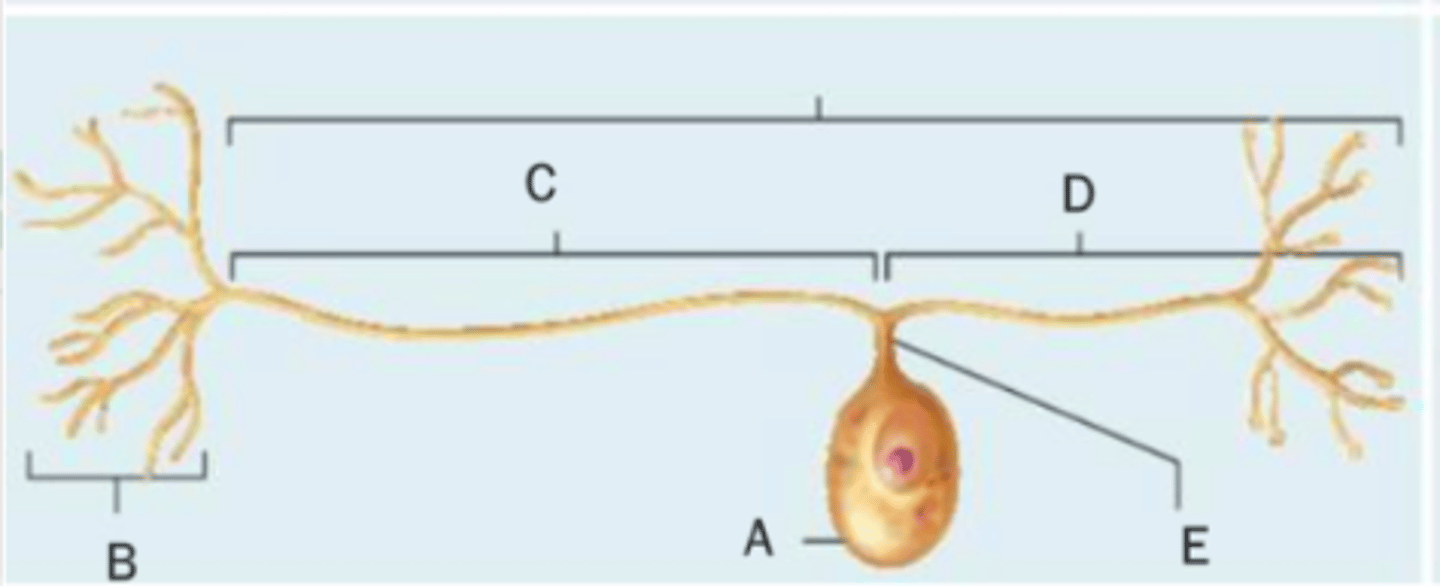
dendrites
label B
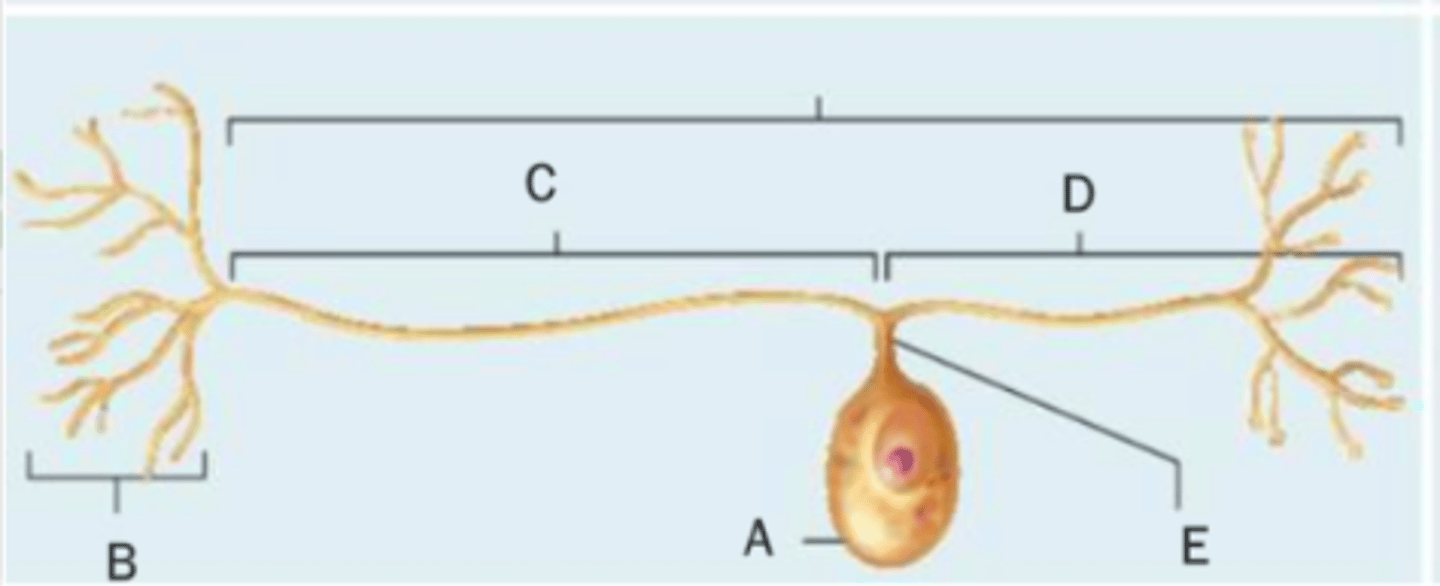
detect touch, pain, temperature, and vibration in the skin
what is the function of dendrites on a unipolar neuron?
cell body
label A
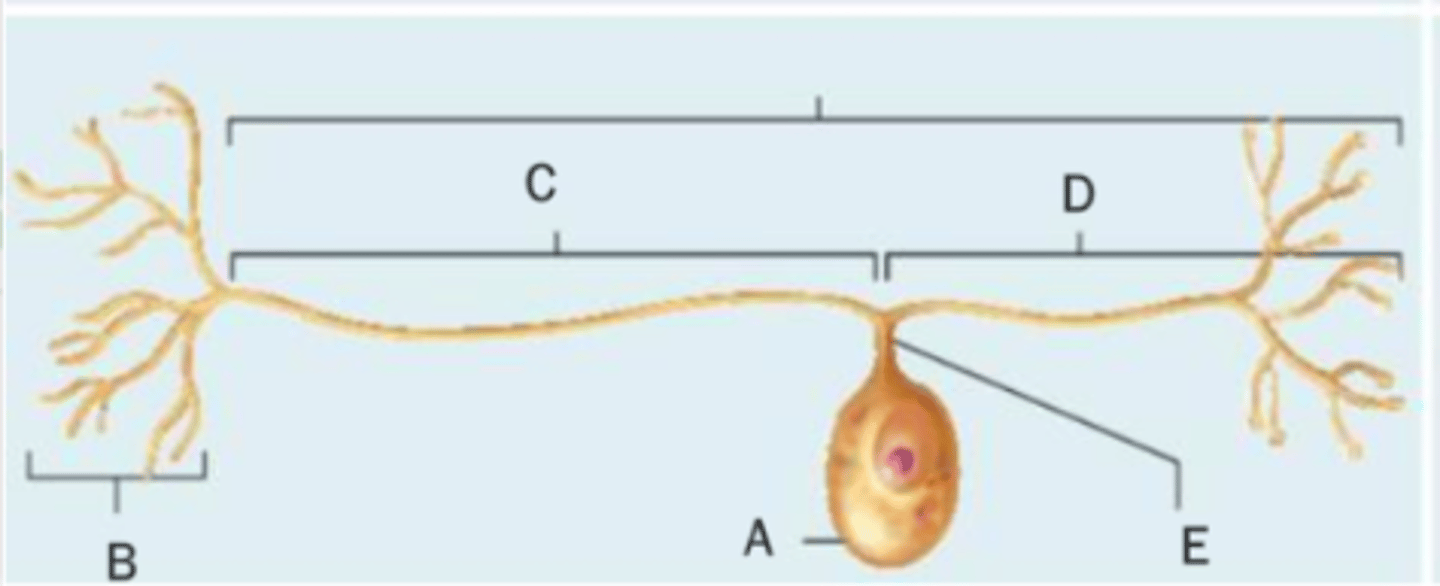
it is the neurons control center that receives, integrates, and sends nerve impulses
what is the function of the cell body on a unipolar neuron?
short single process
label E
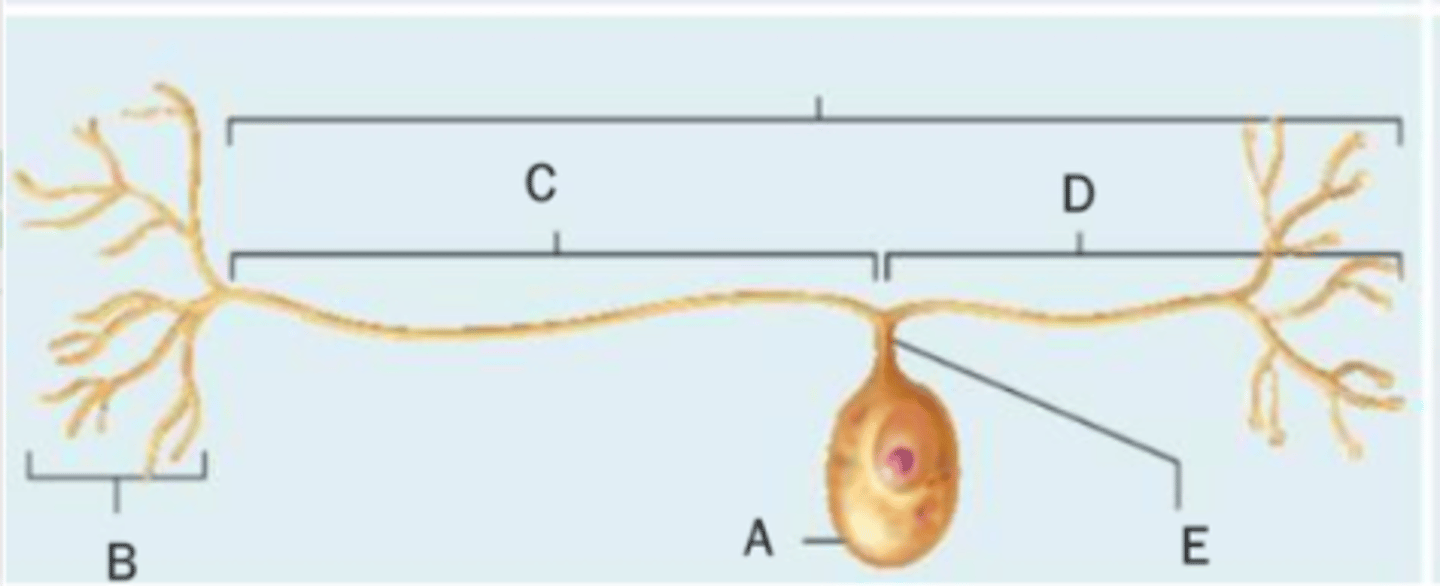
mediates attachment of the central and peripheral processes to the cell body
what is the function of short single process on a unipolar neuron?
peripheral process
label C
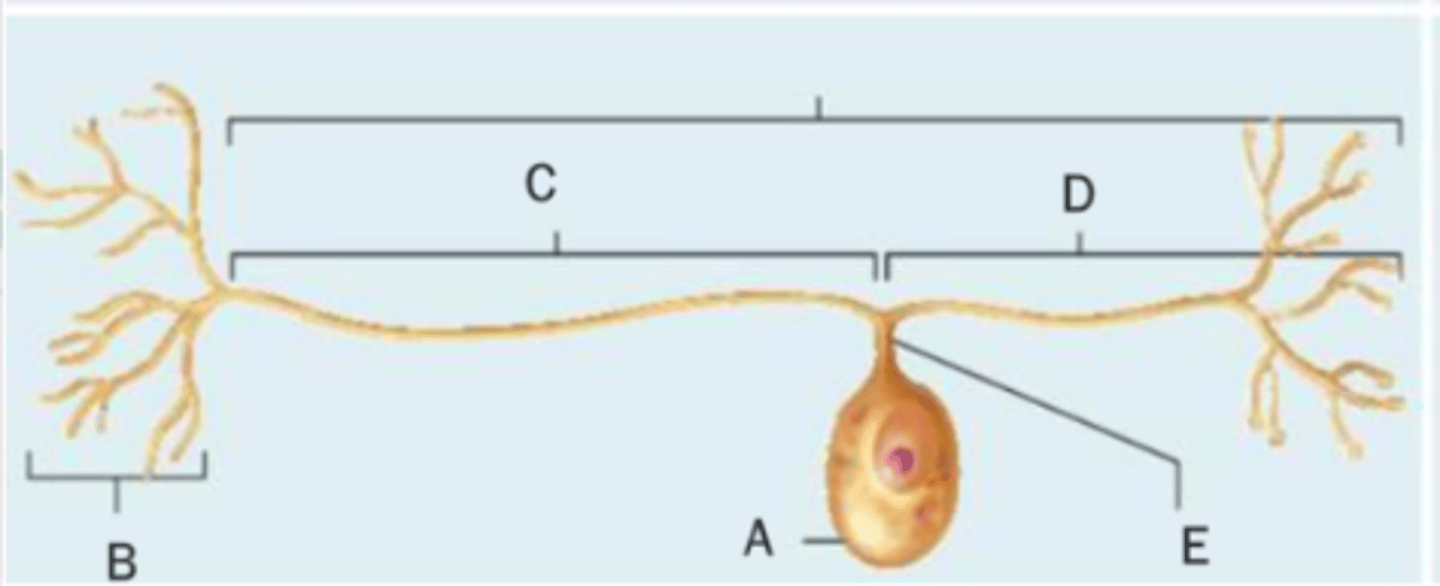
carries sensory information from the skin to the cell body
what is the function of the peripheral process on a unipolar neuron?
central process
label D
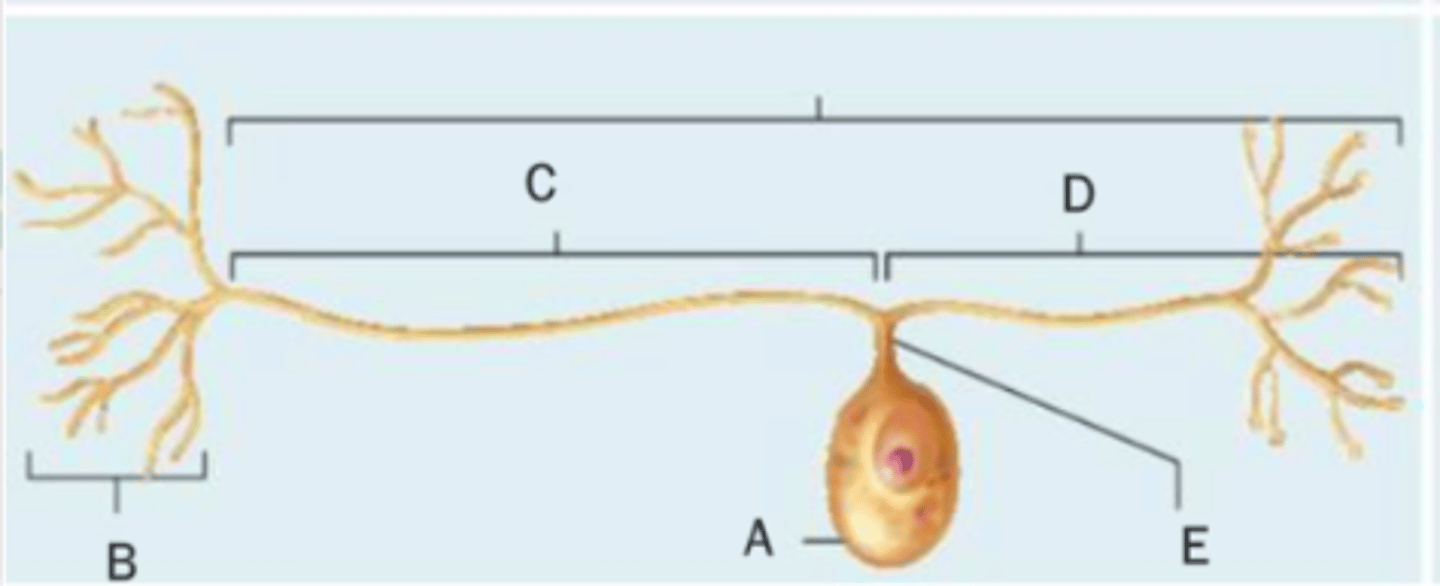
sends impulses from the cell body to the CNS (brain or spinal cord)
what is the function of the central process on a unipolar neuron?
dendrites, cell body, and axon
what are the 3 structures to know on a multipolar neuron?
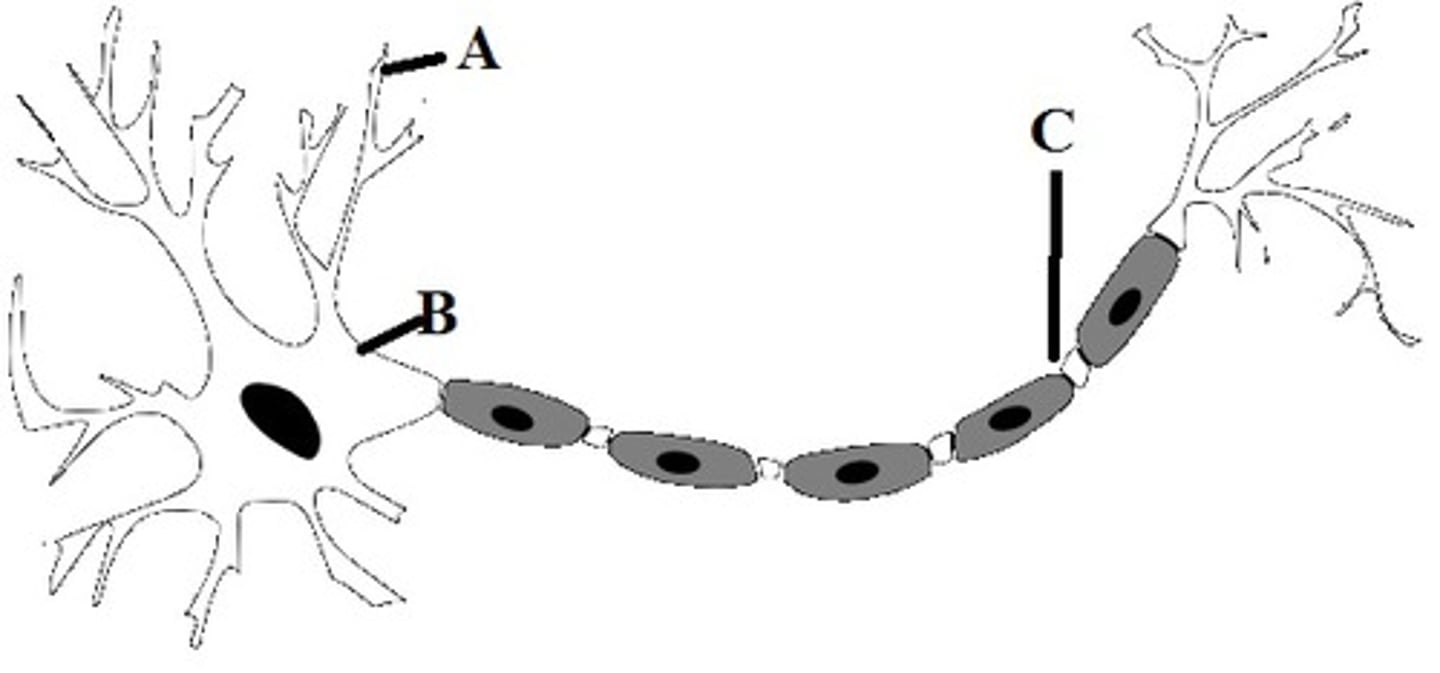
dendrite
label A
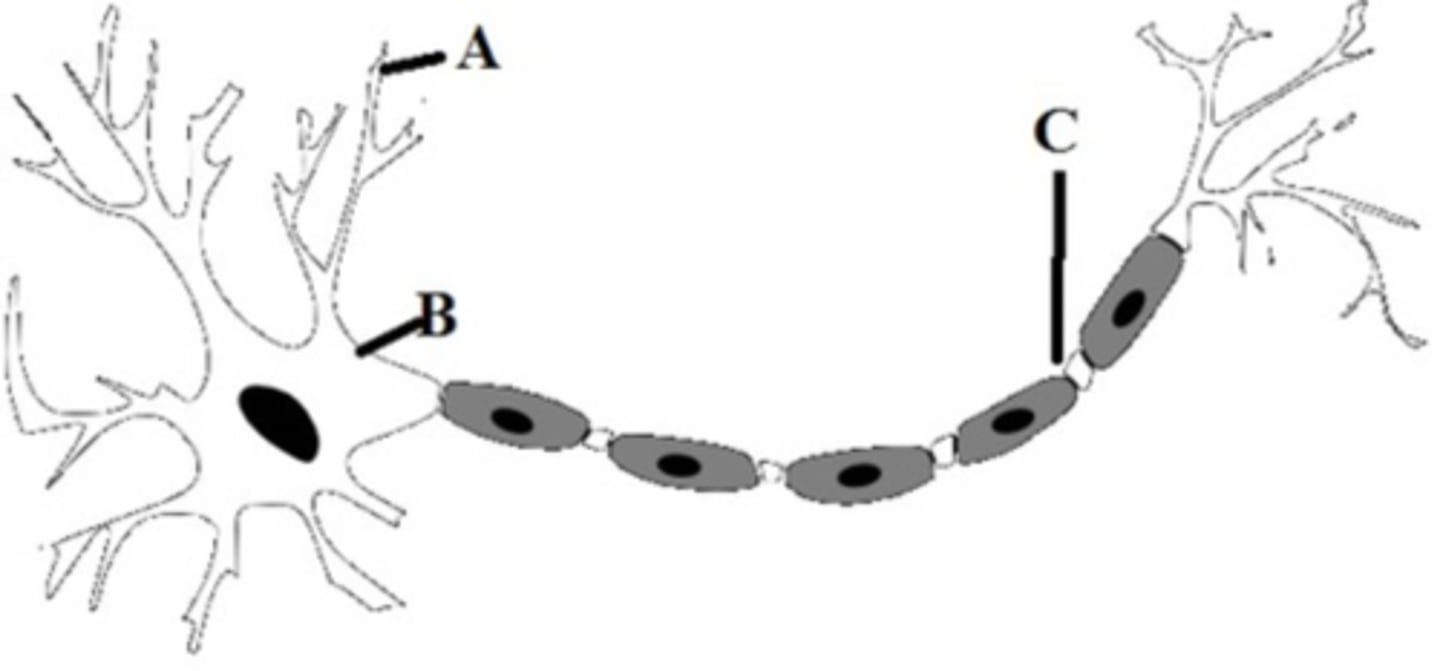
conduct nerve impulses toward the cell body to be processed - mainly from other neurons. these dendrites can be sparse or densely branched.
what is the function of the dendrites on a multipolar neuron?
cell body
label B
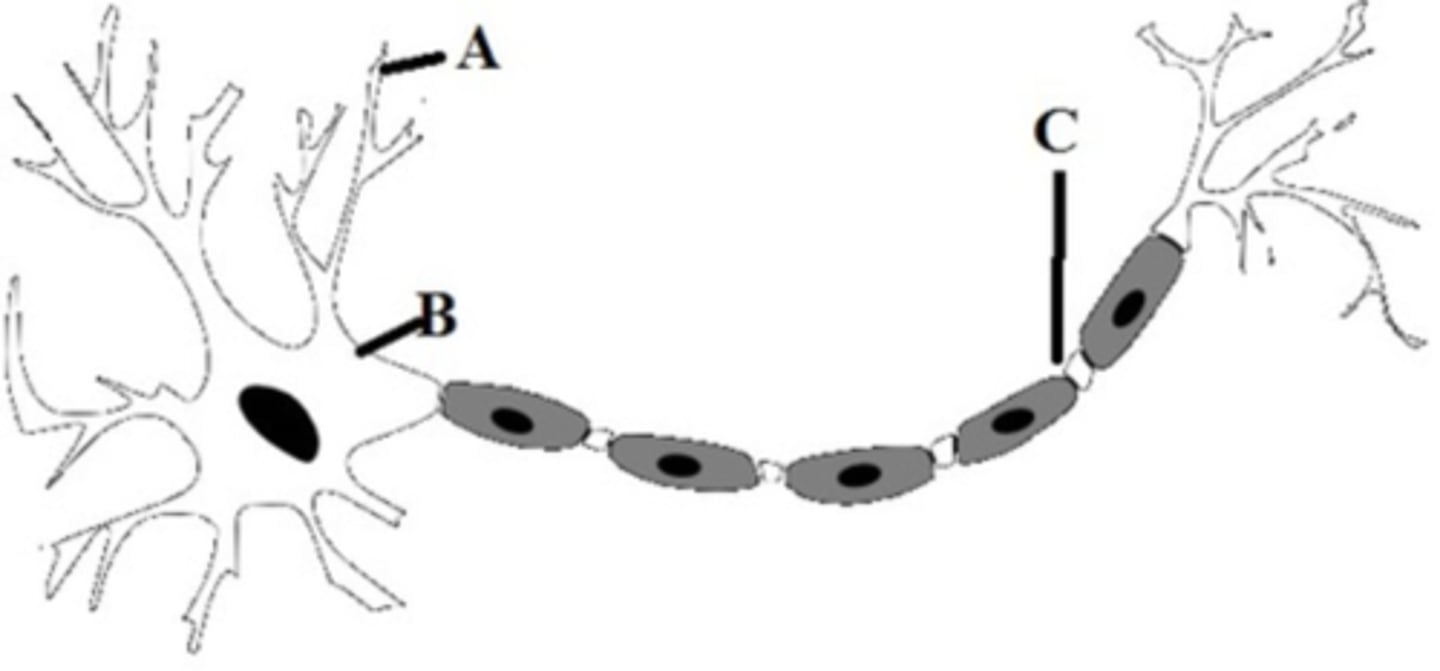
it is the neurons control center and it receives, integrates, and sends nerve impulses
what is the function of the cell body on a multipolar neuron?
axon
label C
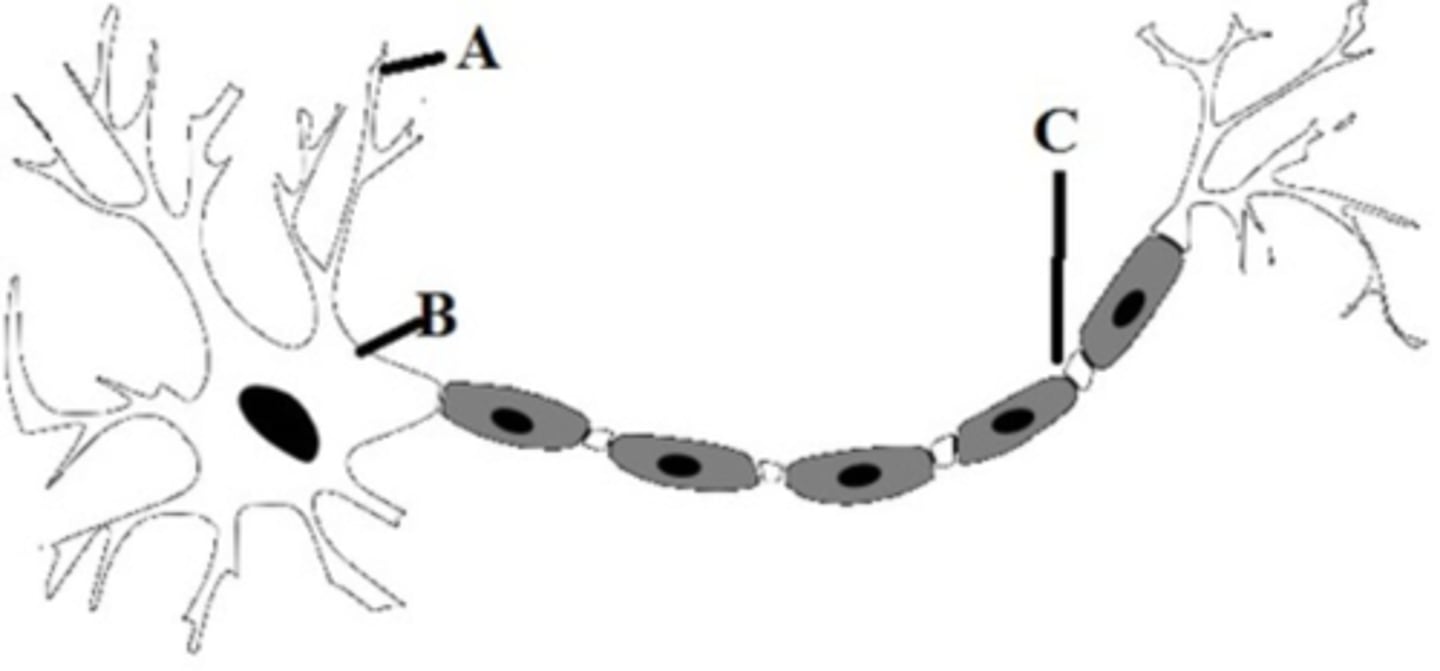
it transmits nerve impulses away from the cell body to other neurons, muscles, or glands
what is the function of the axon on a multipolar neuron?
white matter
label A
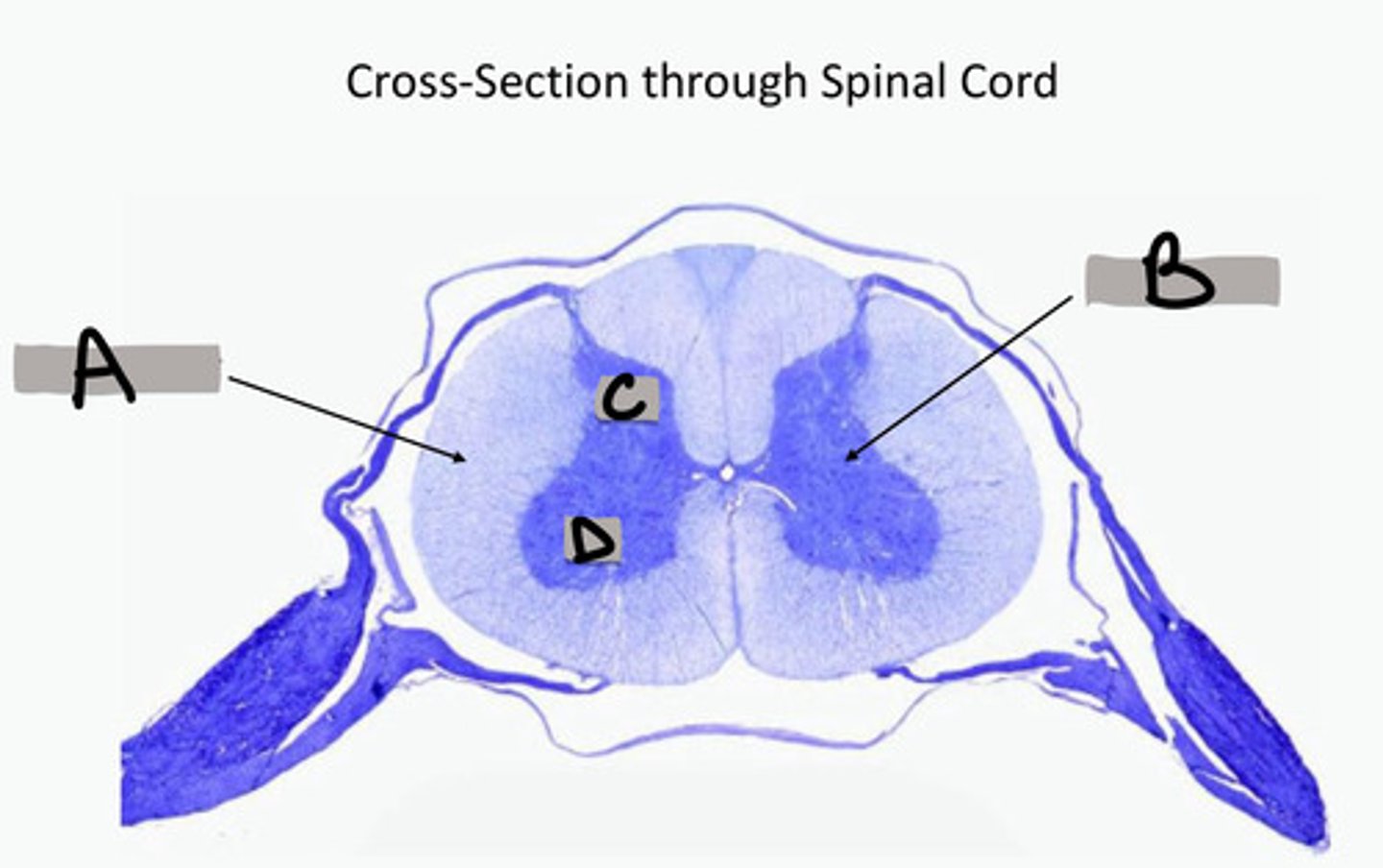
axons with white myelin around it
what does white matter mostly contain?
the myelin because it has a high fat/lipid content, which gives it that white appearance
what gives white matter of the brain its color?
gray matter
label B
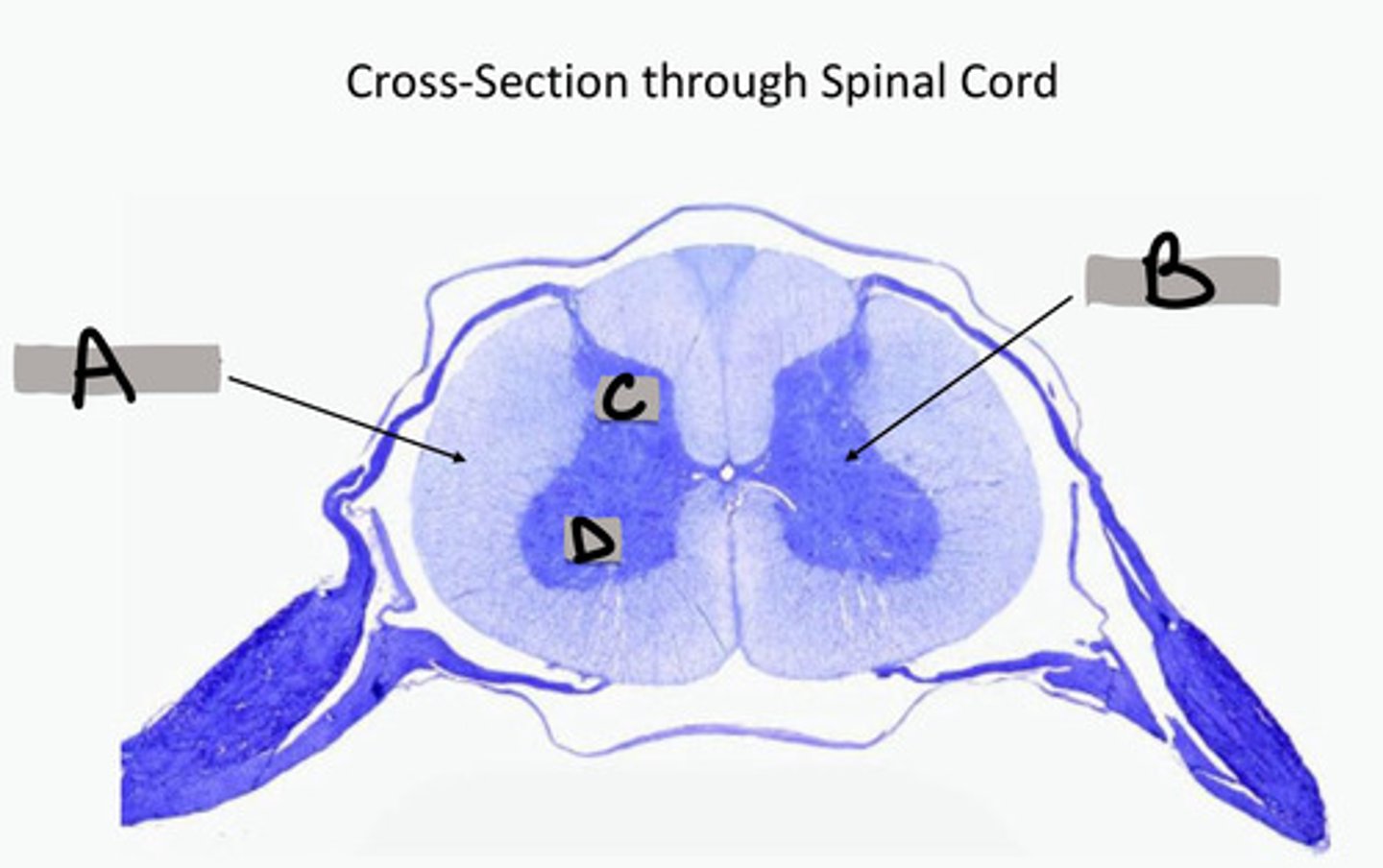
cell bodies of neurons
what does gray matter mostly contain?
dorsal horn
label C
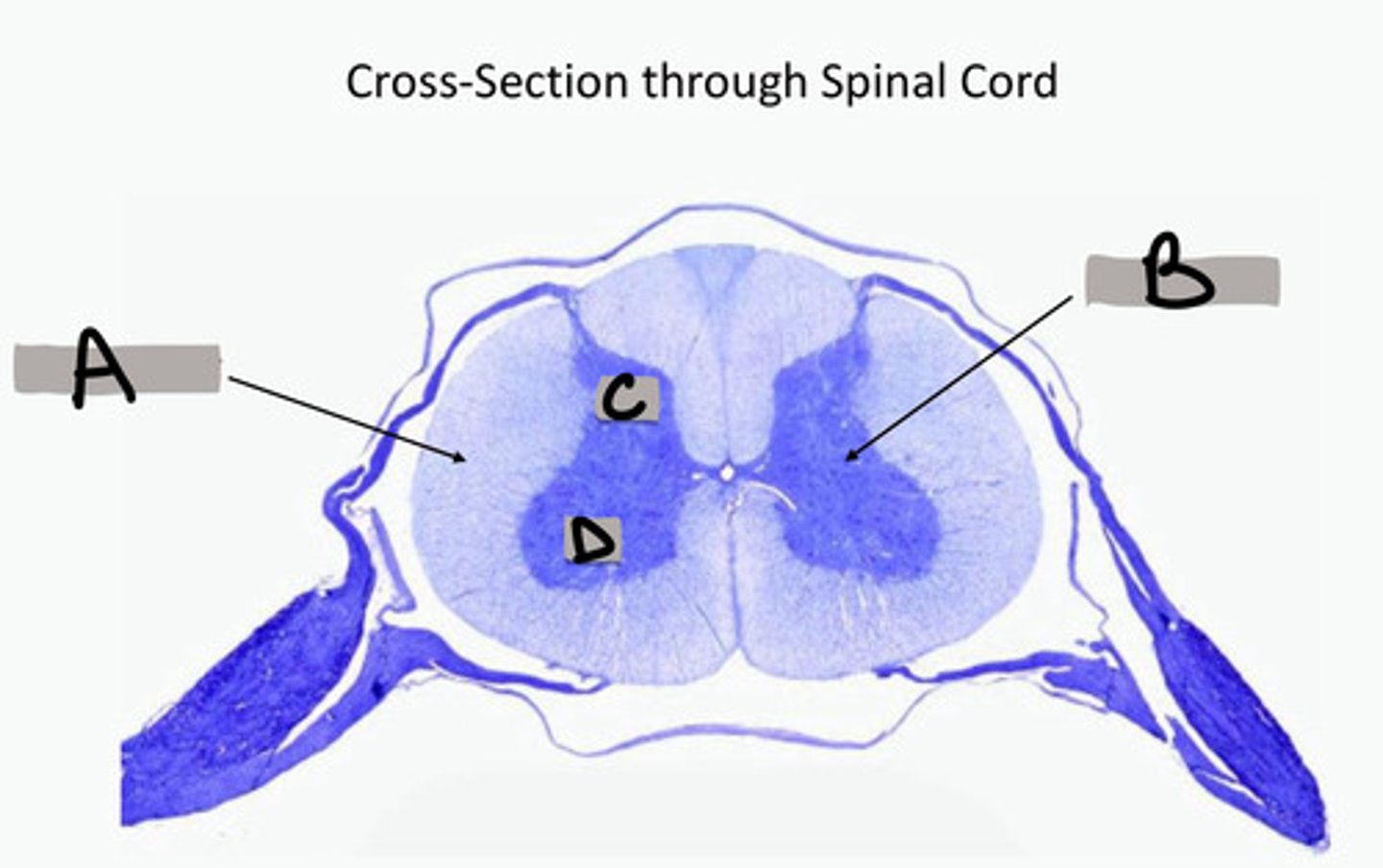
ventral horn
label D
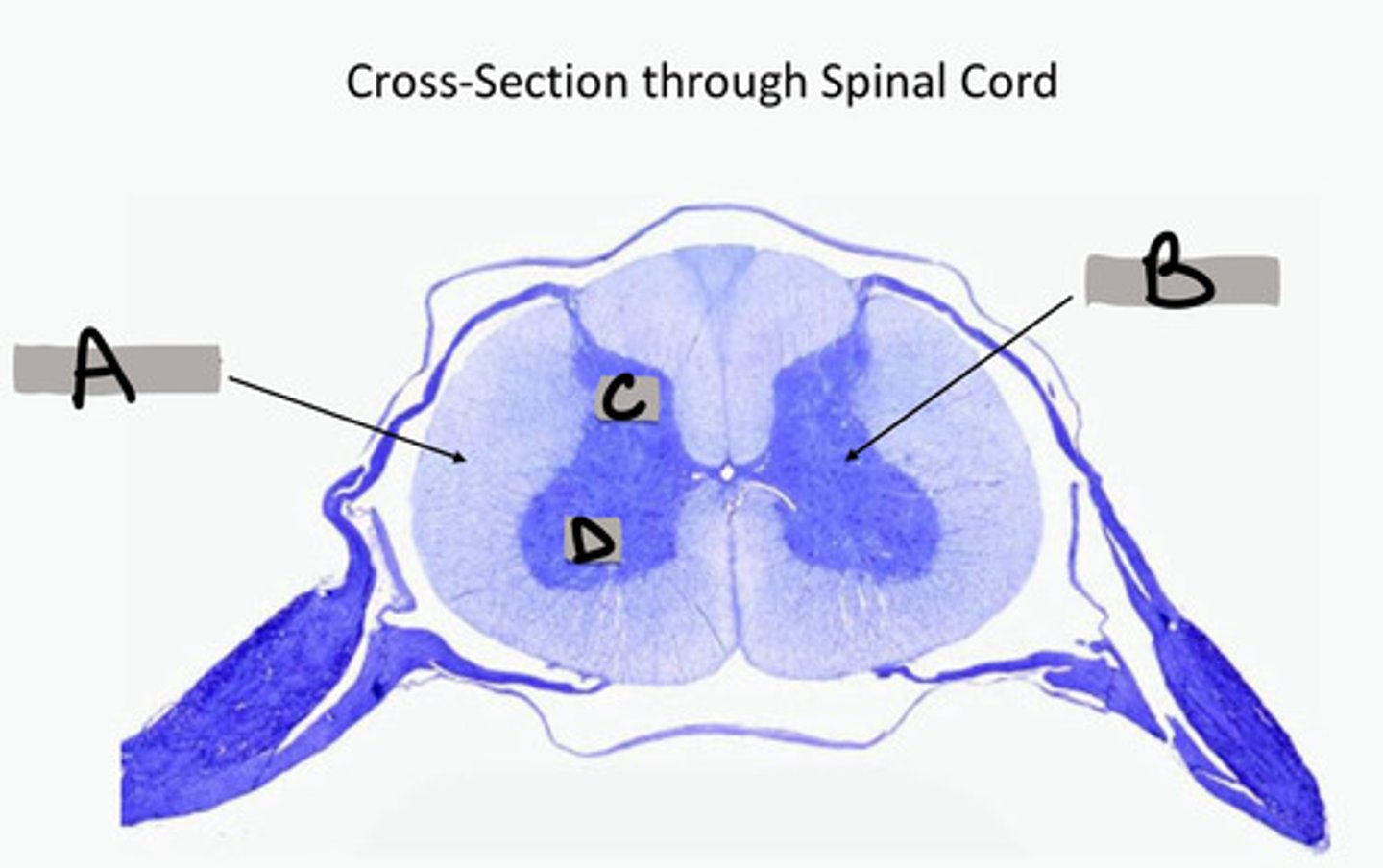
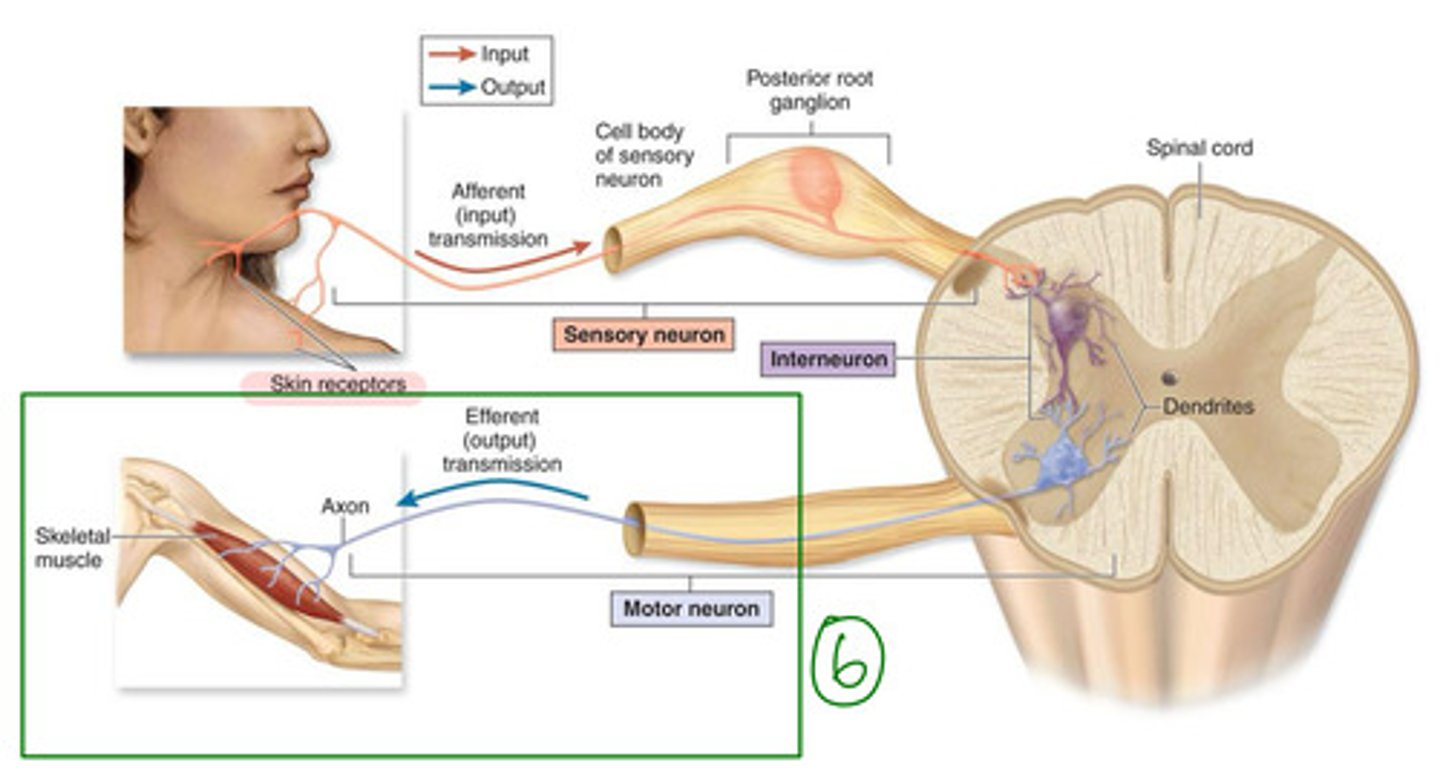
unipolar neurons in the skin pick up sensations via dendrites
what is step 1 of 6 in a basic spinal cord circuit?
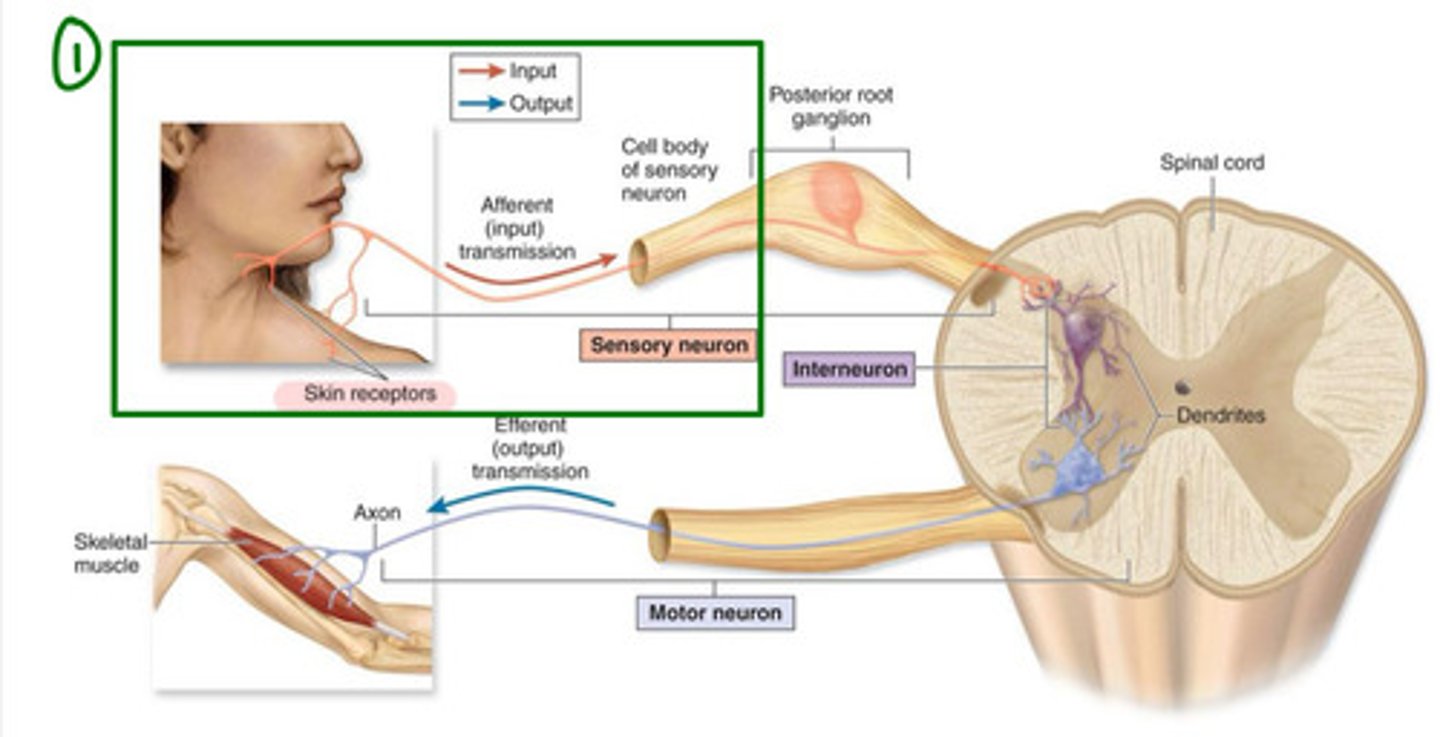
the sensory neurons axon carries the signal to the dorsal horn of the spinal cord
what is step 2 of 6 in a basic spinal cord circuit?
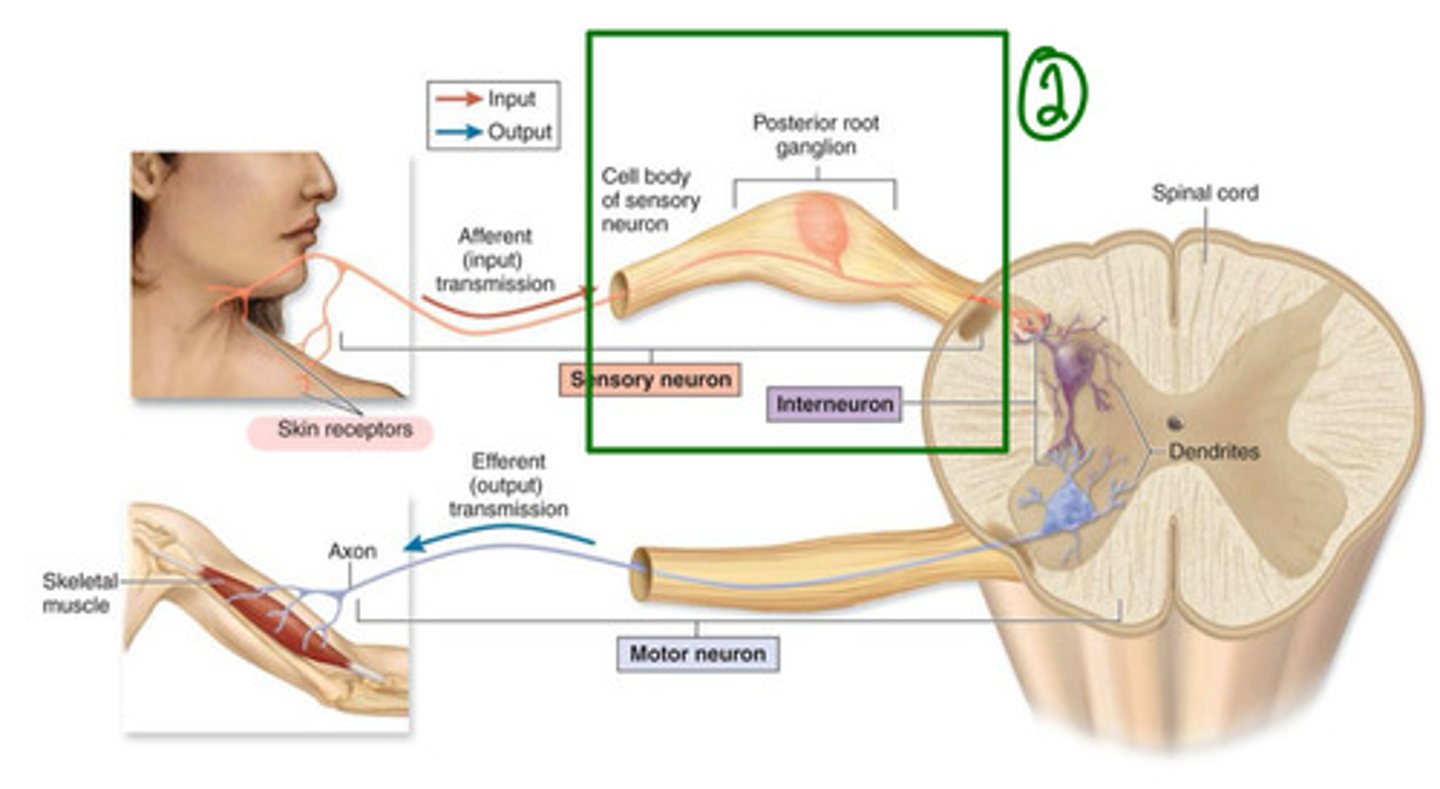
it is a bulge formed by a group of cell bodies.
ganglion - singular
ganglia - plural
what is a ganglion?
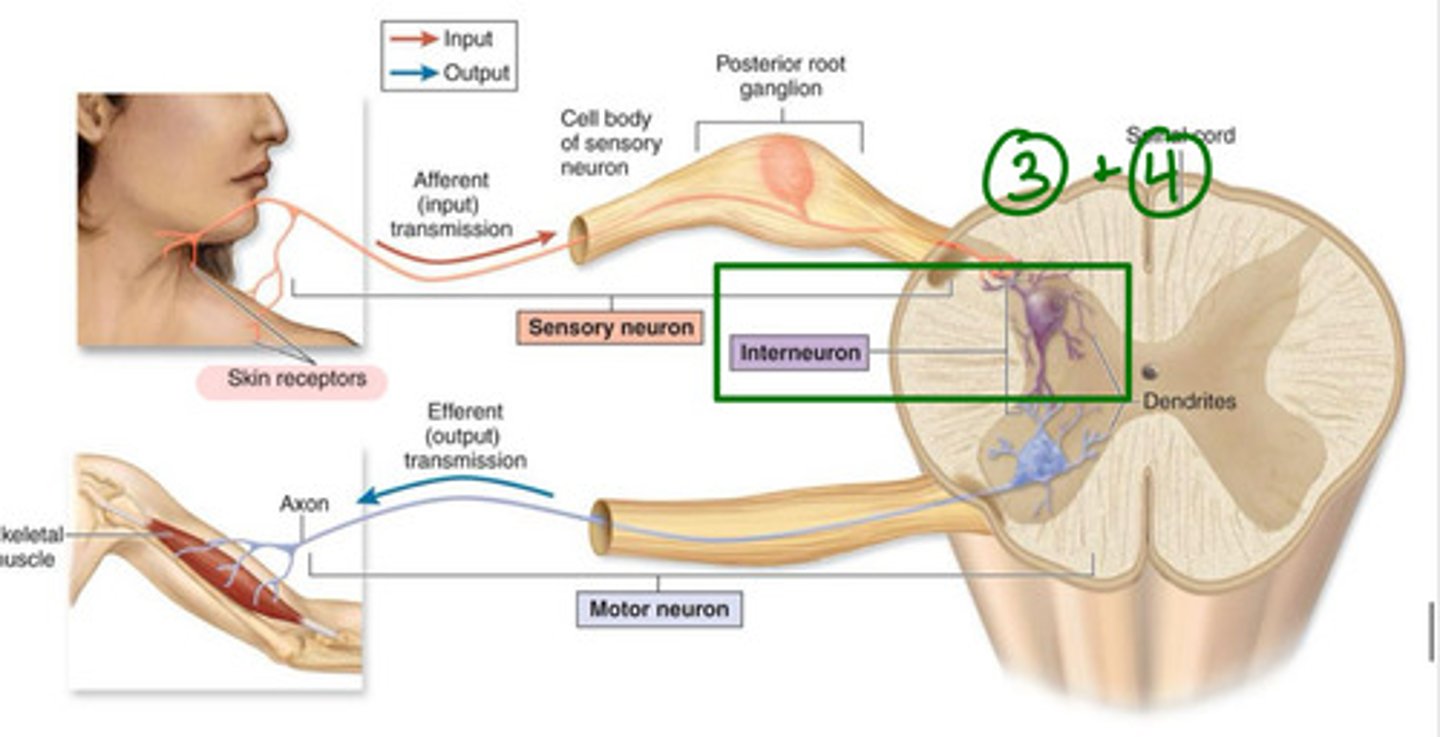
multipolar intraneurons in the dorsal horn receive and interpret the signal
what is step 3 of 6 in a basic spinal cord circuit?
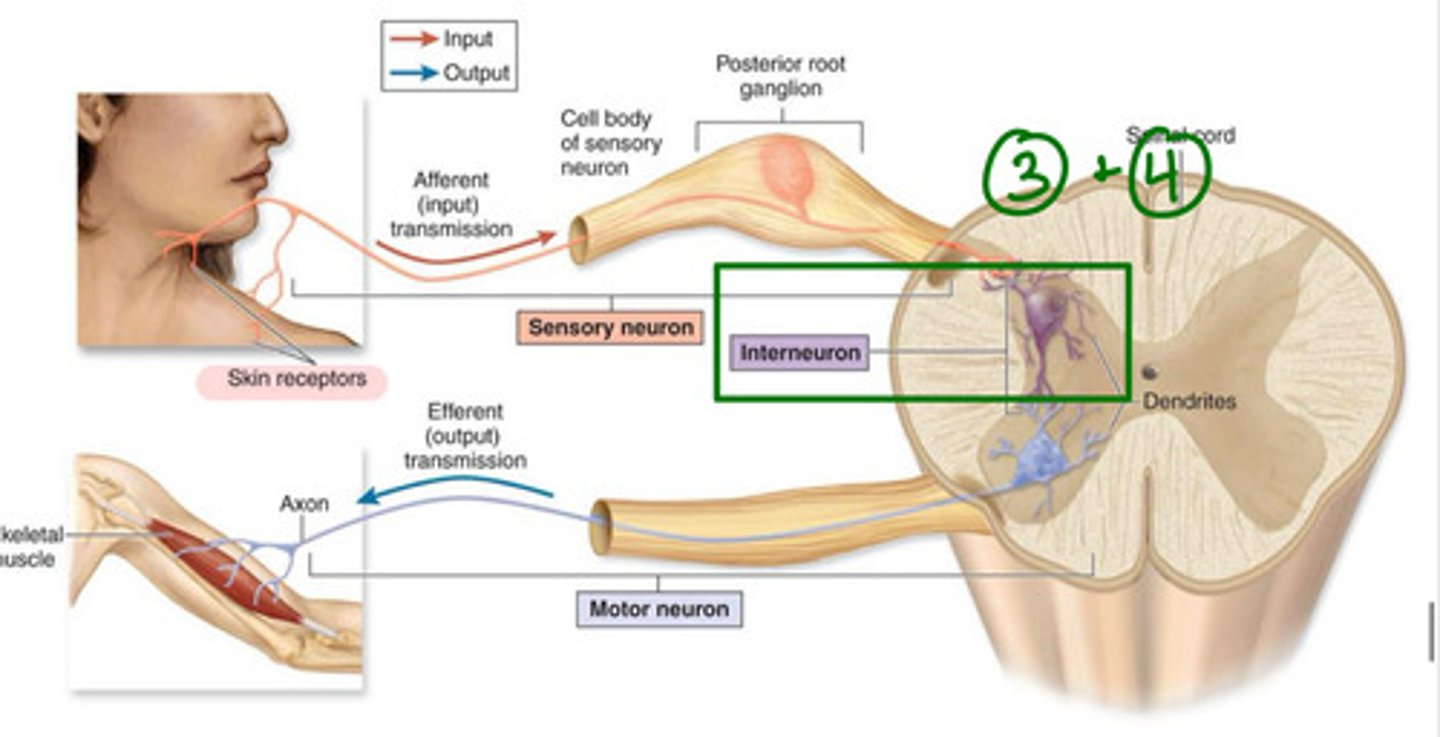
intraneurons decide on a response, they may send the signal to the brain or directly to motor neurons
what is step 4 of 6 in a basic spinal cord circuit?
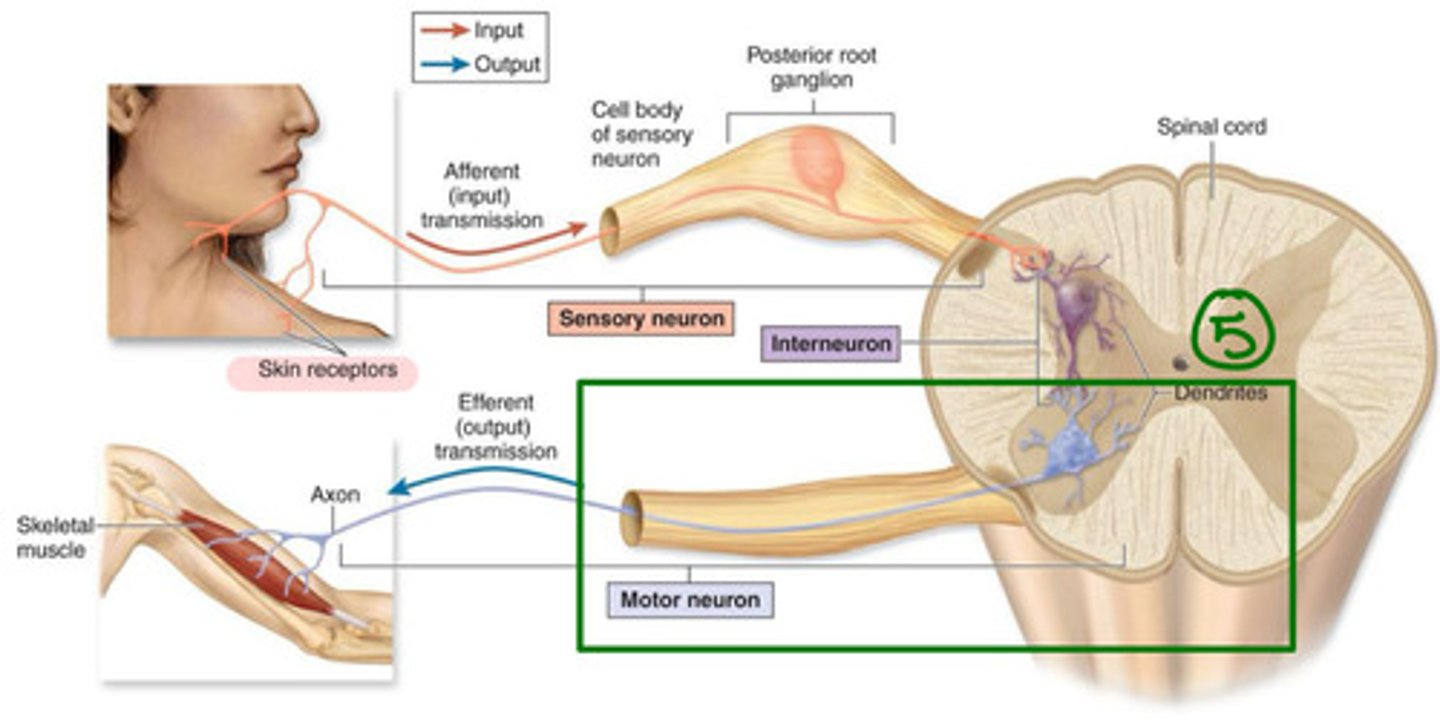
multipolar motor neurons in the ventral horn send signals to the body to activate muscles or glands
what is step 5 of 6 in a basic spinal cord circuit?
the body reacts, muscles contract or glands secrete based on the signal
what is step 6 of 6 in a basic spinal cord circuit?
within the CNS and PNS
where are glial cells found?
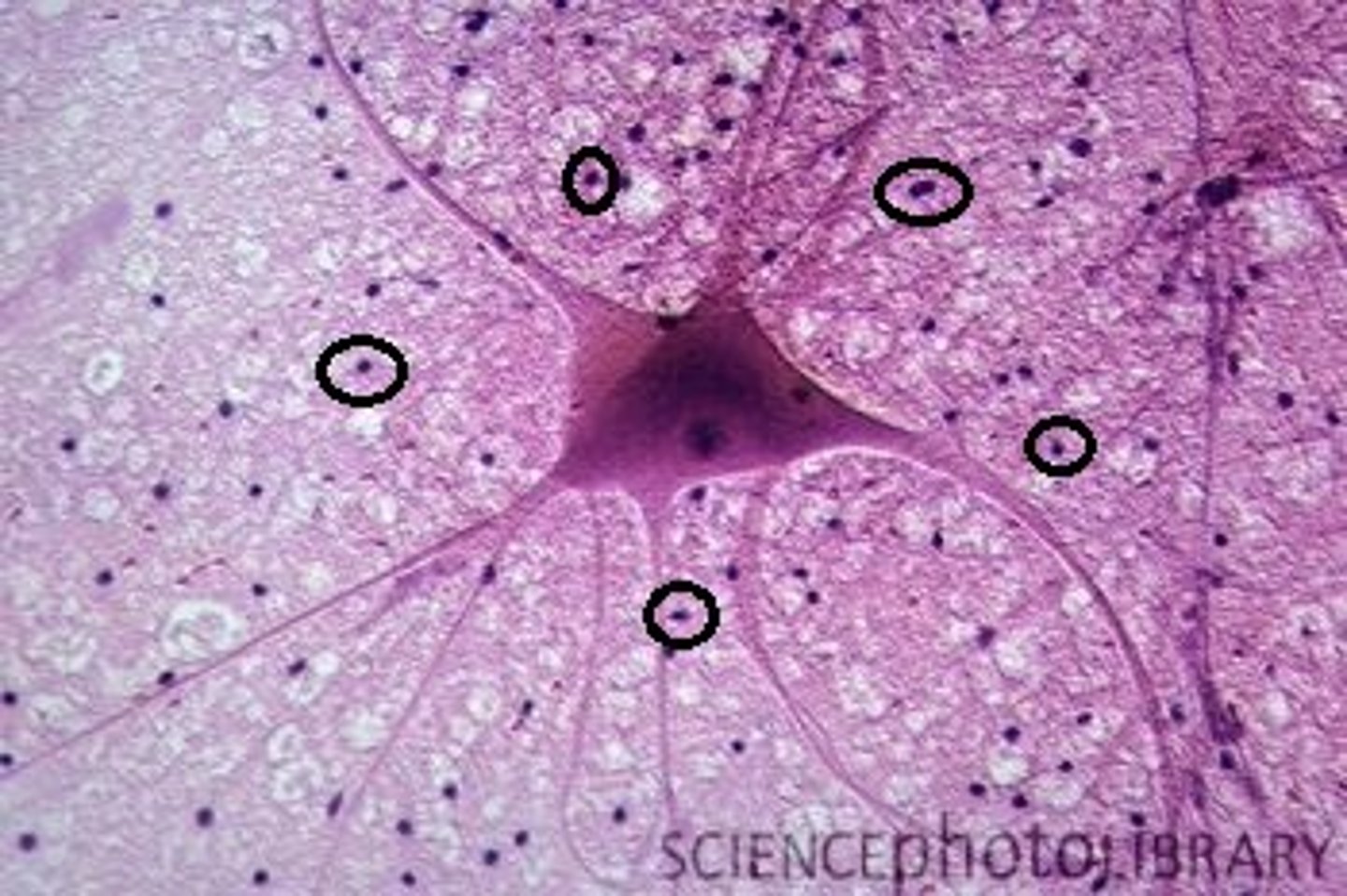
they are smaller and they have the ability to duplicate via mitosis
how do glial cells differ from neurons?
impulses
glial cells do not transmit ___________, but they assist neurons with their functions
protect ; framework
collectively, glial cells physically _________ and help nourish neurons. plus, they provide an organized and supportive ____________ for all the nervous tissue
glial cells far outnumber neurons and account for roughly half the volume of the nervous system
in the nervous system, are glial cells or neurons more abundant?
6 in total, 4 a of which are in the CNS and 2 are in the PNS
how many types of glial cells is there in total and where are they found.
1. astrocyte
2. ependymal cells
3. microglial cell
4. oligodendrocyte
what are the 4 types of glial cells found in the CNS?
1. satellite cells
2. neurolemmocytes (Schwann cell)
what are the 2 types of glial cells found in the PNS?
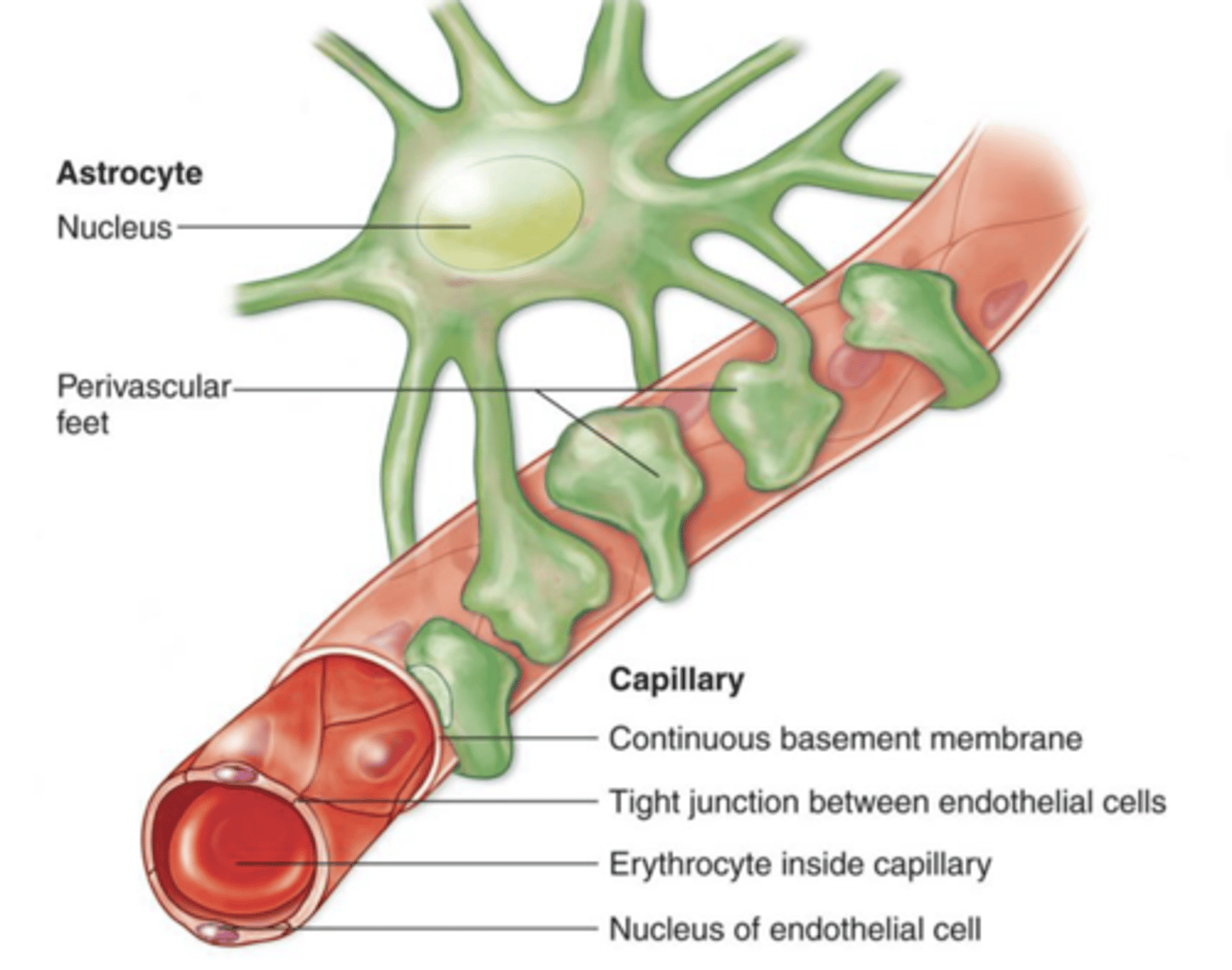
their processes touch both capillaries and neurons (star shape) to form the structural framework of CNS and fill space leftover by neurons when they die. they also form the blood-brain barrier.
what is the function of astrocytes?
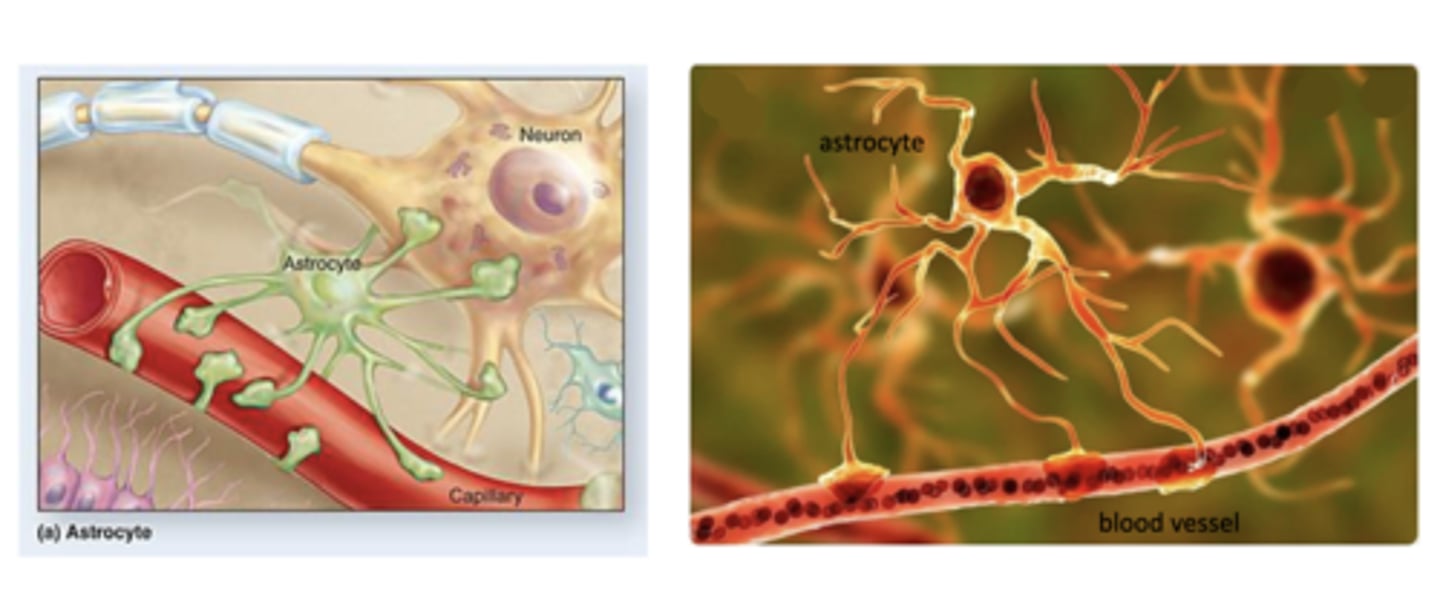
it controls substances that can leave capillaries and enter the fluid surrounding neurons, which protects tissue of the CNS from toxins while letting nutrients pass through
describe the function of the blood-brain barrier, as formed by astrocytes
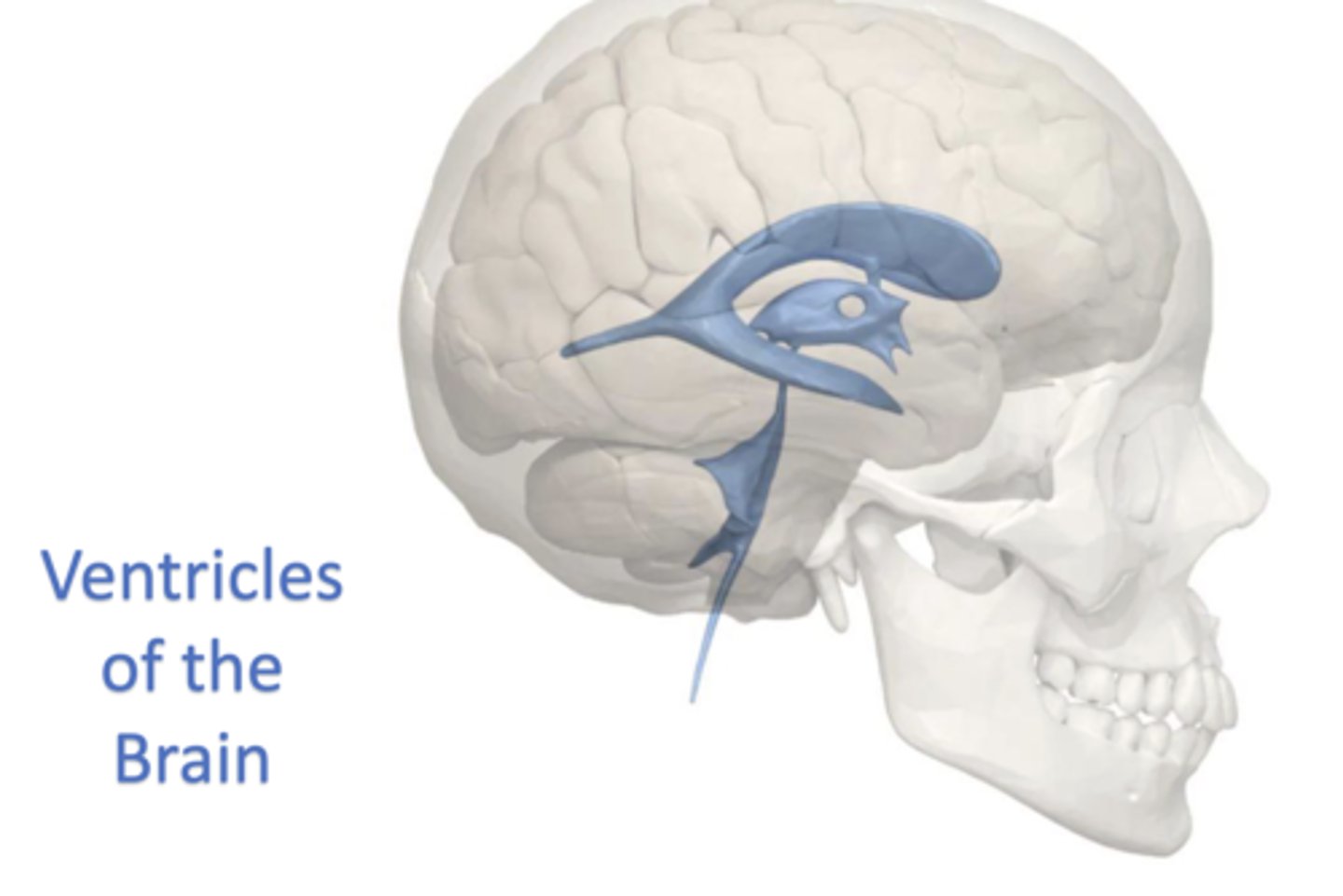
ventricles are cavities within the brain containing cerebrospinal fluid that helps to nourish the brain from within
what are ventricles?
1. continuous basement membrane that the endothelia rest on
2. tight junctions between the simple squamous cells
3. perivascular feet of the astrocytes
what are the 3 specializations of the blood-brain barrier?
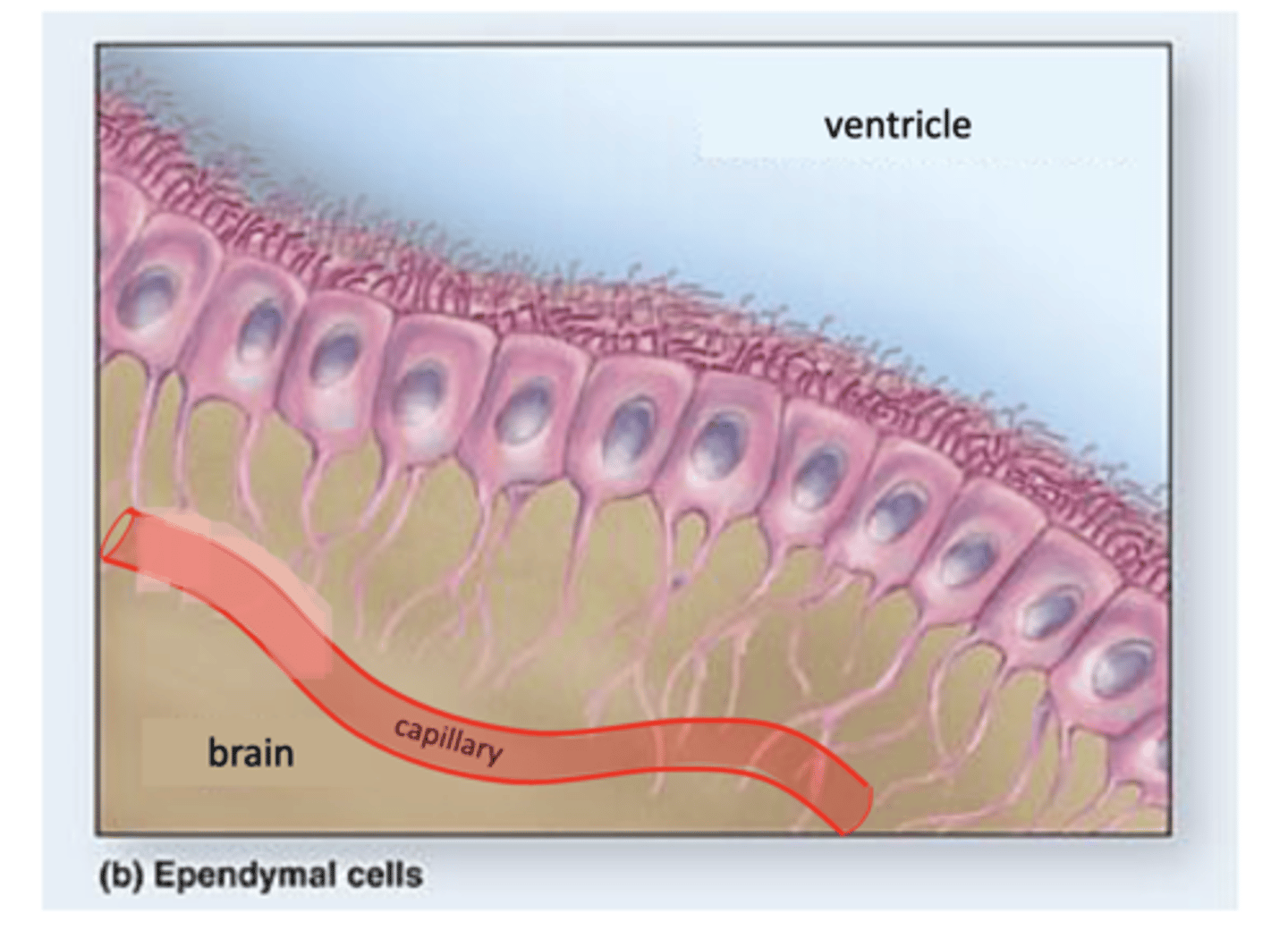
they are cuboidal cells that line the ventricles of the brain and the central canal of the spinal cord. they have cilia to move the cerebrospinal fluid they help produce
what is the function of the ependymal cells?
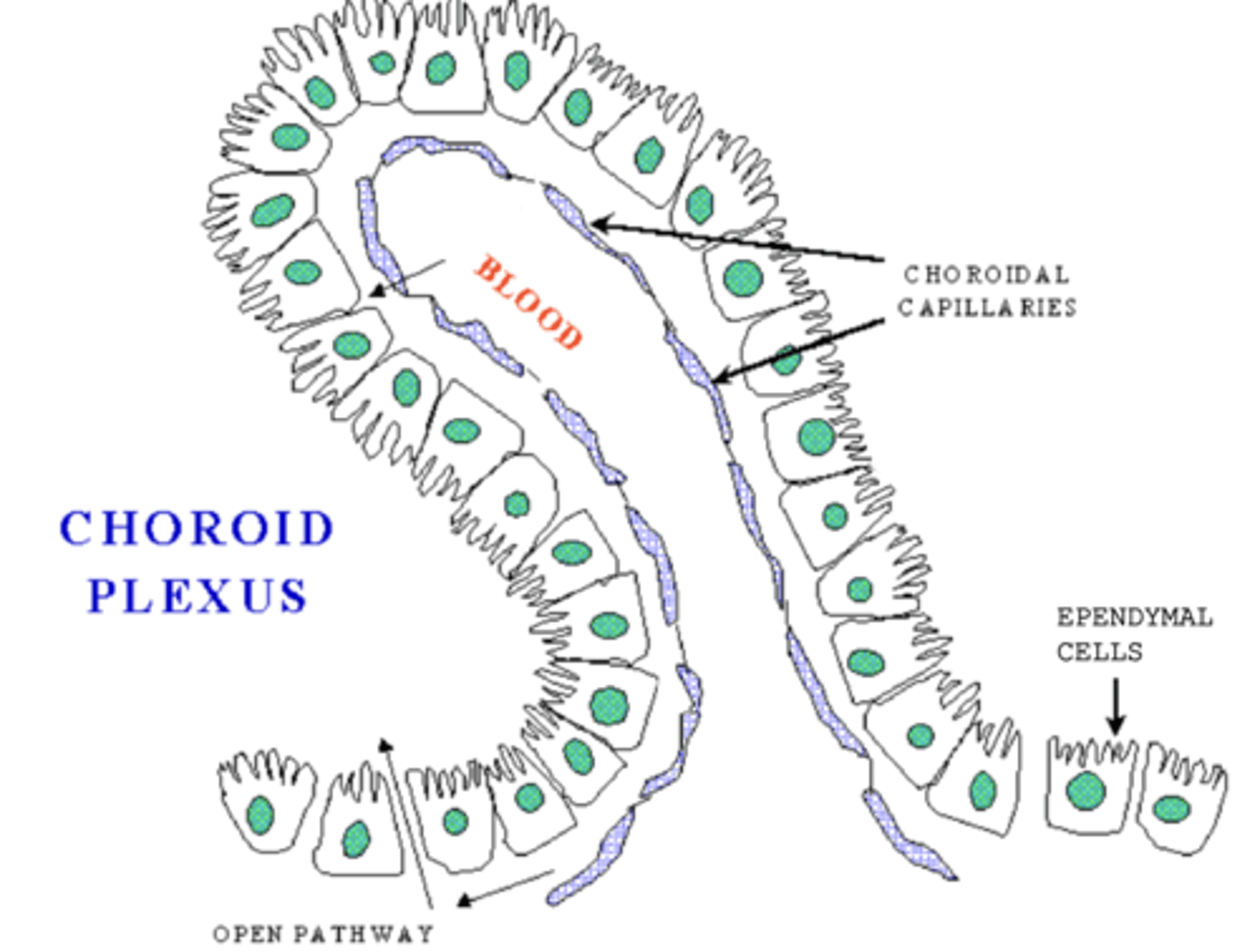
to produce cerebrospinal fluid from the blood
capillaries that project within ventricles are covered by ependymal cells to form choroid plexus, what is its function?
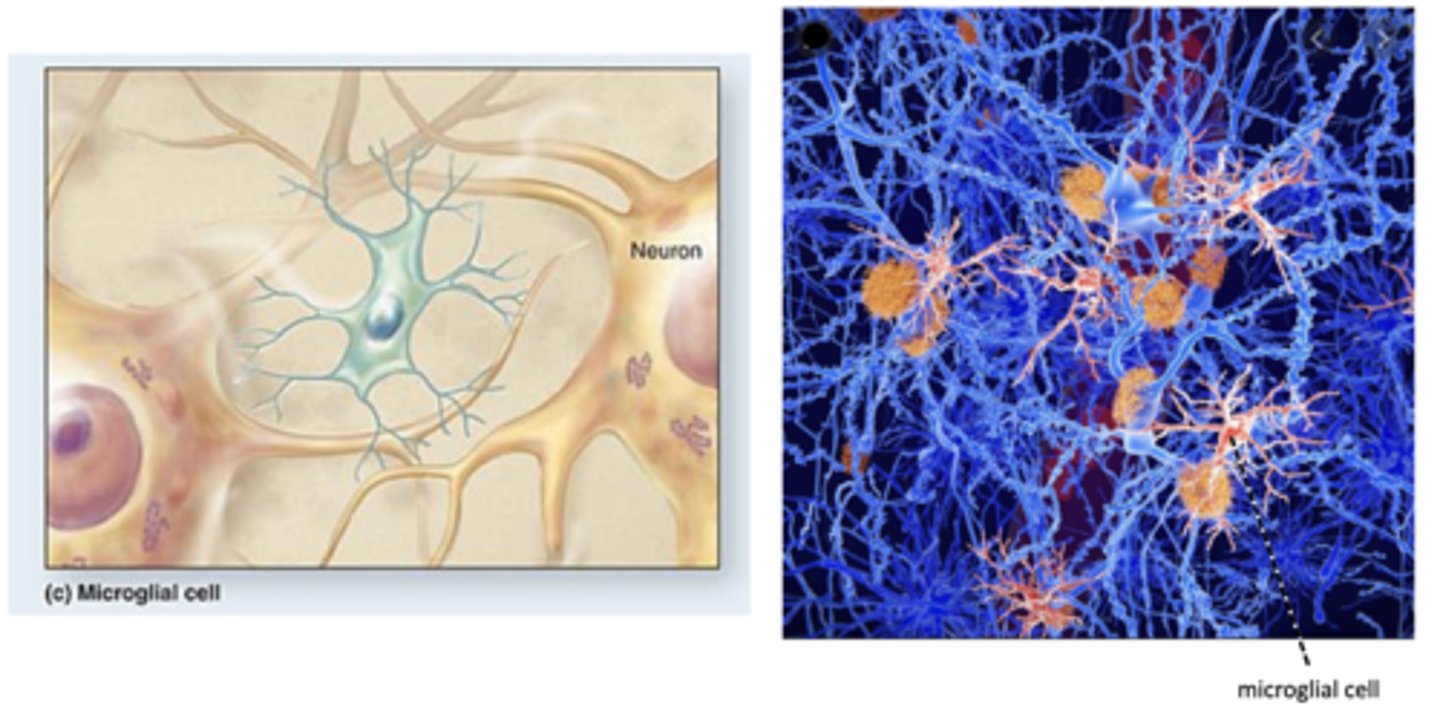
they perform phagocytic activity and remove debris from dead or damages neurons
what is the function of microglial cells? they are the smallest glial cells and have slender branches off their cell body.
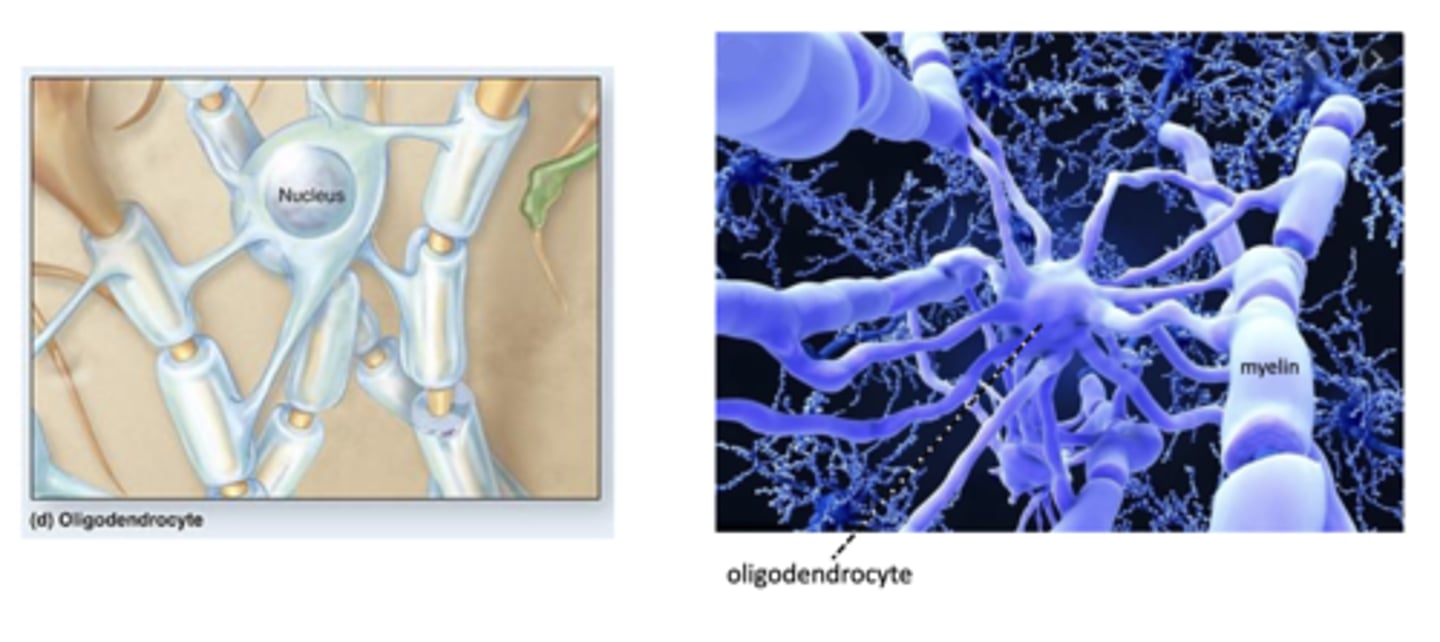
the process of oligodendrocytes attaches to nearby axons of neurons and wraps the cell membrane around them to form myelin in the CNS
what is the function of the oligodendrocyte? they are relatively large w/bulbous body and slender process
conduction velocity
myelin on neurons increases what?
reversal ; polarity ; sodium
an impulse traveling down an axon is the result of the __________ of __________ across the cell membrane. this is due mainly to __________ entering the neuron to make the inside positive relative to the outside.
the reversal of polarity would have to propagate along the entire length of the cell membrane, which is called continuous conduction
without myelin, how is the process of initiating an impulse be different?
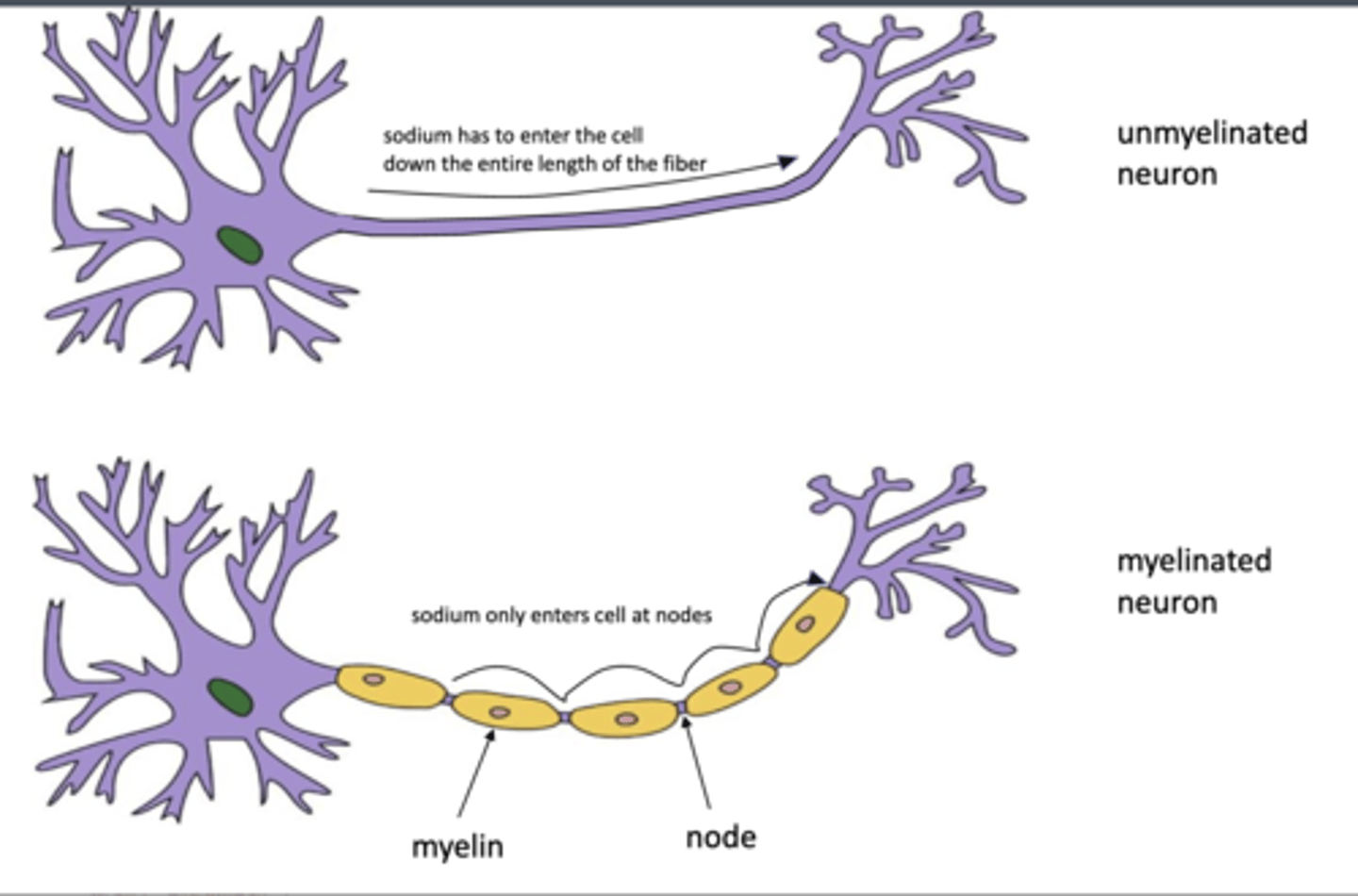
the reversal of polarity could skip from node to node, reducing the time it would take for the impulse to reach the end of the axon, which is called stationary conduction
with myelin, how is the process of initiating an impulse be different?
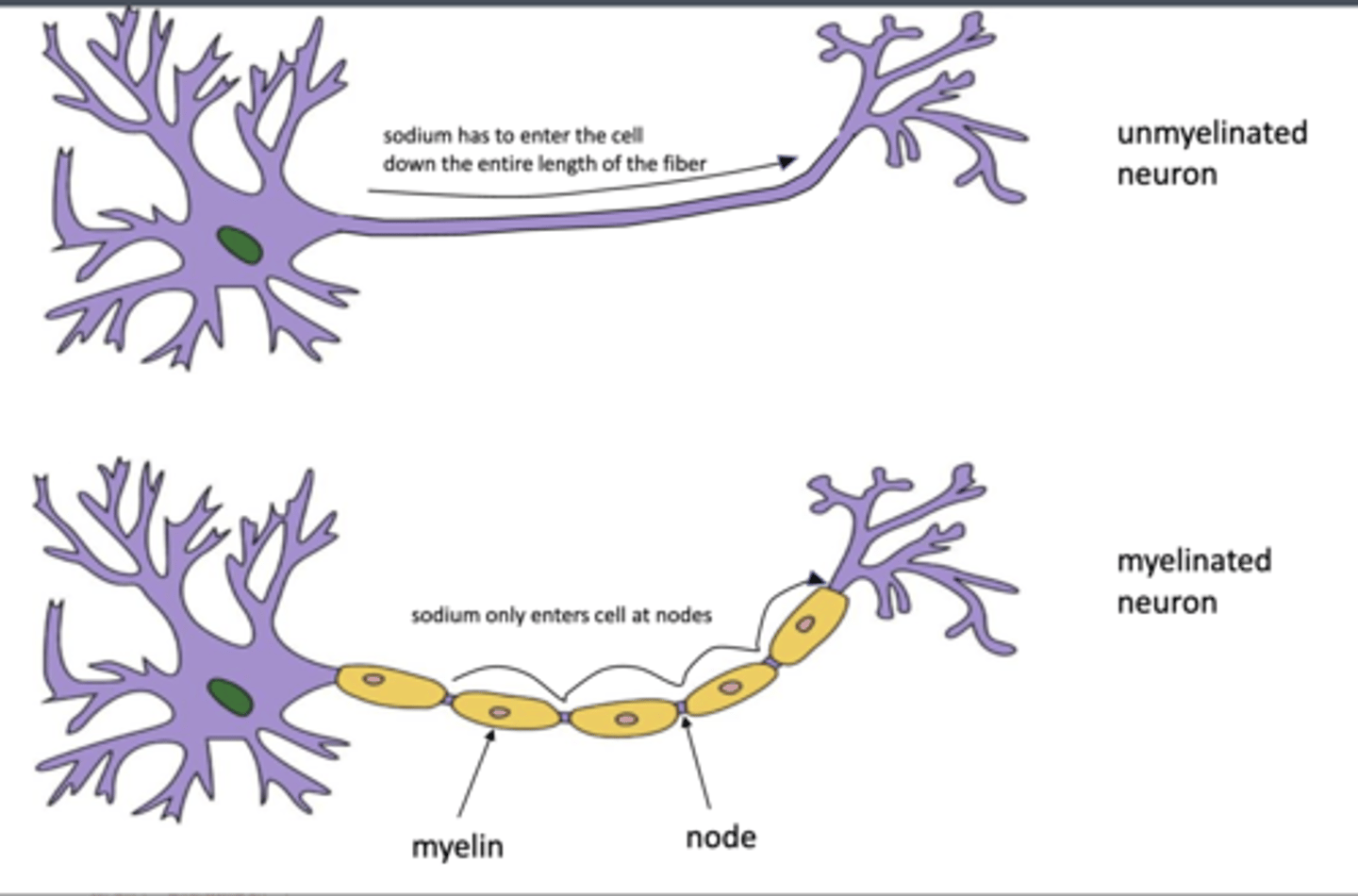
continuous conduction - unmyelinated
stationary conduction - myelinated
for continuous and stationary conduction, which types of neurons do they occur in?
they regulate the delivery of nutrients and removal of waste products from neurons in PNS
what is the function of satellite cells? they are flattened cells around neuronal cell bodies of ganglia.
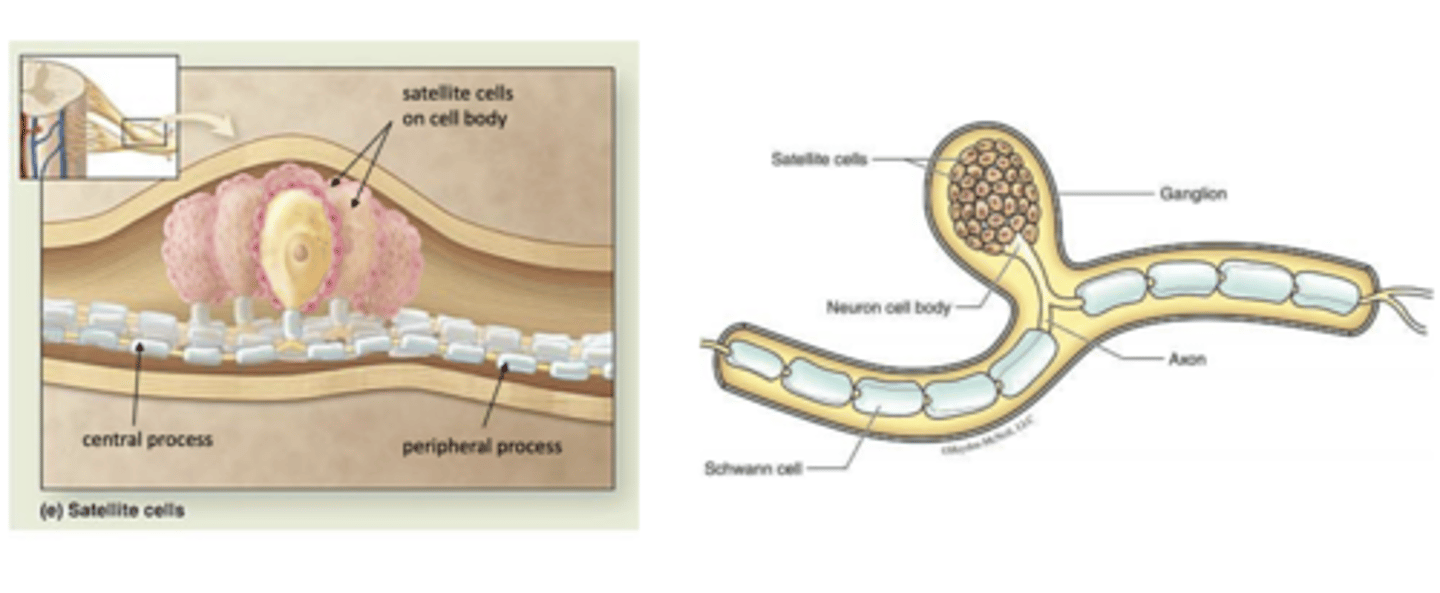
- axons of multinucleated cells
- peripheral and central processes of unipolar cells of peripheral nerves
what are neurolemocytes (Schwann cells) associated with?
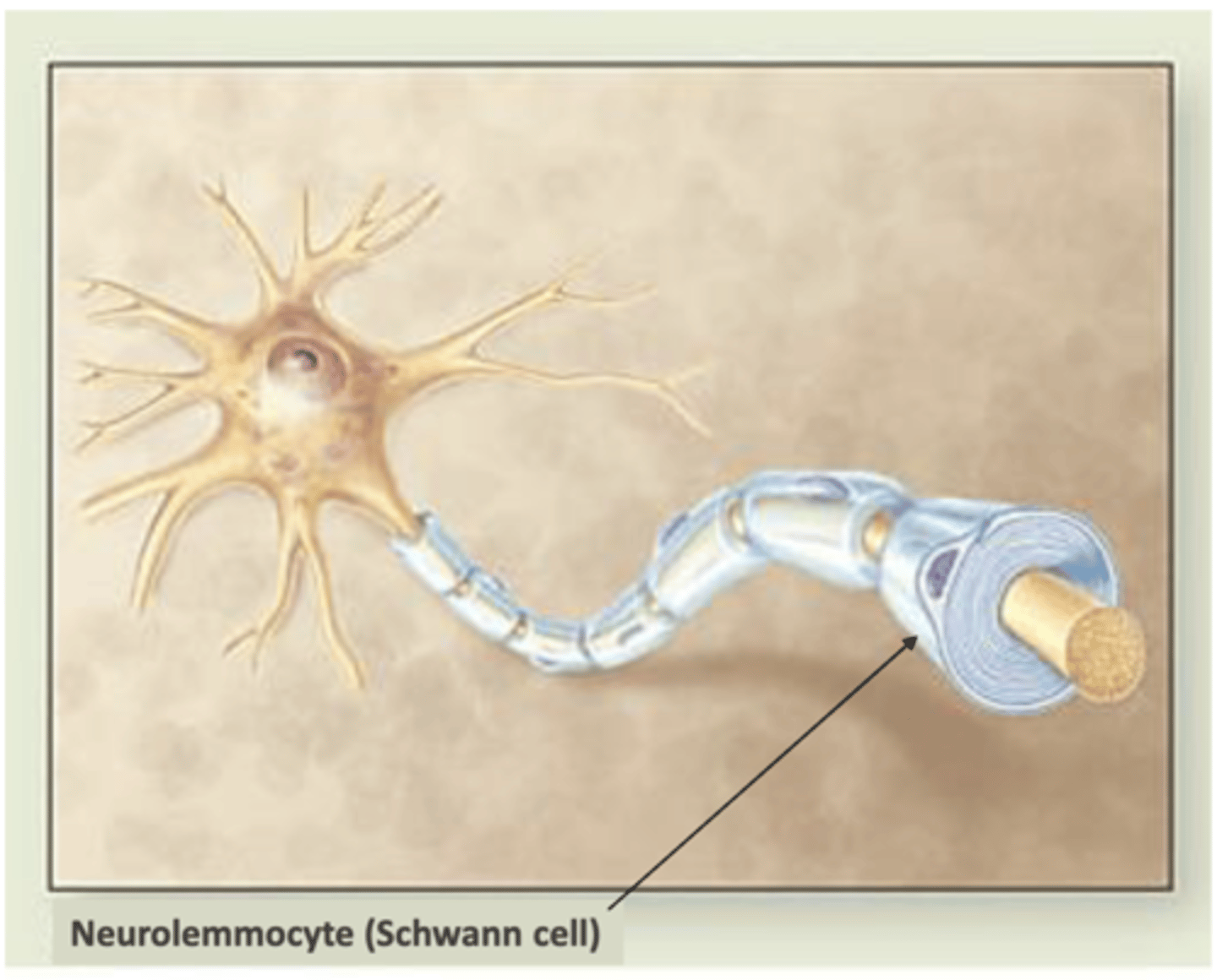
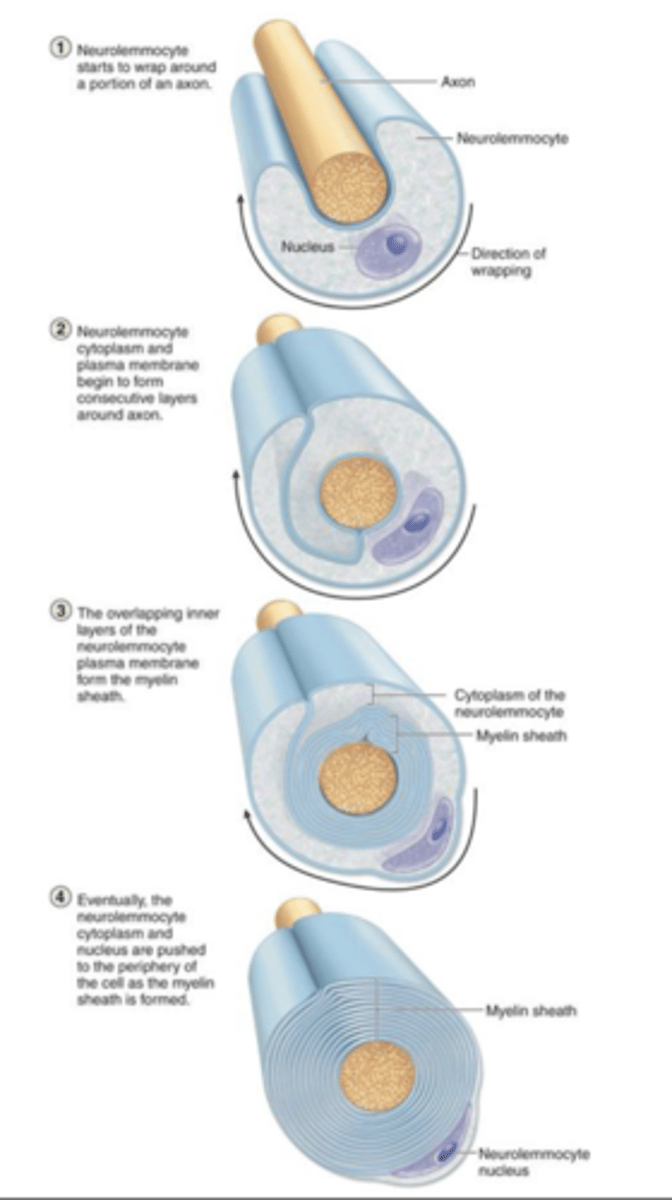
myelinating central and peripheral processes of unipolar cells of PNS
what is the function of neurolemocyte (Schwann cell)?
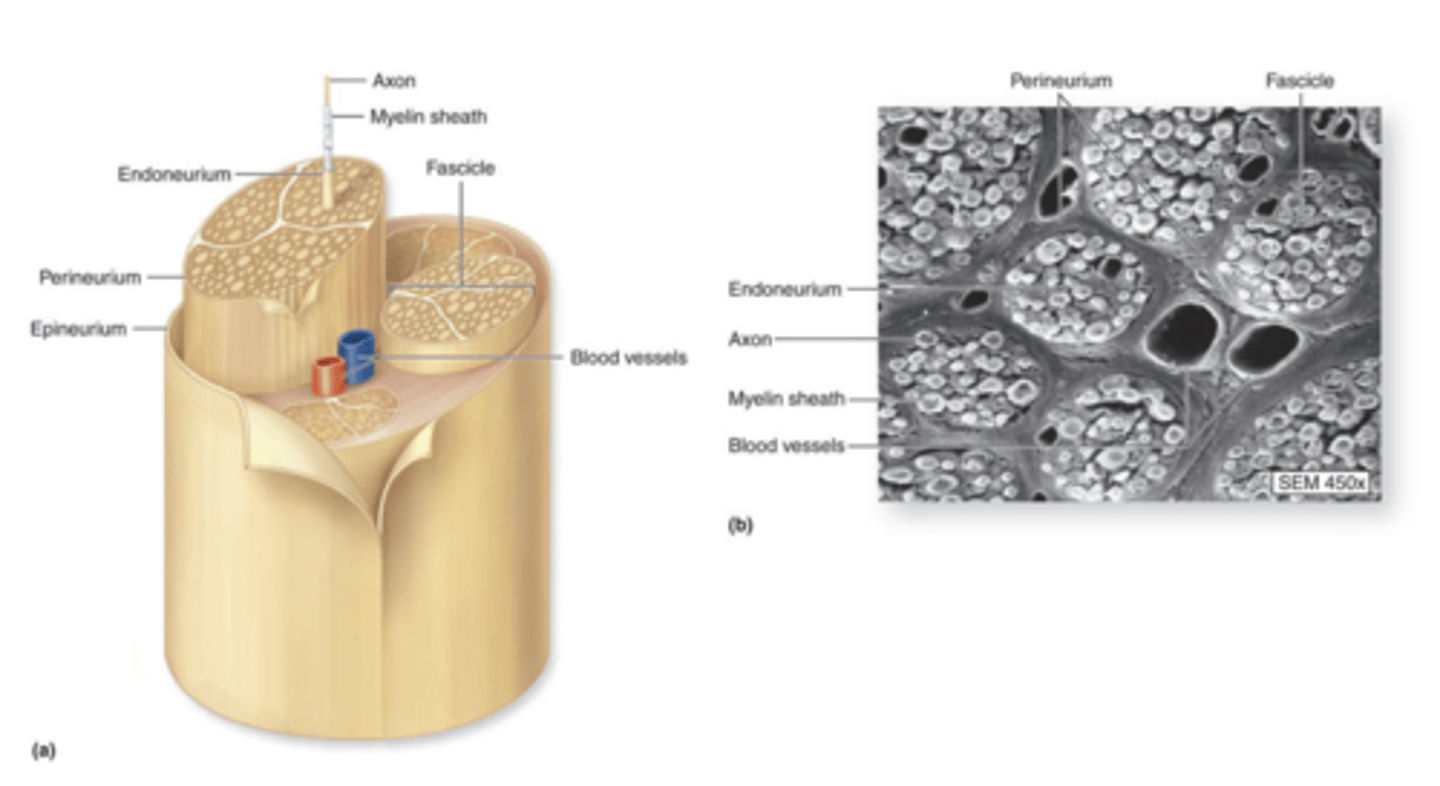
the CT surrounding peripheral nerve processes (axons, peripheral processes, and central processes) and myelin
what is the endoneurium in a peripheral nerve?
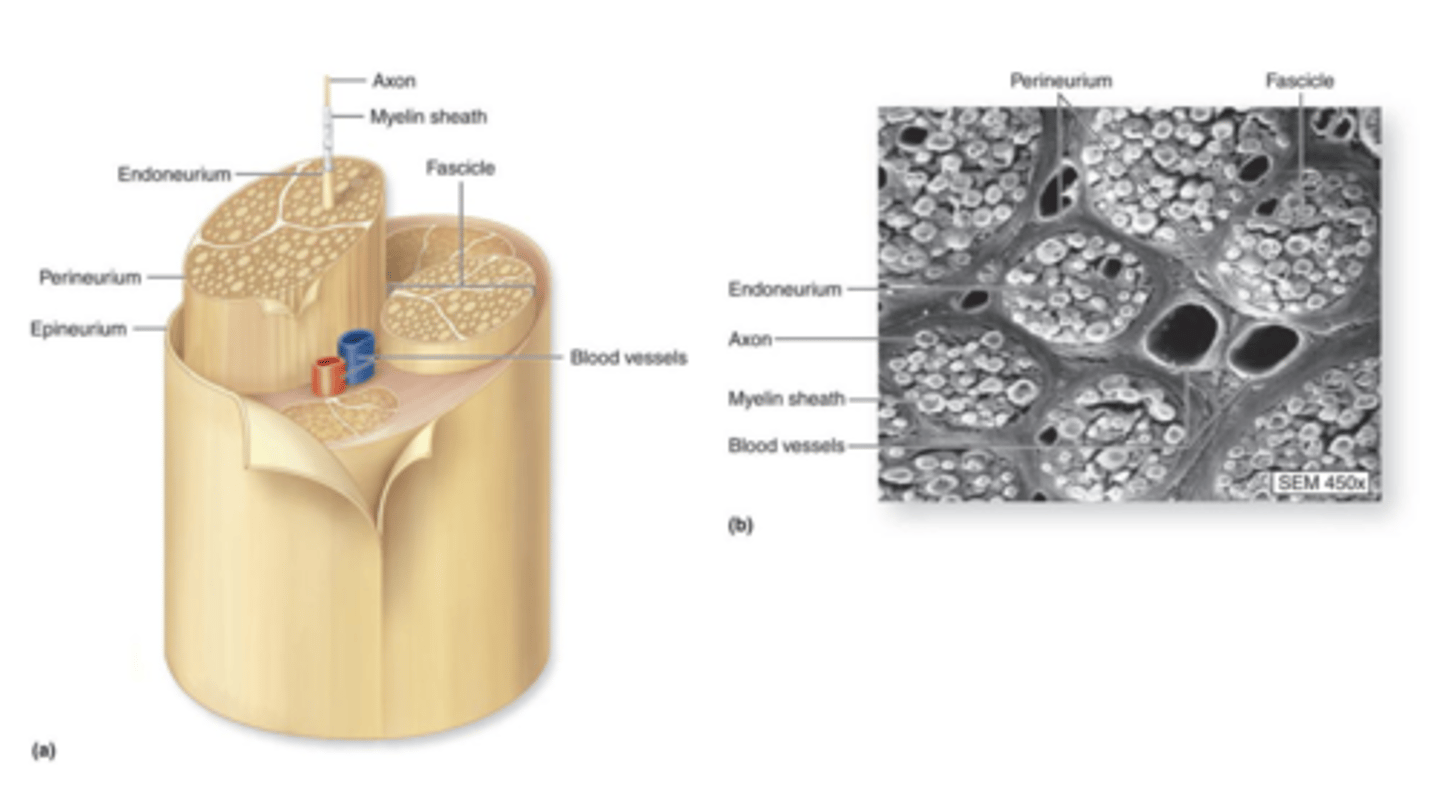
the CT surrounding a bundle of axons
what is the perineurium in a peripheral nerve?
the CT surrounding a peripheral nerve
what is the epineurium in a peripheral nerve?
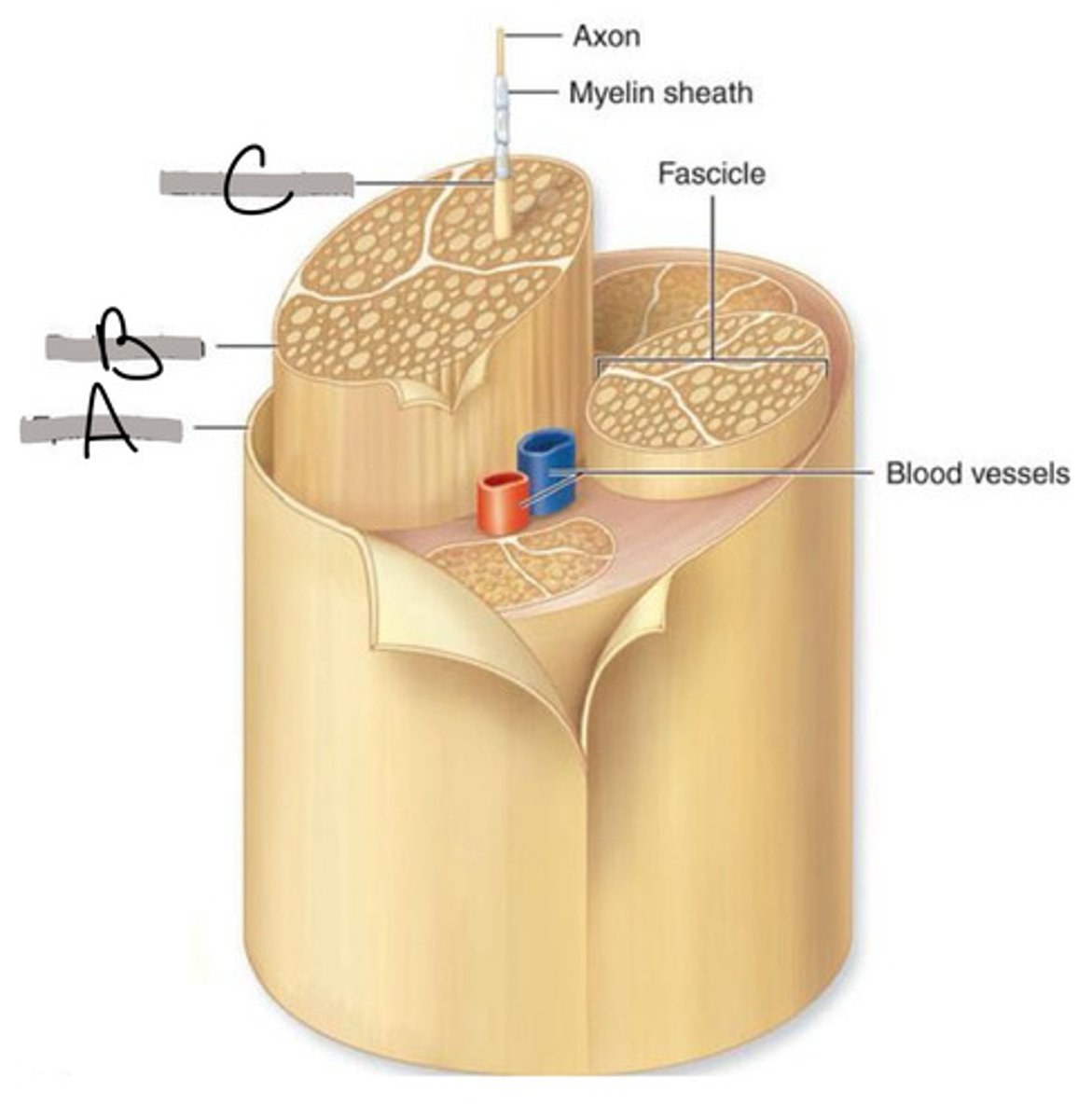
epineurium
label A
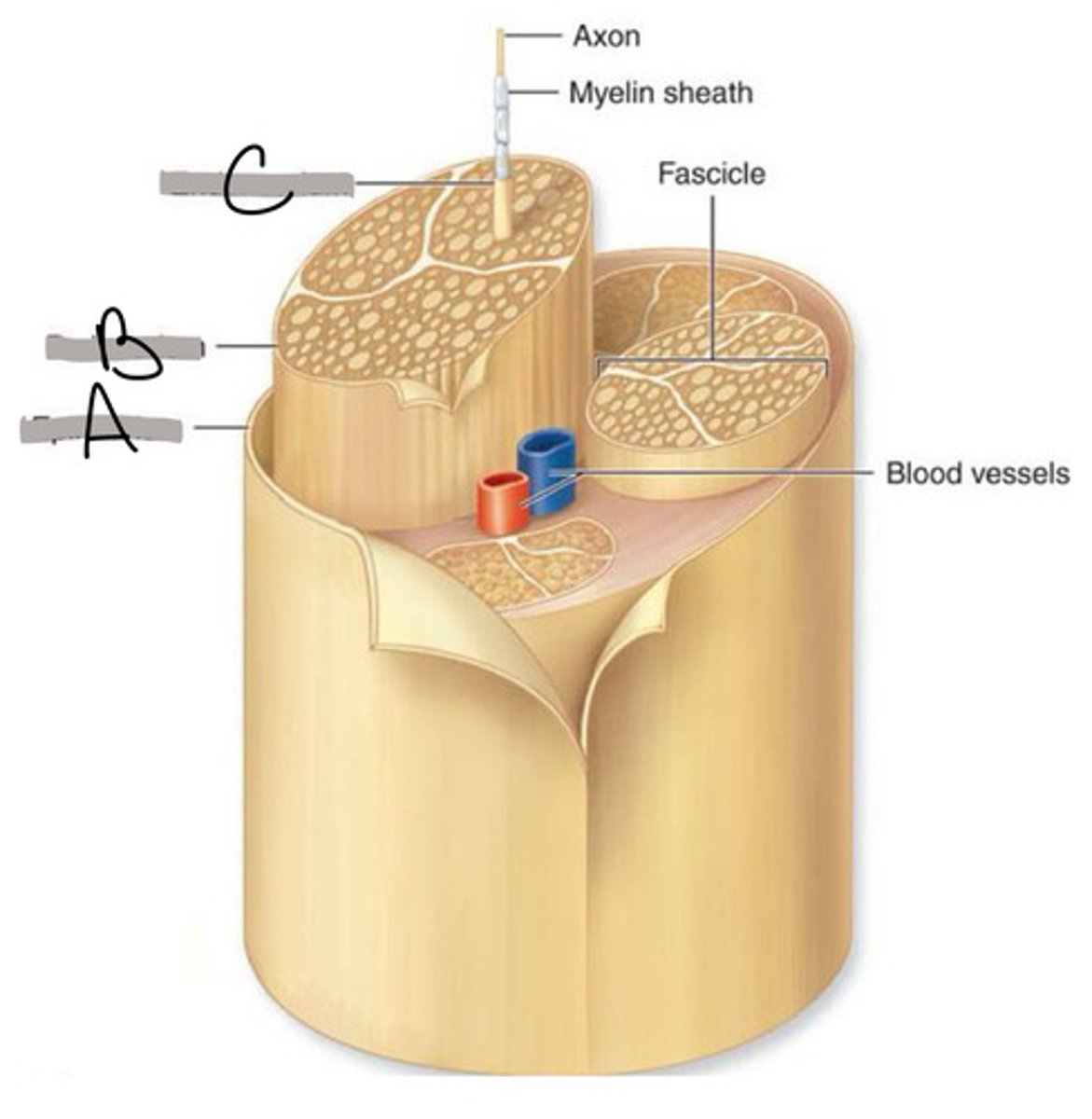
perineurium
label B
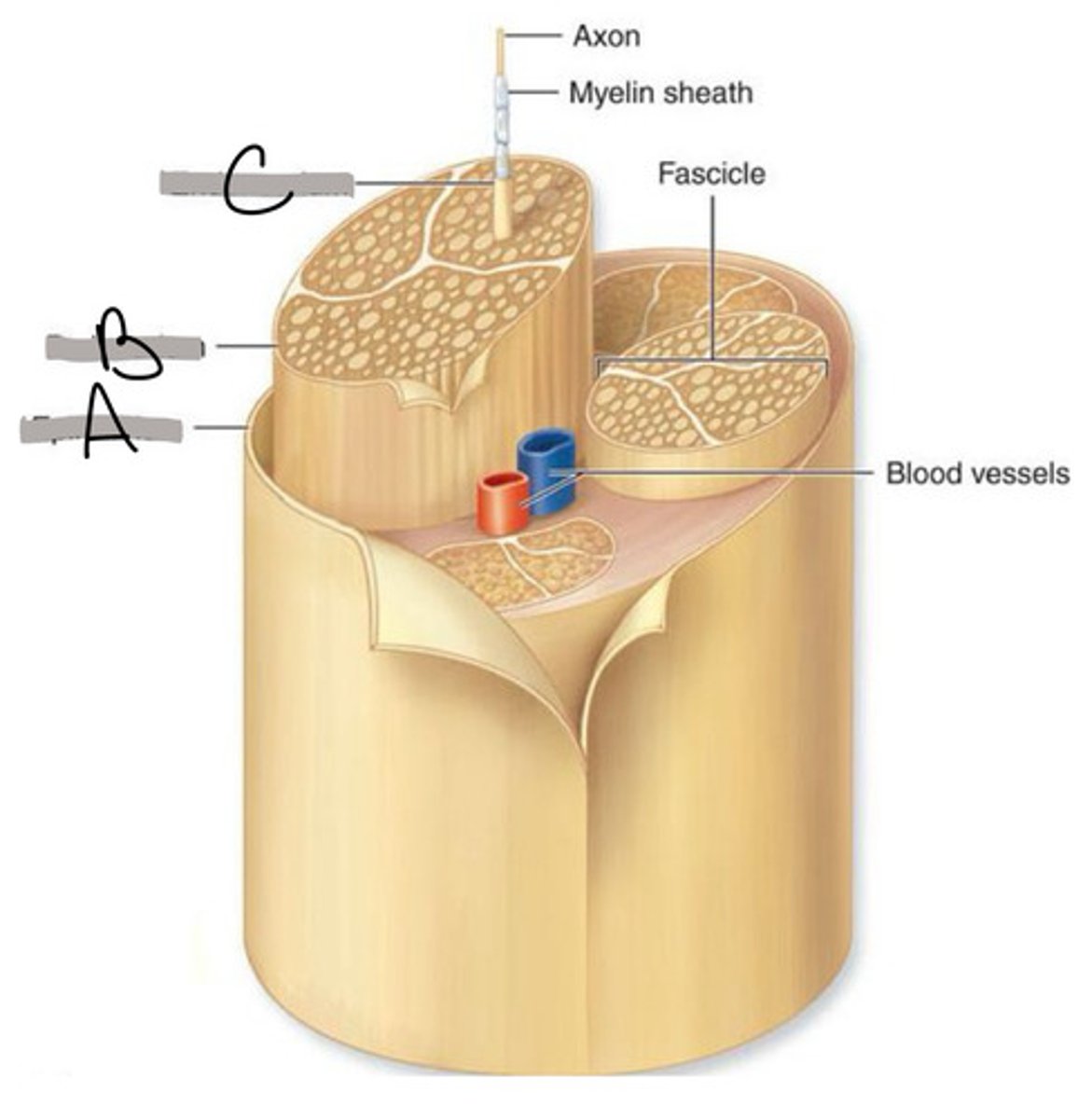
endoneurium
label C
peripheral nerve injury results in the severing of axons
what is step 1 of 4 in peripheral nerve regeneration?
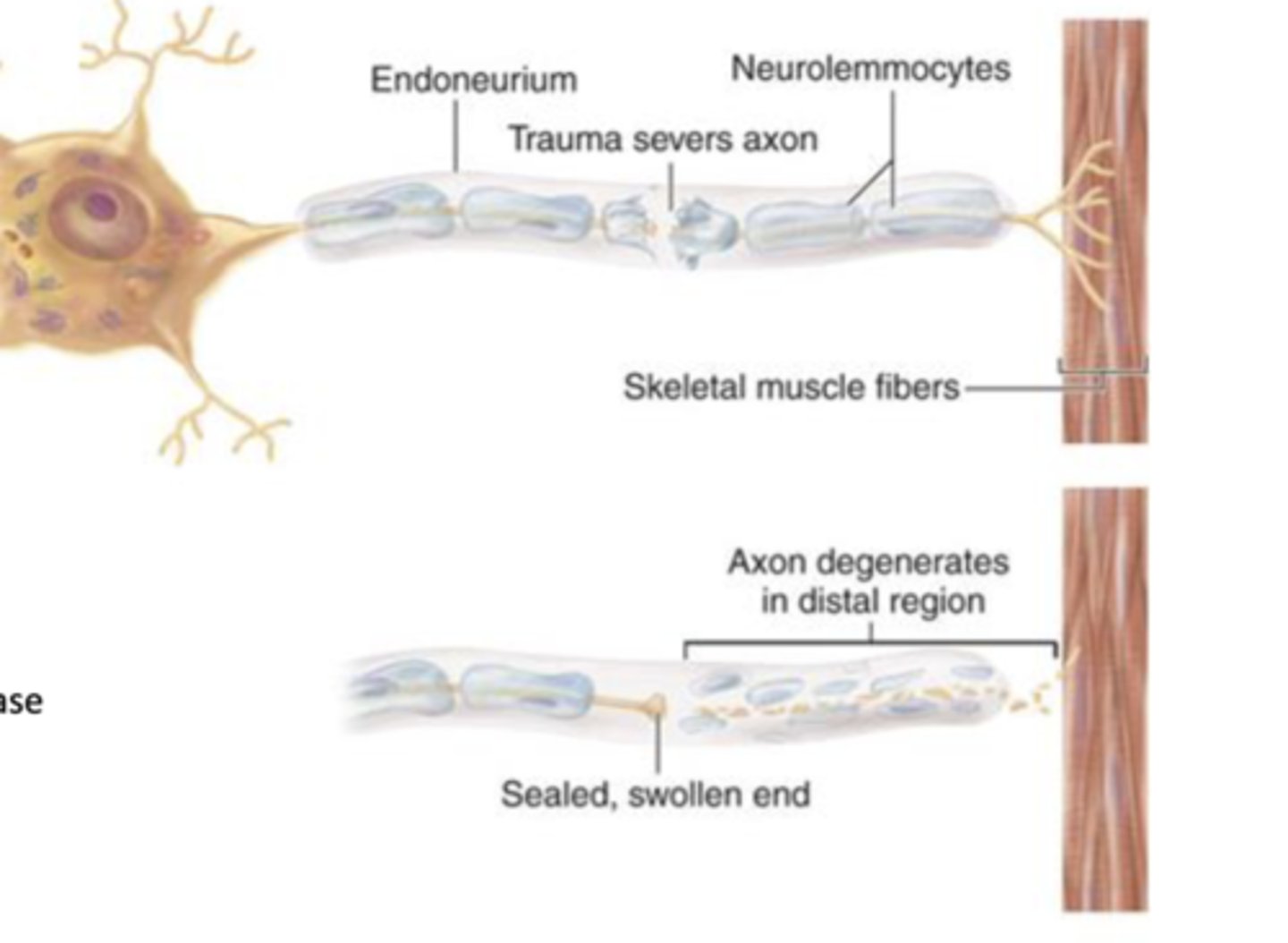
the process degenerates and the part connected to the cell body seals off
what happens to the process and cell body when a peripheral nerve is severed?
neurolemmocytes and endoneurium form a regeneration tube
what is step 2 of 4 in peripheral nerve regeneration?
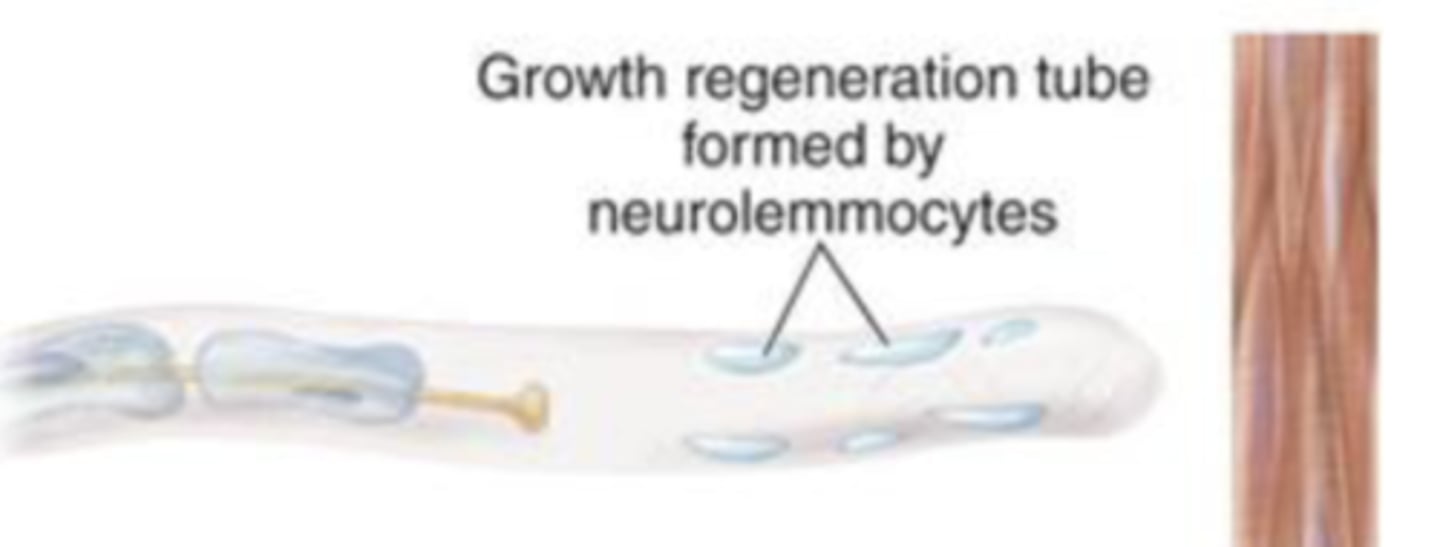
neurolemmocytes release nerve growth factor (NGF) that guides the viable end of the process down the regeneration tube
what is step 3 of 4 in peripheral nerve regeneration?
the motor and sensory processes re-establish contact with muscle and skin, respectively, and function is restored
what is step 4 of 4 in peripheral nerve regeneration?
central nerves lack the helpful neurolemmocytes (Schwann) cells found in peripheral nerves, and instead have inhibitory factors and scar tissue that hinder regrowth. essentially, the environment in the central nervous system actively discourages nerve regeneration, unlike the peripheral nervous system
why is the process for peripheral nerve regeneration ineffective in central nerves?
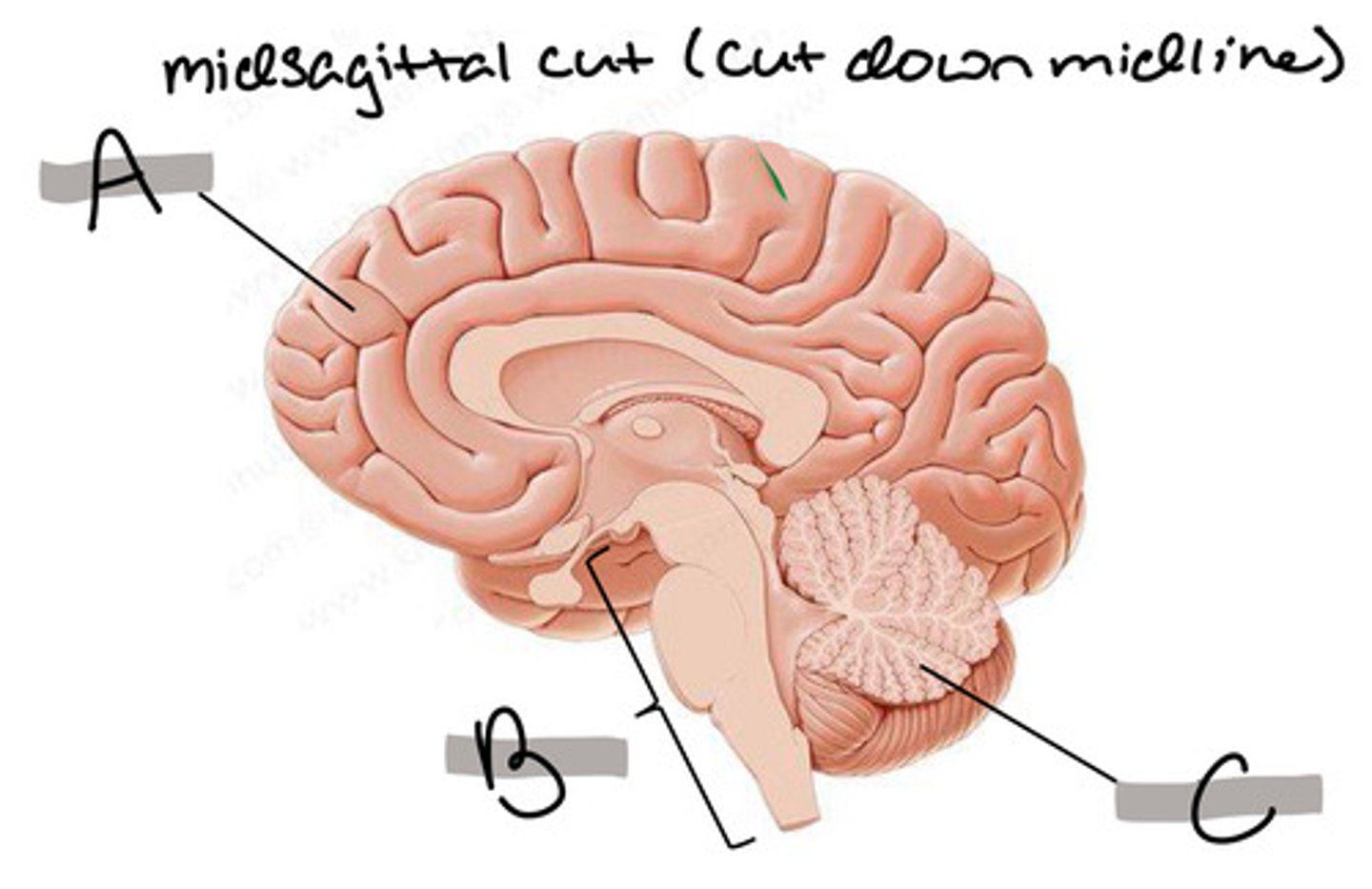
cerebrum, cerebellum, and brain stem
the brain can be divided into what 3 sections?
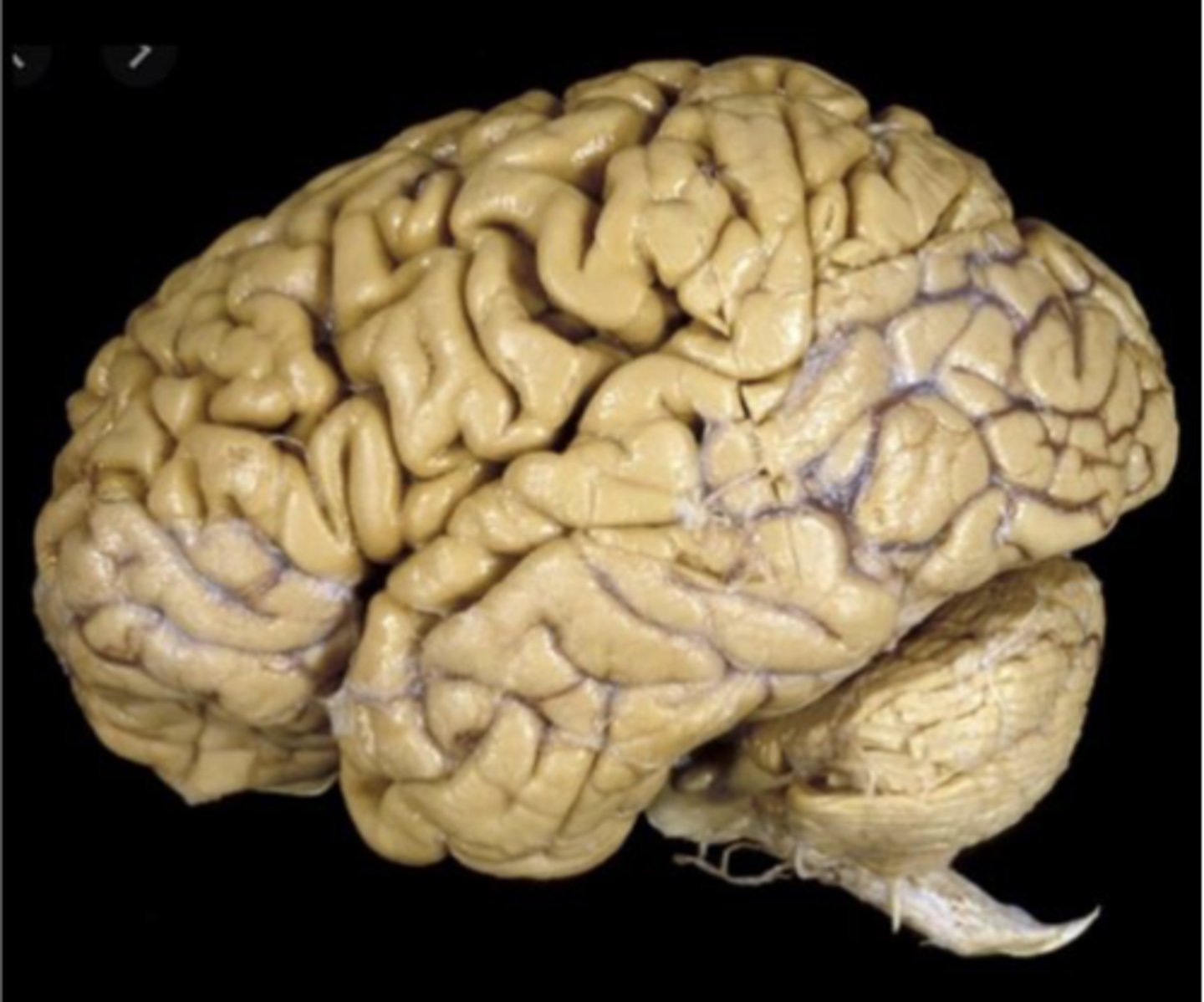
brain stem
label A
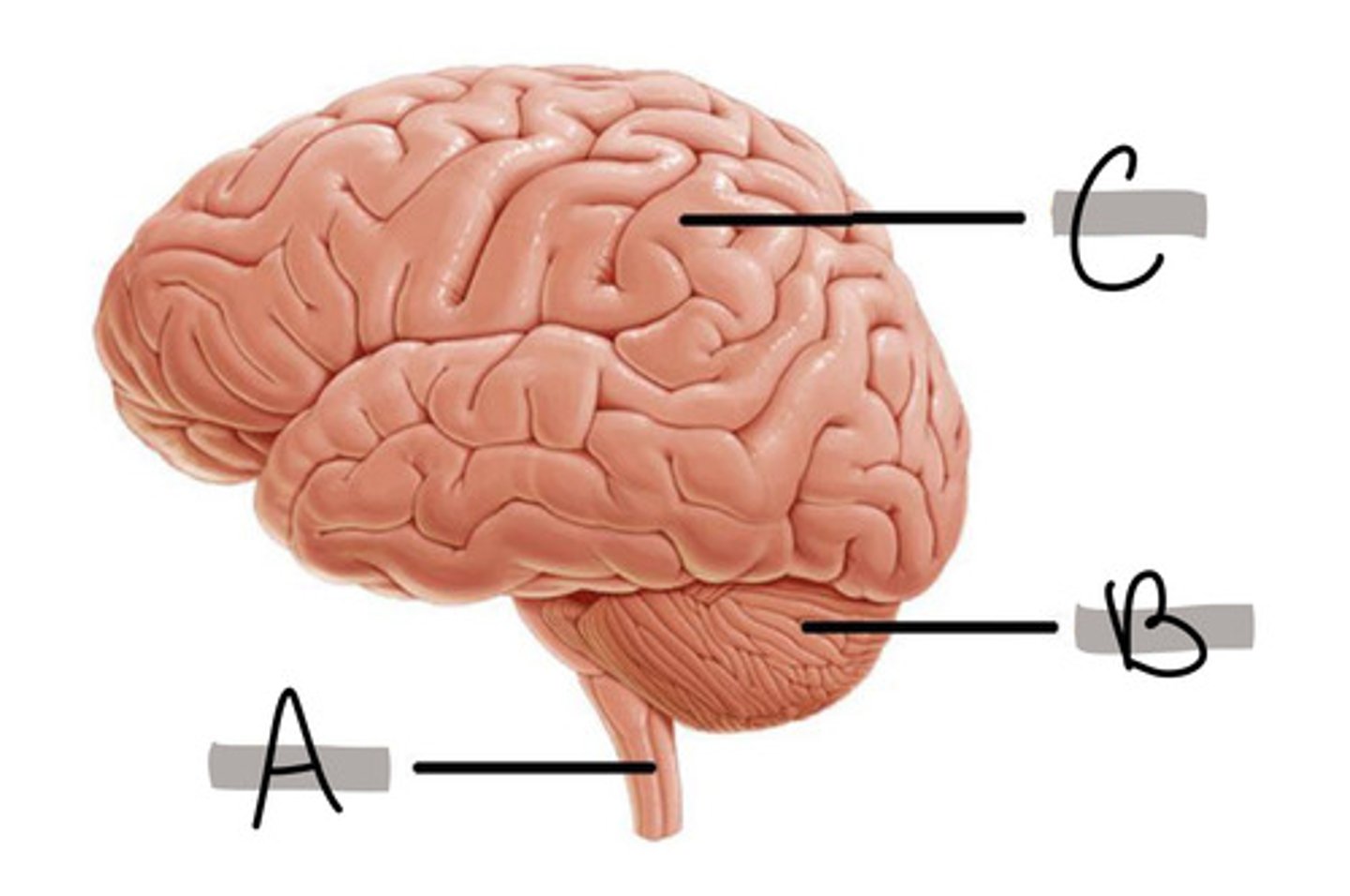
cerebellum
label B
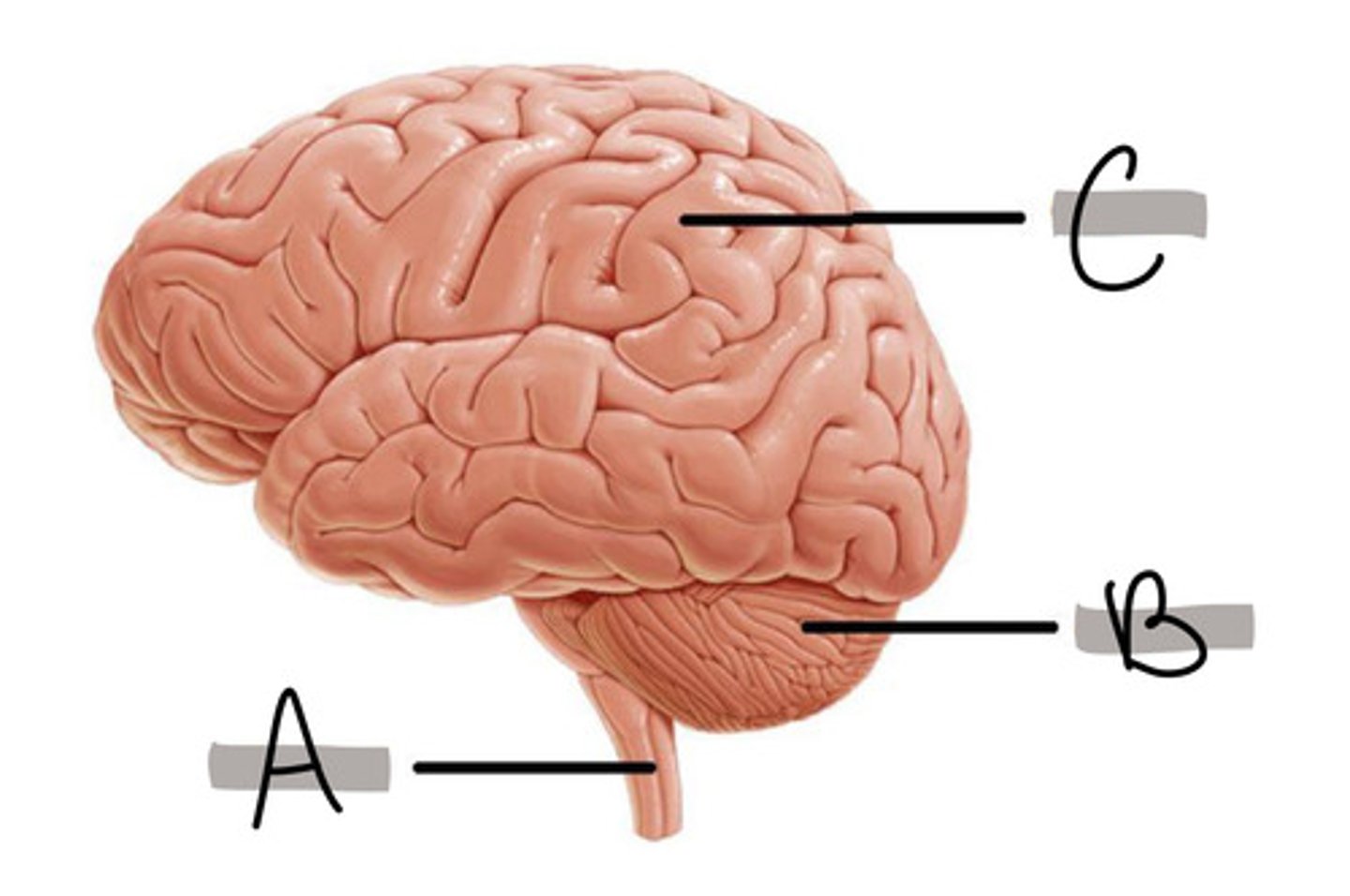
cerebrum
label C
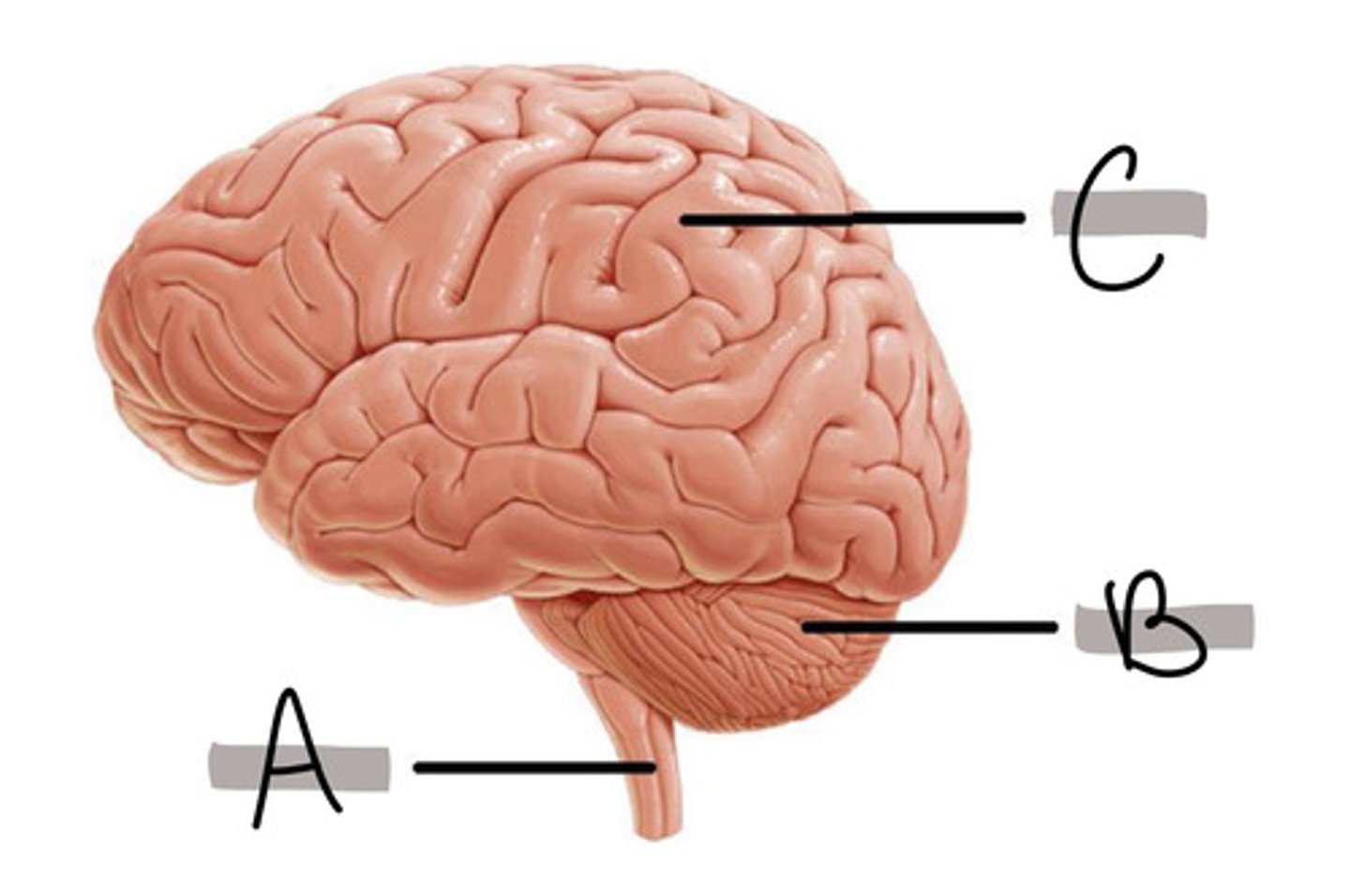
cerebrum
label A
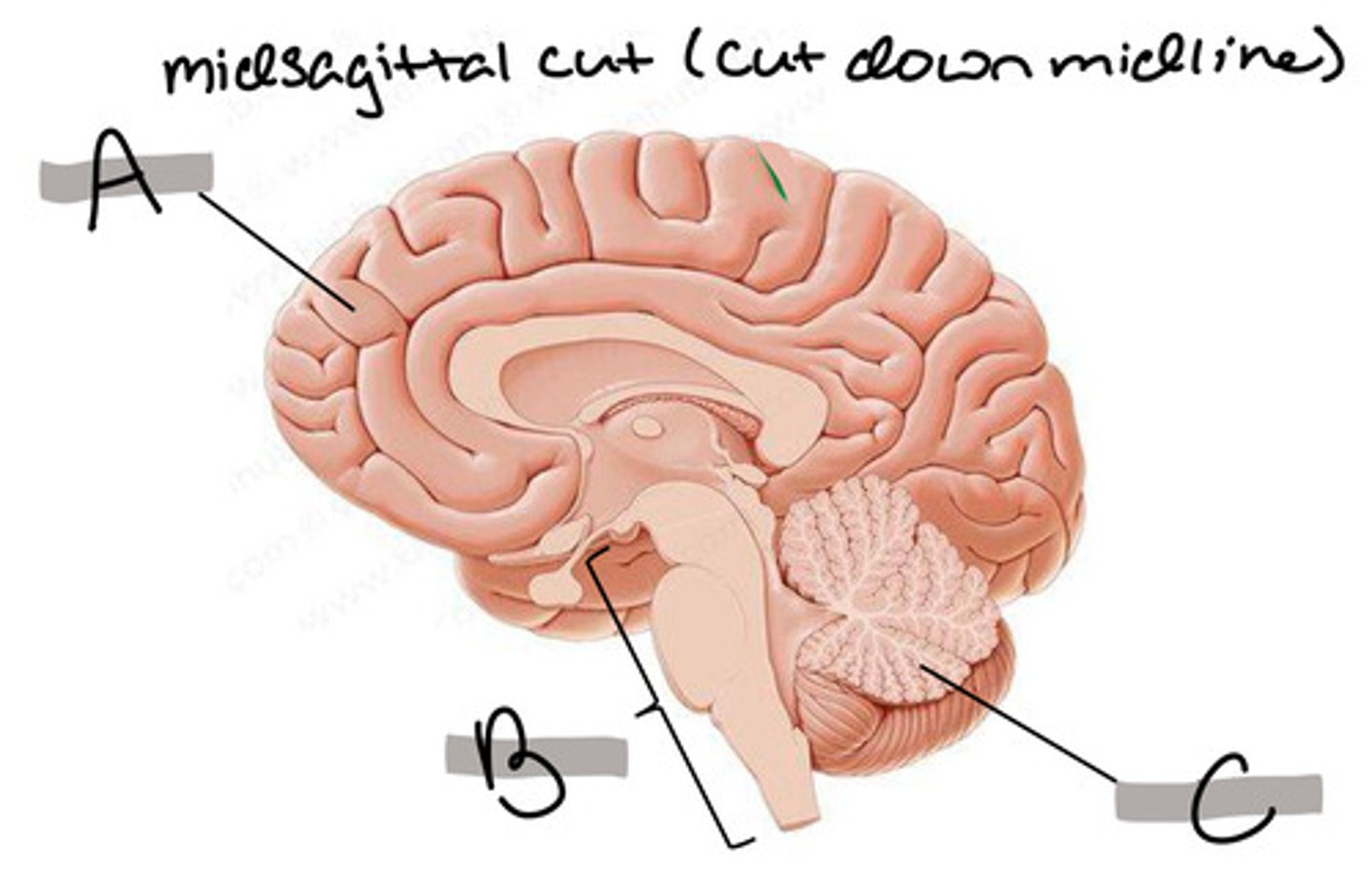
brain stem
label B