anatomy lab 2 - appendicular skeleton/vertebrae review
 Studied by 0 people
 Call with Kai
 Learn
Learn Practice Test
 Spaced Repetition
 Match
Match Flashcards
 Knowt Play
1/124

Earn XP
Description and Tags
gurgggg
Name | Mastery | Learn | Test | Matching | Spaced | Call with Kai |
|---|
No study sessions yet.
125 Terms
The C1 vertebrae (does/does not) have a spinous process
does not
The two holes on the lateral sides of a vertebra are the
transverse foramen
The protrusions of bone extending from the sides of a vertebrae which include the transverse foramen are called the
transverse process
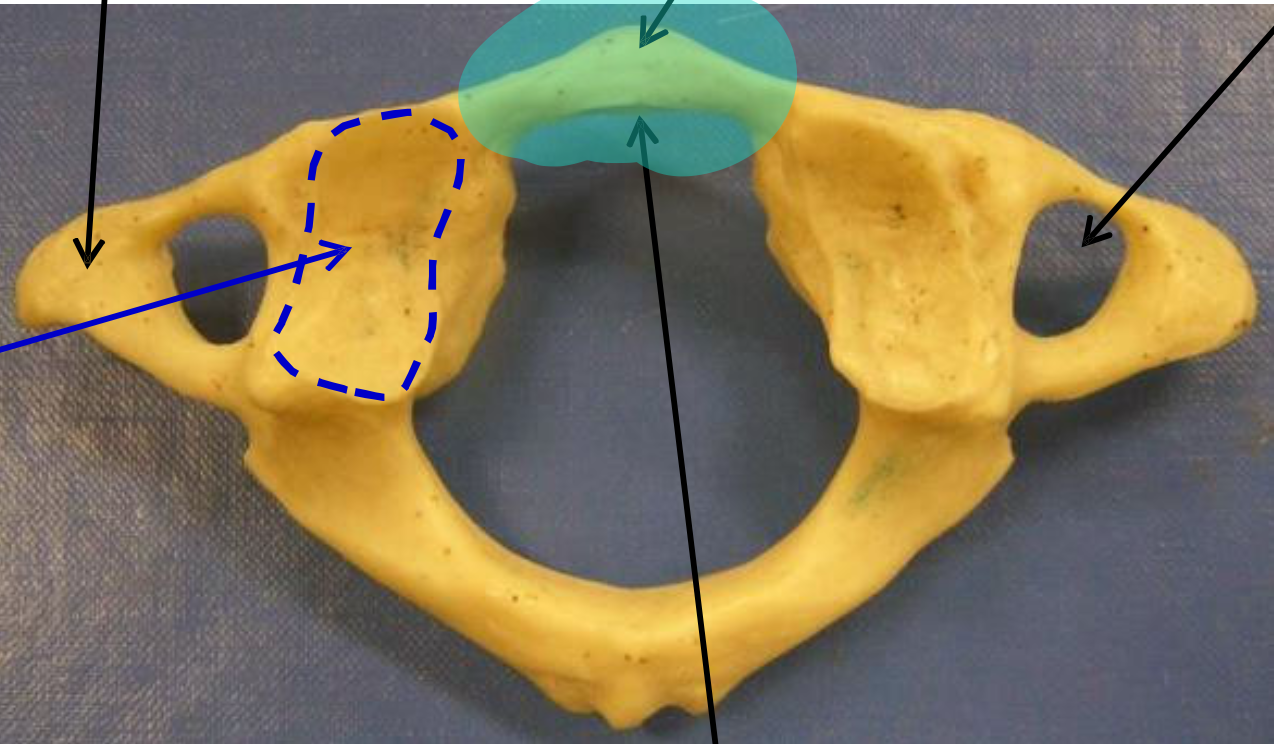
Name the highlighted structure.
facet for odontoid process
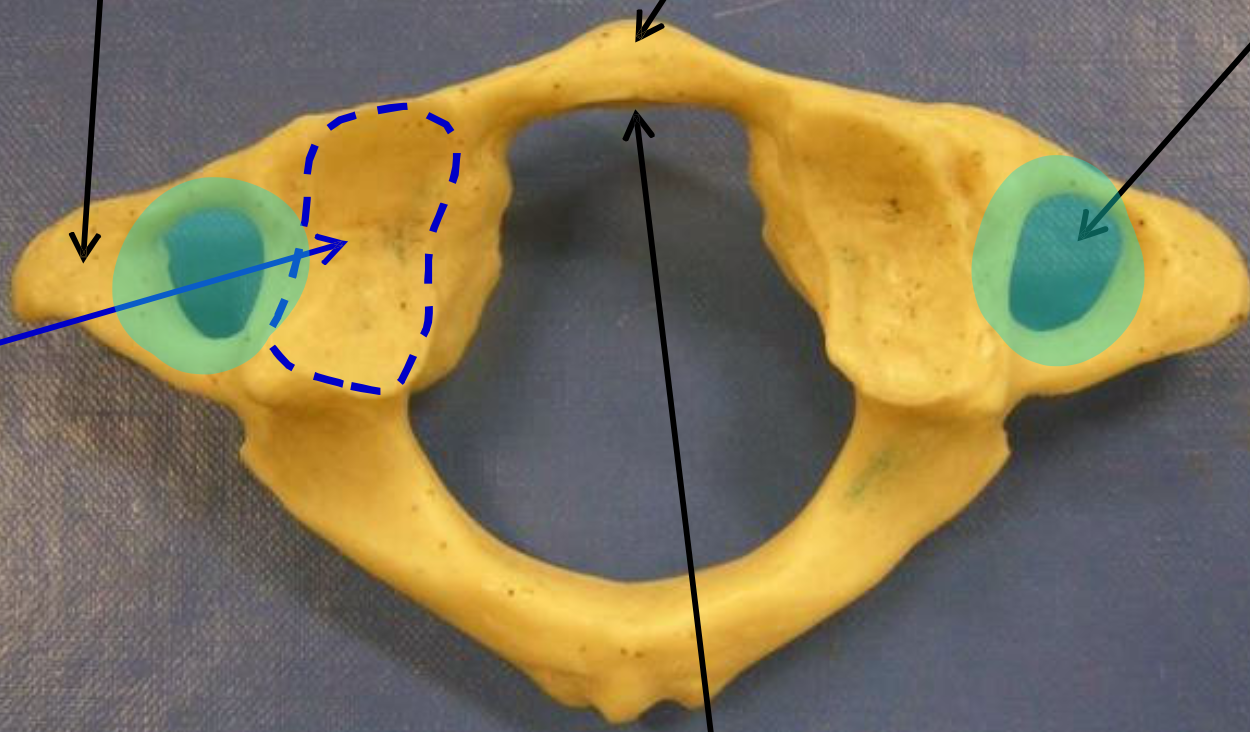
Name the highlighted structure.
transverse process
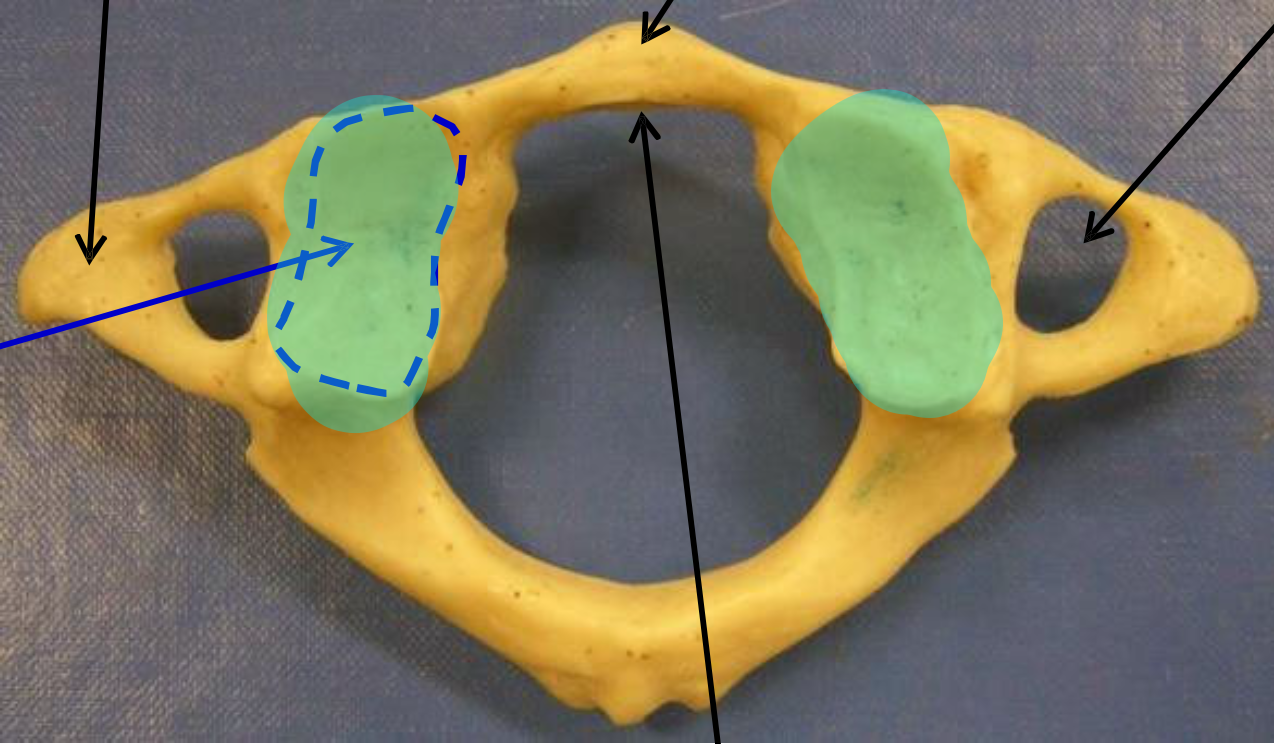
Name the highlighted structure.
superior articular facet
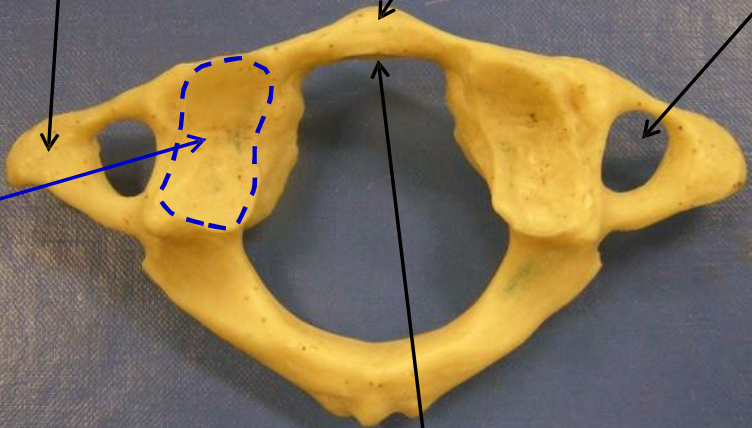
Name the vertebra.
C1 (atlas)
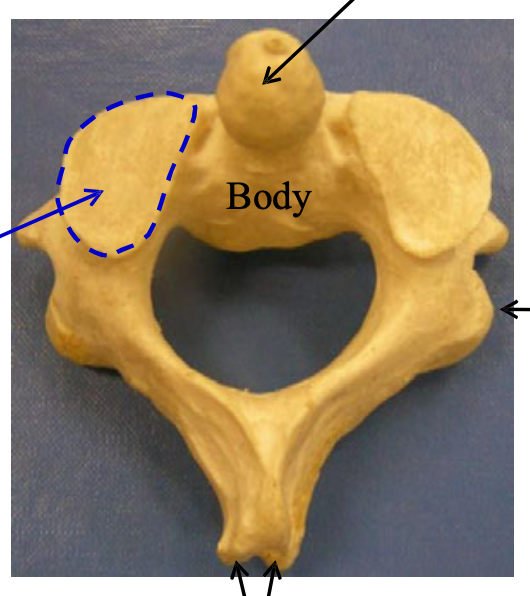
Name the vertebra.
C2 (axis)
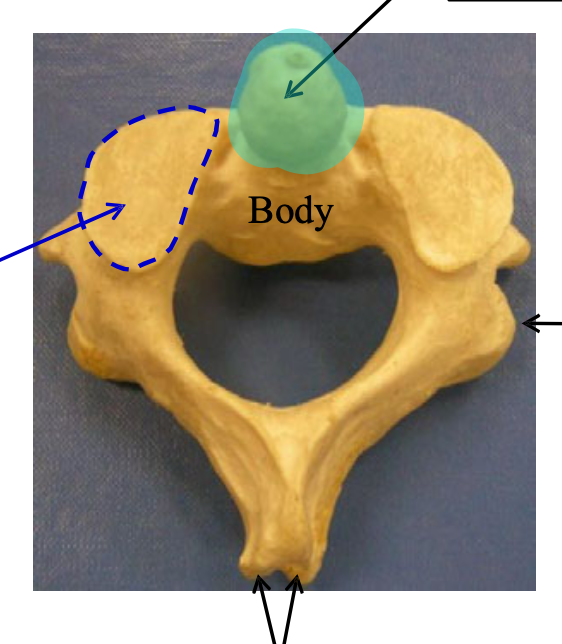
Name the highlighted structure.
odontoid process
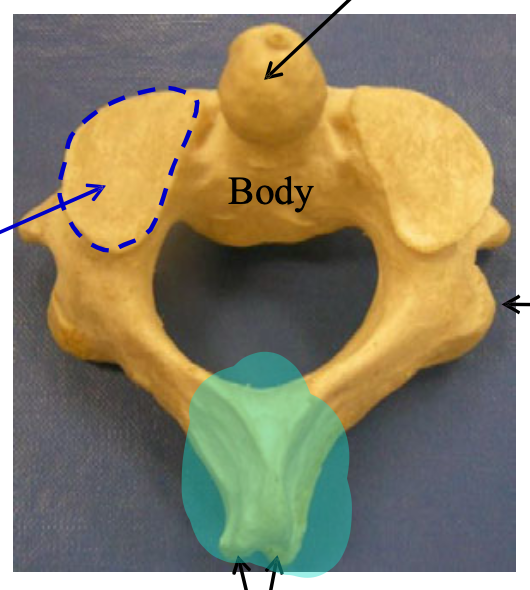
Name the feature of the highlighted structure that distinguishes its vertebrae group
bifid
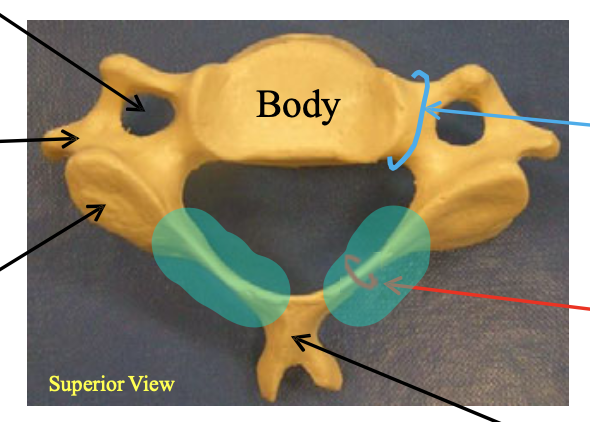
Name the highlighted structure.
lamina
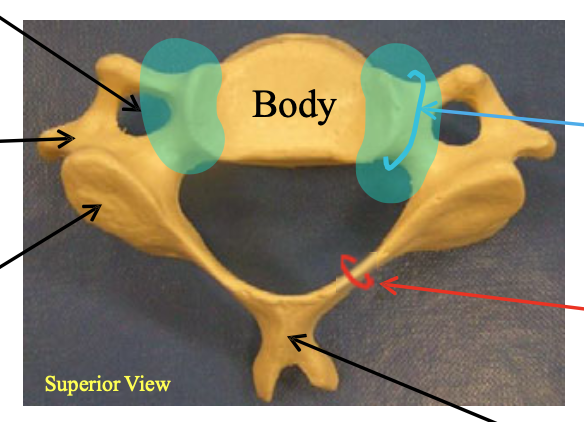
Name the highlighted structure.
pedicle
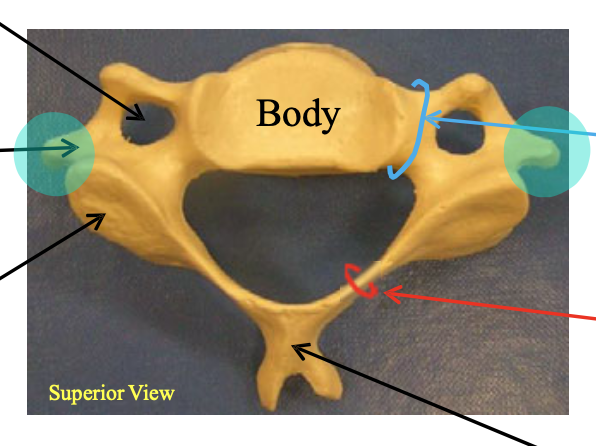
Name the highlighted structure.
transverse process
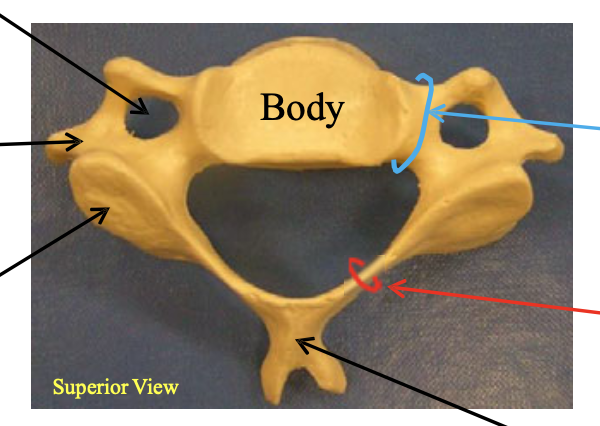
Name the group of vertebrae this one belongs to.
cervical
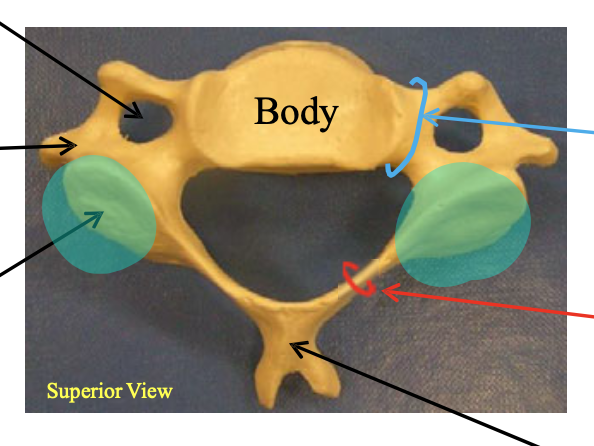
Name the highlighted structure.
superior articular surface
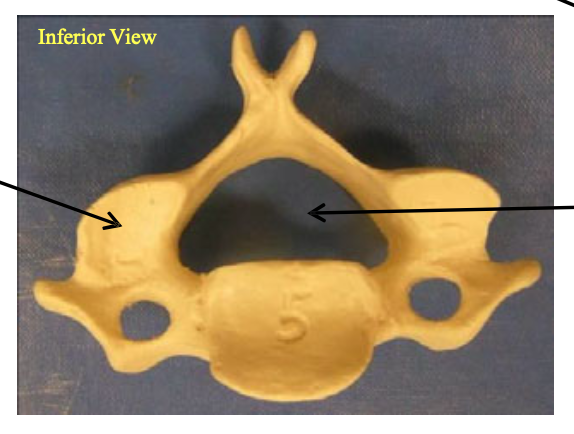
Name the group of vertebrae this one belongs to.
cervical
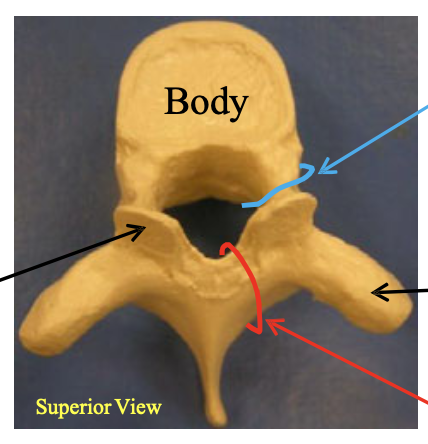
Name the group of vertebrae this one belongs to.
thoracic
How many cervical vertebrae are there? (“you eat breakfast at…”)
7
How many thoracic vertebrae are there? (“you eat lunch at…”)
12
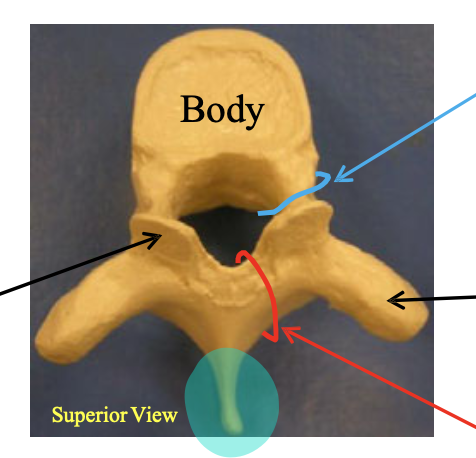
Name the highlighted structure.
spinous process
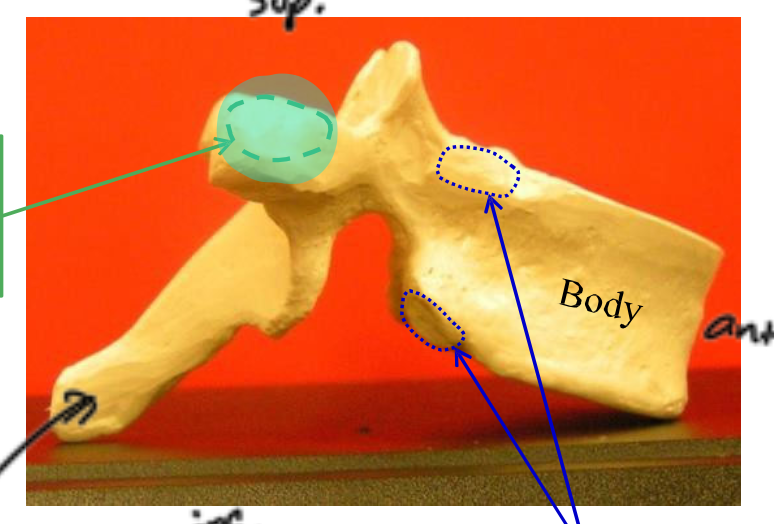
Name the highlighted structure.
facet for tubercle of rib
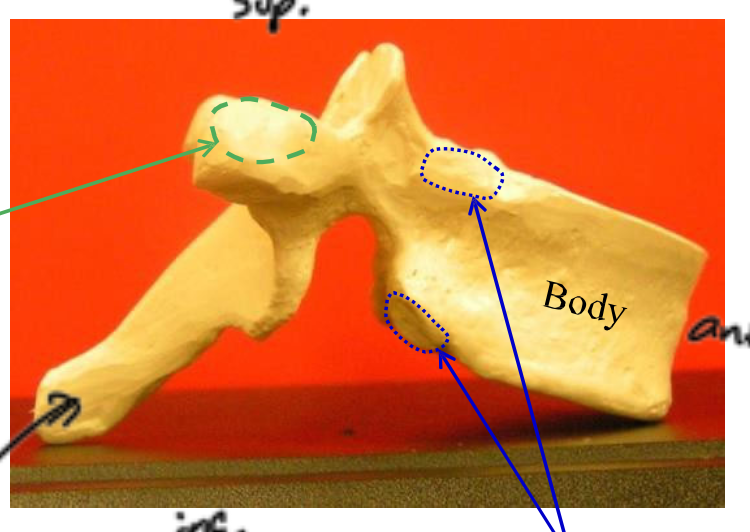
Name the group of vertebrae this one belongs to.
thoracic
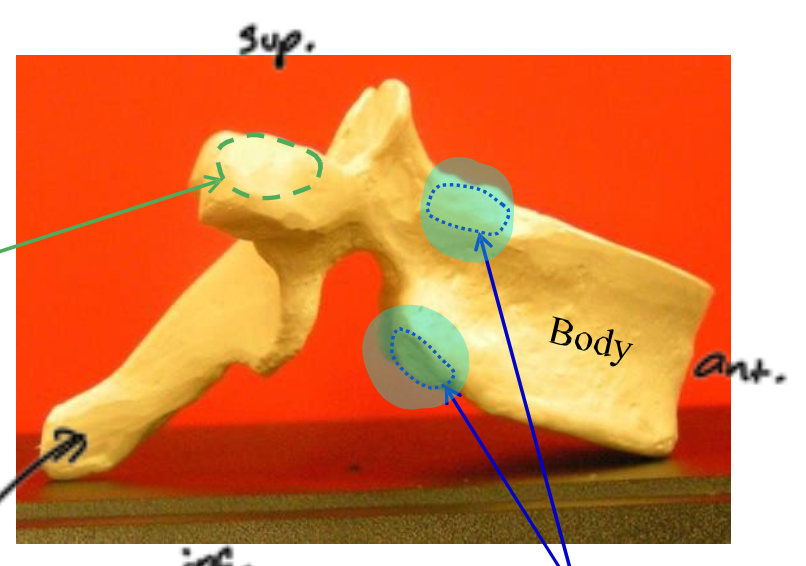
Name the highlighted structure
facets for head of rib
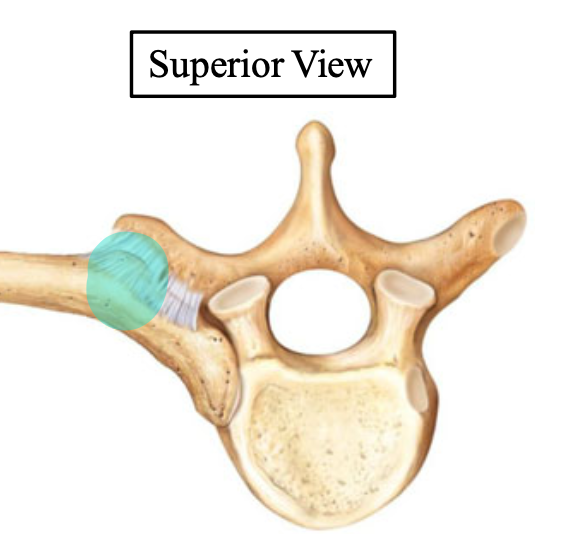
Name the highlighted structure (on the rib)
tubercle
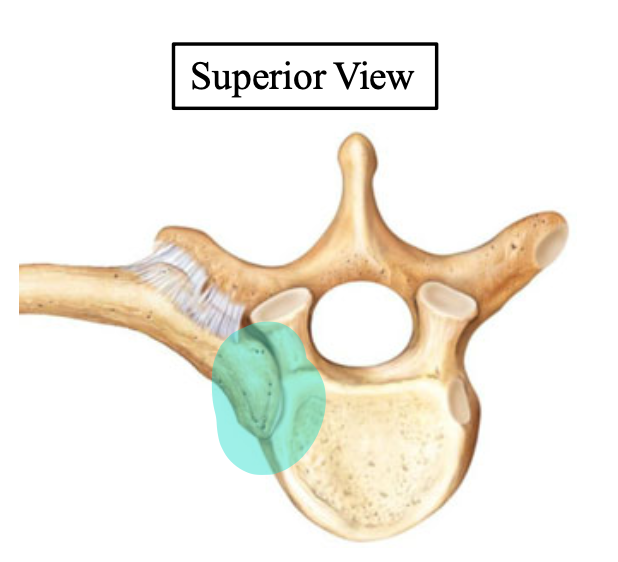
Name the highlighted structure (on the rib)
Head
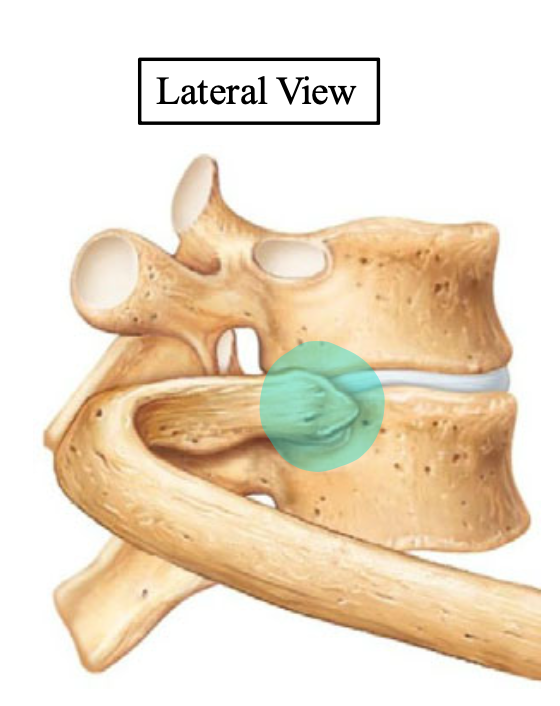
Name the highlighted structure (on rib)
head
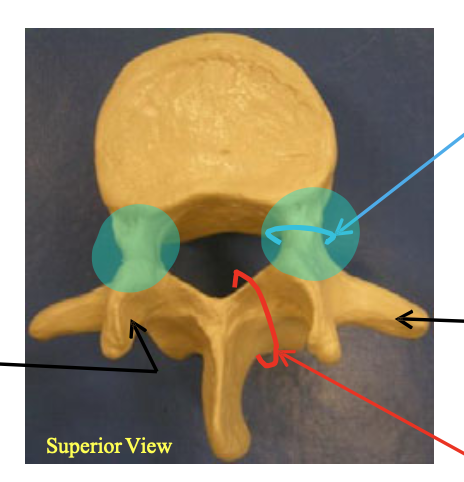
Name the highlighted structure.
pedicle
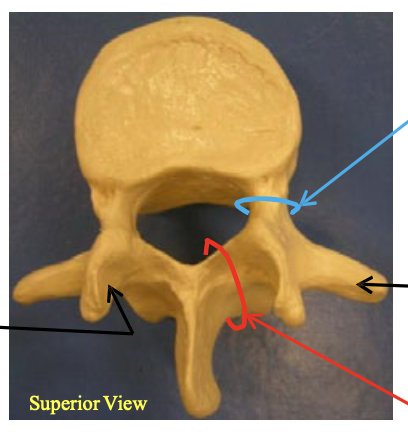
Name the group of vertebrae this one would belong to.
lumbar
How many lumbar vertebrae are there? (“and you eat dinner at…”
5
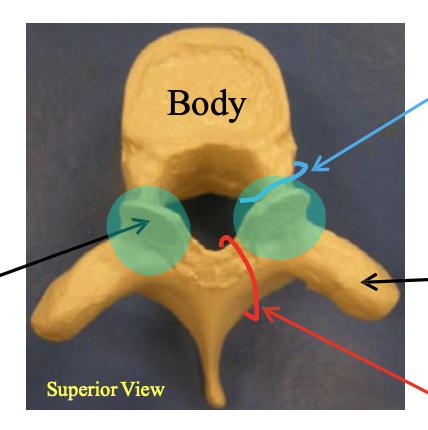
Identify the group that this vertebrae belongs to. Then, identify the highlighted structure.
thoracic, superior articular surface
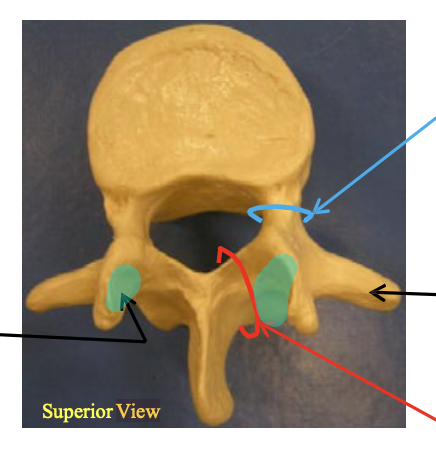
Name the group of vertebrae this one belongs to; then, name the highlighted structure.
lumbar, superior articular surface
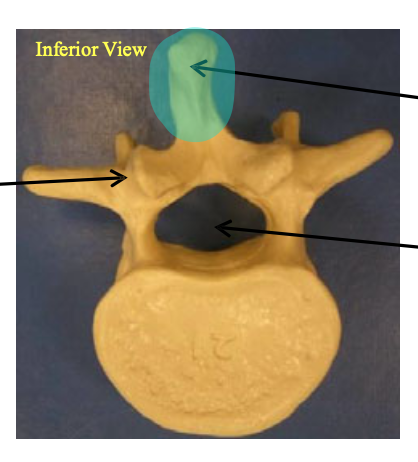
Name the group of vertebrae this one belongs to; then, name the highlighted structure
lumbar, spinous process
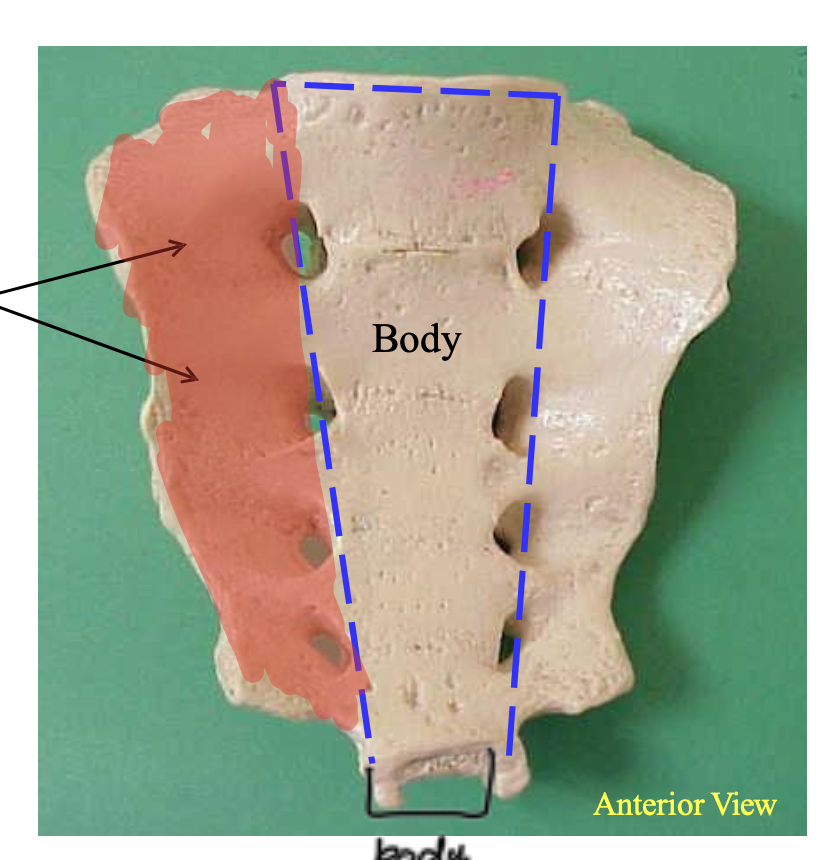
Name the highlighted structure.
ala
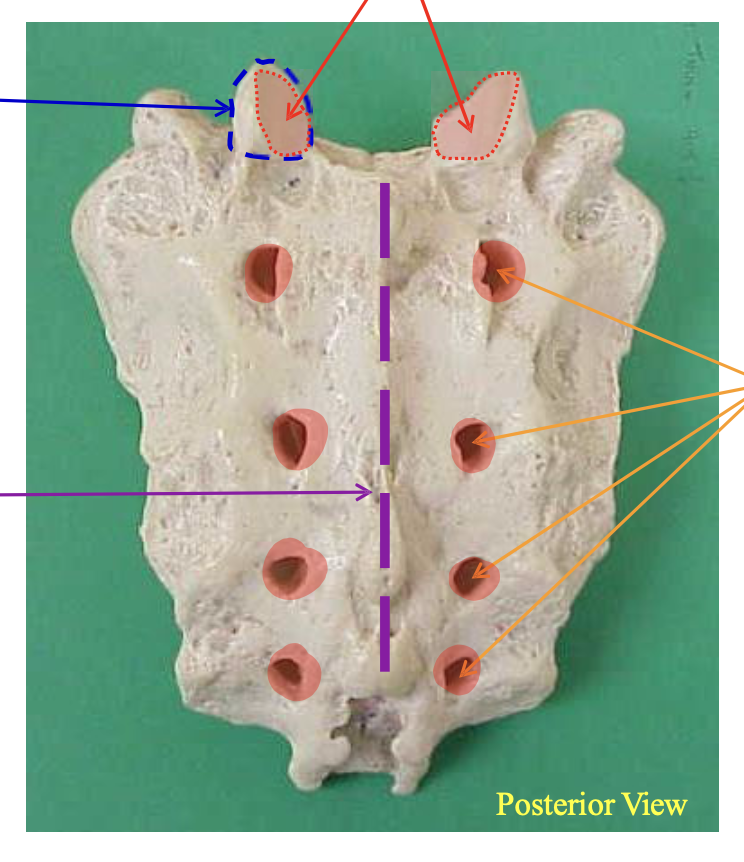
Name the highlighted structure
sacral foramina
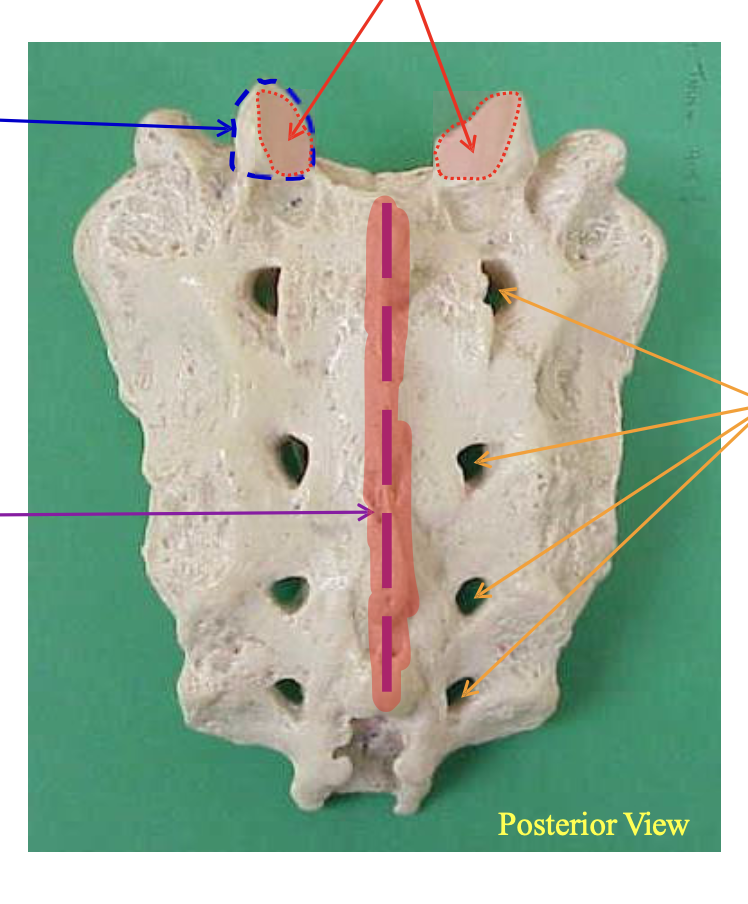
Name the highlighted structure (purple dashed line w/ red highlight)
median sacral crust
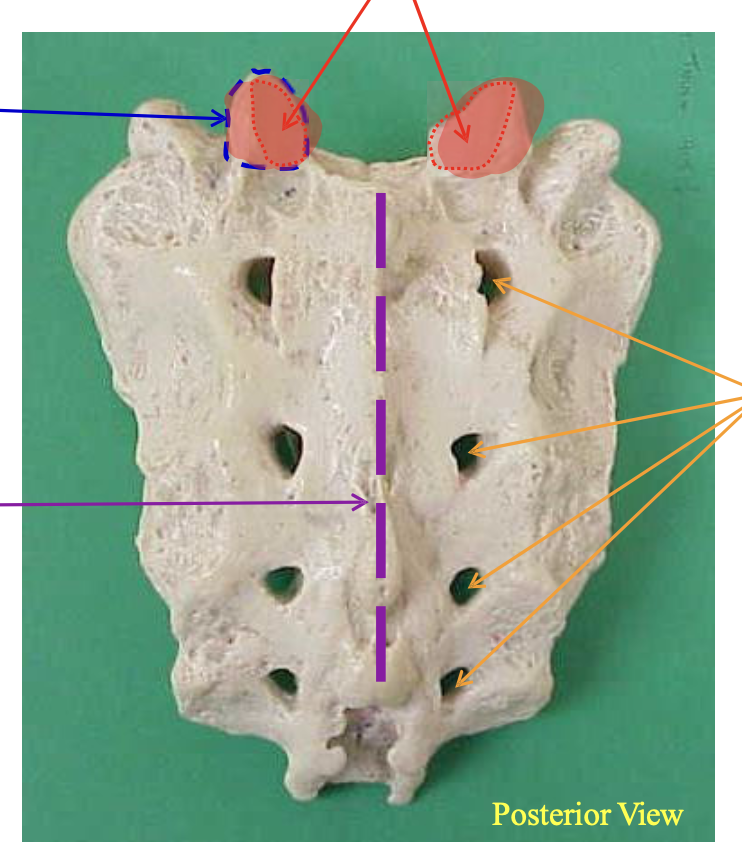
Name the structure highlighted in red
superior articular process
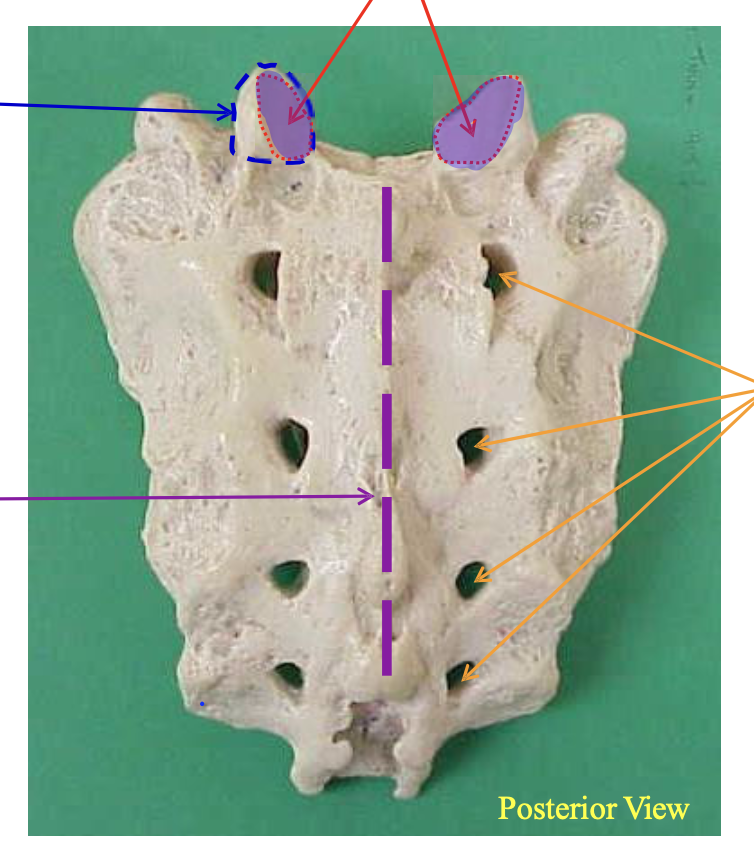
Name the structure highlighted in blue (NOT the full protrustions)
superior articular facet
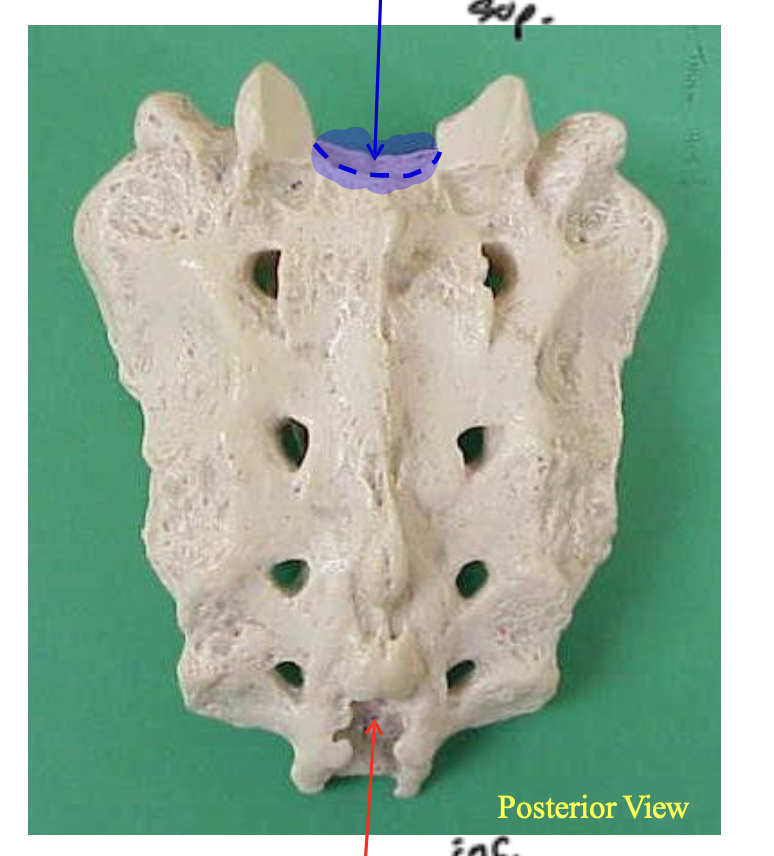
Name the highlighted structure.
sacral canal
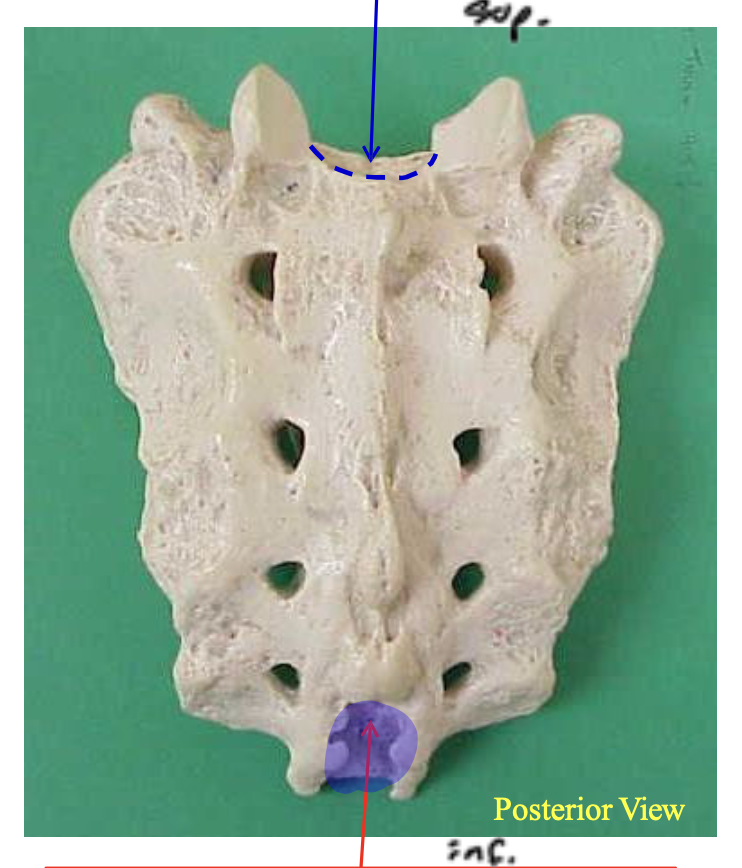
Name the highlighted structure.
sacral hiatus
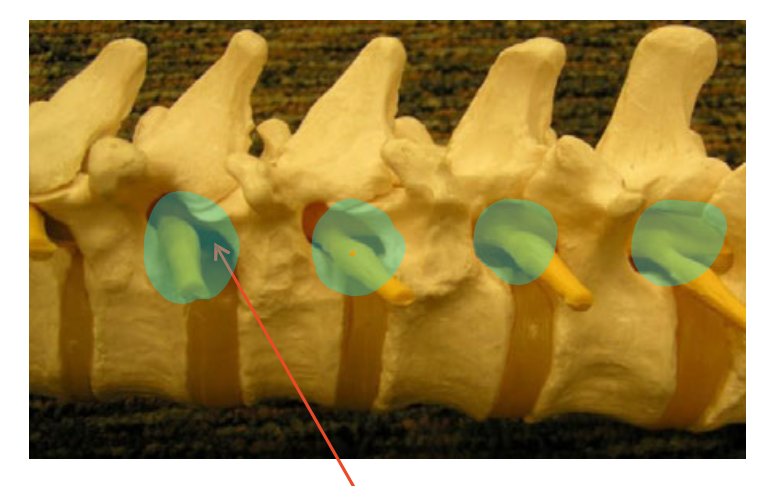
Name the highlighted structures
intervertebral foramina
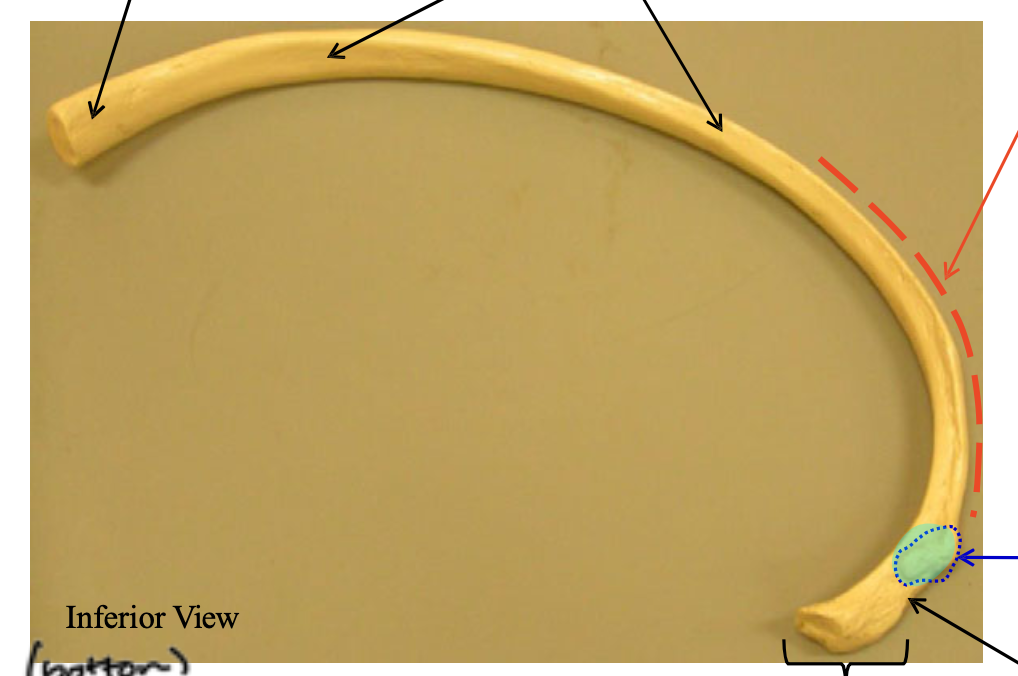
Name the highlighted structure
tubercle
Is the tubercle most visible on the superior or inferior view of the rib bone?
inferior
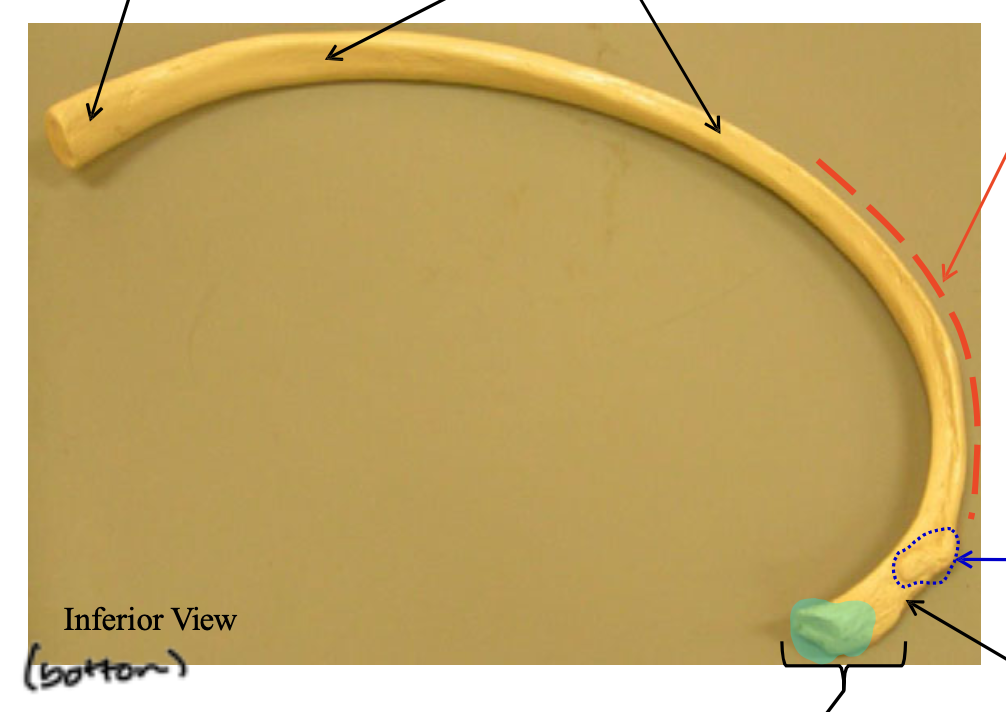
Name the highlighted structure
head (of rib)
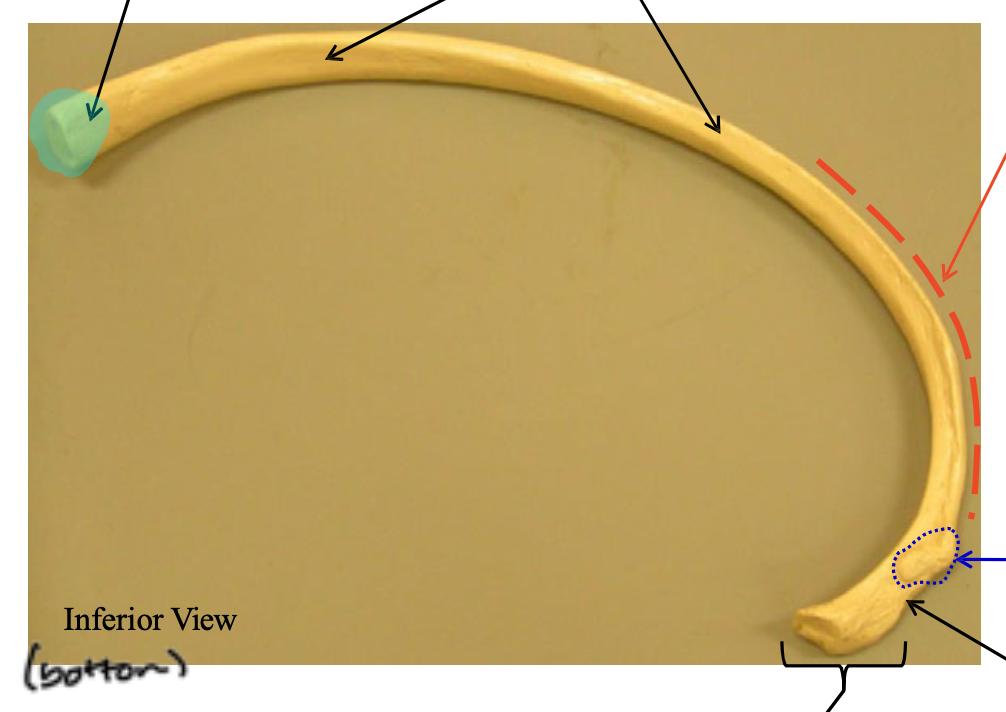
Name the highlighted region.
costal extremity
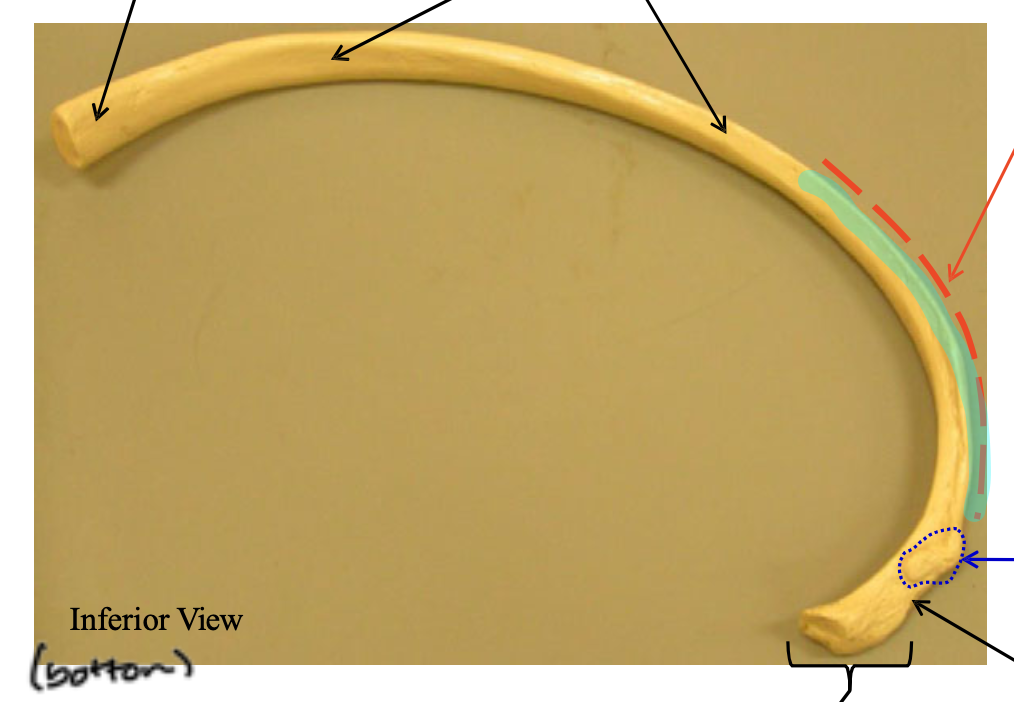
Name the highlighted structure
costal angle
What process of the spinal cord does the tubercle articulate with?
transverse
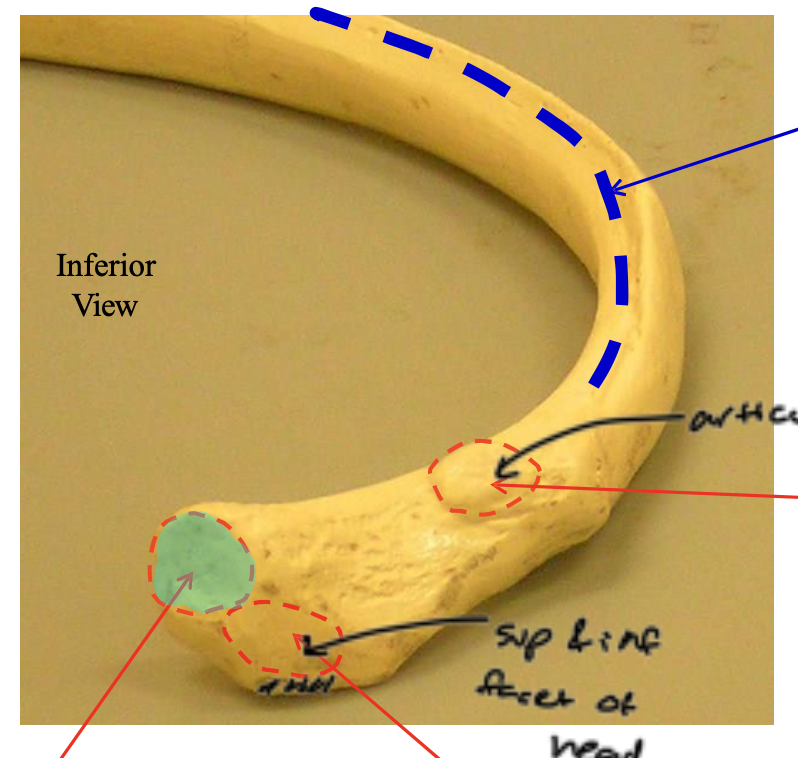
The highlighted region is the (superior/inferior) articular facet of the head.
inferior
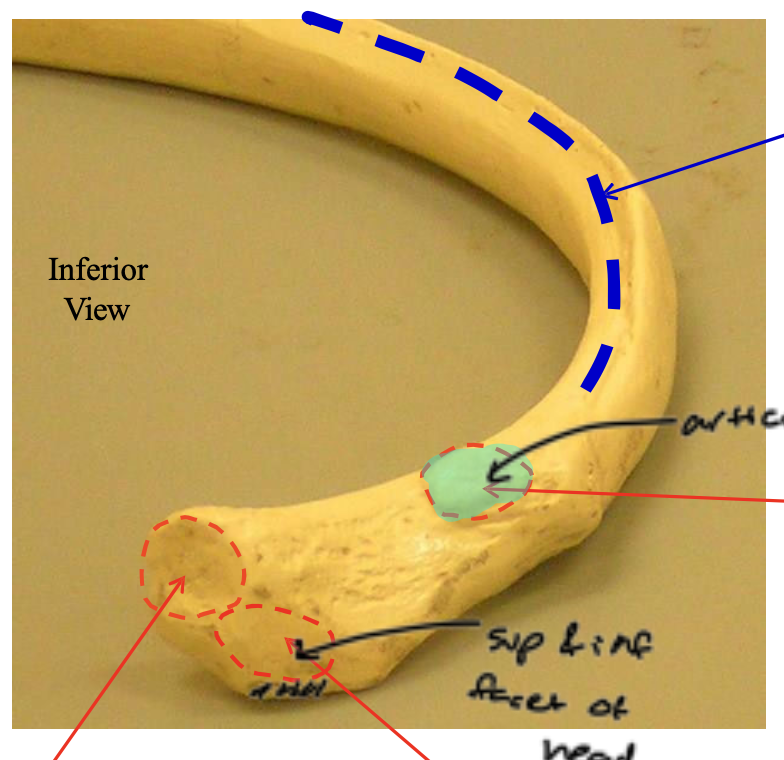
The highlighted region is the articular fact of the
tubercle
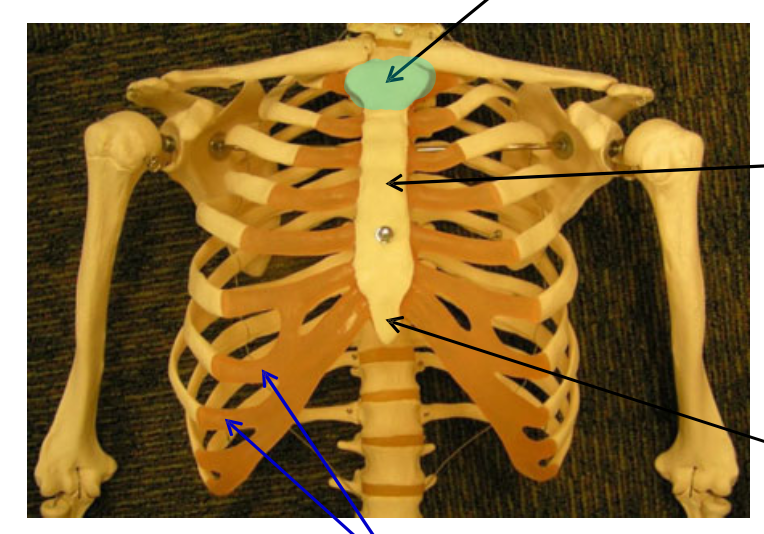
Name the highlighted region.
manubrium
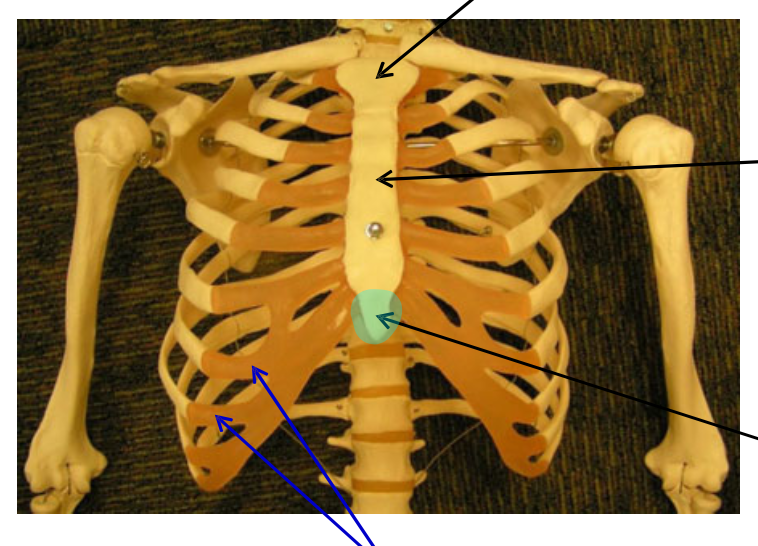
Name the highlighted region.
xiphoid process
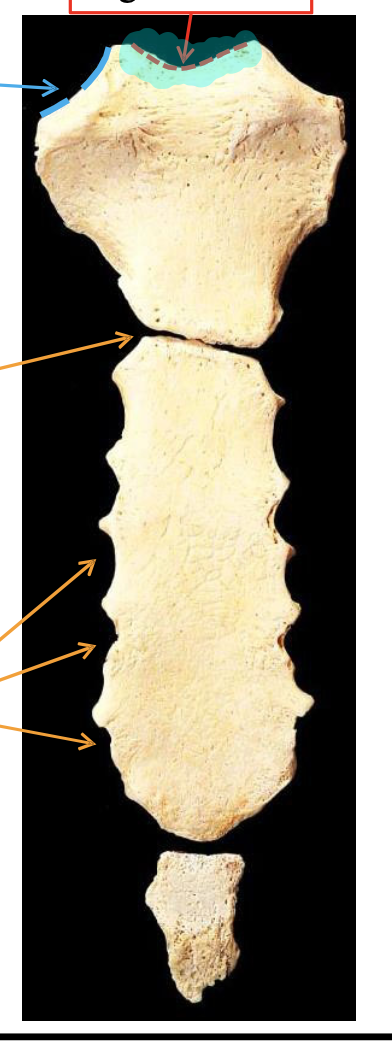
Name the highlighted region.
jugular notch
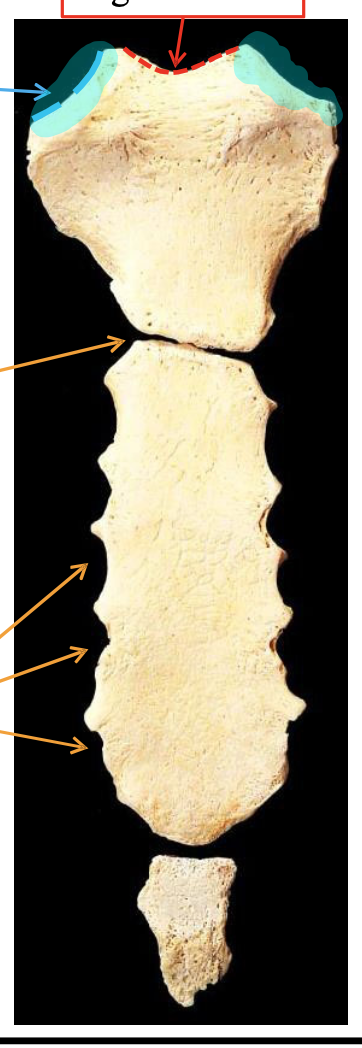
Name the highlighted region.
clavicular notch
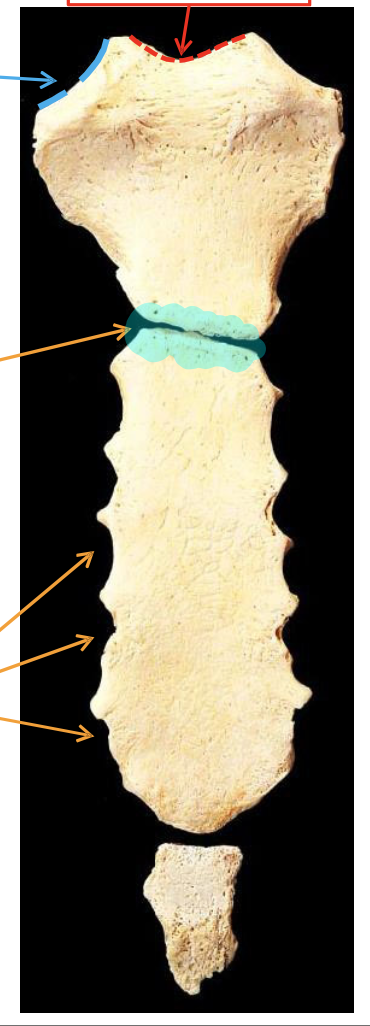
Name the highlighted region.
sternal angle
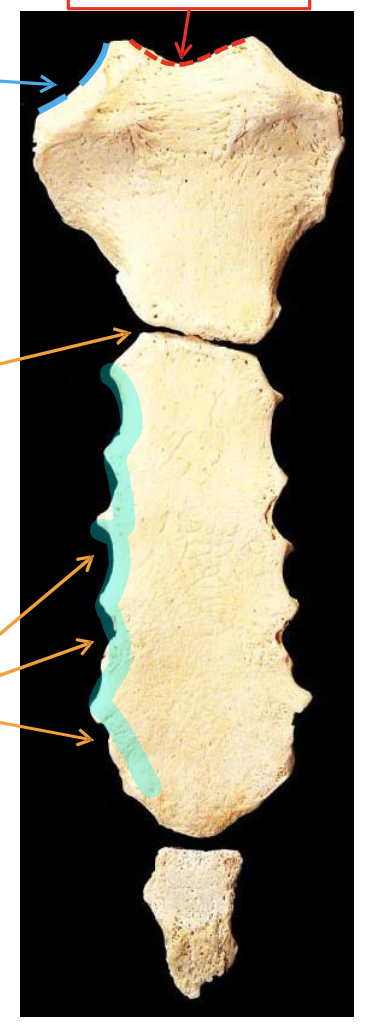
The highlighted region contains facets for
ribs
The shoulder girdle & upper extremity combine to form the ____ ____ region of the appendicular skeleton.
upper limb
The pelvic girdle & lower extremity combine to form the ____ ____ region of the appendicular skeleton.
lower limb
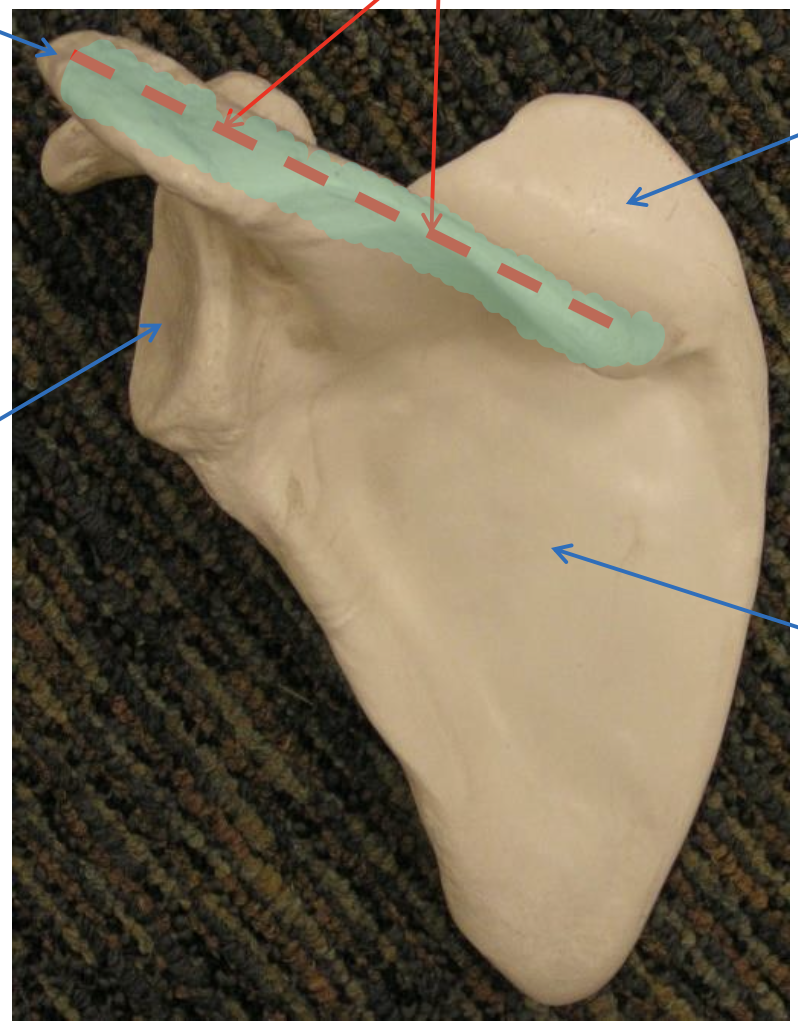
Name the highlighted region.
spine
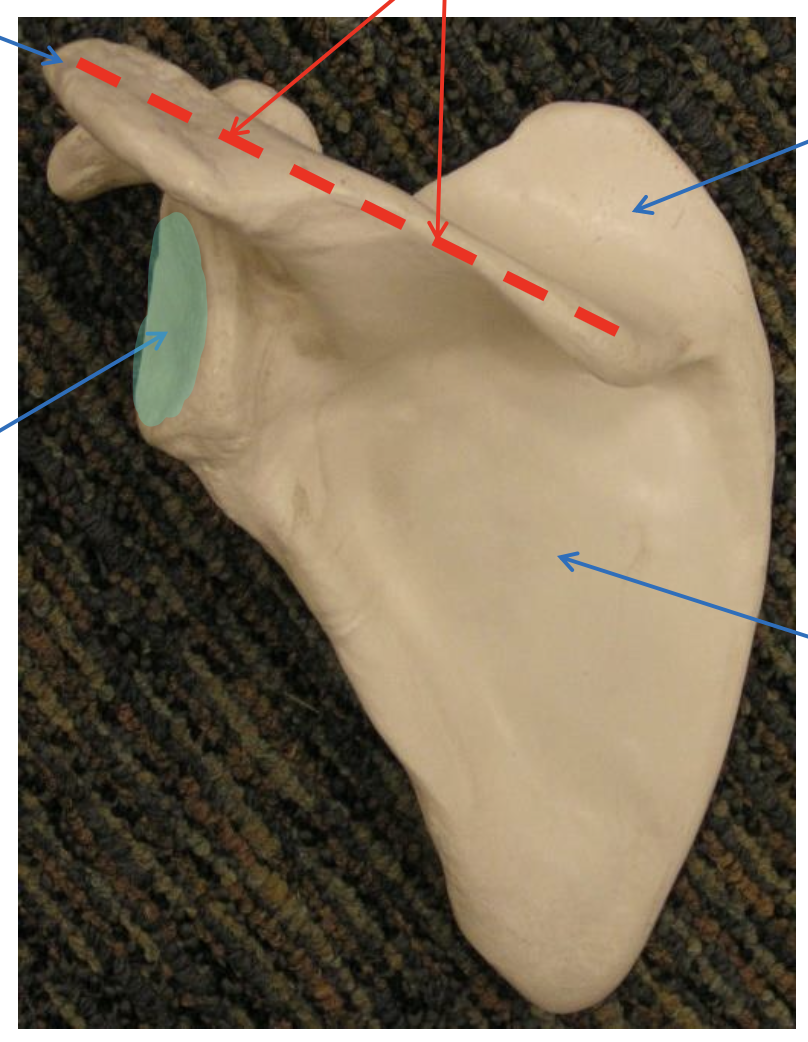
Name the highlighted region.
glenoid fossa
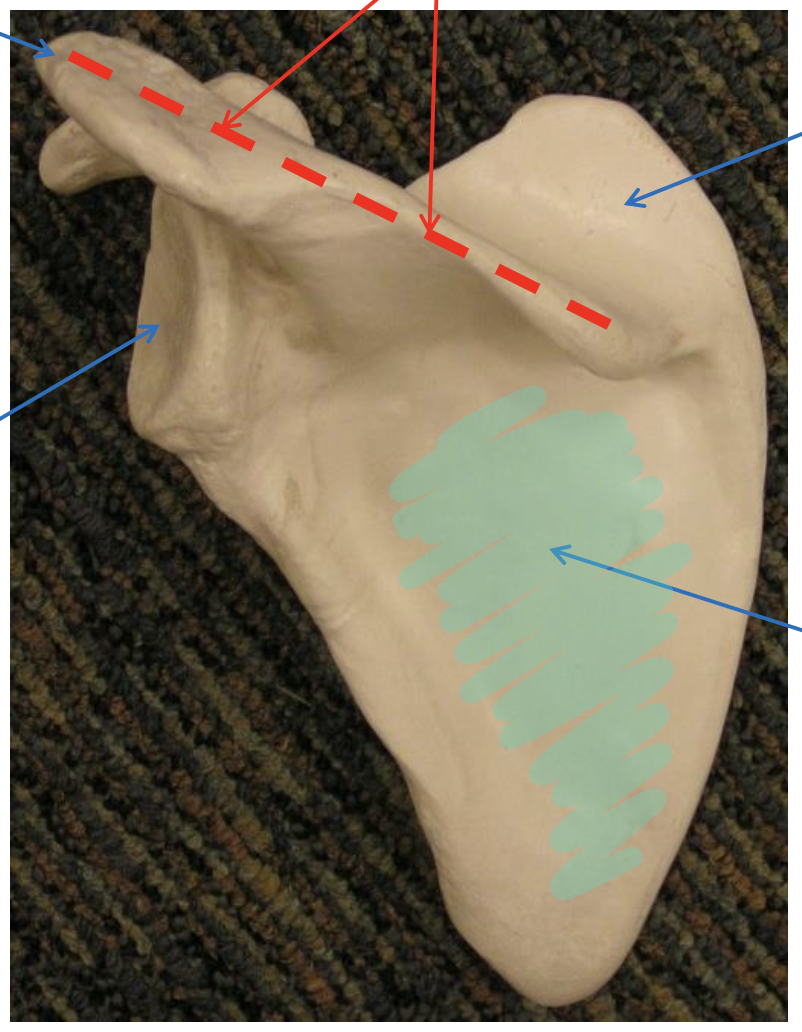
Name the highlighted region.
infraspinous fossa
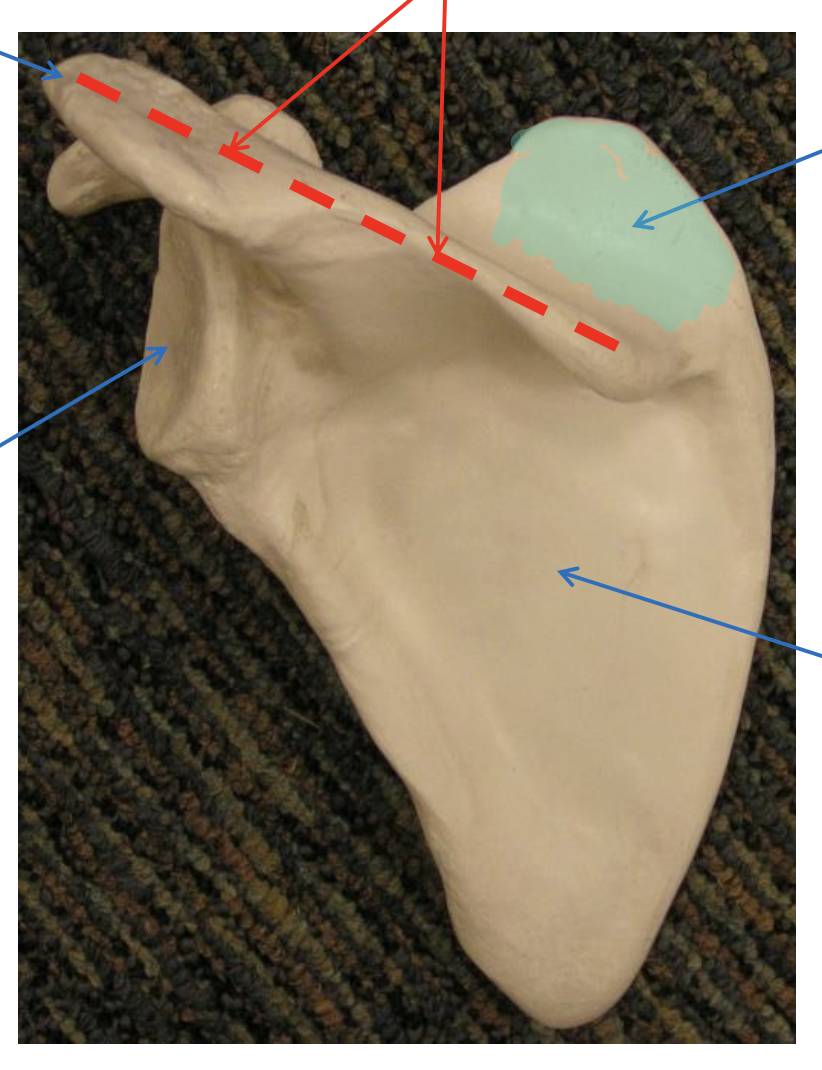
Name the highlighted region.
supraspinous fossa
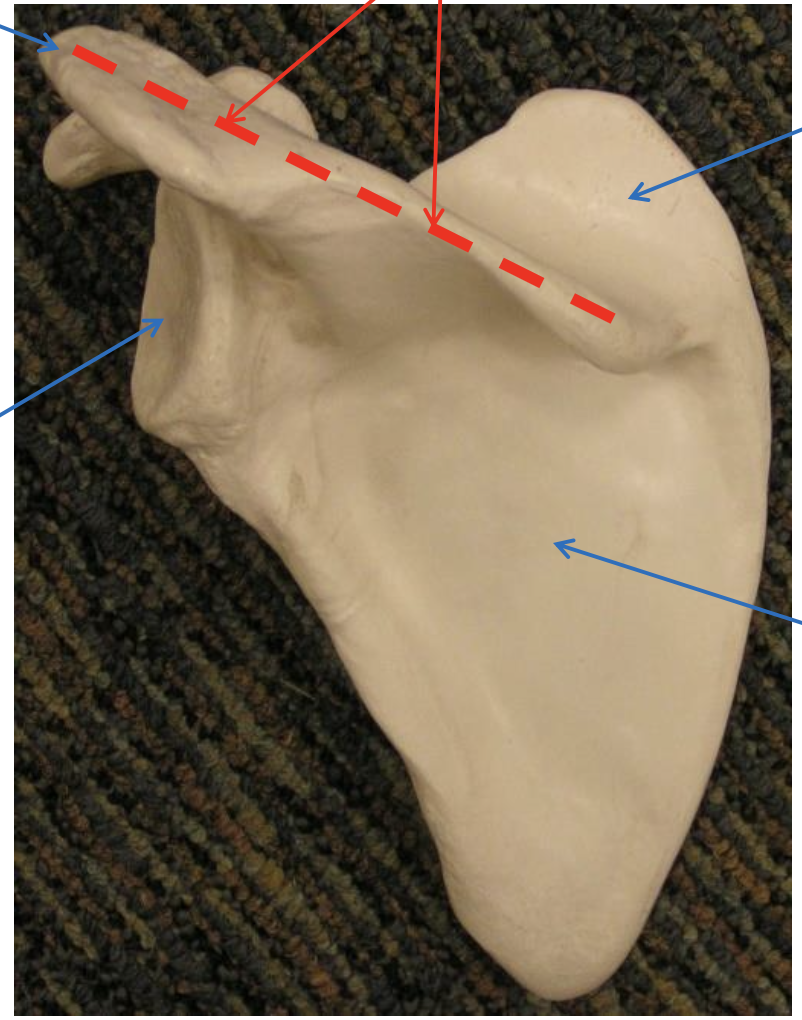
Name the bone.
scapula
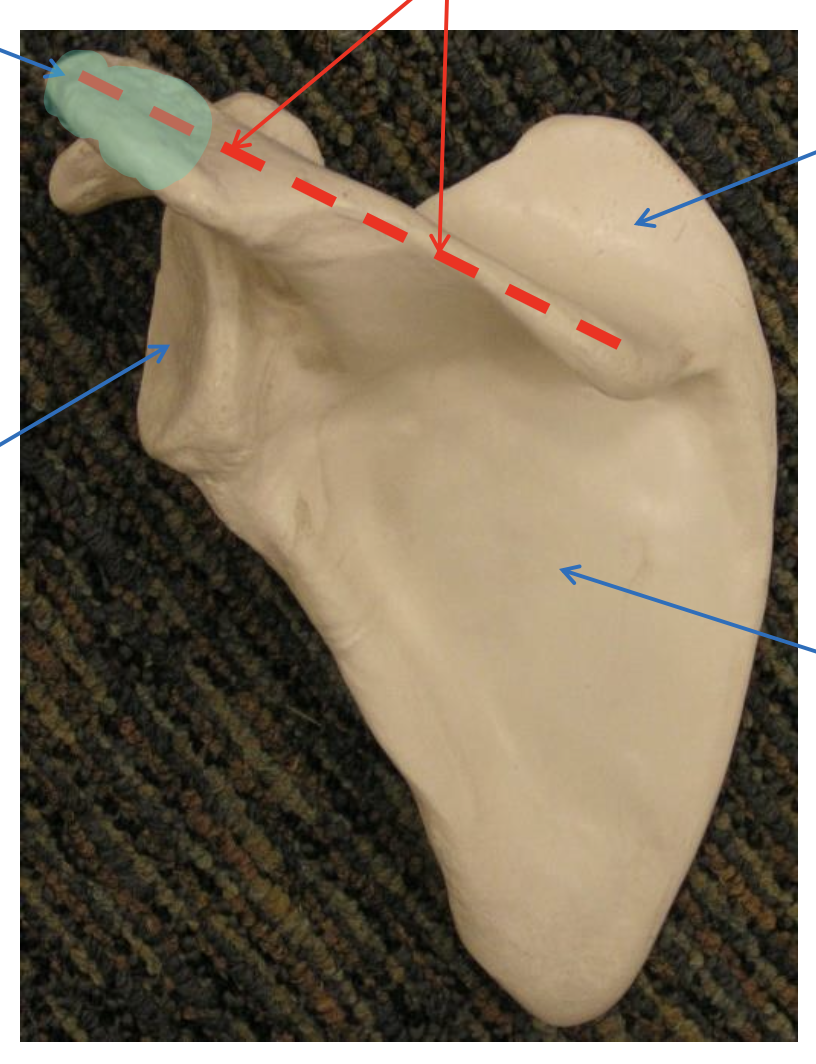
Name the highlighted region.
acromion process
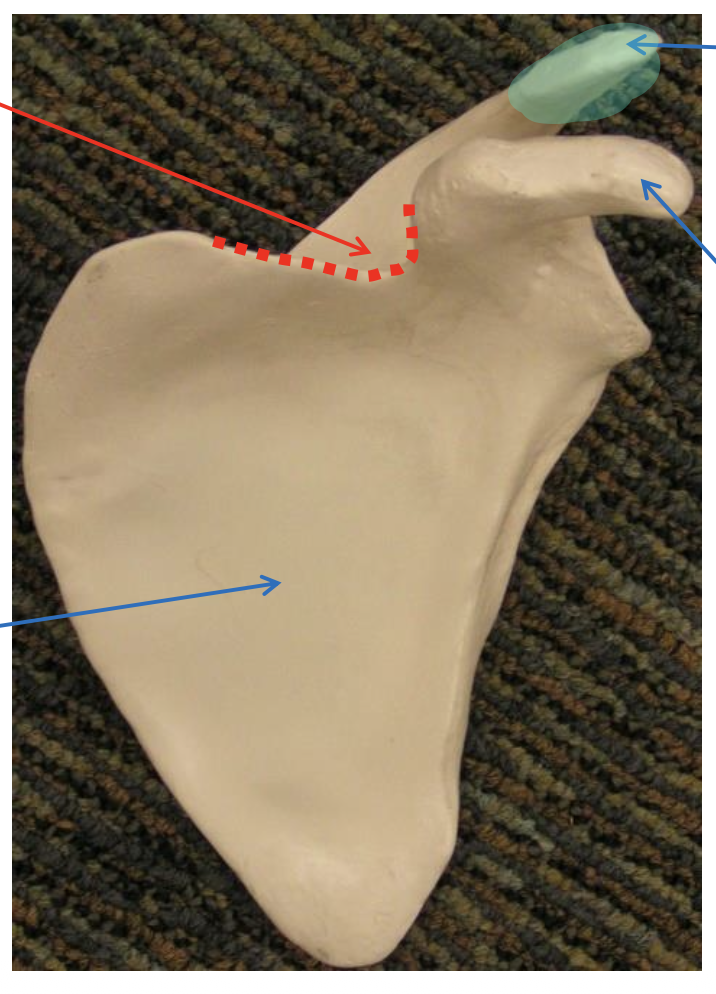
Name the highlighted region.
acromion process
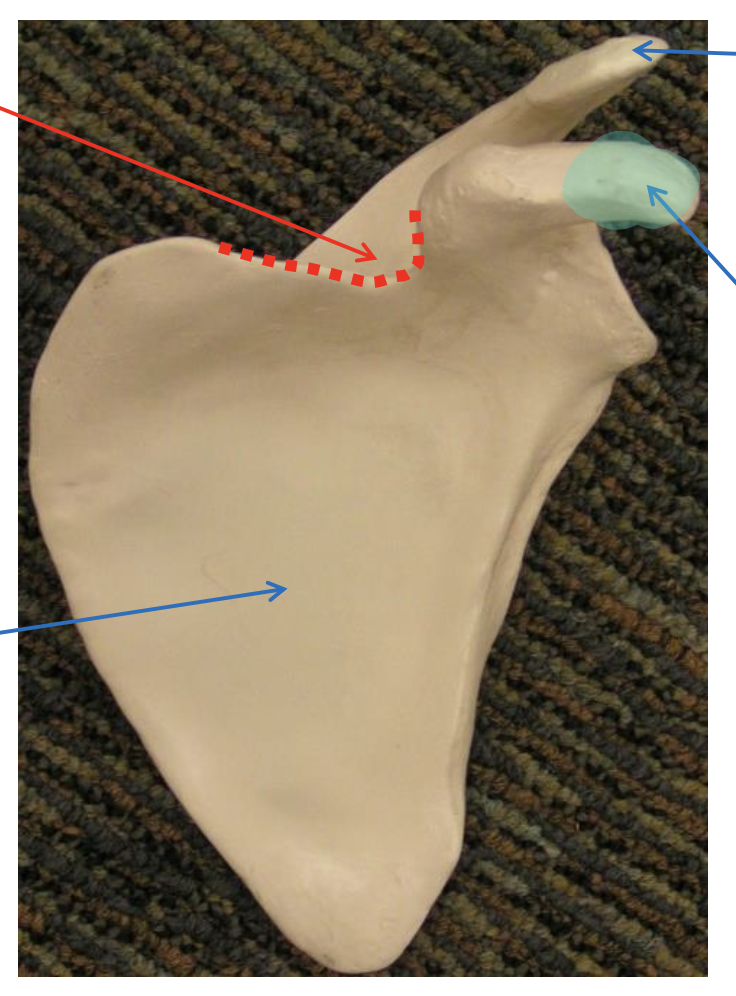
Name the highlighted region.
caracoid process
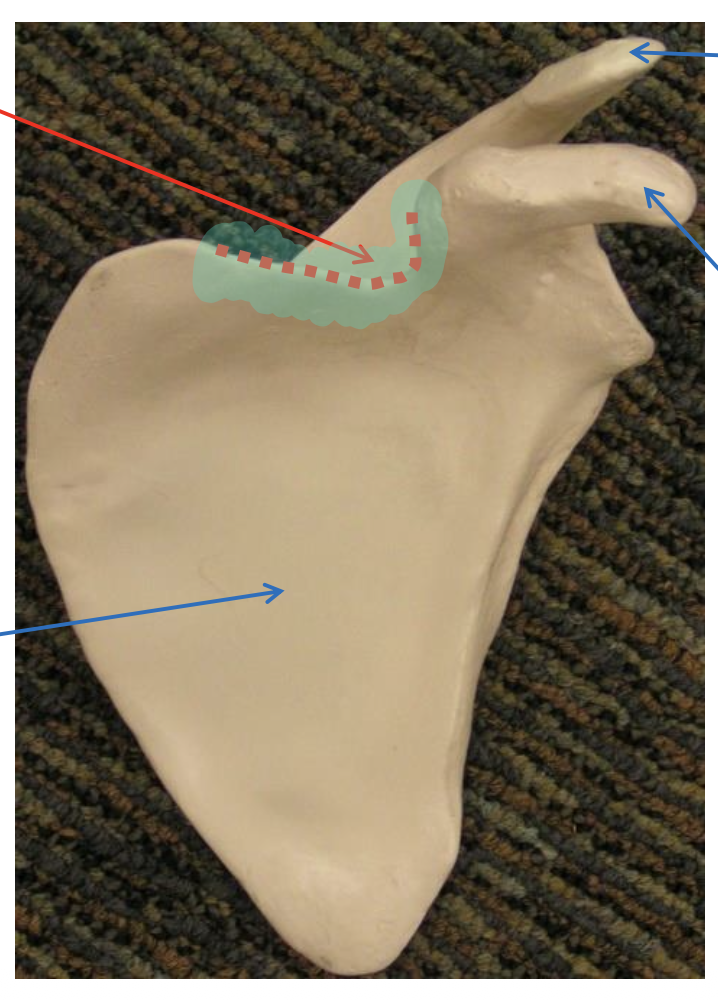
Name the highlighted region.
suprascapular notch
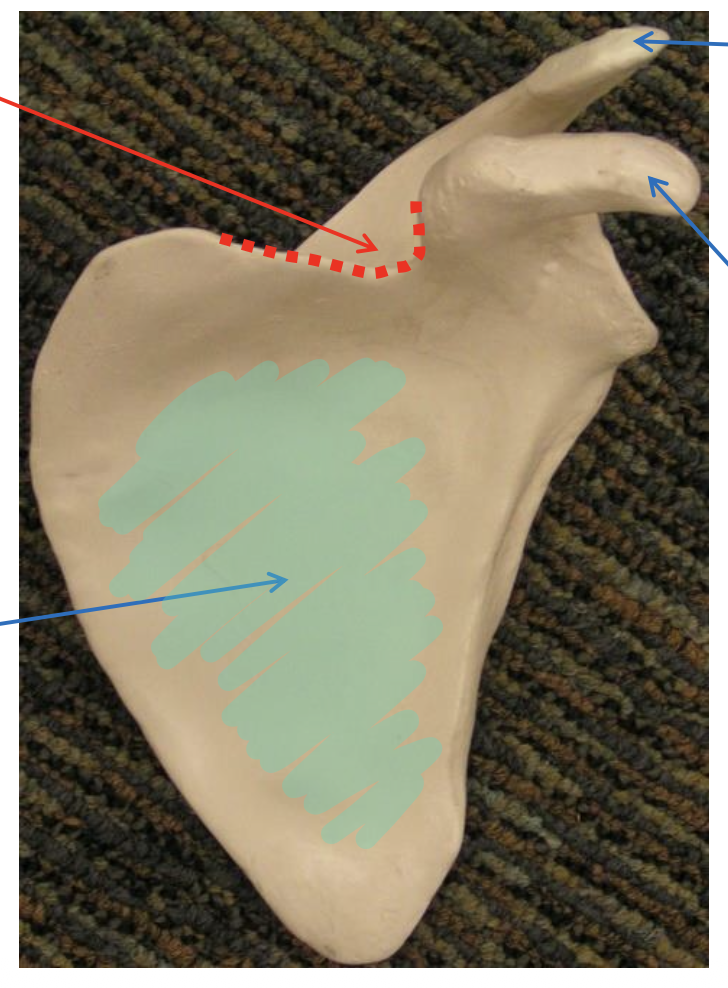
Name the highlighted region
subscapular fossa
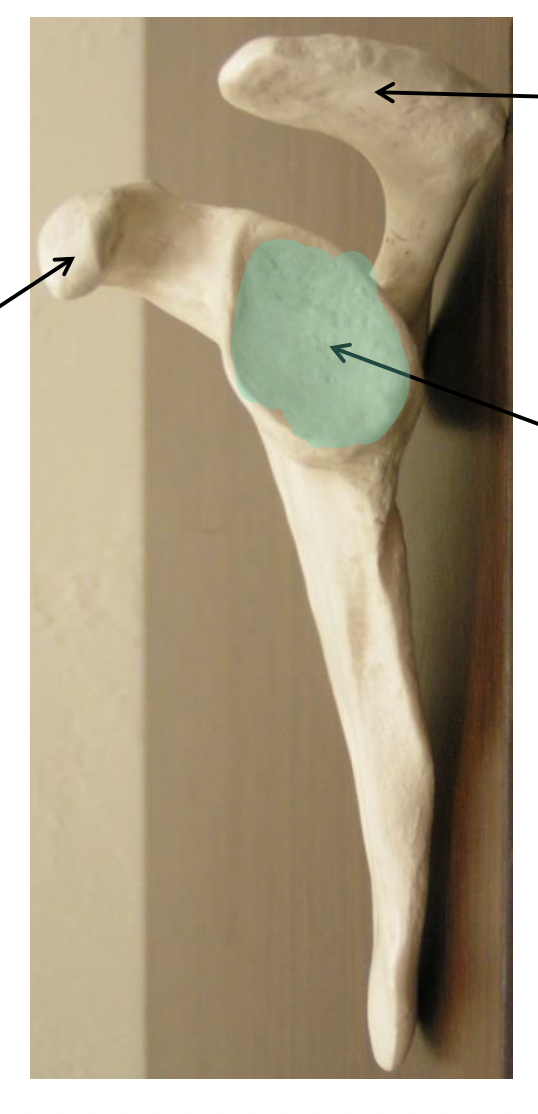
Name the highlighted region.
glenoid fossa
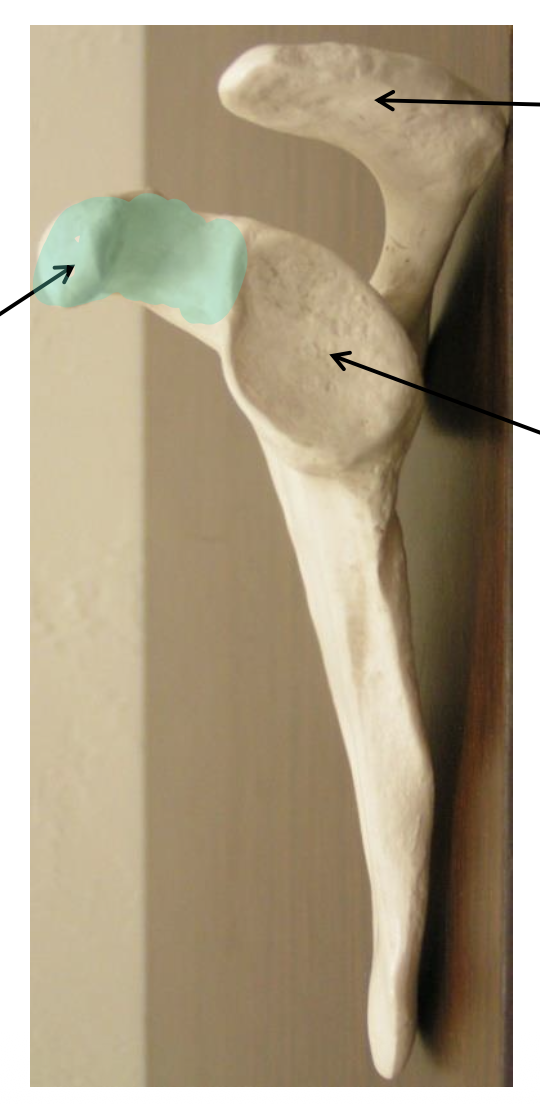
Name the highlighted region.
corocoid process
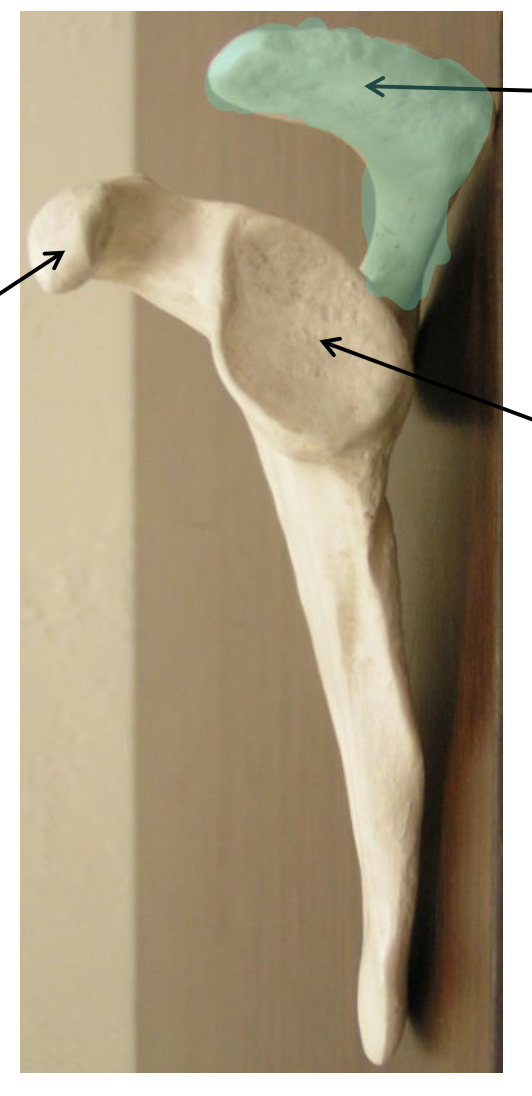
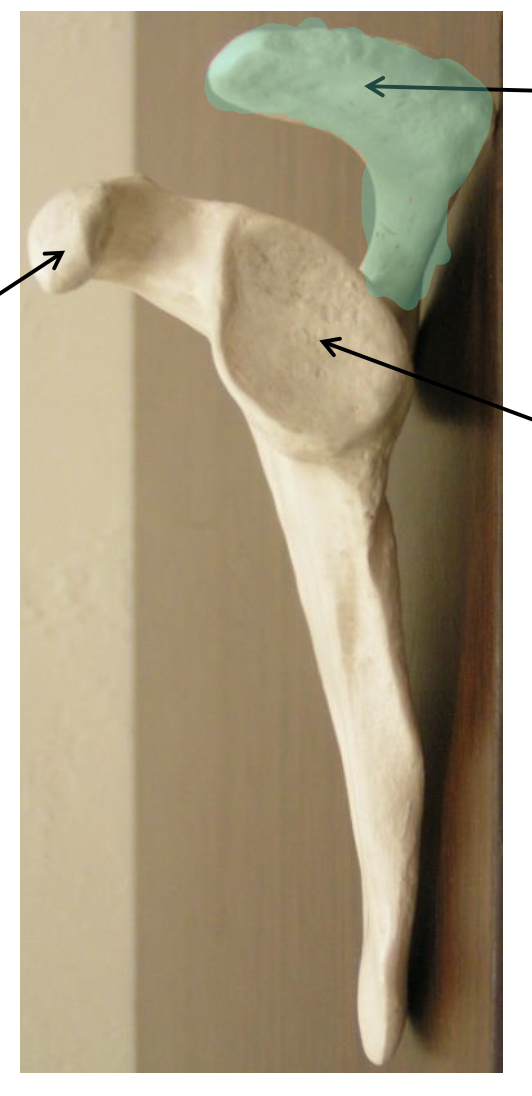
Name the highlighted region
acromion process
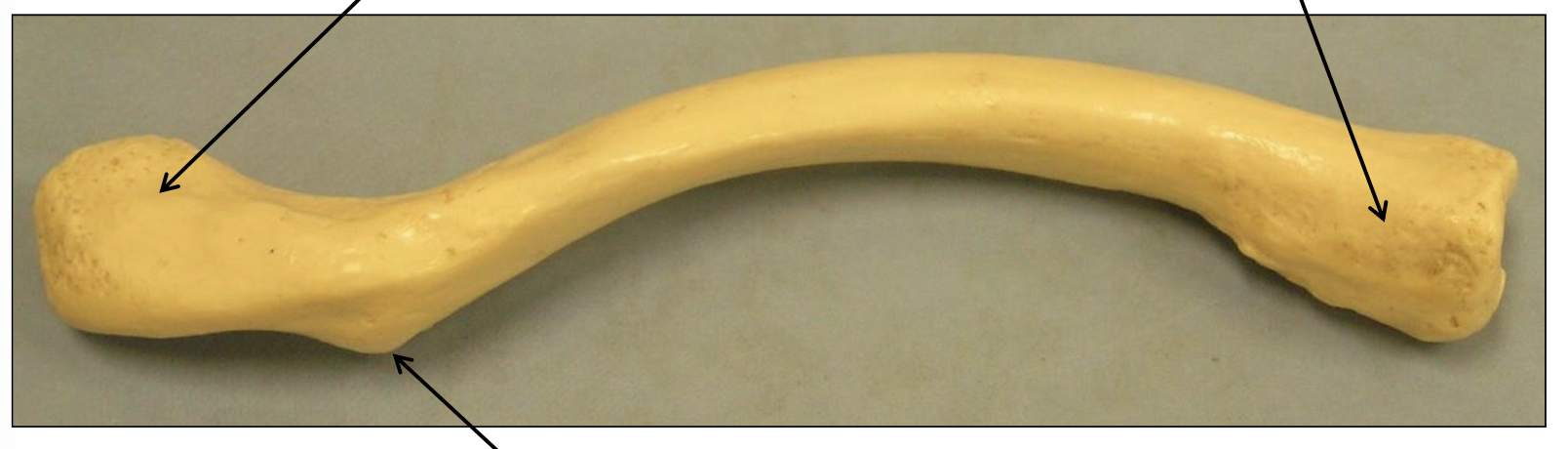
Name the bone.
clavicle
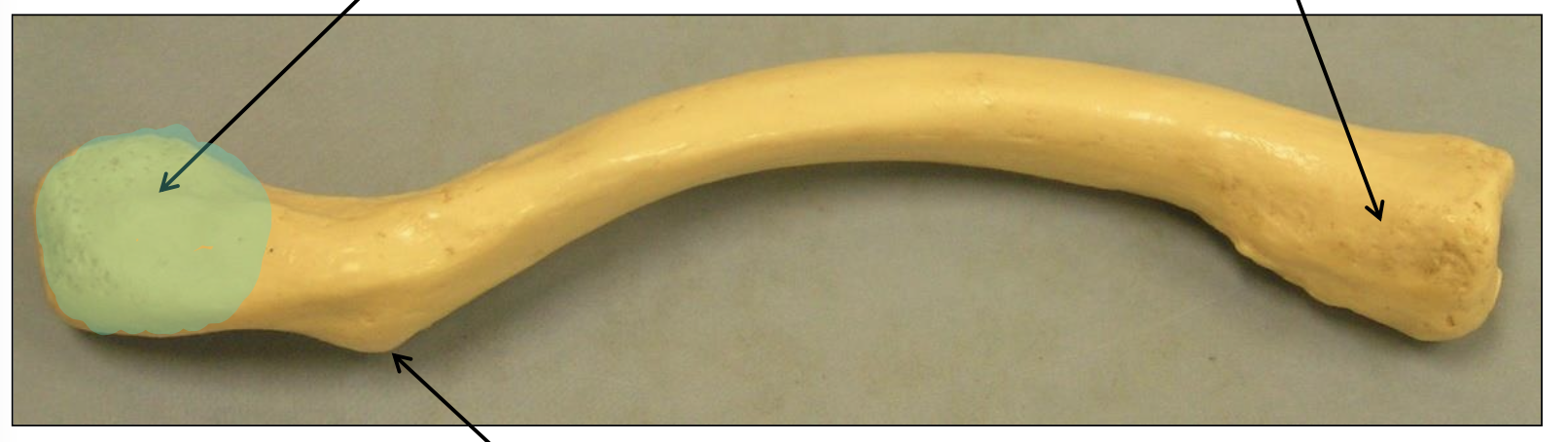
What end of the clavicle is highlighted in this image?
acromial
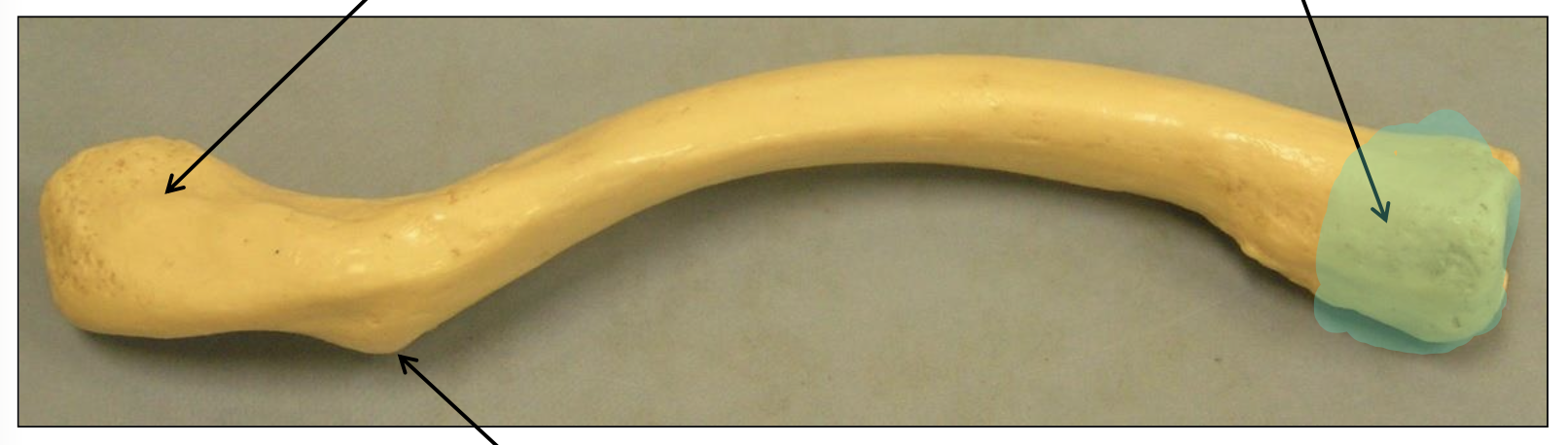
What end of the clavicle is highlighted in this image?
sternal
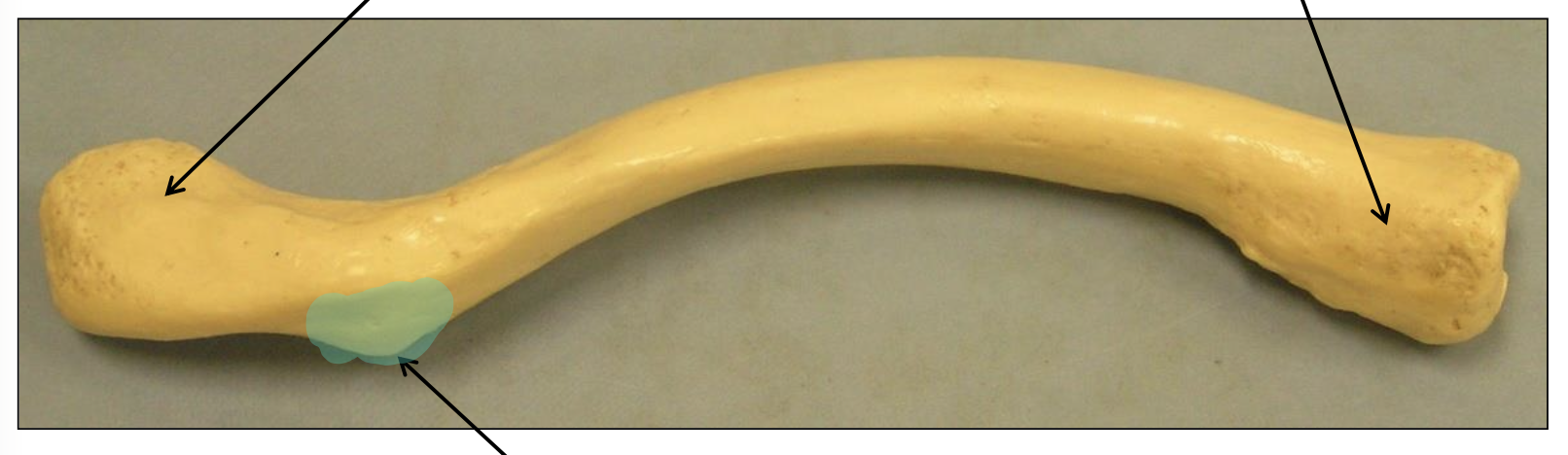
Name the highlighted region.
Conoid tubercle
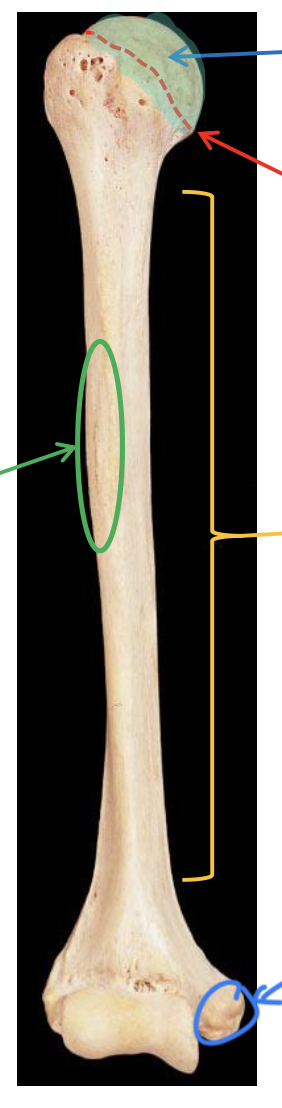
Name the highlighted region.
head
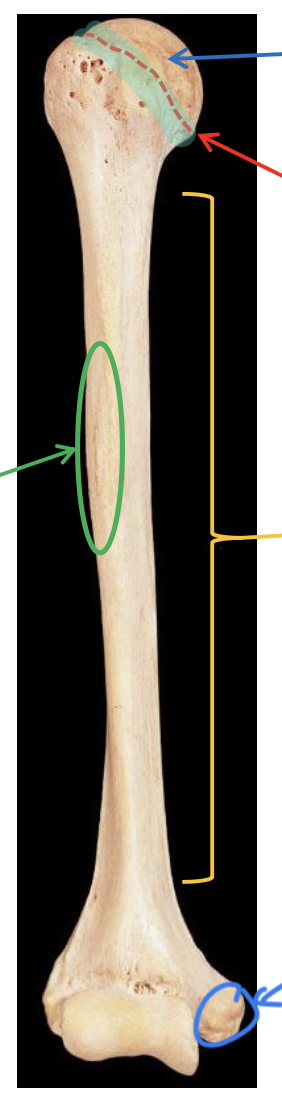
Name the highlighted region.
anatomical neck
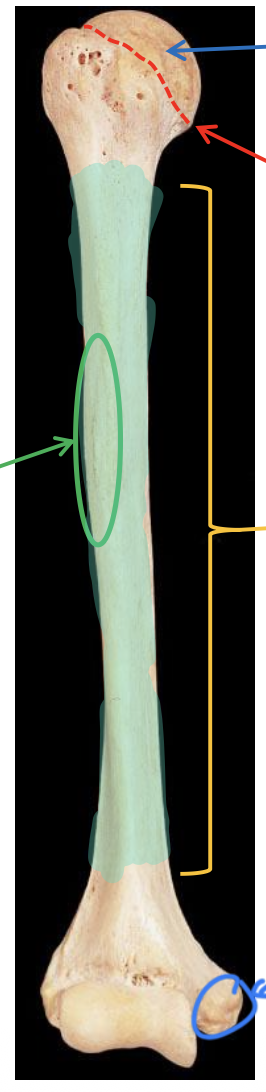
Name the highlighted region.
shaft
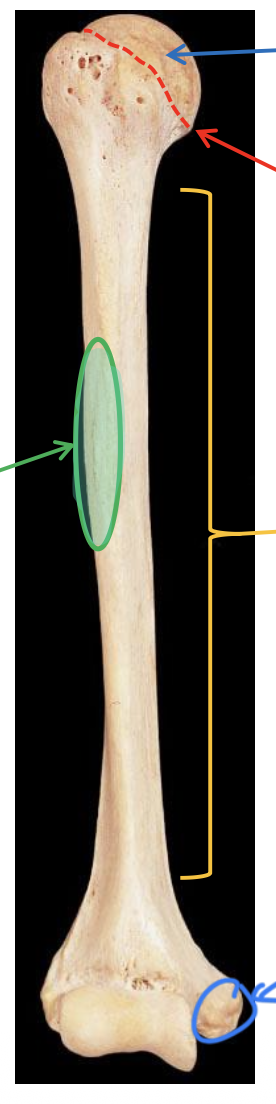
Name the highlighted region.
deltoid tuberosity
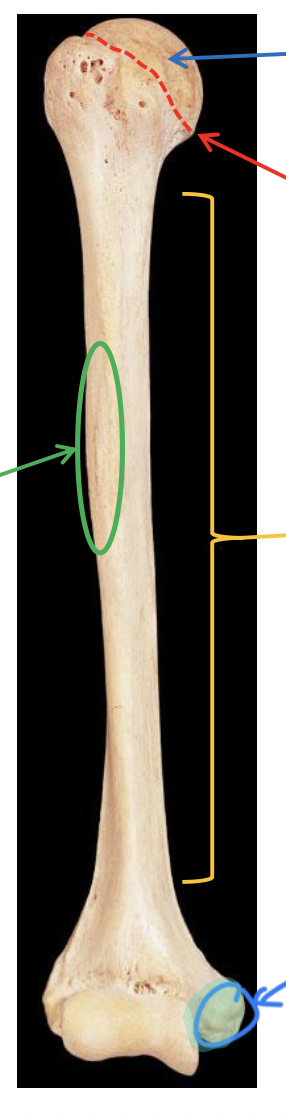
Name the highlighted region.
medial epicondyle
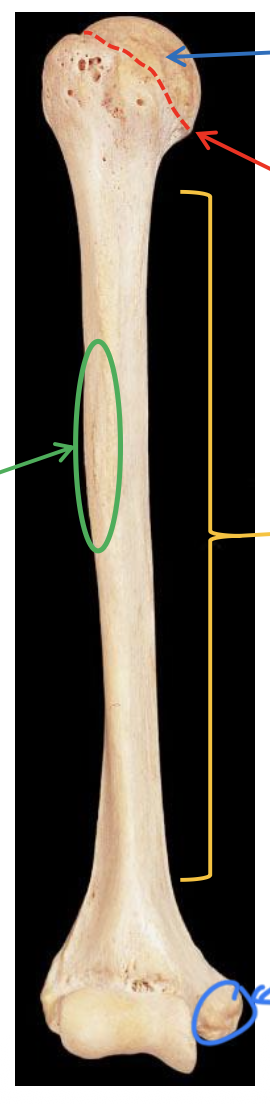
Name the bone.
humerus
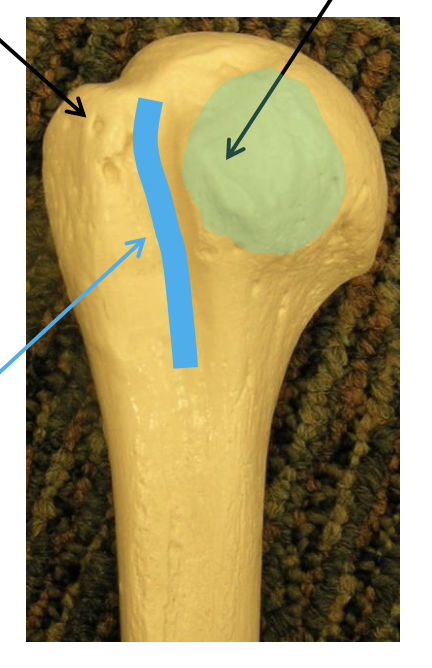
Name the highlighted region.
lesser tubercle (of humerus)
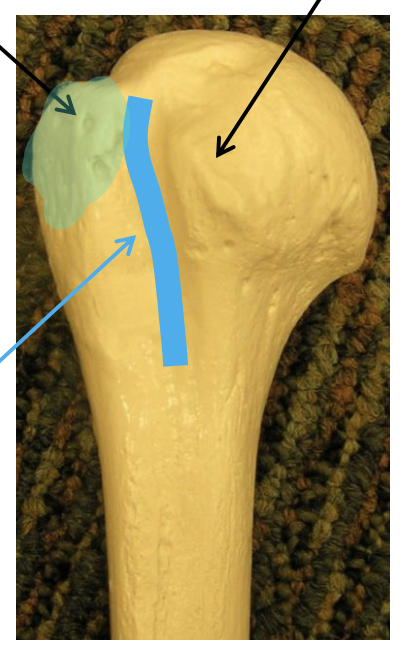
Name the highlighted region.
greater tubercle (of humerus)
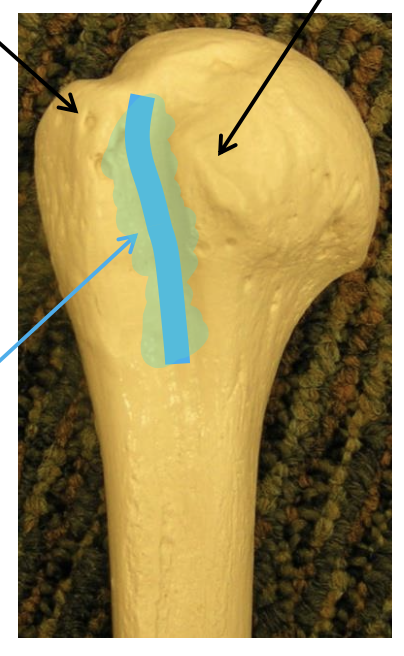
Name the highlighted region.
intertubular sulcus
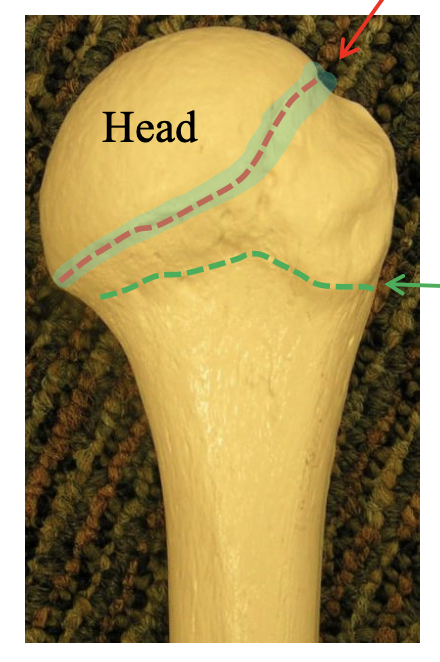
Name the highlighted region.
anatomical neck
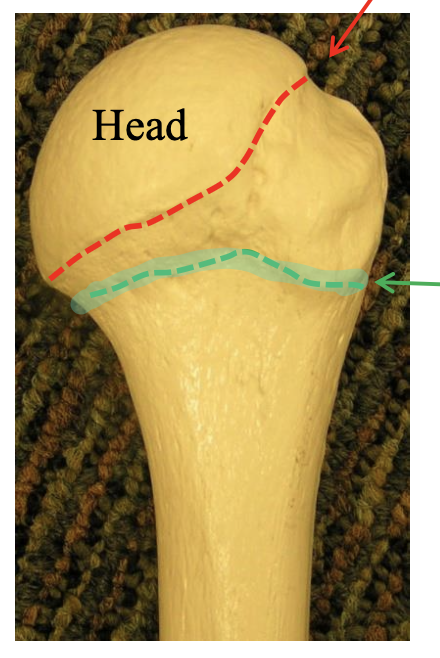
Name the highlighted region.
surgical neck
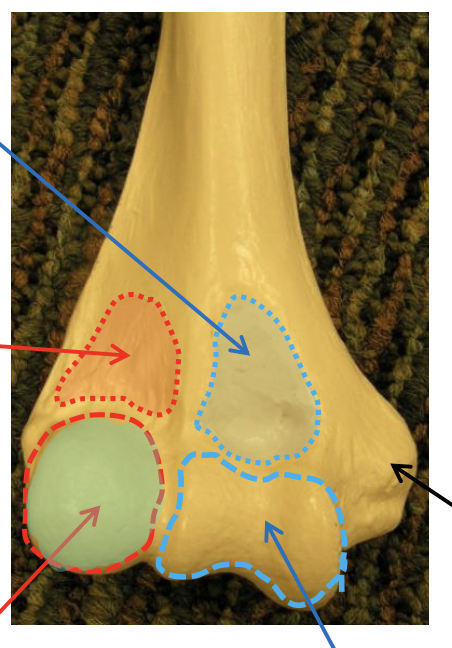
Name the (teal) highlighted region.
capitulum
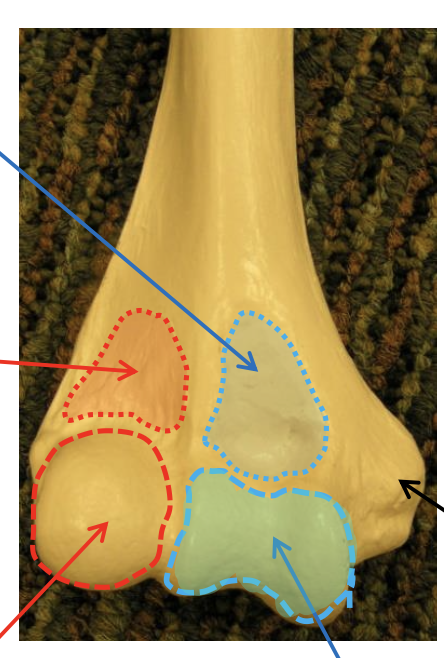
Name the highlighted (teal, lower) region.
trochlea
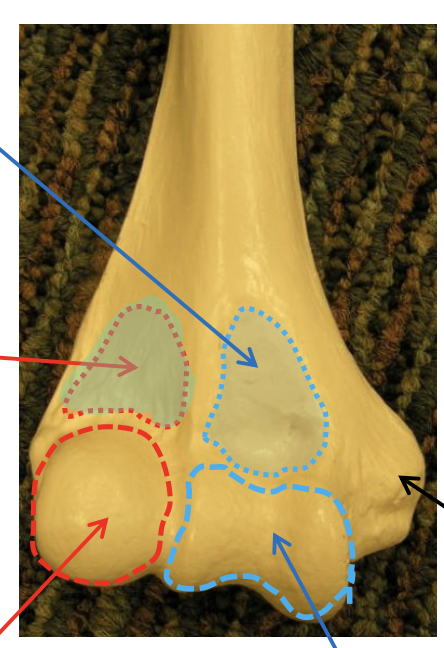
Name the highlighted (teal, left) region.
Radial fossa
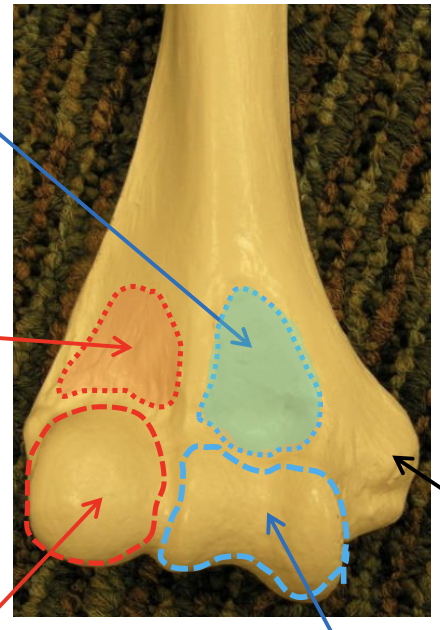
Name the highlighted (teal, right) region.
coronoid fossa
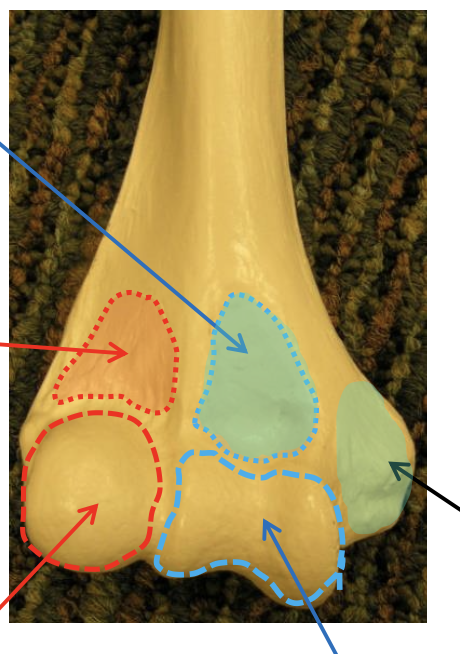
Name the highlighted (teal, rightmost) region.
medial epicondyle
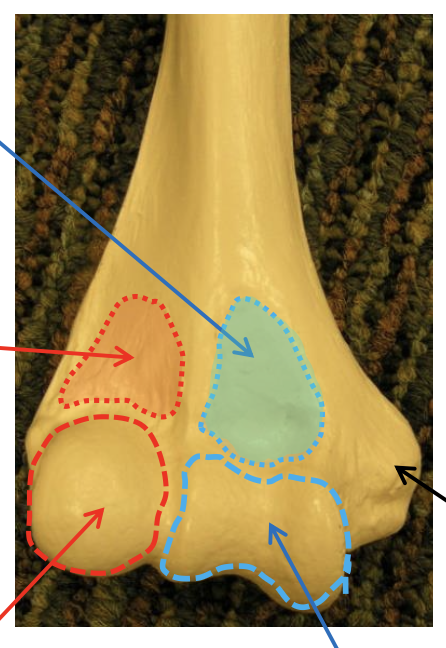
The image presents an anterior view of the distal
humerus
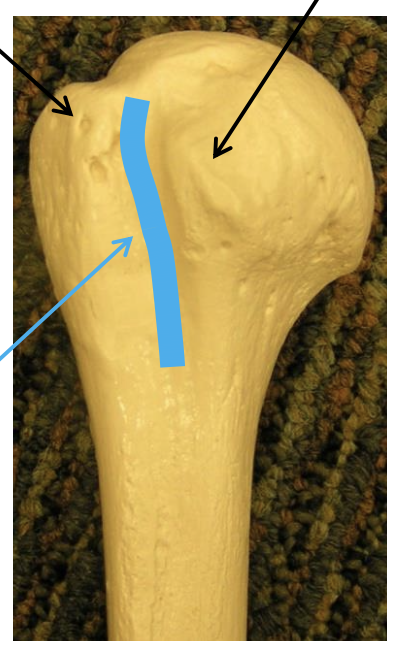
The image presents an anterior view of the proximal
humerus
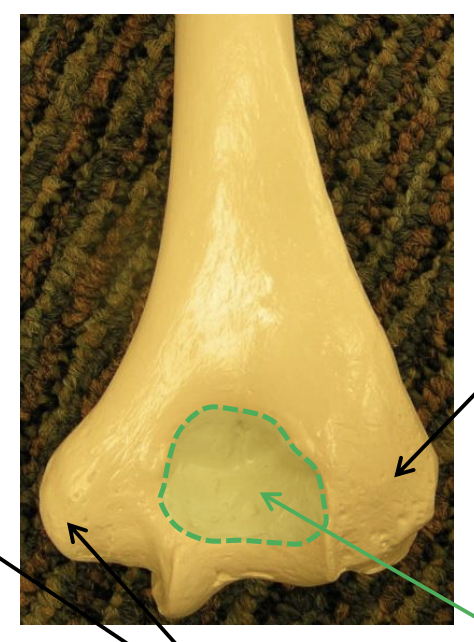
The image depicts the ____ view of the distal humerus.
posterior
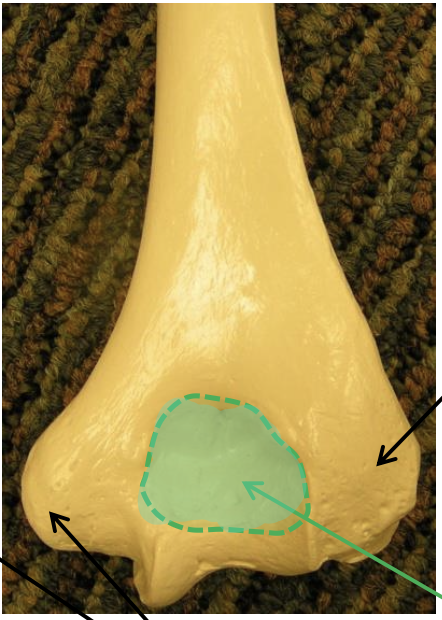
Name the highlighted (teal) region
olecranon fossa
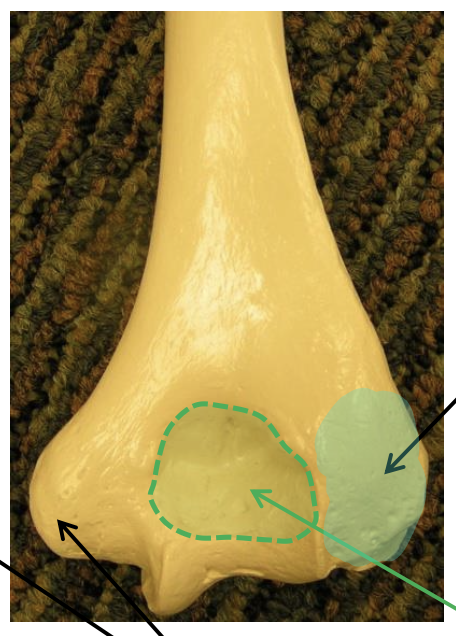
Name the highlighted (lateral, rightmost) region
lateral epicondyle
The radius and ulna combine to form the
antebrachium
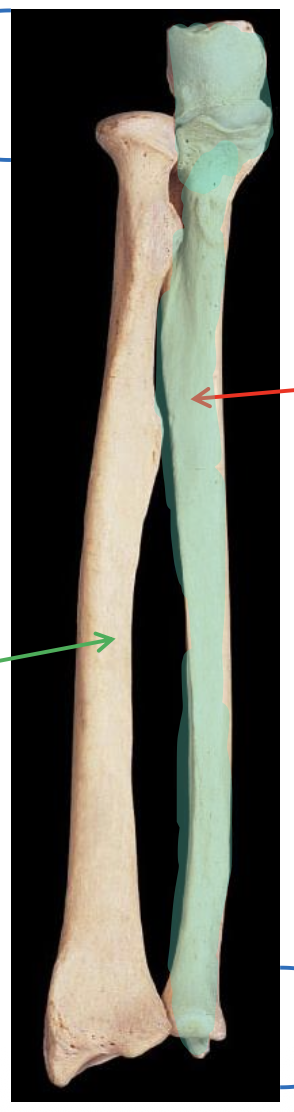
In this image of the antebrachium, name the highlighted bone
ulna
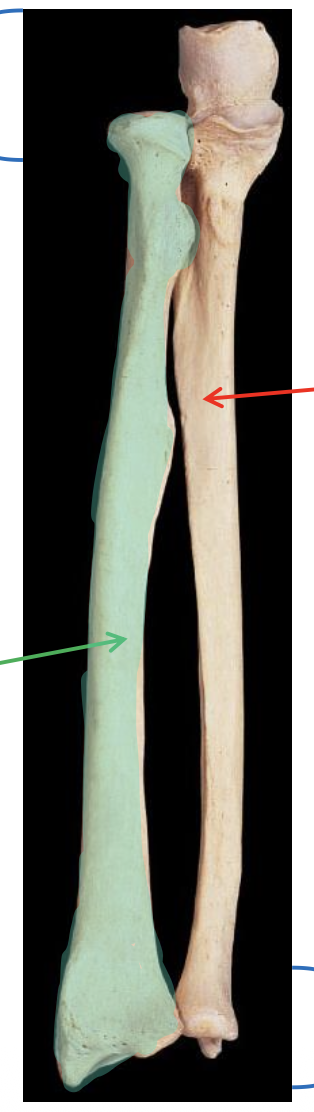
In this image of the antebrachium, name the highlighted bone
radius
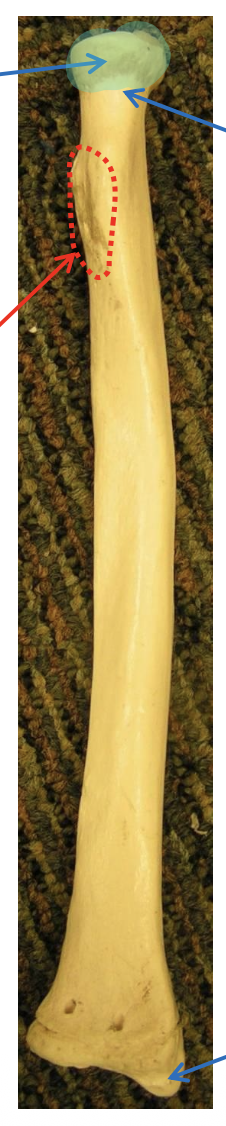
Name the highlighted region
head (of the radius)

Name the highlighted region
neck (of the radius)

Name the highlighted region
radial tuberosity
 Note
Note  Flashcards (112)