StemUp: AQA A level Biology 3.1.2 Carbohydrates
 Studied by 2 people
 Call with Kai
 Learn
Learn Practice Test
 Spaced Repetition
 Match
Match Flashcards
 Knowt Play
1/31

There's no tags or description
Looks like no tags are added yet.
Name | Mastery | Learn | Test | Matching | Spaced | Call with Kai |
|---|
No study sessions yet.
32 Terms
What three elements do carbohydrates contain? (1)
C, H and O
What are the three examples of monosaccharide monomers that make up carbohydrates? (3)
- Glucose
- Fructose
- Galactose
What type of sugar is glucose? (1)
Hexose
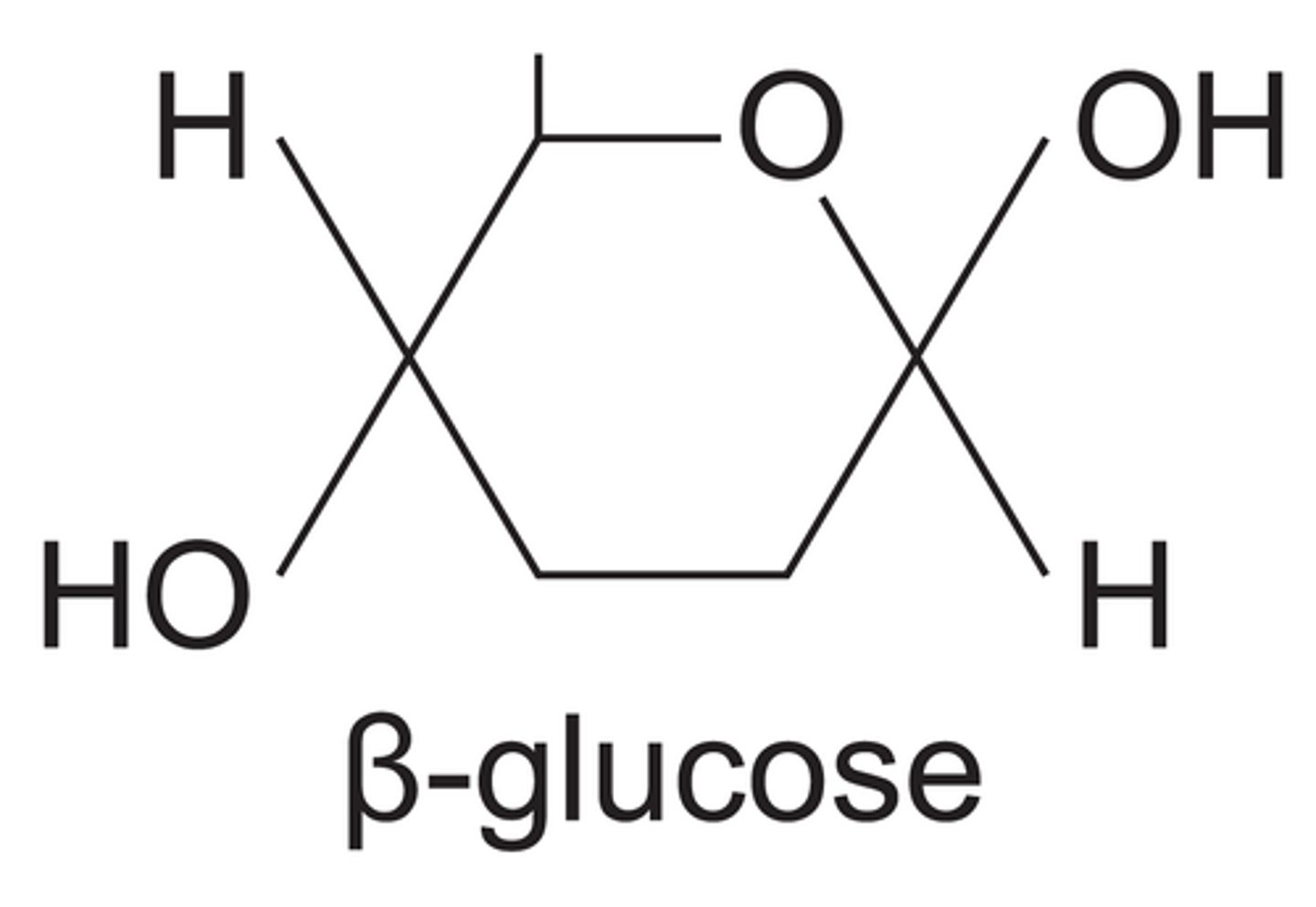
Draw a diagram of alpha glucose (1)
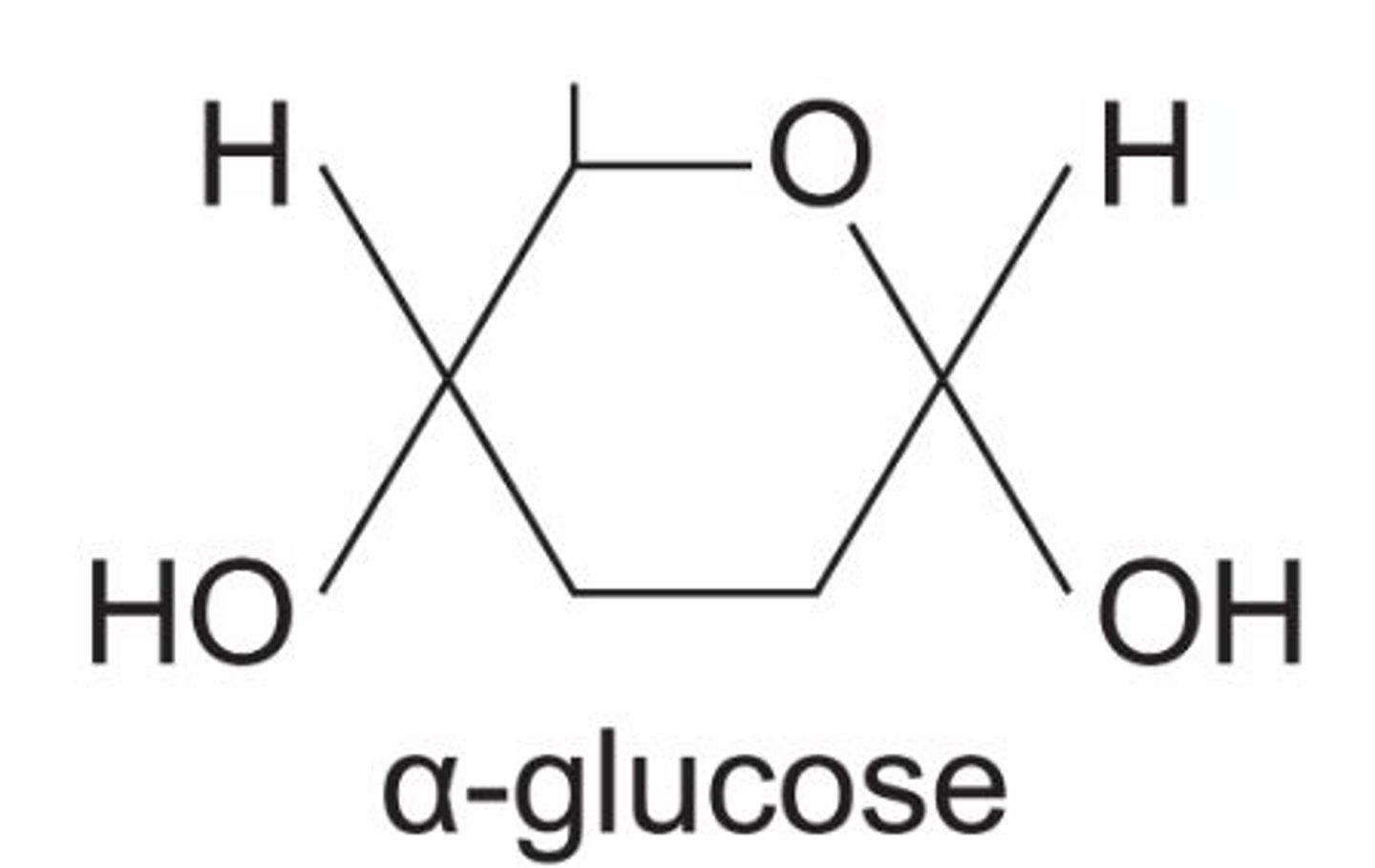
Draw a diagram of beta glucose (1)
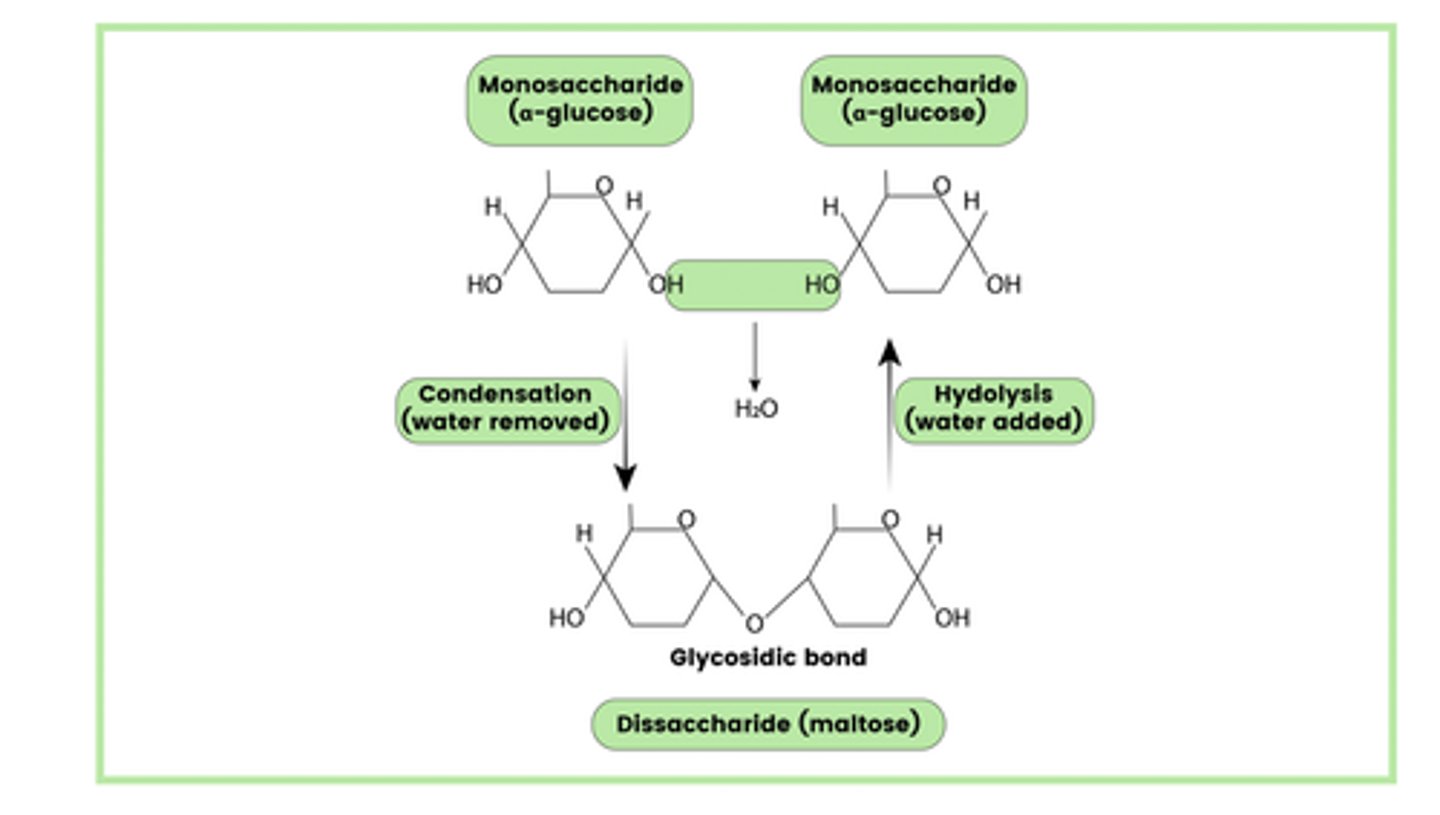
Describe how disaccharides are formed (3)
- Two monosaccharides are joined together
- By a glycosidic bond
- In a condensation reaction
Glucose + Glucose → (1)
Maltose + Water
Glucose + fructose → (1)
Sucrose + Water
Glucose + Galactose → (1)
Lactose + Water
Write the formation of disaccharide as a symbol equation (1)

Draw the formation of disaccharide as a diagram (1)
Describe how you would carry out a basic Benedict's test (2)
1. Heat sample with Benedict's reagent in water bath
2. If reducing sugar is present, the sample will form a brick red ppt
Describe how you would carry out a test for non reducing sugars? (5)
1. Take a small sample of the solution you are testing and heat with Benedict's reagent to confirm the negative result
2. Hydrolyse another sample by heating with dilute acid e.g. HCL
3. When cooled, neutralise the sample by adding an alkali e.g. NaOH
4. Add the same volume of Benedict's reagent to another sample of your solution and heat in a water bath
5. A positive brick red precipitate indicates a non-reducing sugar (such as sucrose) was originally present in the sample
Describe how you would carry out a semi-quantitive Benedict's test (2)
1. Perform Benedict's test as normal with two different test tubes but ensure control variables are standardised
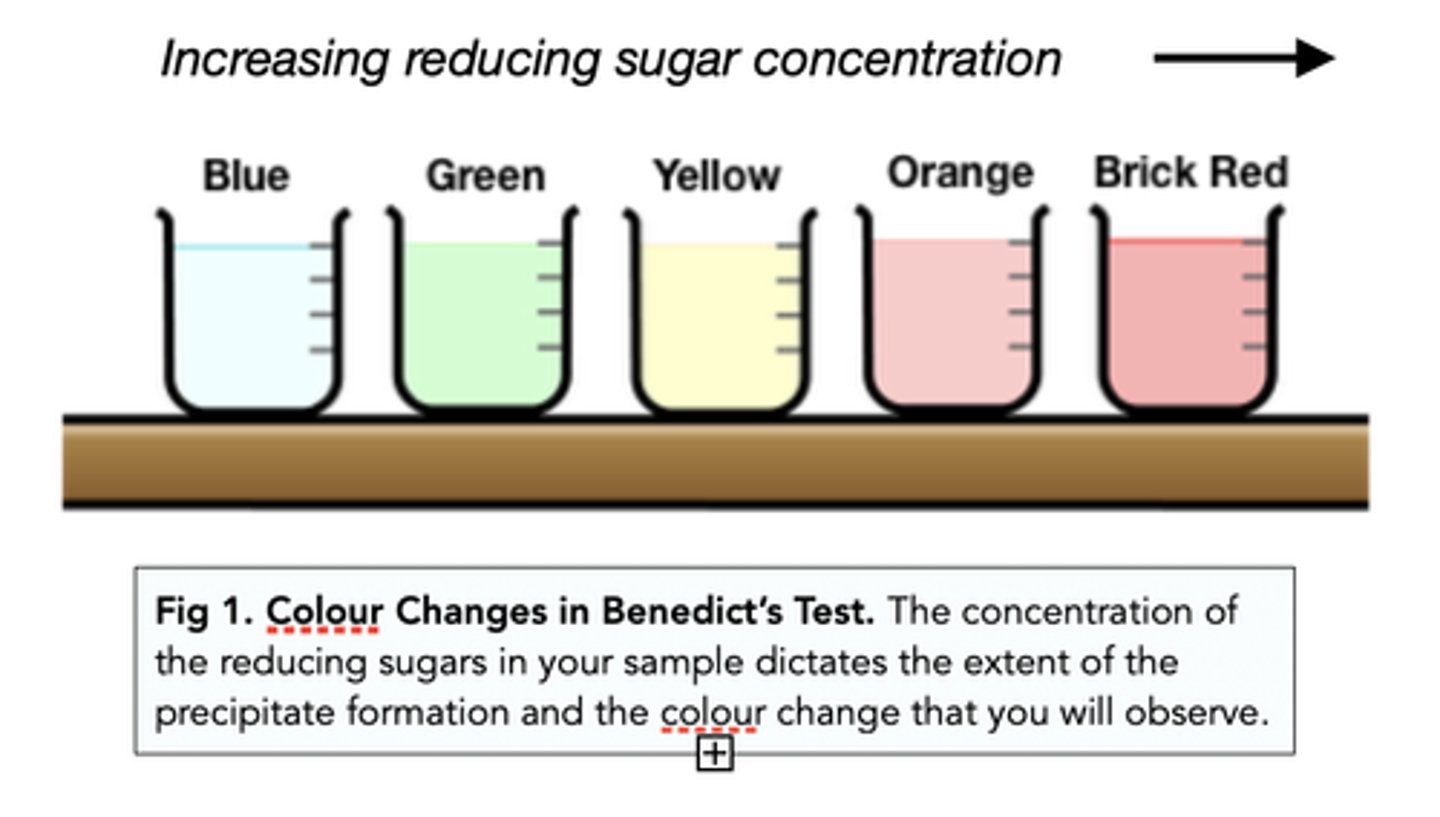
2. Resulting colour / amount of precipitate indicates amount of reducing sugar
What is the colour change that occurs with the precipitate in the Benedict's test? (1)
The further the colour change, the higher the concentration of reducing sugar
How do you ensure that control variables are standardised in quantitive Benedict's tests (3)
- Use the same volume of each sample
- Use the same volume of Benedict's reagent
- Heat both samples at the same temperature for the same period of time
What is a common issue that arises when analysing the results of a semi-quantitive Benedict's test? (1)
Colour is subjective so different people will see different colours
Describe how you would carry out a quantitive Benedict's test (6)
1. Perform Benedict's test on reducing sugar solutions of known concentrations
2. Standardise the controlled variables (see other flashcard)
3. Use a colorimeter to measure the absorbance value of each of the known concentrations
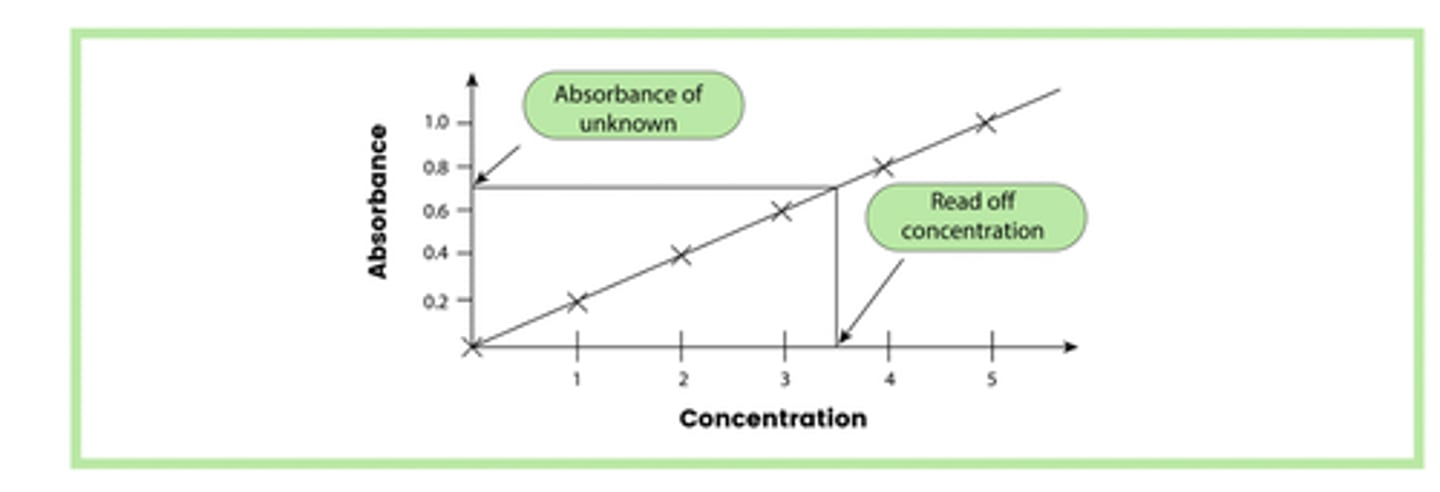
4. Plot a graph of known concentration (x-axis) against absorbance value (y-axis) - a calibration curve
5. Repeat Benedict's test with your unknown samples (again standardising your controlled variables)
6. Use absorbance value of the unknown sample to read off the calibration curve to find the concentration of reducing sugars
Describe how you would use the absorbance value in a calibration curve to find the concentration of reducing sugars (1)
What are the three main examples of polysaccharides? (3)
- Starch
- Glycogen
- Cellulose
Which carbohydrates are reducing sugars? (3)
- All monosaccharides
- Lactose
- Maltose
Which carbohydrates are non-reducing sugars? (2)
- All polysaccharides
- Sucrose
Describe the structure of starch (2)
- Long branched chains of alpha-glucose molecules
- That are linked together by glycosidic bonds during condensation reactions
Where is starch stored in a plant? (2)
- In the starch grains
- That are located in the cytoplasm of plant cells
How is starch adapted to its function as a storage carbohydrate (4)
- Large, so it cannot cross the cell surface membrane and leave the cell
- Insoluble and therefore osmotically inactive, i.e., it cannot draw in water by osmosis, which could lead to cell damage
- Has a helical shape and therefore it forms a compact store
- Branched so that glucose can easily be released from its ends for respiration
Describe how you would carry out the test for starch (2)
1. Add 2-3 drops of iodine/potassium iodide solution
2. If starch is present, the color will change from yellow/orange to blue/black
Describe the structure of glycogen (2)
- Long branched chains of alpha glucose molecules
- That are linked together by glycosidic bonds during condensation reactions
Where is glycogen stored in animals? (1)
Stored in large amounts in liver and muscle tissues
Describe how glycogen is adapted to its function as a storage carbohydrate (2)
1. Insoluble and therefore, osmotically inactive
2. Similar structure to starch but with more branches
3. So that it can be hydrolysed more rapidly for respiration
Describe the structure of cellulose (2)
- Long straight chains of beta glucose molecules
- That are linked together by glycosidic bonds during condensation reactions
Where is cellulose found? (1)
Cell wall of plants
How is cellulose adapted to its function as a structural component? (5)
1. Long chains of beta glucose joined together by glycosidic bonds in condensation reactions
2. Adjacent chains joined together by hydrogen bonds
3. This produces a 3D structure - microfibril
4. This provides strength and rigidity to the cell wall
5. Which prevents the cell from bursting
 Note
Note  Flashcards (50)