PsychSocterms from AAMC
 Call Kai
 Learn
Learn Practice Test
 Spaced Repetition
 Match
Match Flashcards
 Knowt Play
1/94

There's no tags or description
Looks like no tags are added yet.
Name | Mastery | Learn | Test | Matching | Spaced | Call with Kai |
|---|
No analytics yet
Send a link to your students to track their progress
95 Terms
depth of processing
Depth of processing is generally used to explain superior episodic memory with increasing depth of the encoding task.
Proactive interference
Proactive interference involves the interference of information from long term memory with new information.
Social stratification
Social stratification refers to the systematic ranking of individuals or groups in a society based on social, economic, and cultural factors.
Semi Periphery
Semi-periphery nations are relatively weak in economic and political infrastructure but are developing their economies and governments. They are not necessarily dependent on another country.
Social status vs. roles; social & cultural capital; cultural values & norms; material vs. symbolic culture
Social Status: A social position (ascribed = birth; achieved = earned).
Role: Behaviors/expectations tied to a status.
Example: Student → attend class, study.Social Capital: Resources from social networks.
Example: Getting a job through connections.
Cultural Capital: Non‑financial assets (skills, knowledge, credentials).
Example: Degree, professional speech.Cultural Values: Beliefs about what is good/important.
Example: Individualism in the U.S.
Norms: Expected behaviors (folkways, mores, taboos).
Example: Saying “thank you.”Material Culture: Physical objects.
Example: Clothing, technology.
Symbolic Culture: Ideas, beliefs, symbols.
Example: Language, religion, the flag.
Conflict theory?
A macro‑level sociological perspective that sees society as shaped by power struggles between groups competing for limited resources.
Argues that social structures benefit the dominant group and maintain inequality.
So, generational status, political power and resource allocation inequality is something conflict theorist will talk about.
Social Constructionism
A theory stating that reality, knowledge, and meaning are created through social interaction and shared agreement, not inherent in objects themselves.
Example: age, medicalization, illness experience are social constructs
social gradient in health
Impact in health care experience due to social status. Like wealthier people live longer than poor people.
Intersectionality?
Intersectionality refers to how intersections from different social backgrounds (such as race, ethnicity, gender, class) can impact somebody.
Linguistic Relativity
Language shaping cognition. Like if your language can distinguish many colors you visually differentiate colors
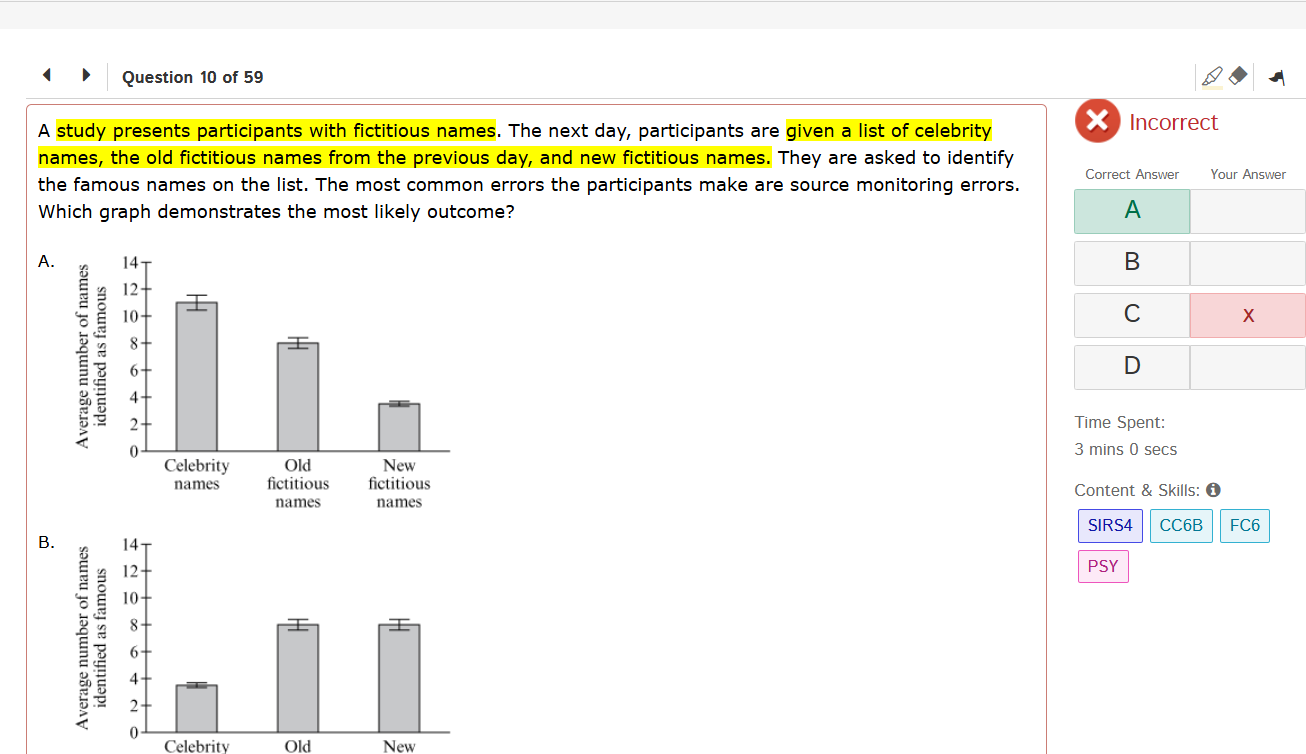
Source monitoring error: Your mind mistakes familiarity of old fictitious name already heard as celebrity name known. Less new fictitious name mistaken as celebrity.
Conversion Disorder
where real neurological symptoms (movement, sensory, or seizure‑like) occur without an identifiable neurological disease, due to disrupted brain–body communication rather than structural damage
Retrograde amnesia vs Dissociative disorder
Retrograde amnesia: loss of memory for previously stored information.
Dissociative disorder: where individuals cannot recall important autobiographical information, usually related to a trauma or stressor.
Cultural capital
Cultural capital refers to how someone’s cultural background might provide certain advantages to individuals to distinguish themselves from the rest of the society.
Ex: student from an upper‑middle‑class family grows up going to museums, reading classic literature, and learning how to speak confidently.
Different types of Poverty: Marginal, Relative, Structural, Absolute
Absolute: broke af, cannot meet basic survival needs.
Marginal: person has some resources but lives right on the edge, lack of good employment. Ex: living pay check to pay check
Relative: Poverty defined in comparison to the average standard of living in a society. Ex: students from diff socioeconomic situations have diff lives outside school.
Structural: Poverty built into system. Ex: A town loses its major factory employer.
In group vs Out Group, Primary vs Secondary Group ties
In‑group favoritism = you favor your own group.
Out‑group derogation = you view the other group less positively.
Primary: Family and Close friends.
Secondary: More formal, coworkers or classmates
What is stratification?
Stratification indicates that certain communities experience unequal access to resources and opportunities in a society.
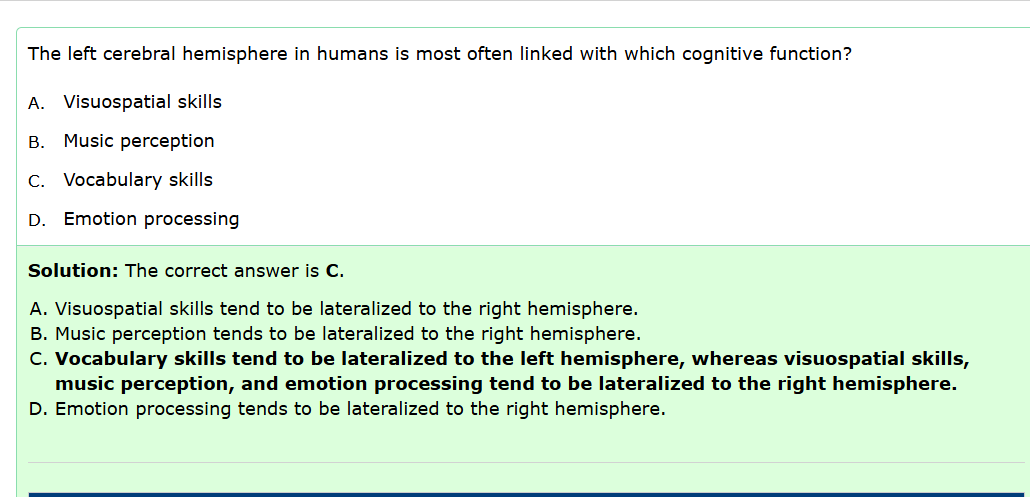
left vs right cerebral hemisphere
Intelligence: analytical vs interpersonal vs emotional
Emotional intelligence refers to the ability to perceive, express, understand, and manage one’s emotions. Ex: Self aware and delaying gratification.
Interpersonal: empathize with people
Shaping meaning
Shaping is a form of operant conditioning where complex behaviors are gradually acquired through the progressive reinforcement of simpler behaviors
Research Designs: Randomized, Correlational, Experimental, Double blind.
Randomized research design is typically used to measure the effectiveness of a new intervention or treatment.
Correlational research designs investigate the naturally occurring relationship between variables, without any experimental manipulation.
Experimental: where researchers manipulate an independent variable to measure its impact on a dependent variable.
Double-blind: neither the research participants nor the researchers collecting the data are aware of which study condition participants have been assigned to.
What is centration?
Centration refers to the tendency to focus on just one feature of a problem, neglecting other important aspects.
Reproductive vs Prospective memory
Reproductive memory refers to the fact that information retrieved from long-term memory may not be fully accurate.
Prospective memory is memory for tasks which must be completed in the future.
What happens when you are REM sleep deprived one night?
Evidence from sleep studies indicate that, after being REM-deprived the night before, the volunteer is going to exhibit “REM rebound” and spend more hours in REM sleep than usual.
In response to stress, what part of the brain initiates signals to the endocrine system?
Hypothalamus
dichotic listening task
presenting two different auditory messages, one to each ear.
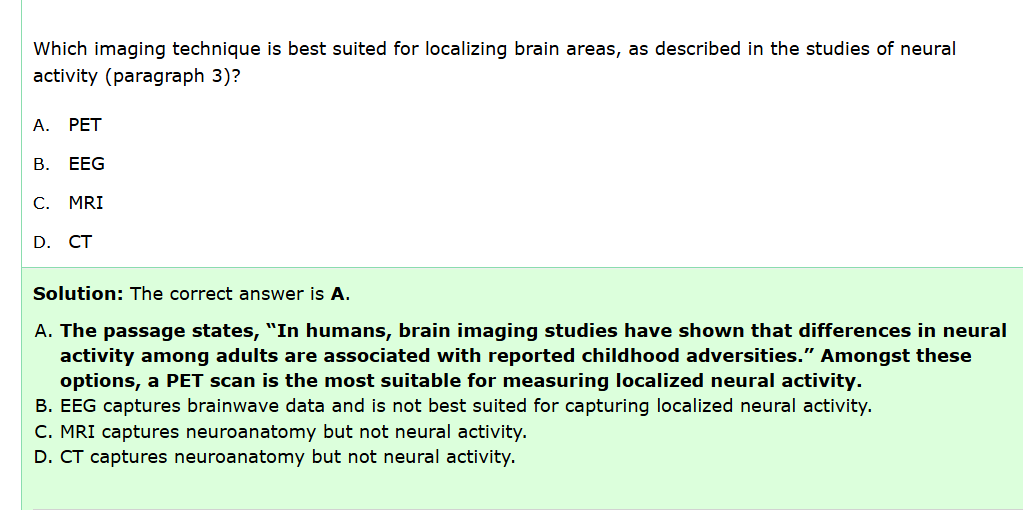
MRI cannot be confused with fMRI which can determine areas of increased brain activation based on differential oxygen use
What is social facilitation?
Social facilitation is the phenomenon where the presence of others increases physiological arousal, which improves performance on simple or well‑practiced tasks and impairs performance on complex or unfamiliar tasks.
Assimilation v/s Group think
Assimilation is a concept from Piaget’s theory of cognitive development which involves the incorporation of new information into an existing schema. This is not relevant to the described scenario.
Groupthink occurs when members of a cohesive group emphasize agreement at the expense of critical thinking when arriving at a decision. This is most relevant to the described scenario. Group think does not require you to have a polarizing agreement at the end, you just gotta agree.
What is self-verification?
Self-verification refers to the tendency to seek out (and agree with) information that is consistent with one’s self-concept.
Neurotransmitters and their function: GABA, Serotonin, Acetylcholine, Endorphins
GABA: inhibitory neurotransmitter related to anxiety
Endorphins: associated with feelings of wellbeing, or endogenous pain killer
Serotonin: involved in the regulation of both mood (specifically, aggression) and appetite (it is also used to regulate intestinal movements).
Acetylcholine: movement and muscle contraction, also digestion but not anger or aggression.
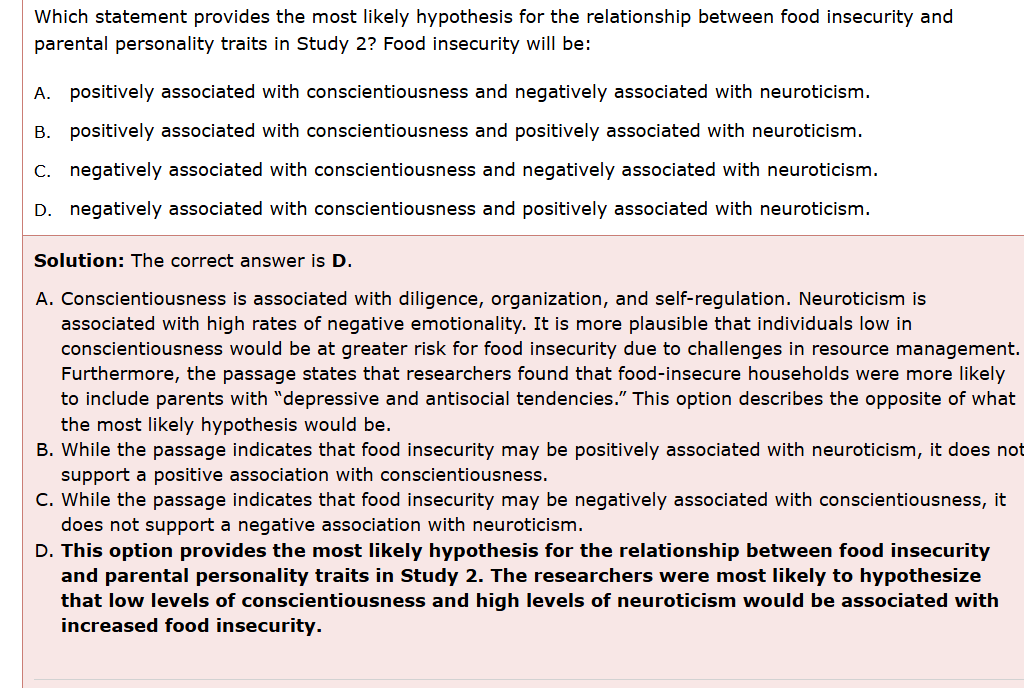
Conscientiousness v/s Neuroticism
Conscientiousness is the personality trait describing how organized, responsible, disciplined, reliable, and goal‑directed a person is.
Neuroticism is anxiety and insecurity in stressful situation
High food insecurity means high neuroticism and low conscientiousness
Incentive theory v/s Drive theory v/s Expectancy-value theory v/s Self determination theory
Incentive theory: extrinsic motivators
Drive: physiological needs
EVT: motivation varies depending on how a person evaluates their likelihood of success at an activity.
Self-determination theory: innate need for psychological growth.
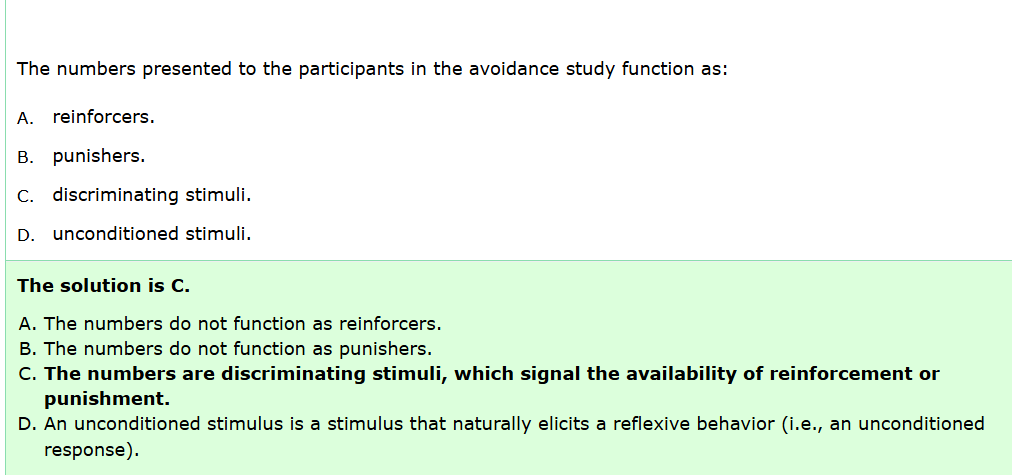
reinforcers = increase likelihood of a certain behavior
punishers = decrease likelihood of a behavior
discriminating stimuli = we use the same stimuli (numbers) but it can give either shock or monetary reward
Extrinsic vs External motivation
Extrinsic motivation refers to any motivation that results from incentives to perform a behavior that are not inherent to the behavior itself. External motivation is described as social pressure, which is an example of extrinsic motivation.
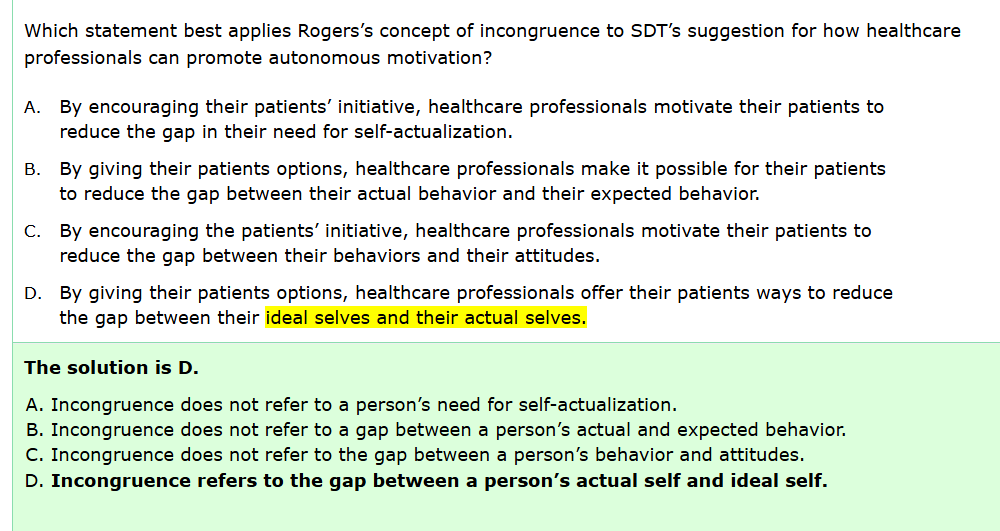
know what incongruence means = gap between a person’s actual self and ideal self.
what is autonomous motivation?
The desire to reach one’s goals creates a drive that individuals are motivated to fulfill. Individuals are motivated to initiate behaviors that are consistent with their values.
What is glass escalator?
suggests that men who pursue occupations that have high proportions of women (such as teaching or nursing) will quickly ascend the career ladder with promotions.
Functional fixedness v/s Availability heuristic
availability heuristic refers to the tendency to estimate the likelihood of events based on how easily (i.e., how rapidly) examples of those events can be retrieved from memory. How common are tornadoes in the U.S.?” you might say they’re extremely common
Functional fixedness: refers to people’s tendency to think of things only in terms of their usual functions, which can inhibit solving problems.
Common research Q: Which concern about the study reflects problems as a result of the response rate?
Low response rate open brings into concern whether the survey respondents differ from the nonrespondents on some important characteristics, such as personality traits or other factors.
Reference v/s Ingroup
reference group because participants will evaluate themselves based on thoughts about the group.
in-group (a group that an individual feels an affinity toward) does not precisely describe the group affiliation. (concept of deep affinity)
What is Systematic desensitization?
Systematic desensitization is a classical conditioning technique in which the intensity of an unconditioned stimulus is gradually increased until it no longer elicits the conditioned response.
Elaborative coding?
combining new (to-be-remembered) information with existing memory representations, which enhances the probability of retrieving that new information.
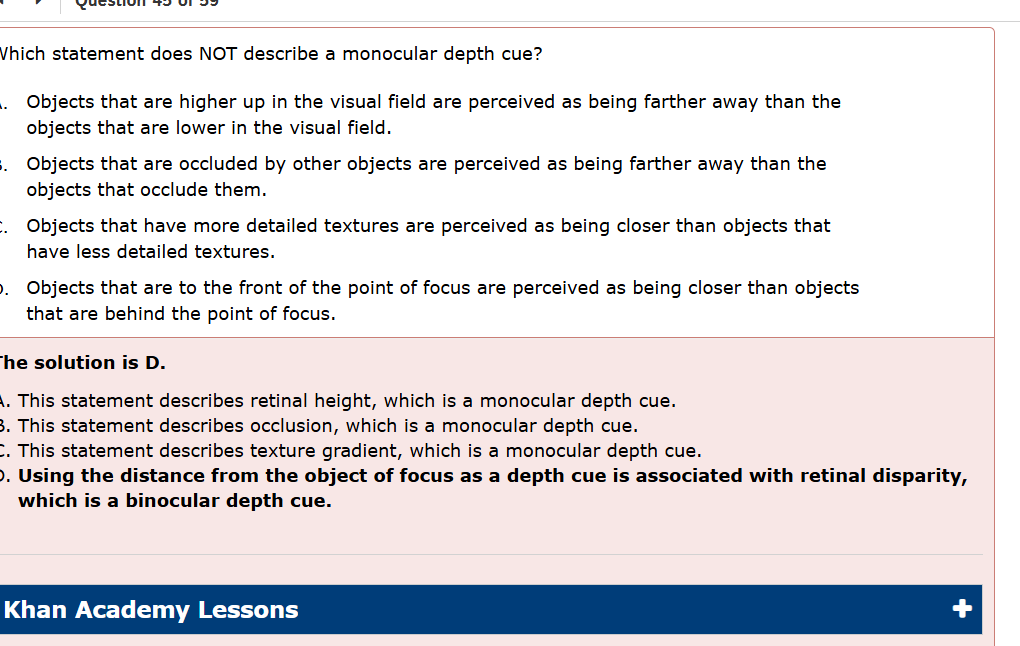
Monocular vs Binocular ques
Objects that are to the front of the point of focus are perceived as being closer than objects that are behind the point of focus associated with retinal disparity
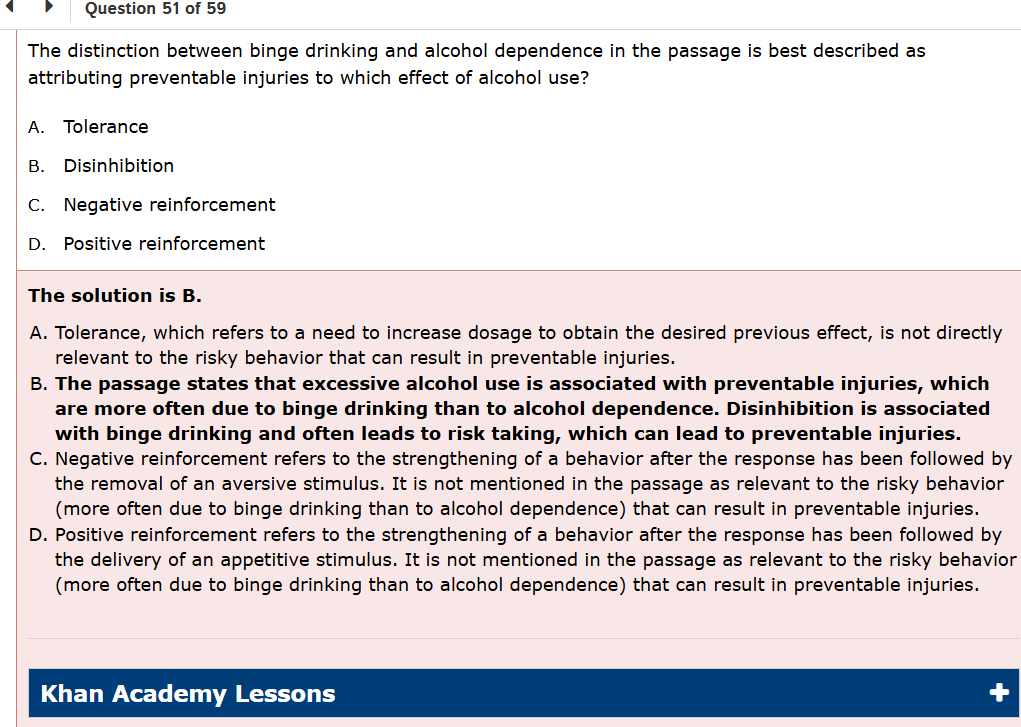
disinhibition means inability to suppress unwanted or inappropriate behavior like drinking
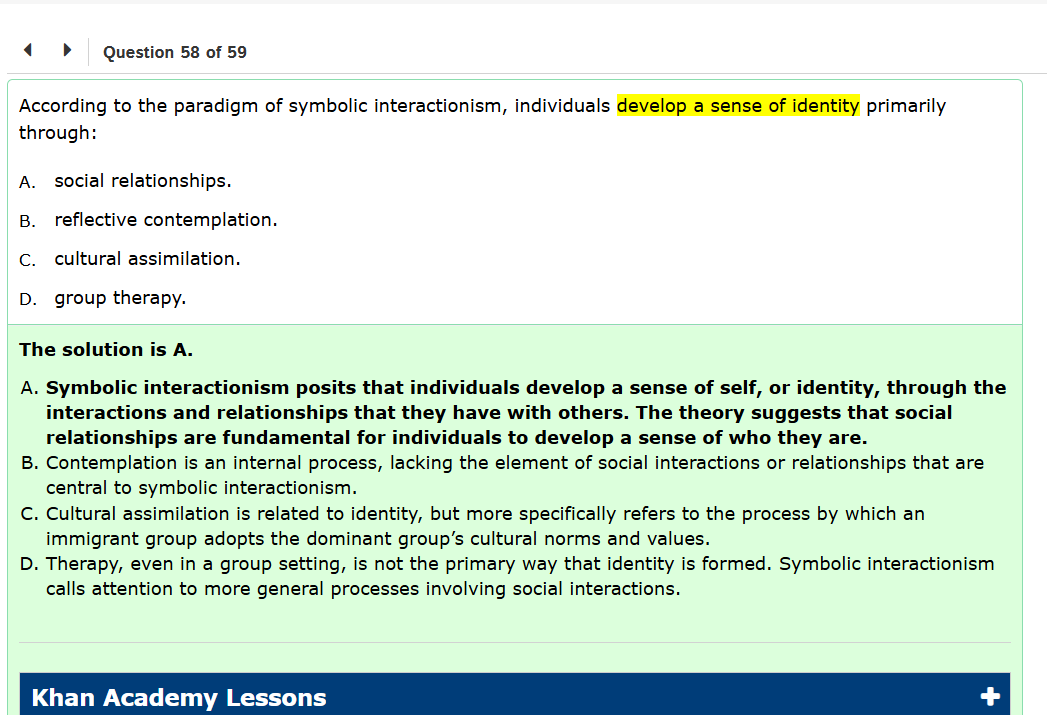
symbolic interaction developed through social interaction not internal reflection which does not include others
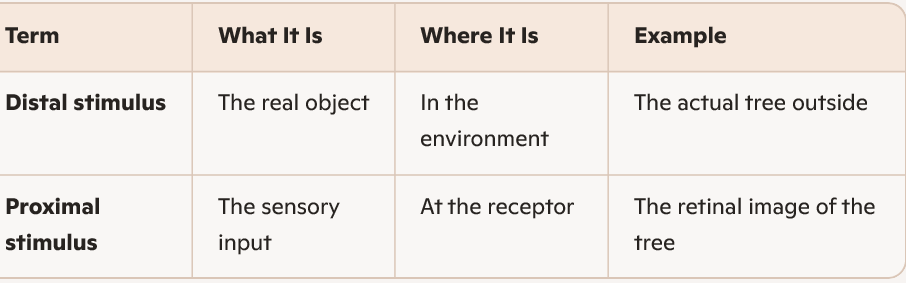
Proximal vs Distal Stimulus
Which term is used to describe a memory report that is inaccurate, but expressed with extreme confidence
False Memory
fMRI vs MRI vs PET
MRI = look at specific brain regions. no function
fMRI = DETECT blood flow and see neural activity
PET = Measure activity in general, helpful in tumor detection
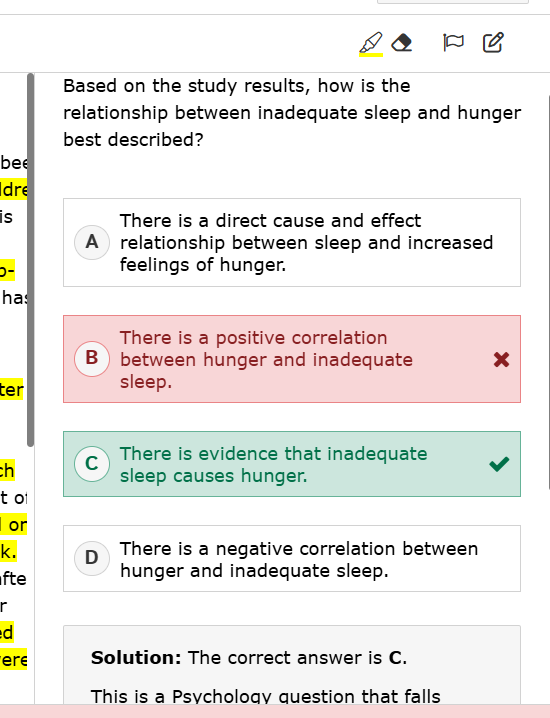
positive correlation would also mean hunger cause sleep deprivation which is not something passage talks about
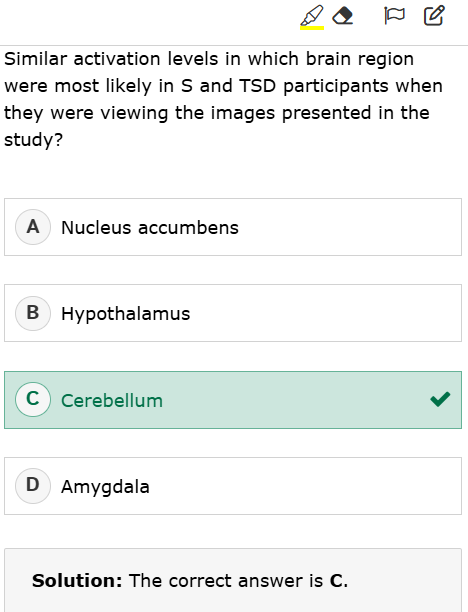
sleep should impact hypothalamus (control hunger), amygdala and nucleus accumbens (reward system)
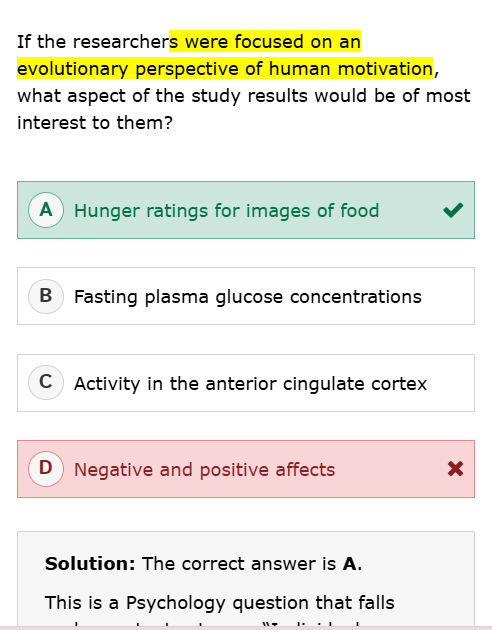
Hunger ratings over time will show if humans have evolutionarily developed a preference for high calorie food
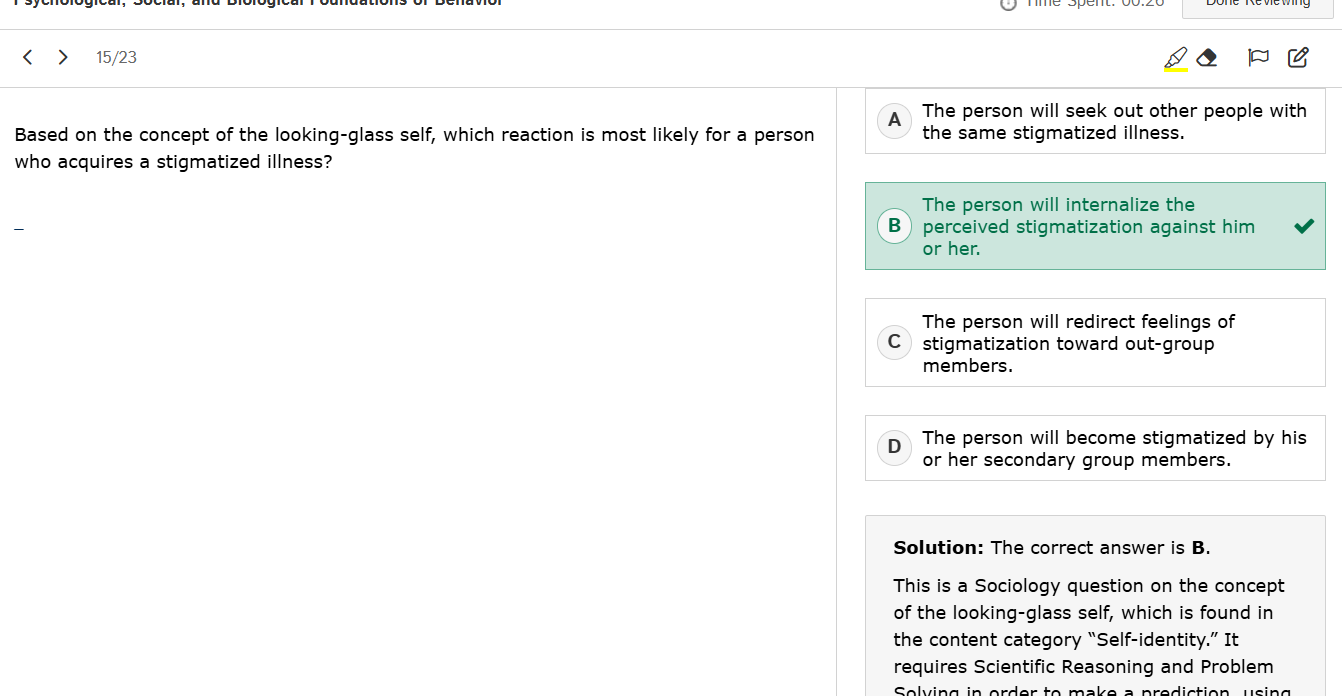
looking glass self
internalize shit
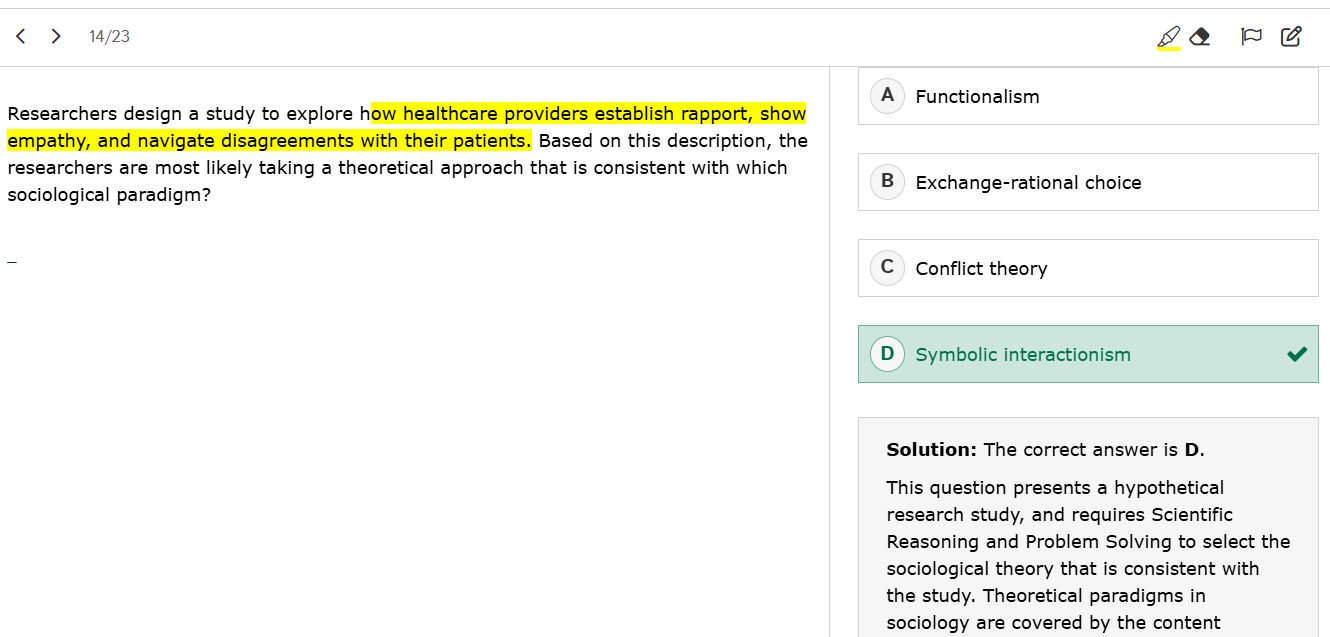
example of social interactionism
Symbolic interactionism examines small scale (or micro level) social interactions, focusing attention on how shared meaning is established among individuals or small groups. Clinical encounters involving patient–provider communication are consistent with the analysis of social interaction at the micro level.
Parallel processing v/s Interposition v/s Accommodation v/s Place theory
Parallel theory: use of multiple pathways to convey the info about the stimuli.
Interposition: visually processing face with depth
Accommodation: revise perceptions and current understanding based on new information
Place theory: Place theory states that pitch perception depends on where along the basilar membrane a sound wave vibrates. High frequencies activate the stiff, narrow base of the cochlea; low frequencies activate the flexible apex.
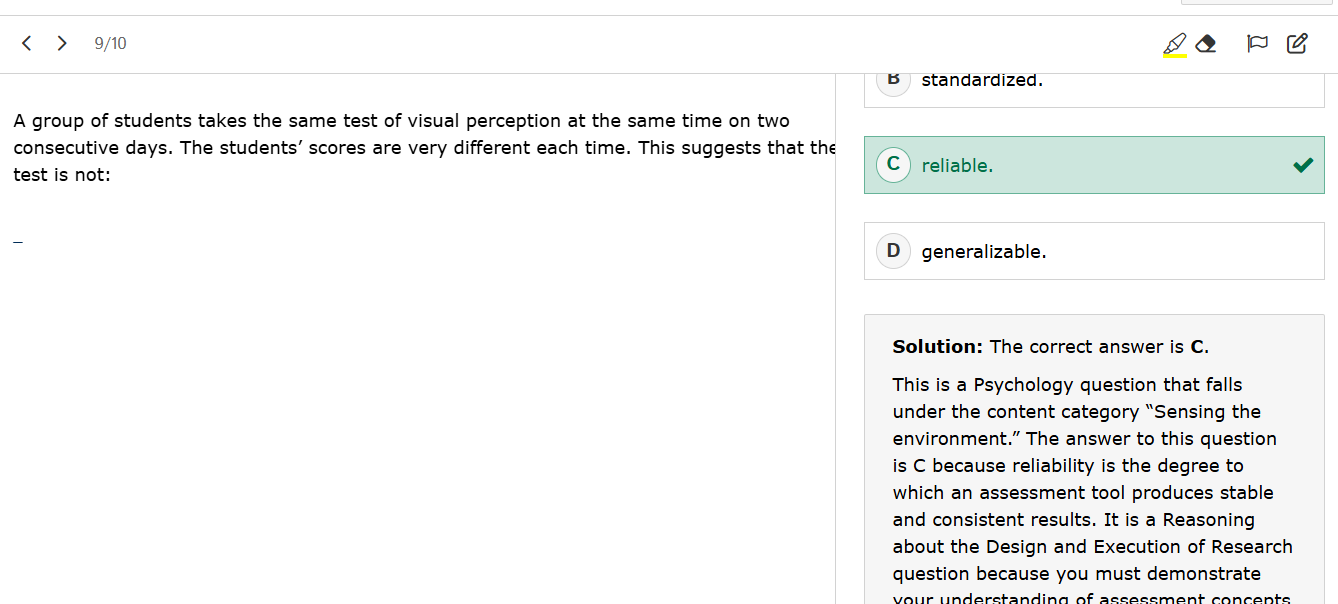
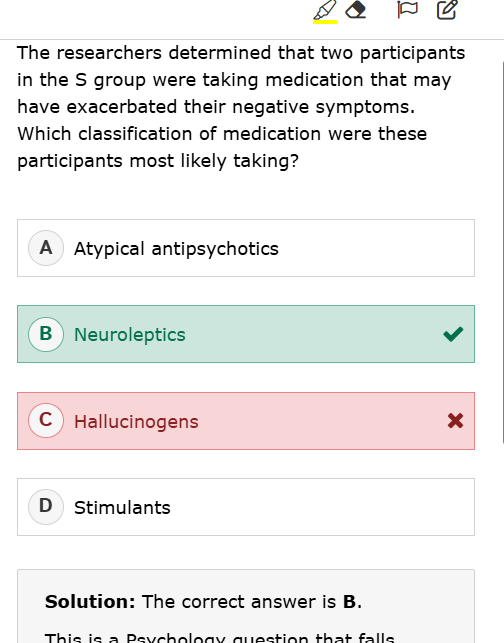
Neuroleptics are anti-psychotic medications which have a sedative effect and cause decline in memory
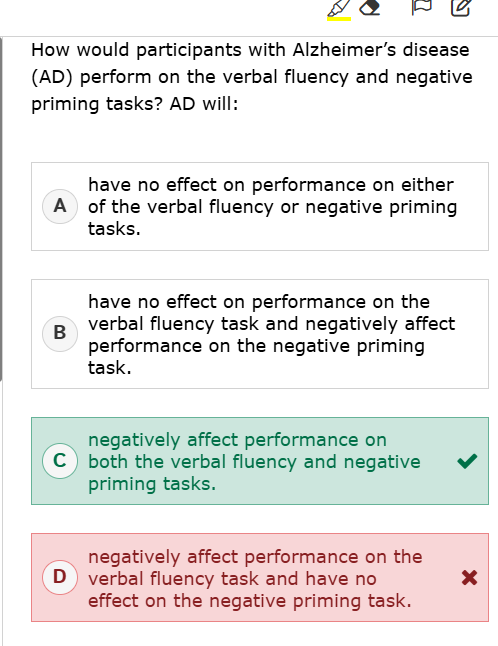
AD patients have dramatic neurodegenerative and cognitive loss so they will perform badly in both tasks. AD see poor judgement, memory loss, difficulty executing tasks
Contralateral Visual Processing: Information from the right visual field is processed by the left hemisphere, and information from the left visual field is processed by the right hemisphere.
Language Centralization: In the vast majority of people, the ability to produce speech (Broca’s area) is located exclusively in the left hemisphere.
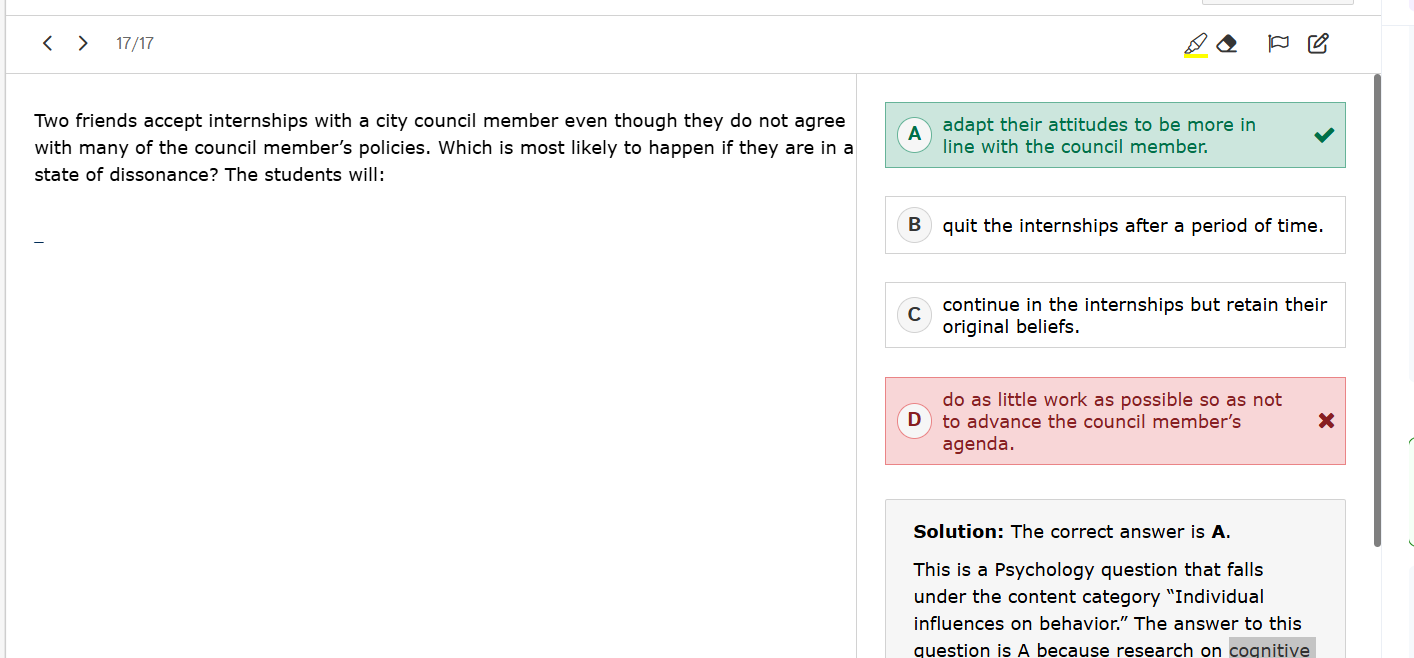
cognitive dissonance has found that people tend to change their attitudes to match their behaviors, rather than change their behavior.
There are generally three ways to do this:
Change the behavior (Quit the internship).
Add a new cognition/justify it (I'm only doing this for the resume).
Change the original attitude/belief (Decide the council member’s policies aren't actually that bad).
Since the friends have already accepted the internships (the behavior is done), the most "mentally efficient" way to stop the feeling of dissonance is to start seeing the council member in a more positive light.
Generalized other v/s Looking glass self vs agent of socialization
Looking glass self = how people see themselves based on how they believe others perceive them.
Generalized other = common behavioral expectations of society. Like you should study and not go to party kind of stuff
Agent of socialization = media is an agent of socialization. Can impress social norms on a person, shapes our values, behaviors or beliefs
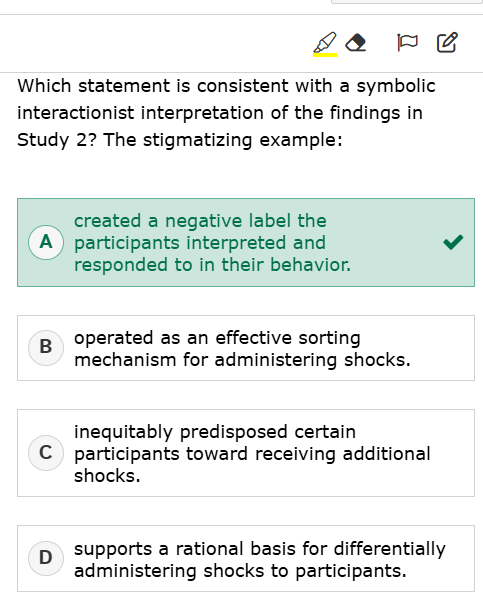
Symbolic interaction
When you think symbolic interaction think interpretation, as it is all about our subjective interpretation of experiences.
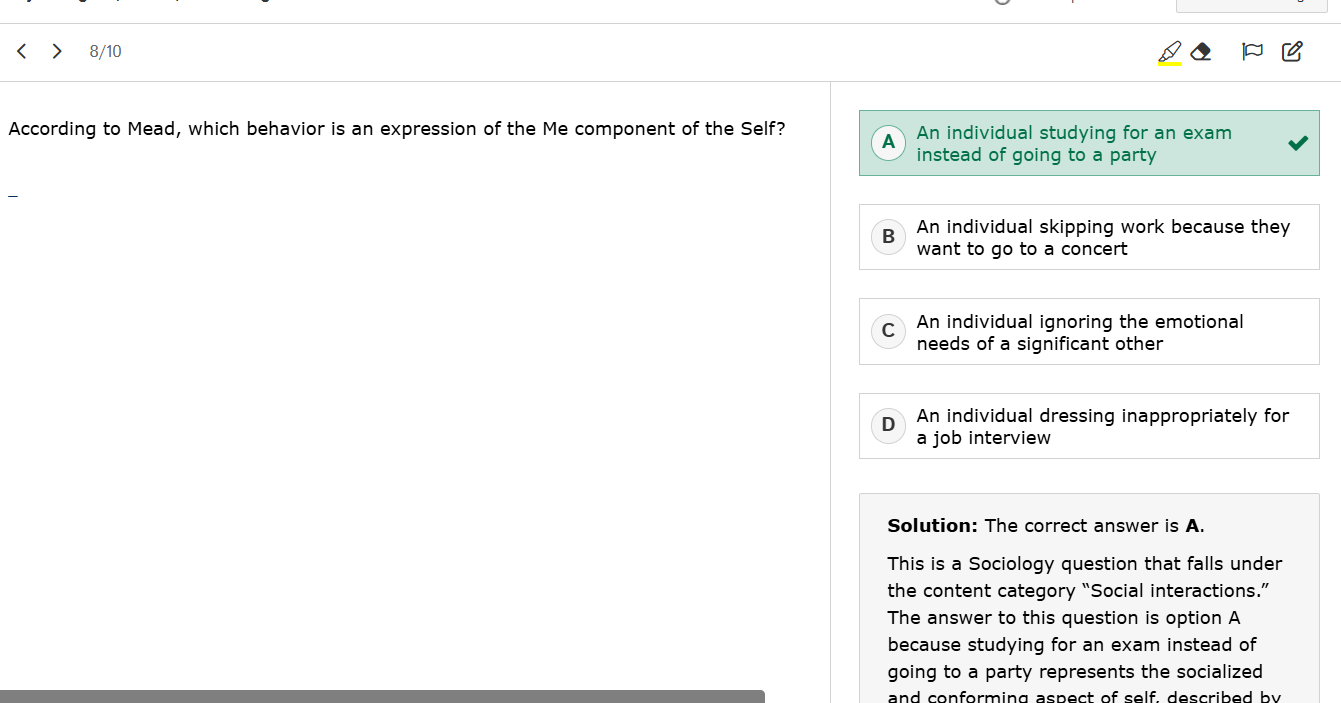
Act according to social norm and what is expected of us
Avoidant vs Secure vs Anxious attachment style
Difficulties in trusting and depending on others is one of the primary characteristics of an avoidant attachment style (B)
individual's concerns about others' reluctance to get close to them is more representative of an anxious-ambivalent attachment style.(A)
A lack of worry about being abandoned by others is more characteristic of a secure attachment style
As babies, strong separation anxiety, coupled with a tendency to resist contact with the parent, is more characteristic of anxious-ambivalent and avoidant attachment is associated with little separation anxiety and a tendency to resist contact with the parent
Projection vs Reaction formation
I feel like a loser, so I call people lose (projection)
I think somebody is a loser, but treat them like they are intelligent (reaction formation)
Social facilitation and Social inhibition
Social facilitation occurs when the presence of an audience improves performance.
Social inhibition occurs when the presence of an audience hinders performance.
What is gender socialization?
Gender socialization theories focus on how gendered attitudes and behaviors are taught to children in a society.
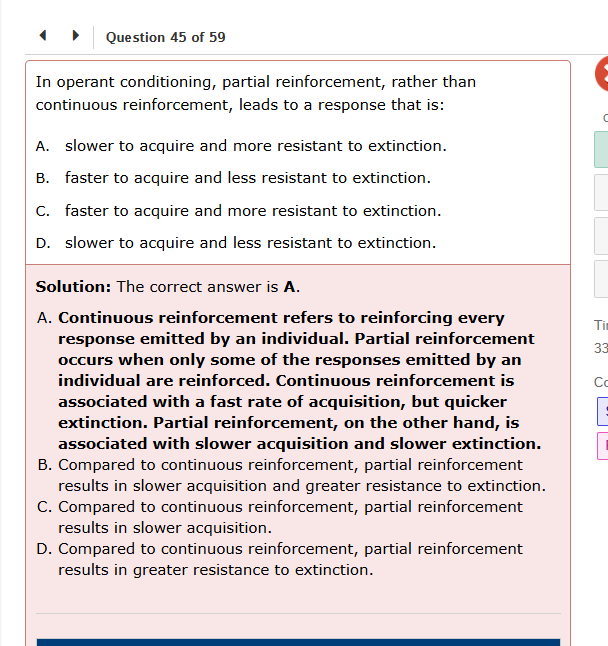
partial reinforcement compared to continuous extinct and acquire slower
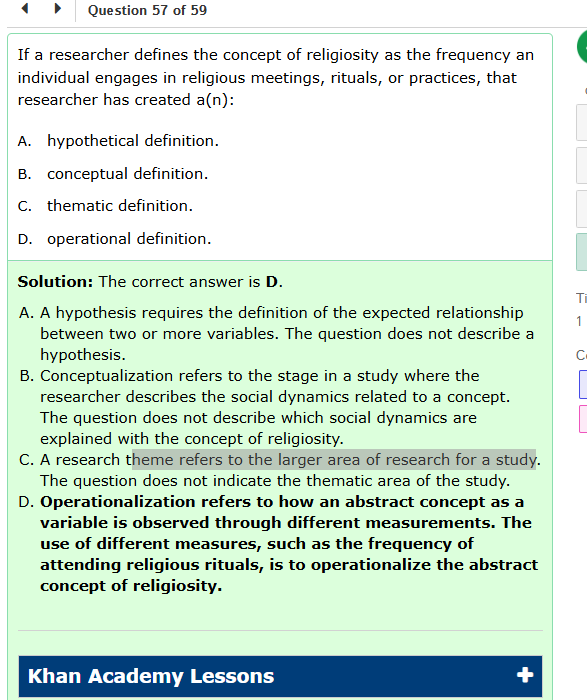
What is operationalization?
Operationalization refers to how an abstract concept as a variable is observed through different measurements.
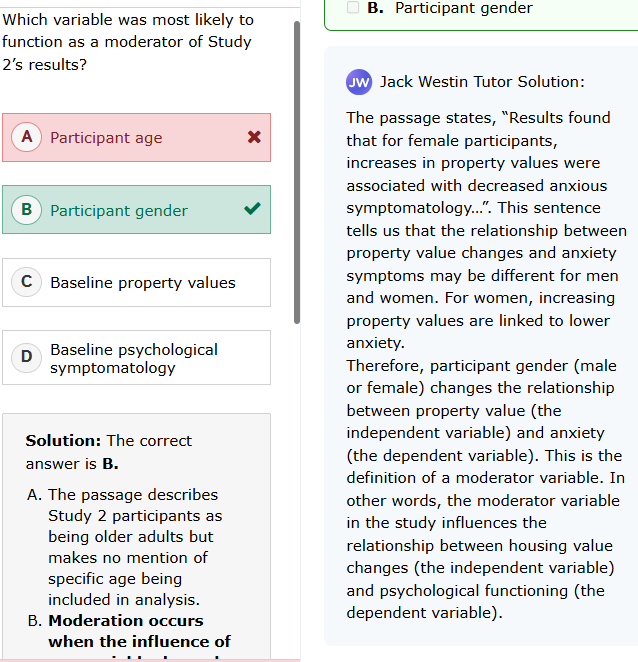
A moderator variable influences the strength or direction of the relationship between two variables
Independent in this study is property value, dependent is psychological/ cognitive well being. Gender difference was additionally mentioned in results, so that is our moderator variable
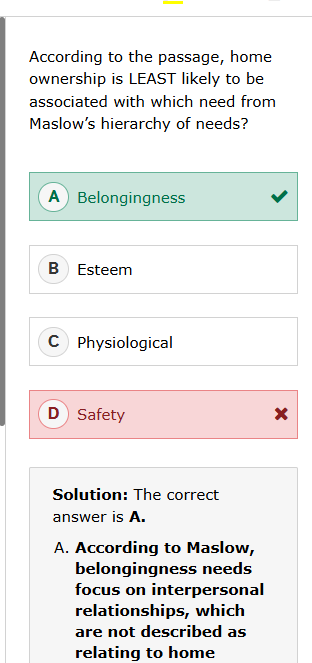
According to Maslow, safety needs include financial security. The passage discusses the relationship between home ownership and personal wealth.
belongingness needs focus on interpersonal relationships, which are not described as relating to home ownership in the passage.
What is attachment theory?
Attachment theory highlights the importance of early attachments with primary caregivers on later behavior. This idea is relevant to the sociometer theory, which states "an individual's self-esteem reflects their history of rejection and acceptance. Like early relationship can impact self esteem
what is multiculturalism and intersectionality?
Multiculturalism refers to the institutional acceptance and coexistence of multiple cultural backgrounds in a society.
Intersectionality indicates that the different aspects of someone’s social background (such as race, ethnicity, age, gender, and class) might concomitantly provide privileges or disadvantages for an individual.
What is scaffolding?
Scaffolding, from Vygotsky's theory of cognitive development, refers to a more experienced individual supporting the learning of someone less experienced. It is MKO providing guidance till competence is developed
Social control?
Social control encompasses social entities and individuals ensuring the compliance of individuals with social norms through positive and negative sanctions. Because the respondents' parents were involved in monitoring their children's food choices and weight, they act as agents of social control regarding WSW.
Set point v/s chemoreception vs Gate control
Set point: Set point is a genetically determined range of body fat and muscle mass which individuals tend to maintain.
Gate control is a theory of pain processing in which spinal cord allows pain signals to pass to brain
chemoreception: detection of sensory info via chemical signals
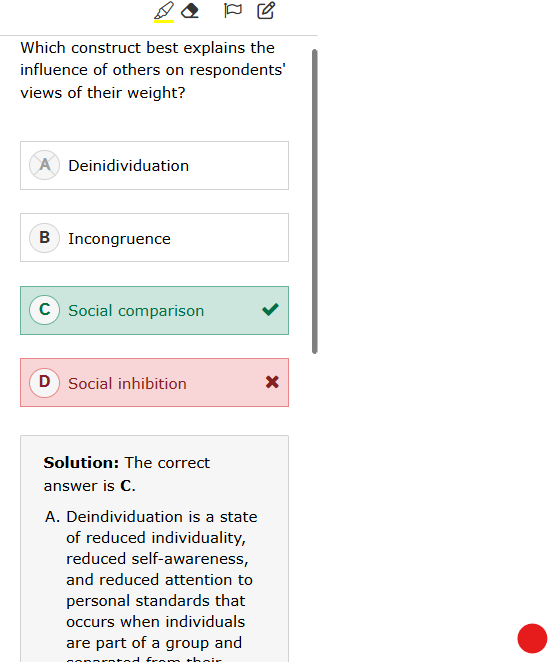
Social comparison vs Social inhibition?
Term: Social comparison
Definition: Evaluating our attributes by comparing with others; influence seen in self-perception of weight.
Term: Social inhibition
Definition: Performance decrease when in the presence of an audience; opposite of social facilitation.
Research/ Study difference: Survey, Interview, Content Analysis.
Surveys usually gather quantitative/ categorial data and are often closed ended.
Interview: open ended, can analyze subjective experiences, qualitative technique
Content analysis: research design where the visual or literary content of artifacts, pre existing text or data or document is analyzed. If participants and responses are mentioned it is most likely not this.
what is diathesis–stress model of psychological disorders? So, what is the diathesis part.
diathesis–stress model, disorders develop due to an interaction between predisposing risk factors (diatheses) and triggering events (stressors).
Eg: depression due to a genetic hormone present in body + losing job. Job will be stressor as it is an external event, and diathesis will be hormone.
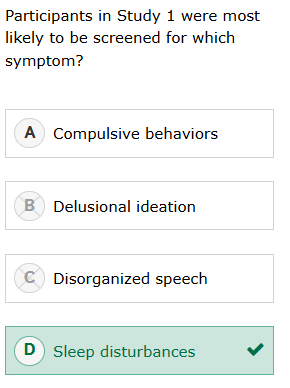
screened for depression and anxiety.
A) For OCD
B and C for Schizophrenia
What is Appetitive stimulus?
Appetitive stimuli are those that are "desirable" to the individual. (operant conditioning). Something an organism finds rewarding like social praise or food
Reactivity vs Hawthorne vs Social Desirability vs Demand Characteristic
Reactivity = umbrella term
Hawthorne = reactivity from being observed
Social desirability = lying to look good. Social desirability bias is the tendency for participants to respond to self-report assessments in ways that reflect social norms more than their actual beliefs.
Demand characteristics = acting how you think the study wants. Provides cues to the participants regarding the study hypothesis and causes them to respond in a specific manner.
What is the most likely reason that the independent raters in Study 1 were blinded?
Independent raters could be blinded to avoid confirmation bias refers to the tendency to put more weight on information that confirms one’s preexisting attitudes.
What is theory of mind?
Theory of mind is a form of metacognition that allows individuals to ascribe mental states to others. Ability to attribute mental states like belief, intentions and desires to oneself and others.
Social capital refers to an individual’s social contacts that help the individual
Which phenomenon(phenomena) would apply to an immigrant who is leaving their home country due to lack of employment and moving to another country for employment opportunities?
Push factors : push immigrants away from a country
Pull factor: pulls immigrants towards a country
Which phenomenon is most similar to the construct that POs are considered to be relatively adept at (first paragraph)? Passage states POs tend to be relatively adept at theory of mind
refers to understanding others' values and thoughts to associate their actions with a mindset.
Cultural relativism means judging a culture within in the context of that culture and they should be good at it
What is false belief?
Another direct measure of theory of mind.
A false belief is when someone holds a belief that is incorrect, and the key skill is whether another person can recognize that someone else has an incorrect belief.
Example: Sally puts ball in a basket and leaves the room. Sam takes the ball and puts it in a box. Sally comes into the room, where will she look for the ball?
In the basket
Because Sally has a false belief — she doesn’t know the ball was moved.
Think:
“I know that you believe something that isn’t true, and I can predict your behavior based on your belief.”
A child will fail the test (4-6) as they know the ball is in the box, and can’t understand why Sally will look in the basker
What kind of stimulus is electric shock?
Depolarizing stimulus above threshold
Facial Feedback effect vs Display rules?
Facial feedback effect is the idea that facial movement can influence emotional experience. So, you smile more then you feel happy.
Display rules: Display rules are culturally learned norms that dictate how, when, and to whom emotions should be expressed. Display rules influence how you express emotions, and how observer expect those emotions.
e.g: A Japanese student feels angry during a group meeting but smiles politely because their culture discourages open displays of anger in public.
A child is taught, “Don’t talk back to adults,” so they hide frustration or annoyance when speaking to elders.
Men show more anger than disgust, so their disgust expression is also interpreted as anger.
Which phenomenon has historically been one of the most likely consequences of racialization for the racialized communities?
Stigmatization is answer: the social process of associating a racial/ethnic background with a certain social practice or relationship without the consent of the population of that racial background.
Not Differential association as it is about the interpersonal learning process of criminalized behavior. Differential association is not relevant to experiences at the community level
Experimental research definition
Ethnography: qualitative research method to make in-person observations in a cultural setting over an extended period of time. Observation and participation. not discussions.
Field experiment: manipulate variables for different outcomes
Focus group: qualitative research method that gathers small group of people to discuss a topic under the guidance of a moderator.
Survey: quantitative and designed for individual
Cultural lag
period of adjustment that occurs when material culture changes more rapidly than non material culture (norms, beliefs, behaviors)
Lack of access or infrastructure limitations is not cultural lag.
Like people not able to use social media due to lack of internet is not cultural lag. Elderly people taking time to or finding it difficult to adapt to social media when it is available is cultural lag.
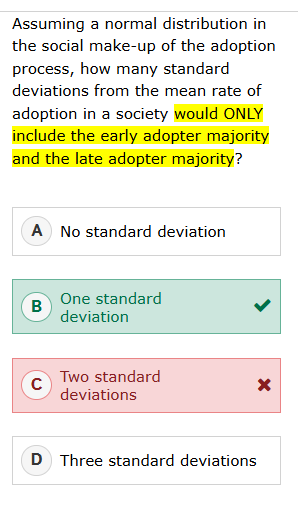
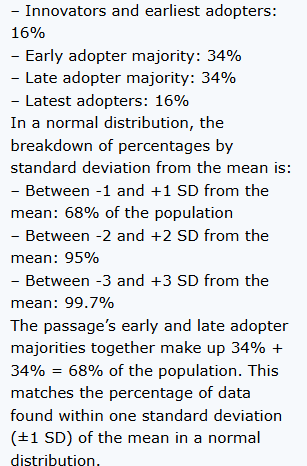
standard deviation
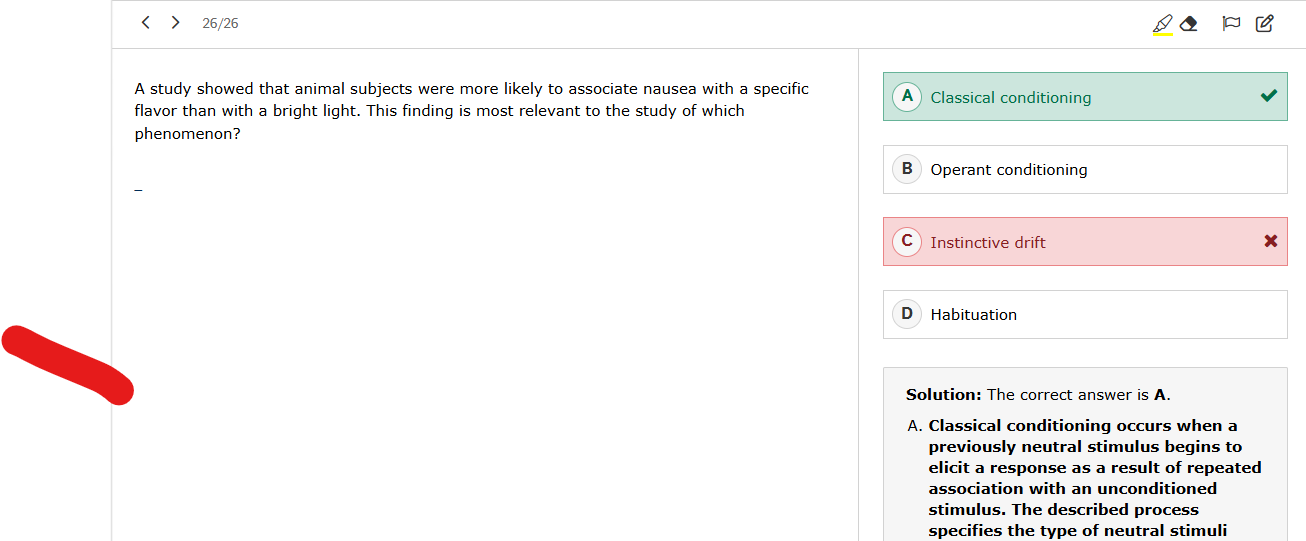
Classical conditioning is when a previously neutral stimuli (like flavor) elicit a response like a nausea. Biological preparedness is the concept of classical conditioning where we are more likely to associate nausea with flavor than visual stimuli.
Instinctive drift occurs when species-specific tendencies interfere with conditioning. Instinctive drift typically affects operant conditioning
When English-speaking participants hear the word "potato," they identify the first sound as the "p" sound more quickly than when they are presented with the same "p" sound in isolation. Which type of processing best explains this finding?
Top-down processing occurs when higher-level processes (such as memory or heuristics) influence the processing of lower-level input (such as sensory input). This is consistent with the finding that contextual information from the word speeds up the perceptual processing of the "p" sound.

