Digestion, Enzymes, and Glucose Regulation
 Studied by 0 people
 Call Kai
 Learn
Learn Practice Test
 Spaced Repetition
 Match
Match Flashcards
 Knowt Play
1/55

There's no tags or description
Looks like no tags are added yet.
Name | Mastery | Learn | Test | Matching | Spaced |
|---|
No study sessions yet.
56 Terms
Chemical Digestion
Breaking food down using enzymes and chemicals into smaller molecules.
Mechanical Digestion
Physically breaking food into smaller pieces (chewing, churning).
Physical Digestion
Same as mechanical digestion — no chemicals, just movement/tearing/grinding.
Primary Organ
Organs food actually travels through (mouth, esophagus, stomach, intestines).
Accessory Organ
Organs food does NOT pass through but that help with digestion by making enzymes/chemicals (liver, pancreas, gallbladder, salivary glands).
Absorption
Movement of nutrients into the bloodstream from the digestive system.
Villi
Small finger-like structures in the small intestine that increase surface area for absorption.
Peristalsis
Wave-like muscle contractions that push food along the digestive tract.
Bile
A chemical made by the liver and stored in the gallbladder that breaks down fats.
Enzyme
A protein that speeds up chemical reactions in the body.
Substrate
The molecule the enzyme acts on.
Active Site
The spot on the enzyme where the substrate fits/binds.
Denature
When an enzyme loses its shape (from heat, pH, chemicals) and cannot function.
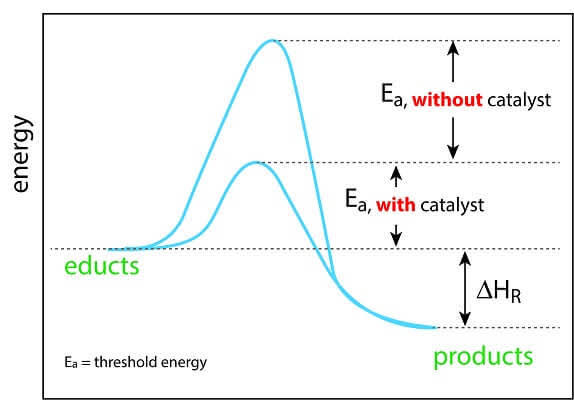
Activation Energy
The energy needed to start a chemical reaction — enzymes lower this.
Insulin
A hormone that lowers blood sugar by helping glucose enter cells.
Pancreas (related to glucose regulation)
Releases insulin and glucagon to control blood sugar levels.
Liver
Stores glucose as glycogen and releases glucose into the blood when needed.
Glucose
A simple sugar that is the body’s main energy source.
Glucagon
Hormone that raises blood sugar by telling the liver to release glucose.
Glycogen
The stored form of glucose in the liver and muscles.
Glut-4
Protein channels that let glucose enter cells (activated by insulin).
Blood Sugar
The amount of glucose in your blood.
Mouth Function/Type of Digestion
• Moves food to stomach through peristalsis
• Mechanical only
Esophagus Function/Type of Digestion
• Moves food to stomach through peristalsis
• Mechanical only
Stomach Function/Type of Digestion
• Mechanical: churning
• Chemical: acid + enzymes break down proteins
Small Intestine Function/Type of Digestion
• Main site of chemical digestion
• Main site of absorption (villi)
Large Intestine Function/Type of Digestion
• Absorbs water and forms feces
• No major chemical digestion
Salivary Glands Purpose
Produce saliva with enzymes that start carb digestion.
Pancreas Purpose
Makes digestive enzymes + releases insulin/glucagon.
Liver Purpose
Makes bile, stores glucose as glycogen, detoxifies blood.
Gallbladder Purpose
Stores and releases bile for fat digestion.
What is the overall purpose/function of the digestive system?
To break food into small molecules the body can absorb and use for energy.
What pathway does your food take as it travels through the body?
Mouth → Esophagus → Stomach → Small Intestine → Large Intestine → Rectum → Anus
What is the purpose of the accessory organs?
To release enzymes/chemicals that help digestion even though food doesn’t pass through them.
What is an enzyme and why are they important for maintaining homeostasis?
Enzymes speed up reactions so your body can function normally — without them everything would be too slow to live.
How does the structure of an enzyme relate to its function?
Each enzyme has a specific shape that matches only one substrate.
What is the physical relationship between an enzyme and its substrate?
Substrate fits into the enzyme’s active site like a puzzle piece.
What does “Lock and Key” mean in the contexts of enzymes?
The enzyme (lock) only works with one substrate (key) because the shapes must match.
What factors affect the function/activity/structure of enzyme
• Temperature
• pH
• Concentration
• Chemicals
• If any of these change too much → denature
How did gelatin/protease lab demonstrate the effect of acids, bases, or temperature on enzyme function? You should be able to understand and analyze data from the lab.
High temp, very acidic, or very basic conditions denatured protease, so gelatin didn’t break down.
Best digestion happened at normal temperature & neutral pH.
What is glucose regulation and how does your body maintain its glucose levels?
Keeping blood sugar levels stable using hormones.
What are the main organs and hormones involved?
• Pancreas — insulin + glucagon
• Liver — stores/releases glucose
• Muscles — store glycogen
• Glut-4 channels in cells
how does your body control whether glucose gets into your cells?
Insulin signals cells to open Glut-4 channels, which let glucose enter.
What is diabetes?
A disease where the body cannot regulate blood sugar properly.
What is Type 1 diabetes?
The immune system destroys pancreatic cells → no insulin produced.
What is Type 2 diabetes?
Body makes insulin but cells stop responding (insulin resistance).
How to cure from Type 1 diabetes?
There is no cure — requires insulin injections for life.
How to cure type 2 diabetes?
Not always cured, but can be improved or reversed with:
• Exercise
• Diet changes
• Weight loss
• Medication
• Managing insulin sensitivity
What a reaction would look like with an enzyme:
it would be lower
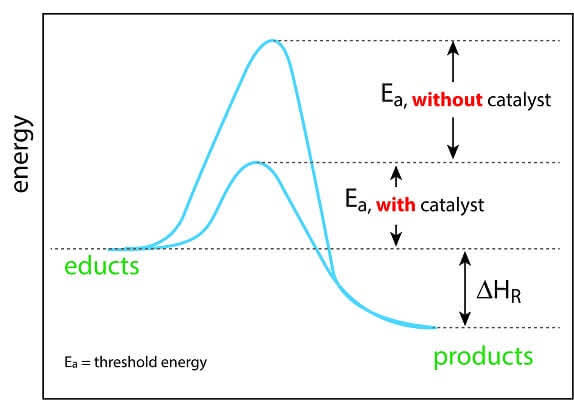
What a reaction would look like without an enzyme:
It would be higher
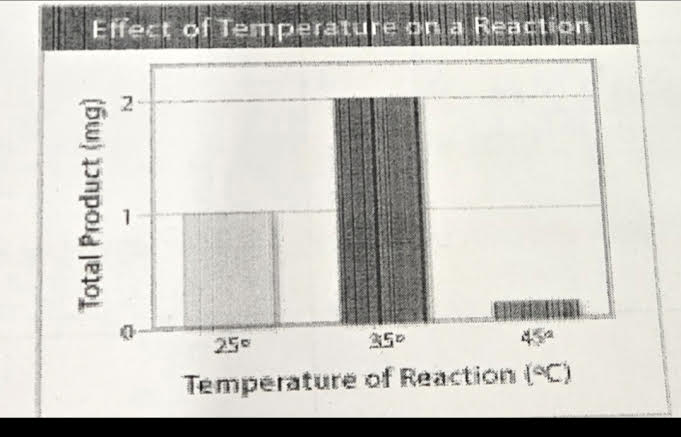
Identify the temperature at which the enzyme is most effective
Optimum temperature, typically around 37°C (98.6°F)
Explain why BOTH higher and lower temperature are less effective.
Low temperature slows enzymes down, so they have fewer reactions. While high temperature destroys their shape — both reduce enzyme effectiveness.
What does the stomach produce?
Acid
What enzyme does the stomach use to digest protein?
Pepsin
What is the function of the stomach?
Digest protein using the enzyme pepsin
How the structure helps function of stomach?
Since pepsin is most active in an acidic environment it will be able to digest protein faster due to the low pH within your stomach.
 Note
Note  Flashcards (43)