Paleo 419 Lab 9
 Call Kai
 Learn
Learn Practice Test
 Spaced Repetition
 Match
Match Flashcards
 Knowt Play
1/56

There's no tags or description
Looks like no tags are added yet.
Name | Mastery | Learn | Test | Matching | Spaced | Call with Kai |
|---|
No analytics yet
Send a link to your students to track their progress
57 Terms
Family Ornithomimidae (Ornithomimosauria) traits
long centra
long pre- and postzygapophyses
lack of teeth, no fifth toe
arctometatarsalian pes (the upper end of the third metatarsal is pinched by the neighbouring 2nd and 4th metatarsals, which contact each other anteriorly)
simple filamentous (and possible pennaceous) feathers on the body and arms
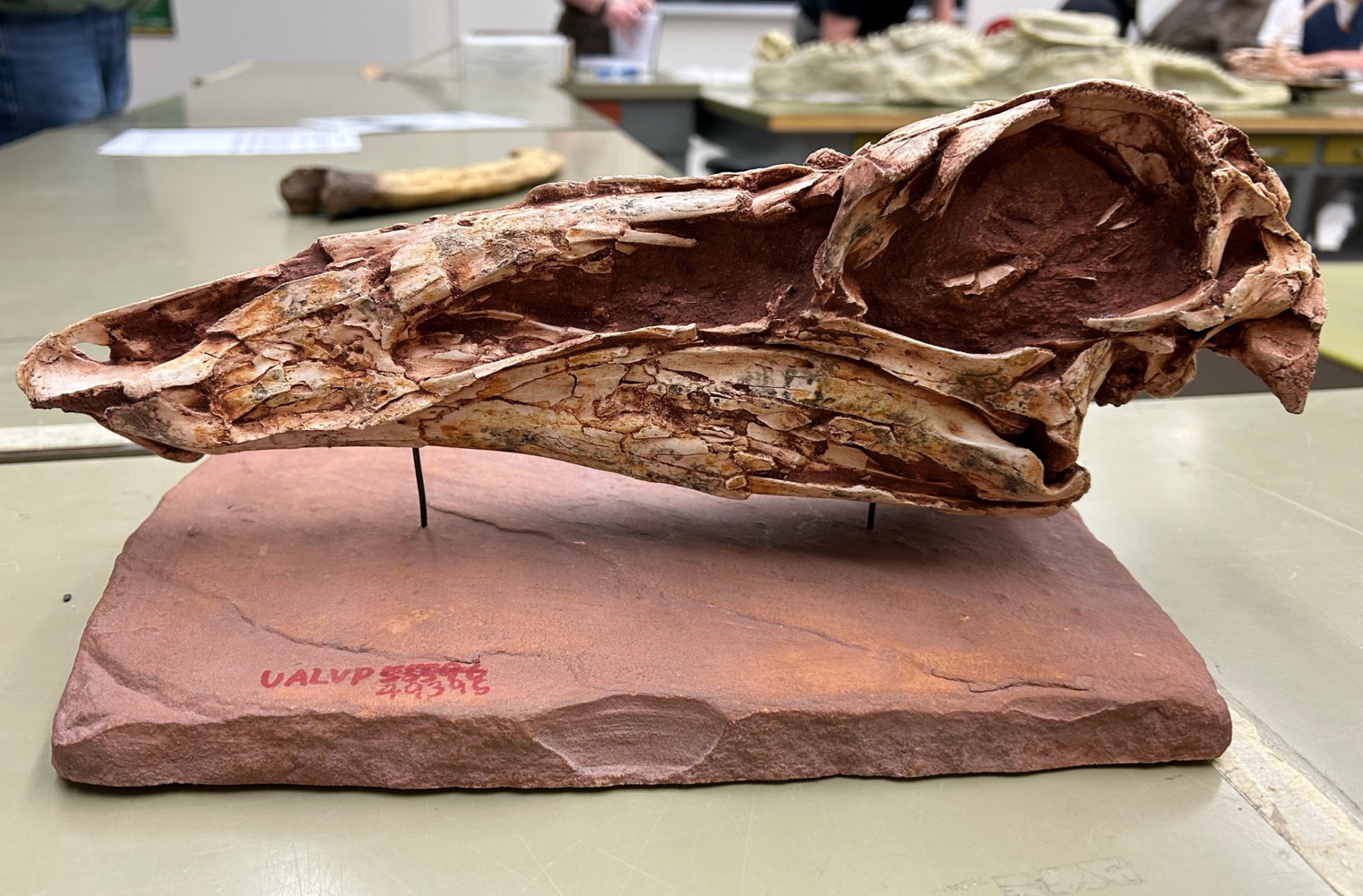
?
Gallimimus (Family Ornithomimidae, Ornithomimosauria)
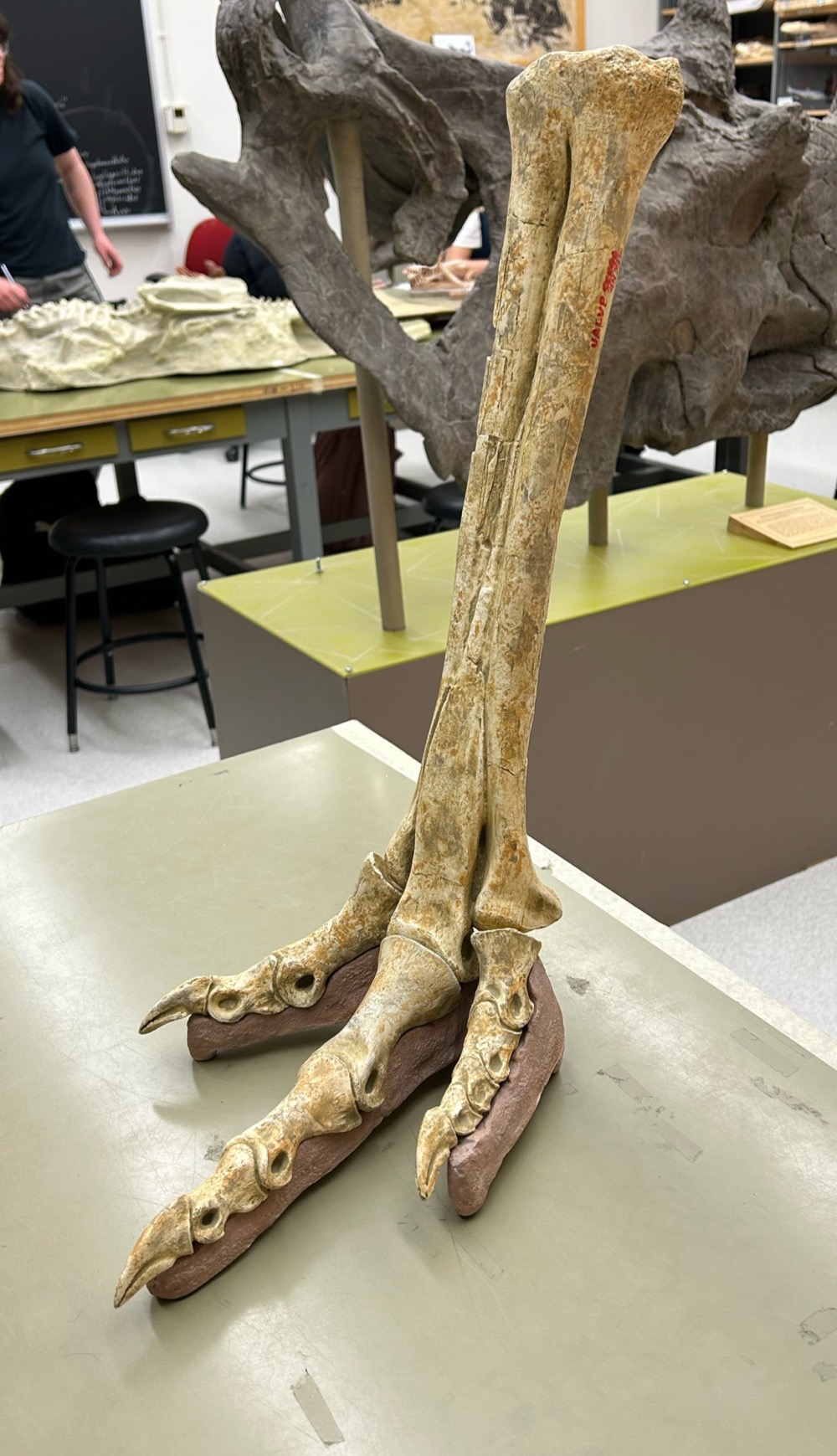
?
Gallimimus (Family Ornithomimidae, Ornithomimosauria)
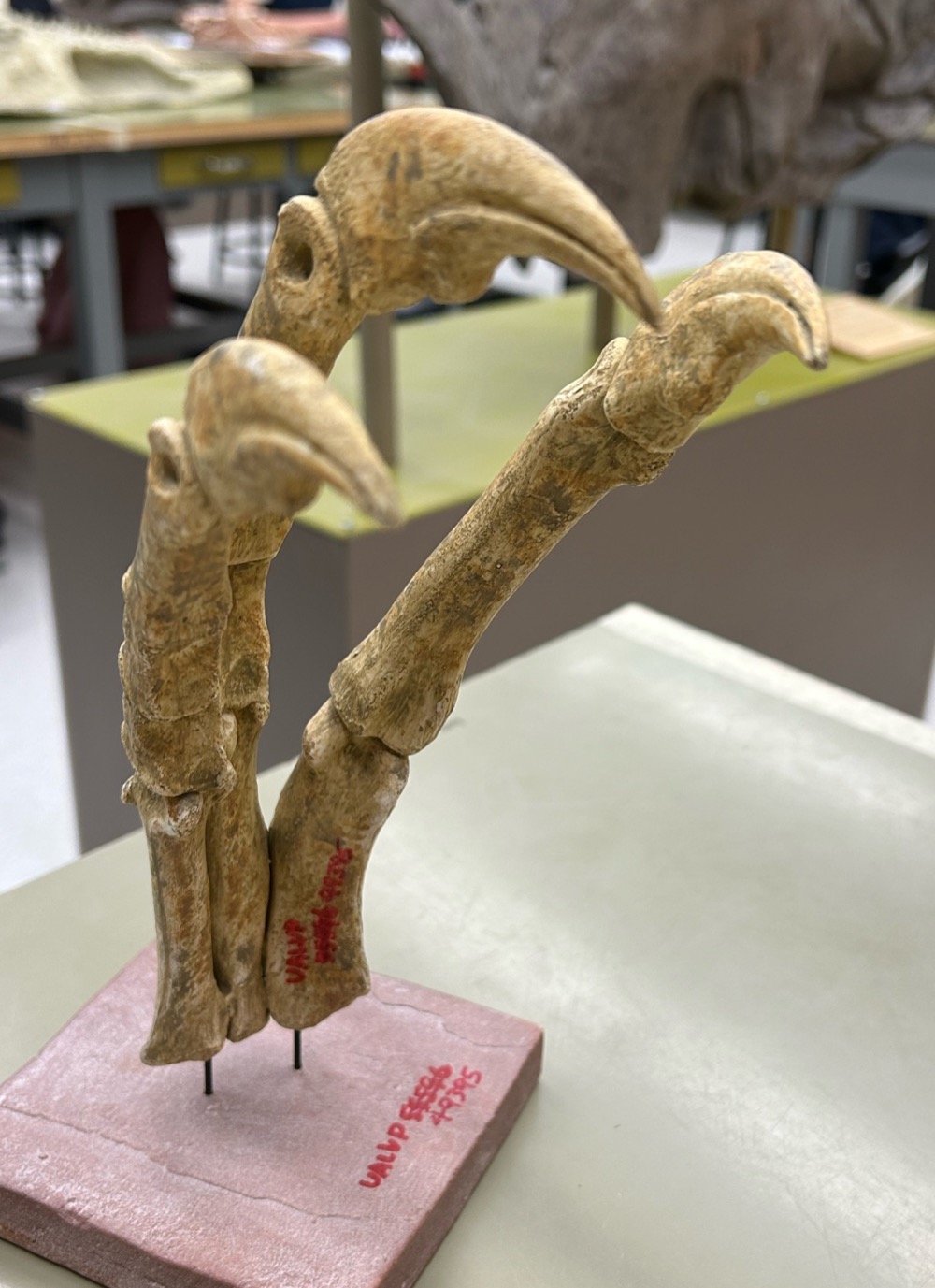
?
Gallimimus (Family Ornithomimidae, Ornithomimosauria)
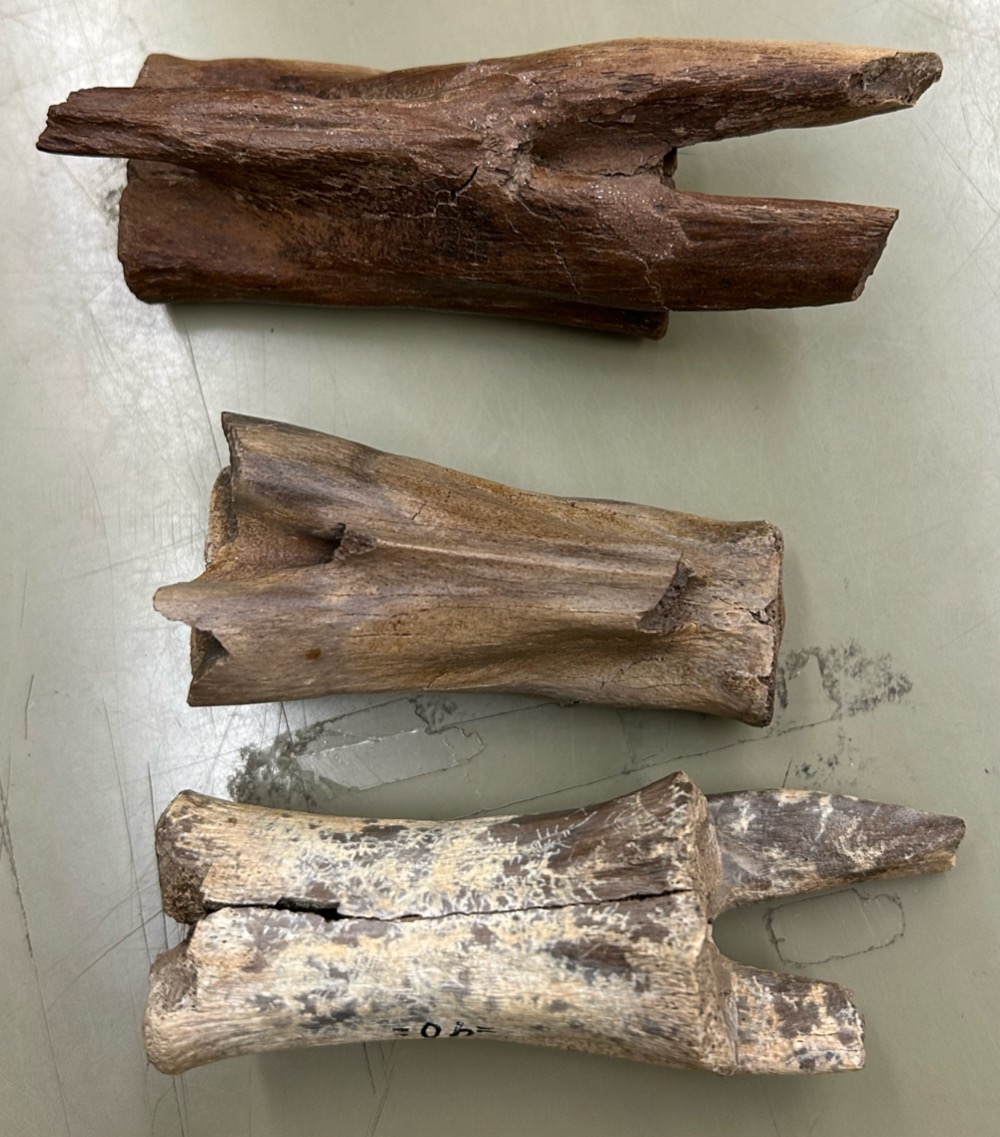
?
Family Ornithomimidae, Ornithomimosauria caudal vertebrae
Clade Maniraptora groups
Therizinosauria, Oviraptorosauria, Dromaeosauridae, Troodontidae, and Avialae
Alvarezsaurids
Clade Maniraptora Synapomorphies
longer arms with a convex semi-lunate carpal in the manus
mobile wrist joint
bird-like opisthopubic pelvis (pubis points posteriorly)
Clade Therizinosauria (Clade Maniraptora) traits
herbivorous
enormous manual unguals
Feathers
toothless premaxilla with a ventrally projecting rim
downturned anterior end of dentary
pes has four functional toes
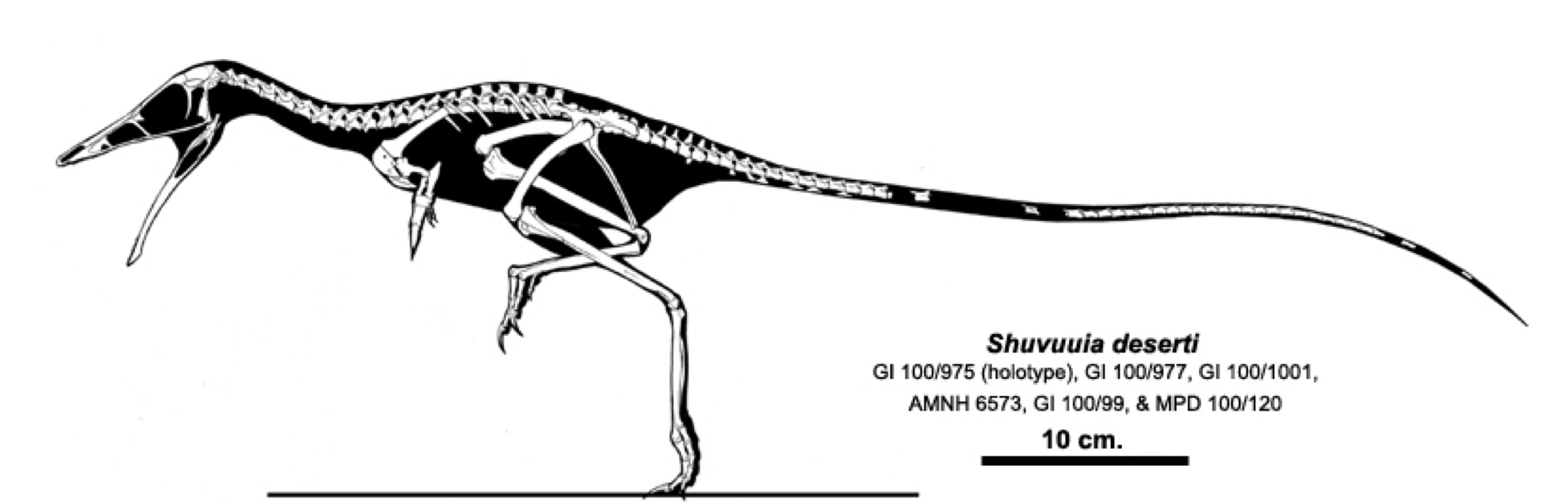
?
Alvarezsauridae (Clade Maniraptora)
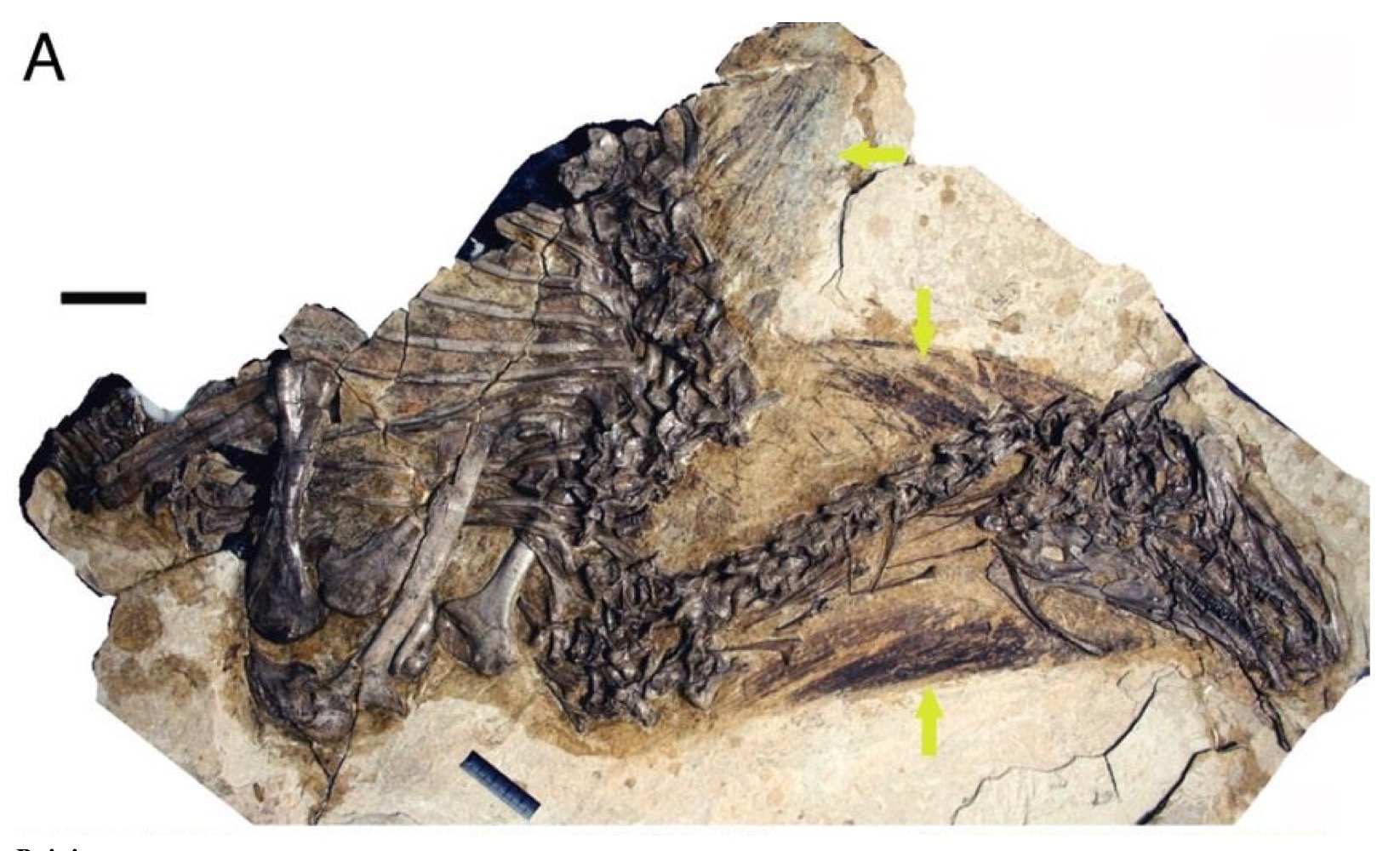
?
Clade Maniraptora
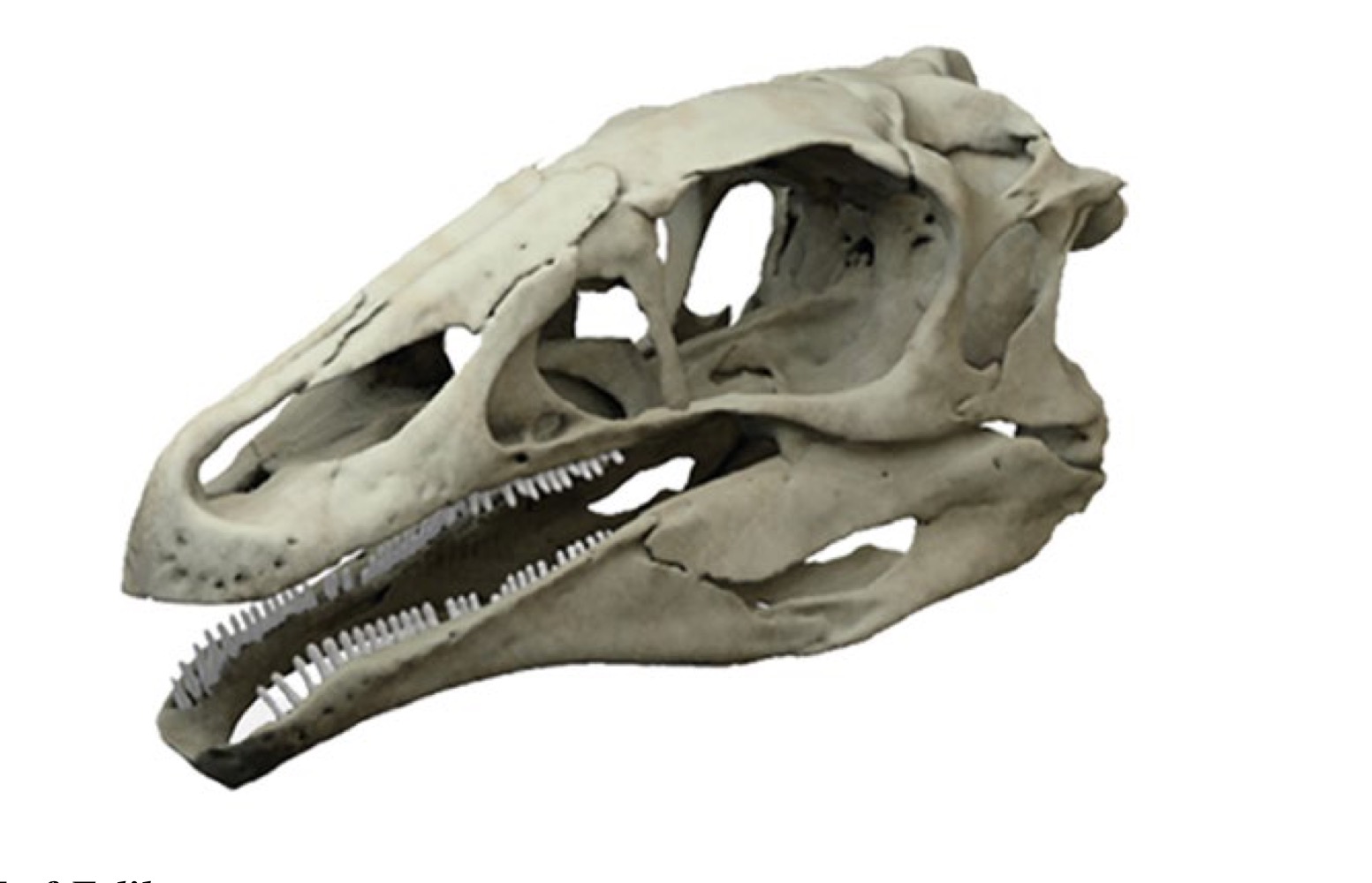
?
Clade Maniraptora
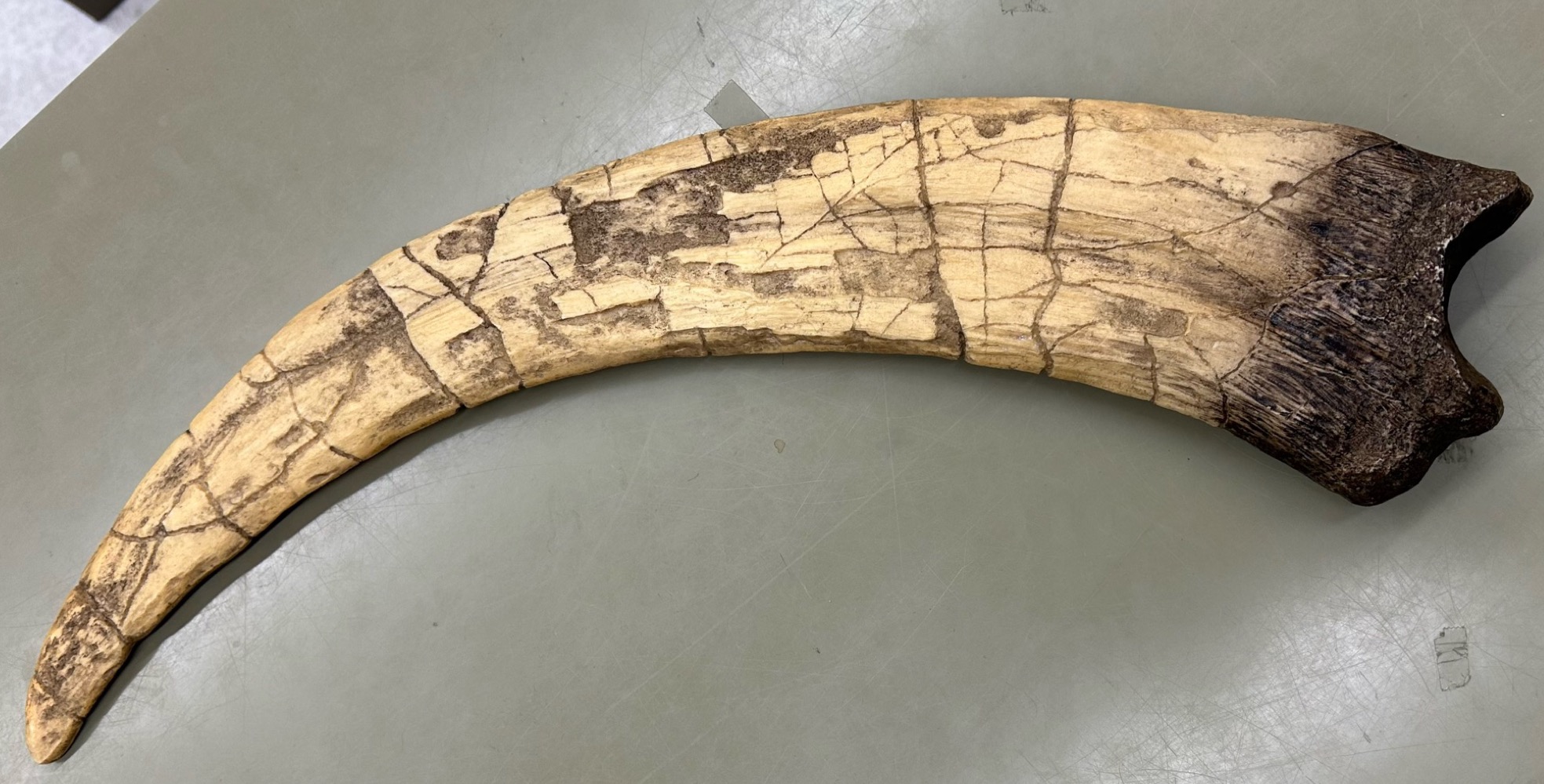
?
Therizinosaurus (Clade Therizinosauria, Clade Maniraptora)
Clade Oviraptorosauria traits
short, box-like skulls with beaks (in derived taxa; some basal examples had teeth)
crenulated ventral margin of premaxilla
U-shaped mandibular symphysis
edentulous dental
Laid eggs with nests
simple filamentous feathers on the body and complex pennaceous feathers on the arms and end of the tail
carpometacarpus - fused metacarpals I and III
First feathered dinosaur
Caudipteryx (Clade Oviraptorosauria)
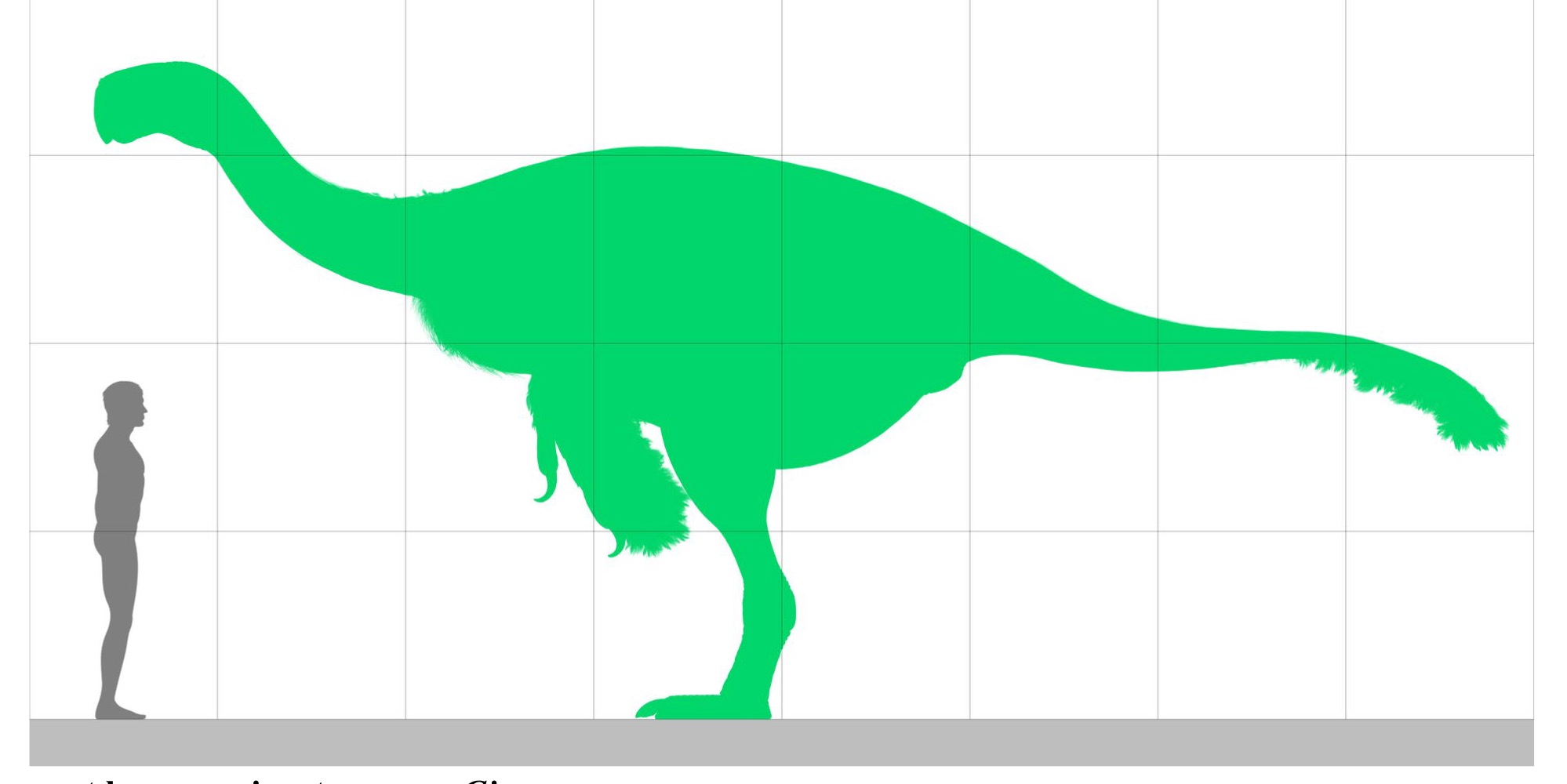
?
Gigantoraptor (Clade Oviraptorosauria)
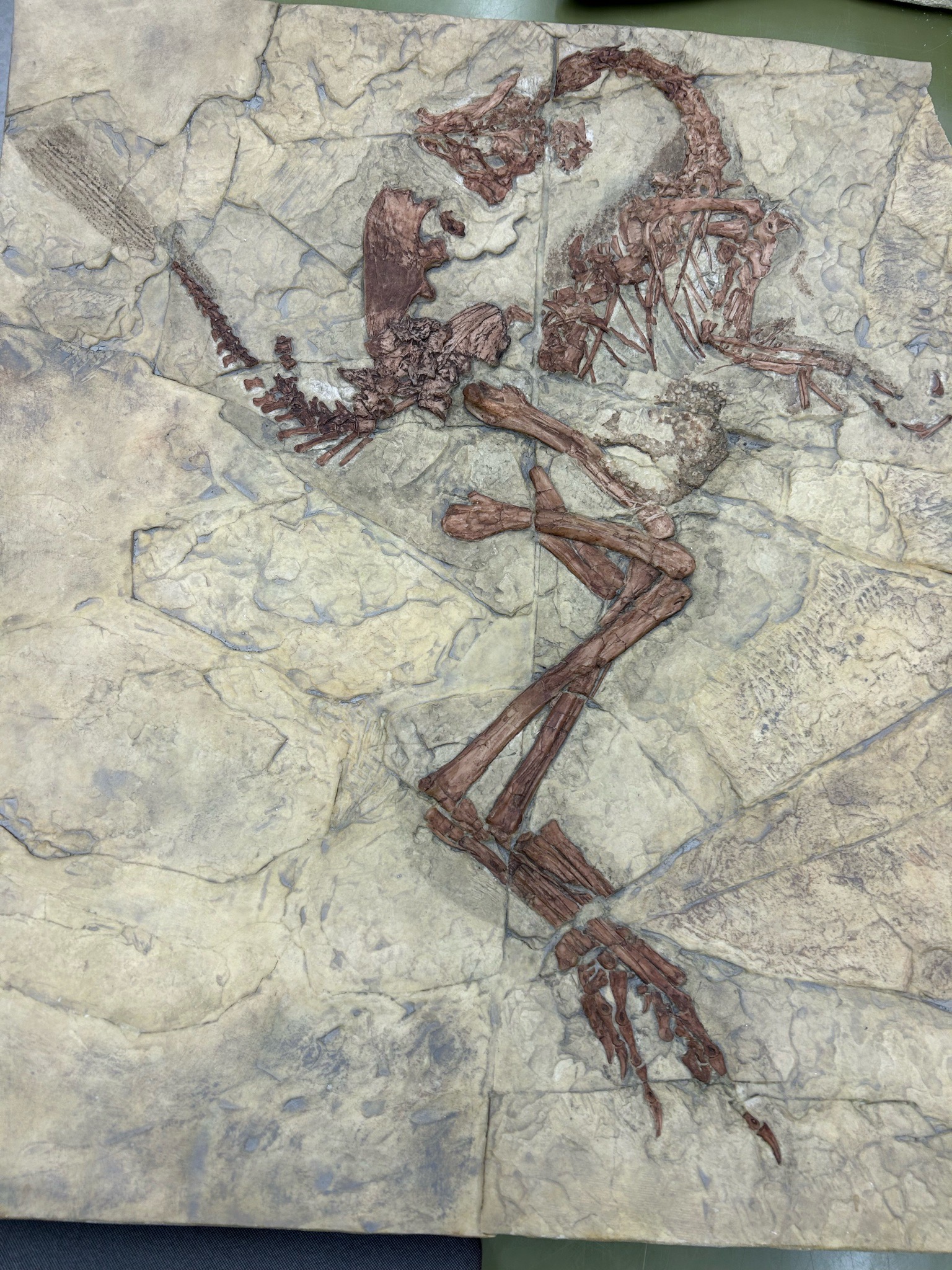
?
Caudipteryx (Clade Oviraptorosauria)
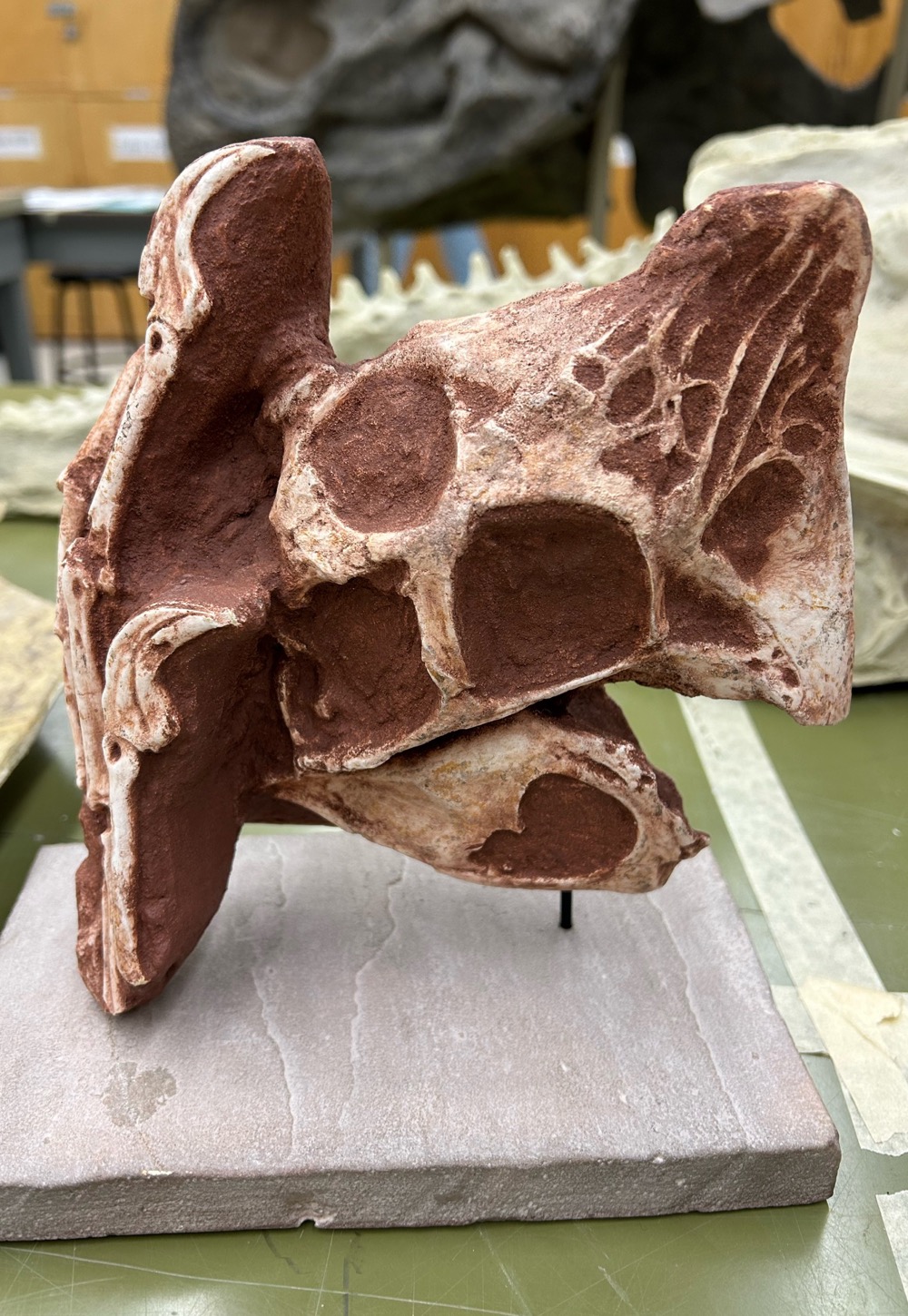
?
Oviraptor (Clade Oviraptorosauria)
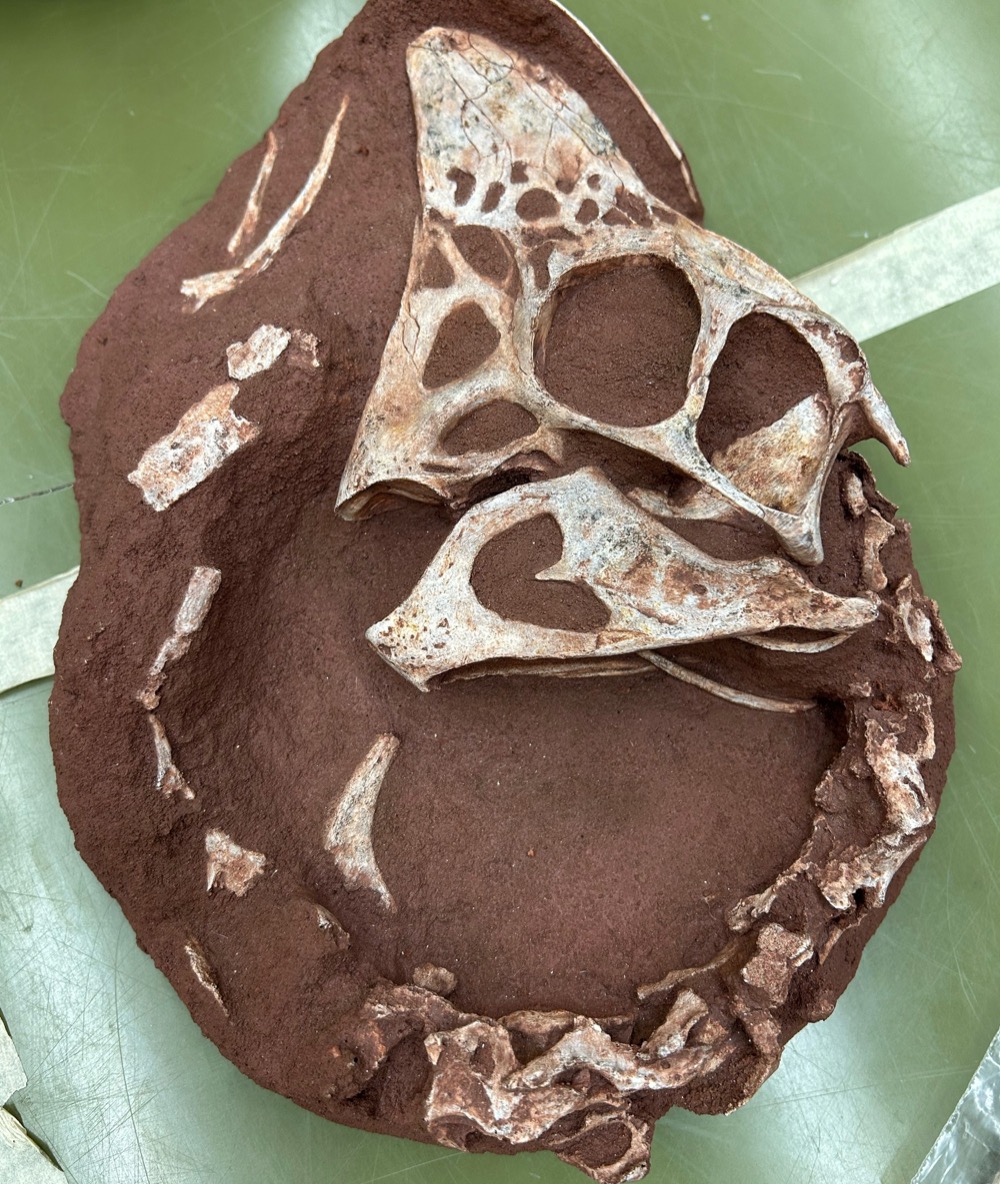
?
Clade Oviraptorosauria
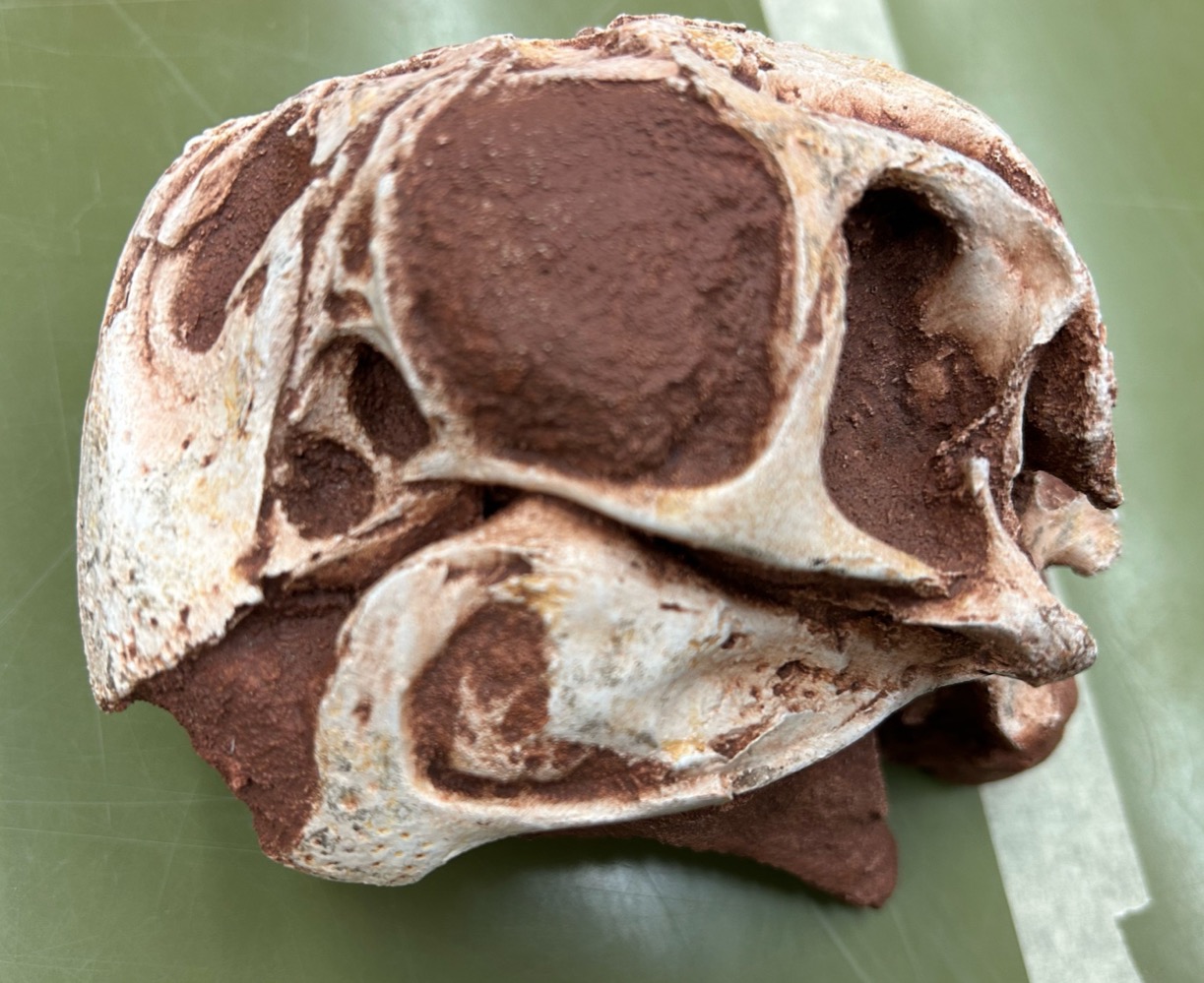
?
Conchoraptor (Clade Oviraptorosauria)
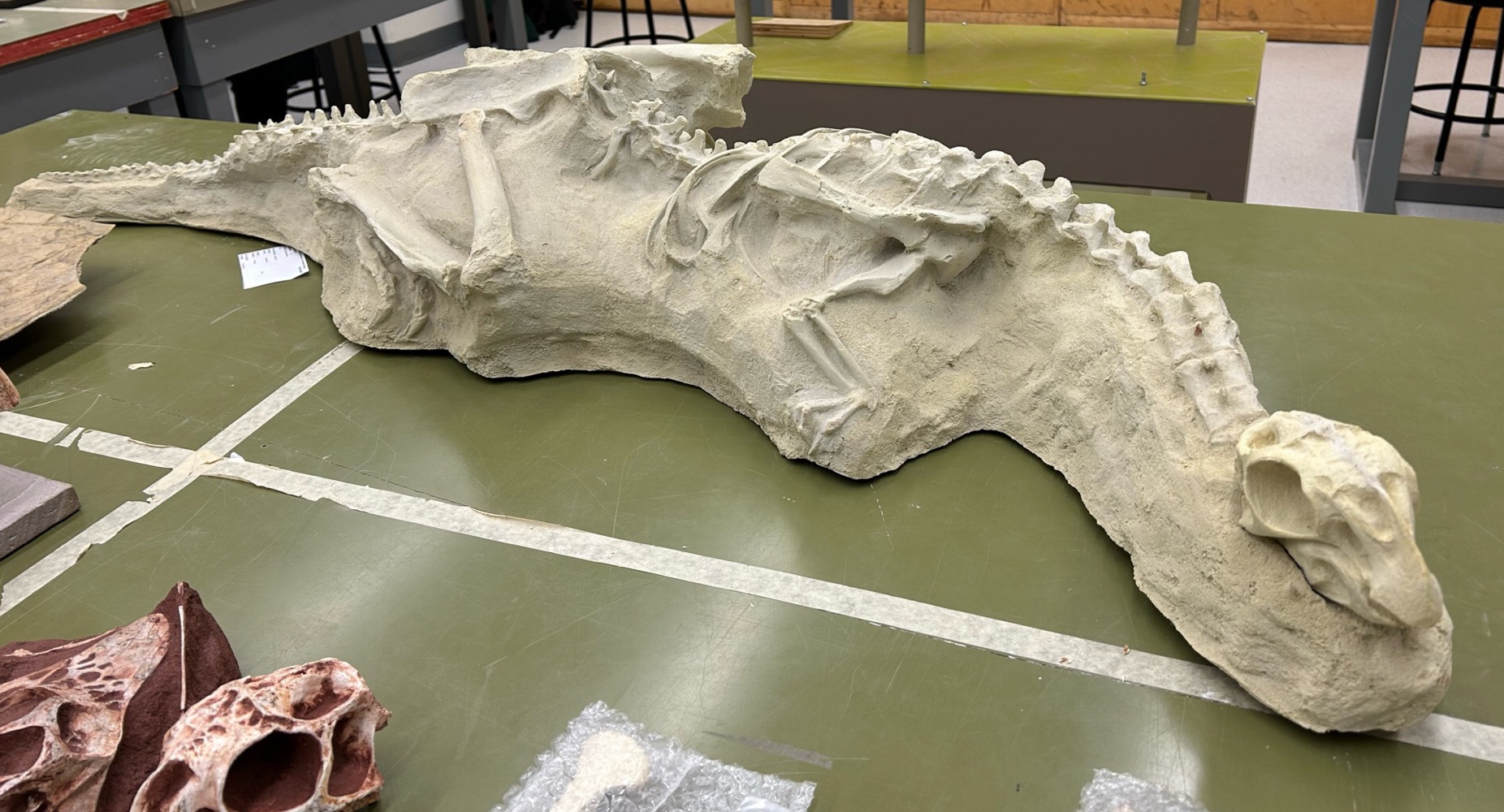
?
Conchoraptor (Clade Oviraptorosauria)
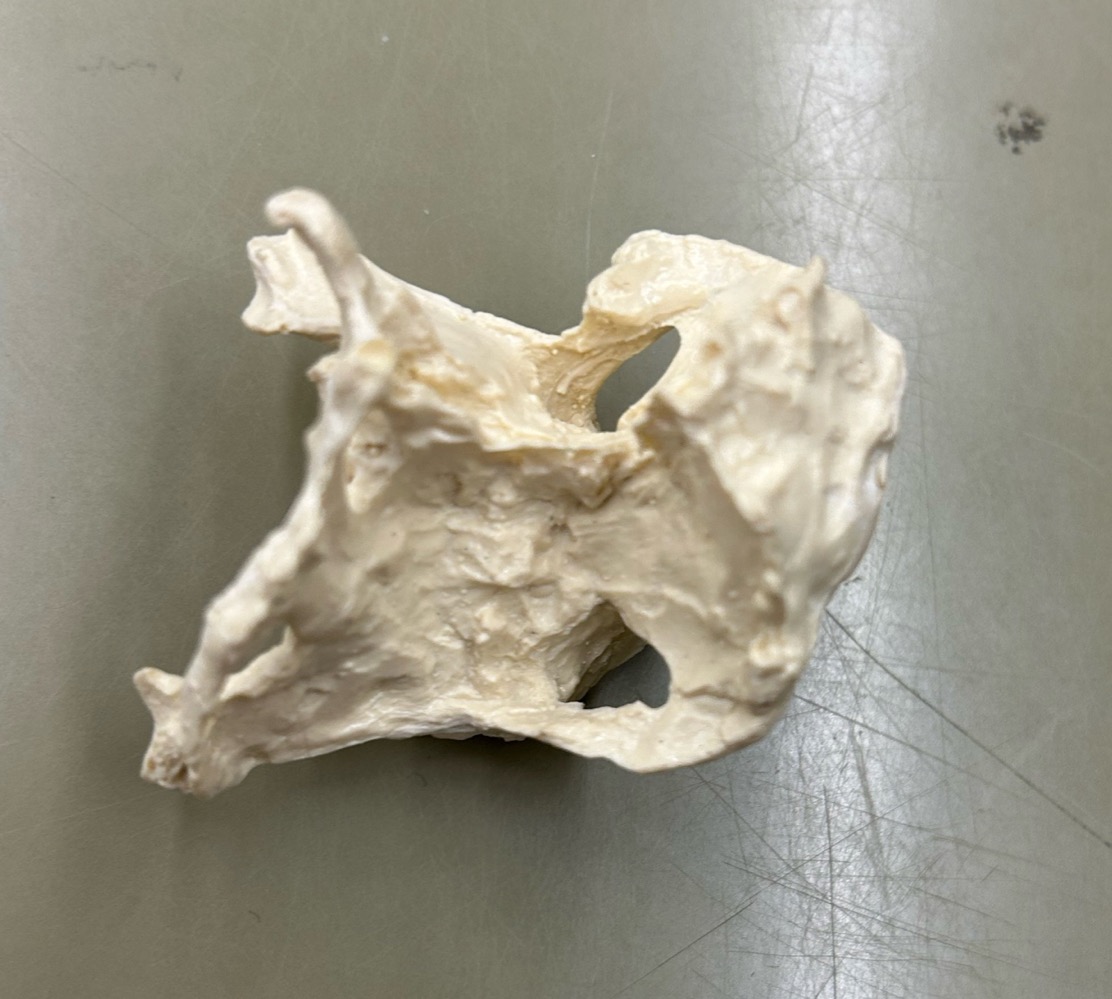
?
Avimimus (Clade Oviraptorosauria)
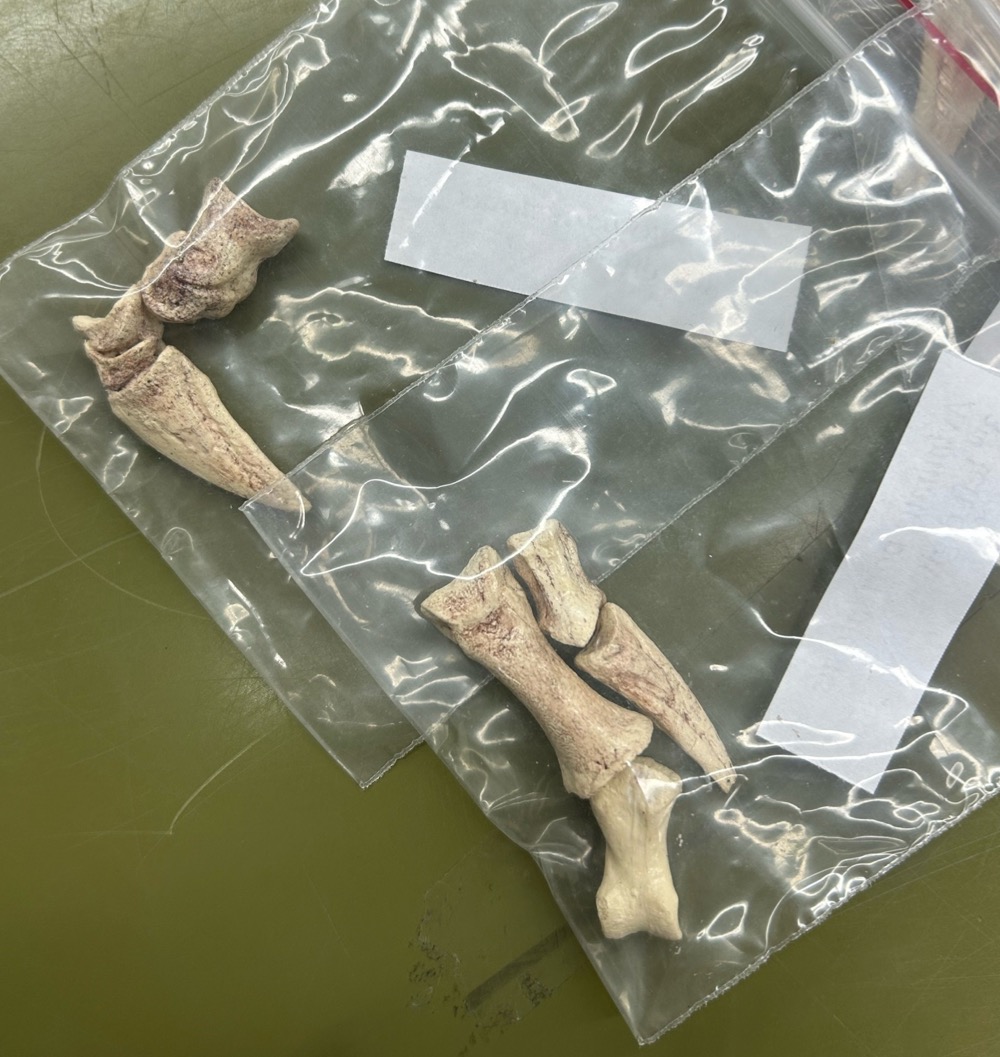
?
Avimimus (Clade Oviraptorosauria)
Clade Deinonychosauria (Theropoda) traits
Carnivorous
held their second pedal digit up off the ground to protect their sickle claw
ginglymoid (pulley-like) distal articulation of metatarsals II and III
trenchant claw on digit II of the pes
Large brains and eyes
Troodontidae trait (Clade Deinonychosauria, Theropoda)
numerous densely packed teeth on the dentary
Dromaeosauridae traits (Clade Deinonychosauria, Theropoda)
T-shaped frontals
posterolateral overhanging shelf on the squamosal
What distinguishes Troodontidae and Dromaeosauridae teeth
By the constriction at the base of the tooth crown and proportionately large denticles
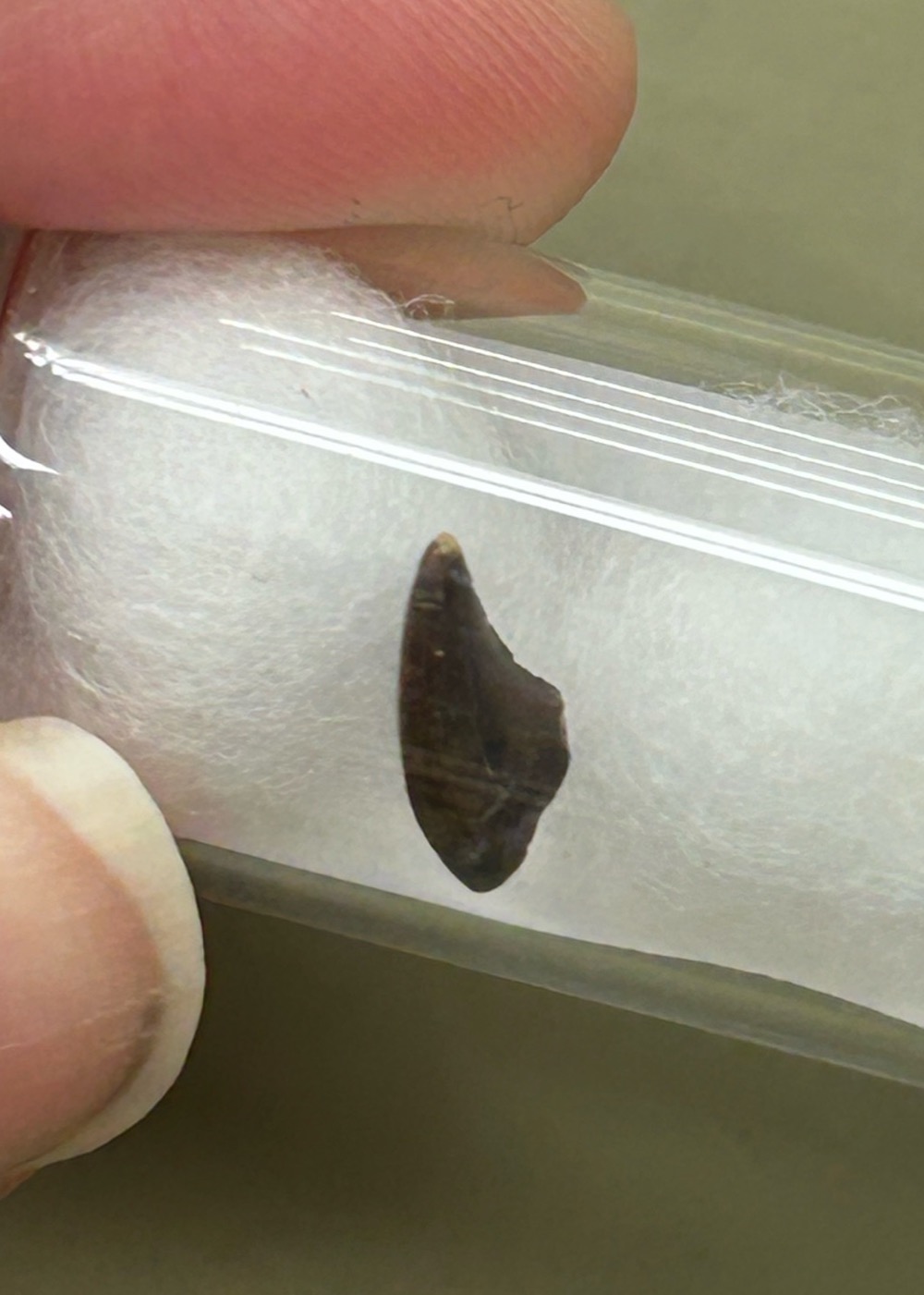
?
Saurornitholestes (Dromaeosauridae, Clade Deinonychosauria)
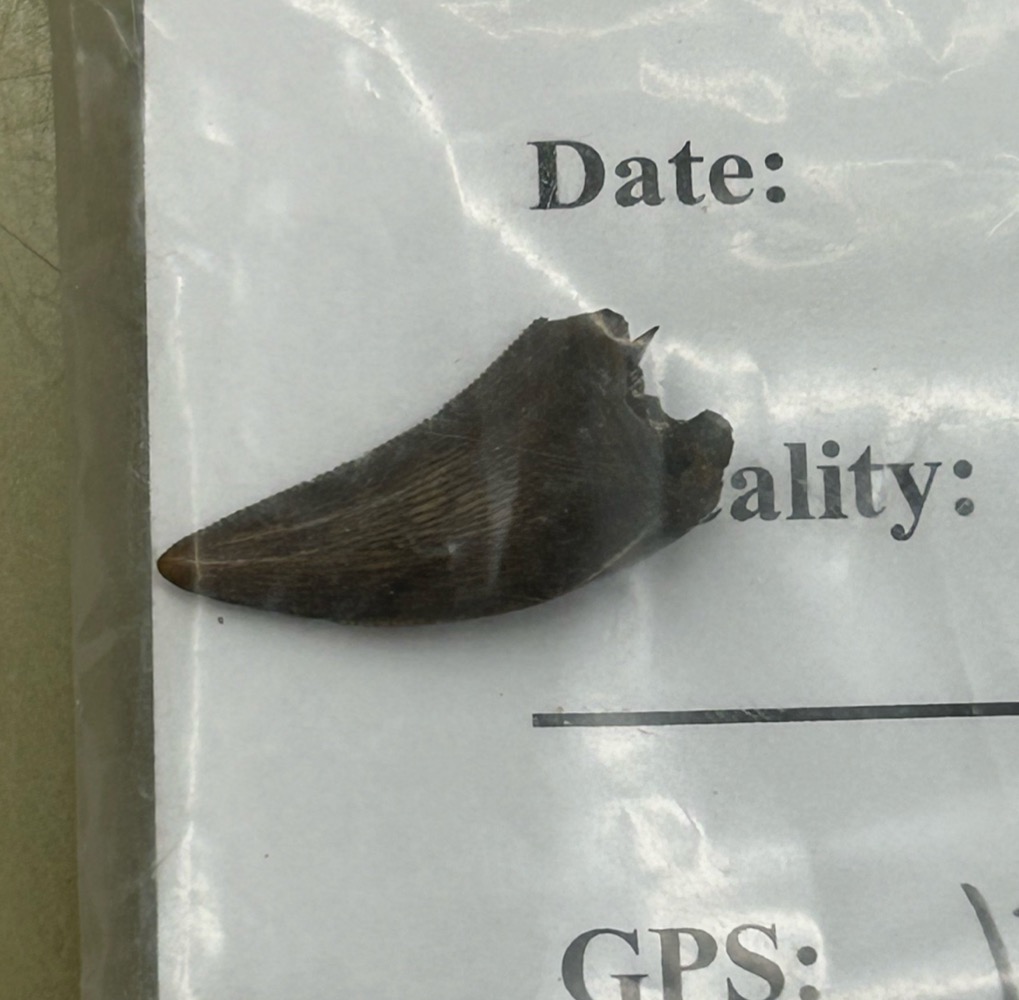
?
Saurornitholestes (Dromaeosauridae, Clade Deinonychosauria)
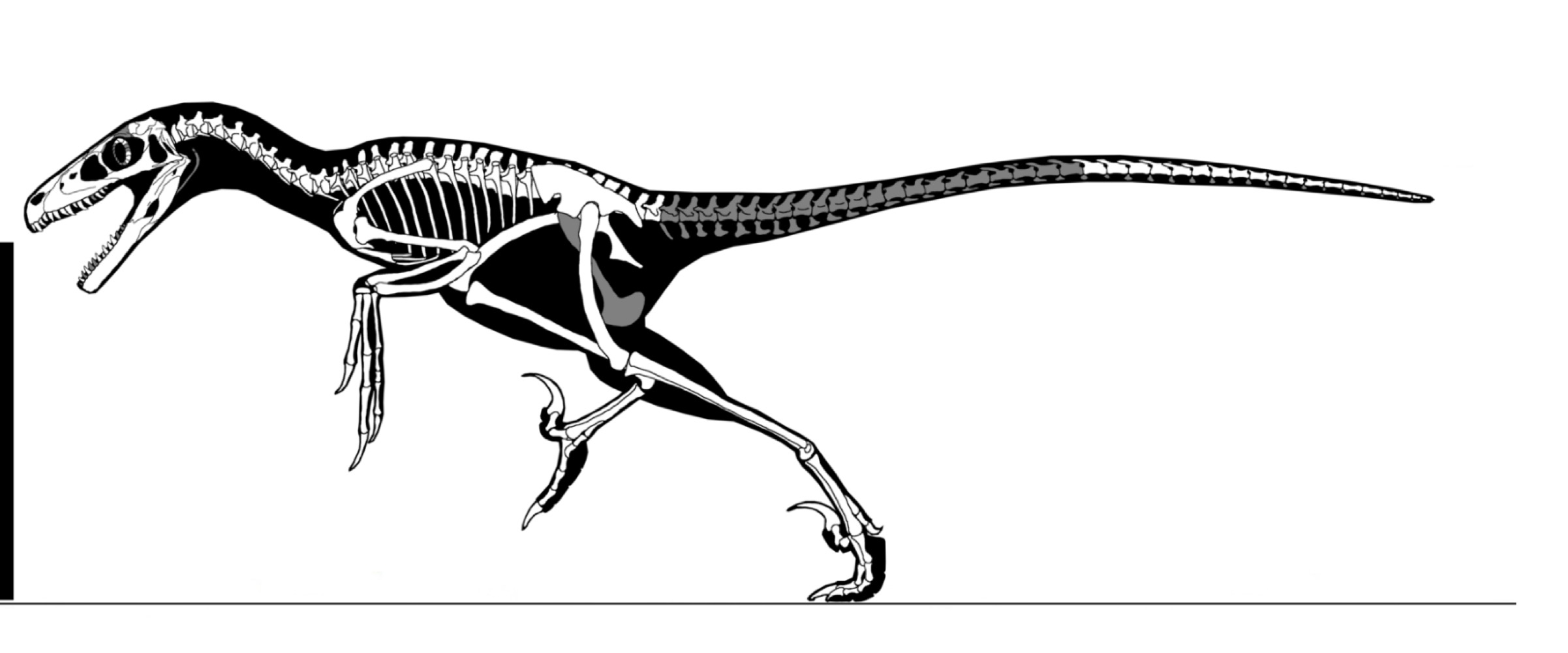
?
Saurornitholestes (Dromaeosauridae, Clade Deinonychosauria)
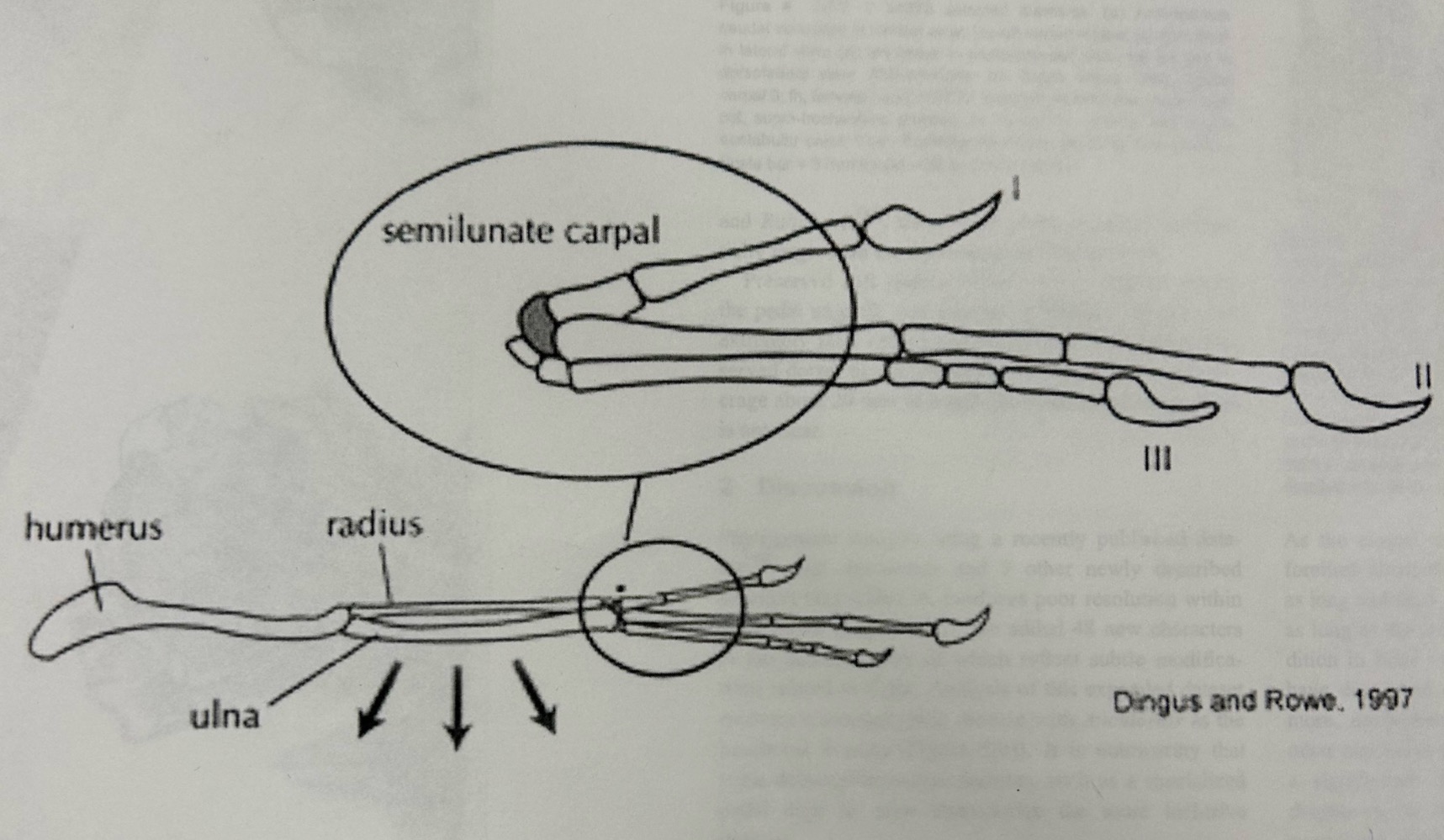
What type of wrist is this?
Ginglymoid - (pulley-like) distal articulation of metatarsals II and III
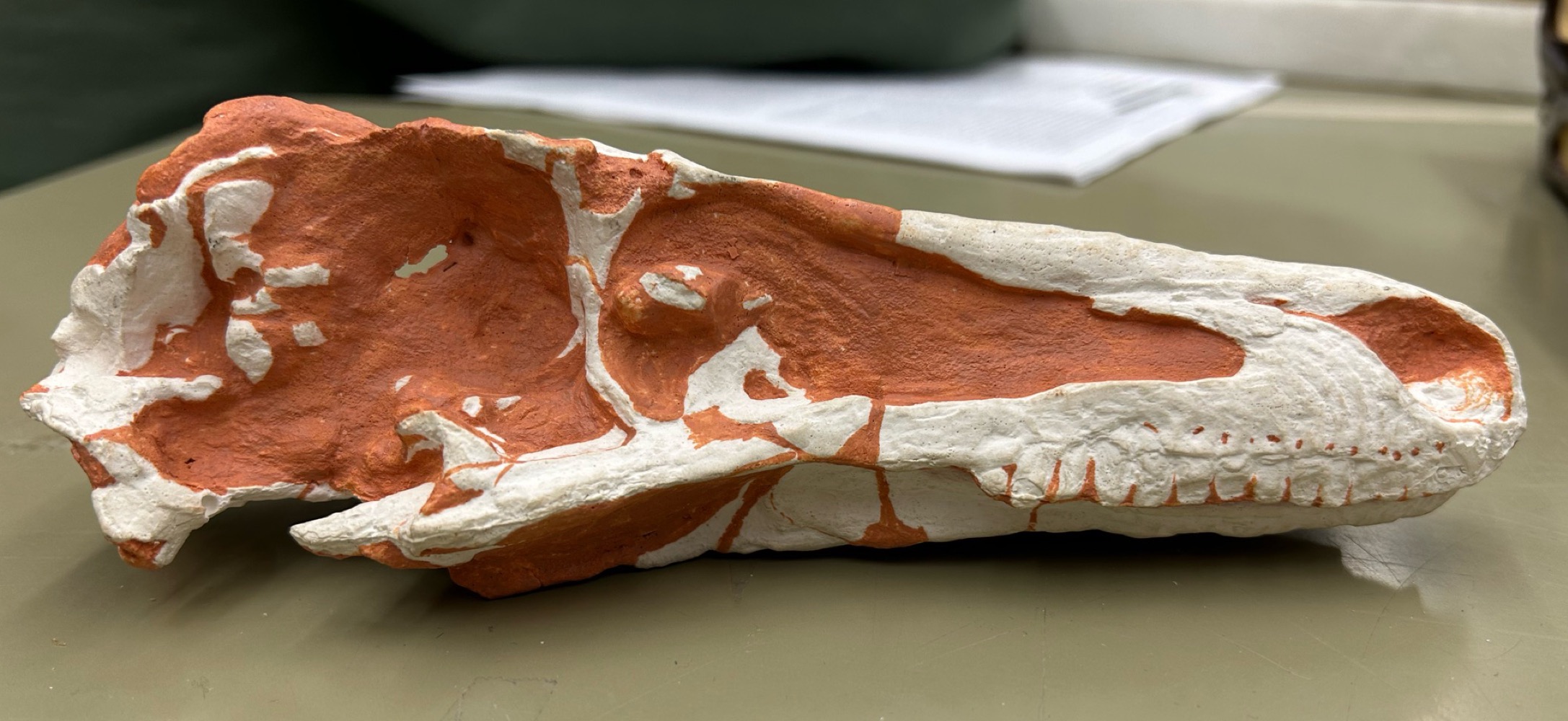
?
Saurornithoides (Troodontidae, Clade Deinonychosauria)
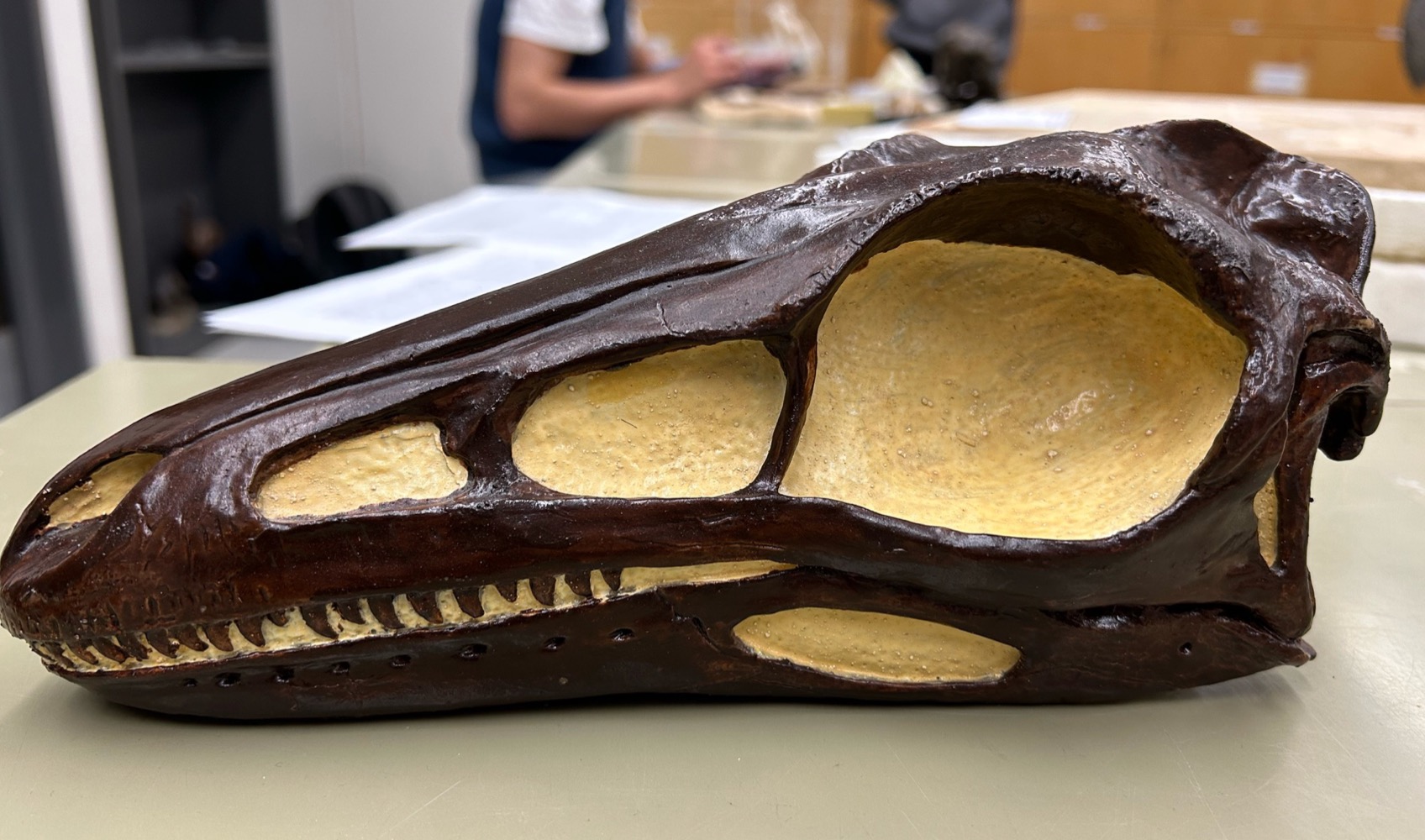
?
Troodon (Troodontidae, Clade Deinonychosauria)
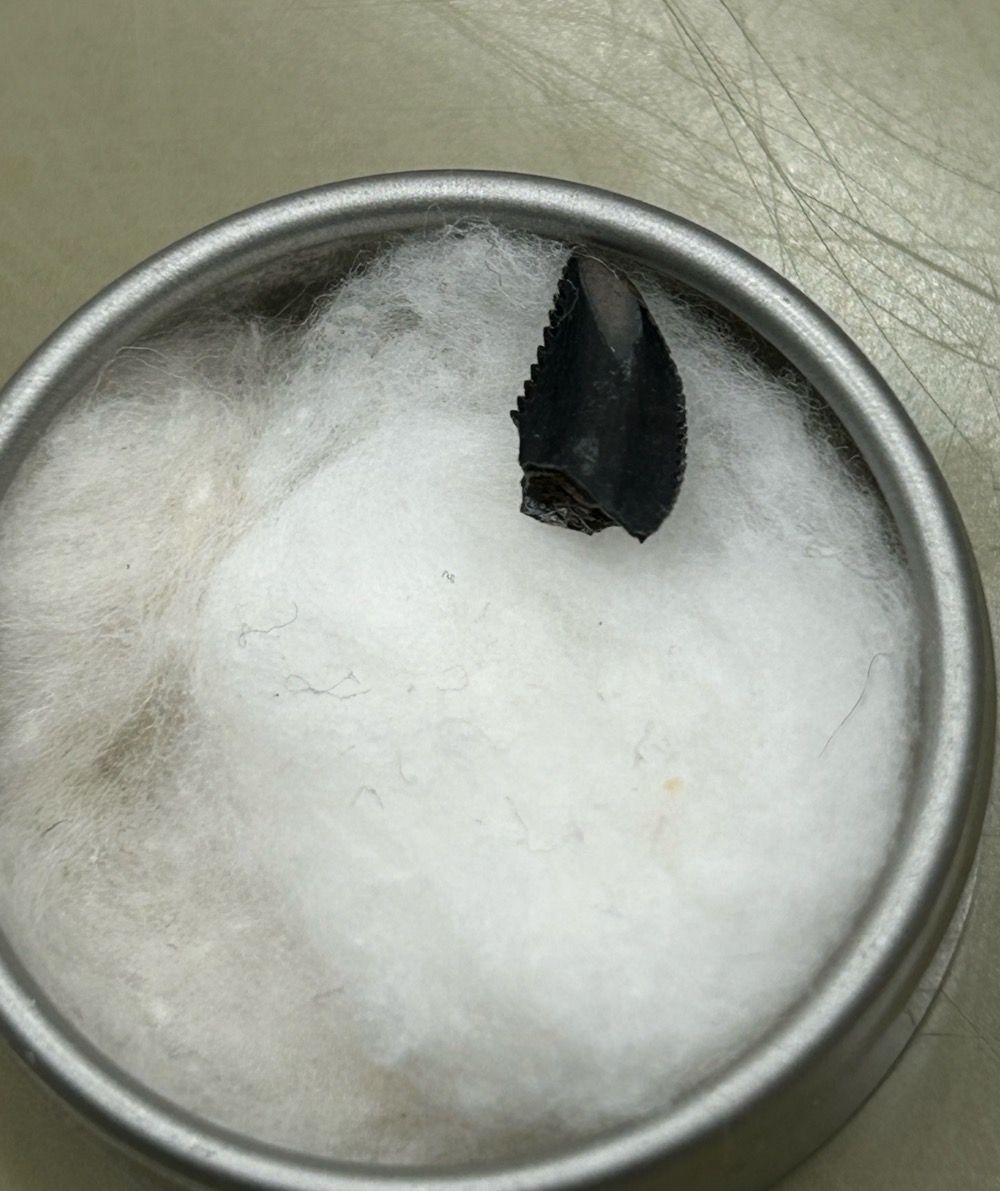
?
Troodon (Troodontidae, Clade Deinonychosauria)
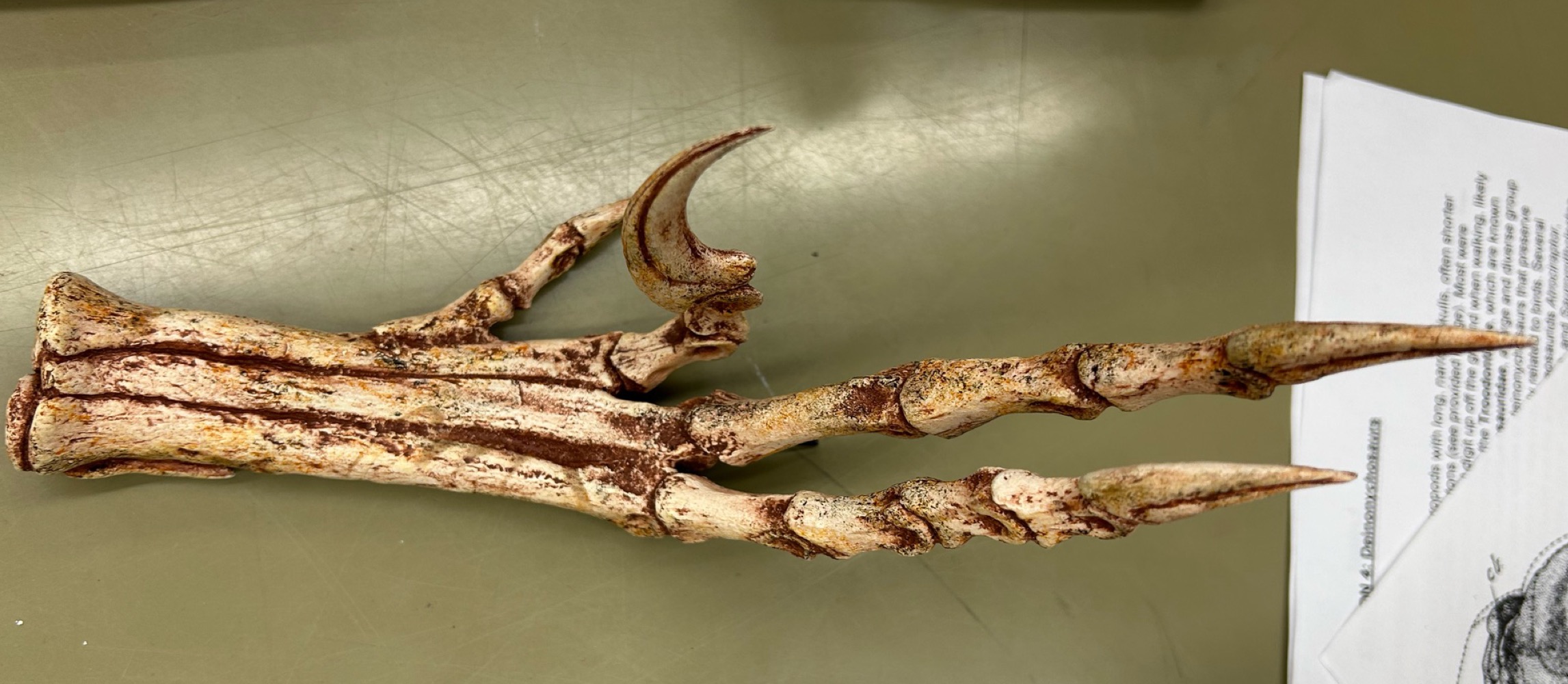
?
Velociraptor (Similar to Clade Deinonychosauria)
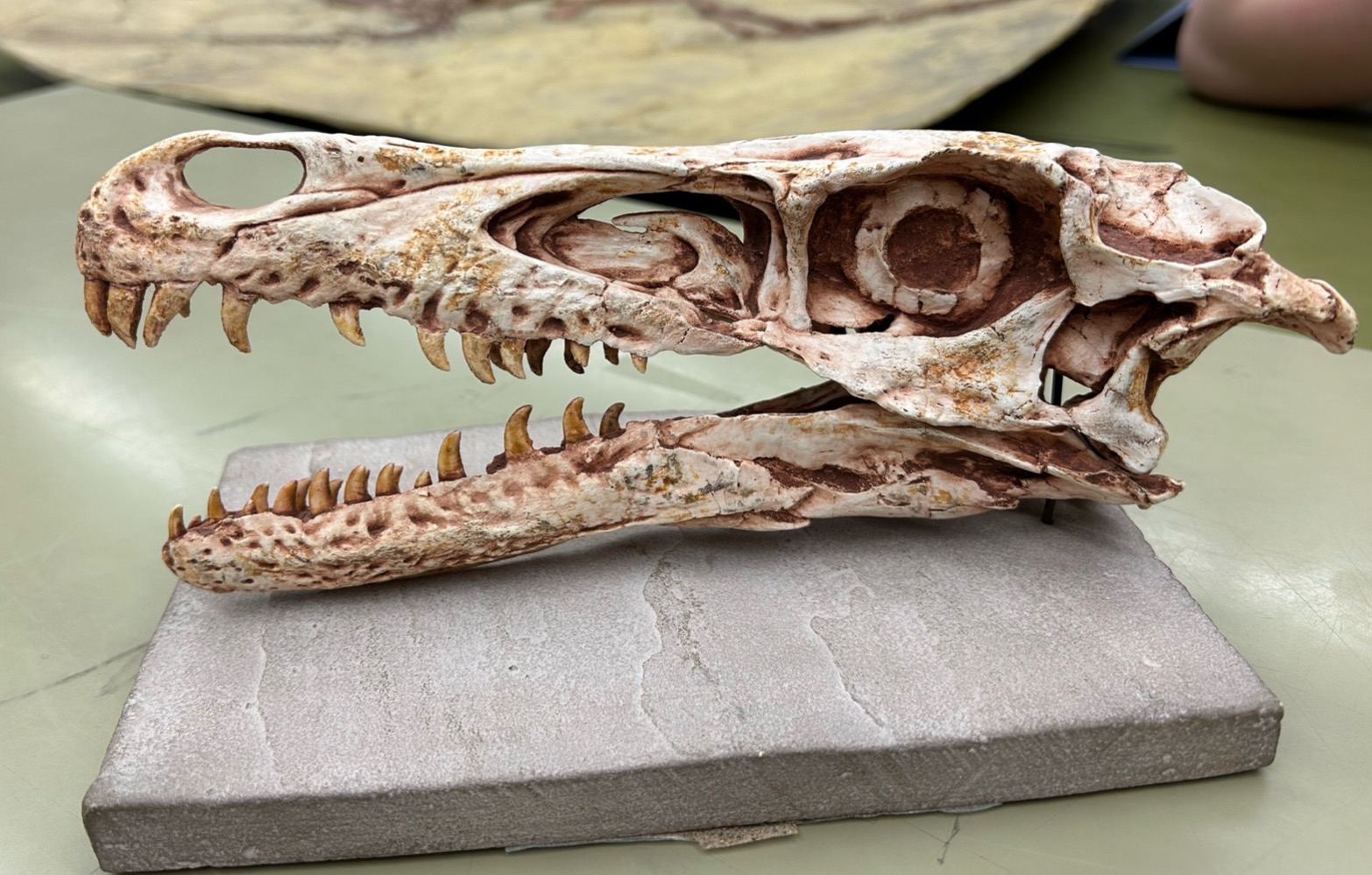
?
Velociraptor (Similar to Clade Deinonychosauria)
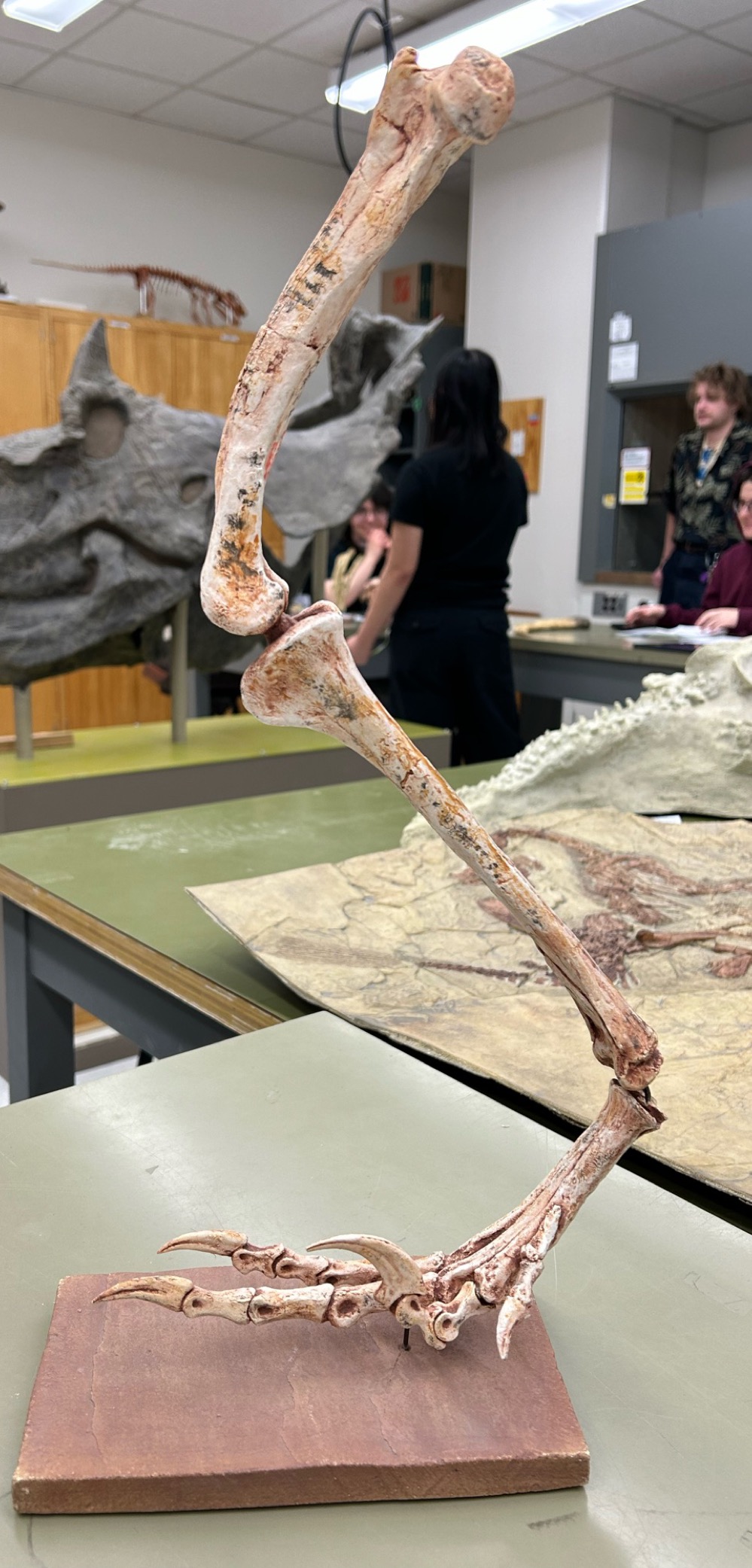
?
Velociraptor (Similar to Clade Deinonychosauria)
Clade Avialae definition
refers to the flying dinosaur clade, which includes Ichthyornis, Hesperornis, Enantiornithes, and Archaeopteryx
Clade Avialae synapomorphies
unserrated teeth reduced in size and number
scapula with pronounced acromion process
coracoids with pronounced sternal process
forelimbs as long as, or longer than, hindlimbs
forearm as long as, or longer than, humerus
Archaeopteryx lithographica (Clade Avialae) avian traits
asymmetrical feathers
furcula (although many other theropods (including tyrannosaurs) have been found with a furcula)
long forelimbs
partial fusion of distal tarsals to the metatarsals
fusion of metatarsals at their proximal ends
Unkeeled sternum
Archaeopteryx lithographica (Clade Avialae) primitive traits
teeth
long bony tail
forelimb with at least three clawed digits
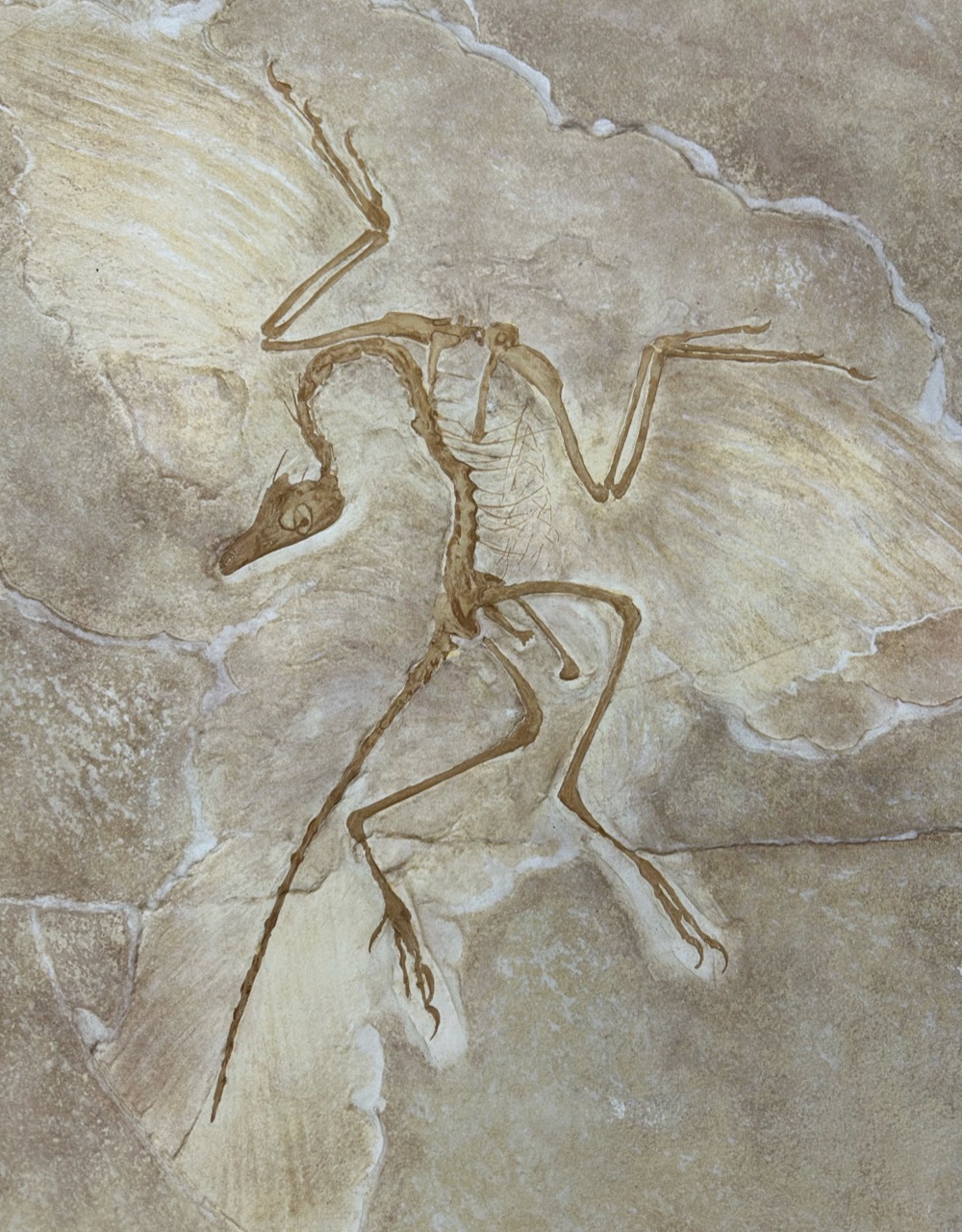
?
Archaeopteryx lithographica (Clade Avialae)
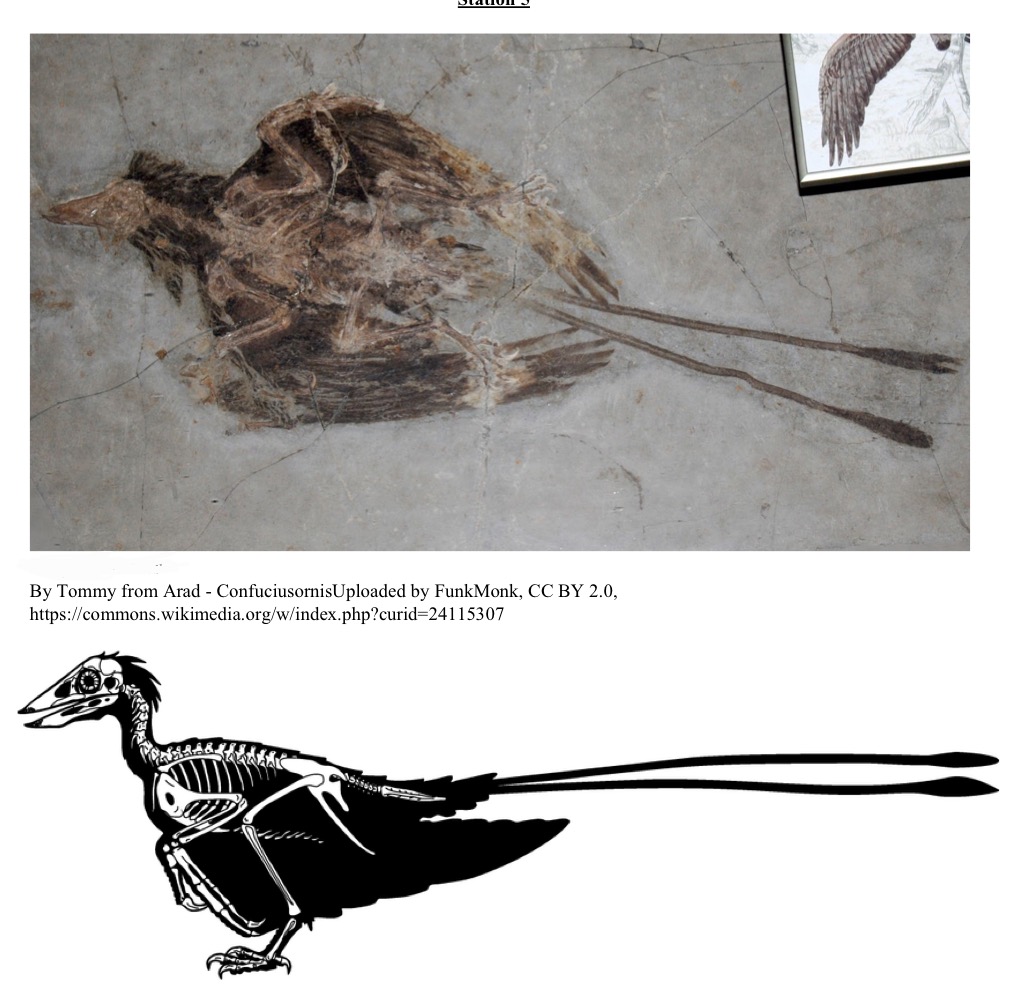
?
Confuciusornis (Clade Avialae)
Class Aves (Clade Maniraptora) synapomorphies
fewer than 11 dorsal vertebrae
pubis, ilium and ischium subparallel
teeth lost, replaced with a rhamphotheca (beak)
fused mandibular symphysis
fused uncinate processes on ribs
tail reduced and vertebral elements fused in to a pygostyle
manual digits fused to form the carpometacarpus
fused vertebrae in the pelvic region to form the synsacrum
Infraclass Palaeognathae (Class Aves) traits
male incubates the eggs
hair-like, shaggy feathers
broad vomer that unites anteriorly with maxillopalatine, posteriorly with the palatines and pterygoids
Infraclass Neognathae trait that differentiates them from Infraclass Palaeognathae (Class Aves)
have a reduced or absent vomer
Extinct Infraclass Neognathae species (Class Aves, Clade Maniraptora)
Phorusrhacos - belong to the Cariamiformes (closely related but basal to falcons (Falconiformes), parrots (Psittaciformes), and passerine birds (Passeriformes)
Presbyornis - Paleocene anseriform (ducks) with long legs and necks and superficially resembled a flamingo
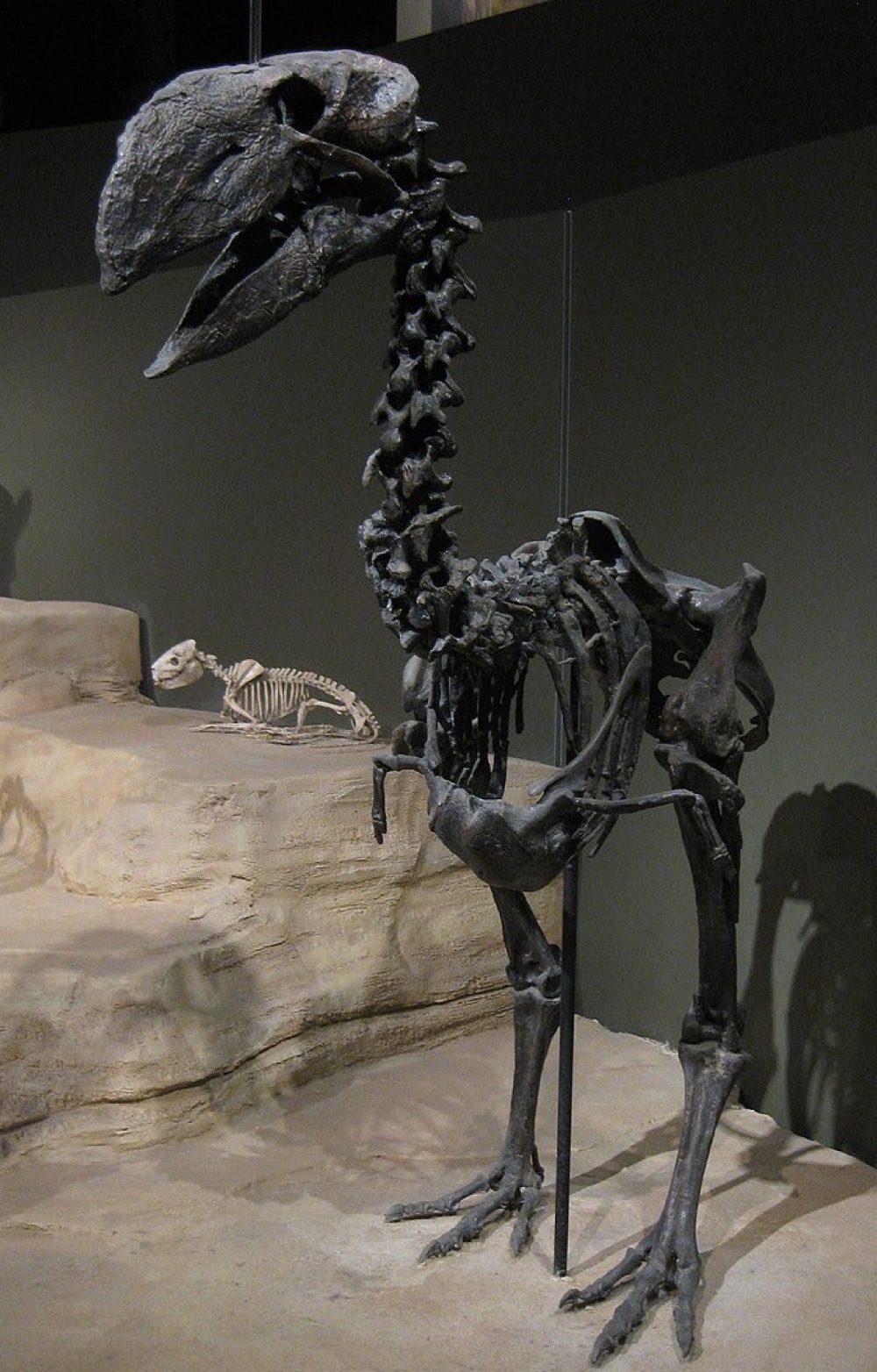
?
Gastornis (Infraclass Neognathae, Class Aves)
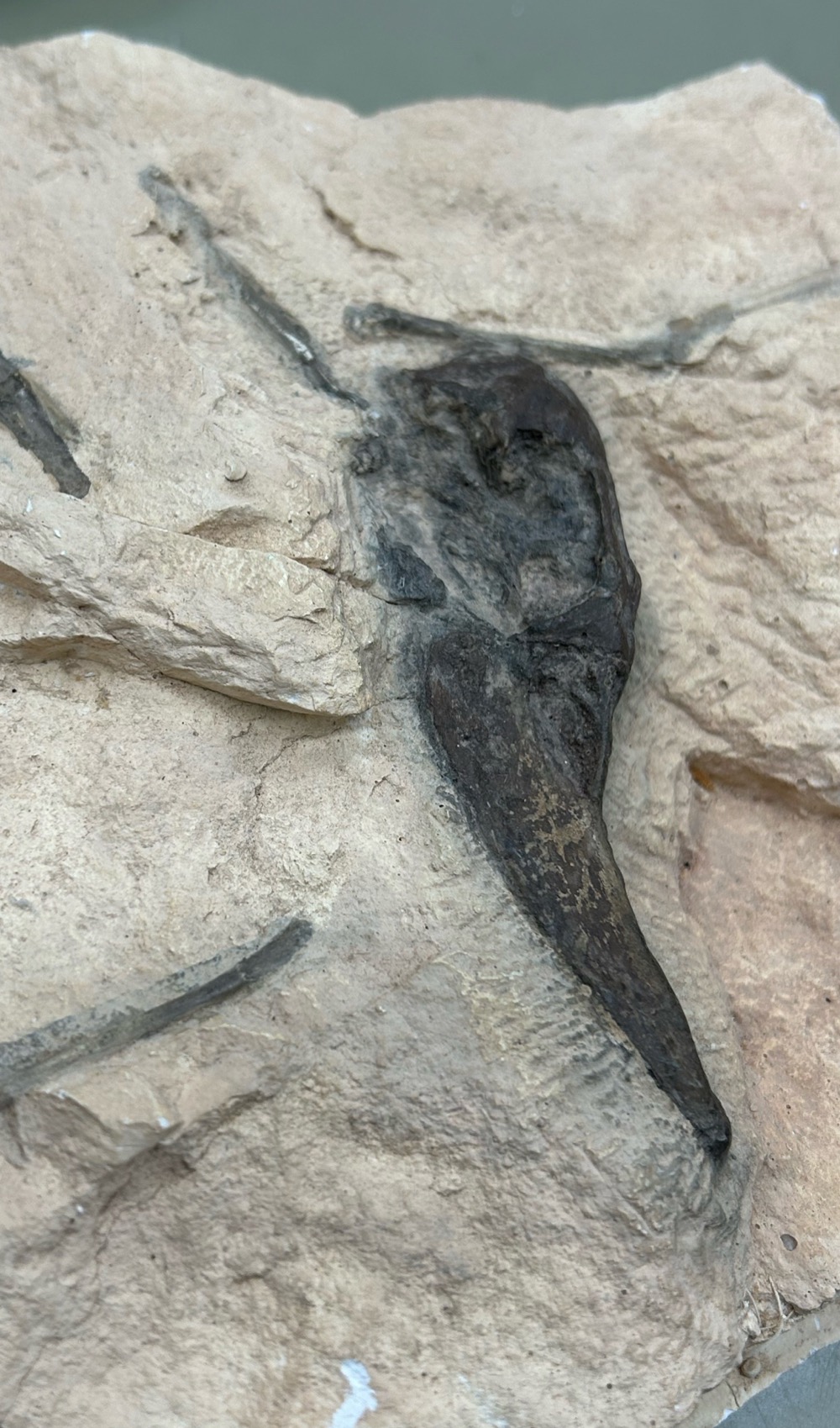
?
Presbyornis (Infraclass Neognathae, Class Aves)
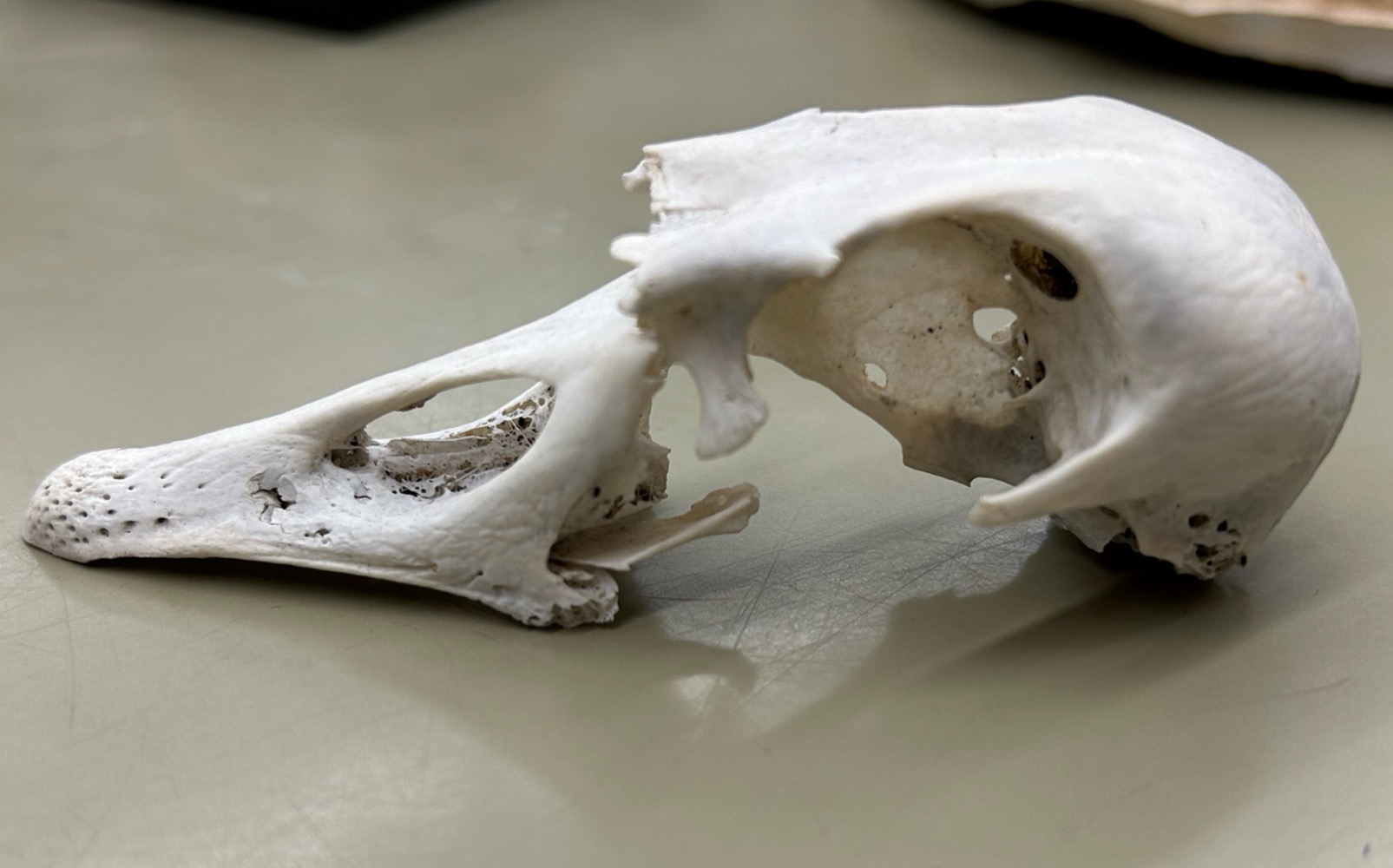
?
Infraclass Neognathae (Class Aves)
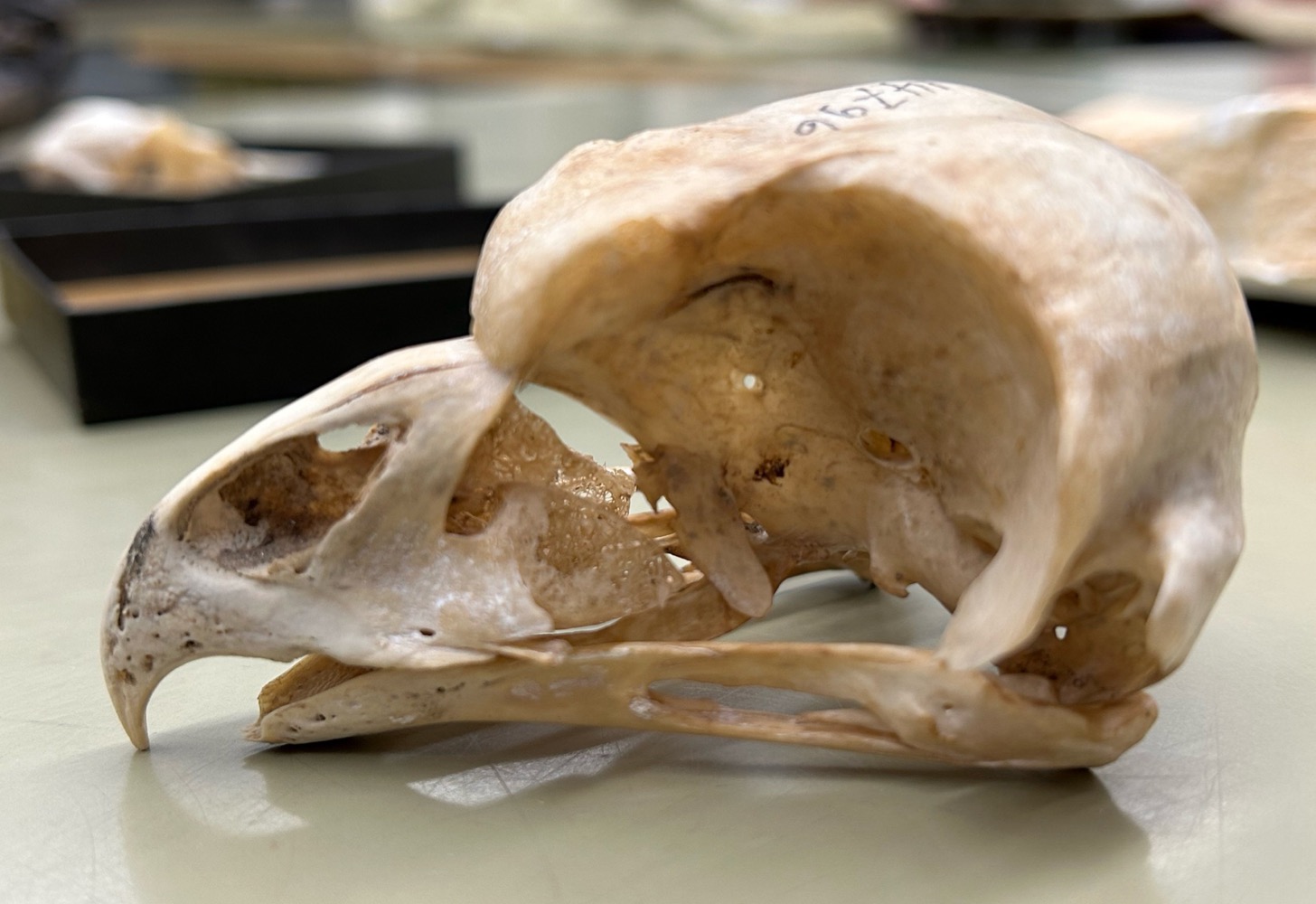
?
Infraclass Neognathae (Class Aves)
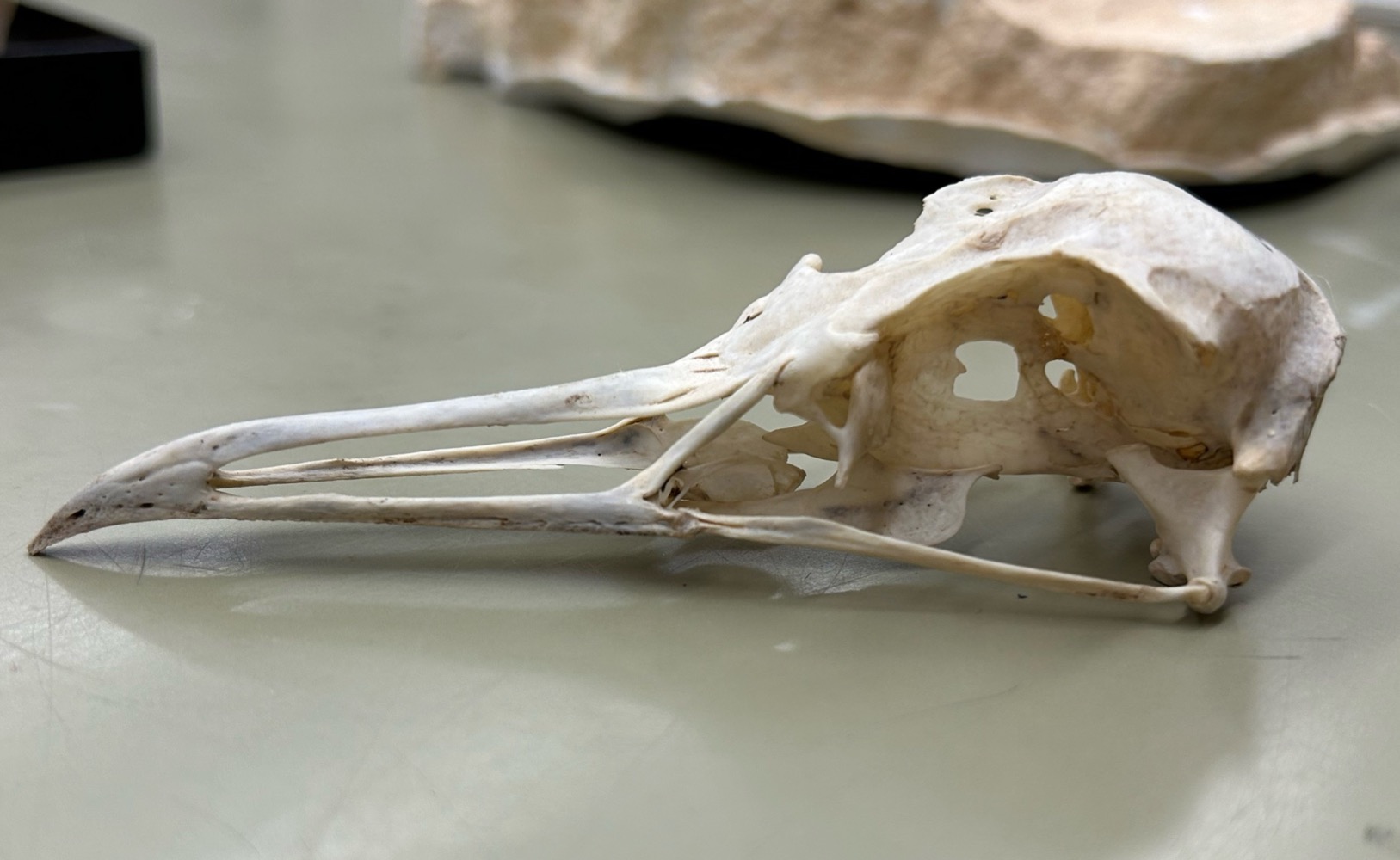
?
Infraclass Neognathae (Class Aves)
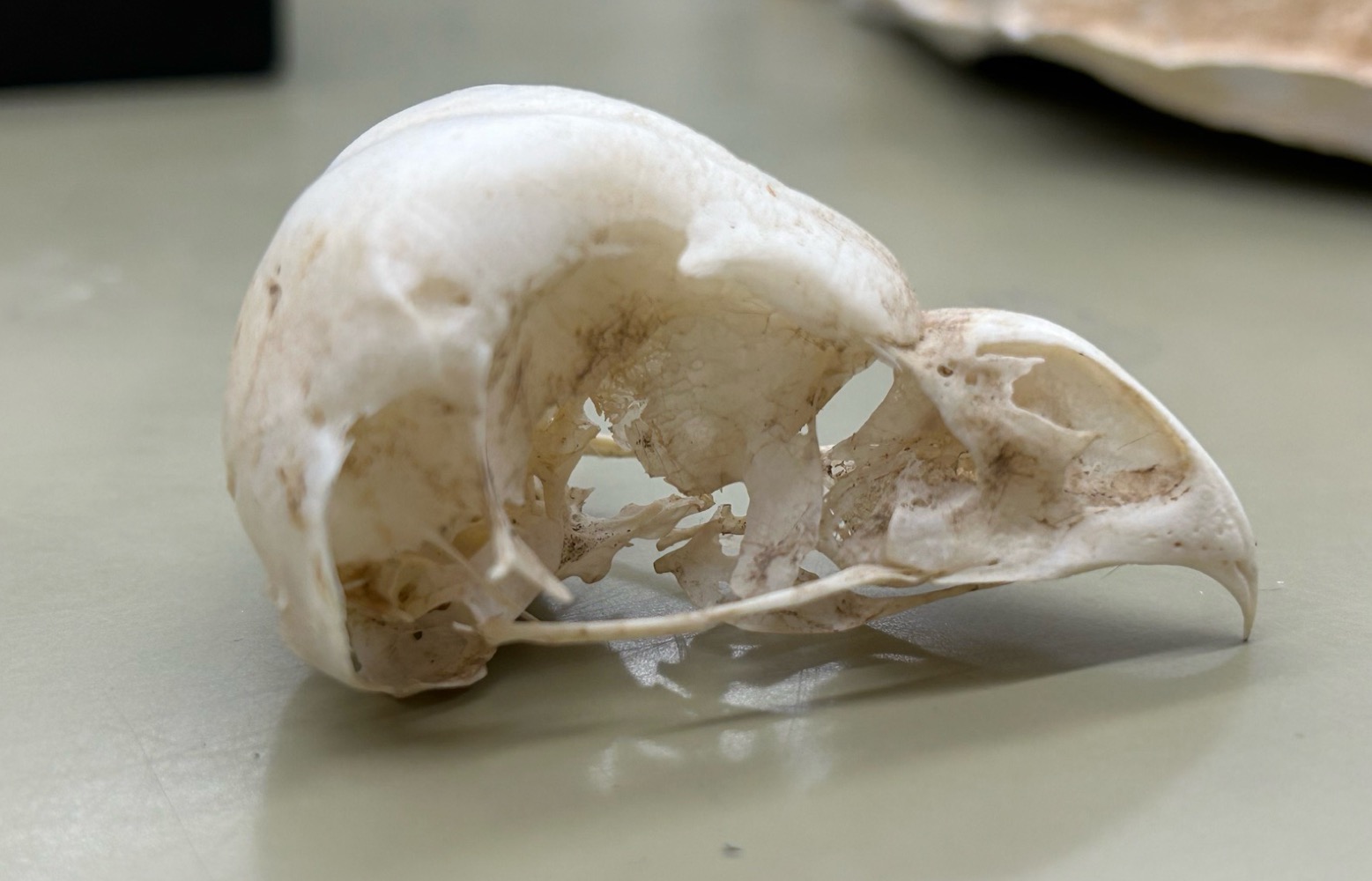
?
Infraclass Neognathae (Class Aves)
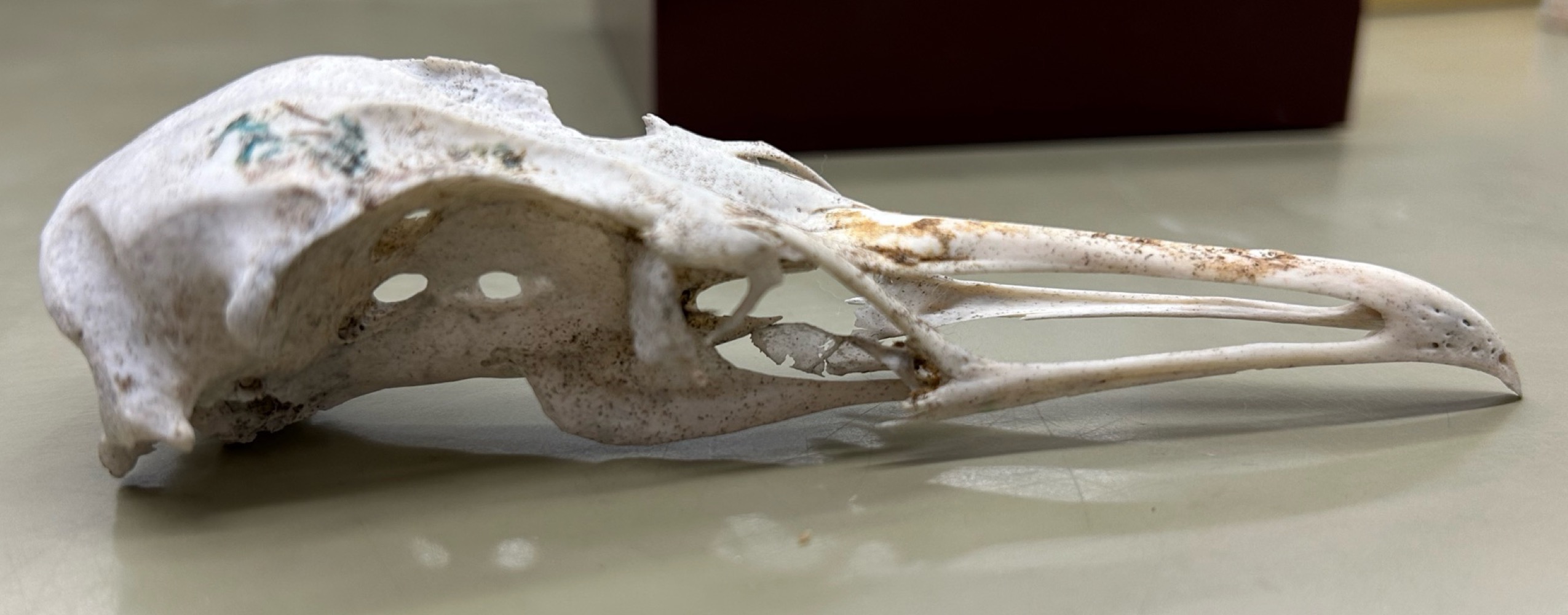
?
Infraclass Neognathae (Class Aves)
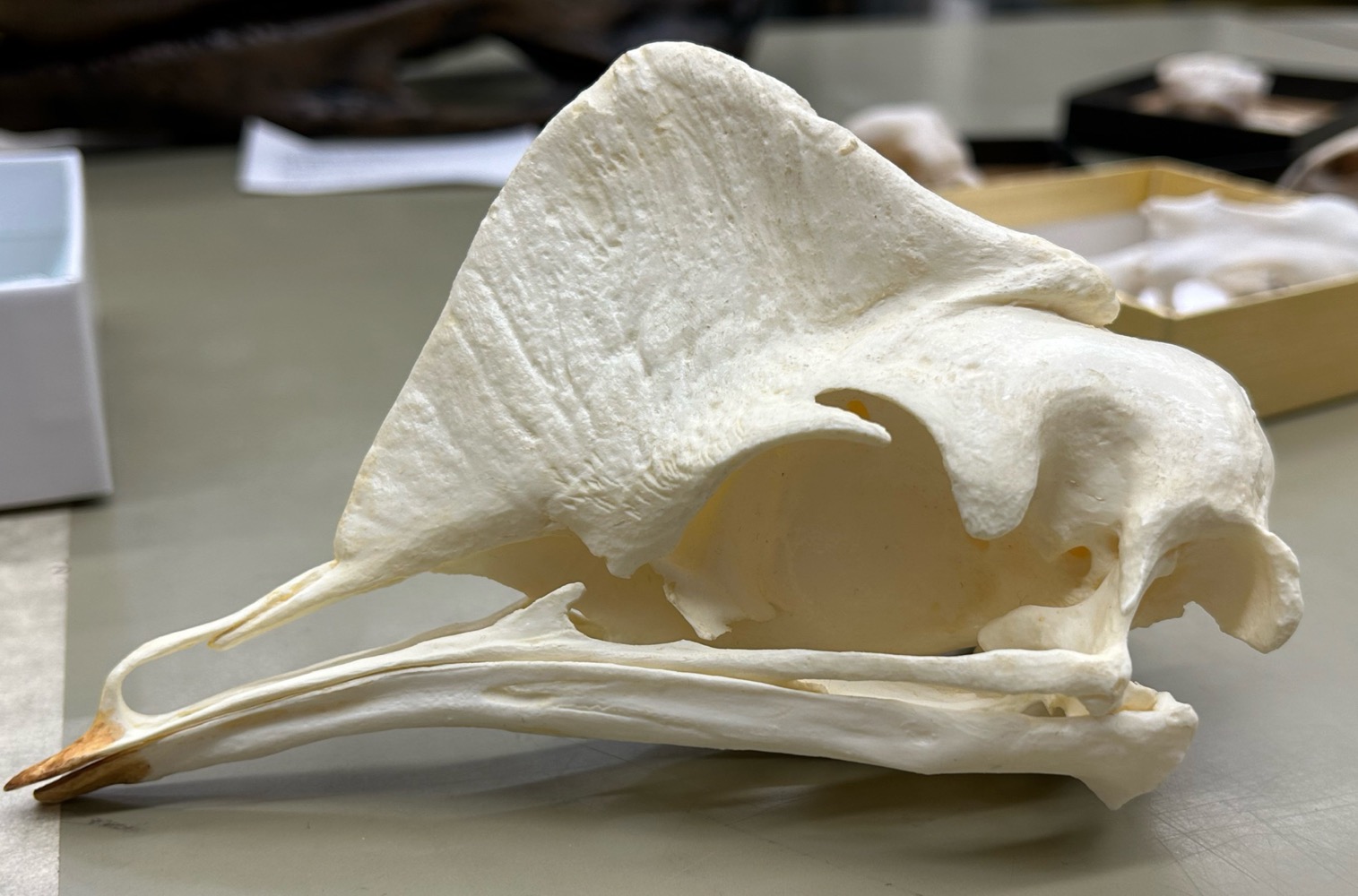
?
Cassowary (Infraclass Palaeognathae, Class Aves)
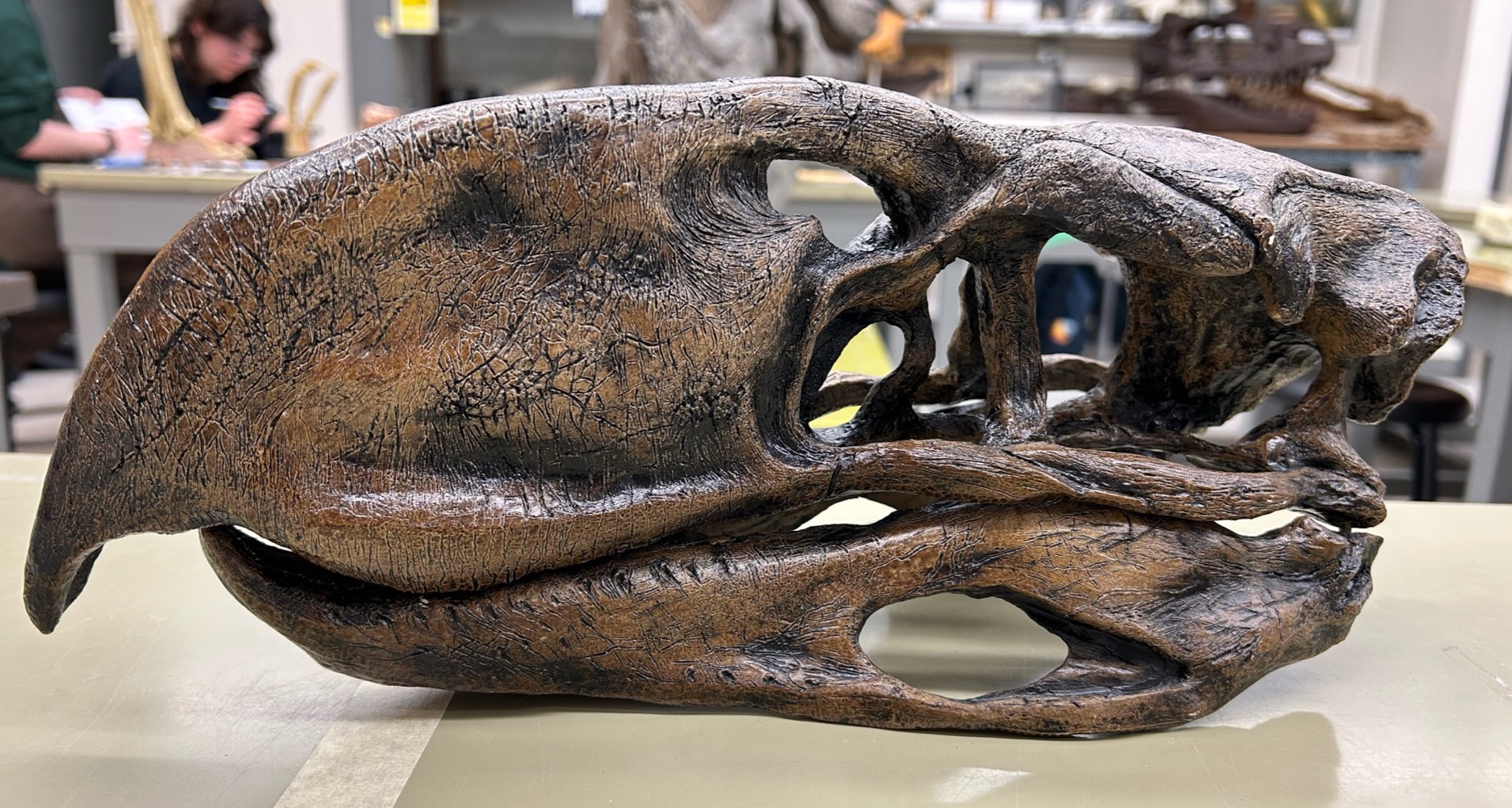
?
Phorusrhacos (Phorusrhacidae, Infraclass Neognathae, Class Aves)
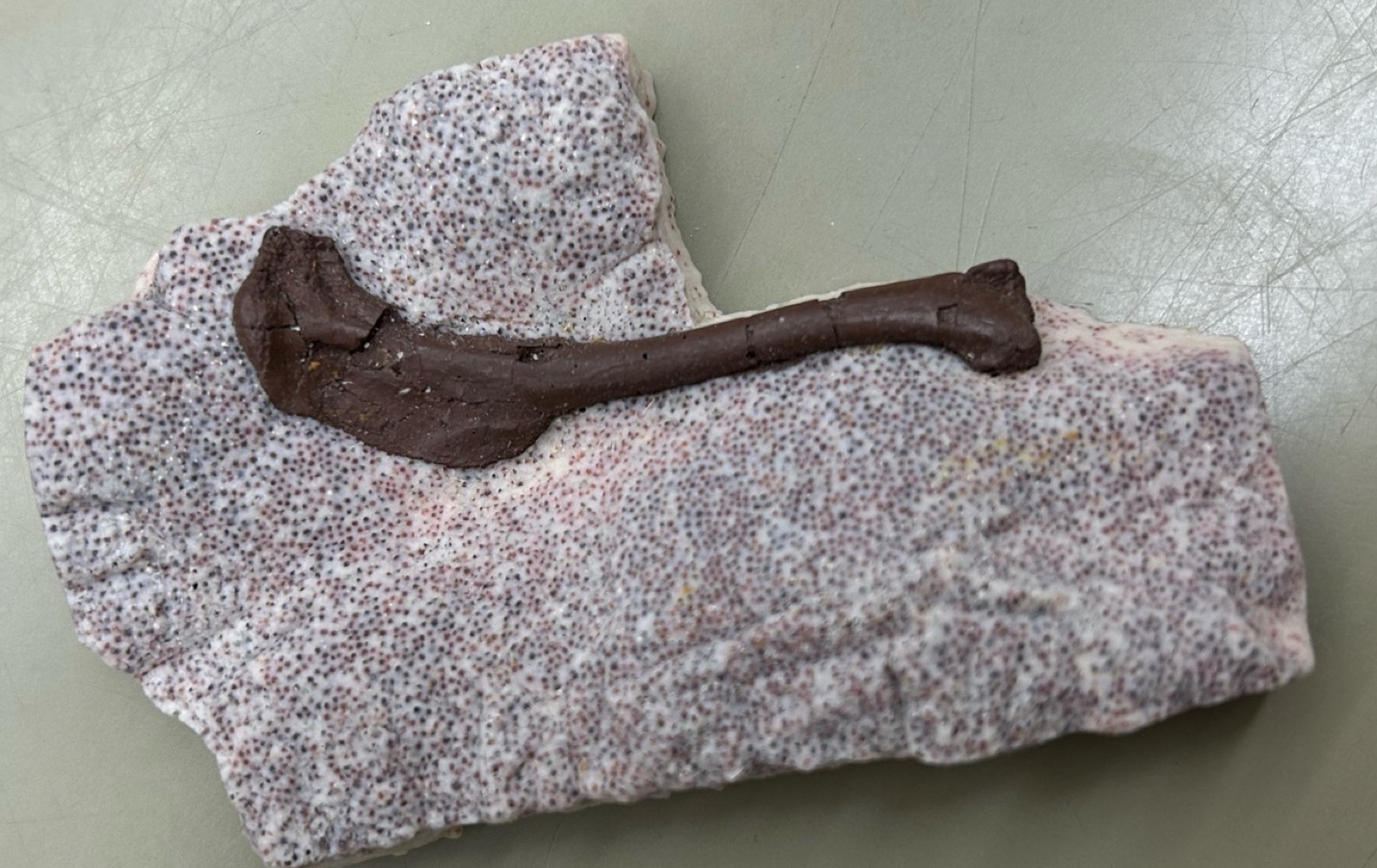
?
Ichthyornis (Class Aves, Clade Avialae)
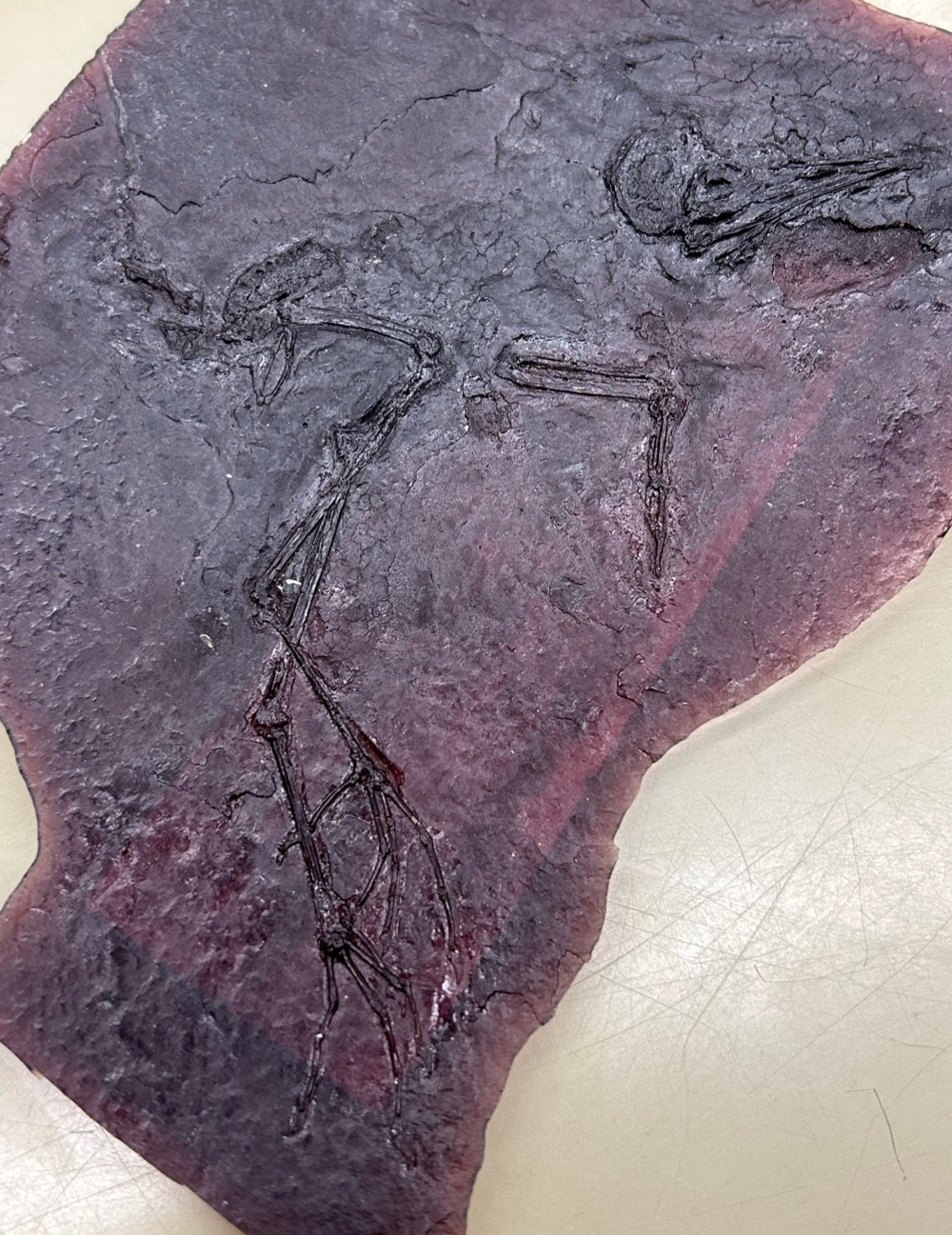
?
Class Aves (Clade Avialae)

