Module 10: Revolution in Military Affairs and its Limits
 View linked note
 Call Kai
 Learn
Learn Practice Test
 Spaced Repetition
 Match
Match Flashcards
 Knowt Play
1/46

There's no tags or description
Looks like no tags are added yet.
Name | Mastery | Learn | Test | Matching | Spaced | Call with Kai | Chat |
|---|
No analytics yet
Send a link to your students to track their progress
47 Terms
Revolution in Military Affairs (RMA)
A major change in the nature of warfare brought about by the innovative application of new technologies, combined with changes in military doctrine, operational concepts, and organizational adaptation.
What is RMA?- Four elements of Revolution in Military Affairs
1) Technological change, 2) Systems development, 3) Operational Innovation, 4) Organisational adaption
What the four elements determine
These four elements together determine the occurrence of military revolution
Historical Examples of Revolution Military Affairs-The Phalanx
From Military point of view, Alexander of the Great organised the technological innovation of the time, where he organised the heavily armed infantry (the Phalanx) with very large spears so they could push forward whilst moving forward, whilst being organised in columns and rows.
Historical Examples of Revolution Military Affairs- Gun Powder
Was utilised to shoot guns and for artillery reasons. Not good for destructive power but it standardised the performance of military soldiers as soldiers physical conditions were not as significant. Modern militaries could standardise and organise by effective calculation of what the military could or could not do. Gunpowder had to be combined with significant organisational elements like soldiers fighting in rows.
Historical Examples of Revolution Military Affairs- Machine Guns
Before machine guns, soldiers were marching in rows, but with machine guns the rows could be annihilated in short times, soldiers could no longer run and attack each other. Lead to the building of trenches, where each side could not advance as they would be faced with machine guns. Tatic and organisational changes, with changes in conduct of warfare especially in early stage of WW2
Historical Examples of Revolution Military Affairs- Aircraft Carriers
Important in the military innovation of naval warfare. Uncertainty if whether the future would be aircraft carriers or huge battle warships. Aircraft carriers, large ships, carrying aircrafts. Their successful performance in naval warfare in WW2, it was concluded that aircraft carriers are critical in ensuring state’s maritime advantage
Historical Examples of Revolution Military Affairs- Nuclear Weapons
Its sheer destructive power has fundamentally changed the idea of warfare in today’s warfare. Changes in military tactics, but also the organisation of the military
Current Revolution of Military Affairs
Often called “Information Revolution”, began/recognised in Gulf War in 1991. Now there is a need beed to create a highly information-alised military as the military has to become something capable of adapting of communication revolution. US had achieved information-alisation of military at the beginning of the Gulf War era which allowed them to win
RMA elements today
Precision Firepower, Small Ground Units, C4ISR (Command, Control, Communications, Computers, Intelligence, Surveillance, and Reconnaissance. I
How does RMA’s elements mean for strategy today
It is highly integrated and efficient information/command structure) and involves Psychological Operations (Diminish will to fight and communications)
RMA today’s focus
Speed, manoeuvre, flexibility, and surprise, hit the adversary as quick as possible before they are capable as responding and also manoeuvre to hit where they are weakest. Defeat conventional forces at very low costs.
RMA- Accuracy
Showed firepower is not just important in size but also accuracy- precision firepower. Dropping many bombs not only requires more resources but can actually undermine one’s military
Technological change
One of the four elements of RMA, referring to the development and application of new technologies in military systems.
Systems development
One of the four elements of RMA, involving the integration of new technologies into a significant number of military systems.
Operational innovation
One of the four elements of RMA, focusing on the development of new operational concepts and strategies.
Organizational adaptation
One of the four elements of RMA, referring to the changes made in military organizations to accommodate the new technologies and operational concepts.
The Phalanx
A historical example of RMA, referring to the heavily armed infantry formation used by Alexander the Great, which fundamentally changed the conduct of warfare.
Gunpowder
A historical example of RMA, referring to the utilization of gunpowder for firearms and artillery, which standardized the performance of military soldiers and led to changes in military tactics and organization.
Machine guns
A historical example of RMA, referring to the introduction of machine guns that annihilated traditional marching formations and led to the development of trench warfare.
Aircraft carriers
A historical example of RMA, referring to the introduction of large ships carrying aircraft, which revolutionized naval warfare and ensured a state's maritime advantage.
Nuclear weapons
A historical example of RMA, referring to the development of nuclear weapons that fundamentally changed the idea of warfare and led to changes in military tactics and organization.
Information Revolution
The current RMA, also known as the "Information Revolution," which began in the Gulf War in 1991 and emphasizes the highly information-alized military and the integration of communication technologies.
Precision Firepower
One of the components of the current RMA, referring to the use of accurate and targeted firepower to defeat adversaries.
C4ISR
Command, Control, Communications, Computers, Intelligence, Surveillance, and Reconnaissance. A component of the current RMA, emphasizing the highly integrated and efficient information and command structure.
Psychological Operations
One of the components of the current RMA, focusing on diminishing the adversary's will to fight and disrupting their communications.
Network warfare
A term associated with the current RMA, referring to the emphasis on using information and communication networks to gain an advantage in warfare.
Future of RMA-Afghan Model
A future vision of RMA, involving the combination of airpower, special forces, and indigenous troops under advanced command and control systems.
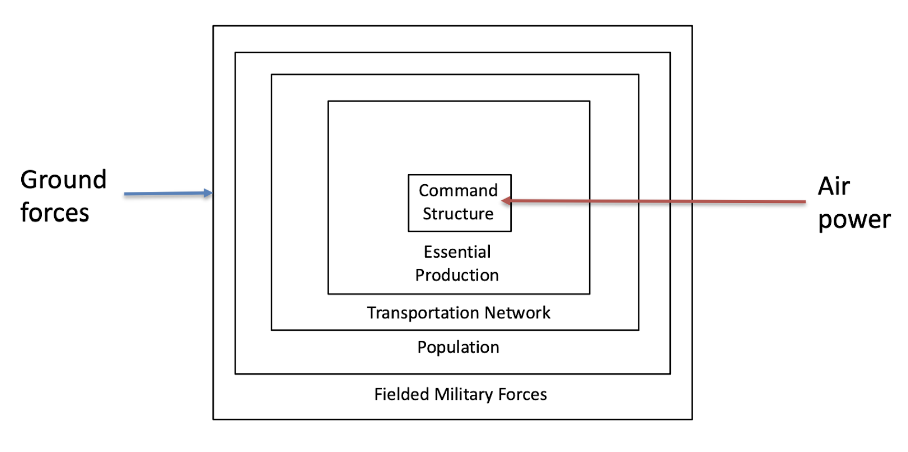
Future of RMA- Decapitation strategy
A future strategy of RMA, aiming to change or paralyze enemy governments through military means.
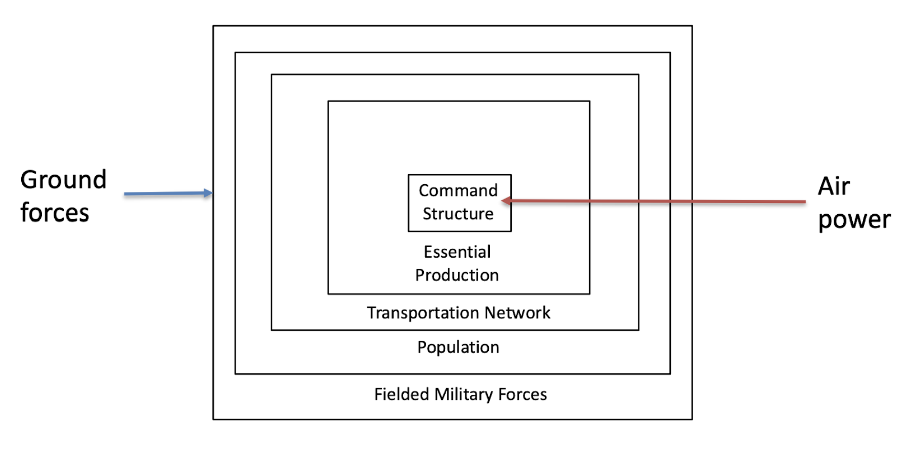
Future of RMA- Political Implications of RMA
After the initial defeat of the Taliban, Many in US believed they ultimately found the magic formula to win a war. Belief that US can easily defeat any adversary, even using force unilaterally. The idea of easy military victory was at the heart of the Bush Doctrine and less US reluctant to use military means. Less Cost with US view of cost is typically the cost of lives of US soldiers
Limits in RMA: Experiences in Afghanisatan and Iraw
Experiences in Afghanistan and Iraq: The recognition that toppling regimes alone cannot achieve political goals unless one occupies the whole country, and large ground forces needed to address guerilla warfare with limits to technological innovation
Kprevenitch’s seven lessons
1) Emerging technologies make RMAs possible, but not automatic, 2) Short lived advantages of a RMA: Imitation and adaptation, 3) Often cannot achieve full transition; niche competitors can exist, 4) War and RMA are different entities, 5) Huge variations in ability to understand and implement RMA, 6) Importance of non-military sectors in technology development, 7) Military revolution is not automatically tied to large sudden rise in the cost of maintaining military force
Kprevenitch’s seven lessons- 1) Short lived advantages of a RMA: Imitation and adaptation
Emerging technologies only make military revelations possible and to realise their full potential, these technologies typically must be incorporated within new processes and executed by new organisational structures
Kprevenitch’s seven lessons- 2) Emerging technologies make RMAs possible, but not automatic
the competitive advantages of a military revolution are increasingly short-lived as Military organisations typically recognise the potentially great penalties for failing to maintain their competitive position
Kprevenitch’s seven lessons- 3) Often cannot achieve full transition; niche competitors can exist
Asymmetries in national objectives and strategic cultures, as well as limitations on resources and the potential number and strength of enemies, allow for niche, or specialist, competitors
Kprevenitch’s seven lessons- 4) War and RMA are different entities
War and revolution in warfare are quite seperate entities
Kprevenitch’s seven lessons- 5) Huge variations in ability to understand and implement RMA
Despite that most militaries will be quick to recognise a competitors advantage there are no certainties as not even war will guarantee that all military organisations will recognise and exploit a military revolution or understand a revolution in all its dimensions
Kprevenitch’s seven lessons- 6) Importance of non-military sectors in technology development
Technologies that underwrite a military revolution are often originally developed outside the military sector and then ‘imported’ and exploited for their military applications
Kprevenitch’s seven lessons- 7) Military revolution is not automatically tied to large sudden rise in the cost of maintaining military force
Military revolution does not ineluctably imply a quantum leap in the cost of maintaining military force
Krepinevich’s 10 military revolutions since 14th century
Infantry Revolution
Artillery Revolution
Revolution of Sail and Show
Fortress Revolution
Gunpowder Revolution
Napoleonic Revolution
Land Warfare revolution
Naval Revolution
The Interwar Revolutions in Mechanization, Aviation and Information
Nuclear Revolution
Short-lived advantages of RMA
The understanding that emerging technologies make RMAs possible, but their advantages are often short-lived due to imitation and adaptation by adversaries.
Importance of the basics
The recognition that combat effectiveness in RMA is not solely dependent on technology or size, but on the ability to understand and implement the modern system of force employment.
RMA- Biddle and Importance of Basics
Need to be well versed in the “modern system of force employment” for combat effectiveness (the ability to destroy hostile forces while preserving one’s own, the ability to take and hold ground, and the time required to do so)
Combat effectiveness (Biddle)
The ability to destroy hostile forces while preserving one’s own, the ability to take and hold ground, and the time required to do so
Biddle and ‘modern system of force employment’ for combat effectiveness
Contexts of wars in 20th and 21st centuries (technology and lethality). For offense and defense, cover (difficult to hit), concealment (difficult to aim), dispersion, small unit independent maneuver, suppression, and combined arms integration (thereby reduce exposure and conduct operations)
Biddle, RMA and Key for military success in operations
Key for military success (in operations) is not technology or size per se, but diverging ability to internalize the modern system