Ch 1 (1.1, 1.2, 1.3): Mendel's Principles of Heredity
 Studied by 0 people
 Call Kai
 Learn
Learn Practice Test
 Spaced Repetition
 Match
Match Flashcards
 Knowt Play
1/46

There's no tags or description
Looks like no tags are added yet.
Name | Mastery | Learn | Test | Matching | Spaced | Call with Kai |
|---|
No analytics yet
Send a link to your students to track their progress
47 Terms
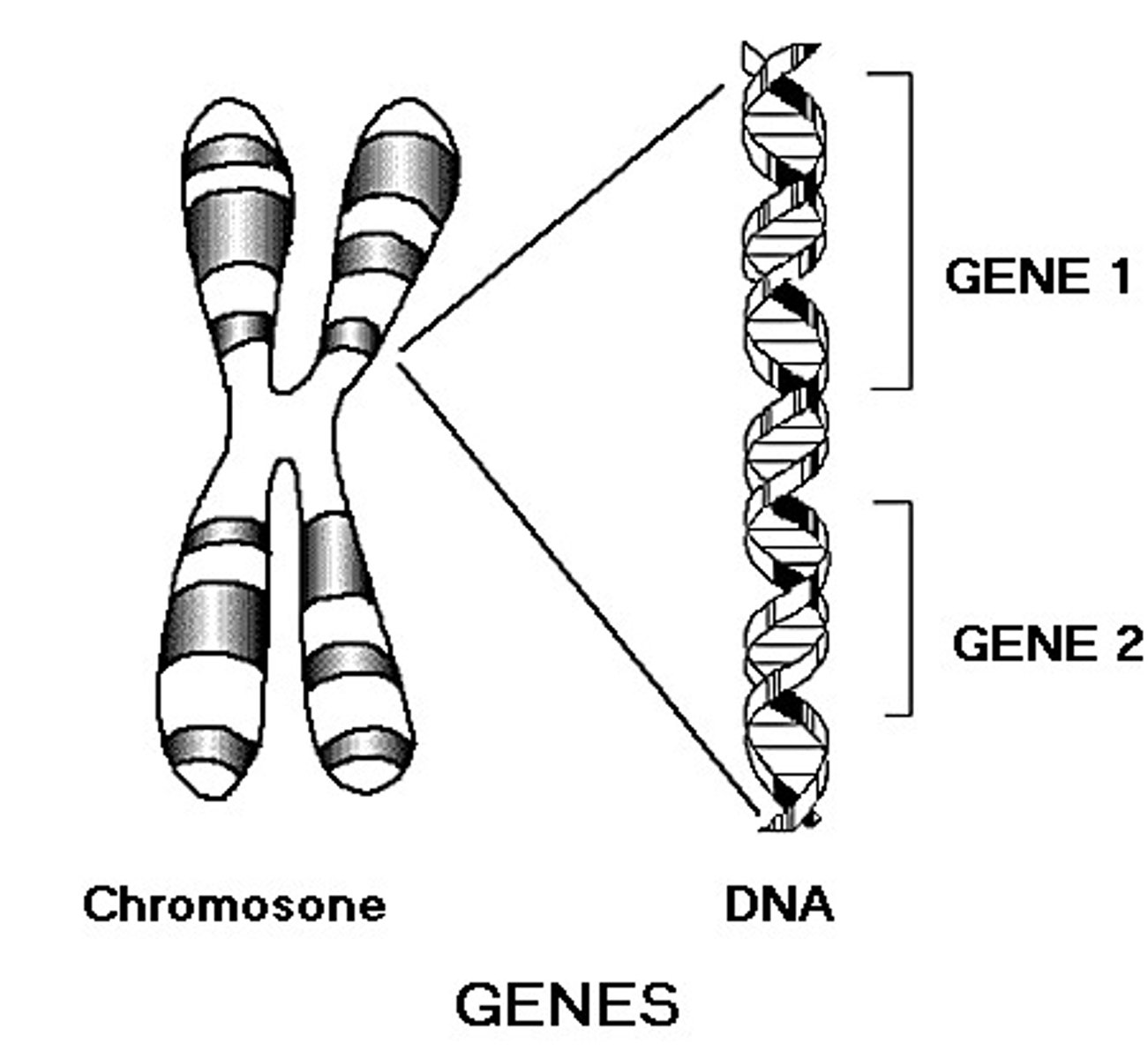
Genes
DNA segments that serve as the key functional units in hereditary transmission.
the biochemical units of heredity that make up the chromosomes; a segment of DNA capable of synthesizing a protein
heredity
the passing on of physical or mental characteristics genetically from one generation to another.
gene transmisison
genetics
The scientific study of heredity, gene transmission
Genetics is the study of biologically inherited traits, including traits that are influenced in part by the environment
Traits (characters)
Characteristics that are inherited
COMPLEX OR QUALITIVE
Traits that are governed by a single or few genes and that are not influenced by the environment - qualitative traits (for example, ABO blood group in humans)Traits that are governed by multiple genes and that are influenced by the environment - complex traits, are much more difficult to study (for example human height)
Complex traits
Complex traits - governed by multiple genes and influenced by the environment; exhibit a range of phenotypes (not distinct classes); difficult to analyze
HARDER TO STUDY
ex. height (genetic) + external environmental nutrition
qualitative traits
what we focus on with Medelian genetics
EASIER TO STUDY
Qualitative traits - governed by a single or few genes; not influenced by the environment; exhibit distinct phenotypic classes; easier to analyze (for example, ABO blood group in humans)
Alleles
different versions of a gene
Phenotype vs. Genotype
appearance vs gene allele ( genetic code)
- Phenotype: expressed physical traits
- Genotype: Genetic make-up
GENOTYPE CAN PREDIT PHENOTYPE BUT PHENOTYPE CANNOT PREDICT GENOTYPE
Mendelian Genetics
The pattern of inheriting characteristics that follows the laws formulated by Gregor Mendel
- there's variation of alleles for the gene in the pop.
- variation is essential for following genes
- variation is inherited according to inheritance patterns
- laws apply equally to all SEXUALLY reproducing organisms
- crosses produce PROBABILITIES not predetermined outcomes
recall that it excludes application to multiple alleles (>2), epistasis, pleiotropy, blood types, incomplete dominance/codominance, etc
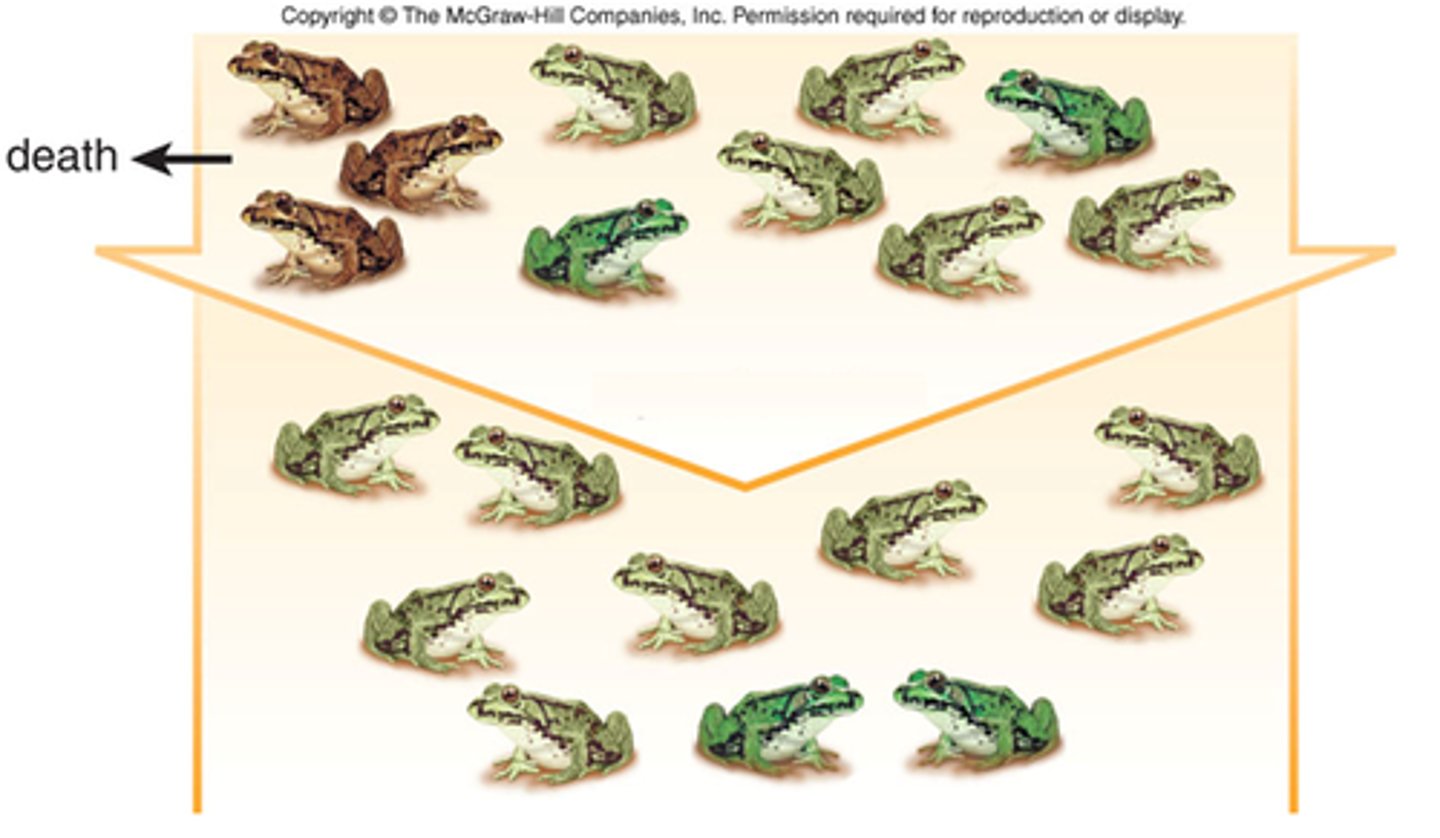
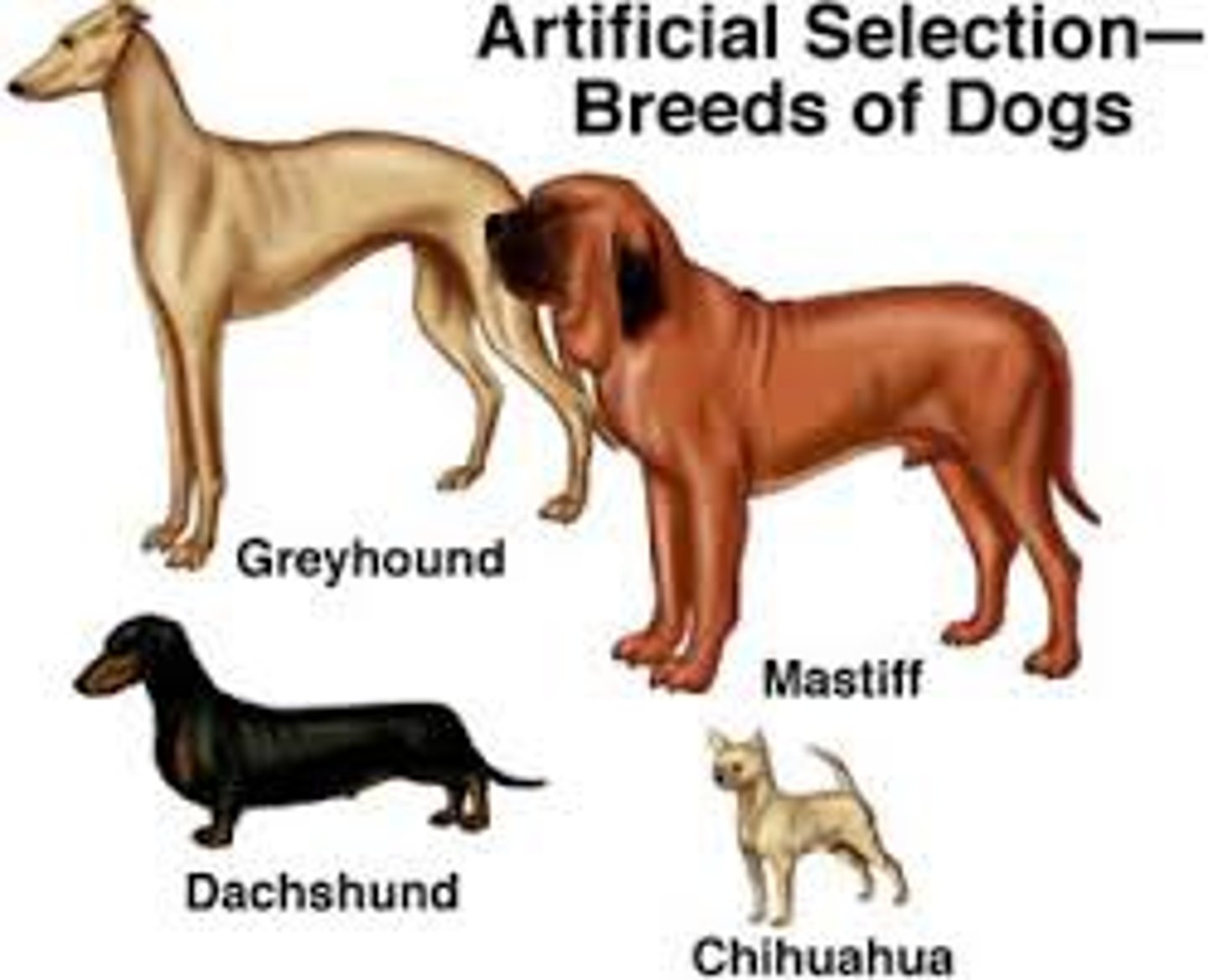
artificial selection
Breeding organisms with specific traits in order to produce offspring with identical traits.
One limitation of selective breeding prior to Mendel's work was the inability to predict when offspring would inherit a valuable trait.
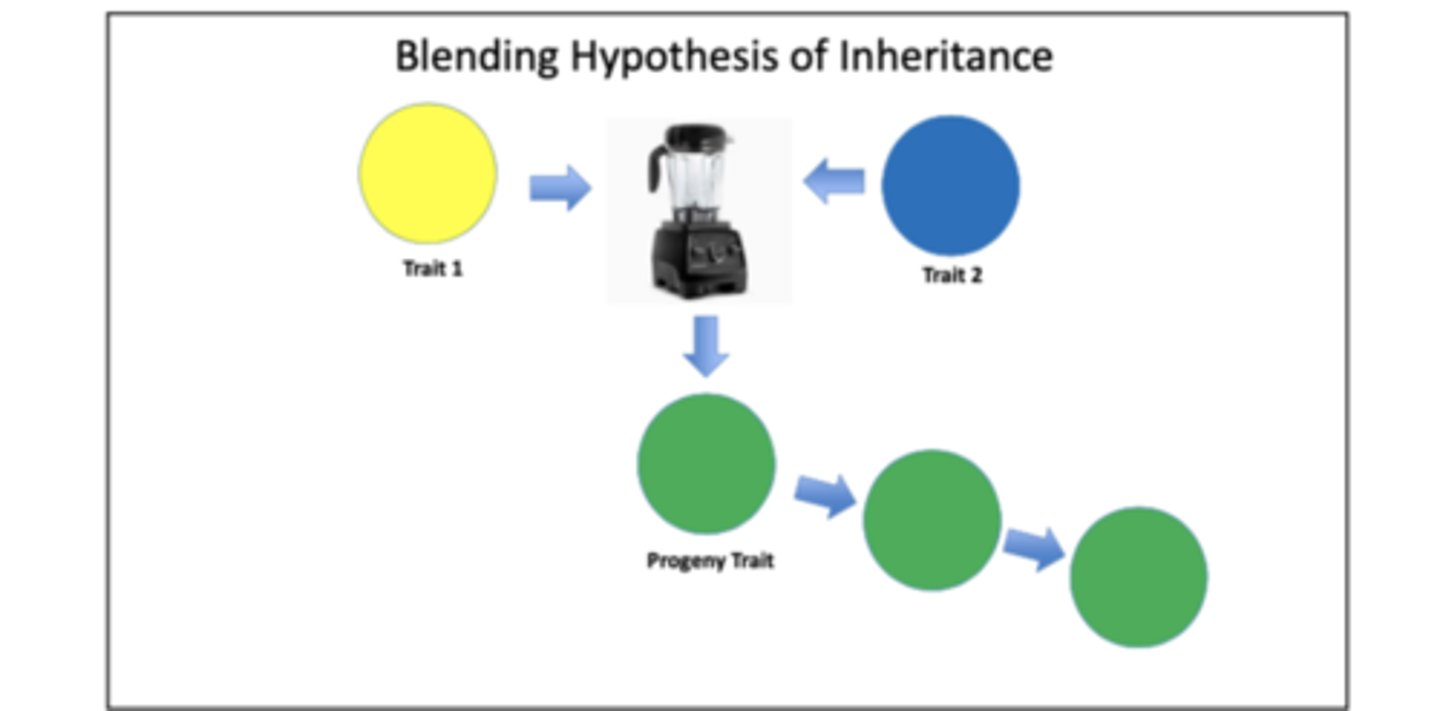
blending hypothesis of inheritance
an early, incorrect hypothesis of heredity. According to this view, the seeds that dictate hereditary traits are able to blend together from generation to generation. The blended traits would then be passed to the next generation.
Mendel disproved this theory by focusing on ONE TRAIT/ CHARATER with two alleles and uses a plant with fast growth. This made his theories more believable and set him apart from his peers.
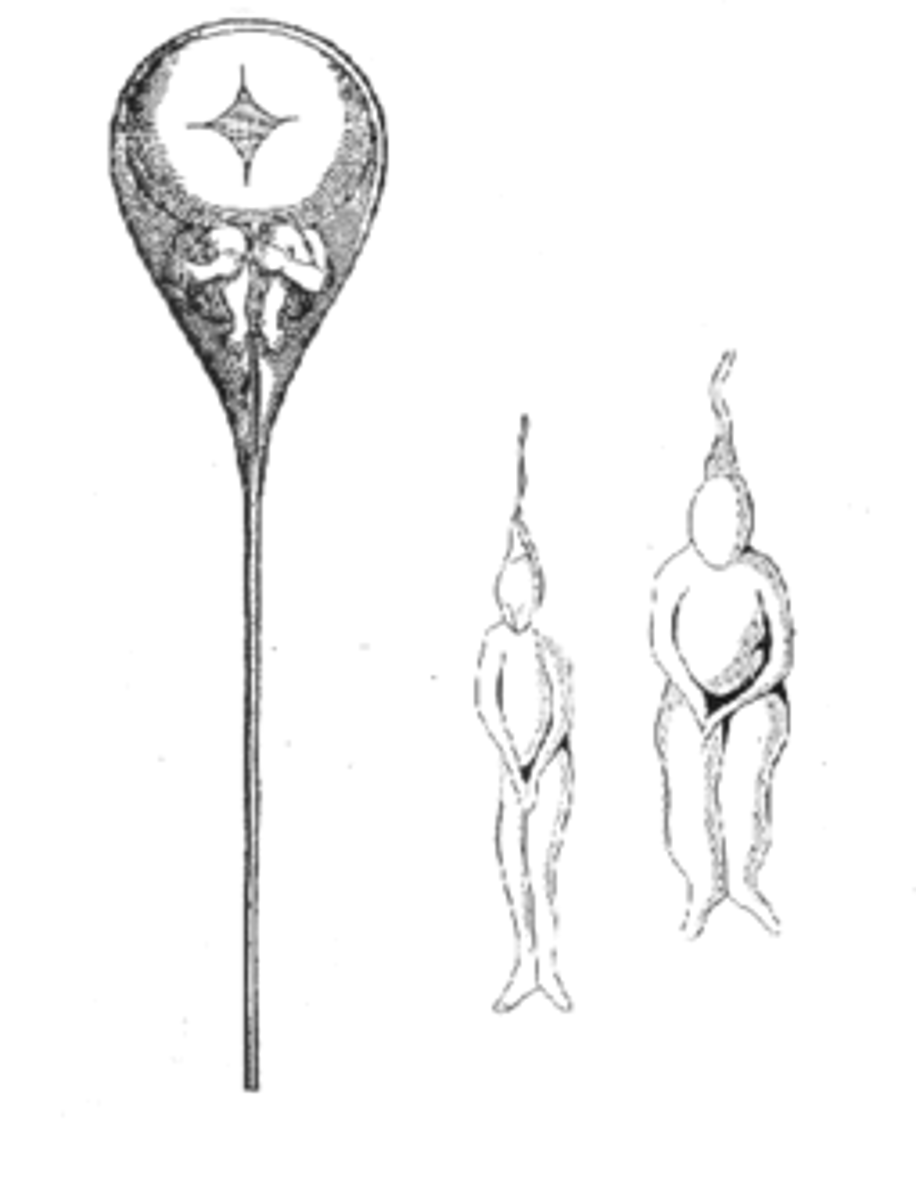
Homunculus Theory
When the dad is holding a tiny person in his scrotum and it's then given to the mom and then how the child appears to be a lot closer to the mother since she give's birth
early misconception in genetics
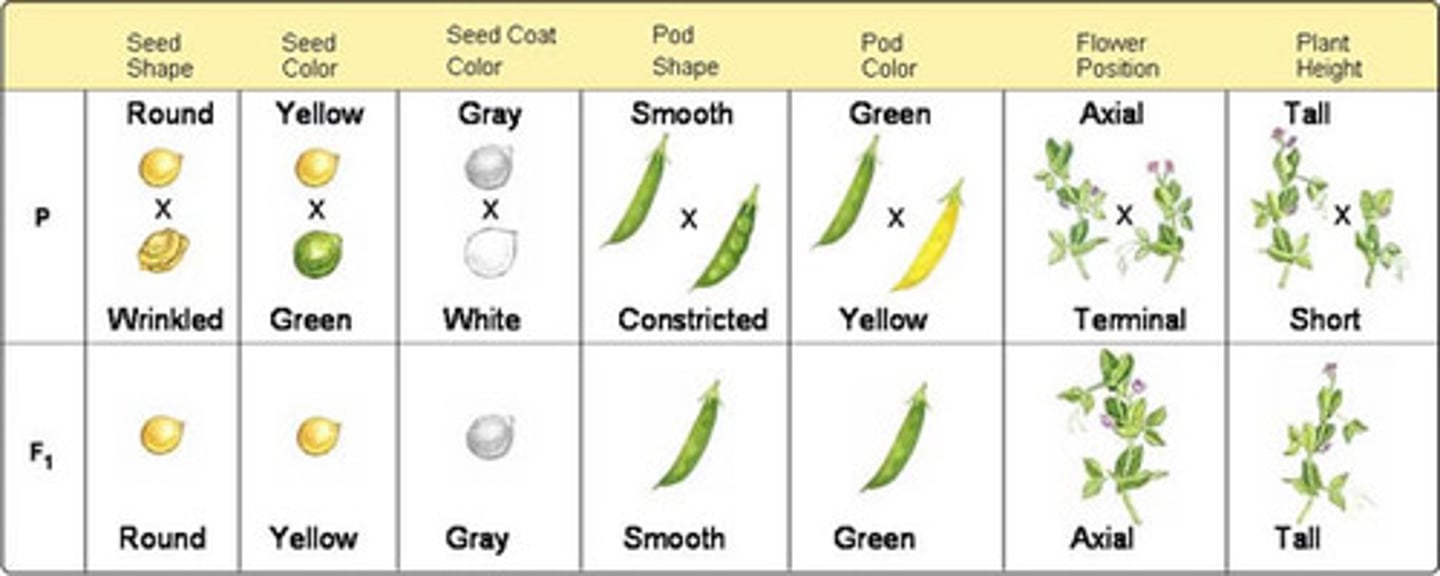
Mendel's Peas
showed dominant vs. recessive genes. (aa+ AA homozygous a+A heterozygous) (Disproved "Blending Theory")
Good choice because they were easy to grow, they grew fast and they reproduced sexually.
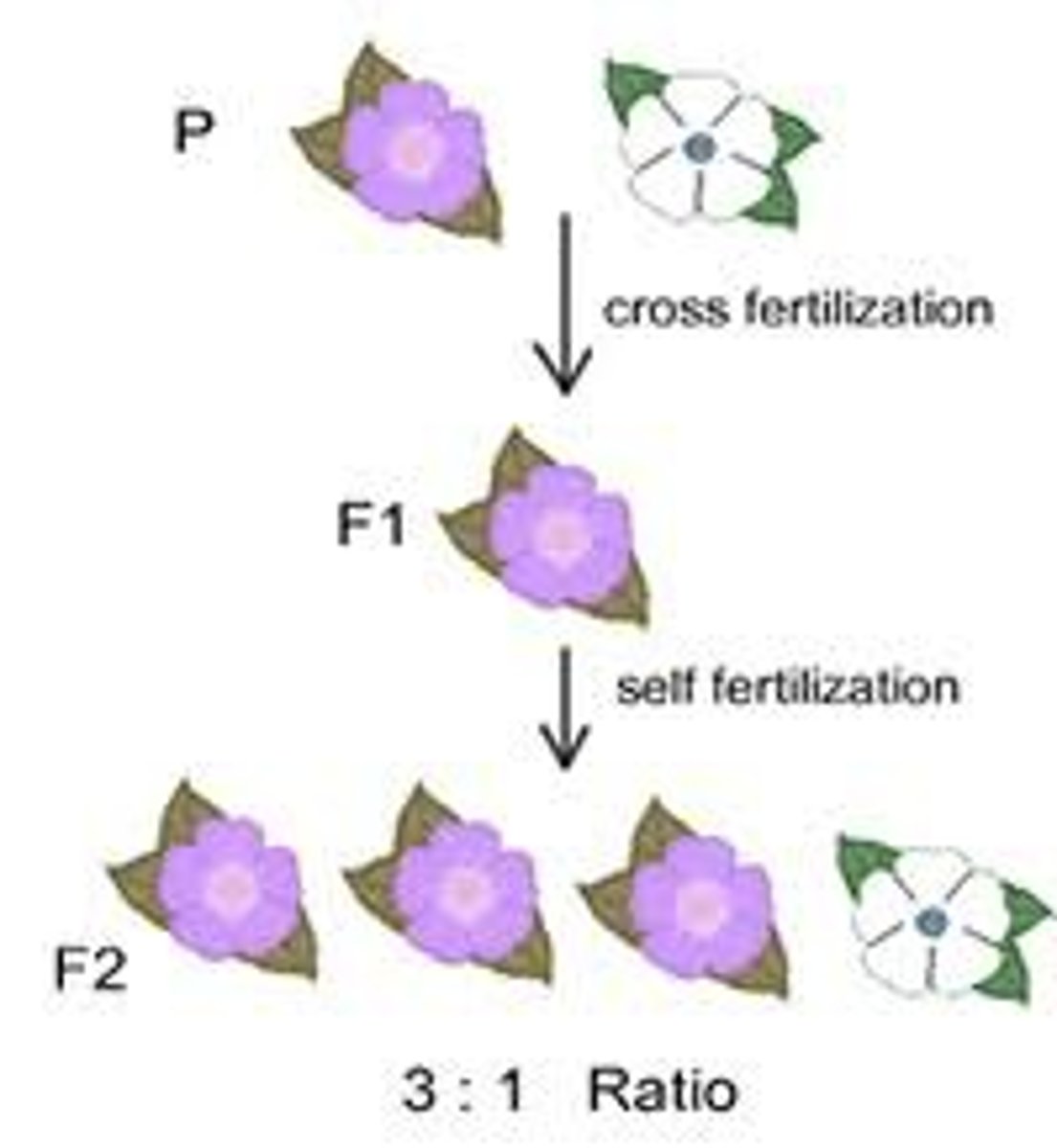
uses self fertilization and cross fertilization to disprove his predecessors
focused on traits with ONLY 2 ALLELES for his studies (either white or purple pea plants)
Used true breeding pea plants as his P1 generation for consistency sake.
Mendel's explanation
1. Existence of genes- herreditary determinants of a particulate nature
2. Genes in pairs- alternative phenotypes of a character or trait are determined by different forms of a single type of gene- alleles
3. Principle of Segregation- members of the gene pair separate equally so that each allele is in each gamete (1 for 1)
4. Gametic content- each gamete carries one and only one allele for a gene pair
5. Random Fertilization- union of one gamete from each parent to form offspring
P1 generation
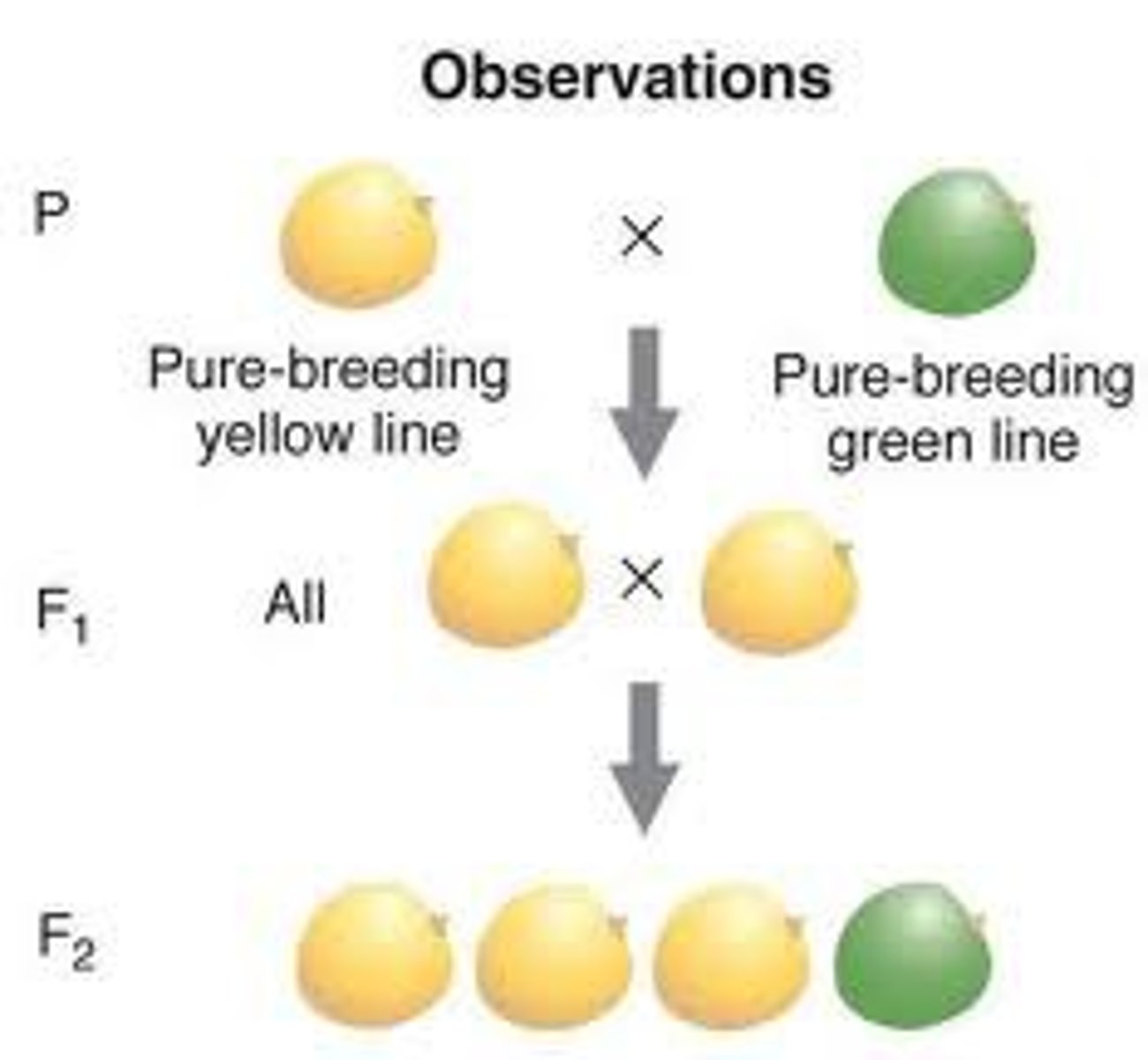
Parental generation; each parent was pure for a given trait. (true-breeding parents)
F1 generation
the first generation of offspring obtained from an experimental cross of two true breeding organisms
also called hybrids and share the same dominant allele as one of the parents.
F2 generation
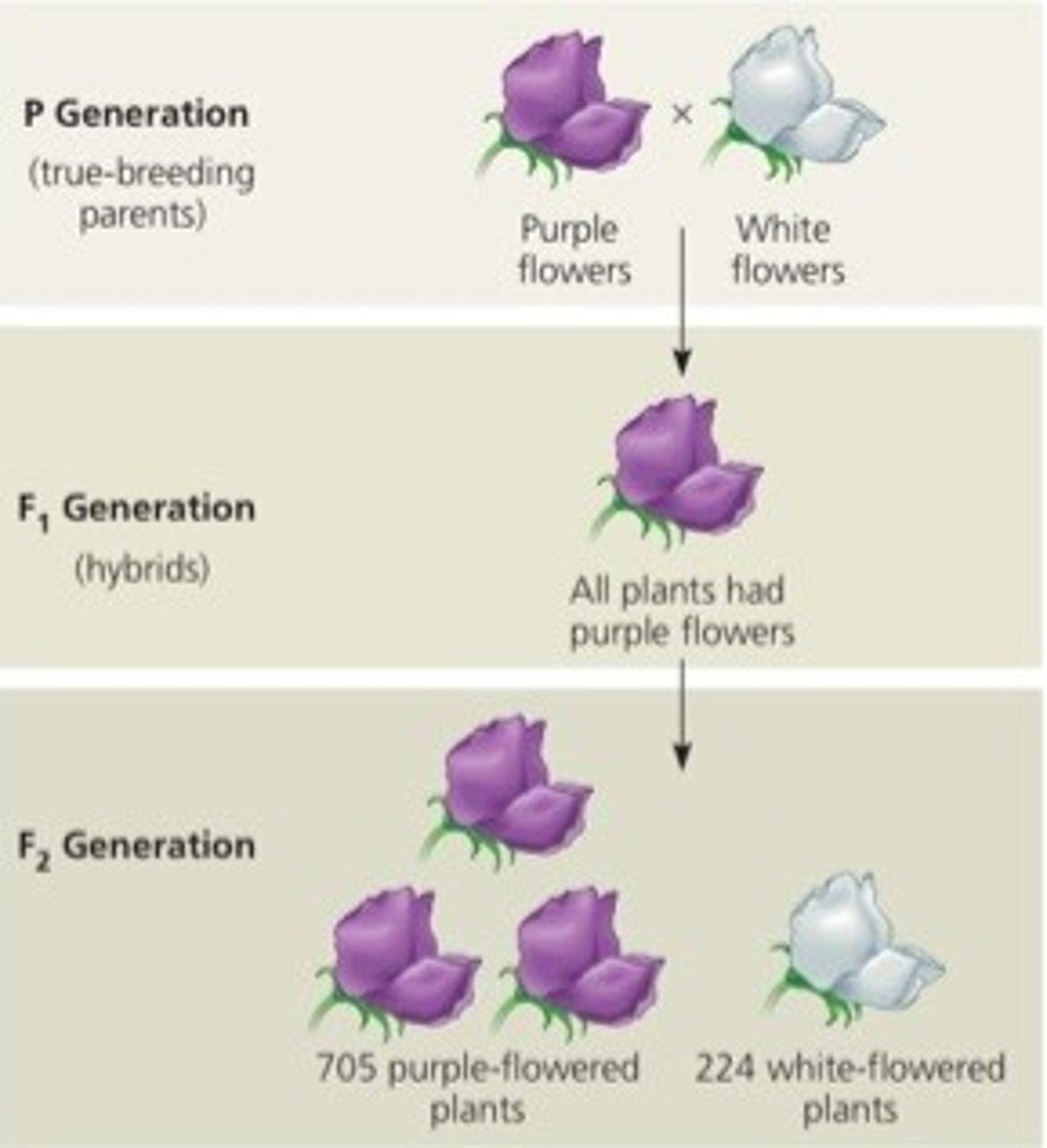
Offspring resulting from interbreeding of the hybrid F1 generation.
3:1 PHENOTYPIC ratio with equal segregation of alleles
reciprocal cross
a cross in which the phenotypes of the male and female are reversed compared with a prior cross.
Both yield the exact same result so it does NOT matter which parent of the P1 generation is male or female.
white pea plant egg fertilized with purple pea plant sperm and vice versa
monohybrid cross
a cross in which only one characteristic (2 alleles) is tracked
a monohybrid cross is a cross between two organisms that are heterozygous for 1 trait
Whenever you see the word hybrid that means heterozygous
reveals the LAW OF SEGREGATION
3:1 PHENOTYPIC ratio with equal segregation of alleles
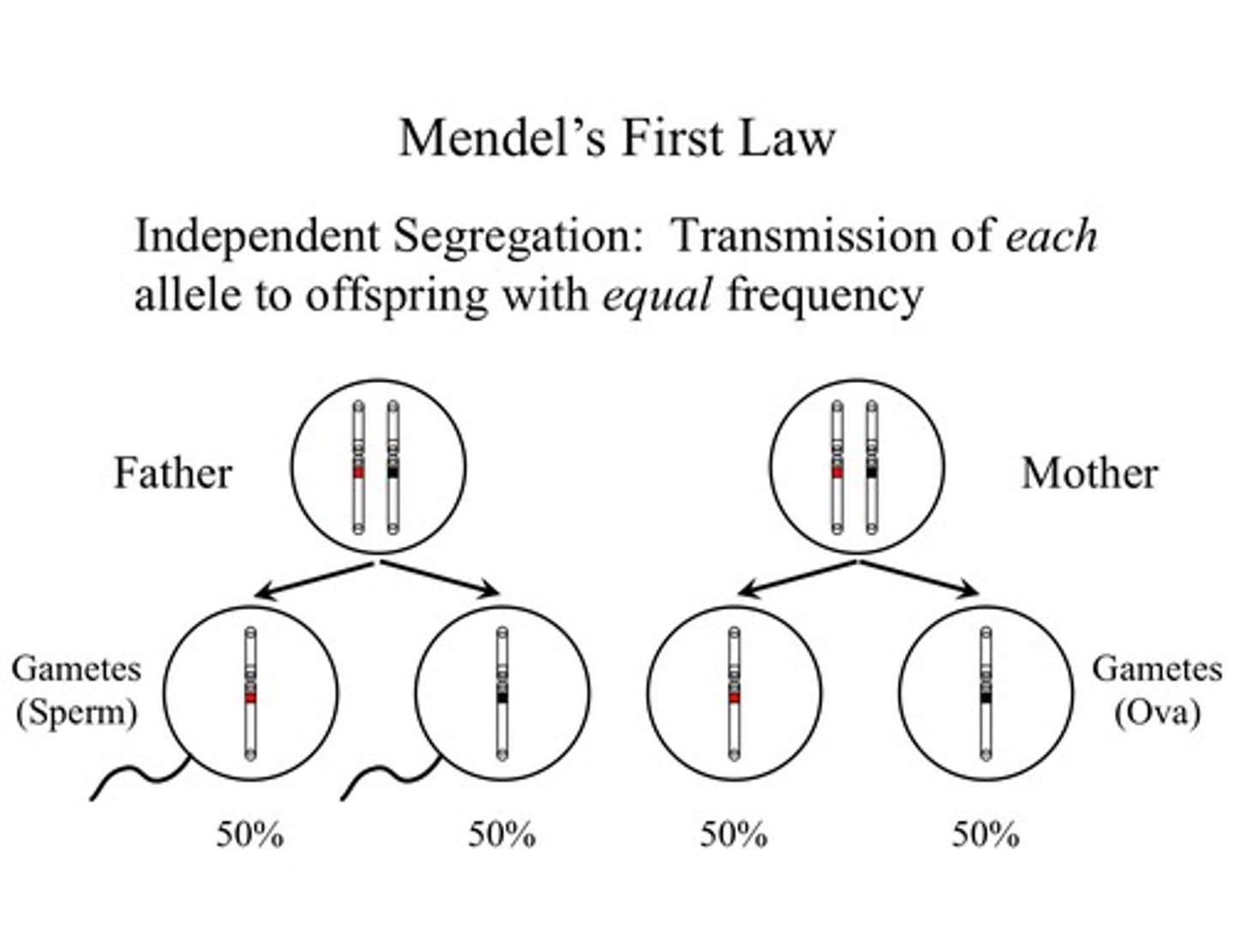
Law of Segregation
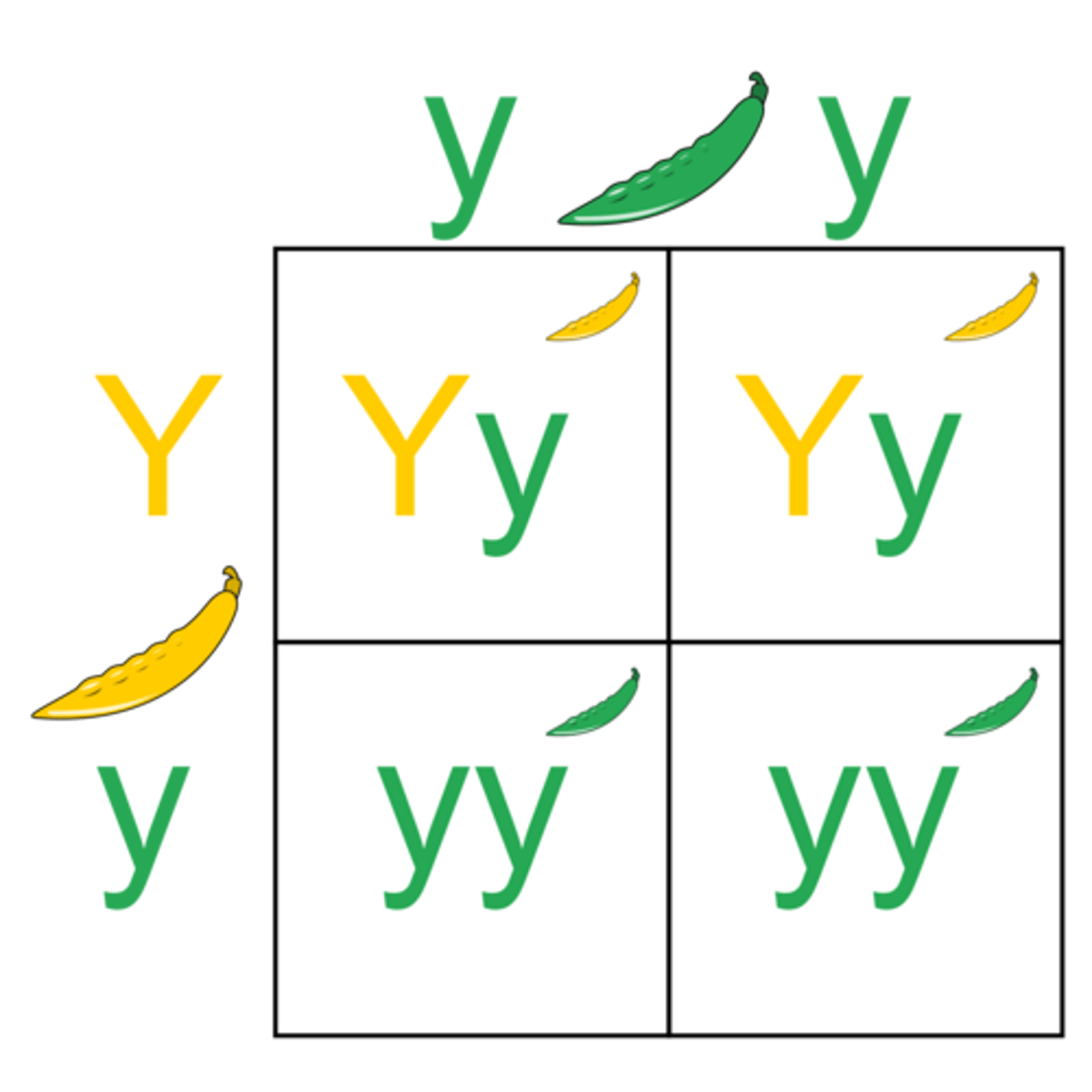
Mendel's FIRST law that states that the pairs of homologous chromosomes separate in meiosis so that only one chromosome from each pair is present in each gamete
two copies of each gene in the parent separate so that each gamete only recieves one copy, at fertilization the two copies of the gene are restored in the zygote. One allele per gamete
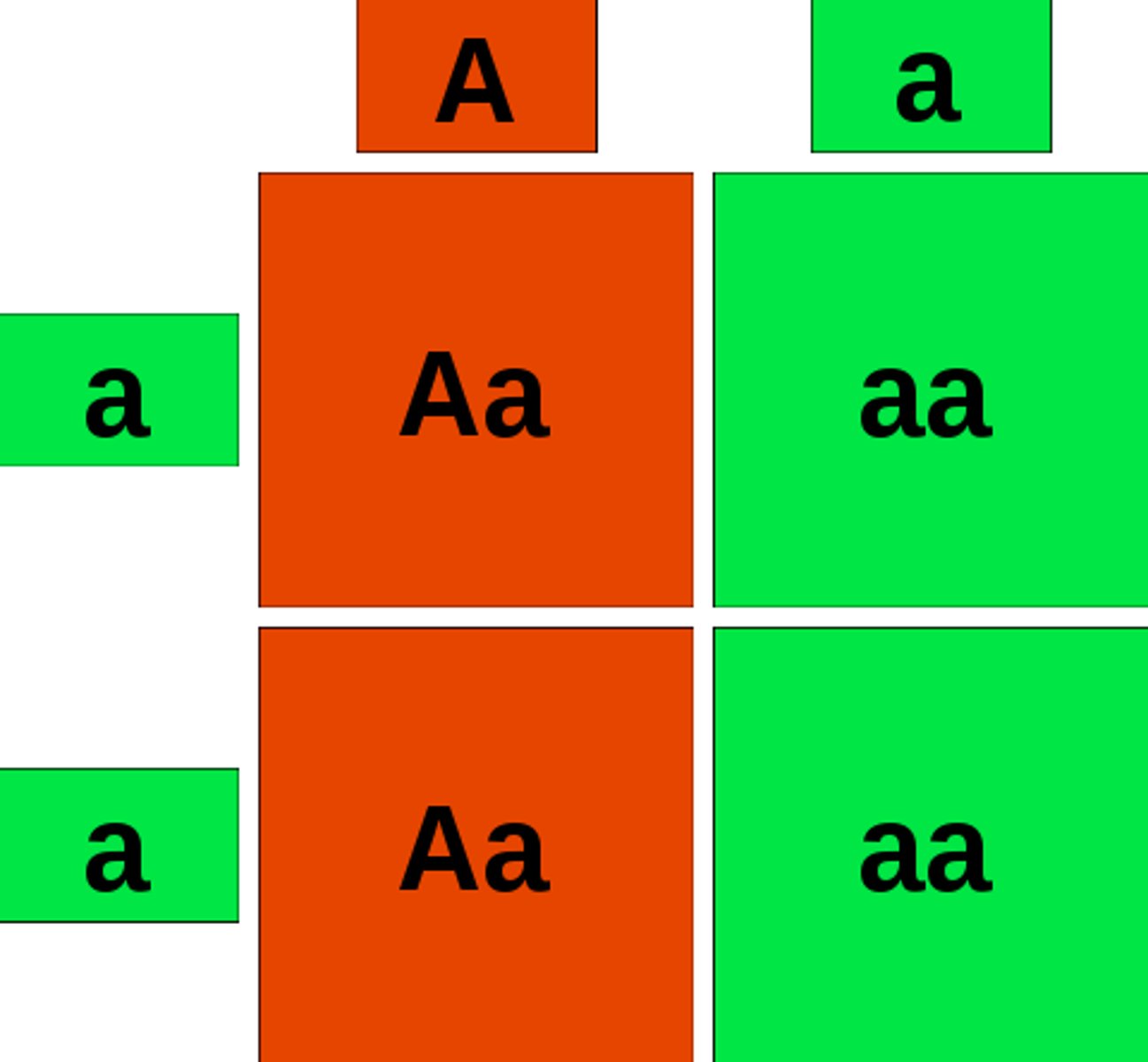
Punnett Square
diagram that can be used to predict the genotype and phenotype combinations of a genetic cross
A chart that shows all the possible combinations of alleles that can result from a genetic cross
GENOTYPE DOES NOT EQUAL PHENOTYPE
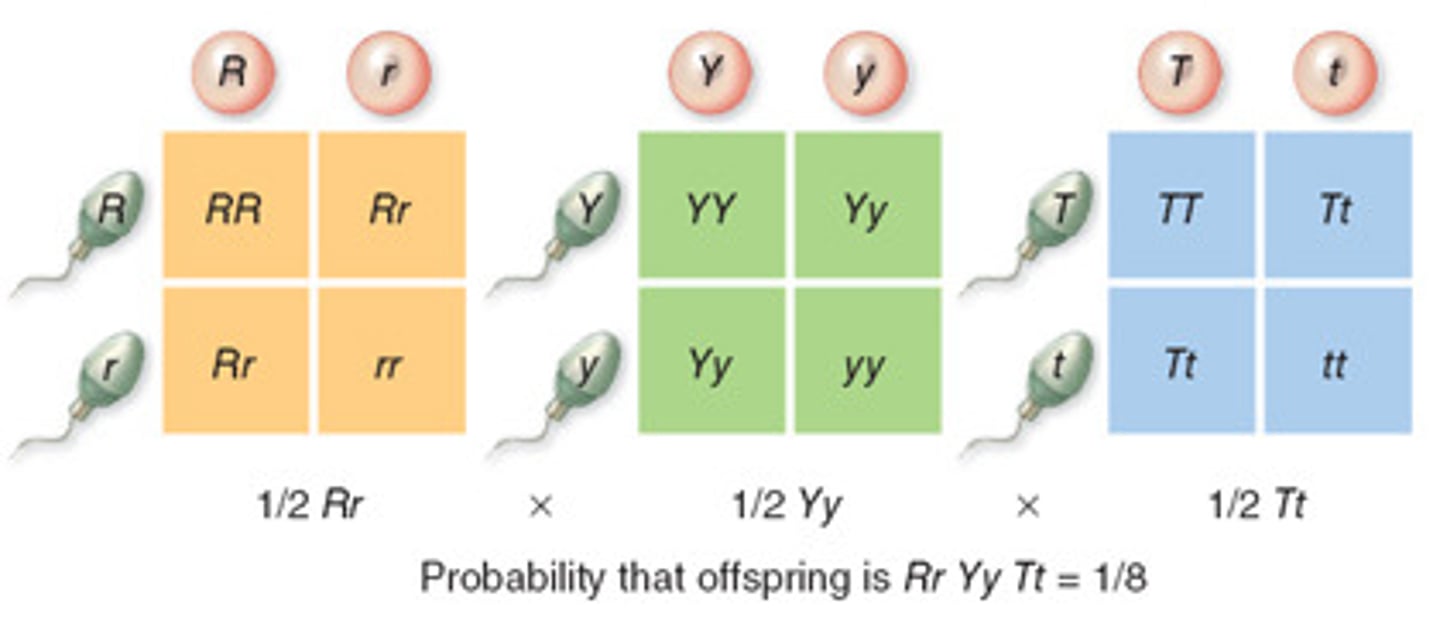
product rule of probability (independent events)
The chance of two or more independent events occurring together is the product of their chance of occurring separately
Pr( Event 1 AND Event 2 occurring)= Pr(Event 1) x Pr(Event 2)
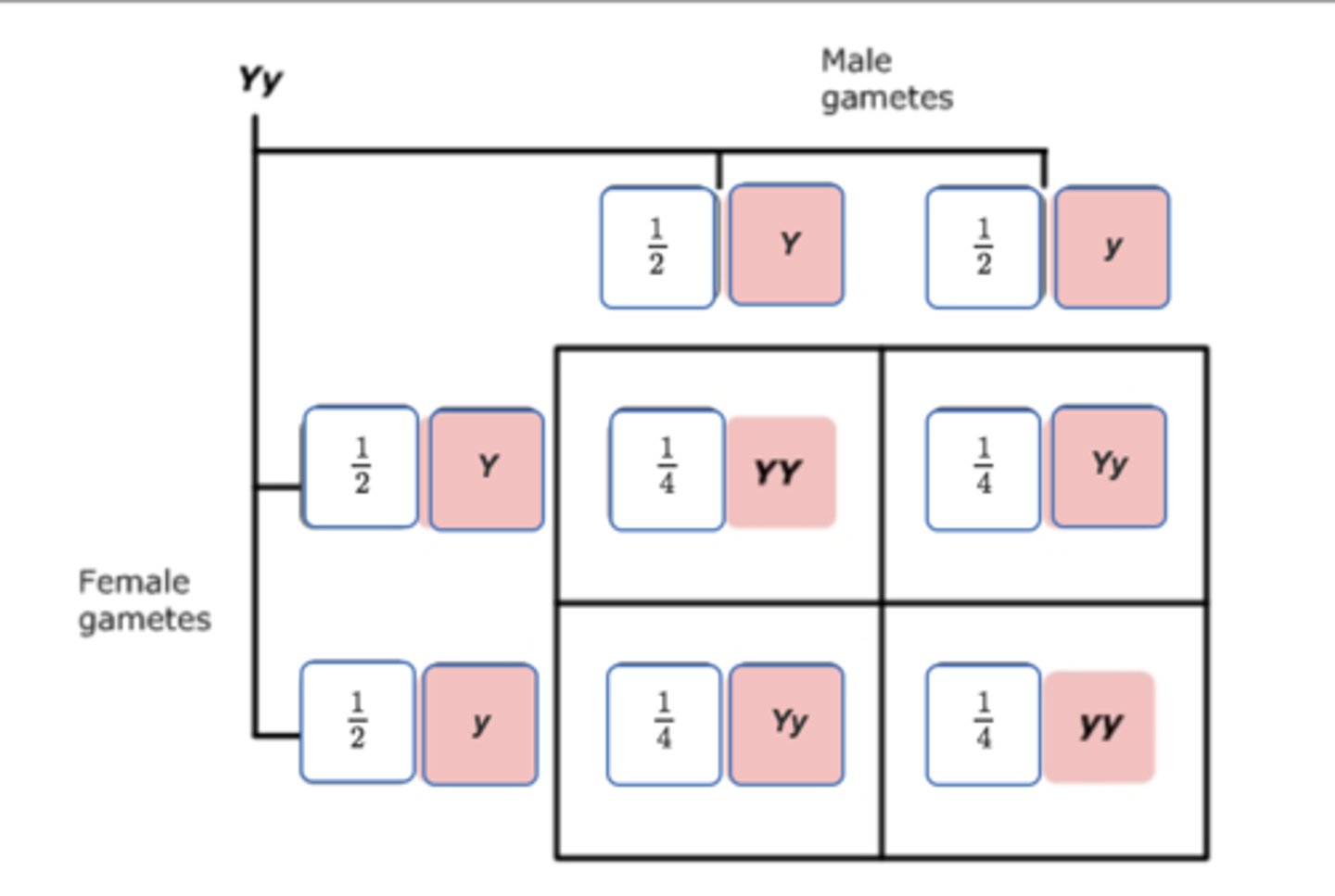
sum rule of probability (mutually exclusive)
states that the chance of an event that can occur in more than one way is the sum of the individual chances
Pr( Event 1 OR Event 2 occurring)= Pr(Event 1) + Pr(Event 2)
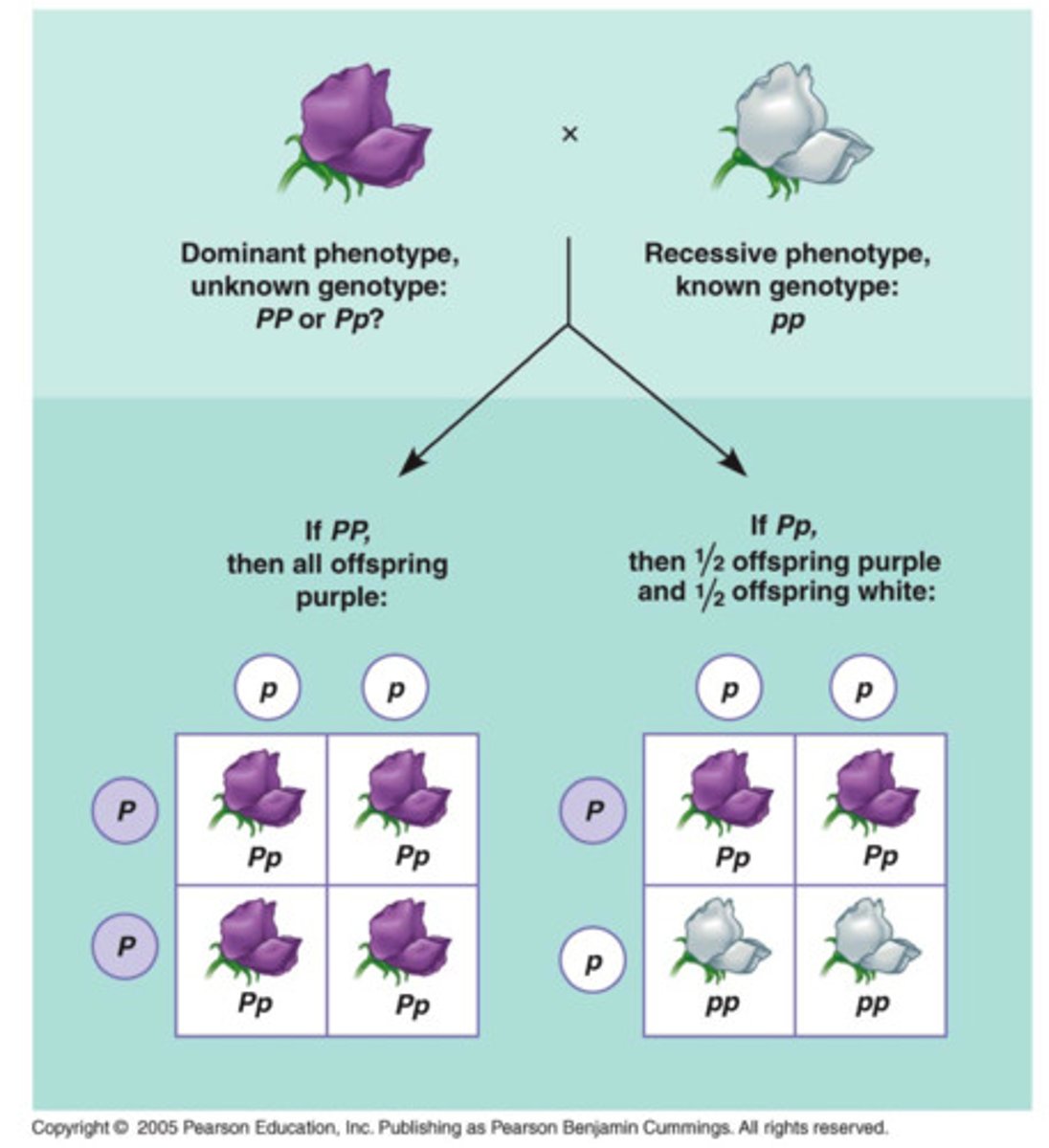
test crosses
used to determine the dominance of a certain allele over another and the genotype of the parents if given the offspring genotypes. ONE PARENT IS HOMOZYGOUS RECESSIVE
testcrosses are always with one parent homozygous recessive
used to determine the genotype of an organism expressing the dominant phenotype
genotype can predict phenotype but phenotype cannot predict genotype
dihybrid test crosses have a 1:1:1:1 genotypic ratio
dihybrid cross
A cross between two individuals, concentrating on two definable traits
TWO CHARACTERS
when doing a dihybrid cross, the parents will always have a heterozygous genotype for both characters
Whenever you see the word hybrid that means heterozygous
reveals the law of independent assortment
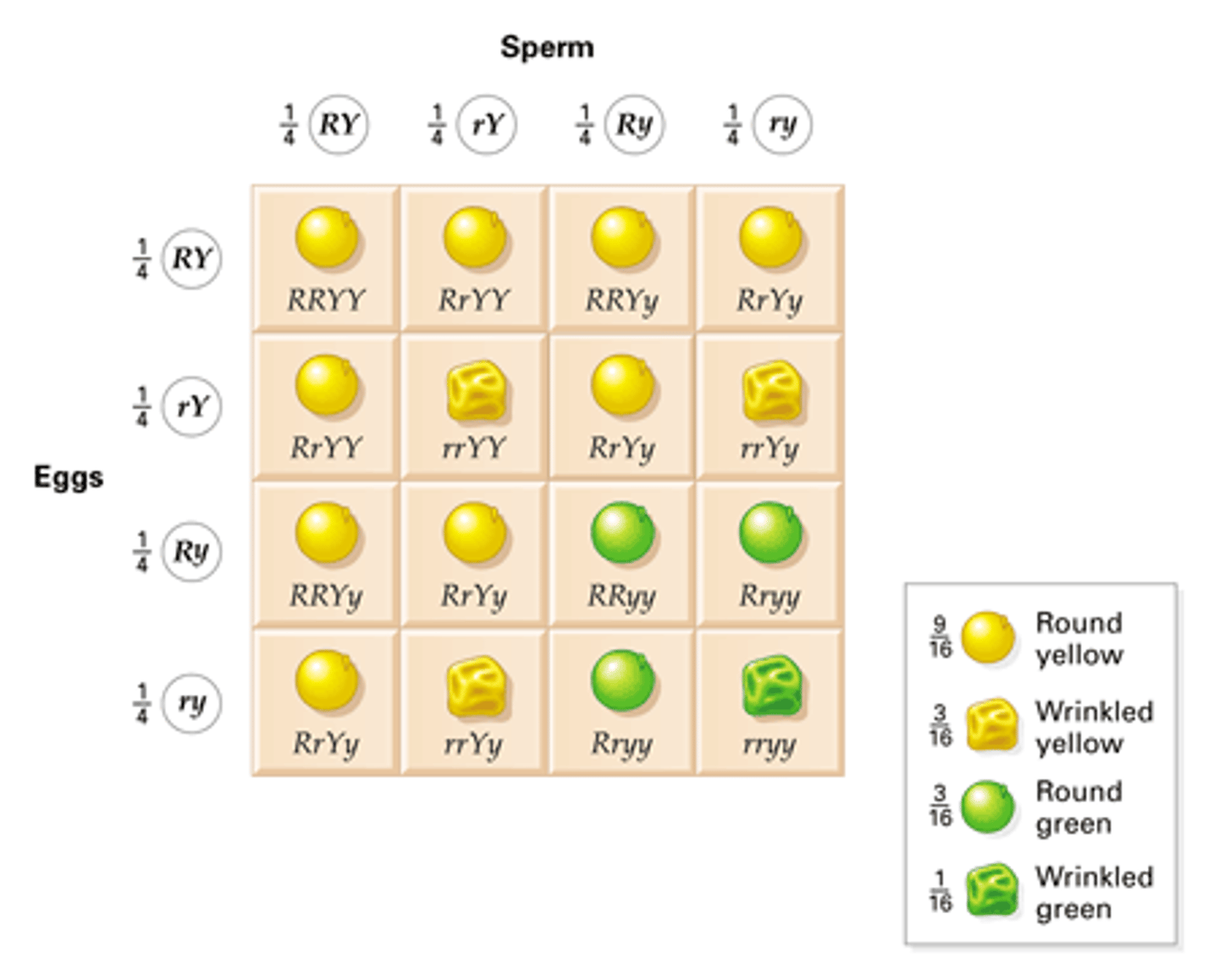
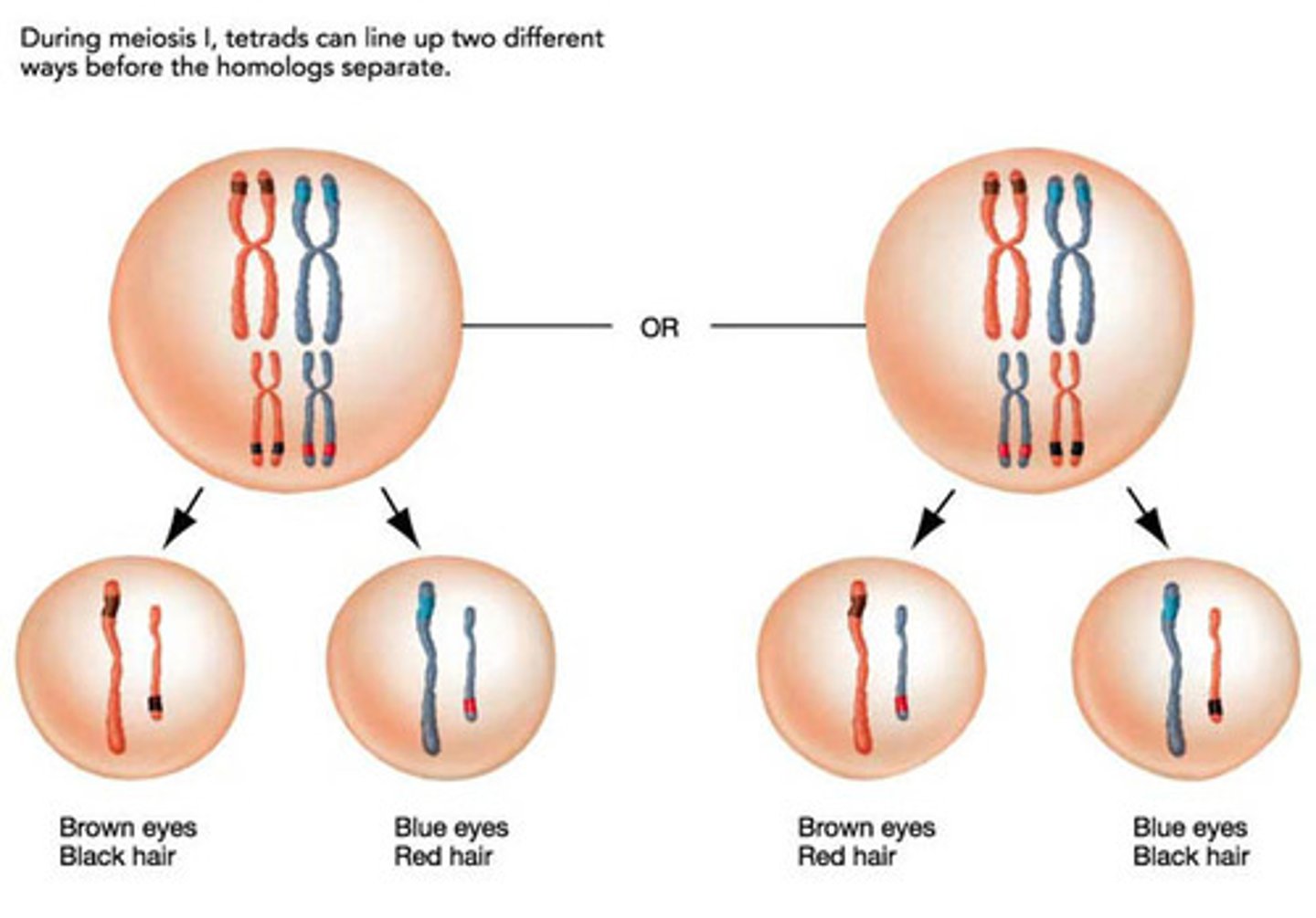
law of independent assortment
the law that states that genes separate independently of one another in meiosis
chromosomes assort randomly at the metaphase plate in metaphase 1 or meiosis
1:3:3:9 ratio for Aa Bb x Aa Bb crosses
the two characters being tested for are INDEPENDENT of eachother. Green pea plants should not have the tendency of having wrinkled seeds due to their color. These are separate genes.
16 BOXES
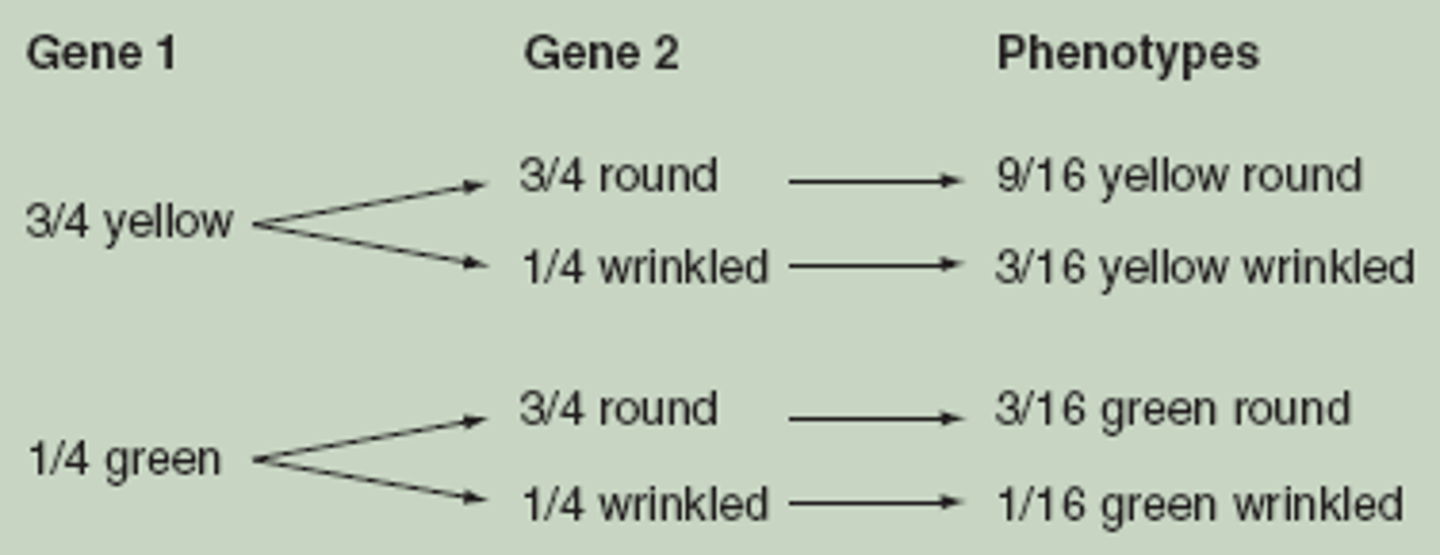
branched-line diagram
a method for systematically listing the expected results of multigene crosses
To find the number of unique gametes for a test cross with multiple characters like Aa Bb Cc Dd x Aa Bb Cc Dd.....
use the formula 2ⁿ where n is the number of different genotypes.
in the example there are 4 different genotypes so 2^4=16 different allele combinations
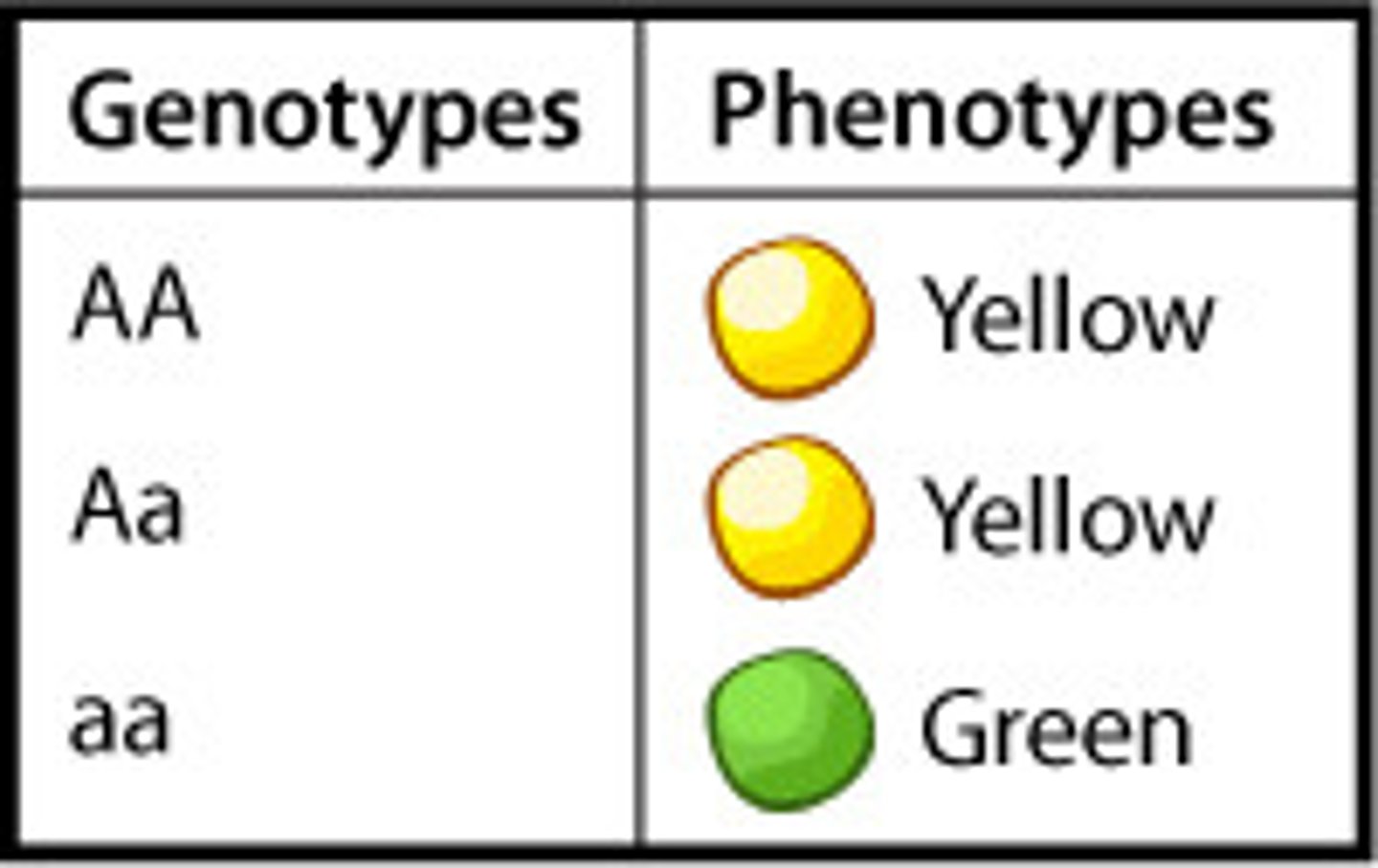
dominant allele, recessive allele
if two alleles at a locus differ, then one, the ________ ________ determines the organism's appearance; the other, the _______ _____, has no noticeable effect on the organism's appearance
usually the recessive allele follows the pattern of a limited or non functional protien--- but not always
ex. Dominant yellow peas Rr and RR but recessive green peas rr lack the pigment on a certain gene
single-gene trait
trait controlled by one gene that has two alleles
MORE LIKELY TO BE LIFE THREATENING/ A DISORDER IF RECESSIVE but not always true. Dominant alleles can cause disorders too.
ex. Huntington's disease (dominant), cystic fibrosis (recessive)
can be represented by mendelian genetics (mono/di- hybrid crosses, dominant/ recessive, pedigrees, etc)
multiple gene traits
2 or more genes control 1 trait
ex. eye color, skin color, etc
Pedigree
A diagram that shows the occurrence of a genetic trait in several generations of a family.
GENDER:
square= male
circle= Female
Diamond= sex unspecified
if any of the above are crossed out, they are deceased
RELATION:
single vertical line connecting parents: mating occurred
double vertical line connecting parents: mating occurred between relatives
horizontal line: children
CONDITION STATUS:
filled= has condition
unfilled= does not have condition
vertical pattern of inheritance
indicates a rare dominant trait
you know if vertical when about 50% of the offspring is effected by the genetic trait. At least one person is affected within each generation
horizontal pattern of inheritance
indicates a rare recessive trait where the parents are usually carriers but have affected children
occurs most often in matings between relatives
late-onset genetic trait
a genetic condition in which symptoms are not present at birth, but manifest themselves later in life
REALLY HARD TO KICK DIESEASE OUT OF POPULATION DUE TO THE LATENESS IT OCCURS IN LIFE. If people who are effected died at a young age, the allele would disappear from the population
cross-fertilization
process by which sperm from one flower's pollen fertilizes the eggs in a flower of a different plant
the process: In order to cross-fertilize two pea plants, a researcher must first remove the male sex organs from the flowers of one of the two plants
continuous traits vs discrete traits
continuous;
---determined by multiple genes (polygenic), such as height or hair color
ex. Amount of milk a cow produces in liters, Measurements of human blood pressure
discrete;
---- determined by one gene with two alleles
ex. Dog fur can be curly or straight, Flower color in pea plants can be purple or white
Mendel's qualitative approach
-He worked with large numbers of plants.
-He counted all the offspring of a cross.
-He compared his results with predictions based on his models.
recombiant types
offspring that have new combinations of phenotypic traits
Questions about heredity answered by Mendel
What is inherited? alleles of genes
How are they inherited? L.O.S and L.O.I.A
What is the role of chance? for each individual, inheritance is determined by chance, but within a population this chance operates in a context of strictly defined probabilities
# of different type of gametes
2^n where n= # of heterozygous loci (allele pairs) for ONE PARENT
# of different type of phenotypic classes
2^n
where monohybrid crosses (n=1)
dihybrid crosses (n=2)
# of different type of genotypic classes
3^n where n= # of heterozygous loci (allele pairs)
autosomal recessive traits
two copies of an abnormal gene must be present in order for the disease or trait to develop
- usually appear equally in males AND females
- tend to skip generations
- are more likely to appear among progeny of related parents
ex. cystic fibrosis
autosomal dominant traits
only need one copy to have the disorder
ex. Huntington's
ex. polydactyly
- appear in equal frequency in males and females; do not skip generations
-affected persons have at least ONE affected parent
-unaffected persons do not transmit the trait
autosomal vs sex-linked
If a trait is autosomal it will appear in both sexes equally. A sex-linked trait is a trait whose allele is located on the X chromosome so it is usually only seen in males
-sex-linked: gene is expressed on a sex chromosome
ex. huntington's, PKU
-autosomal: expressed on an autosomal chromosome
ex. hemophilia
Analyzing Pedigrees
-trial and error: consider one pattern of inheritance at a time for each mating in the pedigree and try to find evidence against it; repeat for each pattern of inheritance, for example, autosomal recessive or dominant, X-linked recessive or dominant, etc
-patterns of inheritance follow Mendelian rules; Mendelian ratios are rarely observed
-assumption: for rare traits unaffected people entering into a family pedigree (for example, by marriage) are considered homozygous normal
-result: pedigrees can frequently rule out, but not necessarily prove, a certain pattern of inheritance
Explore top notes

