ch 24 viki study gold - digestive system
 Call Kai
 Learn
Learn Practice Test
 Spaced Repetition
 Match
Match Flashcards
 Knowt Play
1/83

There's no tags or description
Looks like no tags are added yet.
Name | Mastery | Learn | Test | Matching | Spaced | Call with Kai |
|---|
No analytics yet
Send a link to your students to track their progress
84 Terms
Waves of muscular contractions that propel the contents of the digestive tract are called
peristalsis.
The activities of the digestive system are regulated by
hormones.
intrinsic nerve plexuses.
the contents of the digestive tract.
parasympathetic and sympathetic neurons.
Large blood vessels and lymphatics are found in the
submucosa.
What organ is primarily responsible for water absorption?
large intestine
A disease that attacks and disables the myenteric plexus would
decrease intestinal motility.
Which organ is responsible for dehydration and compaction of indigestible materials?
large intestine
The ________ supports all but 25 cm of the small intestine and provides stability and limited movement.
mesentery proper
A feature of the digestive tract wall that increases surface area available for absorption is the
circular folds.
Approximately ________ liters of fluid are secreted by the small intestine each day.
2
The ________ are double sheets of peritoneal membrane that suspend the visceral organs and carry nerves, lymphatics, and blood vessels.
mesenteries
Sandwiched between the layer of circular and longitudinal muscle in the muscularis externa is the
myenteric plexus.
Which of the following is an accessory organ of digestion?
A. spleen
B. esophagus
C. pancreas
D. appendix
E. colon
C. pancreas
Which of the following descriptions best matches the term myenteric plexus?
A. loose connective tissue layer containing blood vessels
B. secretes a watery fluid
C. coordinates activity of muscularis externa
D. sensory neural network
E. component of mucosa
C. coordinates activity of muscularis externa
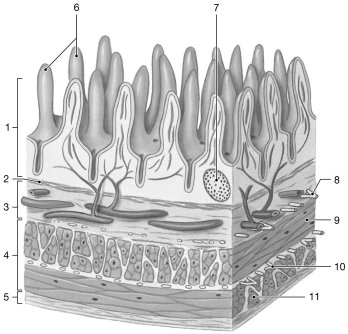
Figure 24-2 The Wall of the Small Intestine
Use Figure 24-2 to answer the following questions:
Which structure controls the contraction of the muscularis externa?
10
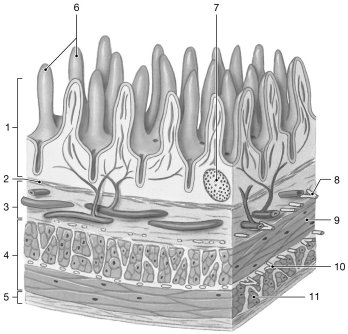
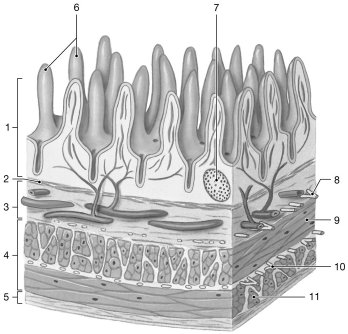
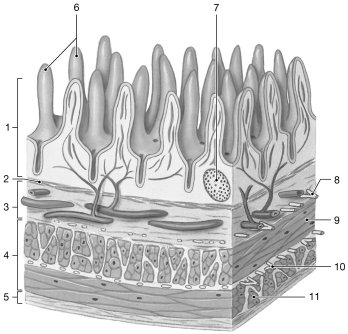
Figure 24-2 The Wall of the Small Intestine
Use Figure 24-2 to answer the following questions:
What is the function of the structure labeled "7"?
protection from bacteria
Which digestive juice contains enzymes that breakdown carbohydrates, lipids, and proteins?
pancreatic juice
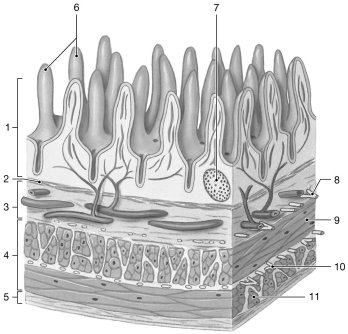
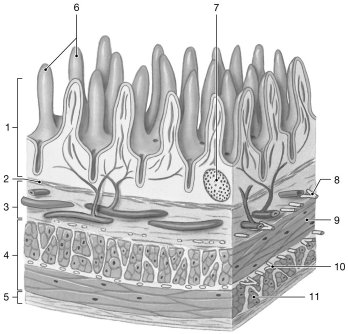
Figure 24-2 The Wall of the Small Intestine
Use Figure 24-2 to answer the following questions:
What is the layer labeled "3"?
submucosa
Digestion refers to the
mechanical and chemical breakdown of food.
At the hepatic flexure, the colon becomes the
transverse colon.
Which of the following is not a function of the digestive system?
A. ingestion
B. absorption
C. mechanical processing
D. filtration
L. secretion
D. filtration
Haustra are
expansible pouches of the colon.
Approximately the last 15 cm of the digestive tract is the
rectum.
Functions of the large intestine include
reabsorption of water and compaction of feces.
________ pair(s) of salivary glands secrete into the oral cavity.
Three
The ________ gland empties into the oral cavity at the level of the second upper molar.
parotid
The part of a tooth that contains blood vessels and nerves is the
pulp cavity.
________ are also known as canines.
Cuspids
A blockage of the ducts from the parotid glands would
interfere with carbohydrate digestion in the mouth.
Which salivary gland produces a serous secretion containing large amounts of salivary amylase?
parotid
The gastric phase of gastric secretion is triggered by the
entry of food into the stomach.
The bulk of each tooth consists of a mineralized matrix similar to that of bone called
dentin.
The stomach is different from other digestive organs in that it
has three layers of muscle in the muscularis externa.
A small, wormlike structure attached to the posteromedial surface of the cecum is the
appendix.
Carbohydrate digestion begins in the
mouth.
Products of fat digestion are transported initially by
lymphatic vessels.
Identify the incorrect pairing.
A. stomach; has an alkaline lining
B. esophagus; transports material to stomach
C. pancreas; secretes amylases
D. liver; produces intrinsic factor
E. gallbladder; stores bile
D. liver; produces intrinsic factor
The secondary dentition usually comprises ________ teeth.
32
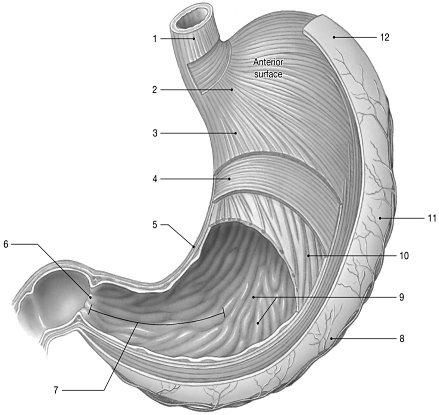
Figure 24-1 The Stomach (dissected)Use Figure 24-1 to answer the following questions:Identify the structure labeled "10."
oblique muscle layer
Peyer's patches are characteristic of the
ileum.
The villi are most developed in the
jejunum.
Function of Circular folds and intestinal villi
increase the surface area of the mucosa of the small intestine.
The portion of the small intestine that attaches to the cecum is the
ileum.
The intestinal hormone that stimulates the pancreas to release a watery, bicarbonate-rich fluid is
secretin.
An intestinal hormone that stimulates the gallbladder to release bile is
cholecystokinin. CCK
An intestinal hormone that stimulates the release of insulin from the pancreatic islet cells is
gastric inhibitory peptide (GIP).
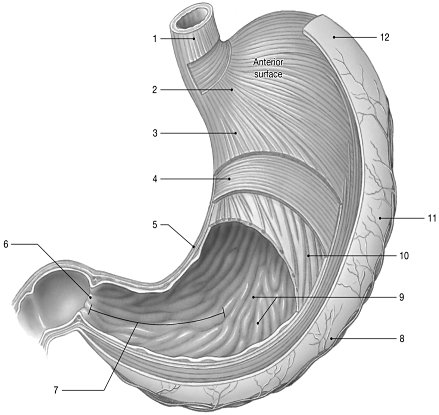
Figure 24-1 The Stomach (dissected)Use Figure 24-1 to answer the following questions:Identify the stomach region labeled "5."
lesser curvature
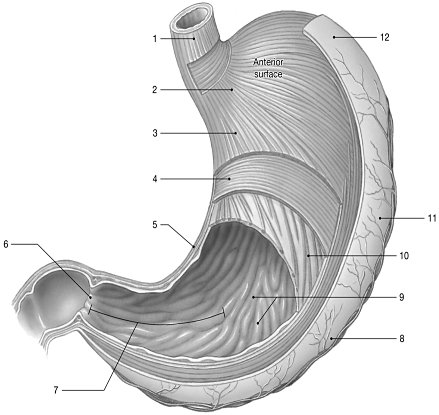
Figure 24-1 The Stomach (dissected)Use Figure 24-1 to answer the following questions:Identify the stomach region labeled "12".
fundus
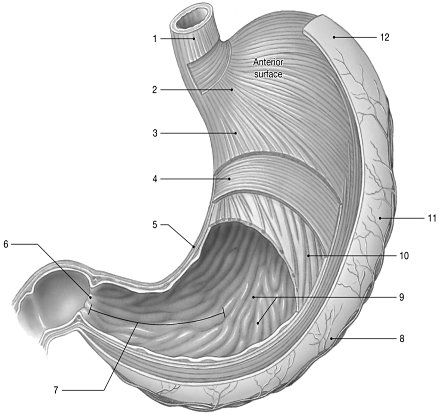
Figure 24-1 The Stomach (dissected)Use Figure 24-1 to answer the following questions:What is the function of the structure labeled "6"?
regulates gastric emptying
The hormone that stimulates secretion and contraction by the stomach is
gastrin.
Match the gastric phase on the left (1-3) with the correct description on the right (4-6):
1. intestinal phase 4. prepares stomach for arrival of food
2. gastric phase 5. stomach empties and decreases secretions
3. cephalic phase 6. stomach secretes juice and mixes food into chyme
1 and 5; 2 and 6; 3 and 4
All of the following are true of the intestinal phase of gastric digestion except that it
A. precedes the gastric phase.
B. begins when chyme enters the small intestine.
C. involves both neural and endocrine reflexes.
D. functions to control the rate of gastric emptying.
E. helps ensure that the functions of the small intestine proceed with relative efficiency.
A. precedes the gastric phase.
During the cephalic phase of gastric secretion,
increased production of gastric juice occurs.
Which of the following descriptions best matches the term gastrin?
A. where pancreatic juice and bile enter duodenum
B. stimulates gastric secretion
C. stimulates pancreas to secrete bicarbonate-rich fluid
D. carries absorbed sugars and amino acids
E. causes gallbladder to contract
B. stimulates gastric secretion
The pylorus empties into the
duodenum.
The enzyme pepsin digests
proteins.
An enzyme secreted by the gastric mucosa of a newborn that coagulates milk proteins is
rennin.
The region of the stomach that empties into the duodenum is the
pylorus.
The prominent ridges in the lining of the empty stomach are called
rugae.
To which region of the stomach does the esophagus connect?
cardia
G cells of the stomach secrete
gastrin.
Chief cells secrete
pepsinogen.
Parietal cells secrete
hydrochloric acid.
Functions of the stomach include all of the following except
A. storage of ingested food.
B. mechanical breakdown of food.
C. denaturation of proteins.
D. initiation of protein digestion.
E. absorption of triglycerides.
E. absorption of triglycerides.
Muscles known as the pharyngeal constrictors function in
swallowing.
________ are blade-shaped teeth that function in cutting or clipping.
Incisors
________ are teeth with flattened crowns and prominent ridges that are adapted for crushing and grinding.
Molars
________ are pointed teeth that are adapted for tearing and slashing.
Cuspids
Increased secretion by all the salivary glands results from
parasympathetic stimulation.
An intestinal hormone that stimulates gastric secretion is
gastrin.
The human liver is composed of ________ lobe(s).
four
The fusion of the common hepatic duct and the cystic duct forms the
common bile duct.
The exocrine portion of the pancreas is composed of
pancreatic acini.
Each of the following is a function of the liver except
A. inactivation of toxins.
B. storage of glycogen and iron reserves.
C. antibody production.
D. synthesis of plasma proteins.
E. synthesis and secretion of bile.
C. antibody production.
Blockage of the common hepatic duct would interfere with digestion of
fats.
In response to the hormone secretin, the pancreas secretes a fluid
rich in bicarbonate ion.
Tom has hepatitis, an inflammation of the liver. Which of the following symptoms would you expect to observe in Tom?
A. blood in the feces
B. overproduction of blood plasma albumin
C. jaundice
D. elevated levels of blood glucose
E. impaired digestion of protein
C. jaundice
An obstruction of the common bile duct often results in
undigested fat in the feces.
In response to the arrival of acidic chyme in the duodenum, the:
A. blood levels of secretin rise.
B. blood levels of cholecystokinin fall.
C. liver releases enzymes for chemical digestion.
D. blood levels of gastrin rise.
E. blood levels of enterocrinin fall.
A. blood levels of secretin rise.
Bile is stored in the
gallbladder.
Enterogastric reflexes
are triggered by chyme entering the duodenum.
inhibit gastric motility.
involve the enteric nervous system.
inhibit gastric secretion.
A proenzyme secreted by the pancreas is
trypsinogen.
The basic functional units of the liver are the
lobules.
In the center of a liver lobule there is a
central vein.
________ are arranged within a lobule of the liver into a series of irregular plates converging toward a central vein.
Hepatocytes

