Fetal Pig External Anatomy and Digestive System (Lab 8)
 Call Kai
 Learn
Learn Practice Test
 Spaced Repetition
 Match
Match Flashcards
 Knowt Play
1/59

Earn XP
Description and Tags
Name | Mastery | Learn | Test | Matching | Spaced | Call with Kai |
|---|
No analytics yet
Send a link to your students to track their progress
60 Terms
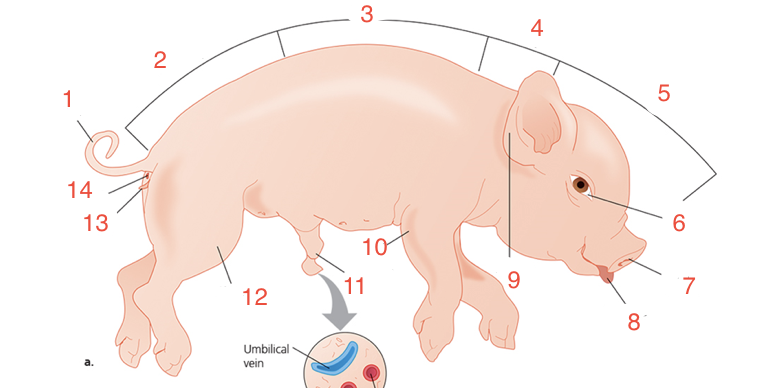
Head
5
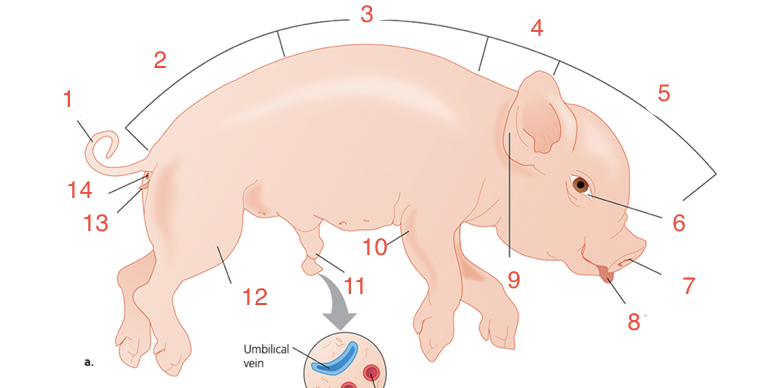
Neck
4
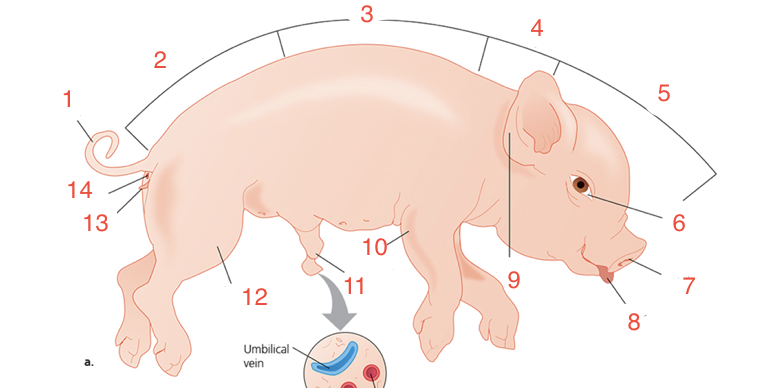
Trunk (Thorax and Abdomen)
3
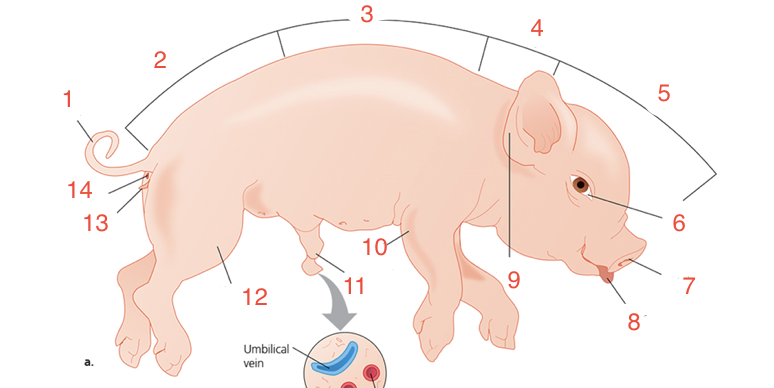
Abdomen
2
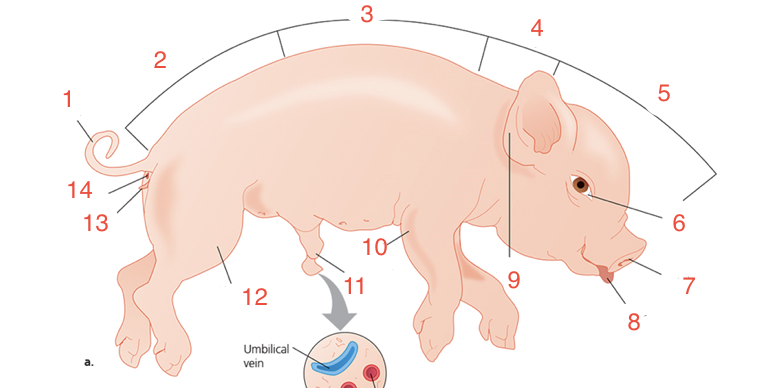
Tail
1
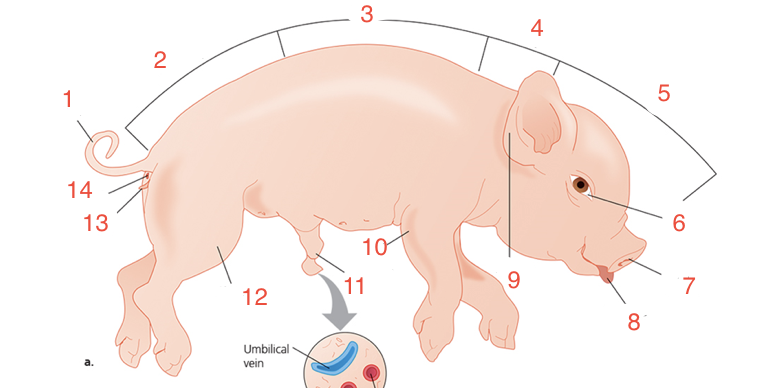
Auricles
9
External portion of the ear
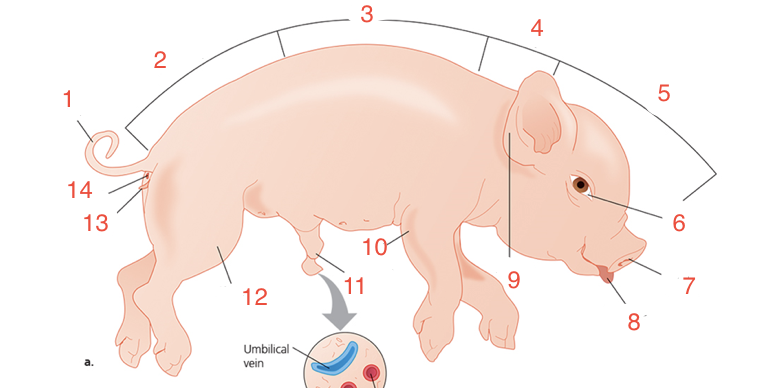
Nostrils
7
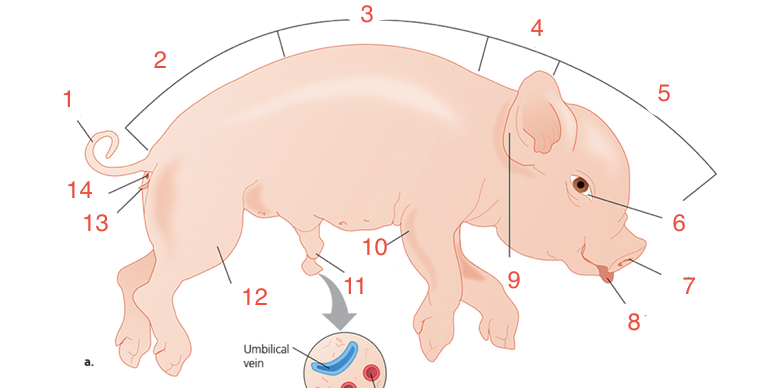
Nictitating Membrane (Third Eyelid)
6
transparent membrane present in some animals that is used for protection and to moisten the eye while also permitting some visibility
Epitrichium
outer layer of epidermis in the fetus, hair develops beneath this
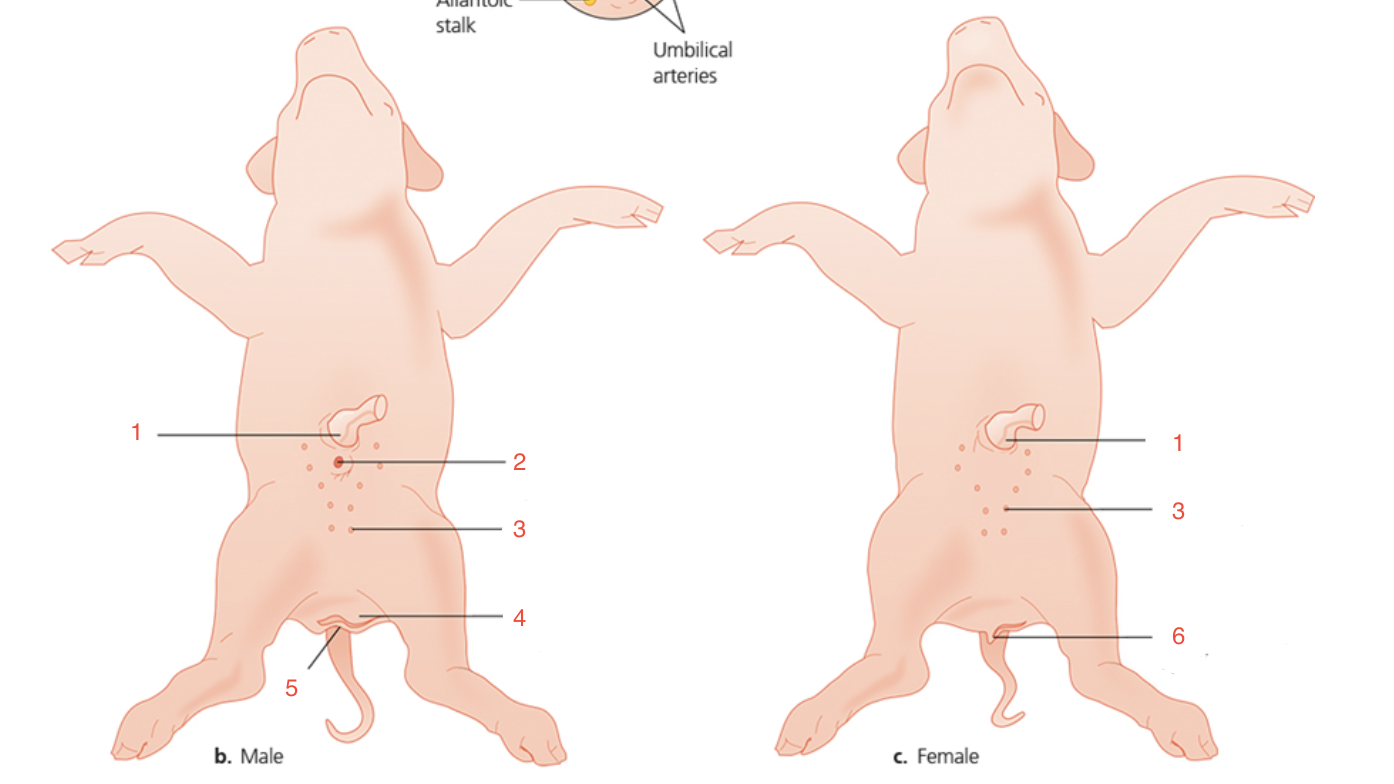
Umbilical Cord
1
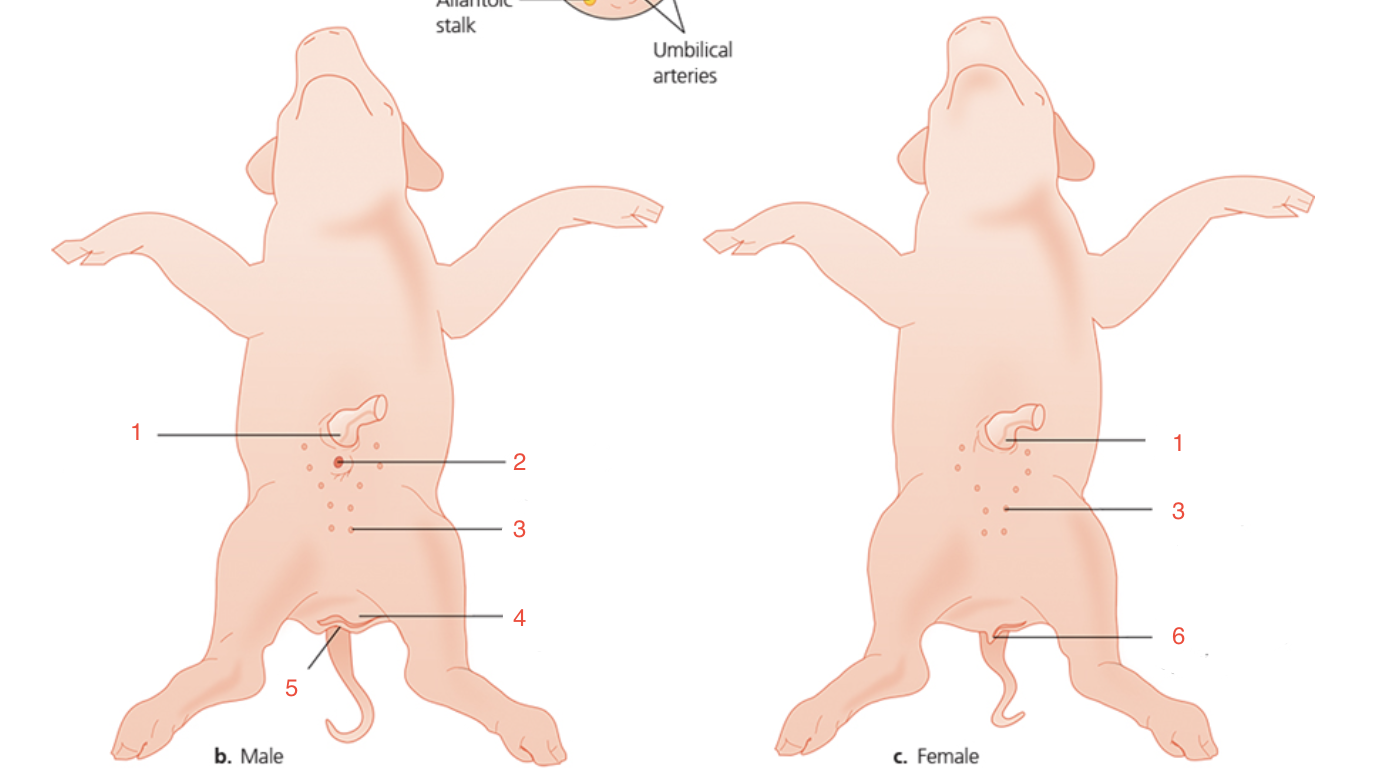
N1pples (mammary papillae)
3
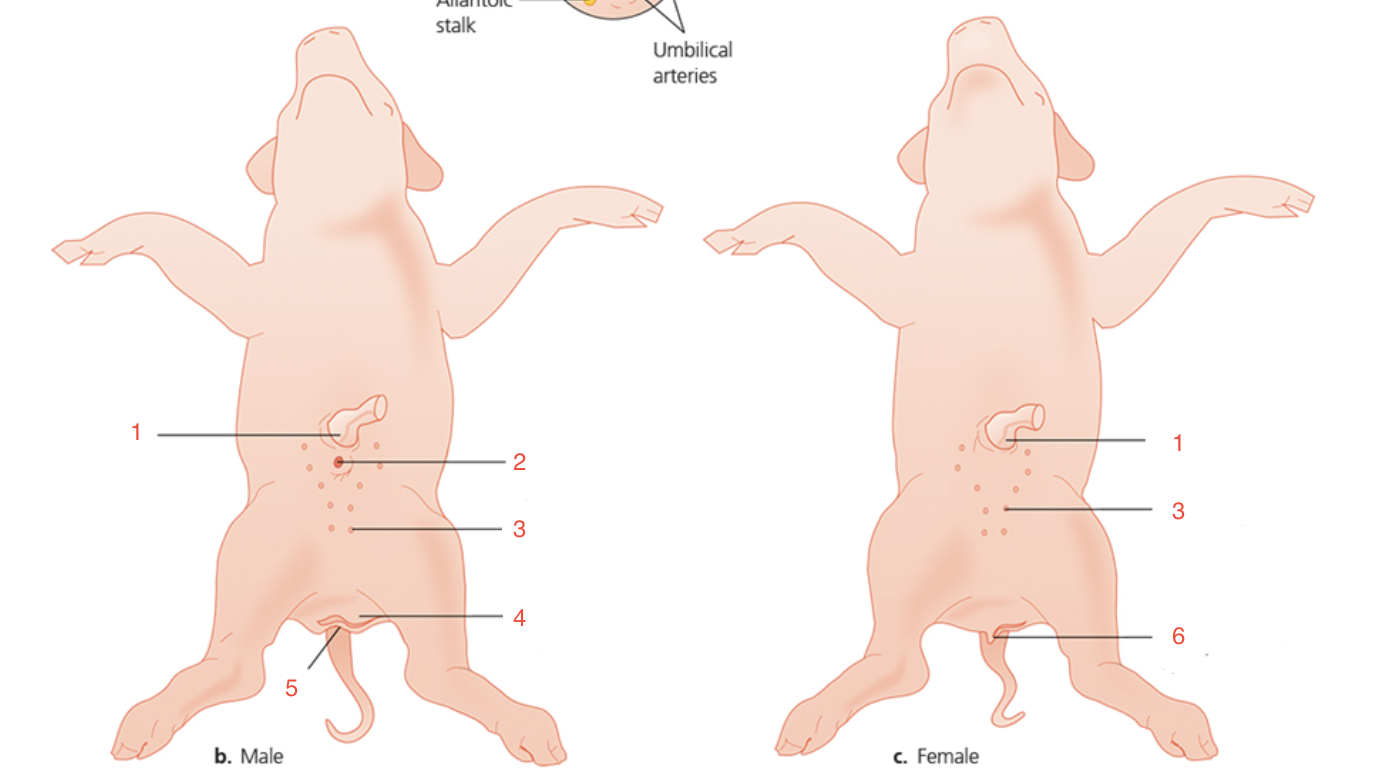
Anus
5
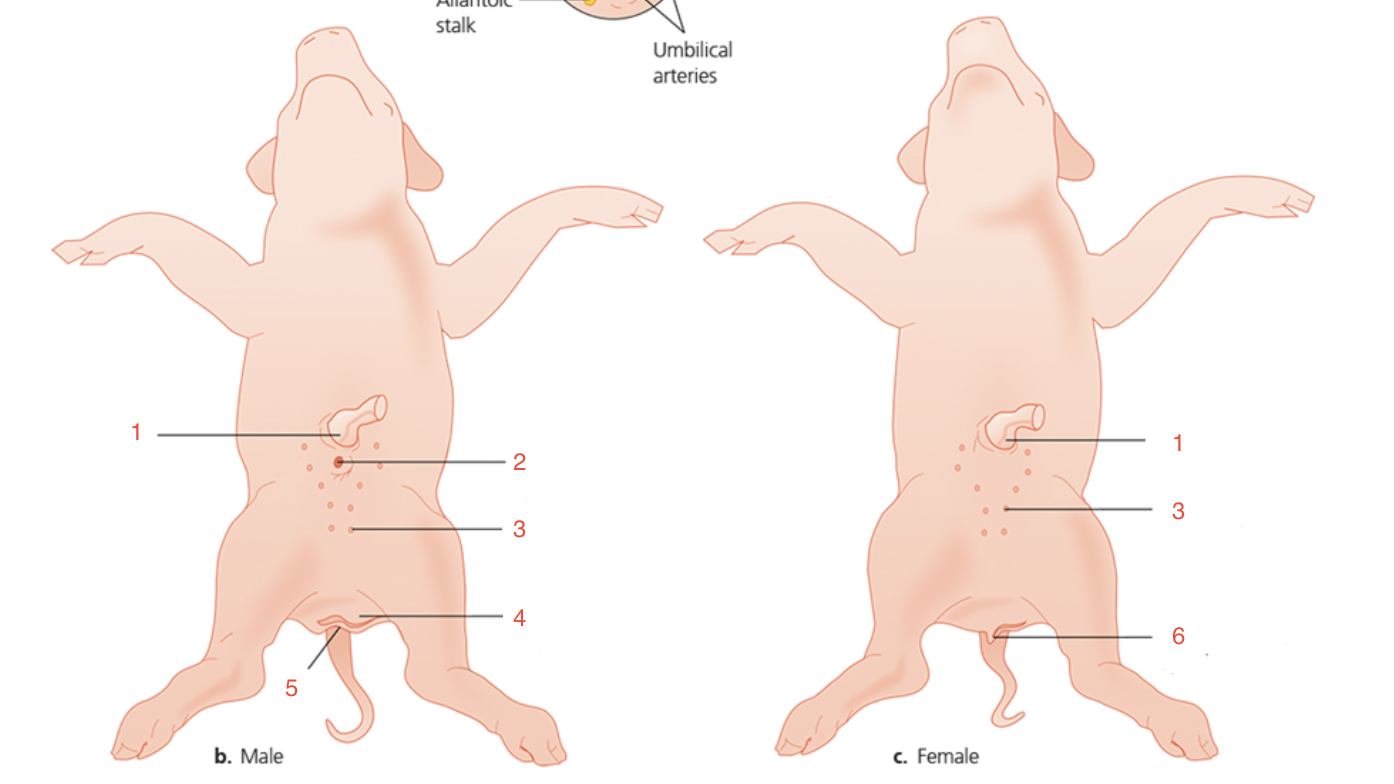
Urogenital opening (male)
2
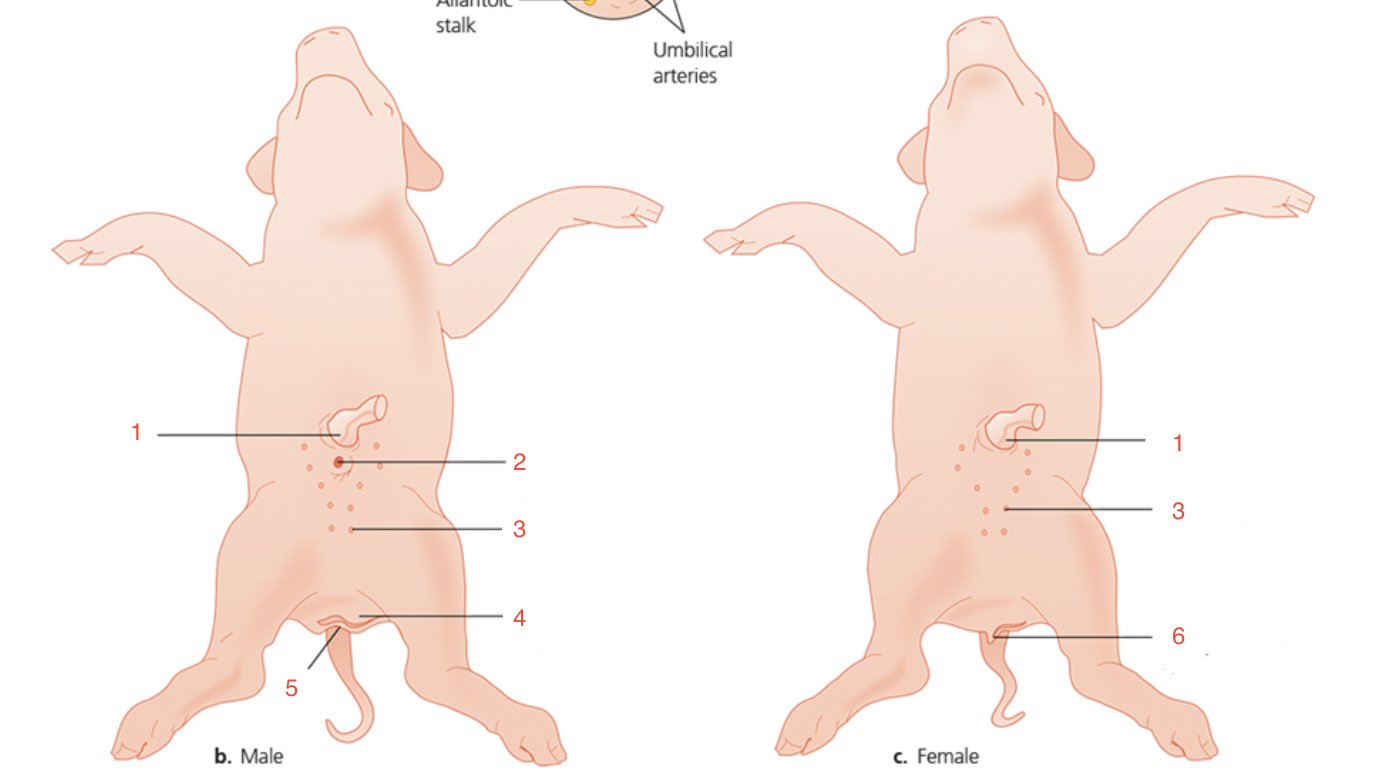
Scrotal Sac
4
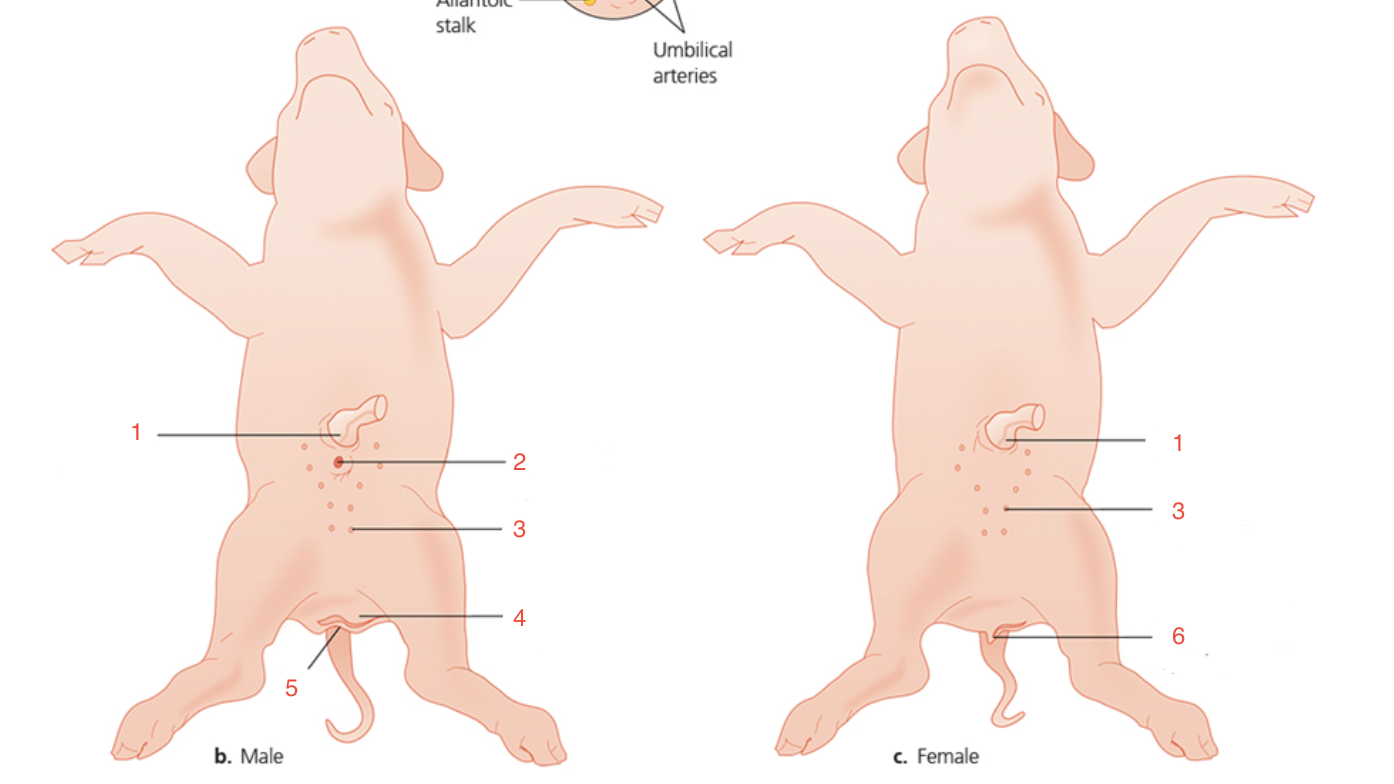
Genital Papilla and Urogenital Opening (female)
6
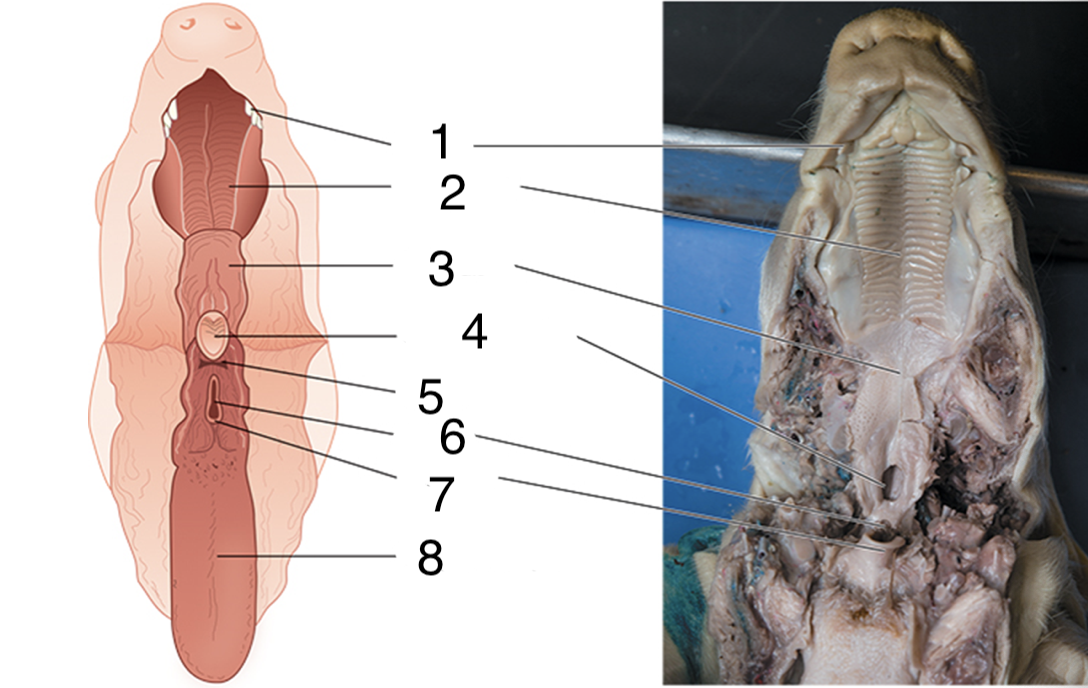
Teeth
1
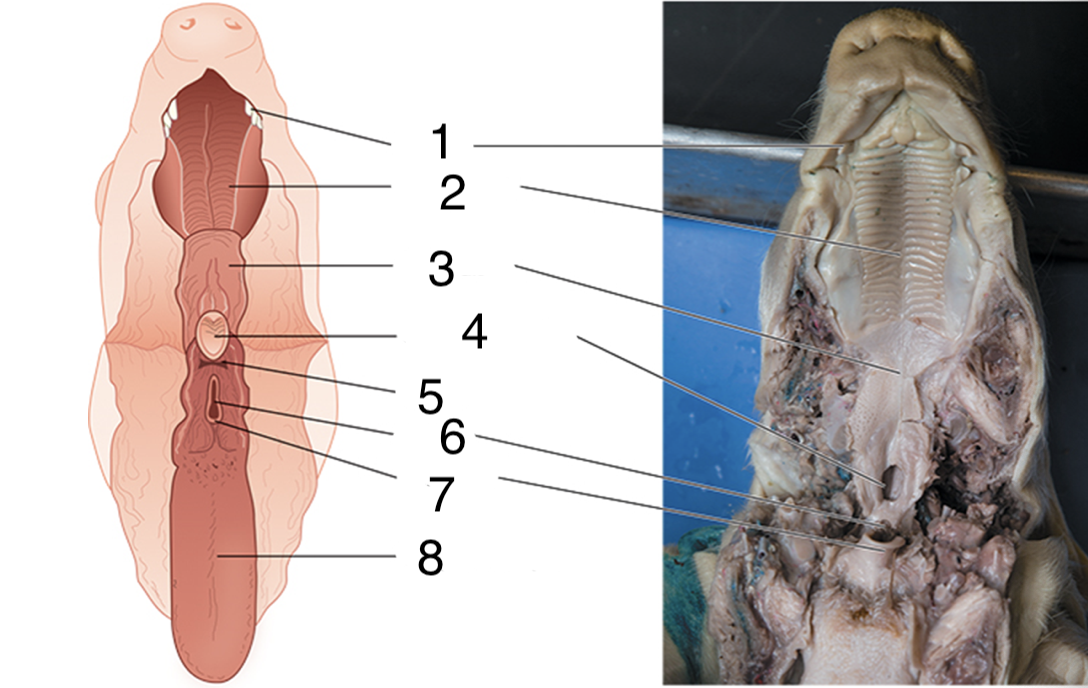
Papillae
8
projections on tongue containing taste buds
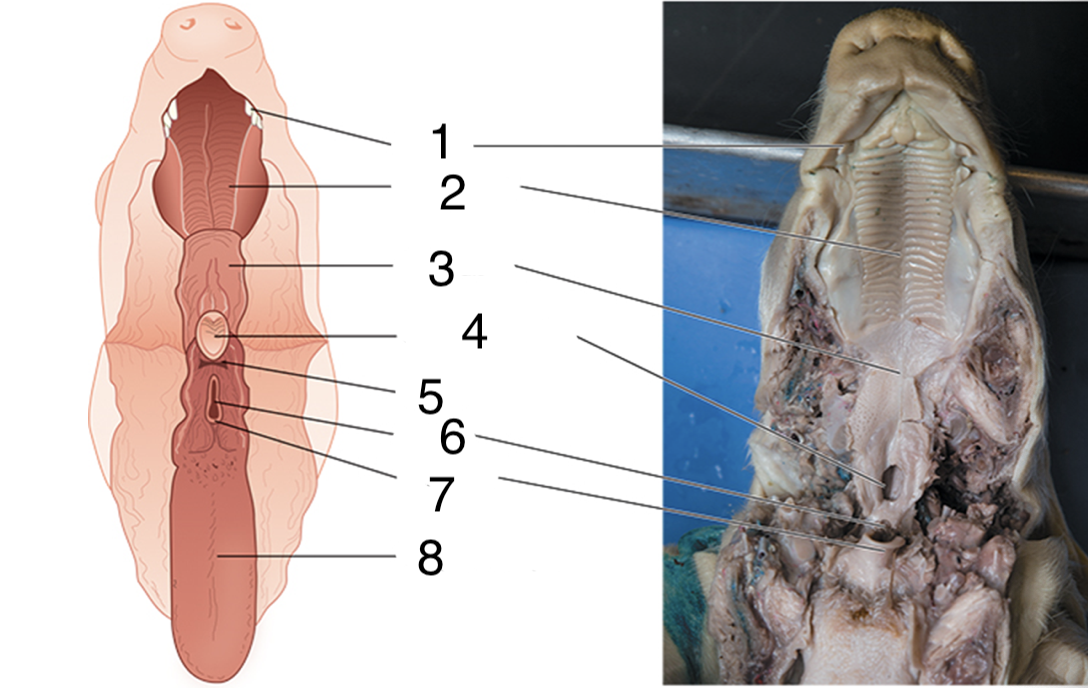
Hard Palate
2
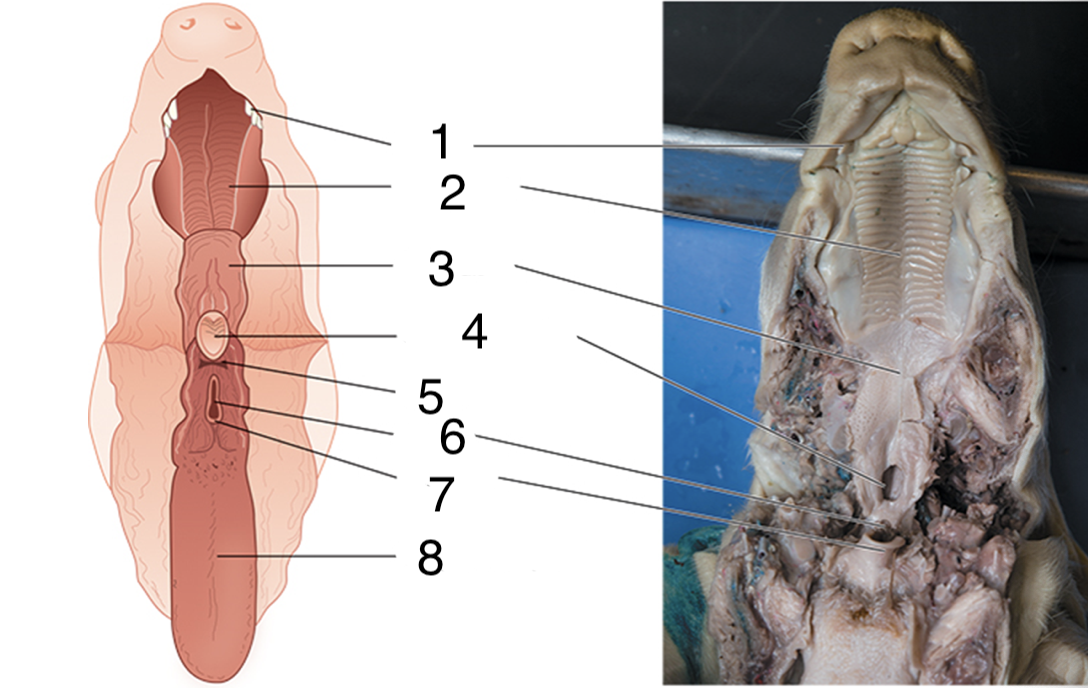
Soft Palate
3
Pharynx
shared structure between respiratory and digestive system
Mouth
anterior opening to digestive system of pharynx
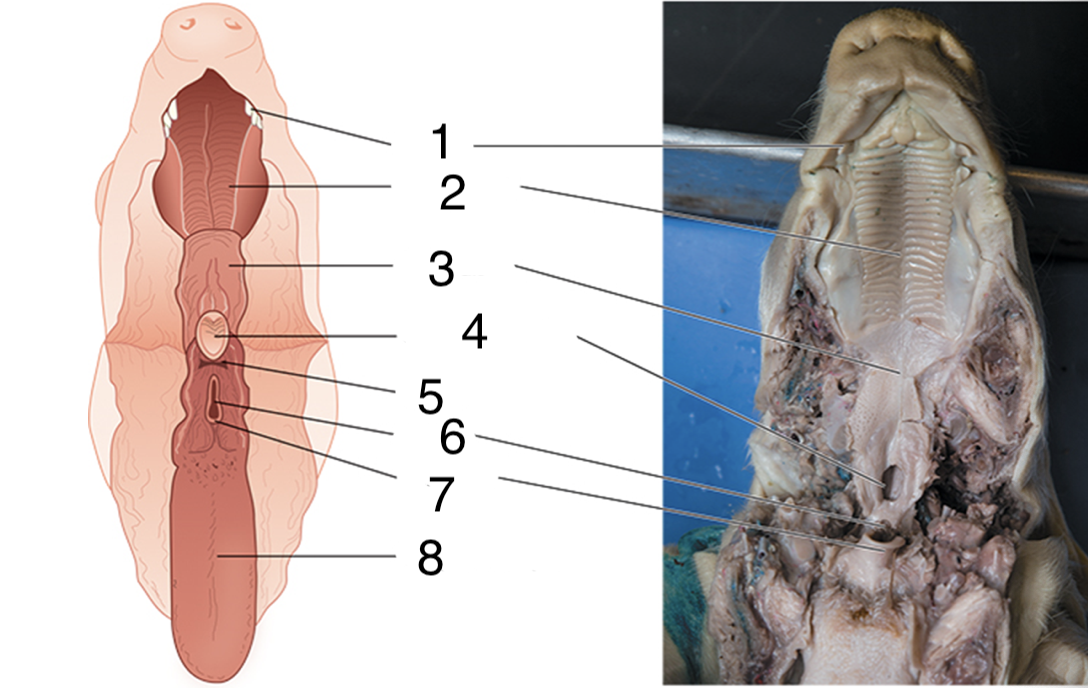
Esophagus
3
posterior opening to digestive system of pharynx
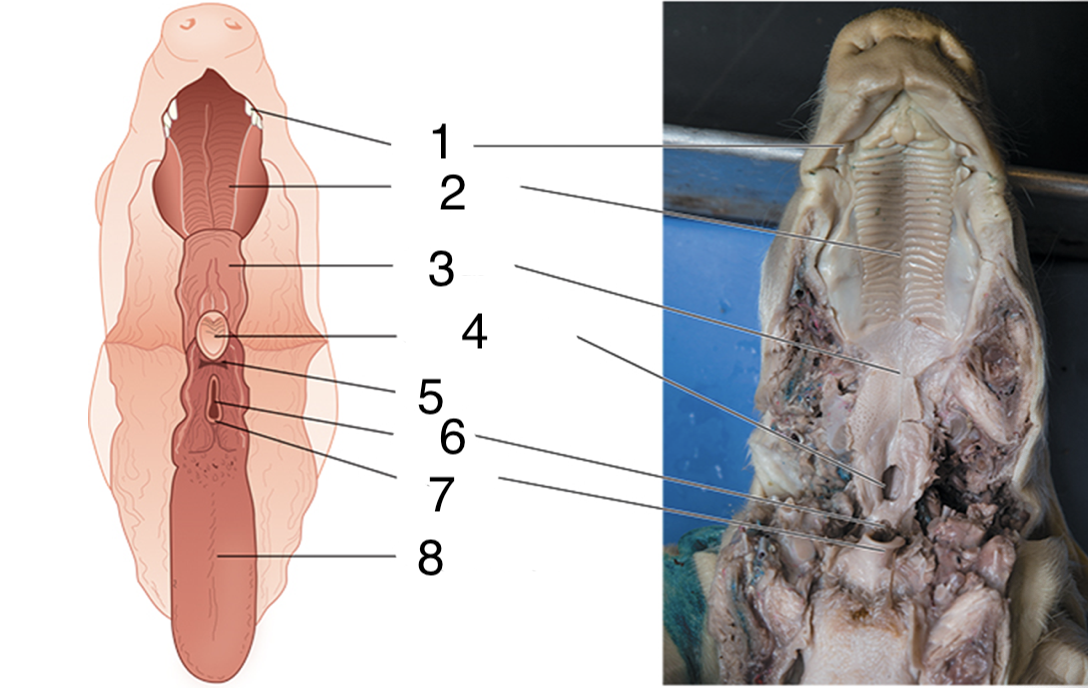
Nasal Chamber
4
Anterior opening to the respiratory system that allows air to enter and exit the nasal passages of pharynx
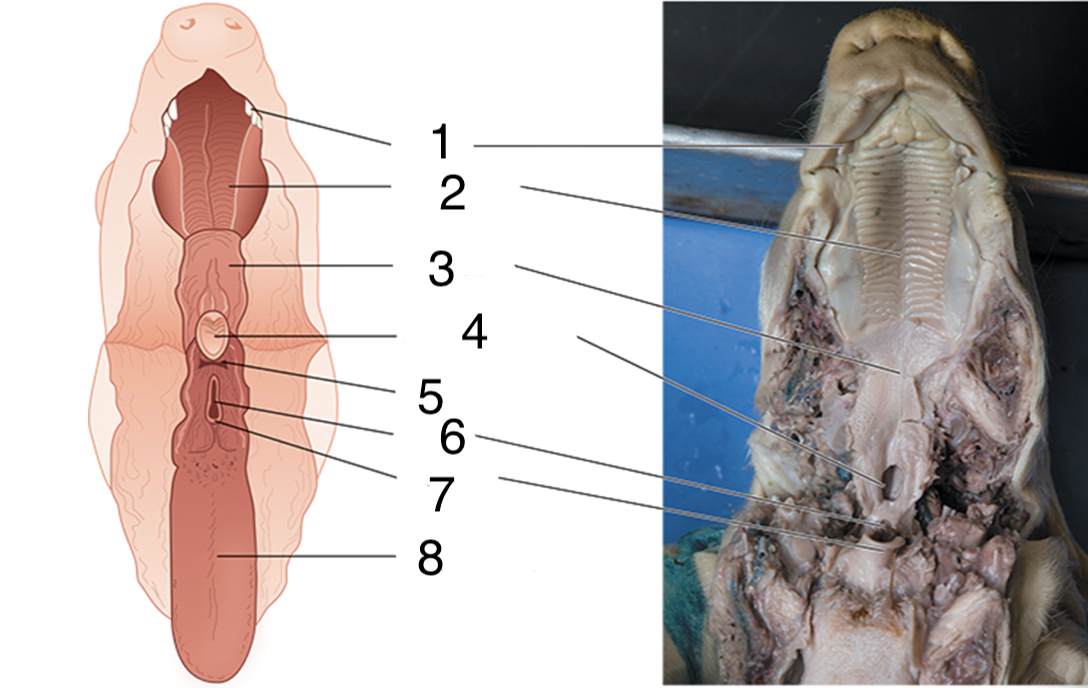
Glottis
6
posterior opening to larynx of pharynx
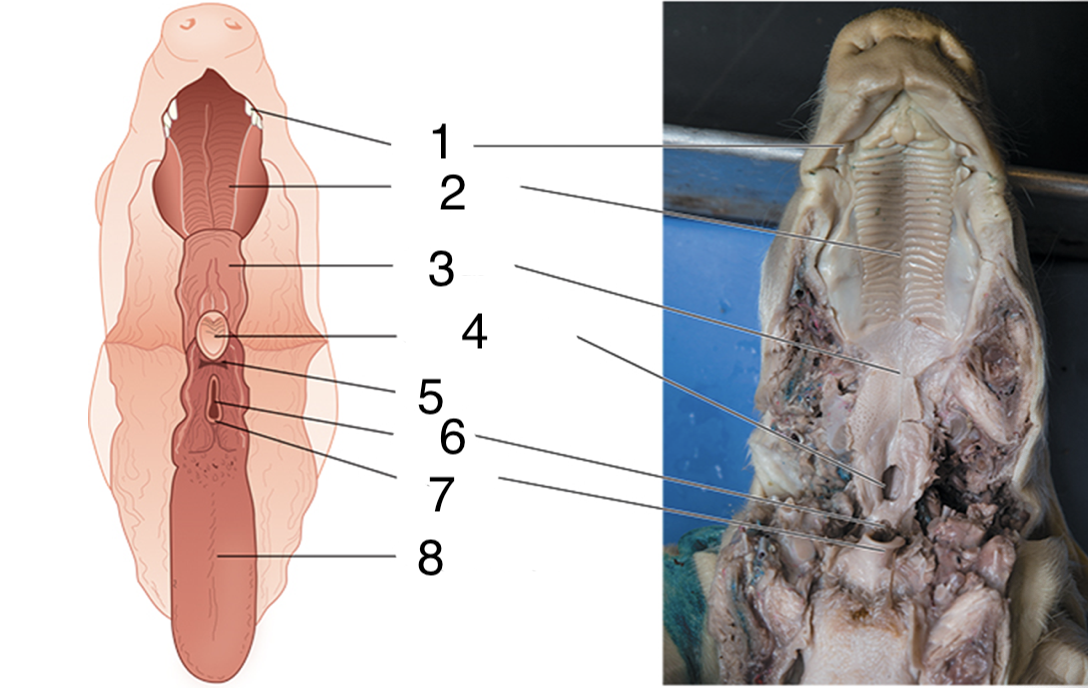
Epiglottis
7
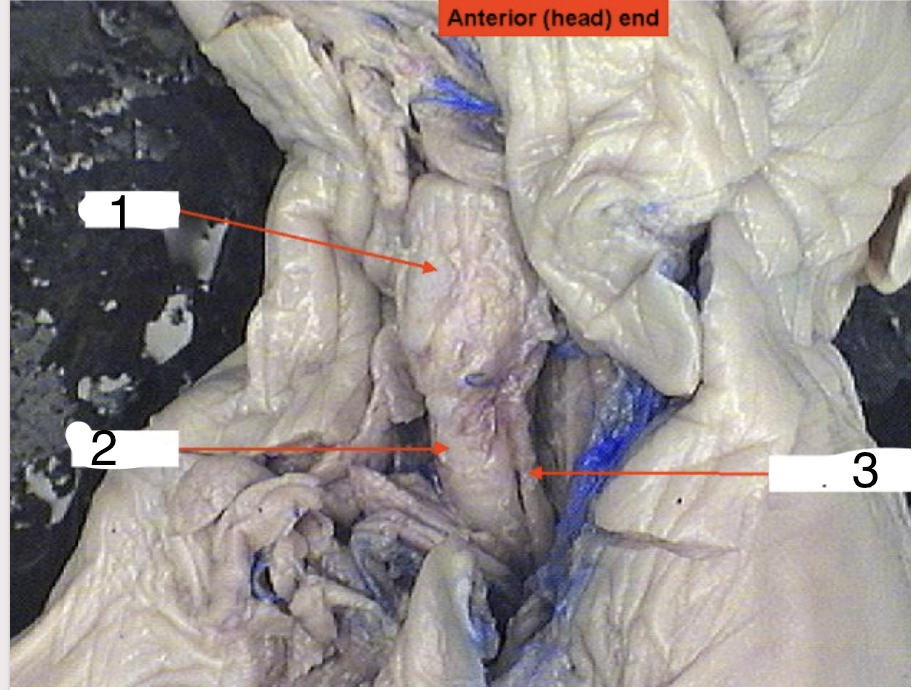
Larynx
1
voice box in humans
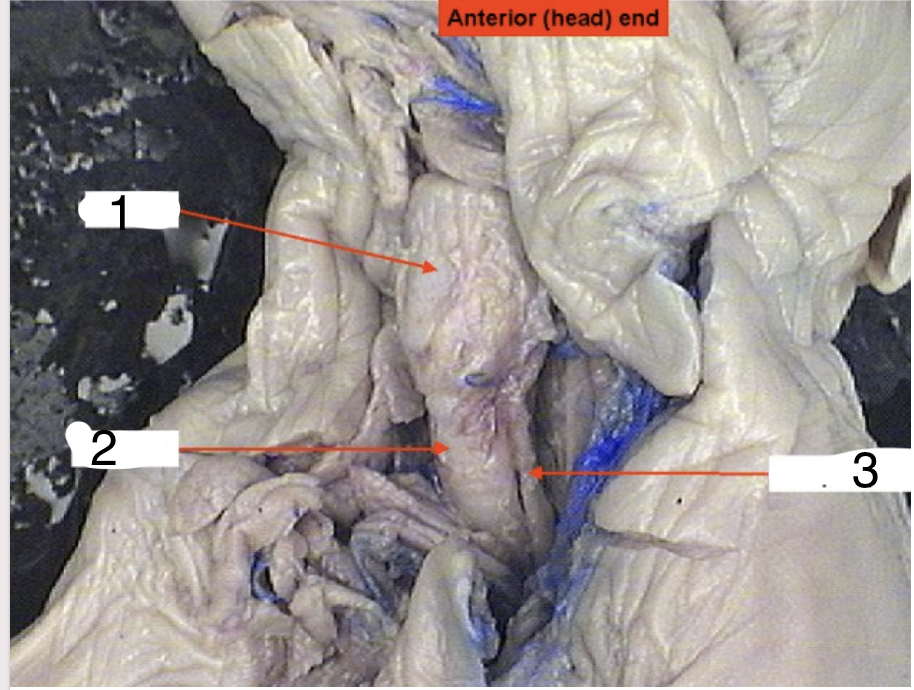
Trachea
2
respiratory tube reinforced with cartilage
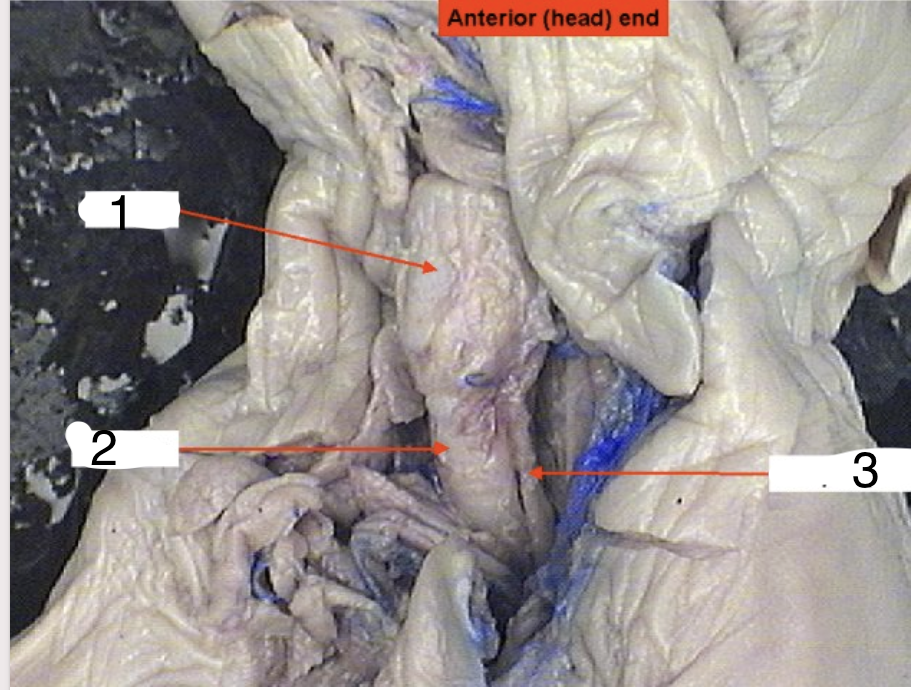
Esophagus
3
Digestive muscular tube running behind trachea serving as a passageway for food into the stomach
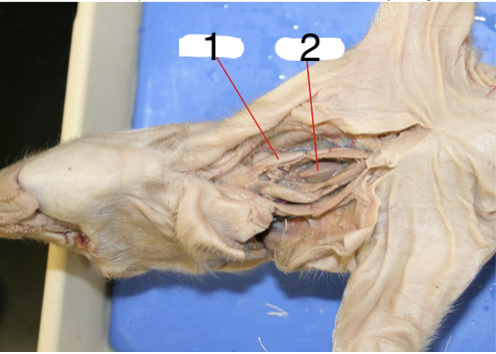
Thyroid Gland
2
involved in producing thyroid hormones which play a role in regulating the rate of metabolism
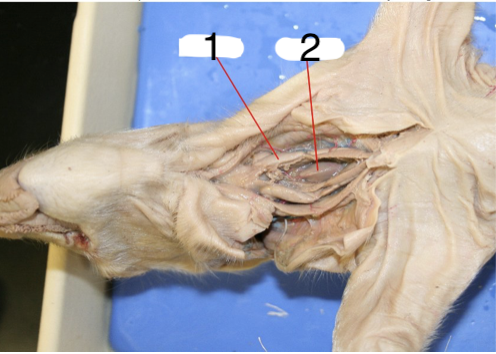
Thymus Gland
1
plays a role in immunity
Peritoneum
layer made of simple squamous epithelia forming the lining of the abdominal cavity
Parietal Peritoneum
outer layer lining internal body wall (abdominal wall and pelvic cavity)
Visceral Peritoneum
inner layer covering internal organs that are in intraperitoneal cavity
Diaphragm
muscular layer seperating thoracic cavity from abdominal cavity
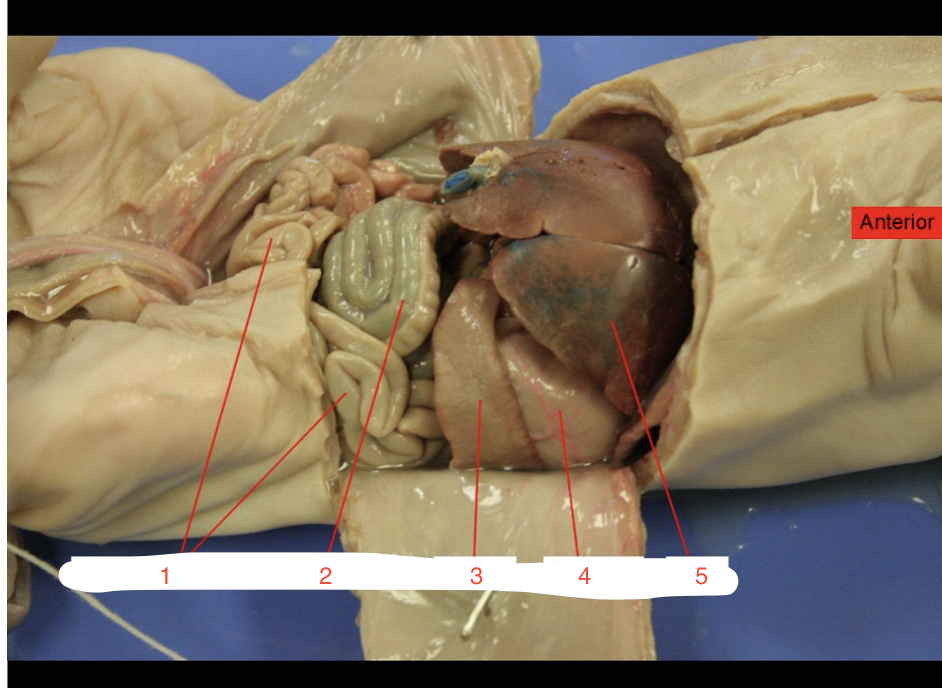
Liver
5
involved in filtering harmful substances from the blood and producing bile
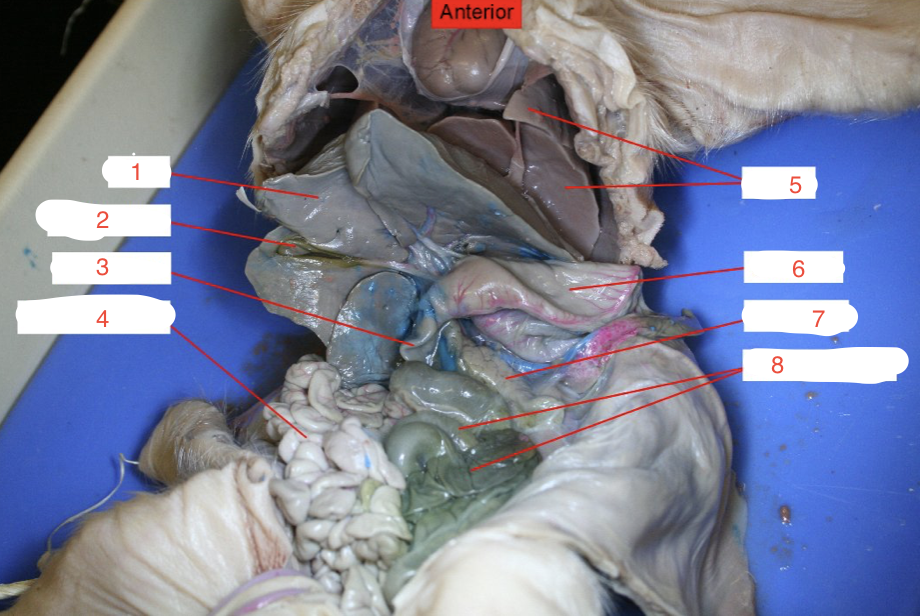
Gallbladder
2
stores and concentrates bile produced by the liver
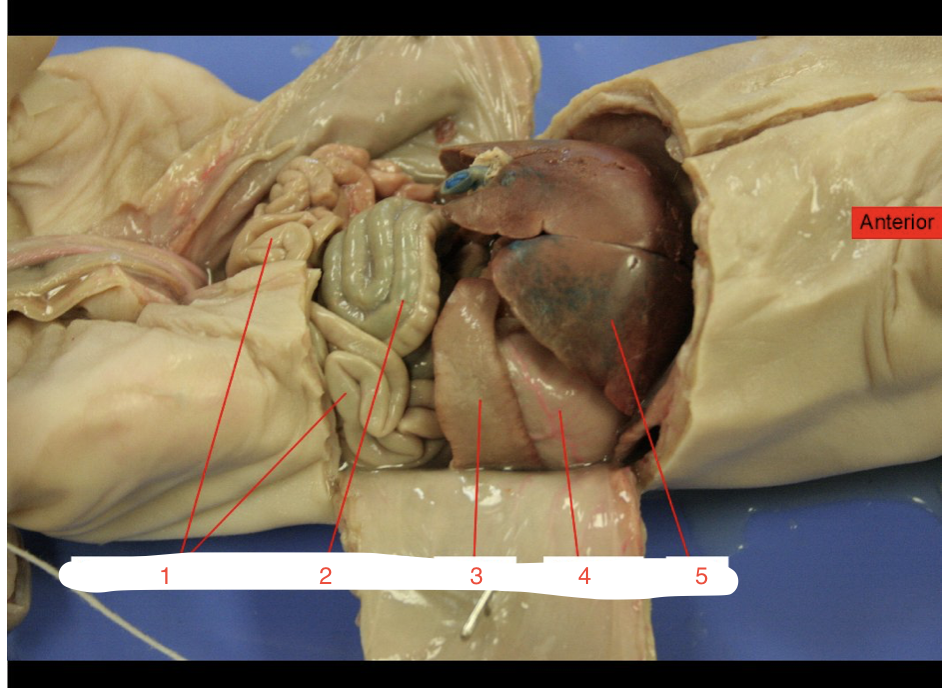
Stomach
4
produces gastric juice which breaks down proteins
Spleen
3
involved RBC desctruction and filtering blood (removing microbes) as part of the lymphatic system
Greater Curvature
left lateral and interior part of the stomach
Lesser Curvature
right medial part of the stomach
Cardiac Sphincter
band of smooth muscles regulating the passage of food from the esophagus to the stomach
Pyloric Sphincter
band of smooth muscles regulating the passage of food from the stomach to the duodenum
Gastric Rugae
longitudinal folds in musoca layer of the stomach
Pancreas
7
produces some digestive fluids as well as hormones (insulin and glucagon)
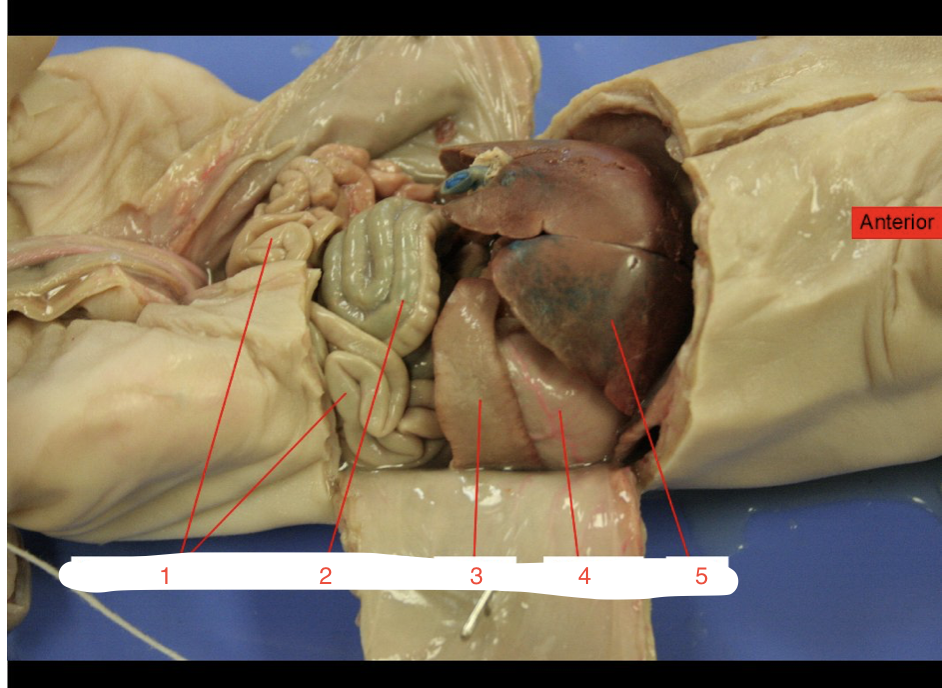
Small Intestine
1
includes duodenum, Jejunum and Ileum
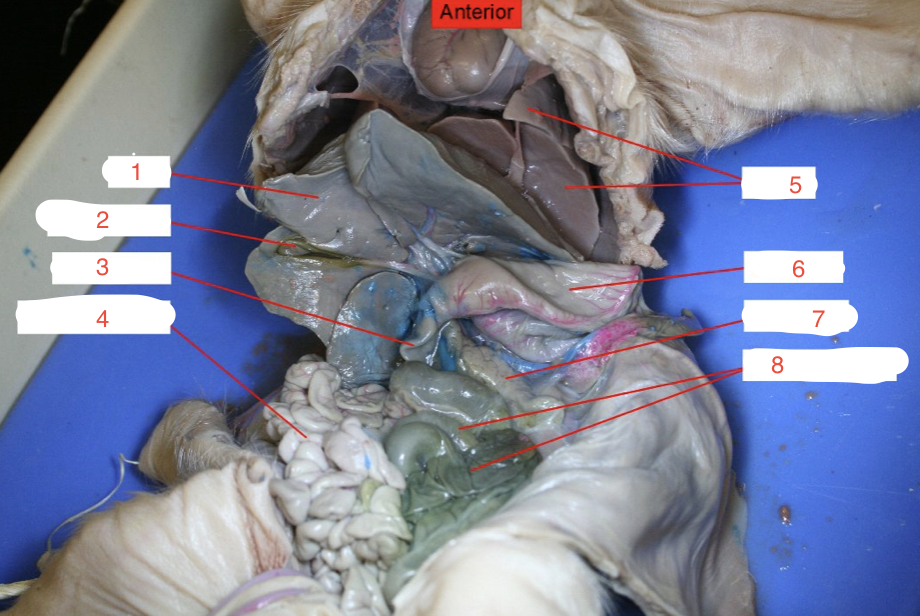
Duodenum
3
first section of SI- makes digestive enzymes to break down food, receives secretions from gall bladder and pancreas
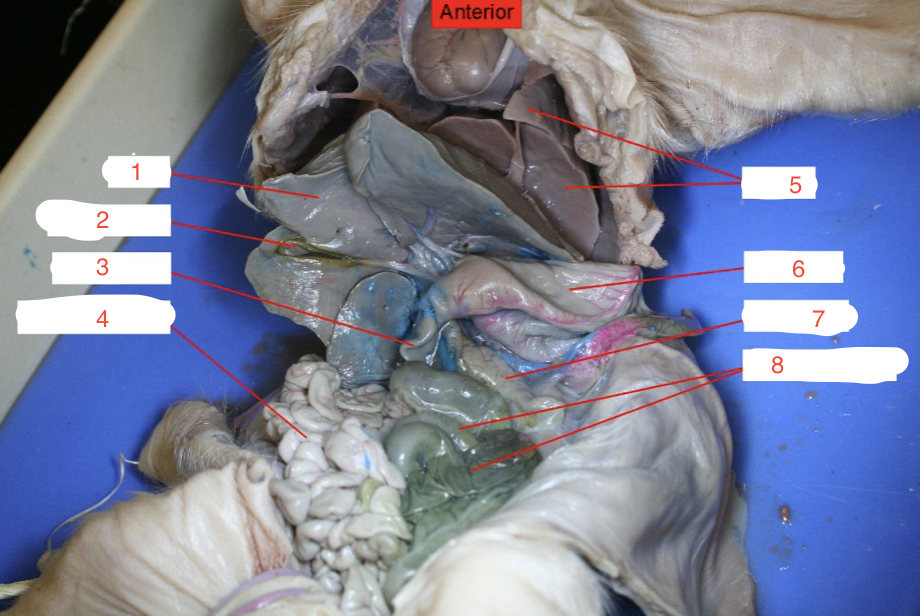
Common Bile Duct
(flower stem like structure under the gallbladder) cystic duct from the gall bladder and hepatic duct from liver
Jejunum and Ileum
designed to increase surface area for more absorption of nutrients
Lumen
central cavity of the gut
Villi
finger like projections of wall of the small intestine into the lumen
Mucosa
innermost layer or GI tract containing epithelium functioning in absorption and secretion
Microvilli
microscopic hair-like projections consisting of foldings of cell membrane of musoca epithelial cells
Lymph Nodules
group of lumphocytes located in submucosa
Circular Muscle
inner thick muscle of J&I
Longitudinal Muscle
thin outer muscle layer of J&I
Serosa
outermost layer of GI tract consisting of simple squamous epithelium, comprises the visceral peritoneum and intestine
Mesenteries
sheets w/ 2 layers of visceral peritoneum joining together loops of intestine and suspending them in abdominal cavity, same composition of serosa layer (Blood and sheets of peritoneum are inbetween these two layers)
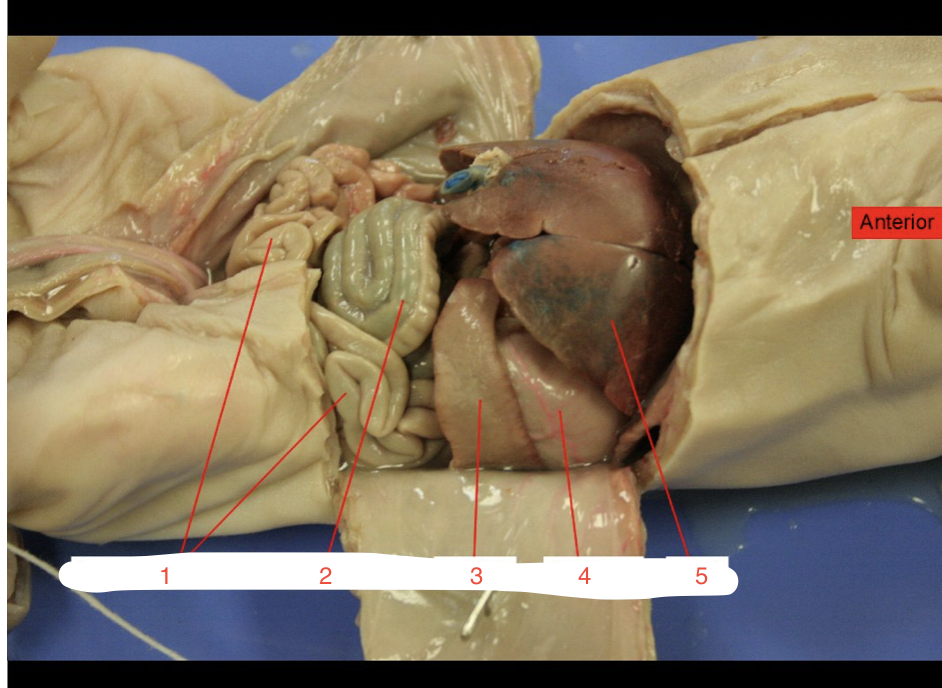
Large Intestine (colon)
2
Cecum
begining of large intestine, consists of blind pouch receiving waste material from ileum of small intestine and passes it to the colon, Plays a role in increasing the amount of time for food digestion and absorption
Rectum
last portion of colon functioning in storing solid waste until excretion

