Digestive System
 Call Kai
 Learn
Learn Practice Test
 Spaced Repetition
 Match
Match Flashcards
 Knowt Play
1/56

There's no tags or description
Looks like no tags are added yet.
Name | Mastery | Learn | Test | Matching | Spaced | Call with Kai |
|---|
No analytics yet
Send a link to your students to track their progress
57 Terms
Gastrointestinal Tract (GI Tract)
a continuous, muscular; hollow tube
GI tract function
chemical/mechanical breakdown and absorption
breaks down food into usable form, absorbing nutrients into the blood stream
Peristalsis
Involuntary waves of contraction (food moving)
Organs of the digestive system
food moves through them
mouth
pharynx
esophagus
stomach
small intestine
large intestine
Accessory organs of the digestive system
contribute but food does not move through
salivary glands
pancreas
liver
gallbladder
Mouth
Mechanical and chemical digestion occurs here
3 pairs of salivary glands
parotid glands, submandibular, sublingual
Parotid glands
anterior to ears
Submandibular glands
under mandible
Sublingual glands
under the tongue
Carbohydrate digestion begins in
the mouth
Pharynx
part of both the respiratory and digestive system
Esophagus
in the thoracic (mostly),
posterior to trachea,
passes diaphragm then connects with the stomach (in the abdominal cavity) at the lower esophageal sphincter
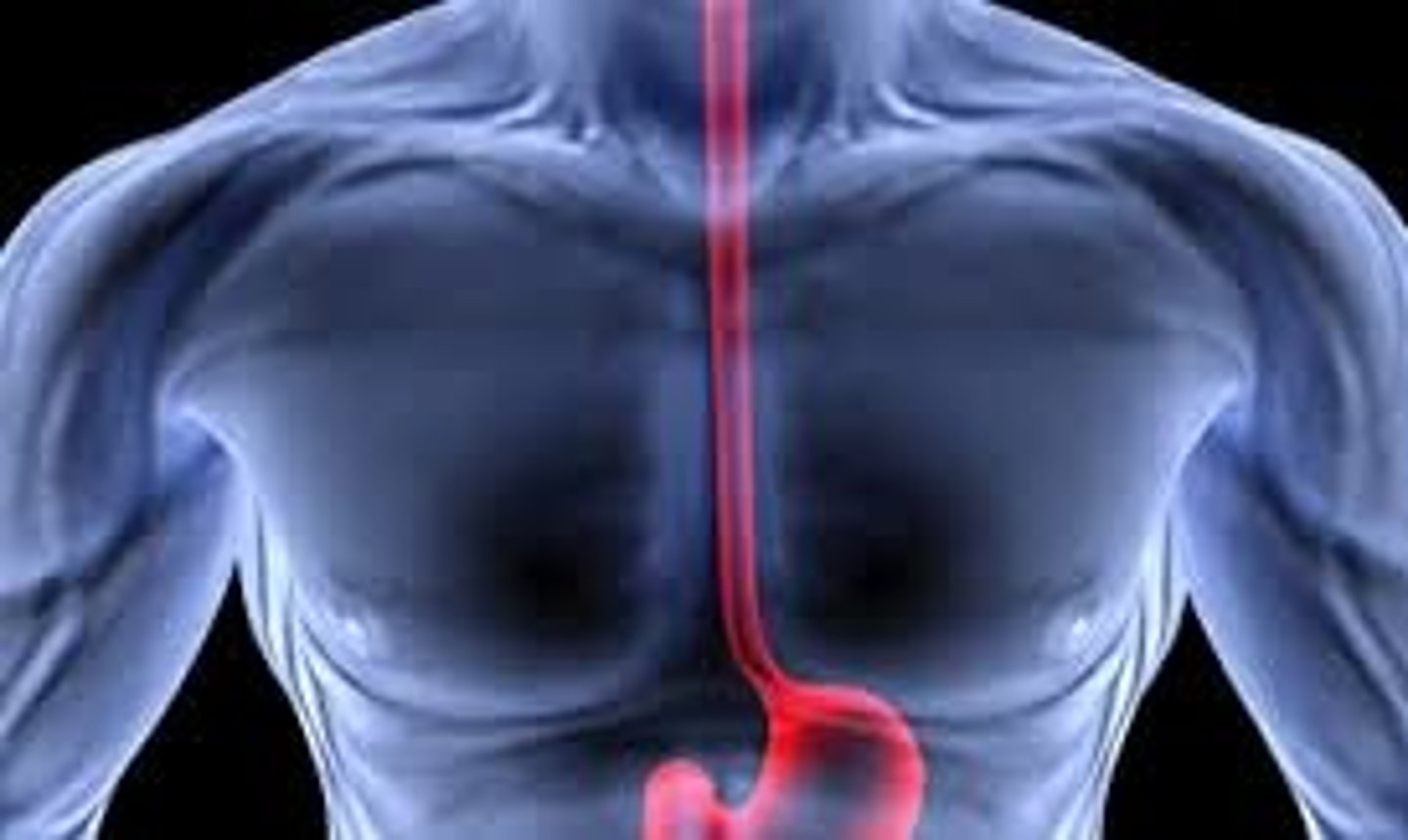
Lower esophageal sphincter
ring of muscle
prevents contents (food) of the stomach from moving into the esophagus
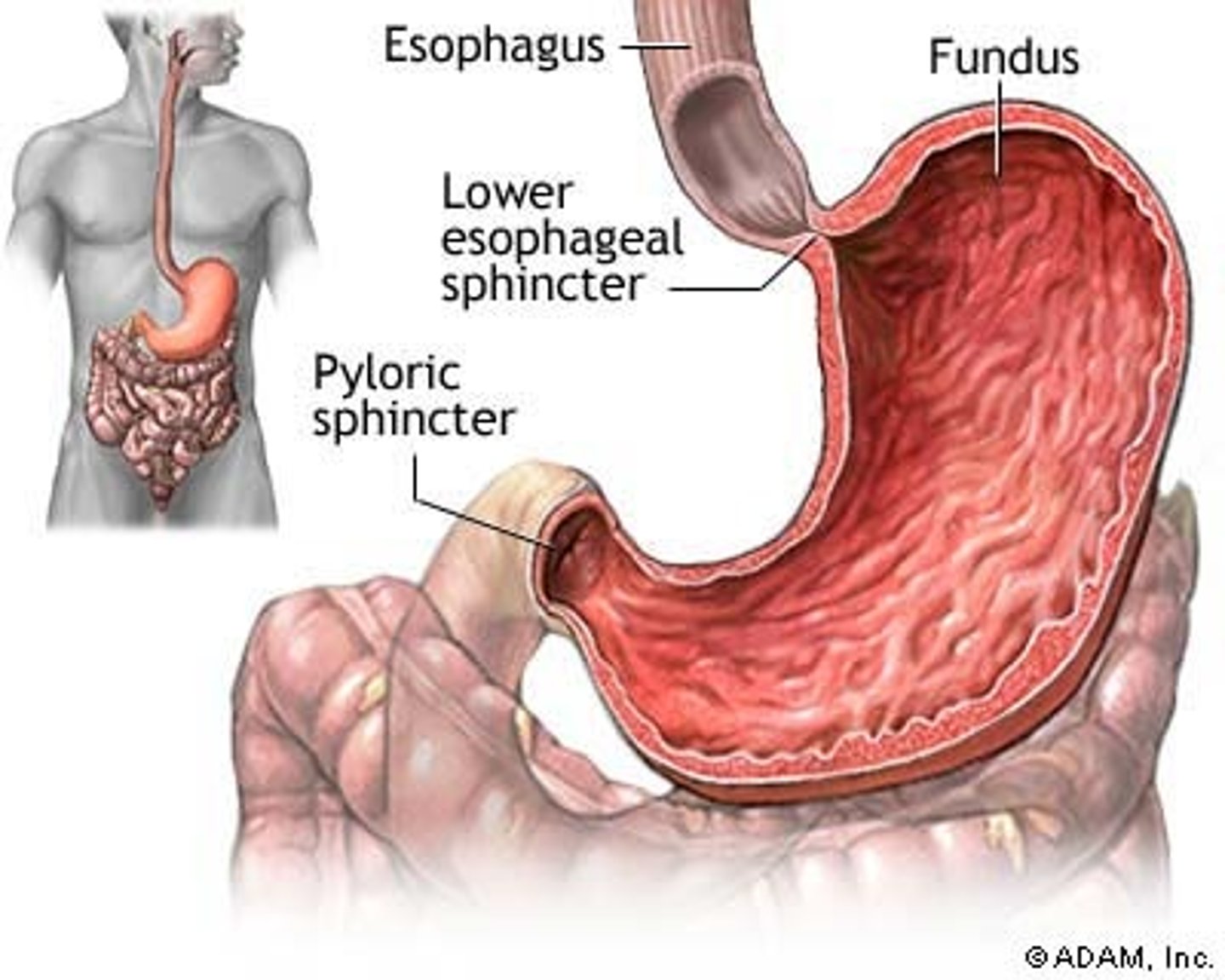
Stomach
hollow organ, can contract
no absorption in stomach except alcohol
food enters, the stomach stretches, stimulates secretion of gastrin, causes secretion of gastrin juices, 3 juices
pepsin, HCl, mucus
Pepsin
enzyme that breaks down protein
HCL (hydrochloric acid)
strong acid, makes stomach very acidic, ph of 2, once it leaves the stomach you can feel it, helps sterilize food
Low HCL can lead to bacteria in stomach (food poisoning)
because food becomes sterilized
Mucus
protects stomach from HCl
There is very little
chemical digestion (HCL does that)
Digestion in stomach is mostly
mechanical because the stomach churns
pyloric sphincter
between stomach and small intestine, keeps food in stomach
Malnourishment cause
protein is not being digested
chronic low stomach acid
low HCl and pepsin
person cannot break down protein so they cannot use it
Epigastric pain (heart burn)
lower esophageal sphincter opens
HCl goes back up
after someone eats
Ulcer
crater/pothole in stomach
caused by strain of bacteria called H. Pylori
If an ulcer gets bad it could erode…
through stomach lining and into the blood vessels
Ulcer treatment
Take out the stressors
No spicy food or alcohol
Ulcer s/s
epigastric pain 1-3 hrs after eating
blood in stool if it gets bad
Small intestine
largest part of the GI tract
chemical digestion and absorption happen
inside there are hair like projections called villi and microvilli to max surface area
Has three sections:
duodenum
jejunum
Ileum
Why is the small intestine the largest part of the GI tract
nutrient absorption
duodenum
after pyloric sphincter
At the end, all nutrient absorption has happened all thats left is…
fiber and water
at the end there is a valved called the
ileocecal valve
in between small and large intestines
Large intestine
large in diameter but shorter
no digestion
absorbs excess water
Why does the large intestine absorb water
if a person eats something bad the water rushes into the large intestine to flush it out
Sections of the large intestine
Cecum
colon
ascending colon
transverse colon
descending colon
sigmoid colon
rectum
anus
Cecum
appendix hangs off
sigmoid colon
in pelvic cavity
anus
contains two anal sphincters
internal anal sphincter
external anal sphincter
internal anal sphincter
made up of smooth muscle
external anal sphincter
made up of skeletal muscle
Diverticulitis
small pouches that develop in the lining of the large intestine and become infected
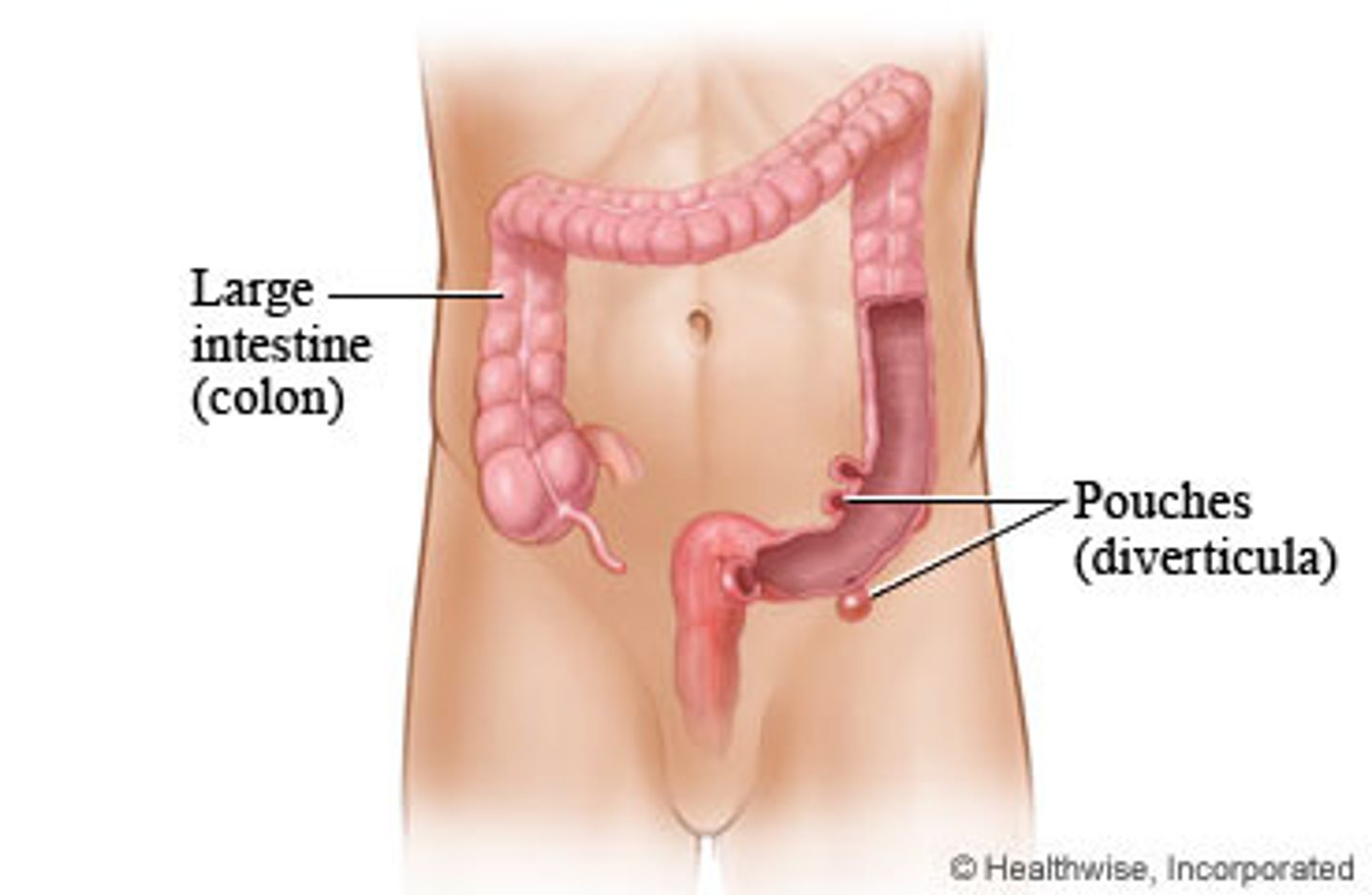
Diverticulitis s/s
pain in lower left quadrant
fever
nausea
bloating
Diverticulitis risk factors
obesity
low fiber diet
Diverticulitis tx.
liquid diet until it heals
Antibiotics
Liver
located in the right upper quadrant
fx. breaks down toxins in the blood
breaks down old red blood cells and makes bile
root word for liver
hepat
hepatitis
inflammation of the liver
What damages the liver
alcohol
Gallbladder
connected to the liver, stories bile and releases it into the bile duct
bile
green watery substance that emulsifies fat
Why bile is green
when the liver breaks down old red blood cells and a pigment called bilirubin is produced the bile becomes green
Jaundice
if liver is damaged the bile accumulates in the liver instead of where its supposed to go, it over flows and goes into the blood stream
Also occurs if a bile duct is blocked
turns the body tissue yellow
Pancreas
exocrine and endocrine functions
pancreatic lipase
pancreatic amylase
Exocrine function of the pancreas
the pancreas secrets pancreatic enzymes that are released through a pancreatic duct to the first part of the small intestine (duodenum)
pancreatic lipase
breaks down lipids
pancreatic amylase
breaks down carbohydrates (further)
Involuntary muscle
smooth muscle
Voluntary muscle
skeletal muscle

