Romanesque Review
 Call Kai
 Learn
Learn Practice Test
 Spaced Repetition
 Match
Match Flashcards
 Knowt Play
1/31

There's no tags or description
Looks like no tags are added yet.
Name | Mastery | Learn | Test | Matching | Spaced | Call with Kai |
|---|
No analytics yet
Send a link to your students to track their progress
32 Terms
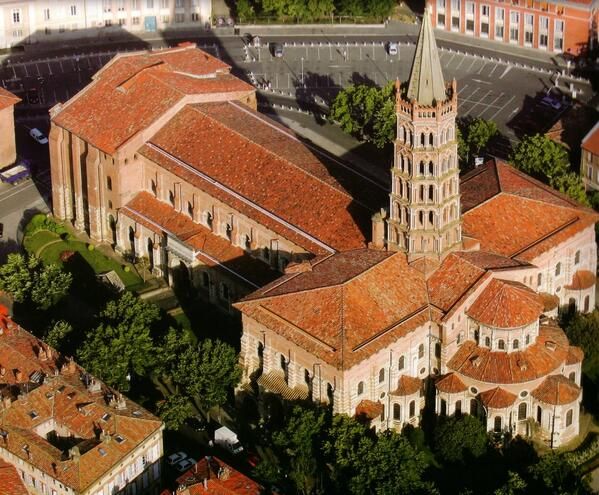
Saint Sernin, Toulouse (Romanesque)
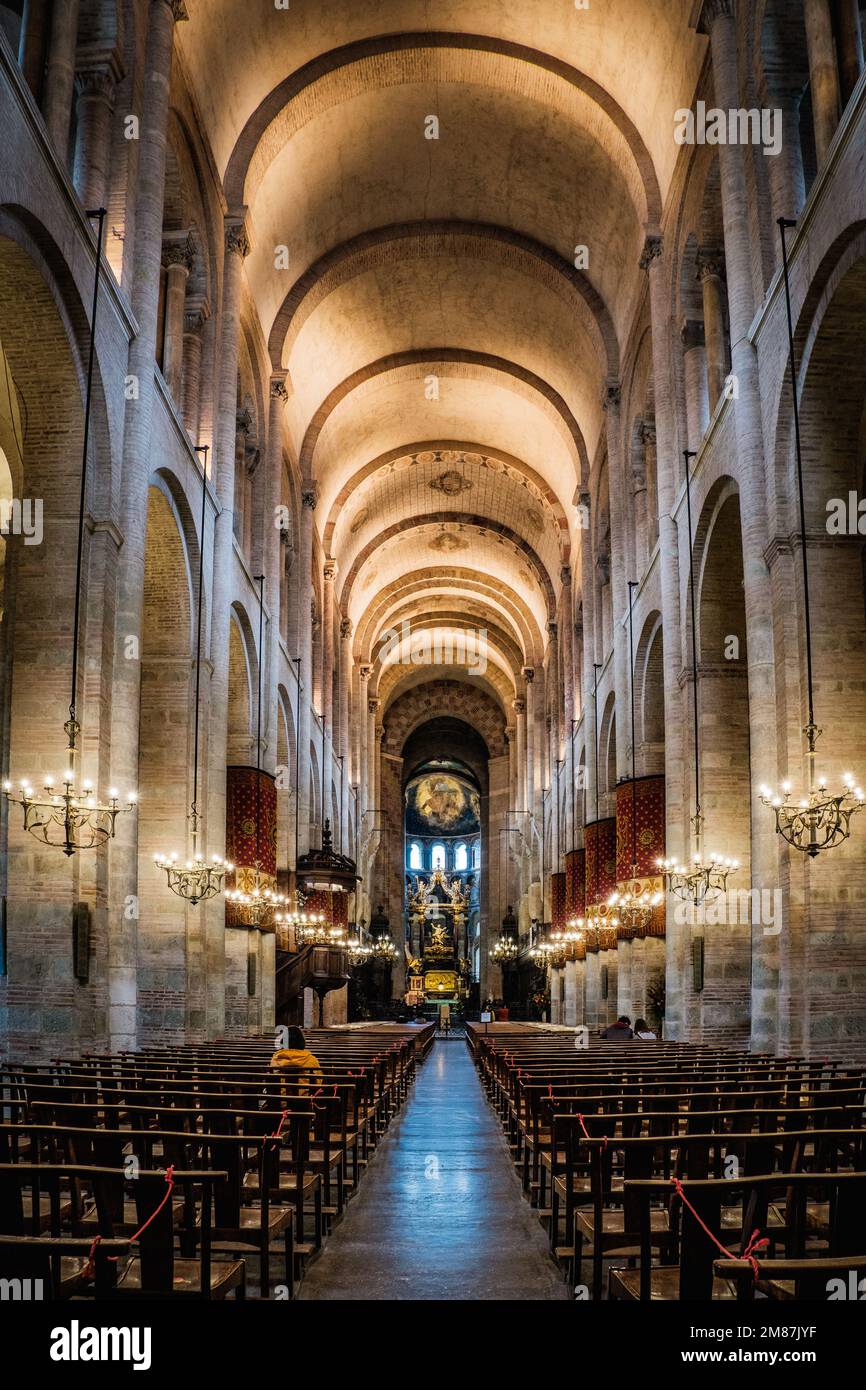
A notable example of Romanesque architecture located in Toulouse, France, built in the 11th and 12th centuries. It features a large, barrel-vaulted nave, thick walls, and an ambulatory with radiating chapels.
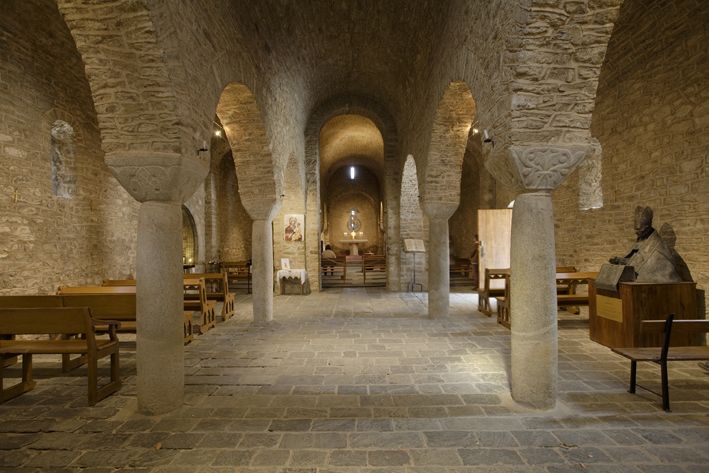
Saint Martin-du-Canigou, Upper Church (Romanesque)
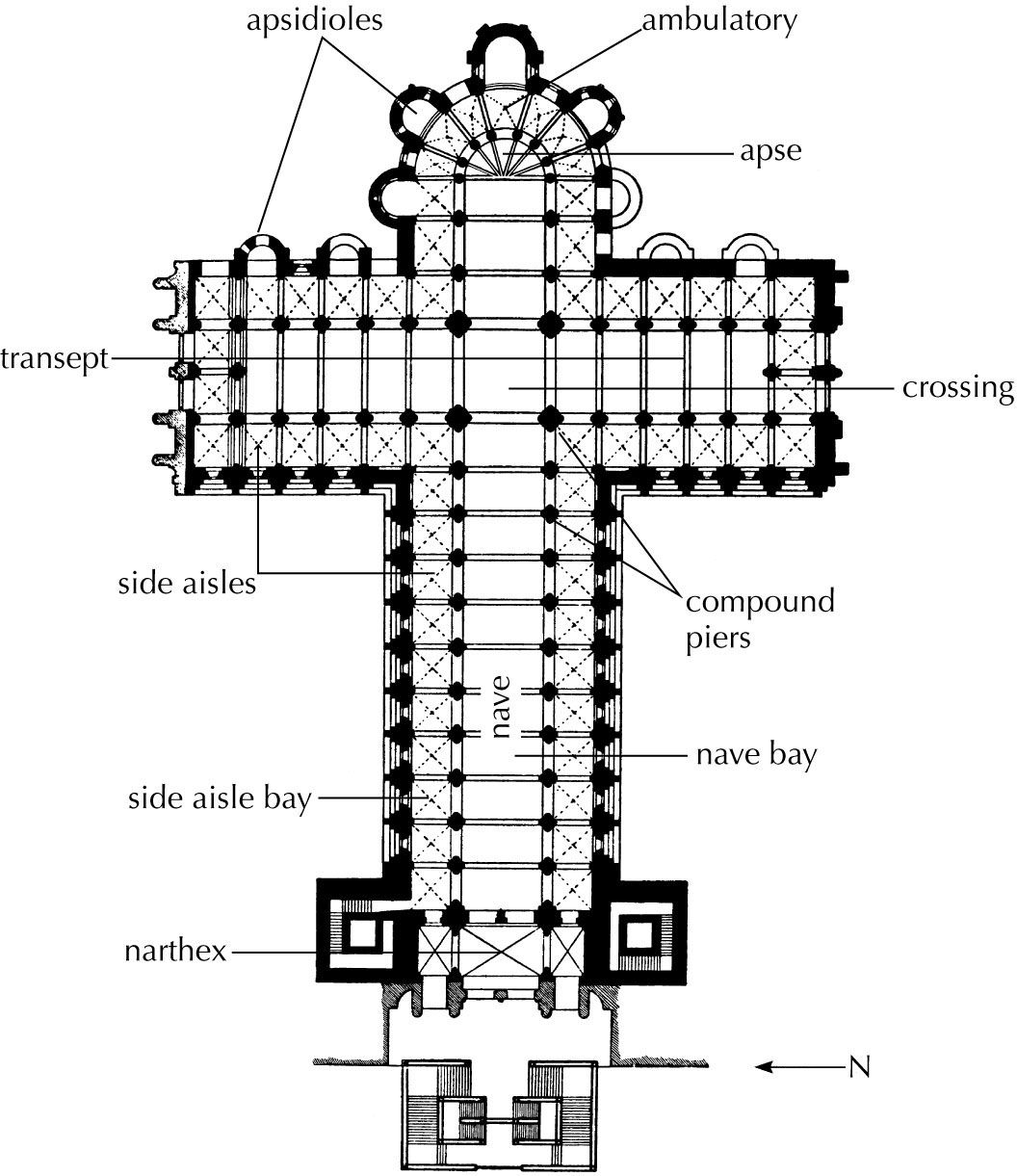
Plan of Santiago de Compostela (Romanesque)
Saint Sernin, Toulouse (Romanesque)
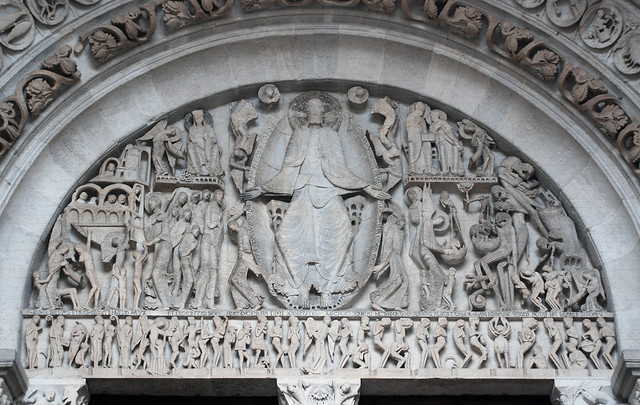
St. Lazara, Autun, tympanum, Last Judgment (Romanesque)
The tympanum of St. Lazare at Autun depicts the Last Judgment, an iconic representation of the final assessment of souls, showcasing the duality of salvation and damnation in Romanesque art.
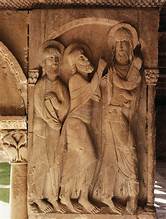
Santo Domingo de Silos, Spain. Road to Emmaus (Romanesque)
The cloister of Santo Domingo de Silos features beautifully sculpted capitals that depict the Road to Emmaus, illustrating the biblical story of Christ's post-resurrection appearance to two disciples.
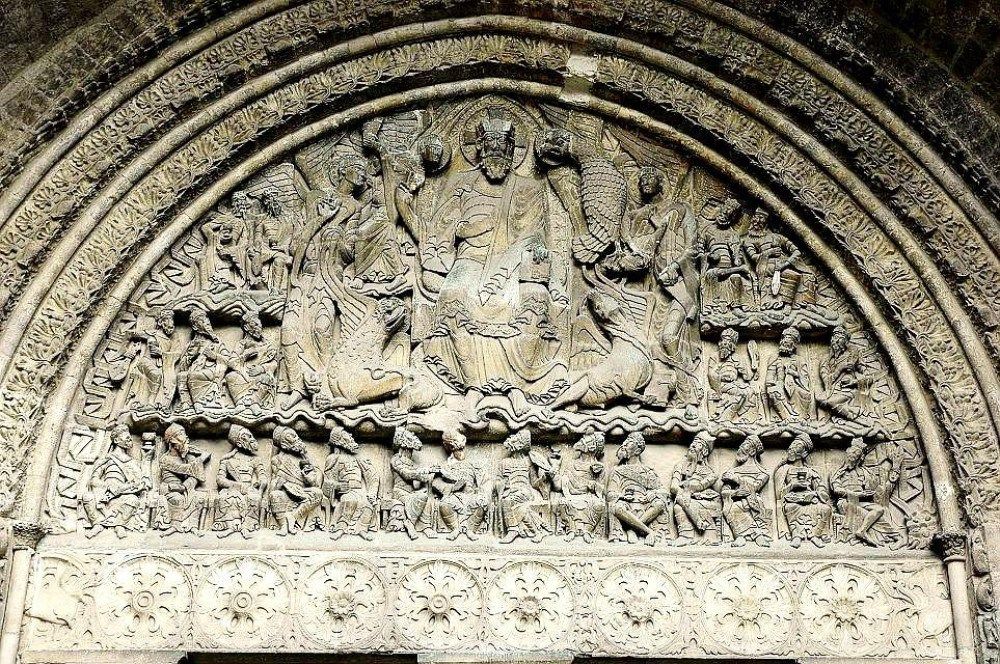
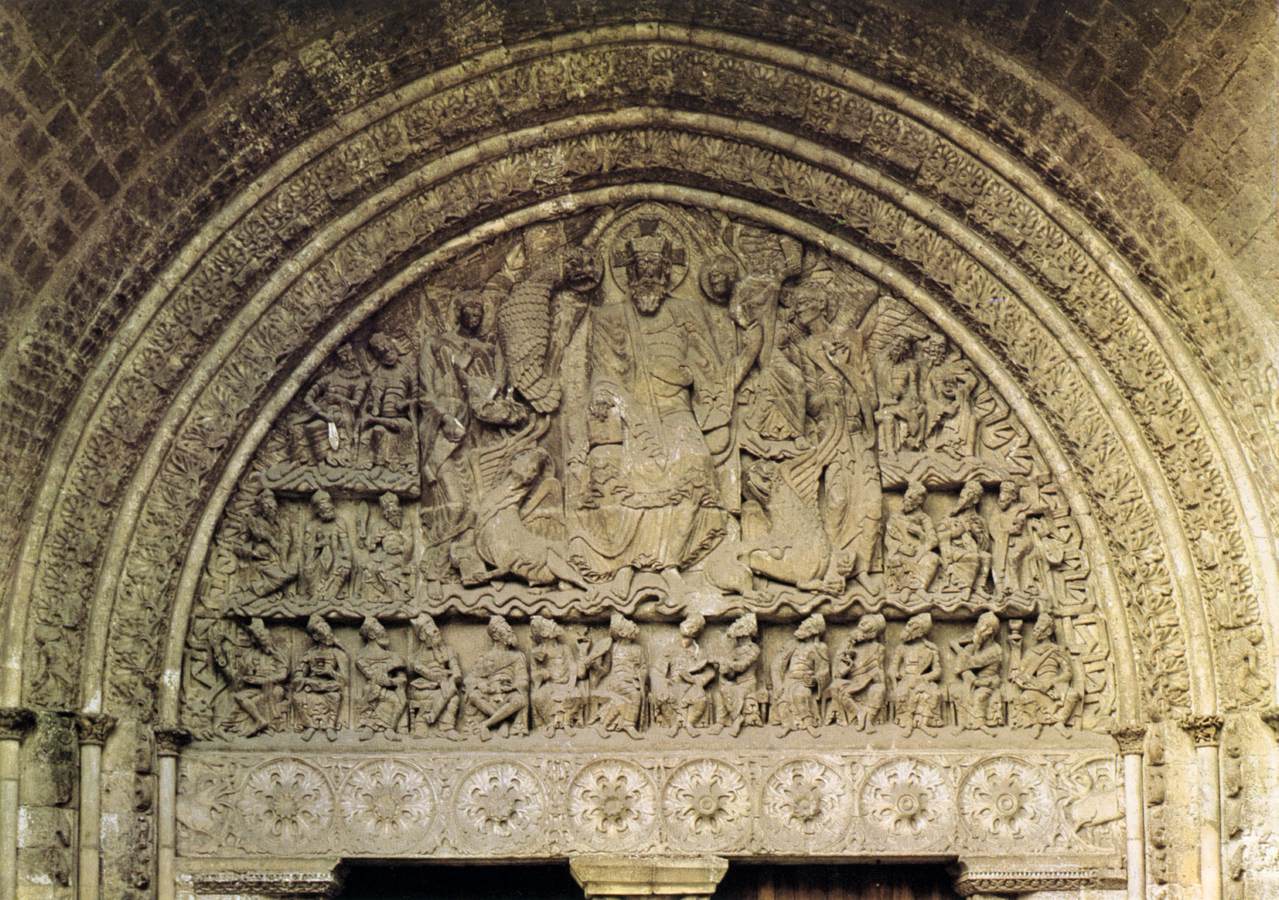
Saint Pierre, Moissac, Christ in Majesty, Romanesque
The tympanum of Saint Pierre at Moissac portrays Christ in Majesty, surrounded by the symbols of the Evangelists, emphasizing the divine authority of Christ as ruler and judge in Romanesque art.
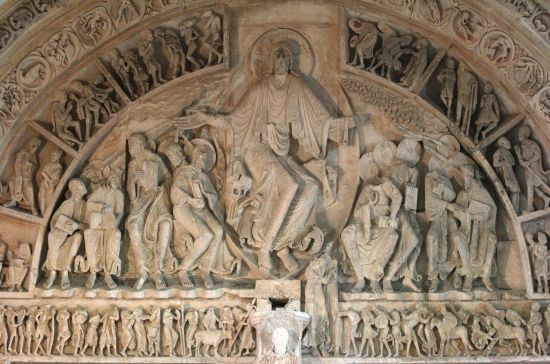
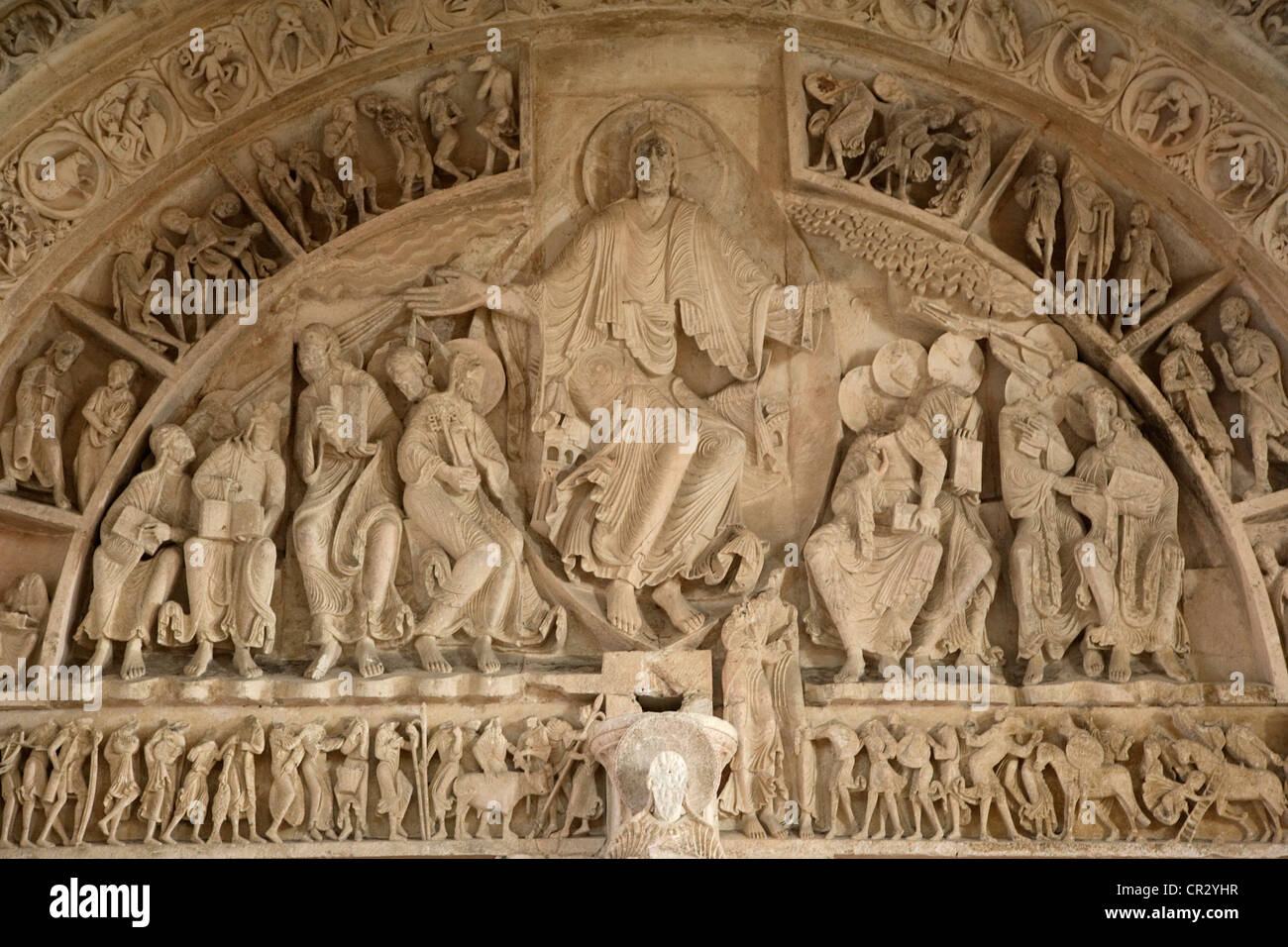
Ste.Madeleine, Vézeley, Mission of the Apostles, Romanesque
The tympanum of Ste. Madeleine at Vézeley illustrates the Mission of the Apostles, portraying Jesus sending his disciples to spread the Gospel, a significant theme in Romanesque art that emphasizes faith and evangelism.
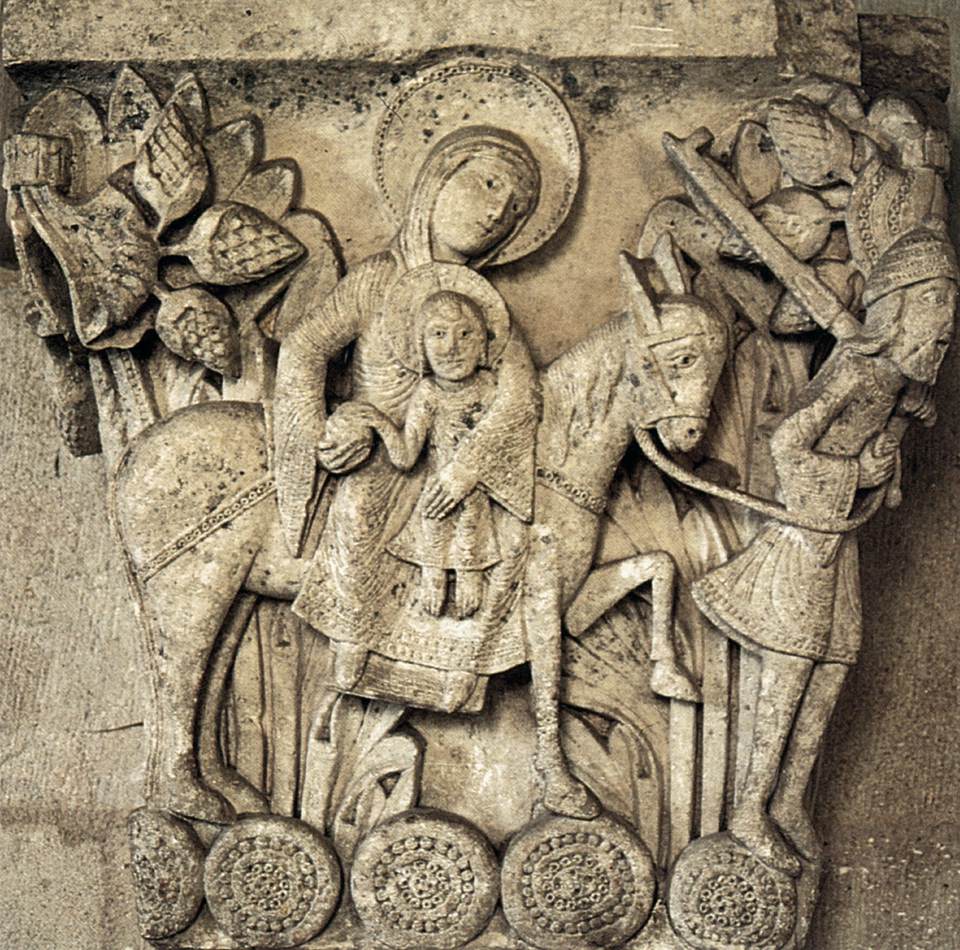
St. Lazare, Autun, Flight into Egypt capital, Romanesque
The capital of St. Lazare at Autun depicts the Flight into Egypt, showing the Holy Family escaping King Herod's massacre, a common theme in Romanesque art that represents divine protection and salvation.
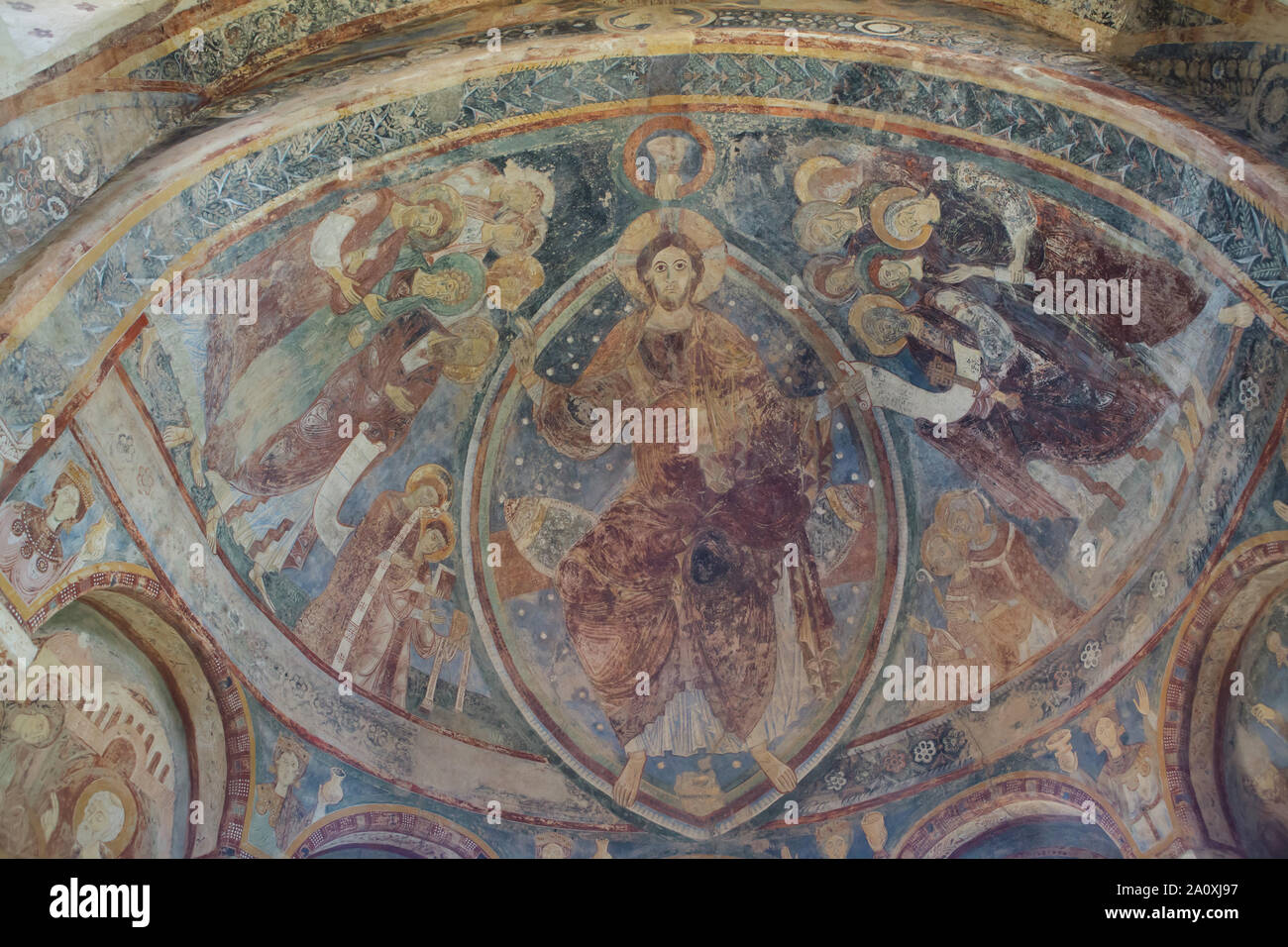
Berzé la Ville, Pentecost/Mission of the Apostles (Romanesque)
The tympanum of Berzé la Ville represents Pentecost, illustrating the Holy Spirit descending upon the Apostles, a crucial event in Christian history highlighting the empowerment of the Apostles to preach the Gospel in Romanesque art.
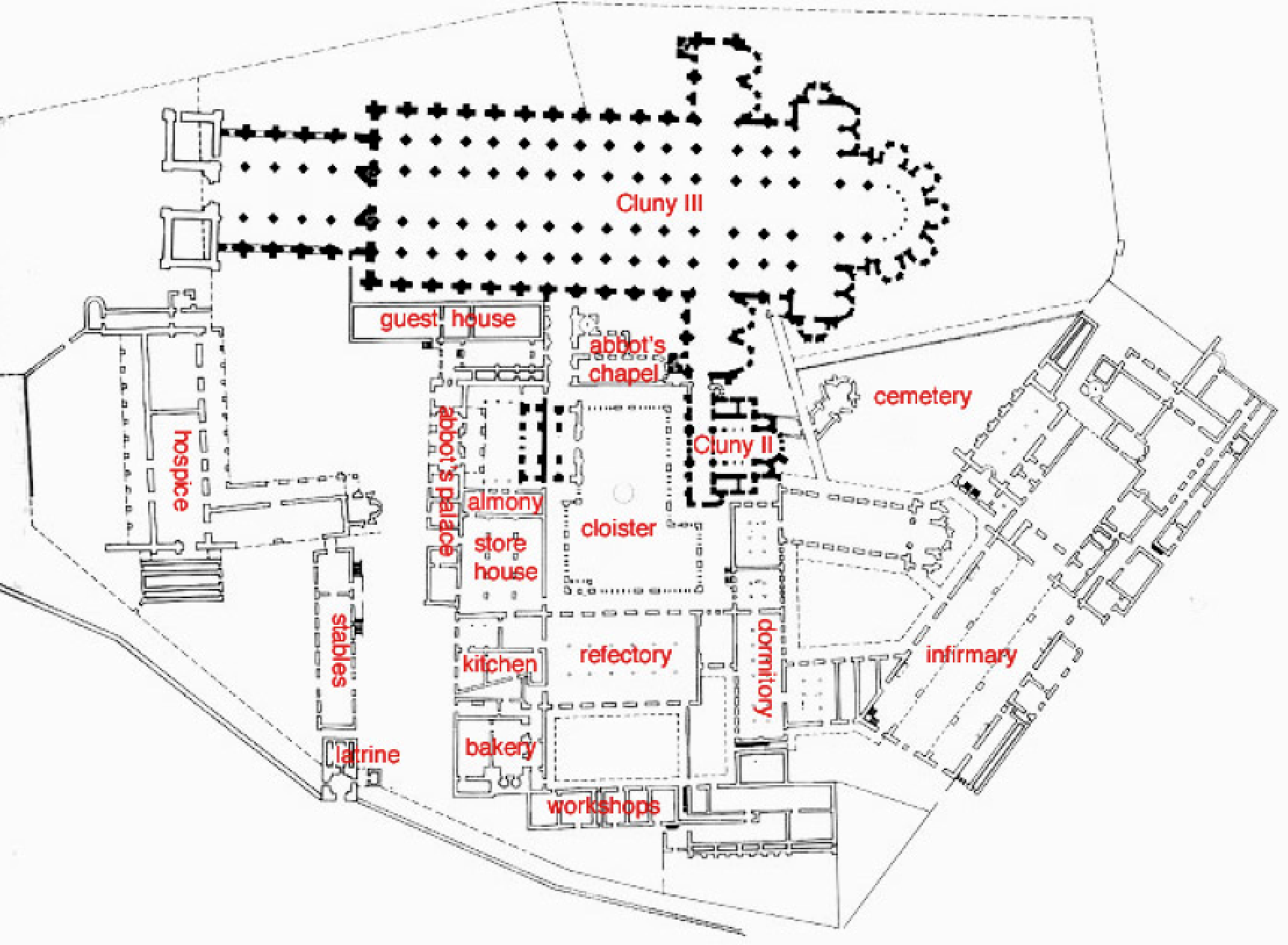
Plan of Cluny III (Romanesque)
A prominent monastery layout from the Romanesque period, Cluny III is noted for its large scale, advanced architectural design, and influence on monastic architecture, highlighting the era's emphasis on spirituality and communal life.
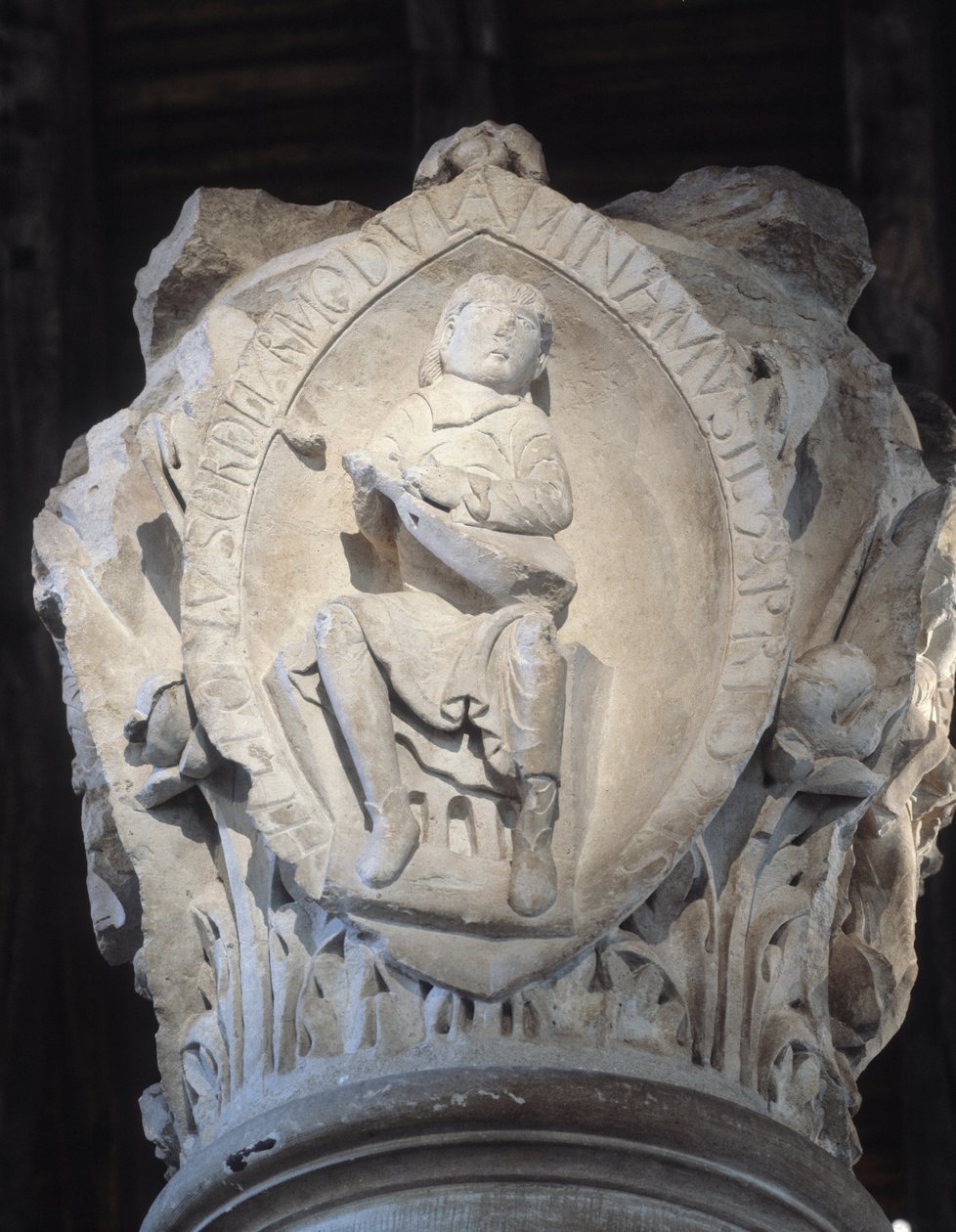
First tone of Plainsong capital, Cluny III (Romanesque)
The First tone of Plainsong capital at Cluny III features early examples of melodic chanting used in liturgical settings, reflecting the Romanesque period's focus on enhancing the worship experience through music.
What are the characteristics of Romanesque architecture?
Romanesque architecture is characterized by thick stone walls, round arches, ribbed vaults, large towers, and decorative arcading. It emphasizes solidity and grandeur, often reflecting the spiritual and communal aspects of medieval religious life.
Discuss the architecture and sculpture of pilgrimage churches
Pilgrimage churches from the Romanesque period are characterized by their grand scale, robust structure, and ornate sculptures, designed to accommodate large numbers of pilgrims while enhancing the spiritual experience through intricate details and symbolic imagery. They often featured rounded arches, thick walls, and decorative relief sculptures, reflecting the Romanesque style's emphasis on solidity and sacredness.
How does the shape of the church facilitate pilgrimage?
The shape of the church facilitates pilgrimage by often featuring a long nave and transept, creating a cross shape that directs worshippers towards the altar. This design not only accommodates large congregations but also enhances the spiritual journey, guiding pilgrims through a path of reverence and devotion. This architecture often includes radiating chapels and wide aisles, allowing for a smooth flow of traffic and enabling multiple services to occur simultaneously without disrupting the spiritual experience.
Discuss these tympana and the messages they offer to the viewer entering the church (Last Judgment, Christ in Majesty, Pentecost)
Tympana in Romanesque architecture often depict significant biblical scenes, such as the Last Judgment, Christ in Majesty, and Pentecost. These sculptures serve as visual narratives that convey theological messages, instructing and inspiring worshippers as they enter the church, emphasizing the importance of faith and the afterlife. They often feature detailed carvings that illustrate concepts of salvation, divine judgment, and the Holy Spirit's descent, providing a visual commentary on Christian beliefs.
Discuss these tympana and the messages they offer to the viewer entering the church (Last Judgment, Christ in Majesty, Pentecost)
Tympana in Romanesque churches serve as narrative relief sculptures that depict vital Christian themes, intended to educate and engage the viewer. They present theological concepts such as judgment, divinity, and the Holy Spirit, enriching the spiritual experience for worshippers upon entering. These sculpted tympana present intricate scenes that invite contemplation and reflection, enhancing the connection between the faithful and the divine messages portrayed.
How do reliquaries function?
Reliquaries function as containers for sacred relics, typically containing the remains of saints or objects associated with them. They serve to venerate the relics, facilitate public worship, and reinforce the spiritual connections between the faithful and the holy figures represented.
Discuss the differences in Cluniac and Cistercian church architecture and artistic productions
Cluniac and Cistercian churches represent distinct architectural styles and artistic expressions within medieval monasticism. Cluniac architecture is characterized by elaborate ornamentation and a focus on liturgical grandeur, while Cistercian designs emphasize simplicity, functionality, and a return to austerity, reflecting their commitment to a more austere spiritual life. Cistercian architecture typically features minimal decoration and an emphasis on light, promoting a tranquil atmosphere, contrasting with the richly adorned Cluniac structures that celebrate opulence and elaborate artistry.
Discuss narrative in painting and other works -- what kind of works are illustrated? How are they read?
Narrative in painting and other works encompasses storytelling through visual art, often illustrated in forms like frescoes, tapestry, and illuminated manuscripts. These works are read through composition, symbolism, and sequential imagery, guiding the viewer's understanding of the depicted events and themes. They convey historical, religious, or moral narratives that engage viewers.
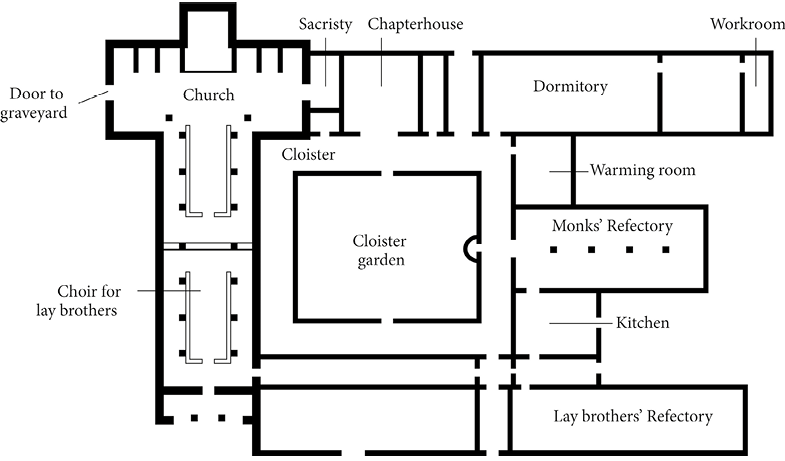
Plan of the ideal Cistercian Monastery (Romanesque)
The Plan of the ideal Cistercian Monastery illustrates the layout and design principles of Cistercian architecture, emphasizing simplicity, functionality, and integration with the natural landscape. It typically includes essential monastic elements like a church, cloister, and dormitory, promoting communal living and contemplation. It serves as a blueprint for monastic life, reflecting the Cistercian values of humility and spirituality.
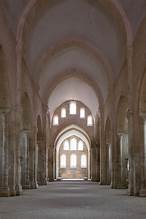
Abbey church, Fontenay (Romanesque)
The Abbey Church of Fontenay, a prime example of Romanesque architecture, showcases the Cistercian principles of simplicity and harmony with nature. Its design features a longitudinal layout, minimal decoration, and a focus on light, embodying the monastic ideals of contemplation and spirituality. Constructed in the 12th century, it is notable for its use of stone vaults and open spaces that enhance the spiritual atmosphere, reflecting the Cistercian commitment to a plain yet profound ecclesiastical setting.
Moralia in Job (Cistercian) (Romanesque)
A theological work attributed to Bernard of Clairvaux, the Moralia in Job explores the Book of Job's moral and spiritual lessons. It reflects Cistercian thought by emphasizing the themes of suffering, divine justice, and the pursuit of spiritual knowledge and humility.
Cluny Lectionary (Cluniac) (Romanesque)
A liturgical text used in the Cluniac Order, the Cluny Lectionary contains readings for Mass and other religious services, reflecting the centrality of worship and the importance of sacred texts in monastic life. Its ornate design and detailed illustrations exemplify the artistic characteristics of Romanesque manuscripts. The Cluny Lectionary serves as a key liturgical resource for the Cluniac Order, featuring carefully selected scripture readings for the Mass and various ceremonies. Its rich illustrations and decorations highlight the devotion to worship and artistry typical of Romanesque monastic culture.
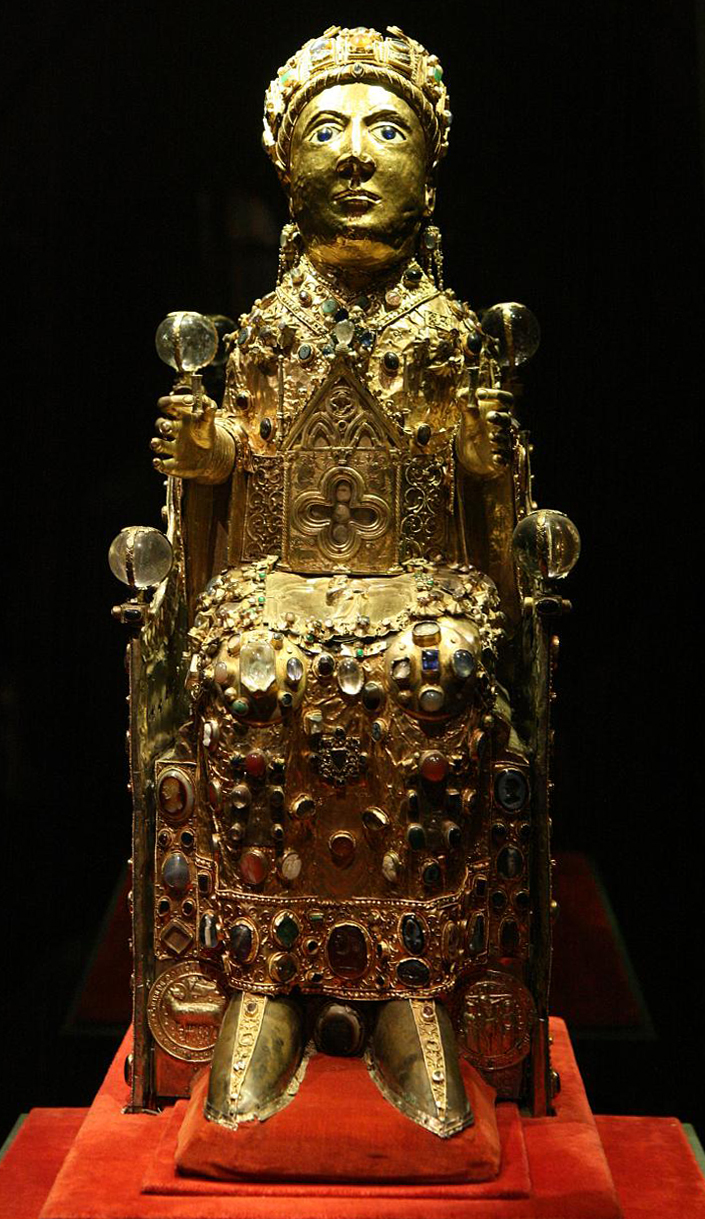
Reliquary of Ste. Foye (Romanesque)
A container for sacred relics, the Reliquary of Ste. Foye is an ornate work of art from the Romanesque period. It features intricate gold craftsmanship and gemstones, serving both a devotional purpose and as a significant symbol of faith in medieval Christian worship. This reliquary is designed to hold the remains of Saint Foy, a young martyr, and is notable for its historical significance and the pilgrims it attracted to the abbey.
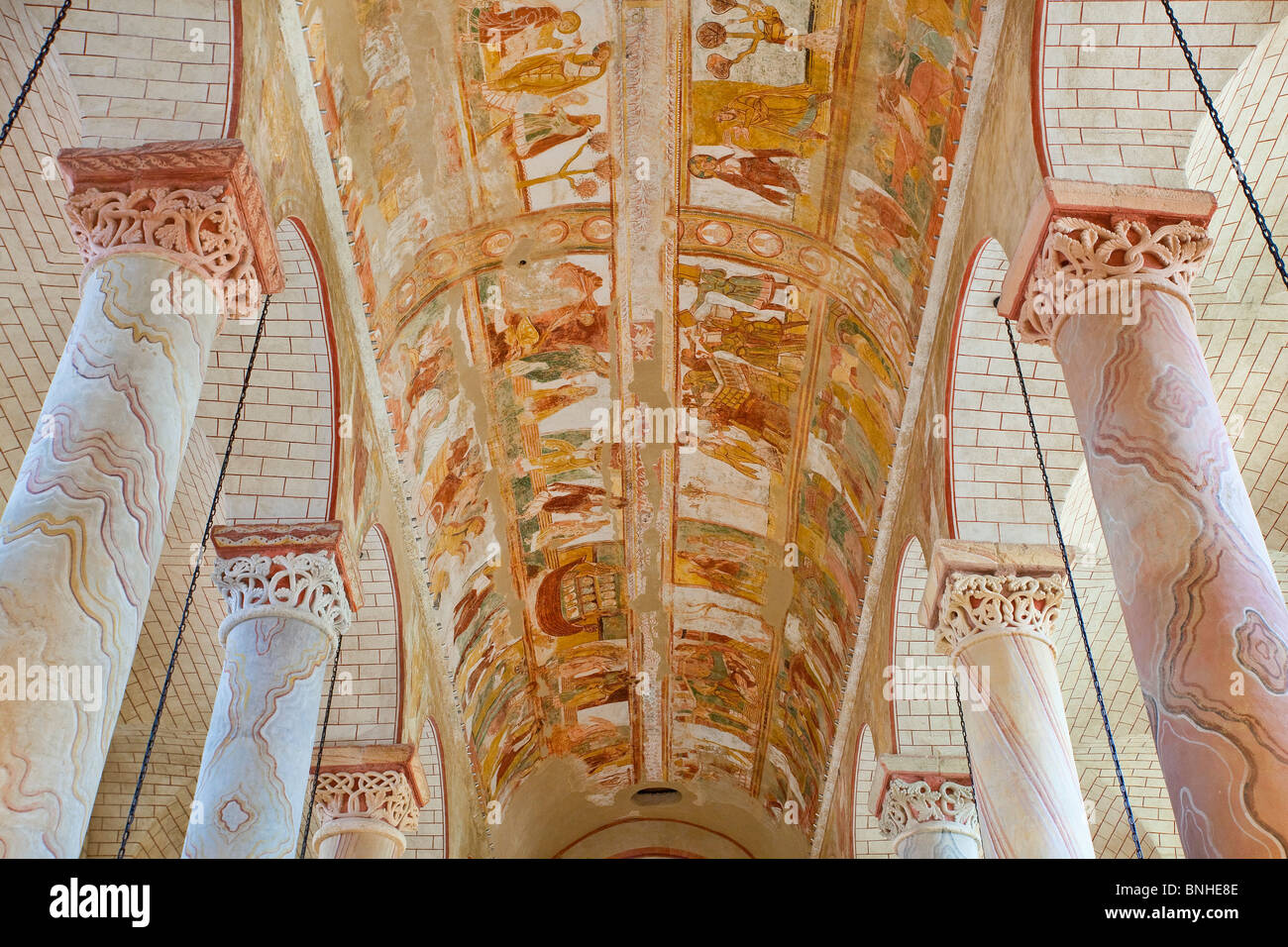
St. Savin -dur -Gartempe (Romanesque
A Romanesque church located in France, St. Savin-sur-Gartempe is renowned for its remarkable frescoes and vaulted ceilings. It exemplifies the architectural and artistic style of the period, serving both liturgical purposes and as a site for pilgrimage. Its intricate decorations and atmospheric lighting enhance its spiritual ambiance, reflecting the ideals of the Romanesque era.
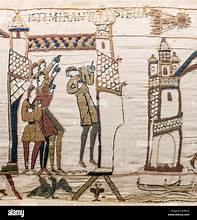
Bayeux Embroidery (Romanesque)
A monumental embroidered tapestry depicting the events leading up to the Norman conquest of England in 1066. The Bayeux Embroidery serves as both a historical record and a work of art, showcasing the craftsmanship and narrative style characteristic of the Romanesque period. The Bayeux Embroidery is a detailed narrative tapestry embroidered in wool that illustrates the story of the Norman Conquest. Spanning nearly 70 meters, it features over 600 figures and is notable for its vivid imagery and historical significance.
Characteristics of Churches on Pilgrimage Route to Santiago de Compostela:
1. Cruciform plan (Latin cross) 2. Aisle around apse (ambulatory) 3. Apsidioles (with altars and relics) 4. Barrel vault in nave/cross (groin) vaults in side aisles 5. Cruciform or compound piers 6. Variety of towers 7. No clerestory 8. Sculpture is subordinated to architecture
Thick walls for support 10. Round arches and decorative arcading 11. Large, sturdy structure for durability
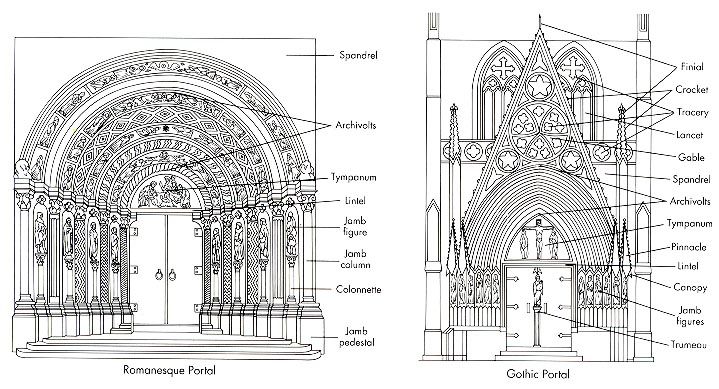
Label the parts of the porta
Archivolts Voussoirs Tympanum Trumeau Lintel Jambs
Christ in Majesty, Saint Pierre, Moissac
A prominent Romanesque sculpture depicting Christ seated in glory, often framed by angels and saints, located in the church of Saint Pierre in Moissac, France. This work is notable for its detailed iconography and elaborate drapery, characteristic of the period. The sculpture illustrates Christ surrounded by the symbols of the Four Evangelists, emphasizing His divine authority and the importance of the Gospel.
Central Tympanum: Pentecost and Mission of the Apostles, Sainte Madeleine, Vézelay
A Romanesque relief sculpture depicting the descent of the Holy Spirit upon the Apostles, symbolizing the birth of the Church, located above the main entrance of the Sainte Madeleine in Vézelay, France.
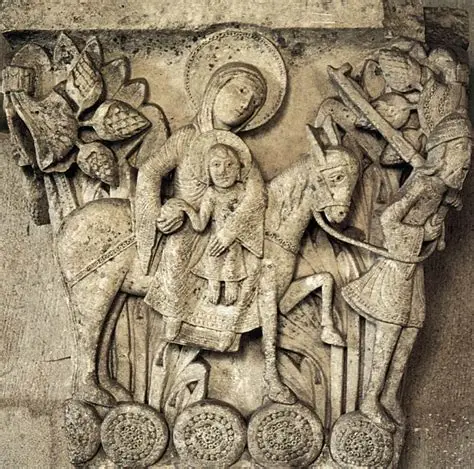
Autun Cathedral: Flight into Egypt capital, c. 1125
A Romanesque sculptural capital depicting the biblical scene of the Flight into Egypt, located in Autun Cathedral, France. This artwork is noted for its intricate carvings and narrative storytelling. It illustrates the Holy Family's escape from King Herod's decree, capturing the emotional expressions and dynamic movement characteristic of Romanesque art.

