Bug Lab Exam #2
 Studied by 0 people
 Call Kai
 Learn
Learn Practice Test
 Spaced Repetition
 Match
Match Flashcards
 Knowt Play
1/201

There's no tags or description
Looks like no tags are added yet.
Name | Mastery | Learn | Test | Matching | Spaced | Call with Kai |
|---|
No analytics yet
Send a link to your students to track their progress
202 Terms
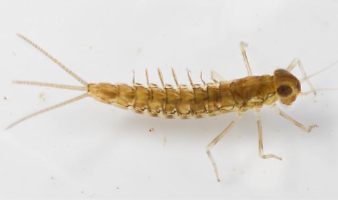
Order Ephemeroptera naiads
Mayflies
Chewing mouthparts
Tarsi 1-segmented; pretarsus bearing one claw
Gills plate-like or “feathery”, dorsolaterally along abdomen
Usually with well-developed caudal cerci, also commonly with median caudal filament
Swim like a dolphin
Ephemeroptera (Naiad)
Name the order
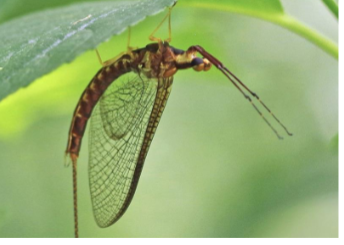
Order Ephemeroptera Adults
Mayflies
Vestigial mouthparts
Adults usually with 2 pairs of subtriangular wings; mesothoracic wings much larger than metathoracic wings (can be reduced or lacking)
Wings usually held upright together when not in use
Usually with well-developed caudal cerci, also commonly with median caudal filament
ID to family mostly based on wing venation
Ephemeroptera (adults)
Name the order
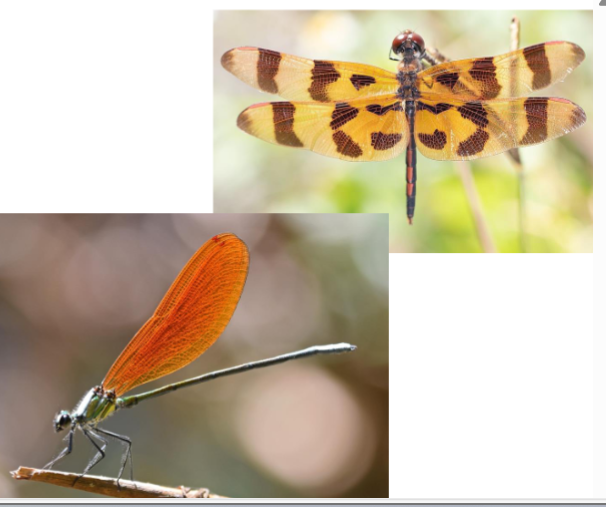
Order Odonata (naiads and adults)
Dragonflies and damselflies
Chewing mouthparts; labium of naiads highly modified, extensible
Adults with 2 pairs of elongate, membranous wings; flight musculature direct
Compound eyes large, well-developed
Includes Suborders Anisoptera (dragonflies) and Zygoptera (damselflies)
Odonata
Name the order
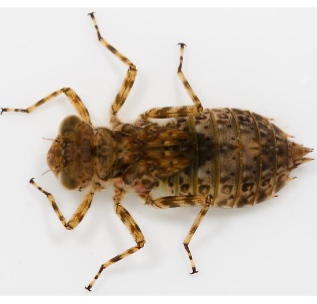
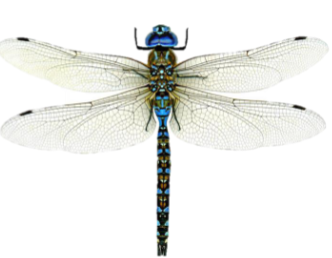
Suborder Anisoptera
Dragonflies
Naiads lack tracheal gills; gas exchange assisted by heavily tracheated rectum
Naiads swim by jet propulsion via rectal constriction
Wing of adults extend outstretched when not in use
Mesothoracic wings considerably narrower than metathoracic wings near base
Wing bases broad
*Need to sight ID both adults and naiads
Anisoptera (naiad)
Name the suborder
Anisoptera (adults)
Name the suborder
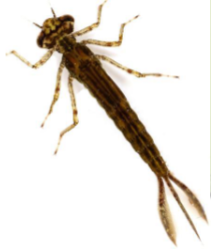
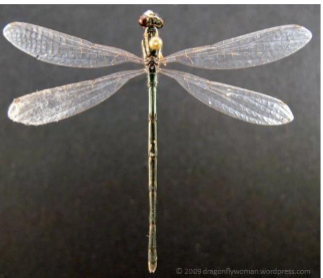
Suborder Zygoptera
damselflies
Naiads possess leaf-like tracheal gills
Naiads swim by fish-like undulations
Wings of adults usually held upright over dorsum when not in use
Mesothoracic and metathoracic wings of similar size and shape
*Need to sight ID both adults and naiads
Zygoptera (naiad)
Name the suborder
Zygoptera (adults)
Name the suborder
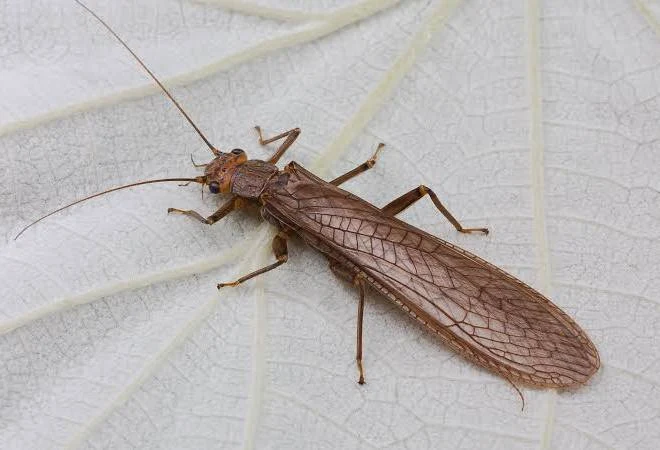
Order Plecoptera
Stoneflies
Two pairs of membranous wings; mesothoracic pair elongate and those of metathorax much wider, with pleated folds and expanded anal region
Abdomen commonly bearing 2 well-developed cerci
Gills (naiad) commonly consisting of tufts of papillae, associated primarily with ventral aspect of thorax and perhaps abdomen
Tarsi 3-segmented; pretarsus being 2 claws
*Be able to sight ID adults and naiads
Plecoptera (naiad)
Name the order
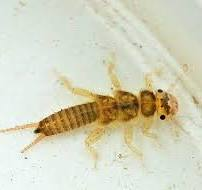
Plecoptera (adult)
Name the order
Order Embiodea
webspinners
Males usually with 2 pairs of membranous wings; females apterous
Tarsi 3-segmented
First tarsomere of prothoracic legs conspicuously swollen, modified for silk production
Cerci present
*NO PHYSICAL SPECIMEN - photo only
Embiodea
Name the order
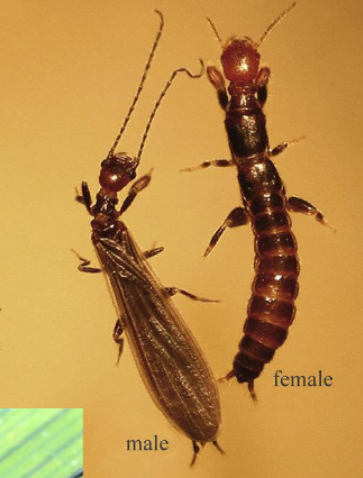
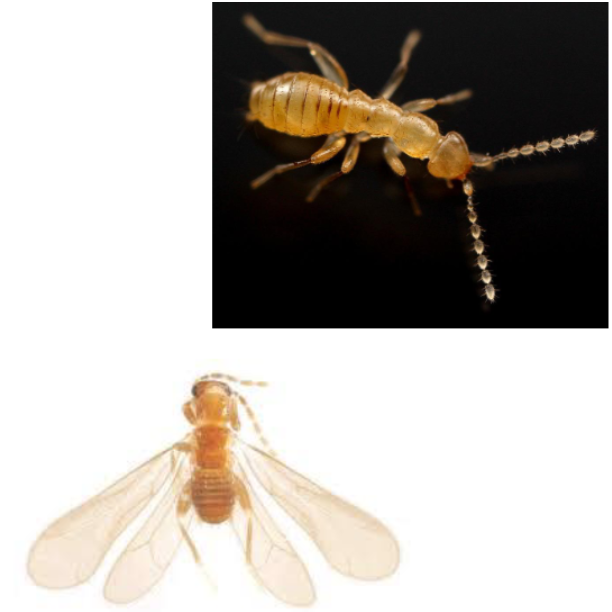
Order Zoraptera
Two pairs of membranous wings, or wingless
Compound eyes and ocelli present or not
Legs ambulatorial; tarsi 2-segmented
Cerci present
*NO PHYSICAL SPECIMEN - photo only
Zoraptera
Name the order
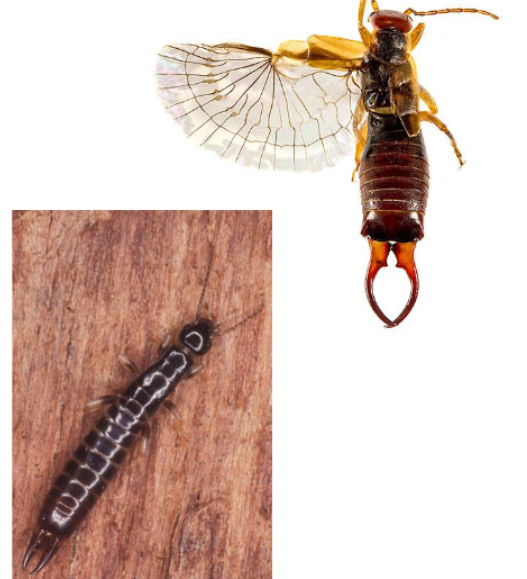
Order Dermaptera
earwigs
Two pairs of wings with those of mesothorax short and heavily sclerotized (elytra; singular elytron); metathoracic wings broad, semicircular, membranous and folded fan-like beneath elytra, or wingless
Abdomen with large, heavily sclerotized, unsegmented, forceps-like cerci
Dermaptera
Name the order
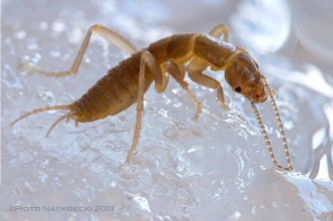
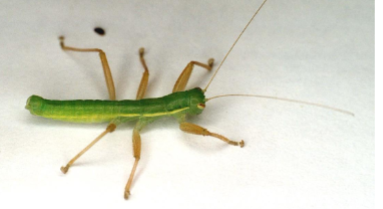
Order Notoptera
Grylloblattodea (ice or rock crawlers) and Mantaphasmatodea (gladiators, heel-walkers)
Wingless
Compound eyes strongly reduced or absent
Legs elongate, ambulatorial; tarsi 5-segmented
Abdomen bearing 8- or 9- segmented cerci
Notoptera (Grylloblattodea)
Name the Order
Notoptera (Mantophasmatodea)
Name the order
Order Orthoptera
Grasshoppers, crickets
Commonly 2 pairs of wing; mesothoracic wings somewhat leathery; metathoracic wings membranous with pleated folds, or wingless
Antennae typically elongate, filiform
Metathoracic legs usually saltatorial; all tarsi 3- or 4-segmented
Auditory organs often present
Pronotum enlarged, extends down sides of thorax, obscuring or reducing propleuron
Includes Families Acrididae, Tettigoniidae, and Gryllidae
Orthoptera
Name the order
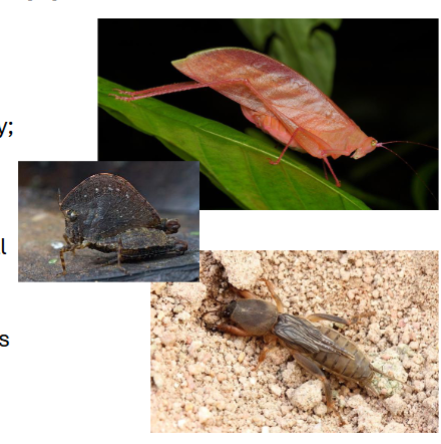
Family Acrididae
short-horned grasshoppers
Antennae about ½ as long as body, shorter
Tarsi 3-segmented
Ovipositor short
Auditory organs on first abdominal segment
Acrididae
name the family
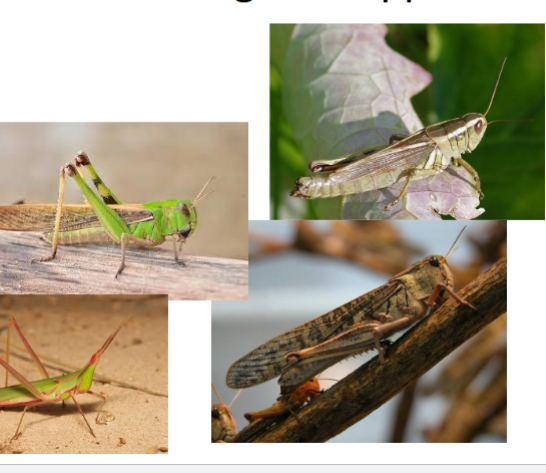
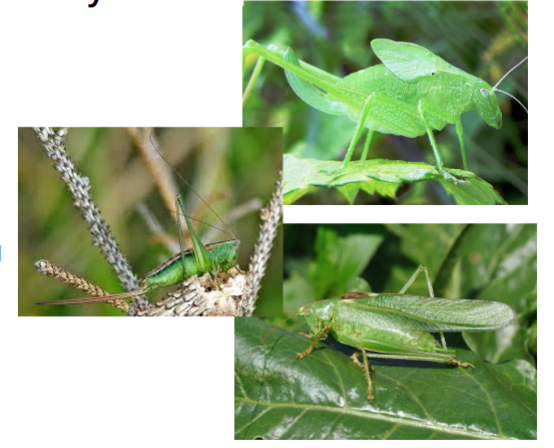
Family Tettigoniidae
Katydids
Antennae usually as long as body, or longer
Mesothoracic tarsi 4-segmented (usually also for other tarsi)
Ovipositor elongate; flattened and blade-like
Auditory organs located proximally on tibiae of prothoracic legs
Tettigoniidae
name the family
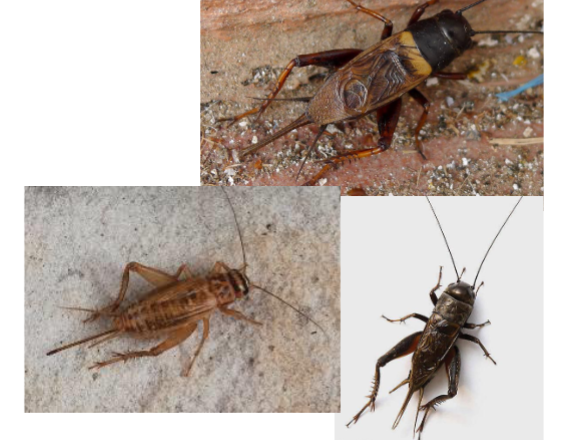
Family Gryllidae
Crickets
Antennae usually as long as body, or longer
Tarsi 3-segmented
Ovipositor elongate; cylindrical and needle-like
Auditory organs located proximally on tibiae of prothoracic legs
Gryllidae
Name the family
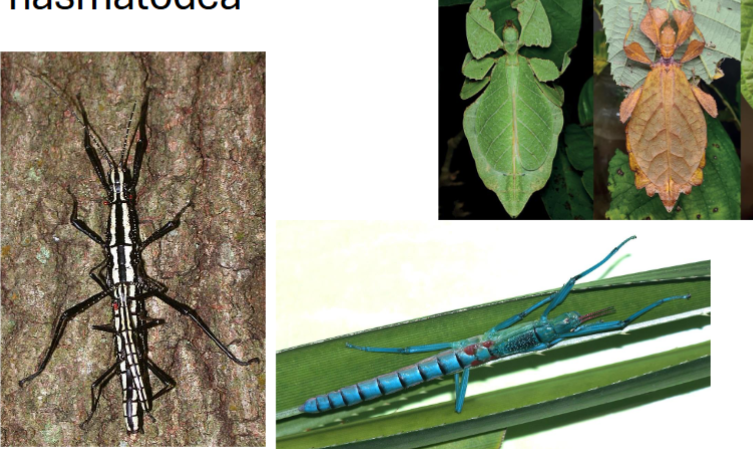
Order Phasmatodea
Walking sticks
2 pairs of wings with those of mesothorax narrow, leathery; metathoracic wings broad, leathery only near anterior margin, or wingless
Legs elongate, ambulatorial
Body mimics vegetation: stick-like, some leaf-like (North American species wingless, stick-like)
Phasmatodea
Name the order
Order Blattodea
Cockroaches and Termites
Commonly 2 pairs of wings; mesothoracic pair somewhat leathery, those of metathorax membranous with pleated folds; some with wings reduced; some wingless
Body ovate, somewhat dorsoventrally flattened
Legs cursorial with 5-segmented tarsi
Includes Clade Isoptera
Blattodea
Name the order
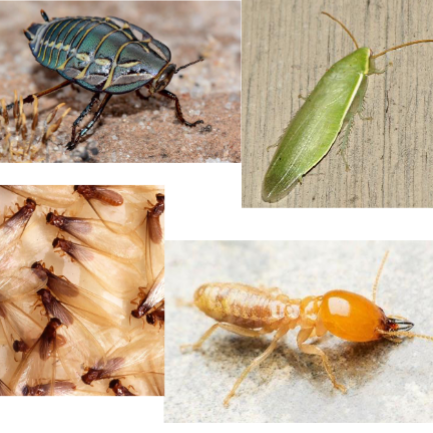
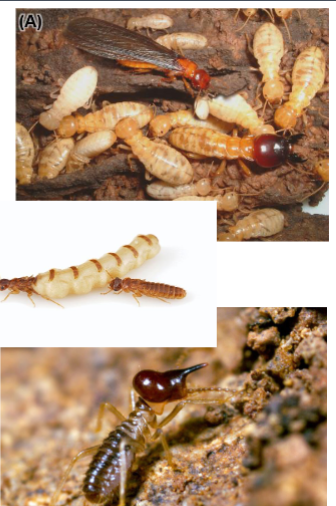
Clade Isoptera
termites
Antennae of moderate length, filiform to moniliform
Reproductive adults with 2 pairs of elongate, similarly shaped, membranous wings, or wingless
Compound eyes present or not
Legs ambulatorial, usually with 3- or 4- segmented tarsi
Generally small, soft-bodied insects
Caste system with morphological specialization related to colonial functions
Isoptera
Name the clade
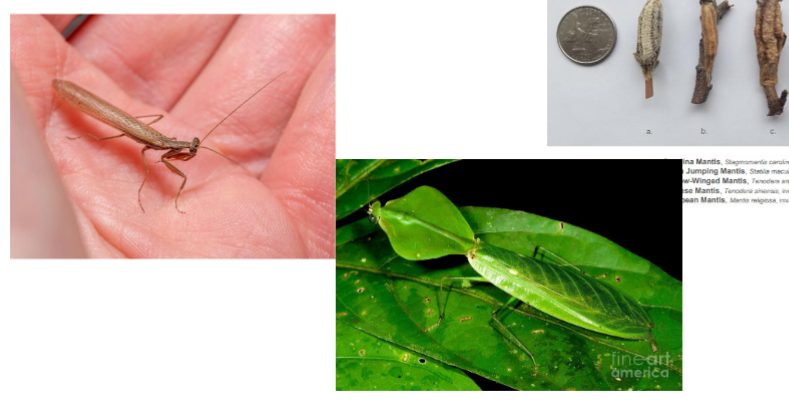
Order Mantodea
Praying mantises
Commonly 2 pairs of wings; those of mesothorax somewhat leathery, especially near anterior margin; metathoracic wings membranous with pleated folds
Head triangular with large compound eyes
Prothoracic legs raptorial; all tarsi 5-segmented
Mantodea
Name the order
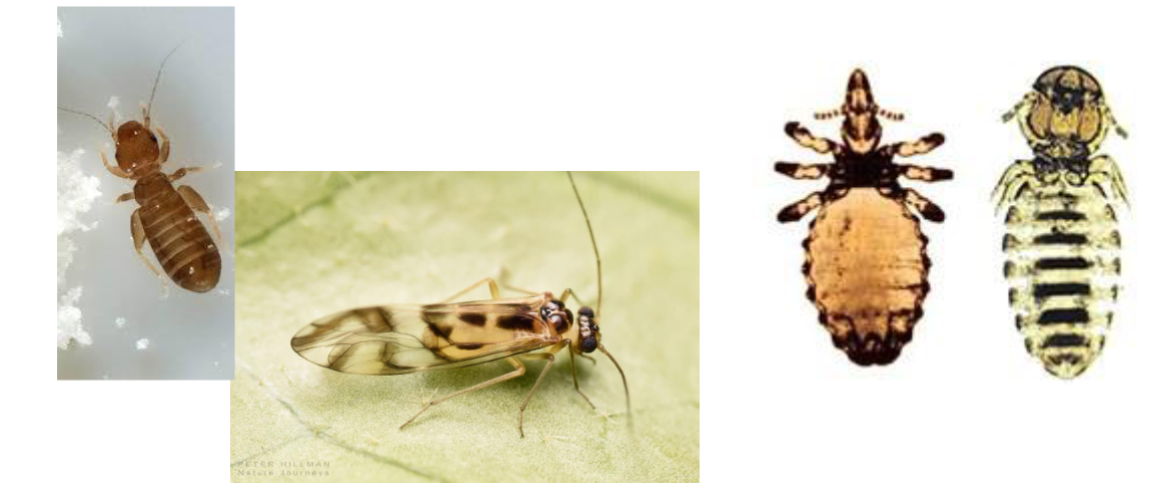
Order Psocodea
booklice, bark lice, true lice
Booklice and bark lice characteristics:
Chewing mouthparts; labial silk gland
Antennae elongate, filamentous
Two pairs of membranous wings; forewings larger than hindwings, held roof-like, or wingless
Commonly minute, soft-bodied insects
Head swollen clypeal region
Lice, chewing lice, sucking lice characteristics: (Amblycera, Ichoncera, Anoplura)
Wingless
Compound eyes reduced or absent; ocelli lacking
Antennae strongly reduced
Dorsoventrally flattened
Biology: Ectoparasites on birds and mammals, Tarsi modified to grasp feathers/hair, Host- and body-region specific
Psocodea
Name the order
Suborder Amblycera
Chewing lice, bird lice
Head usually broader than prothorax
Antennae 4-segmented, capitate
Head grooved to receive antennae
Maxillary palpi present
Chewing mouthparts with mandibles horizontal
Biology: Mostly ectoparasites of birds, 2 sp. on guinea pigs
Amblycera
Name the suborder
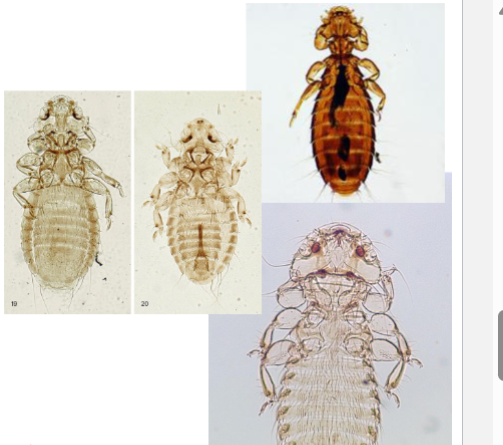
Suborder Ischnocera
Chewing lice, bird lice
Head usually broader than prothorax
Antennae 3-5 segmented, filiform
Head without antennal grooves
Maxillary palpi absent
Chewing mouthparts with mandibles vertical
Biology: 2 families, 1 bird hosts, 1 placental mammals (excluding humans) hosts
Ischnocera
name the suborder
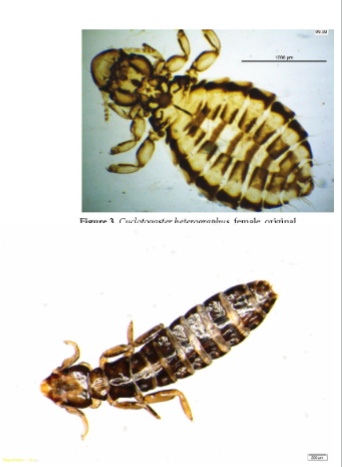
Suborder Anoplura
Sucking lice
Head narrow, usually much narrower than width of prothorax
Sucking mouthparts
Biology: Ectoparasites of mammals (including humans)
Anoplura
Name the suborder
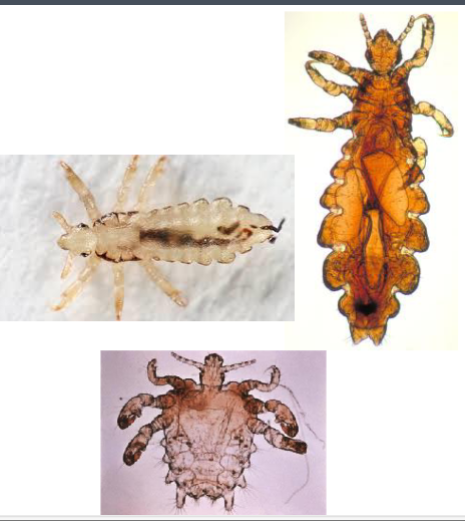
Order Hemiptera
True bugs
Sucking mouthparts
Compound eyes usually well-developed; ocelli present or not
2 pairs of wings, or wingless; rarely 1 pair of wings; wings may be reduced (brachypterous), especially in aquatic species
Hemiptera
Name the order
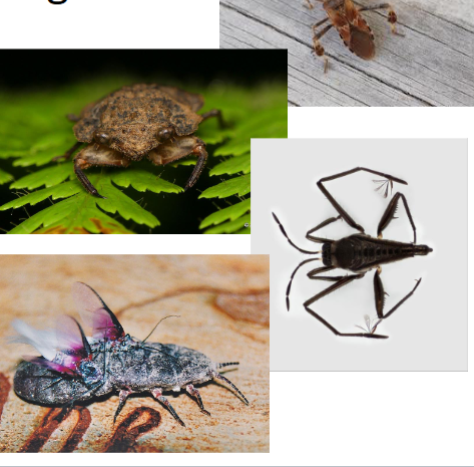
Suborder Sternorrhyncha
Aphids, scales, etc.
Beak originates from posteroventral region of head
Mesothoracic wings of same texture throughout
Wings, when present, often held somewhat roof-like over body when not in use
Antennae typically elongate and filiform
Includes Superfamilies Aphidoidea and Coccoidea
Sternorryncha
Name the suborder
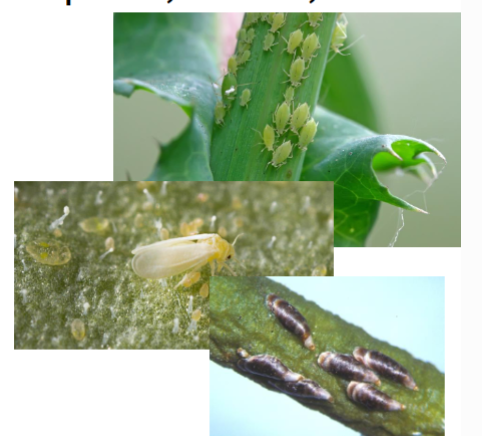
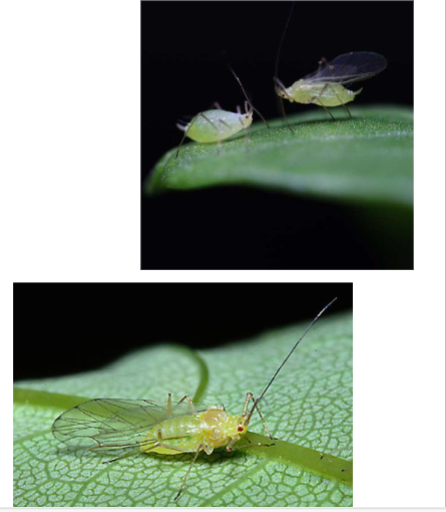
Superfamily Aphidoidea
Aphids
Antennae usually elongate, filiform
Abdomen usually bearing paired, tube-like cornicles, near the posterior end
Body often widened posteriorly, pear-shaped
Aphidoidea
Name the superfamily
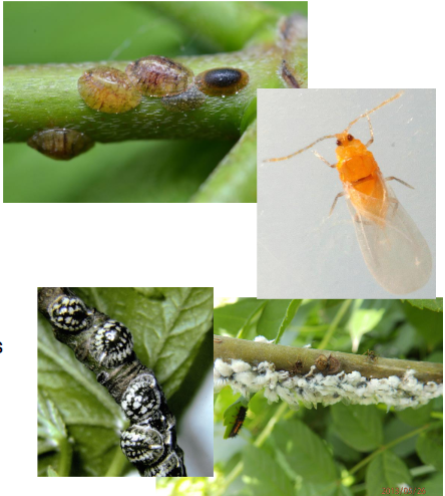
Superfamily Coccoidea
Scale insects
Small insects (1-5mm) under wax covers, mealy wax, or shiny, pearl-like objects
Females pear-shaped, elliptical, or circular with no wings, sometimes legs absent, no compound eyes, sometimes ocelli
Males have typical head-thorax-abdomen, slender, resembling aphids, most have wings
Coccoidea
Name the superfamily
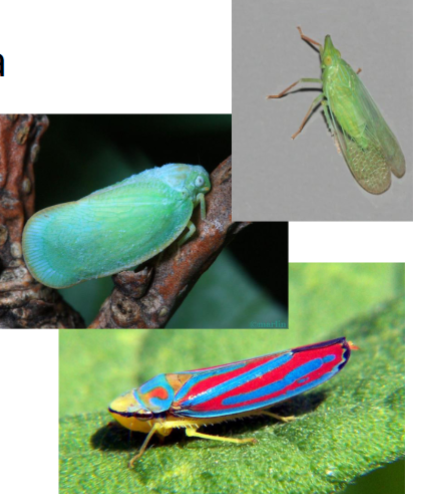
Suborder Auchenorryncha
‘hoppers
Beak originates from posteroventral region of head, seemingly between coxae of prothoracic legs in many species
Mesothoracic wings of same texture throughout (typically membranous as are those of metathorax)
Wings usually held somewhat roof-like
Antennae usually setaceous
Includes Families Cicadidae, Cicadellidae, Aphrophoridae, and Membracidae
Auchenorrhyncha
Name the suborder
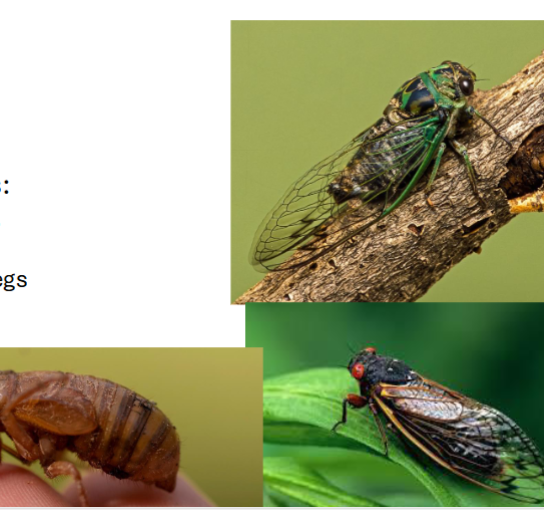
Family Cicadidae
Cicadas
Antennae short, setaceous
Prothoracic femora greatly enlarged relative to other legs
Large insects, usually 1-2 inches long
Cicadidae
Name the family
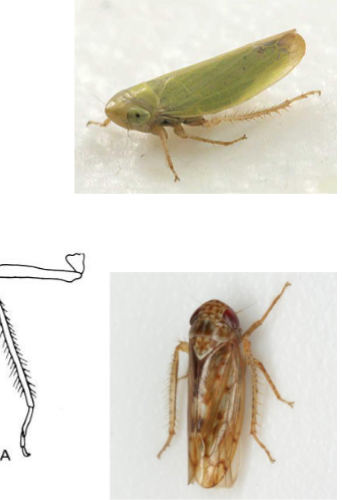
Family Cicadellidae
Leafhoppers
Antennae short, setaceous
Prothoracic femora not enlarged
One or more rows of small, slender spines along metathoracic tibiae
Cicadellidae
Name the family
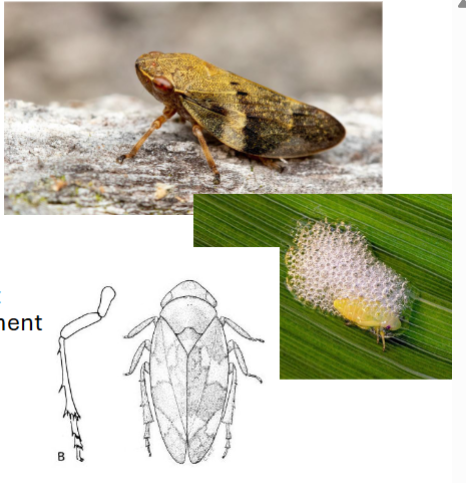
Family Aphrophoridae
Spittlebugs, froghoppers
Antennae short, setaceous
Prothoracic femora not elongated
Metathoracic tibia bearing a few stout spines along their length and a prominent crown or circlet of spines at the apex
Aphrophoridae
Name the family
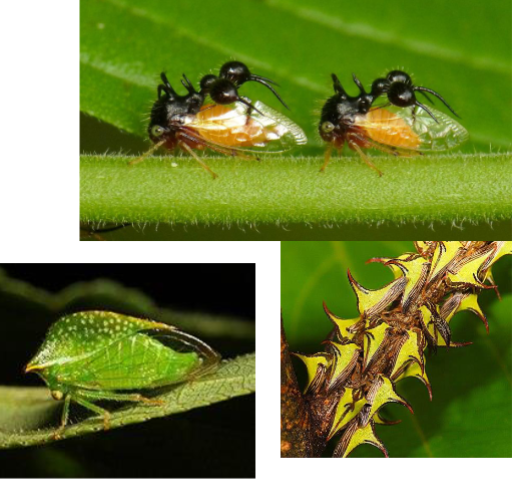
Family Membracidae
Treehoppers, thorn bugs
Antennae short, setaceous
Prothoracic femora not elongated
Pronotum enlarged, often ornate, used for camouflage or mimicry
Membracidae
Name the family
Suborder Heteroptera
true bugs, bugs
Beak originated from anteroventral region of head
Short, stout, 3 segments = predator
Elongate, 3 segments = phytophagous
Mesothoracic wings with basal portion leathery and distal region membranous (referred to as hemelytra)
Wings typically overlapping and folded flat over dorsum when not in use
Antennae usually elongate, filiform (terrestrial), or short and concealed (aquatic)
Includes Families Corixidae, Notonectidae, Belostomatidae, Nepidae, Gerridae, Miridae, Reduviidae, Coreidae, Pentatomidae, and Superfamily Lygaeoidea
Heteroptera
Name the suborder
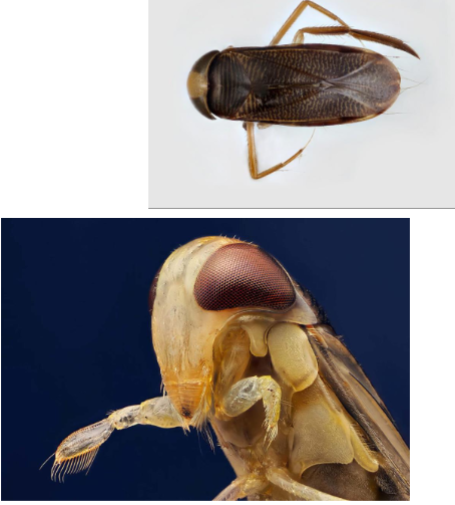
Family Corixidae
Water boatmen
Antennae short, usually concealed along ventral surface of head
Prothoracic tarsi oar- or scoop- like, lacking terminal claw, metathoracic tarsi also lack claws
Beak broad, unsegmented
Corixidae
Name the family
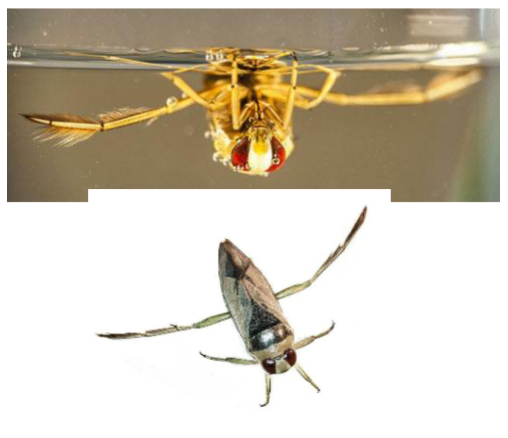
Family Notonectidae
Backswimmers
Antennae short, usually concealed in grooves of head
Metathoracic tarsi lacking claws, prothoracic tarsi with terminal claws
Beak short, stout; well-developed
Dorsal convex - dorsal keel
Notonectidae
Name the family
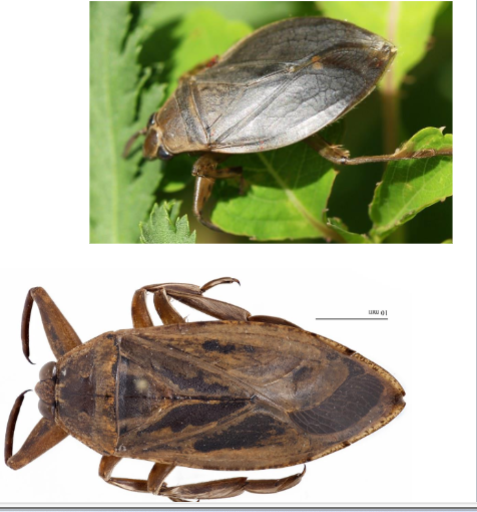
Family Belostomatidae
Giant water bugs
Prothoracic legs conspicuously raptorial
Mesothoracic and metathoracic legs natatorial, with fringes of setae
Body elongate, oval, somewhat flattened
Shorter, retractable breathing tubes
Belostomatidae
Name the family
Family Nepidae
Water scorpions
Raptorial forelegs
Caudal siphon long, not retractable
Nepidae
Name the family
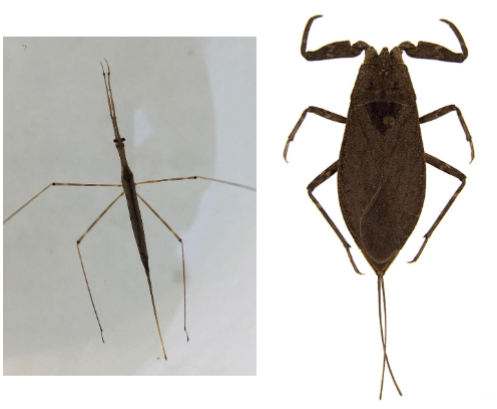
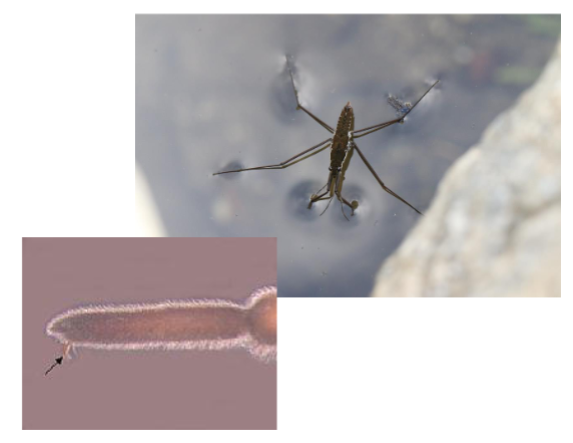
Family Gerridae
Water striders
Antennae usually longer than head, exposed
Preapical tarsal claws
Slender, elongate body and legs
Gerridae
Name the family
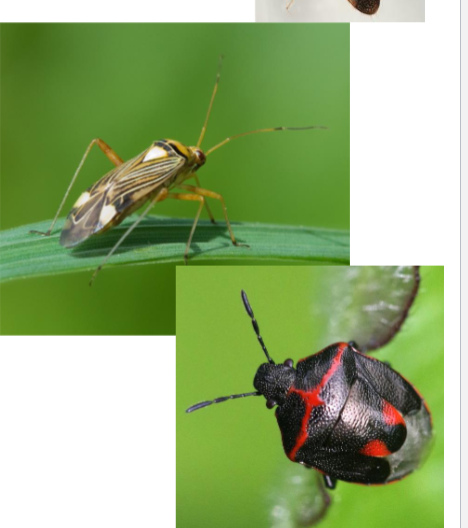
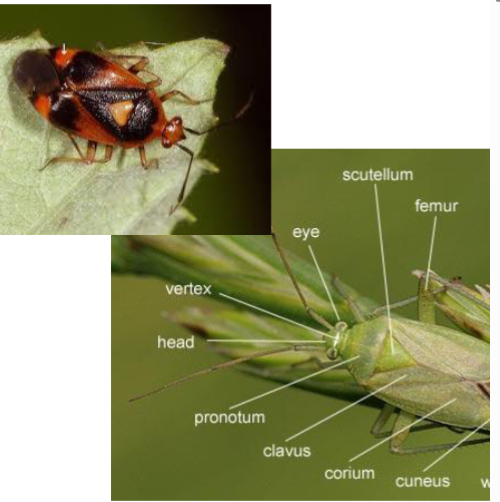
Family Miridae
Plant bugs, mirids
Basal portion of hemelytron possessing a cuneus
Membrane of hemelytra normally with 1-2 closed basal cells
Miridae
Name the family
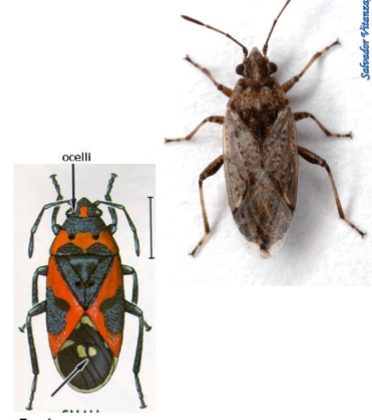
Superfamily Lygaeoidea
Seed bugs
Beak 4-segmented
Prothoracic legs often somewhat raptorial
Membrane of hemelytra containing 4-6 longitudinal veins
Lygaeoidea
Name the superfamily
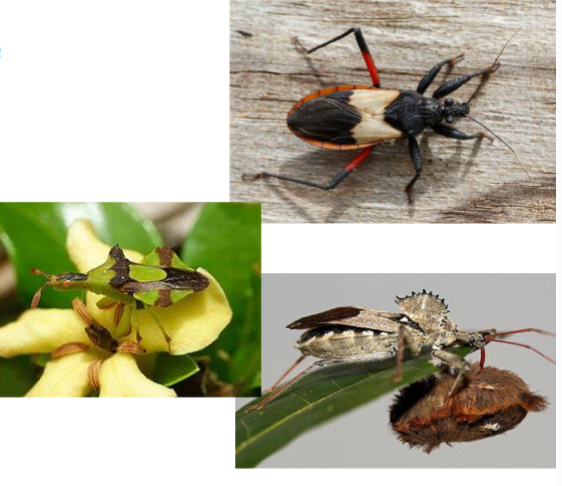
Family Reduviidae
Assassin bugs
Head narrower than prothorax
Curved beak (rostrum) that folds into prosternum
Beak 3-segmented
Reduviidae
Name the family
Family Coreidae
Leaf-footed bugs
Membrane of hemelytra possessing numerous veins
Head much narrower than pronotum
Tibiae of metathoracic legs sometimes dilated and “leaf-like”
Coreidae
Name the family
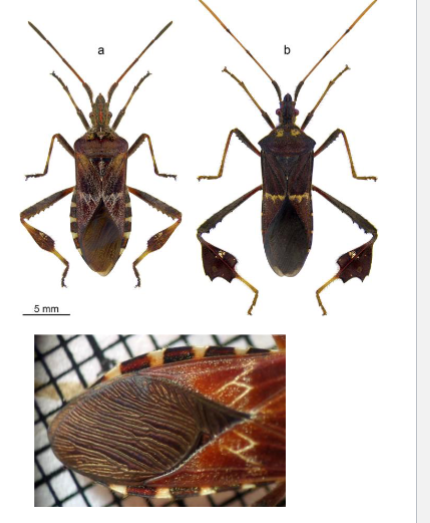
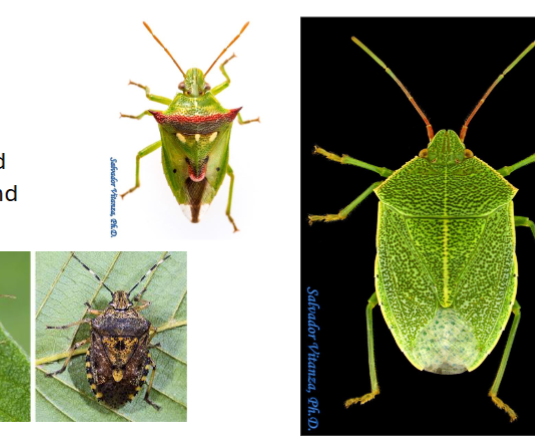
Family Pentatomidae
Stink bugs
Antennae 5-segmented
Scutellum very large and conspicuous
Pentatomidae
Name the family
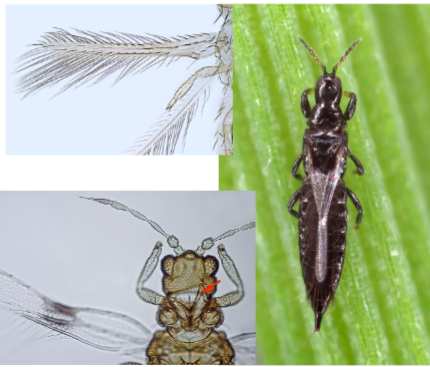
Order Thysanoptera
thrips (singular/plural)
Diagnostic Characteristics:
Eyes prominent, raspberry-like
Asymmetrical, rasping-sucking mouthparts; left mandible present, right usually lacking
Two pairs of long, stalk-like wings fringed with long setae, or wingless
Minute in size, usually 3mm or less
Order Thysanoptera
Name the Order
Clade (Superorder) Endopterygota
=holometabola
Diagnostic characteristics:
Larvae rarely resemble adults either in body form or ecological specilization
In general, larvae specialized for reproduction
Larvae and adults bridged by pupal stage = holometabolous
Includes Orders:
Coleoptera (beetles)
Hymenoptera (ants, bees, wasps)
Lepidoptera (butterflies, moths)
Diptera (flies)
Trichoptera (caddisflies)
Megaloptera (alderflies)
Neuroptera (lacewings)
Mecoptera (scorpionflies)
Siphonaptera (fleas)
Raphidioptera (snakeflies)
Strepsiptera (twisted-wing parasites)
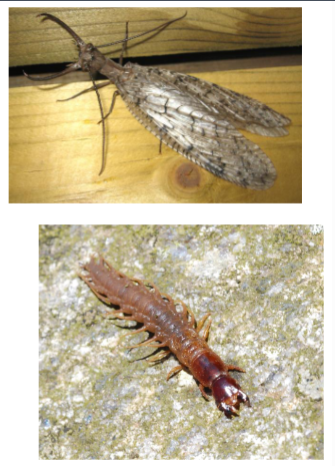
Order Megaloptera
Common names: fishflies, dobsonflies, alderflies, hellgrammites
Diagnostic Characteristics:
Antennae commonly elongate, filiform (adults) or short, filiform (larvae)
2 pairs of membranous wings with numerous veins and cross veins; enlarged anal region; wings usually held somewhat roof-like over body
Larvae with fleshy, paired, lateral abdominal appendages; digestive system complete
Order Megaloptera
Name the Order
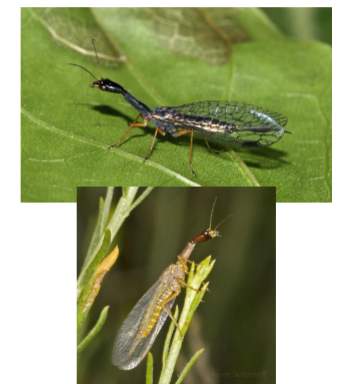
Order Raphidioptera
Snakeflies
Diagnostic characteristics:
Adults with elongate cylindrical prothorax; legs ambulatorial
Antennae moderately elongate, filiform (adults) or short, filiform (larvae)
2 pairs of membranous wings with numerous veins and cross veins, pterostigma present; wings held somewhat roof-like over body when not in use
Order Raphidioptera
Name the Order
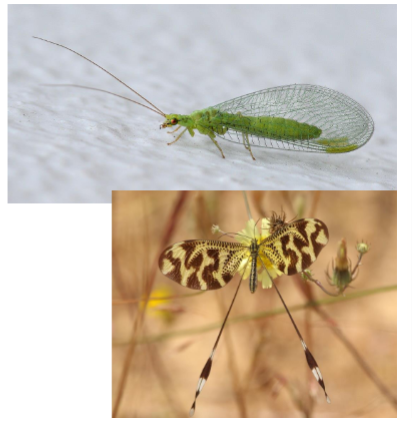
Order Neuroptera
Antlions, licewings, etc.
Diagnostic characteristics:
Antennae of adults moderately to very long, commonly filiform or clubbed; antennae of larvae short, filiform
2 pairs of membranous wings with numerous veins and cross veins; wings held roof-like over body when not in use
Order Neuroptera
Name the Order
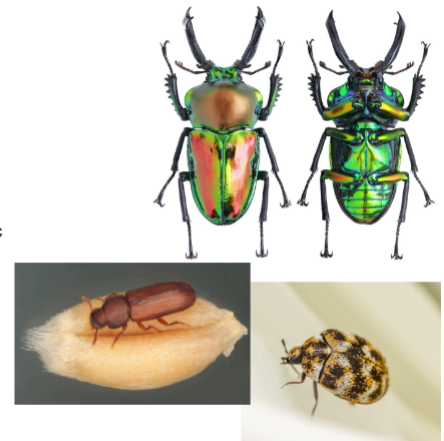
Order Coleoptera
Beetles
Diagnostic Characteristics:
Antennae highly variable; normally short, 3-segmented in larvae
Usually 2 pairs of wings; mesothoracic pair (elytra; singular, elytron) somewhat to very hardened, typically meeting to form a straight line down center of abdomen; metathoracic wings (=flight wings) membranous, folded beneath elytra when not in use
Order Coleoptera
Name the Order
Adephaga vs. Polyphaga
2 suborders of Coleoptera
Adephaga: 1st abdominal segment divided by hind coxae
Cicindelidae
Carabidae
Dytiscidae
Gyrinidae
Polyphaga: posterior margin of 1st ab segment extends completely across abdomen
everything else
 Note
Note  Flashcards (35)