Antivirals and Resistance
 Call Kai
 Learn
Learn Practice Test
 Spaced Repetition
 Match
Match Flashcards
 Knowt Play
1/22

There's no tags or description
Looks like no tags are added yet.
Name | Mastery | Learn | Test | Matching | Spaced | Call with Kai |
|---|
No analytics yet
Send a link to your students to track their progress
23 Terms
Why was the development of antiviral drugs historically slower than antibacterial drugs?
Because it was difficult to find compounds that target viral processes without harming host cells, making selective toxicity challenging.
How has understanding viral life cycles improved antiviral drug development?
It has enabled scientists to design drugs that target specific viral proteins and functions, such as Oseltamivir, by using knowledge of their three-dimensional structure and molecular activity.
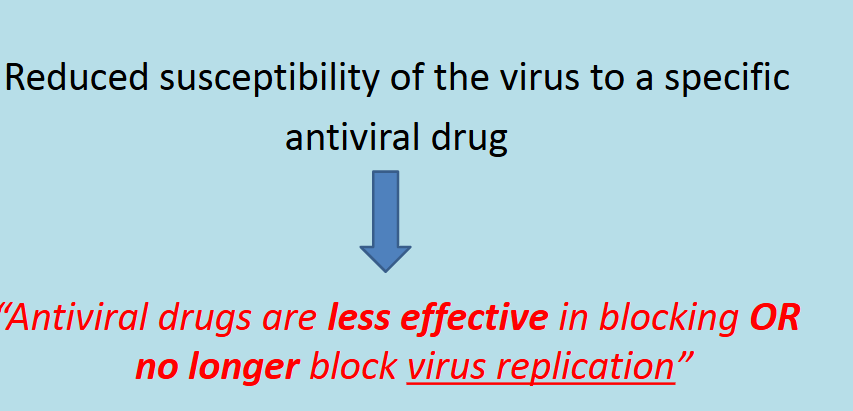
What is Antiviral Drug Resistance?
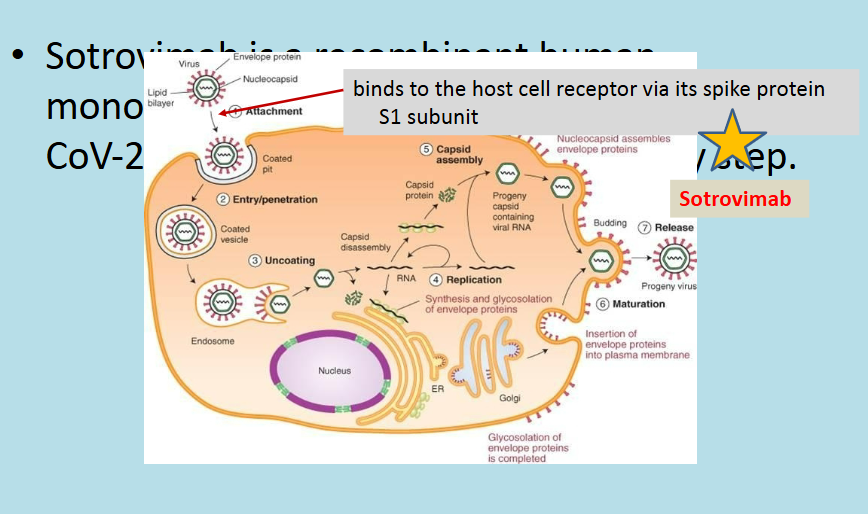
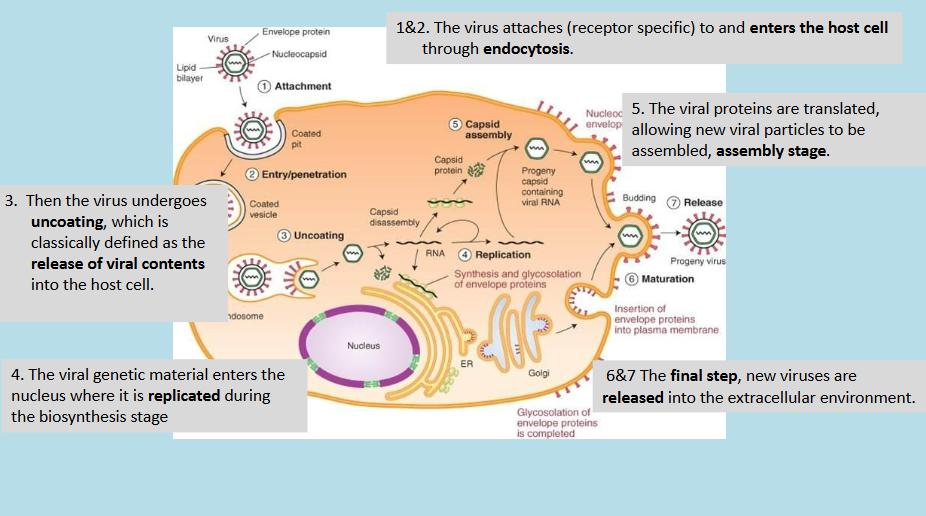
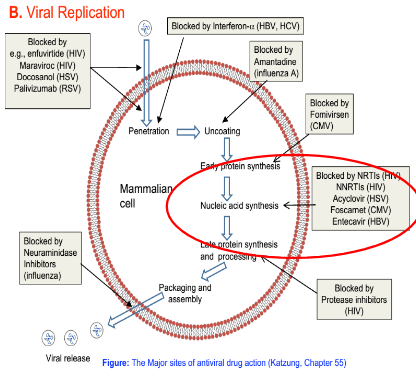
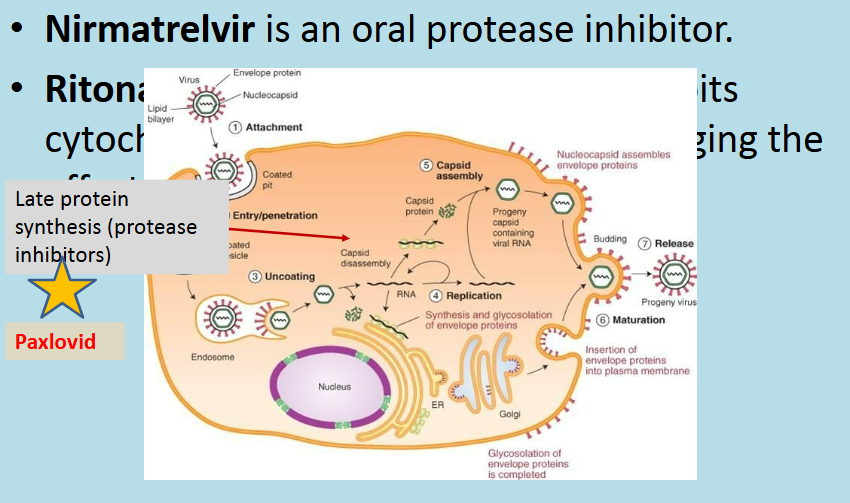
Viral replication (ssRNA virus)
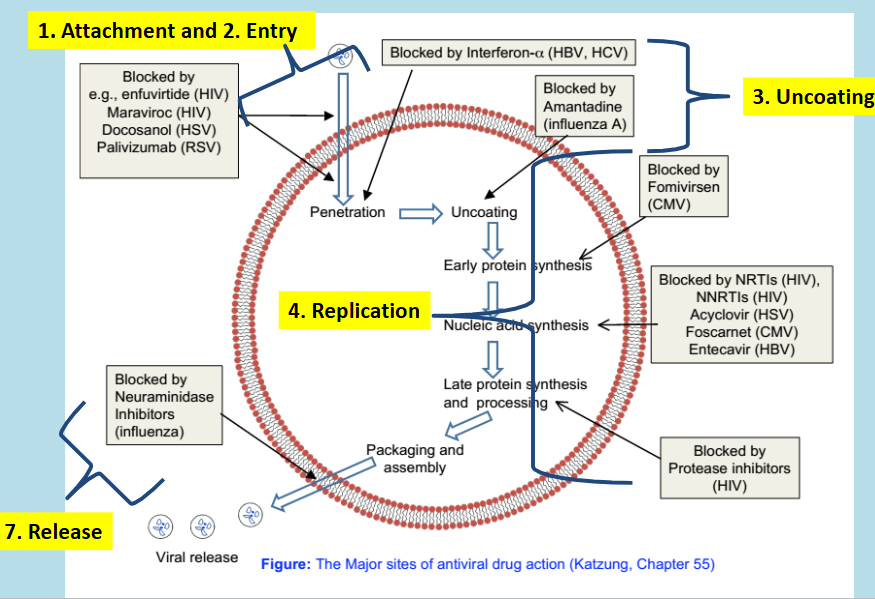
Anti-viral targets
Why did drug-resistant viruses begin to appear after antiviral drugs were introduced?
Due to natural selection, where viruses with mutations that confer resistance survive and replicate in the presence of antiviral drugs.
How do mutations contribute to antiviral resistance?
Mutations in genes encoding viral proteins can alter drug targets, reducing the effectiveness of antiviral drugs.
Why are RNA viruses more prone to developing antiviral resistance than DNA viruses?
RNA viruses have a much higher mutation rate (around 1 in 10,000 bases) compared to DNA viruses (around 1 in 100 million bases).
How does antiviral selection pressure lead to resistant viral strains becoming dominant?
Antiviral drugs eliminate susceptible viruses, allowing resistant genotypes to survive, multiply, and become the dominant strain within the host.
What is a phenotypic assay in antiviral susceptibility testing?
A phenotypic assay measures viral growth in the presence of different drug concentrations to determine the amount needed to inhibit viral replication (e.g. 50% or 90% inhibition).
What is a plaque reduction assay used for?
It is a phenotypic method used to assess antiviral susceptibility by measuring how effectively a drug, such as Oseltamivir, reduces viral plaques in cultured cells.
What is a genotypic assay in antiviral susceptibility testing?
A genotypic assay identifies mutations in viral genes associated with drug resistance and predicts susceptibility based on known mutation patterns.
Why are genotypic assays commonly used in antiviral resistance testing?
Because they do not require viral culture and can detect resistance directly from clinical samples, making them faster and more practical than phenotypic assays.
What is the mechanism of action of Aciclovir in treating human herpes viruses?
Aciclovir is a nucleoside analogue that, once converted to its active triphosphate form, inhibits viral DNA polymerase and causes termination of viral DNA chain elongation, thereby blocking replication of HSV and VZV.
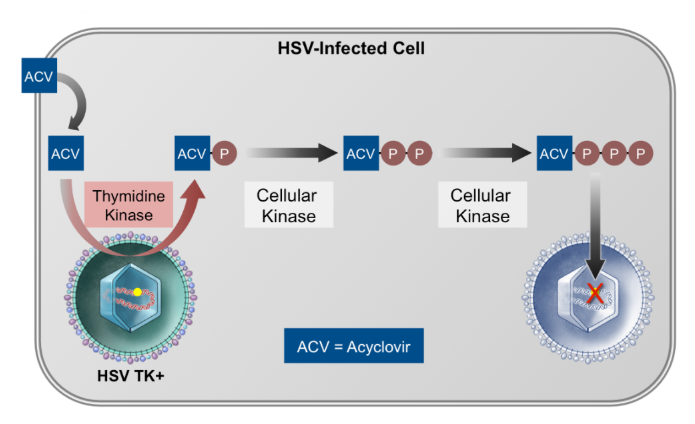
How is Aciclovir activated within infected cells?
It is first monophosphorylated by viral thymidine kinase (TK) from HSV or VZV, then further converted by host cellular kinases into the active form, aciclovir triphosphate.
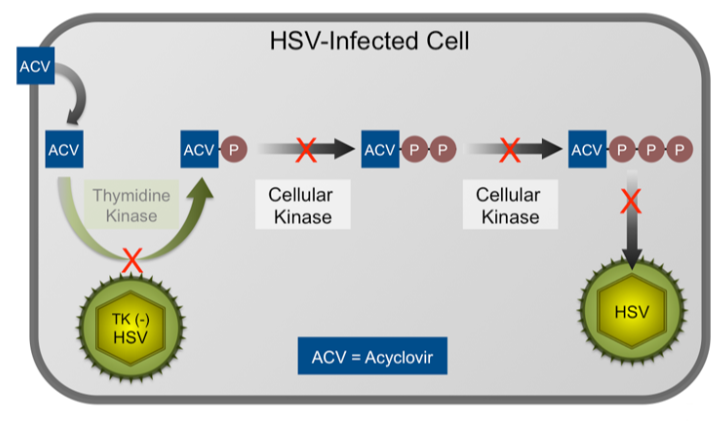
What causes resistance to Aciclovir in HSV and VZV?
Resistance is mainly due to mutations in viral thymidine kinase (TK) or DNA polymerase, with most clinical resistance resulting from TK mutations.
Which antivirals are effective against influenza viruses and how do they work?
Amantadine acts only against influenza A by blocking viral uncoating, while Oseltamivir and Zanamivir are neuraminidase inhibitors active against influenza A and B, preventing viral release.
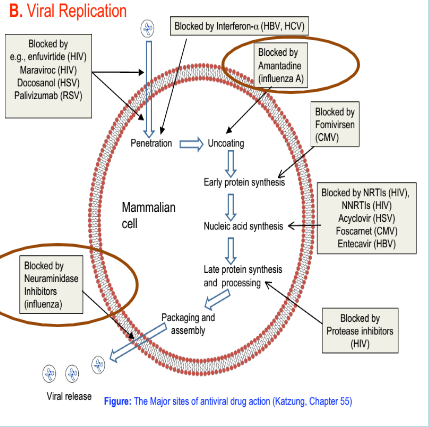
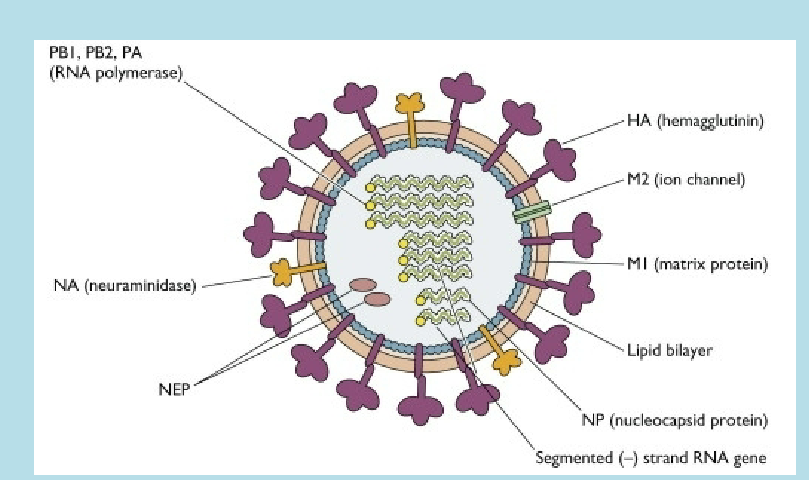
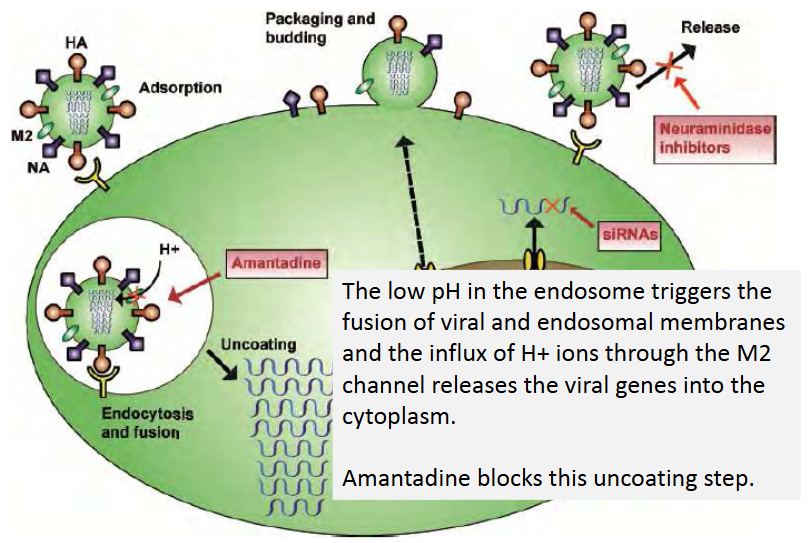
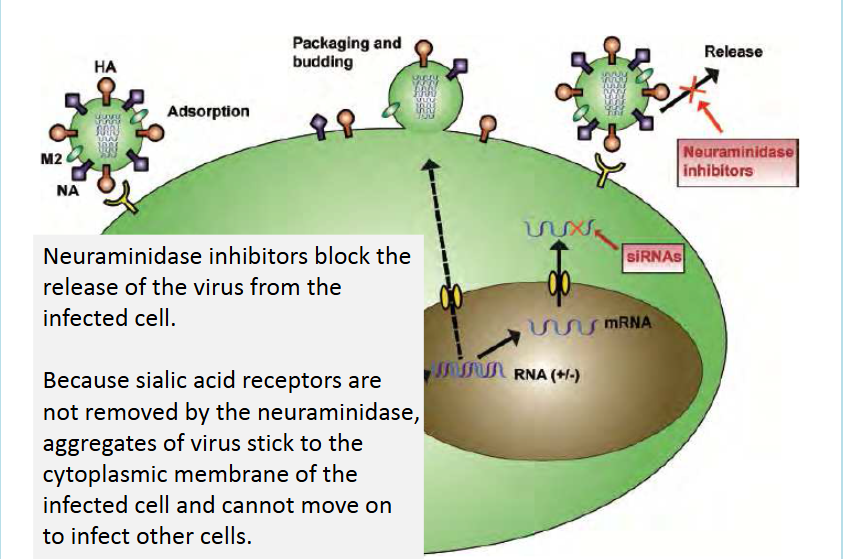
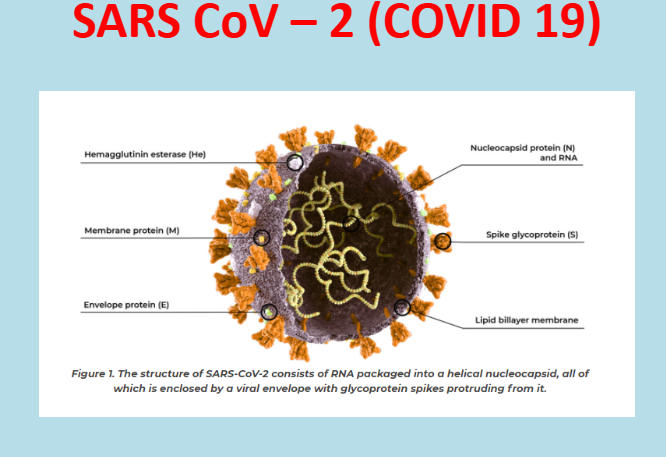
Viral replication (ssRNA virus)

Ritonavir-Boosted Nirmatrelvir (Paxlovid)
Sotrovimab