NSCI 201-Reproductive Behaviour
 Call Kai
 Learn
Learn Practice Test
 Spaced Repetition
 Match
Match Flashcards
 Knowt Play
1/86

Earn XP
Description and Tags
!!! edits made for hypothalamic regulation anterior pituitary, dopamine inhibits prolactin secretion !!!
Name | Mastery | Learn | Test | Matching | Spaced | Call with Kai |
|---|
No analytics yet
Send a link to your students to track their progress
87 Terms
hormones
ductless glands with rich blood supply
secreted into bloodstream
travel throughout body
bind to receptors
coordinate multiple organs
longer-lasting than neurotransmitters
4 classes of hormones
peptides or proteins (from several amino acids)
monoamines (from an amino acid)
lipid-based hormones (from a fatty acid)
steroids (from cholesterol)
examples of monoamines (class of hormones)
epinephrine, melatonin, dopamine
examples of steroids (a class of hormones)
androgens, estrogens, progestins, glucocorticords
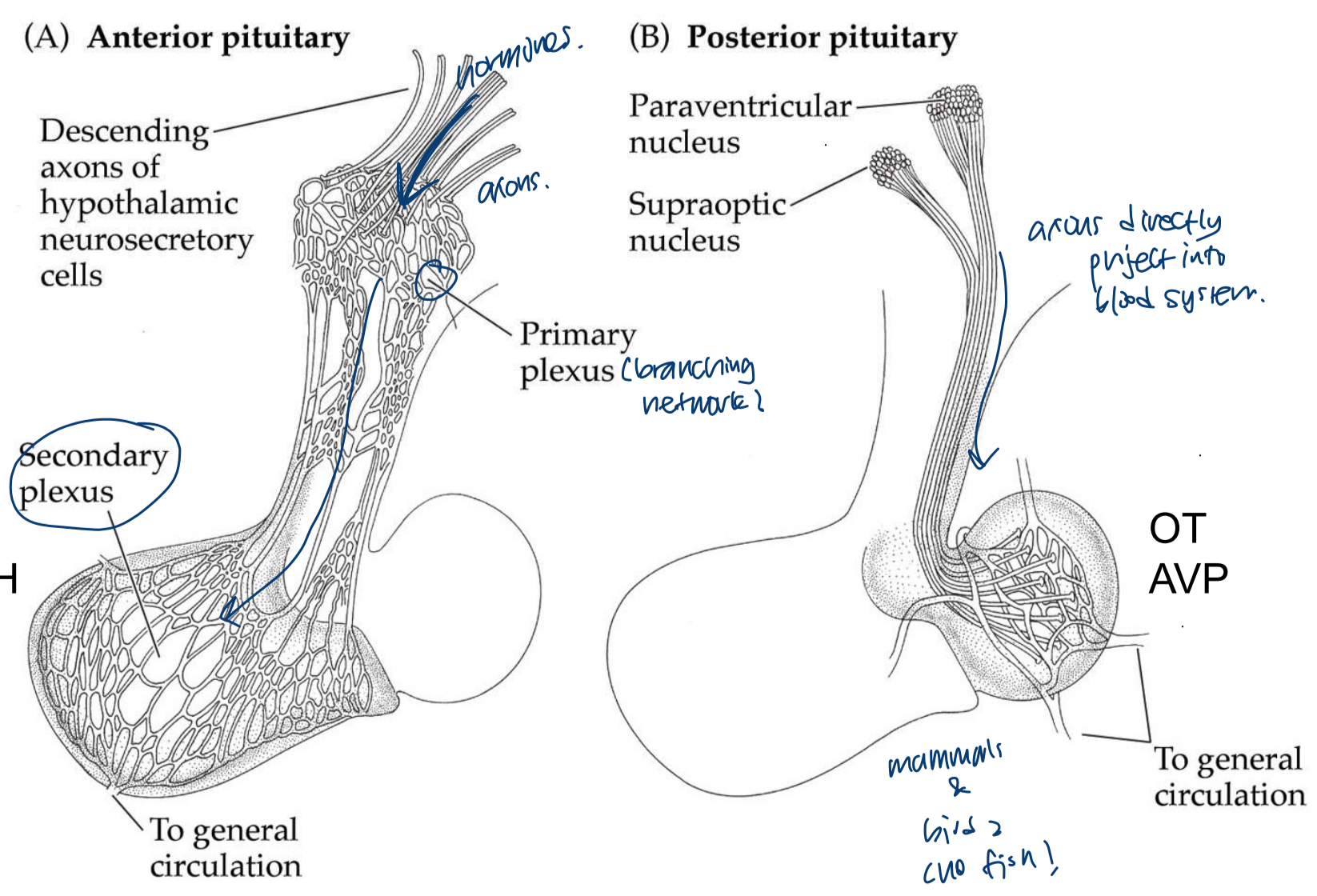
two methods of hypothalamic control for pituitary function
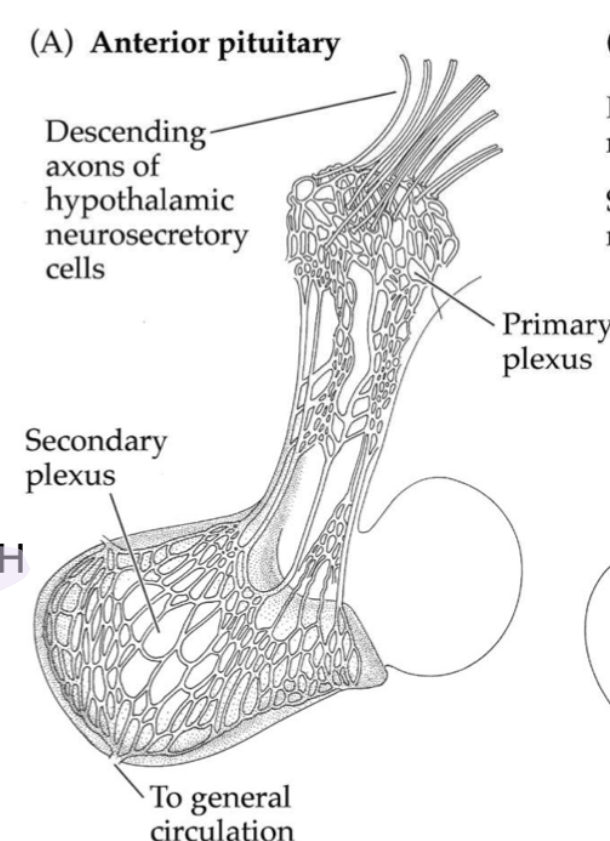
peptide hormones released into the local blood system and regulate anterior pituitary (GnRH, CRH)
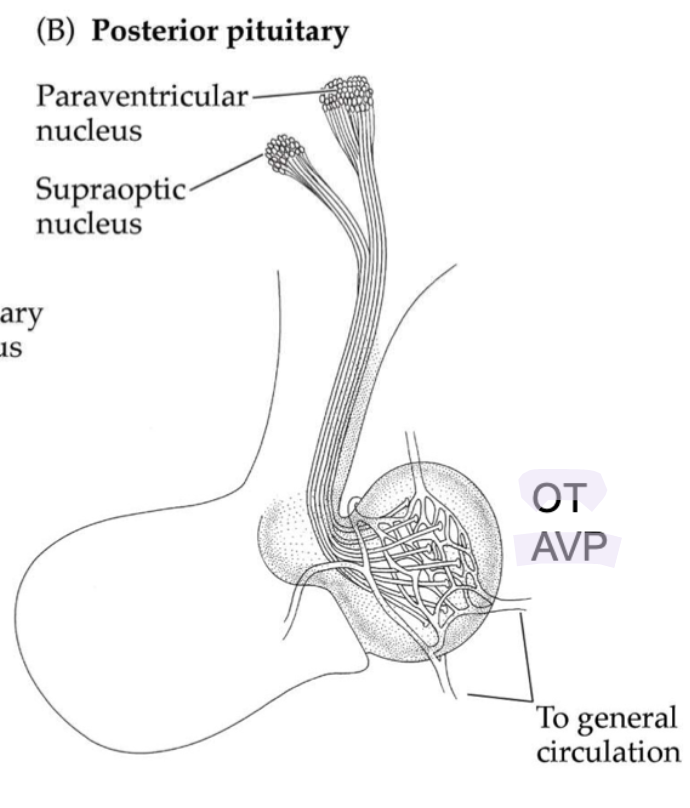
peptides directly released into posterior pituitary and secreted into general (systemic) blood system (oxytocin, arginine vasopressin)
what behavior does the preoptic area play an important role in
reproductive behavior
gonads
testes and ovaries
stimulate production of gametes
ductless
no connection between the organ and the blood, small molecules released and diffused
neurotransmitters vs hormones
neurotransmitter: local communication, very short
hormones: broad signals, long-distance messengers with long-lasting effects
hormones and the location of receptors
peptide hormones: receptors in the transmembrane
steroid hormones: receptors in and out of the cell
dopamine
produced by adrenal gland in the bloodstream
can act as both hormones and neurotransmitters
no gene, made from amino acid
what important role does the hypothalamus play related to the pituitary glands
critical for regulating the endocrine system
two hormones released into the general blood supply
FSH, LH
portal system
“private little blood system”
plexus
branching network of capillaries
primary plexus in hypothalamus
axons releasing hormones to primary plexus
peptides travel down blood to secondary plexus
communicate with cells in the pituitary
hormone release in posterior pituitary
axons project directly (no portal system)
oxytocin and vasopressin released into general circulation
leydig cells in testes
-in between the seminiferous tubule
-have all the enzymes to make testosterone from cholesterol
role of testosterone
important for cell maturation
testosterone and coordination of reproductive behavior
testosterone provides negative feedback to the thalamus → inhibits the production of GnRH → prevents an overshot
(this is a good way to sync gonads with behavior)
androgens
binds to androgen receptor, includes testosterone, androstenedione, DHT
thecal cells
have several layers and the enzymes that make androgen
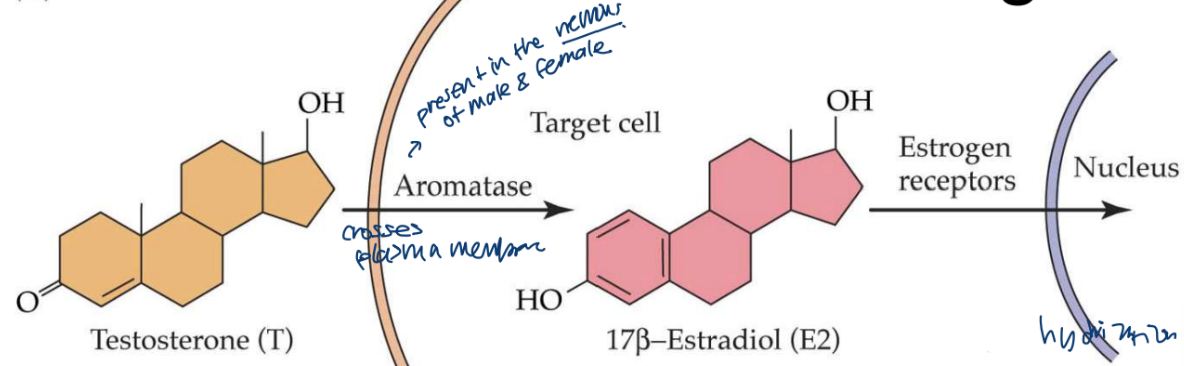
aromatase
turns androgens into estrogens
ex. testosterone into estradiol (E2)
-crosses the plasma membrane
-present in the nerves of male and female
corpus luteum
yellow body, contains lots of fats and produces PROG and E2
estrogens
a class of molecules that bind to estrogen receptor
estradiol
a type of estrogen, aromatase turns testosterone into estradiol
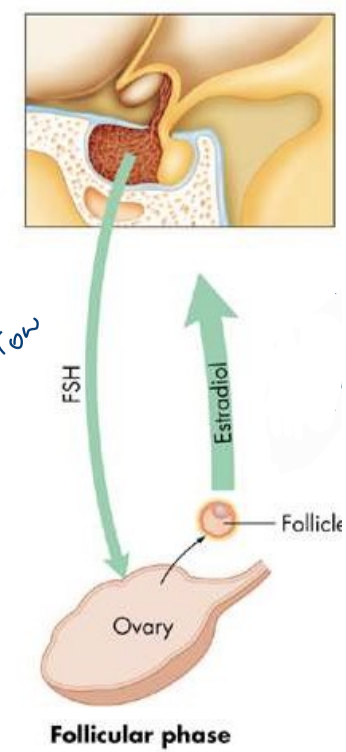
follicular phase in female HPG axis
low FSH to ovary, high estradiol from ovary
ovulation phase in female HPG axis
estradiol switches to positive feedback, increase of FSH and LH from anterior pituitary which helps ovulation
GnRH regulates which hormones in the anterior pituitary, targets which organs?
LH and FSH
gonads (ovaries/testes)
effects of GnRH in females
follicle development, ovulation, E2 and PROG secretion
CRH regulates which hormones in the anterior pituitary, targets which organs?
ACTH
adrenal cortex
effect of CRH
glucocorticoid secretion
TRH regulates which hormones in the anterior pituitary, targets which organs?
TSH
thyroid gland
effect of TRH
thyroid hormone secretion
DA regulates which hormones in the anterior pituitary, targets which organs?
prolactin (inhibition)
mammary glands
effect of DA
milk production
GHRH regulates which hormones in the anterior pituitary, targets which organs?
growth hormone
body cells
effect of GHRH
growth
male hormones (why is the term misleading)
-male brain contains aromatase (enzyme that makes estrogens)
-local synthesis of E2 and PROG
-PROG in blood
females hormones (why is the term misleading)
-synthesize T in ovary, mainly as precursor to E2
-T and AE in blood
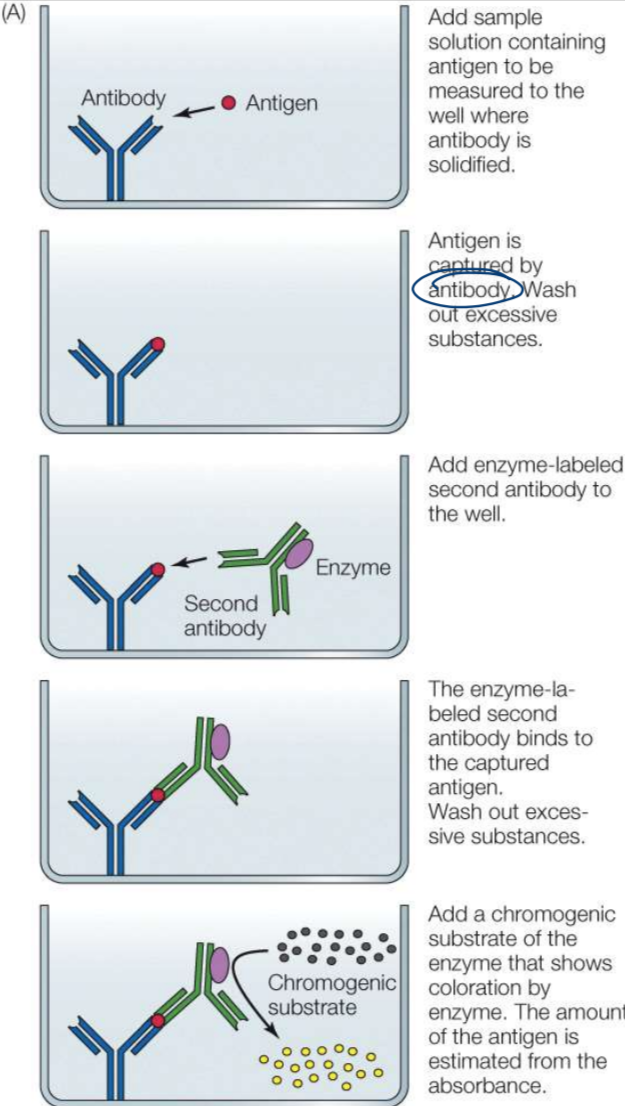
immunoassay
method of measuring a presence or concentration of molecule (hormones) using antibodies
-weakness in terms of specific binding
method:
add sample solution containing antigen → antigen is captured by antibody → add enzyme-labeled second antibody → second antibody binds to captured antigen → add chromogenic substrate of enzyme and estimate amount of antigen from absorbance
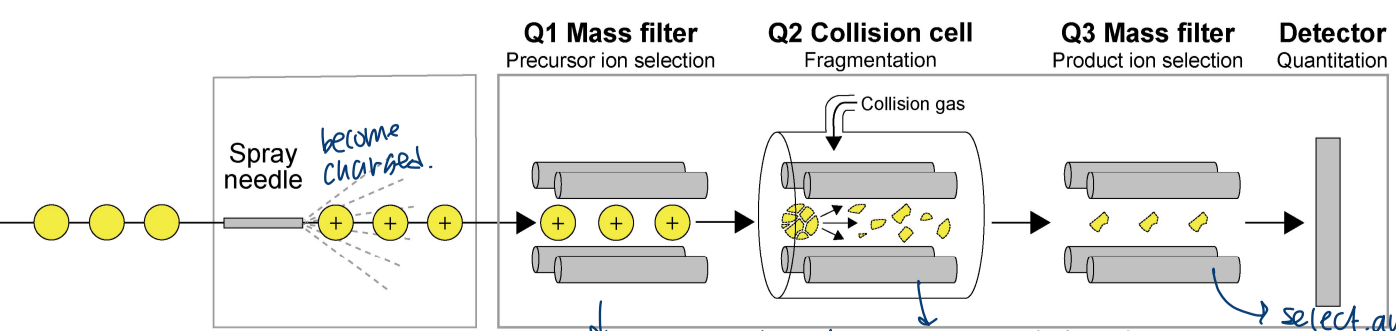
mass spectrometry
ions “fly” in magnetic fields:
goes through Q1 mass filter where magnetic field is produced → Q2 collision cell where fragmentation happens → Q3 mass filter for ion selection → detector measures ion abundance
-used for high specificity
transport and release of peptide/protein hormones
-soluble in blood (but have protection fro degradation)
-stored in vesicles and released in response to a stimulus
transport and release of lipid soluble hormones
-use carrier proteins to travel through blood
-not stored
peptide or protein hormone receptor
-governed by a single dna sequence
-receptors are regulated, taken in and out of membrane when necessary
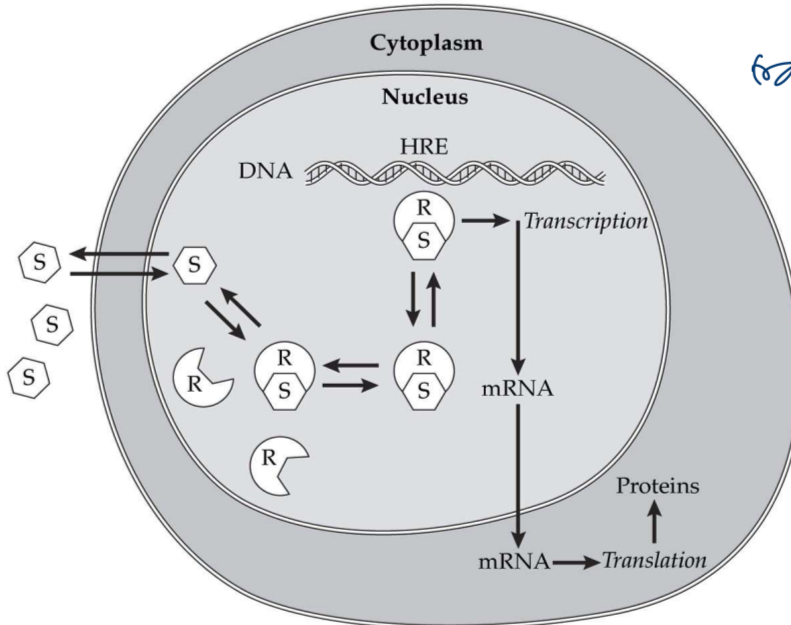
intracellular steroid hormone receptors
in the cytoplasm or cell nucleus
regulate gene expression
slow acting (at least 30min)
enduring effects
membrane-bound steroid hormone receptors
in plasma membrane or outer mitochondrial membrane
regulate enzymes (kinases)
fast acting
temporary effects (no genomic effects)
hormone response element (HRE)
-intracellular steroid receptors
-located where ligand/receptor complex binds to promoter region to regulate gene expression in DNA
why do some animals have sexual reproduction
-produced more genetic variation in offspring
(asexual reproduction: pathogenesis, all eggs identical to parent)
appetitive male sexual behavior
-sex drive, interest, motivation
ex. vocalizations, movement in search of mates
-can measure via operant conditioning in rodents
consummatory male sexual behavior
copulatory behavior (discrete, actual sexual behavior)
-can measure mounting, intromission, ejaculations in rodents
-reliable and consistent measures
organizational effects of androgens
-relatively early: prenatal, neonatal, adolescence (critical period)
-longer lasting
-structural , biochemical changes
activational effects of androgens
-in adulthood/after adolescence
-shorter effects (transient)
-no critical period
-structural, biochemical changes
androgens do not directly cause male sexual behavior, but rather change the (__________________________________) in a particular context
-not a trigger
androgens do not directly cause male sexual behavior, but rather change the probability that male sexual behavior will occur in a particular context
what was the hypothesis for Young’s experiment (reproductive behavior in rodents)
hormones in early development are important for reproductive behavior in adulthood
methodology for Young’s experiment (reproductive behavior in rodents)
T or oil (vehicle) injected to pregnant guinea pigs
→ female offspring: neonate female offspring all had ovariectomy (OVX), adults had E2+PROG or T or oil injected
result of female prenatal OIL → adult E2+PROG (Young’s experiment)
lordosis
result of female prenatal T → adult E2+PROG (Young’s experiment)
reduced lordosis (giving testosterone does not change behavior)
result of female prenatal OIL → adult T (Young’s experiment)
no mounting (adult females do not respond to T manipulations)
result of female prenatal T → adult T (Young’s experiment)
mounting
result of male prenatal SHAM → adult T (Young’s experiment)
mounting
result of male prenatal GDX → adult T (Young’s experiment)
reduced mounting (adult males respond to T manipulations)
result of male prenatal SHAM → adult E2+PROG (Young’s experiment)
no lordosis
result of male prenatal GDX → adult E2+PROG (Young’s experiment)
lordosis
critical period
increased sensitivity to effects of hormones on behavior
activational effects of estrogens
-expressed in specific brain regions (immunohistochemistry, in situ hybridization-design a probe with labeling)
-GDX+T adult male rats had a restoration of testosterone (systemic aromatase inhibitor or saline treatment)
-systemic T or E2 or oil treatment for GDX adult male rats
what happened during the experiment with Japanese quail on estrogens and male appetitive sexual behavior
-male will look at female through window (sexual interest)
-GDX reduces time at window
-T treatment of GDX males restores time at window
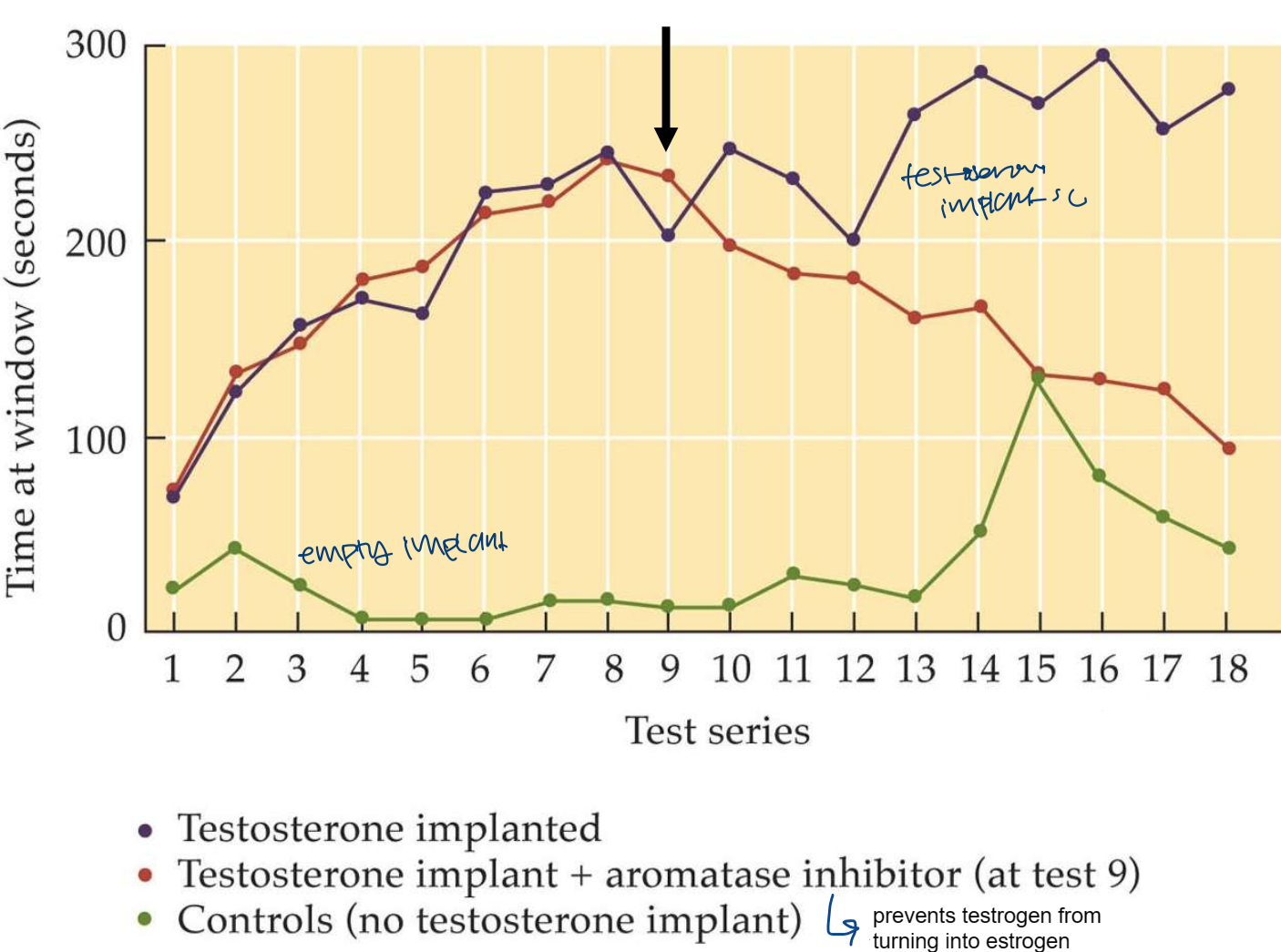
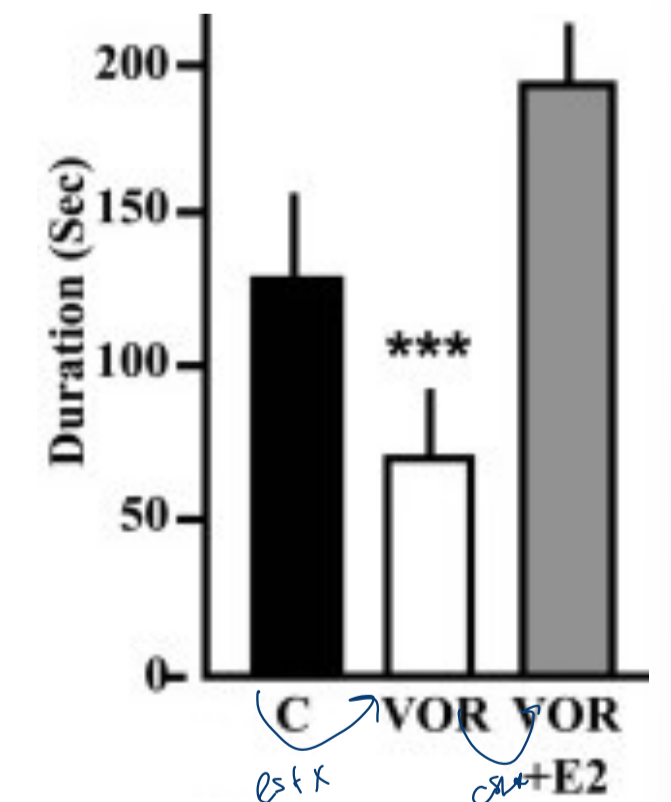
acute effects of estrogens on male appetitive sexual behavior
-method: one s.c. injection of saline control (C) or vorozole (VOR, aromatase inhibitor), or VOR+E2
-time at window measured after 10 min
→ aromatase inhibitor had significant effects in reducing time at window
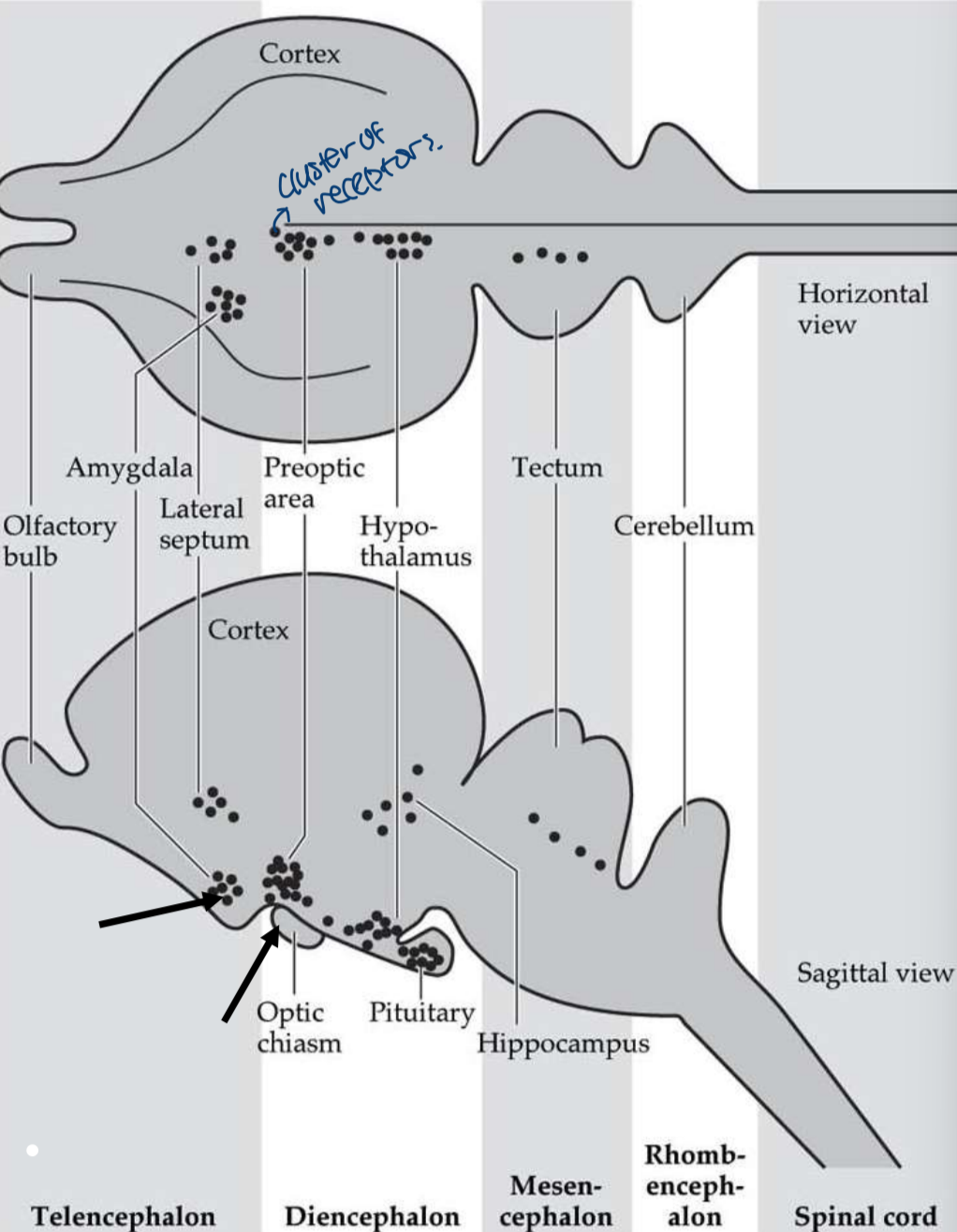
how to determine where androgens and estrogens act to regulate male sexual behavior?
immunohistochemistry, autoradiography, etc.
where are sex steroid receptors located in the brain
clusters in amygdala, lateral septum, preoptic area, , hypothalamus, pituitary, hippocampus, tectum
(ALPHPHT)
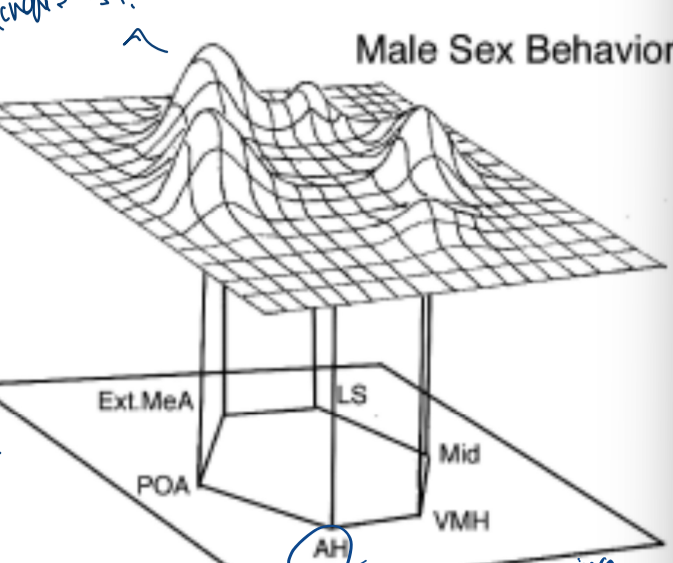
what does this diagram show
no activity in anterior hypothalamus during sexual activity
what does testosterone facilitate
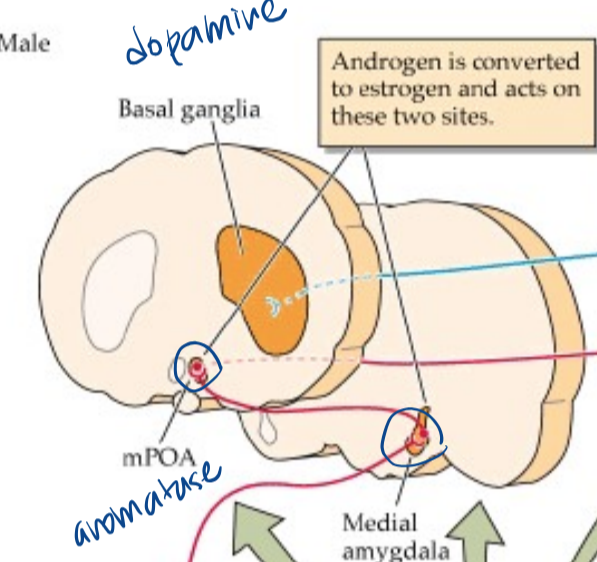
release of dopamine in the mPOA (medial preoptic area) and other areas
after androgen is converted to estrogen, which two sites does it act on
medial preoptic area (mPOA) and medial amygdala
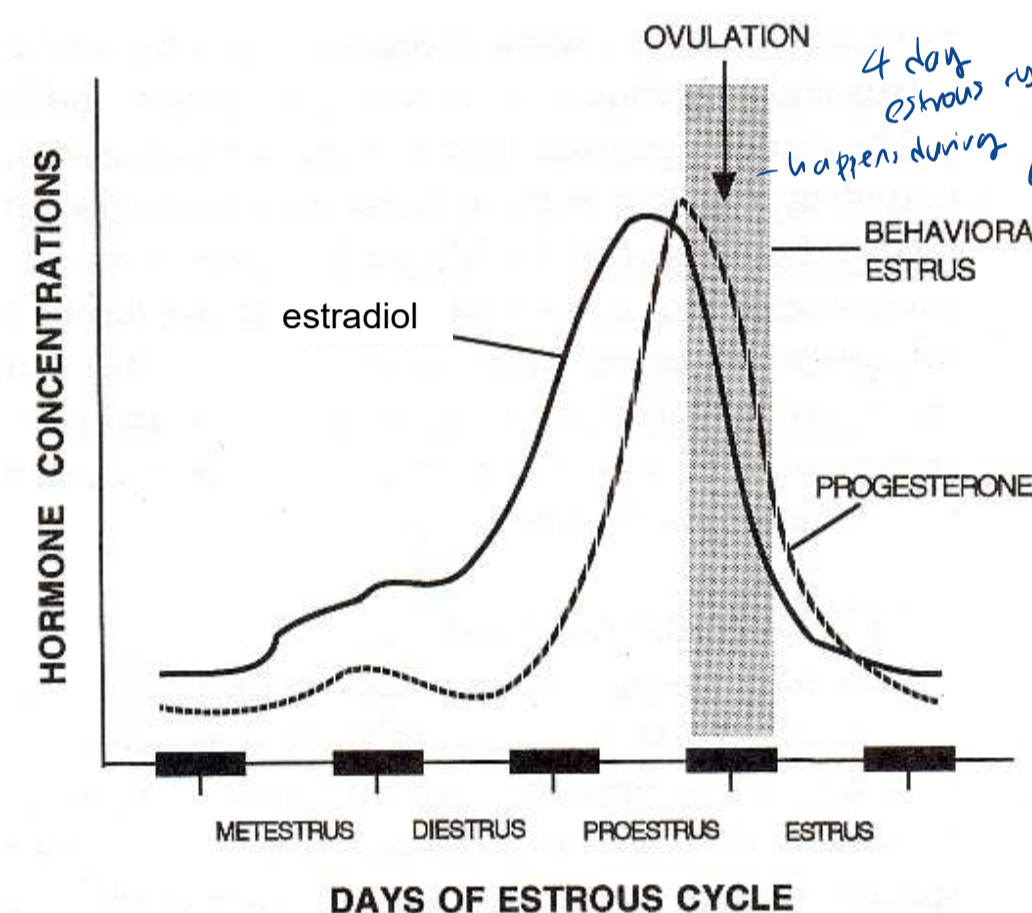
estrous cycle in female rodent sexual behavior
-4 days
-ovulation happens at the end of proestrus stage (behavioral estrus)
-nocturnal, breed at night
-can only get pregnant during estrus
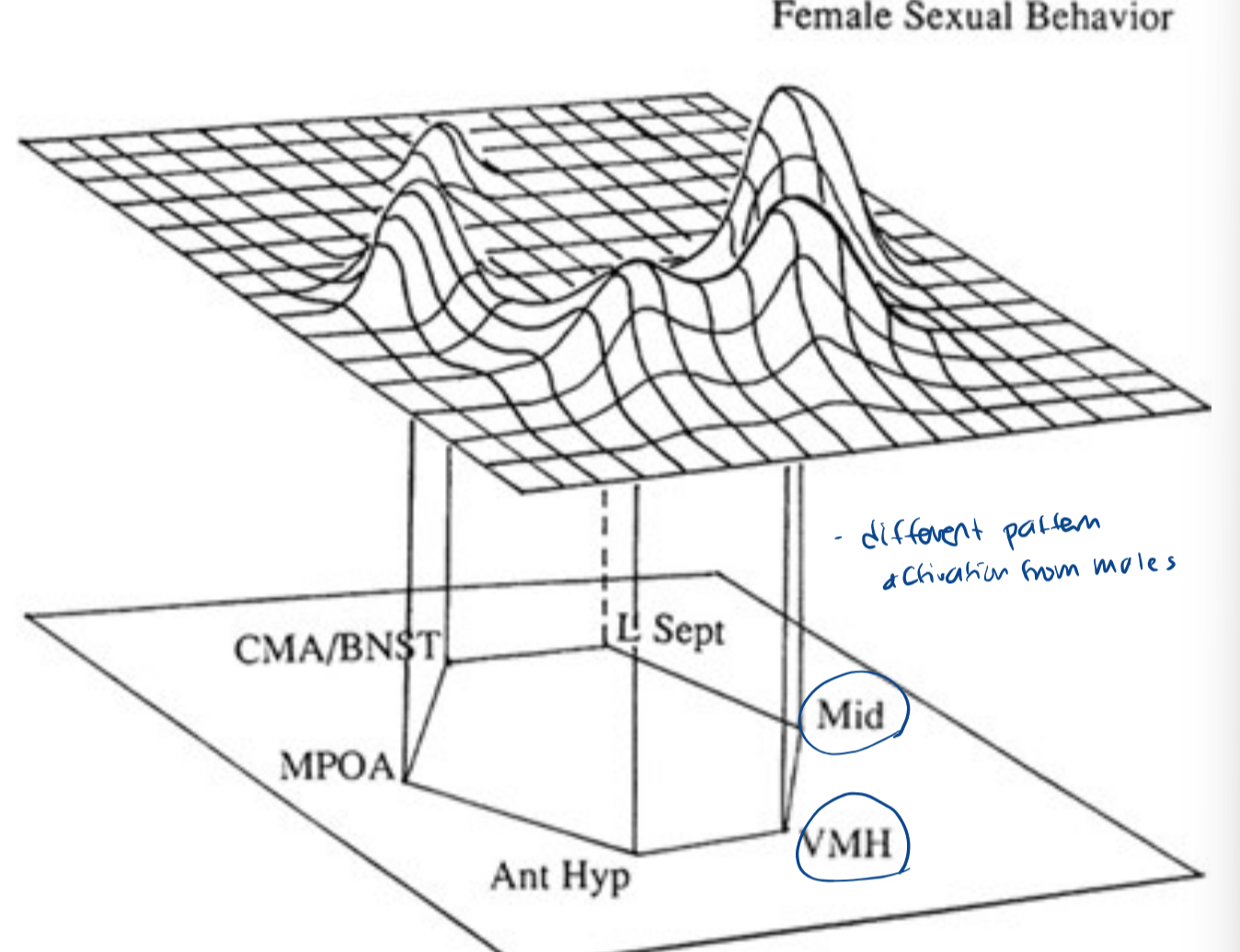
what happens during behavioral estrus of female rodent estrous cycle
-appetitive sexual behavior (proceptivity-motivation, female initiation of copulation)
-consummatory sexual behavior (receptivity-responsiveness to male initiation of copulation)
measurements of female consummatory behavior
LQ: Lordosis Quotient
(lordosis: stereotypical posture and expression, robust and easy to measure)
-OVX in rats greatly reduces lordosis
female brain region not activated during sexual behavior
lateral septum is not active
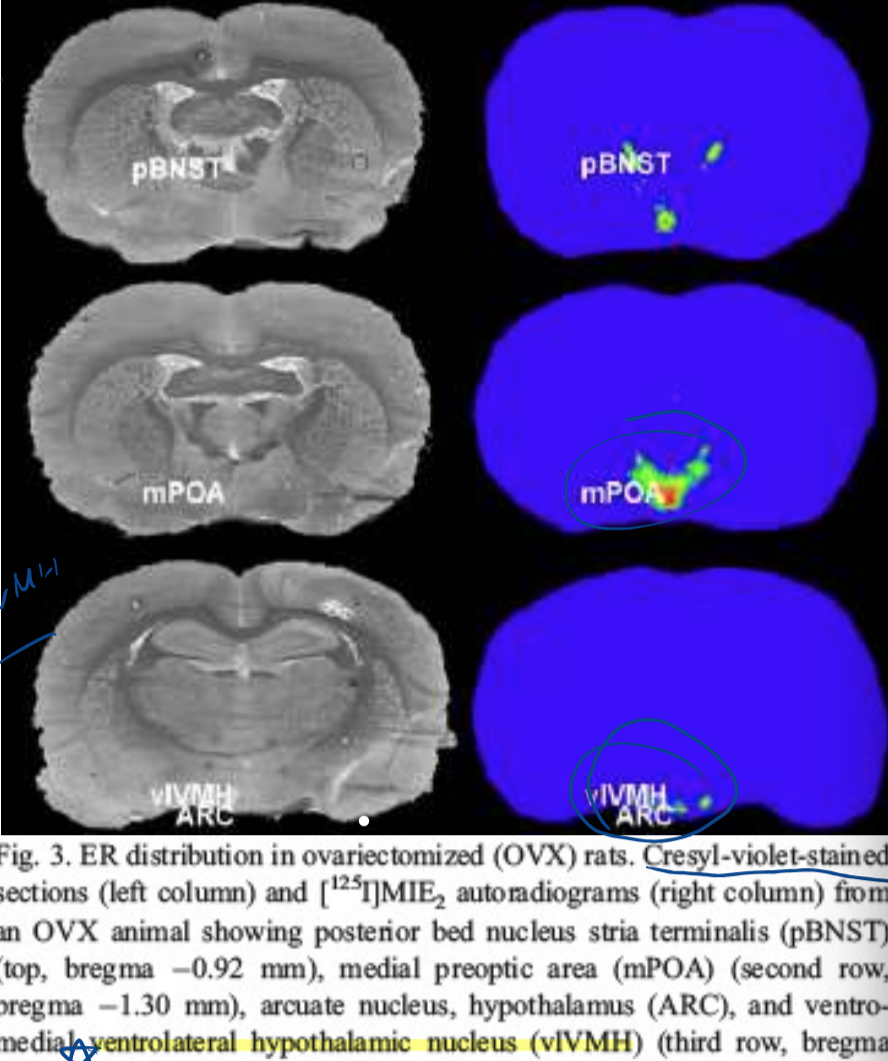
estrogen receptors in brain
-autoradiography with labeled E2 used
-ERs in vlVMH (ventrolateral ventromedial hypothalamic nucleus) critical especially for male sexual behavior
-X ray shows anything that binds to estradiol
regulation of lordosis in female rodents
-E2+PROG sequentially is more effective at inducing lordosis than E2 alone
-lordosis is restored by E2+PROG in OVX adult rats (PROG after 2 days)
-estradiol primes the brain to be more sensitive to PROG and they work together to stimulate behavior
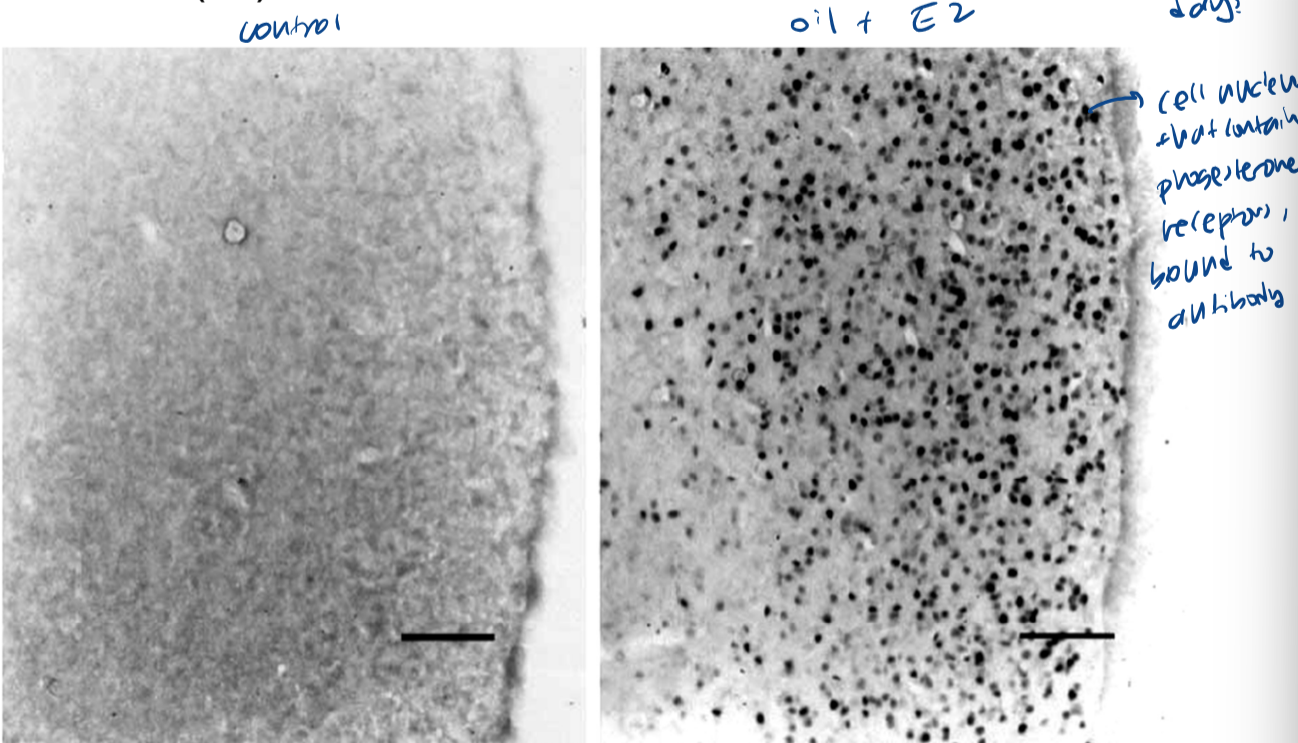
what would the VMH look like for control (oil) vs E2 treatment in OVX rats
many more PROG receptors bound to antibodies with E2 treatment than control
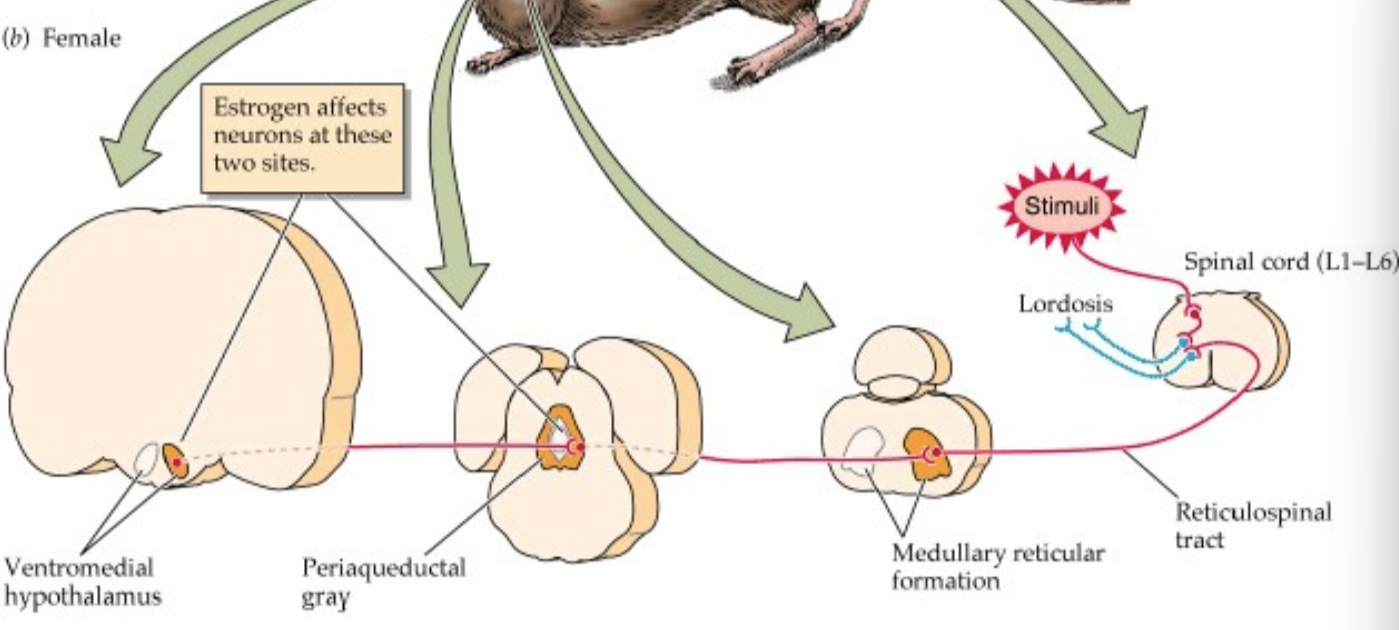
lordosis circuit (female rodent)
VMH → periaqueductal gray → medullary reticular formation → reticulospinal tract → spinal cord
role of forebrain in reproductive behavior/lordosis
inhibits lordosis
role of hypothalamus in reproductive behavior
responds to steroid hormones, produces proteins and peptides
role of midbrain in reproductive behavior
receives hypothalamic peptides, changes slow to fast signaling (contains mesencephalic flexure)r
role of lower brain stem in reproductive behavior
integrates posture across segments
role of spinal cord in reproductive behavior
each segment receives stimulation, receives descending information, produces motor response
autoradiography
used to determine the tissue (or cell) localization of a radioactive substance, either introduced into a metabolic pathway, bound to a receptor or enzyme, or hybridized to a nucleic acid.

