Nematoda
 Studied by 0 people
 Call Kai
 Learn
Learn Practice Test
 Spaced Repetition
 Match
Match Flashcards
 Knowt Play
1/11

Earn XP
Description and Tags
Bio 2.2 Zoology nematoda phylum
Name | Mastery | Learn | Test | Matching | Spaced | Call with Kai |
|---|
No analytics yet
Send a link to your students to track their progress
12 Terms
How do you identify the Nematoda?
the ecdyse.
Ecdysozoans
create an extracellular cuticle or exoskeleton that must be shed in order for the animal to grow.
Nematodes
roundworms
True or False: it is the most abundant animal on Earth
True
What is unique about the body cavity of Nematodes?
They have a body cavity that is pseudocoelom and develops from the embryonic blastocoel
What makes this cavity different from other animals?
They can use it as a hydrostatic skeleton, and organs are not suspended by any membranes
what is unusual about nematodes?
Muscle grows to the nerve cord, they only have longitudinal muscles.
contrast nematodes and annelids
annelids have longitudinal and circular muscles allowing for peristaltic waves for movement
Nematodes have only longitudinal muscles so they observe a thrashing movement
Nematodes have a pseudocolem annelids have colemic cavity filled and serves as a hydrostatic skeleton
Compare nematodes and annelids
They both have a complete digestive system and a pharynx
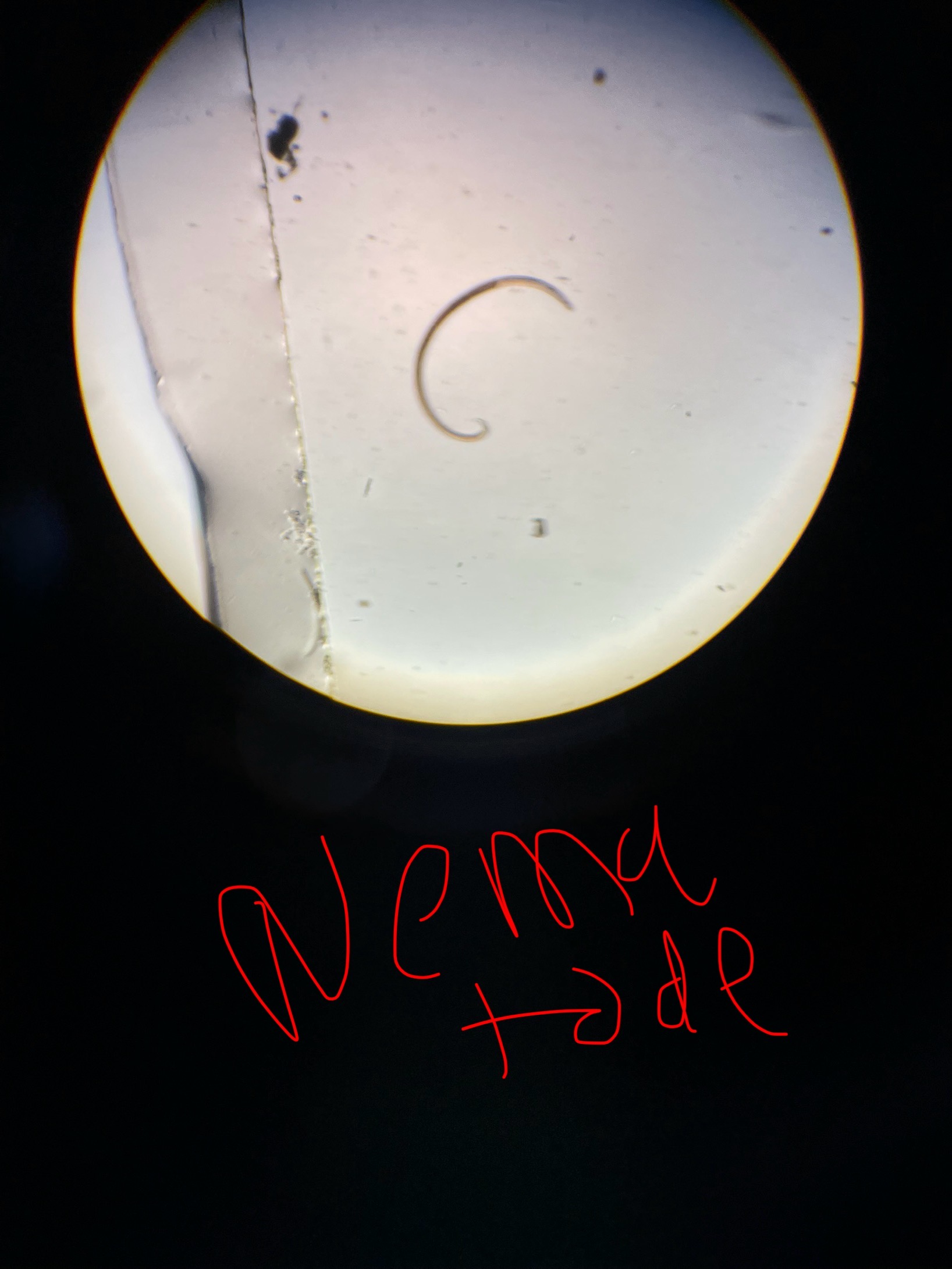
How can you tell this is a nematode?
due to its thrashing movements

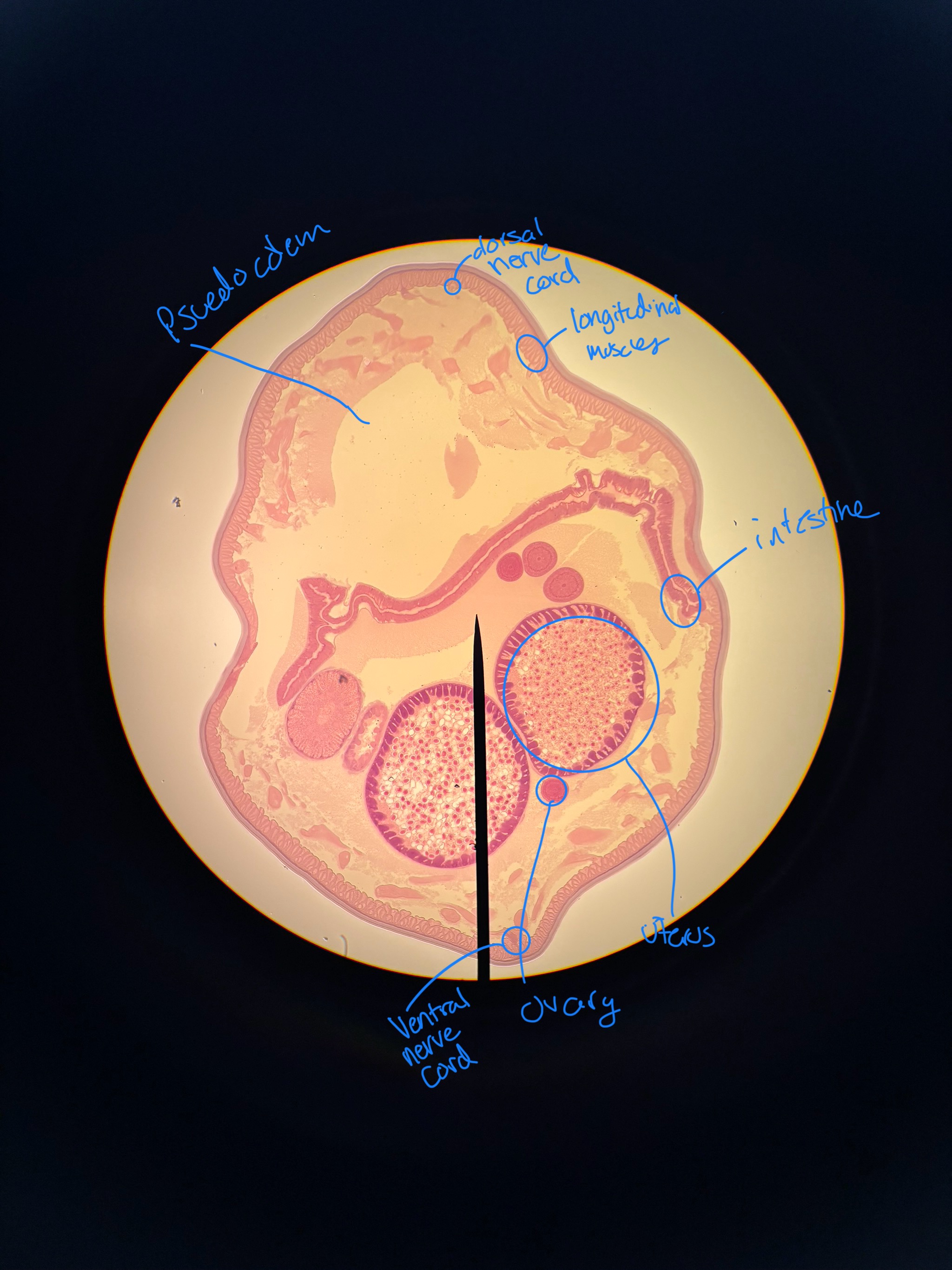
Identify: Dorsal and ventral nerve cord, intestine, ovaries, uterus, and longitudinal muscles
refer to image.
What are the 7 reasons nematodes are worth paying attention too?
nematodes are everywhere
they can reproduce a lot! store 20K eggs in their body at one time. they are hemaphrodites
there is a lot of nematodes 4 out of every 5 animals are nematodes
They are super old, date 400 mya, scientists think they have been around for billions of years
they are super basic but has some complexity
medical research, C. elegans share some biologistic characteristics to humans
climate responds to temperature and are major players in the carbon cycle.
 Note
Note  Flashcards (74)