Cold War History Mystery
 Call Kai
 Learn
Learn Practice Test
 Spaced Repetition
 Match
Match Flashcards
 Knowt Play
1/42

Earn XP
Description and Tags
Name | Mastery | Learn | Test | Matching | Spaced | Call with Kai |
|---|
No analytics yet
Send a link to your students to track their progress
43 Terms
Grand Alliance
Alliance between the US, USSR, and Britain to defeat Nazi Germany (1941-1945)
“Orthodox” Interpretation
The view that the West was always right and blames the USSR for the start of the conflict
“Revisionist” Interpretation
The view that the US is to blame for the conflict
“Post-Revisionist” Interpretation
The view that both sides had a hand in starting the conflict
Greek Civil War
One of the first “proxy wars” (1946-1949), The US believed (incorrectly) that there was Soviet pressure and aid in the communist rebellion
Containment
US policy to prevent the spread of Communism
Truman Doctrine
The “declaration of the Cold War,” and the main cause of the US intervention in the Korean and Vietnam Wars.
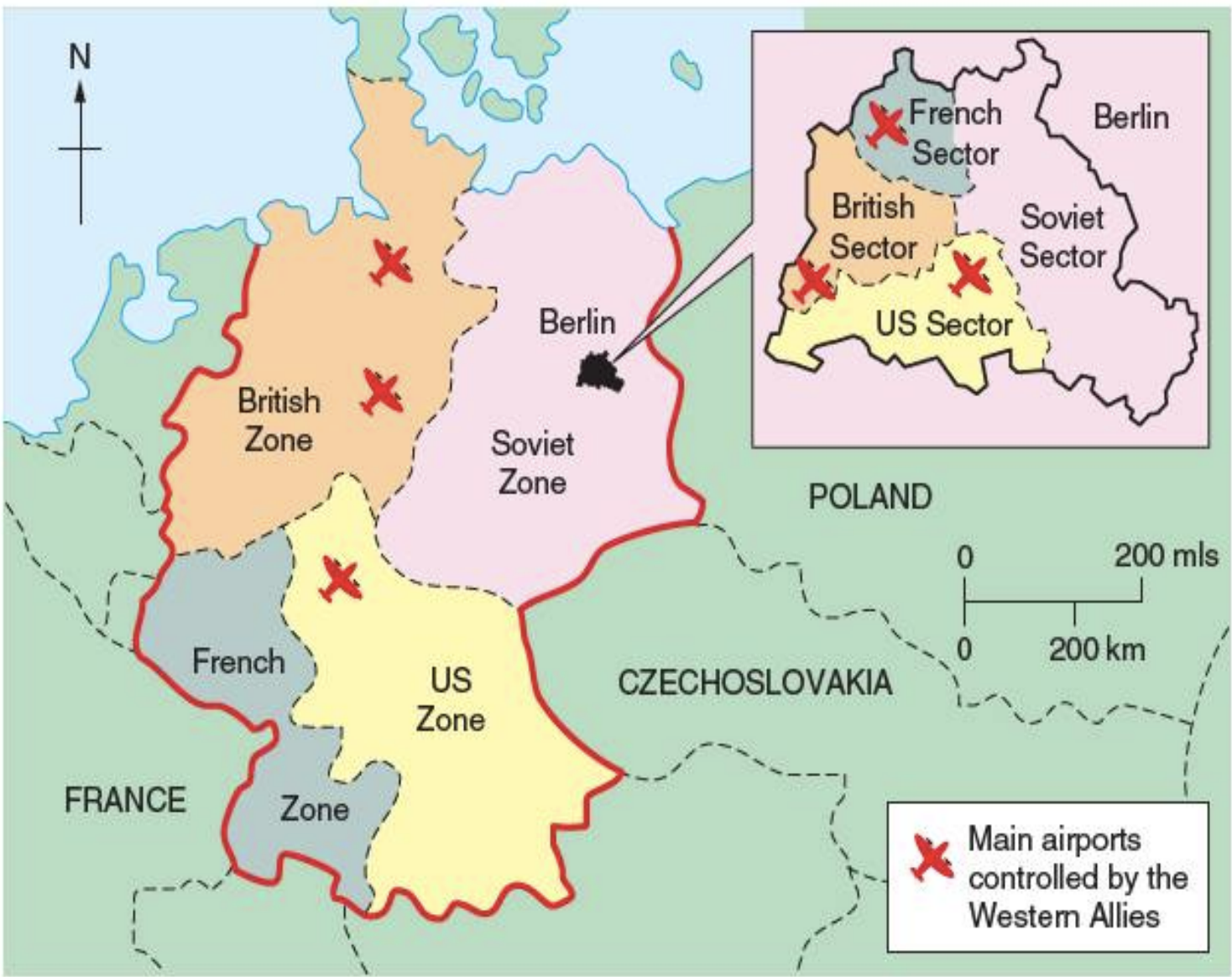
North Atlantic Treaty Organization (NATO)
Created in response to Soviet blockade of western Berlin. The defensive military alliance against the Soviet Union
Collective Security
Proposed by Truman and ratified at the Rio Conference of 1947. Stated that “an attack on one American nation would constitute an attack on all”
Organization of American States (OAS)
Laid the groundwork for hemispheric strategizing against communism.
Economic Commission for Latin America (ECLA)
Established by the UN, criticized US economic policies in Latin America and stated that their poverty rates were due to their role as raw material suppliers to the states (exploitation)
The Red Scare
“Era of unprecedented anti-communist hysteria”
House of Representatives Committee on Un-American Activities (HUAC)
investigated supposed left-wingers. Persecuted the “Hollywood 10,” a group of 10 former or current members of the communist party
McCarthy and McCarthyism
Congressional investigations of every sector. State/local government representatives, school teachers, and college professors were fired. Hunted down literature representing socialist ideas (Huckleberry Finn)
Pusan Perimeter
Area in the south-eastern corner of the Korean peninsula where US/UN/Korean troops were pushed back and pinned down in 1950. Last stand managing to push back the North Korean troops thanks to arrival of US tank battalion.
Inchon
Amphibious attack by US troops that captured the cities of Inchon and Seoul
New Look (“massive retaliation”)
Eisenhower’s policy for reduction of conventional weaponry and a focus on a nuclear arsenal
Quemoy and Matsu
Islands in the Taiwanese Strait threatened by PRC troops that fell under Eisenhower’s New Look policy meaning that US aid would mean nuclear action on these islands (he decided against it)
Rollback
idea of pushing communism back to places it was previously established
North American Aerospace Defense Command (NORAD)
established to facilitate interception of Soviet bombers over Canada
Council on Foreign Relations
American non-profit, non-partisan body specializing in US foreign policy information and publications
Operation Pan America
proposed by Brazilian president, Marshall Plan for Latin America (never amounted to anything)
Ngo Dinh Diem
leader of South Vietnam
Ho Chi Minh
Leader of North Vietnam
Rolling Thunder
frequent bombing campaign over Viet Nam
Tet Offensive
North Viet communists and Viet Cong launched an attack on South Viet Nam, communists defeat because failed to keep any captured territory and Viet Cong southern infrastructure devastated
Sino-Soviet Split
Presented the opportunity to play China and USSR against eachother
Paris Peace Accords
Declared a
Ceasefire in Viet Nam
US soldiers leave south but not north
Moratorium Protest
anti-war protest under Nixon regime
Campaign to Re-Elect the President (Creep)
Campaign to win Nixon the election. His campaign staff broke into Democrat offices in Watergate (exposed as the Watergate Scadal)
International Control Commission (ICC)
Canadian, Polish, Indian body to monitor the implementation of the Geneva Accords
Geneva Accords
Established a demarcation line along the 17th parallel in Viet Nam
Lester Pearson
Prime Minister of Canada 1963-1968, anti-communist
Harry Truman
US President 1945-1953, Collective Security
Richard Nixon
US President 1969-1974, talks in Latin America
Lyndon B. Johnson
US President 1963-1969, escalate cold war tensions
John F. Kennedy
US President 1961-1963, Alliance for Progress
Dwight D. Eisenhower
US President 1953-1961, policy of massive retaliation
Alliance for Progress
Established by JFK, foster economic cooperation between North and South America, focused on quelling the communist threat in Cuba
Operation Pedro-Pan
move 14000 Cuban children to the US to avoid communist indoctrination
Quagmire Theory
Theory that the US got increasingly involved in Vietnam due to ignorance and overconfidence
Stalemate Theory
the idea that the US got increasingly involved in Vietnam not to win but avoid loss
Commitment Trap Theory
Idea that the US escalation of the Vietnam war was due to inherited obligation from predecessors

