Ancient-Medieval ARHS Midterm: Classical & Hellenistic Greek Art
 Studied by 0 people
 Call Kai
 Learn
Learn Practice Test
 Spaced Repetition
 Match
Match Flashcards
 Knowt Play
1/22

There's no tags or description
Looks like no tags are added yet.
Name | Mastery | Learn | Test | Matching | Spaced |
|---|
No study sessions yet.
23 Terms
Periods
Early Classical: 480 – 450 BCE
High Classical: 450 – 400 BCE
Late Classical: c. 400 – 323 BCE
Hellenistic: 323 – 31 BCE
These dates ARE marked by significant historical events!! What were they??
480 BCE: Persia sacks Athens and destroys the Acropolis
c. 450 BCE: Athens and Persia make a peace treaty
404 BCE: Sparta and its allies defeat Athens and its allies in the Peloponnesian War
323 BCE: Death of Alexander the Great
31 BCE: Defeat of Cleopatra (the last Hellenistic monarch) at the hands of the Roman general Octavian (Augustus) in the Battle of Actium
But of course, artistic periods do not start and end so abruptly…So what dates do you need to know???
C. 450-400 BCE: High Classical
C. 400 – 300 BCE: Late Classical
C. 300 – 30 BCE: Hellenistic
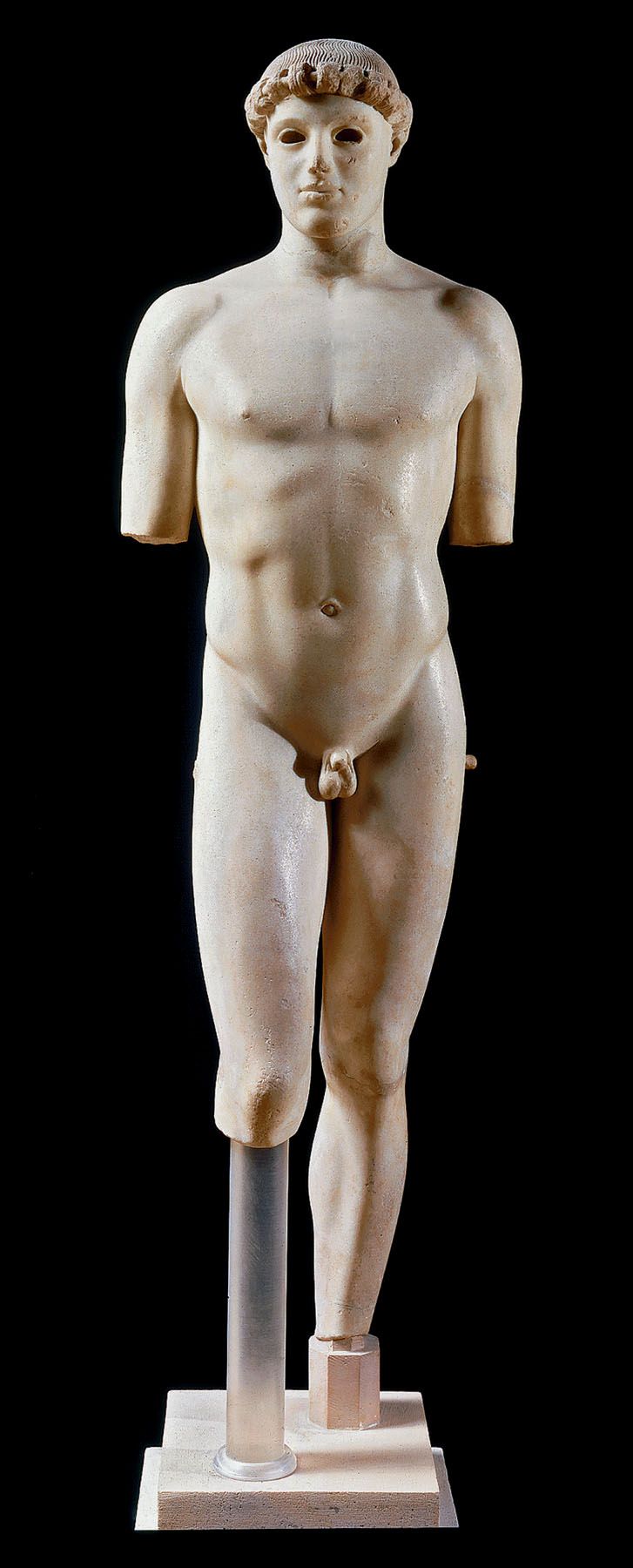
Kritios Boy
c. 480 B.C.
Early Classical
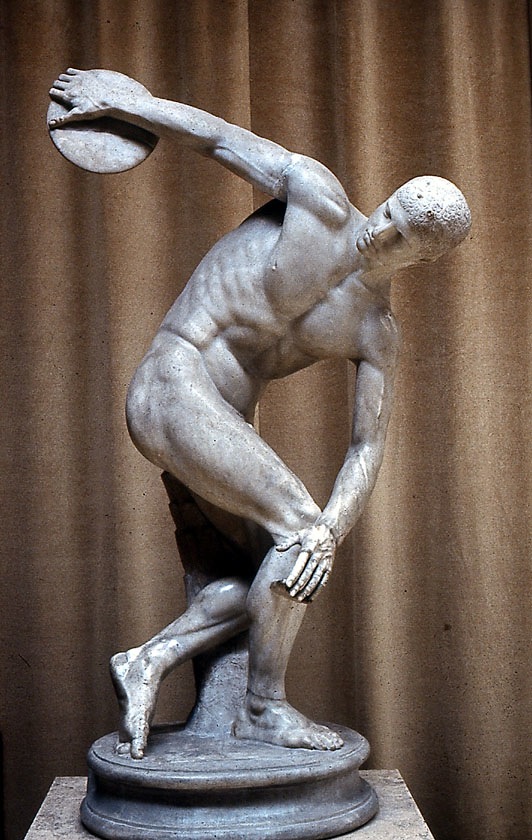
Myron
The Diskobolos
c. 450 B.C.
Early Classical
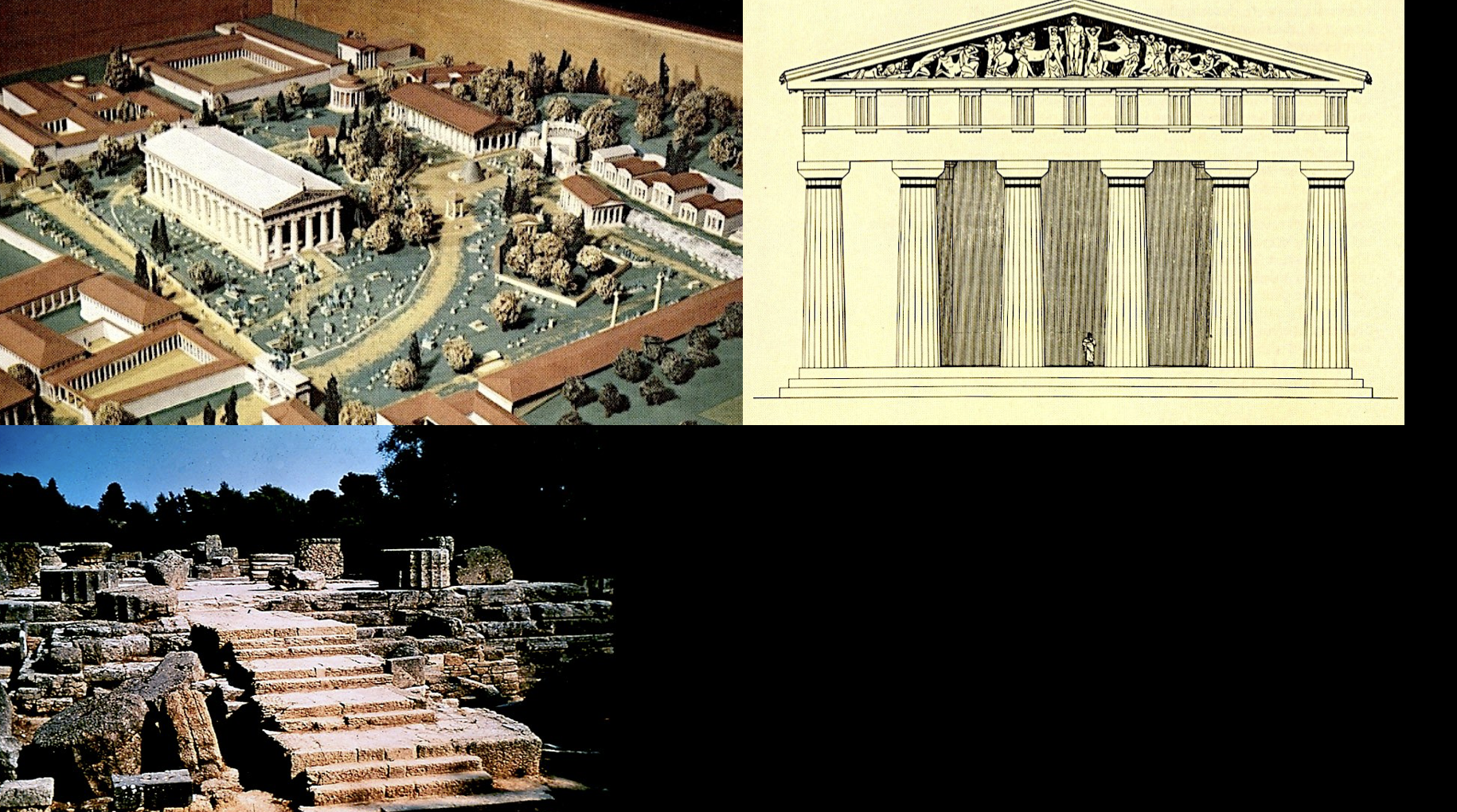
Temple of Zeus at Olympia
Finished c. 460 BCE
West Pediment of the Temple of Zeus: Battle of Lapiths and Centaurs
“Severe” style
The Early Classical style is also called the “severe” style. It uses:
Heavy features
Thick eyelids
“doughy” drapery
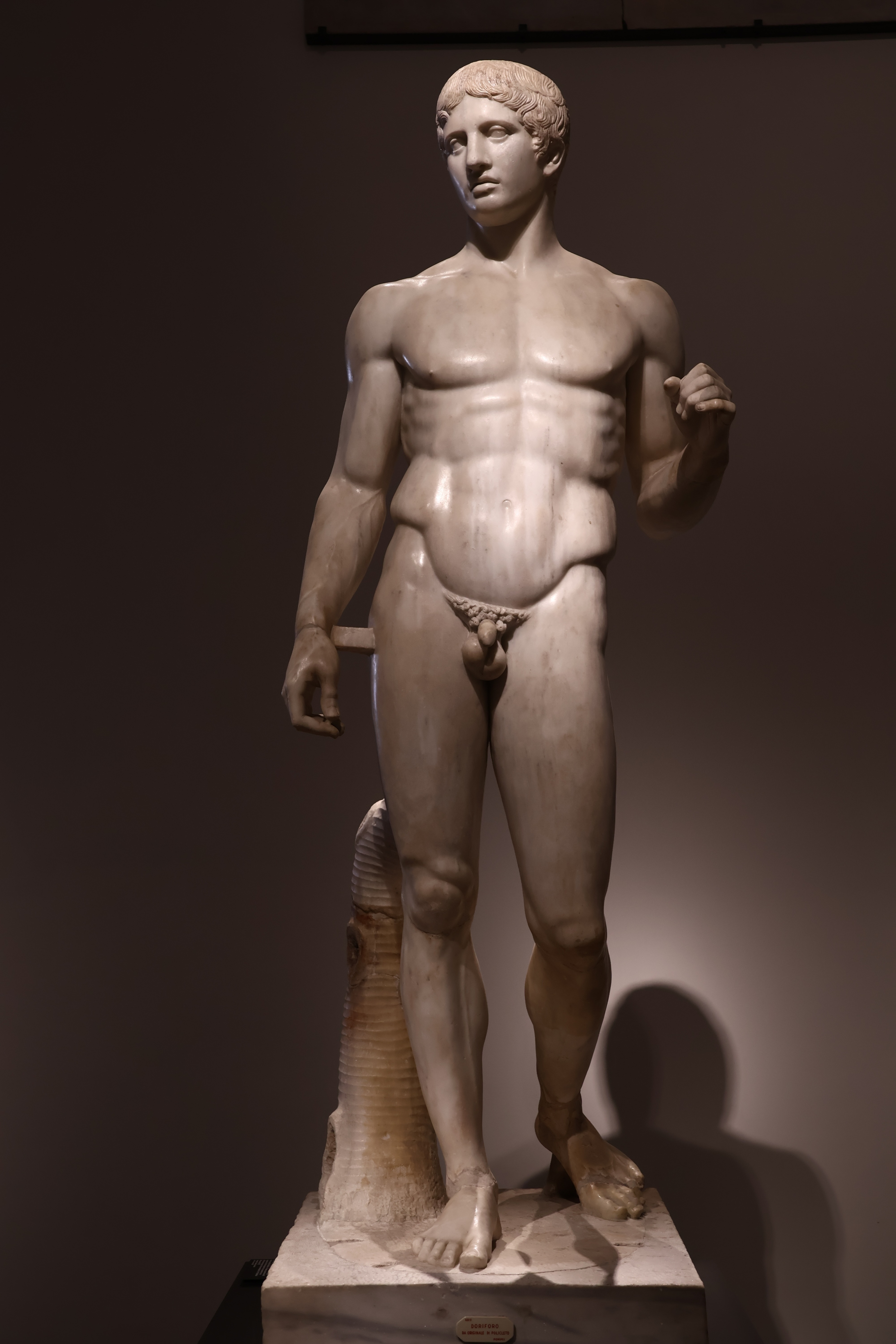
Polykleitos
The Doryphoros (Roman Copy)
Original: c. 440 B.C.
High Classical
MOST CLASSICAL GREEK SCULPTURES WERE MADE OF BRONZE!!
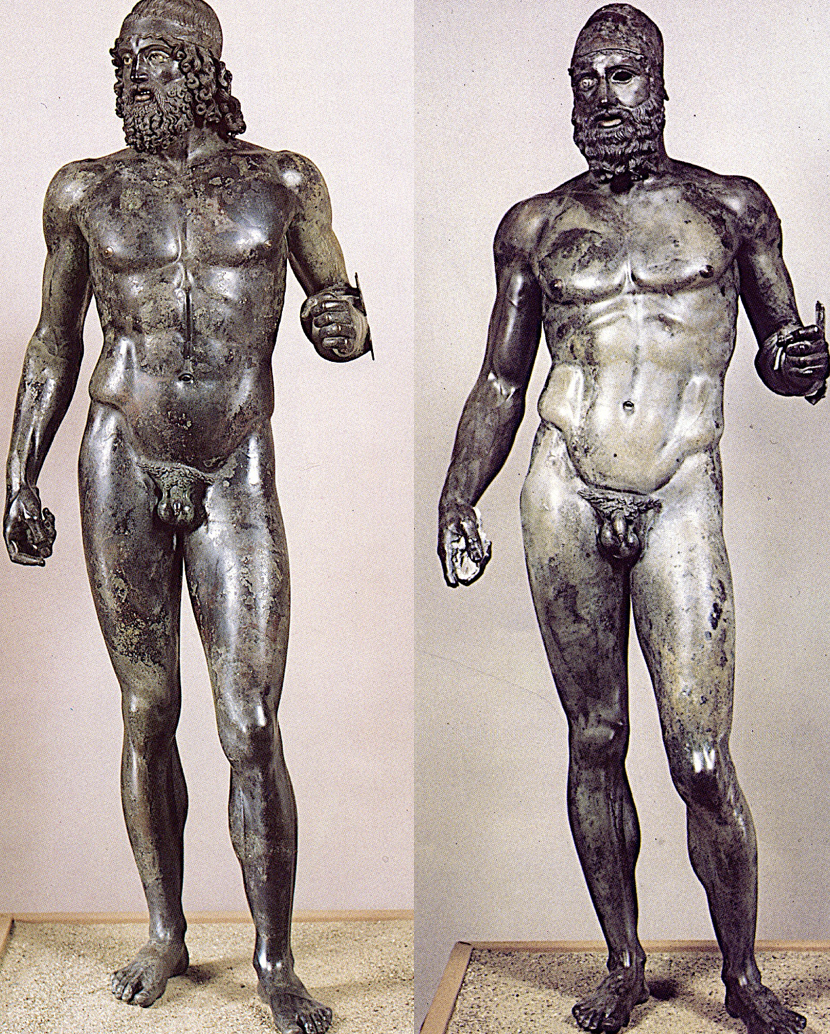
Riace warriors
c. 440 B.C.
Discovered in Mediterranean Sea
High Classical
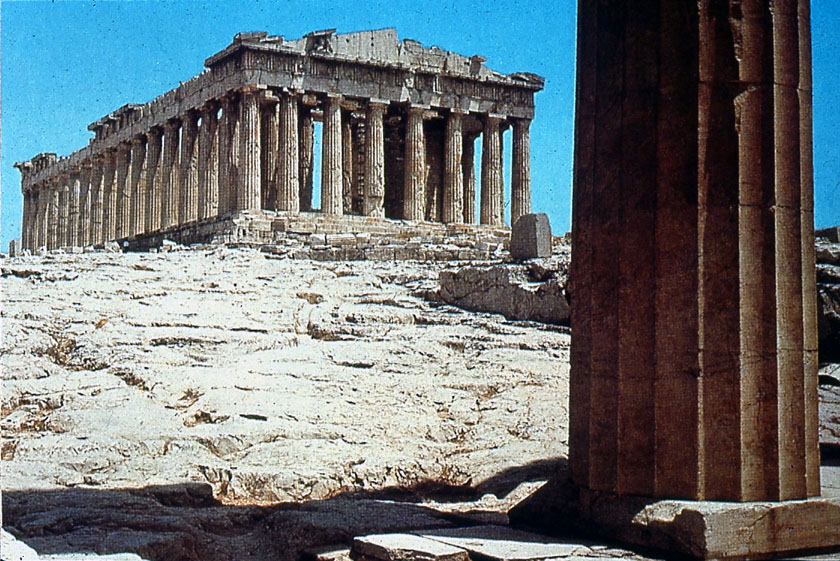
The Parthenon
Architects: Iktinos and Kallikrates
Sculptor: Pheidias (creator/supervisor)
447-432 BCE
Not really a real temple!! There was no cult associated with the Parthenon/Athena Parthenos. It was more like a gigantic votive offering.
There was a giant chryselephantine (gold and ivory) statue of Athena inside called the Athena Parthenos, made by Pheidias, 40 ft high!!
Not a true Doric temple because it includes Ionic elements. WHY MAY THE ARCHITECTS HAVE CHOSEN TO USE BOTH ORDERS? (Think about what we saw with the mixing of styles in the Audience Hall (Apadana) at Persepolis…
The first monumental temple built entirely in marble (they only used limestone earlier).
Parthenon Frieze: A continuous (ionic style) frieze running around the outer walls of the naos/cella
Sides of the Parthenon:
Each of the four sides of the Parthenon had a different theme illustrated in its metopes: Lapiths vs. Centaurs, Gods vs. Giants, Greeks vs. Amazons, Greeks vs. Trojans.
As is often the case in Greek art, these four mythical conflicts can all be taken to symbolize civilization’s conquest of “barbarism”/the Greek victory over “barbarians,” i.e., the recent defeat of the Persians.
(Was this extremely chauvinistic of them? Of course it was…art can give us major insights into a culture’s self-conception)
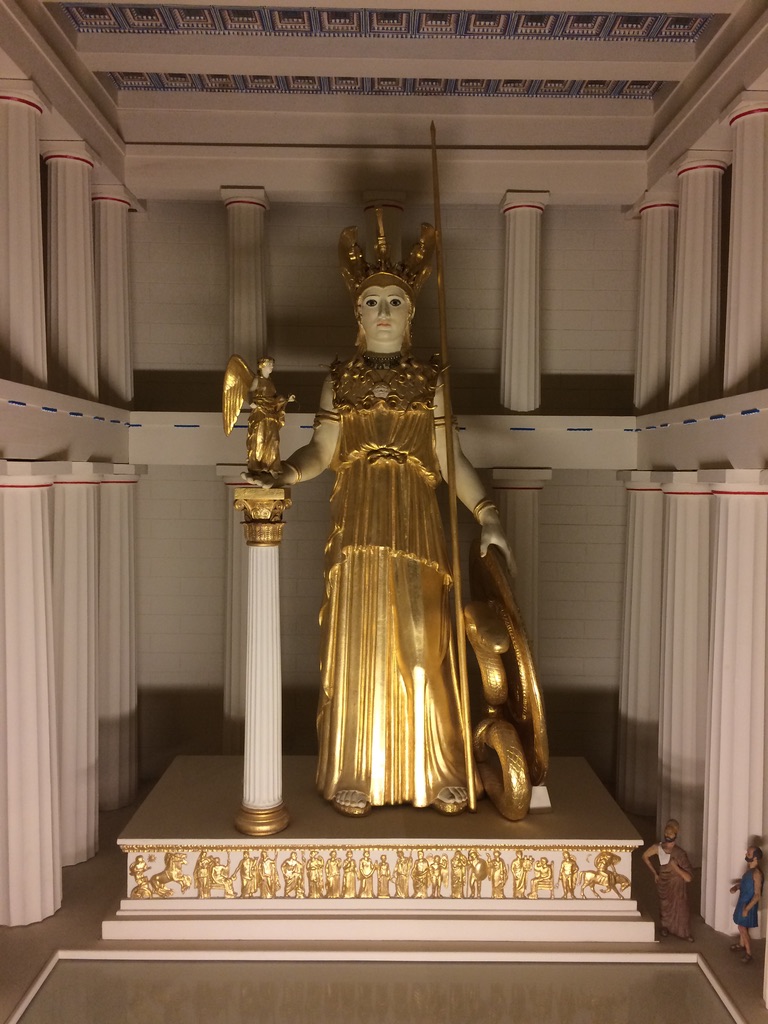
Small-scale model reproduction of Pheidias’ chryselephantine Athena Parthenos statue
Royal Ontario Museum, Toronto
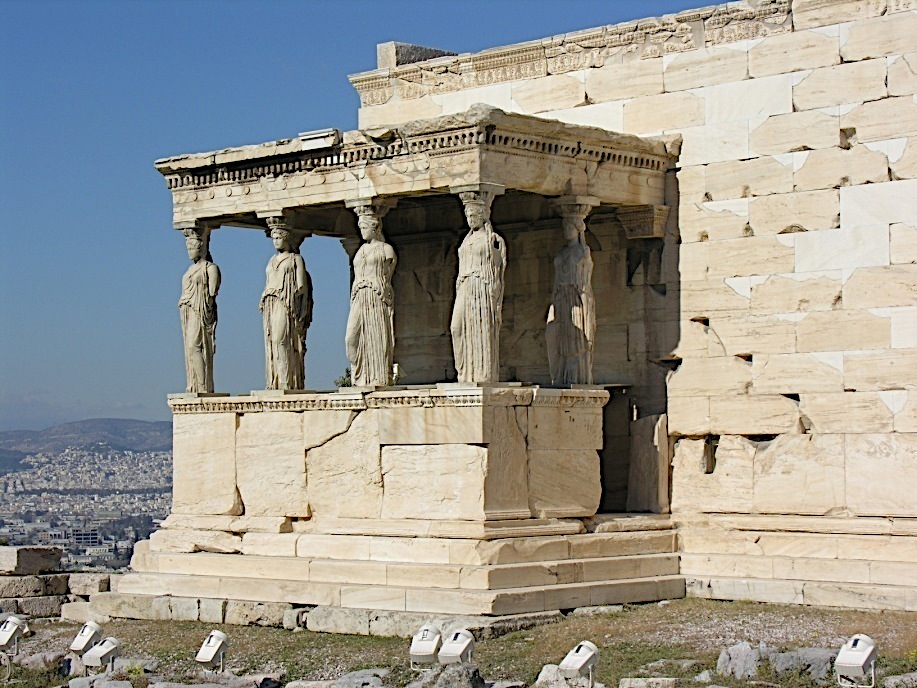
The Erechtheion (Erechtheum)
THIS was actually the holiest building on the Acropolis. It housed several sites and objects associated with the earliest mythic/legendary history of Athens, including the ancient wooden image of Athena, the “Athena Polias,” which was the focus of the Panatheneia festival.
Krater
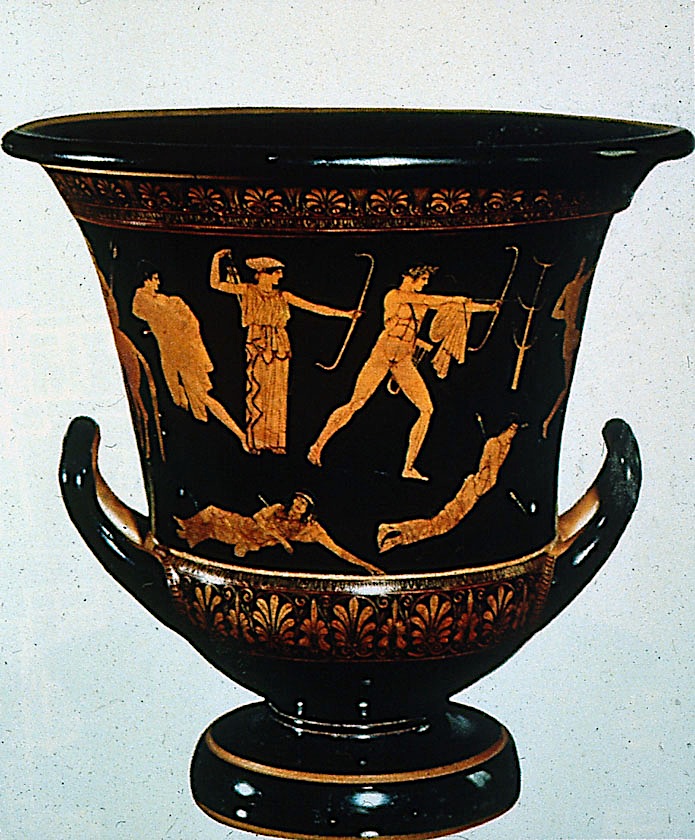
Calyx Krater
Niobid painter
c. 460 – 450 B.C.
High Classical
Once the possibilities of archaic vase painting were exhausted, vase painters attempted to experiment with perspective. They paid less attention to sensitively modeling the design/composition based on the shape of the surface of the vase.
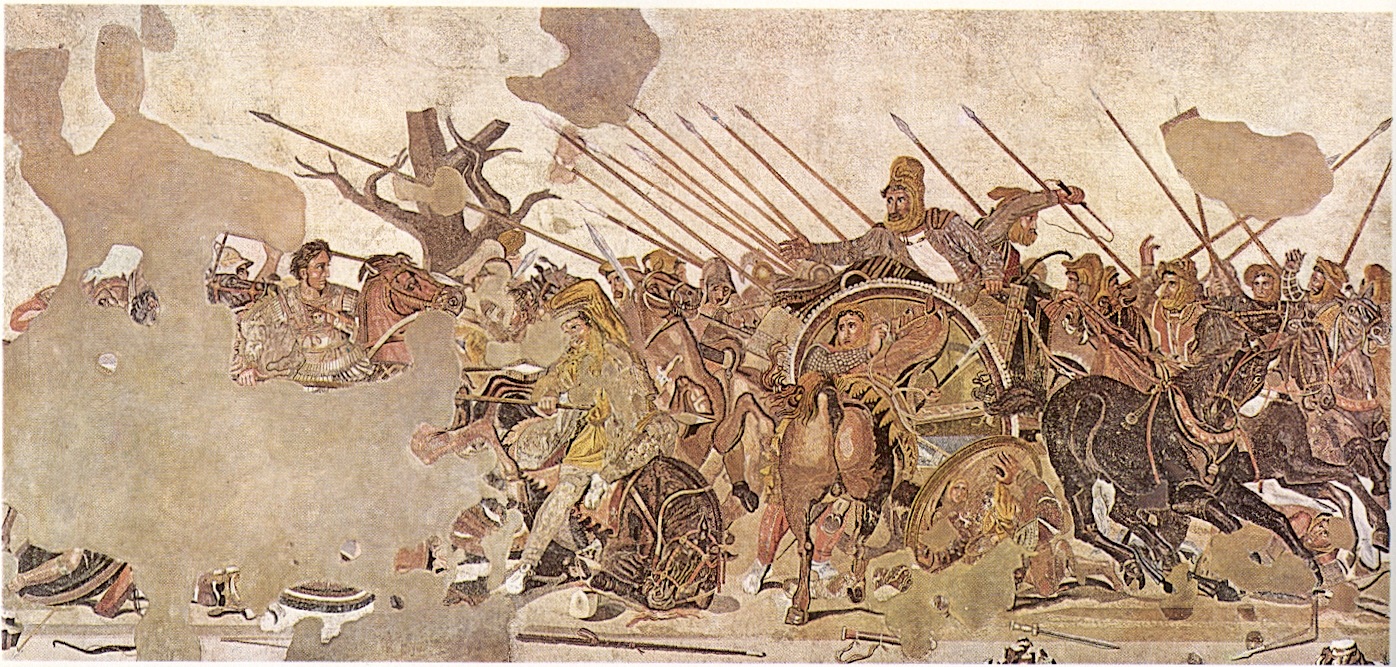
Alexander Mosaic, based on a painting of c. 300 B.C.
What narrative and artistic devices are being used here? What is happening?
Left: Alexander + Right: Persian King Darius III
Late Classical
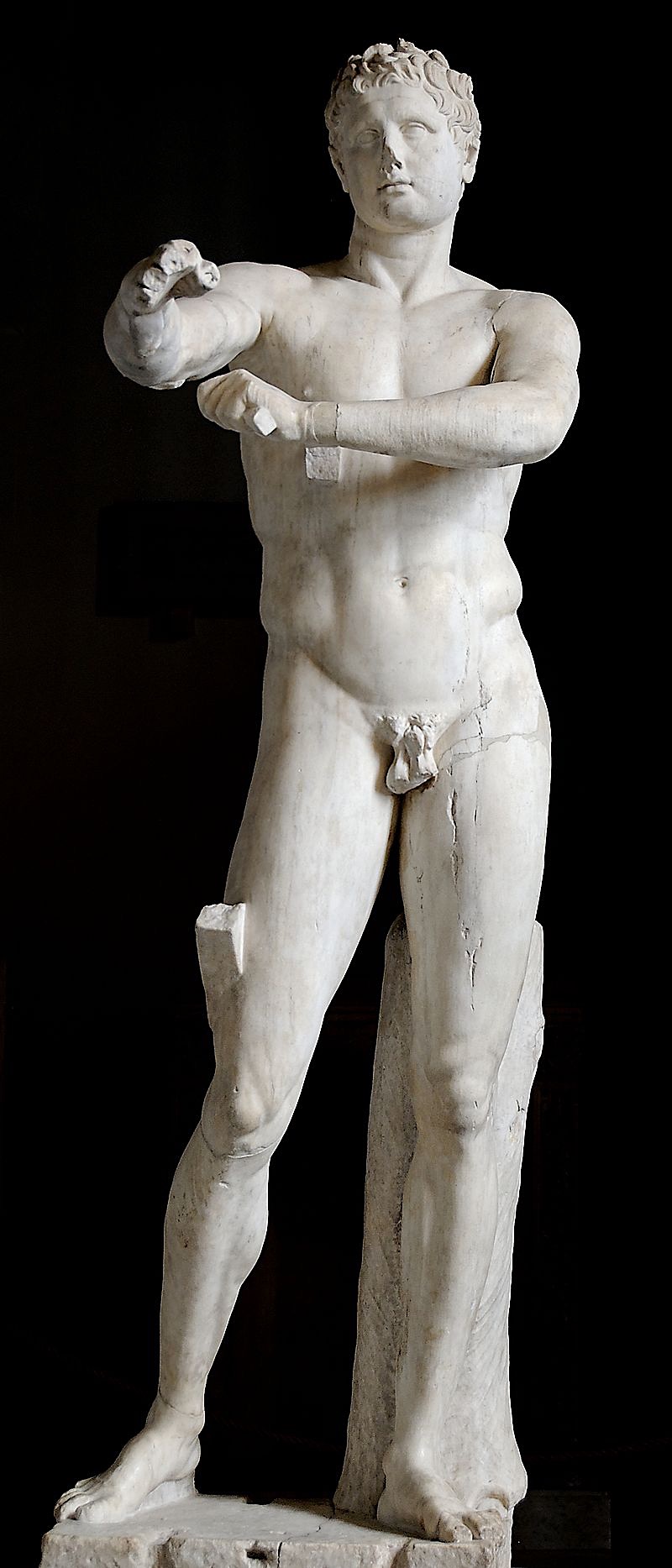
Lysippos
Apoxyomenos (Roman copy)
Original: c. 340 B.C.
Late Classical
The “new canon” of proportions
Ancient Bronze Strigil or “Scraper”
The “new canon” of proportions
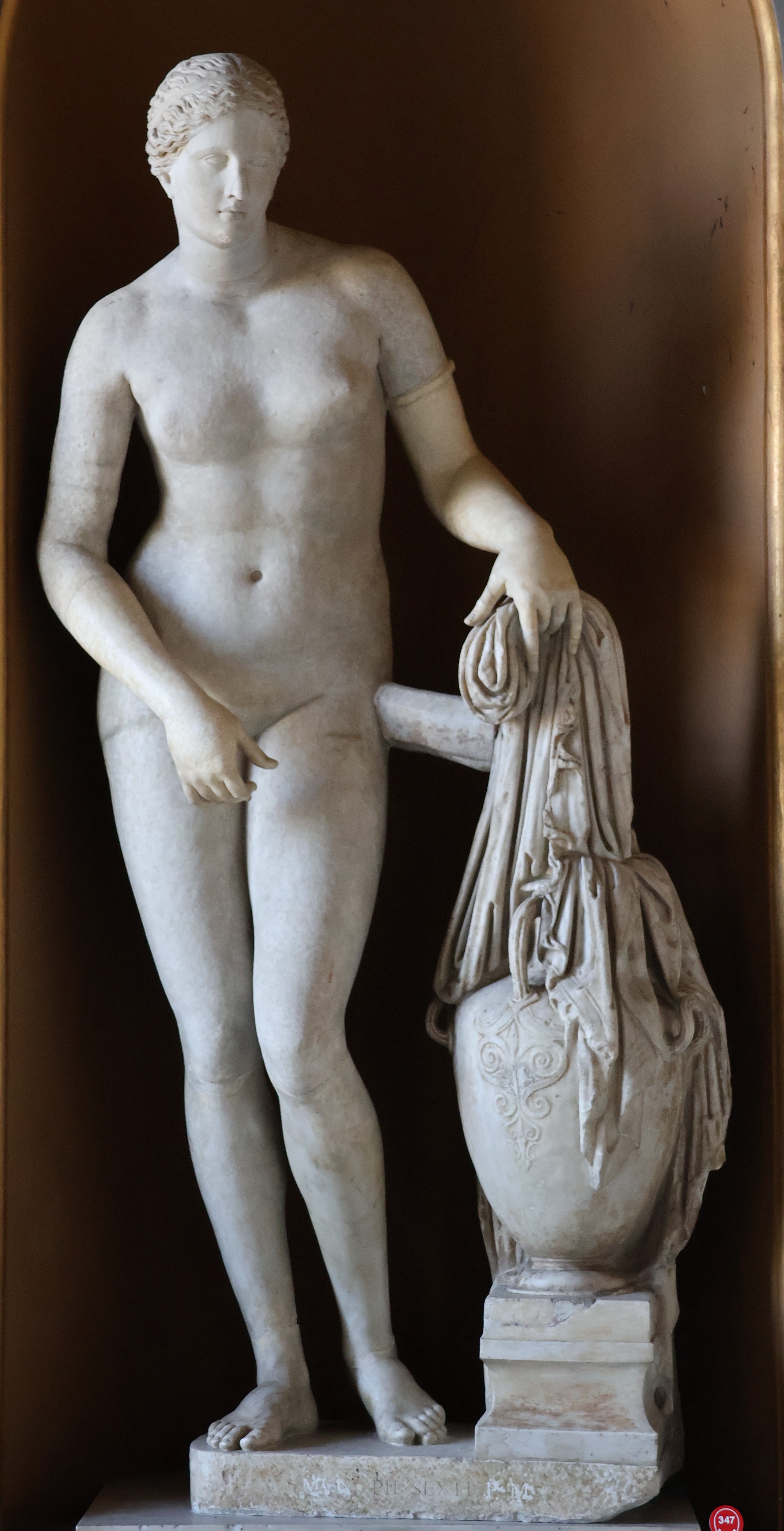
Praxiteles
Aphrodite of Knidos (Roman Copy)
Original: c. 340 B.C.
Late Classical
First major female nude in Greek art!!
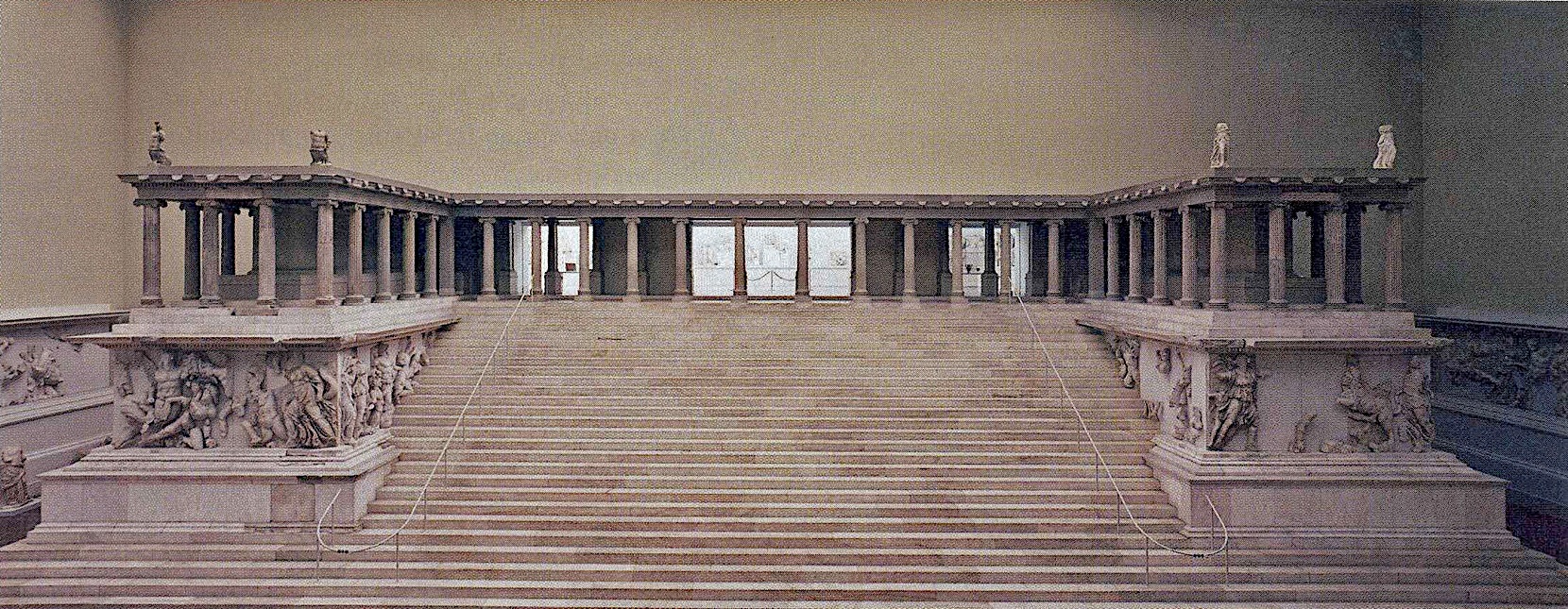
The Great Altar of Zeus at Pergamon, Asia Minor
(Now reconstructed in Berlin)
200-150 BC
Hellenistic
Facts:
King Eumenes: Comparing his exploits with the gods
Civilization defeating the barbarians (this time: Pergamon defeats Gauls)
Equating the Golden Age of Pergamon with the Golden Age of Athens – yet outdoing Athens at the same time!
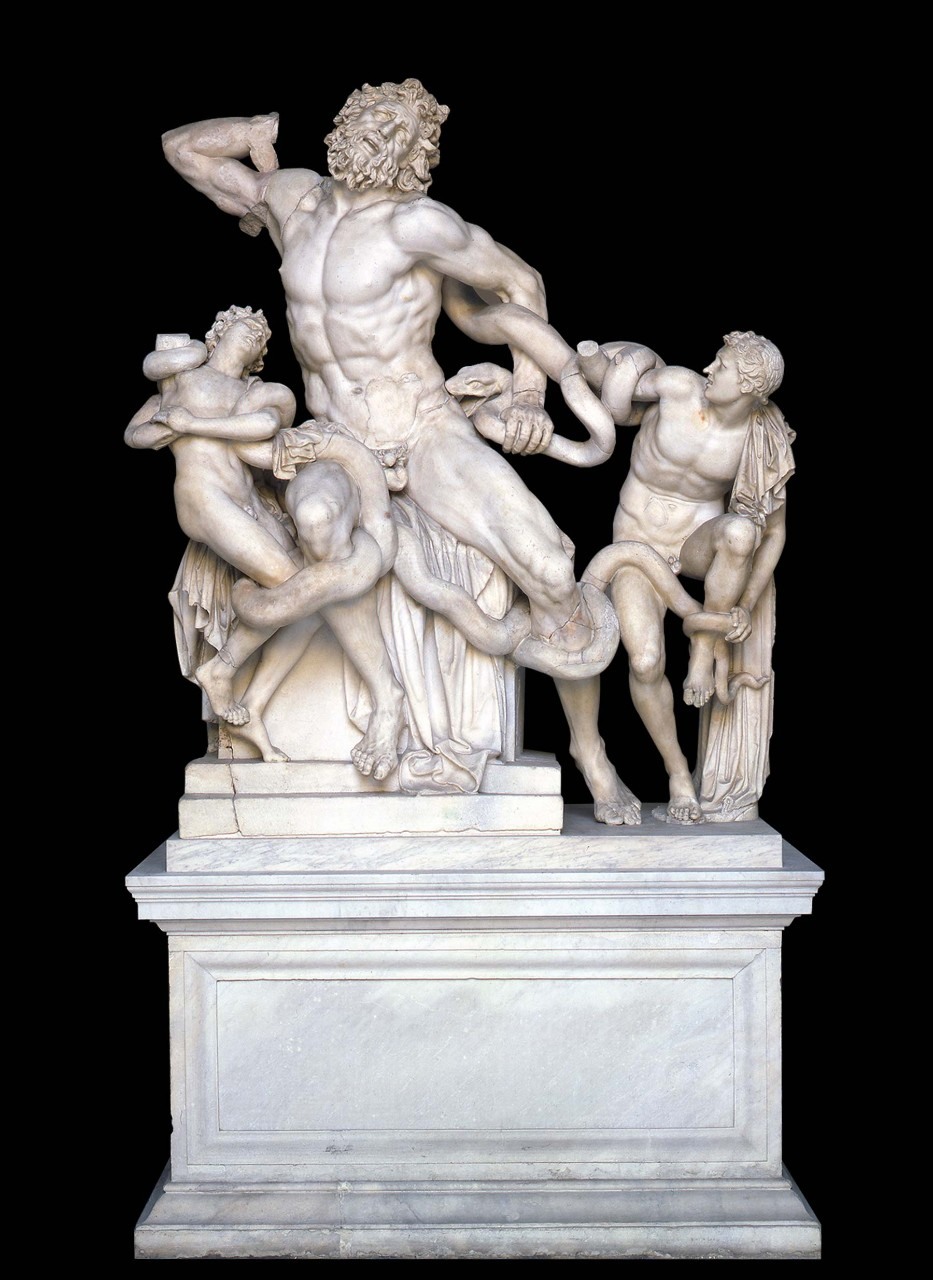
Laokoon
c. 150 BC (original)
How does this show the “Hellenistic Baroque” style?
“Hellenistic Baroque” Style
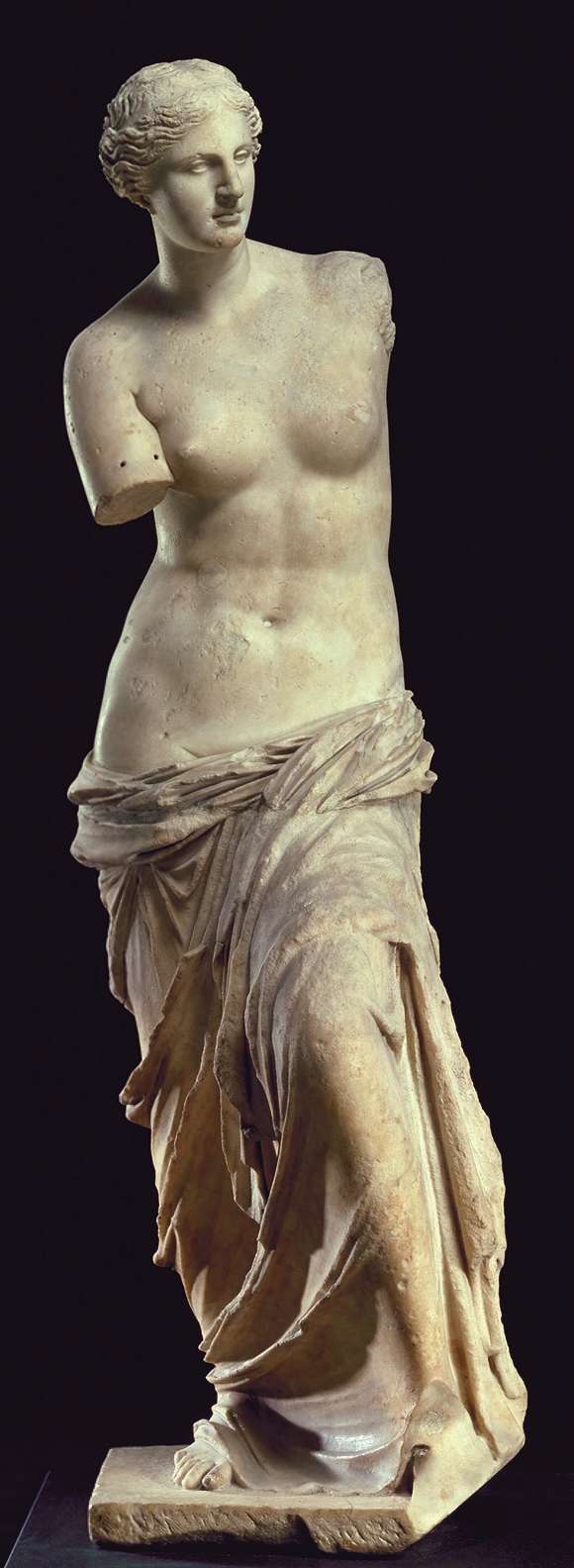
Aphrodite of Melos (“Venus de Milo”)
Original work by Alexander of Antioch
c. 80 BCE
Hellenistic
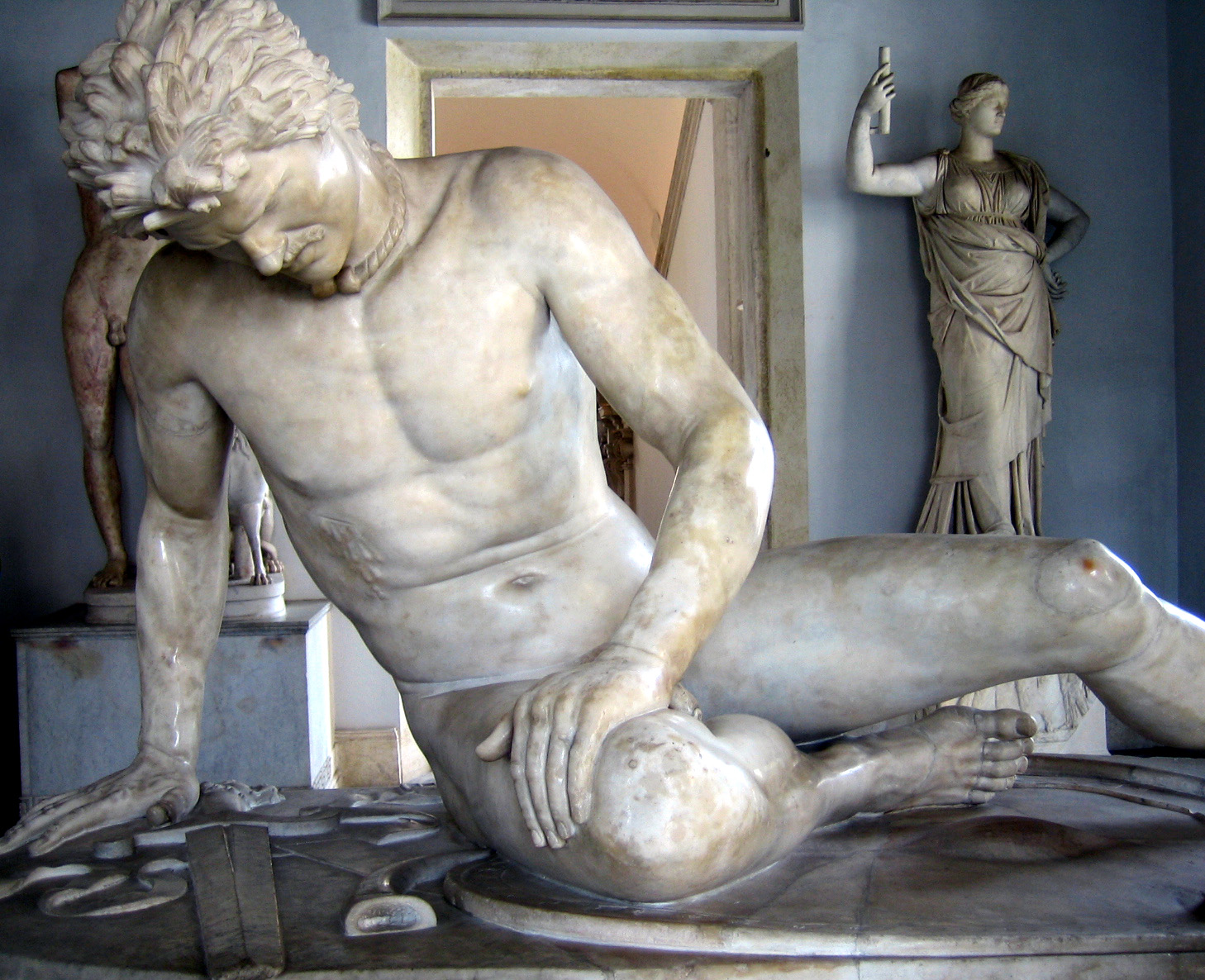
Dying Gaul
Roman copy of an original sculpture from a Hellenistic victory monument in Pergamon?
c. 200-150 BCE
Hellenistic
Facial hair distinguishes him as a “barbarian”
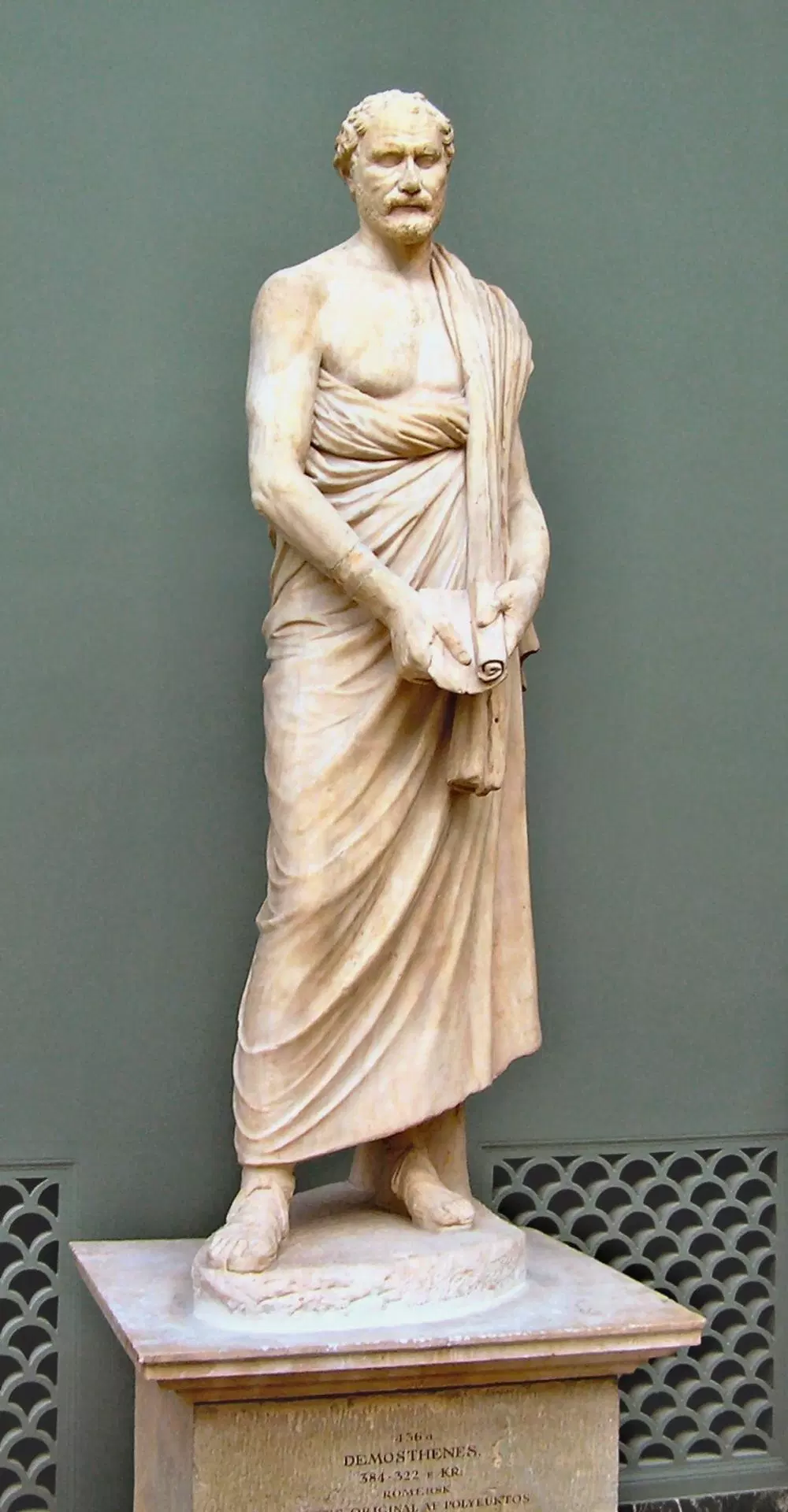
Roman copy of a posthumous portrait of the orator Demosthenes
Original: c. 280 B.C.
 Note
Note  Flashcards (30)