Art Nouveau and the Vienna Secession
 Studied by 0 people
 Call Kai
 Learn
Learn Practice Test
 Spaced Repetition
 Match
Match Flashcards
 Knowt Play
1/96

There's no tags or description
Looks like no tags are added yet.
Name | Mastery | Learn | Test | Matching | Spaced | Call with Kai |
|---|
No analytics yet
Send a link to your students to track their progress
97 Terms
Late 19th century
This is the period of relative peace and prosperity in continental Europe. Larger upper and upper-middle classes were created due to economic growth that led to new and experimental directions in design.
Vienna Secession
During the late 19th century in Austria, Vienna became the center of design direction which was the _________________. It is a development that can be viewed as a separate but parallel manifestation of Art Nouveau.
New Art
Art Nouveau literally means _______________ in French.
Art Nouveau
______________ was an artistic movement that flourished from the late 19th century to the early 20th century, roughly between 1890 and 1910.
Jugendstil
In Germany and the Scandinavian countries, the German term ____________ (the “young style” or “style of youth”) was generally used.
Liberty style
In England, where Art Nouveau was at first simply an aspect of the Aesthetic movement, the term ______________ came into use — taken from the name of the London shop that offered objects related to Art Nouveau directions.
historical,
Art Nouveau was a reaction to the academic art styles of the time, aiming to break away from ______ imitations and create a new, _______ aesthetic.
iron, glass, industrial production, electric lighting
Art Nouveau design has a willingness to take advantage of modern materials such as ____________ and __________, modern techniques (_____________), and innovations such as _____________.
Curvilinear forms, whiplash
______________ are the dominant themes in both the basic structural elements and in ornamentation of Art Nouveau. The relationship to the generally curving and flowing forms of nature gave rise to the S-curves or “__________” curves usually regarded as the most visible Art Nouveau motif.
L’Art Moderne
The term Art Nouveau first appeared in the Belgian journal _______ in 1884, referring to a group of reform-minded sculptors, designers and painters called Les XX (or Les Vingts).
Britain
Art Nouveau surfaced in many fields and in many places, it is difficult to trace an orderly developmental progression. It is usual to say that Art Nouveau first appeared in France and Belgium, but it is probably more accurate to identify __________ as the point of origin.
painting, bas-relief, sculpture
Art Nouveau is known to have a close relationship with fine arts, incorporating _______, _________, and _______ into architecture and interior design.
Bas relief
Sculptural technique where figures and other design elements are raised from a flat background, creating a visually captivating interplay of depth and shadow.
nature forms
Art Nouveau is known for the use of decorative ornamentation based on _______________ —— flowers, vines, shells, bird feathers, insect wings, and abstract forms derived from these sources.
Whiplash/s-curves
Art Nouveau motif
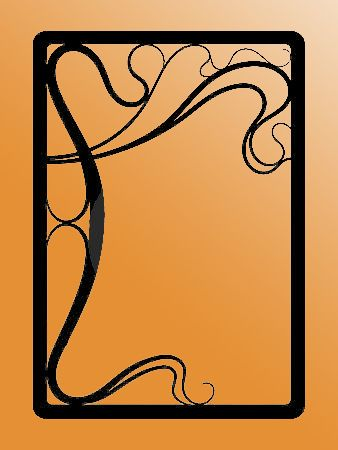
Whiplash curves
regarded as the most visible Art Nouveau motifs
Victor Horta
The Belgian architect and designer ____________ produced an extensive body of work that shows off all of the qualities that re typical of Art Nouveau design. In his own house Horta house, and adjacent office-studio in Brussels, it features asymmetrical façade with iron balconies and large windows, and is now a museum.
Horta House
In his own house______________, Victor Horta included tiled walls and ceiling built-in cabinets, woodwork with stained-glass inserts, electric lighting fixtures, and furniture with flowing Art Nouveau curves all to his own design. The white tiles and the use of color are typical of Art Nouveau style.
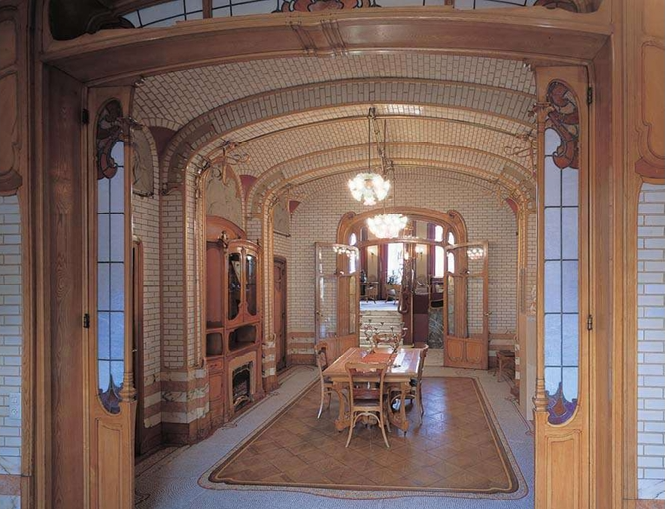
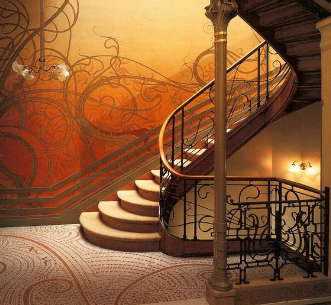
Tassel House
The ______ _____ (1892) in Brussels has a symmetrical row-house façade, but its interior contrasts with Victorian design by featuring open, fluid spaces. It includes flowing iron railings, support columns, and curving electric light fixtures, with similar decorative elements extending to the walls, ceilings, and mosaic tile floors.
van Eetvelde House
The _________________ in Brussels (1895) by Victor Horta contains a remarkable salon where iron columns support a glass dome in a relationship technically suggestive of the Crystal Palace, but here with the introduction of the florid curves of Art Nouveau.
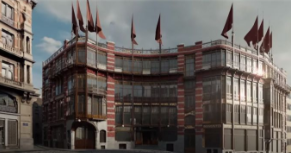
Maison du Peuple
Horta’s _____________________, now demolished, was a larger building with an iron and glass facade curved to follow the form of the adjacent street. Its top-floor meeting hall, with exposed iron structural elements and great electric light standards, suggests directions that the 20th century was to explore.
Henry van de Velde
The second significant Belgian Art Nouveau practitioner was ________________ whose own house of 1894 also exemplified the Art Nouveau desire to create everything in a new and unified mode.
He moved from Brussels to Paris where he was the designer for Samuel Bing's L'Art Nouveau shop, which named the movement. Influenced by British design, he bridged British and continental Art Nouveau.
L'Art Nouveau
Henry van de Velde moved from Brussels to Paris where he was the designer for Samuel Bing's _________________ shop, which named the movement. Influenced by British design, he bridged British and continental Art Nouveau.
Art School Building
Henry van de Velde’s work in Weimar that he designed in 1904-11. This became the building that housed the post-World War I Bauhaus at its inception.
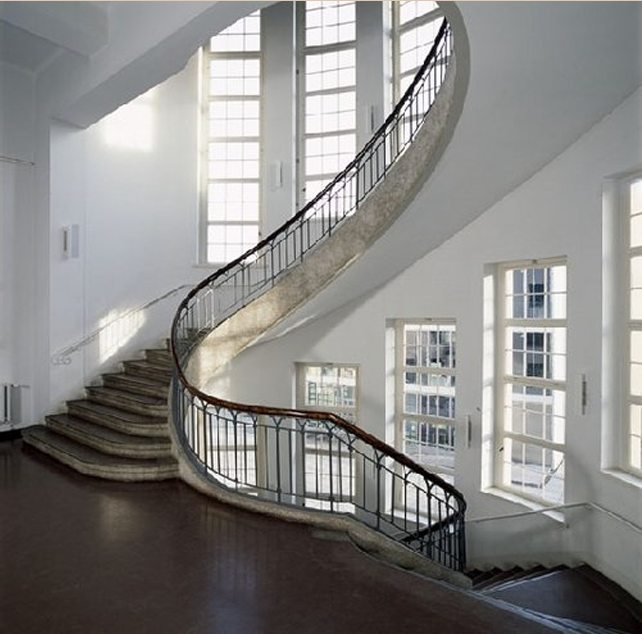
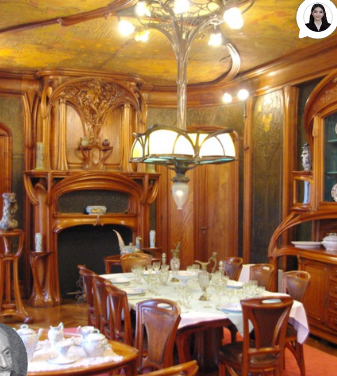
Salle A Manger Masson
Designed by Eugene Vallin, a 1903 house, now a museum, showcasing a quintessential Art Nouveau dining room with intricate, curvilinear details in woodwork, moldings, and furniture.
Emile Galle, Louis Majorelle
Other designers such as the master of decorative craftsmanship in glass, _____________ and furniture designer, _____________ were included in the creation of the School of Nancy
Louis Majorelle
_________________ was among the most celebrated of the Art Nouveau designers, working out of a modern workshop in Nancy, France.
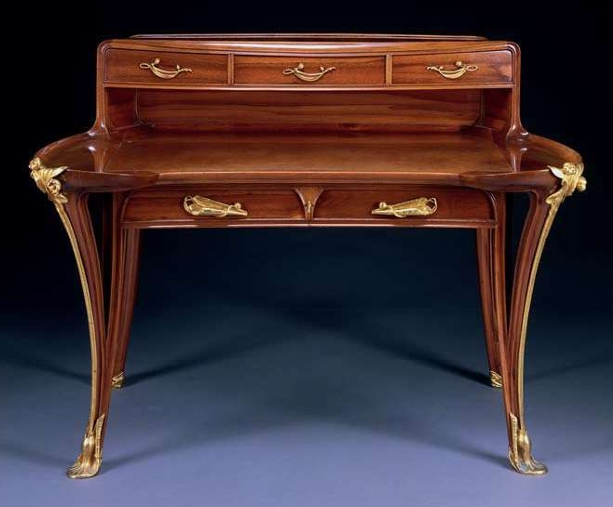
Louis Majorelle
Artist of this mahogany desk with ormolu mounts. This desk has the characteristic flowing lines following Hogarth’s “Line of Beauty,” and the curvilinear, nature-inspired ornamentation of the turn of the century.
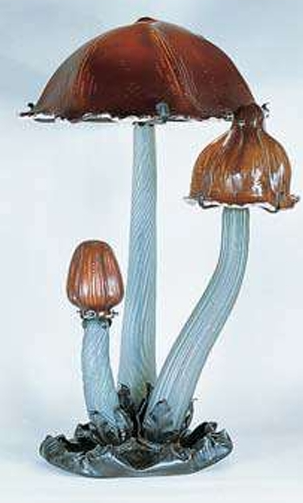
Les Coprins
A table lamp by Emille Galle (1902). This Art Nouveau lamp uses glass stems and shades to house three electric lightbulbs. It has been suggested that the three fantastic mushrooms represent the three ages of man: infancy, adolescence, and maturity. The florid forms and bright color are typical of French Art Nouveau design.
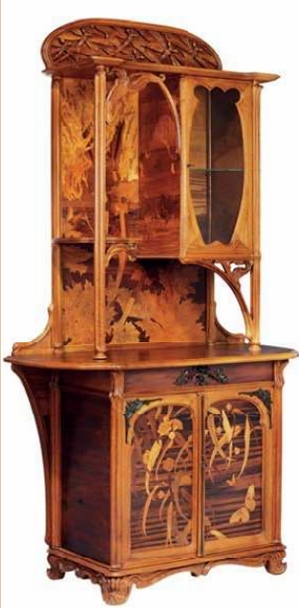
Libellule cabinet
A cabinet by Emille Galle (1900).
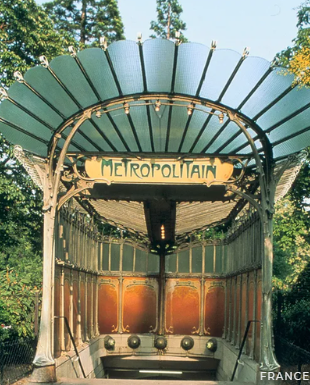
Hector Guimard
He is best known for the iconic Paris Métro entrances. His work, often whimsical, is celebrated as a hallmark of Art Nouveau. He used standard elements of metal that could be assembled to form entrance kiosks of varied size and form. All made use of curved details with naturerelated forms.
Porte Dauphine Station
Paris Metro Entrance in France by Hector Guimard.
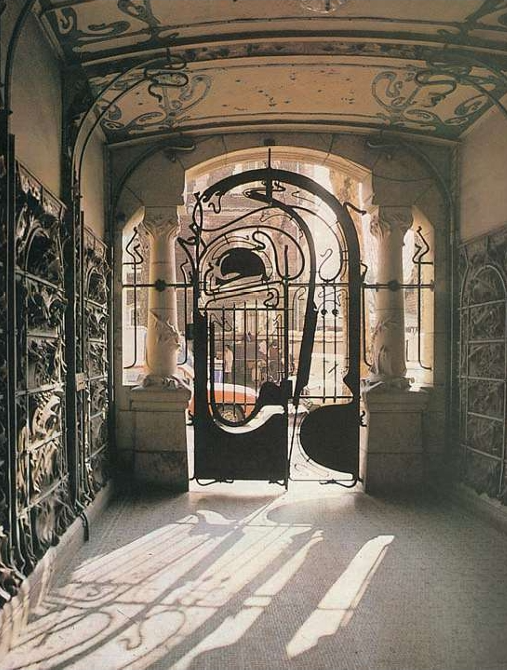
Castel Béranger
______________ is a six-story Paris apartment by Hector Guimard in the
Art Nouveau style. Its entrance arch, iron gate, and decorative details feature swirling, whiplash forms and pastel colors. The courtyard includes a bronze water hydrant sculpture, and interiors, including Guimard's own apartment, highlight his signature designs.
Castel Béranger
In the vestibule of this apartment, _______________, Guimard uses uniquely designed terracotta wall tiles, metal wall details that continue up to a painted ceiling, and an entrance gate of metal. All these elements use the following curves of Art Nouveau. The cream background and blue-green painted detail explore the pastel palette favored by Art Nouveau designers.
Hector Guimard
His group of furniture were assembled for an exhibit at the Museum of Modern Art in New York.
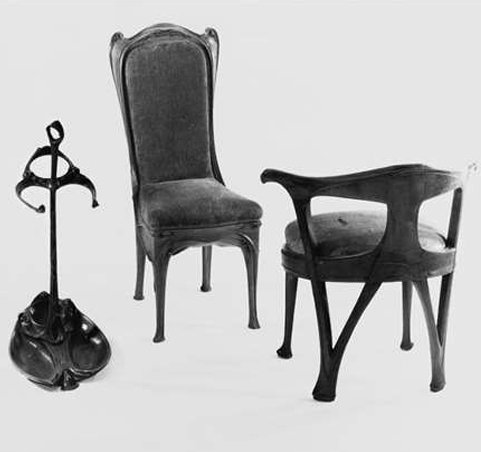
Bone-like/bones
Hector Guimard’s group of furniture is inspired by ____ structure.
L'Art Nouveau
The Paris shop ________________—, founded by Samuel Bing in 1895, played a key role in popularizing this style.
Samuel Bing
He founded the Paris shop L'Art Nouveau, a shop that popularized the style.
Edouard Colonna, Eugene Gaillard
Among the designers promoted by Bing, German-born _____________ and _____________ were both known for their design of furniture and jewelry.
Rene Lalique
______________ was a designer of textiles, jewelry, framed mirrors, and lamps, but is best known for his work in glass.
Antoni Gaudi
_____________ emerged as a leading figure of the Art Nouveau style in Spain, creating a unique visual language marked by flowing curves and intricate decorations. Notable examples of his work include the Casa Batlló (1904-1906), known for its bone-like façade and whimsical interiors.
Casa Batllo
The dining room of _________________ by Antonio Gaudi. It contains table and chairs, door and window frames, paneling, hanging light fixtures, and flowing plaster ceiling forms in Gaudi’s highly personal form of Art Nouveau.
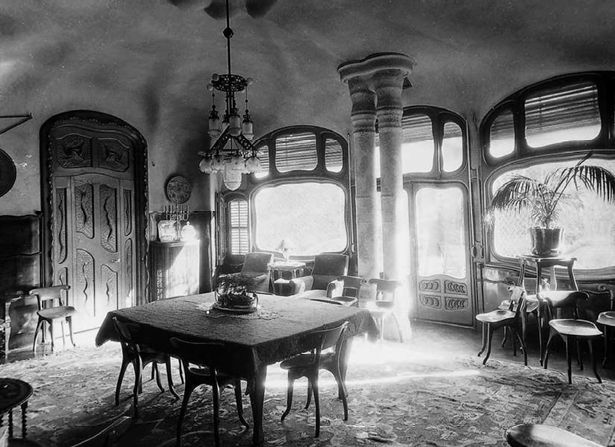
Casa Mila
_______________ (1904), also called La Pedrera (“the rock quarry”), is a large, six-story apartment house built around open courtyards. It has a rippling cement exterior with iron-railed balconies.
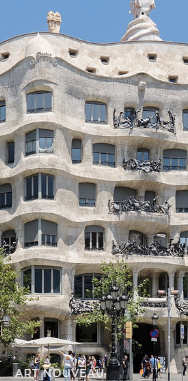
La Pedrera
Casa Mila is also called _______________ meaning “the rock quarry”.
Guell Park
The _____________ and the unfinished Sagrada Familia church exhibit Gaudi’s fantastic and highly personal stylistic vocabulary on a major scale.
Jugendstil
The name __________ which translates to "young style" or "style of youth" is derived from a periodical called Die Jugend (Youth), which was founded in Munich in 1869, but the style is essentially identical to the Art Nouveau directions practiced elsewhere in Europe.
August Endell
________________ was a Jugendstil designer, writer, teacher, and German architect who became well known for being the designer of several less spectacular buildings and some Art Nouveau furniture. His project in Atelier Elvira is what had greatly built up his reputation as a designer. Atelier Elvira (1896, now destroyed) was a small two-story building housing the studio of a photographer.
Atelier Elvira
Facade of _____________ in Munich by August Endell. The facade was penetrated by a doorway and a few small windows placed asymmetrically. Openings were of curious shape, rectangular with curving upper corners and it has no hints of any historical reference.
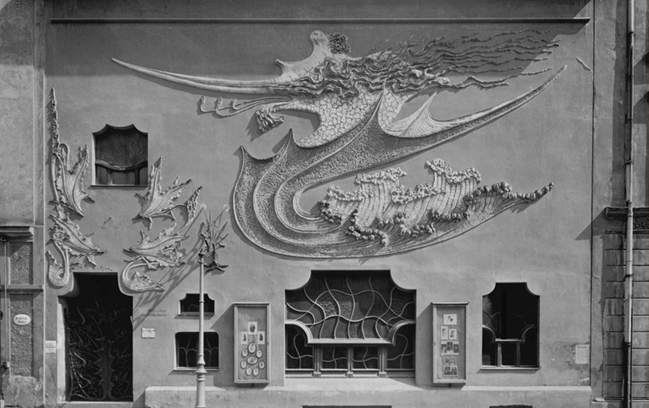
bas-relief
The Atelier Elvira features a __________________ of curving form, abstract, yet suggestive of waves or sea creatures, which dominated the blank upper wall surface. Window mullions were curved irregularly, as if they were made from stems of vines. Entrance hall and stairway made use of related fantastic decorative motifs.
Richard Riemerschmid
_______________ (1868-1957) was the designer of a music room for a Dresden exhibition in 1899 which included his furniture, lighting, and wall decoration.
Riemerschmid chair
A simple ___________________, named after Richard Riemerschmid, the designer himself, incorporated a diagonal side support which has come to be regarded as a “classic” design, the basis for several modern variants.
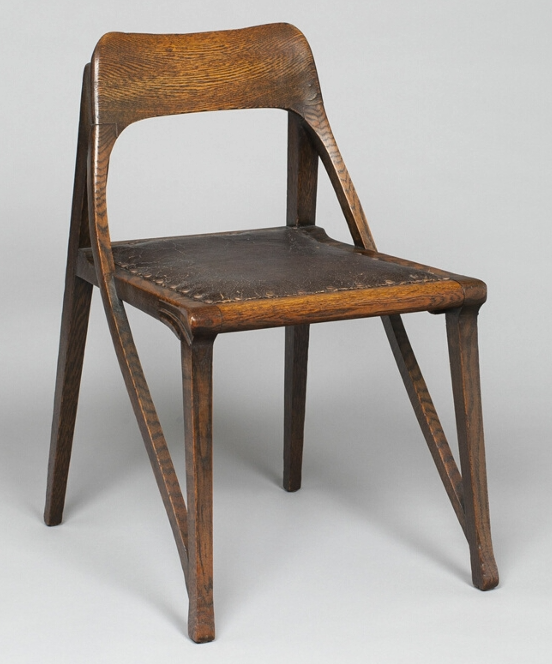
Bernhard Pankok
In 1900, Riemerschmid worked with _______________ (1872-1943) on the design of a dining room shown at the Paris exhibition of that year. This designer alone produced a “smoking room” for the same exhibition, lined with wood in carved and shaped forms that related to windows, ceilings, and light fixtures, all expressive of Jugendstil fantasy form.
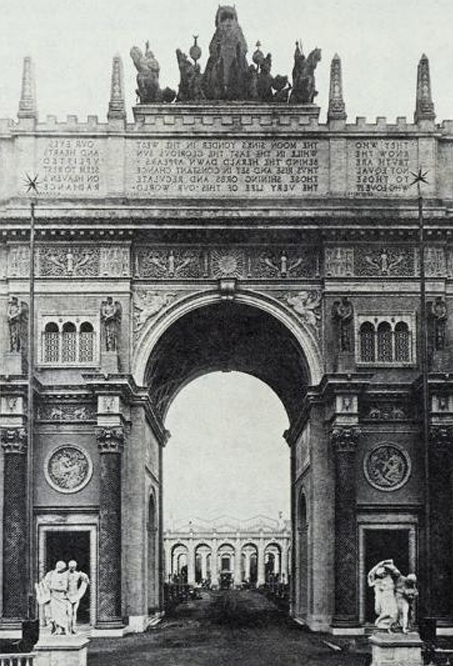
Finland, Romantic Nationalism
Jugendstil, or Art Nouveau, extended into Scandinavia, particularly in ______, where it found a unique regional expression. Toward the end of the 19th century, Finland experienced a design development usually called ____________.
Romantic Nationalism
The ___________________ movement sought to revive and rediscover the nation's identity with ancient Nordic themes dating back to the Viking era combined with vernacular draft traditions to produce work not unlike the American Adirondack style.
Peter Behrens
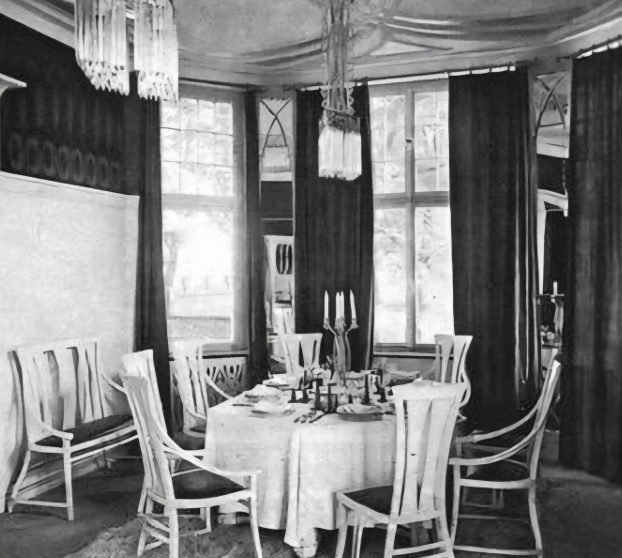
_____________ (1868-1940) also worked in the Jugendstil mode in his early projects, such as the interiors of his own house in Darmstadt (1901).
Behren’s house
Peter Behren, _____________, Darmstadt, 1901
Nordic, vernacular
Jugendstil movement combined ancient _____ themes and _____ crafts, similar to the American Adirondack style
Lars Sonck
_____________ (1870-1956) was influenced by brick-built churches in Germany which led him to produce such buildings as the cathedral (really a church of modest size) built at Tampere.
Eliel Saarinen
______________ (1873-1950), a Finnish-born American architect, designed the Helsinki Railroad Station which displayed a style transitional between Jugendstil and an early form of modernism.
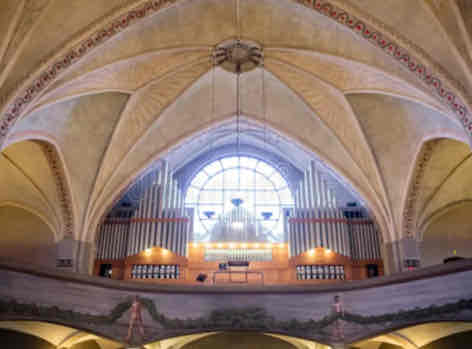
St. John’s Cathedral
Lars Sonch’s church in Tampere, Finland
Vienna Secession
______________ is the term used by a group of artists and designers who withdrew from the exhibitions of the Vienna Academy in 1897 in protest against the refusal of the academy to accept their modernist works. The formation of this movement marked the formal beginning of modern art in Austria which is a country known to have dedication to its highly conservation tradition.
Gustav Klimt
He is a painter who led Vienna Secession movement in 1897.
Joseph Olbrich
____________ designed the Secession Gallery (1897) in Vienna as an exhibition space and headquarters for the movement.
Secession Gallery
This building by Joseph Olbrich is symmetrical, rectilinear in form, and hints at classicism with its cornice moldings and other details; but there is also decorative detail based on nature-related motifs, carved leaves, and mask-like Medusa faces.
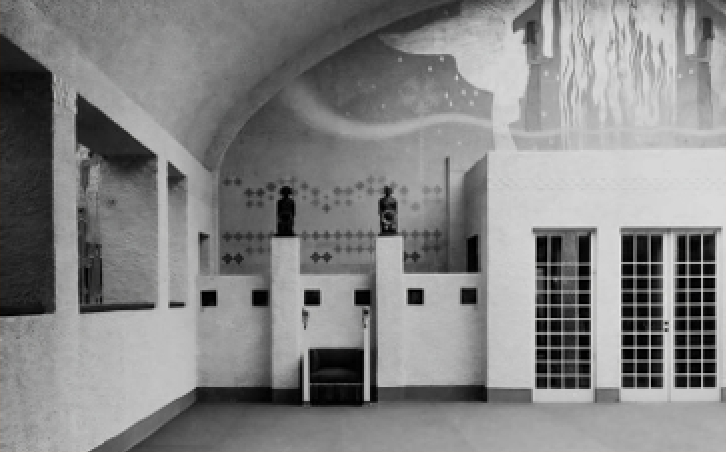
Mathildenhohe art colony
Joseph Olbrich's other works included many houses in the ____________, founded in 1899 in Darmstadt, Germany under the patronage of the grand duke of Hesse. Its exhibition hall and the Hochzeitsturm (Wedding Tower) used geometric decorative elements with proto-modernist rectangular forms.
Hochzeitsturm
Joseph Olbrich, ____________, Germany, 1905-8
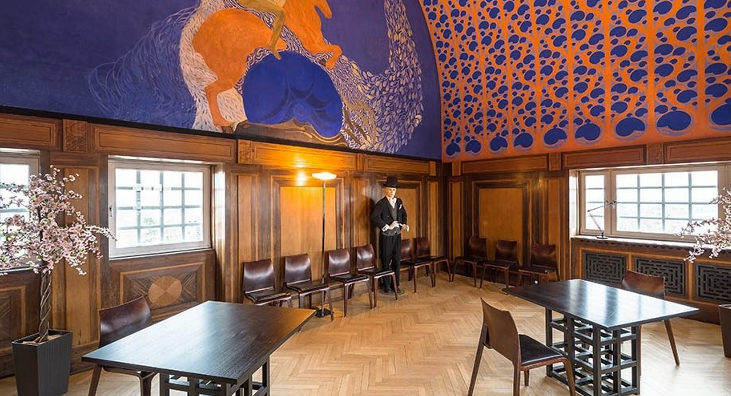
Austrian, Seccesion
As for Olbrich’s residential work, it combines traces of an __________ peasant vernacular style with the more original forms of __________ experimentation.
Otto Wagner
______________ who had an established architectural career working in a conventional revivalist style, moved toward a new direction with the publication of his book Moderne Architektur (1895), which called for the abandonment of historical revivalism in favor of design based on “purpose.”
Moderne Architektur
Otto Wagner who had an established architectural career working in a conventional revivalist style, moved toward a new direction with the publication of his book ______________ (1895), which called for the abandonment of historical revivalism in favor of design based on “purpose.” In this book, he coined the term “modern architecture” as a battle cry against the 19th century devotion to resurrecting historical styles. Wagner was criticizing the architectural practices of his time, and was rather advocating for an architecture responding to the people’s modern needs.
Gottfried Semper
Otto Wagner was inspired by the writings of ____________, particularly an essay entitled “Science, Industry and Art,” written in the 1850s.
Otto Wagner
Some of his major civic projects during the 1890s included the following:
Parts of a Danube canal system incorporating locks, bridges, and dams.
Viaducts, buildings, and architectural elements for an urban rail transport network called Stadtbahn.
Karlsplatz station
Some of Wagner’s major civic projects during the 1890s included entrance kiosks such as the twin structures at the _____________ in Vienna (1898) which used an externally visible metal cage structure to hold wall panels of marble and glass.
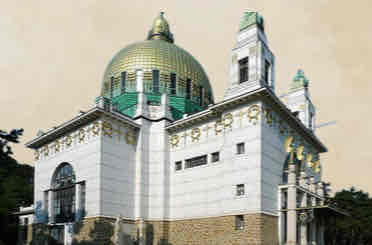
S. Leopold am Steinhof
The large church of ________________ was another work by Wagner in Vienna described as having a tall dome of iron construction supporting a copper exterior. Its interior displays a broad crossing formed by the cruciform plan topped by a low internal dome lined with a light, suspended ceiling of square white panels held by thin metal strips painted gold
Postal Savings Bank
Bank by Otto Wagner. The best known among all projects of Wagner is the large headquarters for the Austrian __________________.
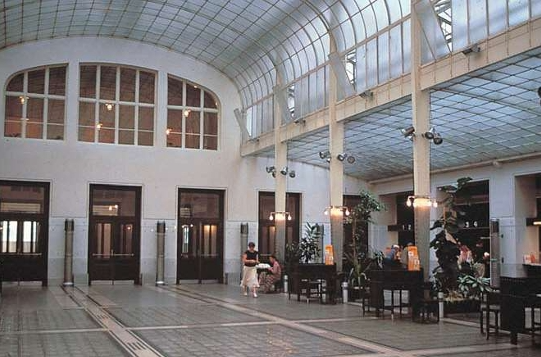
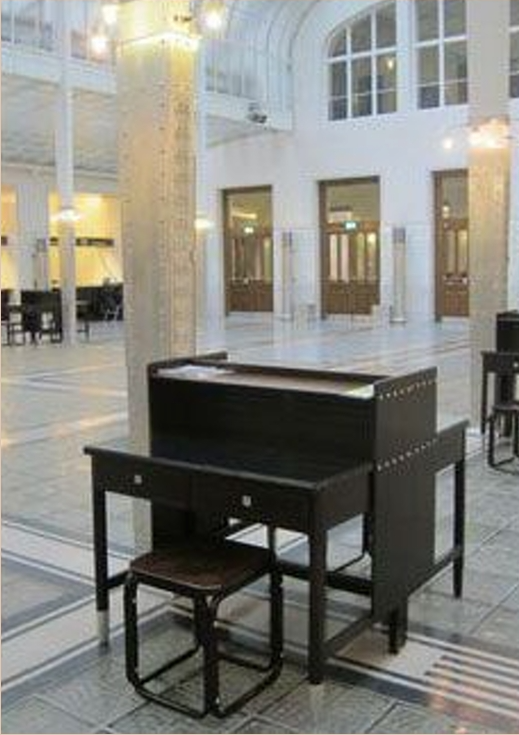
Check-writing Desks
______________ in the Postal Savings Bank
Josef Hoffmann, Vienna Werkstatte
______________ (1870-1956) had a long career in architecture and design that extended from the early days of the Secession movement into 20th century modernism. In 1903, he was one of the founders of the ___________, the loose guild of craft shops that produced objects of his design and work by other Secessionist designers. His design moved toward strict rectangularity and his expressive drawings demonstrate a combination of modernist austerity with a decorative urge.
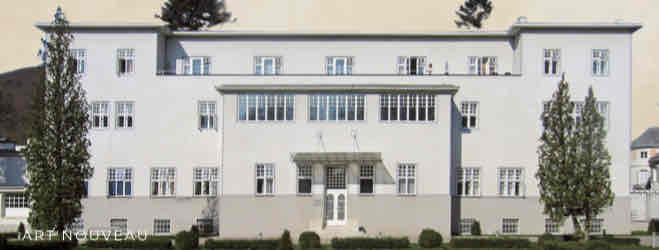
Purkersdorf Sanatorium
As an architect, Hoffman built the __________________ near Vienna; an austere, symmetrical block with white walls and minimal external ornament. The interiors are simple, yet patterns of squares in black and white tiled floors, and a simple chair for the dining hall, look toward the austerity.
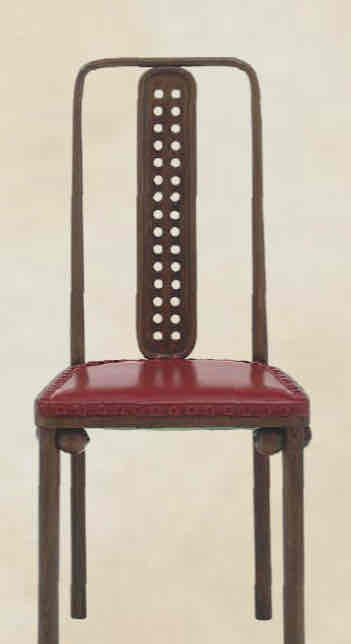
Purkersdorf sidechair
This chair, made for the Purkersdorf Sanatorium in Austria, is one of Joseff Hoffman’s early works.
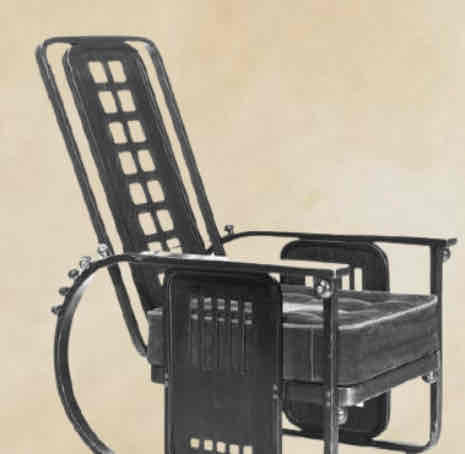
Bentwood Morris Chair
This armchair with an adjustable back is one of the type called “Morris chair”. It utilizes a structural frame of bentwood.
Stoclet House
Hoffmann’s most famous work is the large and luxurious house commissioned by the Belgian Adolphe Stoclet, usually called _____________.
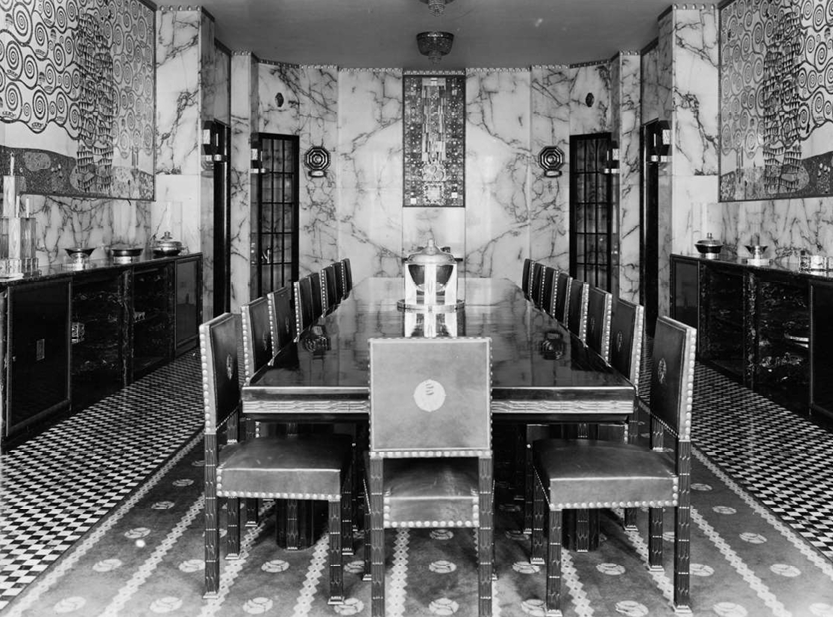
Gustav Klimt
He created large mosaic murals for the Stoclet House. One of his famous works is ‘The Kiss’.
Fledermaus chair
Josef Hoffmann’s chair, beech bentwood, 1906 (modern reproduction)
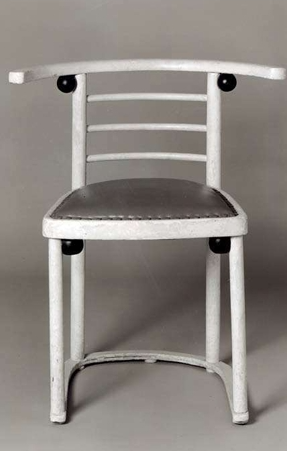
Koloman Moser
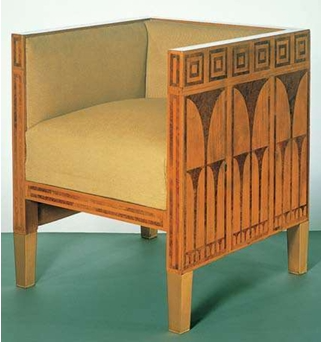
___________________ (1868-1918) was also a designer of a Secession-style objects including the chair, “Zuckerkandl.”
Peter Behrens
___________________ was linked from Jugendstil to modernism through his employment of Gropius, Mies van der Rohe, and Le Corbusier.
Zuckerkandl
Kolomon Moser’s armchair, Vienna, Austria, 1903.
Adolf Loos
_________________ (1870-1933) was an architect and designer associated with the Secession for a time but became disenchanted with what he regarded as the superficial decorative concerns of that movement. His essay “Ornament und Verbrechen” (Ornament and Crime) of 1908 attacks the use of ornament and views it as inappropriate to modern mechanized production. His architectural work was oddly, by no means free of ornament.
United States
Art Nouveau not only flourished in European cities from the late 19th to the early 20th century but also made an influential and significant presence in the ____________. The artistic movement was often integrated into the existing architectural styles rather than distinctively standing alone.
Louis Comfort Tiffany, Louis Sullivan
The role of Art Nouveau in America is almost completely confined to the work of two influential individuals—____________ and ____________.
Louis Comfort Tifanny
_______________ was an American artist and designer and the son of the founder of the well-known New York jewelry firm. He became interested in the decorative arts at the end of the 1870s, then later in 1897 established the interior decorating firm Louis C. Tiffany & Associated Artists.
American
Tiffany’s windows became highly sought after, particularly in _______ churches, where his work echoed medieval stained glass traditions but with a Victorian sensibility.
Tiffany Glass Company
Tiffany reorganized his business Louis C. Tiffany & Associated Artists and named it, ______________, which indicated his increased concentration on the art of stained glass.
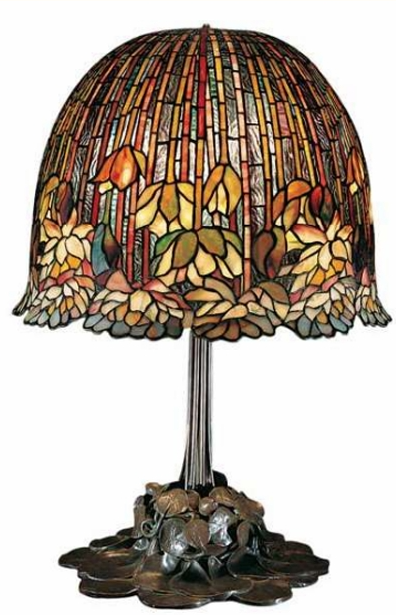
Waterlily
Tiffany also designed mosaics, rugs, furniture, even lamps, which use metal bases with glass shades in a great variety of forms, like the famous “_____________” table lamp.
Favrile glass
Glass type and technique invented by Tifanny
Louis Sullivan
___________ the first American modernist architect and the early employer and mentor of Frank Lloyd Wright, is thought of as a pioneer of modernism. He is the advocate of the idea, “form follows function.”
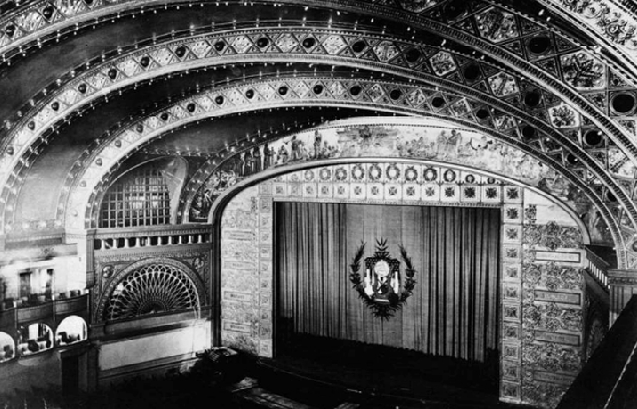
Chicago Auditorium Building
Louis Sullivan partnered with an older, German-trained architect, Dankmar Adler (1844-1900) and worked principally in the interiors of the firm’s ________________.
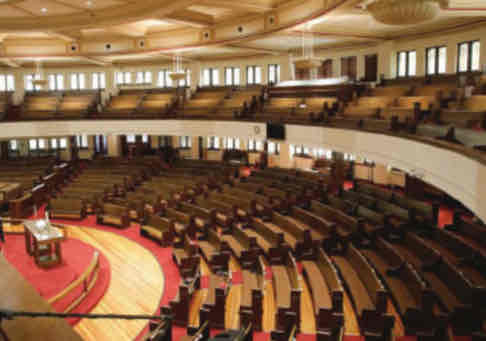
St. Paul's Methodist Church
Sullivan also designed _____________ after 1900 as American tastes changes, and later had fewer clients and less work. This features a rectangular school block and a semicircular church auditorium. Inside, seats are arranged amphitheater-style with an overlooking balcony.
style that failed
American Art Nouveau had no more lasting presence than they had in Europe. Early 20th century’s critics and historians referred Art Nouveau as a “_____________,” or to dismissing it as frivolous, tasteless, and overly decorative. The rediscovery of Art Nouveau only began after World War II as exhibitions, publications, and fresh study revived its rightful place as an important step in the development of modernism.
 Note
Note  Flashcards (40)