physics ch 13-14
0.0(0)Studied by 8 people
 Call Kai
 Learn
Learn Practice Test
 Spaced Repetition
 Match
Match Flashcards
 Knowt Play
Card Sorting
1/36

Earn XP
Description and Tags
mirrors, additive + subtractive light, refraction
Last updated 2:53 AM on 3/24/23
Name | Mastery | Learn | Test | Matching | Spaced | Call with Kai |
|---|
No analytics yet
Send a link to your students to track their progress
37 Terms
1
New cards
object
person, place, or thing in front of the mirror
2
New cards
image
reflection of the object in front of the mirror
3
New cards
virtual image
appears to be coming from behind/inside the mirror. seen with flat/convex mirrors
4
New cards
focal point
point at which rays of light meet after reflecting from a mirror. depends on amount of curvature for each mirror
5
New cards
real image
reflected off a mirror onto a piece of paper or onto a wall. projection
6
New cards
image orientation
if image is real, it is inverted. If image is virtual, it is upright.
7
New cards
magnification
the ratio of the height of an object to the image height of the object
8
New cards
what kind of mirror can produce both real and virtual images?
concave
9
New cards
which two mirrors can produce only virtual images?
flat and convex
10
New cards
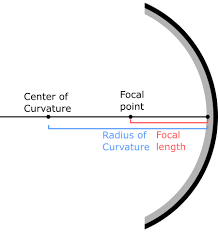
concave mirror
a reflective surface from the inside of a sphere
11
New cards
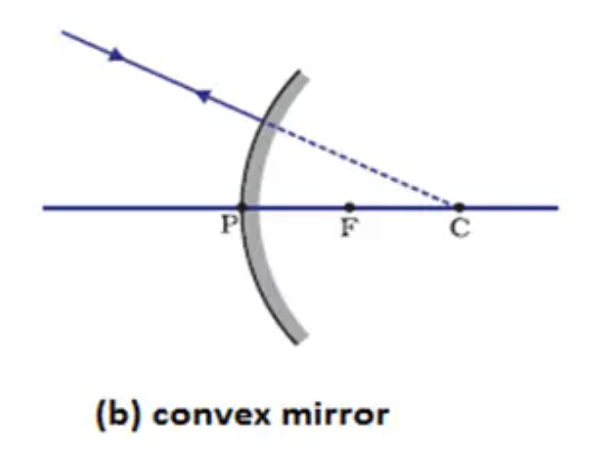
convex mirror
a reflective surface on the outside surface of a sphere
12
New cards
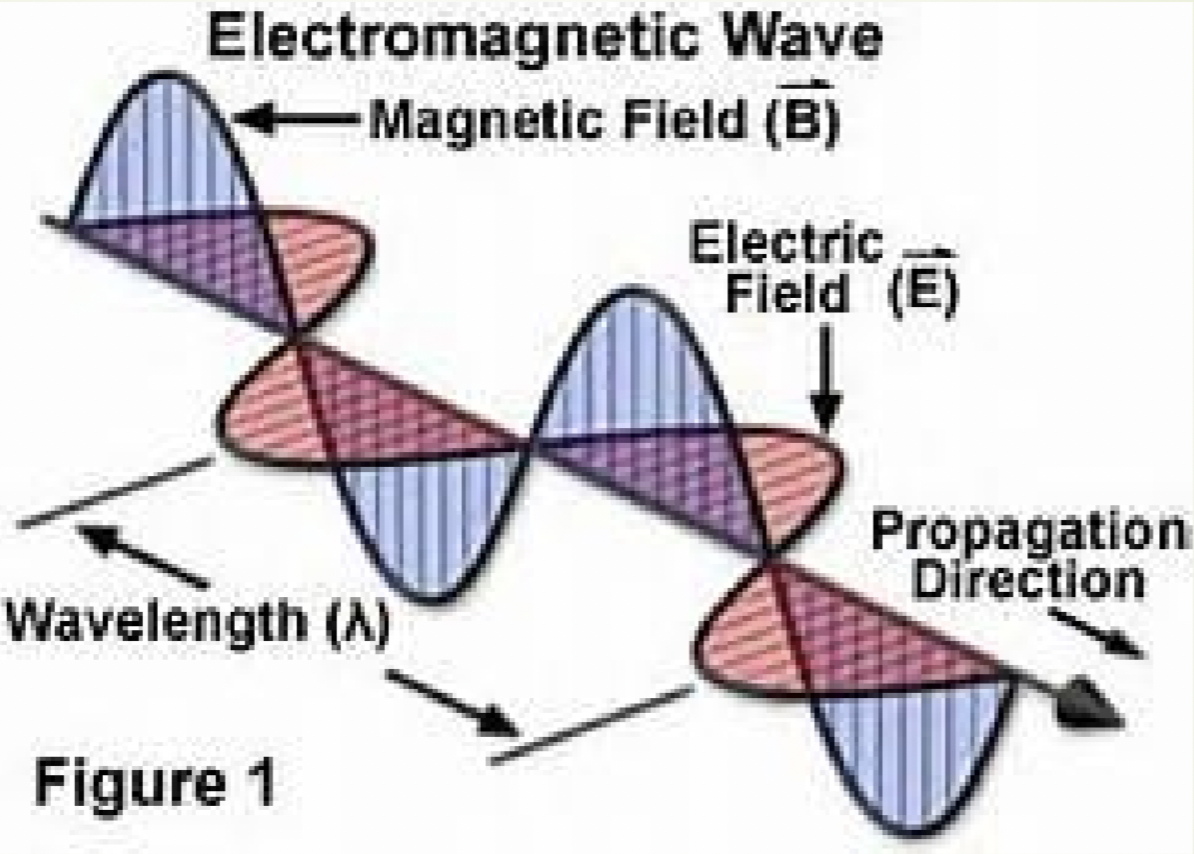
light waves are ________ waves (2 answers)
electromagnetic and transverse
13
New cards
all electromagnetic travel at the speed of ________.
light
14
New cards
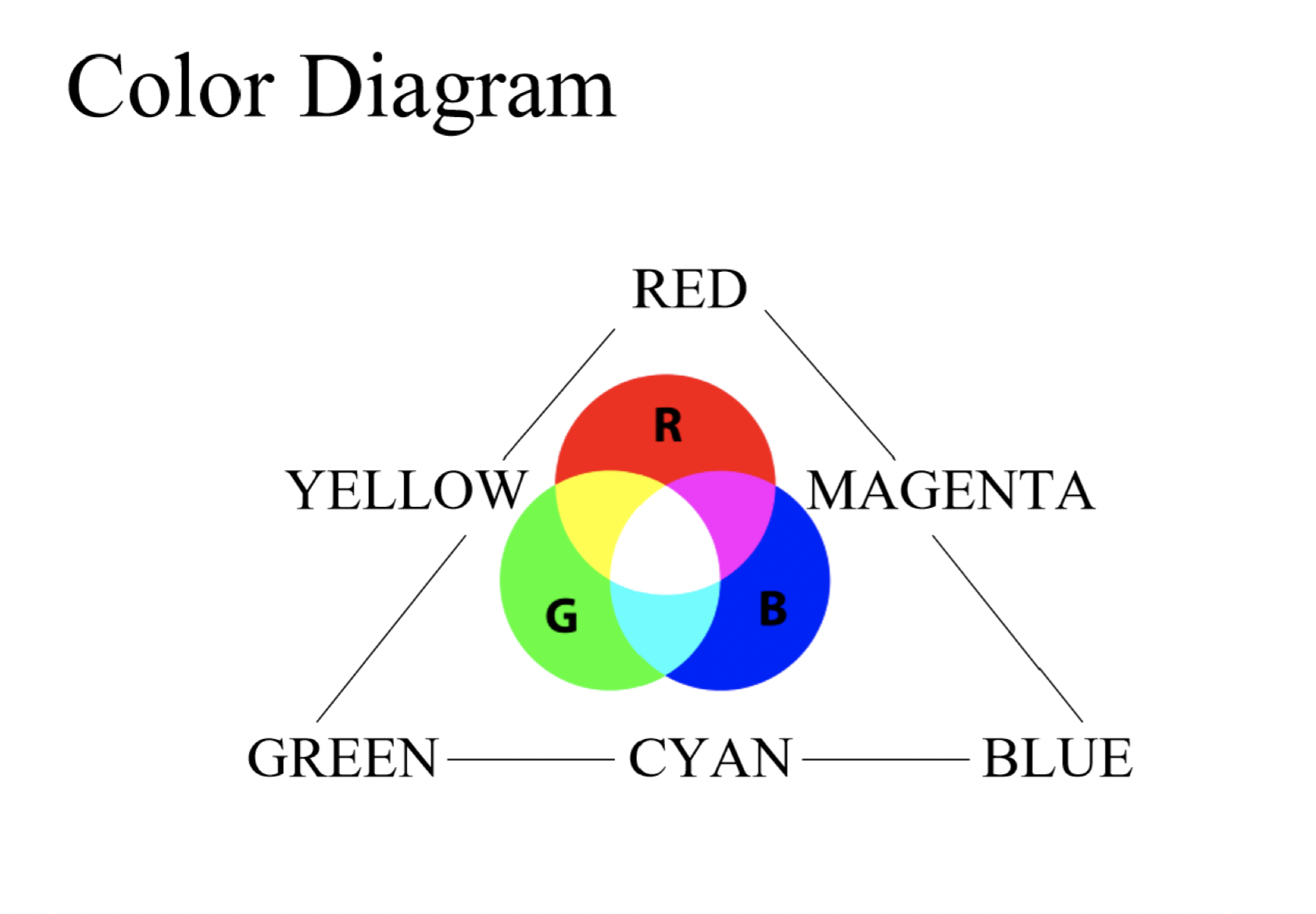
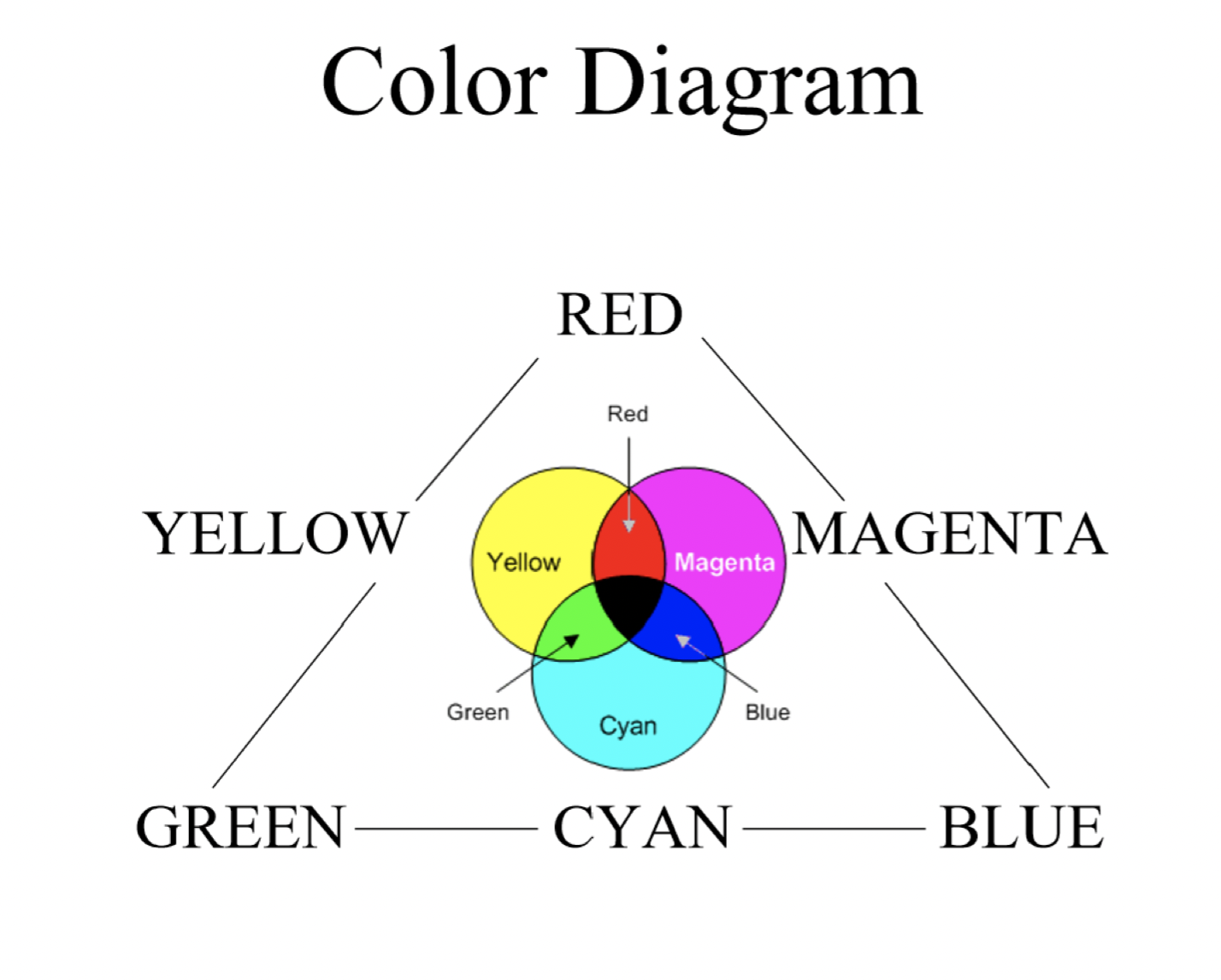
red, green, blue
primary additive colors (light)
15
New cards
cyan, yellow, magenta
complementary additive colors (light)
16
New cards
white
what color is created by mixing all the primary additive colors together (or a primary with its opposite complementary)?
17
New cards
cyan, yellow, magenta
primary subtractive colors (paint/dye)
18
New cards
red, green, blue
complementary subtractive colors (paint/dye)
19
New cards
black
what color is created by mixing all the primary subtractive colors together (or a primary with its opposite complementary)?
20
New cards
not absorbed
with paints or dyes, the color that is reflected is ________ (absorbed/not absorbed).
21
New cards
green
magenta absorbs ________
22
New cards
red
cyan absorbs ________
23
New cards
blue
yellow absorbs ________
24
New cards
black
If I am wearing a red shirt and a cyan light is shining on me, my shirt appears ________.
25
New cards
green
If I am wearing a green shirt and a yellow light is shining on me, my shirt appears ________.
26
New cards
sunsets
what natural phenomenon is related to scattering?
27
New cards
refraction
the bending of a light wave as it passes between two mediums in which the speed of light differs
28
New cards
normal
The amount of bending is measured from the ________ line.
29
New cards
changes, changes, constant
when light bends, its speed ________,__ its wavelength ________,__ and its frequency is _______
30
New cards
towards
when light moves from a medium with a higher speed of light to one with a lower speed of light, the ray bends ________ the normal line.
31
New cards
index of refraction, n
how much the light will bend when it encounters a medium
32
New cards
index of refraction formula
n = (speed of light, c)/ (speed of light in the medium, v*n*)
33
New cards
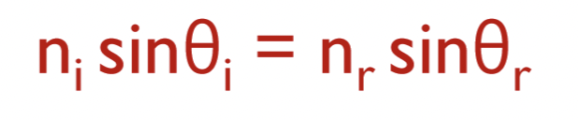
Snell’s Law
Determines how much bending will occur at a boundary between two mediums, **index of refraction of incident ray * sine of angle of incidence = index of refraction of refracted ray * sine of angle of refraction**
34
New cards
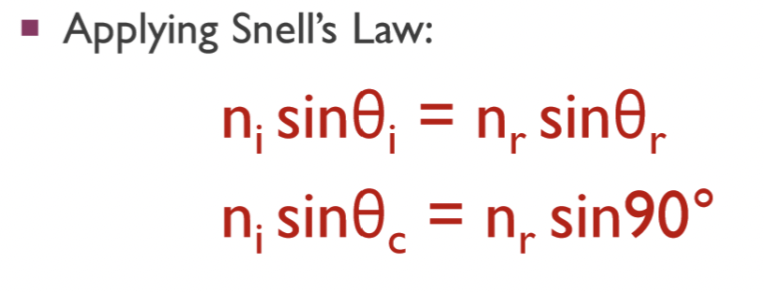
critical angle
the incident angle which creates an angle of refraction equal to 90 degrees, angle of total internal reflection
35
New cards
what natural phenomenon results from dispersion?
rainbows
36
New cards
dispersion
when the index of refraction varies slightly with the frequency of light. the higher the frequency, the higher the index of refraction. refracted light is “spread out”
37
New cards
The speed of light, c, is equal to the wavelength, m, multiplied by the frequency, Hz
c = λν

